
Theory · C Licence - Truck · Module 18 of 18
Defensive and efficient lorry driving
You learn to observe, anticipate and maintain space to drive your lorry safely and use its energy without unnecessary acceleration or braking. You master gear selection, the economical engine speed range, the influence of tyres, load and aerodynamics, and questions on environmental badges, ZBE (low-emission zones) and noise.
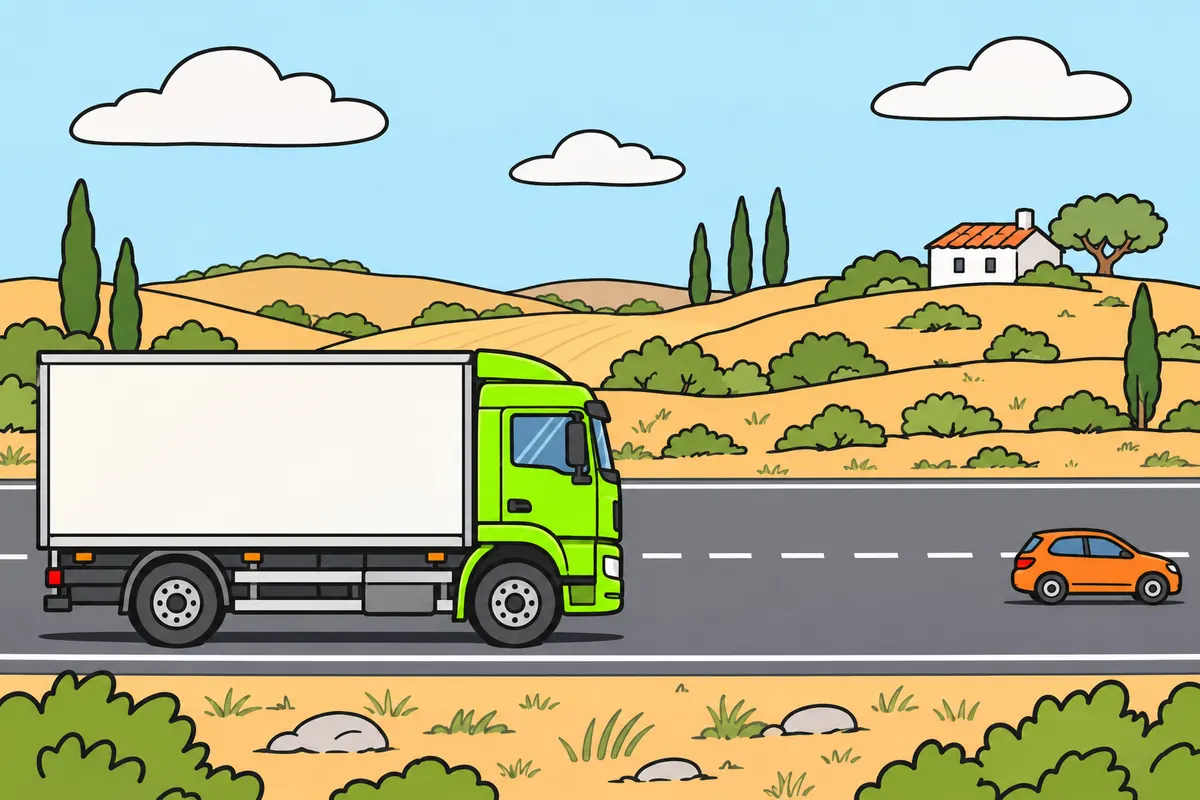
1Preventing risks and saving fuel in your lorry
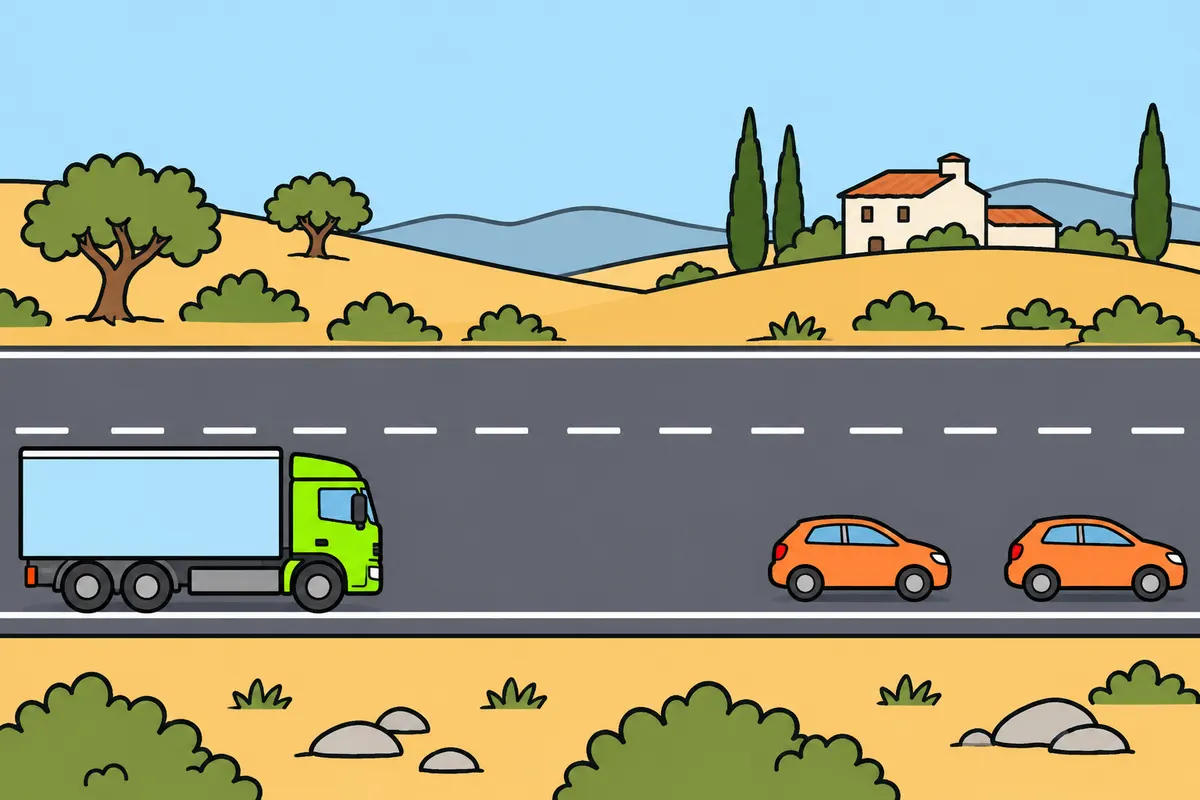
Observe, anticipate and leave space to drive safely and save fuel.
Remember
- Observe throughout the journey, even on familiar roads.
- Ease off early when you see a queue.
- Adapt to your lorry’s mass, load and response.
- Safety and control come before fuel saving.
Exam trap: Wrong: save fuel even if you lose control. Right: save fuel only when it is safe.
Read the full explanation
- You must base your defensive driving on observation, anticipation and space. You observe to gather information, anticipate how the situation may develop and keep a margin to respond. These principles apply throughout your journey, even when you know the road and see no immediate danger.
- Driving efficiently means using the energy needed for transport while avoiding unnecessary losses. If you spot a traffic queue early, you can ease off the accelerator and slow down progressively. Rushing up to it and braking hard turns energy you have paid for in fuel into heat.
- You must adapt your technique to your lorry's mass, load and response. Its momentum can help you keep moving, but also requires you to anticipate slowing down and stopping earlier. Wheel size or engine power does not guarantee that you can stop in a short distance.
- Your aim is to complete the transport operation safely, smoothly and with reasonable fuel consumption. Any supposed fuel-saving measure that reduces your control, compromises stability or delays a necessary response is a poor choice. You must apply economical driving techniques within the actual traffic conditions.
2Planning a viable route
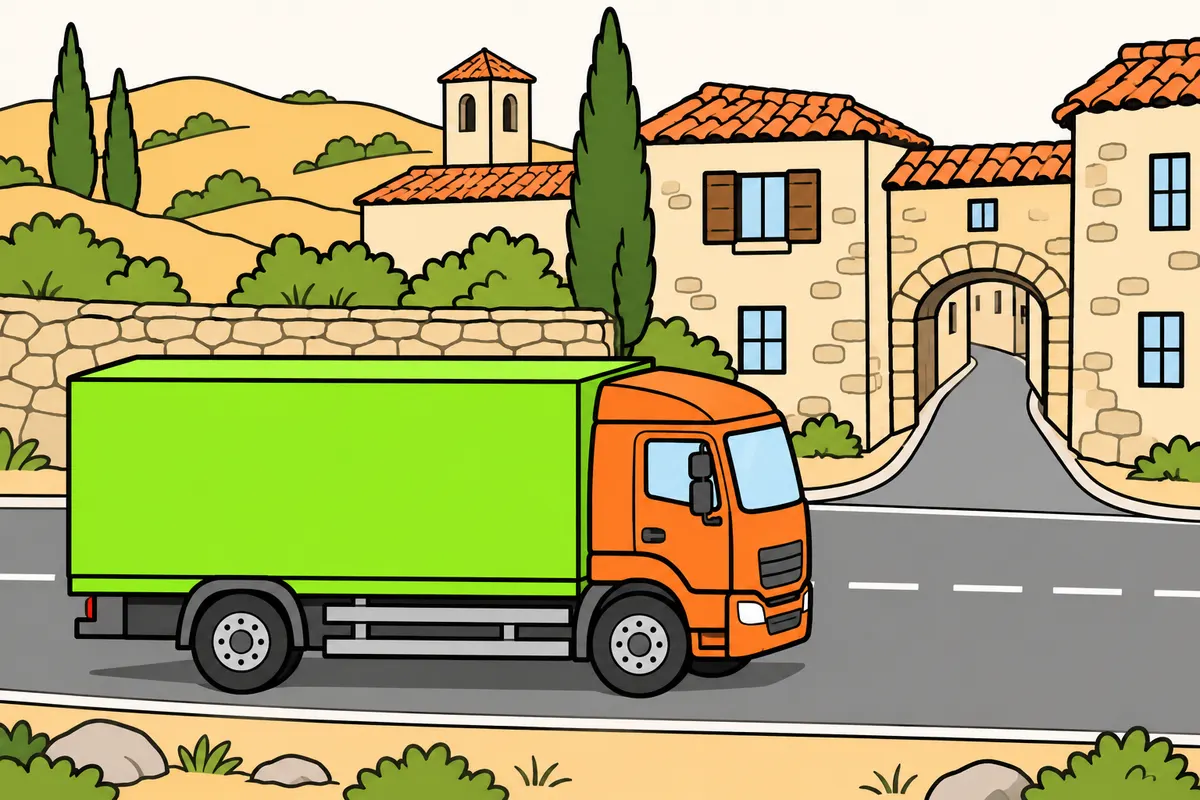
Plan a route that suits your lorry, load and deliveries.
Remember
- Check access, environmental restrictions and room to manoeuvre.
- Check traffic, roadworks and weather.
- Plan deliveries to avoid repeated journeys.
- Plan breaks and enough time to arrive without rushing.
Exam trap: Wrong: always choose the shortest route. Right: check the whole journey.
Read the full explanation
- Before setting off, choose a route suited to your lorry's dimensions and characteristics and to the goods you carry. Check access to your destination, environmental restrictions and space for manoeuvring. The shortest route may involve detours, stops or manoeuvres that make it less suitable for your vehicle.
- Check traffic, roadworks and weather conditions to anticipate queues or difficulties. You can consider a route with smoother traffic flow even if it is longer, comparing the whole journey. You must not assume that every diversion saves fuel: gradients, road surfaces, restrictions and the characteristics of the transport operation also count.
- Organise deliveries and collections to reduce unnecessary kilometres and repeated journeys along the same route. Check the times and access conditions for delivery areas in advance. A viable plan prevents you from reaching a restricted entrance and having to improvise with a loaded lorry.
- Plan your breaks and allow a margin for arrival without letting the delivery schedule put you under pressure to drive too fast. Efficient driving requires attention and calm decisions. You study the statutory time requirements in «Driving, breaks and rest periods»; you must incorporate them into your planning of the transport operation.
3Looking ahead and scanning your surroundings
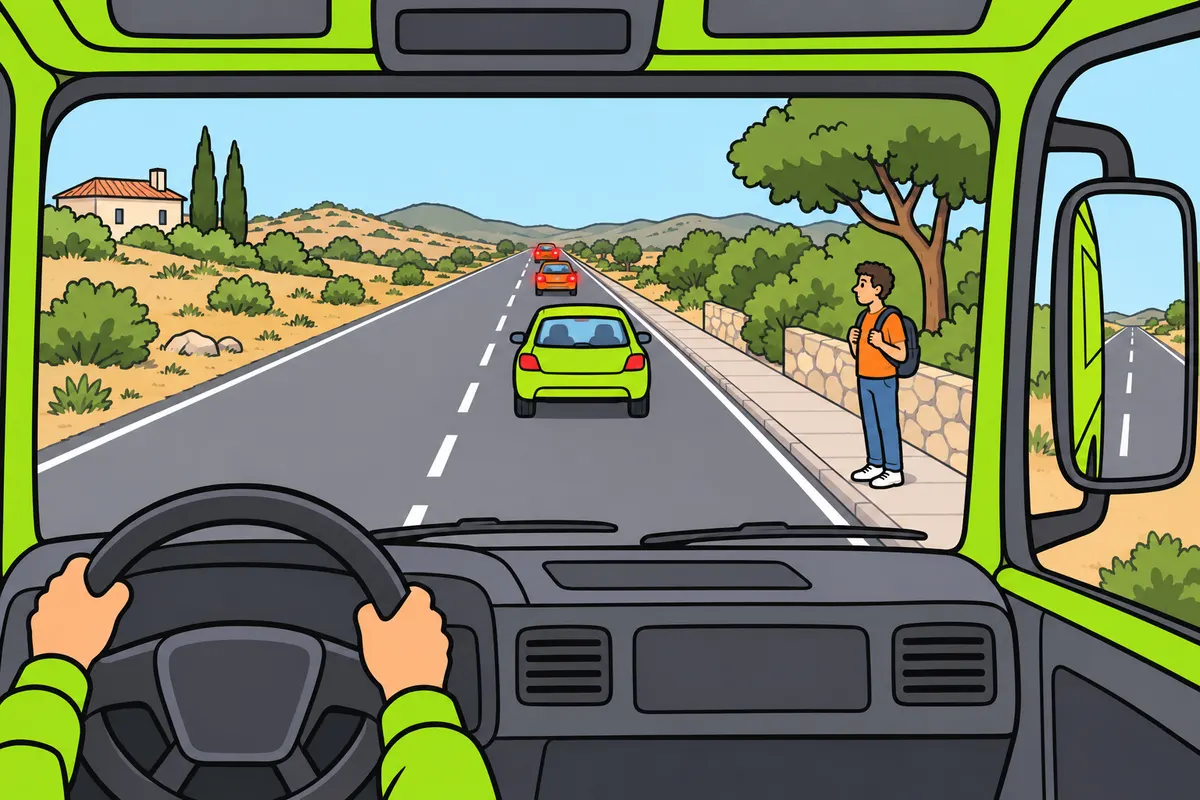
Look well ahead, and check nearby areas, both sides and your mirrors.
Remember
- Look beyond the vehicle ahead.
- Use about 20 seconds of travel as an observation guide.
- Scan far ahead, nearby, to the sides and in your mirrors.
- Look further ahead at higher speeds.
- If you see less, adapt your speed.
Exam trap: Wrong: treat 20 seconds as a required following gap. Right: it is only an observation guide.
Read the full explanation
- You must look beyond the vehicle ahead and gather information about the area you are approaching. As a guide for observation, the DGT suggests looking far enough ahead to cover the distance you travel in about 20 seconds. This is a guide to how far ahead you look, not a legal following distance. [DGT, defensive driving](https://www.dgt.es/export/sites/web-DGT/.galleries/downloads/nuestros_servicios/permisos-de-conducir/recupera-puntos/2017-1165_INCOVIA_manual_alumno_Volumen_3_EE_en_linea.pdf).
- Alternate looking into the distance with checks of nearby areas, the sides and your mirrors. Scanning allows you to spot both the back of a traffic queue and a pedestrian beside the cab. Focusing only on the most distant point also leaves risks unseen.
- At higher speeds, you cover more ground while detecting, deciding and acting, so you must look further ahead. If visibility is limited, adapt your speed to the space available. You cannot compensate for an area you cannot see by trusting that it is clear.
- Look for clues that signal changes: brake lights coming on in succession, vehicles changing lanes or people near a crossing area. This allows you to prepare a response before a conflict develops. You must keep observing to check whether your prediction is correct.
4Mirrors, hidden areas and driving aids
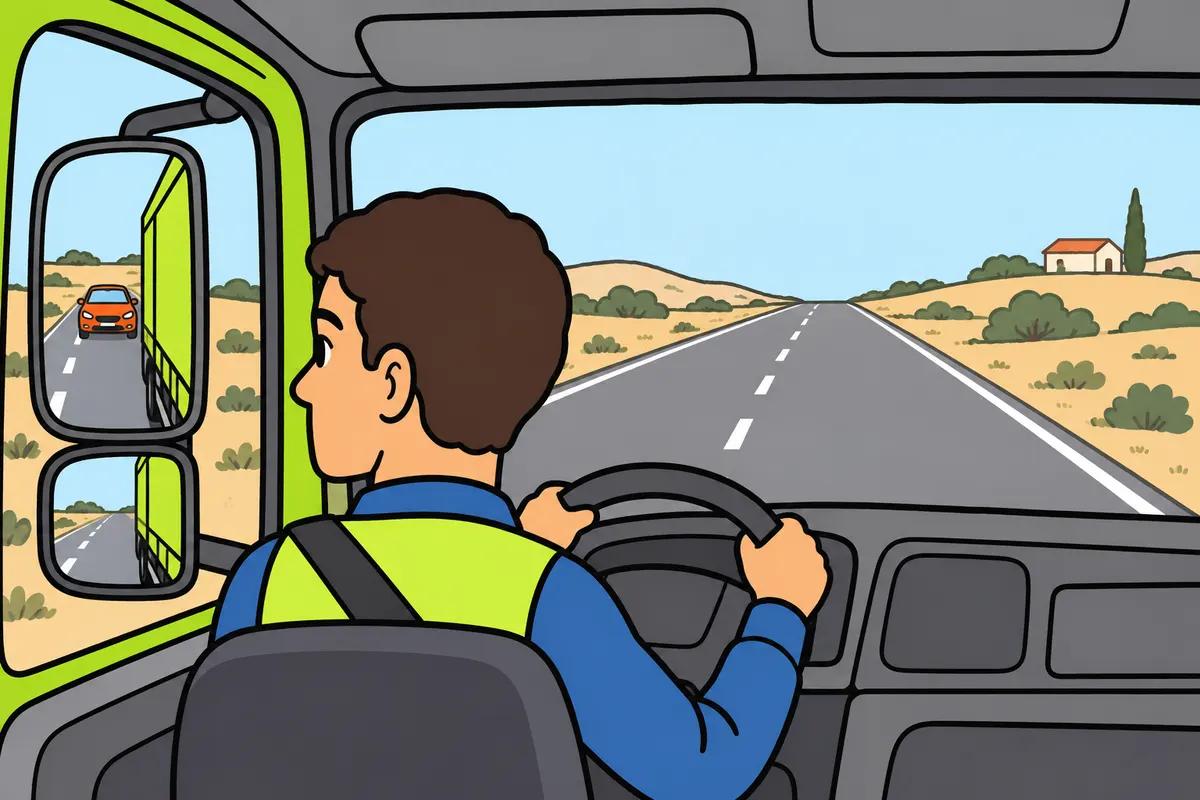
Check your mirrors and vision aids while watching ahead.
Remember
- As you approach a queue, watch ahead and briefly check your mirrors.
- Ease off early to slow down gradually.
- During deliveries, watch places people could emerge and the load body’s sides.
- Use cameras and sensors as aids within their detection range.
- Before moving after waiting, check the sides again.
Exam trap: Wrong: stop watching ahead when checking mirrors. Right: keep watching ahead too.
Read the full explanation
- As you approach a traffic queue in your lorry, combine watching the traffic ahead with brief checks of your mirrors. If you see the queue slowing down and another vehicle approaching from behind, ease off the accelerator early so that you slow down progressively. The lorry's mass makes it particularly useful to prepare to slow down before the available space closes up.
- When making deliveries among parked vehicles, use your forward view to identify places where someone may emerge, and your mirrors to monitor anyone moving along the sides of the load body. Keep to a speed that allows you to respond to someone appearing from the side without a sudden correction. A camera or sensor provides additional information within its detection range.
- Before using a gap to continue, update your information about the sides: while you wait, a cyclist may have drawn up beside the cab. You study mirror classes, the areas they cover and blind-spot checks in «Safe lorry driving», in the sections «What each class of mirror shows» and «Blind spots and vulnerable road users».
5Anticipating mistakes and communicating your intentions
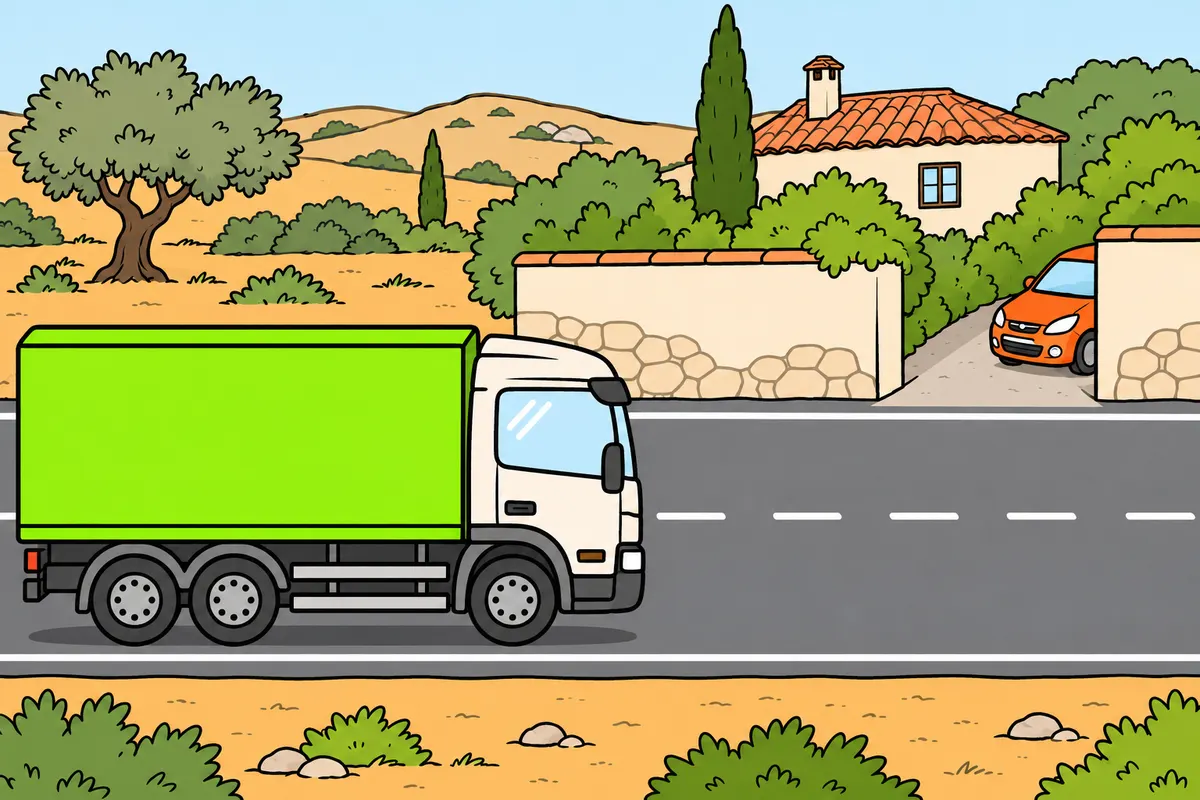
Expect mistakes from others and signal your manoeuvres early.
Remember
- Even with priority, be ready to slow or stop if risk develops.
- Watch for movements by pedestrians and cyclists.
- Signal early, check that the manoeuvre is safe.
- Adjust your speed to stop within the clear space you can see.
Exam trap: Wrong: assume your indicator guarantees others see you. Right: check before manoeuvring.
Read the full explanation
- You must anticipate that another road user may make a mistake or may not have seen you. As you approach an exit with limited visibility, consider whether a vehicle could pull out. Having priority does not physically prevent a collision: prepare to slow down or stop if the developing risk requires it.
- Near pedestrians and cyclists, look for possible movements into your lorry's path and avoid surprising them by approaching abruptly. A person beside a parked vehicle may be hidden from view. Your high driving position does not remove obstructions to your view or guarantee that you spot everyone in time.
- You must signal your manoeuvres in advance and check that you can carry them out. Your indicator communicates your intention without guaranteeing that others have seen you. Smooth, predictable driving helps those behind you adapt their speed without having to react at the last moment.
- Adapt your speed to the load, visibility and surroundings so that you can stop within the space you can see to be clear. The permitted speed may be excessive for a particular situation. [RGC, art. 45](https://www.boe.es/buscar/act.php?id=BOE-A-2003-23514#a45).
6Keeping space to respond
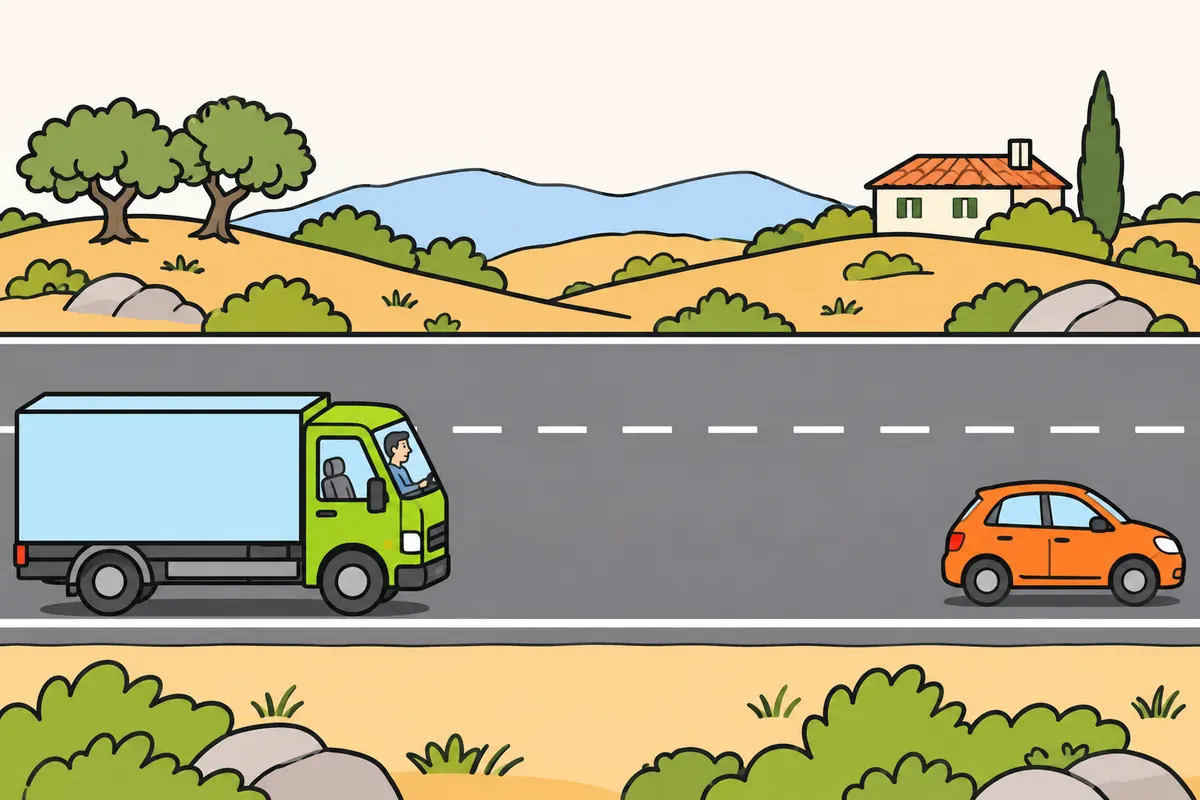
Leave enough space to stop safely and respond smoothly to traffic.
Remember
- Leave space in case the vehicle ahead brakes suddenly.
- Allow for speed, grip and your lorry’s braking capacity.
- If someone follows too closely, increase your space ahead.
- Do not answer with sudden braking or acceleration.
- Keep space at the side and watch behind you.
Exam trap: Wrong: brake sharply to correct a close follower. Right: increase your space ahead.
Read the full explanation
- You must leave enough space to stop without hitting the vehicle ahead if it brakes suddenly. Assess grip, speed and your lorry's braking capability. You study the specific separation figures and situations in «Speed and safe following distances». [RGC, art. 54](https://www.boe.es/buscar/act.php?id=BOE-A-2003-23514#a54).
- Keeping your distance also helps save fuel: with a margin, you can absorb small changes in traffic speed without constantly alternating between the accelerator and brake. If you drive too close to the vehicle ahead, every change it makes forces you to react. You must maintain space for safety even if you see no immediate fuel-saving benefit.
- If someone follows you too closely, increase your margin ahead and prepare to slow down earlier. This allows you to brake progressively and gives the driver behind more opportunity to react. Avoid trying to correct the other driver's behaviour by braking or accelerating sharply: you increase the conflict and lose your ability to manage your driving defensively.
- When you stop in a queue, keep a margin in case you need to manoeuvre and watch how vehicles approach from behind. While moving, also maintain lateral space and avoid spending unnecessary time in areas hidden from other drivers' view. A gap ahead does not, on its own, resolve every risk around you.
7Starting without wasting fuel
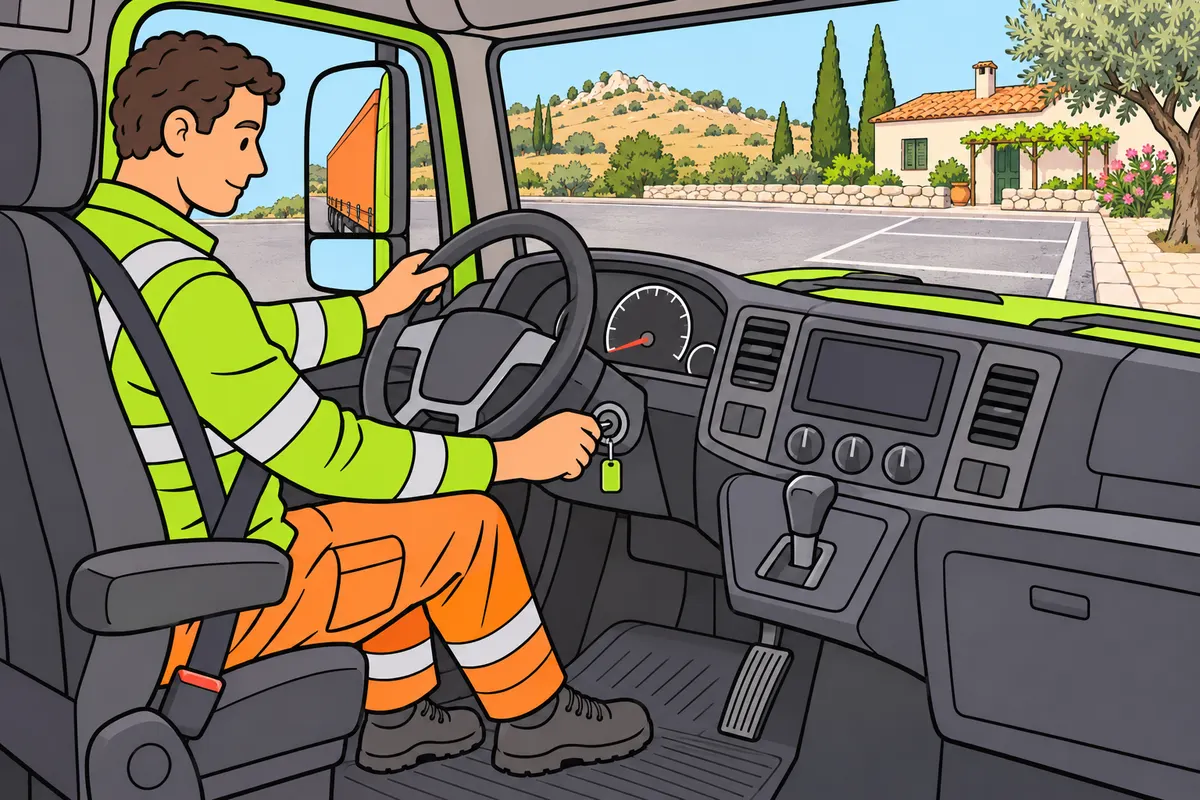
Start and move off by following the manual, without needless revving.
Remember
- Start without accelerating if your lorry allows it.
- Check the vehicle and brakes are ready before moving off.
- Choose a starting gear for the load, slope and transmission.
- Ask for power gradually while the engine warms.
- Follow the maker’s procedure for preparing and stopping the engine.
Exam trap: Wrong: make every engine idle for a fixed warm-up time. Right: follow its manual.
Read the full explanation
- If your lorry's electronic management system allows you to start the engine without pressing the accelerator, do so in accordance with the manual and without revving the engine while stationary. You must also avoid unnecessary revving before switching it off, which wastes fuel without doing any useful transport work.
- Before moving off, check that your vehicle is ready to drive, including that the braking system is ready if it uses air brakes. Efficiency does not justify moving off with unresolved warnings or insufficient pressure. This preparation is different from leaving the engine idling until everything reaches its operating temperature.
- Select a starting gear suited to the load, gradient and transmission design. Do not turn a passenger car's first- and second-gear routine into a universal sequence for lorries. You must be able to move off without putting unnecessary strain on the clutch or making inappropriate demands on the engine.
- As the engine warms up, increase your demand for power gradually and follow the manufacturer's instructions. Do not apply a fixed idling period to every engine or turbocharger. If your vehicle needs a specific preparation or shutdown procedure, you must follow it rather than apply generic advice.
8Understanding the economical engine speed range
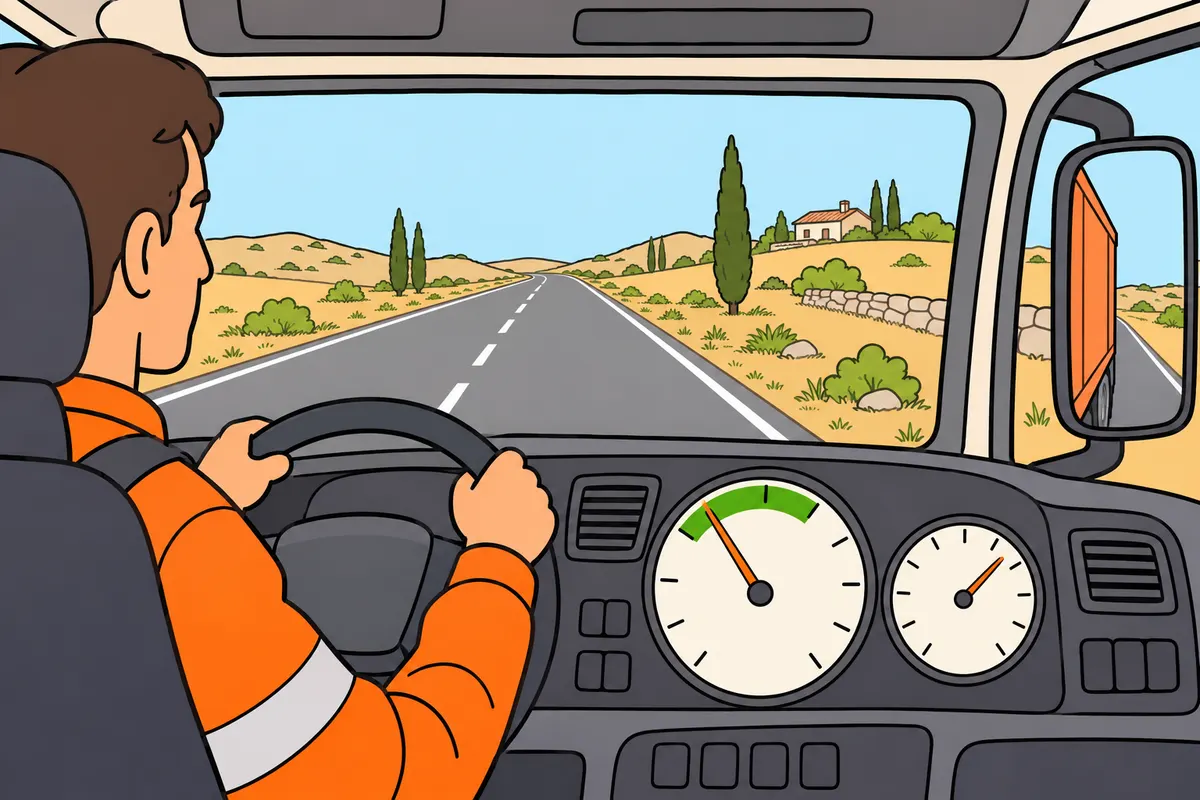
Use the rev counter and engine response to choose an economical engine speed.
| What you check | What it tells you |
|---|---|
| Speedometer | Lorry road speed |
| Rev counter | Engine speed |
Remember
- Road speed and engine speed are different.
- Use the green zone as a guide, if fitted.
- Consider load, gradient and engine response.
- Distinguish the favourable torque range from the maximum power range.
Exam trap: Wrong: treat the green zone as a fixed road speed. Right: it guides engine speed.
Read the full explanation
- Your lorry's speed, expressed in kilometres per hour, is different from engine speed, expressed in revolutions per minute. The same road speed can correspond to different engine speeds depending on the gear. This is why the speedometer does not replace the rev counter when you choose how to run the engine economically.
- If your rev counter has a green economy band, use it as a guide to the engine's efficient operating range. It does not represent a fixed road speed. You must interpret this indication alongside the load, gradient and available engine response, in accordance with your vehicle's specific manual.
- In favourable conditions, aim for an engine speed close to the start of the economy band after changing up, with the engine responding normally. Maintain an engine speed that preserves pulling power without unnecessarily prolonging operation at high revs. The operating range depends on the engine.
- You must distinguish between the engine speed range that provides favourable torque and the engine speed for maximum power: these concepts are not interchangeable. When you need more response, you may need to use a higher engine speed than you use for economical cruising.
9Choosing high gears without straining the engine
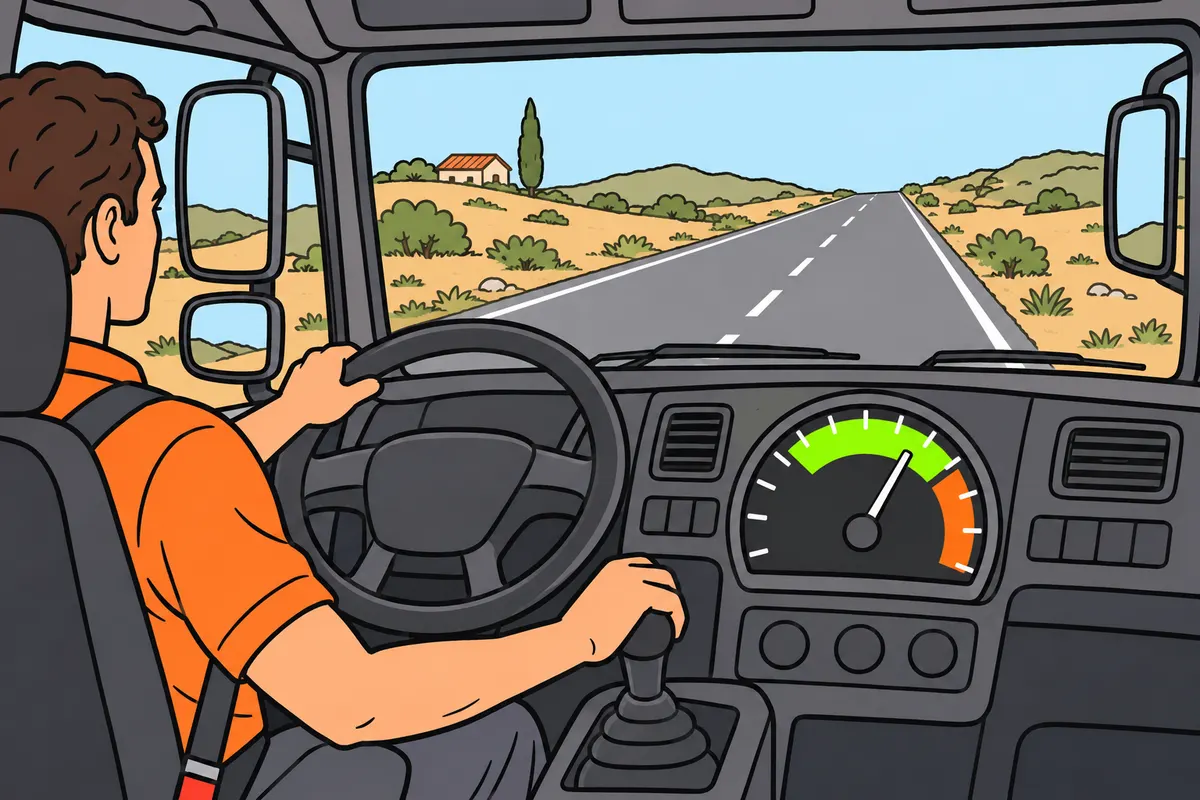
Choose a high gear only when the engine responds well.
Remember
- Change smoothly and at the right time.
- Do not keep the engine at high revs without need.
- You can skip a gear if the gearbox and conditions allow it.
- Change down if revs fall and the engine does not respond.
Exam trap: Wrong: always use the highest gear. Right: choose a gear that suits the effort and engine response.
Read the full explanation
- Use the highest gear that allows the engine to work properly and you to maintain control. A high gear reduces engine speed at a given road speed, but it may be unsuitable if the engine cannot respond sufficiently. Economical driving requires you to assess the conditions, rather than always select the highest gear.
- As you accelerate, change gear smoothly and at the right time to avoid unnecessarily prolonged operation at high engine speeds. You must coordinate the accelerator, clutch and gear change according to the transmission. Performing the operation precisely avoids unnecessary loss of speed and wear; it does not mean forcing the gear lever or rushing engagement.
- You can skip an intermediate gear when changing up if the gearbox allows you to select the gear directly and the new ratio is suitable. Assess the drop in engine speed, the load and the gradient.
- If too high a gear causes the engine speed to fall and the engine fails to respond, change down in good time. Keeping the accelerator pressed hard while the engine works outside its suitable range is not a fuel-saving technique. You must avoid repeated gear changes caused by selecting a gear that does not suit the effort required.
10Using the clutch and automatic systems properly
Use the clutch and automatic systems according to the manual.
| System | What to remember |
|---|---|
| Synchronised manual gearbox | Avoid unnecessary double-clutching |
| Unsynchronised gearbox | Follow its specific procedure |
| Automatic or automated gearbox | Intervene when conditions require it |
| Eco mode | May change response, gears or auxiliary equipment |
Remember
- Avoid unnecessary double-clutching with a synchronised gearbox.
- Take your foot off the clutch when you finish using it.
- Use the proper brake to hold on a slope.
- Keep observing with an automatic gearbox.
Exam trap: Wrong: assume an automatic choice is always right. Right: watch the road and act when needed.
Read the full explanation
- With a synchromesh manual gearbox, avoid unnecessary double-declutching: it adds operations and can prolong the gear change, causing a loss of speed that you then have to recover. Follow the transmission instructions. A non-synchromesh gearbox may require a specific gear-changing procedure.
- Take your foot off the clutch pedal once you finish using it, and do not use the clutch to hold your lorry on a gradient. Slipping the clutch converts energy into heat and increases wear. Holding the vehicle with the appropriate braking system avoids asking the clutch to perform a function it is not designed for.
- With an automated or automatic gearbox, let its programme operate when appropriate and familiarise yourself with the available ways to intervene. You must not assume that every automatic gear selection is optimal in a situation the system cannot anticipate. You still need to observe the road and your surroundings.
- Depending on the model, Eco mode can change accelerator response, gear selection or the management of auxiliary energy use. Know which functions it changes in your lorry so that you can interpret its response when joining traffic or demanding power. Use it in accordance with the manual; automatic engine shutdown is covered in «Stops and idling», within this module.
11Maintaining a steady speed
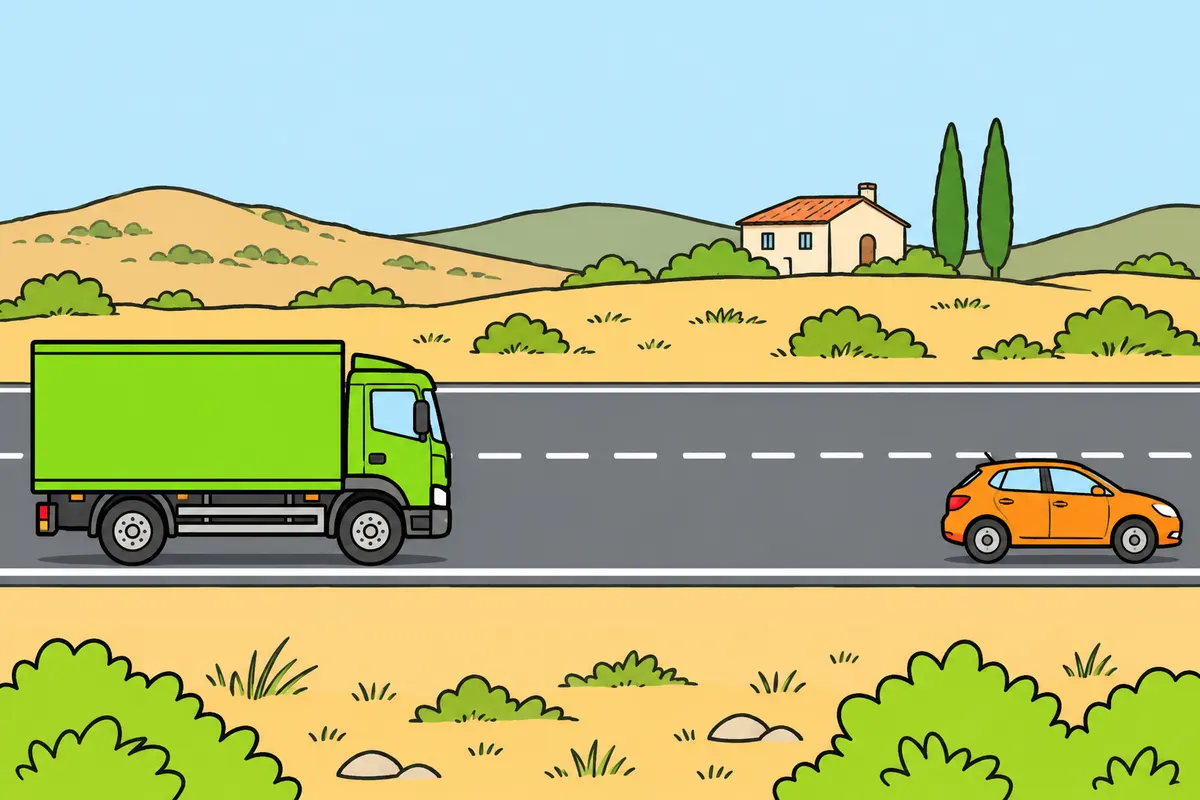
Keep a steady speed and slow down when conditions require it.
Remember
- Avoid constant acceleration and braking.
- Slow before bends, queues and places where you see less.
- Use cruise control only when conditions allow.
- Anticipate slopes and always obey the limits.
Exam trap: Wrong: treat the limiter setting as a target speed. Right: adapt your speed to conditions.
Read the full explanation
- Once you reach an appropriate speed, try to maintain it without unnecessary fluctuations. Accelerating to close a small gap and then braking immediately usually wastes energy. You must follow the flow of traffic with a safety margin, avoiding an abrupt correction in your lorry's speed every time the vehicle ahead changes speed.
- If you approach a bend, a traffic queue or an area with reduced visibility, you must slow down in advance even if this interrupts your steady pace. Anticipation allows you to choose when to stop accelerating and prevents the need to brake from taking you by surprise.
- Cruise control can help you save fuel by maintaining a steady pace when traffic, terrain and grip allow it. You must intervene or switch it off according to the conditions and the vehicle manual.
- The 90 km/h speed limiter setting on N2/N3 vehicles subject to this requirement is a ceiling, not a target speed. On undulating terrain, you can save fuel by anticipating gradients and allowing your speed to increase slightly downhill, always within the limits and under control, instead of keeping the accelerator pressed against the limiter. Its scope is covered in «Lorry dimensions and masses», and speed limits by road type in «Speed and safe following distances». [RD 1417/2005, art. 4; RGC, art. 45; IDAE, efficient driving of commercial vehicles](https://www.boe.es/buscar/act.php?id=BOE-A-2005-19990#a4).
12Using momentum when slowing down
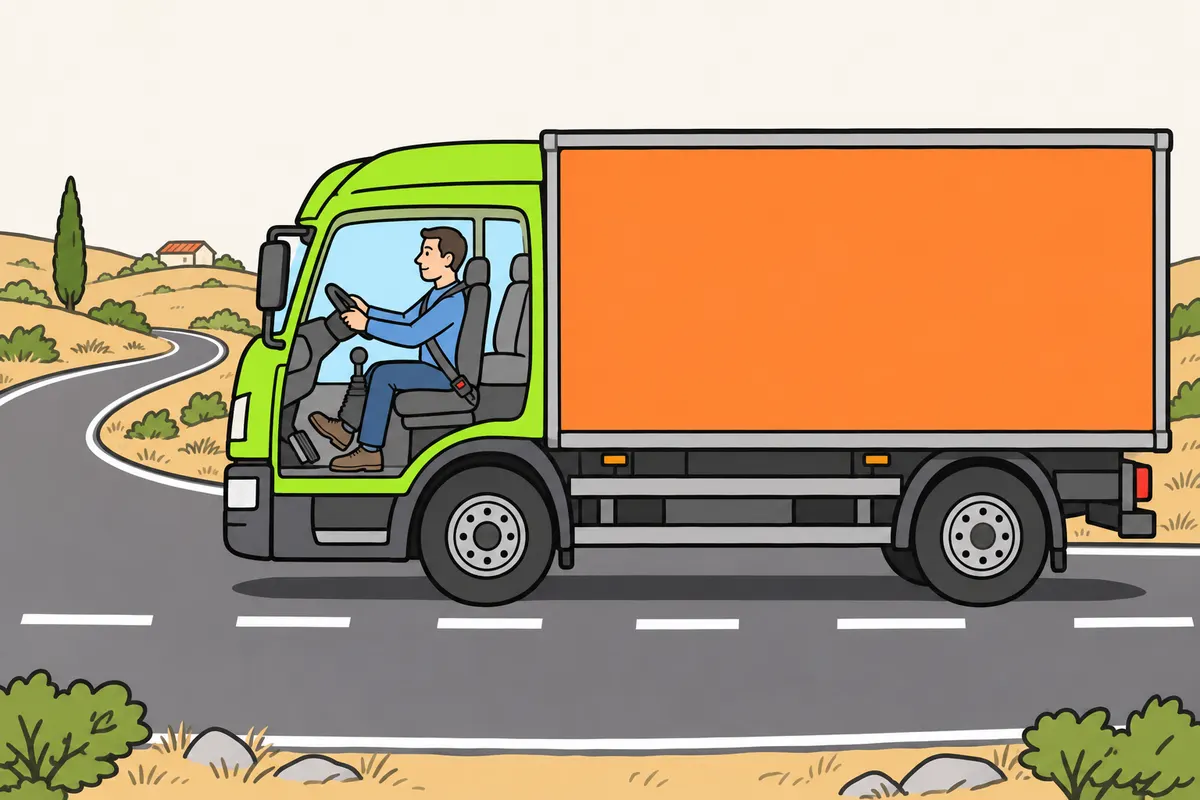
Ease off early and keep a suitable gear engaged when slowing down.
Remember
- Use the lorry’s movement without needless acceleration.
- Brake when needed.
- Do not change suddenly to a gear that is too low.
- Do not delay necessary braking to save fuel.
Exam trap: Wrong: assume lifting off always stops fuel use. Right: it depends on the system and conditions.
Read the full explanation
- When you see a need to slow down, ease off the accelerator in advance and keep a suitable gear engaged. This allows you to use your lorry's momentum without continuing to supply fuel unnecessarily. You must brake when necessary: anticipation helps you slow down smoothly, but does not replace necessary braking.
- With fuel injection systems that cut off the fuel supply on the overrun, you can keep moving without injecting fuel while the required conditions are met. You must not claim that every engine always uses zero fuel when you lift off the accelerator: engine speed, temperature and the vehicle's management system all have an effect.
- Avoid changing down abruptly into too low a gear to obtain more engine braking. The gear must be compatible with your road speed and the engine's permissible speed range. You must not prolong engine braking at the expense of obstructing traffic or leaving yourself no safety margin when you reach the situation that requires you to stop.
- You must use the combination of systems that safely maintains speed and control. Detailed techniques for using retarders and braking heavy vehicles are covered in «Lorry brakes and retarders» and «Safe lorry driving».
13Climbing and descending with foresight
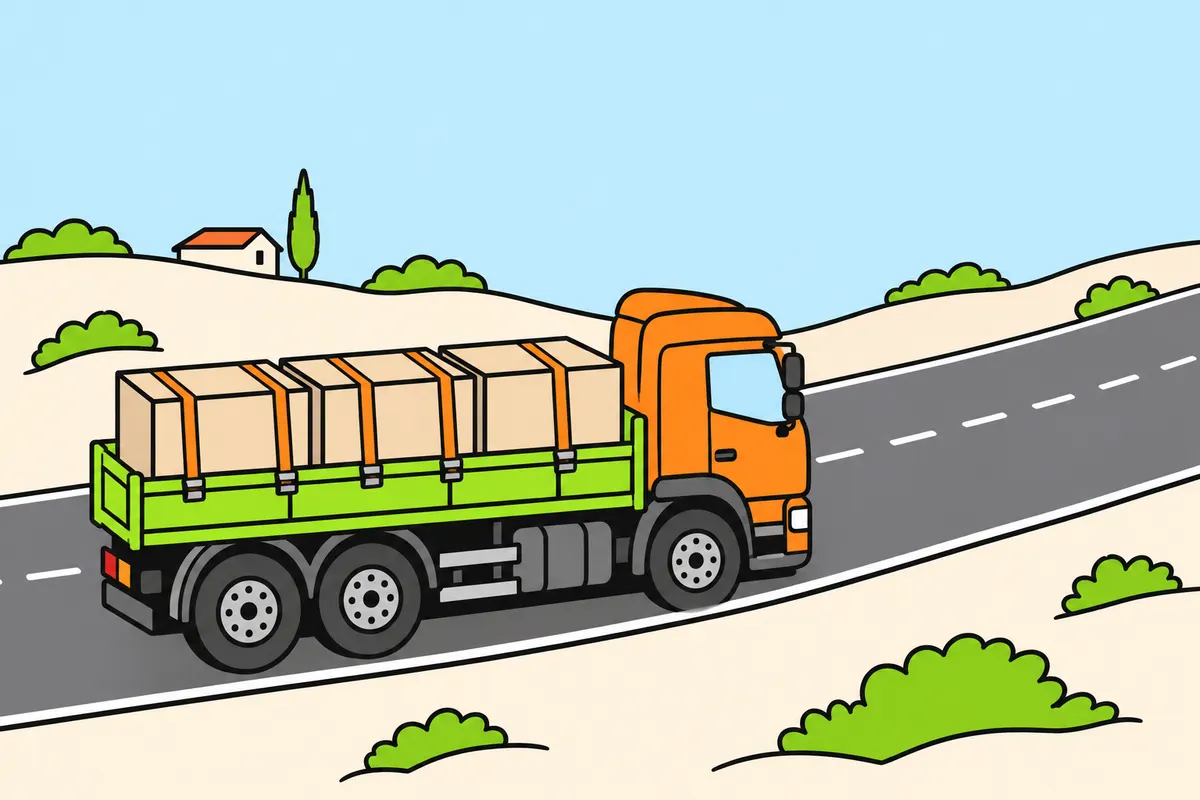
Anticipate slopes and choose gears that keep your lorry under control.
| Situation | What you must do |
|---|---|
| Climbing | Change down if pulling power is lacking |
| Descending | Control speed with a gear engaged, retarding systems and brakes |
Remember
- Before a climb, assess the gradient and load.
- Change down if revs fall and pulling power is lacking.
- Do not wait until the engine can barely move the lorry.
- Keep a suitable gear engaged on descents.
- Do not descend in neutral or with the clutch down.
Exam trap: Wrong: use the same gear on every hill. Right: adapt your gear choice.
Read the full explanation
- Before a climb, look at how the gradient develops and anticipate how much effort your loaded lorry needs. If you can maintain an adequate response within the engine's operating range, you do not need to change gear as a matter of routine. If engine speed falls and pulling power becomes insufficient, change down before engine speed drops too low.
- A lower gear multiplies torque at the wheels more for the same engine torque, without creating additional power. You must choose it according to the gradient and load. There is no compulsory gear for every hill, and you must not let the engine struggle until it can barely move the lorry.
- Before a descent, anticipate where you need to slow down and keep a suitable gear engaged to maintain control. Driving in neutral or with the clutch pedal pressed removes engine braking and is not a fuel-saving technique. Gear selection and the use of retarding and braking systems are explained in «Lorry brakes and retarders» and «Safe lorry driving».
14Stops and idling
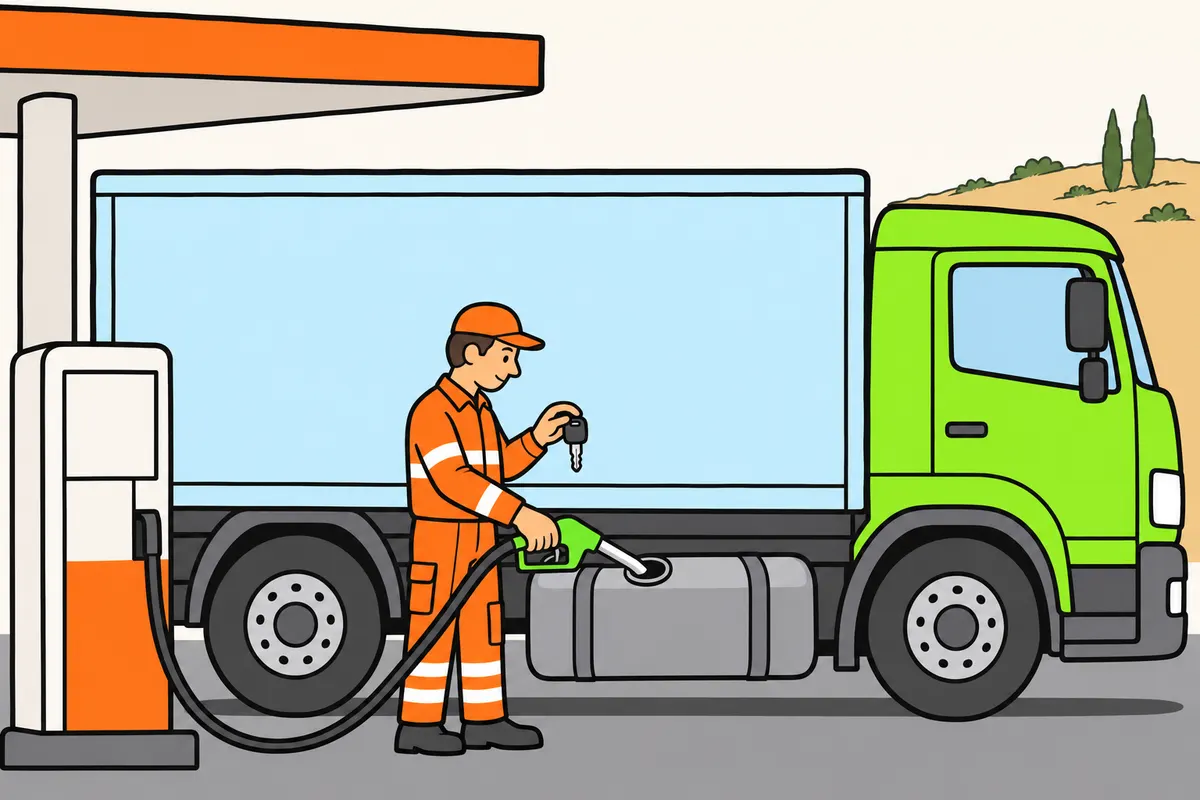
Avoid unnecessary idling and obey rules that require you to switch off.
| Term | What to remember |
|---|---|
| Idling | Engine running without pedal acceleration |
| Neutral | Transmission position; the engine can still use fuel |
| Fuel-saving advice | Switch off for expected stops over two minutes, unless auxiliary equipment needs continuous operation; follow the manual |
| Duty in a tunnel or enclosed place | Always switch off when stopped; after more than two minutes, keep the position lights on |
Remember
- Switch off when refuelling and whenever stopped inside a tunnel or enclosed place.
- Do this even if you stay at the wheel.
- If you wait there more than two minutes, keep the engine off.
- During that wait, keep the position lights on.
- Consider the manual and auxiliary equipment before applying the fuel-saving advice.
- Do not bypass automatic-stop safety conditions.
Exam trap: Wrong: confuse idling with neutral. Right: distinguish the engine from the transmission.
Read the full explanation
- Idling means the engine is running without you requesting acceleration through the pedal; neutral is a transmission position. You can consume fuel with the lorry stationary and the gearbox in neutral. The fact that the wheels are not moving does not mean the engine stops using fuel.
- As an efficiency tip, IDAE recommends switching off the engine when you expect a stop of more than two minutes, unless auxiliary equipment needs it to run continuously. Apply this guidance in accordance with the manual and your lorry's actual needs; it is a fuel-saving recommendation, separate from the RGC obligations in tunnels, enclosed places and when refuelling. [IDAE, Efficient driving manual for industrial vehicles, section 5.9](https://www.idae.es/uploads/documentos/documentos_Manual_de_conduccion_eficiente_488980a3.pdf).
- You must switch off the engine when refuelling and whenever your lorry is stopped inside a tunnel or enclosed place, even if you remain at the wheel. If the wait in the tunnel or enclosed place lasts more than two minutes, keep the engine off until you can continue and keep the position lights on. The other measures to take when stopped are explained in «Accidents, breakdowns and first aid», section «Breakdown, fire and traffic queues in tunnels». [RGC, art. 115.1 and 115.2](https://www.boe.es/buscar/act.php?id=BOE-A-2003-23514#a115).
- If your lorry has an automatic engine stop system, allow the system to manage engine operation under the specified conditions. It may be inhibited by the vehicle's needs. You must not bypass safety conditions or assume that a failure of the automatic stop system allows you to ignore an obligation to switch off the engine.
15Correct tyre pressure
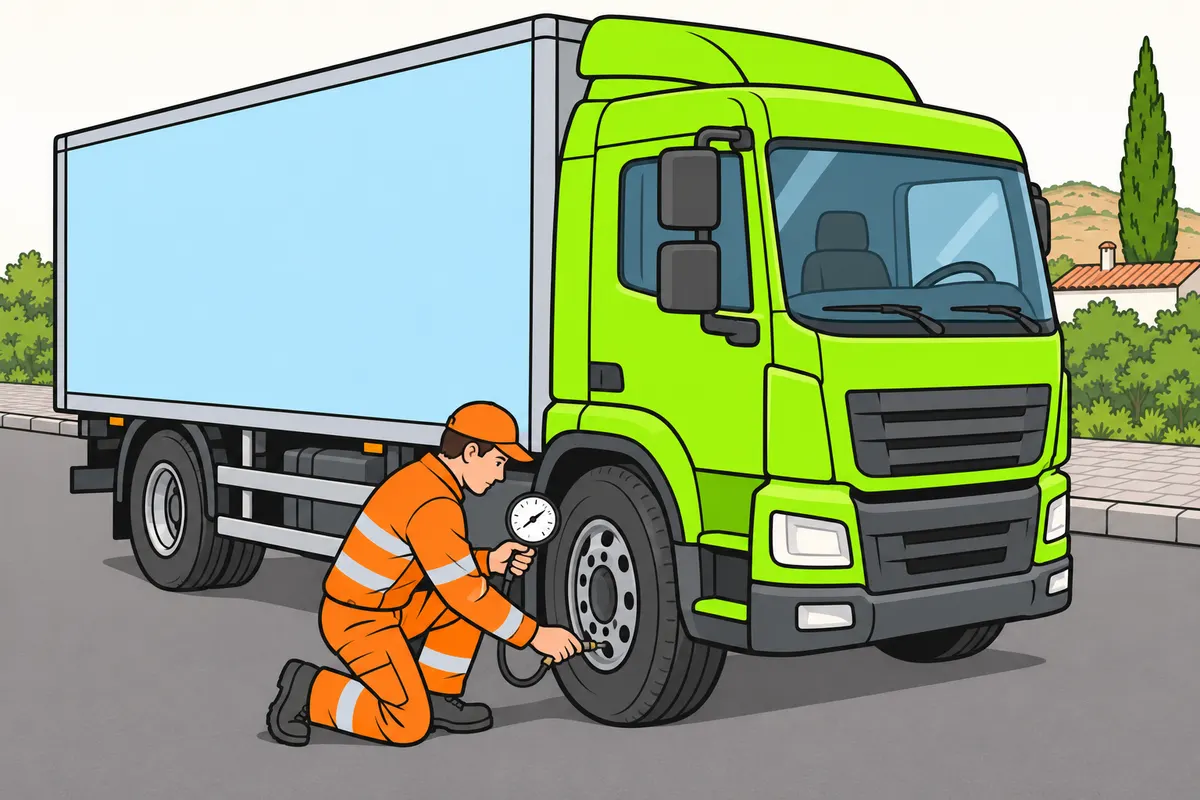
Check cold tyre pressures against the values for your lorry, tyres and load.
Remember
- Use the values for your vehicle, wheels, tyres and load.
- For hot readings, see “Lorry maintenance and checks”, section “Cold tyre pressure and wear”.
- Do not always choose the maximum pressure.
- Check every tyre, including inner tyres on twin wheels.
- A visual check does not replace measuring pressure.
Exam trap: Wrong: lower tyre pressure automatically when carrying more load. Right: use the values that apply to your lorry and load.
Read the full explanation
- You must check tyre pressures when the tyres are cold and use the values specified for the vehicle, tyre configuration and load. Consult the tables or instructions applicable to your lorry; do not copy a pressure from a car or another axle. [DGT, tyre checks](https://revista.dgt.es/es/motor/noticias/2017/0727Desgaste-neumaticos.shtml).
- To interpret a pressure reading taken when the tyres are hot, consult «Lorry maintenance and checks», section «Cold tyre pressure and wear».
- You must not always choose the highest available pressure or impose a fixed difference between axles. A loaded lorry and the same vehicle when empty may require different reference values. Base your decision on the applicable data, without automatically reducing tyre pressure because you are carrying a heavier load or driving at a higher speed.
- Check all tyres, including the inner tyres in twin-wheel configurations. A visual inspection helps you detect abnormalities but does not replace measurement. If you have electronic tyre pressure monitoring, understand its warnings and limitations and continue the checks specified for the vehicle.
16Rolling resistance, wear and the tyre label
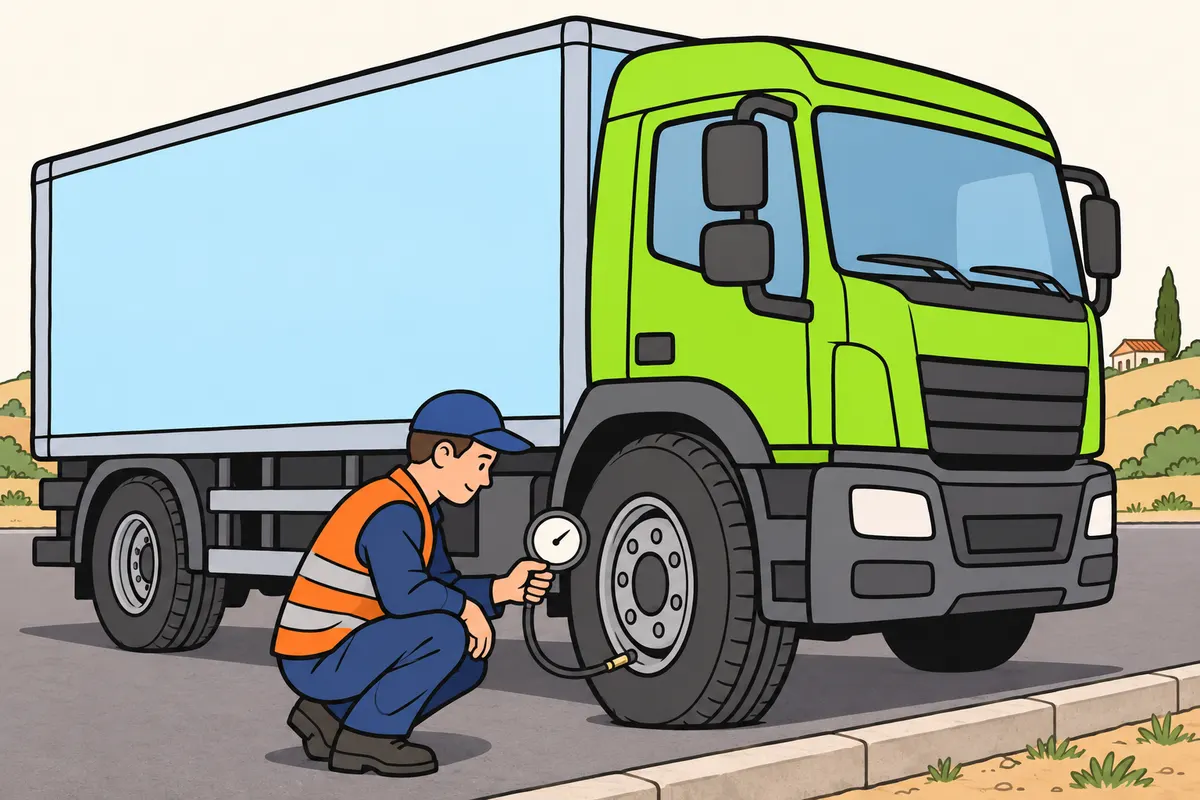
Use the specified tyre pressure and understand what the tyre label tells you.
| Pressure | Possible effects |
|---|---|
| Too low | More rolling resistance and fuel use |
| Too high | Poorer road contact and wear in the tread centre |
Remember
- Low pressure increases rolling resistance and fuel use.
- Do not confuse rolling resistance with resistance to wear.
- The label shows efficiency, wet grip and external noise.
- Label noise is not the noise inside your cab.
Exam trap: Wrong: overinflate to save fuel. Right: use the prescribed pressure.
Read the full explanation
- With insufficient tyre pressure, your lorry's rolling resistance and fuel consumption increase. [DGT, tyre checks](https://revista.dgt.es/es/motor/noticias/2017/0727Desgaste-neumaticos.shtml). The effects on heat build-up and wear are explained in «Lorry maintenance and checks», section «Cold tyre pressure and wear».
- Excessive pressure is not a correct fuel-saving measure either. It can impair contact with the road surface, promote wear in the centre of the tread and transmit more road irregularities. You must aim for the prescribed pressure, rather than a supposed fuel-consumption advantage gained by compromising grip or vehicle handling.
- The European tyre label provides information on efficiency linked to rolling resistance, wet grip and external noise. You must compare these performance characteristics and check that the tyre is suitable for your lorry. The label may include snow or ice markings where applicable. [Regulation (EU) 2020/740, annexes I and II](https://www.boe.es/buscar/doc.php?id=DOUE-L-2020-80878).
- Do not confuse rolling resistance with resistance to abrasive wear. You must not interpret the external noise shown on the label as a measure of the noise you hear in the cab either. This information does not specify the tyre pressure or promise an exact tyre lifespan.
17Carrying your load efficiently
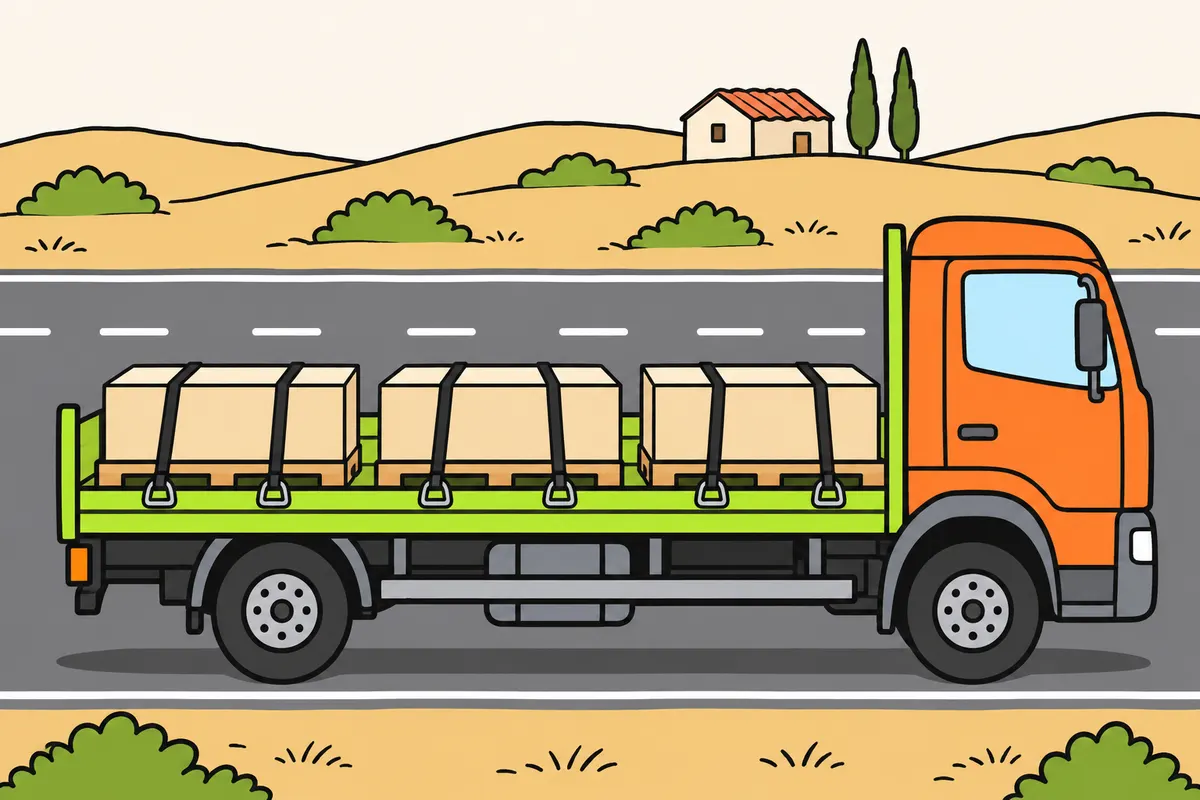
Plan and secure your load to save energy and keep the lorry stable.
Remember
- Remove unneeded items but keep required equipment.
- Avoid empty or repeated journeys where possible.
- Distribute and secure the goods properly.
- Avoid unnecessary noise, dust and disturbance.
- After partial unloading, check the remaining weight distribution.
Exam trap: Wrong: assume unloading always improves weight distribution. Right: check the remaining load distribution.
Read the full explanation
- You need more energy to set a more heavily loaded lorry in motion or drive it uphill than under equivalent conditions with less mass. You must remove equipment or materials that are unnecessary for the job, while always retaining the equipment you need. Keeping within the authorised mass does not remove the influence of weight on fuel consumption.
- Plan how to make the best use of transport capacity to avoid empty journeys or repeated movements where possible. You must organise the load in line with the job and the vehicle's limits. You do not measure the efficiency of a delivery solely by how much fuel the engine uses at a particular moment.
- Distribute and secure the goods correctly to maintain stability and prevent movements that force you to correct your course or speed. The load and its protective coverings must not cause avoidable noise, dust or nuisance. You study stowage in detail in «Load stowage and safety». [RGC, art. 14](https://www.boe.es/buscar/act.php?id=BOE-A-2003-23514#a14).
- After partial unloading, you must assess the remaining load distribution and the conditions in which the tyres are used. Do not assume that removing goods automatically improves every distribution of mass. Efficient transport requires you to keep the lorry handling properly throughout every stage of the journey.
18Air resistance and the Cx coefficient
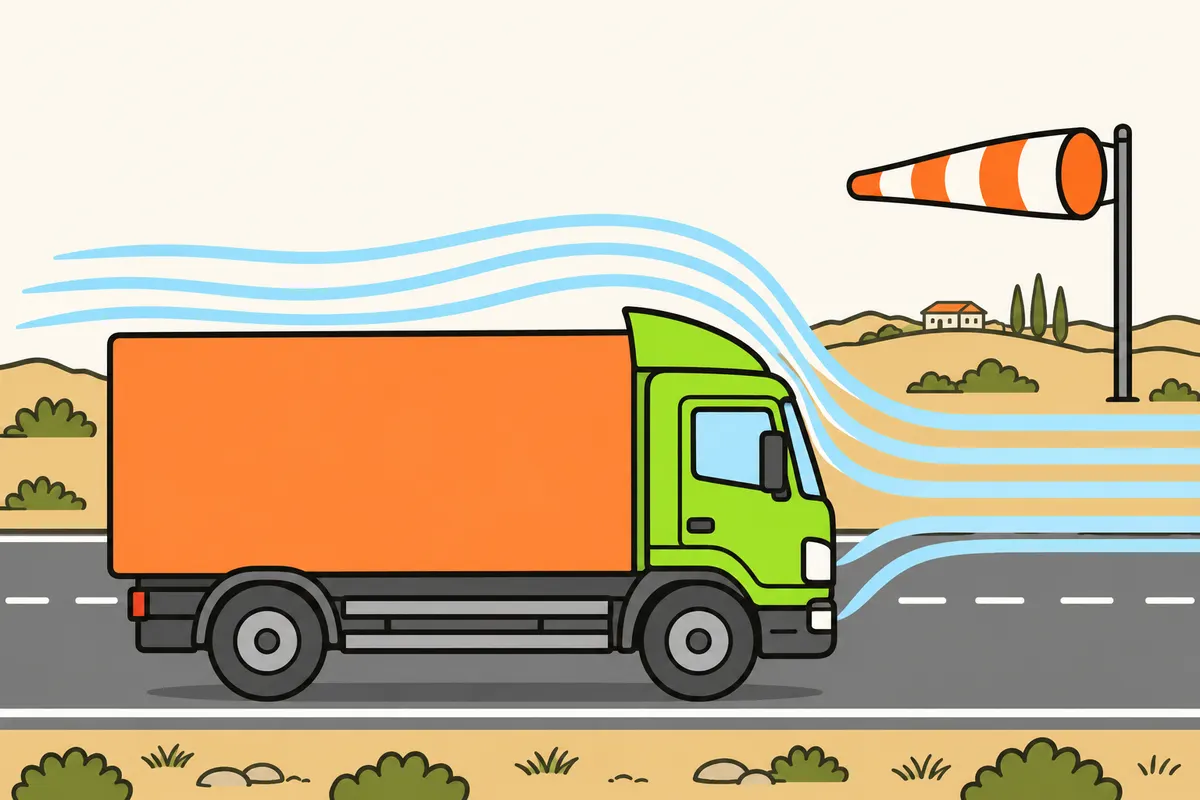
Consider your lorry’s shape and the wind when assessing fuel use.
| Wind | Effect to know |
|---|---|
| Headwind | May increase air resistance and fuel use |
| Moderate tailwind | May reduce air resistance |
Remember
- You can use a lot of fuel even when driving empty.
- Consider frontal area, body shape and speed through the air.
- Compare Cx with all other conditions kept equal.
- Reduce speed if the crosswind requires it.
Exam trap: Wrong: assume a lower Cx guarantees stability in a crosswind. Right: assess the wind.
Read the full explanation
- The engine must supply energy to overcome air resistance as you keep moving. In a lorry, frontal area, body shape and relative air speed all matter. You must avoid attributing fuel consumption solely to weight: you can also use a lot of fuel when driving empty.
- Cx is an aerodynamic coefficient that characterises the resistance associated with shape, rather than the resistance force itself. If you keep frontal area, speed and air conditions the same, a lower Cx reduces resistance to forward motion. Do not compare vehicles using this number alone.
- Longitudinal resistance and crosswind effects act differently on your lorry. A favourable Cx alone does not guarantee greater stability or less sideways deviation. Wind may require you to reduce speed for safety even if your bodywork has features designed to improve fuel consumption.
- At the same speed relative to the ground, a headwind increases relative air speed and may increase fuel consumption. A moderate wind blowing directly from behind can reduce this resistance.
19Deflectors, bodywork and windows
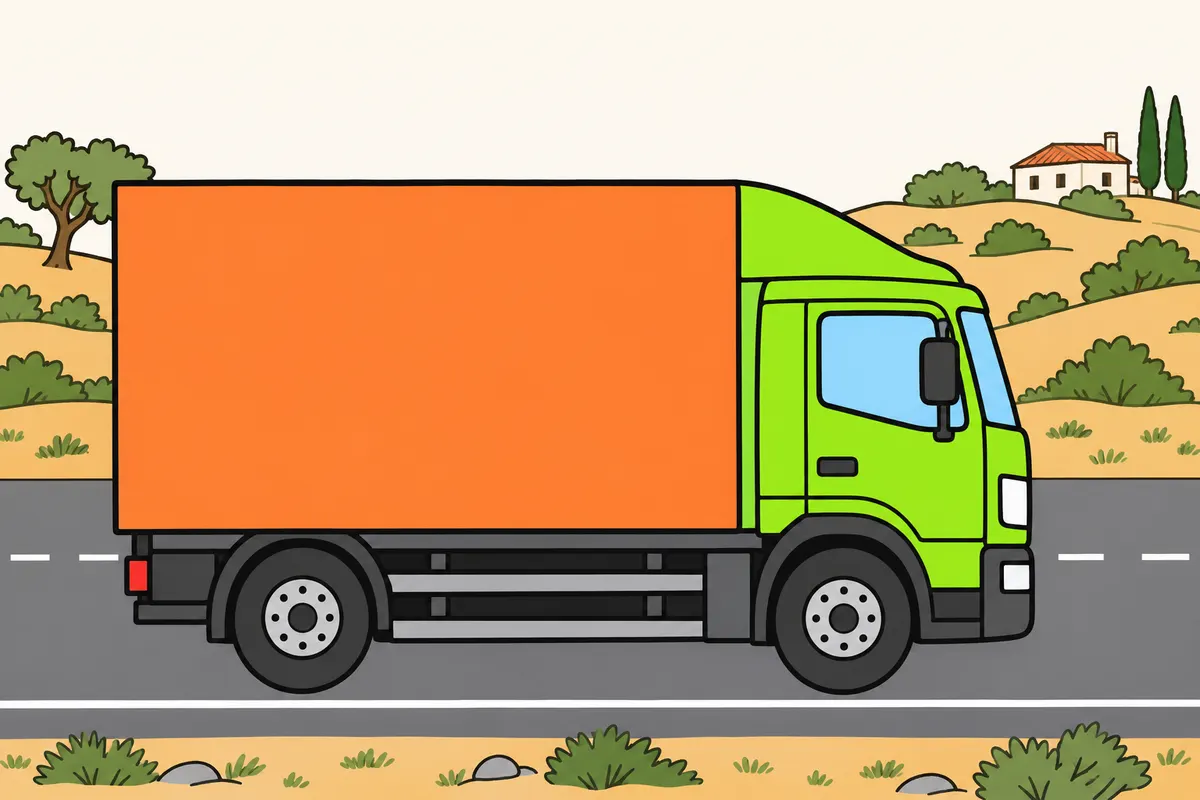
Adjust deflectors and secure coverings to reduce air resistance.
Remember
- Set deflectors to the bodywork’s height and shape.
- Check their condition and position against the maker’s instructions.
- Secure sheets and covers without loose flapping parts.
- Use ventilation and climate control sensibly on open roads.
- Keep demisting and your attention on driving.
Exam trap: Wrong: assume any spoiler saves fuel on every lorry. Right: check its fit and suitability.
Read the full explanation
- Suitable, correctly adjusted deflectors direct airflow and can reduce drag and fuel consumption. You must adjust them to suit the actual height and configuration of the bodywork or vehicle combination. They are not decorations, and fitting just any spoiler does not guarantee an improvement on every type of lorry.
- Check that aerodynamic components are in good condition and in their intended position. A deflector adjusted for a different configuration may be less effective. You must follow the fitting and adjustment instructions, without making improvised changes to components in pursuit of supposed savings.
- Tarpaulins and protective covers must be correctly positioned and secured; avoid loose surfaces that flap or project unnecessarily. As well as causing a nuisance and creating risks, they can disrupt airflow. When seeking better aerodynamics, you must preserve their functions of protecting and securing the load.
- Driving with the windows open can increase drag. At road speeds, it is usually advisable to use the vehicle's ventilation and climate control sensibly. You must not assume that opening a window increases consumption by a fixed percentage, or compromise demisting or your attention by switching off all energy-consuming equipment.
20Maintenance and auxiliary energy use
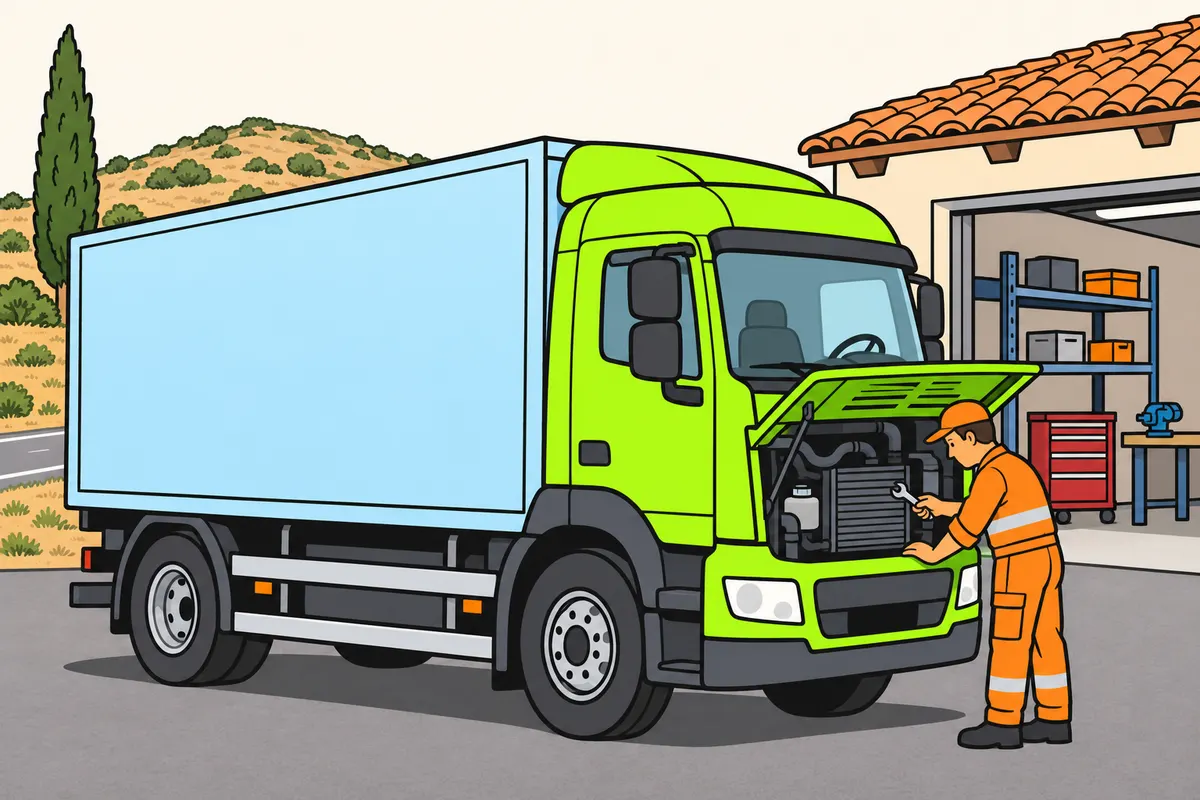
Maintain your lorry and use its equipment without risking safety or the load.
Remember
- Follow the maker’s maintenance instructions.
- Use approved fuels and lubricants.
- Get a diagnosis if you notice unusual smoke or loss of power.
- Do not alter emissions-control equipment.
- Keep equipment needed for driving and protecting the goods.
Exam trap: Wrong: use petrol-engine spark-plug advice for your diesel lorry. Right: check the equipment it actually has.
Read the full explanation
- You must maintain the engine and its fuel supply, air intake, lubrication and cooling systems in accordance with the manufacturer's instructions. Faulty operation can increase fuel consumption, smoke and wear. Postponing necessary work is not a way to save money: it can increase your costs and put the lorry's availability at risk.
- You must not automatically apply advice about petrol-engine spark plugs to your diesel lorry. Attend to the filters, injection system and equipment actually fitted to it. If you notice abnormal smoke or a loss of performance, seek a diagnosis without assuming that a single component is definitely responsible.
- Use fuel and lubricants approved by the manufacturer. A different fuel or an oil chosen solely for its price does not guarantee savings and may damage the system. You must not tamper with emissions control equipment in an attempt to improve fuel consumption or avoid maintaining it.
- Air conditioning and auxiliary equipment require energy. Use them sensibly while maintaining visibility and suitable driving conditions; you must not switch off a system needed for the load or for safety. In refrigerated transport, keeping the goods in the required condition forms part of the service.
21Emissions and interpreting fuel consumption
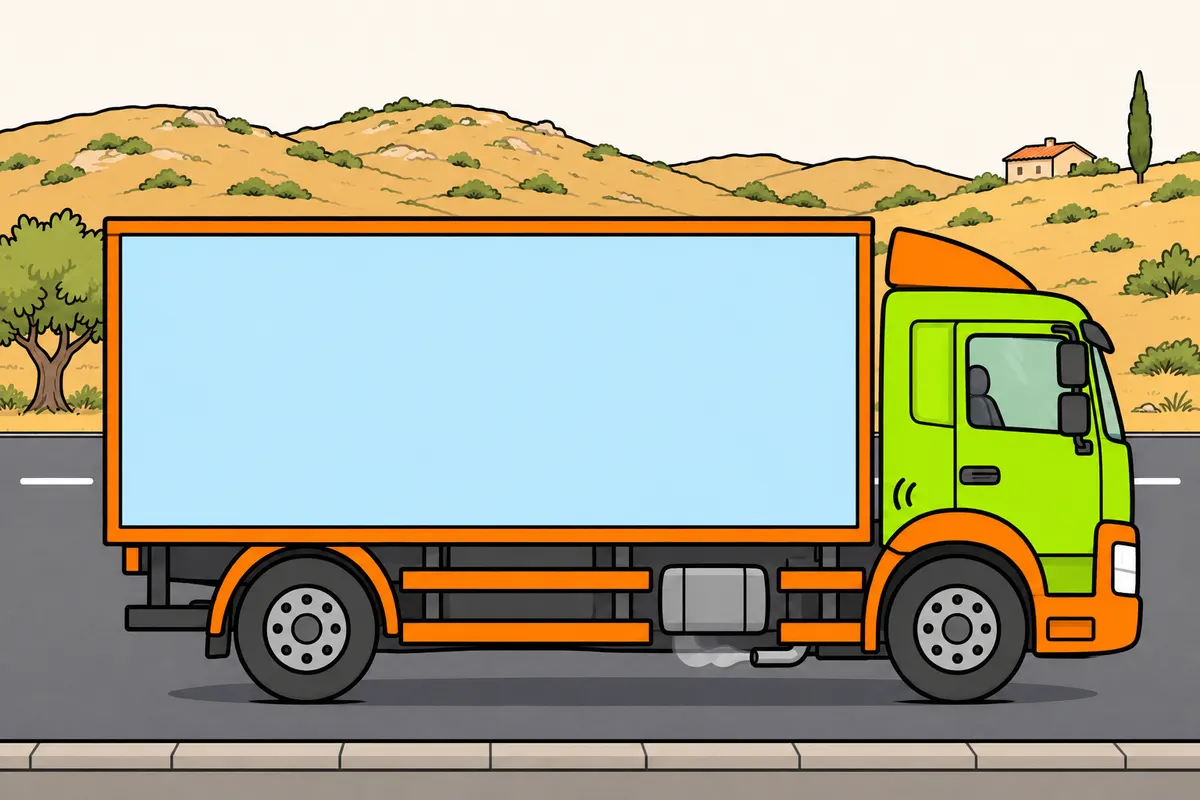
Compare fuel use in similar conditions and keep emissions within the limits.
| Reading | What it tells you |
|---|---|
| Instantaneous consumption | Fuel use at that moment |
| Average consumption | Fuel use over a period |
Remember
- Distinguish carbon dioxide from other exhaust pollutants.
- Do not emit smoke that harms others or blocks their view.
- Reset the average when starting a stage to assess that stage separately.
- Compare similar loads, traffic, gradients and wind.
- Do not keep looking at the fuel display.
Exam trap: Wrong: infer every exhaust emission from fuel use alone. Right: distinguish each type of emission.
Read the full explanation
- Carbon dioxide, CO₂, is linked to the consumption of fuels containing carbon; nitrogen oxides and particulates are pollutants that affect air quality. Reducing fuel use usually reduces CO₂, but this alone does not allow you to determine each exhaust emission.
- You must not drive with gas, smoke or noise emissions above the applicable limits, or emit smoke that obstructs other drivers' visibility or is harmful. You must cooperate with tests to detect defects. [RGC, art. 7.1 and 7.2](https://www.boe.es/buscar/act.php?id=BOE-A-2003-23514#a7).
- Consumption in litres per 100 kilometres expresses the fuel used over a distance. To interpret the figure, identify the period and route summarised by the on-board computer. If you reset the average at the start of a journey stage, you can assess that stage separately from the cumulative consumption during the transport operation.
- To assess your improvement, compare similar routes and conditions: load, traffic, gradient and wind can change the result. Instantaneous consumption gives you an indication of a particular situation, while the average summarises a period. You must not distract yourself by continually looking at the display or pursue a figure at the expense of safety.
22Your lorry's environmental classification
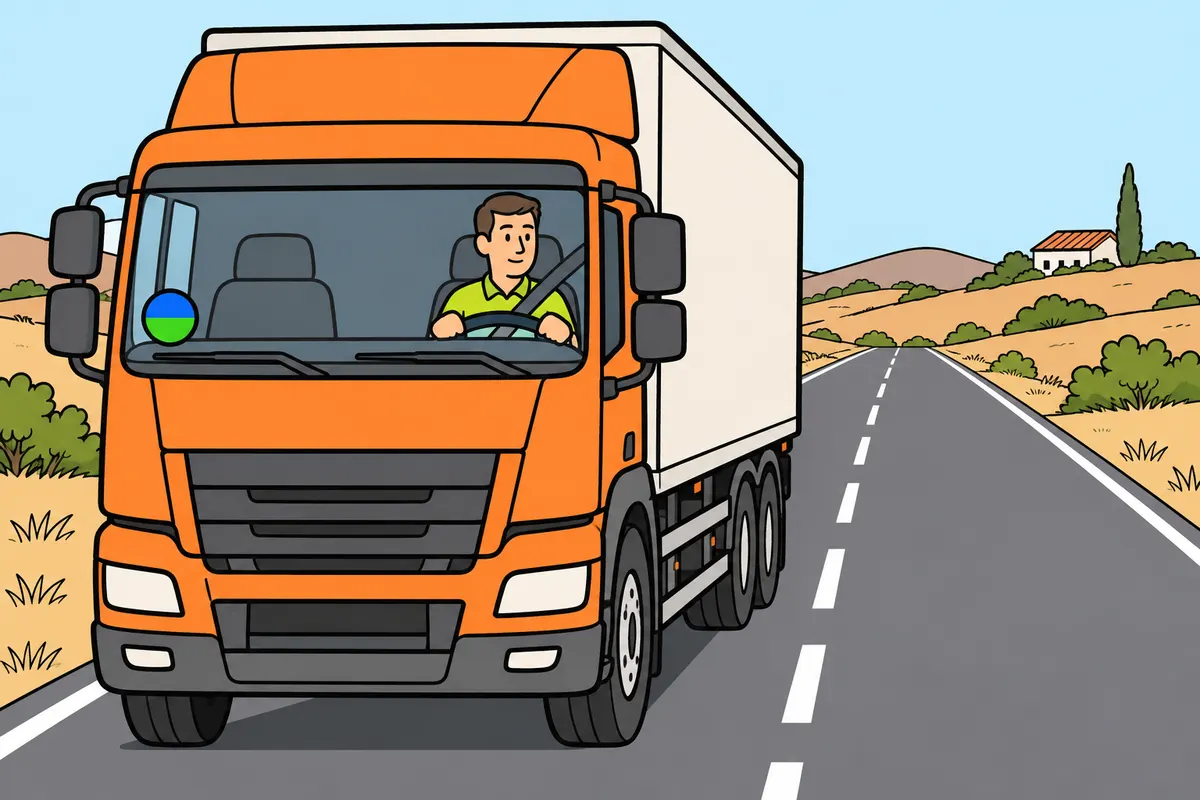
Recognise your lorry’s environmental classification and its specific requirements.
| Classification | N2/N3 lorry criteria |
|---|---|
| 0 emissions | Blue; battery electric, extended-range electric, hydrogen, fuel cell, or plug-in hybrid with at least 40 km electric range on NEDC |
| ECO | Blue and green; gas vehicles, non-plug-in hybrids and plug-in hybrids below 40 km electric range; must meet C criteria |
| C | Green; petrol or diesel, Euro VI/6 |
| B | Yellow; petrol or diesel, Euro IV/4 or V/5 |
| A | No badge |
Remember
- Identify environmental badge V-25.
- For C, your petrol or diesel lorry must meet Euro VI/6.
- For B, it must meet Euro IV/4 or Euro V/5.
- For ECO, check that it also meets C criteria.
- For plug-in hybrids, check electric range, not total range.
- Do not confuse environmental badge C with your driving licence.
Exam trap: Wrong: assign ECO to any gas-powered lorry. Right: also check the C requirements.
Read the full explanation
- The V-25 environmental badge identifies the classification recorded in the Registro de Vehículos (Vehicle Register). The classifications with badges are 0 emisiones (zero emissions), ECO, C and B; category A covers vehicles that do not meet the requirements of those classifications and has no badge. [RGV, Annex II.E and Annex XI, V-25](https://www.boe.es/buscar/act.php?id=BOE-A-1999-1826).
- For lorries in categories N2 and N3, classification C covers Euro VI/6 petrol or diesel vehicles. Classification B covers Euro IV/4 or V/5 petrol or diesel vehicles. You must use these heavy-vehicle criteria when answering test questions. [RGV, Annex II.E](https://www.boe.es/buscar/act.php?id=BOE-A-1999-1826#ie).
- For a lorry, ECO includes plug-in hybrids with an electric range of less than 40 km, non-plug-in hybrids and vehicles powered by GNC (compressed natural gas), GNL (liquefied natural gas) or GLP (liquefied petroleum gas), provided they also meet the criteria for classification C. Check this type-approval requirement in your lorry's registered details. [RGV, Annex II.E](https://www.boe.es/buscar/act.php?id=BOE-A-1999-1826#ie).
- The 0 emisiones classification includes battery electric vehicles, range-extended electric vehicles, hydrogen vehicles, fuel-cell vehicles and plug-in hybrids with a minimum electric range of 40 km under the NEDC cycle. The range that counts towards this threshold is the electric range. [RGV, Annex II.E](https://www.boe.es/buscar/act.php?id=BOE-A-1999-1826#ie).
- The 0 badge has a blue background; ECO is blue and green; C is green; and B is yellow. The letter C on a badge describes an environmental classification; it does not identify the driving licence category. A lorry driven with a category C licence may have a different environmental classification. [RGV, Annex XI, V-25](https://www.boe.es/buscar/act.php?id=BOE-A-1999-1826).
23Checking and displaying the badge
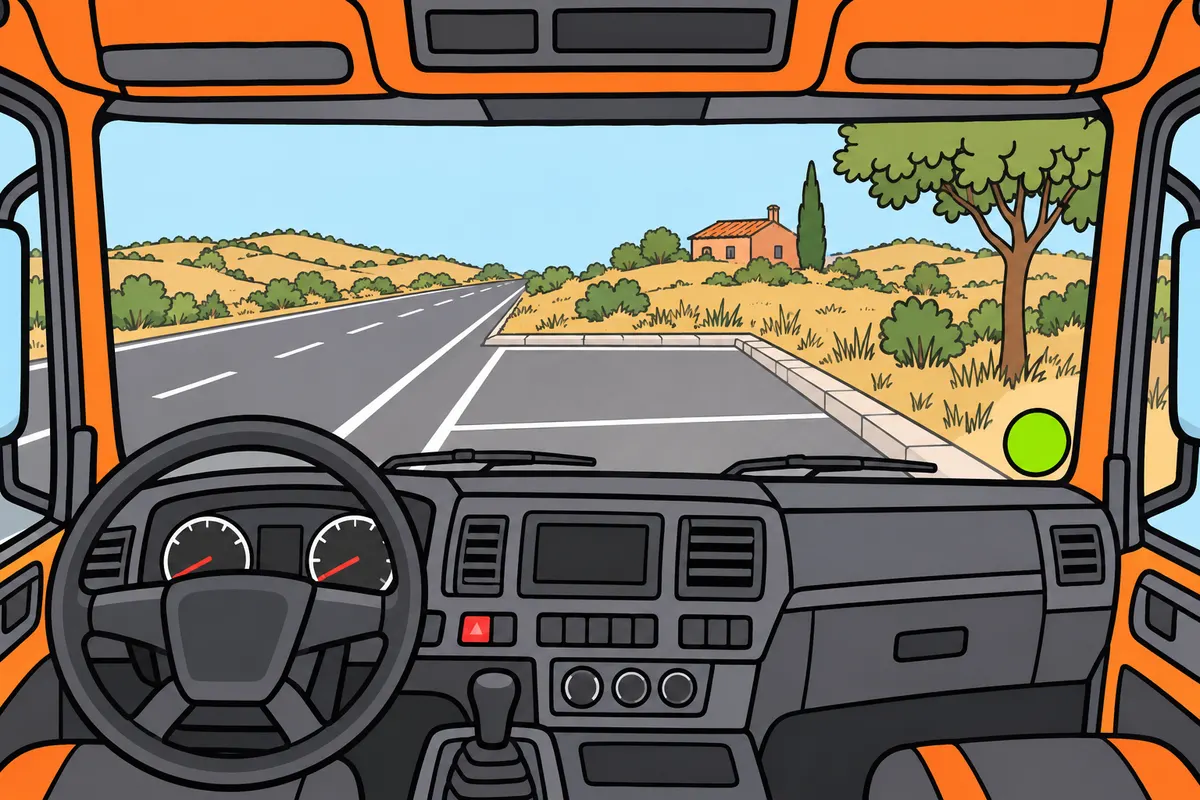
Check your registered classification and display the badge where it belongs.
Remember
- Check your classification by registration number through official DGT services.
- Check whether local rules require you to display the badge.
- If displayed, stick it inside your front windscreen, in the lower right-hand corner.
- Check delivery or access authorisations separately.
Exam trap: Wrong: assign a badge from fuel or year alone. Right: check registered details.
Read the full explanation
- Check your lorry's classification using its registration number through the DGT's official services. You must rely on its registered details and type-approval characteristics, without assigning a badge solely on the basis of its appearance, its advertised fuel type or the registration year you remember.
- Displaying the badge is generally voluntary, but the competent authority may expressly make it compulsory in its regulations. You must check the conditions at your destination. Qualifying for a classification and being required to display its badge are separate matters. [RGV, Annex XI, V-25](https://www.boe.es/buscar/act.php?id=BOE-A-1999-1826).
- When you display the badge on your lorry, you must attach it to the inside of the front windscreen, in the bottom right-hand corner. Position it so that you retain the necessary visibility from the driving seat. [RGV, Annex XI, V-25.3](https://www.boe.es/buscar/act.php?id=BOE-A-1999-1826#v2).
- The badge indicates a classification and may serve as a criterion for a restriction. You must check separately which authorisation your particular journey requires.
24Entering a ZBE (low-emission zone) with goods
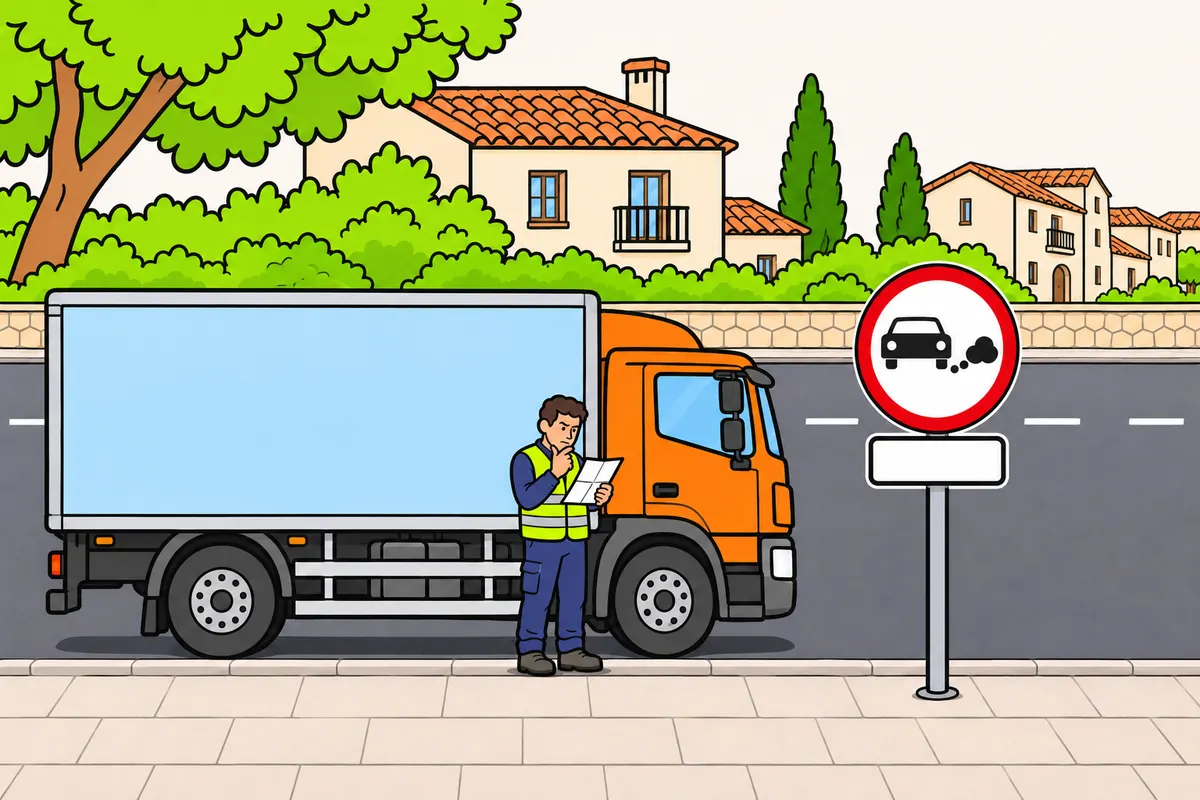
Check each low-emission zone’s rules before entering with goods.
Remember
- Read sign R-120 and the conditions on its accompanying panel.
- Check permitted categories, times and authorisations.
- Check the route’s size and weight limits too.
- A delivery does not automatically exempt you.
- If you cannot enter, plan an authorised alternative first.
Exam trap: Wrong: assume a badge allows entry into every ZBE. Right: check local rules.
Read the full explanation
- In a zona de bajas emisiones (low-emission zone), access, driving and parking may be restricted according to the vehicle's pollution potential. You must check the specific regulations for the municipality and your destination area. The environmental classification is a criterion for restrictions, not a nationwide entry permit. [RD 1052/2022, art. 5](https://www.boe.es/buscar/act.php?id=BOE-A-2022-22689#a5).
- Sign R-120 indicates that entry is prohibited on the basis of the environmental badge or other environmental criteria. You must read the conditions on the accompanying supplementary plate or sign. Its meaning is not limited to cars because of the picture it contains. [RD 465/2025, catalogue, R-120](https://www.boe.es/buscar/doc.php?id=BOE-A-2025-12199).
- Before making a delivery, check which categories may enter, the times, the authorisations and the loading and unloading conditions that apply. Carrying goods or having a delivery address inside the zone does not in itself give you an environmental exemption. You must verify it explicitly.
- Entry permitted by environmental classification may coexist with other restrictions along the route. You must also check that the lorry can reach the destination given its size, mass and the conditions of the transport operation. Likewise, authorisation to use a loading and unloading area does not automatically settle access to the ZBE.
- If you do not meet the entry conditions, reorganise the route or delivery using an authorised alternative before you reach the entrance. You must not follow another lorry on the assumption that its authorisation also covers you. Planning avoids unplanned braking, turns and waits beside the sign.
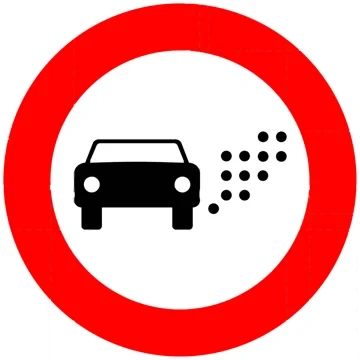 R-120
25Reducing transport noise
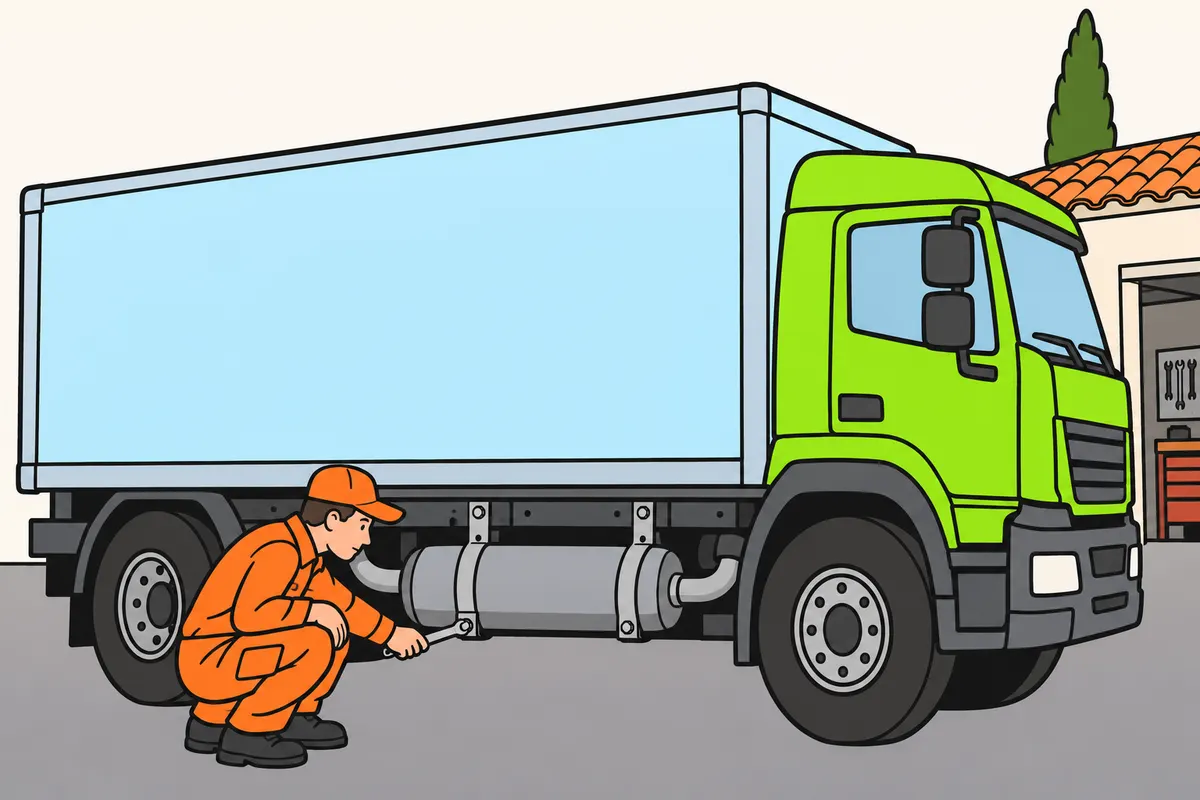
Reduce unnecessary noise and keep the exhaust in good condition.
Remember
- Avoid needless revving and high engine speeds.
- Do not drive with an unsilenced exhaust, even outside built-up areas.
- Keep a complete, suitable, effective silencer; avoid damage and resonator pipes.
- Maintain the device that prevents unburnt fuel from being discharged downwards.
- Use the horn only when permitted.
- Avoid banging doors and loose equipment during deliveries; follow local conditions.
Exam trap: Wrong: use the horn to hurry someone. Right: use it only for a permitted warning.
Read the full explanation
- Avoid unnecessary bursts of acceleration and excessive engine speeds when they do not provide necessary performance. Your lorry also produces noise from tyre contact with the road, the transmission, bodywork and load. Driving smoothly and keeping components in good condition reduces disturbance while preserving the functions you need to drive safely.
- On urban and interurban roads, you must not drive with an unsilenced exhaust, without the compulsory silencer, or with exhaust gases routed through an incomplete, unsuitable or damaged silencer or through resonator pipes instead of an effective silencer. Your combustion-engined lorry must also have a device that prevents unburnt fuel from being discharged downwards. You must keep these components in working order. [RGC, art. 7.2](https://www.boe.es/buscar/act.php?id=BOE-A-2003-23514#a7).
- Do not use your horn to express anger or impatience. You may use audible warnings in the circumstances allowed by the regulations, such as to avoid a possible accident or to warn others outside built-up areas that you intend to overtake. You must avoid unjustified or excessive use. [RGC, art. 110](https://www.boe.es/buscar/act.php?id=BOE-A-2003-23514#a110).
- When making deliveries, avoid slamming doors and unnecessarily noisy operations. Check that catches, supports and auxiliary equipment work without abnormal vibrations, and comply with local conditions for the delivery service. Permissible noise depends on the regulations applicable to the vehicle and the activity; there is no single decibel level for all lorries and situations.
Prepare an efficient delivery round
Check that the route and the lorry allow you to complete the service without improvising.
- Check the destination, access points, ZBE restrictions and delivery conditions.
- Choose a route suitable for your lorry and check traffic, roadworks and weather conditions.
- Organise deliveries and breaks to reduce unnecessary travel.
- Check load distribution, the specified tyre pressures and deflector adjustment.
- Move off when the vehicle is ready and adapt your plan if conditions change.
Select an economical gear
Match the power demand to the engine speed you have after changing gear.
- Observe the traffic and gradient and assess your lorry’s load.
- Check the engine speed and its economical range according to the manufacturer.
- Choose a gear that provides sufficient response after the change.
- Change gear smoothly; skip a gear only if the transmission and conditions allow it.
- Check the response and change down if the gear is too high.
Slow down as you approach a traffic queue
Use observation and space to avoid late braking.
- Identify changes in traffic early and check behind you too.
- Release the accelerator while keeping a suitable gear engaged.
- Use the retarding systems and brake as required by the distance and available grip.
- Change down progressively without over-revving the engine or losing control.
- Stop with a safety margin and keep watching approaching vehicles.
Check environmental access restrictions
Decide whether your lorry is authorised before entering the restricted zone.
- Look up your lorry’s registered environmental classification using its registration number.
- Check municipal regulations and delivery conditions in the destination zone.
- Check whether you need to display a badge or hold specific authorisation.
- Read sign R-120 and the conditions on its supplementary plate or information board.
- Enter only if you meet the conditions; otherwise, use an authorised alternative.
Finished this module?
Mark it as read and you will see your progress on the theory list.