
Theory · A1 Licence - 125 cc Motorcycle · Module 17 of 18
Preventive and efficient motorcycle riding
You learn to observe, anticipate and keep space to respond to unexpected situations on your motorcycle. You know how to reduce fuel consumption and noise by riding smoothly, choose the right gear and tyre pressures, and interpret environmental stickers and ZBE (low-emission zone) restrictions. For the exam, you distinguish legal obligations from efficiency advice and avoid applying criteria intended for cars to a motorcycle.
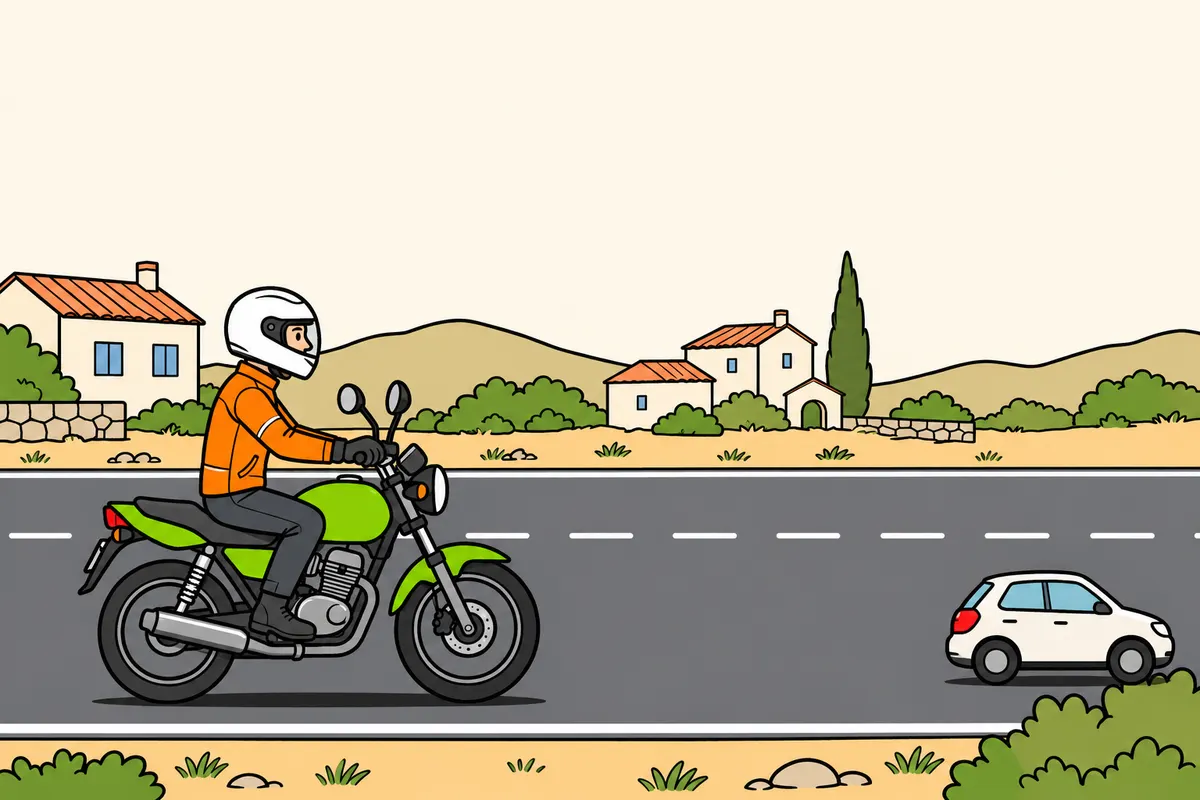
1Prevention means preparing your response
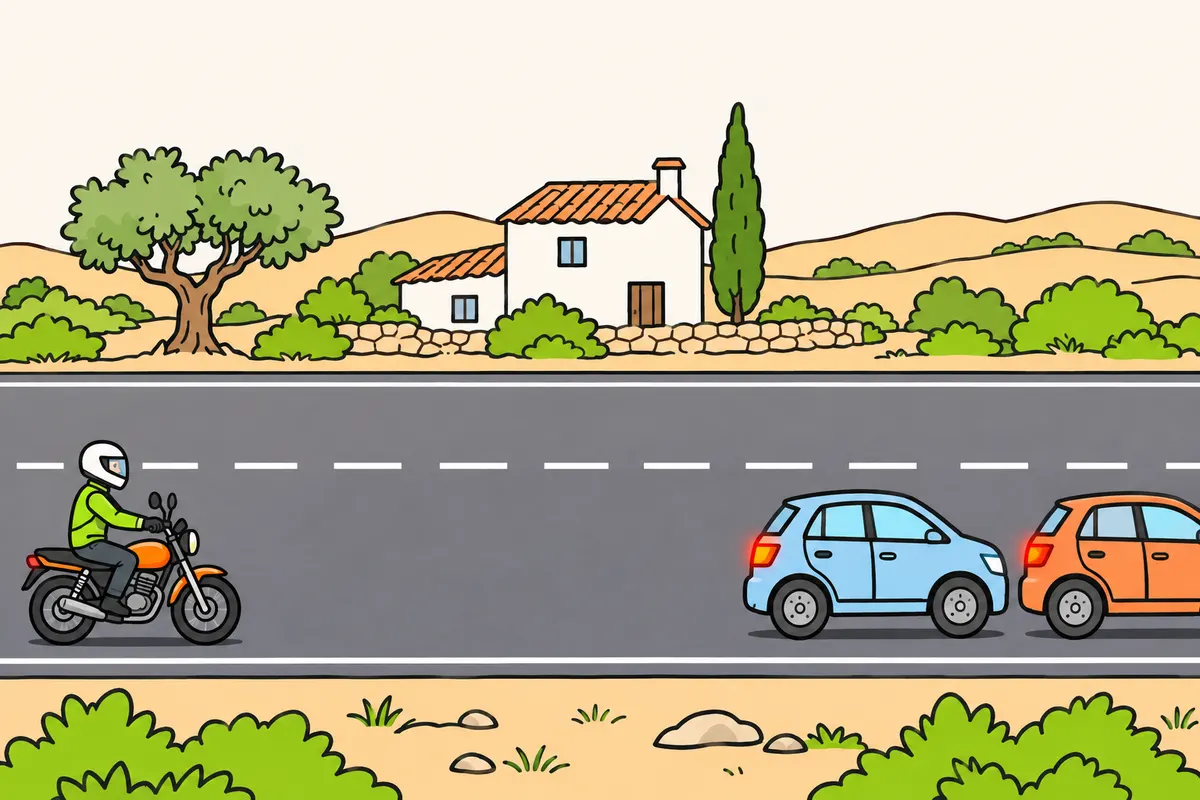
Observe and leave space so you can respond in time.
Remember
- Keep watching throughout your journey, even on familiar streets.
- Think about what could happen before you reach a hazard.
- Leave space so you can act smoothly.
- Avoid accelerating if you will soon need to brake.
- Remember that other drivers may struggle to see your motorcycle.
Exam trap: Wrong: your experience lets you predict everything. Right: keep observing and leaving space throughout your journey.
Read the full explanation
- Preventive riding means gathering information and keeping enough room to respond before a situation becomes critical. You must do this throughout your journey, even on a familiar street with little traffic. Experience helps you interpret what you observe, but does not allow you to predict every movement other road users make.
- Use observation, anticipation and space: observe your surroundings, anticipate what may happen and leave enough room to act. If you spot a queue but keep accelerating until you reach it, you waste that information. If you see a hazard but ride too close, you may lack the room to avoid it.
- On a motorcycle, you need to consider your balance and the fact that you are less visible to other drivers. You must not rely on agility or acceleration to make up for a situation you have failed to prepare for. An early, smooth decision usually demands less grip than an urgent correction to your speed or path.
- Efficient riding involves the same preparation: avoiding acceleration that you soon have to undo reduces unnecessary effort. You can ride smoothly without riding fast. You must consider the overall result of your decisions, including whether an apparent time saving leads you to brake immediately afterwards.
2Preparing your journey
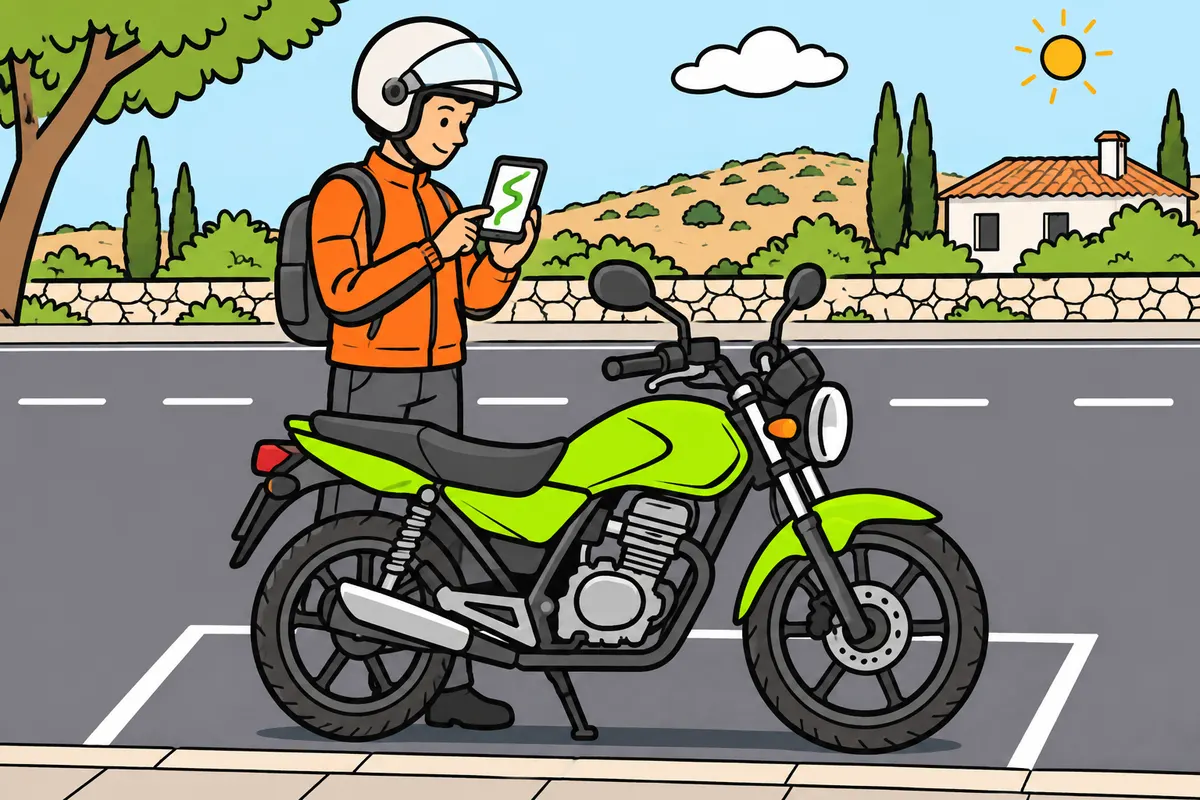
Plan your route so you can travel without rushing or making sudden decisions.
Remember
- Check traffic, roadworks and weather before setting off.
- Set your satnav while stopped somewhere safe where stopping is allowed.
- Keep spare fuel or energy for possible diversions.
- Plan breaks and avoid arrival times that pressure you to speed.
- Check whether you can enter your destination’s low-emission zone.
- Consider walking, cycling or public transport for short journeys.
Exam trap: Wrong: the shortest route always saves most. Right: consider stops and traffic flow.
Read the full explanation
- Before setting off, check your route, traffic, roadworks and the weather forecast. Choose a route suited to your experience and your motorcycle's characteristics, rather than considering only the distance in kilometres. A short route with many stops may be less efficient and demand more attention than one with flowing traffic.
- Set up your navigation device with the motorcycle stopped somewhere safe where stopping is permitted. Decide on important turns, your arrival point and alternatives if you encounter restricted access in advance. This avoids having to make a decision just when you need to watch pedestrians and vehicles and maintain your balance at the same time.
- Work out how much fuel or energy you have available, allowing a margin for diversions and queues, without deliberately using up your entire range. The dashboard reading is an aid: wind, gradients, load and riding pace can change how far you can travel.
- Plan your breaks and avoid setting an arrival time that puts pressure on you to speed. If your destination is inside a ZBE (low-emission zone), check access before you set off. Environmental and preventive planning complement each other: a planned alternative avoids unnecessary detours and improvised manoeuvres near the entrance.
- Consider whether walking, cycling or public transport suits your journey better, especially for very short trips. If you choose a motorcycle for everyday use, compare fuel consumption, emissions, weight, ergonomics and maintenance between models suited to your licence and needs. A description such as sports bike, scooter or retro bike does not in itself guarantee economy or ease of handling. [DGT, efficient driving](https://www.dgt.es/muevete-con-seguridad/conviertete-en-un-buen-conductor/consejos-generales/conduccion-eficiente/).
3Looking far ahead and scanning nearby
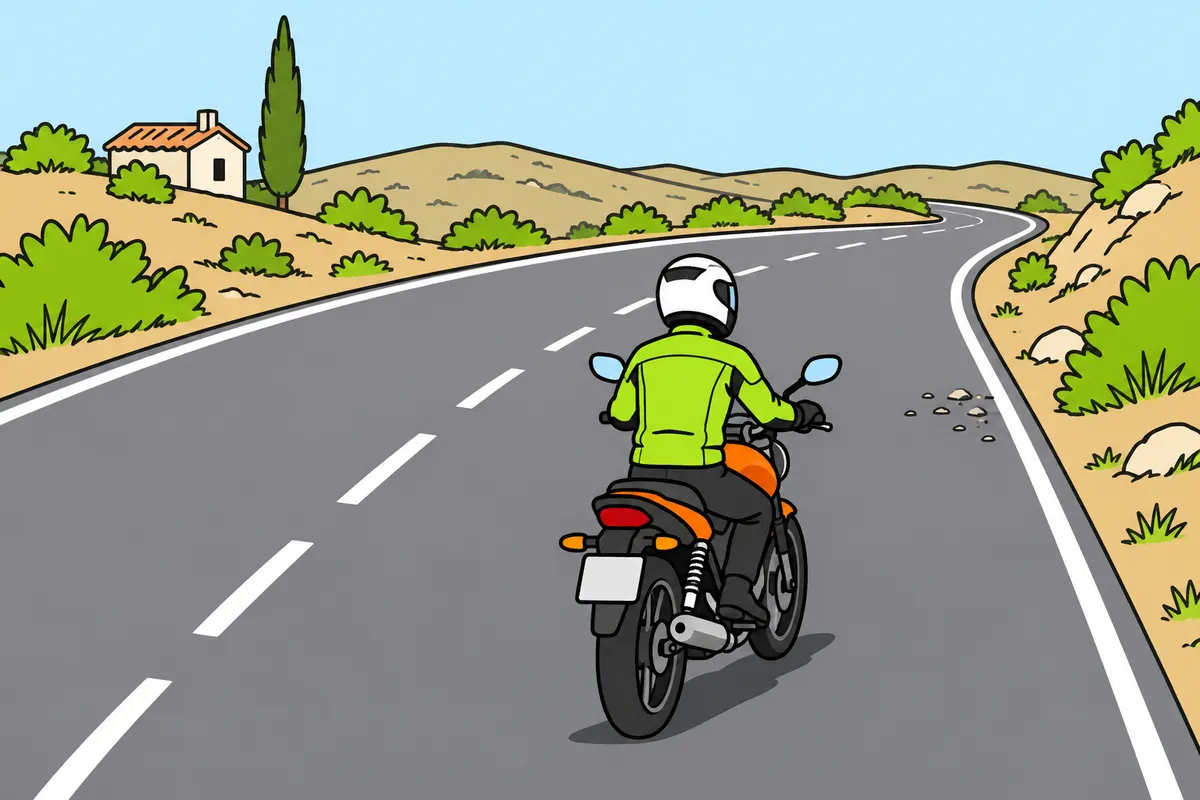
Look far ahead and nearby so you can adjust your riding early.
Remember
- Alternate between looking ahead and checking nearby areas.
- If you see a queue, prepare to slow down smoothly.
- Before a climb, choose a gear that keeps your engine responsive.
Exam trap: Wrong: seeing the queue is enough. Right: use that information to slow down early.
Read the full explanation
- Alternate between observing the road ahead and checking nearby areas to anticipate where you need to ease off the throttle or adjust your speed; visual scanning is covered in “Looking far ahead and recognising nearby hazards”, in the “Risks and prevention on a motorbike” module.
- Turn what you observe into a gradual response: if you see a queue, start preparing to slow down while you still have space. On a 125 cc motorcycle, anticipating an uphill stretch also allows you to select the right gear before the engine becomes less responsive. This links information from your surroundings to efficient use of the throttle and gears.
4Blind spots and seeing each other
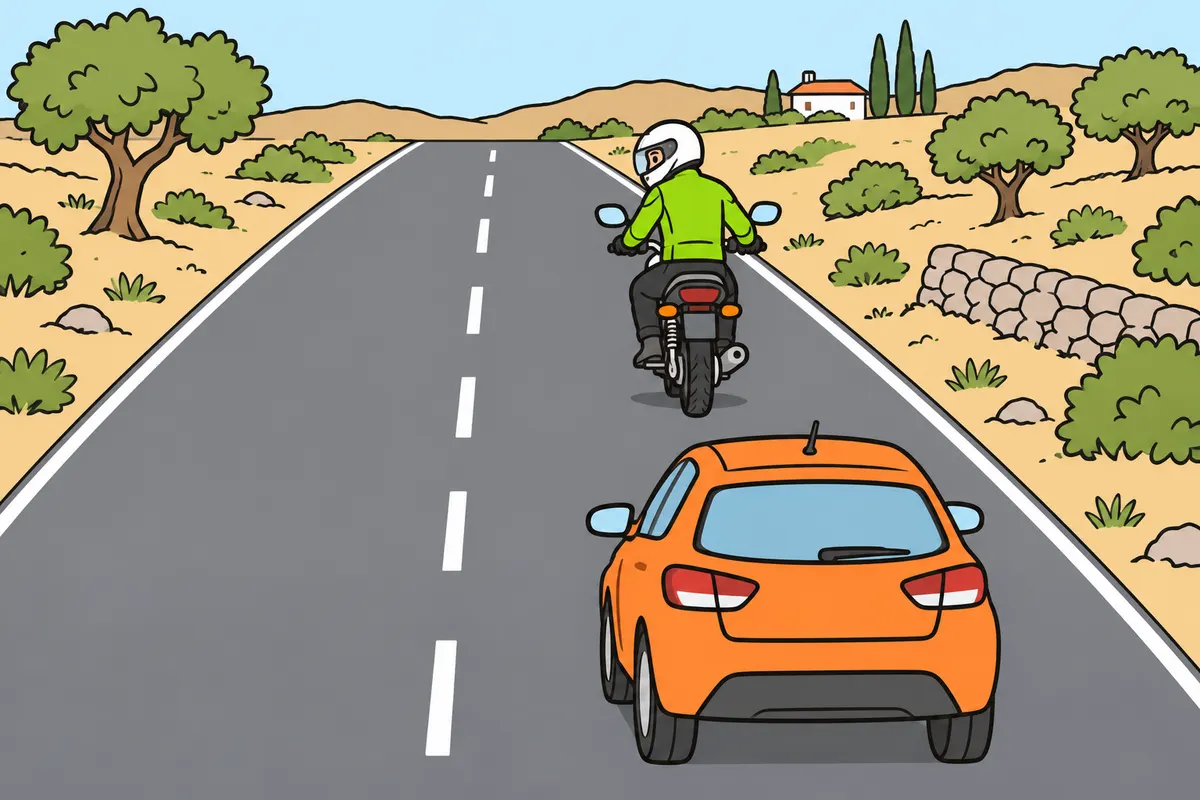
Check your surroundings and avoid places where other drivers cannot see you.
Remember
- Adjust your mirrors before setting off.
- Also look directly when necessary and safe.
- Avoid staying where other drivers cannot see you.
- Read your manual to understand the limits of vehicle detection systems.
- Avoid staying level with the rear or right-hand side of large vehicles.
- Seeing their mirrors does not mean the driver has noticed you.
Exam trap: Wrong: no detector warning means the space is clear. Right: check for yourself too.
Read the full explanation
- Adjust your mirrors before setting off and supplement the information they provide with direct vision whenever necessary and safe; checks and the effect of a convex mirror on apparent distance are covered in “Your mirrors and direct vision”, in the “Risks and prevention on a motorbike” module.
- Avoid remaining level with the rear of a lorry or bus, or close alongside its right-hand side: you may be outside the driver's field of vision. If you cannot see its mirrors from where you are, assume that the driver may not be able to see you; seeing them does not guarantee that the driver has noticed you either. As a precaution, stay behind with enough space or complete your overtake when legal and safe, without spending longer than necessary alongside. [DGT, driving near heavy vehicles](https://www.dgt.es/muevete-con-seguridad/conviertete-en-un-buen-conductor/consejos-generales/consejos-circular-vehiculos-pesados/). Before overtaking, you must make sure you have enough space to complete the manoeuvre and return to your lane. [RGC, art. 84.3](https://www.boe.es/buscar/act.php?id=BOE-A-2003-23514#a84). Learn more about these precautions in “Other vehicles’ blind spots”, in the “Risks and prevention on a motorbike” module.
- If your motorcycle has a system that detects nearby vehicles, read the manual to understand how it works and its limitations. Use its warnings as additional information when preparing a decision; the absence of a warning does not confirm that the space is clear.
5Anticipating other road users’ movements
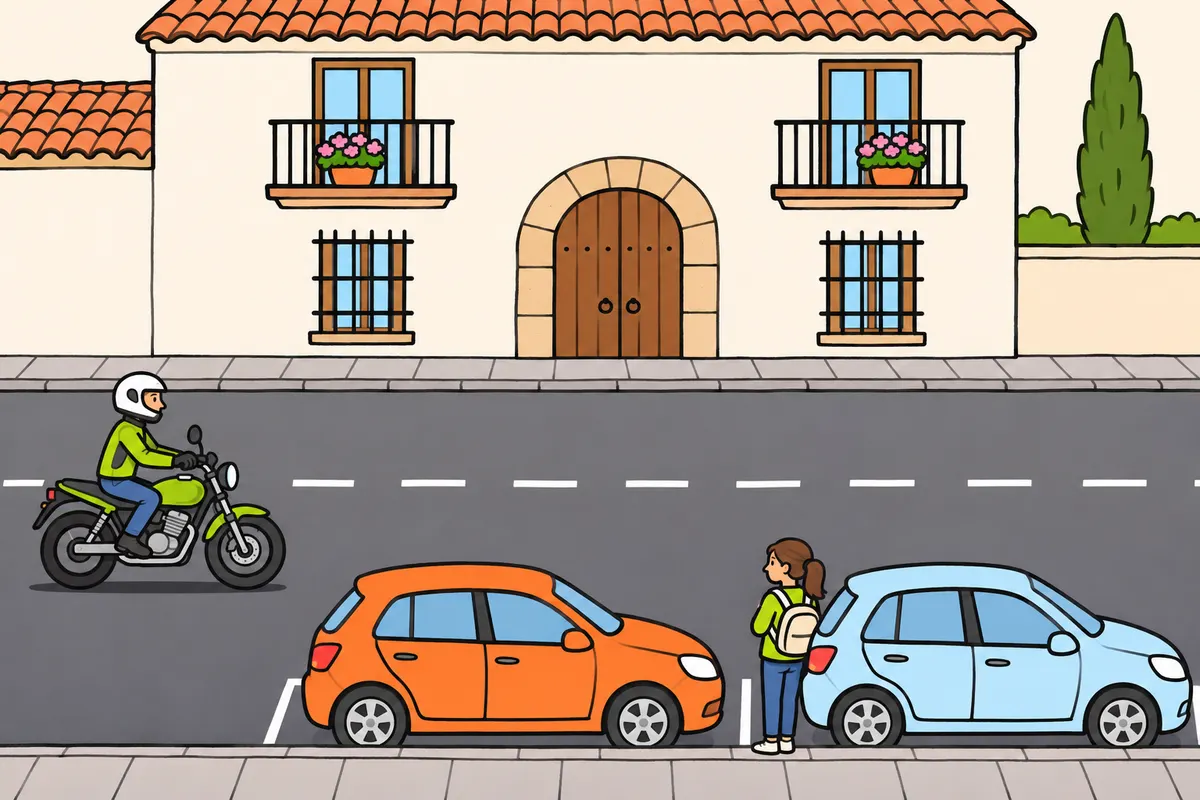
Expect unexpected movements, even when you have priority.
Remember
- Watch for pedestrians between cars and vehicles leaving parking spaces.
- Keep clear of any space a turning large vehicle could occupy.
- Slow down if someone seems not to have seen you.
- Prepare to use your controls without causing unintended braking.
- Signal your movements early and avoid sudden changes.
Exam trap: Wrong: an indicator guarantees a turn. Right: wait until it is truly safe to act.
Read the full explanation
- In town, identify areas of uncertainty: a pedestrian between cars, a vehicle leaving a parking space or a stopped bus may lead to movements that are difficult to see. Make your riding less demanding in good time.
- If a large vehicle is preparing to turn, anticipate that it may swing out in the opposite direction and then close off the space on the inside of the turn. Observe the whole vehicle, its indicators and the space it needs, keeping out of any path where a conflict could arise.
- Even when you have priority, be prepared if another road user seems not to have seen you. Your preventive aim is to avoid conflict, rather than prove your right of way by getting there first. You can slow down and prepare to use the controls to respond, without operating them abruptly or maintaining pressure that causes unintended braking.
- Make your own decisions clear to others: avoid sudden changes of pace, prepare your movements in good time and check how your surroundings develop. Another vehicle's indicator signals an intention, but does not prove that the vehicle is going to complete the turn. Wait until the situation is truly safe before acting.
6Space to react
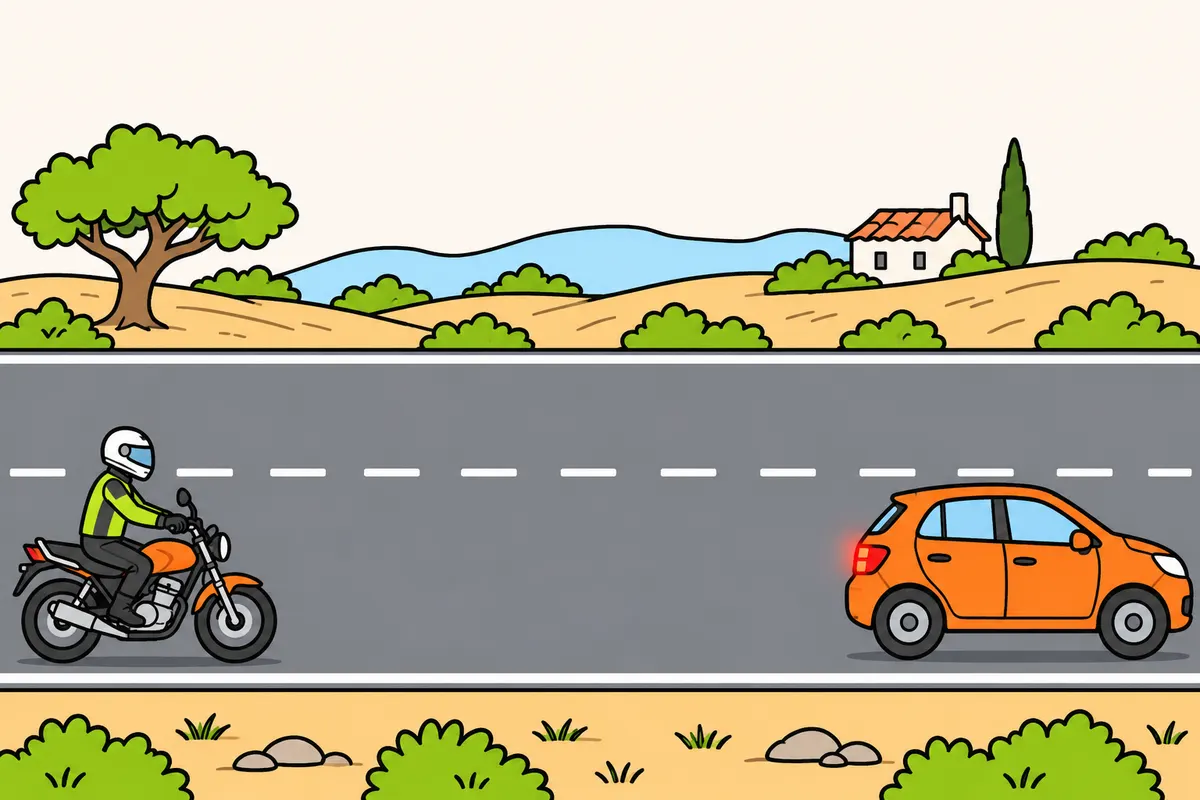
Leave enough space to stop if the vehicle ahead brakes suddenly.
Remember
- Adjust your gap to your speed, grip and braking.
- Leave more space in rain, poor visibility or poor grip.
- Use a fixed reference point to check your gap.
- Leave space alongside parked cars, pedestrians and large vehicles.
- When you stop in a queue, leave space and watch behind.
Exam trap: Wrong: the same gap always works. Right: increase it when grip or visibility worsens.
Read the full explanation
- You must leave enough space to stop if the vehicle ahead brakes sharply, taking speed, grip and braking into account. [RGC, art. 54](https://www.boe.es/buscar/act.php?id=BOE-A-2003-23514#a54). The gap also allows you to see more of the road and start slowing down progressively, instead of copying every change made by the vehicle ahead after a delay.
- In rain, poor visibility or reduced grip, increase your margin to detect hazards and stop safely; the conditions affecting your following distance are covered in “Safe following distance”, in the “Speed and distances on a motorcycle” module. [RGC, art. 54](https://www.boe.es/buscar/act.php?id=BOE-A-2003-23514#a54).
- To judge your time gap from the vehicle ahead, use a fixed reference point on the road; the method is explained in “How you check your following gap in seconds”, in the “Speed and distances on a motorcycle” module.
- Keep lateral clearance from parked cars, pedestrians and large vehicles. An opening door or a vehicle changing its path may occupy the space beside you that you need to react. When stopping in a queue, leave a useful gap and watch behind you; you do not need to put your front wheel right up against the vehicle ahead to make use of the space.
7If someone follows you too closely
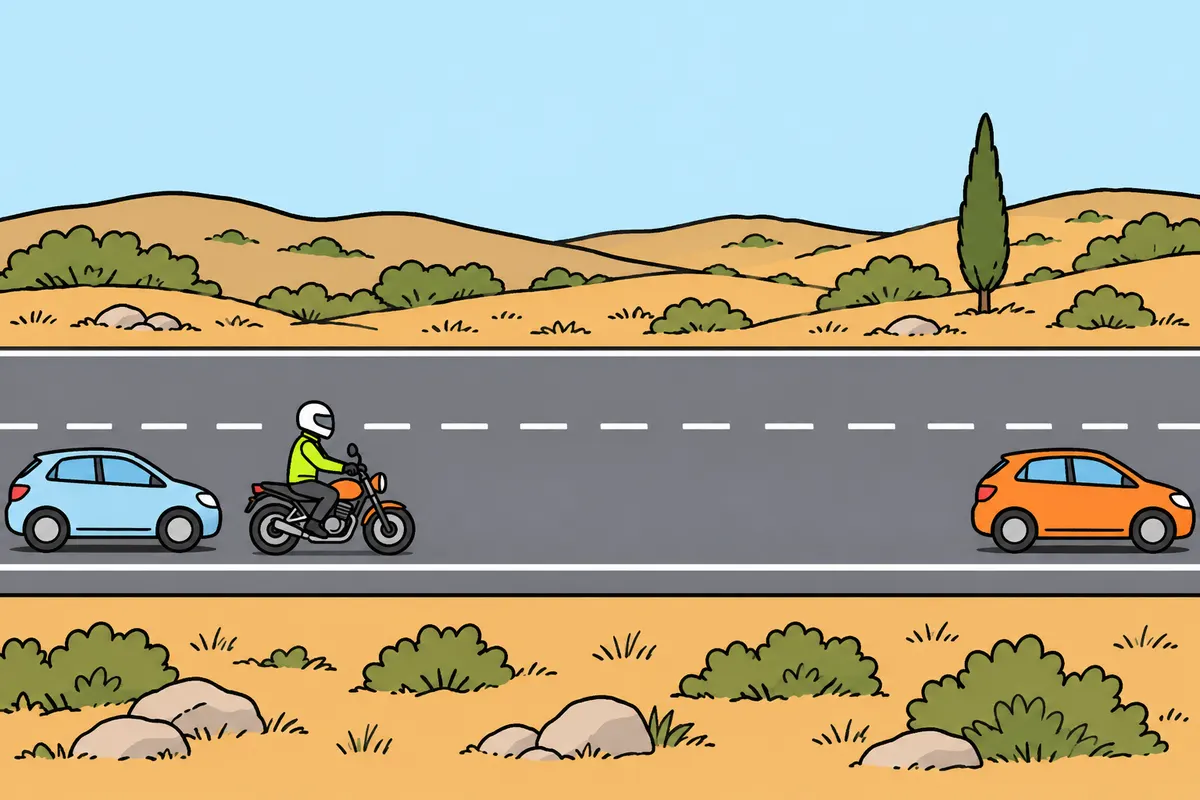
If someone follows too closely, gently increase your gap from the vehicle ahead.
Remember
- Prepare to slow down early.
- Do not brake to frighten the driver behind.
- Keep a safe speed even when someone pressures you.
- Help others overtake safely, without entering prohibited areas or risking a fall.
- Near a queue, watch traffic approaching from behind.
- Consider an escape route only if clear and safe to reach.
Exam trap: Wrong: slow down sharply without warning. Right: unless danger is imminent, warn first, check safety and slow down smoothly.
Read the full explanation
- If someone follows you too closely, gently increase your distance from the vehicle ahead so that you can brake progressively; the principles of keeping space ahead are covered in «Keeping a safe gap», in the «Risks and prevention on a motorbike» module.
- Prepare to slow down well in advance and avoid braking to intimidate the driver behind you. Except in imminent danger, you must give advance warning of a considerable reduction in speed, check that you can slow down without putting others at risk and do so smoothly. [RGC, art. 53](https://www.boe.es/buscar/act.php?id=BOE-A-2003-23514#a53).
- Maintain a safe speed even if you feel pressured, and make it easier for the vehicle to overtake wherever it can do so safely, without entering prohibited spaces or exposing yourself to a fall. Being overtaken is covered in «When you are being overtaken», in the «Manoeuvres on your motorcycle» module. [RGC, art. 86](https://www.boe.es/buscar/act.php?id=BOE-A-2003-23514#a86).
- When approaching a queue, watch how traffic behind you approaches. Consider a possible escape route only if it is clear and you can reach it safely; your motorcycle's width does not guarantee that you can escape between vehicles.
8Smooth riding, starting and waiting
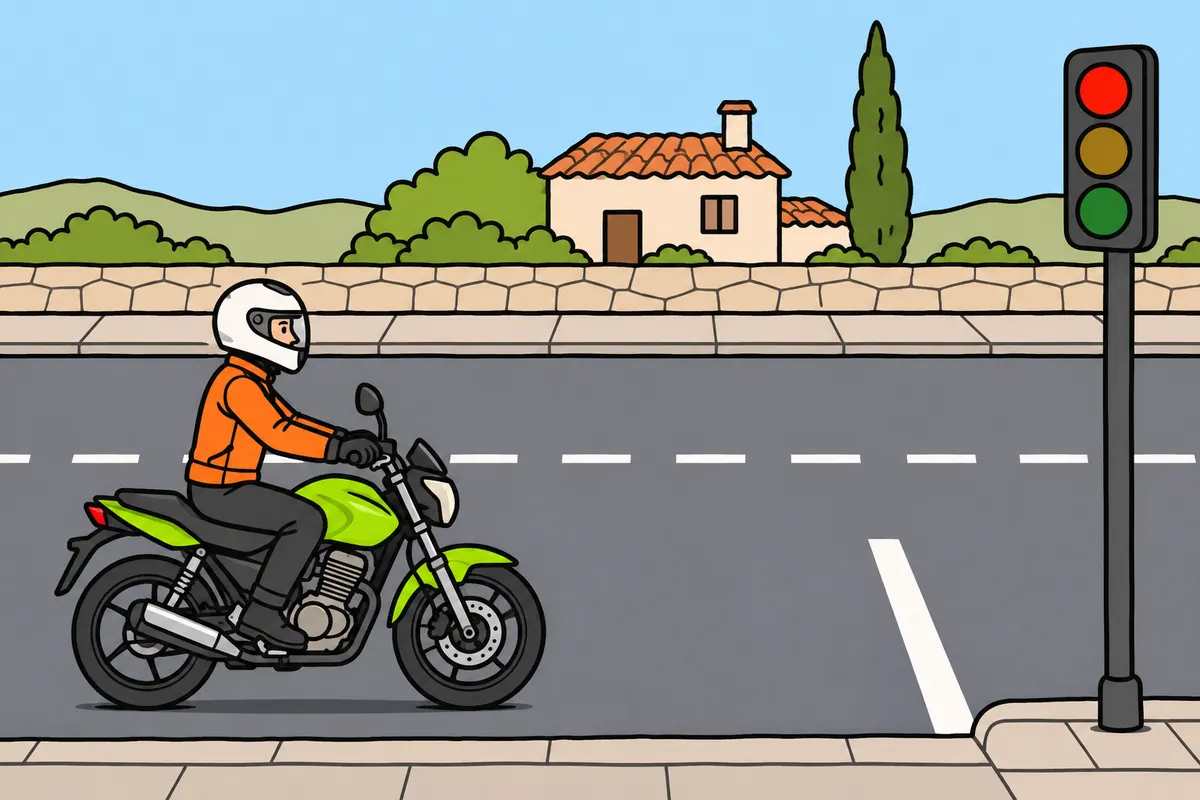
Accelerate smoothly and adapt how you start and wait to each situation.
| Situation or motorcycle | What you should do |
|---|---|
| Scooter with continuously variable transmission | Use your throttle smoothly; the transmission adjusts the ratio. |
| Manual motorcycle | Choose your starting gear for the gradient and load. |
| Forced stop longer than two minutes in a tunnel or enclosed place | Keep your engine off until moving again and keep your position lights on. |
Remember
- Avoid accelerating towards a stop you can see coming.
- Start as your manual instructs; avoid strong acceleration with a cold engine.
- Keep your speed low enough to stop within the distance you can see.
- When refuelling, switch off your engine, lights and electrical systems, including your phone.
- When stationary in a tunnel or enclosed place, switch off your engine.
- With your combustion engine running, you use fuel even while stationary.
Exam trap: Wrong: idling and neutral mean the same. Right: idling describes your engine; neutral describes your transmission. With a combustion engine running, you use fuel even while stationary. In a tunnel or enclosed place, switch off your engine when stationary. If a forced stop there exceeds two minutes, keep your engine off until moving again and your position lights on.
Read the full explanation
- Apply the throttle progressively and avoid accelerating towards a foreseeable stop: this reduces consumption and sudden changes in the load on the tyres. Maintain a smooth pace suited to the traffic. [DGT, motorcycle riding guide, section 13](https://www.dgt.es/export/sites/web-DGT/.galleries/downloads/nuestros_servicios/para-colaboradores-y-empresas/GUIA-MONITORES-MOTOCICLETA-NIPO.pdf).
- Start the engine according to the manual and avoid blipping the throttle or prolonged warming up at idle. Move off gently when the manufacturer allows it and avoid demanding hard acceleration from a cold engine.
- Adjust your speed so that you can stop within the distance you can see to be clear and before foreseeable obstacles. [RGC, art. 45](https://www.boe.es/buscar/act.php?id=BOE-A-2003-23514#a45). A speed within the limit can still be excessive for your visibility, load or grip; riding efficiently does not make the limit a speed you must reach.
- On a scooter with a continuously variable transmission, apply the throttle smoothly: the transmission adjusts the ratio automatically. On a manual motorcycle, choose a suitable gear for moving off according to the gradient and load.
- Idling means the engine is running without you applying the throttle; neutral is a transmission position. With a combustion engine running, you consume fuel even when stationary. Use the automatic stop system according to the manual if your motorcycle has one.
- During refuelling, you must switch off the engine, lights and electrical systems, including transmitting devices such as your mobile phone. [RGC, art. 115.3 and 4](https://www.boe.es/buscar/act.php?id=BOE-A-2003-23514#a115).
- Whenever your motorcycle is stopped inside a tunnel or enclosed place, you must switch off the engine. If a forced stop lasts more than two minutes, you must keep the engine off until you move off again and keep the position lights on. [RGC, art. 115.1 and 2](https://www.boe.es/buscar/act.php?id=BOE-A-2003-23514#a115).
9The right gear and engine speed
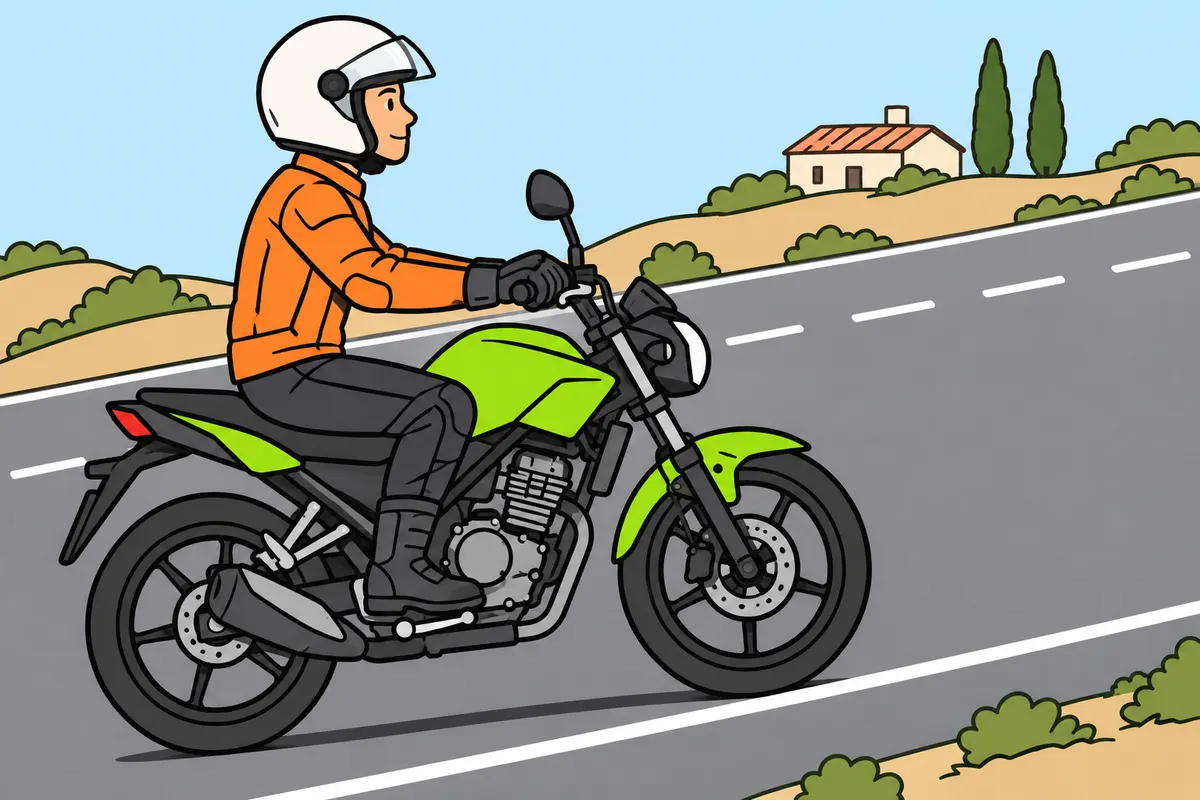
Choose a gear that lets you move smoothly with enough power.
| Your chosen gear | What to remember |
|---|---|
| Too low | You increase engine speed and noise. |
| Too high | You may lack power. |
| Suitable | You move smoothly and keep enough response. |
Remember
- Follow your motorcycle’s manual when changing gear.
- Adapt your gear to hills, wind and your passenger.
- Do not use full throttle to compensate for too high a gear.
- Avoid manoeuvres needing more acceleration than your motorcycle can provide.
- Eco mode does not guarantee you a fixed saving.
Exam trap: Wrong: always choose the highest gear. Right: change down if you lack power or response.
Read the full explanation
- Choose a gear that lets you ride without juddering and with sufficient response. An unnecessarily low gear increases engine speed and noise; too high a gear can leave the engine short of pulling power. Change down if the situation requires it.
- There is no universal engine speed for changing gear on all A1 motorcycles. Follow the guidance for your model and adapt your gear to the gradient, your passenger and the response you need.
- On a 125 cc motorcycle, an uphill gradient, a headwind or a passenger can noticeably reduce your reserve of acceleration. Anticipate this response and select a gear that keeps the engine in a useful operating range, without trying to compensate for too high a gear by opening the throttle fully. If your speed falls, adapt your planning to the performance available and avoid manoeuvres that depend on acceleration the motorcycle cannot provide.
- With Eco mode, you can soften the response or change energy management, depending on the model. Follow the manual: using it does not guarantee a fixed saving.
10Anticipating the need to slow down
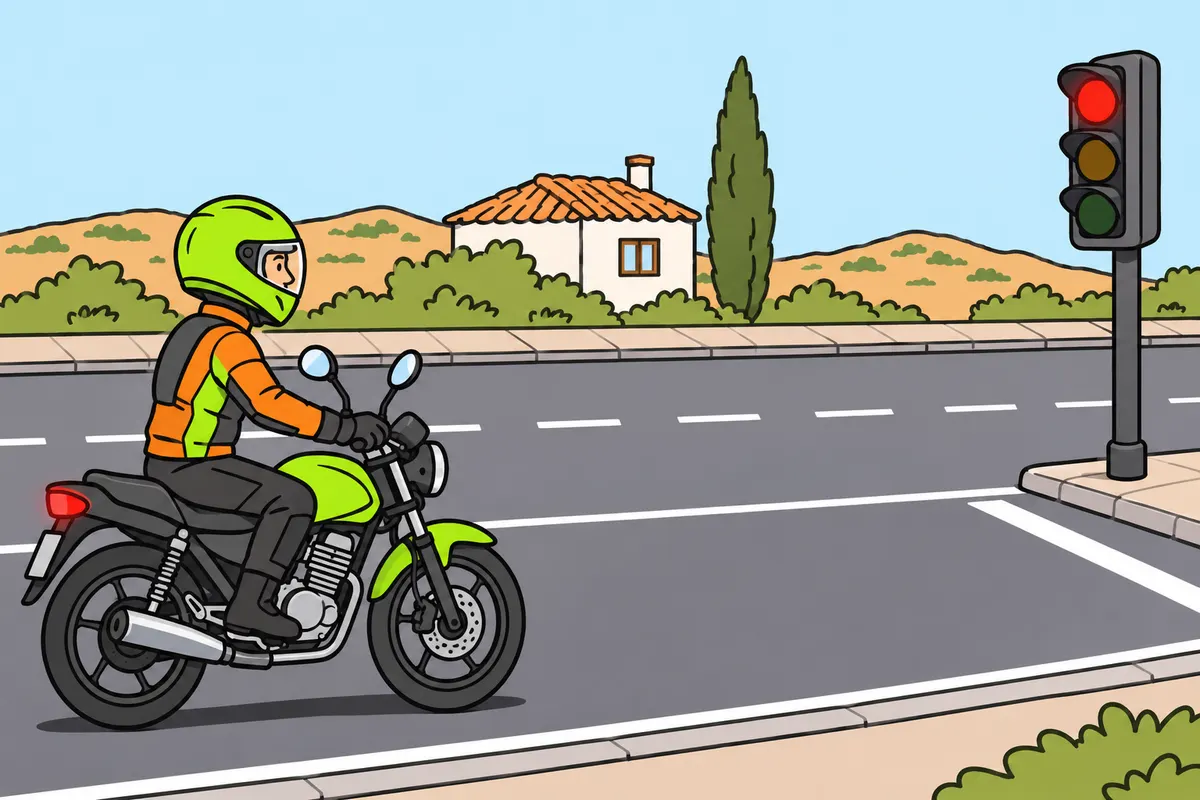
Ease off early and slow down using a suitable gear and your brakes.
Remember
- Prepare to slow down for queues, traffic lights and bends.
- On long descents, choose a gear that helps slow your motorcycle.
- Do not change down several gears at once or release your clutch suddenly.
- Do not descend in neutral or with your clutch held in.
- Do not switch off your engine while riding to save fuel.
Exam trap: Wrong: closing your throttle always stops fuel use. Right: it depends on your engine, engine speed and electronic controls.
Read the full explanation
- When you anticipate a queue, traffic lights or a bend, ease off the throttle in good time and slow down progressively. Keep a suitable gear engaged to make use of engine braking and use the brakes as needed.
- On fuel-injected engines, the fuel supply may be cut off during certain periods of engine braking, depending on engine speed and electronic management. Do not assume that fuel consumption is zero whenever you close the throttle: a carburettor, an engine speed close to idle or a different engine management strategy can produce a different result. The vehicle manual specifies how it works.
- Select a suitable gear on long descents so that engine braking assists the brakes. Avoid changing down several gears at once or releasing the clutch abruptly: you can upset the balance and rear tyre grip. The detailed technique is covered in «Use both brakes» and «Slopes and slippery surfaces», in «Motorcycle riding techniques».
- Do not descend in neutral or hold the clutch in to let the motorcycle coast freely. You lose engine braking and put more work on the brakes. Do not switch off the engine while riding to try to save fuel either: you must maintain the operation and control intended by the manufacturer.
11Load and air resistance
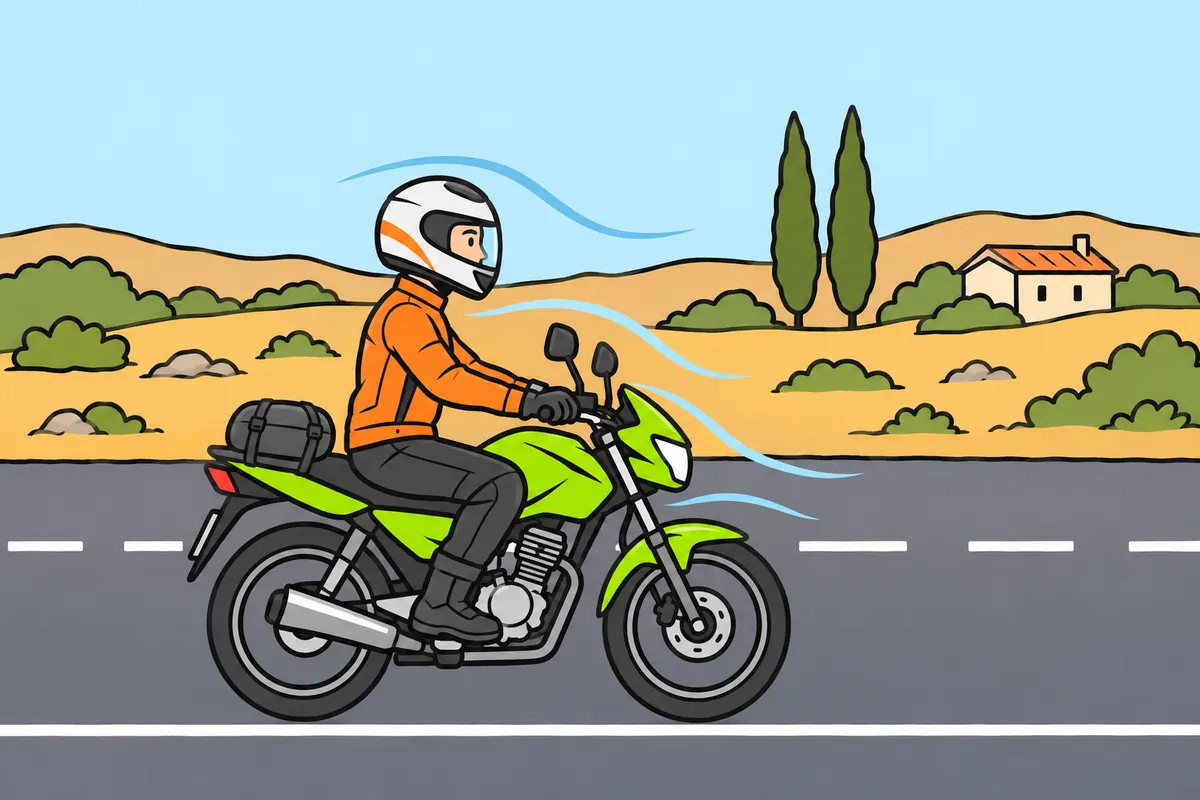
Keep your speed moderate and carry only necessary luggage to reduce effort.
Remember
- Do not ride close to another vehicle to use its slipstream.
- Keep a comfortable posture that lets you see and use your controls.
- Wear protective clothing that fits well.
- Remember that panniers and a top box increase air resistance even when empty.
- Remove unnecessary accessories only if your manufacturer allows it.
- With a passenger and luggage, use the specified tyre pressures and suspension settings.
Exam trap: Wrong: your fairing removes the effects of wind. Right: gusts can still affect you.
Read the full explanation
- Air resistance increases with speed. Maintain a moderate pace and avoid making up for every delay by accelerating hard. Do not ride close behind another vehicle to use its slipstream: you lose visibility and safety space.
- The fairing and your posture affect air resistance. Maintain a comfortable position that allows you to observe and operate the controls; the fairing does not eliminate the effects of gusts.
- Wear close-fitting protective equipment: flapping clothing increases drag and discomfort. Choosing protection is covered in the «Motorcyclist protective equipment» module.
- Carry only the luggage you need: its weight requires more energy when you accelerate and climb hills. Panniers and a top box can also increase air resistance even when empty. Remove unnecessary accessories if the manufacturer allows it.
- With a passenger and luggage, use the prescribed tyre pressures and suspension settings and anticipate a different response when accelerating or braking. Luggage positioning, securing and load limits are covered in «Passengers and loads on motorcycles», in the section «Positioning and securing luggage».
12Tyre pressure and maintenance for economy
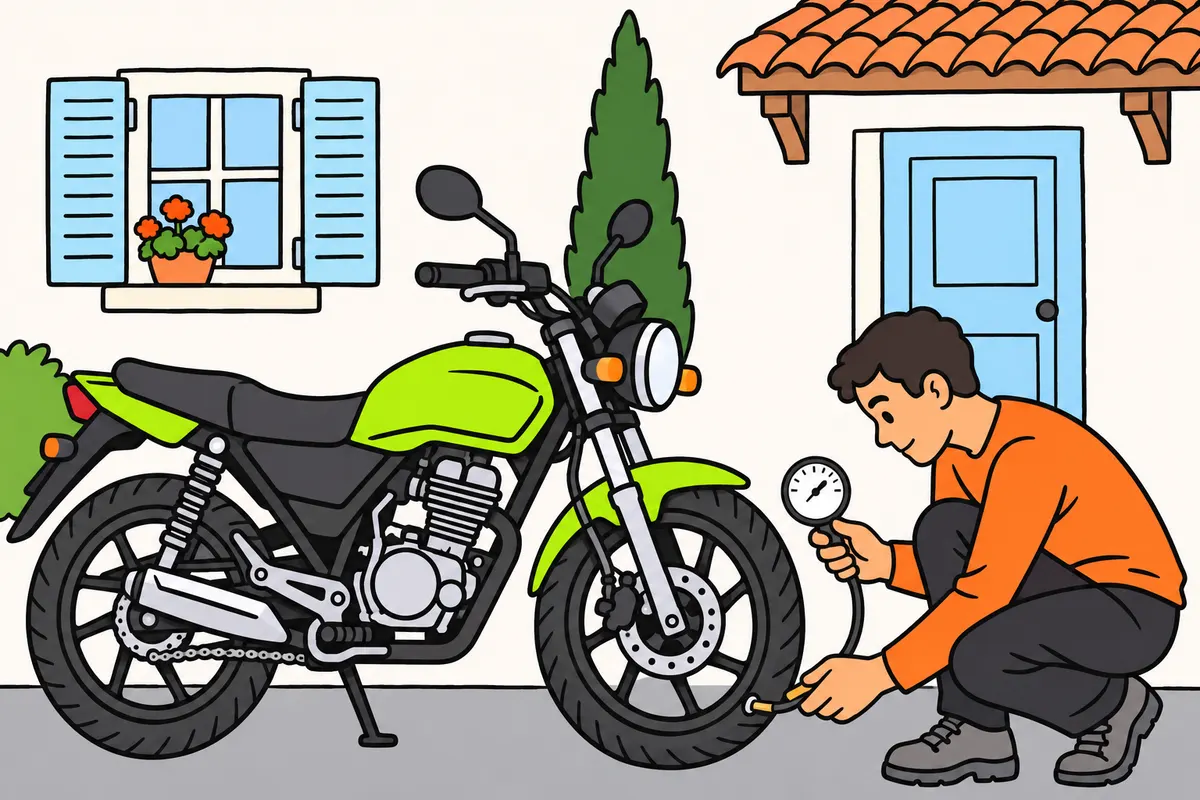
Maintain your motorcycle and use the tyre pressures your manufacturer specifies.
Remember
- Check tyre pressures when cold with a reliable gauge.
- Use the pressure specified for each wheel and load.
- Maintain your engine, filter, transmission and chain as your manual instructs.
- Use the fuel and oil your manufacturer specifies.
- If your petrol motorcycle has a catalytic converter, use compatible unleaded petrol.
- Have your motorcycle checked if fuel use keeps rising without explanation.
Exam trap: Wrong: overinflating saves fuel. Right: use your manufacturer’s specified pressure.
Read the full explanation
- Check tyre pressures when cold with a reliable pressure gauge and use the manufacturer's values for each wheel and load. Insufficient pressure harms handling and can increase consumption; do not overinflate to save fuel. [DGT, motorcycle riding guide, section 13](https://www.dgt.es/export/sites/web-DGT/.galleries/downloads/nuestros_servicios/para-colaboradores-y-empresas/GUIA-MONITORES-MOTOCICLETA-NIPO.pdf).
- Maintain the engine, air filter and transmission according to the manual. On a motorcycle with a chain, follow the prescribed tension and lubrication requirements. The specific tasks are covered in «Motorcycle mechanics and maintenance», in the sections «Fuel supply, fuel and air filter» and «Final drive and chain».
- Use the fuel and lubricant specified by the manufacturer. If your petrol motorcycle has a catalytic converter, use unleaded petrol compatible with the engine; lead damages the catalytic converter. [DGT, Road Safety Questions, topic 22](https://sede.dgt.gob.es/export/sites/dgt/.galleries/permisos-de-conducir/certificacion-aptitud-profesores-formacion-vial/2024/Manual-II-Cuestiones-de-Seguridad-Vial-2024.pdf).
- Compare consumption on similar journeys, taking traffic, load and weather into account. A persistent unexplained increase warrants checking the motorcycle. Efficiency also depends on tyre pressure, weight, speed and smoothness when you ride an electric motorcycle.
13What the environmental badge identifies
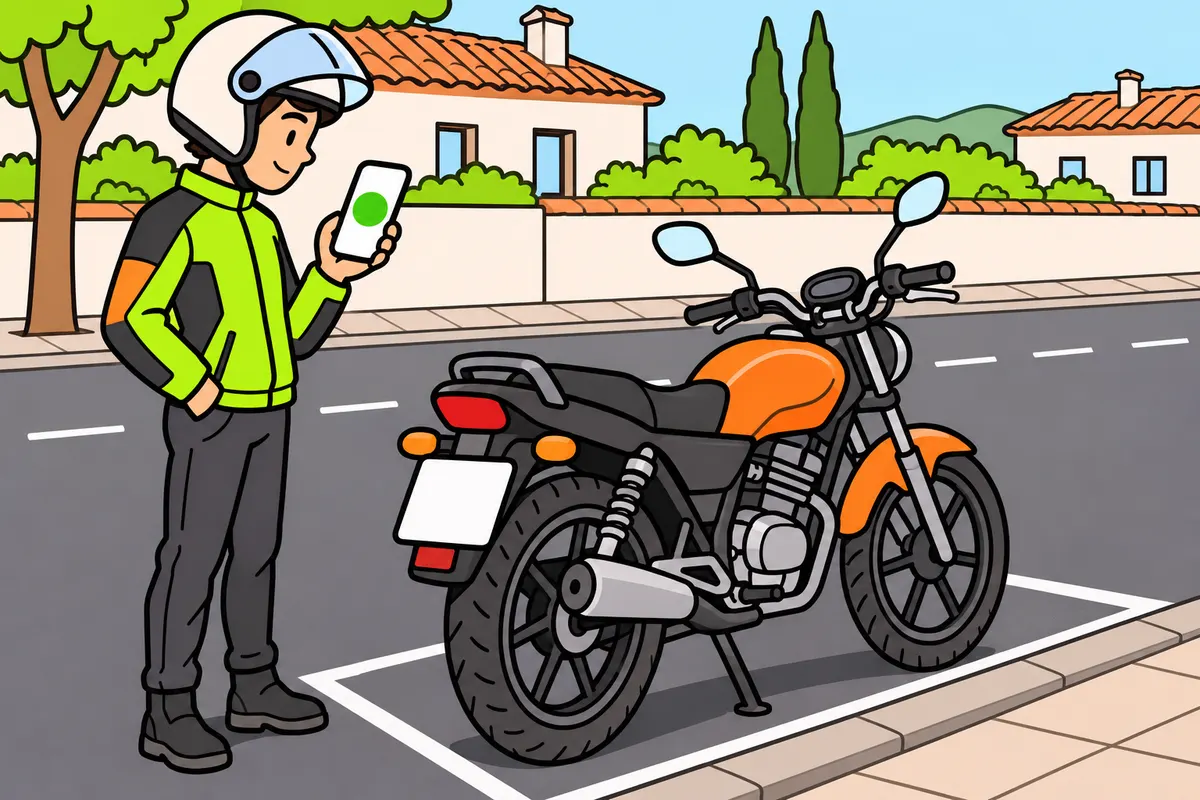
Look up your motorcycle’s environmental classification using its registration number.
| Badge | Colour | Classification for motorcycles or L vehicles |
|---|---|---|
| B | Yellow | For motorcycles: Euro 2. |
| C | Green | For motorcycles: Euro 3 and Euro 4. |
| ECO | Green and blue | For L vehicles: non-plug-in hybrids, or plug-in hybrids with electric range below 40 km NEDC. |
| 0 emissions | Blue | For L vehicles: battery-electric, range-extended electric, hydrogen, fuel-cell, or plug-in hybrids with electric range of at least 40 km NEDC. |
| A | No badge | If your motorcycle belongs to this category, it has no badge. |
Remember
- Recognise V-25 as your environmental badge.
- Do not assign your badge using passenger-car registration dates.
- Do not decide your badge from engine size, licence or fuel use alone.
- If your motorcycle meets Euro 5, check its registered classification.
- Eco mode does not make your petrol motorcycle an ECO vehicle.
Exam trap: Wrong: apply passenger-car classifications to your motorcycle. Right: check your badge using your registration number.
Read the full explanation
- The environmental classification appears in the Registro de Vehículos (Vehicle Register), and the badge identifying it is sign V-25. There are 0 emissions, ECO, C and B badges; category A has no badge. [RGV, annex XI, V-25](https://www.boe.es/buscar/act.php?id=BOE-A-1999-1826#anxi). Identify 0 by its blue background, ECO by green and blue, C by green and B by yellow.
- For motorcycles, within category L, annex II lists B for Euro 2 and C for Euro 3 and Euro 4. If your motorcycle meets Euro 5, check its classification recorded in the Registro de Vehículos: that Euro standard does not appear explicitly in the annex's list. [RGV, annex II, environmental classification](https://www.boe.es/buscar/act.php?id=BOE-A-1999-1826#anii).
- For L-category vehicles, ECO covers non-plug-in hybrids and plug-in hybrids with an electric range of less than 40 km over the NEDC cycle. The 0 emissions category includes battery-electric, range-extended electric, hydrogen and fuel-cell vehicles, and plug-in hybrids with a range of at least 40 km over that cycle. [RGV, annex II](https://www.boe.es/buscar/act.php?id=BOE-A-1999-1826#anii).
- Use your motorcycle's registration number to check its badge through DGT services. Indicative registration dates for passenger cars cannot be used to assign a badge to a motorcycle. Engine capacity, the licence required and low fuel consumption on your journey do not, on their own, determine the badge. Riding in Eco mode does not turn a petrol motorcycle into an ECO-classified vehicle either. [DGT, badge lookup](https://www.dgt.es/nuestros-servicios/tu-vehiculo/tus-vehiculos/distintivo-ambiental/).
14Displaying the badge and what it means
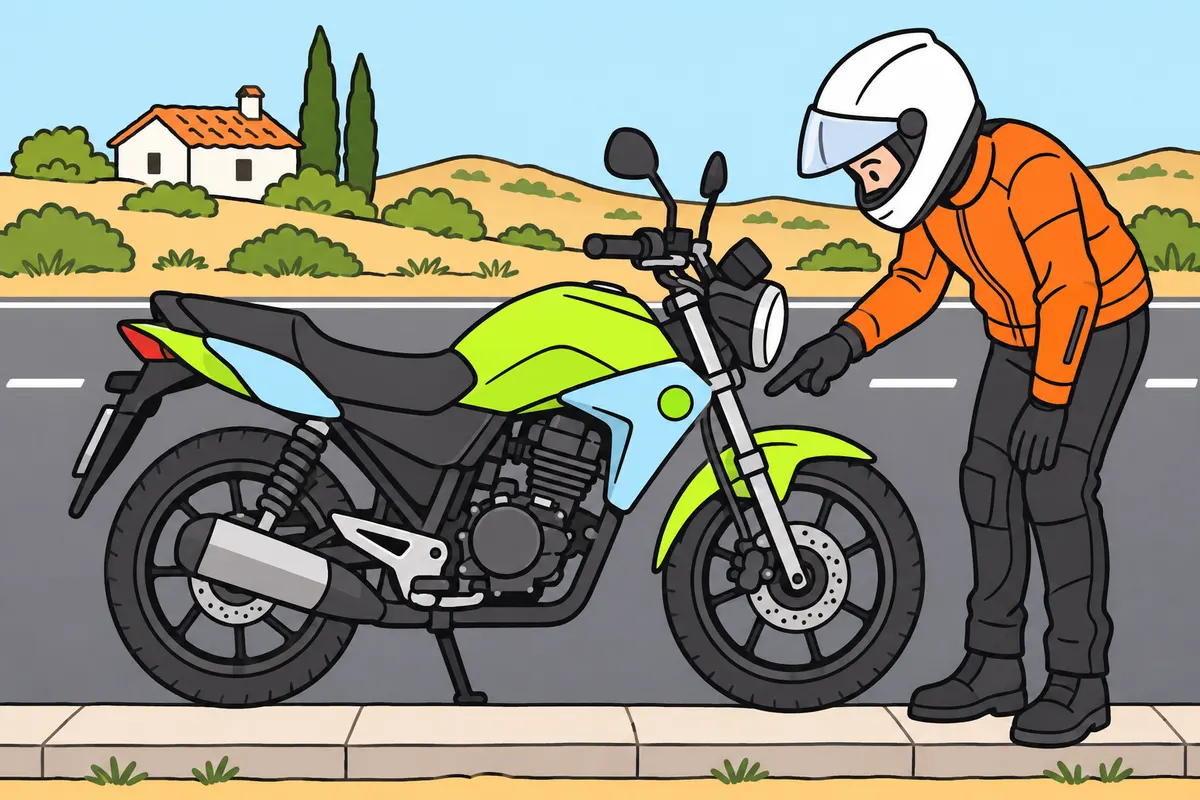
Check whether you must display your badge and whether you can enter your destination.
| Badge | What you should recognise |
|---|---|
| V-25 | It identifies your environmental classification. |
| V-26 | It identifies shared use; it does not replace your environmental classification. |
Remember
- Getting and displaying your badge is generally voluntary.
- Check whether local rules require you to display it.
- Put it somewhere visible on your motorcycle.
- Do not block your view or affect how your motorcycle’s parts work.
- Your sticker does not change your motorcycle’s registered classification.
Exam trap: Wrong: displaying your badge is never compulsory. Right: check local requirements.
Read the full explanation
- As a general rule, obtaining and displaying the badge is voluntary, but the competent authority can require you to display it under its regulations. [RGV, annex XI, V-25](https://www.boe.es/buscar/act.php?id=BOE-A-1999-1826#anxi). You must check the requirements wherever you intend to ride.
- On a motorcycle, place the environmental badge somewhere visible, without obstructing your view or affecting the operation of any components. [DGT, environmental badges for motorcycles](https://revista.dgt.es/es/noticias/nacional/2018/04ABRIL/0404Etiquetas-ambientales-para-motos.shtml).
- Check three things: your motorcycle's classification, whether you must physically display the badge and whether that classification allows you to enter your destination. The sticker does not change the registered details. Having a genuine badge does not, on its own, prove that you are allowed entry under an environmental restriction either.
- Do not confuse the V-25 environmental badge with the V-26 shared-use badge. [RGV, annex XI](https://www.boe.es/buscar/act.php?id=BOE-A-1999-1826#anxi). Hiring or sharing a motorcycle can be a transport option, but it does not replace its environmental classification or the conditions governing restricted access.
15Low-emission zones
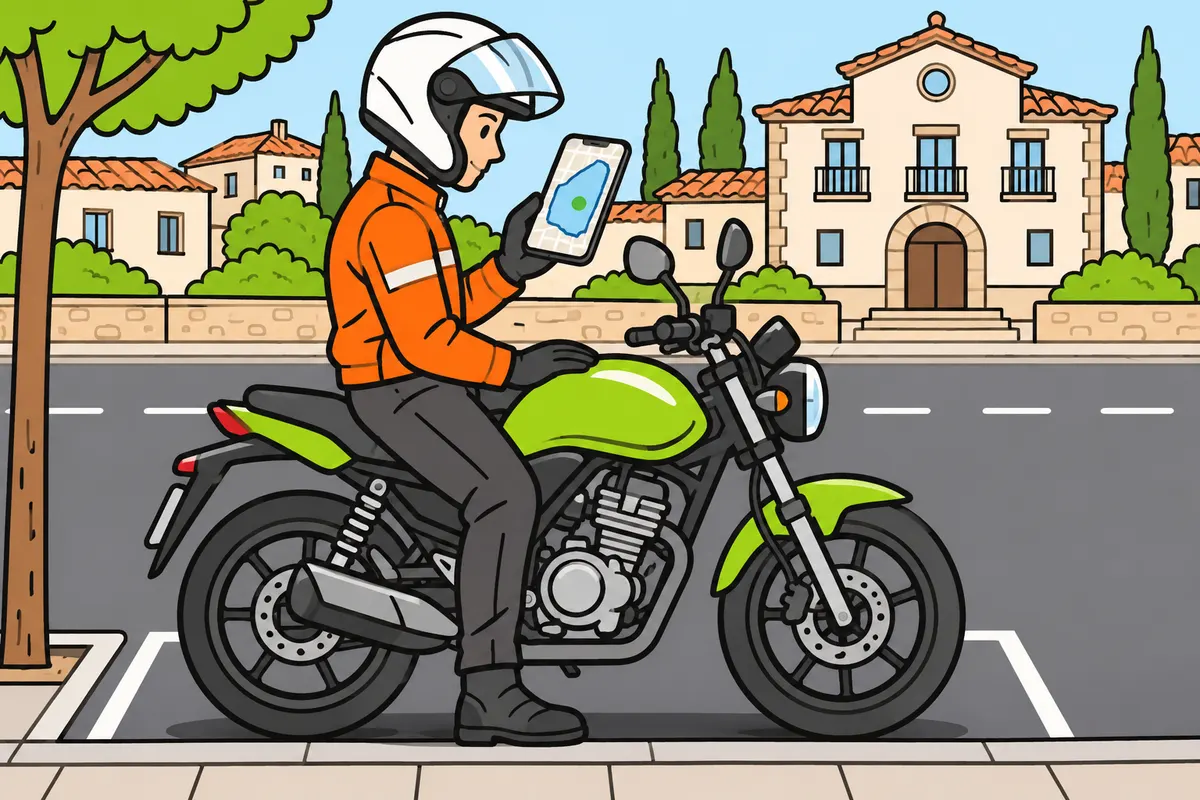
Check local council rules before entering a low-emission zone.
Remember
- Your motorcycle may also face restrictions.
- Check boundaries and times using official council information.
- Check permissions, registration requirements and exemptions before arriving.
- Also check temporary pollution restrictions.
- Check parking conditions at your destination.
- If you cannot meet the conditions, plan an alternative outside the zone.
Exam trap: Wrong: any badge lets you enter and park. Right: check the council’s access and parking conditions separately.
Read the full explanation
- A ZBE (low-emission zone) is an area with restrictions on entry, traffic and parking to improve air quality and reduce greenhouse gas emissions. [RD 1052/2022, art. 5.2](https://www.boe.es/buscar/act.php?id=BOE-A-2022-22689#a5). The local authority defines and regulates the zone through its municipal regulations. [RD 1052/2022, art. 2.2 and 3](https://www.boe.es/buscar/act.php?id=BOE-A-2022-22689#a2).
- The measures are based on environmental classification and must favour less polluting vehicles. [RD 1052/2022, art. 5](https://www.boe.es/buscar/act.php?id=BOE-A-2022-22689#a5). Displaying a badge does not give you universal permission to enter: conditions can vary for different categories, times, uses and authorised circumstances.
- Your motorcycle can be subject to ZBE restrictions. Before travelling, check the boundary and the specific municipal conditions for motorcycles: times, authorisation, registration or exemptions. Use official information from your destination's local council to plan your journey and check whether you need to arrange access before you arrive.
- Also check temporary pollution restrictions and parking conditions at your destination. Permission to enter does not automatically mean unrestricted parking. If you cannot meet the conditions, plan an alternative outside the area or use another means of transport; do not look for an unsigned street to evade the boundary.
16Recognising sign R-120
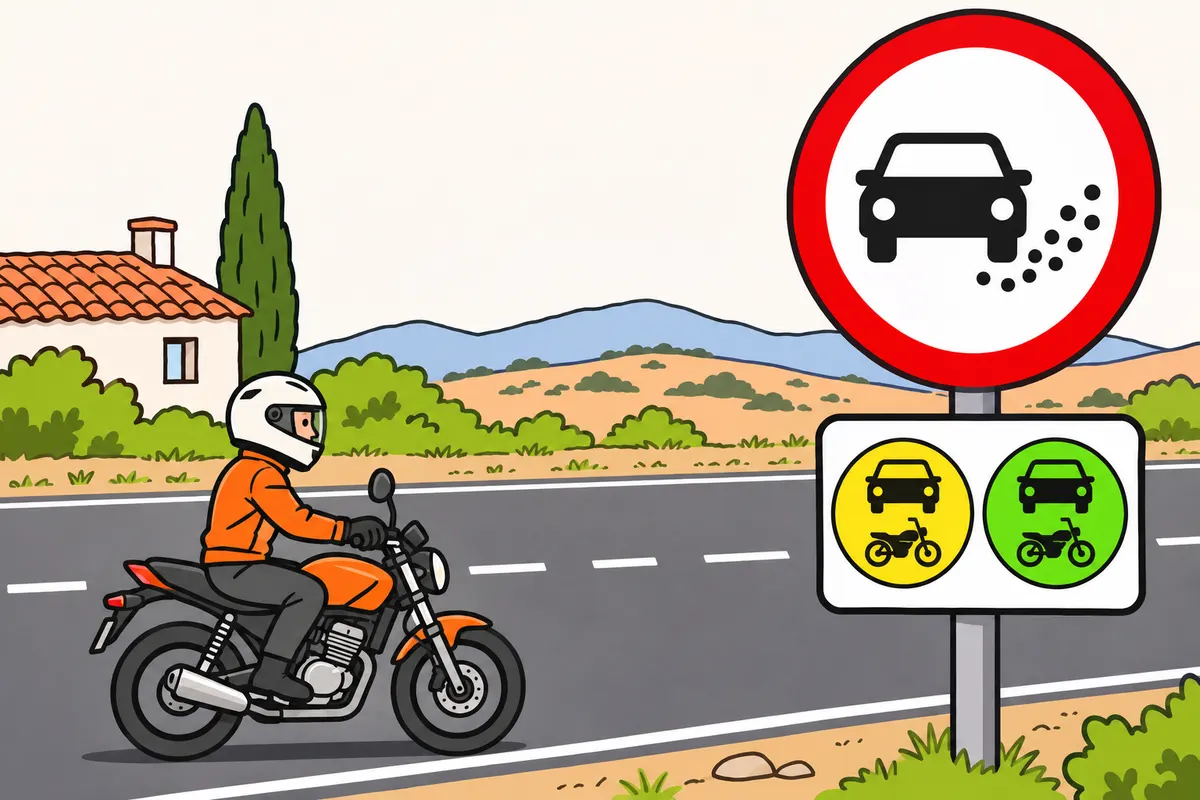
Read sign R-120 together with the text explaining the environmental restriction.
Remember
- Read the S-860 plate or signboard accompanying the sign.
- Check who is affected and which exemptions apply.
- Compare your motorcycle’s classification with the access conditions.
- If you notice the restriction late, avoid sudden braking or dangerous turns.
- Follow a permitted alternative and check information where you can legally stop.
Exam trap: Wrong: the car symbol excludes motorcycles. Right: R-120 applies according to the environmental criteria shown.
Read the full explanation
- R-120 prohibits entry to vehicles according to their environmental badge or other environmental criteria. The conditions appear on an S-860 supplementary panel or a board incorporating the sign; you must read the sign and that text together to identify who is affected and the exemptions. [RD 465/2025, annex I, R-120](https://www.boe.es/buscar/doc.php?id=BOE-A-2025-12199).
- Do not assume from the picture of a car that the restriction only applies to cars. R-120 refers to vehicles according to the criteria laid down. Compare your motorcycle's classification with the specific information at the entrance and the local regulations you have checked.
- If you notice the restriction as you approach, do not stop abruptly or make an improvised, dangerous turn. Take a lawful alternative route and find a place where you are allowed to stop to check the information. Planning ahead and looking out for signs early give you time to decide, without encroaching on other spaces or surprising other road users.
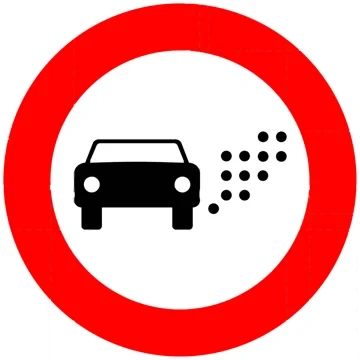 R-120
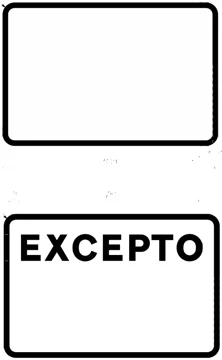 S-860
17Noise and an effective exhaust system
Keep your exhaust effective and avoid unnecessary noise.
| Warning situation | What you may do |
|---|---|
| Preventing a possible accident | You may use your horn, including in built-up areas. |
| Announcing your intention to overtake | You may use your horn only outside built-up areas. |
| Replacing these horn warnings with lights | You may briefly flash dipped or main beam, including in built-up areas, without dazzling. |
| Using your horn | Avoid shrill sounds and unjustified or excessive use. |
Remember
- Do not ride with an unsilenced exhaust or an ineffective silencer.
- This ban applies inside and outside built-up areas.
- Avoid bursts of acceleration and running your engine needlessly.
- Do not rely on exhaust noise to make others notice you.
- Officers may immobilise your motorcycle for excessive gases, smoke or noise.
- The designated workshop must certify permitted levels before that immobilisation ends.
Exam trap: Wrong: use your horn to announce any overtake. Right: you may give that warning only outside built-up areas.
Read the full explanation
- You must not ride with an unsilenced exhaust or with an incomplete, unsuitable or damaged silencer that is ineffective. This prohibition applies on urban and interurban roads. [RGC, art. 7.2](https://www.boe.es/buscar/act.php?id=BOE-A-2003-23514#a7). Maintain the exhaust and its components in accordance with your motorcycle's technical requirements.
- Avoid unnecessary bursts of acceleration, unnecessarily high engine speeds and leaving the engine idling without reason. These practices cause a nuisance and can increase fuel consumption. A louder exhaust does not replace observation or provide a reliable way of making others notice you at a junction or in another vehicle's blind spot.
- You can use the horn to prevent a possible accident, especially on narrow roads with many bends, and, outside built-up areas, to warn a driver you intend to overtake. It must produce a non-shrill sound, and unnecessary or excessive use is prohibited. [RGC, art. 110.1 and 2](https://www.boe.es/buscar/act.php?id=BOE-A-2003-23514#a110). You can replace these audible warnings with brief flashes of dipped beam or main beam, or alternate between the two, even in built-up areas, without dazzling anyone. [RGC, art. 109.3](https://www.boe.es/buscar/act.php?id=BOE-A-2003-23514#a109). The exceptional case of urgent use of a private vehicle is covered in «Emergencies in a private vehicle», in the «Right of way» module; the devices are explained in «Headlight flashes and audible warnings», in the «Motorcycle lights and signals» module.
- Officers can immobilise your motorcycle if it exceeds the permitted levels of gases, smoke or noise. The immobilisation is only lifted when, after you have the motorcycle transported to the workshop designated by the officer, that workshop certifies that it meets the permitted levels. [Traffic Act, art. 104.1.h and 3](https://www.boe.es/buscar/act.php?id=BOE-A-2015-11722#a104).
Observe and prepare a response
Turn information from your surroundings into a safety margin.
- Scan far ahead, nearby and to both sides; check your mirrors briefly.
- Identify which road user or obstacle could enter your path.
- Check the space available and ease your speed in good time.
- Prepare a smooth response and keep observing as the situation develops.
- Act according to the actual risk, without relying solely on your priority or assuming others have seen you.
Prepare your motorcycle for efficient riding
Adjust your motorcycle and its equipment to the route and actual load.
- Check the route, traffic, weather and environmental restrictions at your destination.
- Check tyre pressures when cold against the manufacturer’s specifications for each wheel and load.
- Remove unnecessary weight and accessories where the manufacturer allows this.
- Distribute and secure your luggage and make the specified adjustments for a passenger or load.
- Check maintenance and range; move off smoothly and use an appropriate gear.
Slow down without wasting energy
Anticipate a stop while maintaining control.
- Identify traffic lights, queues, bends or other reasons to slow down in good time.
- Check the situation behind you with a brief glance.
- Ease off the throttle early and keep an appropriate gear engaged.
- Combine engine braking and progressive braking as needed, without changing down abruptly.
- Stop if necessary and maintain space, stability and awareness of your surroundings.
Check access to a ZBE
Link environmental classification, signs and local authorisation.
- Look up your motorcycle’s environmental classification using its registration number.
- Check the boundaries, current conditions and motorcycle-specific rules.
- Check whether you need a visible sticker, registration or authorisation, and meet those requirements.
- Read the R-120 sign together with its supplementary panel or notice and check that you are allowed to enter.
- If you are not authorised to enter, use a lawful alternative planned in advance.
Finished this module?
Mark it as read and you will see your progress on the theory list.