
Theory · C1 Licence - Light Truck · Module 1 of 18
C1 lorry licences and types of transport
You learn which vehicles and trailers you can drive with C1 and C, at what age you can obtain these licences and how they relate to the CAP (Certificate of Professional Competence). You master the tests, medical fitness, validity and renewal, and distinguish public from private transport to answer questions on goods transport regulations.
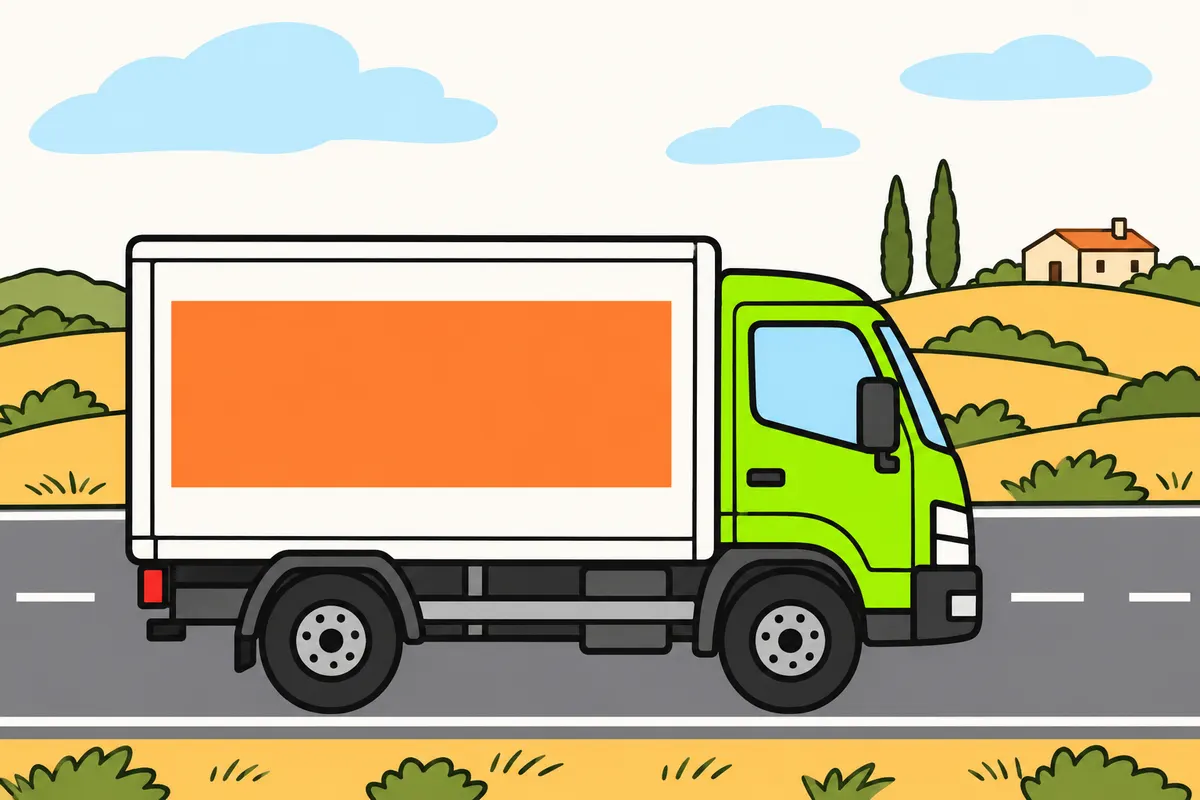
1What the C1 licence allows you to drive
C1 lets you drive certain lorries within mass and passenger limits.
| Lorry licence | Vehicle MMA | Passengers besides driver |
|---|---|---|
| C1 | Over 3,500 kg, up to 7,500 kg | Eight |
| C | Over 3,500 kg, no C1 ceiling | Eight |
Remember
- MMA means maximum authorised mass.
- C also gives you C1.
- C1 does not give you D or motorcycle rights.
- Your valid B licence covers the agricultural vehicles included in LVA.
Exam trap: Wrong: You can drive an empty bus with C1. Right: C1 excludes vehicles needing D1 or D, even when empty.
Read the full explanation
- With C1, you can drive motor vehicles with a maximum authorised mass over 3,500 kg and no more than 7,500 kg, other than those authorised by D1 or D, designed and built to carry no more than eight passengers in addition to the driver. [RGCond, art. 4](https://www.boe.es/buscar/act.php?id=BOE-A-2009-9481#a4)
- With a category C licence, you can drive motor vehicles with MMA (maximum authorised mass) over 3,500 kg without the C1 ceiling of 7,500 kg, with the same exclusion of D1 and D vehicles and the same maximum number of passengers. You need C for an ordinary lorry with an MMA of 8,000 kg even if you only intend to move it empty. [RGCond, art. 4](https://www.boe.es/buscar/act.php?id=BOE-A-2009-9481#a4)
- When you obtain C, you are also granted C1. [RGCond, art. 5](https://www.boe.es/buscar/act.php?id=BOE-A-2009-9481#a5)
- C1 does not grant you D or, on its own, entitle you to ride motorcycles. The valid B licence you must hold to obtain C1 also allows you to drive self-propelled special agricultural vehicles and their combinations covered by the LVA (agricultural vehicle driving licence), without obtaining that licence separately. [RGCond, art. 4](https://www.boe.es/buscar/act.php?id=BOE-A-2009-9481#a4) [RGCond, art. 5.7 and 5.9](https://www.boe.es/buscar/act.php?id=BOE-A-2009-9481#a5) [RGCond, art. 6.1.b](https://www.boe.es/buscar/act.php?id=BOE-A-2009-9481#a6)
2C1 and mass limits
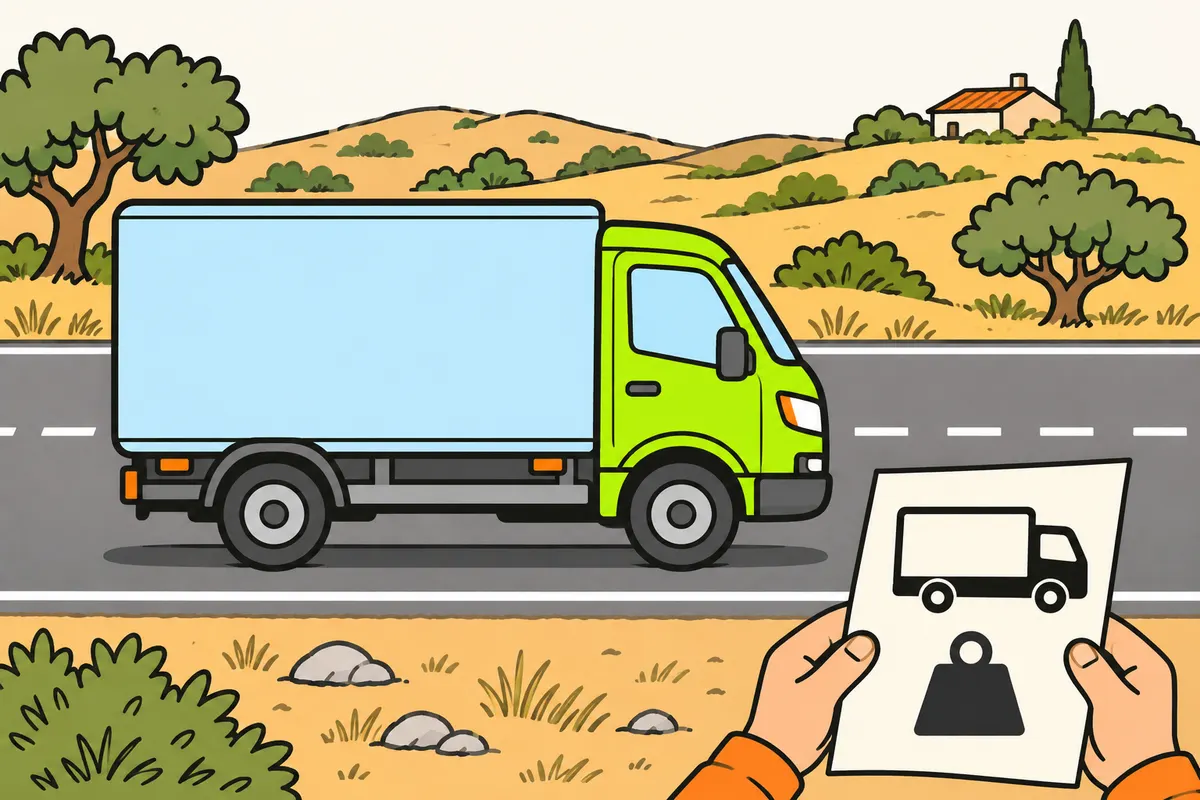
Choose your licence by authorised mass, even when the lorry is empty.
| Vehicle case | Licence or conditions |
|---|---|
| Lorry at 7,501 kg MMA | You need C |
| Vehicle at exactly 3,500 kg MMA | B, if its other conditions are met |
| Alternative-fuel goods vehicle over 3,500 kg, up to 4,250 kg | B held over two years; Spain only; no trailer; extra mass solely from propulsion compared with the equivalent conventional vehicle; no increased load capacity |
Remember
- Check MMA, not the load or journey weight.
- The lorry's shape does not decide your licence.
- Also check passenger design and the trailer.
Exam trap: Wrong: B covers any lorry at 4,250 kg. Right: only certain alternative-fuel vehicles, in Spain, without a trailer, with B held over two years; the extra mass must come solely from propulsion compared with the equivalent conventional vehicle and must not increase load capacity.
Read the full explanation
- You need C for a lorry with an MMA of 7,501 kg. [RGCond, art. 4](https://www.boe.es/buscar/act.php?id=BOE-A-2009-9481#a4)
- You must check the vehicle’s authorised MMA, rather than its payload or its actual mass during the journey. A lorry with an MMA of 9,000 kg does not become a C1 vehicle because its actual mass at that moment is 6,000 kg. [RGCond, art. 4](https://www.boe.es/buscar/act.php?id=BOE-A-2009-9481#a4)
- A motor vehicle with an MMA of exactly 3,500 kg is not a C1 vehicle: you drive it with B if it meets the other B conditions. [RGCond, art. 4](https://www.boe.es/buscar/act.php?id=BOE-A-2009-9481#a4)
- The description “van”, the shape of the load body or the type of goods does not determine which licence you need. The category depends on the MMA, the design for carrying passengers and the trailer you tow. [RGCond, art. 4](https://www.boe.es/buscar/act.php?id=BOE-A-2009-9481#a4)
- Within Spain, if you have held B for more than two years, you can drive certain alternative-fuel goods vehicles over 3,500 kg but no more than 4,250 kg without a trailer. The excess mass must come solely from the propulsion system compared with the equivalent conventional combustion vehicle and must not increase the load capacity; this is not a general entitlement to drive any lorry of that mass. [RGCond, art. 4](https://www.boe.es/buscar/act.php?id=BOE-A-2009-9481#a4)
3Passengers and authorised seats
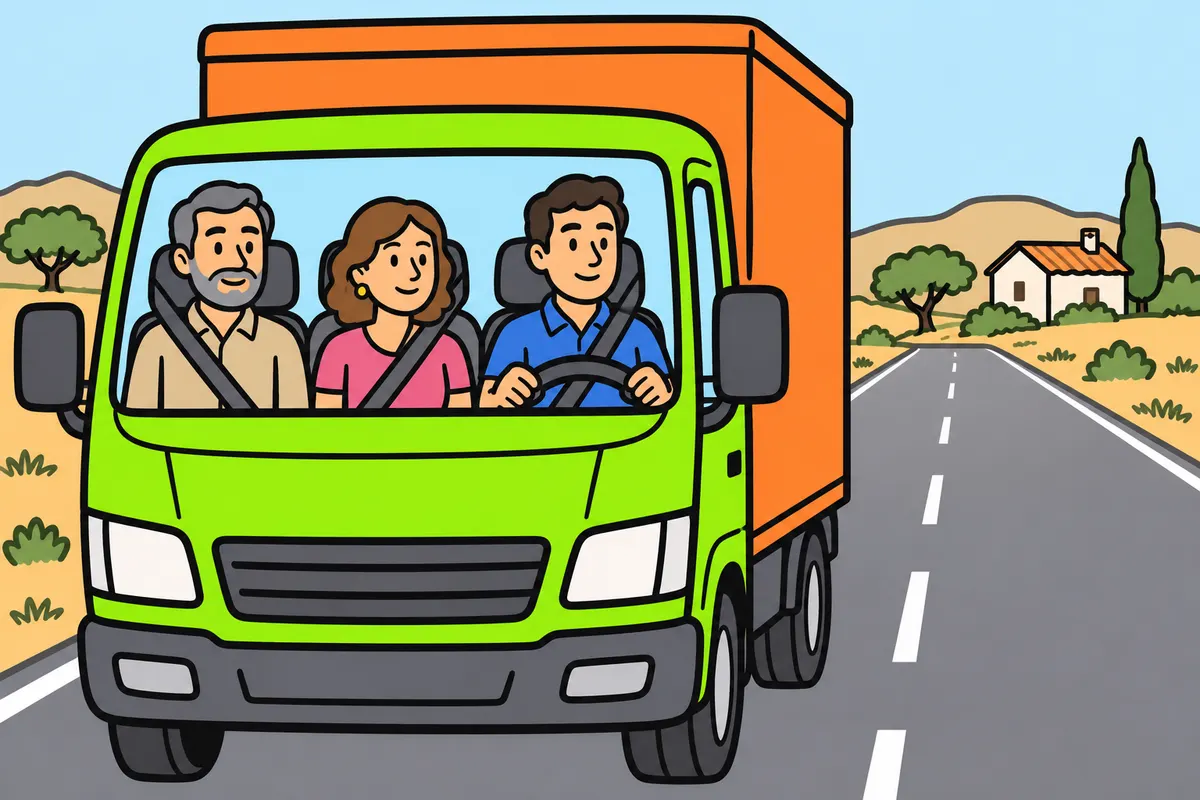
Follow the authorised seats and the vehicle's design.
| Case in your lorry | Conditions and result |
|---|---|
| People in the load area | Only under the applicable specific rules |
| Authorised to carry people and goods | Protect occupants so the load cannot obstruct or injure them |
| People exceed authorised seats by 50%, excluding driver | Very serious offence; officers immobilise the vehicle while the cause continues |
Remember
- C1 does not add seats.
- Check your lorry's authorised seats.
- An empty bus still needs its passenger licence.
- Passengers and luggage must stay within MMA.
- Carry people only in places made for them.
- If you carry people and goods, protect occupants from the load.
Exam trap: Wrong: You can carry eight passengers in any lorry. Right: only if those seats are authorised; the category maximum does not add seats.
Read the full explanation
- Eight passengers in addition to the driver means a total of nine people as the design limit for these categories. [RGCond, art. 4](https://www.boe.es/buscar/act.php?id=BOE-A-2009-9481#a4)
- You must respect your lorry’s authorised number of seats, even if it is below the C1 category maximum, and you must not exceed its MMA with passengers and luggage. [RGC, art. 9.1](https://www.boe.es/buscar/act.php?id=BOE-A-2003-23514#a9)
- To decide whether your vehicle belongs to a passenger category, you must consider how it is designed and built. A bus requiring D does not become a C1 vehicle because you drive it empty or with only yourself as the driver on that journey. [RGCond, art. 4](https://www.boe.es/buscar/act.php?id=BOE-A-2009-9481#a4)
- You must not carry people outside the areas intended and equipped for them. You may carry people in a lorry’s load area only under the conditions laid down in the specific provisions that apply. If your vehicle is authorised to carry people and goods at the same time, it must have suitable protection to prevent the load from obstructing the occupants or injuring them if it is thrown forward or out of place. [RGC, art. 10.1-3](https://www.boe.es/buscar/act.php?id=BOE-A-2003-23514#a10)
- If the number of occupants in your lorry exceeds its authorised number of seats by 50 %, excluding the driver’s seat, you commit a very serious offence. Officers immobilise your vehicle and keep it immobilised for as long as the cause persists. [RGC, art. 9.3](https://www.boe.es/buscar/act.php?id=BOE-A-2003-23514#a9)
4Light trailers and E extensions
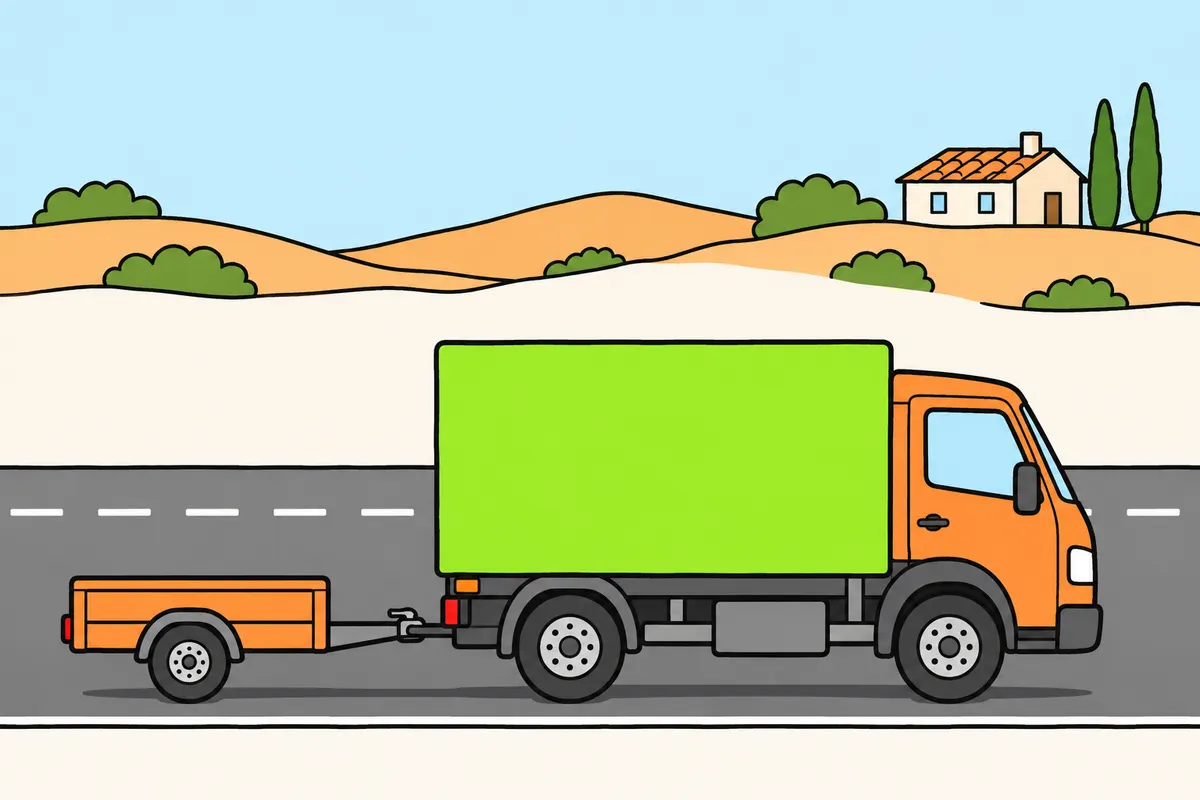
C1 allows a light trailer; other combinations need the right extension.
| Licence | Towing vehicle | Trailer MMA | Combination MMA |
|---|---|---|---|
| C1 or C | Vehicle in that category | Up to 750 kg | C1 allows the 8,250 kg example |
| C1+E | C1 | Over 750 kg | Up to 12,000 kg |
| C1+E | B | Over 3,500 kg | Up to 12,000 kg |
| C+E | C | Over 750 kg | No C1+E 12,000 kg ceiling |
Remember
- Check trailer MMA even when it is empty.
- C does not automatically give you C+E.
- C1+E needs valid C1; C+E needs valid C.
- C+E is normally from 21; from 18 with ordinary initial CAP.
- C+E includes C1+E; specified E categories include B+E.
- Check the combination's technical compatibility.
Exam trap: Wrong: C1's 7,500 kg limit applies to the whole combination. Right: it limits the lorry; the 750 kg trailer example totals 8,250 kg and needs only C1, subject to technical compatibility.
Read the full explanation
- With C1 and C, you can tow a trailer with an MMA of no more than 750 kg. Exactly 750 kg is included; if your trailer is authorised for 751 kg, you must check which category with E you need, even if you tow it empty. [RGCond, art. 4](https://www.boe.es/buscar/act.php?id=BOE-A-2009-9481#a4)
- With C1+E, you can drive combinations consisting of a C1 towing vehicle and a trailer or semi-trailer with an MMA over 750 kg, provided the combination’s MMA does not exceed 12,000 kg. You can obtain it from age 18 and must already hold a valid C1 licence. [RGCond, art. 4](https://www.boe.es/buscar/act.php?id=BOE-A-2009-9481#a4) [RGCond, art. 5](https://www.boe.es/buscar/act.php?id=BOE-A-2009-9481#a5)
- C1+E also covers combinations with a category B towing vehicle and a trailer or semi-trailer with an MMA over 3,500 kg, with a combination MMA of no more than 12,000 kg. This second option involves a different towing vehicle and you must not confuse it with the C1 lorry option. [RGCond, art. 4](https://www.boe.es/buscar/act.php?id=BOE-A-2009-9481#a4)
- With C+E, you can drive combinations with a category C towing vehicle and a trailer or semi-trailer with an MMA over 750 kg, without the 12,000 kg ceiling that applies to C1+E. To obtain it, you need a valid C licence; the general minimum age is 21, with an exception at 18 if you hold CAP (Certificate of Professional Competence) obtained through the standard initial qualification route. [RGCond, art. 4](https://www.boe.es/buscar/act.php?id=BOE-A-2009-9481#a4) [RGCond, art. 5](https://www.boe.es/buscar/act.php?id=BOE-A-2009-9481#a5)
- You do not obtain C+E when you qualify for C: it is an extension you must obtain. C+E also grants you C1+E, and the categories with E specified in the regulations also grant you B+E. [RGCond, art. 5](https://www.boe.es/buscar/act.php?id=BOE-A-2009-9481#a5)
- With a C1 lorry with an MMA of 7,500 kg and a light trailer of 750 kg, the total is 8,250 kg and C1 is sufficient as your driving licence category. The 7,500 kg ceiling applies to the motor vehicle. You must also respect the combination’s technical compatibility, covered in Dimensions and masses of the light lorry. [RGCond, art. 4](https://www.boe.es/buscar/act.php?id=BOE-A-2009-9481#a4)
5Minimum age and the B licence
You need valid B and the right age for C1 or C.
| Licence | Age and condition |
|---|---|
| C1 | From 18 |
| C | From 21; from 18 with ordinary initial CAP obtained |
Remember
- There is no general minimum time holding B.
- You must be old enough at your first practical test.
- Early theory does not let you drive alone.
- For C1, check separately whether your work requires CAP.
Exam trap: Wrong: Enrolling in ordinary CAP is enough for C at 18. Right: You must hold the ordinary initial CAP qualification.
Read the full explanation
- You can obtain C1 from age 18. Category C1 does not require standard CAP as a condition for a reduced minimum age, because its own minimum age is 18; you check the CAP requirement for the particular transport operation separately. [RGCond, art. 4](https://www.boe.es/buscar/act.php?id=BOE-A-2009-9481#a4)
- The general minimum age for obtaining C is 21. You can obtain it from age 18 if you hold CAP obtained through the standard initial qualification route; enrolling on the course or intending to complete it successfully is not the same as holding the certificate. [RGCond, art. 4](https://www.boe.es/buscar/act.php?id=BOE-A-2009-9481#a4)
- To be issued C1 or C, you must hold a valid B licence. This requirement does not impose a general minimum period of six months or one year holding B: you must hold the valid category, meet the other conditions and succeed in the required tests. [RGCond, art. 5](https://www.boe.es/buscar/act.php?id=BOE-A-2009-9481#a5)
- You must reach the minimum age applicable to your case by your first practical test appointment. You can sit your first theory test up to three months before reaching that age; this early test entitlement does not allow you to drive the lorry on your own. [RGCond, art. 51](https://www.boe.es/buscar/act.php?id=BOE-A-2009-9481#a51) [RGCond, Annex VI](https://www.boe.es/buscar/act.php?id=BOE-A-2009-9481#anvi)
6Requirements for applying for C1
Meet the personal, medical and test requirements to apply for C1.
Remember
- You need valid B, the required age and fitness, and must pass the tests.
- A work contract does not replace these requirements.
- A court ban, suspension or intervention can prevent issue.
- If you lost all points, meet the legal recovery requirements.
- If foreign, prove normal residence or the required study stay in Spain.
- Apply with the official form and documents at the Provincial Traffic Headquarters.
Exam trap: Wrong: Getting C1 means you keep separate B and lorry licences. Right: all your categories appear on one document.
Read the full explanation
- In addition to meeting the age requirement and holding a valid B licence, you must meet the required physical and mental fitness standards and be declared competent in the relevant tests. Having an employment contract or experience driving light vehicles does not replace any of these requirements. [RGCond, art. 7](https://www.boe.es/buscar/act.php?id=BOE-A-2009-9481#a7)
- You cannot obtain the licence while you are disqualified from driving by a court or your licence is suspended or seized by the administrative authorities. If your licence is declared invalid because you have lost all your points, you must meet the legal waiting periods and requirements for recovering it. [RGCond, art. 7](https://www.boe.es/buscar/act.php?id=BOE-A-2009-9481#a7)
- If you are a foreign national, you must provide evidence of the required normal residence status or a period of study in Spain of at least six months to obtain the licence. [RGCond, art. 7](https://www.boe.es/buscar/act.php?id=BOE-A-2009-9481#a7)
- You apply for the licence to the Jefatura Provincial de Tráfico (Provincial Traffic Office), using the official form and the required documents. All your categories appear on a single document: obtaining C1 does not mean you keep two separate licences, one for B and another for the lorry. [RGCond, art. 8](https://www.boe.es/buscar/act.php?id=BOE-A-2009-9481#a8) [RGCond, art. 4](https://www.boe.es/buscar/act.php?id=BOE-A-2009-9481#a4)
7The licence and CAP serve different purposes
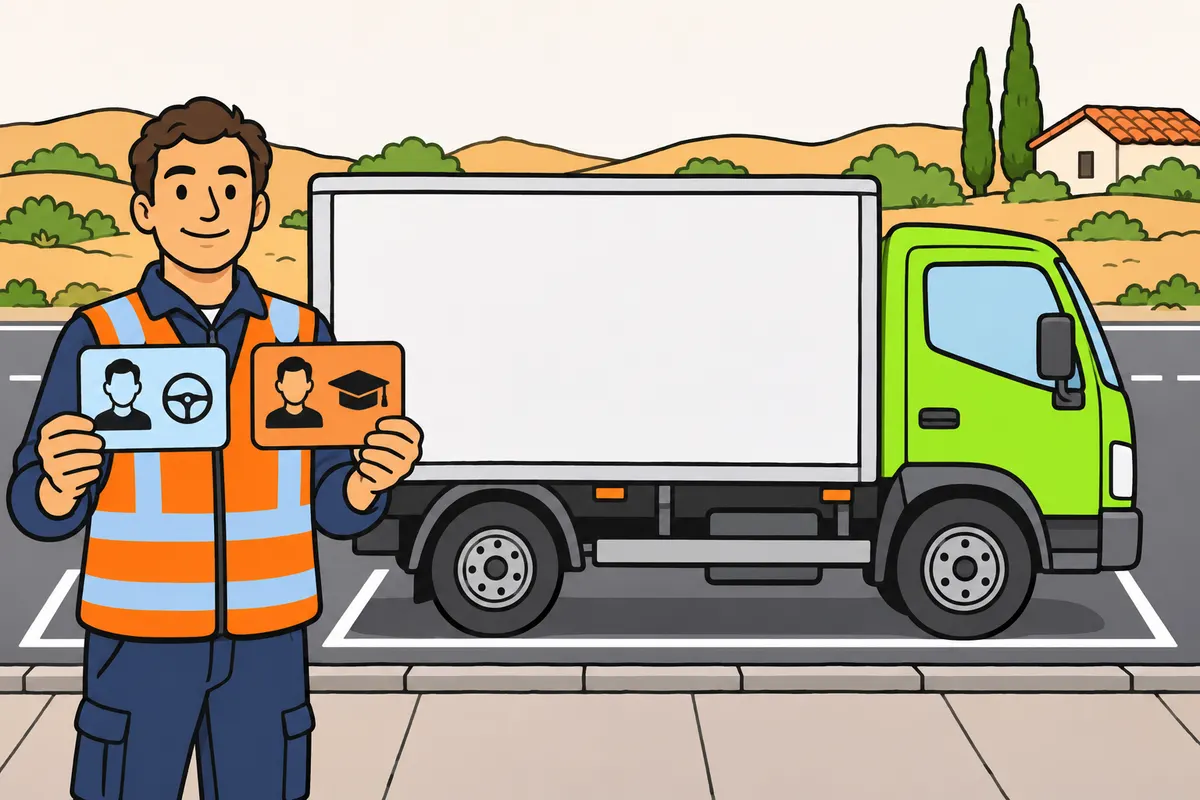
You need a licence to drive and CAP when your transport work requires it.
| Document | What it proves |
|---|---|
| Licence | You may drive that vehicle category |
| CAP | You have the professional qualification required for the transport |
Remember
- CAP does not replace your driving licence.
- You can take CAP training and exams before getting a licence.
- Both initial CAP routes require training and an exam.
- Check whether your transport falls within CAP rules.
Exam trap: Wrong: CAP lets you drive without a licence. Right: you need the right licence and, if the service is covered, CAP too.
Read the full explanation
- The C1 licence certifies your entitlement to drive the vehicle category; CAP (Certificate of Professional Competence) certifies the professional qualification required for transport activities within its scope. To work in a service subject to CAP, you must meet both requirements, as well as any other applicable requirements. [RD 284/2021, art. 1](https://www.boe.es/buscar/act.php?id=BOE-A-2021-6624#a1)
- The CAP system covers road transport using vehicles for which C1, C1+E, C or C+E is required, within the scope defined by the legislation. [RD 284/2021, art. 1](https://www.boe.es/buscar/act.php?id=BOE-A-2021-6624#a1)
- Initial qualification has standard and accelerated routes; both require compulsory training and an examination. You can attend the courses and take their examinations without already holding a driving licence, but CAP alone does not authorise you to drive the vehicle. [RD 284/2021, art. 4](https://www.boe.es/buscar/act.php?id=BOE-A-2021-6624#a4) [RD 284/2021, art. 5](https://www.boe.es/buscar/act.php?id=BOE-A-2021-6624#a5) [RD 284/2021, art. 6](https://www.boe.es/buscar/act.php?id=BOE-A-2021-6624#a6)
8CAP routes and continuing training
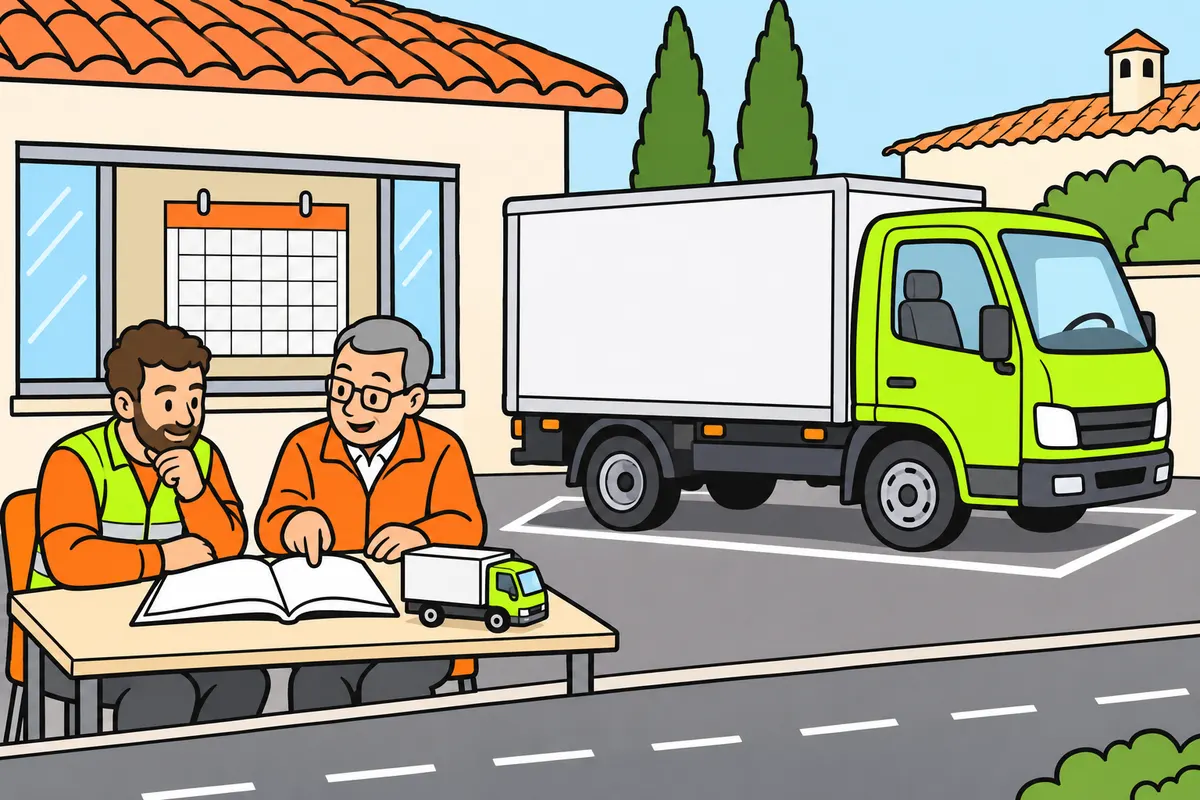
Know the difference between initial CAP training and continuing training.
| CAP training | Duration and condition |
|---|---|
| Ordinary initial | 280 hours and exam |
| Accelerated initial | 140 hours and exam |
| Continuing, if your work requires CAP | 35 hours every five years |
| Goods categories issued before 11 September 2009 | Initial exemption under the rules; continuing training still applies |
Remember
- You must pass the initial qualification exam.
- With C1, accelerated CAP can support covered work from 18.
- Ordinary CAP can support C from 18.
- Renewing your licence does not renew CAP.
- Before returning without a valid card, complete continuing training.
Exam trap: Wrong: Exemption from initial training removes all CAP duties. Right: Complete the continuing training that applies to you.
Read the full explanation
- The standard initial qualification comprises a 280-hour course and requires you to pass the corresponding examination. This is the route linked to obtaining the C licence from the age of 18. [RD 284/2021, art. 5](https://www.boe.es/buscar/act.php?id=BOE-A-2021-6624#a5)
- The accelerated initial qualification comprises a 140-hour course and an examination. With the corresponding C1 licence, you can use this route for activities subject to CAP from the age of 18. [RD 284/2021, art. 6](https://www.boe.es/buscar/act.php?id=BOE-A-2021-6624#a6) [RGCond, art. 4](https://www.boe.es/buscar/act.php?id=BOE-A-2009-9481#a4)
- If your activity is subject to CAP, you must complete 35 hours of periodic training every five years. Its schedule is independent of the medical renewal of your C1 licence: fulfilling one obligation does not automatically renew the other. [RD 284/2021, art. 7](https://www.boe.es/buscar/act.php?id=BOE-A-2021-6624#a7)
- If you hold a goods vehicle licence category issued before 11 September 2009, you are exempt from initial qualification under the terms of article 3. You must complete the periodic training applicable to you; an exemption from initial training does not amount to a permanent exemption from all CAP training. [RD 284/2021, art. 3](https://www.boe.es/buscar/act.php?id=BOE-A-2021-6624#a3)
- If you have left the profession and do not hold a valid driver qualification card, you must complete periodic training before returning to it. Documentary proof of CAP and the documents you must carry are covered in Professional transport documentation. [RD 284/2021, art. 7](https://www.boe.es/buscar/act.php?id=BOE-A-2021-6624#a7)
9When to check a CAP exemption
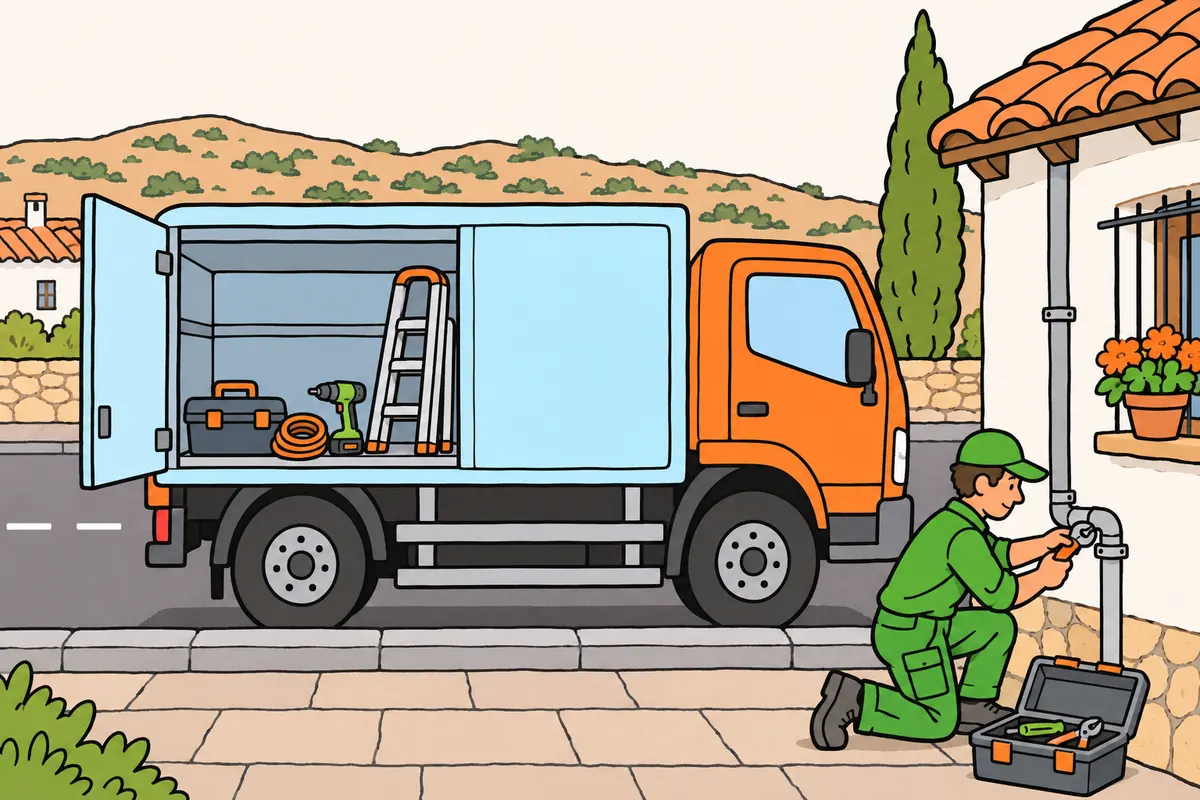
Check every condition before relying on a CAP exemption.
Remember
- Not all private transport is exempt from CAP.
- Check purpose, vehicle use and driving conditions together.
- Check the cases in “Professional transport documentation”.
- You still need the right licence and medical fitness.
Exam trap: Wrong: Ancillary private transport is always exempt from CAP. Right: You must meet every condition of a full exemption; the right licence and medical fitness still apply.
Read the full explanation
- CAP exemptions depend on the vehicle and the specific activity; classification as ancillary private transport does not in itself grant an exemption. The cases and conditions are covered in “Professional transport documentation”, in the section “CAP exemptions: check the specific case”. [RD 284/2021, art. 2](https://www.boe.es/buscar/act.php?id=BOE-A-2021-6624#a2)
- To decide whether you can carry out a service without CAP, you must meet all the conditions of an exemption: the purpose, vehicle use and driving conditions are assessed together where the legislation requires them. Exemption from this qualification does not remove the licence and physical and mental fitness requirements applicable to your lorry. [RD 284/2021, arts. 1 and 2](https://www.boe.es/buscar/act.php?id=BOE-A-2021-6624#a2)
10Group 2 medical examination
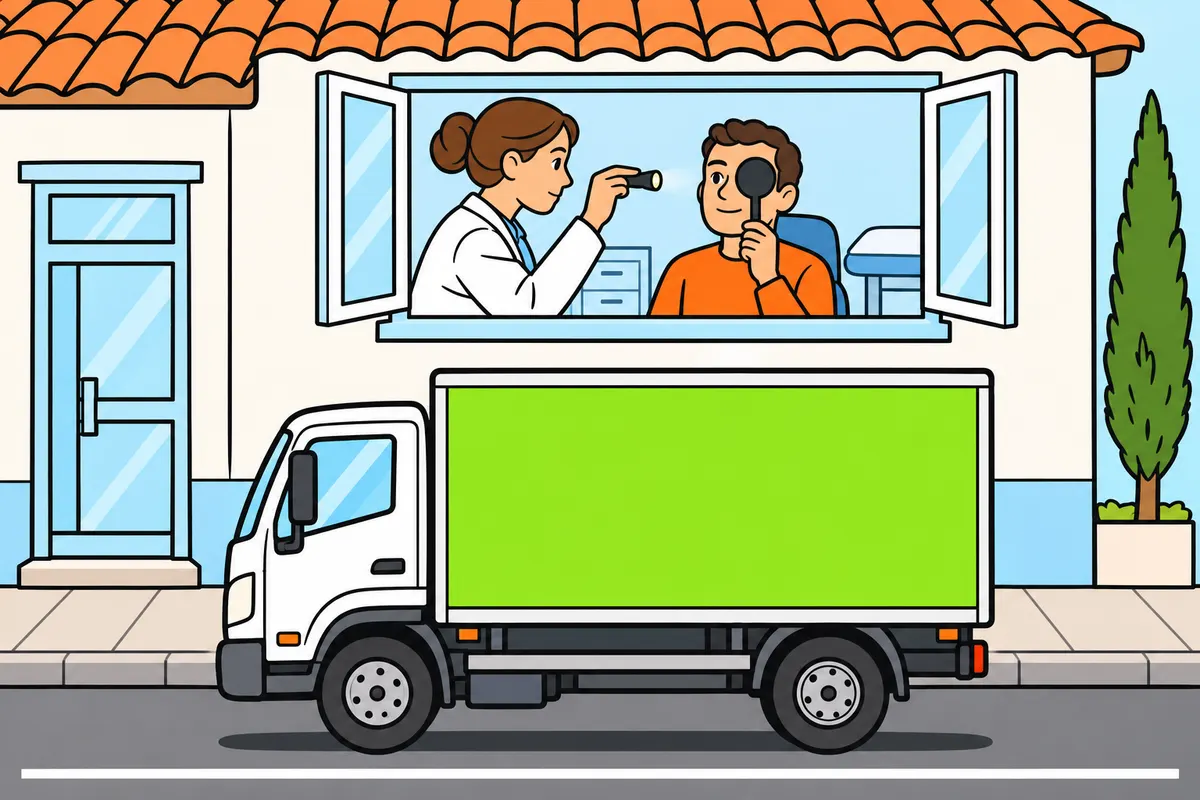
Pass the medical examination required for your licence category.
| Licence categories | Medical group |
|---|---|
| C1, C1+E, C, C+E | Group 2 |
| B | Group 1 |
Remember
- Use an authorised centre to obtain or renew your licence.
- Provide the information and reports needed.
- Checks can cover sight, hearing, movement and mental health.
- Illness can shorten validity, add restrictions or prevent authorisation.
Exam trap: Wrong: Private lorry use allows the B medical group. Right: Your category requires group 2 fitness.
Read the full explanation
- To obtain or renew C1 or C, you must undergo a physical and mental fitness examination at an authorised centre. The centre issues the corresponding report, and the DGT may order additional medical checks if there are indications that warrant them. [RGCond, art. 44](https://www.boe.es/buscar/act.php?id=BOE-A-2009-9481#a44)
- C1, C1+E, C and C+E belong to Group 2 for medical purposes; B belongs to Group 1. You must demonstrate Group 2 fitness even if you only intend to use the lorry privately: the group depends on the category you apply for. [RGCond, art. 45](https://www.boe.es/buscar/act.php?id=BOE-A-2009-9481#a45)
- The examination covers your vision and hearing, musculoskeletal system, organ systems, mental state and perceptual and motor abilities, among other aspects. You must provide the information and reports needed to assess your circumstances against the applicable criteria. [RGCond, art. 43](https://www.boe.es/buscar/act.php?id=BOE-A-2009-9481#a43)
- An illness or impairment may result in restrictions, additional reports, a shorter validity period or refusal of the licence, depending on the case. [RGCond, art. 44](https://www.boe.es/buscar/act.php?id=BOE-A-2009-9481#a44)
11Licence restrictions and adaptations
Follow the restrictions and adaptations shown on your licence.
| Test case | Effect on your licence |
|---|---|
| Automatic transmission | Relevant restriction, unless the regulatory exception applies |
| Lorry category exception | Hold a specified category gained in a manual vehicle and complete the required traffic operations |
Remember
- Follow restrictions even if you change lorry or employer.
- Needing glasses or hearing aids does not alone make your licence exceptional.
- Use required aids and adaptations during tests.
- Code 97 excludes the vehicles within its restriction.
Exam trap: Wrong: An automatic test never restricts a lorry licence. Right: A restriction applies unless you meet the regulatory exception, including the specified manual category and traffic operations.
Read the full explanation
- You must drive in accordance with the endorsements, adaptations and restrictions shown as codes on your licence. They may apply to you, the vehicle or its use on the road; holding a valid C1 licence does not allow you to ignore them when changing lorries or employers. [RGCond, art. 3](https://www.boe.es/buscar/act.php?id=BOE-A-2009-9481#a3)
- Your licence may be ordinario (standard) or extraordinario (special), depending on your physical and mental fitness. Being required to use corrective lenses or hearing aids to meet the minimum standards does not in itself make your licence extraordinario; other restrictions are assessed under the regulatory conditions. [RGCond, art. 46](https://www.boe.es/buscar/act.php?id=BOE-A-2009-9481#a46)
- If you take the test in a vehicle with automatic transmission, your licence is subject to the corresponding restriction, unless the regulatory exception for lorry categories applies: you must hold one of the specified categories obtained with manual transmission and carry out the required operations during the on-road test. [RGCond, annex VII](https://www.boe.es/buscar/act.php?id=BOE-A-2009-9481#anvii)
- During the tests, you must wear or use any corrective aids, prostheses or adaptations required for you and use a suitable vehicle. If these are missing or unsuitable, the test does not start or is interrupted without using up a test attempt in the circumstances set out in article 57. [RGCond, art. 57](https://www.boe.es/buscar/act.php?id=BOE-A-2009-9481#a57)
- Code 97 limits the C1 or C1+E vehicles you can drive; its scope and the corresponding route to obtaining the licence are explained in “Theory tests and exemptions”. [RGCond, annex I](https://www.boe.es/buscar/act.php?id=BOE-A-2009-9481#ani)
12Theory tests and exemptions
Pass the required tests in order, even if theory exemptions apply.
| Your situation | Exemption and licence limit |
|---|---|
| Valid licence with common theory passed | No repeat common test; with B, normally take goods-specific theory |
| Apply for C with valid C1 | Exempt from the corresponding specific knowledge test |
| C1 or C1+E applicants for vehicles outside the recording equipment rules | Exempt from driving, rest and working times, equipment use, specific goods traffic rules, and driver, vehicle and national and international transport documentation. Code 97: you cannot drive a C1 vehicle within the recording equipment rules, including as the towing vehicle in your C1+E combination. |
| Practical C1 or C1+E tests for vehicles outside the recording equipment rules | No tachograph check or use; pass the remaining required tests |
Remember
- Pass knowledge tests, then closed course, then road test.
- CAP does not replace Traffic tests.
- A good theory result cannot make up for failing manoeuvres.
- Exemptions do not remove the other required tests.
Exam trap: Wrong: Holding C1 gives you C automatically. Right: Valid C1 exempts you from the corresponding specific theory test, but you must meet C's other requirements and tests.
Read the full explanation
- The standard C1 process comprises theory tests and practical tests on a closed course and public roads. A physical and mental fitness assessment is also required; CAP has its own training and examination and does not replace the DGT tests. [RGCond, art. 43](https://www.boe.es/buscar/act.php?id=BOE-A-2009-9481#a43)
- You are exempt from the common theory test if you hold a valid licence that required you to pass it. Therefore, when you apply for C1 with a valid B licence, you normally take the goods vehicle specific theory test; the regulatory test structure includes the common theory test unless you are exempt. [RGCond, art. 54](https://www.boe.es/buscar/act.php?id=BOE-A-2009-9481#a54)
- If you apply for C and hold a valid C1 licence, you are exempt from the corresponding specific theory test. [RGCond, art. 54](https://www.boe.es/buscar/act.php?id=BOE-A-2009-9481#a54)
- You must pass each stage before proceeding: you must pass the required theory tests before the closed-course test, and the closed-course test before the on-road test. Your result is pass or fail; a good theory score does not compensate for failing the manoeuvres test. [RGCond, art. 53](https://www.boe.es/buscar/act.php?id=BOE-A-2009-9481#a53)
- If you apply for C1 or C1+E for vehicles outside the scope of the recording equipment rules, you are exempt from subjects a), b) and c): driving, rest and working times and use of the recording equipment; specific road traffic rules for goods transport; and driver, vehicle and national and international transport documentation. In the practical tests for C1 or C1+E outside that scope, you are not required to check or use the tachograph either. You must pass the remaining required subjects and tests. [RGCond, annex V.B.2.4.º, V.B.2.6.º and B.3](https://www.boe.es/buscar/act.php?id=BOE-A-2009-9481#anv)
- If you obtain C1 or C1+E with this exemption, your licence bears code 97: you cannot drive a C1 vehicle within the scope of the recording equipment rules, including as the towing vehicle in your C1+E combination. [RGCond, annex I](https://www.boe.es/buscar/act.php?id=BOE-A-2009-9481#ani)
13Specific theory test: questions and time
Answer the C1 theory questions within the time and error limit.
| Specific test case | Questions | Errors allowed |
|---|---|---|
| C1 | 20 | Up to 2 |
| Regulatory example | 25 | Up to three: round 2.5 up |
| General regulatory range | 16 to 30 | Up to 10%, rounded up |
Remember
- Follow instructions for selecting answers.
- A question can have one to four correct answers.
- Base time is one minute per question.
- Time may increase for videos or justified special needs.
Exam trap: Wrong: Three errors pass the 20-question C1 test. Right: You can make no more than 2 errors.
Read the full explanation
- The C1 specific theory test consists of 20 questions with a standard time allowance of 20 minutes; to be assessed as competent, you can make no more than 2 errors. [DGT, Driving Licence Manual 2026, p. 149](https://sede.dgt.gob.es/export/sites/dgt/.galleries/permisos-de-conducir/certificacion-aptitud-profesores-formacion-vial/2026/MANUAL-IV-Normativa-permisos-de-conduccion.pdf) [RGCond, annex VI](https://www.boe.es/buscar/act.php?id=BOE-A-2009-9481#anvi)
- Annex VI sets a range of 16 to 30 questions for specific theory tests. [RGCond, annex VI](https://www.boe.es/buscar/act.php?id=BOE-A-2009-9481#anvi)
- The standard time allowance is one minute per question and can be extended in proportion to any videos included or for duly justified special needs. [RGCond, annex VI](https://www.boe.es/buscar/act.php?id=BOE-A-2009-9481#anvi)
- To be assessed as competent, your errors must not exceed 10 % of the total, rounded up to the next whole number if the result is a decimal. For example, with 25 questions, the calculation gives 2.5, allowing three errors. [RGCond, annex VI](https://www.boe.es/buscar/act.php?id=BOE-A-2009-9481#anvi)
- The regulations provide for between one and four correct answers per question; you must select the answers according to the test instructions. [RGCond, annex VI](https://www.boe.es/buscar/act.php?id=BOE-A-2009-9481#anvi)
14Test attempts and deadlines
Follow the exam intervals and the validity period of each pass.
| Exam timing | Rule and exception |
|---|---|
| Between attempts on same application | No more than six months, except justified illness or other exceptional cases |
| After failing twice | At least ten days before third attempt |
| Later attempts after a failure | At least fifteen days after the failed test |
| Shorter minimum interval | Only for recognised and justified urgency |
Remember
- Missing an exam costs an attempt unless duly justified.
- A pass lasts two years from the following day.
- Passing the next test in time restarts the period.
- A passed test is not the same as licence validity.
Exam trap: Wrong: A passed test stays valid forever. Right: It lasts two years from the next day; passing the next test in time restarts the count.
Read the full explanation
- Each application entitles you to two test attempts. No more than six months must elapse between attempts under the same application, except in cases of illness or other duly justified exceptional circumstances. [RGCond, art. 51](https://www.boe.es/buscar/act.php?id=BOE-A-2009-9481#a51)
- If you do not succeed in a test in two attempts, at least ten days must elapse between the second and third attempts. Between subsequent attempts, the minimum is fifteen days, counted from the unsuccessful test; these periods can exceptionally be reduced for recognised and justified urgency. [RGCond, annex VI](https://www.boe.es/buscar/act.php?id=BOE-A-2009-9481#anvi)
- If you do not attend on the scheduled date, you lose that attempt, except in duly justified exceptional circumstances. [RGCond, art. 51](https://www.boe.es/buscar/act.php?id=BOE-A-2009-9481#a51)
- Your assessment as competent in a test is valid for two years, counted from the day after you succeed in it. If you succeed in the next test within that period, the period starts again; these two years are not the validity period of your C1 licence once issued. [RGCond, art. 53](https://www.boe.es/buscar/act.php?id=BOE-A-2009-9481#a53)
15Test centre, identification and equipment
Identify yourself, use valid equipment and follow exam rules.
| Exam situation | Result |
|---|---|
| Centre outside capital lacks required quality or safety | Traffic directs you to a suitable centre in the province while this lasts |
| Required ID missing at practical test | Test does not start; no attempt lost |
| Vehicle or equipment fails requirements or malfunctions | Test does not start or is stopped; no attempt lost |
| Forbidden phone or system used for theory help | Exclusion and attempt lost |
| Unauthorised help communication in obtaining or recovering a licence | Very serious offence: €500 and six months barred from obtaining or recovery tests |
Remember
- Traffic chooses the centre in the requested province.
- A payment receipt alone does not prove your identity.
- The examiner can check the vehicle, documents and communications.
- Do not commit or attempt fraud.
Exam trap: Wrong: Every test that does not start uses an attempt. Right: If required practical-test ID is missing, it does not start and no attempt is lost.
Read the full explanation
- You take your test in the province to which you submit your application, at the centre designated by the Jefatura Provincial de Tráfico (Provincial Traffic Office) according to the circumstances and the resources available. [RGCond, art. 50](https://www.boe.es/buscar/act.php?id=BOE-A-2009-9481#a50)
- If a test centre outside the provincial capital does not meet the required quality or safety conditions, you take your test at the centre in the capital or another suitable centre in the same province designated by the Jefatura Provincial de Tráfico. This arrangement remains in place while the shortcomings persist. [RGCond, annex VI.A.1](https://www.boe.es/buscar/act.php?id=BOE-A-2009-9481#anvi)
- For practical tests, you may be required to produce your DNI (Spanish national identity card), passport, residence card or driving licence, as appropriate. If you do not produce the required identification, the test does not start and you do not lose an attempt; proof of payment alone does not establish your identity. [RGCond, annex VI](https://www.boe.es/buscar/act.php?id=BOE-A-2009-9481#anvi)
- The examiner can check the vehicle, documentation, monitoring equipment and communication systems. If they do not meet the requirements or do not work properly, the examiner decides that the test must not start or must be interrupted, without you losing an attempt. [RGCond, annex VI](https://www.boe.es/buscar/act.php?id=BOE-A-2009-9481#anvi)
- You must not commit or attempt fraud during the test: this can lead to the test being interrupted and you being assessed as not competent. Prohibited use of phones or systems to receive information during the theory test leads to exclusion and loss of an attempt; in practical tests, only the equipment provided for in the regulations is allowed. [RGCond, art. 57](https://www.boe.es/buscar/act.php?id=BOE-A-2009-9481#a57) [RGCond, annex VI](https://www.boe.es/buscar/act.php?id=BOE-A-2009-9481#anvi)
- Using unauthorised communication devices to receive help in tests to obtain or regain a driving entitlement is a very serious offence. In addition to a fine of 500 euros, you cannot take tests to obtain or regain a driving permit, licence or other driving authorisation for six months. [Traffic Act, art. 77.u](https://www.boe.es/buscar/act.php?id=BOE-A-2015-11722#a77) [Traffic Act, art. 80](https://www.boe.es/buscar/act.php?id=BOE-A-2015-11722#a80)
16C1 and C closed-course test
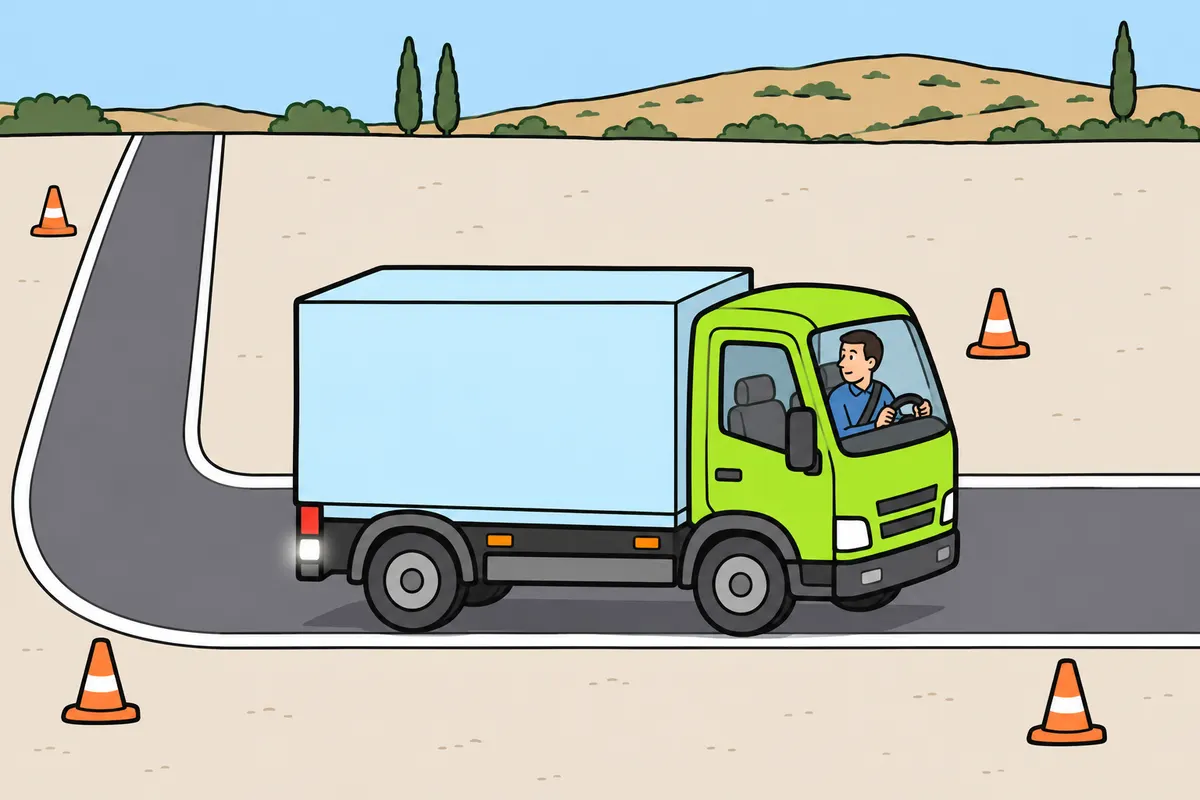
Show safe lorry manoeuvres and parking on the closed course.
| C1 and C manoeuvre | What you must do |
|---|---|
| G | Reverse in a straight line and curve |
| I | Park in a line and move off |
| K | Park safely for loading or unloading at a ramp, platform or similar place |
Remember
- Reverse smoothly and stay within the limits.
- Keep the lorry roughly centred while reversing.
- Approach the loading installation squarely and safely.
Exam trap: Wrong: Completing the reverse is enough. Right: Reverse smoothly, keep the lorry roughly centred, and stay within the test limits.
Read the full explanation
- You must demonstrate control of the lorry on a closed course through manoeuvre G, reversing in a straight line and round a bend; manoeuvre I, parallel parking and moving out; and manoeuvre K, parking safely for loading or unloading at a ramp, platform or similar facility. [RGCond, annex V](https://www.boe.es/buscar/act.php?id=BOE-A-2009-9481#anv)
- When reversing, you must maintain a steady engine speed and keep the vehicle approximately centred; when approaching the loading facility, you must position the load body centrally and safely. You carry out these operations within the limits and conditions of the test. [RGCond, annex VI](https://www.boe.es/buscar/act.php?id=BOE-A-2009-9481#anvi)
17Preparation and assessment of practical tests
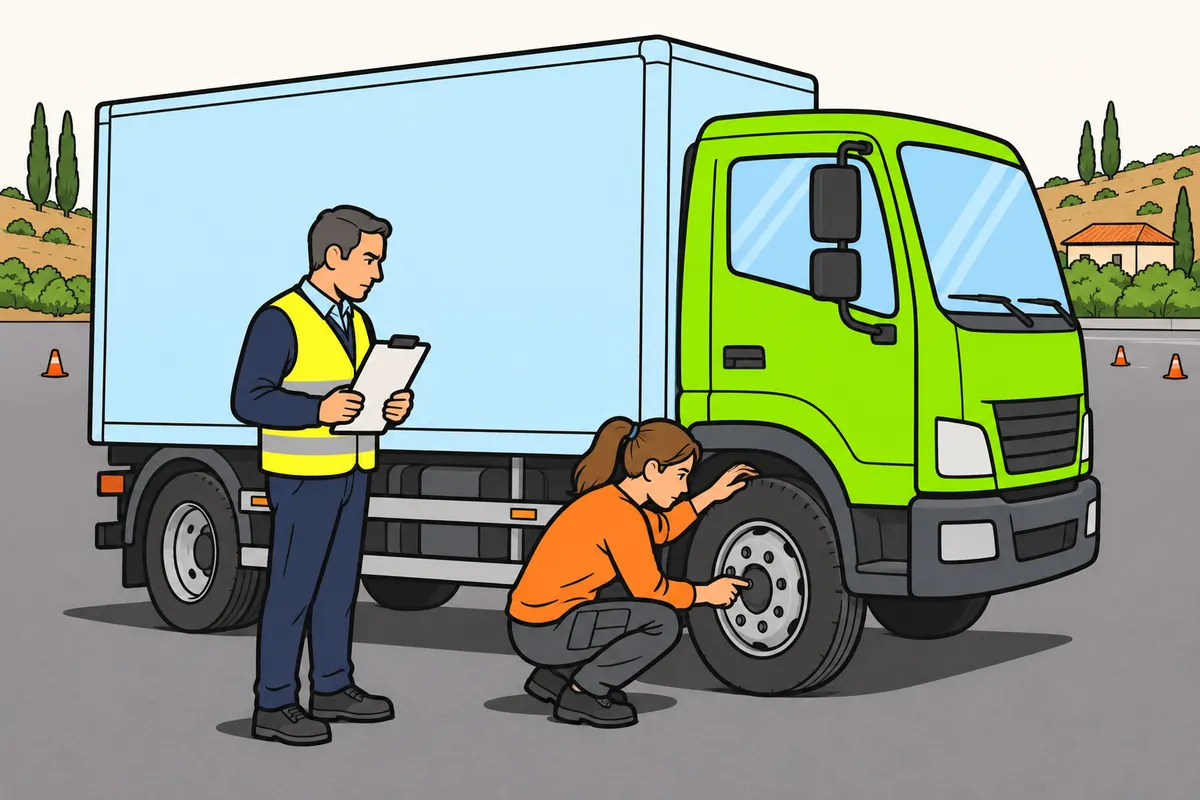
Prepare the lorry, check safety and avoid faults that fail the test.
| Failing reason | Closed course only |
|---|---|
| Disqualifying fault | One |
| Serious faults | Two |
| Combined faults | One serious and two minor |
| Minor faults | Four |
Remember
- Adjust your seat and show you can check the vehicle.
- Checks may cover tyres, fixings, fluids, steering and brakes.
- Follow instructions and safety requirements.
- Dangerous behaviour can stop your test.
- The exam vehicle must be over 5 m and under 7 m long.
- Check the restricted route in “Theory tests and exemptions”.
Exam trap: Wrong: C1 only allows lorries from 5,500 kg. Right: That is the exam vehicle minimum; C1 also covers lorries over 3,500 kg and below 5,500 kg.
Read the full explanation
- Before manoeuvring, you must demonstrate that you know how to prepare the driving position and the lorry’s equipment for safe use. These checks form part of the practical tests. [RGCond, annex V](https://www.boe.es/buscar/act.php?id=BOE-A-2009-9481#anv)
- In the lorry, you may be checked on your ability to inspect wheels, fastenings, fluids and other components, check power steering and braking assistance, and use the braking and speed-reduction systems. The methods for these checks are covered in C1 lorry maintenance and checks and Brakes and retarders on light lorries. [RGCond, annex V](https://www.boe.es/buscar/act.php?id=BOE-A-2009-9481#anv)
- On the closed course, you are assessed as not competent if you make one disqualifying fault, two serious faults, one serious fault and two minor faults, or four minor faults. [RGCond, annex VI](https://www.boe.es/buscar/act.php?id=BOE-A-2009-9481#anvi)
- A clear lack of skill or dangerous behaviour can justify interrupting the practical tests. You must follow the examiner’s instructions and the test’s safety conditions. [RGCond, art. 57](https://www.boe.es/buscar/act.php?id=BOE-A-2009-9481#a57)
- The lorry you use for the C1 test must have an MMA (maximum authorised mass) of at least 5,500 kg and no more than 7,500 kg, a length greater than 5 m and less than 7 m, and an actual total weight of at least 4,500 kg. These are requirements for the vehicle you use for your test: once you hold the licence, C1 also covers lorries with an MMA greater than 3,500 kg and less than 5,500 kg. [RGCond, annex VII](https://www.boe.es/buscar/act.php?id=BOE-A-2009-9481#anvii) [RGCond, art. 4](https://www.boe.es/buscar/act.php?id=BOE-A-2009-9481#a4)
- The exemption from checking and using the tachograph in practical tests and the exemption from subjects a), b) and c) are explained in «Theory tests and exemptions»; operating the device is covered in «The tachograph and its records». [RGCond, annex V](https://www.boe.es/buscar/act.php?id=BOE-A-2009-9481#anv)
18On-road test
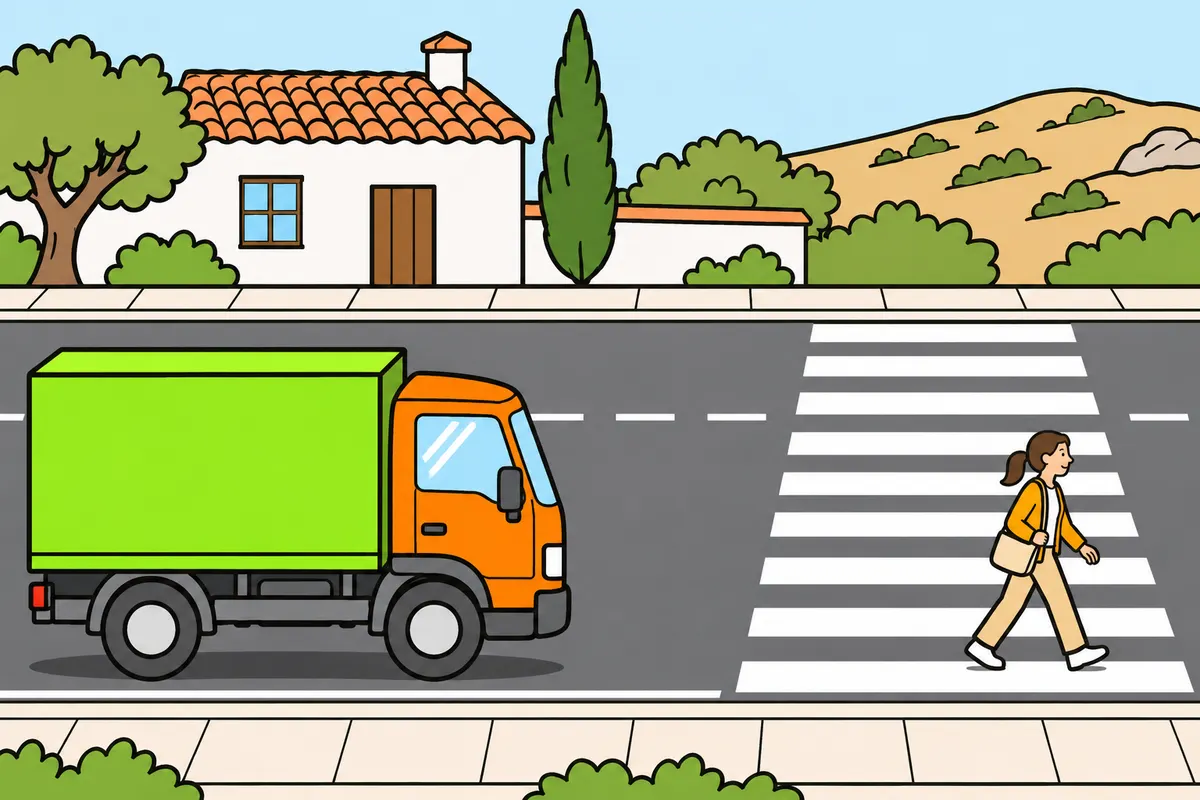
Drive safely and anticipate during the open-road test.
| Failing reason | Open-road test only |
|---|---|
| Disqualifying fault | One |
| Serious faults | Two |
| Combined faults | One serious and five minor |
| Minor faults | Ten |
| Instructor or authorised accompanying person intervenes | For a covered emergency or danger, test stops and you fail |
Remember
- Adapt to the surroundings and vulnerable road users.
- Follow the examiner's instructions.
- Allow for the lorry's length and overhangs.
- Brake properly and drive smoothly.
- Reduce fuel use and emissions without reducing safety.
Exam trap: Wrong: The 45 minutes include preparation and the result. Right: It is driving time, except interruption or suspension; it excludes briefing, preparation, safety checks, any special manoeuvres and the result.
Read the full explanation
- When driving on the road, you must demonstrate that you can join traffic safely and use the controls confidently. Your caution, courtesy and ability to anticipate are also assessed; you must adapt your actions to your surroundings and vulnerable road users, rather than merely following a memorised route. [RGCond, art. 49](https://www.boe.es/buscar/act.php?id=BOE-A-2009-9481#a49)
- For C and C1, the minimum driving time on the road is 45 minutes, except where the test is interrupted and suspended. This does not include reception, vehicle preparation, technical safety checks, any special manoeuvres or communication of the result. [RGCond, annex VI](https://www.boe.es/buscar/act.php?id=BOE-A-2009-9481#anvi)
- The examiner gives the instructions during the test. The instructor or authorised accompanying person at the dual controls must ensure safety; if they intervene in an emergency or dangerous situation as provided for in the regulations, the test is interrupted and you are assessed as not competent. [RGCond, art. 55](https://www.boe.es/buscar/act.php?id=BOE-A-2009-9481#a55)
- On the road, you are assessed as not competent if you make one disqualifying fault, two serious faults, one serious fault and five minor faults, or ten minor faults. [RGCond, annex VI](https://www.boe.es/buscar/act.php?id=BOE-A-2009-9481#anvi)
- In your lorry, you must demonstrate that you adapt your path to its length and overhangs, use the appropriate braking systems and drive smoothly and safely. The test also assesses whether you operate the vehicle in a way that reduces fuel consumption and emissions without compromising safety. [RGCond, annex V](https://www.boe.es/buscar/act.php?id=BOE-A-2009-9481#anv)
19Lorry licence validity
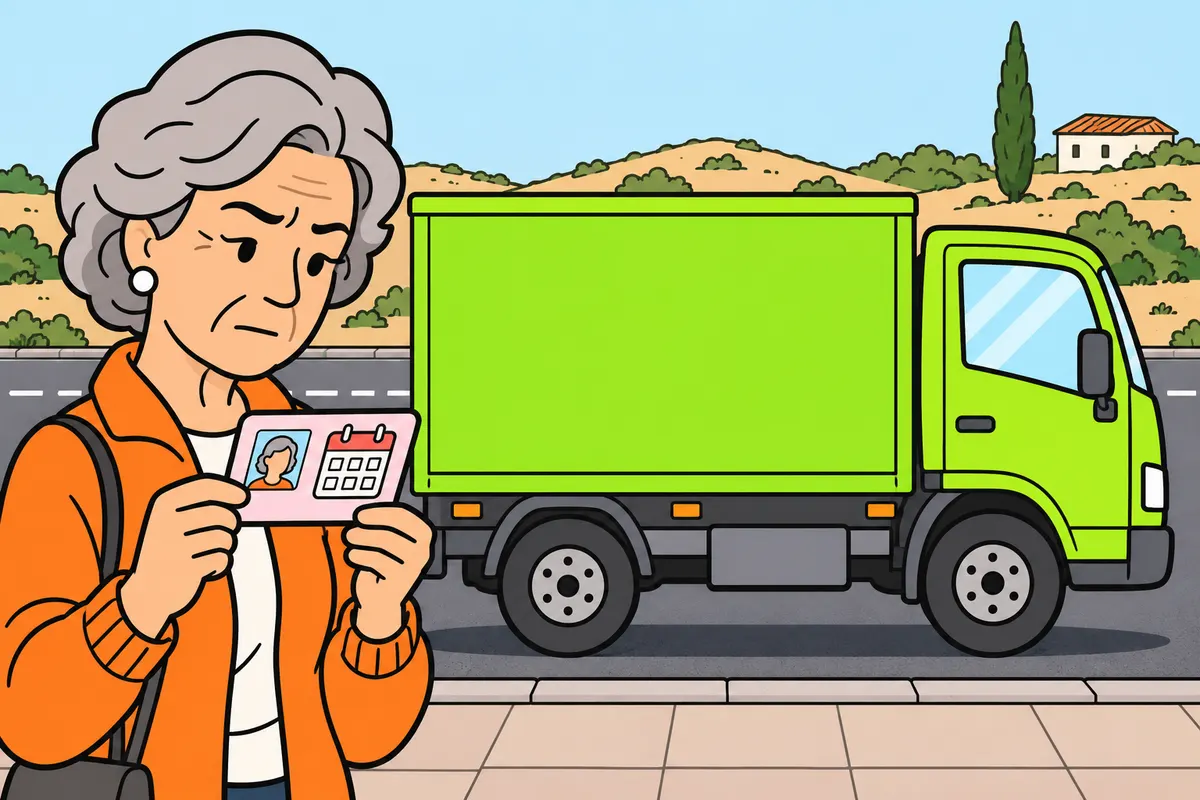
Check the expiry date of the lorry category you need.
| Your age | Usual C1, C1+E, C, C+E validity |
|---|---|
| Before 65 | Five years |
| From 65 | Three years |
Remember
- Categories on your licence can expire on different dates.
- The lorry category period applies even if you do not work as a driver.
- Illness can shorten the period.
- Keep the requirements and do not lose all your points.
Exam trap: Wrong: A future printed date always lets you drive. Right: You must still meet requirements and have no loss of validity or decision preventing you from driving.
Read the full explanation
- C1, C1+E, C and C+E normally remain valid for five years until you reach 65, and for three years from that age onwards. The period applies according to the category, even if you do not work as a professional driver. [RGCond, art. 12](https://www.boe.es/buscar/act.php?id=BOE-A-2009-9481#a12)
- Your licence may contain categories with different expiry dates; the category required for the vehicle you drive must be valid. [RGCond, art. 12](https://www.boe.es/buscar/act.php?id=BOE-A-2009-9481#a12)
- The validity period may be reduced if you have an illness or impairment that could worsen; you must observe the expiry date granted on your licence. [RGCond, art. 12](https://www.boe.es/buscar/act.php?id=BOE-A-2009-9481#a12)
- To keep your entitlement, you must continue to meet the requirements for its issue and must not have lost your entire allocation of points. The printed date does not override a loss of validity or a decision that prevents you from driving. [RGCond, art. 12](https://www.boe.es/buscar/act.php?id=BOE-A-2009-9481#a12)
20Renewal and expired licences
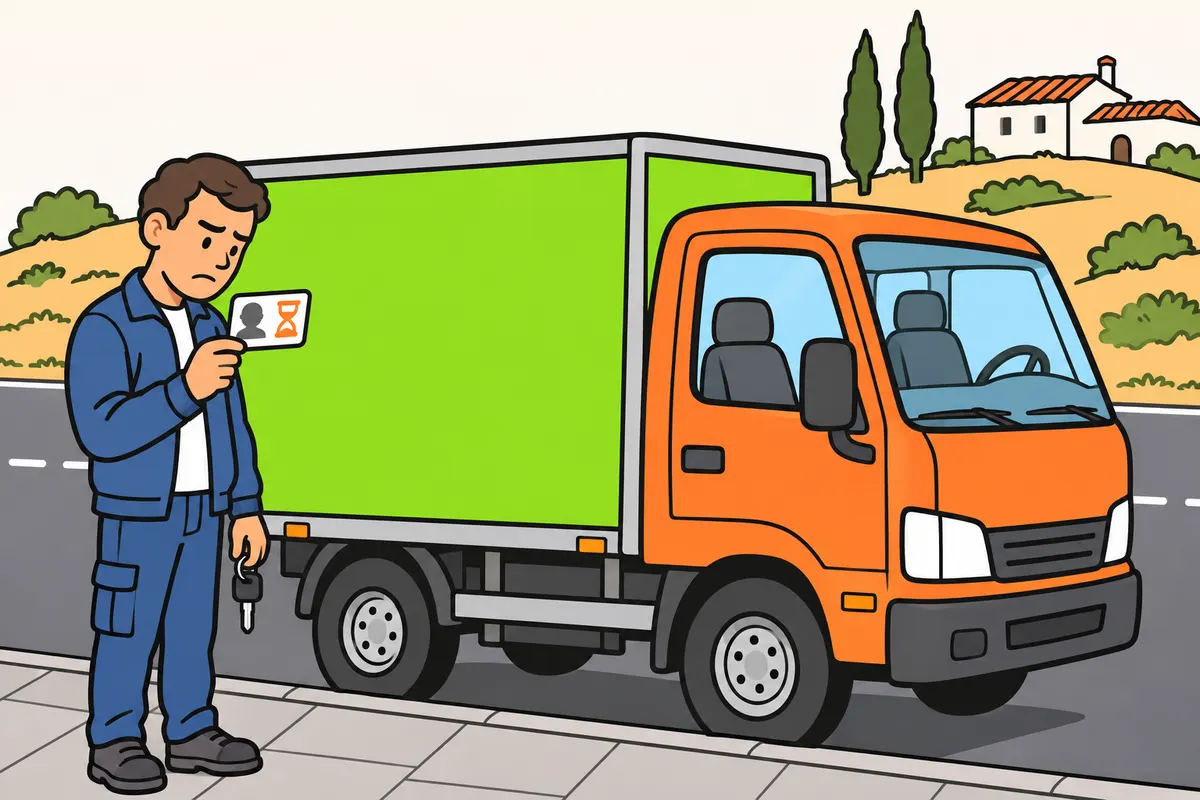
Renew your lorry category and hold valid authority before driving.
| When you renew | New period starts |
|---|---|
| Up to three months before expiry | From the previous expiry date |
| Earlier, for a justified exceptional case | From the application date |
Remember
- Show you still meet the medical fitness rules.
- Applying does not let you drive with expired C1.
- You can apply after expiry.
- Renewing group 2 extends group 1 permissions for their applicable periods.
- A favourable medical report does not remove court or administrative bans.
Exam trap: Wrong: You can drive with expired C1 because B is valid or renewal is pending. Right: You need valid authority for vehicles requiring C1.
Read the full explanation
- You must apply to extend the validity period and show that you still meet the physical and mental fitness requirements for the category. [RGCond, art. 13](https://www.boe.es/buscar/act.php?id=BOE-A-2009-9481#a13)
- You can apply for renewal up to three months before expiry, keeping the expiry date as the start of the new period. In justified exceptional cases, you can apply earlier, but the new period then runs from the date you submit your application. [RGCond, art. 13](https://www.boe.es/buscar/act.php?id=BOE-A-2009-9481#a13)
- If your C1 has expired, you cannot drive vehicles requiring that category until you hold the corresponding valid entitlement. You can apply to extend its validity after expiry, but submitting an application does not turn an expired licence into authorisation to drive. [RGCond, art. 12](https://www.boe.es/buscar/act.php?id=BOE-A-2009-9481#a12) [RGCond, art. 13](https://www.boe.es/buscar/act.php?id=BOE-A-2009-9481#a13)
- Renewing a Group 2 category also extends any Group 1 entitlements you hold for their respective validity periods. [RGCond, art. 13](https://www.boe.es/buscar/act.php?id=BOE-A-2009-9481#a13)
- A court driving ban, loss of validity, seizure or suspension of your licence may prevent you from completing the procedure until the relevant legal conditions are met. A favourable medical assessment alone does not remove these obstacles. [RGCond, art. 14](https://www.boe.es/buscar/act.php?id=BOE-A-2009-9481#a14)
21Public and private transport: classification criteria
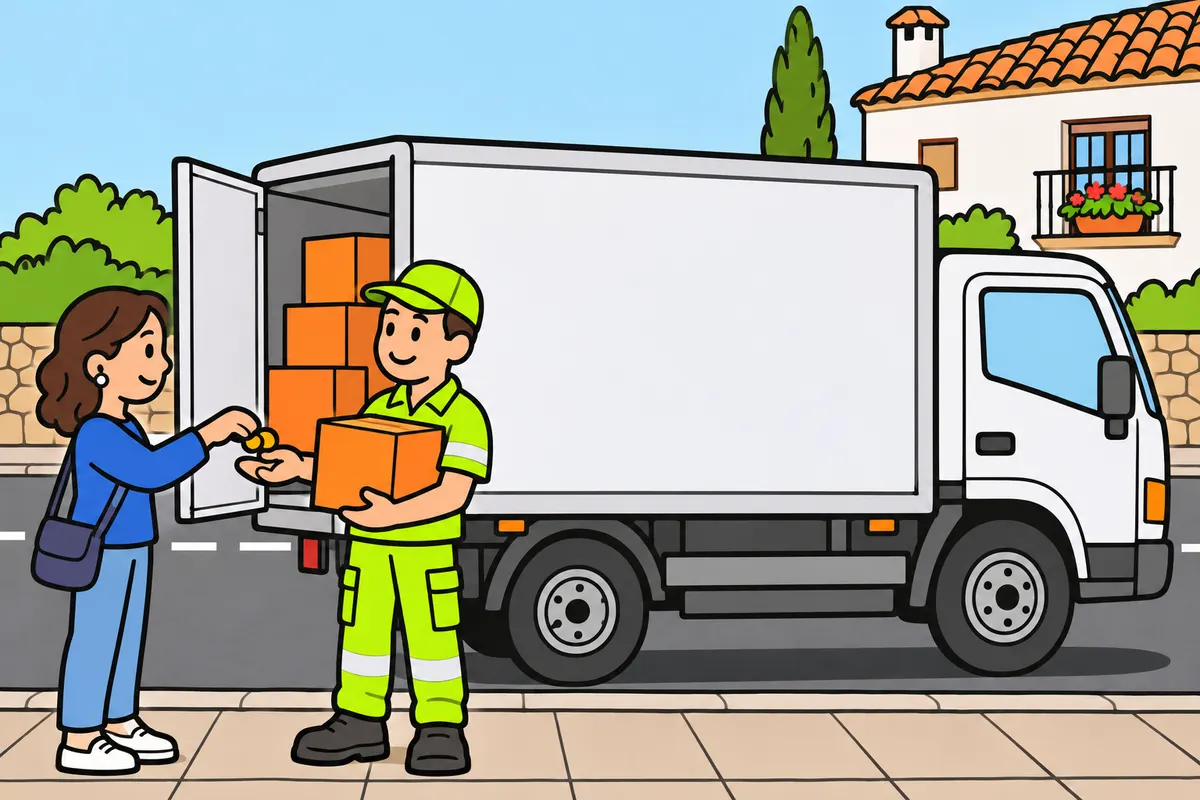
Classify transport by who it serves and how it is organised.
| Classification | Cases and rule |
|---|---|
| Public | For another party and paid; goods transport is non-scheduled |
| Private | On own account: personal or linked to another main activity |
| Domestic | Starts and ends in Spain; normally stays in Spain, except multimodal transport |
| International | Partly takes place in another country |
| Ordinary or special | Special rules apply due to goods or regime, including dangerous goods and temperature-controlled perishables |
Remember
- Your wages do not automatically make transport of your employer's own goods public.
- Repeating a route does not make public goods transport scheduled.
- Special transport does not expand the vehicles C1 lets you drive.
Exam trap: Wrong: Earning a wage makes all transport public. Right: It depends on service for another party and payment; for your own goods, check every ancillary-transport condition.
Read the full explanation
- Road transport is classified by its nature as public or private. You must consider on whose account it is carried out and the economic and functional relationship underlying the service; your C1 licence category alone does not determine its nature. [LOTT, art. 62](https://www.boe.es/buscar/act.php?id=BOE-A-1987-17803#a62)
- Public transport is transport for hire or reward on behalf of others. If a haulage company carries its customer’s goods for a price, this criterion applies even if the customer is a private individual or the driver is employed by the haulage company. [LOTT, art. 62](https://www.boe.es/buscar/act.php?id=BOE-A-1987-17803#a62)
- Private transport is carried out on your own account for personal needs or as an ancillary activity directly linked to another main activity of the same person or entity. You must distinguish between personal and ancillary transport: private does not mean exclusively domestic use. [LOTT, art. 100](https://www.boe.es/buscar/act.php?id=BOE-A-1987-17803#a100)
- The payment that matters when identifying public transport is payment for the service on behalf of others. Your salary as a driver for a company moving its own products does not automatically make that transport public; you must examine all the conditions for ancillary transport. [LOTT, art. 102](https://www.boe.es/buscar/act.php?id=BOE-A-1987-17803#a102)
- Public goods transport is classified as non-scheduled even if you repeat the route, calendar or timetable. Daily deliveries to customers in your C1 lorry do not become regular transport simply because you repeat the same route. [LOTT, art. 64](https://www.boe.es/buscar/act.php?id=BOE-A-1987-17803#a64)
- Domestic transport starts and ends in Spain and, as a general rule, takes place entirely within Spanish territory, subject to the statutory exception for multimodal transport. International transport takes place partly within the territory of foreign states. This classification does not determine whether the transport is on your own account or on behalf of others. [LOTT, art. 65](https://www.boe.es/buscar/act.php?id=BOE-A-1987-17803#a65)
- Transport is classified as ordinary or special according to the specific nature of what is transported and the applicable legal framework. Special transport is subject to particular rules for reasons such as danger, urgency or incompatibility with other transport; you must recognise dangerous goods and perishable goods requiring temperature control as examples. Special does not automatically mean public, nor does it extend the range of vehicles you can drive with C1. [LOTT, art. 66](https://www.boe.es/buscar/act.php?id=BOE-A-1987-17803#a66)
22Private transport for personal use
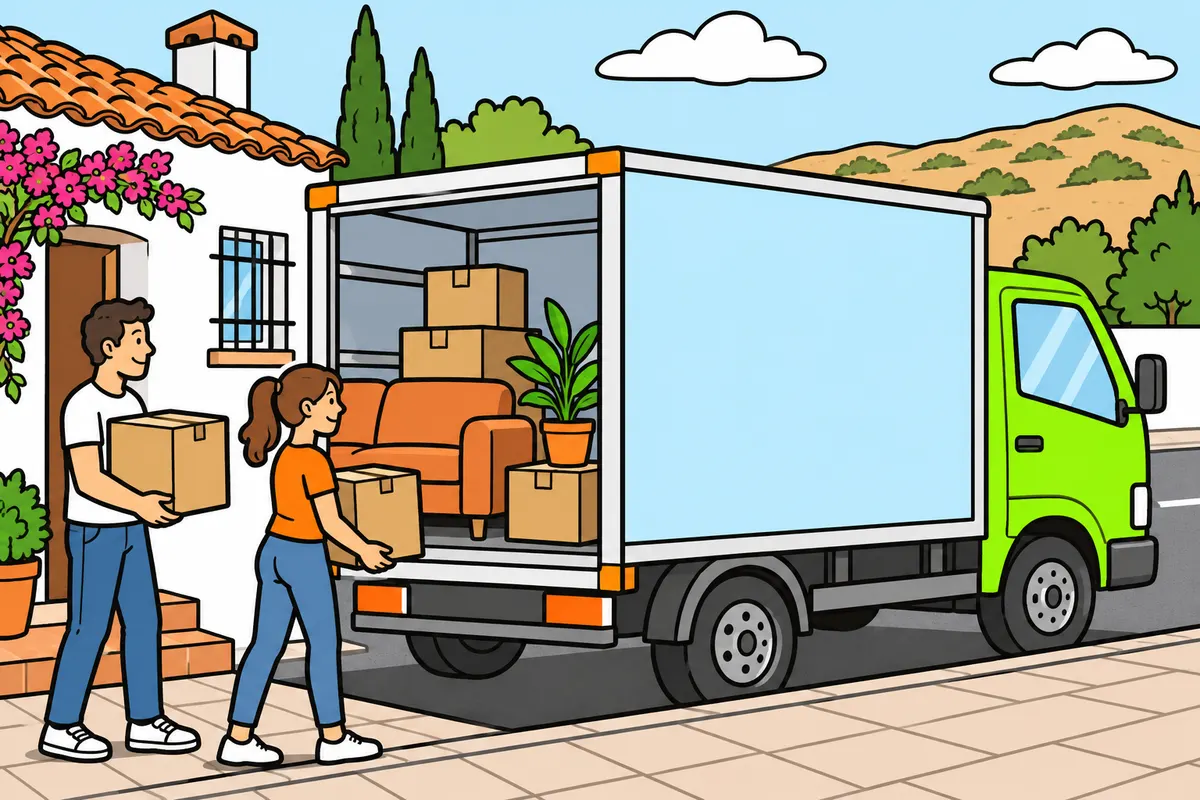
Personal private transport must meet personal or domestic needs and its conditions.
| Personal private goods transport | Vehicle limit |
|---|---|
| General rule | MMA no more than 6 tonnes |
| Personal sport or recreation machines, animals or equipment | Exception if their size or nature prevents carriage within that limit |
Remember
- Meet the personal or domestic needs of the owner and close associates.
- Do not receive direct or indirect payment, except permitted allowances or expenses.
- This type needs no administrative transport authorisation.
- Follow safety and infrastructure rules.
- You still need the right licence and a compliant vehicle.
Exam trap: Wrong: A household move lets you drive without the right licence. Right: Even for personal private transport, you need C1 or C as appropriate.
Read the full explanation
- You must use it to meet the personal or domestic needs of the vehicle’s registered keeper and those close to them. It must not generate direct or indirect monetary payment, except in the statutory case of allowances or travel expenses for the registered keeper. [LOTT, art. 101](https://www.boe.es/buscar/act.php?id=BOE-A-1987-17803#a101)
- For goods, private transport for personal use must use vehicles with an MMA (maximum authorised mass) of no more than 6 tonnes. An exception applies to the transport of machinery, animals or accessories for personal sporting or recreational activities which, because of their characteristics, cannot be carried in a vehicle within that limit. [ROTT, art. 154](https://www.boe.es/buscar/act.php?id=BOE-A-1990-24442#a154)
- Moving your own household belongings in a lorry with an MMA of 5,000 kg can fall into this category if it meets the requirements. You must hold C1 or C as appropriate and comply with the other rules: personal use does not remove the need for the correct licence. [LOTT, art. 101](https://www.boe.es/buscar/act.php?id=BOE-A-1987-17803#a101)
- Private transport for personal use does not require administrative transport authorisation, but remains subject to infrastructure use and safety rules. This classification does not exempt you from the requirements for the driver or vehicle; the documents are covered in Professional transport documentation. [LOTT, art. 101](https://www.boe.es/buscar/act.php?id=BOE-A-1987-17803#a101)
23Ancillary private transport
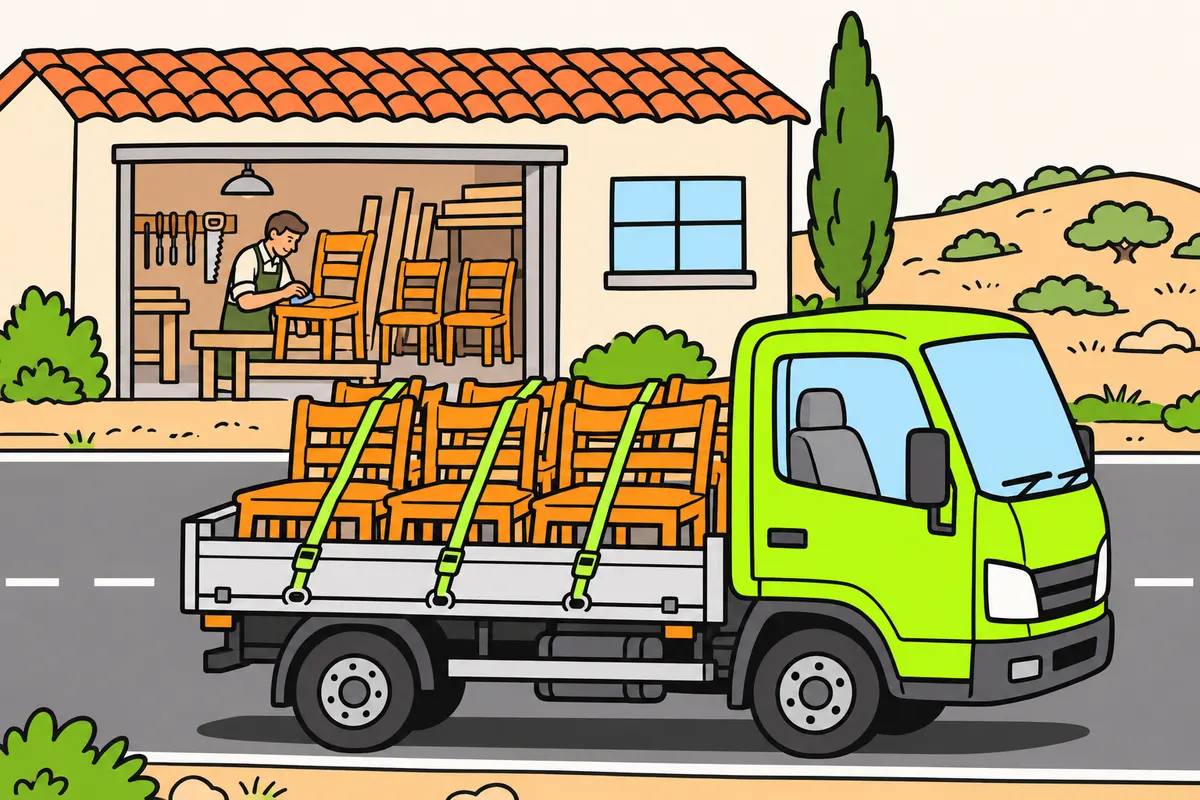
Ancillary transport must link to your company's main activity.
| Link to check | Ancillary transport condition |
|---|---|
| Goods | Company goods or goods it sold, bought, hired, made, extracted, processed or repaired in its main activity |
| Origin or destination | A place where the company works on its main activity |
| Purpose | A necessary or suitable supplement to the main activity |
Remember
- Transport must not be your company's main activity.
- Meet all legal conditions together.
- The goods do not always have to remain company property.
- Helping to unload does not decide the transport type.
Exam trap: Wrong: Helping to unload makes a service ancillary. Right: Check its link to the main activity and every legal condition.
Read the full explanation
- It is carried out by a company or entity whose main activity is not transport, as a necessary or appropriate ancillary part of that activity. You can recognise it in a manufacturer distributing its products using resources integrated into its organisation, provided all the legal requirements are met together. [LOTT, art. 102](https://www.boe.es/buscar/act.php?id=BOE-A-1987-17803#a102)
- The goods must belong to the company or have been sold, bought, hired out, hired, produced, extracted, processed or repaired by it as part of its main economic activity. They do not have to remain its property if they fit another of the permitted relationships. [LOTT, art. 102](https://www.boe.es/buscar/act.php?id=BOE-A-1987-17803#a102)
- The origin or destination must be a place where the company carries out work related to its main activity. You do not need both ends of the journey to be warehouses belonging to the company, but you must check the required connection: any route for a third party does not become ancillary simply because you use the company’s lorry. [LOTT, art. 102](https://www.boe.es/buscar/act.php?id=BOE-A-1987-17803#a102)
- The ancillary nature of the transport does not depend on whether you have to help load, unload or perform another supporting task. You must examine the link between the transport and the main activity, and whether all the conditions are met together; doing an additional task does not by itself change the nature of the service. [LOTT, art. 102](https://www.boe.es/buscar/act.php?id=BOE-A-1987-17803#a102)
24Resources and price of ancillary transport
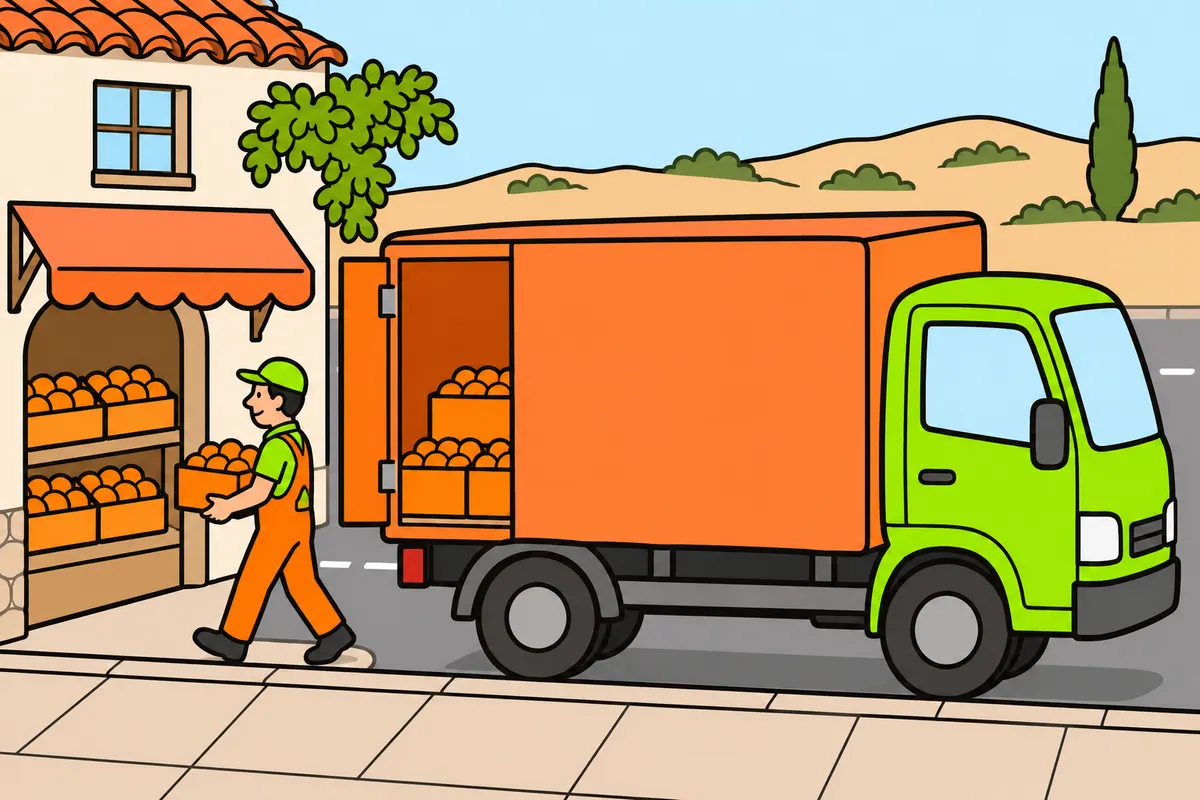
Integrate vehicles and drivers into the company, and include transport in the main price.
| Ancillary transport element | Condition |
|---|---|
| Vehicles | Legally integrated into the company's organisation |
| Trailers and semi-trailers | Integrated through ownership or finance or ordinary leasing |
| Drivers | Legally integrated and properly qualified |
| Price | Do not contract or invoice transport separately; include its cost in the main product or service price before VAT |
Remember
- Be able to prove the legal links for goods, vehicles and drivers.
- Drivers need the relevant qualifications.
- If legal conditions fail, public transport rules apply.
Exam trap: Wrong: You can invoice ancillary transport as a separate service. Right: Where applicable, include its cost in the main product or service price before VAT.
Read the full explanation
- The vehicles must be integrated into the company’s organisation as required by law. Trailers and semi-trailers must also be integrated through ownership, finance leasing or ordinary rental. [LOTT, art. 102](https://www.boe.es/buscar/act.php?id=BOE-A-1987-17803#a102)
- The drivers must be integrated into the company’s organisation and hold the relevant entitlements, under the terms for that integration set out in article 54.3. [LOTT, art. 102](https://www.boe.es/buscar/act.php?id=BOE-A-1987-17803#a102)
- The transport cannot be contracted or invoiced separately: where applicable, its cost is included in the final price of the main product or service before IVA (value added tax). [LOTT, art. 102](https://www.boe.es/buscar/act.php?id=BOE-A-1987-17803#a102)
- If the legal conditions are not met, the transport is subject to the rules for public transport. You must be able to demonstrate that the required relationships involving goods, vehicles and drivers are satisfied; the specific documentation and authorisations are covered in Professional transport documentation. [LOTT, art. 102](https://www.boe.es/buscar/act.php?id=BOE-A-1987-17803#a102)
25Specific road rules for goods vehicles
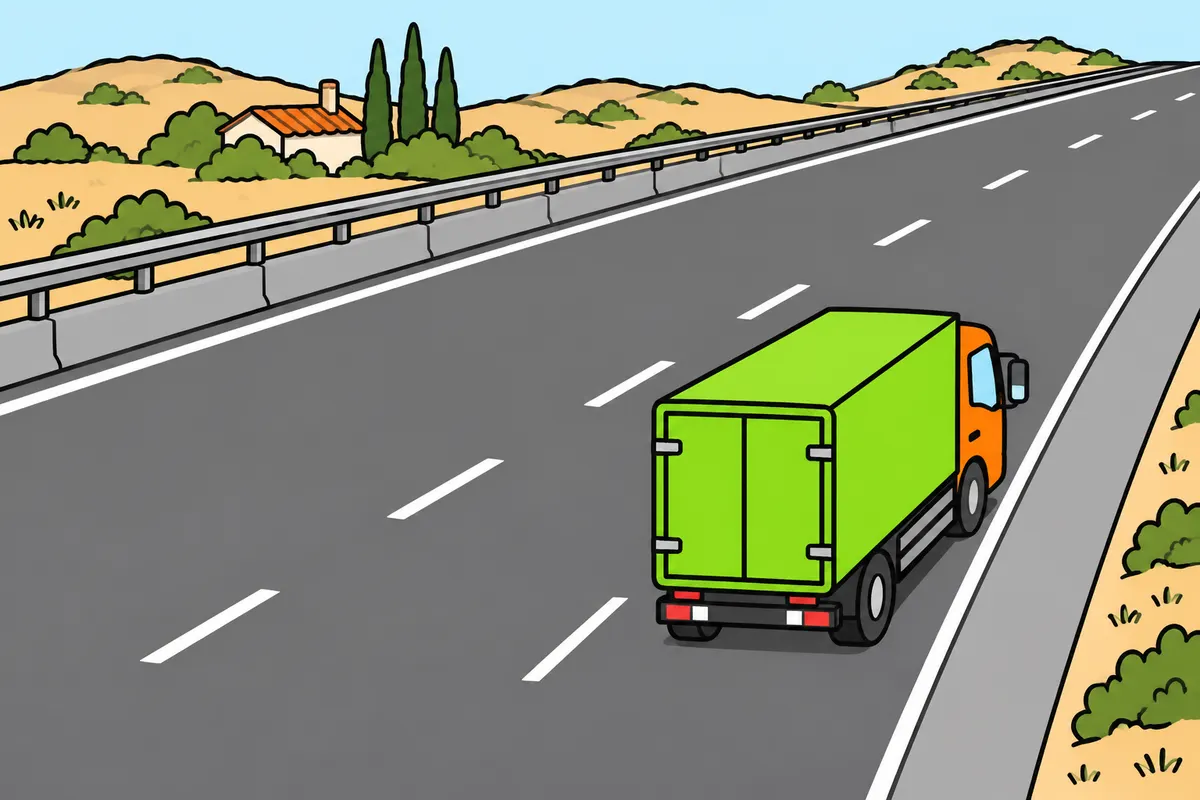
Follow permitted lanes and the specific restrictions for your lorry.
| Case and vehicles affected | How to drive |
|---|---|
| Outside built-up areas, three or more lanes per direction; lorries and vans over 3,500 kg MMA and combinations over 7 m | Use only the right lane and the one next to it; use that one when advised by traffic or road, without obstructing following traffic |
| Queues on motorways and dual carriageways | Form an emergency corridor for priority vehicles |
| Snow makes driving difficult on motorways and dual carriageways | Follow the overtaking and lane restrictions explained in “Manoeuvres with your lorry” |
| Urban lorry limits | 20, 30 or 50 km/h by road layout; obey signed changes |
| Lorry over 3,500 kg following without signalling to overtake | Leave at least 50 m to help overtaking, except in built-up areas, where overtaking is prohibited, where there are multiple lanes in your direction, or traffic is too dense; always leave safe stopping distance |
Remember
- Drive your C1 lorry on the carriageway; use the hard shoulder only in emergencies.
- Outside built-up areas, normally use the lane furthest right.
- Use other permitted lanes when traffic or the road advises, without obstructing traffic behind.
- Check restrictions for your vehicle, route, date and time.
- In towns, check road layout and signed limits.
- Obey goods vehicle signs even when empty.
Exam trap: Wrong: Your C1 lorry can use any lane outside built-up areas. Right: With three or more lanes in your direction, use only the right lane and the one next to it; use that lane when advised, without obstructing traffic behind.
Read the full explanation
- You must drive your C1 lorry on the carriageway; you may only use the arcén (hard shoulder) in an emergency. Outside built-up areas, if there are several lanes in your direction, you must normally use the lane furthest to the right. You may use the other lanes when traffic or road conditions make this advisable, without obstructing vehicles following you and subject to the restriction stated for three or more lanes. [RGC, art. 31](https://www.boe.es/buscar/act.php?id=BOE-A-2003-23514#a31)
- Outside built-up areas, if the carriageway has three or more lanes in your direction, you may only use the right-hand lane and the lane immediately next to it in your C1 lorry, under the conditions in the previous point. This restriction applies to lorries and vans with an MMA (maximum authorised mass) exceeding 3,500 kg and to vehicle combinations over 7 m long. [RGC, art. 31.2](https://www.boe.es/buscar/act.php?id=BOE-A-2003-23514#a31)
- In traffic queues on autopistas (motorways) and autovías (dual carriageways), you must make way for priority vehicles by forming an emergency corridor as explained in «Manoeuvres with your lorry». [RGC, art. 32.1](https://www.boe.es/buscar/act.php?id=BOE-A-2003-23514#a32)
- If snow makes driving difficult on motorways and dual carriageways, you must follow the overtaking and lane-use restrictions explained in «Manoeuvres with your lorry». [RGC, art. 32.2](https://www.boe.es/buscar/act.php?id=BOE-A-2003-23514#a32)
- You must comply with any special traffic restrictions that apply to your lorry, route, date and time. The schedules published by the DGT and, within their areas of responsibility, the competent regional authorities specify the restrictions and exemptions: holding a C1 licence does not exempt you from them. Article 39 allows these restrictions to be imposed on lorries with an MMA exceeding 3,500 kg, among other vehicles. [RGC, art. 39](https://www.boe.es/buscar/act.php?id=BOE-A-2003-23514#a39)
- The general speed limits for your lorry are 90 km/h on motorways and dual carriageways outside built-up areas and 80 km/h on conventional roads; on urban roads, they are 20, 30 or 50 km/h depending on the road layout, subject to any applicable changes indicated by signs. The conditions and exceptions are explained in «Speed and safe following distances». [RGC, arts. 48 and 50](https://www.boe.es/buscar/act.php?id=BOE-A-2003-23514#a48) [RGC, art. 50](https://www.boe.es/buscar/act.php?id=BOE-A-2003-23514#a50)
- When driving your lorry with an MMA exceeding 3,500 kg behind another vehicle without signalling your intention to overtake, you must leave a gap of at least 50 m to help drivers behind you overtake, except in built-up areas, where overtaking is prohibited, where there is more than one lane in your direction or when congestion prevents overtaking; you must still maintain the gap needed to avoid rear-end collisions. How this applies is covered in «Speed and safe following distances». [RGC, art. 54](https://www.boe.es/buscar/act.php?id=BOE-A-2003-23514#a54)
- You must obey signed prohibitions and restrictions that apply to goods vehicles, even when your lorry is empty; the scope of each sign and overtaking restrictions are explained in «Signs and their hierarchy for C1» and «Manoeuvres with your lorry». [RGC, art. 132](https://www.boe.es/buscar/act.php?id=BOE-A-2003-23514#a132)
Choose the category you need
Check the vehicle, trailer and personal requirements in that order.
- Identify the motor vehicle’s MMA (maximum authorised mass) and passenger configuration; check whether it falls under C1 or C.
- If it tows a trailer, check its MMA: up to 750 kg may be covered by C1 or C; above this you need the corresponding category with E.
- For C1+E, also check the 12,000 kg limit for the combination and the type of towing vehicle.
- Check your age, valid B licence, personal restrictions and the previous category required for an upgrade.
- Check separately whether the service requires CAP and whether you hold the relevant qualification.
Obtain the C1 licence
Meet the requirements and complete the necessary tests without confusing them with CAP.
- Check that you hold a valid B licence and are at least 18 for the practical tests; you can take your first theory test up to three months earlier.
- Undergo the Group 2 medical examination and submit your application with the required documents.
- Check your exemption from the common theory test through your B licence and prepare for the specific goods vehicle theory test; identify any restricted option that applies to you.
- Pass the required knowledge tests, then the closed-course test and then the on-road test, observing the rules on test attempts and the validity of test results.
- Check the categories, dates and restrictions on the licence issued before you drive.
Renew without interrupting your entitlement to drive
Monitor your licence and professional qualification dates separately.
- Check the specific expiry date of C1 and the restrictions shown on your licence.
- Apply for renewal within the three months before expiry and provide evidence of Group 2 physical and mental fitness.
- Check which valid authorisation allows you to drive while your application is processed; do not drive solely on the basis of an expired category.
- Check the new dates for each category and separately check the CAP continuing training that applies to you.
Classify a goods transport operation
Determine on whose behalf it is carried out and its purpose.
- If you carry goods for someone else for payment, identify the criterion for public transport.
- If you carry goods on your own account, distinguish personal or household needs from a main business activity.
- For private transport for personal use, check that there is no remuneration and check the 6-tonne limit or its sporting or recreational exception.
- For ancillary private transport, check the main activity, the connection with the goods, their origin or destination, the integration of resources and the driver, and the absence of separate contracting or invoicing.
- Check the driver’s entitlements and the service’s documentation requirements separately.
Check what you know
Real questions from the bank on this topic. Pick an answer to see the explanation.
Finished this module?
Mark it as read and you will see your progress on the theory list.