
Theory · C1+E Licence - Light Truck with Trailer · Module 13 of 13
Traffic signs and their priority
You learn how to apply the hierarchy of traffic signs and signals and interpret officers' instructions, roadworks signs, traffic lights, upright signs and road markings. You apply the official catalogue to your C1+E combination, distinguishing restrictions on trailers, mass, dimensions and routes that determine the answers to many exam questions.
Sign library
All 620 signals of the official catalogue in force (Royal Decree 465/2025), each with its drawing and description, and a test to practise them.
1The hierarchy resolves contradictions
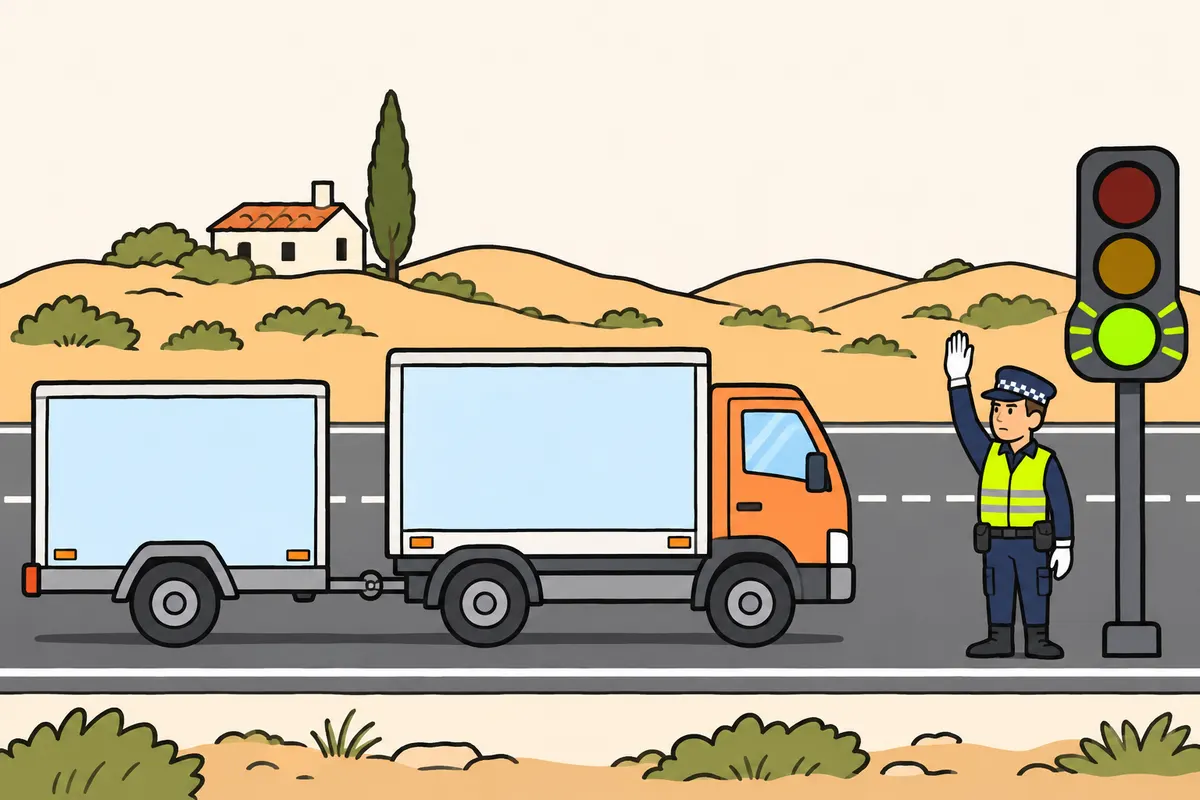
When signs contradict each other, you must follow the one with higher priority.
| Sign or case | What you must do |
|---|---|
| Officers | Their orders take priority over all other signs |
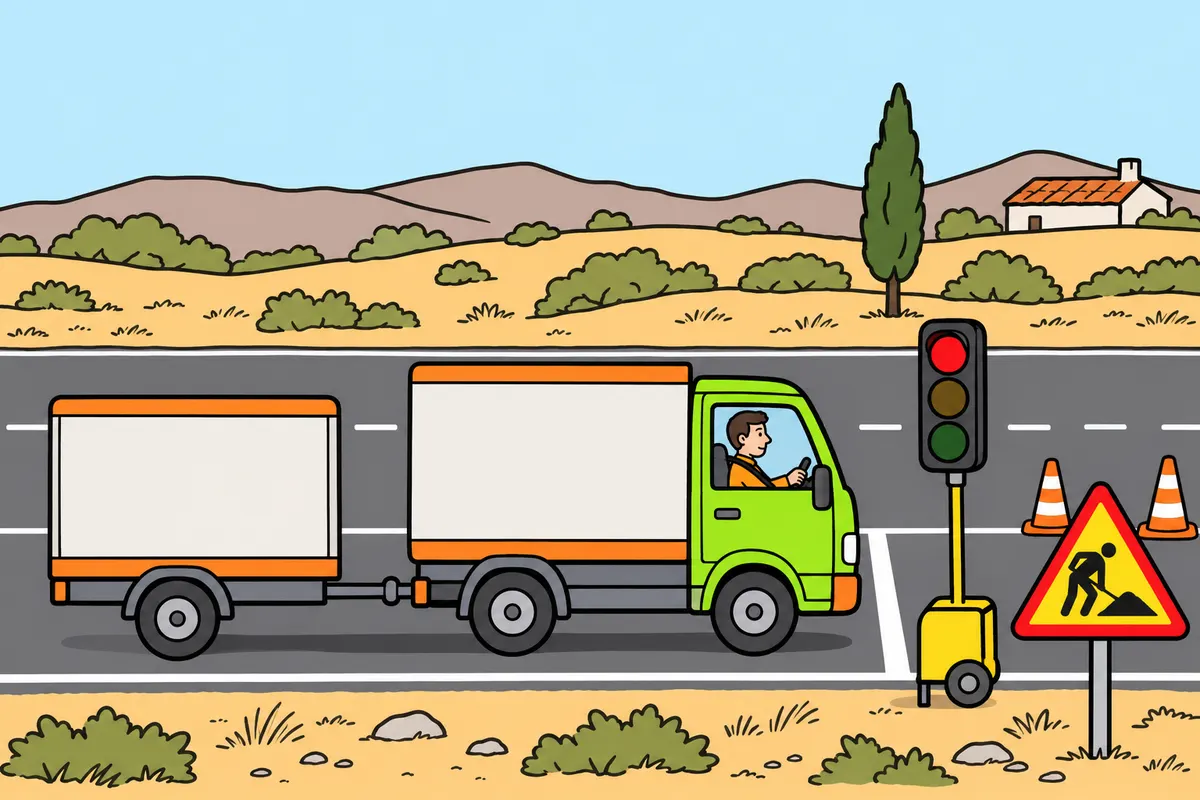
| Temporary signs and delineation devices | Take priority over traffic lights, upright signs and road markings |
| Traffic lights | Take priority over upright signs and road markings |
| Upright signs | Take priority over road markings |
| Road markings | Have the lowest priority |
Remember
- Obey signs even when the road is empty.
- Check both signs apply to your vehicle, lane and movement.
- Follow both instructions when they are compatible.
- For contradictory signs of the same type, follow the more restrictive one.
Exam trap: Wrong: green lets you ignore a prohibited turn. Right: follow both compatible instructions.
Read the full explanation
- You must obey traffic signs and signals even when you drive on an empty road. Orders and prohibitions are compulsory; warnings and information signs also require you to adapt your behaviour to their message. With a C1+E combination, look ahead early enough to leave room to brake or choose a permitted access. [RGC, art. 132](https://www.boe.es/buscar/act.php?id=BOE-A-2003-23514#a132).
- If two instructions contradict each other, apply this order: authorised officers; temporary signs and traffic control devices that change the normal use of the road, delineating devices and guidance signs; traffic lights; upright signs; road markings. [RGC, art. 133](https://www.boe.es/buscar/act.php?id=BOE-A-2003-23514#a133).
- When contradictory signs are of the same type, you must obey the more restrictive one. This rule only resolves a real contradiction: first check that both signs apply to your vehicle, your lane and the same movement. [RGC, art. 133](https://www.boe.es/buscar/act.php?id=BOE-A-2003-23514#a133).
- You must comply with compatible instructions at the same time. A green traffic light allows you to proceed, but an R-303 sign may prohibit you from turning left: you can continue along a permitted route. The hierarchy does not make every green light permission to ignore all upright signs. [RGC, art. 133](https://www.boe.es/buscar/act.php?id=BOE-A-2003-23514#a133).
- Distinguish upright warning signs from traffic guidance devices. A triangle warning of a bend is an upright sign; a barrier or a line of cones closing access belongs to another category in the hierarchy. [RGC, art. 133](https://www.boe.es/buscar/act.php?id=BOE-A-2003-23514#a133).
- Vehicle signs identify the vehicle’s characteristics or its load: V-6 indicates a long vehicle, V-23 its outline, V-11 dangerous goods and V-20 a projecting load. See «Long vehicle rear plate» and «Reflective contour marking» in «Safety devices for the vehicle combination», and «V-20 panel for loads projecting at the rear» in «Safe, well-distributed loads». [RGV, Annex XI](https://www.boe.es/buscar/act.php?id=BOE-A-1999-1826#axi).
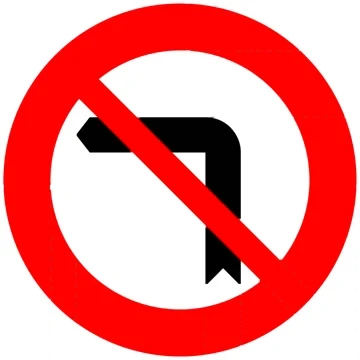 R-303
2Which lane and movement you must consider
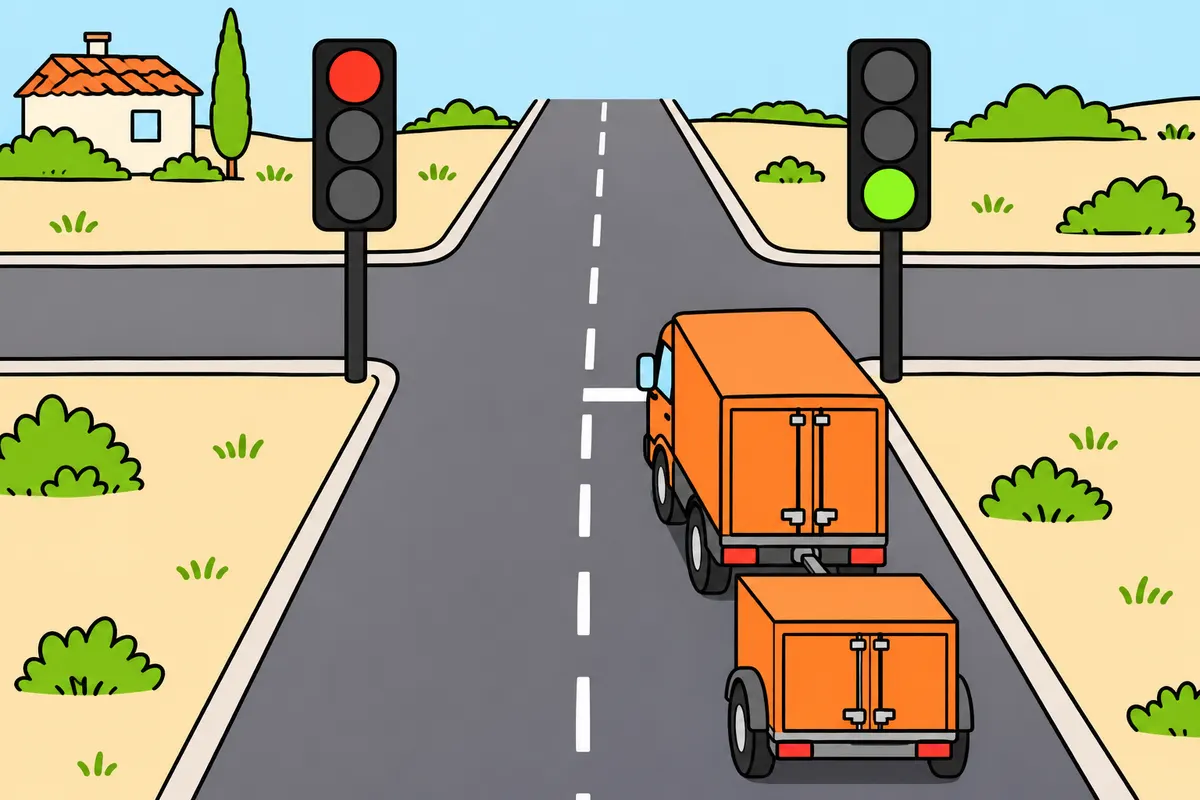
You must follow the signs for your direction and lane.
| Sign or case | What you must do |
|---|---|
| Going straight ahead or turning left | When roadside instructions differ, follow the left |
| Turning right | When roadside instructions differ, follow the right |
Remember
- Follow signs immediately right, above the carriageway or above your lane.
- If absent, look left when going straight ahead or turning left.
- Read plates for limits on times, vehicles or conditions.
- A sign may cover the whole carriageway or particular lanes.
- Rules start at the sign unless a plate gives another starting point.
Exam trap: Wrong: choose the roadside instruction you prefer. Right: when instructions differ, follow your direction’s instruction.
Read the full explanation
- You must obey traffic lights and upright signs immediately to your right, above the carriageway or above your lane. If there are none in these positions and you are going straight ahead or turning left, obey those immediately to your left. [RGC, art. 132](https://www.boe.es/buscar/act.php?id=BOE-A-2003-23514#a132).
- If the instructions on the right and left differ, you must obey those on the left to go straight ahead or turn left. To turn right, obey those on the right. First establish your direction of travel, without choosing whichever instruction suits you best. [RGC, art. 132](https://www.boe.es/buscar/act.php?id=BOE-A-2003-23514#a132).
- A sign applies across the full width of the carriageway available to the road users it addresses, although markings may limit its application to one or more lanes. You must consider the sign’s position, the marked lanes and the supplementary plates specifying its scope together. [RGC, art. 135](https://www.boe.es/buscar/act.php?id=BOE-A-2003-23514#a135).
- Regulatory signs apply from the point where they are placed, unless a supplementary plate indicates a different starting point. If they are alongside or directly above the sign bearing the name of a built-up area, they apply throughout that built-up area, unless different rules apply on particular stretches. [RGC, art. 145](https://www.boe.es/buscar/act.php?id=BOE-A-2003-23514#a145).
- You may encounter supplementary plates limiting a requirement to certain times, vehicles or conditions. You must read them together with the main sign; an exemption for residents or a specific vehicle type does not authorise you merely because you are making a delivery. [RGC, art. 137](https://www.boe.es/buscar/act.php?id=BOE-A-2003-23514#a137).
3Officers’ gestures and whistle signals
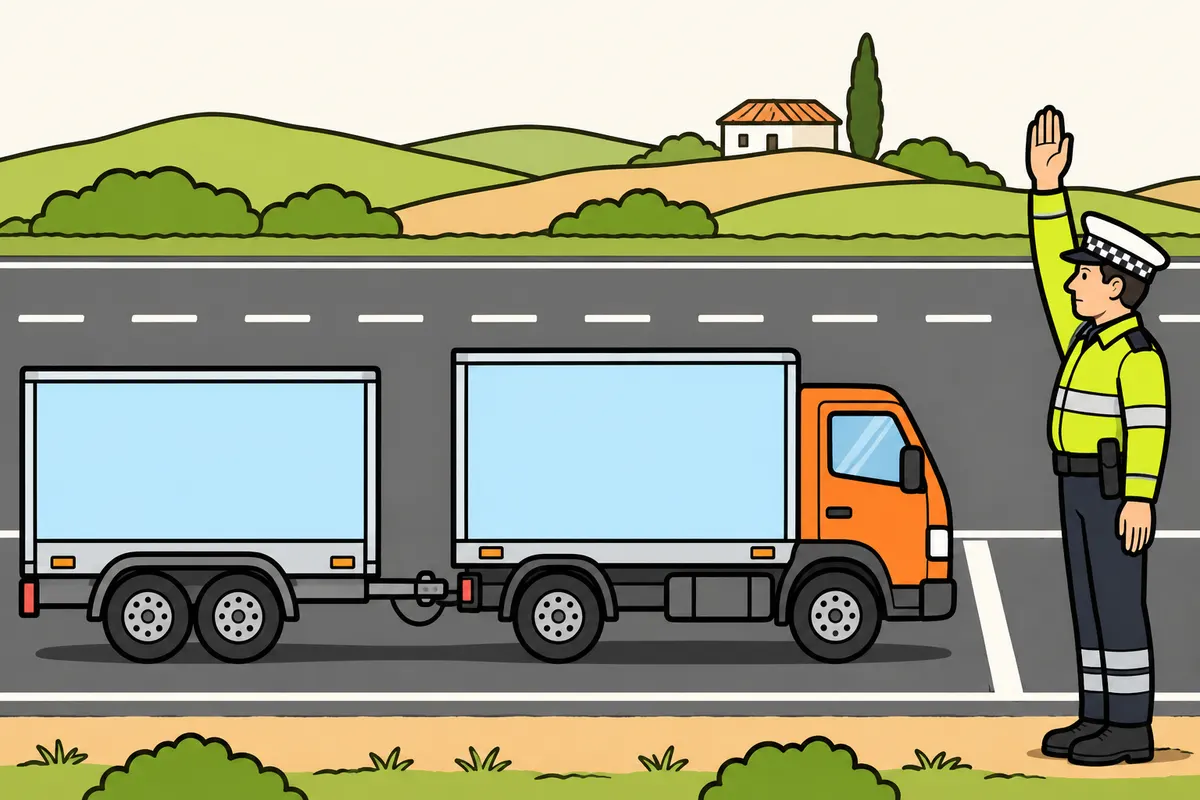
You must obey officers’ gestures and whistle signals.
| Sign or case | What you must do |
|---|---|
| Red or amber light swung towards you | Stop |
| Arm moving up and down | Slow down when approaching on that side, perpendicular to the arm |
| Short, frequent whistle blasts | Stop |
| Long whistle blast | Move off |
Remember
- Raised arm: stop unless unsafe or you have already entered the junction.
- Stop at the nearest line unless directed elsewhere.
- Without a line, stop before the officer or before entering the junction.
- Horizontal arms: stop if your path crosses the direction indicated.
- Lowered arms: stay stopped while their position and order remain unchanged.
Exam trap: Wrong: move off when the officer lowers their arms. Right: wait while their position and stop order remain unchanged.
Read the full explanation
- When an officer holds an arm vertically upwards, you must stop unless you cannot do so safely or you have already entered the junction. Stop at the nearest stop line or, if there is none, before reaching the officer or entering the junction, unless the officer directs you to another place. [RGC, Annex I.1](https://www.boe.es/buscar/act.php?id=BOE-A-2003-23514#A1).
- When an officer holds their arms horizontally, you must stop if your approach crosses the direction in which the arms point; the order remains in force when the officer lowers their arms, as long as the officer remains in the same place and gives no other signal. [RGC, Annex I.1](https://www.boe.es/buscar/act.php?id=BOE-A-2003-23514#A1).
- You must stop when a red or yellow light is waved towards you. An arm moving up and down orders you to slow down if you are approaching from the side of that arm and at right angles to it. [RGC, Annex I.1](https://www.boe.es/buscar/act.php?id=BOE-A-2003-23514#A1).
- You must stop on short, repeated whistle blasts and move off again on one long blast; also follow clear instructions given by other means. [RGC, Annex I.1](https://www.boe.es/buscar/act.php?id=BOE-A-2003-23514#A1).
4Instructions from vehicles and authorised personnel
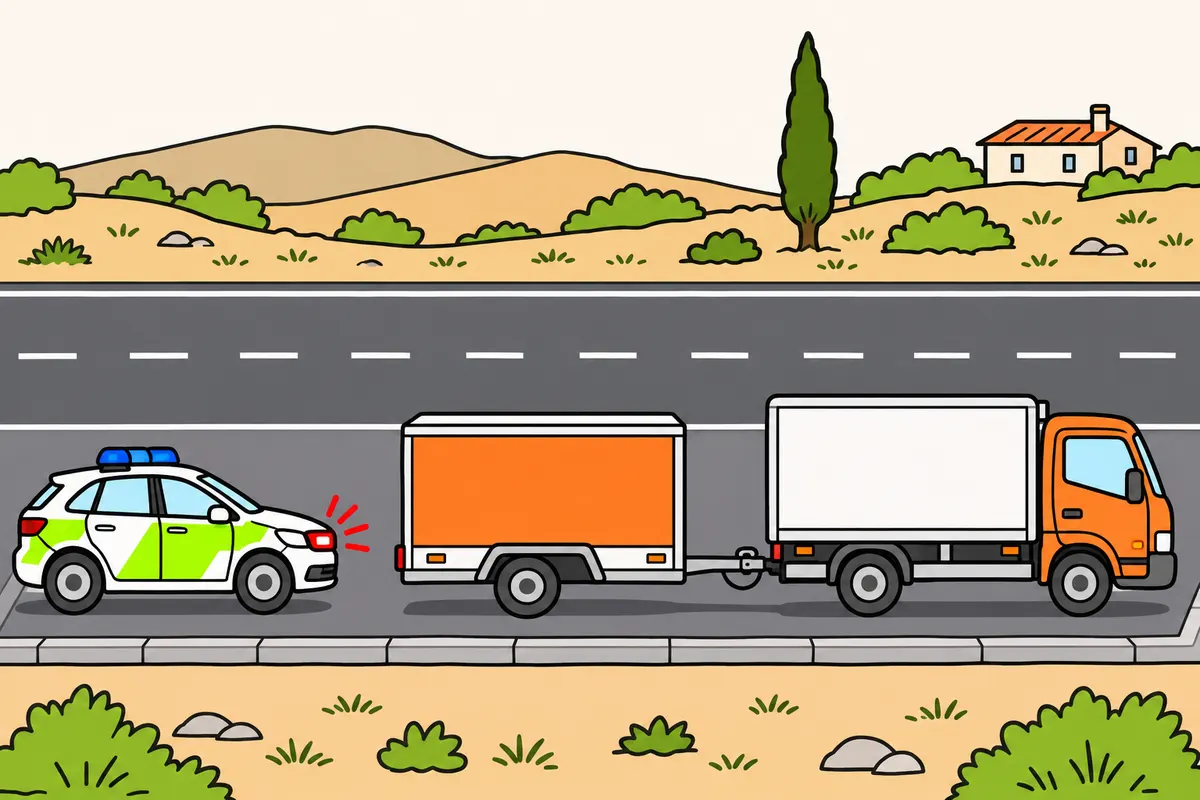
You must follow police instructions and authorised people controlling traffic.
| Sign or case | What you must do |
|---|---|
| Red flag | After it passes, the carriageway closes except to escorted road users |
| Green flag | The carriageway opens when it passes |
| Yellow flag | Pay particular attention to danger |
Remember
- Officer’s arm from their vehicle: extended downwards, angled and held still.
- This orders you to stop on the right.
- If police follow with a forward-facing flashing red light, you must stop.
- Stop safely on the right, ahead of the police vehicle.
- Stay inside and follow their instructions.
- Obey authorised people controlling roadworks or special transport.
Exam trap: Wrong: leave your lorry after this police stop instruction. Right: stay inside and follow instructions.
Read the full explanation
- A red flag temporarily closes the carriageway from the moment the vehicle carrying it goes past, except for escorted road users; a green flag opens it from the moment its vehicle goes past. With a yellow flag, you must be especially alert to a hazard. [RGC, Annex I.1](https://www.boe.es/buscar/act.php?id=BOE-A-2003-23514#A1).
- If an officer signals to you from their vehicle with an arm extended downwards, angled and held still, you must stop on the right. If the police vehicle following you shows a flashing red light towards the front, stop on the right, ahead of it, in a safe place; remain inside and follow the officers’ instructions. [RGC, art. 69](https://www.boe.es/buscar/act.php?id=BOE-A-2003-23514#a69). [RGC, Annex I.1](https://www.boe.es/buscar/act.php?id=BOE-A-2003-23514#A1).
- You must obey authorised personnel controlling traffic at roadworks or for special transport operations using stop/go boards or other prescribed means. [RGC, art. 141](https://www.boe.es/buscar/act.php?id=BOE-A-2003-23514#a141).
5Roadworks and temporary signs
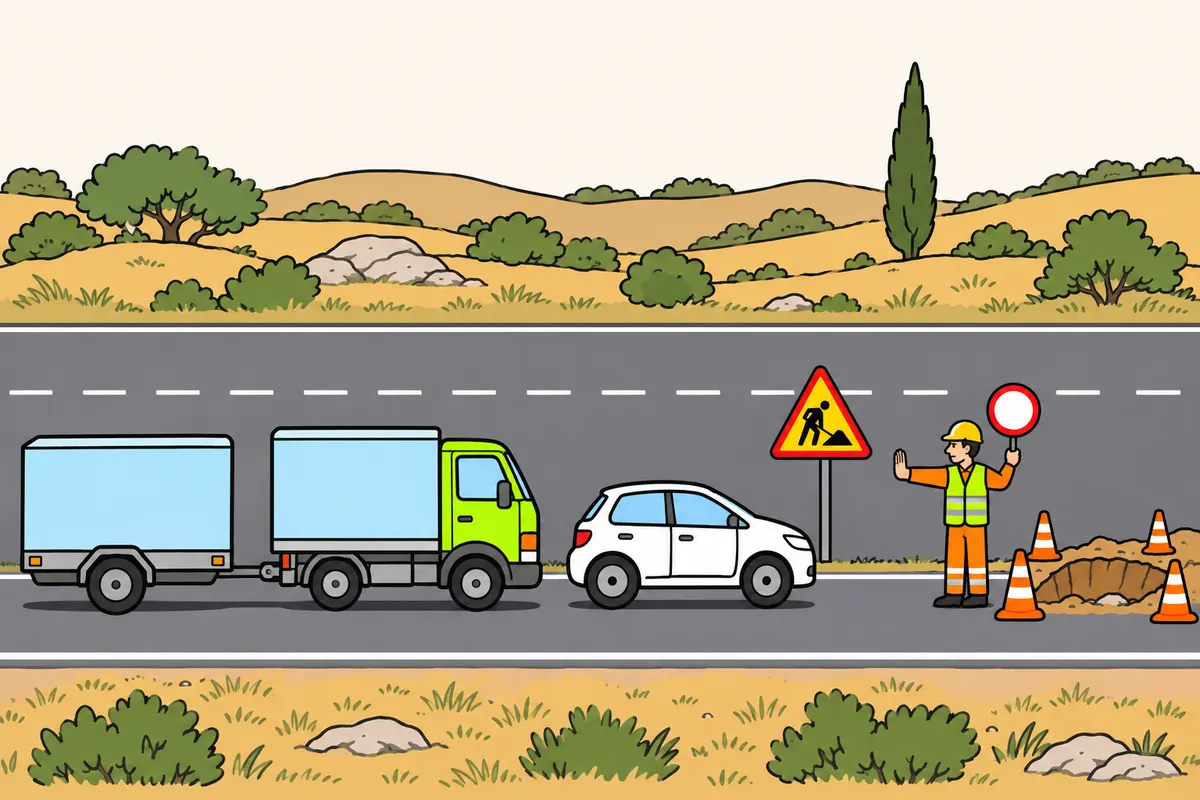
You must follow the temporary route available for your whole combination.
| Sign or case | What you must do |
|---|---|
| Yellow at roadworks | You may see yellow sign backgrounds and temporary markings |
| Orange | Identifies temporary changes for reasons other than roadworks or maintenance |
Remember
- Obey closures, diversions and restrictions on variable message signs.
- Check temporary mass and size limits.
- Follow traffic controllers where traffic takes turns through roadworks.
- Wait behind those who arrived first.
Exam trap: Wrong: all white markings stop applying at roadworks. Right: they may remain if still applicable.
Read the full explanation
- You must follow the closures, diversions and restrictions shown on variable message signs; pay particular attention to temporary mass and dimension limits affecting the combination. [RGC, Annex I.2](https://www.boe.es/buscar/act.php?id=BOE-A-2003-23514#A2).
- At roadworks, you may encounter yellow sign backgrounds, including P-18, and temporary yellow markings; existing white markings may remain if they still apply. Orange identifies temporary signs used for reasons other than roadworks or maintenance. You must follow the route provided for the whole combination. [RGC, Annex I.5](https://www.boe.es/buscar/act.php?id=BOE-A-2003-23514#A5).
- Where traffic takes turns to use a section at roadworks, you must follow the personnel controlling traffic; if you find a vehicle waiting that arrived before you in your direction, join behind it, as close as possible to the right-hand edge, and proceed behind the vehicle ahead. [RGC, art. 60](https://www.boe.es/buscar/act.php?id=BOE-A-2003-23514#a60).
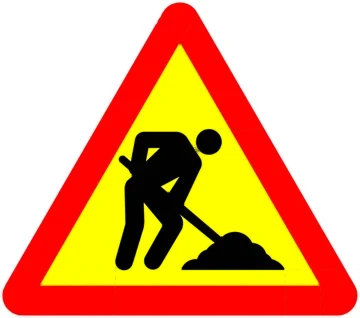 P-18
6Barriers, cones and guidance devices
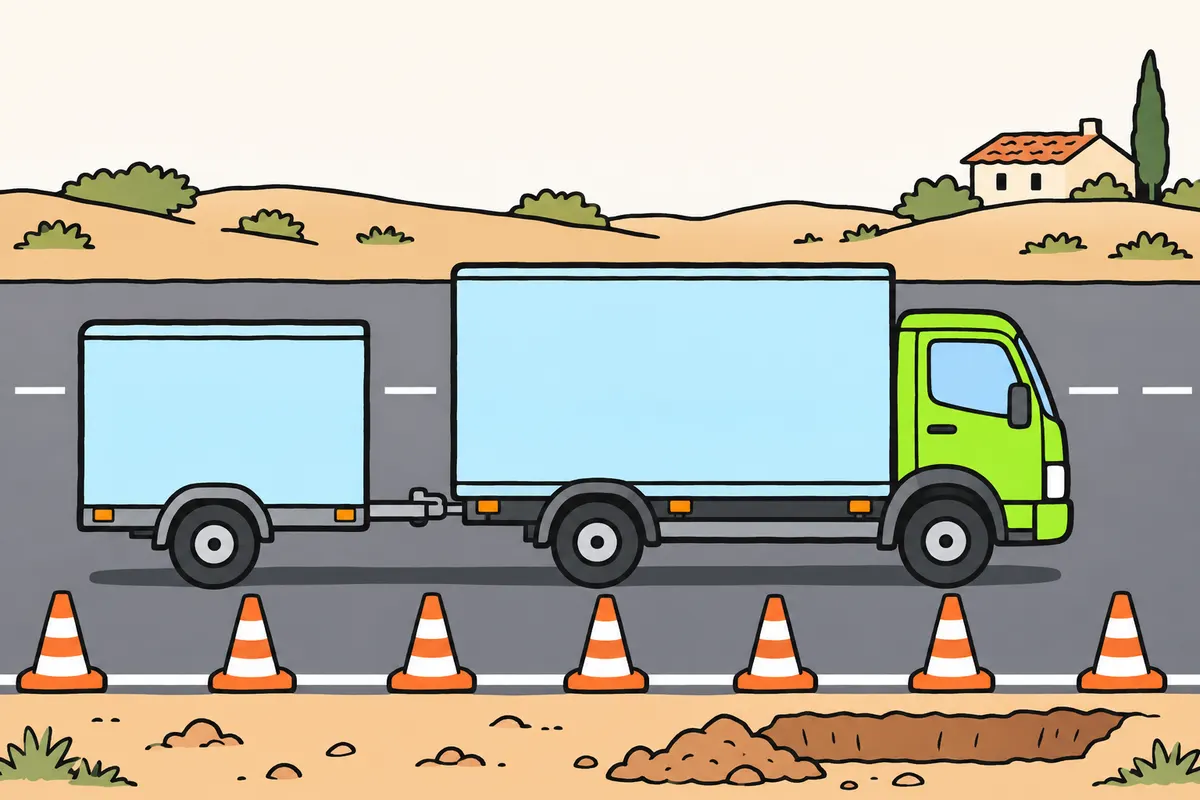
You must respect closures and keep your whole combination within the permitted space.
| Sign or case | What you must do |
|---|---|
| Green illuminated delineators on the carriageway | You may pass them |
| Orange or red illuminated delineators on the carriageway | You must not pass them |
Remember
- Do not cross the line joining cones, delineators or yellow lights.
- Do not enter areas closed by barriers.
- A steady red delineation light closes the carriageway.
- Bend panels warn you to slow down without setting a numerical speed.
- Use the windsock to assess wind direction and strength.
Exam trap: Wrong: cross between cones because you fit. Right: you must not cross their line.
Read the full explanation
- Barriers close off the space they delimit; cones, delineators and yellow guidance lights prohibit you from crossing the line joining them. A steady red light closes the carriageway completely. You must keep the towing vehicle and trailer within the area open to traffic. [RGC, Annex I.3](https://www.boe.es/buscar/act.php?id=BOE-A-2003-23514#A3).
- Roadside marker posts and direction boards guide you along edges, dividing areas and bends; chevron boards at bends warn you of the need to slow down without setting a numerical maximum speed. [RGC, Annex I.3](https://www.boe.es/buscar/act.php?id=BOE-A-2003-23514#A3).
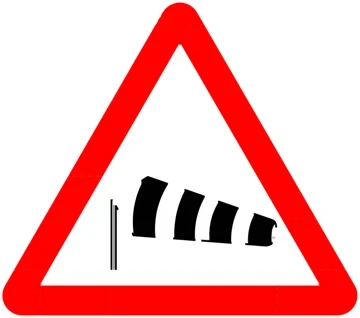
- Of the green, orange or red illuminated guidance markers above the carriageway, you may only go beyond the green ones. A windsock allows you to assess the wind’s direction and strength. [RGC, Annex I.3](https://www.boe.es/buscar/act.php?id=BOE-A-2003-23514#A3).
7Circular traffic lights
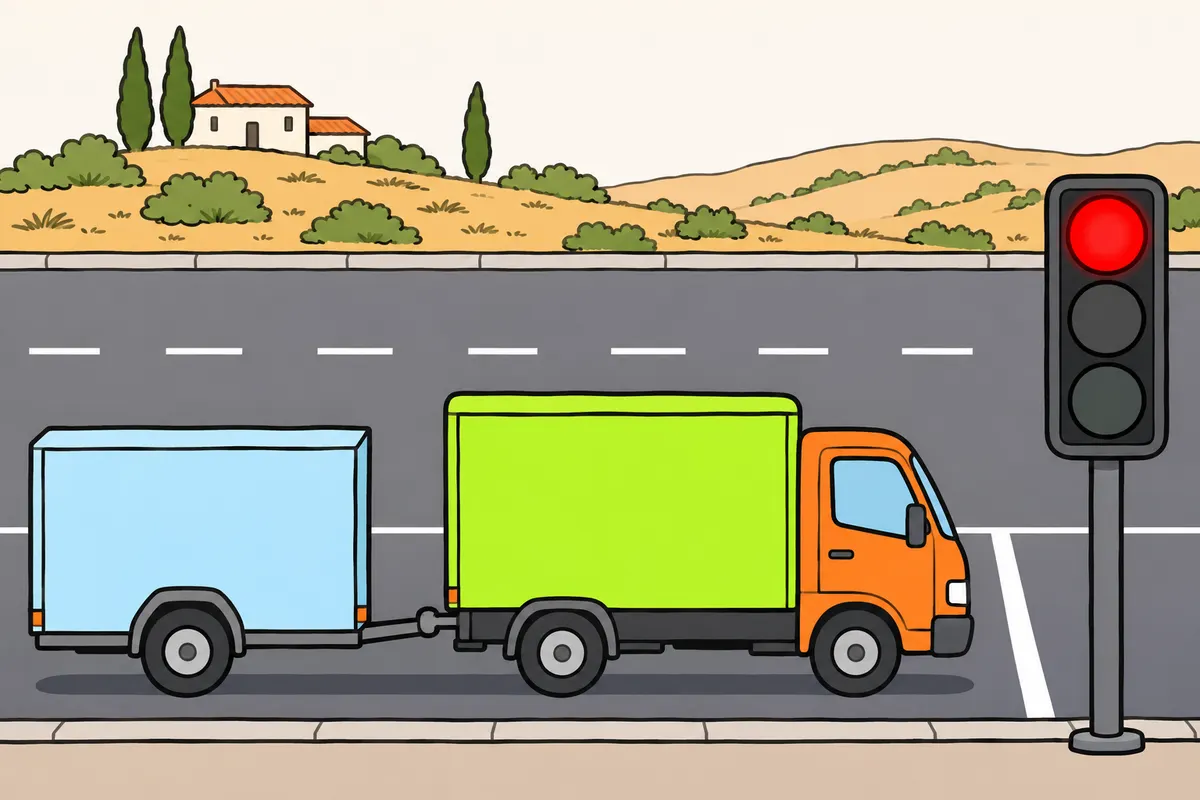
You must follow each traffic light without blocking the junction or ignoring compatible duties.
| Sign or case | What you must do |
|---|---|
| Steady or flashing red | Do not pass |
| Steady amber | Stop unless too close to stop safely when it appears |
| Green | Proceed with priority if your whole combination can clear the crossing |
| Flashing amber | Take extra care; obey applicable priority rules and STOP signs |
Remember
- At red, stop before the line or, without one, before the light.
- If the light is inside or beyond the junction, stop before entering.
- At green, wait outside unless your whole combination can clear the crossing.
- At flashing amber, take extra care and give way where required.
- You must also obey an applicable STOP at flashing amber.
Exam trap: Wrong: flashing red only warns you to take care. Right: it also prohibits passage.
Read the full explanation
- At a steady red light, you must stop before the line before the traffic light or, if there is no line, before the light itself; if the light is within or on the far side of the junction, stop before entering. A flashing red light also temporarily prohibits you from proceeding, at level crossings, entrances to opening bridges and ferries, near fire station exits or when an aircraft approaches at low altitude. [RGC, annex I.4](https://www.boe.es/buscar/act.php?id=BOE-A-2003-23514#A4).
- At a steady amber light, you must stop unless you are too close to stop safely when it comes on. [RGC, annex I.4](https://www.boe.es/buscar/act.php?id=BOE-A-2003-23514#A4).
- At a green light, you may proceed with priority, but you must wait outside if there is not enough space for your whole combination to clear the junction or crossing. [RGC, annex I.4](https://www.boe.es/buscar/act.php?id=BOE-A-2003-23514#A4).
- At a flashing amber light, you must take extra care and give way where required; you must also obey any applicable STOP sign. [RGC, annex I.4](https://www.boe.es/buscar/act.php?id=BOE-A-2003-23514#A4).
- As a general rule, at crossings with pedestrian traffic lights, a flashing amber light for vehicles must not coincide with a steady green pedestrian light and must be preceded by a steady red light. [RGC, annex I.4](https://www.boe.es/buscar/act.php?id=BOE-A-2003-23514#A4).
8Arrows, lanes and special traffic lights
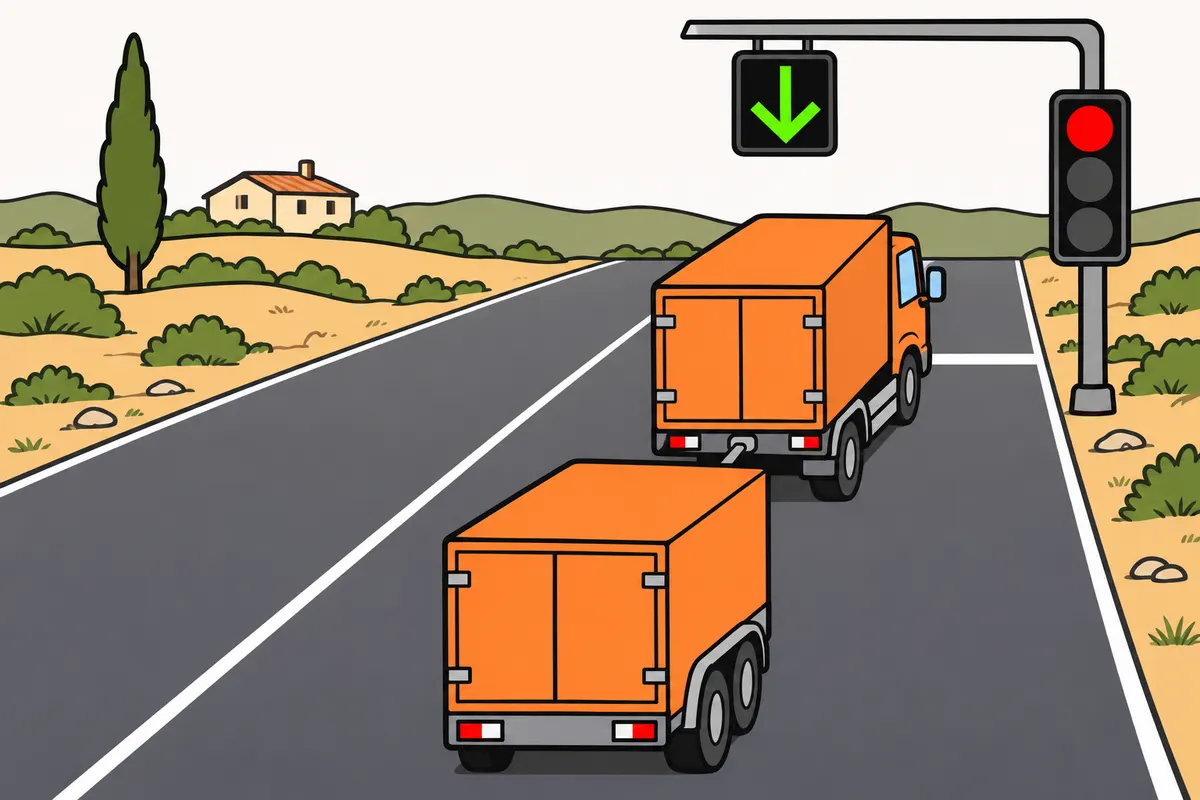
Arrows control movements or lanes, while other applicable duties still apply.
| Sign or case | What you must do |
|---|---|
| Red cross | Do not occupy the lane |
| Diagonal white or amber arrow | Your lane is closing; move safely into the indicated lane |
| Downward green arrow | You may use the lane while obeying other applicable duties |
Remember
- A black arrow limits red or amber to the movement shown.
- Green arrow on black: give way to traffic in the lane you enter.
- Do not endanger people crossing when following that green arrow.
- You must follow it when occupying the lane designated for that movement.
- In your lorry, do not follow lights reserved exclusively for cycles.
Exam trap: Wrong: a green lane arrow gives absolute priority. Right: obey circular red lights and duties to stop or give way.
Read the full explanation
- A black arrow on a red or amber light means that the light applies only to the movement indicated. At a green arrow on a black background, you may follow its direction with care, giving way to traffic in the lane you are joining and without endangering anyone crossing; you must follow it if you occupy the lane reserved for that movement. [RGC, annex I.4](https://www.boe.es/buscar/act.php?id=BOE-A-2003-23514#A4).
- A red cross prohibits you from occupying the lane; a diagonal white or amber arrow announces its closure and requires you to move safely into the lane indicated. A downward green arrow allows you to use the lane, but you must obey circular red lights and any requirement to stop or give way. [RGC, annex I.4](https://www.boe.es/buscar/act.php?id=BOE-A-2003-23514#A4).
- When driving your lorry, you must not follow traffic lights reserved exclusively for cycles. White bars on a black background control the vehicles to which those signals apply, including vehicles authorised to use the reserved lane where applicable. [RGC, annex I.4](https://www.boe.es/buscar/act.php?id=BOE-A-2003-23514#A4).
9Give way, STOP and signed priority
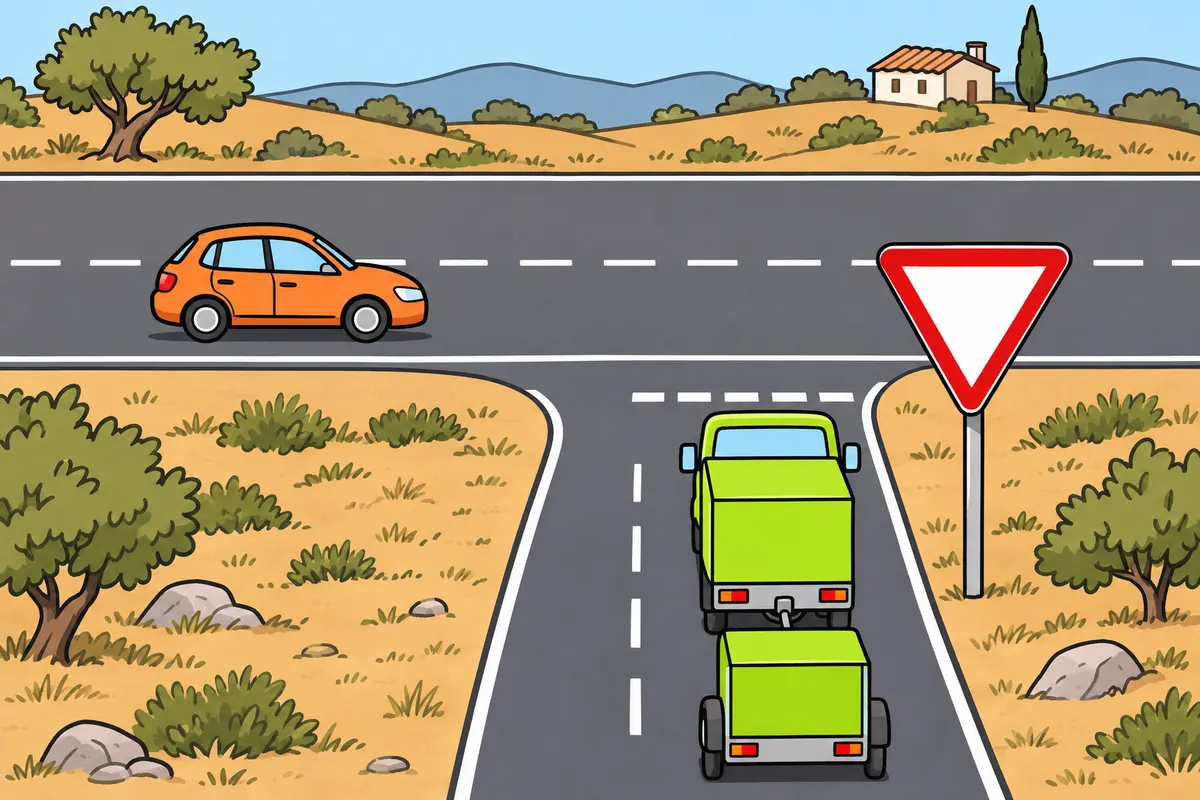
You must distinguish giving way, stopping and priority through narrow sections.
| Sign or case | What you must do |
|---|---|
| R-1 | Give way; stop only if necessary |
| R-2 | Always stop, then give way |
| R-3 | You have junction priority over vehicles from other carriageways |
| R-4 | Prepare to lose that priority ahead |
| R-5 | Do not enter if you would force oncoming road users to stop |
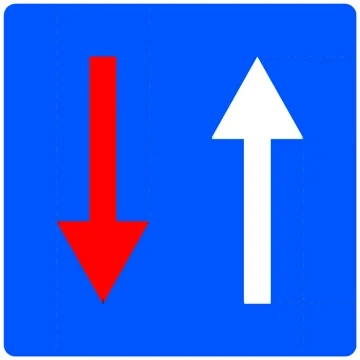
| R-6 | You have priority at the next narrow section |
| Unsigned narrow passages | See “Narrow passages, bridges and steep gradients” in “Manoeuvres with a light lorry and trailer”. |
Remember
- At STOP, stop completely even when you see no traffic.
- Stop before the line or, without one, immediately before the junction.
- Then give way to priority-road traffic, including traffic from your left.
- If visibility there is insufficient, stop again where you can see without danger.
- Before entering a narrow section, check your whole combination can clear it.
Exam trap: Wrong: at R-6, give way to a bus because it is large. Right: use the sign to decide priority.
Read the full explanation
- At R-1, Give way, you must give way to vehicles on the road or lane you are approaching and stop if necessary. You do not automatically have to stop if you can give way safely without stopping; you must show your intention by slowing down in advance. [RGC, annex I.5](https://www.boe.es/buscar/act.php?id=BOE-A-2003-23514#A5). [RGC, art. 58](https://www.boe.es/buscar/act.php?id=BOE-A-2003-23514#a58).
- At R-2, Compulsory stop or STOP, you must stop completely at the stop line or, if there is no line, immediately before the junction. You must then give way to traffic on the priority road, even if vehicles approach from your left. An apparent absence of traffic does not remove the requirement to stop. [RGC, annex I.5](https://www.boe.es/buscar/act.php?id=BOE-A-2003-23514#A5).
- If, exceptionally, you do not have sufficient visibility from your first stop at a STOP sign, you must stop again where you can check the traffic without endangering anyone. This second stop is required when visibility is insufficient. [RGC, annex I.5](https://www.boe.es/buscar/act.php?id=BOE-A-2003-23514#A5).
- R-3, Priority road, indicates that you have priority at junctions over vehicles from other carriageways. R-4, End of priority, warns you that you are approaching the point where you lose that priority. [RGC, annex I.5](https://www.boe.es/buscar/act.php?id=BOE-A-2003-23514#A5).
- R-5, Priority to oncoming traffic, prohibits you from entering the narrow section until you can drive through without forcing oncoming traffic to stop. R-6, Priority over oncoming traffic, gives you priority at the next narrow section. Before entering, check that you can clear the section with your whole combination. [RGC, annex I.5](https://www.boe.es/buscar/act.php?id=BOE-A-2003-23514#A5).
- To determine who goes first where there are no specific signs, consult «Narrow passages, bridges and steep gradients» in «Manoeuvres with a light lorry and trailer». [RGC, art. 60](https://www.boe.es/buscar/act.php?id=BOE-A-2003-23514#a60).
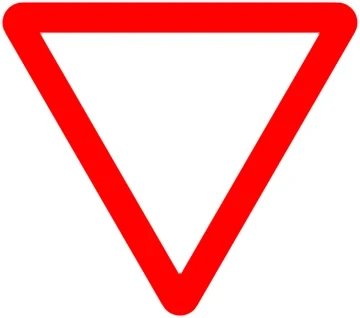 R-1
 R-2
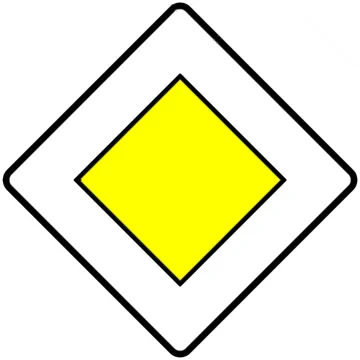 R-3
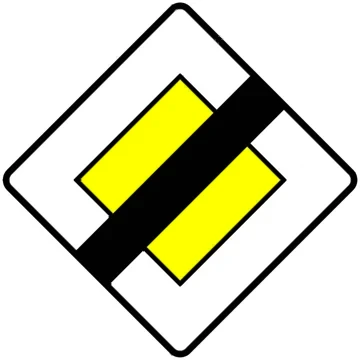 R-4
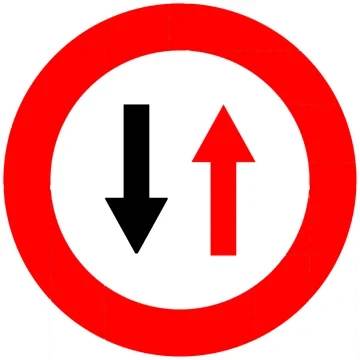 R-5
 R-6
10No entry for goods vehicles
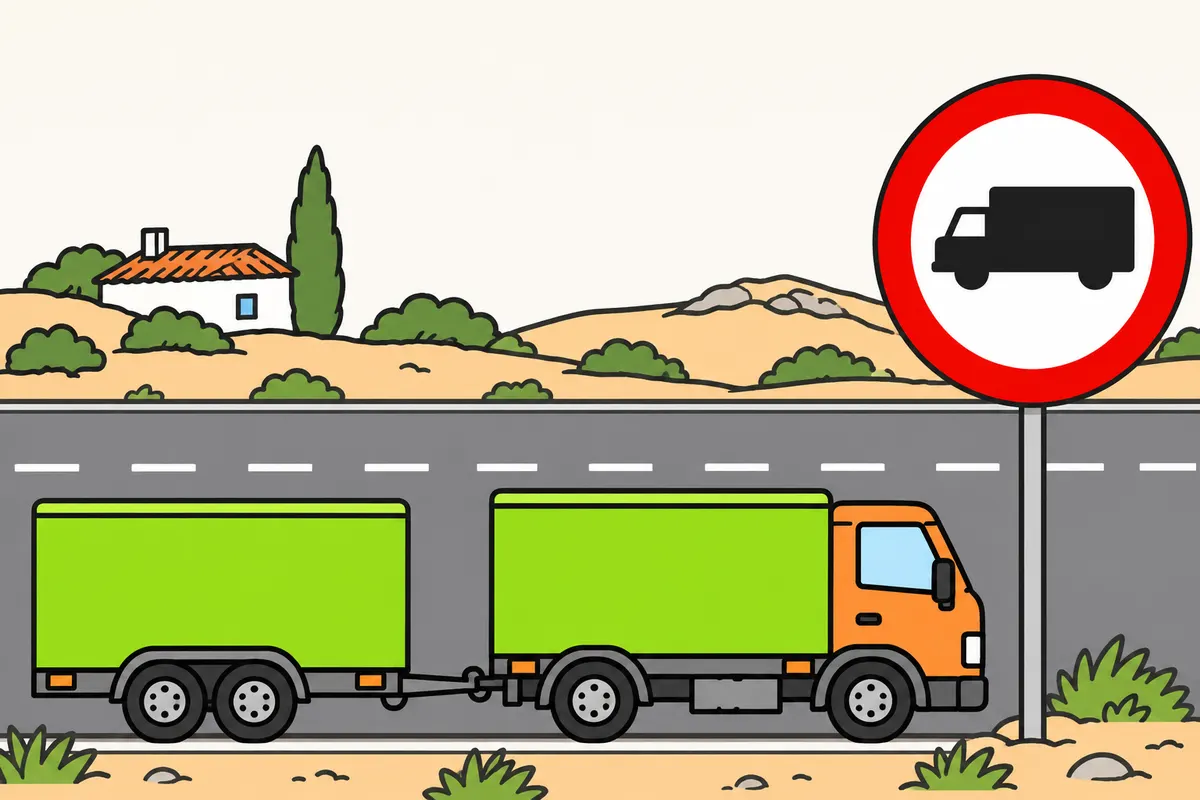
You must check whether entry restrictions affect your vehicle, even when empty.
| Sign or case | What you must do |
|---|---|
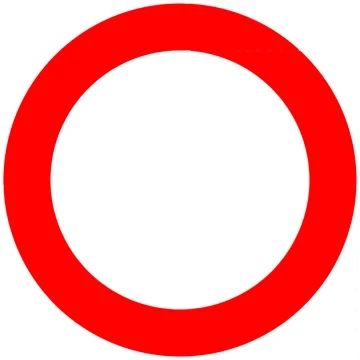
| R-100 | No vehicles may travel in either direction |
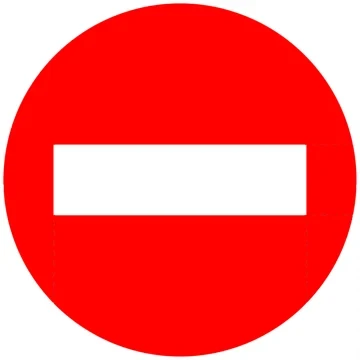
| R-101 | Do not enter through this entrance |
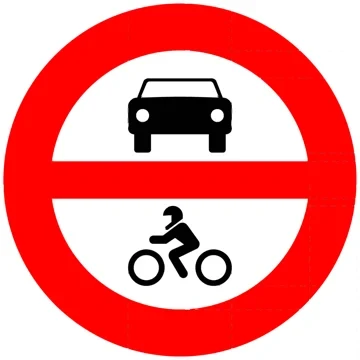
| R-102 | Do not enter with a motor vehicle |
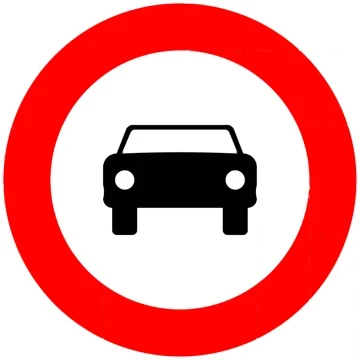
| R-103 | Do not enter with your lorry or tractor unit |
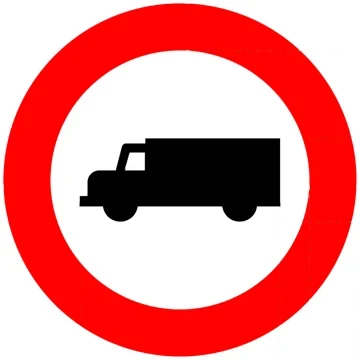
| R-106 | No entry for goods vehicles, regardless of mass |
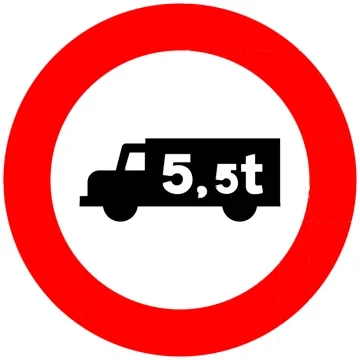
| R-107 | No entry for goods vehicles whose MMA exceeds the figure |
Remember
- At R-106, do not enter even empty or driving only the towing vehicle.
- At R-107, compare maximum authorised mass, called MMA, with the shown tonnage.
- Do not use your actual journey weight at R-107.
- At R-120, read the plate or board for environmental conditions.
Exam trap: Wrong: enter empty at R-107 although your MMA exceeds the figure. Right: MMA decides.
Read the full explanation
- R-100 prohibits all vehicles from using the road in either direction. R-101 prohibits you from entering at the access where the sign faces you; you may encounter vehicles travelling towards you. R-100 applies to the whole road; R-101 applies to the signed access. [RGC, annex I.5](https://www.boe.es/buscar/act.php?id=BOE-A-2003-23514#A5).
- R-102 prohibits entry to motor vehicles. R-103 exempts two-wheeled motorcycles and three-wheeled vehicles classed as motorcycles; the prohibition applies to your lorry or tractor unit. [RGC, annex I.5](https://www.boe.es/buscar/act.php?id=BOE-A-2003-23514#A5).
- R-106 prohibits entry to vehicles intended to carry goods: lorries, tractor units and vans, regardless of their mass. It applies to you even if you are driving empty, have no goods to deliver or are driving only the tractor unit. [RGC, annex I.5](https://www.boe.es/buscar/act.php?id=BOE-A-2003-23514#A5).
- R-107 applies the prohibition to goods vehicles whose MMA (maximum authorised mass) exceeds the tonnage shown. You must check the maximum authorised mass, rather than weighing only the goods or using the actual mass for the journey. Driving empty does not allow you to enter if your MMA exceeds the threshold. [RGC, annex I.5](https://www.boe.es/buscar/act.php?id=BOE-A-2003-23514#A5).
- R-120 restricts access by environmental badge or other environmental criteria. You must read the conditions on the generic S-860 supplementary plate or on the board containing the sign: the circular symbol alone does not tell you which badges, times or authorisations are permitted. [RGC, annex I.5](https://www.boe.es/buscar/act.php?id=BOE-A-2003-23514#A5).
 R-100
 R-101
 R-102
 R-103
 R-106
 R-107
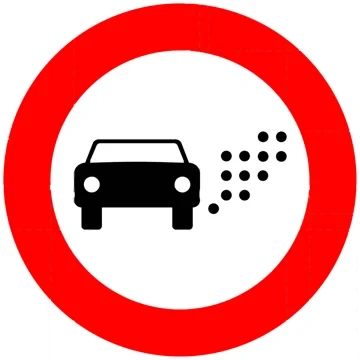 R-120
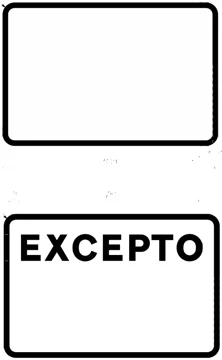 S-860
11R-112: vehicles with trailers
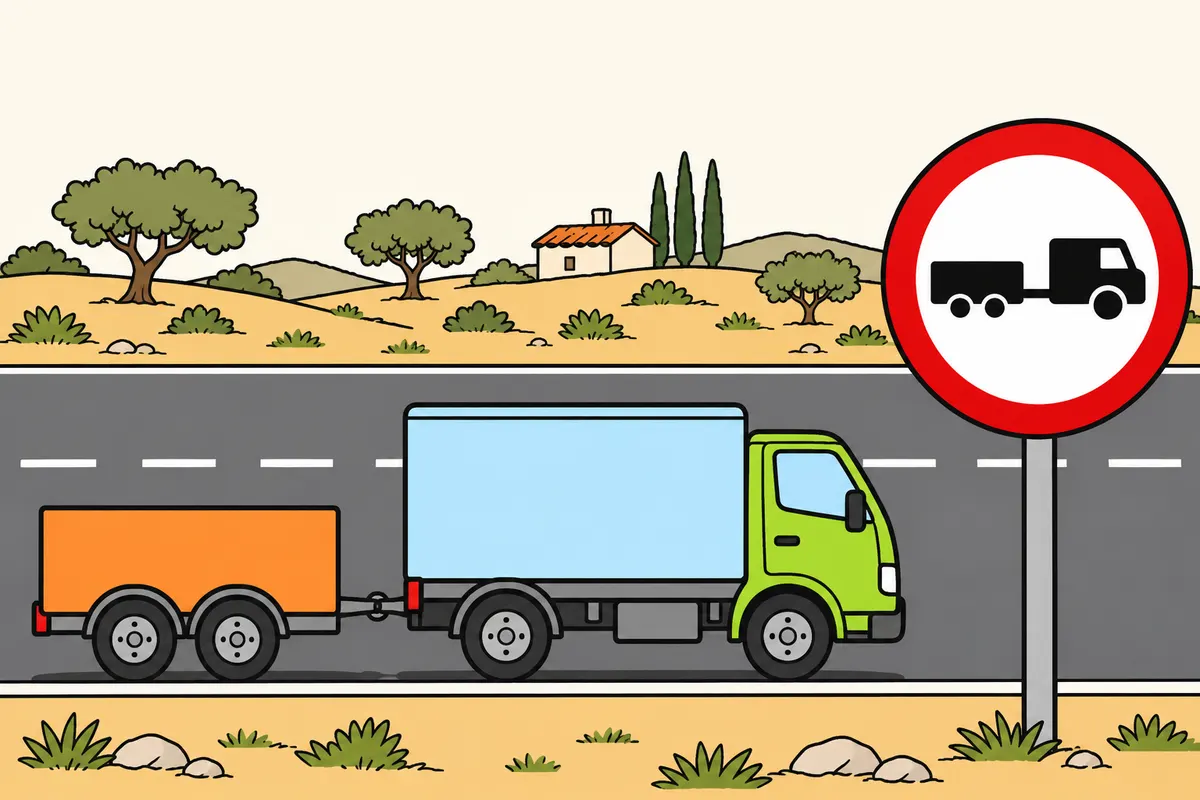
At R-112, you must check trailer axles and any stated tonnage.
| Sign or case | What you must do |
|---|---|
| Single-axle trailer | Exempt from R-112 |
| Trailer with two or more axles | Do not enter unless another condition limits the prohibition |
| Multi-axle semi-trailer | You must also obey the prohibition |
Remember
- The exemption depends on trailer axles, rather than its current load.
- If tonnage is shown, compare it with the trailer’s MMA.
- The tonnage prohibition applies only when you exceed the figure.
- A non-exempt trailer with 2 t MMA does not exceed a 2 t limit.
Exam trap: Wrong: all semi-trailers are exempt from R-112. Right: there is no general semi-trailer exemption.
Read the full explanation
- R-112 prohibits entry to motor vehicles towing trailers, except single-axle trailers. The number of axles on the towed vehicle determines the exemption. The exemption concerns the number of axles and does not in itself establish a threshold of 3,500 kg. [RGC, annex I.5](https://www.boe.es/buscar/act.php?id=BOE-A-2003-23514#A5).
- With a lorry and a trailer with two or more axles, you cannot enter where R-112 is displayed without any additional condition limiting its scope. With a tractor unit and a multi-axle semi-trailer, you must also obey it: the definition contains no general exemption for semi-trailers. [RGC, annex I.5](https://www.boe.es/buscar/act.php?id=BOE-A-2003-23514#A5).
- If a tonnage figure appears on the silhouette or on a supplementary plate, the prohibition applies when the trailer’s MMA exceeds that figure. [RGC, annex I.5](https://www.boe.es/buscar/act.php?id=BOE-A-2003-23514#A5).
- At an R-112 sign showing 2 t, a trailer that is not exempt and has an MMA of exactly 2 t does not exceed the threshold; a trailer with a higher MMA is subject to the prohibition. [RGC, annex I.5](https://www.boe.es/buscar/act.php?id=BOE-A-2003-23514#A5).
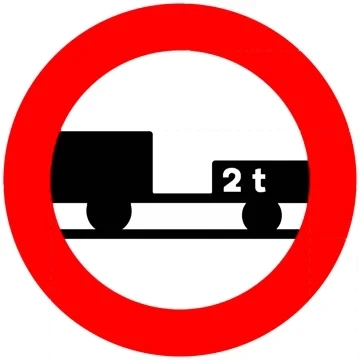 R-112
12Actual mass, axles and clearances
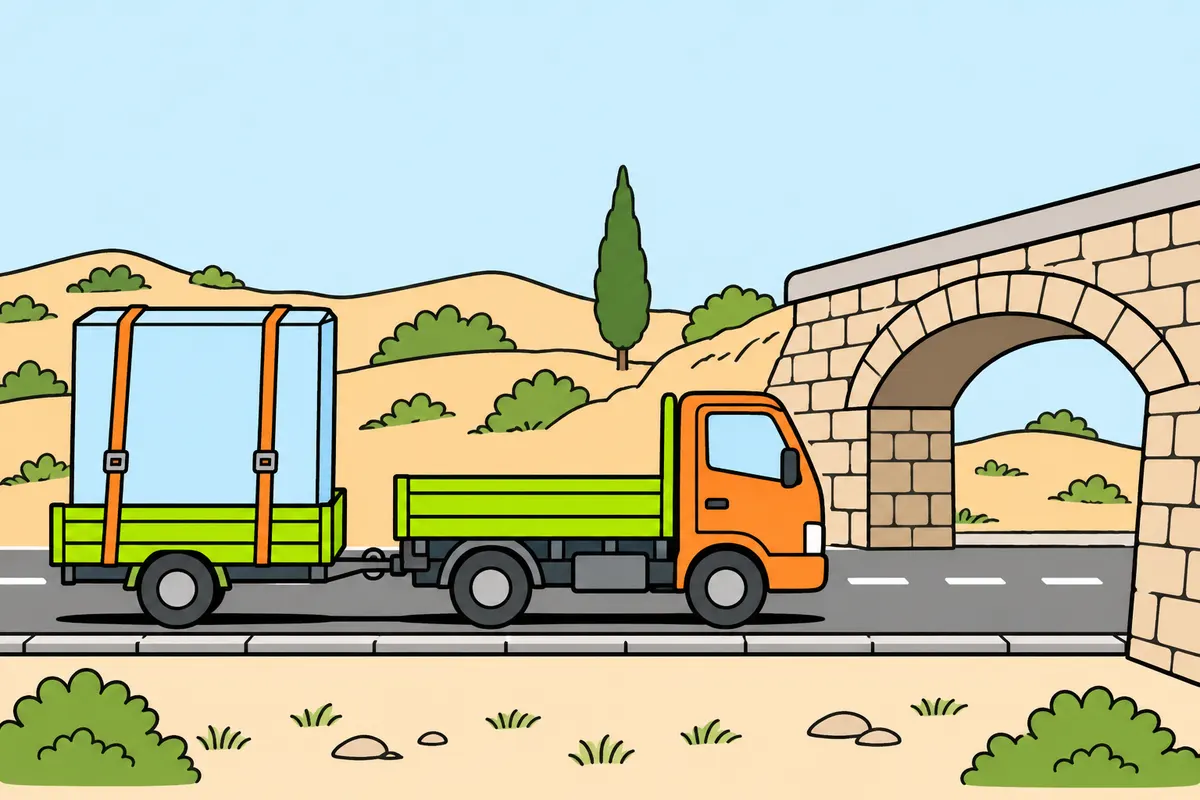
You must compare each limit with the mass or size it controls.
| Sign or case | What you must do |
|---|---|
| R-201 | Check actual laden mass |
| R-202 | Check mass transmitted by the wheels of each axle |
| R-203 | Check total length, including load |
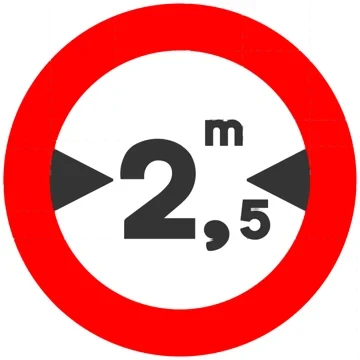
| R-204 | Check width, including load |
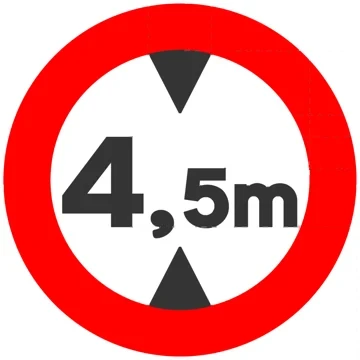
| R-205 | Check height, including load |
Remember
- At R-201, count the actual weight of your combination and its load.
- Matching the R-201 limit does not prohibit passage under that sign.
- Check every axle even when the total weight is acceptable.
- Include the load when checking length, width and height.
- Find restrictions before entering somewhere you cannot safely change your route.
- At R-200, stop and complete the indicated check before continuing.
Exam trap: Wrong: compare MMA with R-201. Right: compare actual laden mass.
Read the full explanation
- R-201, Mass limit, refers to laden mass. You must consider the actual mass of your vehicle or combination as you drive, including its own mass and the load. An empty vehicle also has mass. [RGC, annex I.5](https://www.boe.es/buscar/act.php?id=BOE-A-2003-23514#A5).
- The prohibition imposed by R-201 applies when you exceed the value shown. If a scenario gives a laden mass of 5.5 t at an R-201 sign showing 5.5 t, being equal to the limit does not prohibit you from proceeding under that sign. [RGC, annex I.5](https://www.boe.es/buscar/act.php?id=BOE-A-2003-23514#A5).
- R-202 limits the mass transmitted by all the wheels on any one axle. You must check each axle: a permissible total mass does not guarantee that no axle exceeds the threshold. [RGC, annex I.5](https://www.boe.es/buscar/act.php?id=BOE-A-2003-23514#A5).
- R-203 limits the maximum length of the vehicle or combination, including the load. You must consider the distance from the front end to the rear end of the combination. [RGC, annex I.5](https://www.boe.es/buscar/act.php?id=BOE-A-2003-23514#A5).
- R-204 limits maximum width and R-205 limits maximum height, in both cases including the load. You must compare the relevant dimension with the figure on the sign. General authorisation to use the roads does not allow you to use a particular route with a smaller clearance. [RGC, annex I.5](https://www.boe.es/buscar/act.php?id=BOE-A-2003-23514#A5).
- Identify these restrictions before entering a bridge, tunnel or street where you cannot safely correct your route. Their figures define limits for that section, separate from the general vehicle maximums you study in «Maximum dimensions and masses». [RGC, annex I.5](https://www.boe.es/buscar/act.php?id=BOE-A-2003-23514#A5).
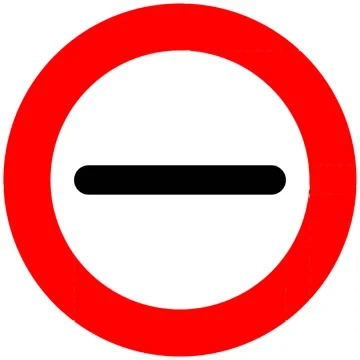
- R-200 prohibits you from proceeding without stopping to comply with the control indicated, for example customs, police or a toll. You must stop and comply with the requirement before continuing; it does not simply mean giving way at a junction. [RGC, annex I.5](https://www.boe.es/buscar/act.php?id=BOE-A-2003-23514#A5).
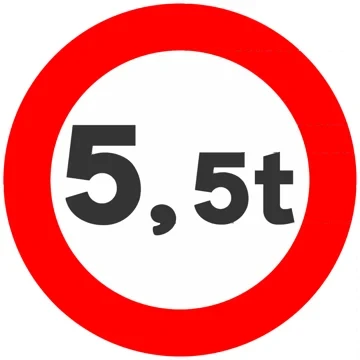 R-201
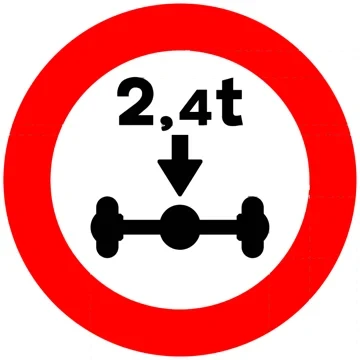 R-202
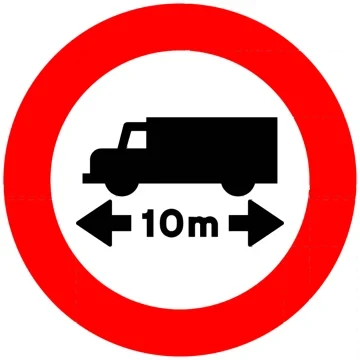 R-203
 R-204
 R-205
 R-200
13Signs for dangerous goods
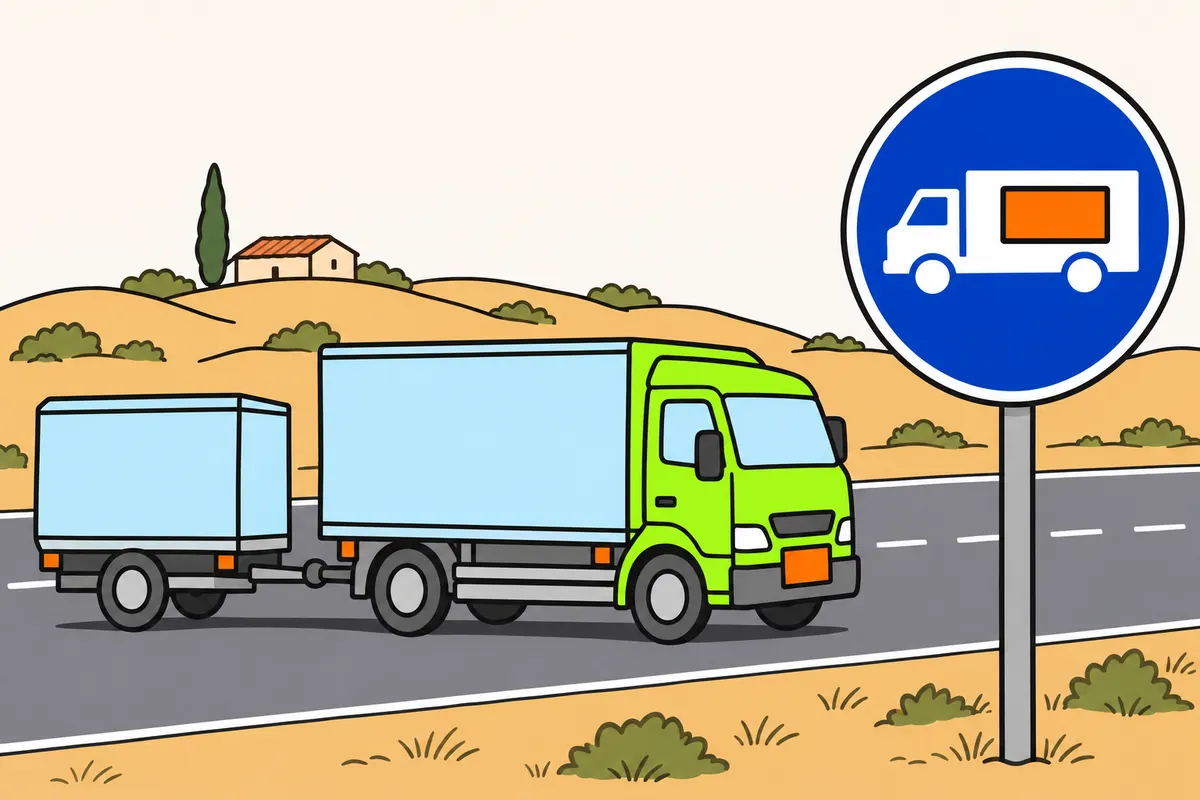
You must distinguish dangerous-goods entry bans from compulsory routes.
| Signs | Transport affected | What you must obey |
|---|---|---|
| R-108 / R-414 | Dangerous goods requiring specific markings | No entry / compulsory carriageway |
| R-109 / R-416 | Explosive or highly flammable goods requiring specific markings | No entry / compulsory carriageway |
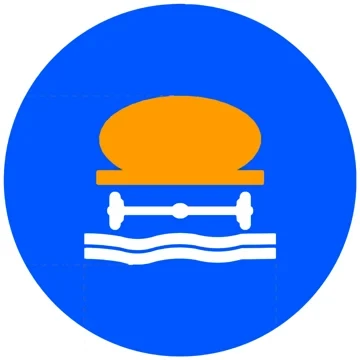
| R-110 / R-415 | More than 1,000 litres of products capable of polluting water | No entry / compulsory carriageway |
Remember
- Check whether your transport requires specific markings.
- For water-polluting products, the threshold requires more than 1,000 litres.
- A blue background orders you to use the indicated carriageway.
Exam trap: Wrong: any polluting quantity activates R-110. Right: you must carry more than 1,000 litres of products capable of polluting water.
Read the full explanation
- R-108 prohibits entry if you carry dangerous goods that require signs under their specific regulations. R-109 does the same for explosive or highly flammable goods under that condition. [RGC, Annex I.5](https://www.boe.es/buscar/act.php?id=BOE-A-2003-23514#A5).
- R-110 prohibits entry if you carry more than 1,000 litres of products capable of polluting water. [RGC, Annex I.5](https://www.boe.es/buscar/act.php?id=BOE-A-2003-23514#A5).
- R-414 requires you to use the indicated carriageway if you carry dangerous goods that require specific signs; R-416 applies to explosive or highly flammable goods under the same condition. Their blue background indicates a compulsory route, which differs from an entry prohibition. [RGC, Annex I.5](https://www.boe.es/buscar/act.php?id=BOE-A-2003-23514#A5).
- R-415 requires you to use the indicated carriageway if you carry more than 1,000 litres of products capable of polluting water. The blue background of R-415 specifies a compulsory route for that transport. [RGC, Annex I.5](https://www.boe.es/buscar/act.php?id=BOE-A-2003-23514#A5).
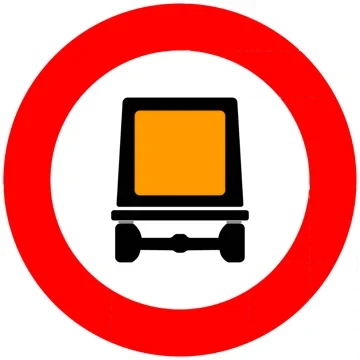 R-108
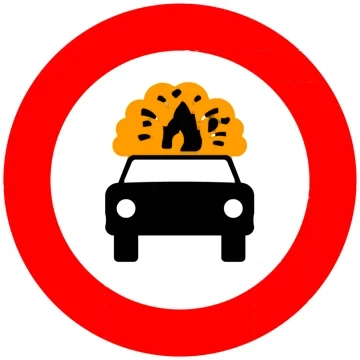 R-109
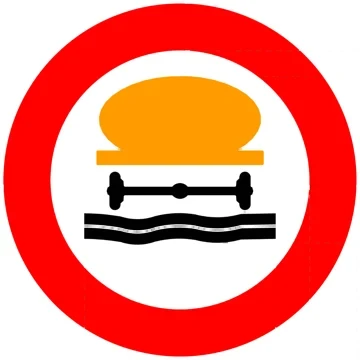 R-110
 R-414
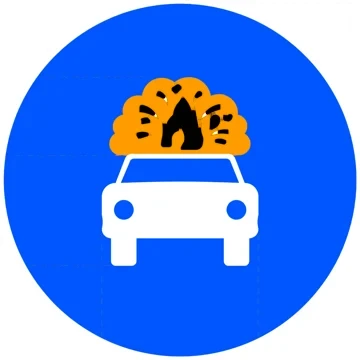 R-416
 R-415
14Signed speeds and separation
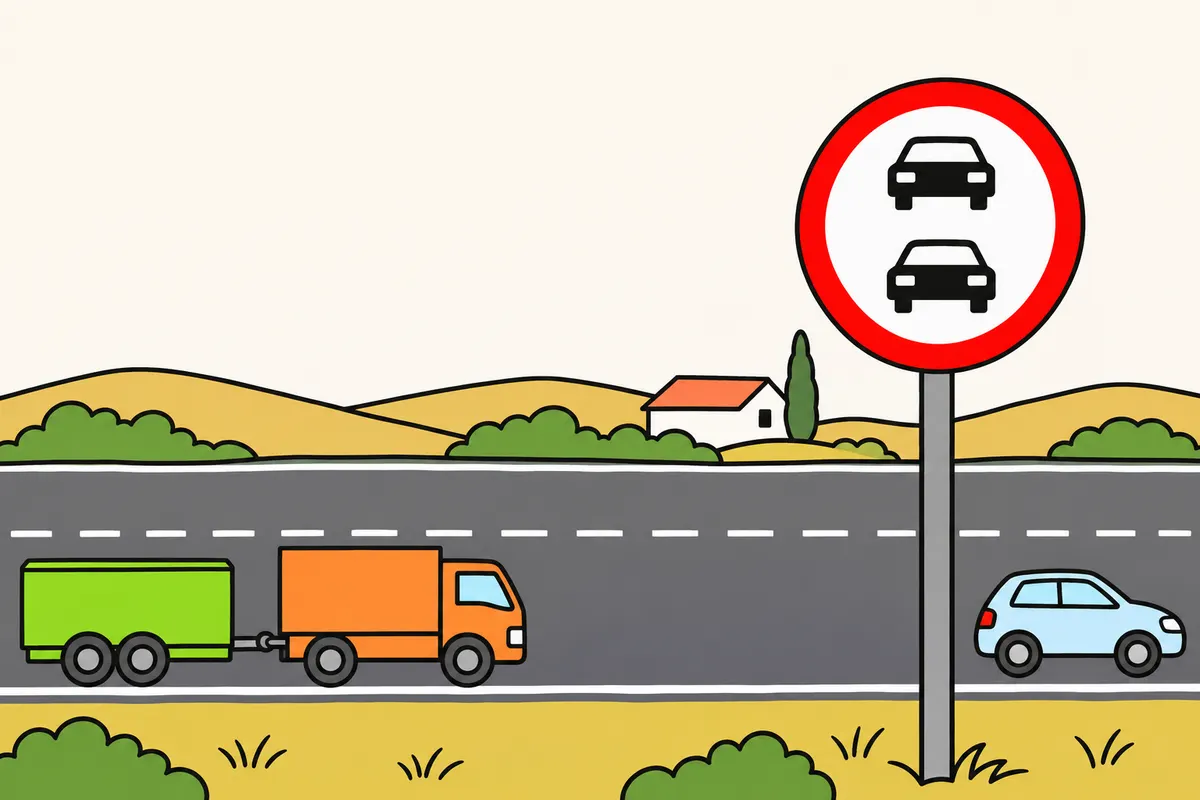
You must distinguish maximum, minimum and recommended speeds from compulsory following distances.
| Sign or case | What you must do |
|---|---|
| R-301 | Do not exceed the shown maximum |
| R-411 | Keep the minimum unless conditions prevent you maintaining it safely |
| R-300 with a figure | Keep at least that gap, except when about to overtake |
| R-300 without a figure | Remember the regulatory following distance |
Remember
- Adapt your speed to what you can see and control.
- A recommended speed does not raise your lorry’s legal maximum.
- A maximum sharing a post or panel with a hazard ends with that hazard.
- On roads without priority, that maximum ends after crossing a priority road.
Exam trap: Wrong: maintain the minimum even when dangerous. Right: slow down if vehicle, traffic or road conditions prevent maintaining it safely.
Read the full explanation
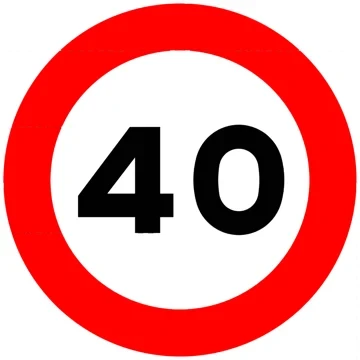
- R-301 sets a maximum speed in km/h, rather than a speed you must maintain. You must observe it from the sign until another maximum speed sign or an applicable end-of-speed-limit or end-of-prohibitions sign, subject to the special conditions specified in its definition. For the limits specific to your combination, see «Speed and distances for the vehicle combination». [RGC, Annex I.5](https://www.boe.es/buscar/act.php?id=BOE-A-2003-23514#A5).
- If R-301 shares a post or panel with a hazard warning sign, its prohibition ends when the hazard ends. If it is on a road without priority, it ceases to apply when you leave a junction with a priority road. [RGC, Annex I.5](https://www.boe.es/buscar/act.php?id=BOE-A-2003-23514#A5).
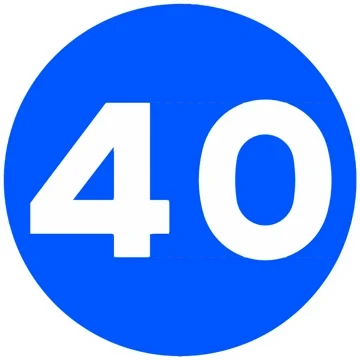
- A number on a blue circular R-411 sign indicates a minimum speed: you must drive at least at that speed until another minimum speed sign, its end sign R-506, or an equal or lower maximum speed limit. You may drive below it when the vehicle, traffic or road conditions prevent you from maintaining it safely; the requirement does not justify unsafe driving. [RGC, Annex I.5](https://www.boe.es/buscar/act.php?id=BOE-A-2003-23514#A5). [RGC, art. 49](https://www.boe.es/buscar/act.php?id=BOE-A-2003-23514#a49).
- R-300 requires you to keep at least the indicated distance from the vehicle ahead, except when you are about to overtake. Without a number, it reminds you of the legally required distance. You must distinguish this requirement from the general or special minimum distances for your combination: each has its own conditions of application. [RGC, Annex I.5](https://www.boe.es/buscar/act.php?id=BOE-A-2003-23514#A5).
- Maximum, minimum and recommended speeds have different effects. A recommended speed gives you guidance, but does not raise the maximum applicable to your lorry or remove a lower limit. You must always adjust your speed to what you can see and control. [RGC, art. 45](https://www.boe.es/buscar/act.php?id=BOE-A-2003-23514#a45). [RGC, art. 146](https://www.boe.es/buscar/act.php?id=BOE-A-2003-23514#a146).
 R-301
 R-411
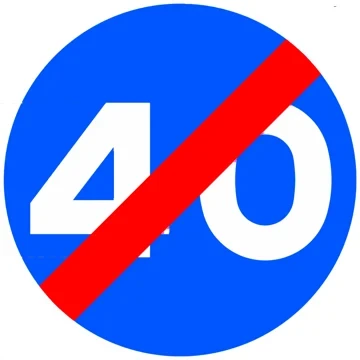 R-506
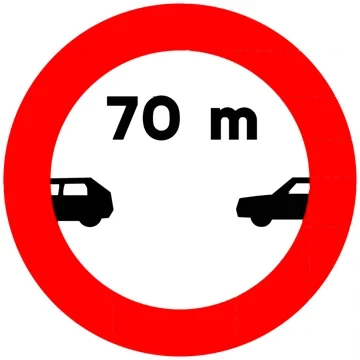 R-300
15Turns and overtaking
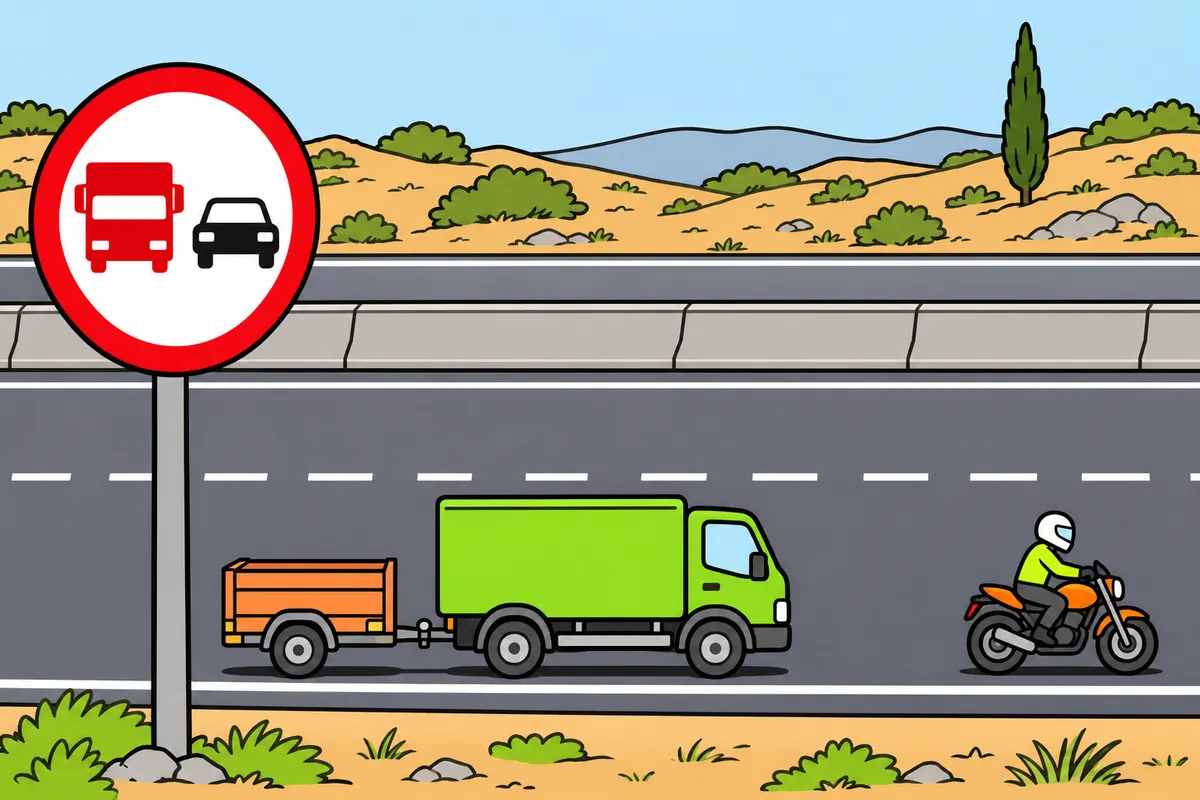
You must check which turns or overtaking movements each sign prohibits for your vehicle.
| Sign | Vehicles affected | Prohibition |
|---|---|---|
| R-302 | Vehicles covered by the sign | Do not turn right |
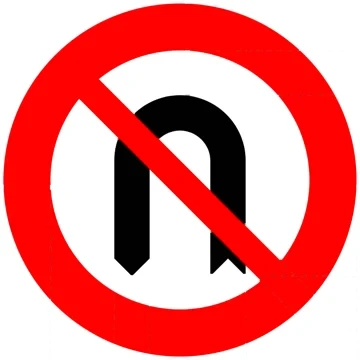
| R-303 | Vehicles covered by the sign | Do not turn left or make a U-turn |
| R-304 | Vehicles covered by the sign | No U-turn; this alone does not prohibit left turns |
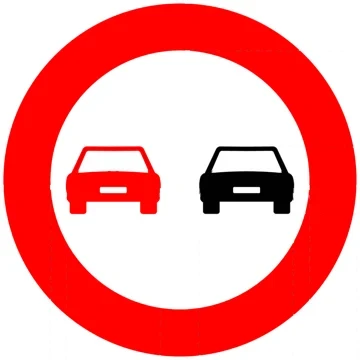
| R-305 | Vehicles covered by the sign | Do not overtake motor vehicles using the oncoming side; obey other bans |
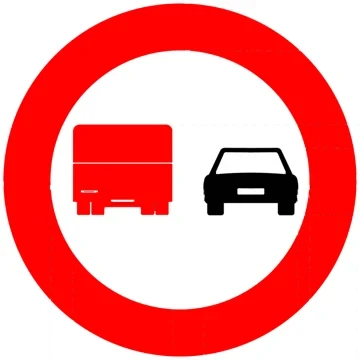
| R-306 | Lorries with MMA over 3,500 kg | Do not overtake motor vehicles, even on your own side |
Remember
- At R-306, affected lorries must not overtake motorcycles either.
- The ban lasts until the corresponding overtaking-ban or prohibition end sign.
- Afterwards, check markings and safety before overtaking.
Exam trap: Wrong: overtake at R-306 without entering the oncoming side. Right: this is also prohibited for lorries with MMA over 3,500 kg.
Read the full explanation
- R-302 prohibits you from turning right. R-303 prohibits you from turning left and from making a U-turn. R-304 prohibits U-turns, but does not in itself prohibit all left turns. [RGC, Annex I.5](https://www.boe.es/buscar/act.php?id=BOE-A-2003-23514#A5).
- R-305 prohibits you from overtaking motor vehicles when you need to enter the area for oncoming traffic. Where a rule already prohibits overtaking, the sign reminds you of that general prohibition. Being able to remain on your own side does not remove other overtaking prohibitions or applicable road markings. [RGC, Annex I.5](https://www.boe.es/buscar/act.php?id=BOE-A-2003-23514#A5).
- R-306 prohibits you from overtaking motor vehicles if you drive a lorry with an MMA (maximum authorised mass) over 3,500 kg, even without entering the area for oncoming traffic. If you drive a C1 lorry with a trailer, this also applies when you overtake using another lane in your direction. Do not apply this specific prohibition to a car with a trailer merely because its driver holds C1+E. [RGC, Annex I.5](https://www.boe.es/buscar/act.php?id=BOE-A-2003-23514#A5).
- The definition of R-306 includes overtaking motorcycles, because they are motor vehicles. [RGC, Annex I.5](https://www.boe.es/buscar/act.php?id=BOE-A-2003-23514#A5).
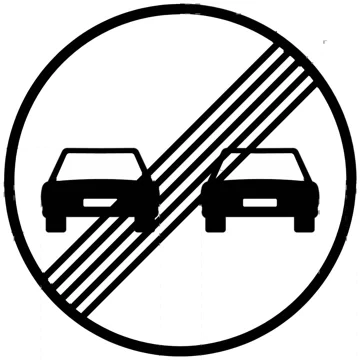
- You must observe the prohibition until the corresponding end-of-overtaking-prohibition or end-of-prohibitions sign. R-502 ends the general prohibition and R-503 ends the prohibition for lorries. Afterwards, you must continue to check conditions and road markings before overtaking; the end of a sign's restriction does not guarantee a safe manoeuvre. [RGC, Annex I.5](https://www.boe.es/buscar/act.php?id=BOE-A-2003-23514#A5).
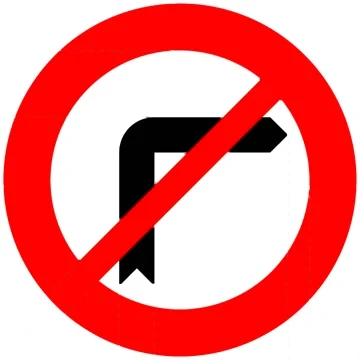 R-302
 R-304
 R-305
 R-306
 R-502
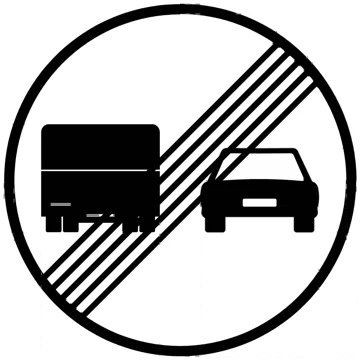 R-503
16Signed stopping and parking restrictions
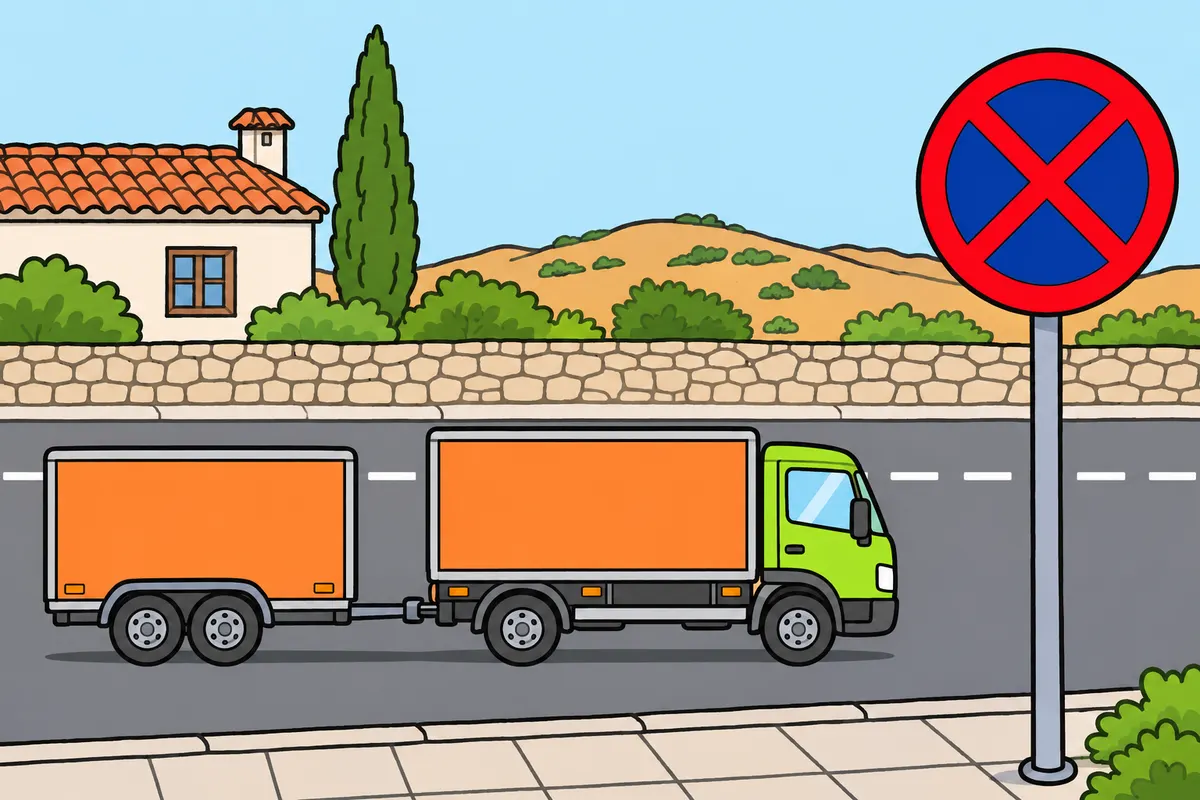
You must check whether stopping or parking is allowed, and at which times.
| Sign or case | What you must do |
|---|---|
| R-307 | Do not stop or park |
| R-308 | Do not park; a permitted stop may still be allowed |
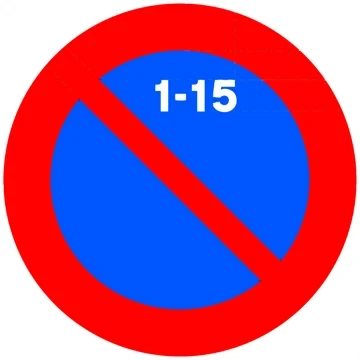
| R-308c | No parking from 9:00 on day 1 to 9:00 on day 16 |
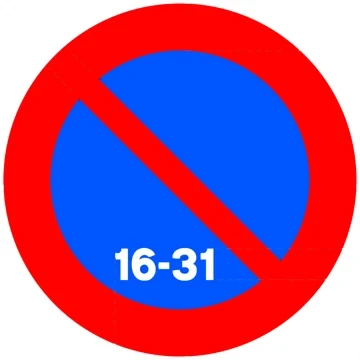
| R-308d | No parking from 9:00 on day 16 to 9:00 on day 1 next month |
Remember
- Unless otherwise indicated, restrictions cover the signed side until the next junction.
- Check arrows showing the affected section on either or both sides.
- Even the access holder cannot park across an authorised vehicle access.
- For limited parking, read the time limit and control system.
- At R-310, use your horn only to prevent an accident.
Exam trap: Wrong: change parking sides at midnight for the half-month rule. Right: the stated change is at 9:00.
Read the full explanation
- R-307 prohibits you from stopping and parking; R-308 prohibits parking, but does not in itself prohibit an otherwise permitted brief stop. In their standard forms, they apply to the side where they are placed, from the sign to the next junction in your direction, unless otherwise indicated. [RGC, Annex I.5](https://www.boe.es/buscar/act.php?id=BOE-A-2003-23514#A5).
- You must check the arrows on the directional variants of these signs. They may indicate the stretch to one side or both sides, up to the corresponding junction or end sign. A prohibition on the right-hand side does not automatically extend to the left-hand side just because the street is one-way. [RGC, Annex I.5](https://www.boe.es/buscar/act.php?id=BOE-A-2003-23514#A5).
- R-308c prohibits parking during the first half of the month: from 9:00 on day 1 until 9:00 on day 16. R-308d prohibits it during the second half: from 9:00 on day 16 until 9:00 on day 1 of the following month. [RGC, Annex I.5](https://www.boe.es/buscar/act.php?id=BOE-A-2003-23514#A5).
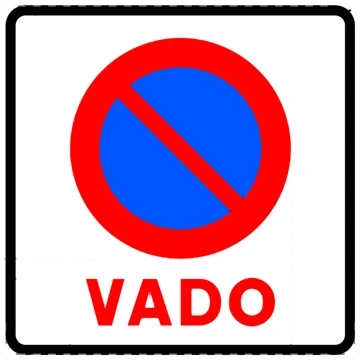
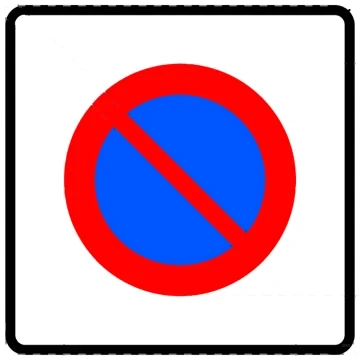
- R-308e indicates that you must not park across a vado (authorised vehicle access); it is not a parking space for the access holder. With R-309, you must comply with the specified duration and control system, reading the supplementary conditions rather than assuming the same time limit applies in every zone. [RGC, Annex I.5](https://www.boe.es/buscar/act.php?id=BOE-A-2003-23514#A5).
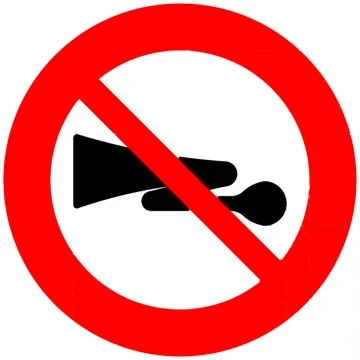
- R-310 reminds you that audible warnings are prohibited except to prevent an accident. Impatience while you wait to load or unload does not justify sounding your horn. [RGC, Annex I.5](https://www.boe.es/buscar/act.php?id=BOE-A-2003-23514#A5).
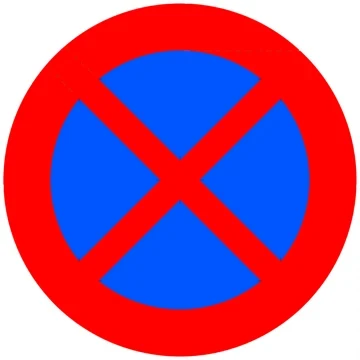 R-307
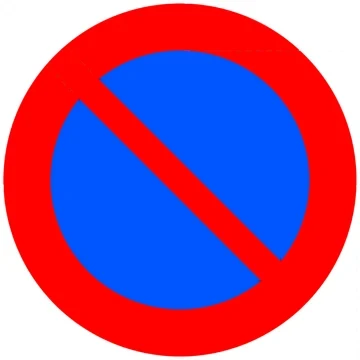 R-308
 R-308c
 R-308d
 R-308e
 R-309
 R-310
17Compulsory directions and carriageways
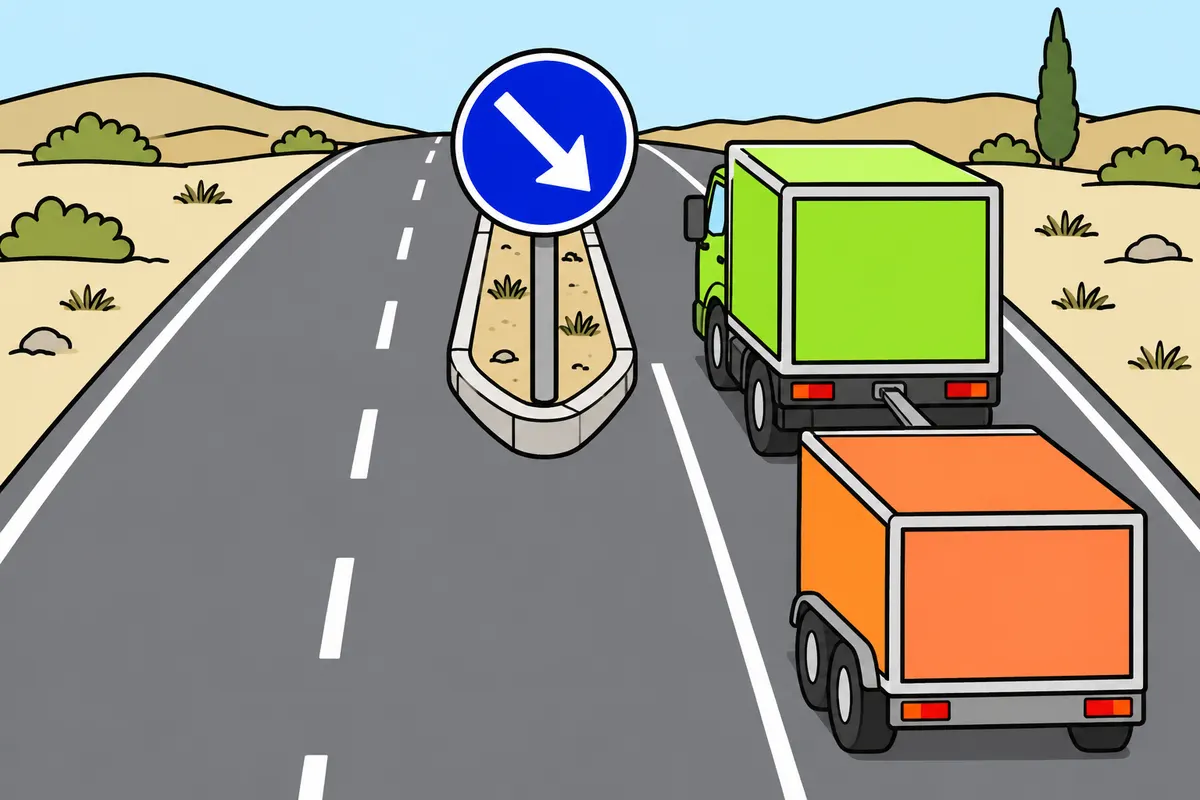
You must follow compulsory directions and use the carriageway required for your vehicle.
| Sign or case | What you must do |
|---|---|
| R-400 | Follow the compulsory direction |
| R-401 | Pass the obstruction on the indicated side |
| R-403 | Follow only the permitted directions |
| R-402 | Follow the indicated direction around the junction |
| R-418 | Use the lane only with working electronic toll equipment |
| S-32 | You may pay electronically or by other methods |
Remember
- Follow arrows without adding a U-turn that is not shown.
- At a roundabout, compulsory direction does not give you entry priority.
- Do not cross into other lanes while following the roundabout direction.
- At R-406 without tonnage, use the indicated carriageway regardless of your lorry’s mass.
- With tonnage, R-406 applies when the vehicle or combination’s MMA exceeds it.
Exam trap: Wrong: R-418 allows any payment method. Right: you need working electronic toll equipment.
Read the full explanation
- The arrows on R-400 indicate the compulsory direction; those on R-401 indicate which side you must use to pass a pedestrian refuge, traffic island or obstacle. R-403 signs show the only permitted directions of travel. You must follow the arrows without adding a U-turn that is not shown. [RGC, Annex I.5](https://www.boe.es/buscar/act.php?id=BOE-A-2003-23514#A5).
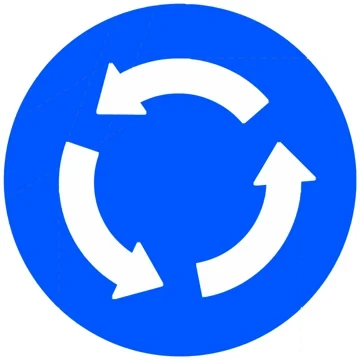
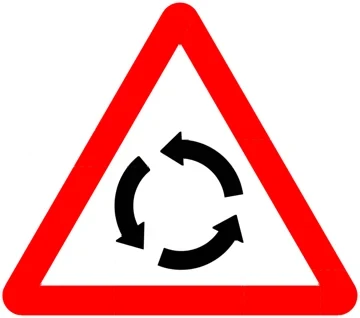
- R-402 requires you to follow the indicated direction around a junction. You must distinguish it from P-4, which warns you of a roundabout ahead. The requirement to follow its arrows does not replace the priority rules at the entrance or authorise you to encroach on other lanes. [RGC, Annex I.5](https://www.boe.es/buscar/act.php?id=BOE-A-2003-23514#A5).
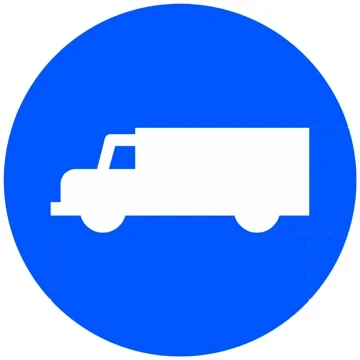
- R-406 requires you to use the indicated carriageway if you drive a lorry, tractor unit or van, regardless of its mass. If the sign includes a tonnage, it only applies when the MMA of your vehicle or combination exceeds that figure. [RGC, Annex I.5](https://www.boe.es/buscar/act.php?id=BOE-A-2003-23514#A5).
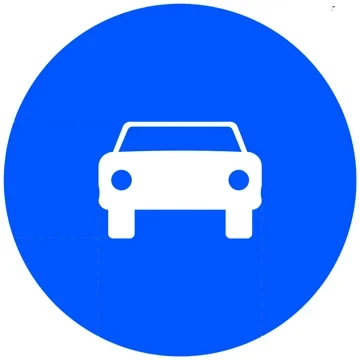
- R-404 requires you to use that carriageway if you drive a motor vehicle, with the exceptions of two-wheeled motorcycles and three-wheeled vehicles treated as motorcycles. Routes reserved and compulsory for cycles, mopeds, pedestrians or VMP (personal mobility vehicles) are not open to your goods vehicle combination. [RGC, Annex I.5](https://www.boe.es/buscar/act.php?id=BOE-A-2003-23514#A5).
- R-418 indicates compulsory electronic toll payment: you must have a working technical device to use that lane. S-32 informs you that you can pay electronically as well as by other methods. With R-418, prepare your payment device before entering the lane. [RGC, Annex I.5](https://www.boe.es/buscar/act.php?id=BOE-A-2003-23514#A5).
 R-402
 P-4
 R-406
 R-404
 R-418
 S-32
18Required equipment and end signs
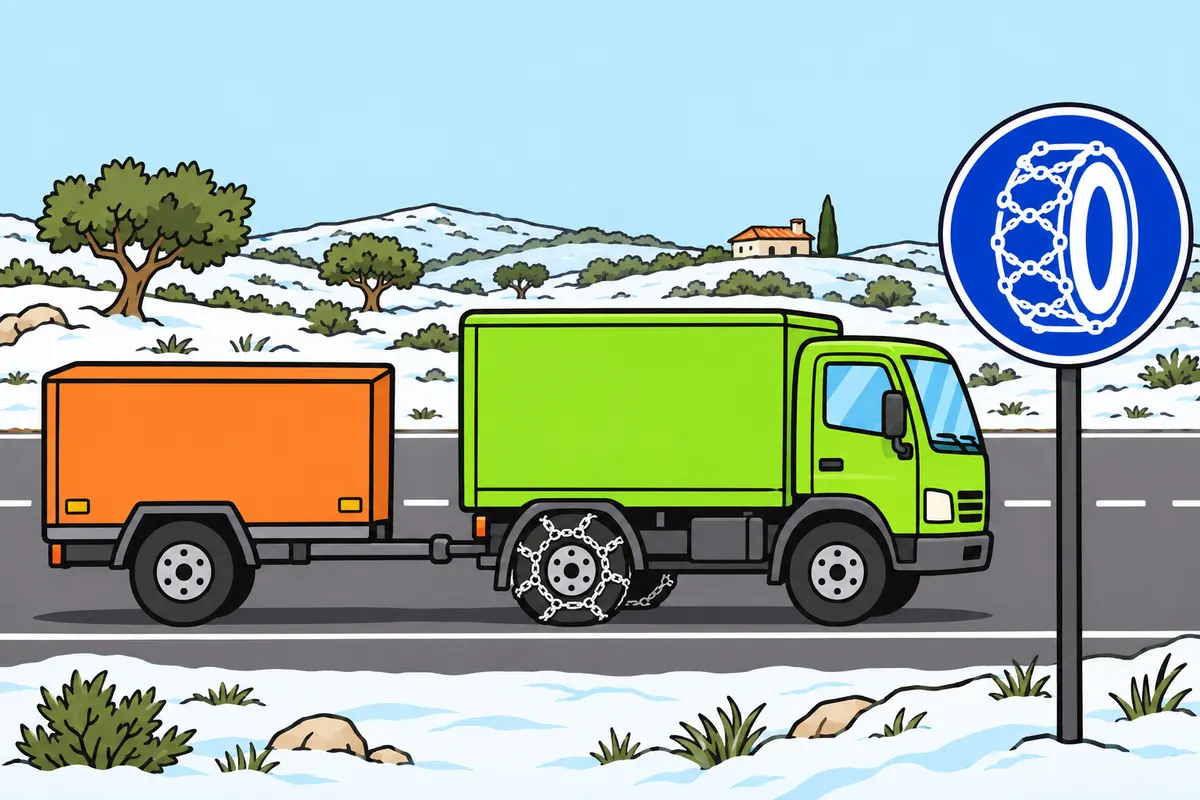
You must use required equipment and understand which duty each end sign removes.
| Sign or case | What you must do |
|---|---|
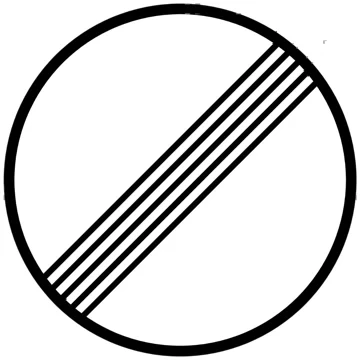
| R-500 | Ends specific signed prohibitions for moving vehicles; general rules remain |
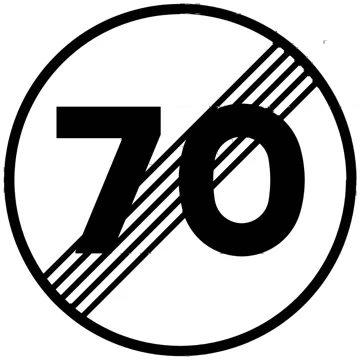
| R-501 | Ends the signed maximum; apply the relevant speed limits |
| R-506 | Ends the signed minimum speed |
| R-509 | Ends compulsory carriageway use for lorries, tractor units and vans |
Remember
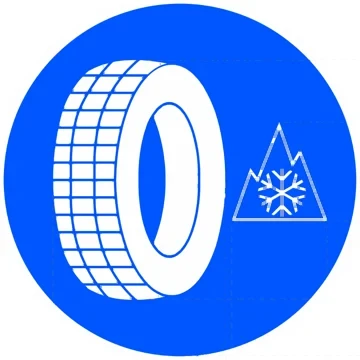
- At R-412, use authorised chains, other authorised anti-skid devices, or special snow tyres.
- Devices must act on a wheel each side of the same driven axle.
- Chains only on a non-driven trailer axle do not meet this requirement.
- At R-412b, you need special winter tyres.
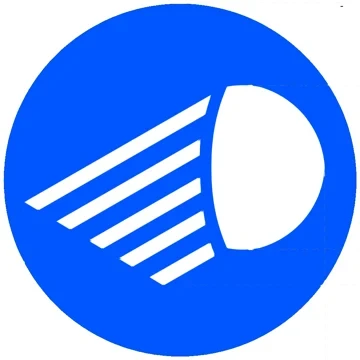
- At R-413, use at least dipped headlights until that duty ends.
Exam trap: Wrong: R-500 lets you park where prohibited. Right: it ends specific signed prohibitions for moving vehicles.
Read the full explanation
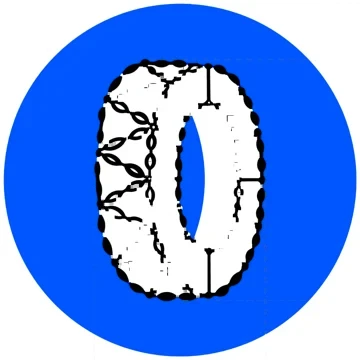
- R-412 requires you to use chains or other authorised anti-skid devices acting on at least one wheel on each side of the same driven axle, or special snow tyres. The driven axle must be on the towing vehicle: fitting chains only to a non-driven axle of the trailer does not meet this condition. [RGC, Annex I.5](https://www.boe.es/buscar/act.php?id=BOE-A-2003-23514#A5).
- R-412b requires you to use special winter tyres. R-413 requires you to drive with at least dipped beam on, regardless of lighting and visibility, until that requirement ends. [RGC, Annex I.5](https://www.boe.es/buscar/act.php?id=BOE-A-2003-23514#A5).
- R-500 ends specific signed prohibitions for moving vehicles. It does not remove general rules or a parking prohibition. R-501 ends a signed maximum speed limit: afterwards, you must apply the limits appropriate to your vehicle and the road. [RGC, Annex I.5](https://www.boe.es/buscar/act.php?id=BOE-A-2003-23514#A5).
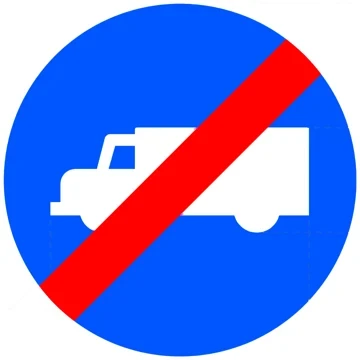
- R-506 ends a minimum speed requirement and R-509 ends the compulsory carriageway requirement for lorries, tractor units and vans. You must relate each end sign to the specific requirement it ends, without treating a diagonal stripe as general permission to make any movement. [RGC, Annex I.5](https://www.boe.es/buscar/act.php?id=BOE-A-2003-23514#A5).
 R-412
 R-412b
 R-413
 R-500
 R-501
 R-509
19Road layout hazards for the combination
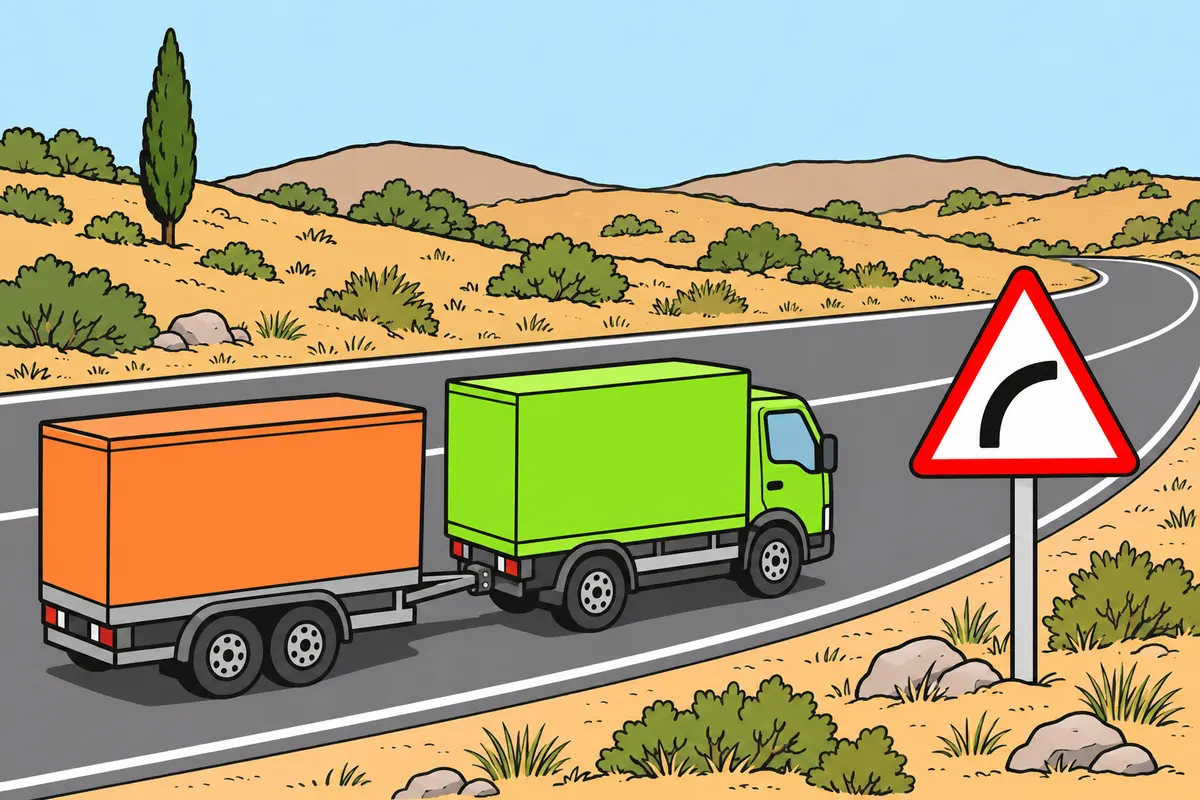
At hazard signs, you must anticipate danger and adapt how you drive your combination.
| Sign or case | What you must do |
|---|---|
| P-28 | Expect loose chippings that may be thrown up |
| P-30 | Expect a drop at the road edge |
Remember
- A bend warning triangle warns you; it does not order a turn.
- For a series of bends, the picture shows the first bend.
- Slow down before bends and plan your trailer’s path.
- On slippery roads, slow down beforehand and use smooth controls.
Exam trap: Wrong: a bend warning triangle orders you to turn. Right: it warns of danger; adapt your driving.
Read the full explanation
- Warning signs are usually triangular with a red border and warn you of a hazard ahead; you must adapt your driving, even if they show no number. The arrow or symbol describes the hazard and does not in itself instruct you to turn in a compulsory direction. [RGC, Annex I.5](https://www.boe.es/buscar/act.php?id=BOE-A-2003-23514#A5).
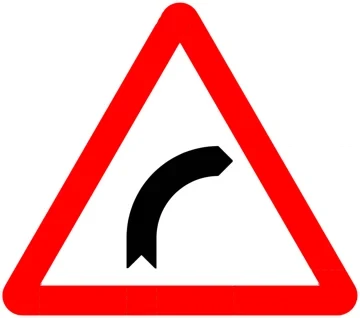
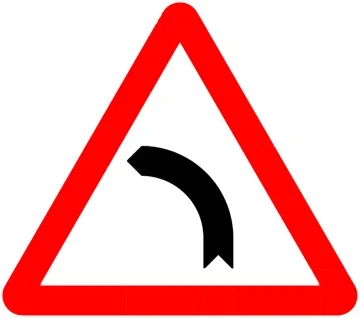
- P-13a warns of a dangerous bend to the right and P-13b to the left; P-14a and P-14b warn of a series of bends close together, with the first bend to the right or left respectively. With a trailer, anticipate the entire road layout and the need to reduce speed; the triangle alone does not specify a single numerical speed for negotiating it. [RGC, Annex I.5](https://www.boe.es/buscar/act.php?id=BOE-A-2003-23514#A5).
- P-19 warns of a slippery road surface: slow down in advance and use smooth inputs to avoid destabilising the combination. P-28 warns of loose chippings that may be thrown up, and P-30 of a drop at the edge of the carriageway. [RGC, Annex I.5](https://www.boe.es/buscar/act.php?id=BOE-A-2003-23514#A5).
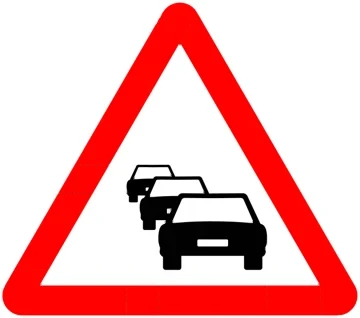
- P-25 warns of two-way traffic; P-26 of possible falling rocks; P-27 of a road leading onto a quay or into a watercourse; and P-31 of frequent congestion. You must anticipate the specific hazard and avoid letting the length of the combination leave you stopped in a dangerous position. [RGC, Annex I.5](https://www.boe.es/buscar/act.php?id=BOE-A-2003-23514#A5).
 P-13a
 P-13b
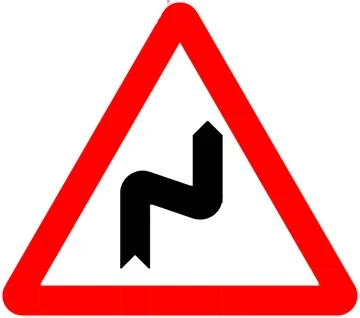 P-14a
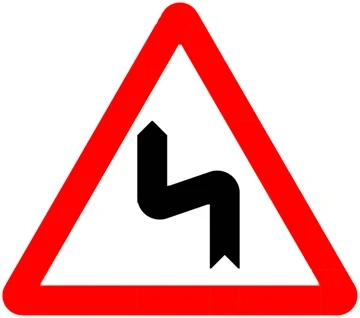 P-14b
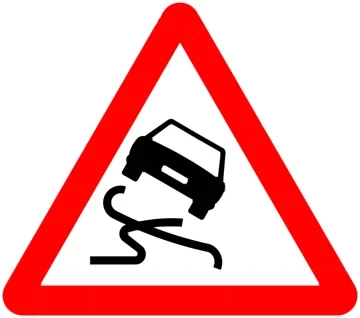 P-19
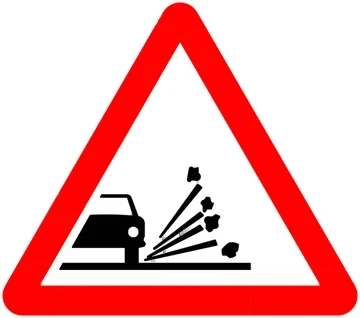 P-28
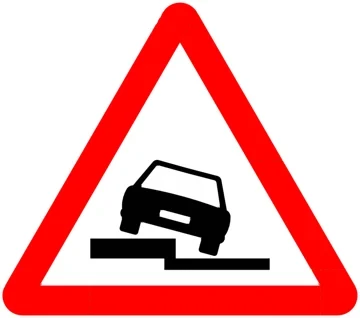 P-30
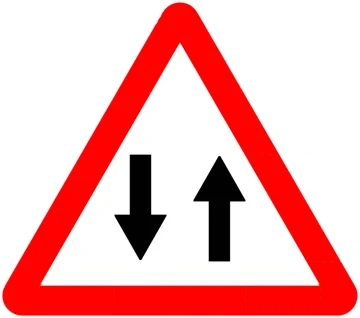 P-25
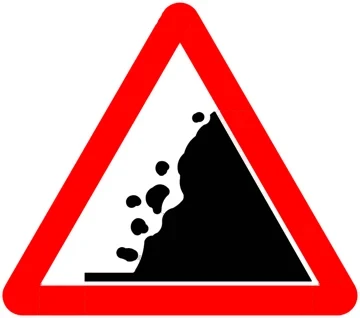 P-26
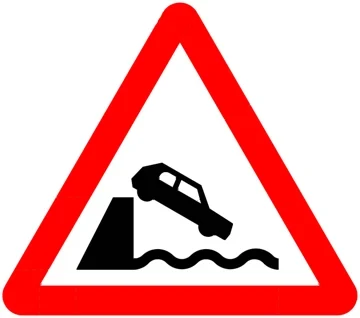 P-27
 P-31
20Level crossings, pedestrians and weather
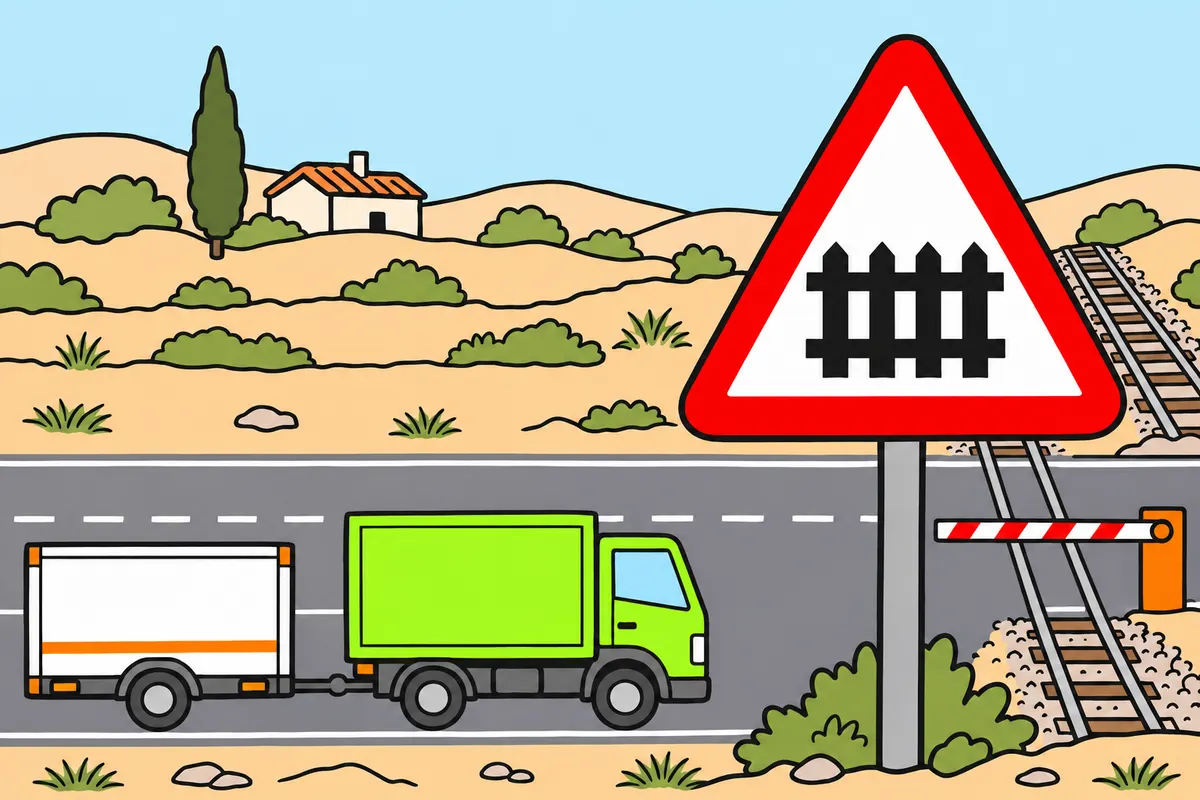
You must recognise hazards from level crossings, vulnerable road users and bad weather.
| Sign or case | What you must do |
|---|---|
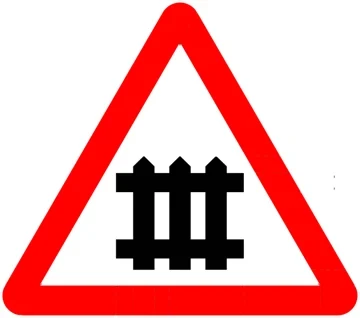
| P-7 | Expect a level crossing with full or half barriers |
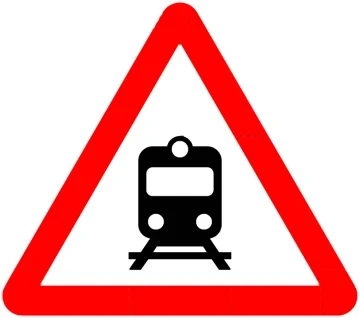
| P-8 | Expect a level crossing without barriers |
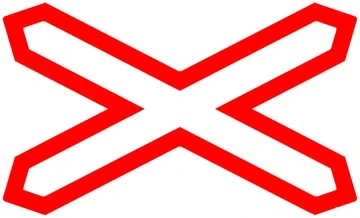
| P-11 | A level crossing without barriers is immediately ahead |
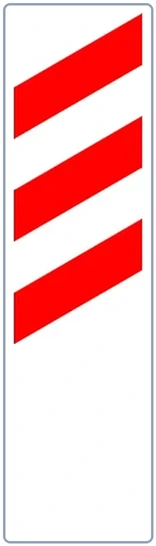
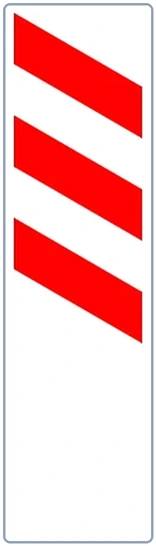
| Three stripes | 200 m to a level crossing, opening bridge or quayside |
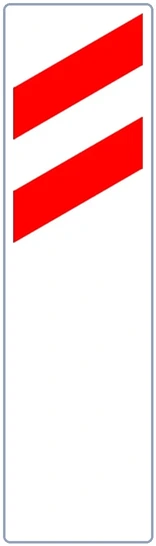
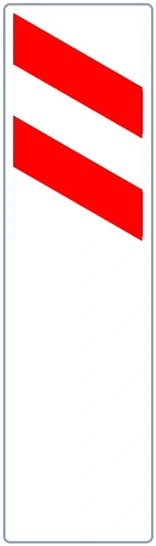
| Two stripes | 150 m to a level crossing, opening bridge or quayside |
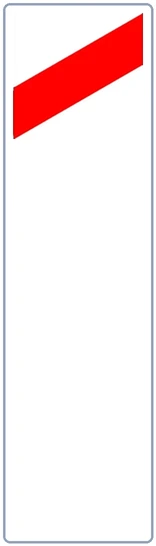
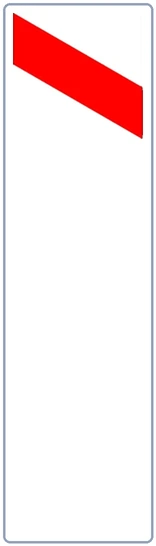
| One stripe | 100 m to a level crossing, opening bridge or quayside |
Remember
- Prepare to stop or give way before reaching the hazard.
- Watch the sides of your cab and your trailer’s path.
- Warnings showing people do not all mean crossings with identical priority.
- In crosswinds, consider your combination’s height and side area.
- An ice or snow warning does not replace a separate equipment requirement.
Exam trap: Wrong: every warning showing people marks a priority crossing. Right: anticipate danger and apply the specific local rules.
Read the full explanation
- P-7 warns of a level crossing with barriers or half-barriers; P-8 warns of one without them. P-11 marks the immediate location of a level crossing without barriers. [RGC, Annex I.5](https://www.boe.es/buscar/act.php?id=BOE-A-2003-23514#A5).
- The P-9a, P-9b and P-9c countdown markers on the right indicate 200, 150 and 100 m to a level crossing, opening bridge or quay. P-10a, P-10b and P-10c serve the same purpose on the left. You must associate three, two and one stripes with these distances. [RGC, Annex I.5](https://www.boe.es/buscar/act.php?id=BOE-A-2003-23514#A5).
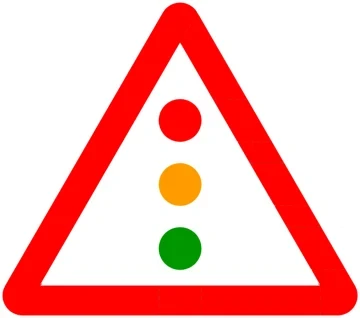
- P-3 warns of traffic lights; P-5 of an opening bridge; and P-6 of a crossing with a tram that has priority. You must prepare to stop or give way as required without waiting until you reach the hazard. [RGC, Annex I.5](https://www.boe.es/buscar/act.php?id=BOE-A-2003-23514#A5).
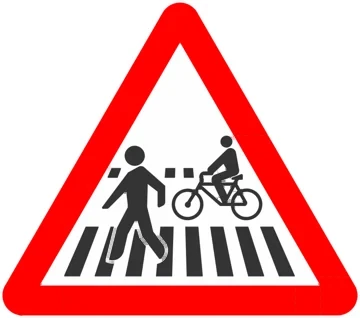
- P-20a warns of pedestrian crossings, P-20b of a place or stretch of road with heavy pedestrian traffic, and P-20c of adjacent or shared pedestrian and cycle crossings. You must also watch the sides of the cab and the path of the trailer; these symbols are not interchangeable. [RGC, Annex I.5](https://www.boe.es/buscar/act.php?id=BOE-A-2003-23514#A5).
- Warnings of children, people with mobility or sensory impairments, cyclists and animals indicate that these road users may be present. They do not all indicate a marked crossing with identical priority: you must adapt your driving to the risk and comply with the specific rules at that location. [RGC, Annex I.5](https://www.boe.es/buscar/act.php?id=BOE-A-2003-23514#A5).
- P-29 warns of strong, frequent crosswinds, which are particularly relevant to tall combinations or those with a large side area. Warnings of reduced visibility and of ice or snow indicate those hazards; R-412 specifies the equipment required. [RGC, Annex I.5](https://www.boe.es/buscar/act.php?id=BOE-A-2003-23514#A5).
 P-7
 P-8
 P-11
 P-9a
 P-9b
 P-9c
 P-10a
 P-10b
 P-10c
 P-3
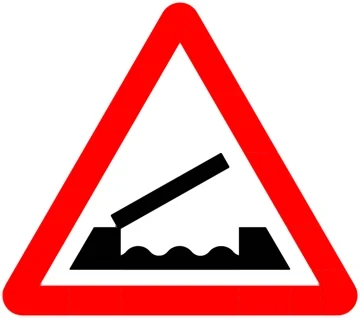 P-5
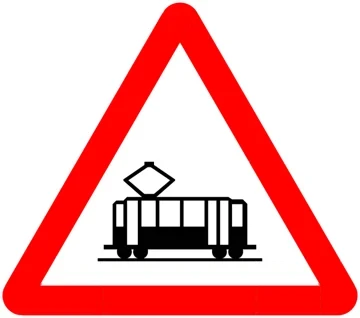 P-6
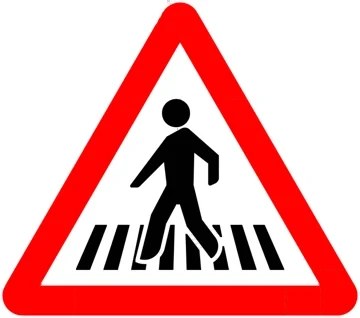 P-20a
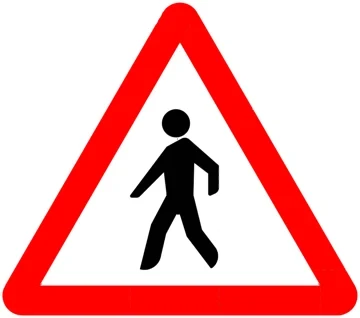 P-20b
 P-20c
 P-29
21Road types and shared areas
You must follow rules for the road type and respect areas with pedestrian priority.
| Sign | Road or area type | How you must drive |
|---|---|---|
| S-1 | Motorway: autopista | Apply its rules |
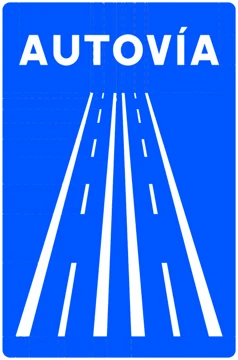
| S-1a | Dual carriageway motorway: autovía | Apply its rules |
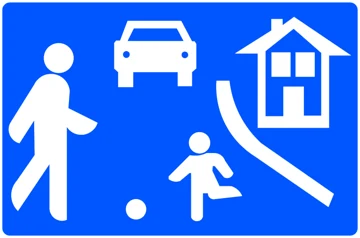
| S-28 | Area for staying and playing | Maximum 10 km/h; pedestrian priority; park only in marked places; games allowed |
| S-47 | Coexistence zone | Maximum 20 km/h; pedestrian priority; park only in designated places; games not authorised |
Remember
- At S-3, you are approaching a road reserved for motor vehicles.
- At S-5, apply tunnel, underpass or equivalent-section rules.
- Check pedestrian-zone access conditions before entering to deliver goods.
- Expect cycles travelling both ways in staying-and-playing areas and coexistence zones, unless otherwise ordered.
- Where applicable, expect personal mobility vehicles travelling both ways too, unless otherwise ordered.
Exam trap: Wrong: games are allowed in coexistence zones as in staying-and-playing areas. Right: games are not authorised in coexistence zones.
Read the full explanation
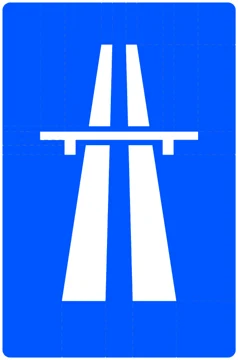
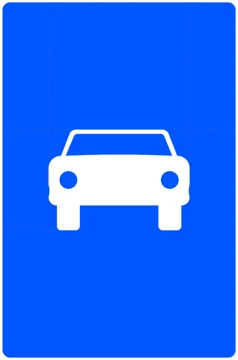
- S-1 indicates an autopista (motorway) and S-1a an autovía (motorway); their end signs mark the end of that road classification. S-3 identifies a road reserved for motor vehicles. Apply the traffic rules for each type of road. [RGC, Annex I.5](https://www.boe.es/buscar/act.php?id=BOE-A-2003-23514#A5).
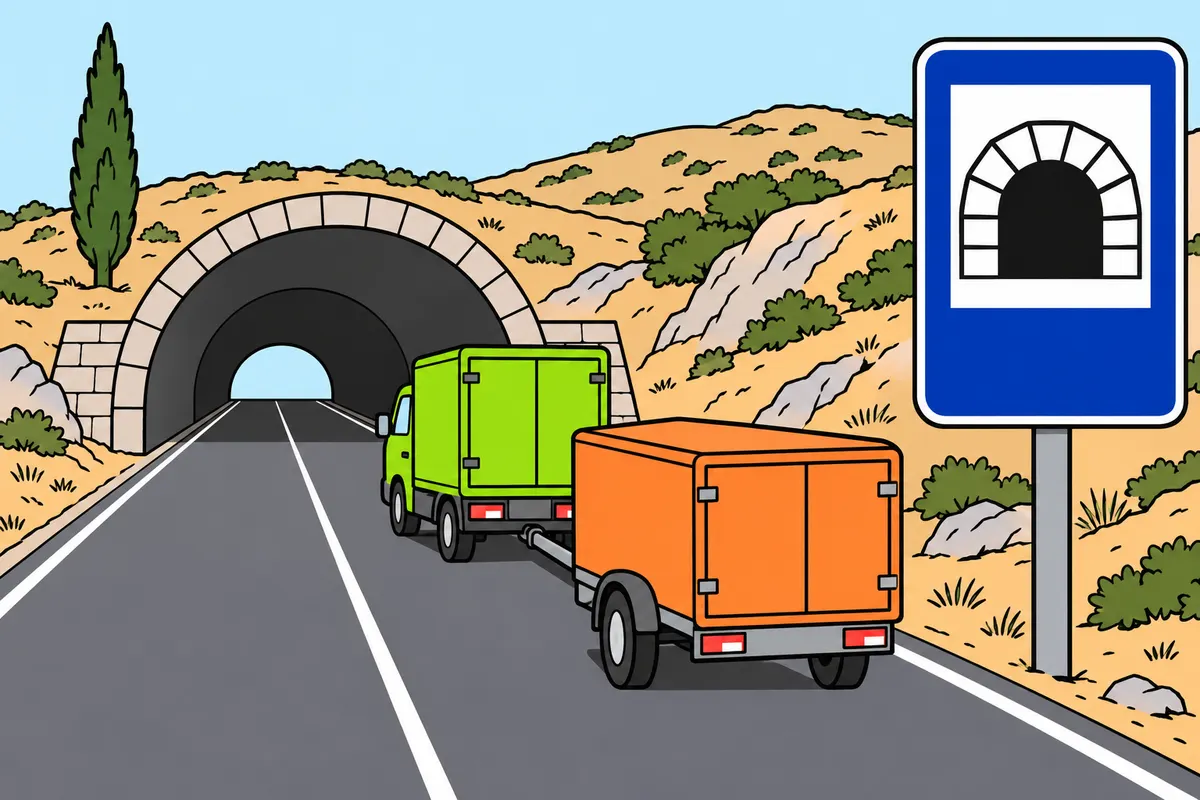
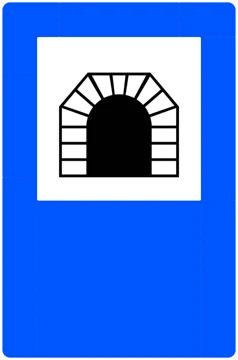
- S-5 identifies a tunnel, underpass or stretch of road treated as one for the purposes of its rules. Pay attention to its entrance and supplementary information. See “Tunnels and underpasses: 150 metres or six seconds” in “Speed and distances for the vehicle combination”. [RGC, Annex I.5](https://www.boe.es/buscar/act.php?id=BOE-A-2003-23514#A5).
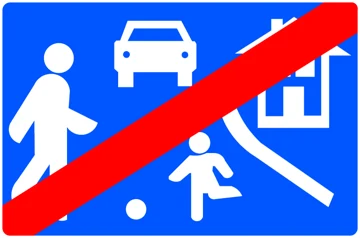
- S-28 marks an area for spending time and playing, with a maximum speed of 10 km/h and pedestrian priority; it is accompanied by an R-301 sign showing 10. You may park only in marked places. Pedestrians may use the whole area, and games and sports are permitted. S-29 marks its end. [RGC, Annex I.5](https://www.boe.es/buscar/act.php?id=BOE-A-2003-23514#A5).
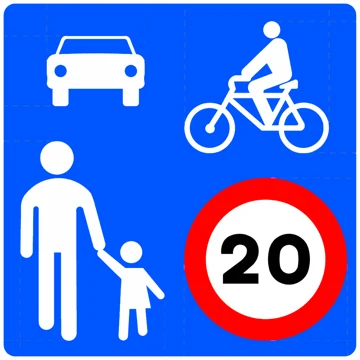
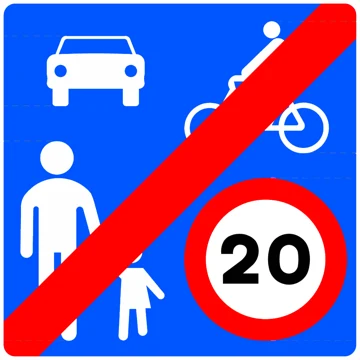
- S-47 marks a shared area: a maximum speed of 20 km/h, pedestrian priority and parking only in designated places. Pedestrians may use the whole area, but games and sports are not authorised. S-48 marks its end. [RGC, Annex I.5](https://www.boe.es/buscar/act.php?id=BOE-A-2003-23514#A5).
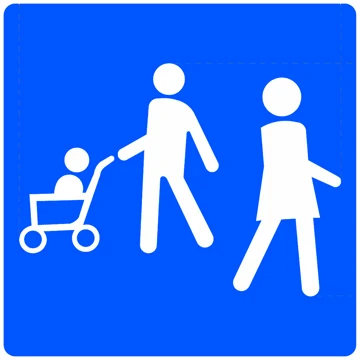
- S-30a identifies a pedestrian zone. You must check the access conditions before entering to make a delivery. In areas for spending time and playing and in shared areas, cycles and, where applicable, VMP (personal mobility vehicles) may travel in both directions unless the authority specifies otherwise; you must anticipate their presence. [RGC, Annex I.5](https://www.boe.es/buscar/act.php?id=BOE-A-2003-23514#A5).
 S-1
 S-1a
 S-3
 S-5
 S-28
 S-29
 S-47
 S-48
 S-30a
22Emergencies, services and directions
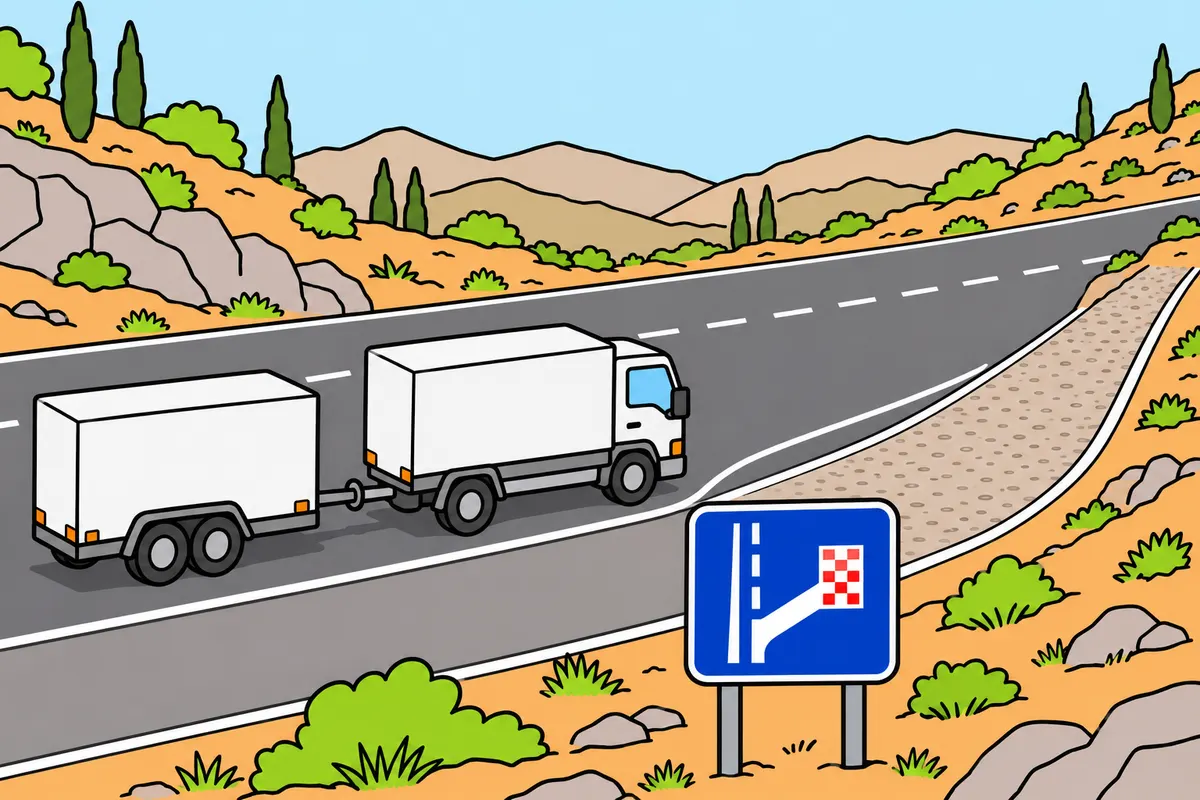
You must use service and direction signs while respecting your combination’s restrictions.
| Sign or case | What you must do |
|---|---|
| S-16 | Use the emergency escape area if your brakes fail |
| S-34 | You may pull over in an emergency to keep the way clear |
| S-34a | A tunnel emergency lay-by with an emergency telephone |
| S-13 | Locate the pedestrian crossing |
| S-15a | Plan how to leave a no-through carriageway with your trailer |
Remember
- Locate emergency entrances and keep them clear.
- At S-21, read open, closed and restricted conditions for your vehicle category.
- Permission for a car does not mean permission for your combination.
- Also follow speed, equipment and access signs.
- Choose your lane early and respect hatched areas.
- Your destination does not guarantee suitable access for your combination’s mass or size.
Exam trap: Wrong: follow a car because the mountain pass is open to it. Right: check restrictions for your category.
Read the full explanation
- S-16 identifies an emergency escape lane for stopping a vehicle with brake failure. On descents, locate its entrance and keep it clear for anyone who needs to use it. [RGC, Annex I.5](https://www.boe.es/buscar/act.php?id=BOE-A-2003-23514#A5).
- S-34 indicates a place where you can pull your vehicle aside in an emergency to keep the route clear. S-34a additionally indicates that it is a lay-by in a tunnel with an emergency telephone. [RGC, Annex I.5](https://www.boe.es/buscar/act.php?id=BOE-A-2003-23514#A5).
- S-21 tells you whether the stretch of road or mountain pass named at the top is open to traffic. You must read the road status and restrictions for each vehicle category. Permission for a car to continue with winter equipment does not mean that your C1+E combination is authorised to do so. [RGC, Annex I.5](https://www.boe.es/buscar/act.php?id=BOE-A-2003-23514#A5).
- At S-21, you must consider the open, closed or restricted status together with any speed, equipment or access signs it displays. [RGC, Annex I.5](https://www.boe.es/buscar/act.php?id=BOE-A-2003-23514#A5).
- Service signs show where to find fuel, assistance, a telephone or a rest area. You must check that the access allows your combination. S-13 marks a pedestrian crossing; S-15a warns of a no-through road, where you must plan how to get out with the trailer. [RGC, Annex I.5](https://www.boe.es/buscar/act.php?id=BOE-A-2003-23514#A5).
- Advance direction signs allow you to prepare for your exit; direction signs show which way to follow towards your destination; and confirmation signs remind you of destinations and distances. You must choose your lane in advance: seeing your destination on a sign does not authorise you to cross a hatched area. [RGC, Annex I.5](https://www.boe.es/buscar/act.php?id=BOE-A-2003-23514#A5).
- Signs may show the destination and road identification; you must comply with the restrictions along the route. Built-up area entry and exit signs mark where the rules for built-up areas apply. Do not assume that a route to your destination allows vehicles of any mass or dimensions. [RGC, Annex I.5](https://www.boe.es/buscar/act.php?id=BOE-A-2003-23514#A5).
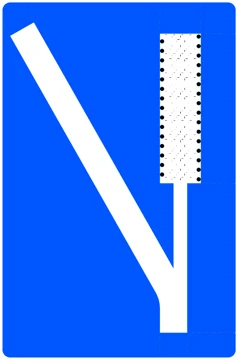 S-16
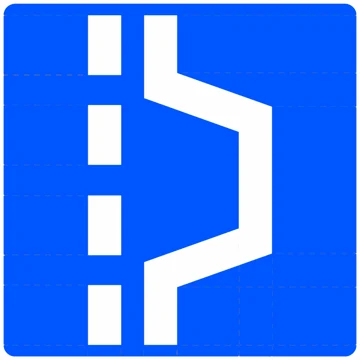 S-34
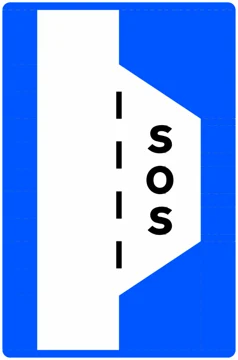 S-34a
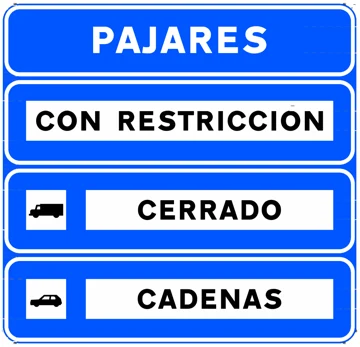 S-21
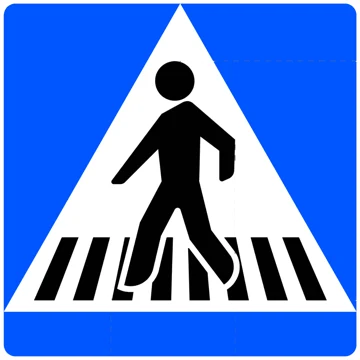 S-13
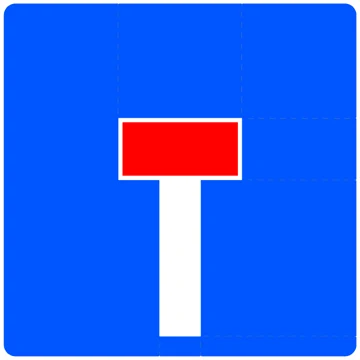 S-15a
23Supplementary plates and lane controls
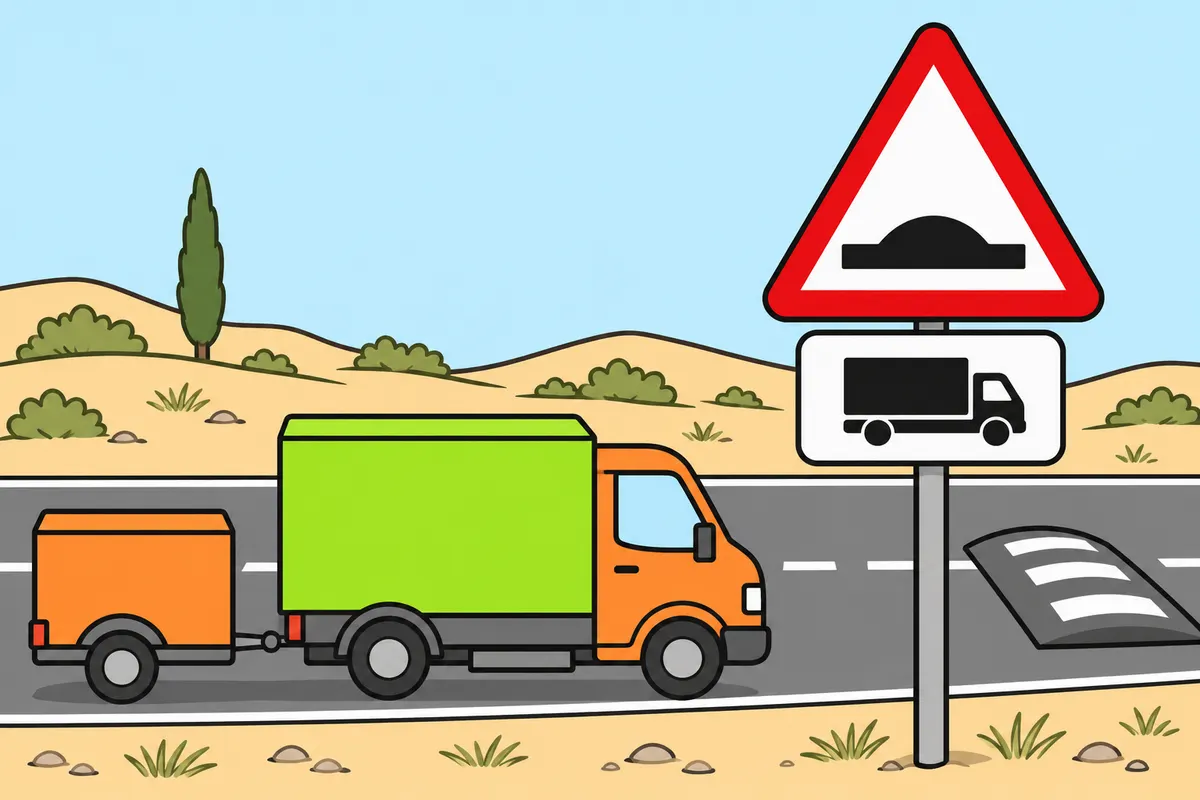
You must read supplementary plates with signs to understand their scope.
| Sign or case | What you must do |
|---|---|
| S-800 | Shows distance to the start of a hazard or requirement |
| S-810 | Shows the length of the affected section |
| S-880 without EXCEPTO | Applies the sign to the vehicle type shown |
| S-880 with EXCEPTO | Exempts the vehicle type shown |
| S-860 | Specifies other conditions |
Remember
- Check units, arrows and the sign above.
- Below a narrowing warning, S-800 can also show clear width.
- With S-840 below Give way, prepare for a STOP ahead.
- Follow your lane’s closures, reserved uses, directions and speeds.
- Do not use the VAO lane with your combination, even with more occupants.
Exam trap: Wrong: confuse starting in 800 m with lasting 800 m. Right: distinguish S-800 from S-810.
Read the full explanation
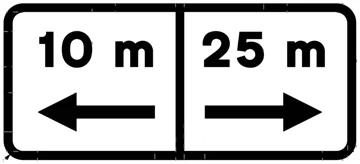
- S-800 indicates the distance to the start of the hazard or requirement; S-810 indicates the length of the affected stretch. With a plate showing 800 m, you must identify which of the two it is: a restriction starting in 800 m is different from one continuing for 800 m. [RGC, Annex I.5](https://www.boe.es/buscar/act.php?id=BOE-A-2003-23514#A5).
- Below a road-narrows warning, S-800 may also indicate the available width. S-820 and S-821 specify the extent of a prohibition in one direction; S-830 specifies its extent in both directions. You must pay attention to the units, arrows and sign above. [RGC, Annex I.5](https://www.boe.es/buscar/act.php?id=BOE-A-2003-23514#A5).
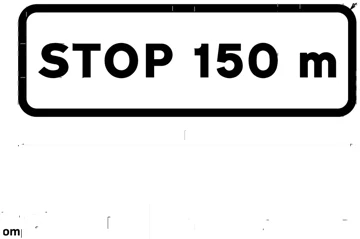
- S-840, below a give way sign, gives advance warning of a STOP and shows the distance to it. You must prepare to stop at the STOP ahead. [RGC, Annex I.5](https://www.boe.es/buscar/act.php?id=BOE-A-2003-23514#A5).
- S-880 limits the sign to the type of vehicle depicted; with the word EXCEPTO (EXCEPT), it excludes that category. S-860 allows other conditions to be specified. [RGC, Annex I.5](https://www.boe.es/buscar/act.php?id=BOE-A-2003-23514#A5).
- Lane signs may specify speeds, reserved use, directions of travel or closures for particular lanes. Follow the indications for your lane and the vehicle categories allowed. [RGC, Annex I.5](https://www.boe.es/buscar/act.php?id=BOE-A-2003-23514#A5). Your combination is prohibited from using the VAO (high-occupancy vehicle) lane, regardless of how many occupants it carries. [RGC, art. 35.2.a](https://www.boe.es/buscar/act.php?id=BOE-A-2003-23514#a35). To change lanes safely, see “Changing lanes with a combination” in “Manoeuvres with a light lorry and trailer”.
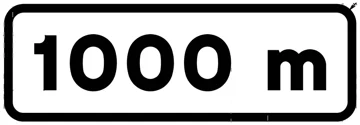 S-800
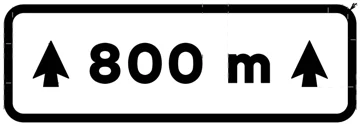 S-810
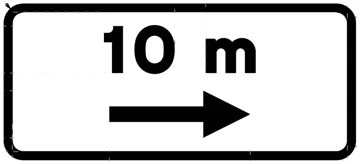 S-820
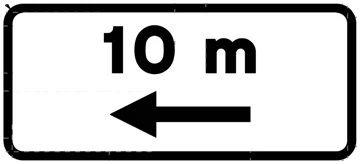 S-821
 S-830
 S-840
24White longitudinal lines
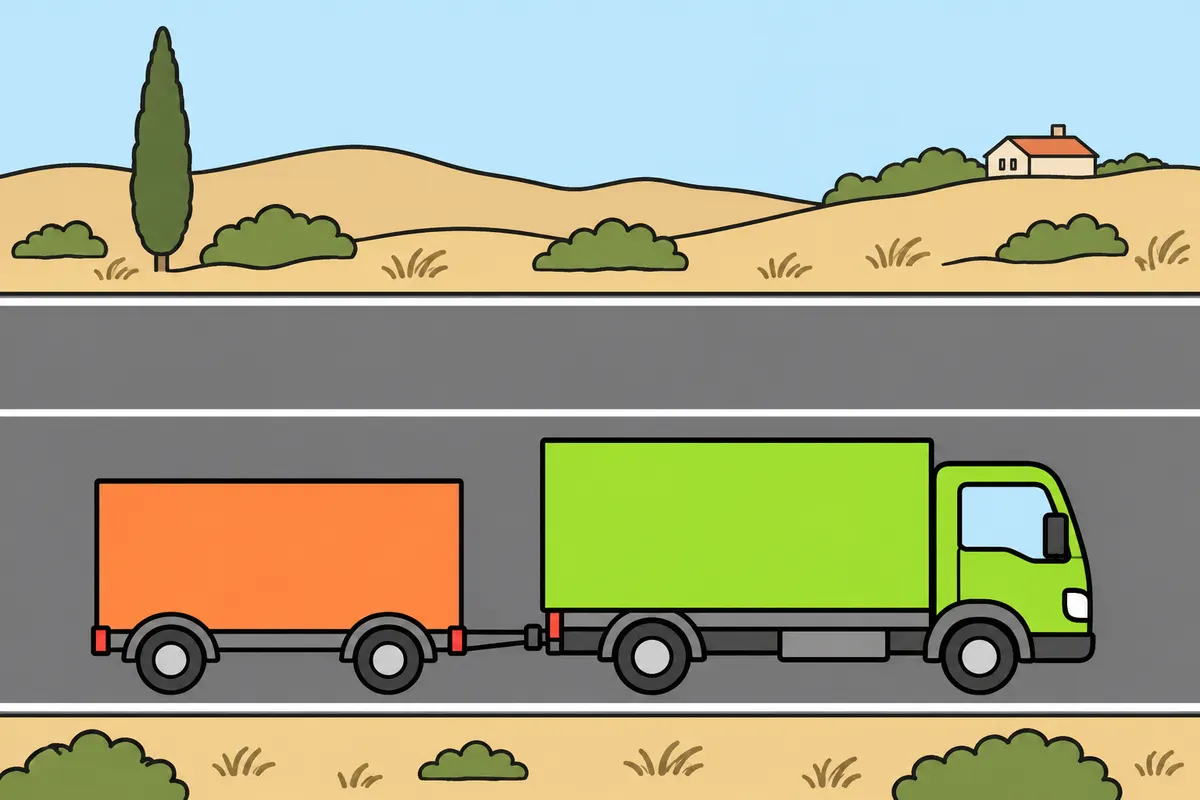
You must understand lane lines before crossing them or changing lanes.
| Sign or case | What you must do |
|---|---|
| Broken line | Cross for permitted manoeuvres, respecting road users in the destination lane |
| Solid line | Do not cross or drive along it, except for regulatory exceptions |
| Double solid lines | Mean the same as a single solid line |
| Solid beside broken | Follow the line on your side |
Remember
- Do not drive along broken lines unless lane width requires it and safety permits.
- If solid lines separate opposing traffic, stay right of them unless legally excepted.
- Double broken lines mark reversible lanes; check the permitted direction.
- A solid edge line does not make the hard shoulder an ordinary lane.
- Cross it only occasionally for emergencies under the permitted conditions.
Exam trap: Wrong: a solid line beside a broken line always prevents returning. Right: you may cross it to return after completing or abandoning overtaking begun from the broken-line side.
Read the full explanation
- The broken lines M-1.1 to M-1.3 mark lane boundaries. You may cross them for permitted manoeuvres, giving way to road users already in the lane you intend to enter; you must not drive along them unless the width of the lanes requires it and it is safe to do so. [RGC, Annex I.5](https://www.boe.es/buscar/act.php?id=BOE-A-2003-23514#A5).
- The solid lines M-2.1 to M-2.3 prohibit crossing them or driving along them; if they separate opposing traffic flows, they also prohibit driving to their left, subject to the exceptions in the regulations. Two parallel solid lines have the same meaning as a single one: they do not multiply the prohibition or allow you to drive between them. [RGC, Annex I.5](https://www.boe.es/buscar/act.php?id=BOE-A-2003-23514#A5).
- Where a solid line runs alongside a broken line, you must follow the line on your side. If you start overtaking from the broken-line side, you may cross the solid line to return to your lane when you complete or abandon the manoeuvre. [RGC, Annex I.5](https://www.boe.es/buscar/act.php?id=BOE-A-2003-23514#A5).
- The double broken lines M-1.4 and M-1.5 mark reversible lanes; their direction of travel is determined by lane-control traffic lights or other means. [RGC, Annex I.5](https://www.boe.es/buscar/act.php?id=BOE-A-2003-23514#A5).
- M-1.8 gives advance warning of a fork or merging traffic; M-1.9 and M-1.10 give advance warning of a solid line or a particular hazard. Lines separating lanes with specific uses may have a different thickness: you must interpret the function of the lane without assuming that every different marking opens a lane to lorries. [RGC, Annex I.5](https://www.boe.es/buscar/act.php?id=BOE-A-2003-23514#A5).
- You may occasionally cross the solid carriageway edge line in an emergency to enter the arcén (hard shoulder), under the conditions set out in the sign catalogue; this does not make the hard shoulder an ordinary lane for your combination or allow you to avoid a traffic queue. [RGC, Annex I.5](https://www.boe.es/buscar/act.php?id=BOE-A-2003-23514#A5).
25Transverse lines and painted signs
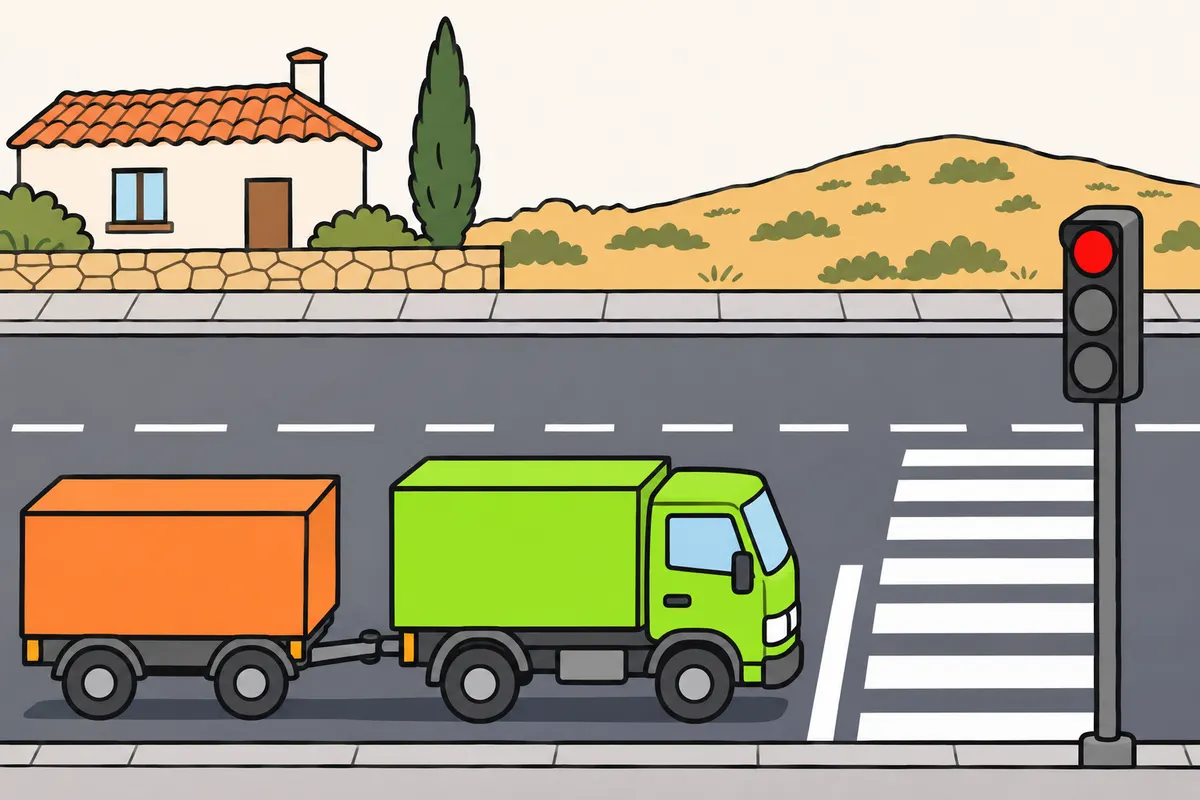
You must obey painted instructions and stop in the correct place.
| Sign or case | What you must do |
|---|---|
| Painted STOP | Stop before the line or, without one, before the carriageway; then give way |
| Painted give way triangle | Give way and stop if necessary |
| Painted maximum speed | Do not exceed that speed |
Remember
- When required to stop, keep your towing vehicle before the solid transverse line.
- At a give way line, stop if necessary to respect priority.
- If unusually poor visibility prevents checking, advance only as far as essential.
- Then stop where you can see, without endangering anyone.
- At a marked cycle crossing, give way to cyclists.
- Painted signs within a marked lane apply to that lane; check reserved spaces.
Exam trap: Wrong: a painted maximum speed only advises you. Right: it is a compulsory limit.
Read the full explanation
- M-4.1, a continuous transverse line, marks the point where you must stop when required by a STOP sign, traffic light, officer or other traffic control. You must keep the towing vehicle behind it when required to stop, without encroaching on the crossing it protects. [RGC, Annex I.5](https://www.boe.es/buscar/act.php?id=BOE-A-2003-23514#A5).
- M-4.2, a broken transverse line, marks the point where you must give way when required. You must stop if necessary to respect priority. If abnormal circumstances obstruct your view, you may move forward only as far as necessary to check and stop where you can see, without endangering others. [RGC, Annex I.5](https://www.boe.es/buscar/act.php?id=BOE-A-2003-23514#A5).
- M-4.3 marks a pedestrian crossing with broad stripes. M-4.4 marks a cycle crossing with two parallel broken lines, where you must give way to cyclists. Traffic-light-controlled pedestrian crossings may also be marked with broken lines: you must read all the signs and markings at the junction. [RGC, Annex I.5](https://www.boe.es/buscar/act.php?id=BOE-A-2003-23514#A5).
- The painted STOP marking, M-6.3 or M-6.4, requires you to stop before the line or, if there is no line, immediately before the carriageway, and then give way. M-6.5, the give-way triangle, requires you to give way and stop if necessary. [RGC, Annex I.5](https://www.boe.es/buscar/act.php?id=BOE-A-2003-23514#A5).
- The painted maximum speed marking M-6.6 or M-6.7 is a limit, not a recommendation. Road markings within a marked lane apply to you when you drive in that lane. [RGC, Annex I.5](https://www.boe.es/buscar/act.php?id=BOE-A-2003-23514#A5).
- Markings with pictograms may indicate an area reserved for certain users, priority for certain users or a parking purpose. You must check their full meaning, without assuming that every bicycle symbol imposes the same prohibition or allowing your trailer to occupy spaces reserved for other vehicles. [RGC, Annex I.5](https://www.boe.es/buscar/act.php?id=BOE-A-2003-23514#A5).
26Arrows, hatching and waiting areas
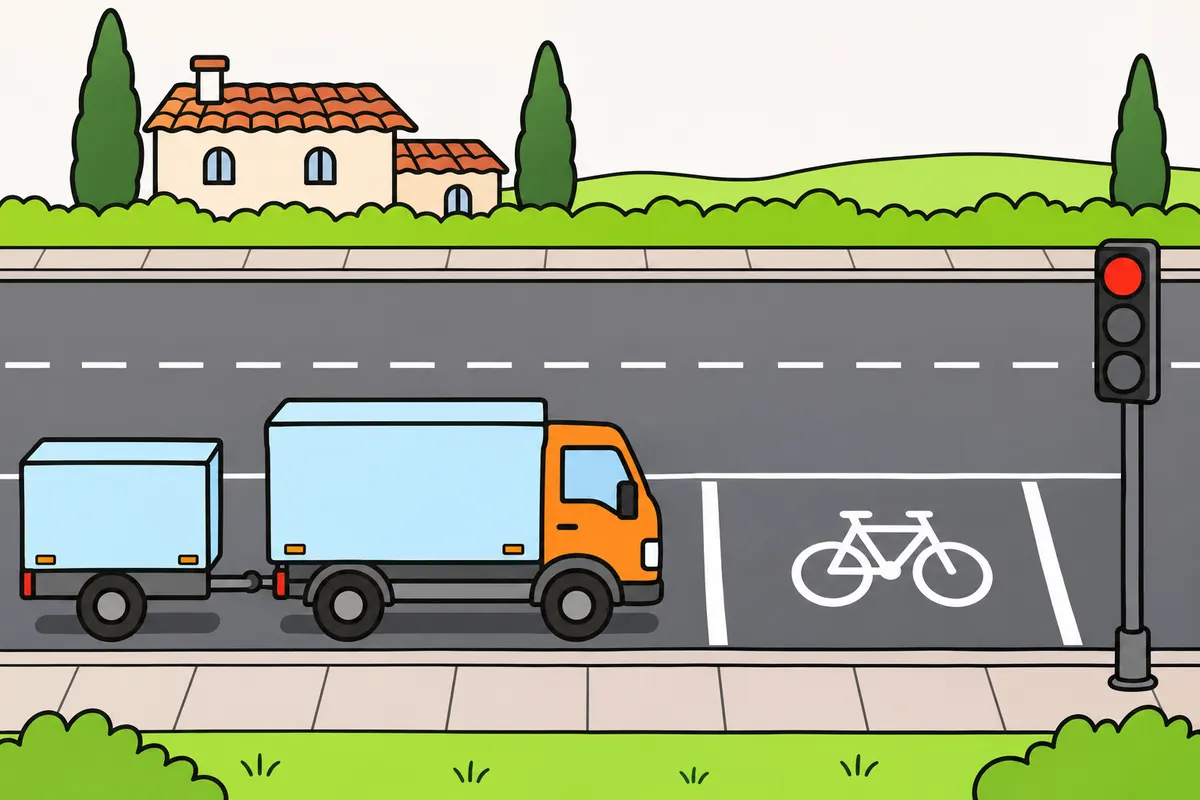
You must follow arrows and keep reserved areas clear.
| Sign or case | What you must do |
|---|---|
| Lane-end arrow | Leave the lane in the indicated direction |
| Return arrow | Do not start overtaking; complete an overtake already started as soon as possible |
| Turning arrow | Follow the indicated movement at the junction |
Remember
- Plan your whole combination’s movement and respect road users in the destination lane.
- If an arrow allows straight ahead, you may change lanes where lines permit.
- Approaching roundabouts, check which exits your chosen lane allows.
- In your lorry, stop before advanced cycle or motorcycle waiting areas.
- Do not occupy these reserved areas with your cab.
Exam trap: Wrong: cross solid-bordered hatching to reach your exit. Right: do not enter that area with your lorry.
Read the full explanation
- Lane selection arrows indicate the movements permitted or required from the lane. If they include straight ahead, they do not prevent you from changing lanes while continuing in the same direction where the lines allow it. You must plan the movement of the whole combination and respect those occupying the lane you intend to enter. [RGC, Annex I.5](https://www.boe.es/buscar/act.php?id=BOE-A-2003-23514#A5).
- M-5.4, the lane-end arrow, warns that you must leave the lane in the direction indicated. M-5.5, the return arrow, warns of a continuous line that prohibits driving to its left: you must abandon any intention to start overtaking or complete an overtaking manoeuvre already in progress as soon as possible. [RGC, Annex I.5](https://www.boe.es/buscar/act.php?id=BOE-A-2003-23514#A5).
- The lane-end arrow warns that the lane ends; a turn arrow controls movement at the junction. Special arrows on approaches to roundabouts with lane selection indicate the exits you can take when entering in that lane; observe their layout and the supplementary signs and markings. [RGC, Annex I.5](https://www.boe.es/buscar/act.php?id=BOE-A-2003-23514#A5).
- The hatched areas M-7.1 and M-7.2 bounded by a continuous line are areas you must not enter with your vehicle, subject to the exception for users required to travel on the arcén (hard shoulder). [RGC, Annex I.5](https://www.boe.es/buscar/act.php?id=BOE-A-2003-23514#A5).
- In an avanza-bici (advanced cycle stop area) or avanza-motos (advanced motorcycle stop area), the space before the red traffic light is reserved for the vehicles depicted. It is bounded by two continuous transverse lines 4 m apart. In your lorry, you must stop before the line protecting the reserved area, without allowing the cab to occupy it. [RGC, Annex I.5](https://www.boe.es/buscar/act.php?id=BOE-A-2003-23514#A5).
27Yellow markings and other reference markings
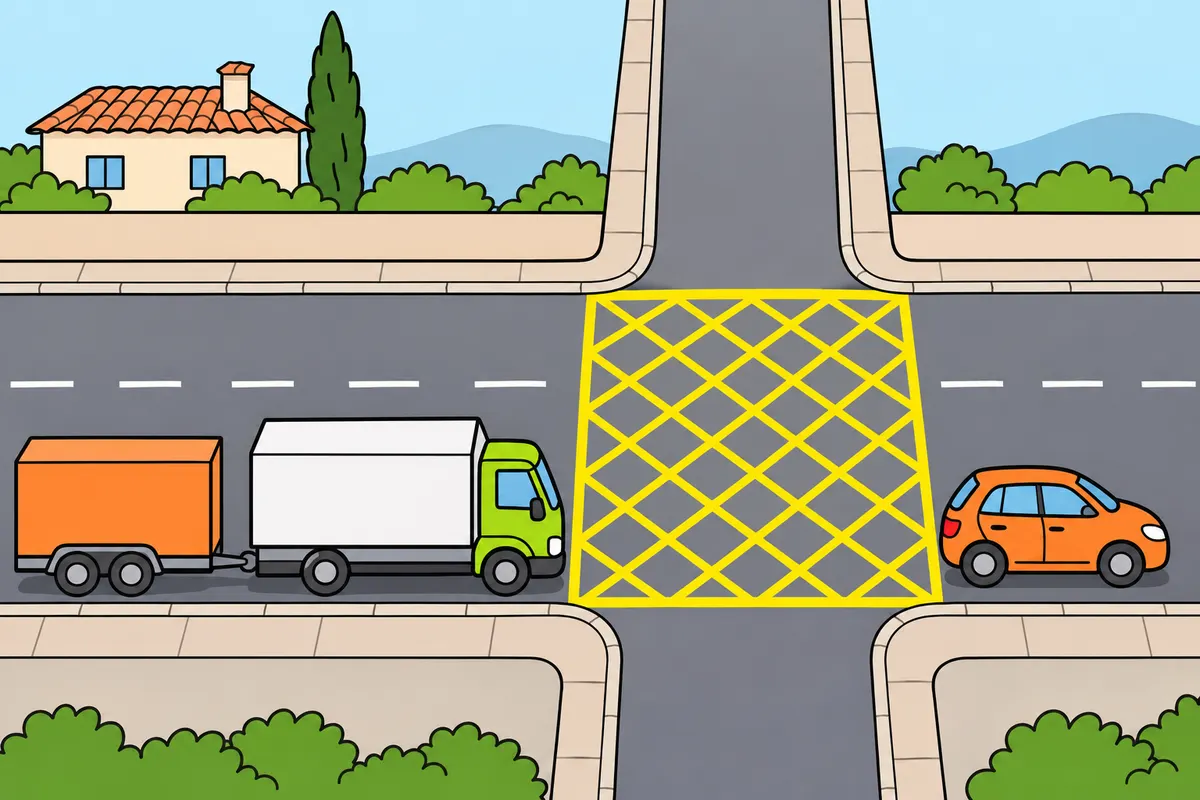
You must distinguish prohibitions, reservations and warnings without inventing limits.
| Sign or case | What you must do |
|---|---|
| Broken yellow edge line | Do not park |
| Solid yellow edge line | Do not stop or park |
| Yellow zigzag | Do not park while the reservation applies |
| White and red chequered marking | Do not stop, park or use the escape bed for other purposes |
Remember
- Check whether a sign limits a yellow-line prohibition to particular times.
- At zigzags, respect the reserved use and other signs before stopping.
- Carrying goods does not let you unload at a bus stop.
- Even at green, stay outside yellow boxes if you would block crossing traffic.
- Blue parking markings do not set identical times or durations throughout Spain.
- At warning markings, adapt your driving without inventing a maximum speed.
Exam trap: Wrong: always park overnight on a zigzag. Right: only park if signed conditions suspend the reservation and no other prohibition applies.
Read the full explanation
- M-7.7, a broken yellow line alongside the road edge or kerb, prohibits parking; M-7.8, a continuous yellow line, prohibits stopping and parking. You must check whether an upright sign at the start of the section limits the prohibition to certain periods. [RGC, Annex I.5](https://www.boe.es/buscar/act.php?id=BOE-A-2003-23514#A5).
- M-7.9, a yellow zigzag, prohibits parking by vehicles in general because it reserves the area for short stays, such as buses or loading and unloading. It does not allow you to leave the combination overnight unless the signed conditions mean that the reservation does not apply during that period. [RGC, Annex I.5](https://www.boe.es/buscar/act.php?id=BOE-A-2003-23514#A5).
- The zigzag alone does not prohibit every stop by every user, but neither does it give everyone permission to stop. You must respect the purpose of the reserved area and the other signs: carrying goods does not turn a bus stop into an unloading area. [RGC, Annex I.5](https://www.boe.es/buscar/act.php?id=BOE-A-2003-23514#A5).
- M-7.10, a yellow box marking, reminds you that you must not enter if you are likely to block crossing traffic, even if you have a green light or priority. Allow space for the full length of the combination and wait outside when you cannot clear the junction completely. [RGC, Annex I.5](https://www.boe.es/buscar/act.php?id=BOE-A-2003-23514#A5).
- M-7.11, a red and white chequered marking, marks the start of an emergency escape bed. It prohibits stopping, parking or using that surface for other purposes. M-7.12 provides a reference for maintaining the minimum separation in tunnels and other hazardous sections. [RGC, Annex I.5](https://www.boe.es/buscar/act.php?id=BOE-A-2003-23514#A5).
- Parking markings may use colours and pictograms to specify time restrictions, users or purposes. You must check the conditions of a zona azul (blue parking zone) and how to show compliance; the colour alone does not establish uniform operating hours or a uniform parking duration throughout Spain. [RGC, Annex I.5](https://www.boe.es/buscar/act.php?id=BOE-A-2003-23514#A5).
- M-8.1, dragon’s teeth, warns that you are approaching a stretch of road through a town or an urban road; M-8.2, zigzag edge markings, warns of a pedestrian or cycle crossing; M-8.3, a speed-reduction chequered marking, warns of a hazard requiring you to slow down and pay attention. You must adapt your driving without inventing a numerical limit that these markings do not set. [RGC, Annex I.5](https://www.boe.es/buscar/act.php?id=BOE-A-2003-23514#A5).
28Unsigned narrow sections and steep gradients
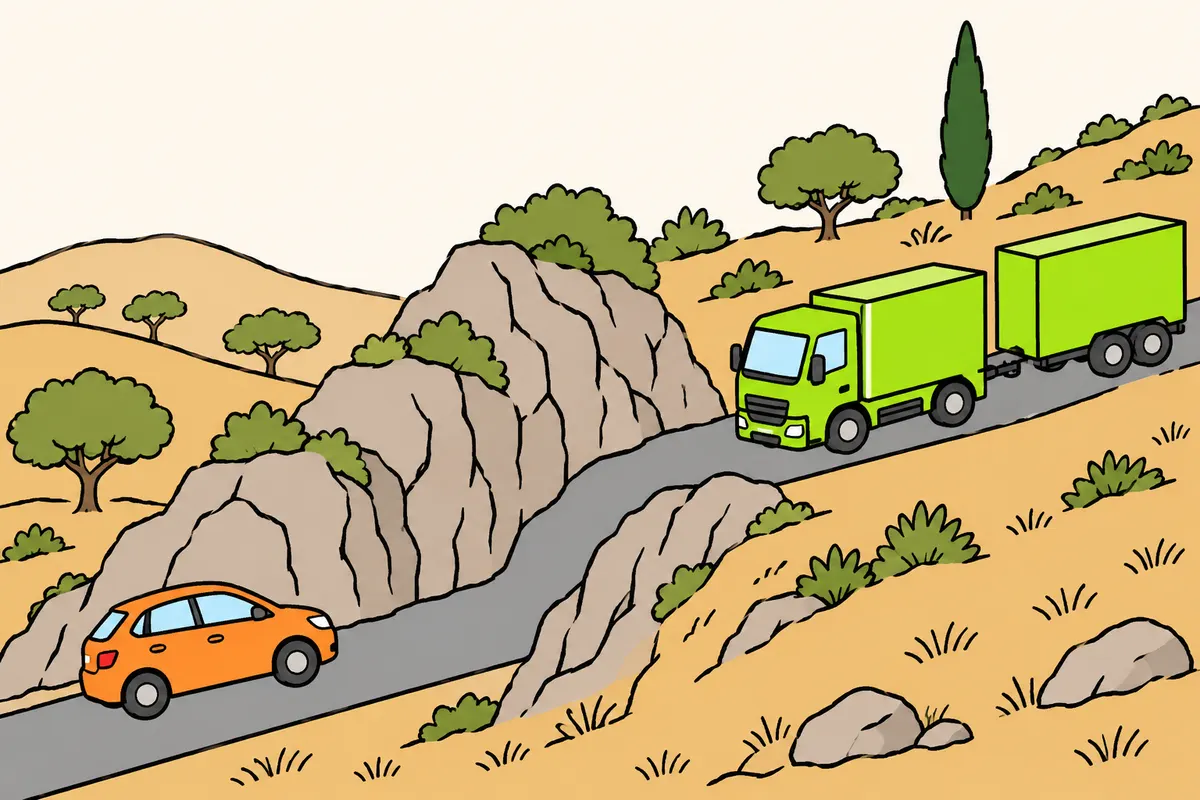
You must distinguish gradient and narrowing warnings from signs that set priority.
| Sign | What you must expect |
|---|---|
| P-16a | A steep descent |
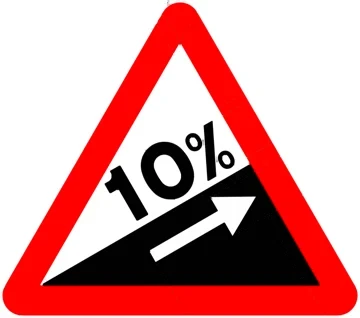
| P-16b | A steep ascent |
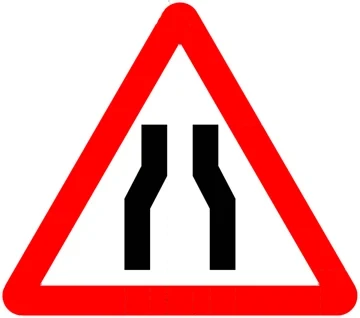
| P-17 | A narrowing carriageway |
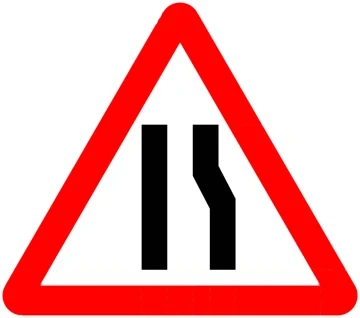
| P-17a | Narrowing on the right, possibly on the hard shoulder too |
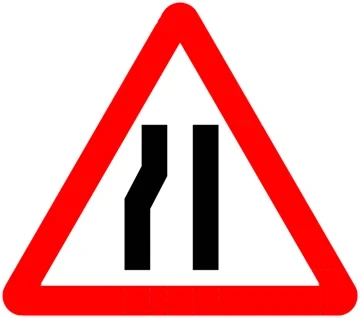
| P-17b | Narrowing on the left, possibly on the hard shoulder too |
| R-5 | You must give way to oncoming traffic |
| R-6 | You have priority over oncoming traffic |
Remember
- The gradient figure shows a percentage, not degrees or speed.
- Check the indicated side to plan space for your lorry and trailer.
- Narrowing may affect the carriageway or the hard shoulder on the indicated side.
- A narrowing warning alone does not set a maximum width.
- For passing rules, see “Narrow passages, bridges and steep gradients” in:
- “Manoeuvres with a light lorry and trailer”.
Exam trap: Wrong: a narrowing warning decides who goes first. Right: distinguish the hazard from priority signed by R-5 or R-6.
Read the full explanation
- You study the rules for negotiating narrow sections without specific signs, bridges and steep gradients in «Narrow passages, bridges and steep gradients», within «Manoeuvres with a light lorry and trailer».
- P-16a warns of a steep descent and P-16b of a steep ascent; the figure expresses the gradient as a percentage, not in degrees or as a maximum speed. To prepare auxiliary braking for the combination on a descent, see «Long descents: prepare your speed» in «Braking the trailer and the vehicle combination». [RGC, Annex I.5](https://www.boe.es/buscar/act.php?id=BOE-A-2003-23514#A5).
- P-17 warns that the carriageway narrows; P-17a indicates narrowing on the right and P-17b on the left. P-17a and P-17b may also warn of a reduction in the width of the hard shoulder on the corresponding side. You must interpret the side depicted to anticipate the space available for your lorry and trailer. [RGC, Annex I.5](https://www.boe.es/buscar/act.php?id=BOE-A-2003-23514#A5).
- The narrowing warning describes the hazard; signed priority between opposing directions is established by R-5 and R-6, explained in «Give way, STOP and signed priority». [RGC, Annex I.5](https://www.boe.es/buscar/act.php?id=BOE-A-2003-23514#A5).
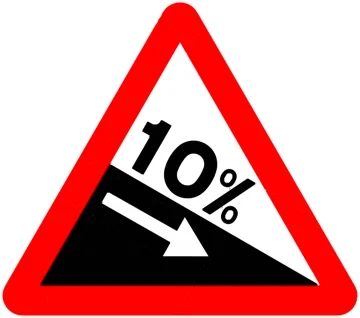 P-16a
 P-16b
 P-17
 P-17a
 P-17b
Resolve several instructions
Check who each sign or signal applies to before applying the hierarchy.
- Identify your lane and the movement you want to make.
- Read the applicable signs and their supplementary plates, including officers' instructions.
- If instructions conflict, apply this order: officer; temporary signs and priority guidance devices; traffic light; upright sign; road marking.
- If signs or signals of the same type conflict, obey the most restrictive one.
- Continue to obey compatible instructions and check that you can move forward without your trailer causing an obstruction.
Decide whether the combination can enter
Identify the type of restriction and use the relevant specification for the combination.
- Identify the sign and read the exceptions and conditions on its supplementary plate.
- For R-112, check the trailer's axles and its MMA (maximum authorised mass) if a tonnage is shown.
- For R-107, use MMA; for R-201, laden mass; for R-202, mass per axle.
- For R-203, R-204 and R-205, compare length, width and height, including the load.
- If any applicable restriction prevents entry, take a permitted route before you become trapped at the entrance.
Approach a STOP sign
Stopping and giving way are two duties you must fulfil.
- Slow down in good time and locate the stop line and traffic on the priority road.
- Bring the vehicle to a complete stop before the line or, if there is no line, immediately before the junction.
- If, exceptionally, you cannot see, move forward cautiously and stop again where you have a clear view without causing danger.
- Give way to vehicles on the priority road, whichever side they approach from.
- Continue when you can do so without forcing anyone to react abruptly and there is enough space for the whole combination to clear the junction.
Leave a lane that is closing
A lane closure warning requires you to act in good time and does not give you priority to change lanes.
- Recognise the diagonal lane closure arrow, the red cross or the lane-end arrow.
- Identify the lane you must join and check your mirrors and areas with limited visibility.
- Signal your intention and give way to traffic already in the lane you want to join.
- Change lanes safely and check the trailer's path.
- Continue to obey the controls for the new lane.
Check what you know
Real questions from the bank on this topic. Pick an answer to see the explanation.
Finished this module?
Mark it as read and you will see your progress on the theory list.