
Theory · C Licence - Truck · Module 2 of 18
Professional transport documentation
You check the documents for yourself, your lorry and the consignment, ITV (vehicle roadworthiness test) intervals and the authorisations required for professional transport. You distinguish between CAP (Certificate of Professional Competence), the tachograph card, the consignment note and the digital control document, and know what to present at an inspection and when you can be prevented from continuing your journey.
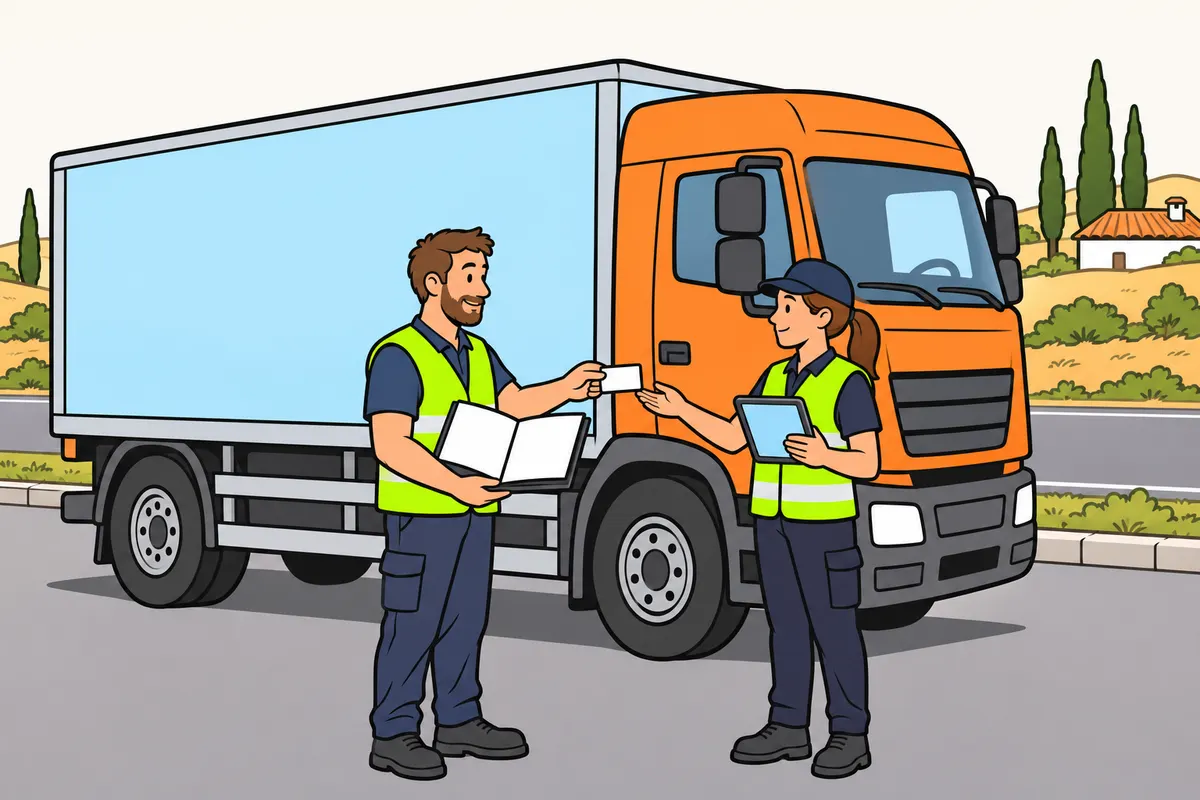
1What each document proves
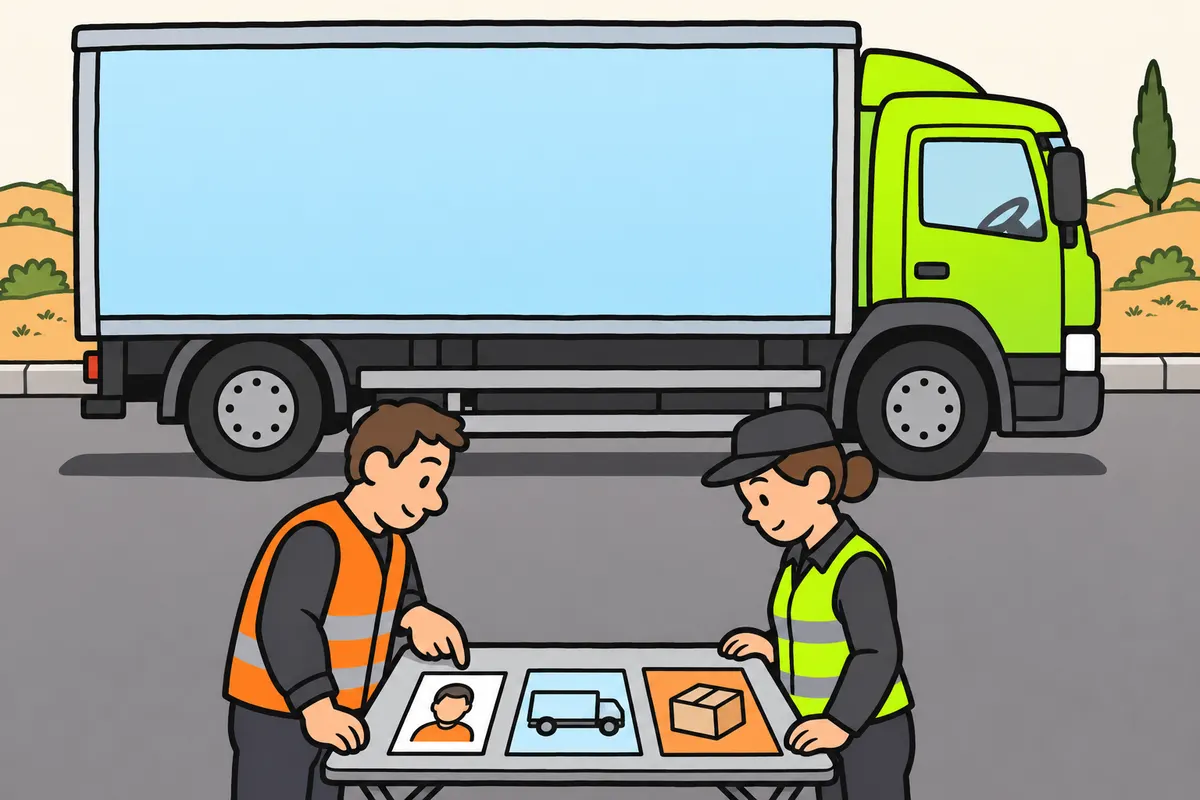
Prepare documents showing who drives, which lorry you use and what transport you carry out.
| Documents for | What you check |
|---|---|
| Driver | Who drives |
| Lorry | Which vehicle you use |
| Transport service | What transport you carry out |
Remember
- Check your documents, the lorry documents and the transport documents.
- Arrange access to electronic documents before you leave.
- You must be able to show required documents during your journey.
- Check whether your journey is domestic or international.
Exam trap: Wrong: keeping documents at the office is enough. Right: you must present them where required.
Read the full explanation
- You must prepare the documentation proving your entitlement to drive, the lorry’s authorisation to use the road and the service you carry out. Organise your personal, technical and consignment documents so that you can find each document when you need it. [RGV, art. 26](https://www.boe.es/buscar/act.php?id=BOE-A-1999-1826). [DGT, mandatory documentation](https://www.dgt.es/nuestros-servicios/tu-vehiculo/documentacion-de-un-vehiculo/que-documentacion-debes-llevar-en-tu-vehiculo).
- The required administrative control documents must accompany the transport operation and be available for inspection. Arrange access to electronic documents before starting the service so that you can present them during the journey. [ROTT, art. 222](https://www.boe.es/buscar/act.php?id=BOE-A-1990-24442#a222).
- You can use the consignment note as an administrative control document if it contains all the mandatory details required for that document; this function relates to the consignment documentation. [Order FOM/2861/2012, art. 3](https://www.boe.es/buscar/act.php?id=BOE-A-2013-154).
- The documents depend on whether you carry goods or passengers and whether the journey is domestic or international; for international transport, you use the control documents required by the agreements to which Spain is a party. [ROTT, art. 222](https://www.boe.es/buscar/act.php?id=BOE-A-1990-24442).
2Basic documents you carry when driving
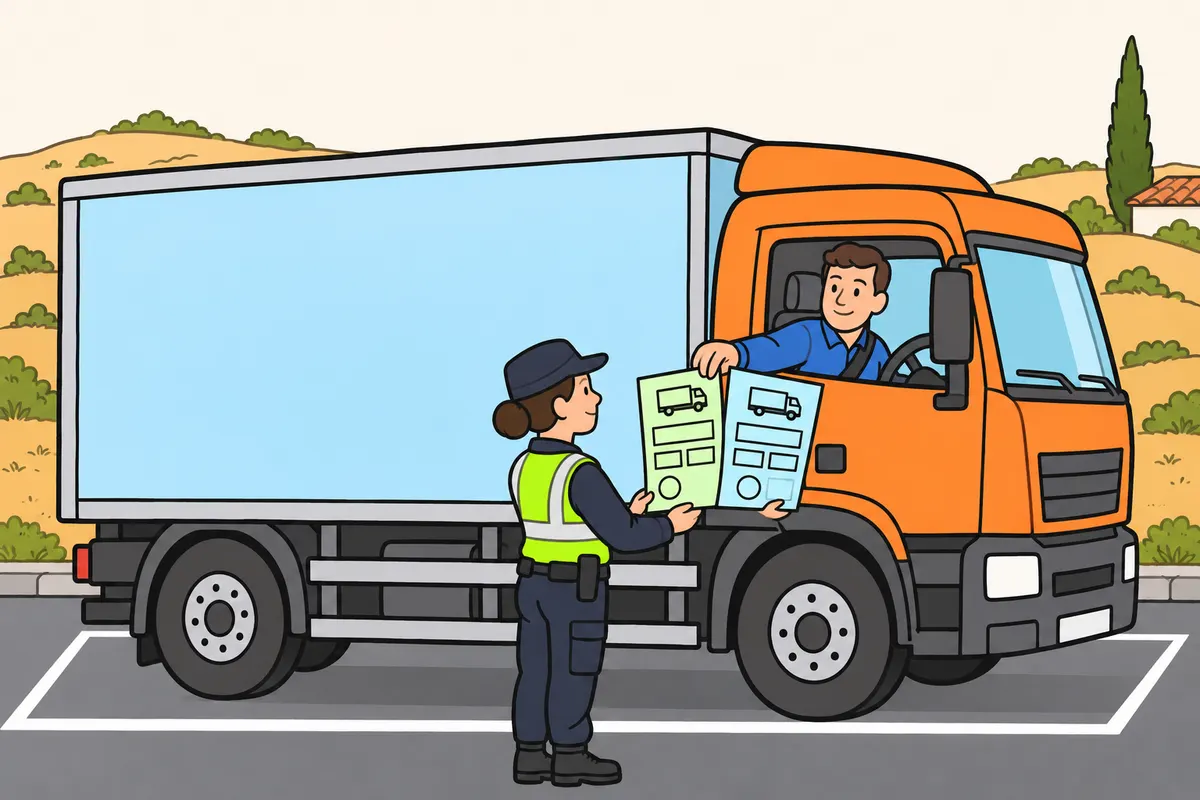
Carry the registration certificate and ITV technical inspection card for the vehicle you drive.
| Trailer maximum authorised mass | Rear number plates |
|---|---|
| Up to 750 kg | Lorry plate; no separate trailer registration |
| Over 750 kg | Trailer plate and lorry plate |
Remember
- Show the documents when officers ask for them.
- Carry originals or officially certified copies.
- A purchase invoice does not replace the registration certificate.
- Carry the ITV card for your light trailer.
- Check that the lorry card records compatibility with your trailer coupling.
Exam trap: Wrong: any photocopy will do. Right: you need originals or officially certified copies.
Read the full explanation
- You must carry the lorry’s permiso de circulación (vehicle registration certificate) and its tarjeta de inspección técnica (technical inspection card), and show them to officers who request them. You can replace the permiso de circulación with a provisional authorisation issued by the Jefatura de Tráfico (traffic office), which has the same effect. A purchase invoice does not fulfil this function. [RGV, art. 26](https://www.boe.es/buscar/act.php?id=BOE-A-1999-1826).
- You must use original documents or duly certified photocopies. An ordinary photocopy kept in the glove compartment does not acquire the status of a certified copy simply by being there. If you receive a replacement lorry, check that the documents correspond to that vehicle and that you can present them during the journey. [RGV, art. 26](https://www.boe.es/buscar/act.php?id=BOE-A-1999-1826).
- If you tow a trailer with an MMA (maximum authorised mass) of no more than 750 kg, you must carry its ITV (vehicle roadworthiness test) card, and the lorry’s card must record the compatibility of the coupling. The trailer is exempt from periodic ITV inspections and has no registration number of its own; it displays the towing vehicle’s number plate at the rear. [RGV, arts. 26 and 49 and Annex XVIII](https://www.boe.es/buscar/act.php?id=BOE-A-1999-1826). [RD 920/2017, art. 6](https://www.boe.es/buscar/act.php?id=BOE-A-2017-12841).
- Check the permiso de circulación and the ITV card separately: identifying the vehicle and granting it administrative authorisation to use the road does not amount to certifying its characteristics and inspections. [RGV, art. 26](https://www.boe.es/buscar/act.php?id=BOE-A-1999-1826).
- If the trailer exceeds 750 kg MMA, it needs its own registration and must display both its own number plate and the towing vehicle’s number plate at the rear. [RGV, arts. 25 and 49 and Annex XVIII](https://www.boe.es/buscar/act.php?id=BOE-A-1999-1826).
3Your driving licence and digital documents
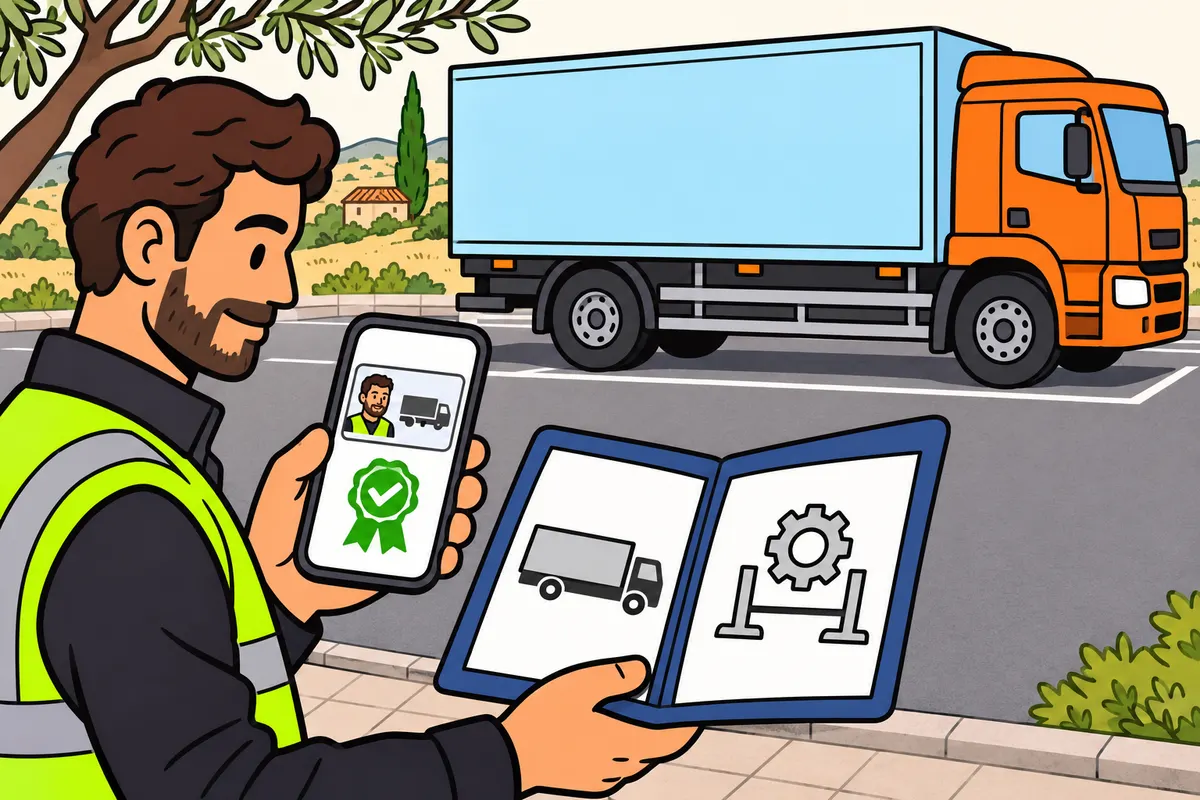
Carry your valid driving licence; you can use official miDGT documents within Spain.
| Where you drive | What you prepare |
|---|---|
| Spain | You can show your driving licence and registration certificate through miDGT |
| Outside Spain | Prepare the required physical documents |
Remember
- Check your licence and lorry documents before leaving.
- A photograph of your licence does not equal presenting it through miDGT.
- A hire agreement does not replace the vehicle documents.
Exam trap: Wrong: miDGT replaces documents in every country. Right: its stated equivalence applies within Spain.
Read the full explanation
- You must carry your valid driving licence together with the mandatory vehicle documentation. When preparing to set off, check your identity and entitlement to drive, as well as the lorry’s papers. Driving a company or hired lorry does not remove the need for these checks or allow you to present documents for another vehicle. [DGT, mandatory documentation](https://www.dgt.es/nuestros-servicios/tu-vehiculo/documentacion-de-un-vehiculo/que-documentacion-debes-llevar-en-tu-vehiculo).
- Within Spain, you can present your driving licence and permiso de circulación through the miDGT app, with the same validity as the physical documents. The official presentation allows the document to be verified: saving an image on your phone does not turn it into a document issued or verifiable through the app. [DGT, mandatory documentation](https://www.dgt.es/nuestros-servicios/tu-vehiculo/documentacion-de-un-vehiculo/que-documentacion-debes-llevar-en-tu-vehiculo). [DGT Guideline VEH 2024/13](https://www.dgt.es/export/sites/web-DGT/.galleries/downloads/muevete-con-seguridad/normas-de-trafico/VEH-vehiculos/report_Directriz-VEH-2024-13_V-II.pdf).
- If you drive outside Spain, prepare the necessary physical documentation; the equivalence stated by the DGT for miDGT applies within Spain. Do not infer from the app’s national validity that any foreign officer must accept your mobile phone as a substitute for the required documents. [DGT, mandatory documentation](https://www.dgt.es/nuestros-servicios/tu-vehiculo/documentacion-de-un-vehiculo/que-documentacion-debes-llevar-en-tu-vehiculo).
- If you drive a hired lorry, you must also carry its permiso de circulación and ITV card; the hire agreement does not replace them. [DGT, mandatory documentation](https://www.dgt.es/nuestros-servicios/tu-vehiculo/documentacion-de-un-vehiculo/que-documentacion-debes-llevar-en-tu-vehiculo).
4Lorry ITV intervals
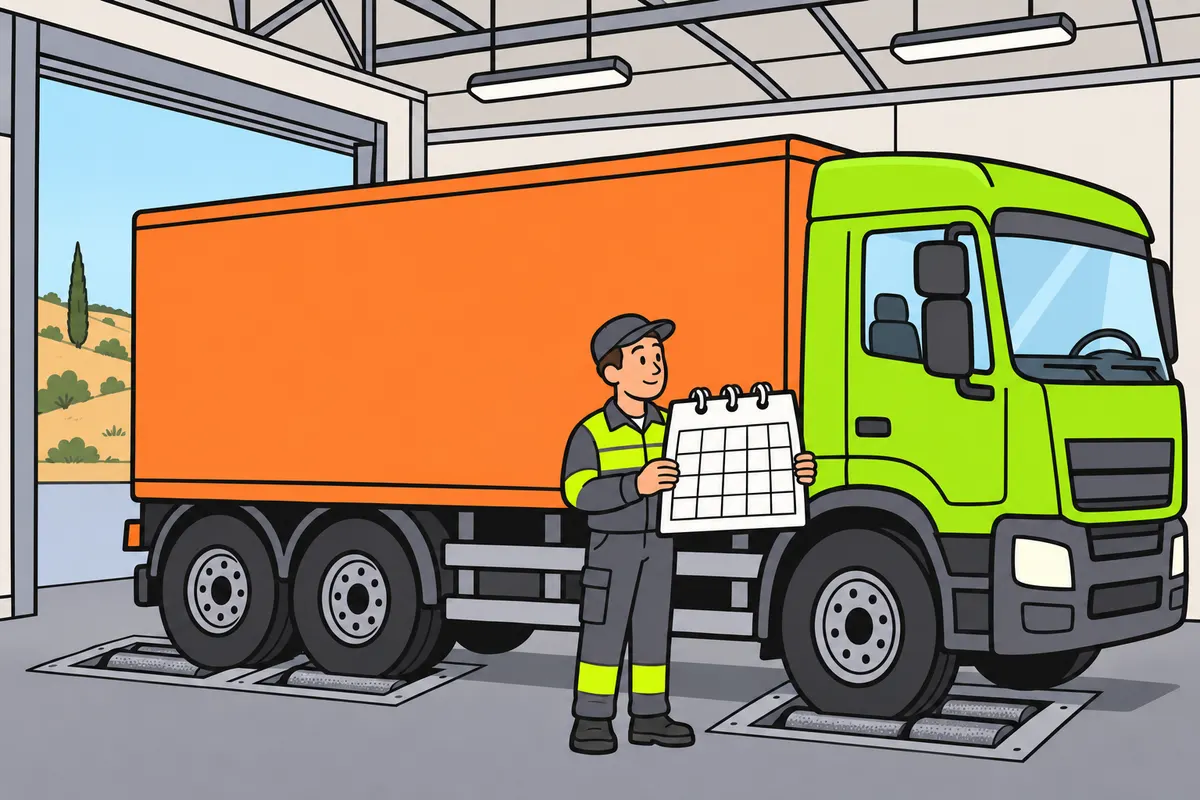
Arrange heavy lorry ITV inspections using its age from first registration or recorded entry into service.
| Ordinary N2/N3 goods lorries over 3.5 tonnes: age | ITV frequency |
|---|---|
| Up to ten years | Every year |
| Over ten years | Every six months |
Remember
- Up to ten years old, arrange an ITV every year.
- Over ten years old, arrange an ITV every six months.
- Buying a used lorry does not restart its age.
- Check the exact expiry date.
- Pass within thirty calendar days before expiry to preserve the previous expiry date.
Exam trap: Wrong: booking an ITV lets you drive after expiry. Right: an appointment does not renew your ITV.
Read the full explanation
- For an ordinary goods lorry in category N2 or N3, with a maximum mass exceeding 3.5 tonnes, you must have an ITV inspection annually up to ten years of age and every six months once it is more than ten years old. You must apply the row for heavy lorries; do not apply the initial exemption period available to other vehicles. [RD 920/2017, art. 6](https://www.boe.es/buscar/act.php?id=BOE-A-2017-12841).
- You must calculate the vehicle’s age from the first registration or entry into service recorded in the Registro de Vehículos (Vehicle Register). Buying the lorry second-hand, transferring it to another company or driving it yourself for the first time does not reset its age. The purchase date and the first registration date answer different questions. [RD 920/2017, art. 6](https://www.boe.es/buscar/act.php?id=BOE-A-2017-12841).
- You must have an eight-year-old lorry inspected annually and an eleven-year-old lorry every six months. Before actually setting off, check the precise recorded expiry date rather than substituting a rough calculation based only on the year of registration. [RD 920/2017, art. 6](https://www.boe.es/buscar/act.php?id=BOE-A-2017-12841).
- You can bring the inspection forward: if you obtain a favourable result within the thirty calendar days before expiry, the next period runs from the previous expiry date. Otherwise, the general rule adds the inspection interval to the date of the favourable result. Booking an appointment does not mean that you have successfully completed the inspection. [RD 920/2017, art. 6](https://www.boe.es/buscar/act.php?id=BOE-A-2017-12841).
5ITV results and repairs
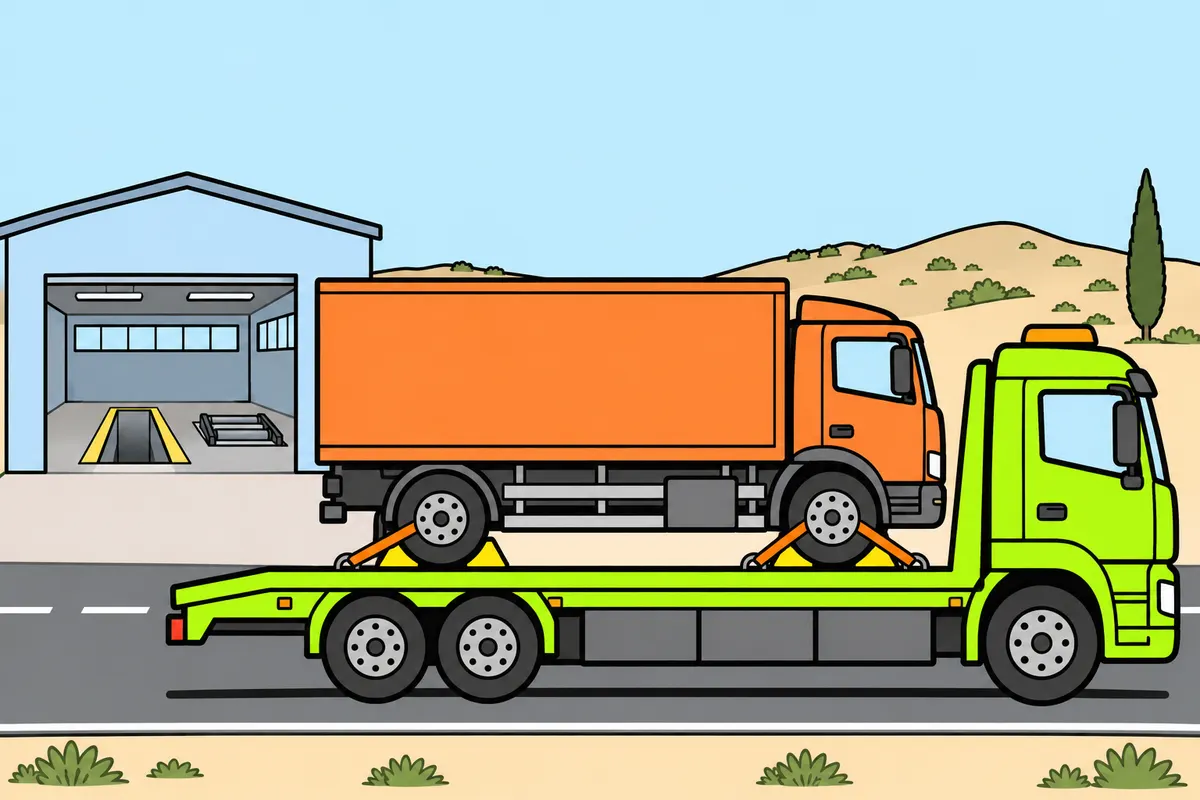
Follow the repair and travel restrictions for your lorry’s ITV result.
| Lorry ITV result | What you can do |
|---|---|
| Favourable | Drive; repair minor defects without another inspection solely for those defects |
| Unfavourable | Travel only for workshop repairs or necessary correction, then return for ITV |
| Negative | Use other means to move the lorry |
Remember
- Repair minor defects too.
- With an unfavourable result, you cannot continue deliveries.
- With a negative result, do not drive away from the station.
- After an unfavourable or negative result, return within two months of that inspection.
- You can choose the station for your next inspection.
- If you return late, you need a full inspection.
Exam trap: Wrong: the repair period lets you keep working. Right: you must obey the restrictions for your result.
Read the full explanation
- If the inspection detects no defects or only minor defects, you receive a favourable result. You must repair minor defects within a maximum of two months; these alone do not require another inspection to confirm the repair. A favourable result does not mean that you can ignore the deficiencies recorded in the report. [RD 920/2017, arts. 9 and 11](https://www.boe.es/buscar/act.php?id=BOE-A-2017-12841).
- With a major defect, you receive an unfavourable result: you cannot use the lorry on the road, except to take it to a workshop or have it brought into compliance as appropriate, and to return to an ITV station. You must present it again within no more than two months of the first unfavourable inspection; you cannot continue making deliveries during that interval. [RD 920/2017, arts. 9 and 11](https://www.boe.es/buscar/act.php?id=BOE-A-2017-12841).
- With a dangerous defect, you receive a negative result and cannot move the lorry under its own power from the station to its destination. You must use means external to the vehicle and, after remedying the defects, present it for inspection within a maximum of two months of the first negative result. [RD 920/2017, arts. 9 and 11](https://www.boe.es/buscar/act.php?id=BOE-A-2017-12841).
- You can choose the ITV station both for the first inspection and for subsequent inspections after repairing defects. If you return outside the time allowed, you must undergo a full inspection, without prejudice to any penalties. The repair period does not constitute temporary authorisation to carry out transport operations with an unfavourable or negative result. [RD 920/2017, arts. 9 and 11](https://www.boe.es/buscar/act.php?id=BOE-A-2017-12841).
6The ITV report and other inspections
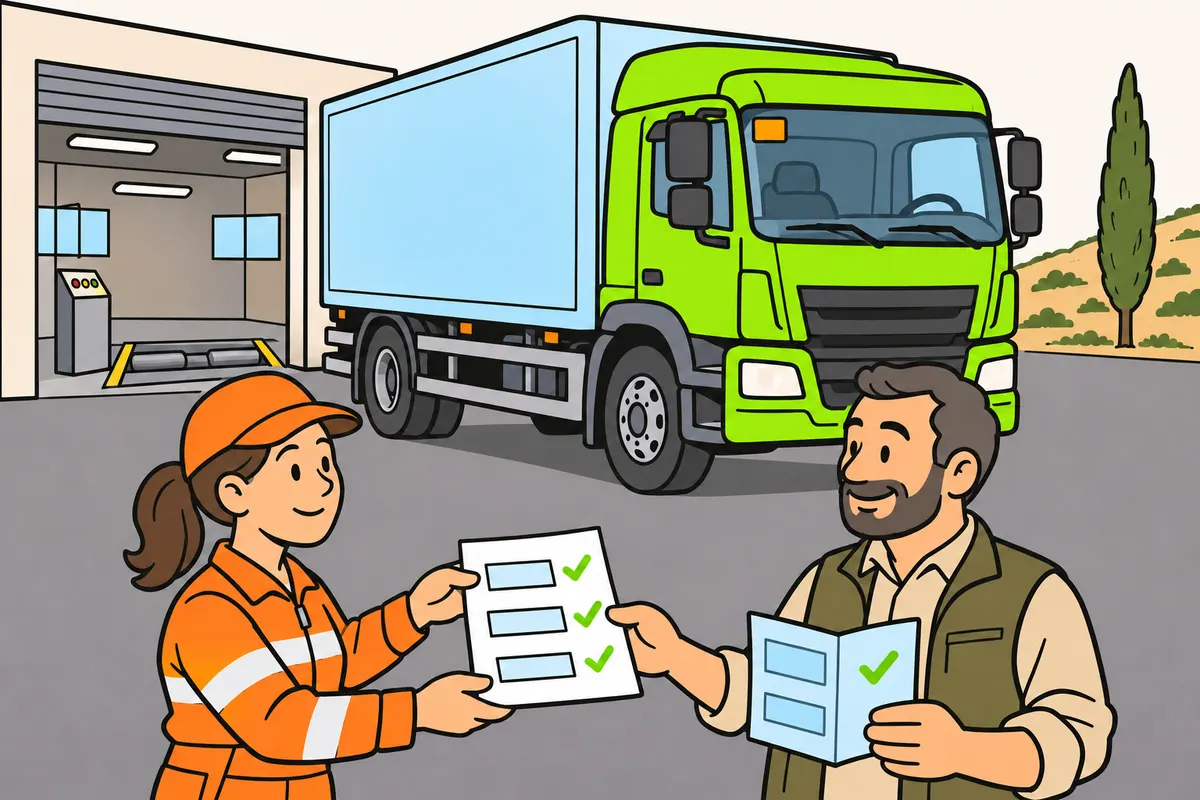
Keep your ITV report and check whether damage or vehicle changes require another inspection.
| Inspection document or sticker | What it shows |
|---|---|
| ITV card | Technical details and inspections |
| Report | Result and defects |
| V-19 sticker | Visible evidence of inspection |
Remember
- Your report shows the result and defects.
- Display the V-19 sticker after your ordinary lorry passes its periodic ITV.
- The sticker does not replace technical documents.
- After major accident damage affecting safety, repair and pass the required inspection before driving.
- Check whether vehicle changes require another inspection.
- You must prove compulsory insurance cover for the ITV.
Exam trap: Wrong: the sticker always proves a valid ITV. Right: keeping it does not renew an expired inspection.
Read the full explanation
- The ITV card records the lorry’s technical details and inspections; the station also issues a report identifying the result and the defects found. You can check validity through the Registro de Vehículos or, alternatively, using the report or card. Keep the inspection result so that you know the obligations arising from it. [RD 920/2017, arts. 6, 8, 10 and 12](https://www.boe.es/buscar/act.php?id=BOE-A-2017-12841).
- For an ordinary lorry that successfully completes its periodic ITV inspection, you must display the V-19 sticker in accordance with the Reglamento de Vehículos (Vehicle Regulations). The sticker is proof of inspection, but does not replace all the lorry’s technical documentation. Keeping it attached does not make an expired inspection valid either. [RD 920/2017, arts. 6, 8, 10 and 12](https://www.boe.es/buscar/act.php?id=BOE-A-2017-12841).
- After an accident causing significant damage that may affect the steering, suspension, transmission, braking or certain points of the chassis or structure, you must present the vehicle for the required inspection after repairing it and before putting it back on the road. The date of your next periodic ITV inspection does not remove the requirement for an extraordinary inspection. [RD 920/2017, arts. 6, 8, 10 and 12](https://www.boe.es/buscar/act.php?id=BOE-A-2017-12841).
- You must also check which inspection is required when a modification alters safety or environmental protection components or systems. Periodic ITV inspections are not the only type of technical inspection. In addition, you must provide proof of compulsory insurance before the inspection can take place, even if you carry all the technical documents. [RD 920/2017, arts. 6, 8, 10 and 12](https://www.boe.es/buscar/act.php?id=BOE-A-2017-12841).
7Authorisation to carry goods for hire or reward
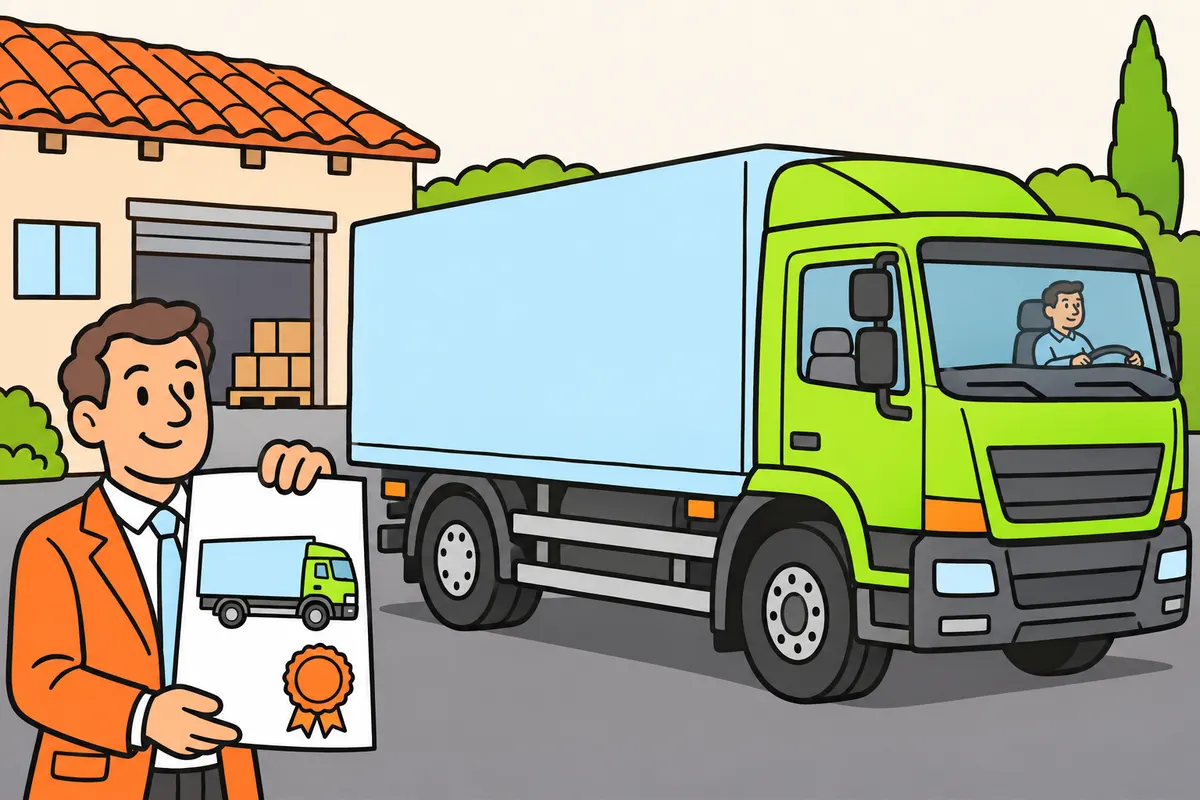
For transport for hire or reward, check company authorisation as well as your driving licence.
| Document | What it proves |
|---|---|
| Category C licence | Your entitlement to drive |
| CAP | Your professional driver qualification |
| Transport authorisation | The company’s entitlement to carry out transport |
Remember
- MDP identifies authorisation for heavy goods transport for hire or reward.
- Check every condition before applying an exemption.
- Company professional competence and your CAP are different requirements.
Exam trap: Wrong: your category C licence alone allows transport for hire or reward. Right: also check the relevant authorisation.
Read the full explanation
- To carry goods for hire or reward, you need the relevant transport authorisation unless an exemption applies. On an ordinary service with a lorry over 3,500 kg, you cannot treat the driver's category C licence as sufficient: it allows you to drive, whereas the authorisation allows the company to carry out transport operations. [ROTT (Road Transport Regulations), arts. 33 and 109](https://www.boe.es/buscar/act.php?id=BOE-A-1990-24442).
- The designation MDP identifies the authorisation for goods transport for hire or reward that allows the use of heavy vehicles. The BOE (Official State Gazette) uses this category when referring to company authorisations with heavy vehicles assigned to them. The authorisation covers the business activity, and you must check it for your assigned service. [Resolution of 7 April 2017, paragraph six.b](https://www.boe.es/diario_boe/txt.php?id=BOE-A-2017-4128).
- For transport for hire or reward using vehicles that can exceed 3.5 tonnes of MMA (maximum authorised mass), the company must demonstrate establishment, professional competence, good repute and financial standing, as well as meeting the other legal conditions. You must distinguish this business requirement for professional competence from the driver's CAP (Certificate of Professional Competence): these requirements apply to different parties and serve different purposes. [ROTT, arts. 33 and 109](https://www.boe.es/buscar/act.php?id=BOE-A-1990-24442).
- Some transport operations are exempt from authorisation, such as those involving certain vehicles with permanently attached machinery that constitutes their sole use, subject to the regulatory conditions. You must read all the conditions relevant to the case before applying an exemption. Being a special transport operation, carrying only a small amount of goods or driving close to base does not in itself establish an exemption. [ROTT, arts. 33 and 109](https://www.boe.es/buscar/act.php?id=BOE-A-1990-24442).
8Own goods and ancillary transport authorisation
When carrying your company’s goods, check the rules for ancillary own-account transport authorisation.
| Journey purpose | Transport type |
|---|---|
| Goods for the business | Ancillary own-account transport |
| Personal or household needs | Private personal transport |
Remember
- A heavy lorry is not exempt just because you carry your company’s goods.
- Check that its registration number is linked to the authorisation.
- Prove how the transport relates to your company’s main business.
- A verbal explanation does not replace required documents.
Exam trap: Wrong: carrying your own goods always removes authorisation requirements. Right: check the applicable conditions.
Read the full explanation
- If a company carries its own goods as an activity ancillary to its business, you must check the relevant authorisation for ancillary private transport. The mass-based exemption for goods applies to vehicles whose MMA does not exceed 3.5 tonnes; an ordinary heavy lorry falls outside this mass-based exemption. [ROTT, art. 155.2 e](https://www.boe.es/buscar/act.php?id=BOE-A-1990-24442#a155).
- You must check that the vehicle is linked to the authorisation by its registration number in the Registro de Empresas y Actividades de Transporte (Register of Transport Companies and Activities). The company holding another authorisation does not in itself demonstrate that any lorry can be used under it. Check the specific vehicle assigned to you for the service. [ROTT, art. 155.1](https://www.boe.es/buscar/act.php?id=BOE-A-1990-24442#a155).
- You must be able to demonstrate the connection between the goods, the transport operation and the company's main activity in accordance with the conditions for ancillary private transport. A verbal explanation that everything belongs to the same group does not replace the required evidence. Commercial documents can help identify the consignment's origin and destination. [LOTT (Land Transport Organisation Act), art. 102](https://www.boe.es/buscar/act.php?id=BOE-A-1987-17803).
- Private transport for personal use meets personal or household needs; the transport of a company's goods is classified according to the conditions of its activity. To choose the documentation, identify the actual purpose of the journey. The classification and full conditions for each type are covered in «Lorry licences and types of transport». [ROTT, art. 155.2](https://www.boe.es/buscar/act.php?id=BOE-A-1990-24442#a155).
9Administrative control of each consignment
Carry the required control document for each consignment you transport.
| Party | Role |
|---|---|
| Contractual consignor | Contracts directly with the actual carrier |
| Actual carrier | Carries out the transport |
Remember
- A season-long contract alone does not identify each consignment.
- Check whether your transport is exempt from the control document.
- Not every delivery qualifies for the parcel-service exception.
- A consignment note can serve if it meets all control-document requirements.
- The carrier’s copy must travel with the consignment.
Exam trap: Wrong: a document’s name guarantees validity. Right: check its required details and format.
Read the full explanation
- For goods transport for hire or reward subject to this Order, you must carry the control document accompanying the consignment. Under an ongoing contract, you must document the individual consignments you actually carry; keeping a generic contract for the whole season without identifying the corresponding operations is insufficient. [Order FOM/2861/2012, arts. 1–5 and 8–9](https://www.boe.es/buscar/act.php?id=BOE-A-2013-154).
- You must know the exemptions: transport operations that do not require an authorisation, removals, the transport of accident-damaged or broken-down vehicles on special vehicles, and certain parcel delivery or similar services. This last exemption requires consignments consisting of a few packages that one person can handle easily with the assistance provided for; it does not cover every delivery service. [Order FOM/2861/2012, arts. 1–5 and 8–9](https://www.boe.es/buscar/act.php?id=BOE-A-2013-154).
- A consignment note or another document complying with the applicable legislation can serve as the control document if it contains all the mandatory information. Calling it a delivery note, consignment note or transport document does not determine whether it is sufficient. You must check the content and the format required for its administrative purpose. [Order FOM/2861/2012, arts. 1–5 and 8–9](https://www.boe.es/buscar/act.php?id=BOE-A-2013-154).
- The actual carrier performs the transport operation, and the contractual consignor contracts directly with that carrier. Both must draw up the document; each retains a copy, and the carrier's copy accompanies the consignment. They must keep the documentation available for inspection for at least one year. [Order FOM/2861/2012, arts. 1–5 and 8–9](https://www.boe.es/buscar/act.php?id=BOE-A-2013-154).
10Details identifying the transport operation
Check that your document identifies the parties, goods and actual journey.
Remember
- Check the contractual consignor’s name, tax identification number and address.
- Check the actual carrier’s name and tax identification number.
- Check origin, destination, type of goods and weight.
- Check the date and registration numbers for your lorry and trailer.
- If the vehicle changes, your company must record it.
- Identify any required special road-use authorisation.
Exam trap: Wrong: omit quantity if you do not know the exact weight. Right: when loading circumstances prevent exact weighing, use another permitted measurement to determine weight.
Read the full explanation
- You must check the contractual consignor's name or company name, NIF (tax identification number) and address, and the actual carrier's name or company name and NIF. If an intermediary is involved, identify the party that contracts directly for the actual transport operation. Do not confuse that contractual role with the person who physically hands over the packages at the loading bay. [Order FOM/2861/2012, art. 6](https://www.boe.es/buscar/act.php?id=BOE-A-2013-154).
- You must check the consignment's origin and destination and the nature and weight of the goods. If the loading circumstances make it difficult to determine the exact weight, the rule provides for the use of another measurement from which it can be determined. This does not authorise you to omit all reference to the quantity carried. [Order FOM/2861/2012, art. 6](https://www.boe.es/buscar/act.php?id=BOE-A-2013-154).
- You must check the date of the transport operation and the registration number of the vehicle used. For vehicle combinations, you must identify both the towing vehicle and the trailer or semi-trailer; if a vehicle changes after the transport operation starts, the company must record this. A document showing yesterday's registration number does not correctly describe today's service. [Order FOM/2861/2012, art. 6](https://www.boe.es/buscar/act.php?id=BOE-A-2013-154).
- If you need a special road-use authorisation, it must be identified in the control document. Any comments or reservations requested by the parties involved are also recorded. You must have the authorisation identified in the document: recording its details allows the consignment to be linked to the authorisation that actually covers it. [Order FOM/2861/2012, art. 6](https://www.boe.es/buscar/act.php?id=BOE-A-2013-154).
11Digital control document
Use the digital control document when your goods transport for hire or reward requires it.
Remember
- The electronic administrative control document is called DeCA.
- Distinguish how you create the document from how you show it.
- Check your route and the rules for your service.
Exam trap: Wrong: every international consignment note must become a DeCA. Right: check which documents your service requires.
Read the full explanation
- From 5 October 2026, you must use the digital administrative control document for road goods transport for hire or reward where this document is required. [Act 9/2025, eighth transitional provision](https://www.boe.es/buscar/act.php?id=BOE-A-2025-24545).
- You must distinguish two issues: generating and managing the document digitally, and how you show your copy during the journey. The digital requirement concerns the administrative document for the service. The electronic administrative control document is called DeCA. [Act 9/2025, eighth transitional provision](https://www.boe.es/buscar/act.php?id=BOE-A-2025-24545). [Resolution of 5 June 2026, paragraph seven](https://www.boe.es/buscar/act.php?id=BOE-A-2026-12784).
- You must not automatically extend the national DeCA requirement to every international consignment note simply because the lorry travels through Spain. The route and the rules governing the service determine which control documentation is required. Digitisation does not remove the need to identify correctly the type of transport you perform. [Act 9/2025, eighth transitional provision](https://www.boe.es/buscar/act.php?id=BOE-A-2025-24545).
12How you carry and show the DeCA
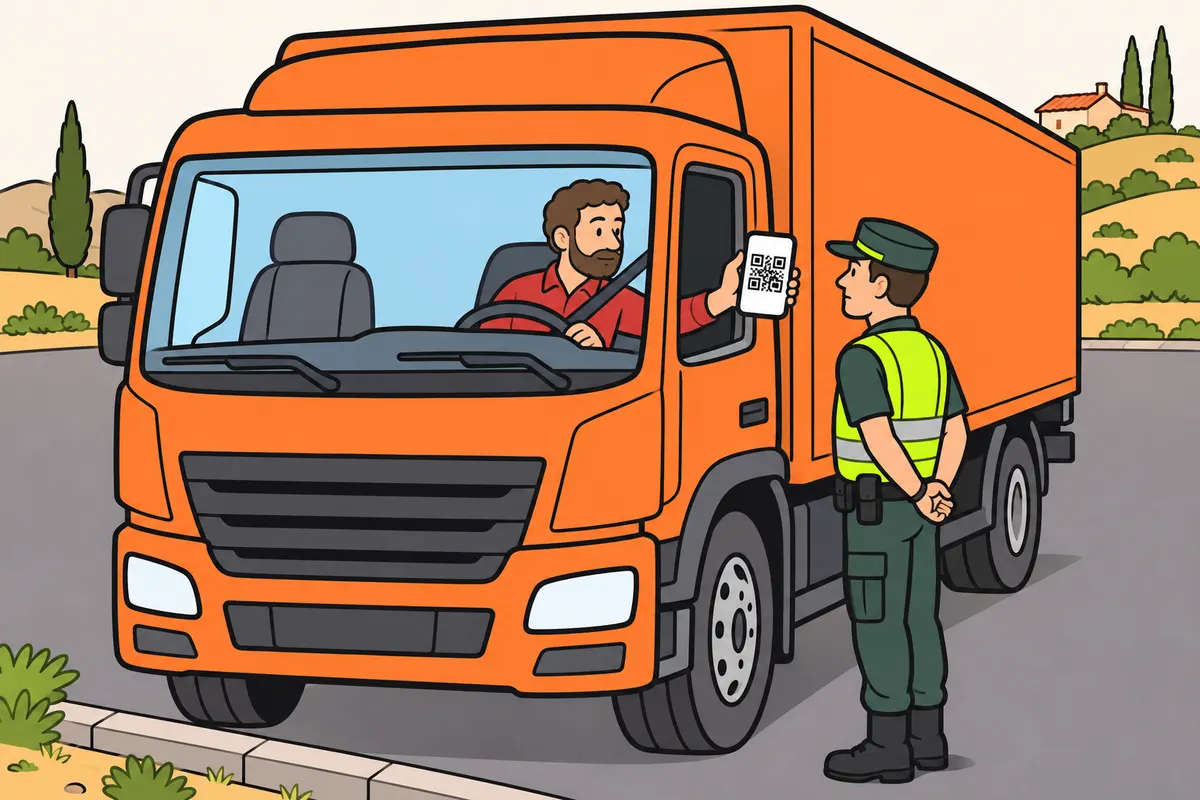
Receive your document before leaving and check how to show it during inspections.
| How you present the document | Requirement |
|---|---|
| On your phone | Include the corresponding QR code |
| Printed on paper | Include the corresponding QR code |
| System meeting eFTI rules | You can comply without presenting the DeCA in the ordinary form |
Remember
- The PDF must be created digitally; photographs and scans do not qualify.
- You can carry it on your phone or printed, with its QR code.
- Under the ordinary procedure, the QR downloads the PDF without passwords or button presses.
- Changes must be traceable, and you must receive the relevant version.
- Handwritten notes do not validly change your DeCA.
- Combine consignments only with the same contractual consignor and actual carrier; identify each consignment.
Exam trap: Wrong: every paper DeCA is invalid. Right: you can carry a printed copy with its corresponding QR code.
Read the full explanation
- You must receive your copy before the service actually starts. The system generates a digitally native PDF, no larger than 5 MB, from structured data, with a creation date and time. A scan of a paper document or a digitised photograph does not meet this generation requirement. [Resolution of 5 June 2026, paragraphs one to eight](https://www.boe.es/buscar/act.php?id=BOE-A-2026-12784).
- You can carry the electronic copy on a mobile device or a printed paper copy; both must contain the corresponding QR code. When dealing with officers, you present the DeCA with its QR code or, failing that, the QR code. [Resolution of 5 June 2026, paragraphs one to eight](https://www.boe.es/buscar/act.php?id=BOE-A-2026-12784).
- The QR code must lead to the document's unique web address and allow it to be downloaded directly as a PDF. It must not require login credentials or manual interaction with buttons to download it. The company must ensure this availability for inspection. [Resolution of 5 June 2026, paragraphs one to eight](https://www.boe.es/buscar/act.php?id=BOE-A-2026-12784).
- If details change during the service, they must be updated in the existing file with traceability, or a new PDF must be generated while retaining the original; you must receive the corresponding version. Handwritten notes on a printed copy do not validly amend the DeCA. If another PDF is generated, its address and QR code also change. [Resolution of 5 June 2026, paragraphs one to eight](https://www.boe.es/buscar/act.php?id=BOE-A-2026-12784).
- You can carry a DeCA covering several consignments if the contractual consignor and the actual carrier are the same for all of them, clearly identifying each consignment and its differing details. Grouping them does not allow the origin, destination, nature or weight of each operation to be removed. [Resolution of 5 June 2026, paragraphs one to eight](https://www.boe.es/buscar/act.php?id=BOE-A-2026-12784).
- If the data is managed and presented through the framework of the eFTI Regulation and its implementing rules, the compliance route provided for that system applies, without requiring you to present the DeCA in the usual form specified in this resolution. An application that only stores photographs or isolated data does not fulfil that regulatory function. [Resolution of 5 June 2026, paragraph nine](https://www.boe.es/buscar/act.php?id=BOE-A-2026-12784).
13Consignment note and proof of the contract
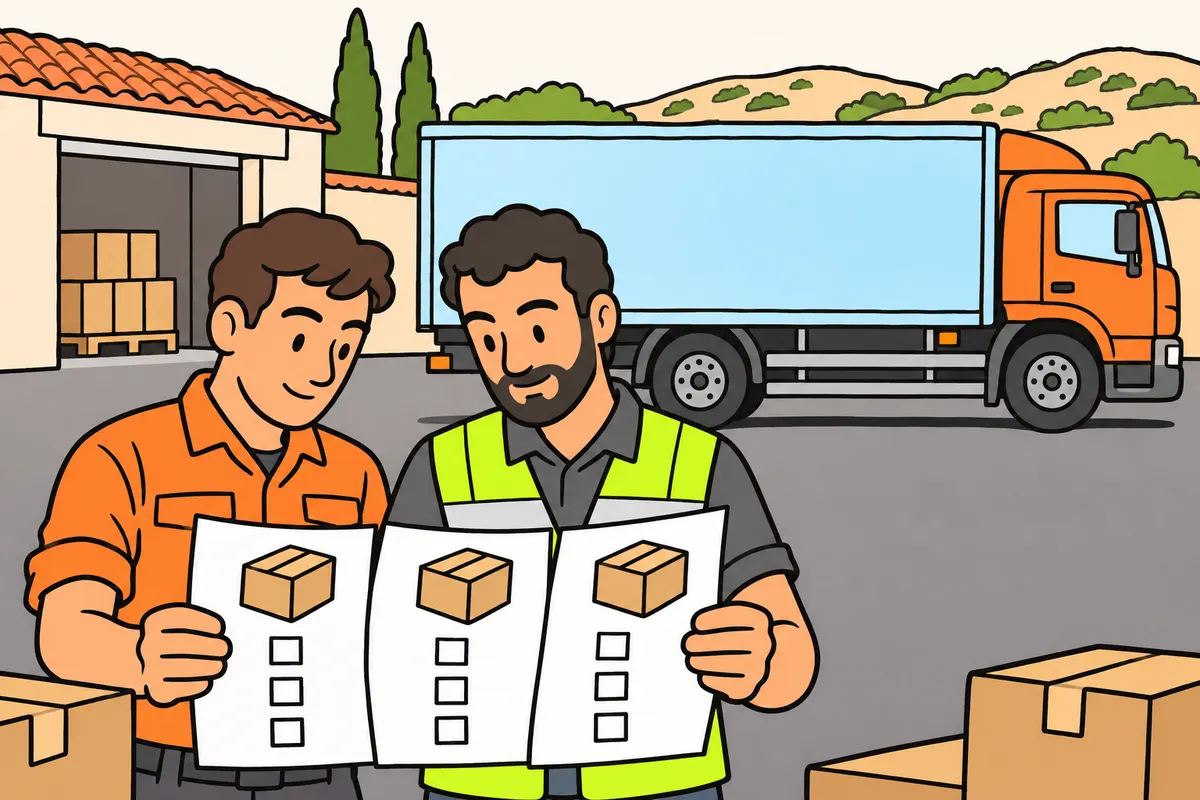
Check when you need a consignment note and what it proves about your contract.
| Consignment note original | Destination |
|---|---|
| Consignor’s copy | The consignor keeps it |
| Copy with the goods | It travels with your consignment |
| Carrier’s copy | The carrier keeps it |
Remember
- The threshold concerns the transport price, not the value of your goods.
- For contracts with the actual carrier, prepare each note above the threshold, unless exempt.
- Check the parties, delivery, goods and required financial terms.
- The consignor and carrier must sign the originals.
- You can use an electronic note if it meets legal conditions.
Exam trap: Wrong: no consignment note means no contract. Right: its absence does not invalidate the contract or remove document obligations.
Read the full explanation
- The consignment note provides evidence of the contract of carriage; the control document allows administrative checks on it. In contracts with the actual carrier, you must draw up a consignment note for each consignment when the transport price exceeds 150 euros, except for transport operations that do not require an administrative control document. This threshold refers to the transport price, not the value of the goods. [Law 15/2009, art. 10 bis](https://www.boe.es/buscar/act.php?id=BOE-A-2009-18004#a1-2).
- You must check the contractual details required in that situation, including the parties, collection and delivery, goods, weight, price and transport-related expenses, unless the latter are recorded in another written contractual document. A document prepared for administrative control does not automatically prove every aspect of the contractual arrangements. If it serves both purposes, it must meet the requirements for both. [Law 15/2009, arts. 10–15](https://www.boe.es/buscar/act.php?id=BOE-A-2009-18004).
- The consignment note is issued in three originals signed by the consignor and carrier: one for the consignor, one to accompany the goods and the third for the carrier. You can recognise an electronic consignment note when it meets the legal conditions. Do not assume that this number of copies applies to every other supporting document. [Law 15/2009, arts. 10–15](https://www.boe.es/buscar/act.php?id=BOE-A-2009-18004).
- The absence of, or irregularities in, the consignment note do not make the contract non-existent or invalid. This does not exempt you from drawing up the mandatory documentation or carrying the required documents on board. [Law 15/2009, arts. 10–15](https://www.boe.es/buscar/act.php?id=BOE-A-2009-18004).
14Responsibility for the details
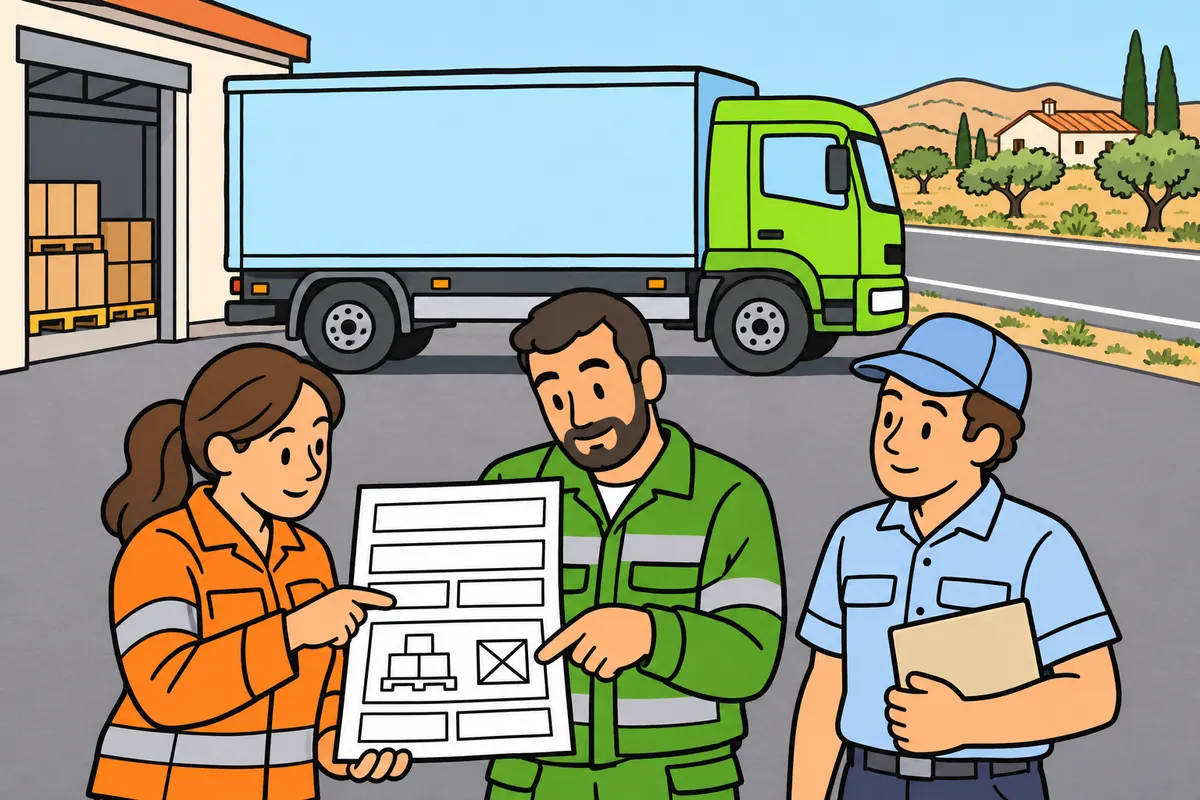
Distinguish who is responsible for each detail in your control document.
| Responsible party | Details they are responsible for |
|---|---|
| Contractual consignor | Parties, origin, destination, goods, weight and their own comments |
| Actual carrier | Special road-use authorisation, date, registration numbers and their own comments |
Remember
- The contractual consignor and actual carrier must prepare the document.
- Do not assume every infringement is your responsibility as driver.
- Tell your company about incorrect registration numbers or vehicle changes.
- Never invent details to resolve a difference during a check.
Exam trap: Wrong: every document fault is the driver’s responsibility. Right: responsibility depends on the infringement.
Read the full explanation
- You must know that the contractual consignor and the actual carrier are liable for failing to draw up the document. They are also held liable for failing to carry it on board, although the contractual consignor is exempt from liability if they prove that it was issued. Do not automatically attribute every documentation infringement to the driver simply because they present the paperwork. [Order FOM/2861/2012, art. 7](https://www.boe.es/buscar/act.php?id=BOE-A-2013-154).
- The contractual consignor is liable for missing or inaccurate details identifying the consignor and carrier, the origin and destination, the nature and weight of the goods, and their own remarks. Administrative liability for these details rests with the contractual consignor even if someone else physically enters them in the document. [Order FOM/2861/2012, art. 7](https://www.boe.es/buscar/act.php?id=BOE-A-2013-154).
- The actual carrier is liable for the details identifying the special road-use authorisation, the date and the registration numbers, as well as any remarks they include. As the driver, you must inform the company of an incorrect registration number or a change of vehicle so that the documentation reflects the operation. Do not resolve a discrepancy by inventing details during an inspection. [Order FOM/2861/2012, art. 7](https://www.boe.es/buscar/act.php?id=BOE-A-2013-154).
15International transport documents
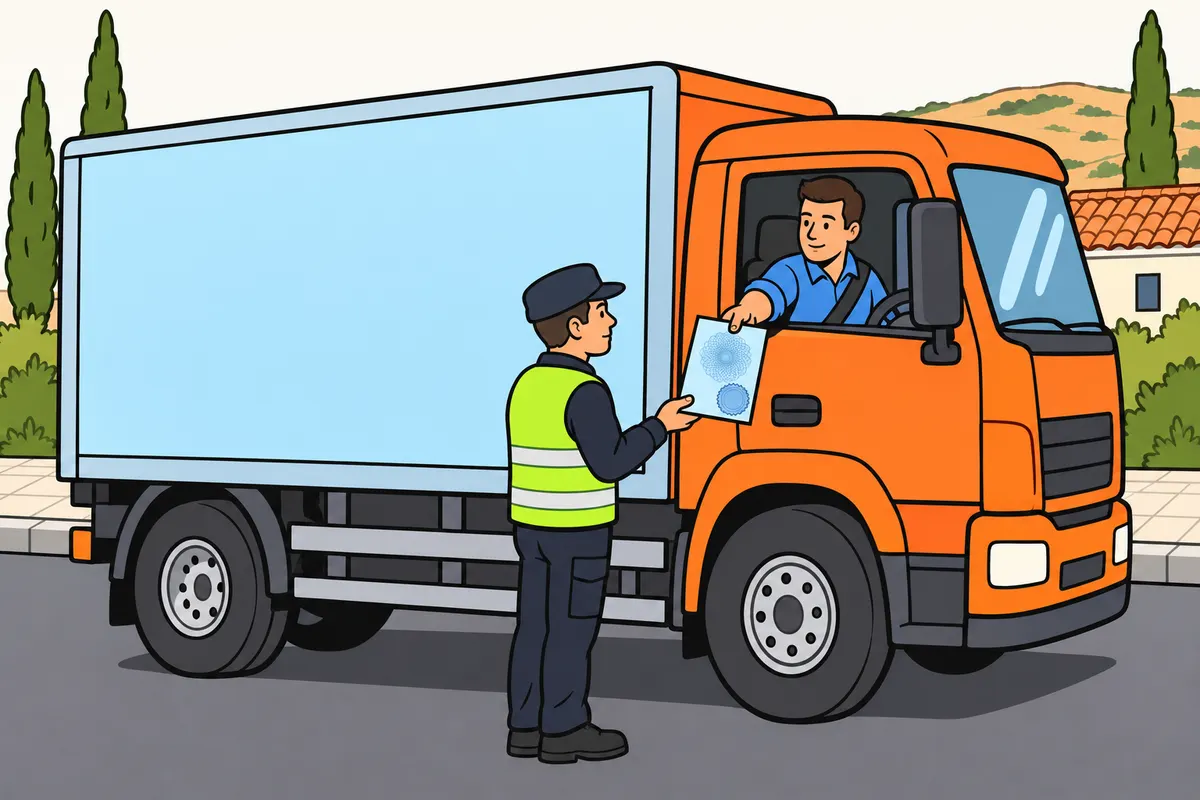
For international transport requiring a Community licence, carry its certified true copy on board.
| Community licence document | Where it belongs |
|---|---|
| Original | The transport company keeps it |
| Certified true copy | You carry it on board |
Remember
- An ordinary photocopy is not a certified true copy.
- In an articulated combination, carry the copy in the tractor vehicle.
- The licence belongs to the carrier and cannot be transferred.
- Check whether you also need a driver attestation for third-country drivers.
Exam trap: Wrong: trailer documents replace the licence. Right: you must also prove the required international transport entitlement.
Read the full explanation
- If you carry out international transport requiring a Community licence, you must carry a certified true copy of that licence on board and present it when officers request it. The original remains with the transport company. Do not confuse a certified true copy issued in accordance with the regulation with an ordinary photocopy you make yourself. [Regulation (EC) 1072/2009, arts. 3–5](https://www.boe.es/buscar/doc.php?id=DOUE-L-2009-82158).
- In an articulated combination, the certified true copy must be in the towing vehicle and covers the combination under the conditions laid down in the regulation. The licence is issued in the carrier's name and cannot be transferred to third parties. The trailer's documentation does not replace the company's authorisation for international transport. [Regulation (EC) 1072/2009, arts. 3–5](https://www.boe.es/buscar/doc.php?id=DOUE-L-2009-82158).
- In the cases specified in the regulation for drivers from third countries, you must also have the relevant driver attestation. The company makes it available to the driver it concerns and keeps a certified true copy at its premises. You must distinguish this attestation from your category C driving licence, tachograph card and CAP (certificate of professional competence) card. [Regulation (EC) 1072/2009, arts. 3–5](https://www.boe.es/buscar/doc.php?id=DOUE-L-2009-82158).
16CMR consignment note
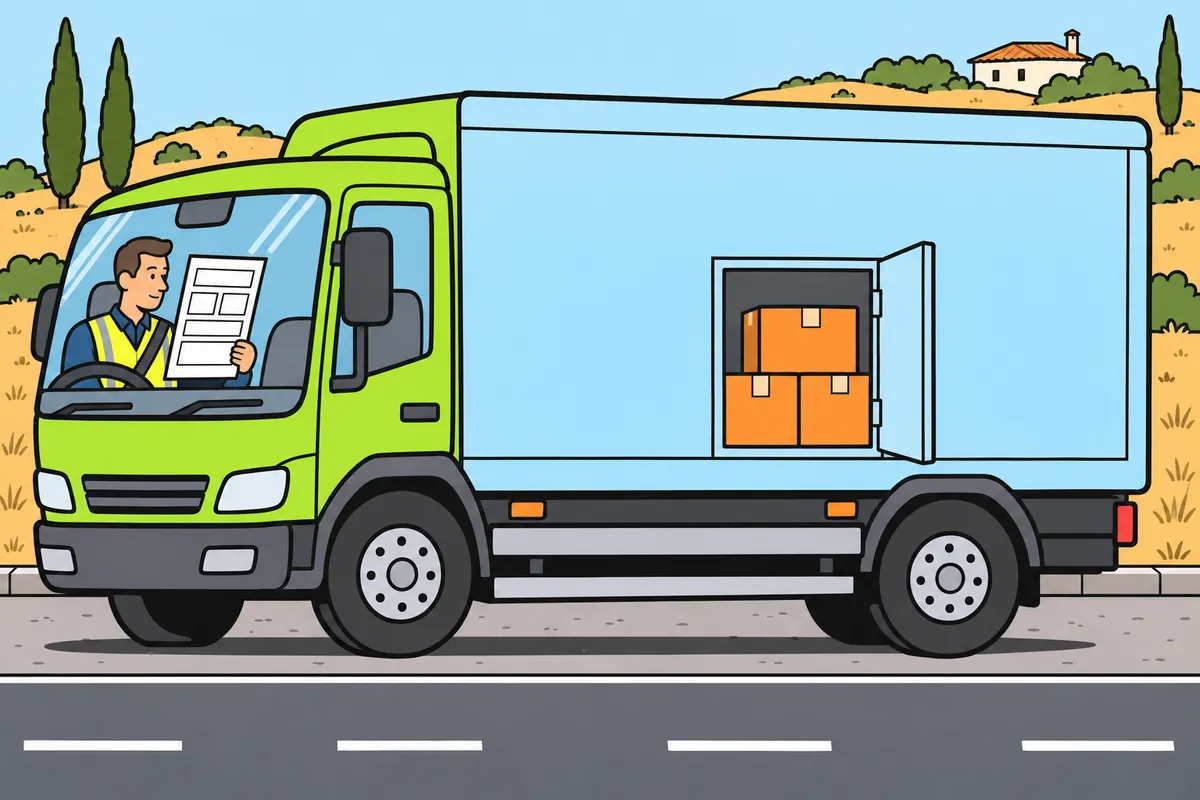
Your CMR note documents an international goods transport contract covered by the convention.
| Paper CMR original | Destination |
|---|---|
| First | Sender |
| Second | Travels with your goods |
| Third | Carrier |
Remember
- Check parties, places, dates, goods, packages and weight.
- Carry the original that travels with your goods.
- The sender and carrier must sign the originals.
- Your CMR note does not replace the company’s transport authorisation.
- Losing the note does not invalidate your contract.
Exam trap: Wrong: a CMR note insures every loss or damage. Right: it documents the contract; it is not universal insurance.
Read the full explanation
- The CMR governs the contract for international carriage of goods by road for reward when the places of collection and delivery are in different countries and at least one is a contracting country, subject to the exclusions laid down in the Convention. The CMR consignment note documents the contract; it is not the company's administrative transport authorisation. [CMR Convention, arts. 1 and 4 to 9](https://www.boe.es/buscar/act.php?id=BOE-A-1974-753).
- For a paper CMR consignment note, you must distinguish three originals signed by the sender and carrier: the first for the sender, the second to accompany the goods and the third for the carrier. For inspections during the journey, you need the document travelling with the consignment, not merely a statement that another copy is on file. [CMR Convention, arts. 1 and 4 to 9](https://www.boe.es/buscar/act.php?id=BOE-A-1974-753).
- You must check the CMR consignment note for the parties' identification details, places and dates, description of the goods, packages and weight. The checks and reservations on receiving the consignment are explained in the next section. [CMR Convention, arts. 6 and 8](https://www.boe.es/buscar/act.php?id=BOE-A-1974-753).
- The absence, irregularity or loss of the CMR consignment note does not affect the existence or validity of the contract governed by the Convention. Do not equate the CMR consignment note with insurance covering every type of damage or loss. [CMR Convention, arts. 1 and 4 to 9](https://www.boe.es/buscar/act.php?id=BOE-A-1974-753).
17Receipt, safekeeping and delivery of goods
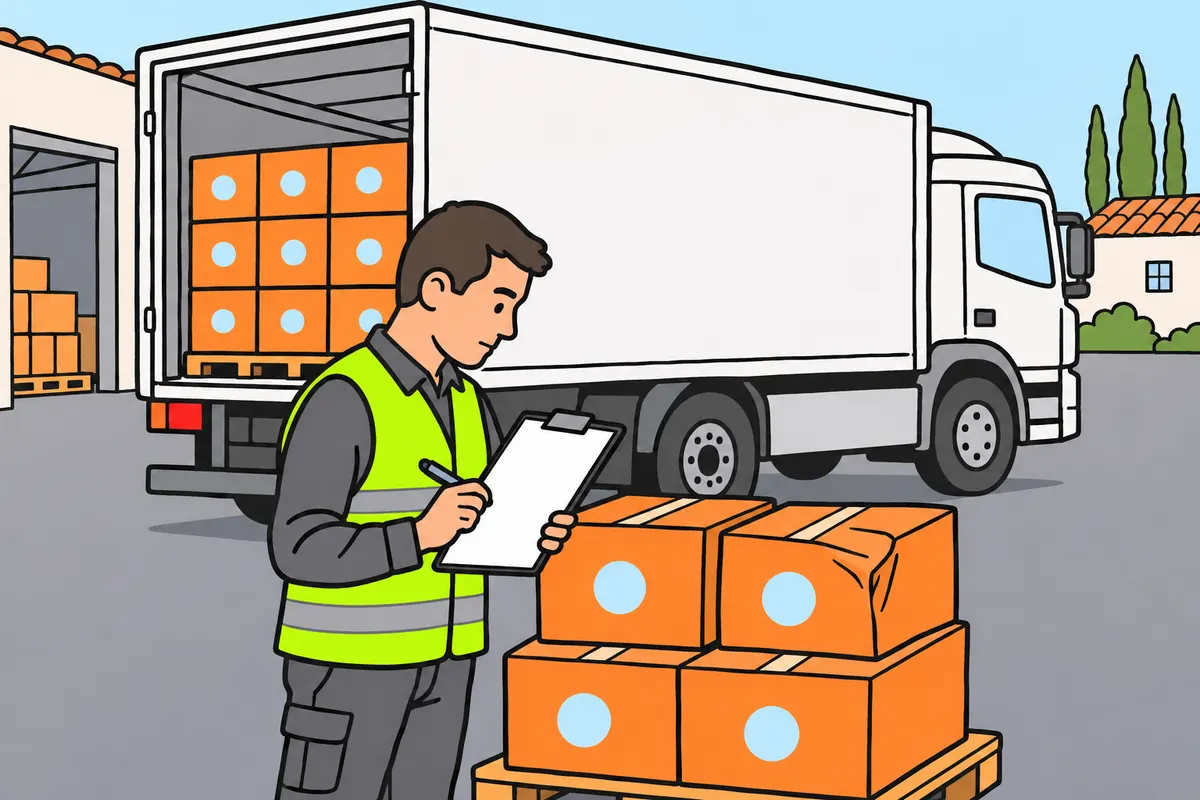
Check goods on receipt, keep them safe and record their delivery.
Remember
- Check the number and marks of packages.
- Check the visible condition of goods and packaging.
- Record differences, damage or checks you cannot perform, explaining why.
- Do not open or alter packages on your own initiative.
- Ask for the recipient’s signature and record damage or shortages.
- If delivery fails or the recipient refuses to sign, inform the consignor; await instructions.
Exam trap: Wrong: accept visible damage without recording it. Right: without reasoned reservations, receipt matching those details is presumed.
Read the full explanation
- When you receive the load, you must check the number and marks of the packages against the consignment note or CMR consignment note and inspect the visible condition of the goods and packaging. Record specific, reasoned reservations about damage, discrepancies or checks you are unable to carry out; without reservations, receipt in conformity with the document is presumed in these respects. [Law 15/2009, arts. 14 and 25](https://www.boe.es/buscar/act.php?id=BOE-A-2009-18004). [CMR Convention, arts. 8 and 9](https://www.boe.es/buscar/act.php?id=BOE-A-1974-753).
- During the journey, you must safeguard and preserve the goods as agreed, without altering them or opening packages on your own initiative. Inspections of their contents must follow the legal procedure. [Law 15/2009, arts. 26 and 28](https://www.boe.es/buscar/act.php?id=BOE-A-2009-18004).
- On delivery, you must ask the consignee to sign the delivery document and record any damage or shortages detected. If they refuse to sign or you cannot deliver under the agreed conditions, inform the consignor of the obstacle and await instructions. [Law 15/2009, arts. 12, 33 to 36 and 60](https://www.boe.es/buscar/act.php?id=BOE-A-2009-18004).
- The carrier is liable for loss, damage or delay from receipt to delivery, subject to the legal grounds for exemption from liability; as the driver, your actions while providing the service also engage the carrier's liability. [Law 15/2009, arts. 47 and 48](https://www.boe.es/buscar/act.php?id=BOE-A-2009-18004). [CMR Convention, art. 17](https://www.boe.es/buscar/act.php?id=BOE-A-1974-753).
18The CAP card you carry on board
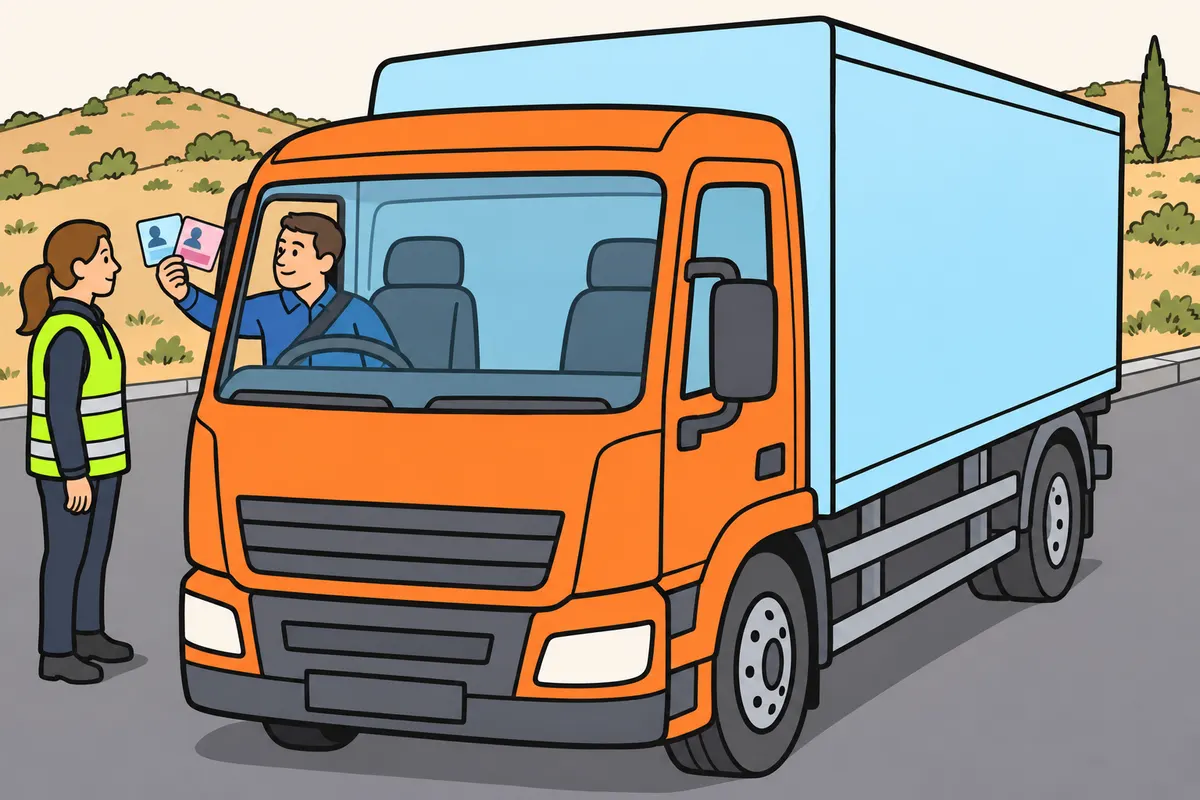
Carry valid proof of CAP qualification when your professional driving requires it.
Remember
- CAP does not replace your valid driving licence.
- Check its expiry separately from your other documents.
- Use the accepted proof of qualification for your circumstances.
- If your CAP has expired, complete periodic training before returning to CAP-required work.
Exam trap: Wrong: obtaining category C proves permanent professional training. Right: keep your CAP qualification valid when required.
Read the full explanation
- If you are subject to the professional qualification requirement, you must carry your driver qualification card or an accepted document proving that your qualification is valid on board while driving. You must also hold a valid driving licence for the relevant category. CAP proves professional qualification and does not replace your personal authorisation to drive the lorry. [Royal Decree 284/2021, arts. 1, 7 and 20](https://www.boe.es/buscar/act.php?id=BOE-A-2021-6624).
- The CAP card is valid for five years. Periodic training requires a 35-hour course every five years, under the conditions laid down in the regulations. You must monitor this date separately from the dates for your driving licence, ITV (vehicle roadworthiness test) and tachograph card; renewing one of these documents does not automatically renew the others. [Royal Decree 284/2021, arts. 1, 7 and 20](https://www.boe.es/buscar/act.php?id=BOE-A-2021-6624).
- Drivers from other Member States can prove their qualification with an EU driving licence bearing harmonised code 95 or a driver qualification card bearing that code. In cases involving third countries, the documents provided for in article 20 are accepted, including a driver attestation bearing the relevant code where applicable. [Royal Decree 284/2021, arts. 1, 7 and 20](https://www.boe.es/buscar/act.php?id=BOE-A-2021-6624).
- If you stop working as a professional driver and do not hold a valid qualification card, you must complete periodic training before resuming work subject to CAP. [Royal Decree 284/2021, arts. 1, 7 and 20](https://www.boe.es/buscar/act.php?id=BOE-A-2021-6624).
19CAP exemptions: check the circumstances
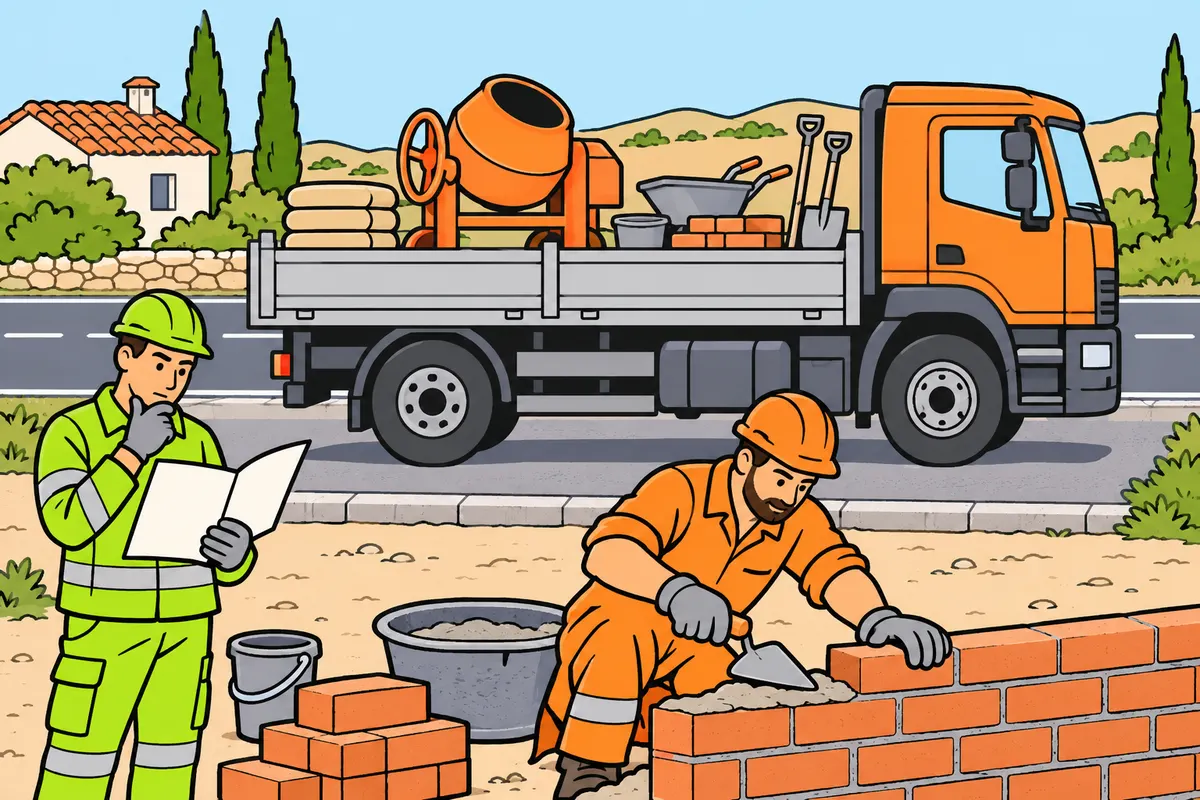
Before driving without CAP, check every condition of the specific exemption.
Remember
- Carrying your company’s goods does not always exempt you from CAP.
- For your professional materials exemption, driving must not be your main activity.
- Apply the monthly-work test only where the rule requires it.
- Ancillary distribution also requires staying within the stated radius of your operating centre.
- A CAP exemption does not remove required control documents or activity records.
Exam trap: Wrong: an unpaid journey exempts you from CAP. Right: check the activity and every exemption condition.
Read the full explanation
- You may be exempt from CAP (professional driver qualification) in the circumstances expressly set out in the regulations, such as private transport for personal use or certain emergency and rescue vehicles. You must check the specific activity and conditions. Driving without payment for a journey does not, on its own, establish that the entire transport operation falls outside the professional qualification requirement. [RD 284/2021, art. 2](https://www.boe.es/buscar/act.php?id=BOE-A-2021-6624).
- For ancillary private transport of materials, equipment or machinery that you use in your work, the exemption requires that driving is not your main activity. It is not enough for the goods to belong to your company. If your main role is driving the delivery lorry, you cannot invoke this exception simply because you carry tools. [RD 284/2021, art. 2](https://www.boe.es/buscar/act.php?id=BOE-A-2021-6624).
- In the circumstances where the regulations apply this criterion, driving does not constitute your main activity when it accounts for less than 30 % of your monthly work. Other exemptions have their own additional conditions; for example, ancillary distribution also requires you to remain within 100 km of the operating centre. Do not mix requirements from different exceptions. [RD 284/2021, art. 2](https://www.boe.es/buscar/act.php?id=BOE-A-2021-6624).
- A CAP exemption does not exempt you from the documento de control (transport control document) or the required activity records. [RD 284/2021, art. 2](https://www.boe.es/buscar/act.php?id=BOE-A-2021-6624). [ROTT, art. 222](https://www.boe.es/buscar/act.php?id=BOE-A-1990-24442).
20Tachograph cards and their purpose
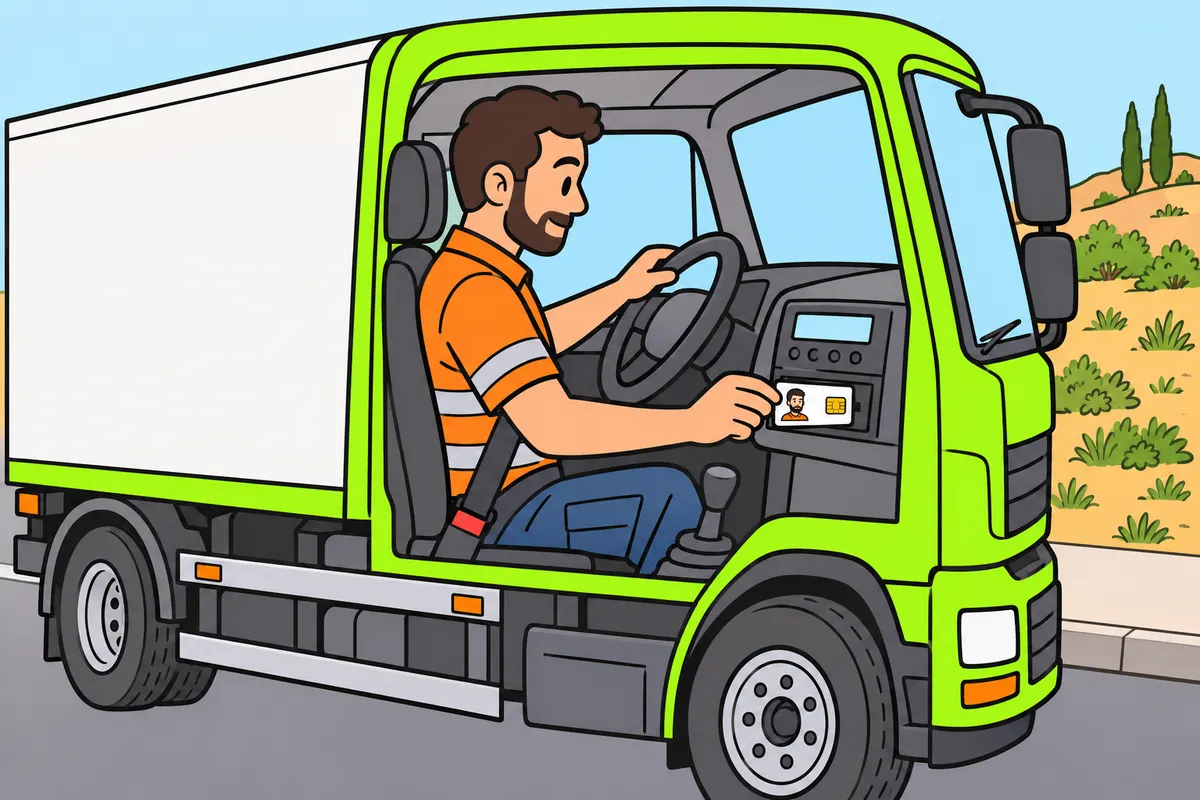
Use your personal driver card to record your activity on the digital tachograph.
| Card | What it proves |
|---|---|
| Tachograph | Your activity records |
| CAP | Your professional qualification |
Remember
- Carry your personal card when the digital tachograph is subject to this requirement.
- Check your driver card’s expiry separately from your CAP card.
Exam trap: Wrong: your CAP card proves your activity records. Right: you need your tachograph card.
Read the full explanation
- You must carry your personal driver card when you drive a lorry with a digital tachograph that is subject to this requirement; card types, validity and use are covered in «The tachograph and its records». [Regulation (EU) 165/2014, arts. 26, 27 and 34](https://www.boe.es/buscar/doc.php?id=DOUE-L-2014-80362).
- Your tachograph card identifies your activity records; your CAP card proves your professional qualification. When checking your driver documentation, you must identify what each card proves and check the validity shown on each document. [Order FOM/1190/2005, art. 3](https://www.boe.es/buscar/act.php?id=BOE-A-2005-7137). [RD 284/2021, art. 20](https://www.boe.es/buscar/act.php?id=BOE-A-2021-6624).
21Records you must be able to produce
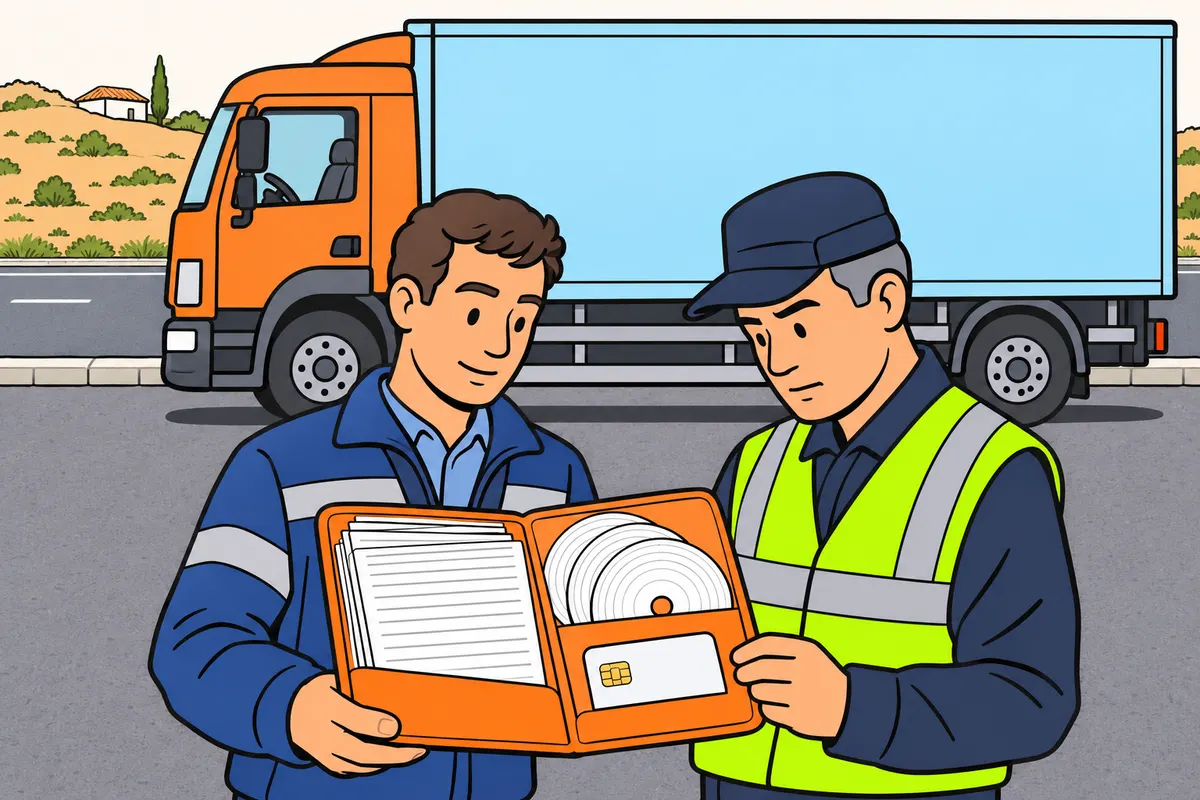
Present the required records and provide information about the transport you carry out.
Remember
- You must present the required activity records during a check.
- You represent your company for compulsory documents and information about the service.
- Relate your documents to the transport you carry out.
- Tell your company which driving and rest documents the inspectors request.
- The record keeper’s absence does not excuse failing to provide the records.
Exam trap: Wrong: you can withhold records when the business owner is absent. Right: help provide them.
Read the full explanation
- You must produce the required activity records during a check; the period they cover and the combination of card, record sheets and printouts are covered in «The tachograph and its records». [Regulation (EU) 165/2014, art. 36, amended by 2020/1054](https://www.boe.es/buscar/doc.php?id=DOUE-L-2020-81223).
- During a roadside inspection, you act as the company's representative regarding the compulsory documents on board and the information requested about the service. You must be able to relate the documents you produce to the transport operation you are carrying out. [ROTT, art. 19](https://www.boe.es/buscar/act.php?id=BOE-A-1990-24442#a19).
- Your company must provide the documentation proving driving and rest periods that the inspection authorities request; the absence of the business owner or the person who holds the records is no excuse for failing to provide it. If records are managed centrally, notify your company of the request so that it can comply. [ROTT, art. 19](https://www.boe.es/buscar/act.php?id=BOE-A-1990-24442#a19).
22Lost cards and printouts
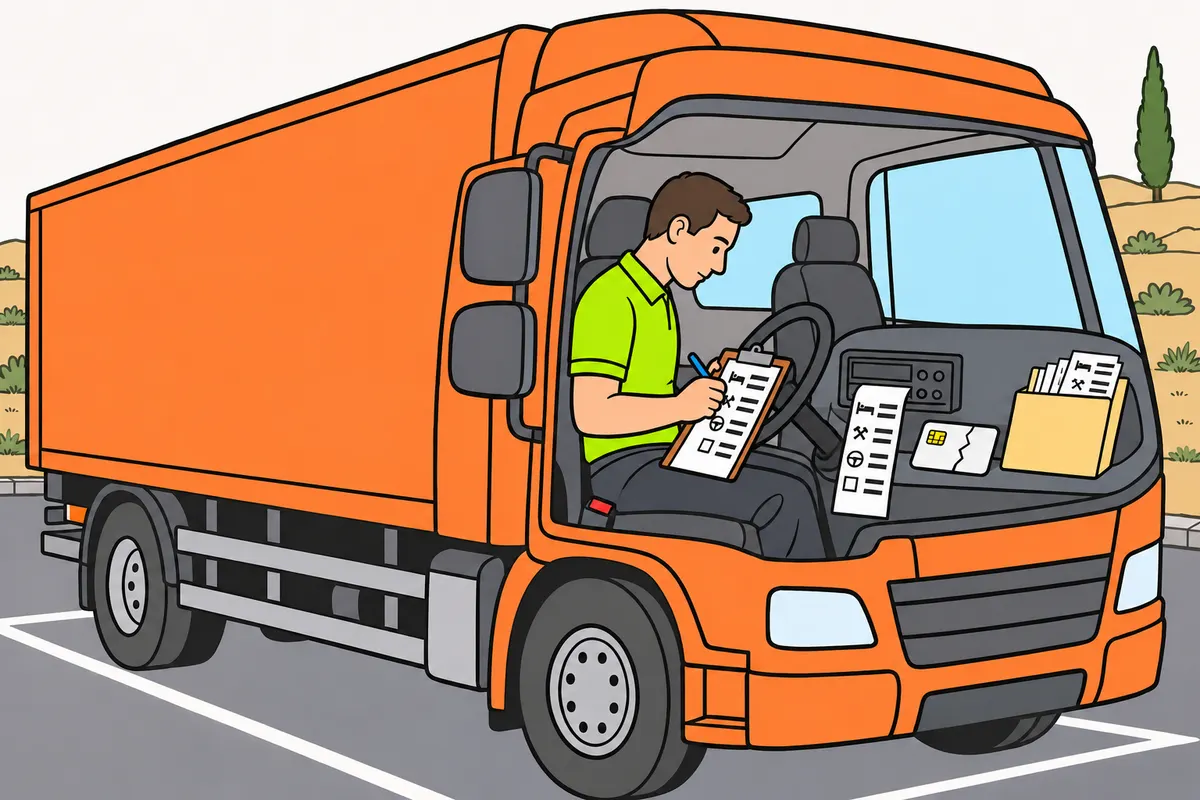
Carry printouts and evidence when driving without your card because of loss, theft, damage or malfunction.
Remember
- The exception covers loss, theft, damage or malfunction.
- Print records at the start and end of your journey.
- Complete any periods not recorded.
- Add your first name, surname, card or licence number; sign the printouts.
- Keep the theft report or formal declaration of loss, as applicable.
- If damaged, also keep your damaged card and substitute documents.
Exam trap: Wrong: printouts allow driving with a forgotten or expired card. Right: this exception does not cover those cases.
Read the full explanation
- Card replacement and the time limits and conditions for driving without it are covered in «The tachograph and its records». [Regulation (EU) 165/2014, art. 29](https://www.boe.es/buscar/doc.php?id=DOUE-L-2014-80362).
- If you drive without a card because it is damaged, malfunctions, is lost or is stolen, you must carry printouts from the start and end of the journey, completed with any unrecorded periods, your first name and surname, card or driving licence number, and signature. [Regulation (EU) 165/2014, art. 35.2](https://www.boe.es/buscar/doc.php?id=DOUE-L-2014-80362).
- You must be able to prove why you cannot produce or use the card: keep the theft report or formal declaration of loss, as applicable; if the card is damaged, also keep the damaged card with the substitute documentation. [Regulation (EU) 165/2014, arts. 29 and 35.1](https://www.boe.es/buscar/doc.php?id=DOUE-L-2014-80362).
23Compulsory lorry insurance
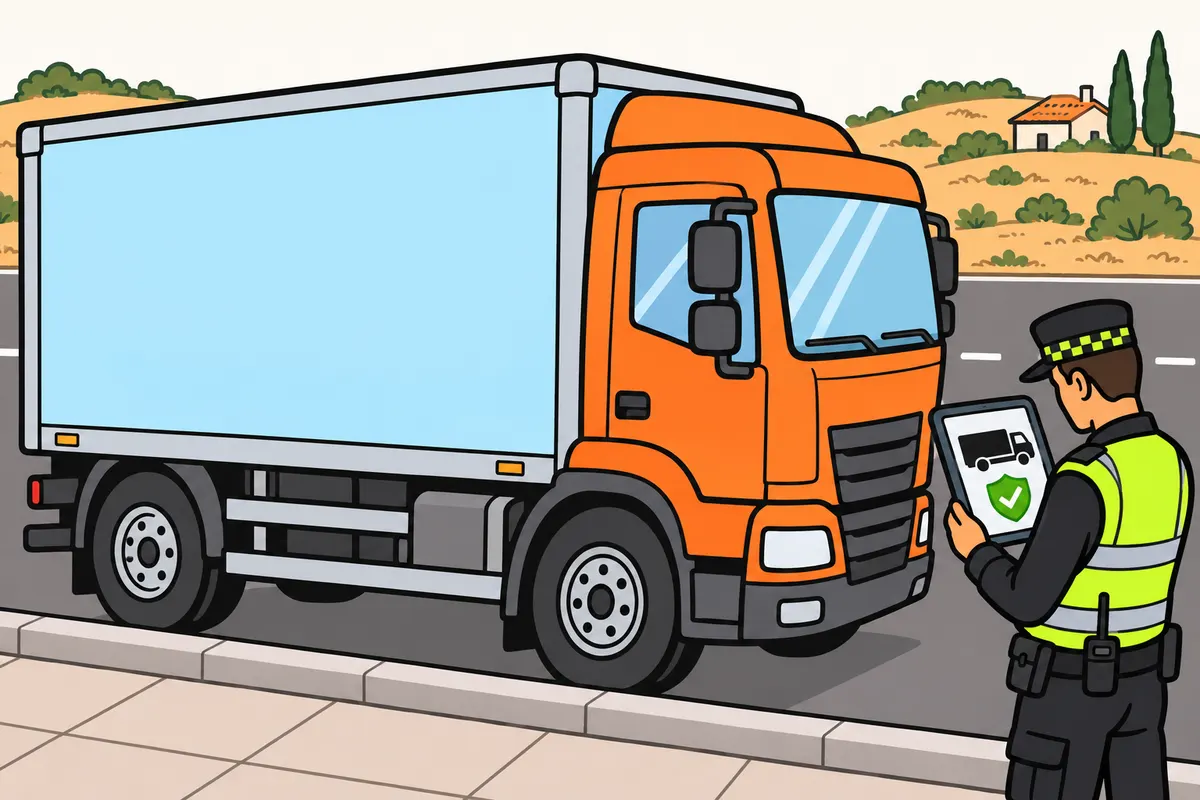
Check your lorry has valid compulsory insurance, even when you carry no paper receipt.
Remember
- Officers check cover through the insured vehicles database.
- If that check fails, your current payment receipt can prove cover.
- An old receipt does not prove your insurance remains valid.
- In Spain, you need not carry a paper policy or payment receipt.
- Your consignment note does not prove vehicle insurance.
Exam trap: Wrong: carrying a policy is enough without effective cover. Right: you must have valid insurance cover.
Read the full explanation
- You must check that valid compulsory insurance is in place: keeping a policy on file without effective cover does not meet this requirement. During a check, officers verify its validity through the Fichero Informativo de Vehículos Asegurados (insured vehicles database). [RD 1507/2008, art. 14](https://www.boe.es/buscar/act.php?id=BOE-A-2008-14915).
- If validity cannot be confirmed through this database, the payment receipt for the current period serves as proof under the conditions set out in the regulations. It must identify the insurer, the vehicle and the period of cover, among other required details. Keep an accessible reference to resolve any problem with the database check. [RD 1507/2008, art. 14](https://www.boe.es/buscar/act.php?id=BOE-A-2008-14915).
- You must not confuse compulsory vehicle insurance with transport contract documentation. An insurance receipt does not describe your consignment's origin, destination or weight, and a carta de porte (consignment note) does not prove that you have insurance cover to use the vehicle on the road. [RD 1507/2008, art. 14](https://www.boe.es/buscar/act.php?id=BOE-A-2008-14915).
- You are not required to carry a paper copy of the policy or the latest payment receipt to drive in Spain. You must keep your cover valid and allow it to be checked. You may keep accessible proof to help if a problem arises with the database check, but distinguish this precaution from a general obligation to carry the physical receipt. [DGT, compulsory documentation](https://www.dgt.es/nuestros-servicios/tu-vehiculo/documentacion-de-un-vehiculo/que-documentacion-debes-llevar-en-tu-vehiculo).
24Insurance cover and lack of insurance
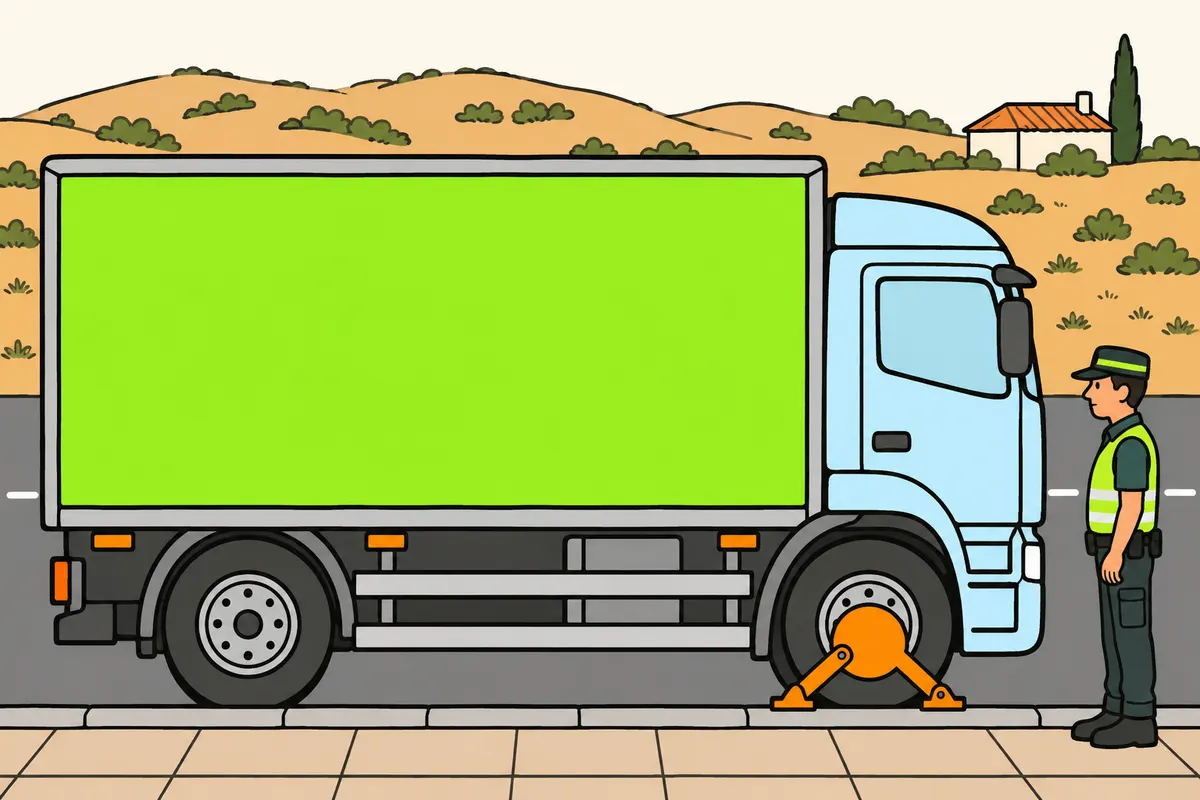
Do not drive uninsured or assume compulsory insurance covers your own injuries, lorry or goods.
Remember
- The owner must maintain the vehicle’s compulsory insurance.
- It does not cover your injuries if you caused the accident.
- It does not cover damage to your own insured lorry or items carried.
- Without insurance, you risk prohibited road use, penalties, impoundment or sealing.
- A promise to arrange insurance later does not let you finish your delivery.
Exam trap: Wrong: compulsory insurance pays for damage to your goods. Right: that cover is not included.
Read the full explanation
- The owner must maintain compulsory third-party liability insurance for a vehicle normally based in Spain, as required by law. You must distinguish this obligation from carrying a paper receipt. The ability to check data electronically does not allow you to use a lorry without the required cover. [RDL 8/2004, arts. 2, 3 and 5](https://www.boe.es/buscar/act.php?id=BOE-A-2004-18911).
- Compulsory insurance does not cover injuries to the driver who causes the accident, or material damage to the insured vehicle itself or the things carried in it, subject to the relevant statutory exclusions. Do not assume that damaged goods qualify for compensation simply because the lorry has compulsory insurance. [RDL 8/2004, arts. 2, 3 and 5](https://www.boe.es/buscar/act.php?id=BOE-A-2004-18911).
- If your vehicle has no compulsory insurance, you are prohibited from driving it, and it may be impounded or sealed, in addition to the prescribed fine. You must resolve the lack of cover; a promise that your company takes out insurance once the delivery is complete is not enough. Commercial urgency does not demonstrate compliance with this obligation. [RDL 8/2004, arts. 2, 3 and 5](https://www.boe.es/buscar/act.php?id=BOE-A-2004-18911).
25Roadside technical inspections
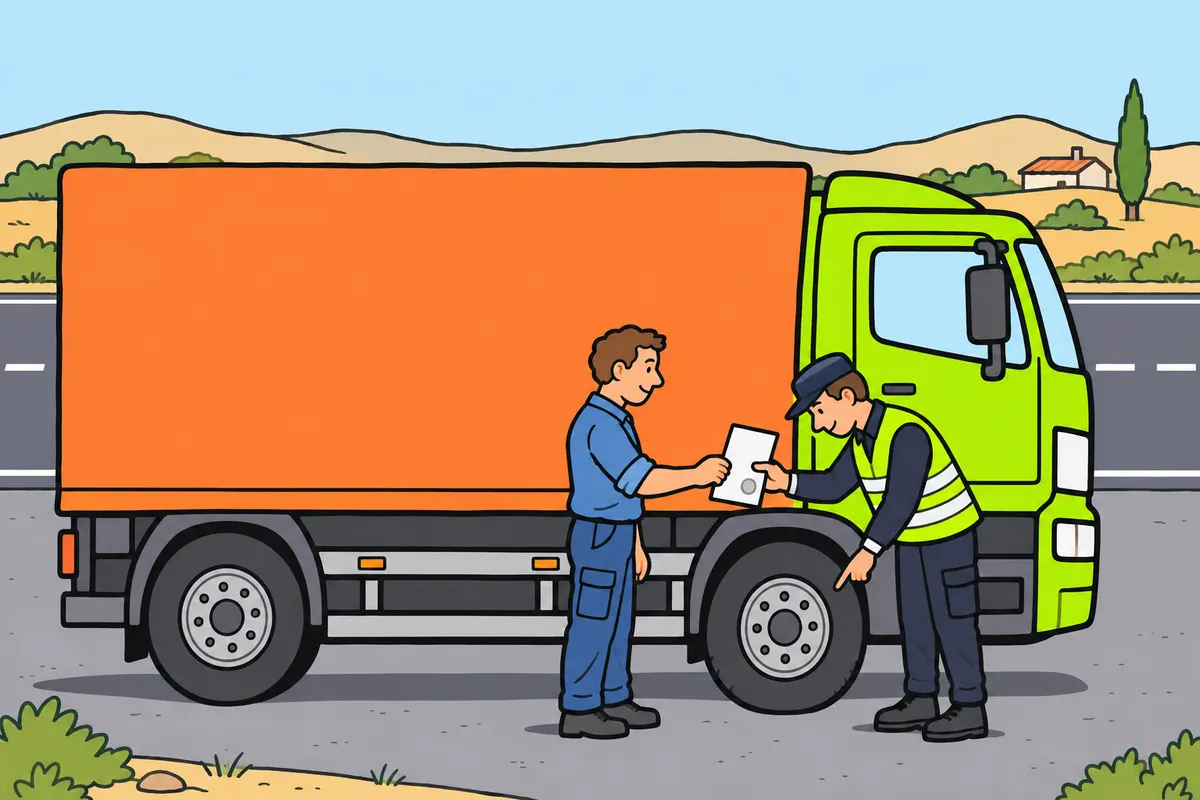
Allow roadside technical inspections even when your ITV is valid.
Remember
- Carry your latest periodic certificate and available roadside report, or electronic equivalents.
- You may face random, company-risk or safety-suspicion checks.
- Inspectors can check your lorry and load securing.
- You must receive a report copy after a more detailed inspection.
- Recently inspected items can be checked again if there is justification.
- Serious or dangerous defects can stop you continuing until corrected.
Exam trap: Wrong: a recent inspection prevents every check. Right: the three-month rule concerns inspected items and allows justified exceptions.
Read the full explanation
- You must keep the latest periodic technical inspection certificate and the available roadside inspection report on board, or their electronic equivalents. Inspectors can check them and carry out visual or technical checks on the condition of your lorry and the securing of its load. A valid ITV (vehicle roadworthiness test) does not prevent a roadside inspection. [RD 563/2017, arts. 7–14](https://www.boe.es/buscar/act.php?id=BOE-A-2017-6512).
- You can be selected based on your company’s risk profile, at random or because of a suspected risk to safety or the environment. You must allow the checks even if you have not visibly carried out a dangerous manoeuvre. Technical checks on your vehicle and checks on your driving behaviour can take place together. [RD 563/2017, arts. 7–14](https://www.boe.es/buscar/act.php?id=BOE-A-2017-6512).
- If the initial inspection justifies it, your vehicle can undergo a more detailed inspection, particularly of its brakes, tyres, wheels, chassis and emissions. You must receive a copy of the relevant report. Keep this document and check which defects you must rectify; do not confuse it with permission to continue working with any defect. [RD 563/2017, arts. 7–14](https://www.boe.es/buscar/act.php?id=BOE-A-2017-6512).
- Components inspected in the preceding three months are not checked again unless there is justification, such as an obvious defect or clear non-compliance. You must understand this rule as applying to the components inspected, rather than as immunity for your lorry from any checks for three months. Serious or dangerous defects can prevent its use until they are rectified. [RD 563/2017, arts. 7–14](https://www.boe.es/buscar/act.php?id=BOE-A-2017-6512).
26Cooperating with officers
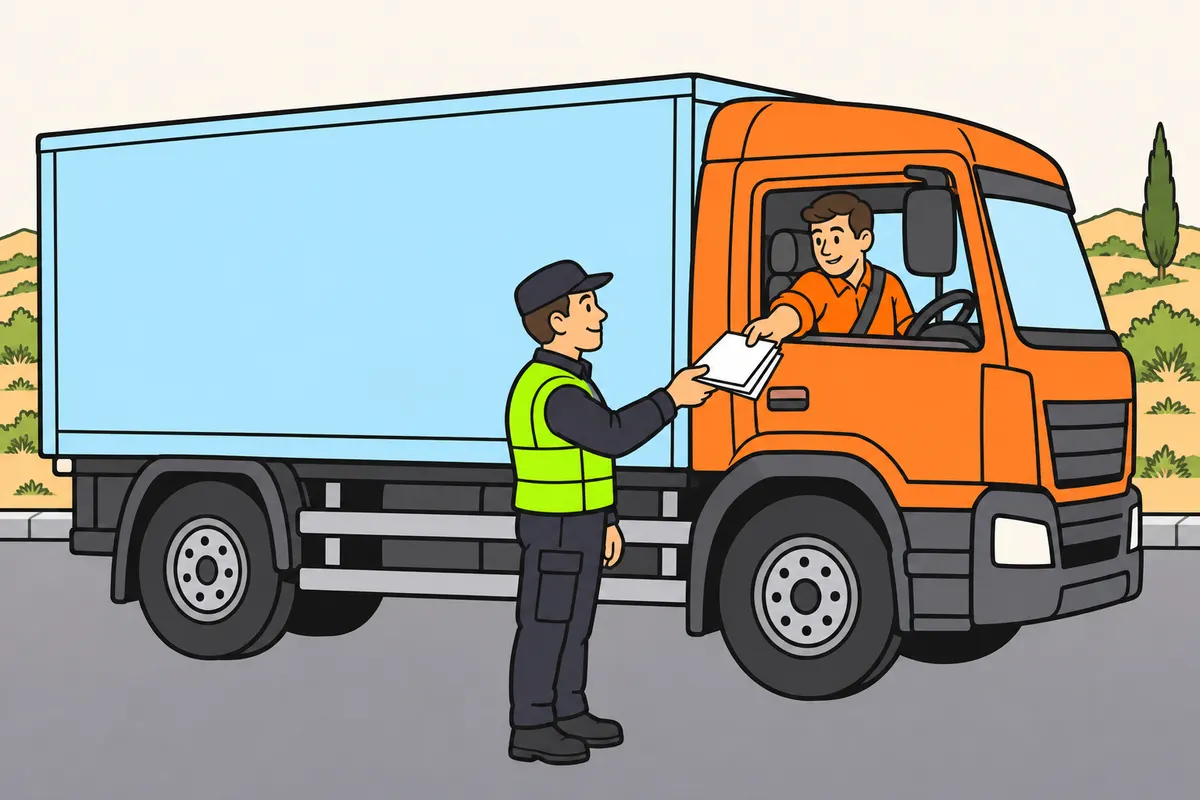
Help officers inspect your vehicle and present documents matching your actual transport.
Remember
- Organise your documents, vehicle documents and consignment documents.
- Allow legally required checks.
- Officers can compare your documents with the transport you carry out.
- Check that the documented registration number matches your lorry.
Exam trap: Wrong: all penalties fall on the driver. Right: distinguish each party’s responsibilities.
Read the full explanation
- You must facilitate inspection checks and produce the documents required under the applicable rules. Simply saying that your company handles everything is not enough if the document must accompany the transport operation. [LOTT, arts. 33 and 138](https://www.boe.es/buscar/act.php?id=BOE-A-1987-17803). [ROTT, arts. 18 and 19](https://www.boe.es/buscar/act.php?id=BOE-A-1990-24442).
- You must allow legally required checks, including those relating to the transport operation and its monitoring equipment. Inspectors can compare the documents with the actual service. A correctly identified consignment can still have other irregularities, for example if the registration number in the documents does not match the lorry used. [LOTT, arts. 33 and 138](https://www.boe.es/buscar/act.php?id=BOE-A-1987-17803). [ROTT, arts. 18 and 19](https://www.boe.es/buscar/act.php?id=BOE-A-1990-24442).
- The company holding the authorisation, the consignor and you as the driver each have your own responsibilities. The legislation allocates responsibilities according to the infringement and each party’s role. [LOTT, arts. 33 and 138](https://www.boe.es/buscar/act.php?id=BOE-A-1987-17803). [ROTT, arts. 18 and 19](https://www.boe.es/buscar/act.php?id=BOE-A-1990-24442).
27When officers can immobilise your lorry
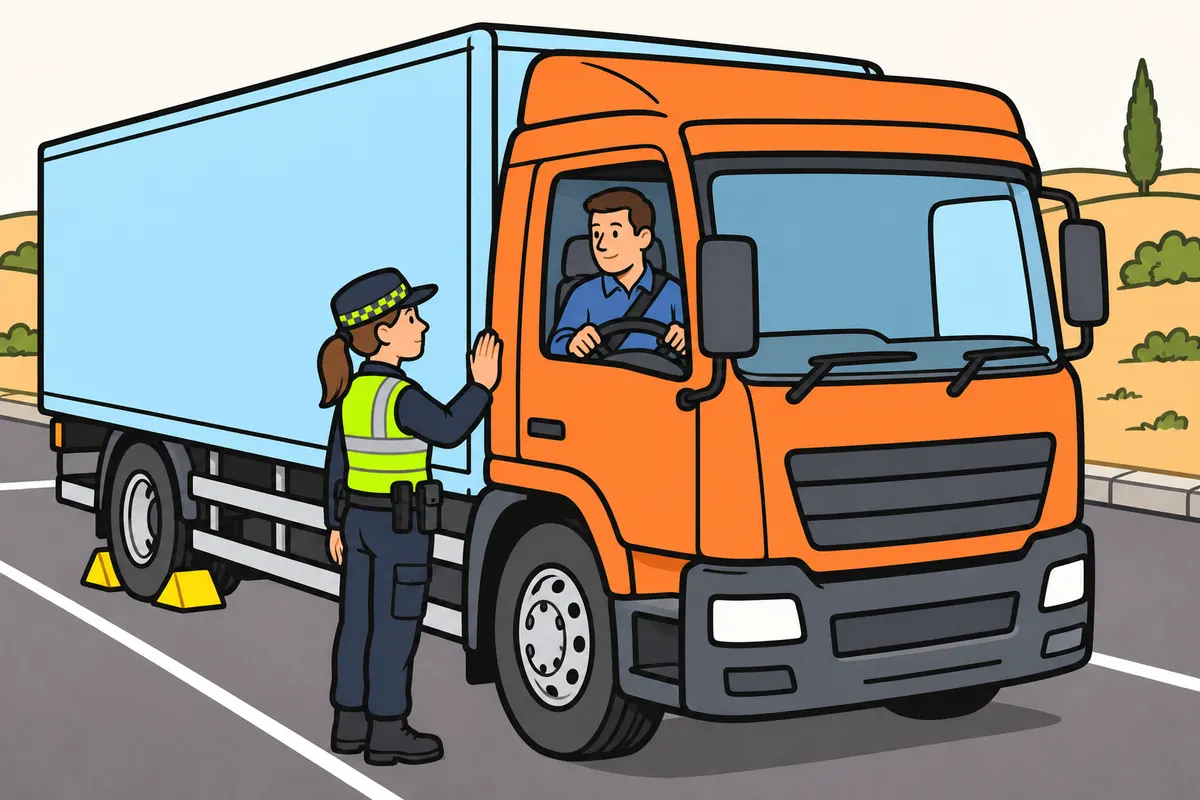
If officers immobilise your lorry, do not continue while the cause remains.
| Immobilisation costs under the Traffic Act | Who pays |
|---|---|
| First | Offending driver |
| Failing that | Usual driver or renter |
| Failing those | Owner |
| Duly substantiated exception | Theft or other use against the owner’s wishes |
Remember
- Missing road-use authorisation, missing insurance or particularly serious defects can cause immobilisation.
- Reasonable indications of tampering with monitoring equipment can also cause immobilisation.
- Follow instructions about where to stop your lorry.
- Driving or rest breaches over 50 %: immobilisation, unless another driver replaces you.
- Transport legislation adds its own grounds for immobilisation.
- Before immobilisation is lifted, its causes must be resolved and its costs paid.
Exam trap: Wrong: resolving the cause alone lets you continue. Right: costs must be paid before immobilisation is lifted; you can appeal. Officers may withhold your registration certificate until payment is shown.
Read the full explanation
- Officers can immobilise your lorry if it lacks administrative authorisation for road use, fails to meet the conditions of that authorisation or has defects posing a particularly serious risk. Driving a vehicle requiring category C or D without the corresponding personal entitlement is also a ground for immobilisation. Lacking the required entitlement is a different situation from having difficulty producing a valid document. [Traffic Act, arts. 104 and 105](https://www.boe.es/buscar/act.php?id=BOE-A-2015-11722).
- Lack of compulsory insurance and reasonable grounds to suspect tampering with monitoring equipment are legally specified grounds for immobilisation. There are also grounds relating to alcohol or drug tests and other conditions concerning the vehicle or driver. Immobilisation affects whether you can continue; it does not simply mean receiving a penalty notice and continuing until you unload. [Traffic Act, art. 104.1](https://www.boe.es/buscar/act.php?id=BOE-A-2015-11722#a104).
- The Traffic Act (art. 104.1 f) provides for immobilisation when driving time is exceeded or rest time is reduced by more than 50 %, unless the driver is replaced. You must also know the transport rules under the LOTT: this figure does not mean you can commit lesser infringements without risking immobilisation. [Traffic Act, art. 104.1 f](https://www.boe.es/buscar/act.php?id=BOE-A-2015-11722#a104).
- You must follow officers’ instructions on where your lorry is immobilised; the measure is lifted when its cause is resolved, subject to the payment requirement set out below. Removal and impoundment can be ordered in the circumstances specified by law. [Traffic Act, arts. 104 and 105](https://www.boe.es/buscar/act.php?id=BOE-A-2015-11722#a104).
- The costs of an immobilisation are paid by the offending driver (failing that the usual driver or renter, then the owner). Exceptions apply to theft and other uses against the owner’s wishes where duly substantiated. The costs must be paid before the immobilisation is lifted, without prejudice to appeal or the right to recover them from the responsible party; agents may withhold the permiso de circulación (vehicle registration certificate) until payment is shown. [Traffic Act, art. 104.6](https://www.boe.es/buscar/act.php?id=BOE-A-2015-11722#a104).
28Immobilisation under transport legislation
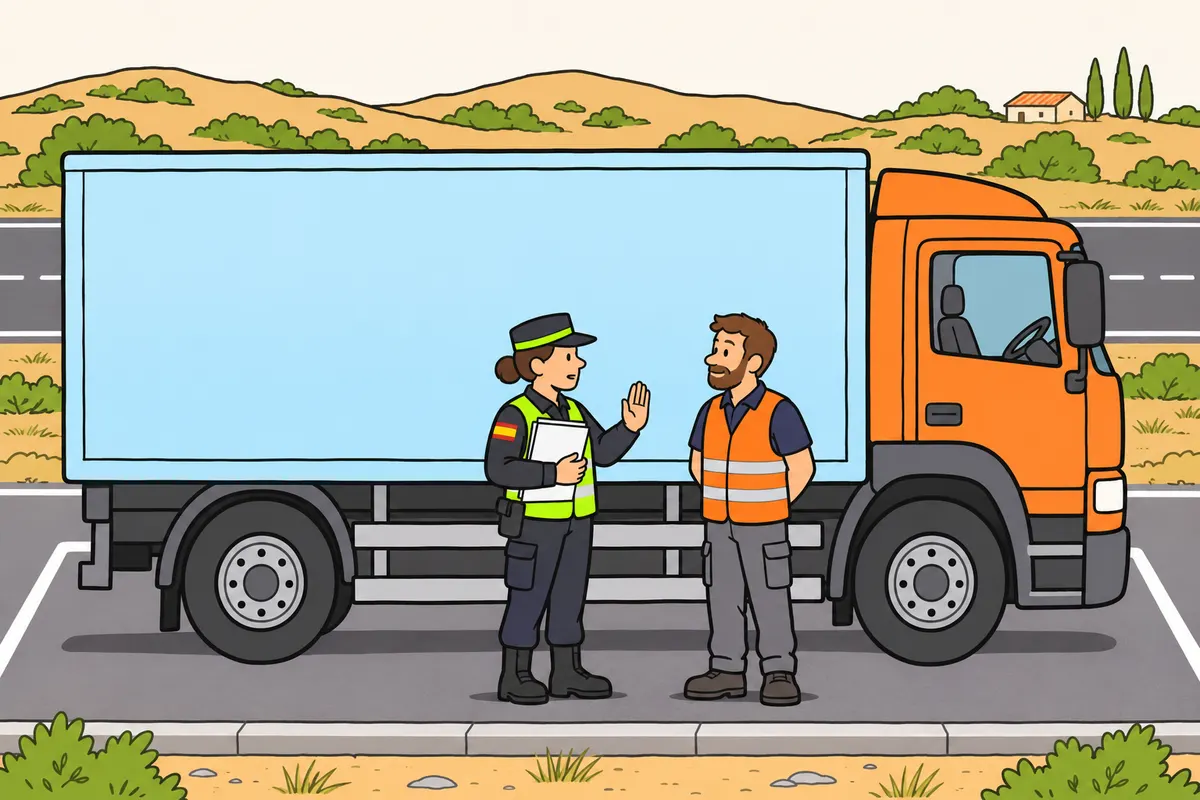
Follow the conditions for continuing and resolve the cause of immobilisation with your company.
Remember
- Daily driving, break or daily rest breaches can cause immobilisation.
- The exception requires a minor infringement and no more than 30 km remaining.
- Required documents are retained until the causes are resolved.
- The carrier must safeguard your lorry, load and belongings.
- If the location is dangerous, follow instructions to move your lorry.
- The carrier must pay the required costs before recovering the vehicle.
Exam trap: Wrong: payment always lets you continue. Right: you must also resolve the cause of immobilisation.
Read the full explanation
- Immediate immobilisation must be ordered in the transport-related circumstances listed in the LOTT, including certain cases involving a lack of entitlement or monitoring equipment. You must avoid assuming that every documentary defect automatically has the same consequence. The legally specified circumstances and the severity determine the appropriate action. [LOTT, art. 143.4](https://www.boe.es/buscar/act.php?id=BOE-A-1987-17803).
- Infringements of daily driving limits, compulsory breaks or daily rest require immobilisation, unless the infringement is minor and no more than 30 km remain to the destination. Both conditions must be met for this exception. You cannot choose a nearby destination as general permission to disregard the time limits for the service. [LOTT, art. 143.4](https://www.boe.es/buscar/act.php?id=BOE-A-1987-17803).
- During immobilisation, the specified documents are retained until the causes are resolved; the transport operator is responsible for safeguarding the vehicle, its load and belongings. If the location is dangerous, the vehicle must be moved to the place designated by the authority. You must coordinate the solution with your company while following the instructions given at the check. [LOTT, art. 143.4](https://www.boe.es/buscar/act.php?id=BOE-A-1987-17803).
- The transport operator bears the costs of these operations, and they must be paid before the vehicle is returned. The fine, the costs and rectification serve different purposes: paying an amount does not in itself demonstrate that your lorry is technically safe or that the rest period which prompted the measure is complete. [LOTT, art. 143.4](https://www.boe.es/buscar/act.php?id=BOE-A-1987-17803).
29Passenger documentation: the distinction for category C
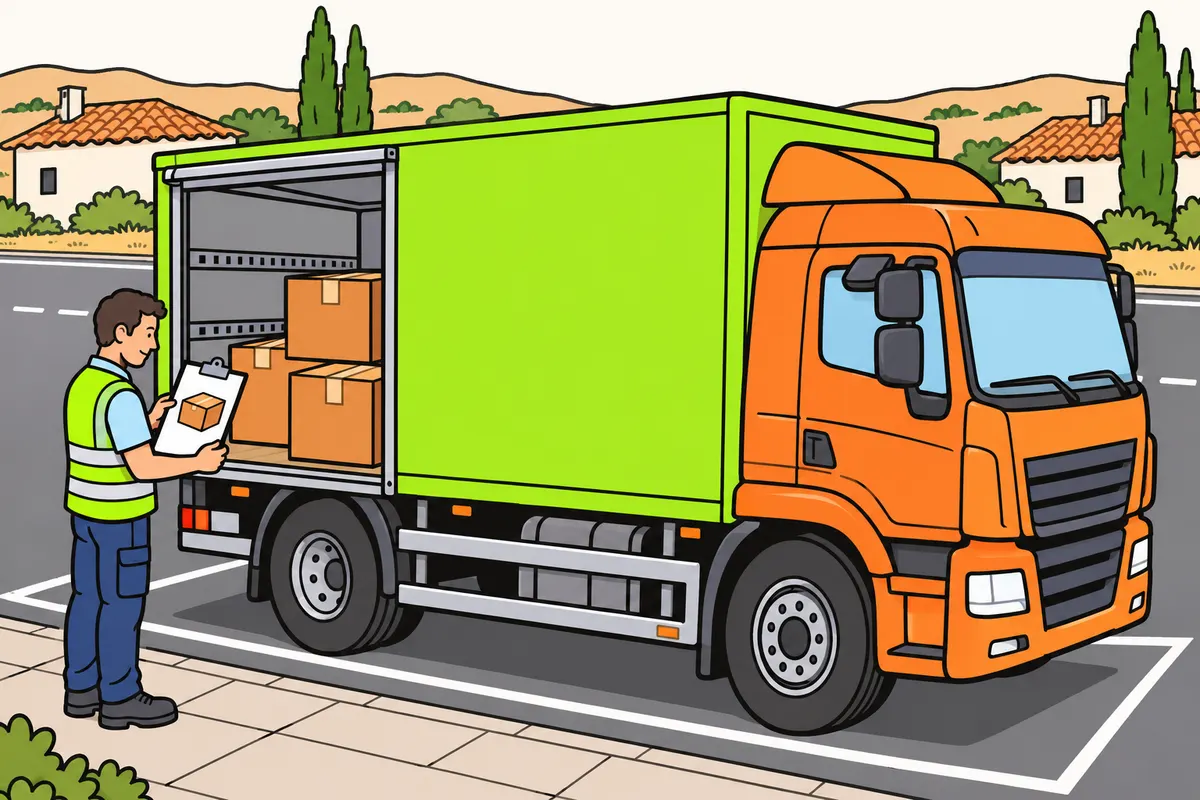
Distinguish your goods documents from the journey sheet required for certain passenger transport.
| Transport requiring the document | Document |
|---|---|
| Goods transport subject to control-document rules | Consignment control document |
| Public passenger transport subject to journey-sheet rules | Digital journey sheet |
Remember
- Carry the required documents for your goods consignment.
- A passenger journey sheet does not replace your goods control document.
- Required passenger journey sheets must be digital from the stated date.
Exam trap: Wrong: the journey sheet serves your goods load. Right: it applies to passenger transport subject to that requirement.
Read the full explanation
- You must carry the documentation for your goods consignment; the hoja de ruta (journey sheet) applies to public passenger transport subject to this requirement and does not replace the control document for your load. [Order FOM/1230/2013, art. 1](https://www.boe.es/buscar/act.php?id=BOE-A-2013-7218).
- If you identify a required passenger journey sheet, its format must be digital from 5 October 2026. [Law 9/2025, eighth transitional provision](https://www.boe.es/buscar/act.php?id=BOE-A-2025-24545).
Prepare the documents for a transport operation
Check the driver, vehicle, authorisation and consignment before setting off.
- Identify whether the operation is public transport or ancillary private transport and whether the journey is domestic or international.
- Check your driving licence, proof of CAP where applicable and tachograph driver card.
- Check the permiso de circulación (vehicle registration certificate), tarjeta ITV (vehicle technical inspection card), expiry date and required reports, as well as insurance cover.
- Check the applicable transport authorisation and that the vehicle is linked to it; for international transport, prepare the certified true copy of the licence and the other required documents.
- Check the consignment details and receive the DeCA (electronic administrative control document) and its QR code before the operation starts where required.
- Check that you can show the documents and produce the tachograph records for the control period.
Act on an ITV result
The result determines whether you can drive and how you must arrange repairs.
- Read the result and the defects listed in the report.
- If the result is favorable (pass) with minor defects, repair them within a maximum of two months.
- If the result is desfavorable (fail), restrict driving to the circumstances permitted by the regulations for repairs or bringing the vehicle into compliance and returning for ITV.
- If the result is negativa (unsafe to drive), arrange for the lorry to be transported from the test station by external means.
- For a desfavorable or negativa result, rectify the defects and present the vehicle for another inspection within the period granted, which cannot exceed two months.
- Keep the result and check the next inspection due date before resuming normal operations.
Present a DeCA at a roadside check
Show the current version and enable it to be checked.
- Locate the copy for the operation and the vehicle you are using.
- Present the PDF with its QR code, the printed copy with its QR code or, failing that, the QR code.
- Enable the PDF to be downloaded directly through the QR code using the required system.
- If there are changes, present the updated version supplied by your company; a handwritten note does not amend the electronic document.
- Cooperate with the other checks on you, your lorry and the transport operation; the DeCA does not replace those supporting documents.
Finished this module?
Mark it as read and you will see your progress on the theory list.