
Theory · D1 Licence - Minibus · Module 1 of 18
Passenger transport driving licences and categories
You learn which minibuses you can drive with D1 and when you need D or a category covering trailers, linking minimum ages to the CAP (certificate of professional competence). You also learn the requirements, tests, medical fitness standards and licence renewal rules, and distinguish passenger transport categories to answer exam questions.
1The D1 licence and minibus capacity
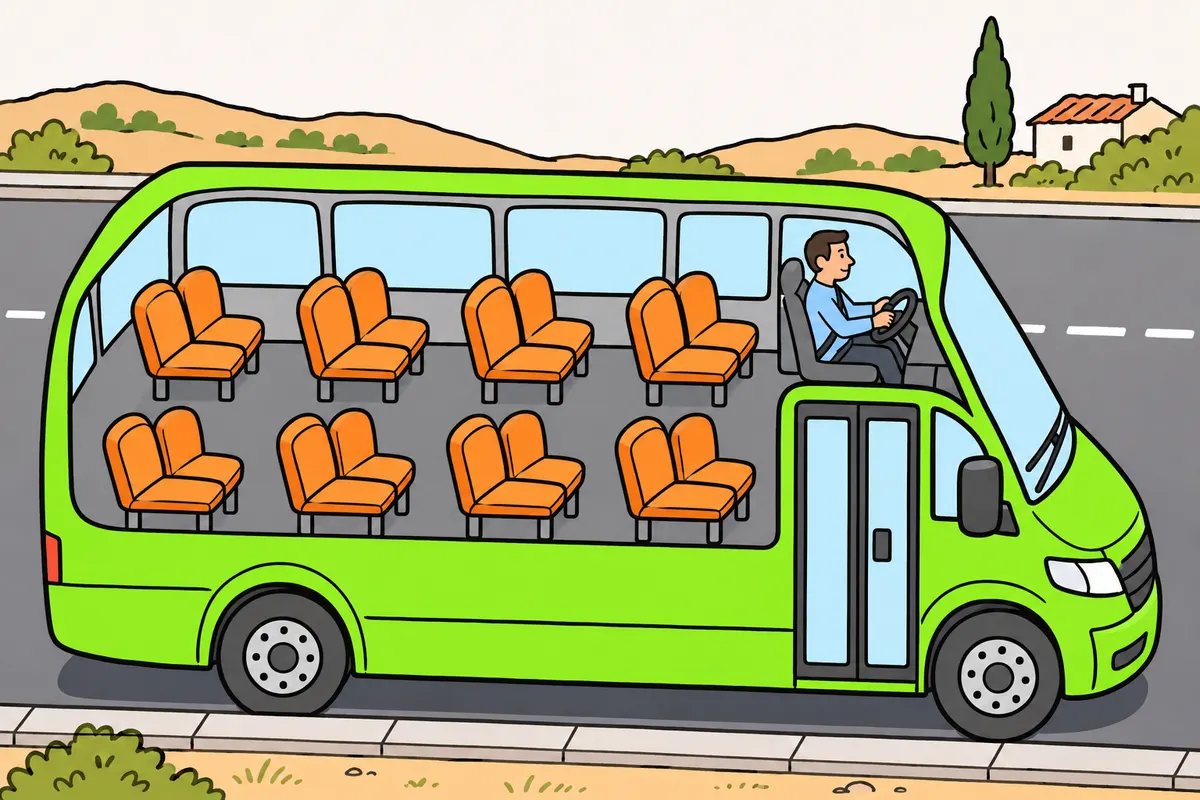
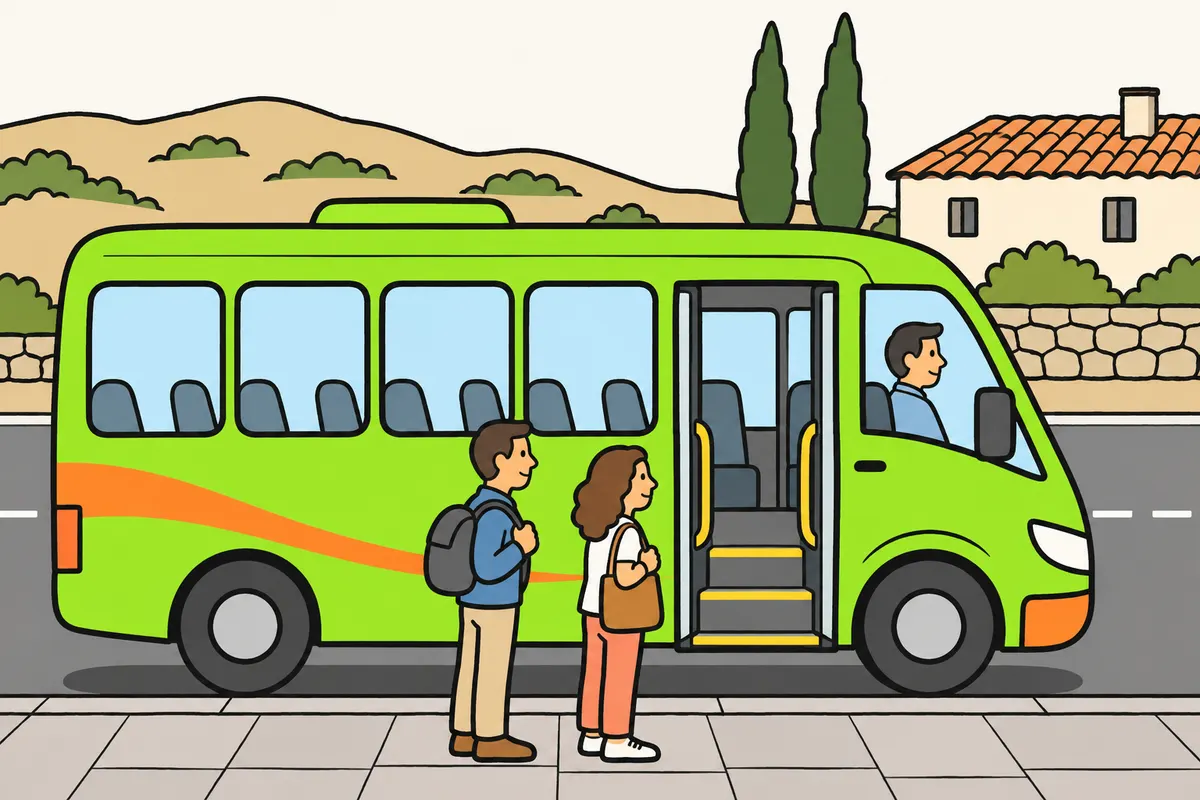
With D1, you can drive minibuses within its passenger and length limits.
| Vehicle | Licence |
|---|---|
| Up to sixteen passengers besides you; up to eight m long | D1 |
| Exceeds either limit | D |
Remember
- Check the authorised capacity, even when you carry fewer passengers.
- Do not count yourself among the passengers.
- Check the minibus length too.
- Weight alone does not decide the bus licence.
Exam trap: Wrong: checking the seats is enough. Right: for D1, also check the maximum length of eight m.
Read the full explanation
- With D1, you can drive motor vehicles built for a maximum of sixteen passengers in addition to you and a maximum length of eight metres. Both limits apply to the vehicle's specifications, even when you carry fewer passengers. [RGCond, art. 4.2](https://www.boe.es/buscar/act.php?id=BOE-A-2009-9481#a4).
- If your minibus has seventeen seats in total, including yours, and is eight metres long, it falls within D1. If it exceeds that length or accommodates seventeen passengers in addition to you, you need D. [RGCond, art. 4.2](https://www.boe.es/buscar/act.php?id=BOE-A-2009-9481#a4).
- With D, you can drive motor vehicles built for more than eight passengers in addition to you; this category includes buses that exceed the capacity or length limits for D1. [RGCond, art. 4.2](https://www.boe.es/buscar/act.php?id=BOE-A-2009-9481#a4).
- Category D1 sets no upper limit on the minibus's MMA (maximum authorised mass). Categories C1 and C are for motor vehicles other than those authorised by D1 or D; weight alone does not determine the licence you need for a bus. [RGCond, art. 4.2](https://www.boe.es/buscar/act.php?id=BOE-A-2009-9481#a4).
2Trailers: the 750 kg limit
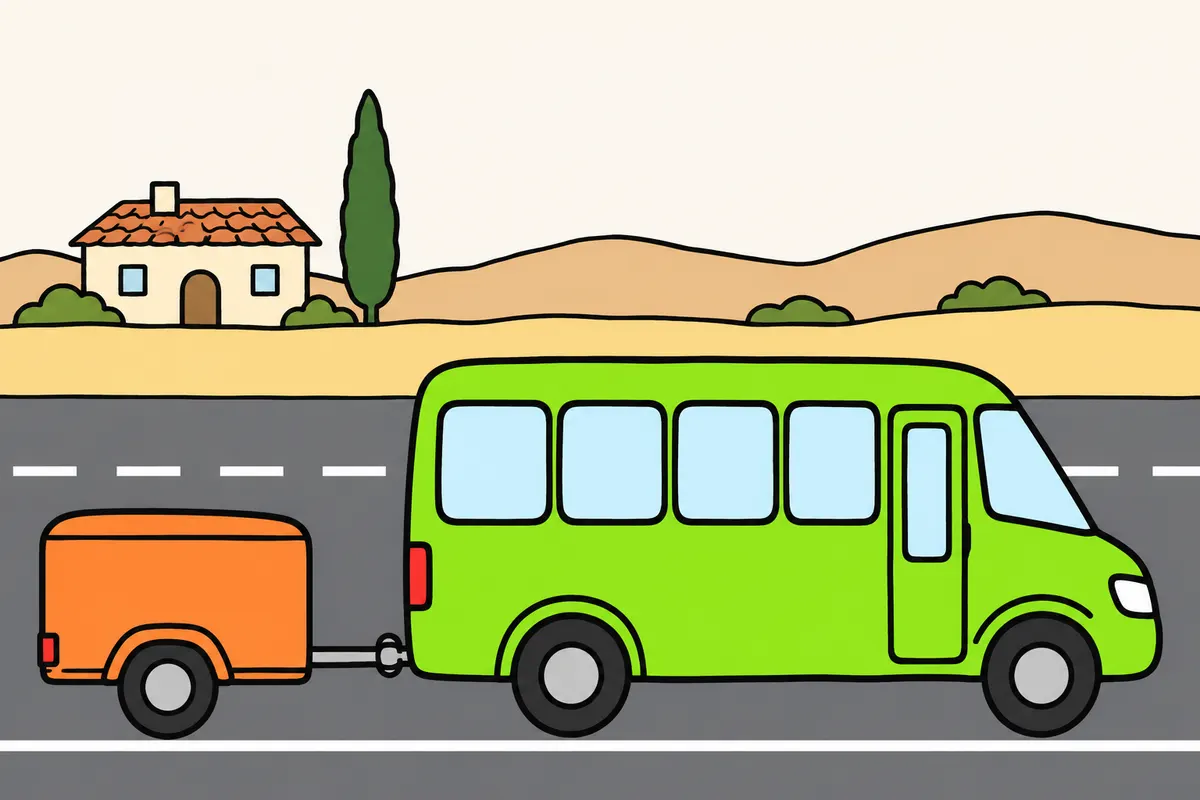
Your required licence depends on the trailer’s MMA and the vehicle towing it.
| Trailer MMA | With D1 towing vehicle | With D towing vehicle |
|---|---|---|
| Up to and including 750 kg | D1 | D |
| Over 750 kg | D1+E | D+E |
Remember
- Check the trailer’s MMA, even when it is empty.
- MMA means maximum authorised mass.
- With +E, you cannot increase your minibus’s permitted capacity or length.
- You need the matching valid licence before getting +E.
- Keep within the combination’s authorised technical limits.
Exam trap: Wrong: you need +E at exactly 750 kg MMA. Right: you need it only when the trailer exceeds 750 kg.
Read the full explanation
- With D1 or D, you can tow a trailer with an MMA of 750 kg or less. You must use its MMA as the reference, even when it is unladen. [RGCond, art. 4.2](https://www.boe.es/buscar/act.php?id=BOE-A-2009-9481#a4).
- If the trailer's MMA exceeds 750 kg, you need D1+E with a D1 towing vehicle, or D+E with a D towing vehicle. The definition of these categories sets no maximum MMA for the combination; you must comply with the authorised technical conditions for the vehicles. [RGCond, art. 4.2](https://www.boe.es/buscar/act.php?id=BOE-A-2009-9481#a4).
- The +E entitlement does not increase the passenger capacity or permitted length of the D1 towing vehicle. For example, D1+E does not allow you to drive a forty-seat bus; if it tows a 650 kg trailer, the minimum licence among those mentioned is D. [RGCond, arts. 4.2 and 5.1-2](https://www.boe.es/buscar/act.php?id=BOE-A-2009-9481).
- To obtain D1+E or D+E, you must hold a valid D1 or D licence respectively. D+E includes D1+E, and obtaining C+E gives you D+E when you also hold D. [RGCond, arts. 4.2 and 5.1-2](https://www.boe.es/buscar/act.php?id=BOE-A-2009-9481).
3Articulated buses, trolleybuses and tourist trains
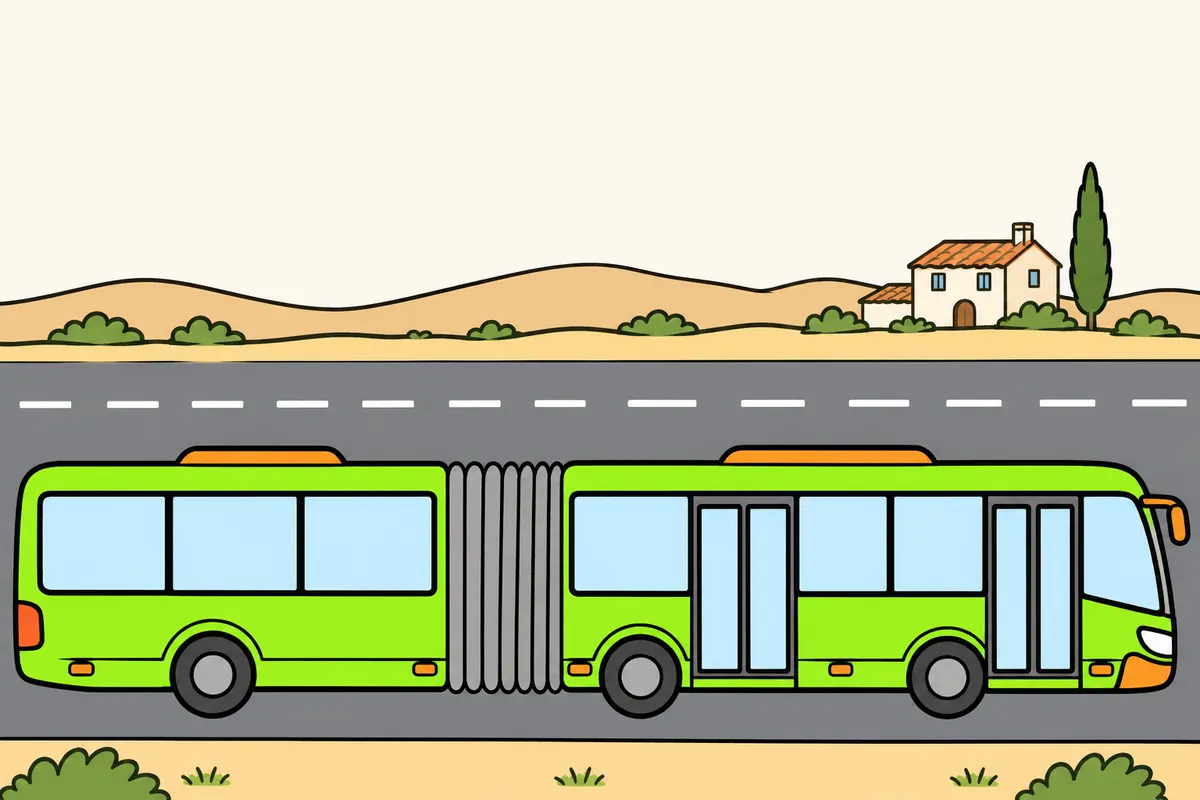
Choose your licence by vehicle type; articulation or carriages do not automatically require +E.
| People including you: non-agricultural special vehicles and combinations | Licence |
|---|---|
| Up to nine | B |
| Over nine and up to seventeen | D1 |
| Over seventeen | D |
Remember
- Do not confuse bus articulation with a separate trailer.
- For a trolleybus, apply the bus licence rules.
- For non-agricultural special vehicles, include yourself in the number of people.
Exam trap: Wrong: tourist train carriages automatically require D+E. Right: apply the people-count rule for non-agricultural special vehicles and their combinations.
Read the full explanation
- An articulated bus consists of rigid parts connected through an articulated section, which you separate in a workshop. You must treat it as an articulated bus and must not equate that articulation with an independent trailer that in itself requires you to obtain D+E. [RGCond, arts. 4, 5.8 and 5.12](https://www.boe.es/buscar/act.php?id=BOE-A-2009-9481). [RGV, annex II](https://www.boe.es/buscar/act.php?id=BOE-A-1999-1826).
- For a sixty-seat articulated bus without a separate trailer, you need D. The number of axles and the articulated section do not make C+E the required licence; the D1 passenger limit prevents you from choosing that category in this example. [RGCond, arts. 4, 5.8 and 5.12](https://www.boe.es/buscar/act.php?id=BOE-A-2009-9481).
- To drive a trolleybus, you need the corresponding bus licence. If it has thirty-five seats, you must choose D from D, D1+E and D+E as the minimum category when it does not tow a trailer requiring the additional entitlement; its electric power supply does not create a different licence category. [RGCond, arts. 4, 5.8 and 5.12](https://www.boe.es/buscar/act.php?id=BOE-A-2009-9481).
- For non-agricultural special vehicles and combinations of these vehicles carrying people, you apply a specific rule: B for up to nine people including the driver, D1 for more than nine but no more than seventeen, and D for more than seventeen. You therefore need D for a tourist train carrying twenty people; its carriages do not automatically require D+E. [RGCond, arts. 4, 5.8 and 5.12](https://www.boe.es/buscar/act.php?id=BOE-A-2009-9481).
4A valid B licence and the requirements for D1
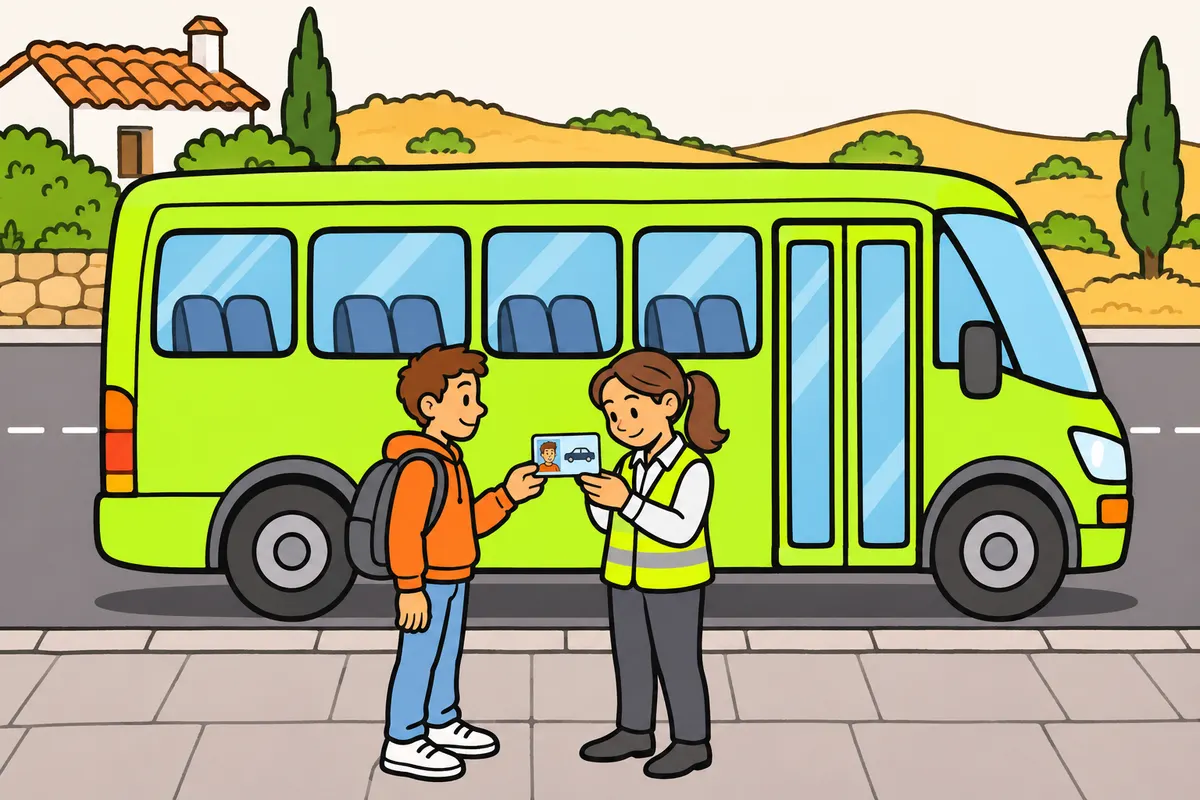
To obtain D1, you need a valid B licence and must meet the other requirements.
| You obtain | You also receive |
|---|---|
| D | D1 |
Remember
- You do not need to have held B for a minimum period.
- Meet the age, health, test and residence or study requirements.
- You cannot obtain it during a court ban, administrative suspension or seizure.
- If you lose validity through points, follow the required procedure.
- Check the categories and dates on your new card.
Exam trap: Wrong: you can obtain D1 with only AM. Right: you need valid B and must meet the other requirements.
Read the full explanation
- To be issued with D1 or D, you must hold a valid B licence; AM and the LVA or LCM licences do not meet this requirement. You do not need to have held B for a specific minimum period to obtain D1: you must distinguish holding the prerequisite licence from accumulating years of experience in other categories. [RGCond, art. 5.1](https://www.boe.es/buscar/act.php?id=BOE-A-2009-9481).
- You must meet the relevant age requirement and physical and psychological fitness standards, and pass the required tests. You must also meet the residence or student-stay requirements applicable to your situation; enrolling at a driving school does not replace these conditions for issuing a licence. [RGCond, arts. 4.1, 5.1, 7 and 8](https://www.boe.es/buscar/act.php?id=BOE-A-2009-9481).
- You cannot obtain the licence while you are disqualified from driving by a court or your licence is subject to administrative suspension or seizure. If your licence loses its validity because you have used up all your points, you must follow the applicable procedure and time limits; applying for a higher category does not resolve that situation. [RGCond, arts. 4.1, 5.1, 7 and 8](https://www.boe.es/buscar/act.php?id=BOE-A-2009-9481).
- You have a single document showing your different categories. When you obtain the new entitlement, you receive a replacement for the previous document, but you must check the categories granted and their dates: having a physically new card does not mean that all your entitlements have the same scope or validity. [RGCond, arts. 4.1, 5.1, 7 and 8](https://www.boe.es/buscar/act.php?id=BOE-A-2009-9481).
- When you obtain D, you also receive D1. [RGCond, art. 5.2](https://www.boe.es/buscar/act.php?id=BOE-A-2009-9481#a5).
5General minimum ages and D1 with CAP
With standard CAP, you can obtain D1 earlier, but your driving is limited to Spain.
| Route to D1 and D1+E | Age and condition |
|---|---|
| General | From twenty-one |
| Standard initial CAP | From eighteen; Spain only until twenty-one |
Remember
- With standard initial CAP, you can obtain D1 and D1+E from eighteen.
- Until twenty-one, you can drive only within Spain.
- This route has no service-distance limit.
- Accelerated CAP does not lower the age to eighteen.
Exam trap: Wrong: D1 from eighteen with standard CAP has a fifty km limit. Right: this route limits you to Spain until twenty-one, without a distance limit.
Read the full explanation
- You can obtain D1 and D1+E from the general minimum age of twenty-one. [RGCond, art. 4.2](https://www.boe.es/buscar/act.php?id=BOE-A-2009-9481#a4).
- You can obtain D1 and D1+E from eighteen if you hold the CAP (Certificate of Professional Competence) through the standard initial qualification. Until you turn twenty-one, you can only drive these vehicles within Spain; this exception does not impose a maximum service route length of fifty kilometres. [RGCond, art. 4.2](https://www.boe.es/buscar/act.php?id=BOE-A-2009-9481#a4).
- The accelerated initial qualification does not allow you to reduce the minimum age for D1 or D1+E to eighteen. [RGCond, art. 4.2](https://www.boe.es/buscar/act.php?id=BOE-A-2009-9481#a4).
6D with the standard initial qualification
With standard CAP, you can drive D earlier, depending on your age, territory and service.
| Age with standard CAP | Conditions for D and D+E |
|---|---|
| From twenty-one | No age-based service restriction |
| From twenty | Within Spain until twenty-one |
| From eighteen | Within Spain; no passengers or regular routes up to fifty km, until twenty-one |
Remember
- The general minimum age for D and D+E is twenty-four.
- From twenty-one, standard CAP lets you drive D and D+E.
- From twenty, you must stay within Spain until twenty-one.
- From eighteen, this special route requires standard CAP and driving within Spain.
Exam trap: Wrong: at eighteen, standard CAP covers every passenger service. Right: it covers no passengers or regular routes up to fifty km, within Spain and until twenty-one.
Read the full explanation
- You can obtain D and D+E from the general minimum age of twenty-four, or from twenty-one with CAP through the standard initial qualification. [RGCond, art. 4.2](https://www.boe.es/buscar/act.php?id=BOE-A-2009-9481#a4).
- With the standard CAP, you can drive D and D+E vehicles from twenty within Spain. The territorial restriction remains until you turn twenty-one. [RGCond, art. 4.2](https://www.boe.es/buscar/act.php?id=BOE-A-2009-9481#a4).
- From eighteen, with the standard CAP and within Spain, you can drive D and D+E vehicles without passengers or on regular passenger services whose route does not exceed fifty kilometres. This route to entitlement applies until you turn twenty-one; for an occasional service carrying passengers, you must meet the conditions of another route to entitlement. [RGCond, art. 4.2](https://www.boe.es/buscar/act.php?id=BOE-A-2009-9481#a4).
7D with the accelerated initial qualification
Accelerated CAP lets you obtain D earlier, with service limits at the younger age.
| Age with accelerated CAP | Services with D and D+E |
|---|---|
| From twenty-one | Regular passenger routes up to fifty km |
| From twenty-three | No fifty-kilometre regular-service restriction |
Remember
- From twenty-three, the accelerated CAP has no fifty-kilometre regular-service restriction.
- From twenty-one, you may drive regular services up to fifty km.
- A short occasional service does not meet that condition.
Exam trap: Wrong: at twenty-one, accelerated CAP allows any short D trip. Right: you need a regular passenger service with a route no longer than fifty km.
Read the full explanation
- With CAP (certificate of professional competence) obtained through the accelerated initial qualification, you can obtain D and D+E from the age of twenty-three without the restriction to regular services with routes of fifty kilometres. [RGCond, art. 4.2](https://www.boe.es/buscar/act.php?id=BOE-A-2009-9481#a4).
- From the age of twenty-one, with accelerated CAP, you can drive D and D+E vehicles on regular passenger services whose route does not exceed fifty kilometres. An occasional service covering forty kilometres does not meet this condition. [RGCond, art. 4.2](https://www.boe.es/buscar/act.php?id=BOE-A-2009-9481#a4).
8The licence and CAP serve different purposes
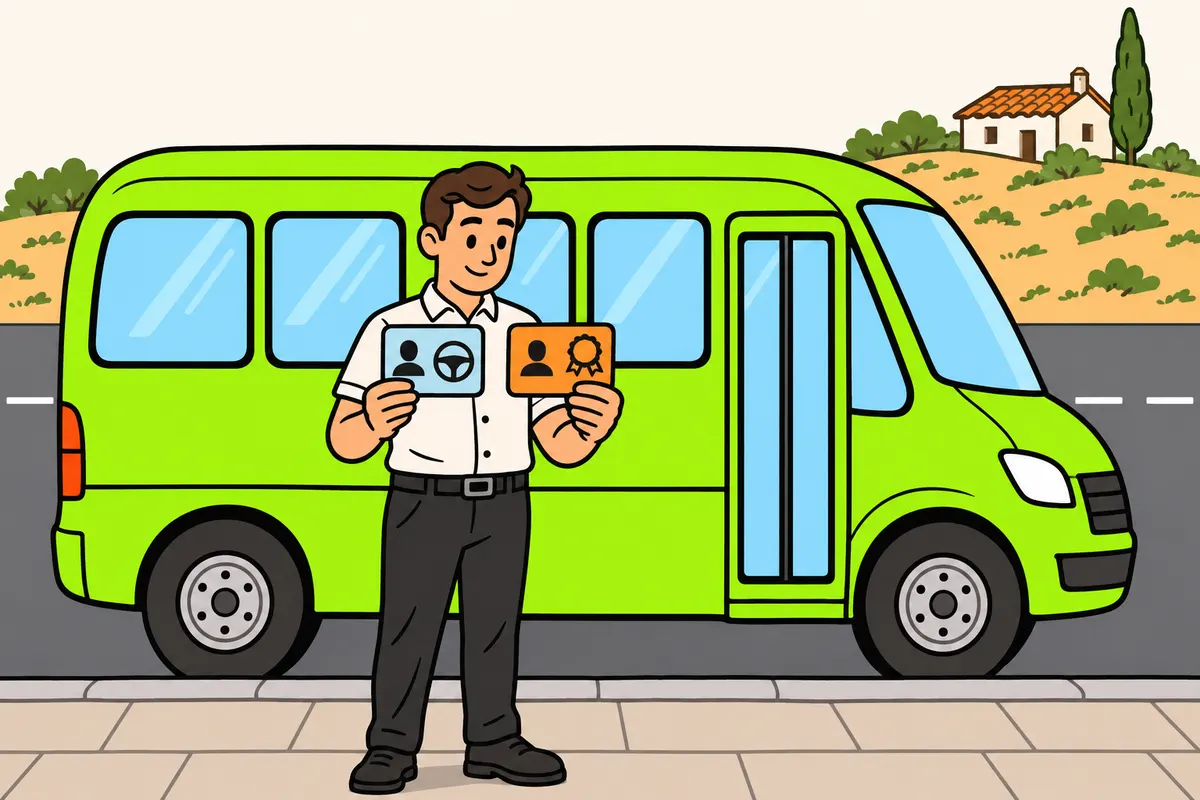
Your licence lets you drive; CAP qualifies you for covered professional work.
| Requirement | What it does for you |
|---|---|
| Licence | Allows you to drive that category |
| CAP | Confirms your professional qualification for covered activities |
Remember
- Check both the licence and CAP rules for your work.
- You may train and take the CAP exam without a licence.
- You need the right licence category to drive.
- Initial CAP combines classroom lessons and practical training; you must also pass the exam.
- Do not confuse periodic training with medical renewal.
- Driving without passengers does not by itself exempt you from CAP.
Exam trap: Wrong: a passenger licence issued before 11 September 2008 removes all CAP requirements. Right: the exemption covers initial qualification; you must complete the applicable periodic training.
Read the full explanation
- Your D1 licence confirms your entitlement to drive that category of vehicle; CAP confirms the professional qualification required for activities covered by its regulations. To work as a minibus driver, you must check both requirements and any applicable exemptions, without treating either as a substitute for the other. [RD 284/2021, art. 1](https://www.boe.es/buscar/act.php?id=BOE-A-2021-6624#a1).
- The standard initial qualification consists of a 280-hour course and an examination; the accelerated qualification consists of 140 hours and an examination. You can take the training and sit the CAP examination without already holding a driving licence, but to drive you also need the appropriate driving licence category. [RD 284/2021, arts. 5-6](https://www.boe.es/buscar/act.php?id=BOE-A-2021-6624#a5).
- CAP periodic training consists of 35 hours every five years for drivers within its scope. You must distinguish this cycle from the medical renewal of D1: although both are required every five years in certain cases, completing one does not automatically satisfy the other. [RD 284/2021, art. 7](https://www.boe.es/buscar/act.php?id=BOE-A-2021-6624#a7).
- The regulations provide specific exemptions, such as vehicles used for practical lessons or tests without carrying out transport operations during those activities. Driving without passengers does not in itself exempt you from CAP. [RD 284/2021, art. 2](https://www.boe.es/buscar/act.php?id=BOE-A-2021-6624#a2).
- If your passenger transport driving licence was issued before 11 September 2008, the exemption provided relates to the initial qualification. You must complete the applicable periodic training; you cannot interpret that date as a permanent exemption from all professional qualification requirements. [RD 284/2021, art. 3](https://www.boe.es/buscar/act.php?id=BOE-A-2021-6624#a3).
- Your initial CAP training combines classroom teaching and practical training and may include information technology and simulators under the conditions set by the regulations. You must also pass the examination. [RD 284/2021, art. 4](https://www.boe.es/buscar/act.php?id=BOE-A-2021-6624#a4).
9The group 2 medical examination
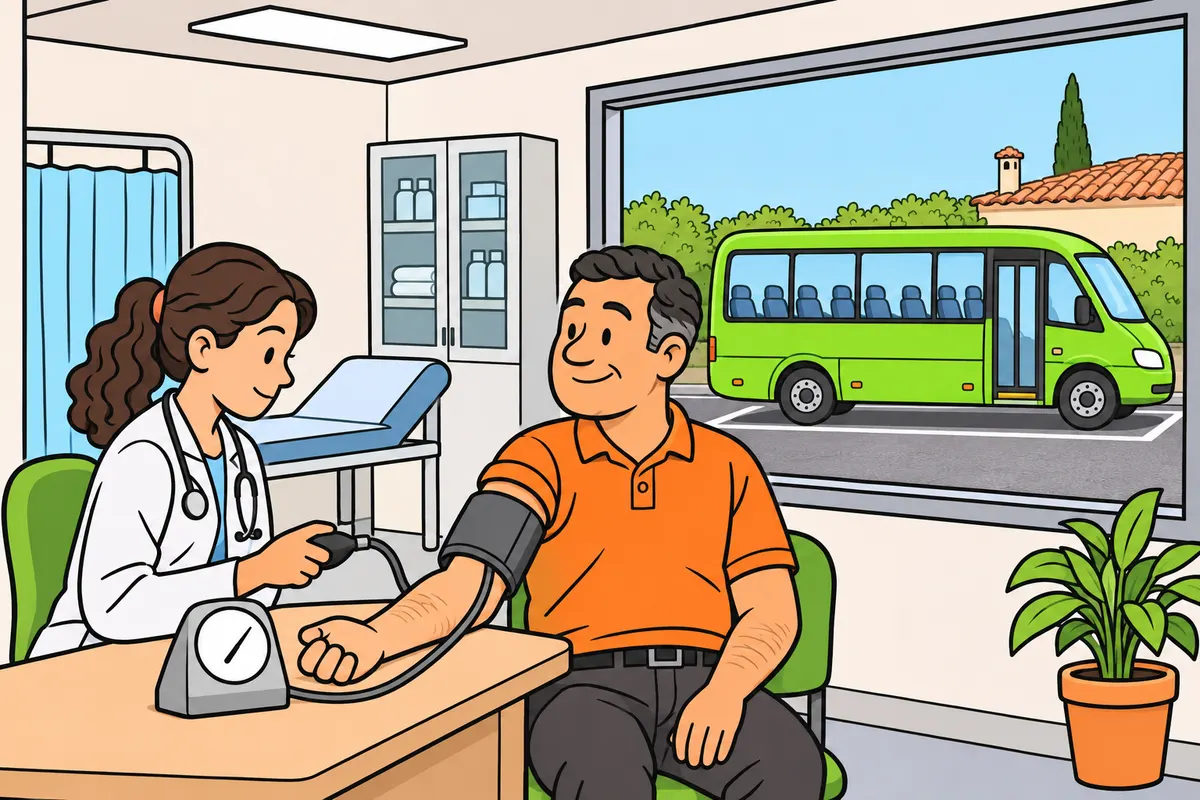
D1 and D need group 2 medical fitness when you apply and renew.
| Your licence | Medical group |
|---|---|
| D1, D and their trailer entitlements | Group 2 |
| B | Group 1 |
Remember
- Tell the centre you are applying for or renewing a bus licence.
- Go to an authorised driver medical assessment centre.
- Provide health information and any reports requested.
- Stay fit throughout the licence period.
- Get a medical assessment if problems affect your driving.
Exam trap: Wrong: a valid car medical assessment automatically covers D1. Right: you need the group 2 assessment.
Read the full explanation
- D1, D and their extensions belong to group 2 for the purposes of physical and mental fitness. B belongs to group 1; you must therefore tell the centre that you are applying for or renewing a bus licence and must not assume that an assessment for a car automatically establishes your fitness for D1. [RGCond, arts. 12.6 and 43-45](https://www.boe.es/buscar/act.php?id=BOE-A-2009-9481).
- You must undergo the medical examination both to obtain your licence and to renew it. An authorised centro de reconocimiento de conductores (driver medical assessment centre) carries out the examinations and issues the report; the Jefatura de Tráfico (traffic office) may require an additional medical assessment when there are grounds to justify it. [RGCond, arts. 12.6 and 43-45](https://www.boe.es/buscar/act.php?id=BOE-A-2009-9481).
- The assessment covers vision, hearing, the musculoskeletal system, cardiovascular, respiratory and neurological functions, and other relevant conditions. You must provide information about your health and any reports required, because the decision depends on the group 2 criteria and each medical condition. [RGCond, arts. 12.6 and 43-45](https://www.boe.es/buscar/act.php?id=BOE-A-2009-9481).
- You must remain fit to drive throughout the validity period, not just on the day of the examination. If problems arise that may affect your entitlement to drive, you must obtain a medical assessment; the future date printed on your licence does not remove your obligation to continue meeting the requirements. [RGCond, arts. 12.6 and 43-45](https://www.boe.es/buscar/act.php?id=BOE-A-2009-9481).
10Vision, hearing and medical restrictions
You must meet all medical requirements and follow the restrictions on your licence.
| Group 2 eyesight requirement | Minimum with or without correction |
|---|---|
| Better eye | 0.8 |
| Worse eye | 0.1 |
Remember
- For group 2, meet the eyesight figures with or without correction.
- If you need glasses to meet them, their power must not exceed +8 dioptres.
- Your visual field and other eye conditions also matter.
- Follow the adaptations and restrictions shown on your licence.
Exam trap: Wrong: a hearing aid allows any hearing loss. Right: for group 2, combined hearing loss over 35 %, with or without a hearing aid, measured by pure-tone audiometry, blocks issue or renewal.
Read the full explanation
- For group 2, you must achieve, with or without correction, a minimum visual acuity of 0.8 in your better eye and 0.1 in your worse eye. If you need glasses to meet this requirement, their power must not exceed +8 dioptres. [RGCond, arts. 3 and 46 and Annex IV, sections 1 and 2](https://www.boe.es/buscar/act.php?id=BOE-A-2009-9481).
- Visual acuity is not the only vision requirement: the medical annex also assesses your visual field, double vision and other impairments. You must meet all the requirements and any specific conditions imposed on you, even if you reach the visual acuity figures with your glasses. [RGCond, arts. 3 and 46 and Annex IV, sections 1 and 2](https://www.boe.es/buscar/act.php?id=BOE-A-2009-9481).
- For group 2, if your combined hearing loss in both ears exceeds 35 %, with or without a hearing aid and as determined by pure-tone audiometry, you cannot obtain or renew your licence under the relevant provision. [RGCond, arts. 3 and 46 and Annex IV, sections 1 and 2](https://www.boe.es/buscar/act.php?id=BOE-A-2009-9481).
- You can hold a licence subject to adaptations, restrictions or other limitations where the medical regulations allow this. You must comply with those shown as codes on your licence; a favourable report subject to conditions does not entitle you to drive any bus without those conditions. [RGCond, arts. 3 and 46 and Annex IV, sections 1 and 2](https://www.boe.es/buscar/act.php?id=BOE-A-2009-9481).
11Validity of D and D1
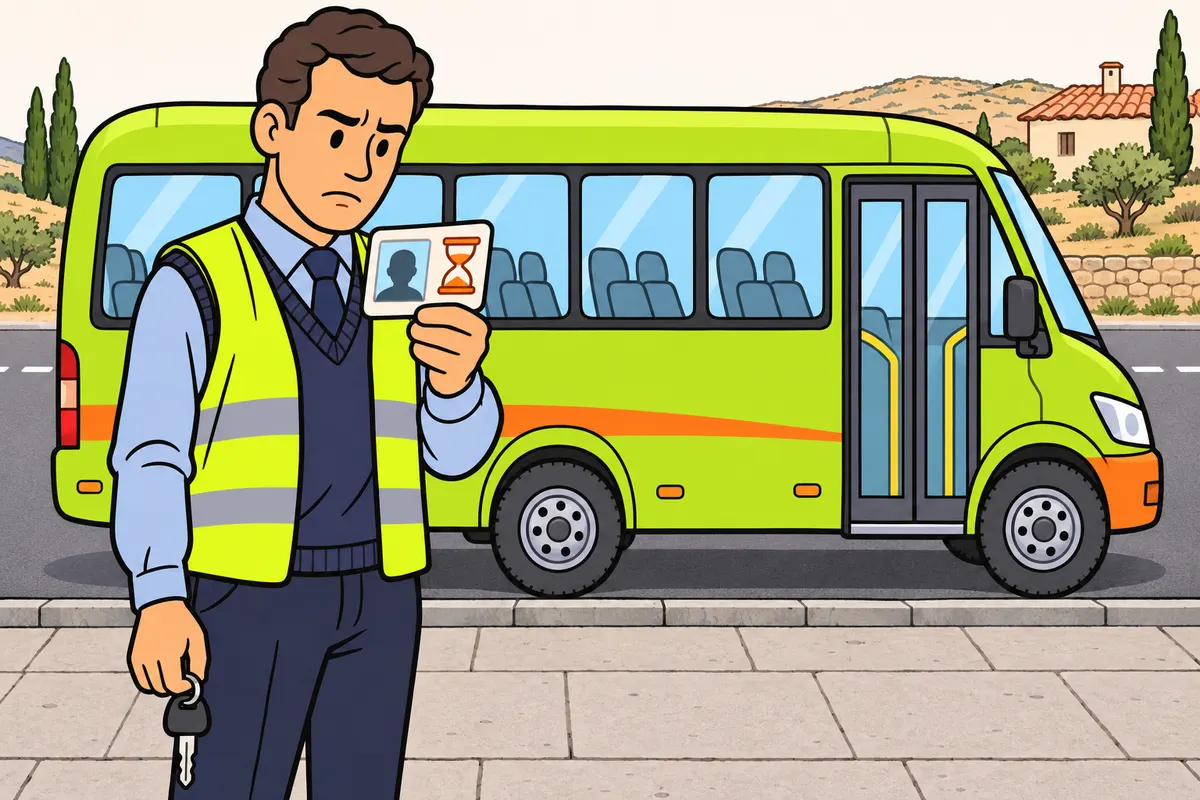
Renew D1 according to your age and your own licence expiry date.
| Your age: D1, D1+E, D and D+E | Normal validity |
|---|---|
| Under sixty-five | five years |
| From sixty-five | three years |
Remember
- Follow the expiry date on your licence.
- An illness that may worsen can shorten your licence validity.
- Do not drive with an expired licence.
- A renewal appointment or valid CAP does not let you drive after expiry.
- Suspension or loss of validity can also prevent you driving.
Exam trap: Wrong: you can drive with expired D1 because you have a renewal appointment. Right: you need valid entitlement to drive.
Read the full explanation
- Your D1, D1+E, D and D+E licences normally remain valid for five years while you are under sixty-five, and for three years from that age. [RGCond, art. 12](https://www.boe.es/buscar/act.php?id=BOE-A-2009-9481#a12).
- You may be granted a shorter validity period if you have an illness or impairment that may worsen. You must respect your individual expiry date even if you are under sixty-five: the general period does not allow you to extend an entitlement granted for a shorter time yourself. [RGCond, art. 12](https://www.boe.es/buscar/act.php?id=BOE-A-2009-9481#a12).
- You cannot drive the bus with an expired licence, even if you have a renewal appointment or valid CAP. Validity also depends on retaining your points and continuing to meet the requirements; a printed date does not allow you to drive if an applicable suspension or loss of validity is in force. [RGCond, art. 12](https://www.boe.es/buscar/act.php?id=BOE-A-2009-9481#a12).
12Renewal and extension of validity
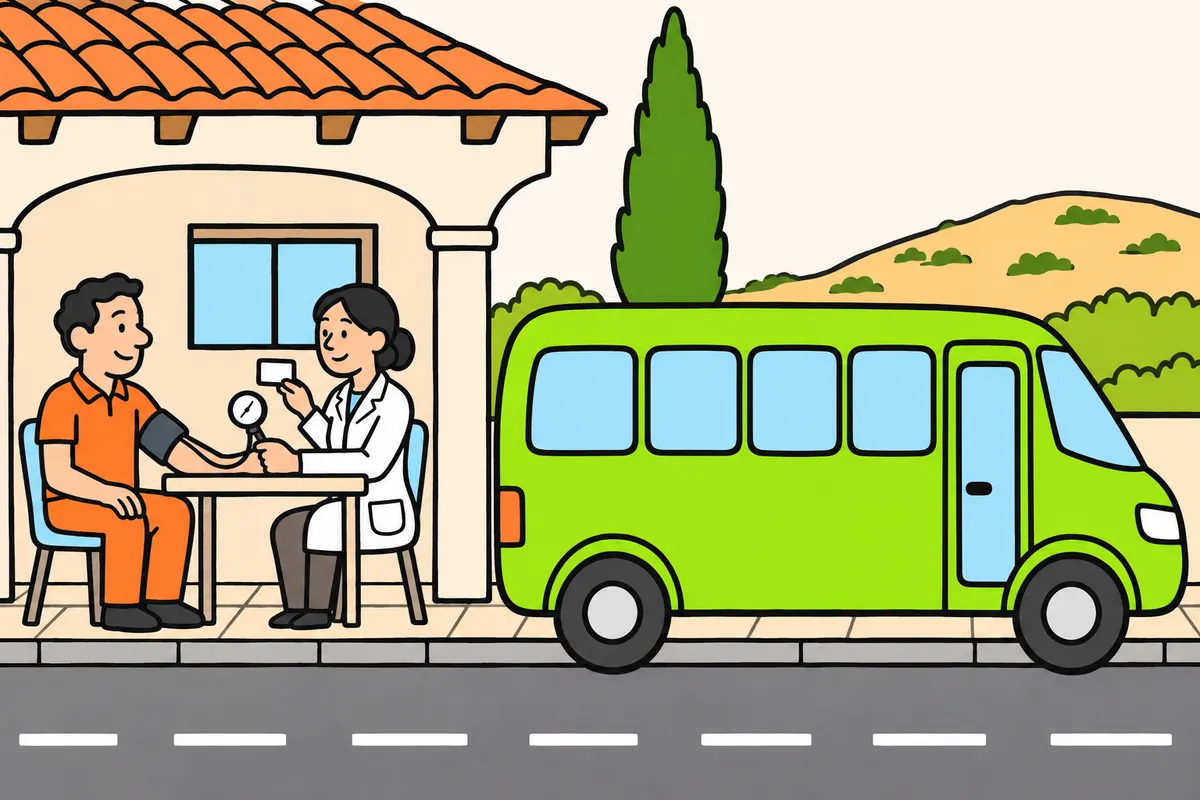
You can renew before expiry without losing any time from your licence validity.
| Category you renew | Effect |
|---|---|
| Group 2 | Also renews your group 1 categories for their respective periods |
| Only B | Does not automatically renew D1 |
Remember
- Renewing in the final three months does not shorten the new period.
- To renew, you must still meet the required medical standards.
- Ordinary renewal needs a medical examination, not new driving tests.
- You may renew after expiry, but cannot drive without valid entitlement.
- With a provisional licence, respect its expiry and use it only within Spain.
Exam trap: Wrong: applying for renewal lets you drive with an expired licence. Right: wait until you have valid entitlement to drive.
Read the full explanation
- You can apply for renewal during the three months before expiry. Within that period, the new validity period runs from your licence’s existing expiry date, so applying early does not cost you those months of validity. [RGCond, art. 13](https://www.boe.es/buscar/act.php?id=BOE-A-2009-9481#a13).
- To renew your licence, you must demonstrate that you retain the physical and mental fitness required for it. You can complete the entire renewal process at an authorised centre; for a normal renewal, you do not have to retake the theory or practical test, but you must pass the medical examination and complete the procedure. [RGCond, art. 13](https://www.boe.es/buscar/act.php?id=BOE-A-2009-9481#a13). [DGT, renewal](https://www.dgt.es/nuestros-servicios/permisos-de-conducir/ha-caducado-o-necesitas-una-copia-de-tu-permiso/renovar-un-permiso-proximo-a-caducar/).
- You can also apply to renew an expired licence. You must provide the documents required for renewal; the rule on driving with an expired licence appears in «Validity of D and D1». [RGCond, art. 13](https://www.boe.es/buscar/act.php?id=BOE-A-2009-9481#a13).
- Renewing a group 2 category also renews any group 1 licences you hold, for their respective validity periods. If you only renew B, you must not assume that you have renewed D1: check the outcome of the procedure and the dates for each category. [RGCond, art. 13](https://www.boe.es/buscar/act.php?id=BOE-A-2009-9481#a13).
- If you receive a temporary driving licence while your application is being processed, you must respect its validity period and geographical scope. The DGT allows you to use it within Spain; for a service outside the country, you must hold the appropriate valid driving documents and must not assume that the temporary licence has international validity. [RGCond, art. 13](https://www.boe.es/buscar/act.php?id=BOE-A-2009-9481#a13). [DGT, temporary driving licence](https://www.dgt.es/nuestros-servicios/permisos-de-conducir/ha-caducado-o-necesitas-una-copia-de-tu-permiso/renovar-un-permiso-proximo-a-caducar/).
13Tests and the order for obtaining your licence
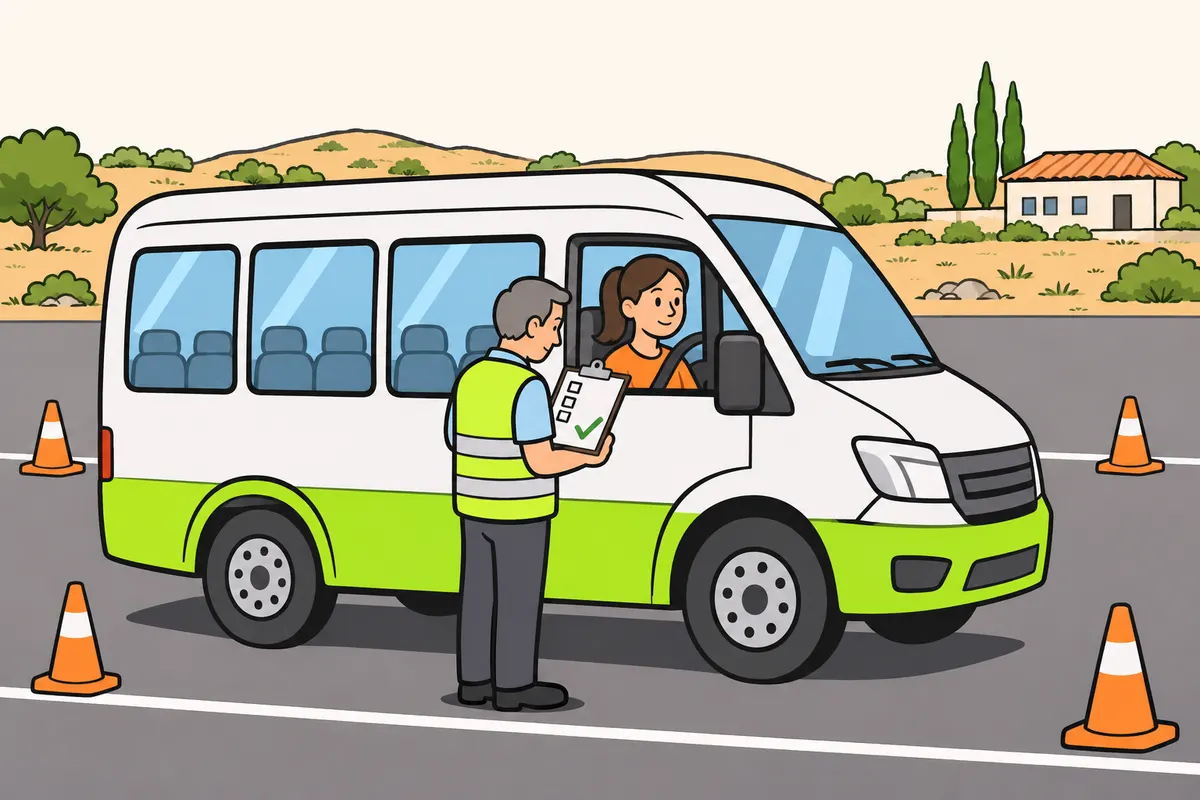
Pass the required tests in order and meet the age rule for practical tests.
Remember
- Pass the required knowledge tests, then off-road, then on-road.
- You do not take a test if you have a legal exemption.
- You must reach the required age before your first practical test.
- Tests usually take place on different dates.
- The traffic office may authorise justified exceptional tests on the same day.
Exam trap: Wrong: you can take your first practical test before the minimum age. Right: the three-month early window applies to your first knowledge test.
Read the full explanation
- To obtain D1, you must pass the psychophysical fitness assessment and the applicable knowledge, skills and behaviour tests. The structure comprises common and category-specific theory, an off-road test and an on-road test; you must apply any legal exemptions relevant to your application. [RGCond, arts. 43, 51 and 53 and Annex VI.A](https://www.boe.es/buscar/act.php?id=BOE-A-2009-9481).
- The tests are qualifying stages: you must pass the required knowledge tests before taking the off-road test, and pass that before taking the on-road test. If you are exempt from a test, you can continue the procedure without taking it. [RGCond, arts. 43, 51 and 53 and Annex VI.A](https://www.boe.es/buscar/act.php?id=BOE-A-2009-9481).
- You can take your first knowledge test no more than three months before reaching the required minimum age. You must have reached the age applicable to you on the date of your first practical test; practising the manoeuvres does not mean you can take the test before that date. [RGCond, arts. 43, 51 and 53 and Annex VI.A](https://www.boe.es/buscar/act.php?id=BOE-A-2009-9481).
- As a general rule, the theory, off-road and on-road tests take place on different dates. The Jefatura de Tráfico (Traffic Office) may authorise tests on the same day in justified exceptional cases; you must follow the test appointments issued for your application and must not interpret the usual scheduling on separate days as an absolute ban on tests taking place on the same day. [RGCond, arts. 43, 51 and 53 and Annex VI.A](https://www.boe.es/buscar/act.php?id=BOE-A-2009-9481).
14Exemptions from common and specific theory
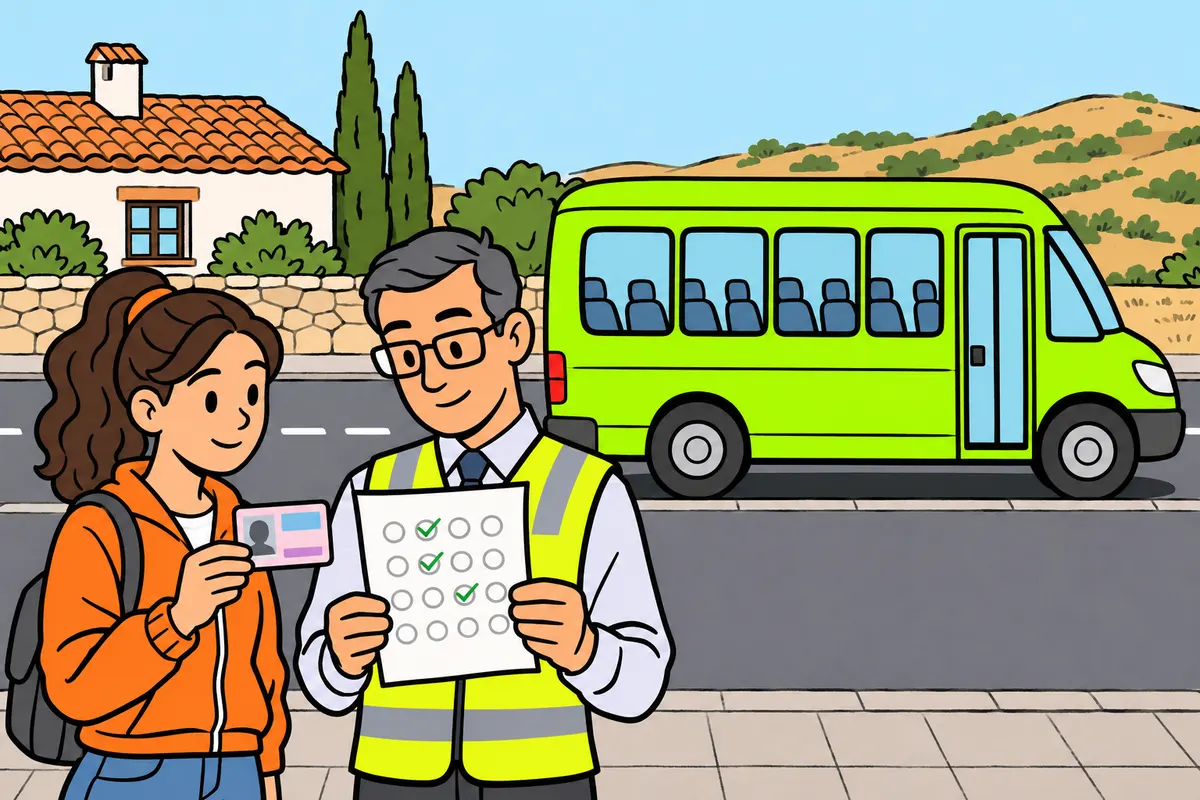
You may be exempt from some theory tests, but other requirements remain.
| Test | When you may be exempt |
|---|---|
| Common theory | Valid licence obtained by passing it, or a common theory pass still valid |
| D specific theory | You hold valid D1 or passed that test to obtain it |
Remember
- Check which exemptions apply to your application.
- A theory exemption does not give you the licence.
- You must meet the medical requirements and hold valid B.
- You must pass the required practical tests.
- The DGT test and CAP examination are different.
Exam trap: Wrong: holding D1 gives you D without practical tests. Right: the specific theory exemption does not remove the required practical tests.
Read the full explanation
- If you hold a valid driving licence for which you passed the common theory test, you are exempt from taking it again. As you need a valid B licence to obtain D1, this exemption usually applies when you apply; you must check your particular circumstances rather than assume that you always have to repeat all the theory tests. [RGCond, arts. 5, 43 and 54](https://www.boe.es/buscar/act.php?id=BOE-A-2009-9481).
- You are also exempt from the common theory test if you have passed it to obtain another category and that pass remains valid for the period stated in “Test attempts and the validity of passes”. You must distinguish between having passed a test and already holding a licence; the regulations cover both situations for this exemption. [RGCond, arts. 5, 43 and 54](https://www.boe.es/buscar/act.php?id=BOE-A-2009-9481).
- If you apply for D after obtaining D1, article 54 provides an exemption from the D category-specific knowledge test if you hold a valid D1 licence or have passed that test to obtain it. You must provide evidence that you meet the regulatory conditions: driving a minibus for years does not entitle you to D, and the theory exemption does not mean you have passed its practical tests. [RGCond, art. 54.2.c](https://www.boe.es/buscar/act.php?id=BOE-A-2009-9481).
- The theory exemption does not remove the medical examination, the B licence requirement or any applicable practical tests. You must also distinguish the DGT passenger transport test from the CAP (Certificate of Professional Competence) initial qualification test: their purposes and regulations differ. [RGCond, arts. 5, 43 and 54](https://www.boe.es/buscar/act.php?id=BOE-A-2009-9481).
15Questions, time and errors
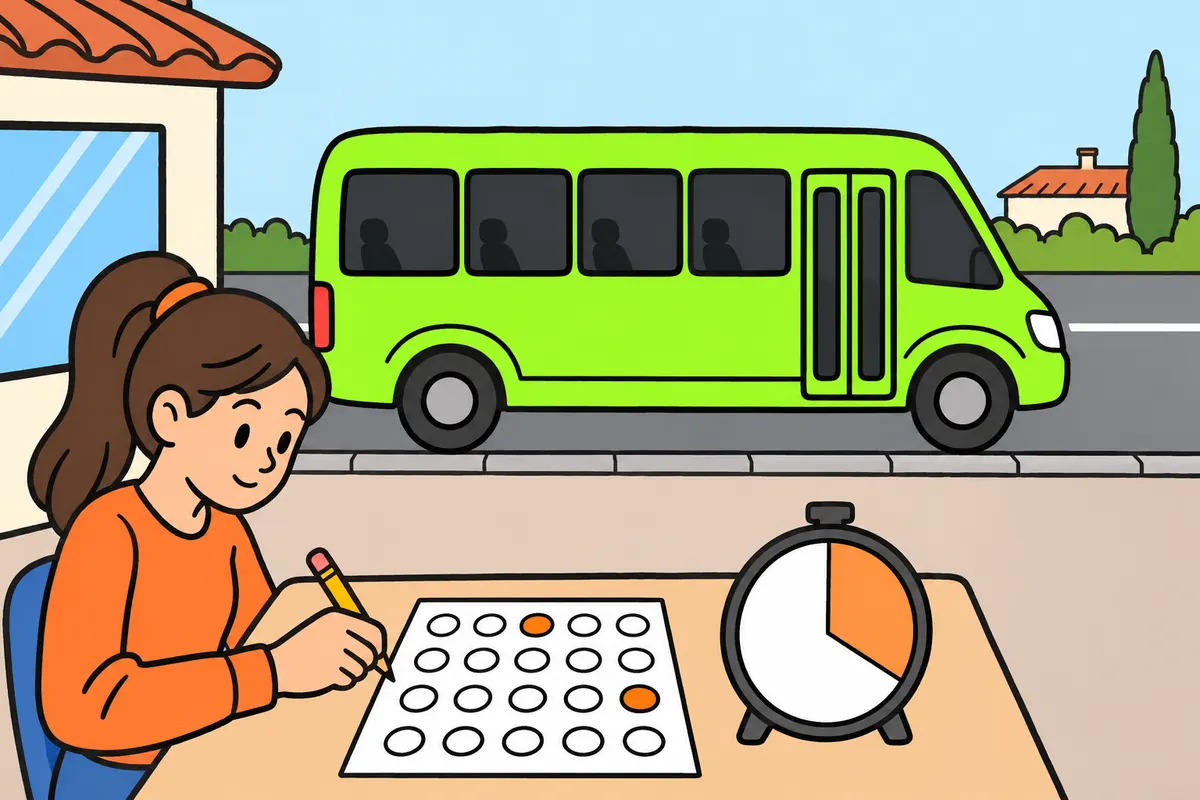
The specific D1 test has twenty questions and allows two errors.
Remember
- You may make a maximum of two errors.
- Follow the instructions about any extra time.
- Extra time may apply for videos or justified special needs.
Exam trap: Wrong: the test time can never increase. Right: extra time may apply for videos or justified special needs, following the instructions.
Read the full explanation
- In the D1 category-specific test, you must answer twenty questions in twenty minutes and you may make a maximum of two errors. [DGT, Manual IV, unit 4](https://sede.dgt.gob.es/export/sites/dgt/.galleries/permisos-de-conducir/certificacion-aptitud-profesores-formacion-vial/2026/MANUAL-IV-Normativa-permisos-de-conduccion.pdf). [RGCond, art. 53 and Annex VI.B](https://www.boe.es/buscar/act.php?id=BOE-A-2009-9481#a53).
- The standard time allowance is one minute per question; you may receive extra time for videos or justified special needs, in accordance with the test instructions. [RGCond, art. 52 and Annex VI.B](https://www.boe.es/buscar/act.php?id=BOE-A-2009-9481#a52).
16Test attempts and the validity of passes
Your application gives two attempts; passed tests have their own validity period.
| Application time limit | Rule |
|---|---|
| Between attempts | Normally no more than six months |
| After failing twice | At least ten days between second and third attempts |
| Between later attempts | At least fifteen days from the failed test |
| Each test pass | Two years from the next day; restarts when you pass the next test in time |
Remember
- Each pass lasts two years from the next day.
- Passing the next test within that period restarts it.
- Justify an exceptional absence to avoid losing your attempt.
- Justified illness or other exceptional circumstances may change the maximum between attempts.
- Recognised and justified urgency may reduce the minimum waits.
Exam trap: Wrong: your two attempts last as long as a test pass. Right: each pass lasts two years; a different time limit applies between attempts.
Read the full explanation
- Each licence application entitles you to two test attempts. No more than six months must elapse between attempts under the same application, except in cases of illness or other duly justified exceptional circumstances; you must distinguish this time limit from the validity period of any tests you have already passed. [RGCond, arts. 51 and 53 and Annex VI.A.2](https://www.boe.es/buscar/act.php?id=BOE-A-2009-9481).
- If you fail a test on two attempts, Annex VI requires at least ten days between the second and third attempts. For subsequent attempts, it requires at least fifteen days from the failed test; it provides for an exceptional reduction in recognised and justified urgent circumstances. [RGCond, arts. 51 and 53 and Annex VI.A.2](https://www.boe.es/buscar/act.php?id=BOE-A-2009-9481).
- If you do not attend on the scheduled date, you lose that attempt, except in duly justified exceptional circumstances. If a circumstance prevents you from attending, you must follow the procedure for providing justification; choosing not to attend does not automatically preserve your test attempt or give you another date. [RGCond, arts. 51 and 53 and Annex VI.A.2](https://www.boe.es/buscar/act.php?id=BOE-A-2009-9481).
- Each test pass remains valid for two years from the day after you pass. If you pass the next test within that period, the period starts again; you must organise your preparation around that date and the test schedule, which serve different purposes. [RGCond, arts. 51 and 53 and Annex VI.A.2](https://www.boe.es/buscar/act.php?id=BOE-A-2009-9481).
17Test centre and identification
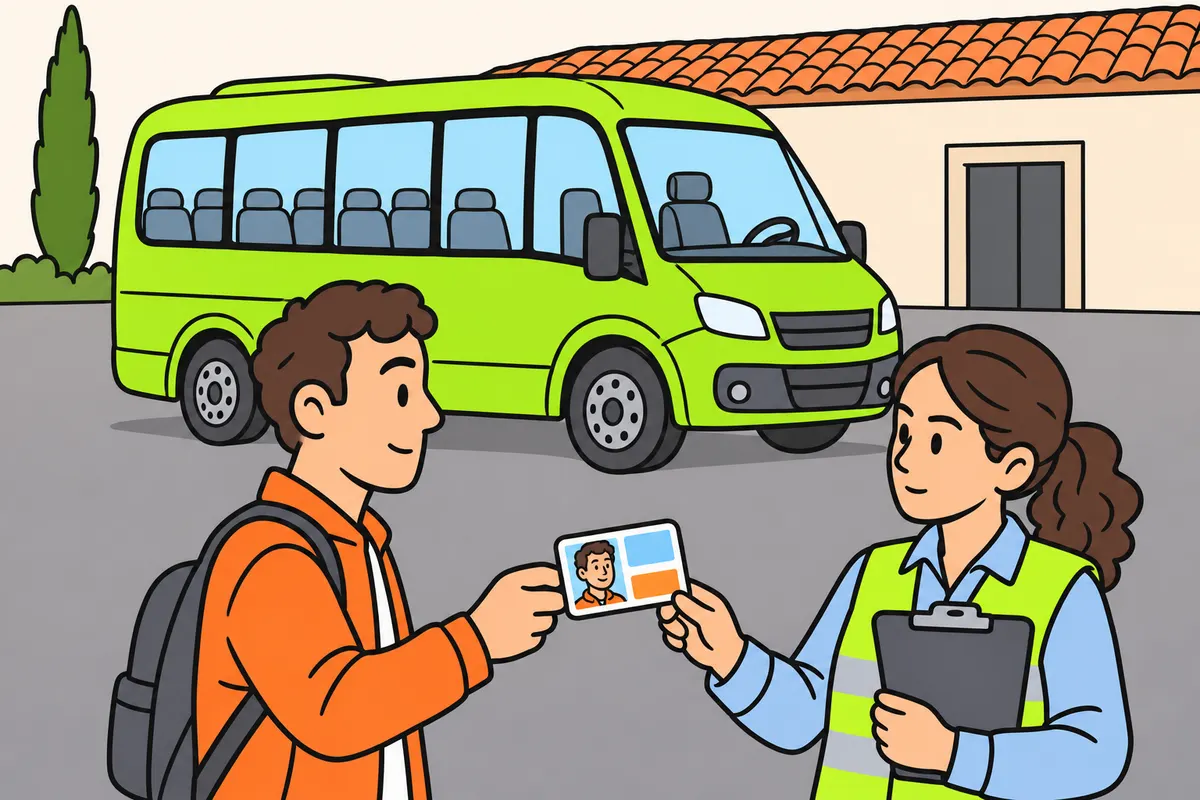
Take your tests at the designated centre and bring valid identification.
Remember
- Test in the province of your application, at its designated centre.
- Follow the procedure if you need to change province.
- If a centre cannot host tests, follow the centre assigned in that province.
- Bring the required identity document for practical tests.
- A fee receipt does not replace your identification.
Exam trap: Wrong: missing the required ID costs your practical test attempt. Right: the examiner prevents the test from starting without using your attempt.
Read the full explanation
- You must take the tests in the province to which you submitted your application and at the centre designated by the Jefatura Provincial de Tráfico (Provincial Traffic Office). Your initial choice when applying does not allow you to attend any test site you wish; to change province, you must follow the relevant procedure. [RGCond, art. 50 and Annex VI.A.1 and 3](https://www.boe.es/buscar/act.php?id=BOE-A-2009-9481).
- If a centre outside the provincial capital does not meet the necessary conditions, you take the tests at the centre in the capital while the shortcomings persist, unless the Jefatura designates another suitable centre in the same province. You must attend the centre designated by the Jefatura. [RGCond, Annex VI.A.1](https://www.boe.es/buscar/act.php?id=BOE-A-2009-9481#anvi).
- For the practical tests, you may be required to present your DNI (Spanish national identity card), passport, residence card or driving licence, as applicable. You must bring the appropriate identification document: a fee receipt or proof of enrolment at a driving school does not serve this purpose. [RGCond, art. 50 and Annex VI.A.1 and 3](https://www.boe.es/buscar/act.php?id=BOE-A-2009-9481).
- If you do not present the required identification documents, the examiner decides that the test must not start, without you losing a test attempt in this situation. [RGCond, art. 50 and Annex VI.A.1 and 3](https://www.boe.es/buscar/act.php?id=BOE-A-2009-9481).
18Devices and checks during tests
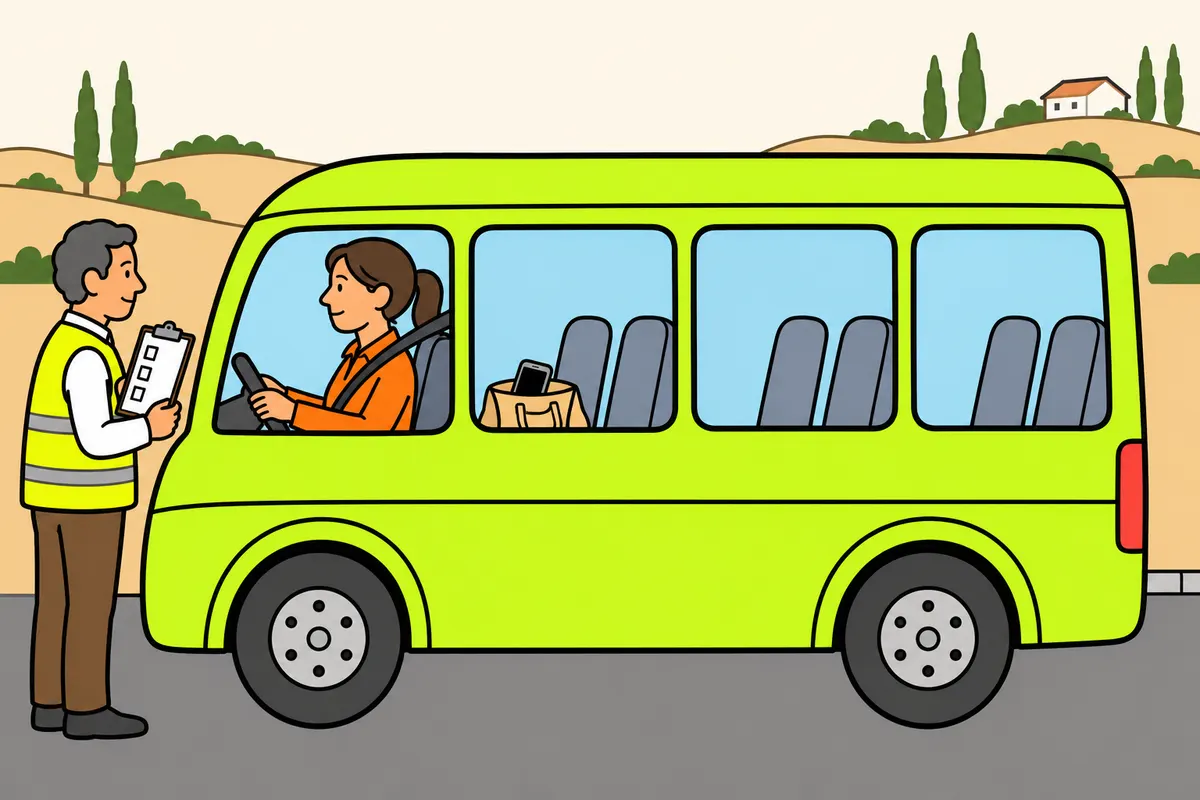
Follow the device ban and let the examiner check the vehicle and equipment.
| Situation during test | Result |
|---|---|
| You use a banned device in a knowledge test | Exclusion and loss of attempt |
| Checked items fail or do not meet rules | Test may not start or may stop, without using your attempt |
| Instructor breaks the device ban | Test does not start or stops, without using your attempt |
Remember
- Do not use prohibited devices during tests.
- Regulatory exceptions apply to approved systems and DGT equipment.
- The examiner may check the vehicle and its systems.
- The examiner may also check your corrective aids, prostheses or adaptations.
Exam trap: Wrong: prohibited equipment only costs your knowledge test attempt if it changes an answer. Right: using it means exclusion and loss of the attempt.
Read the full explanation
- During the practical tests, you cannot freely use telephones, intercoms or equipment for capturing, recording, receiving or transmitting information. You must observe the regulatory exceptions for systems provided for in the tests and those used by the DGT to conduct and monitor them. [RGCond, Annex VI.A.4 and C.1](https://www.boe.es/buscar/act.php?id=BOE-A-2009-9481).
- If you use a telephone or other prohibited equipment for capturing, recording, receiving or transmitting data during the knowledge test, you are excluded and lose that attempt. The DGT’s monitoring systems have their own legal authorisation. [RGCond, Annex VI.A.4](https://www.boe.es/buscar/act.php?id=BOE-A-2009-9481).
- Before or during the test, the examiner may check that the minibus, its monitoring equipment and communication systems meet the requirements, and may ask the driving school’s management or teaching staff for the vehicle documents. The examiner may also check protective equipment where applicable and your corrective aids, prostheses or adaptations; this does not mean that D1 requires motorcycle-specific protective equipment. [RGCond, Annex VI.C.1](https://www.boe.es/buscar/act.php?id=BOE-A-2009-9481).
- If the items checked do not work properly or do not meet the requirements, the examiner may decide that the test must not start or must be interrupted, without you losing an attempt. If your instructor breaches the ban on devices, the Annex also provides for the test not to start or to be interrupted without using up your attempt. [RGCond, Annex VI.A.4 and C.1](https://www.boe.es/buscar/act.php?id=BOE-A-2009-9481).
19Off-road and on-road tests with a bus
Show safe control in the off-road and on-road bus tests.
| Off-road manoeuvre for D1 and D | What you must do |
|---|---|
| G | Reverse in a straight line and around a bend |
| L | Park so passengers can board and leave safely |
Remember
- Check doors, luggage compartments, emergency exits and safety equipment.
- Know where required items are and how to check them.
- Driving time excludes preparation and receiving your result.
- Look ahead and consider vulnerable road users.
- The minimum may be interrupted for reasons allowed by the rules.
Exam trap: Wrong: you pass if your instructor never touches the controls. Right: dangerous behaviour alone can stop the test and cause you to fail.
Read the full explanation
- On the closed test circuit, you must demonstrate control of the vehicle and its controls. For D1 and D, the manoeuvres include manoeuvre G, reversing in a straight line and around a bend, and manoeuvre L, parking to allow passengers to board and alight safely; you must prepare for the bus-specific manoeuvres. [RGCond, arts. 48-49 and annexes V.B.3 and VI.C.2](https://www.boe.es/buscar/act.php?id=BOE-A-2009-9481).
- Preparing to drive safely includes checking bus components such as service doors, luggage holds, emergency exits and safety equipment. You must demonstrate that you know how to locate and check what the test requires, as well as operate the steering wheel and pedals; you study the full procedures in their respective modules. [RGCond, arts. 48-49 and annexes V.B.3 and VI.C.2](https://www.boe.es/buscar/act.php?id=BOE-A-2009-9481).
- In the on-road test, the minimum driving time for D1 is forty-five minutes, except in the specified cases of interruption and suspension. This does not include the initial reception, preparation, technical checks, special manoeuvres or communication of the result; you must distinguish actual driving time from the total duration of the appointment. [RGCond, arts. 48-49 and annexes V.B.3 and VI.C.2](https://www.boe.es/buscar/act.php?id=BOE-A-2009-9481).
- You must demonstrate careful, safe and anticipatory driving that takes vulnerable road users into account. Dangerous behaviour alone is enough for the test to be interrupted and for you to be assessed as unfit, even if no physical intervention is necessary; avoiding the need for your instructor to touch the controls does not guarantee a pass. [RGCond, arts. 48-49 and annexes V.B.3 and VI.C.2](https://www.boe.es/buscar/act.php?id=BOE-A-2009-9481).
20Classifications you must distinguish
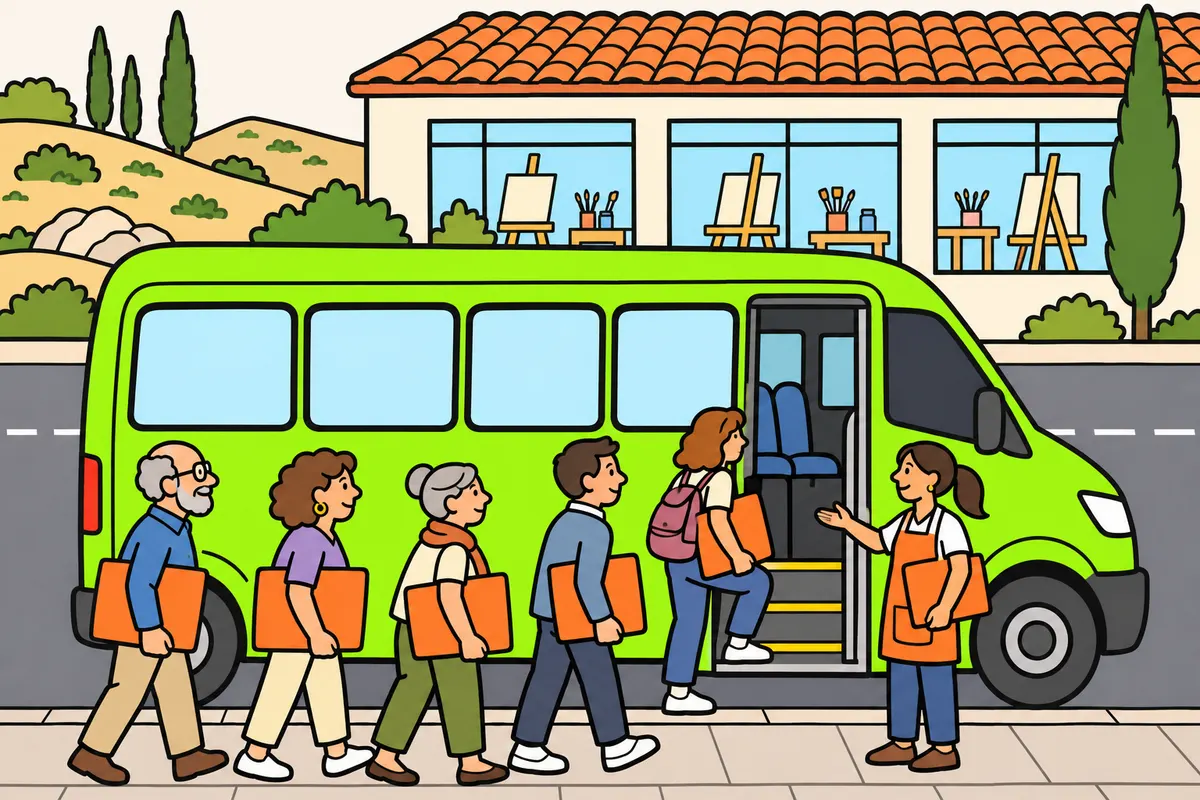
Classify transport by its purpose, geography and legal regime.
| Basis | Classes and meaning |
|---|---|
| Nature | Public: for others and paid; private: on your own account |
| Geography | Domestic or international; check whether the route enters another state |
| Purpose or legal regime | Ordinary or special |
Remember
- Classify by who provides the service and under what conditions.
- Do not classify transport by how the bus looks.
- Ancillary private transport supports another main activity.
- One service can have several classifications at once.
Exam trap: Wrong: public, regular and domestic are competing labels. Right: they describe different features and can all apply together.
Read the full explanation
- By its nature, transport is public when you provide it for others in return for payment, and private when you provide it on your own account. You must consider who provides the transport and under what conditions, rather than whether the bus looks like an urban bus or a tourist coach. [LOTT, arts. 62-67 and 102](https://www.boe.es/buscar/act.php?id=BOE-A-1987-17803).
- Ancillary private transport serves the main activity of a business or organisation whose purpose is not transport. If an establishment carries out transport on its own account in connection with its activity and meets the legal conditions, you must distinguish this from a service it pays a transport company to provide. [LOTT, arts. 62-67 and 102](https://www.boe.es/buscar/act.php?id=BOE-A-1987-17803).
- By geographical scope, you classify transport as domestic or international. If the route runs partly through a foreign country, it is international; you can combine this territorial classification with the nature and organisation of the service. [LOTT, arts. 62-67 and 102](https://www.boe.es/buscar/act.php?id=BOE-A-1987-17803).
- By purpose or legal framework, you distinguish ordinary transport from special transport. You can describe a service using several criteria at once: for example, public, regular, special-use and domestic; you must avoid choosing one classification as though it excludes all the others. [LOTT, arts. 62-67 and 102](https://www.boe.es/buscar/act.php?id=BOE-A-1987-17803).
21General-use and special-use regular services
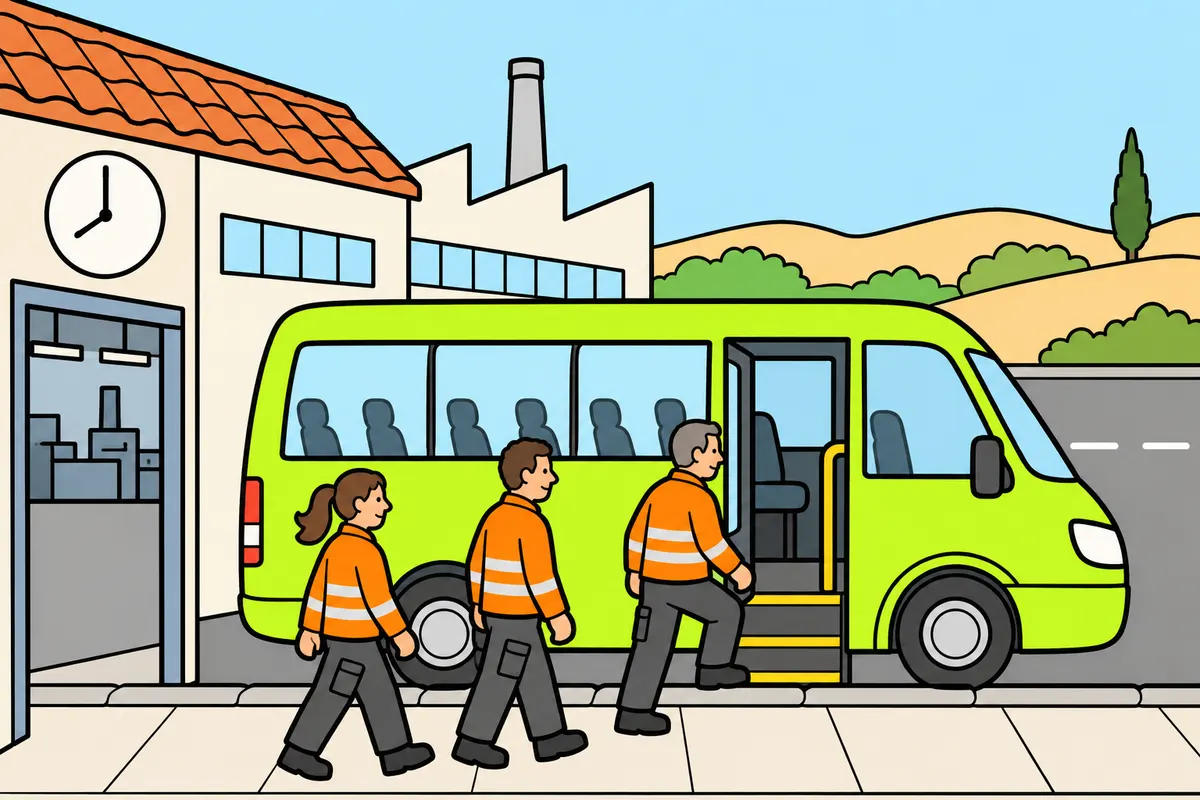
Regular services follow set routes and times; use determines who may travel.
| Regular service | Who may use it |
|---|---|
| General-use | Anyone under the service conditions |
| Special-use | A specific group, such as workers or schoolchildren |
Remember
- Regular services have predetermined routes, calendars and timetables.
- Few passengers on a particular day do not change the service type.
- An open route remains general-use even when many students travel.
Exam trap: Wrong: an open public route becomes special-use when many students travel. Right: special-use means the service is reserved for a specific group.
Read the full explanation
- With a regular service, you follow pre-established routes, operating calendars and timetables. This fixed organisation remains in place even if you carry few passengers on a particular day; for an occasional excursion, you agree the departure and destination for a specific booking. [LOTT, arts. 64 and 67](https://www.boe.es/buscar/act.php?id=BOE-A-1987-17803).
- A general-use regular service meets general demand and is available to anyone interested under the service conditions. A route open to the public retains this classification even if you carry many students or workers at a particular time; you must consider whom it serves and its conditions of use. [LOTT, arts. 64 and 67](https://www.boe.es/buscar/act.php?id=BOE-A-1987-17803).
- With a special-use regular service, you serve only a specific group, such as schoolchildren, workers or military personnel. A route contracted to transport factory staff every day can fall into this category; the word special identifies the group for whom you reserve the service. [LOTT, arts. 64 and 67](https://www.boe.es/buscar/act.php?id=BOE-A-1987-17803).
22Occasional, tourist and demand-responsive transport
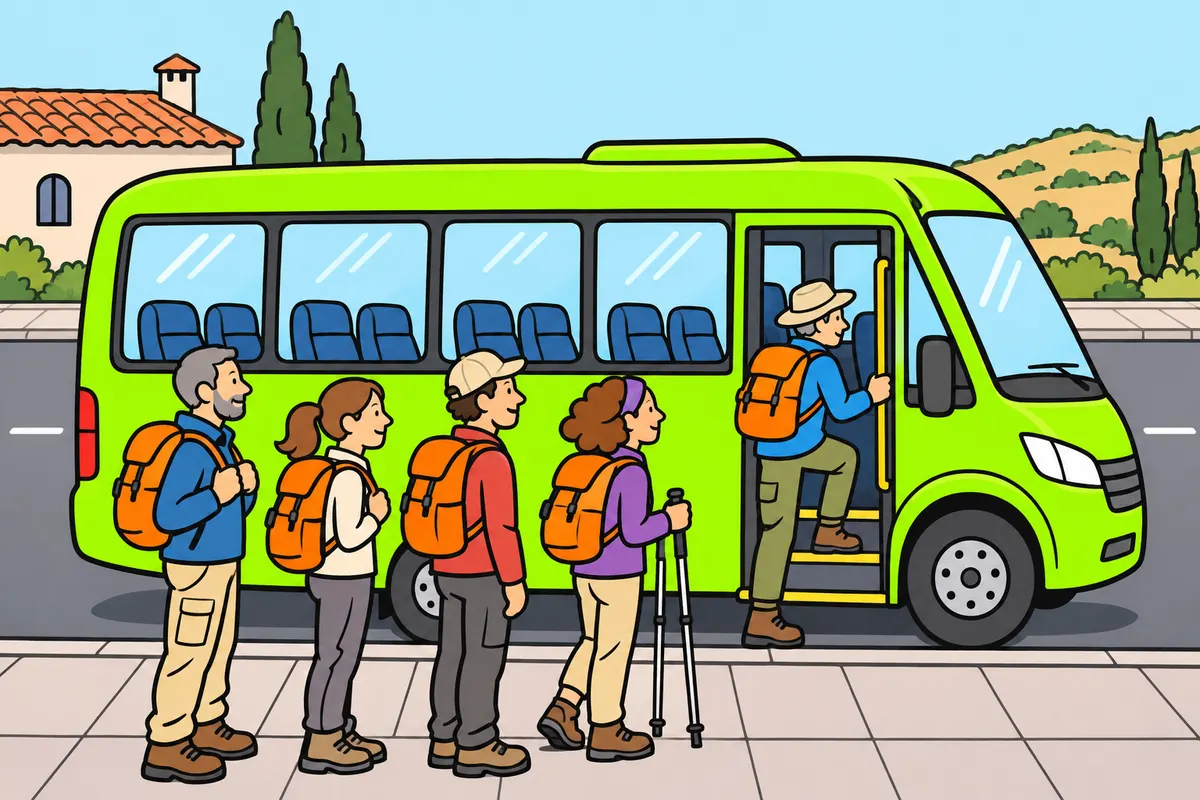
Occasional, tourist and demand-responsive services have different rules.
| Service | What to recognise |
|---|---|
| Occasional public transport | No set regular route, calendar or timetable |
| Tourist transport | Separate the transport from the tourist package |
| Demand-responsive | User request under public contract; set times may still apply |
Remember
- A booked excursion does not create a regular route.
- A booking alone does not make a service occasional.
- For tourism, distinguish the bus service from the package of services booked.
Exam trap: Wrong: every tourist service must cost 30 % more. Right: the package must exceed the matching general-use regular fare by at least 30 % when periodic and repeating the same route, unless the specified administrative exemption applies.
Read the full explanation
- With occasional public passenger transport, you provide a service without being bound by a pre-established route, operating calendar or timetable of the kind used for regular services. You can agree a destination and time for a specific excursion: organising that trip does not in itself make it a regular route open to the public. [LOTT, art. 64](https://www.boe.es/buscar/act.php?id=BOE-A-1987-17803).
- For tourist transport, you must distinguish the bus service from the package of tourist services booked. When the transport operates periodically, repeats the same route and coincides with a general-use regular service, the package price must exceed that service's fare by at least 30 %, unless the specified administrative exemption applies. [LOTT, art. 64](https://www.boe.es/buscar/act.php?id=BOE-A-1987-17803). [ROTT, art. 129](https://www.boe.es/eli/es/rd/1990/09/28/1211/con).
- With demand-responsive transport, you provide the service following a prior request from the user, under a public-sector contract, with or without a pre-established route, operating calendar and timetable. You can identify it by the prior request and the public contract, even when the particular journey has a defined route and timetable. [LOTT, art. 64](https://www.boe.es/buscar/act.php?id=BOE-A-1987-17803).
23Schoolchildren and minors: identifying the scope
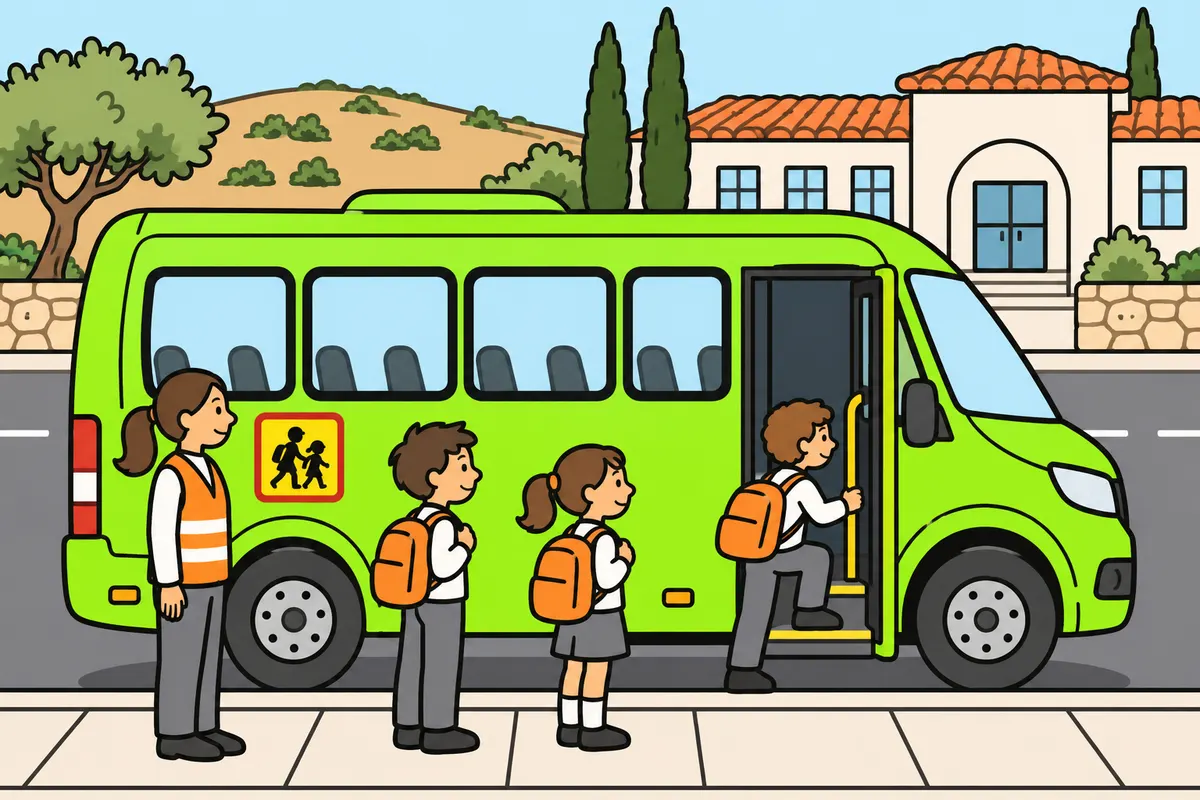
School transport can use several service types, depending on its conditions.
| School transport type | What to check |
|---|---|
| Special-use regular | Service reserved for the group |
| Certain general-use departures | Conditions of that service |
| Occasional or ancillary private | Conditions of that service |
Remember
- School transport may be special-use regular.
- Some general-use departures may also carry schoolchildren.
- It may be occasional or ancillary private transport.
- Study scope, proportions, escorts and safety in “Transporting passengers and minors”.
Exam trap: Wrong: all school transport is special-use regular. Right: its classification depends on the service conditions.
Read the full explanation
- You can provide school transport as a special-use regular service, on certain general-use journeys, as an occasional service or as ancillary private transport, depending on the conditions of each service. [RD 443/2001, art. 1](https://www.boe.es/buscar/act.php?id=BOE-A-2001-8503).
- Study the specific scope of school transport and transport of minors, the proportions, escorts and safety conditions in «Transporting passengers and minors».
24Special-use services and special transport
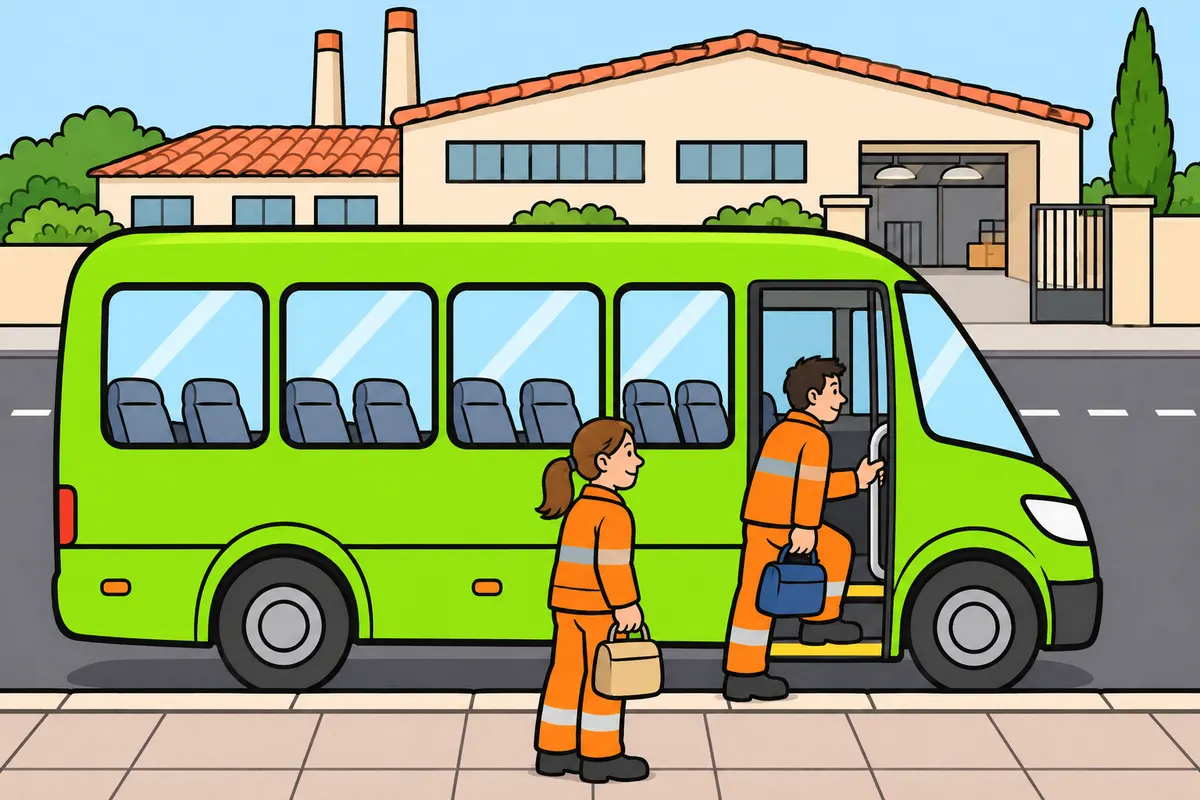
Special-use describes the passengers; special transport describes a regulated service.
| Term | What to recognise |
|---|---|
| Special-use | Service reserved for a group, such as workers |
| Special transport | Specific administrative rules due to danger, urgency, social impact or similar reasons |
| Medical transport | Medical purpose and specially equipped vehicle |
Remember
- A workers’ route does not change the licence required for the vehicle.
- Taking someone to an appointment does not make an ordinary trip medical transport.
- Study authorisations and documents in “Minibus and transport documentation”.
Exam trap: Wrong: carrying a passenger to an appointment makes your minibus medical transport. Right: check the service purpose and required special equipment.
Read the full explanation
- A workers' route is special-use because of its users; this designation does not mean that you carry sick people in the bus, that it is a special vehicle or that you need a licence other than the one corresponding to its characteristics. [LOTT, arts. 62, 66 and 67](https://www.boe.es/buscar/act.php?id=BOE-A-1987-17803).
- Under the LOTT, special transport is subject to specific administrative rules because of danger, urgency, social impact or other similar reasons. For passenger transport, you can recognise the transport of sick or injured people and funeral transport among the cases expressly mentioned, without confusing them with an ordinary excursion. [LOTT, arts. 62, 66 and 67](https://www.boe.es/buscar/act.php?id=BOE-A-1987-17803).
- With medical transport, you transport sick or injured people, or people travelling for another medical reason, in specially equipped vehicles. A passenger travelling in your minibus to a medical appointment does not in itself turn the ordinary service into medical transport; you must consider the required purpose and vehicle equipment. [LOTT, arts. 62, 66 and 67](https://www.boe.es/buscar/act.php?id=BOE-A-1987-17803). [ROTT, art. 133](https://www.boe.es/eli/es/rd/1990/09/28/1211/con).
- Study the service authorisations and documents in «Minibus and transport documentation».
25Minibus road rules in this course
Study minibus road rules in the relevant modules.
Remember
- Match the vehicle, your licence and the transport type when planning a service.
- Study stops and overtaking in Minibus manoeuvres.
- Study speed limits by bus class in Minibus speed and distances.
Exam trap: Wrong: study speed limits without distinguishing the bus class. Right: check the limits for each bus class in Minibus speed and distances.
Read the full explanation
- When preparing a service, you must relate the vehicle category, your driving entitlement and the type of transport you are providing. Your fitness to drive and the organisation of the service are separate aspects that you study in this module. [RGCond, arts. 4-5](https://www.boe.es/buscar/act.php?id=BOE-A-2009-9481). [LOTT, arts. 62-67](https://www.boe.es/buscar/act.php?id=BOE-A-1987-17803).
- Study stopping and overtaking in «Minibus manoeuvres», and speed limits by bus category in «Minibus speed and distances».
Choose the category for the bus
Consider capacity, length and trailers separately before comparing licences.
- Identify the passenger seats separately from the driver’s seat.
- Check whether the vehicle fits D1: up to sixteen passengers and eight metres in length.
- If it exceeds either limit and is a bus, choose D.
- Check the trailer’s MMA (maximum authorised mass): up to 750 kg is included; above this, you need D1+E or D+E depending on the towing vehicle.
- Check your age, CAP and individual restrictions before driving.
Check the minimum age for D1
Link your age to the type of CAP qualification and the geographical scope.
- Start with the general minimum age of twenty-one.
- If you are between eighteen and twenty, check that you hold a CAP obtained through the standard initial qualification.
- Under this route, drive only within Spain until you turn twenty-one.
- Check that you hold a valid B licence and meet the other requirements and pass the tests for obtaining the licence.
Renew your entitlement to drive a bus
Maintain your fitness and avoid driving with an expired D1 licence.
- Check the expiry date of your D1 category and any medical conditions.
- Prepare for renewal during the three months before expiry.
- Visit an authorised centre for the group 2 medical examination and submit your application.
- Check the categories and dates granted and the conditions of any provisional licence you receive.
- If your D1 has expired, wait until you have a valid entitlement to drive the bus.
Check what you know
Real questions from the bank on this topic. Pick an answer to see the explanation.
Finished this module?
Mark it as read and you will see your progress on the theory list.