
Theory · LCM Licence - Reduced Mobility Vehicle · Module 7 of 15
Traffic signs and their hierarchy
You learn to recognise officers’ instructions, temporary signs, traffic lights, upright signs and road markings that apply to your LCM vehicle. You resolve conflicting instructions and distinguish permission to proceed from permission to enter, paying particular attention to prohibitions for vehicles for people with reduced mobility.
Sign library
All 620 signals of the official catalogue in force (Royal Decree 465/2025), each with its drawing and description, and a test to practise them.
1Reading signs from your LCM vehicle
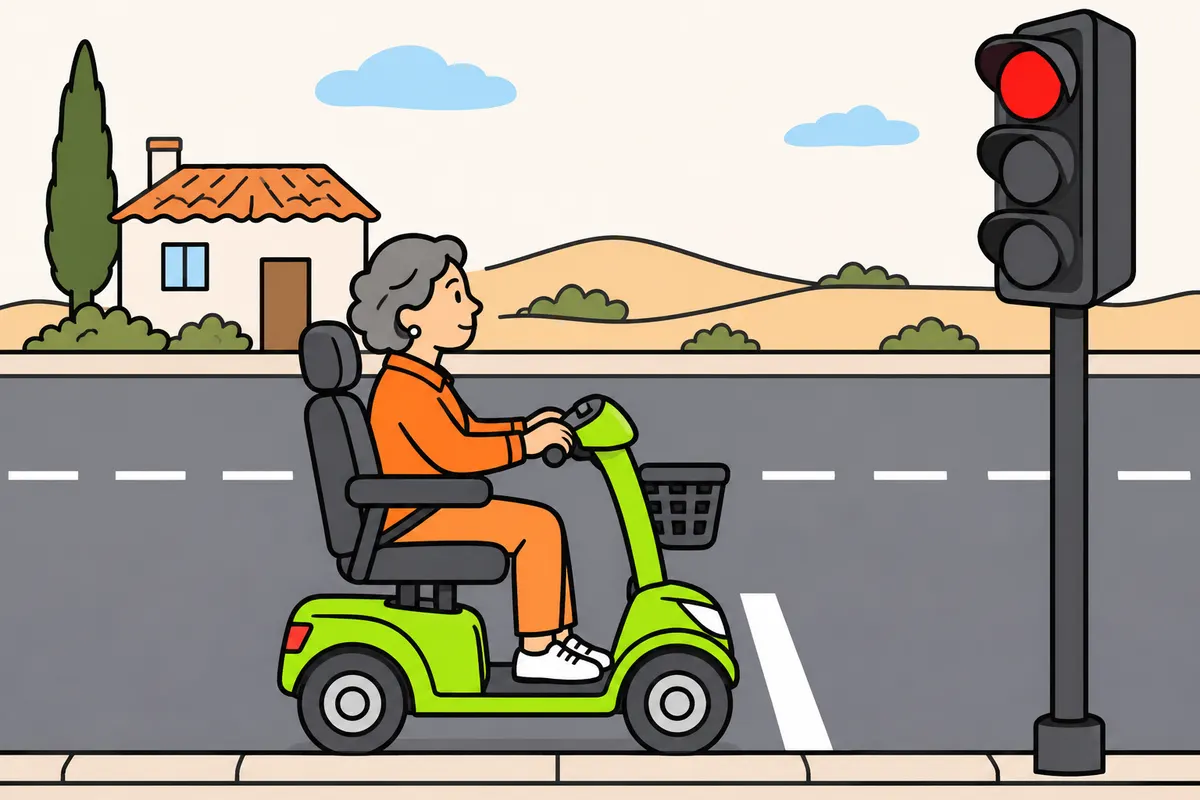
You must obey traffic signs when driving your LCM too.
| Sign type | What you must do |
|---|---|
| Warning | Adapt your driving. |
| Regulatory | Obey the obligation, restriction or prohibition. |
| Information | Read the information and the rules for that place. |
Remember
- Obey obligations and prohibitions.
- Adapt your driving when signs warn of danger.
- Read information signs: they may announce places with their own rules.
- Unless special circumstances justify otherwise, obey signs even when they contradict a general rule.
- If a sign requires stopping, move off again once you have followed its instruction.
Exam trap: Wrong: pass a red light because nobody is coming. Right: you must stop in your LCM too.
Read the full explanation
- You must obey mandatory and prohibitory signs and adapt your behaviour to the other regulatory signs. [RGC, art. 132](https://www.boe.es/buscar/act.php?id=BOE-A-2003-23514#a132)
- A warning sign alerts you to adapt your driving; a regulatory sign imposes an obligation, restriction or prohibition; an information sign informs or guides you. You must read the specific message: an information sign may announce a place where rules apply that you must follow. [RGC, arts. 144-146](https://www.boe.es/buscar/act.php?id=BOE-A-2003-23514#a144)
- Unless special circumstances justify otherwise, you must obey signs even if their instructions seem to contradict a general traffic rule. If a sign requires you to stop, you may move off again once you have complied with its instructions. [RGC, art. 132.1 and 2](https://www.boe.es/buscar/act.php?id=BOE-A-2003-23514#a132)
2Resolving conflicting instructions
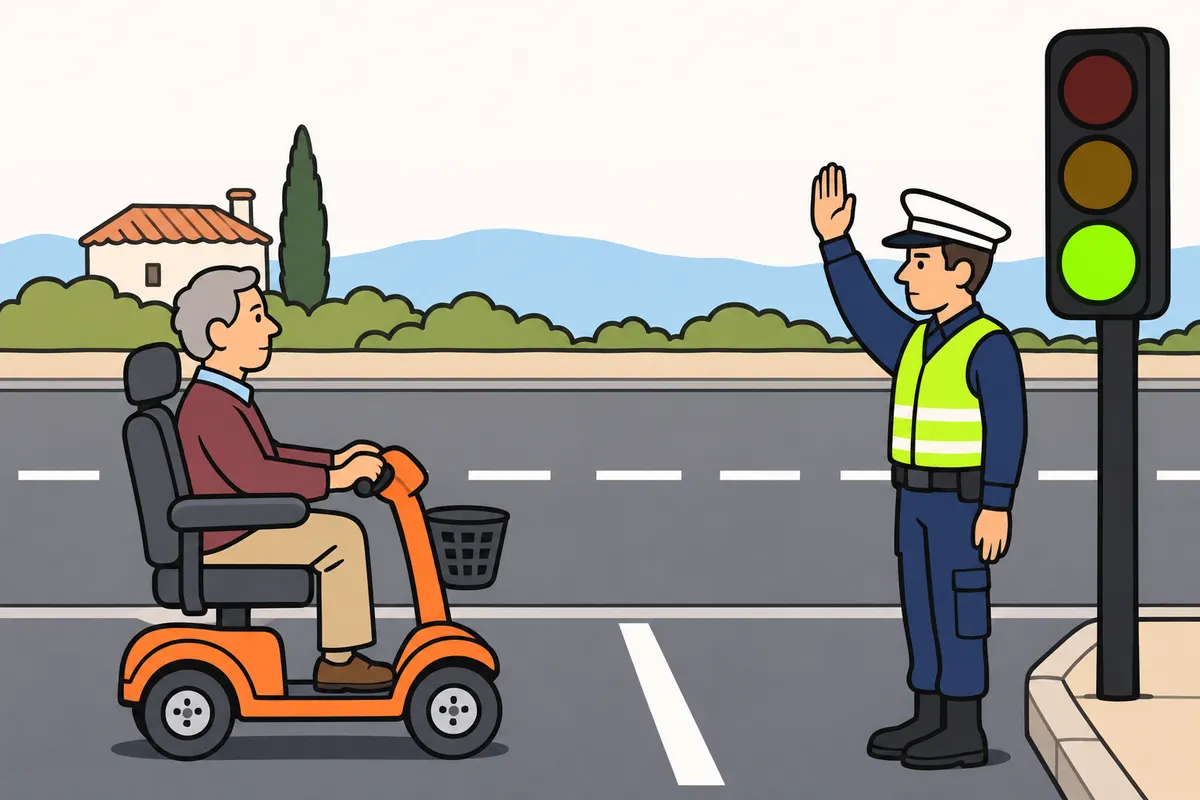
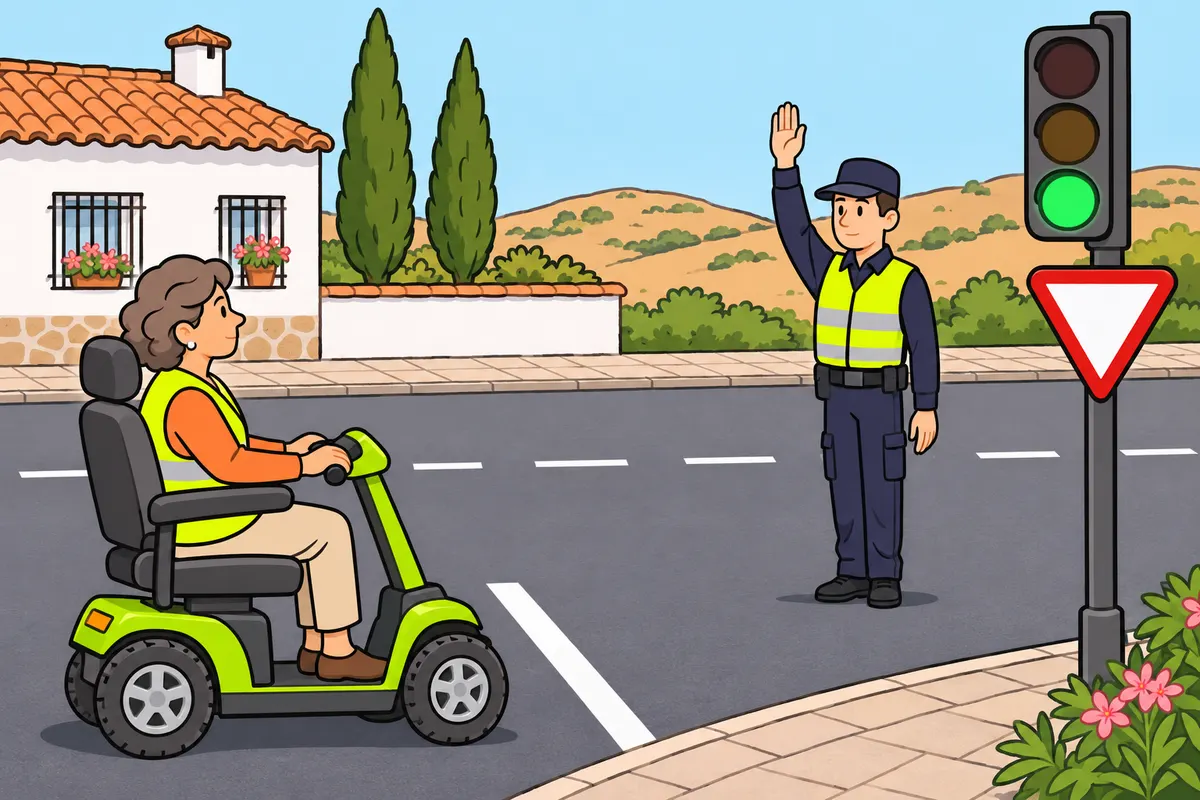
When instructions conflict, you must obey the one with higher priority.
| Instruction | Priority |
|---|---|
| Traffic officers | Highest priority. |
| Temporary signs, closure devices and delineation | Above traffic lights, upright signs and road markings. |
| Traffic lights | Above upright signs and markings, subject to the stated exceptions. |
| Upright signs | Above road markings. |
| Road markings | Lowest priority. |
Remember
- Check that the signs apply to your traffic.
- For signs of the same type, obey the more restrictive instruction.
- Obey compatible instructions together.
- If traffic lights are off, follow priority signs on your approach.
Exam trap: Wrong: green allows any turn. Right: you must also obey compatible turning prohibitions.
Read the full explanation
- The order of precedence is: traffic officers; temporary signs and traffic guidance devices that alter normal road use, delineating devices and traffic guidance signs; traffic lights; upright signs; road markings. [RGC, art. 133](https://www.boe.es/buscar/act.php?id=BOE-A-2003-23514#a133)
- If two incompatible messages belong to different categories, you must obey the one with higher priority. If they are signs of the same type, the more restrictive one takes precedence. You must first check that they apply to your traffic: a sign directed at another lane does not create a conflict for yours. [RGC, art. 133](https://www.boe.es/buscar/act.php?id=BOE-A-2003-23514#a133)
- If an officer orders you to stop and the traffic light is green, you must stop. If the circular traffic light is green and there is a STOP sign for the same crossing, you may proceed in accordance with the traffic light, provided you can do so without blocking the junction and there is no other instruction with higher priority. [RGC, art. 133](https://www.boe.es/buscar/act.php?id=BOE-A-2003-23514#a133)
- You must comply with compatible messages at the same time. A circular green light and a no-left-turn sign allow you to proceed, but the ban on that turn remains in force. [RGC, art. 133](https://www.boe.es/buscar/act.php?id=BOE-A-2003-23514#a133)
- If the traffic lights are off, you must follow the priority signs on your approach. Flashing amber lights and green lane arrows are subject to the conditions explained in the traffic light sections. [RGC, art. 133 and Annex I.4](https://www.boe.es/buscar/act.php?id=BOE-A-2003-23514#A4)
3Knowing who each sign applies to
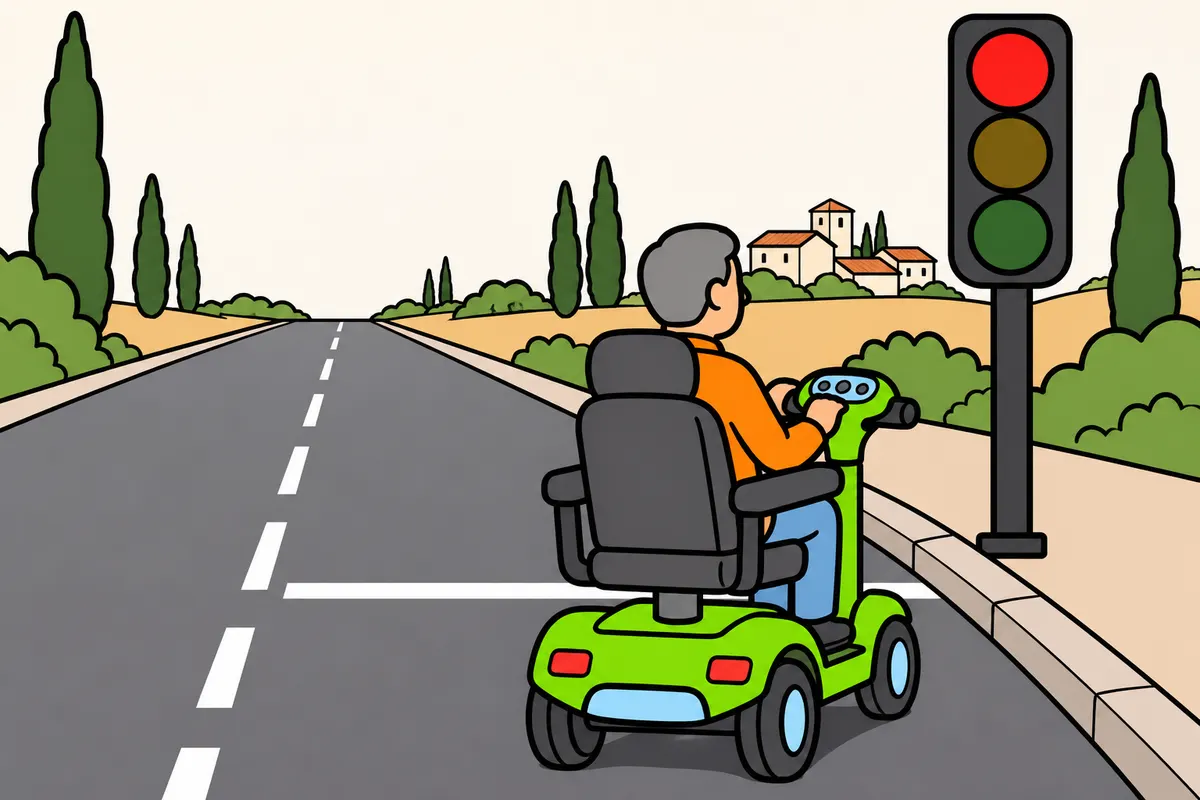
You must check which signs control your lane and direction.
| Different instructions on each side | Signs you must obey |
|---|---|
| You go straight ahead or turn left | Those on the left. |
| You turn right | Those on the right. |
Remember
- Check signs immediately right, above the road or above your lane.
- Without these, check left for straight ahead or left turns.
- Always check signs specifically controlling your lane.
- Read supplementary plates together with the main sign.
- Read wording in Spanish and, where applicable, the co-official language too.
- Recognise official place names; Spanish may be added to help you identify them.
Exam trap: Wrong: driving near the edge frees you from signs. Right: you must still obey them.
Read the full explanation
- You must follow the traffic lights and upright signs immediately to your right, above the carriageway or above your lane. If there are none in those positions and you want to continue straight ahead or turn left, you must follow those immediately to your left. [RGC, art. 132](https://www.boe.es/buscar/act.php?id=BOE-A-2003-23514#a132)
- If there are different instructions on the right and left, you must obey those on the left to continue straight ahead or turn left. To turn right, you must follow those on the right. Always check the specific signs that regulate your lane. [RGC, art. 132](https://www.boe.es/buscar/act.php?id=BOE-A-2003-23514#a132)
- As a general rule, a sign applies across the full width of the carriageway that the road users it addresses are authorised to use. Markings may limit its application to one or more lanes. [RGC, art. 135](https://www.boe.es/buscar/act.php?id=BOE-A-2003-23514#a135)
- You read supplementary plates together with the main sign; they clarify its message through symbols or wording. Their interpretation is explained in «Shapes, colours and supplementary plates». [RGC, art. 137](https://www.boe.es/buscar/act.php?id=BOE-A-2003-23514#a137)
- The wording appears in Spanish and also in the co-official language of the relevant autonomous community. Place names appear in their official form and, where necessary to identify them, also in Spanish. [RGC, art. 138](https://www.boe.es/buscar/act.php?id=BOE-A-2003-23514#a138)
4Recognising officers and authorised assistants
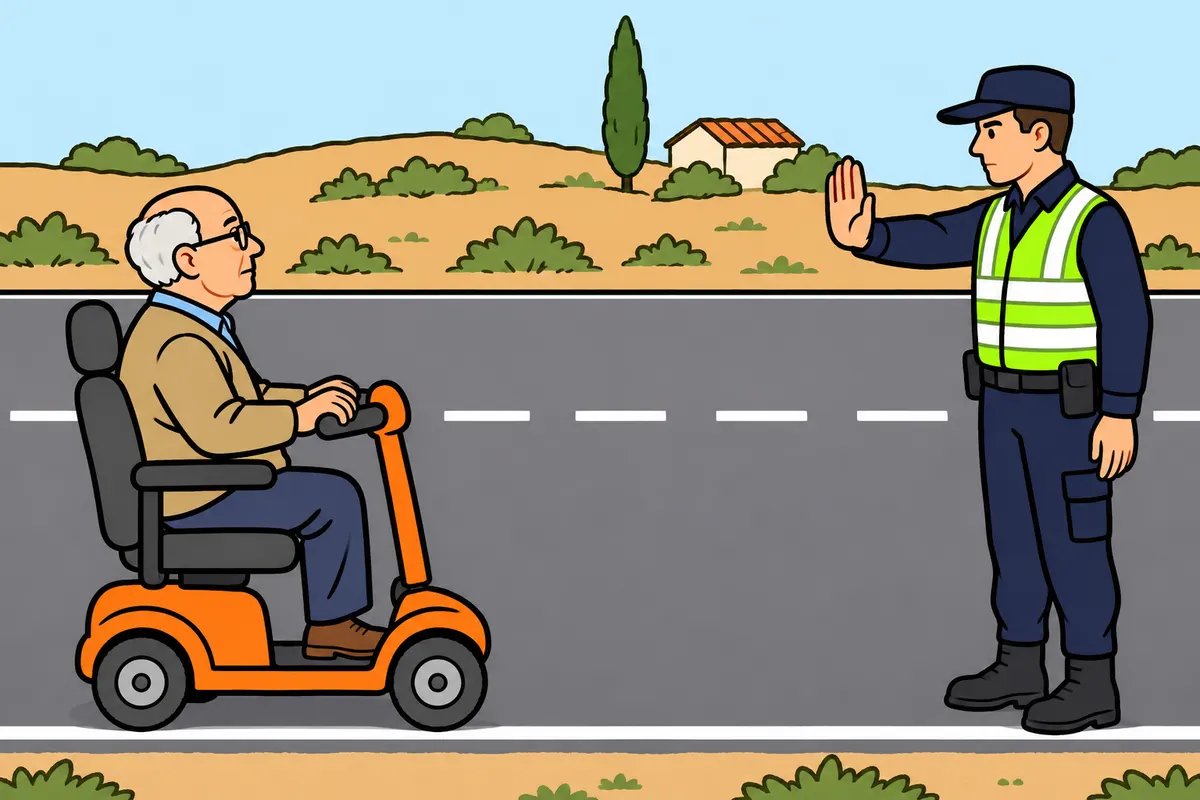
You must obey traffic officers and recognise instructions from authorised assistants.
Remember
- Obey officers directing traffic immediately.
- Check whether the officer's gesture is directed at you.
- Respect roadworks staff and special transport escorts using regulation paddles to control passage.
- Recognise school patrol paddles as a request to stop.
- Respect access closures by personnel authorised to close the affected area.
Exam trap: Wrong: stop at the distance for recognising officers. Right: this measures visibility, not where you must stop.
Read the full explanation
- You must immediately obey the signals and orders of officers directing traffic. You must be able to recognise them by day and by night. Their conspicuous clothing and retroreflective items must make them distinguishable from at least 150 metres away. [RGC, art. 141](https://www.boe.es/buscar/act.php?id=BOE-A-2003-23514#a141)
- You must look at whom the officer is signalling to, rather than automatically copying the vehicle in front. The officer may order one stream of traffic to stop and allow another to proceed, or address your vehicle alone from a patrol vehicle. [RGC, art. 141](https://www.boe.es/buscar/act.php?id=BOE-A-2003-23514#a141)
- In the absence of traffic officers, or to assist them, the Policía Militar (Military Police) may direct traffic. Roadworks personnel and personnel escorting special transport may control passage using regulatory signs mounted on paddles. You must follow these instructions even if the route through the area differs from normal traffic arrangements. [RGC, art. 141](https://www.boe.es/buscar/act.php?id=BOE-A-2003-23514#a141)
- School crossing patrol paddles invite you to stop under the conditions laid down in the regulations. Authorised civil protection personnel or event organisers may prevent access to the affected area when authorised to do so. [RGC, art. 141](https://www.boe.es/buscar/act.php?id=BOE-A-2003-23514#a141)
5Interpreting arms, lights and whistles
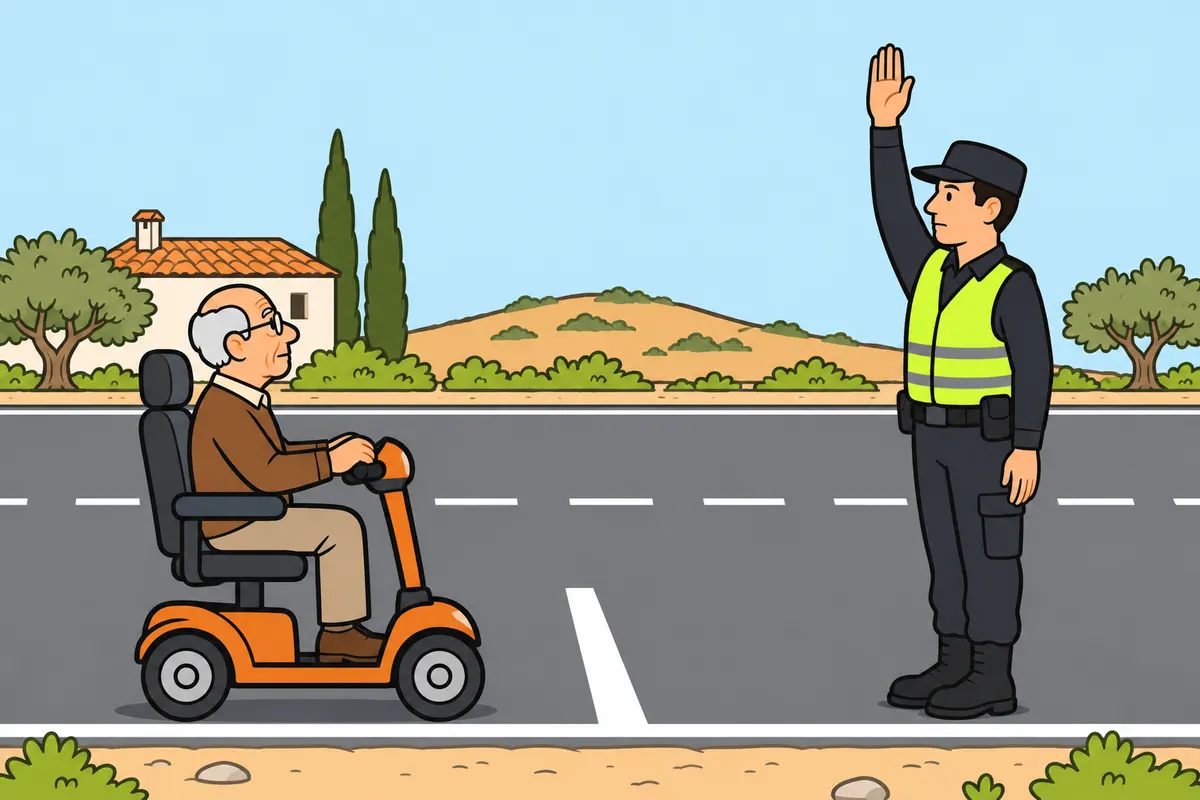
You must distinguish orders to stop, slow down and move off again.
| Officer's signal | What you must do |
|---|---|
| Arms horizontal | Stop if your path crosses the line indicated by the arms. |
| Red or amber light swung towards you | Stop. |
| Outstretched arm moving up and down | Slow down if approaching from that side, at right angles to the arm. |
| Short, frequent whistle blasts | Stop. |
| Long whistle blast | Move off again. |
Remember
- For a raised vertical arm, stop unless you cannot stop safely.
- If already in the junction when the arm rises, continue to clear it.
- Stop before the nearest line; without one, stop before the officer.
- At a junction, stop before entering.
- Also obey other clear instructions from the officer.
Exam trap: Wrong: go when the officer lowers their horizontal arms. Right: the stop order continues until the officer changes position or gives another signal.
Read the full explanation
- If an officer raises one arm vertically, you must stop as you approach, unless you cannot do so safely enough. If you have entered the junction when the officer makes the signal, you may continue to clear it. You must stop before the nearest stop line or, if there is none, before reaching the officer; at a junction, before entering it. After making the gesture, the officer may indicate the exact place where you must stop. [RGC, art. 141 and Annex I.1](https://www.boe.es/buscar/act.php?id=BOE-A-2003-23514#A1)
- If the officer extends one or both arms horizontally, you must stop if your path crosses the line indicated by the arms, whichever direction you are travelling in. The order remains in force even if the officer lowers their arms, until they change position or make another signal. [RGC, art. 141 and Annex I.1](https://www.boe.es/buscar/act.php?id=BOE-A-2003-23514#A1)
- If the officer swings a red or amber light towards you, you must stop. If the officer repeatedly moves an outstretched arm up and down, you must slow down when approaching from the side of that arm and at right angles to it. [RGC, art. 141 and Annex I.1](https://www.boe.es/buscar/act.php?id=BOE-A-2003-23514#A1)
- A series of short, frequent whistle blasts orders you to stop your vehicle. One long blast orders you to move off again. [RGC, art. 141 and Annex I.1](https://www.boe.es/buscar/act.php?id=BOE-A-2003-23514#A1)
- You must also follow any other clear instructions the officer gives when circumstances require them. [RGC, art. 141 and Annex I.1](https://www.boe.es/buscar/act.php?id=BOE-A-2003-23514#A1)
6Orders from a police vehicle
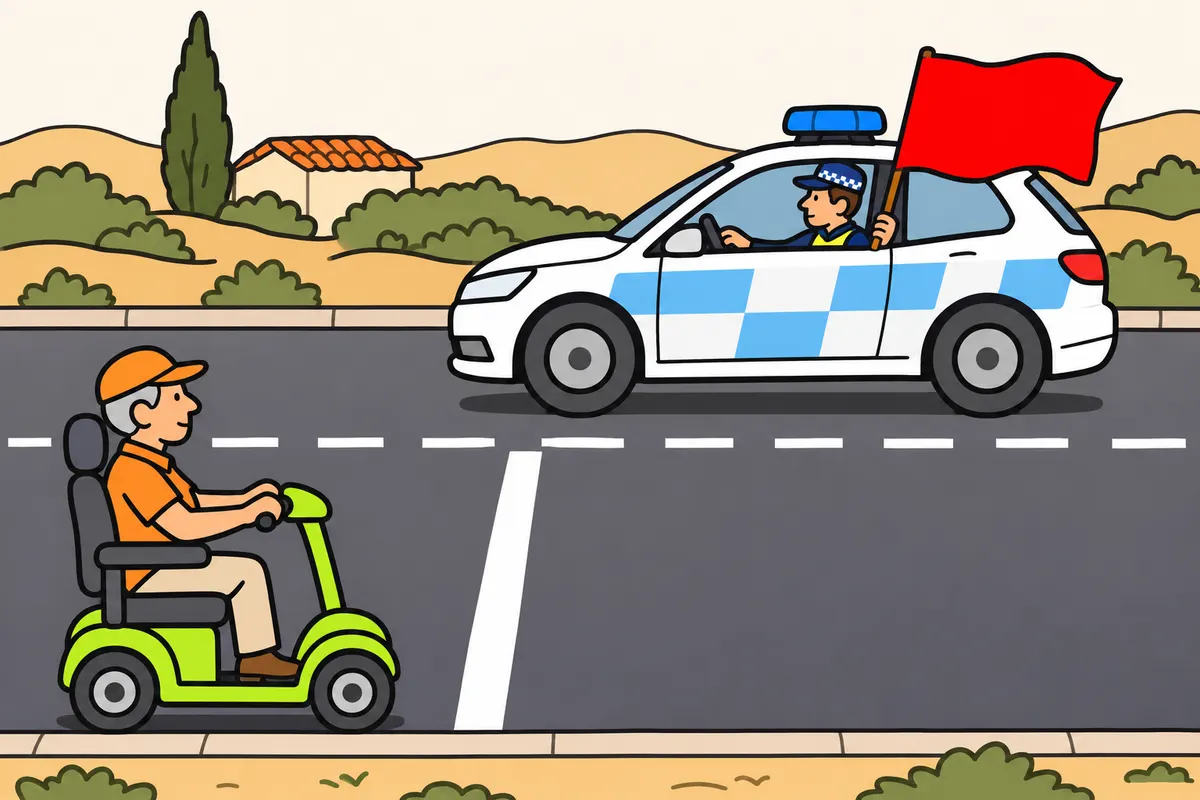
You must recognise orders given from a police vehicle.
| Flag on police vehicle | Meaning |
|---|---|
| Red | Road closed from its passage, except for users accompanied or escorted by officers. |
| Green | Road open from its passage. |
| Yellow | Take extra care: hazard nearby. This also applies to pedestrians. |
Remember
- For a stationary arm angled down towards you, stop on the right.
- For flashing red light directed forwards to stop you, stop right, ahead of police.
- Choose somewhere that creates no extra risk or inconvenience.
- Follow instructions the officer gives you over the loudspeaker.
Exam trap: Wrong: a red flag closes the road without exceptions. Right: users accompanied or escorted by officers are exempt.
Read the full explanation
- A red flag on the officers’ vehicle indicates that the carriageway is temporarily closed from the moment it passes. Only road users accompanied or escorted by the officers are exempt. [RGC, art. 141 and Annex I.1](https://www.boe.es/buscar/act.php?id=BOE-A-2003-23514#A1)
- A green flag indicates that the carriageway is open from the moment the vehicle carrying it passes. A yellow flag requires you to take extra care because of a nearby hazard and also applies to pedestrians. [RGC, art. 141 and Annex I.1](https://www.boe.es/buscar/act.php?id=BOE-A-2003-23514#A1)
- If an officer in a vehicle holds one arm extended downwards at an angle and keeps it still, you must stop on the right-hand side when the order is directed at you. [RGC, art. 141 and Annex I.1](https://www.boe.es/buscar/act.php?id=BOE-A-2003-23514#A1)
- If a patrol vehicle shines a flashing red light forwards to stop the vehicle ahead of it, you must stop on the right, in front of the police vehicle, somewhere that does not create greater risks or inconvenience. You must follow the instructions the officer gives you over the loudspeaker. [RGC, art. 141 and Annex I.1](https://www.boe.es/buscar/act.php?id=BOE-A-2003-23514#A1)
7Roadworks and temporary signs
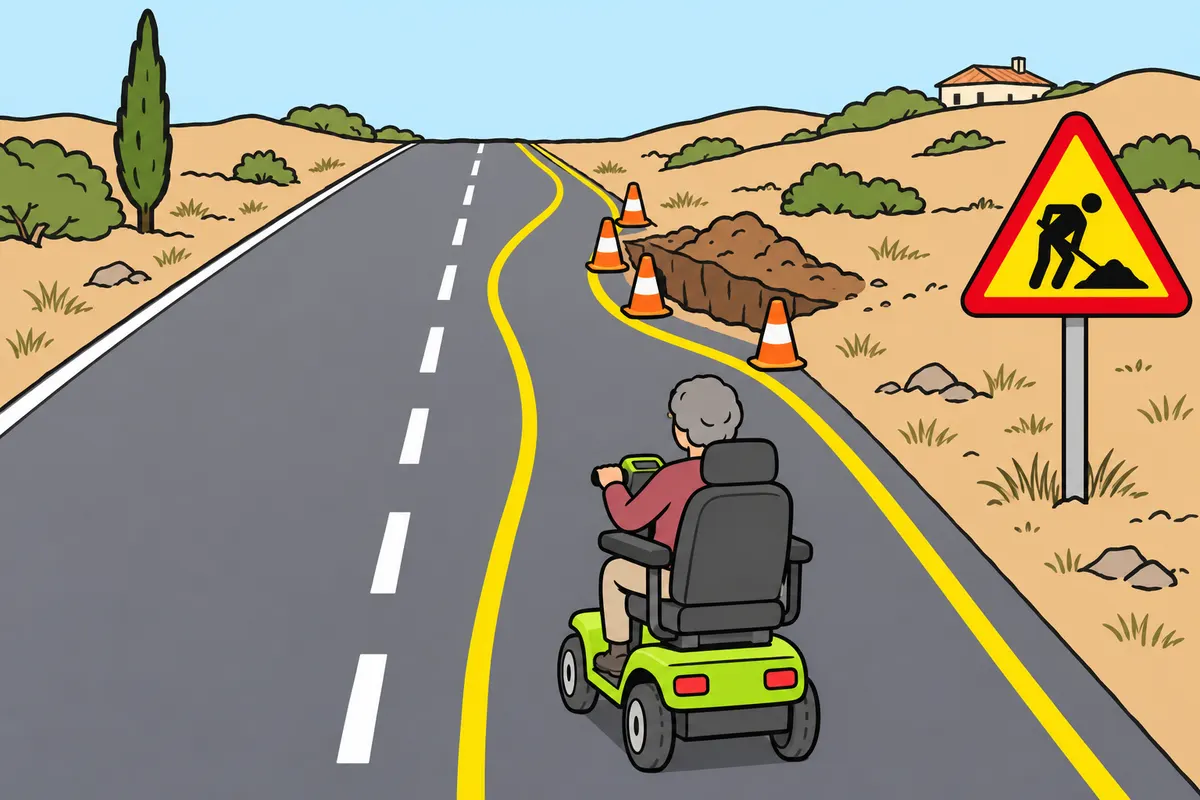
You must follow temporary signs and read their whole message.
| Situation | What applies |
|---|---|
| Roadworks | Specified signs have yellow backgrounds, including P-18. |
| Temporary causes other than roadworks or maintenance | Orange replaces the corresponding yellow. |
| End of temporary changes | When signs indicate this or their cause ends. |
Remember
- Read the content of variable message signs.
- Follow the temporary route even if you know another way.
- New roadworks markings are yellow.
- White markings that still apply may remain.
- Roadworks affecting traffic must be signed by day and night.
- At night or when visibility requires it, roadworks need illuminated route markers.
Exam trap: Wrong: every roadworks sign must be yellow. Right: yellow applies only in the specified cases.
Read the full explanation
- You must read variable message signs according to their content: they may inform, warn, recommend or give mandatory instructions. When they change the normal rules for the road, you must follow the applicable temporary rules even if you have travelled through the location many times and remember a different layout. [RGC, art. 142](https://www.boe.es/buscar/act.php?id=BOE-A-2003-23514#a142)
- At roadworks, warning and regulatory signs whose conventional versions have a white background use a yellow background in the cases specified in the catalogue. P-18, Roadworks, is used with a yellow background. [RGC, art. 134 and Annex I.5](https://www.boe.es/buscar/act.php?id=BOE-A-2003-23514#A5)
- When temporary signs are needed for reasons other than roadworks or maintenance, the catalogue provides for orange in place of the corresponding yellow. You must interpret the symbol and the context: the colour helps you recognise the circumstances, but does not replace reading the instruction. [RGC, art. 134 and Annex I.5](https://www.boe.es/buscar/act.php?id=BOE-A-2003-23514#A5)
- New road markings on a section undergoing roadworks are yellow. White markings that remain applicable may be retained. You must follow the indicated temporary route and obey cones, barriers and traffic lights, without choosing for yourself the route that seems shortest for your vehicle. [RGC, art. 148](https://www.boe.es/buscar/act.php?id=BOE-A-2003-23514#a148)
- Temporary changes end when the signs indicate this or the circumstances that caused them cease. Roadworks that affect traffic must be signposted by day and by night and have illuminated delineation devices at night or whenever visibility requires them. [RGC, art. 142](https://www.boe.es/buscar/act.php?id=BOE-A-2003-23514#a142)
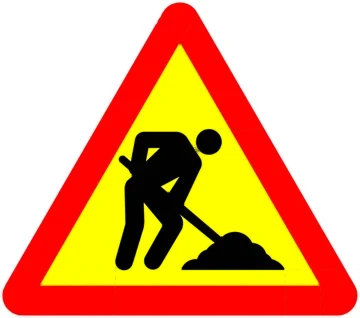 P-18
8Devices that close or guide a route
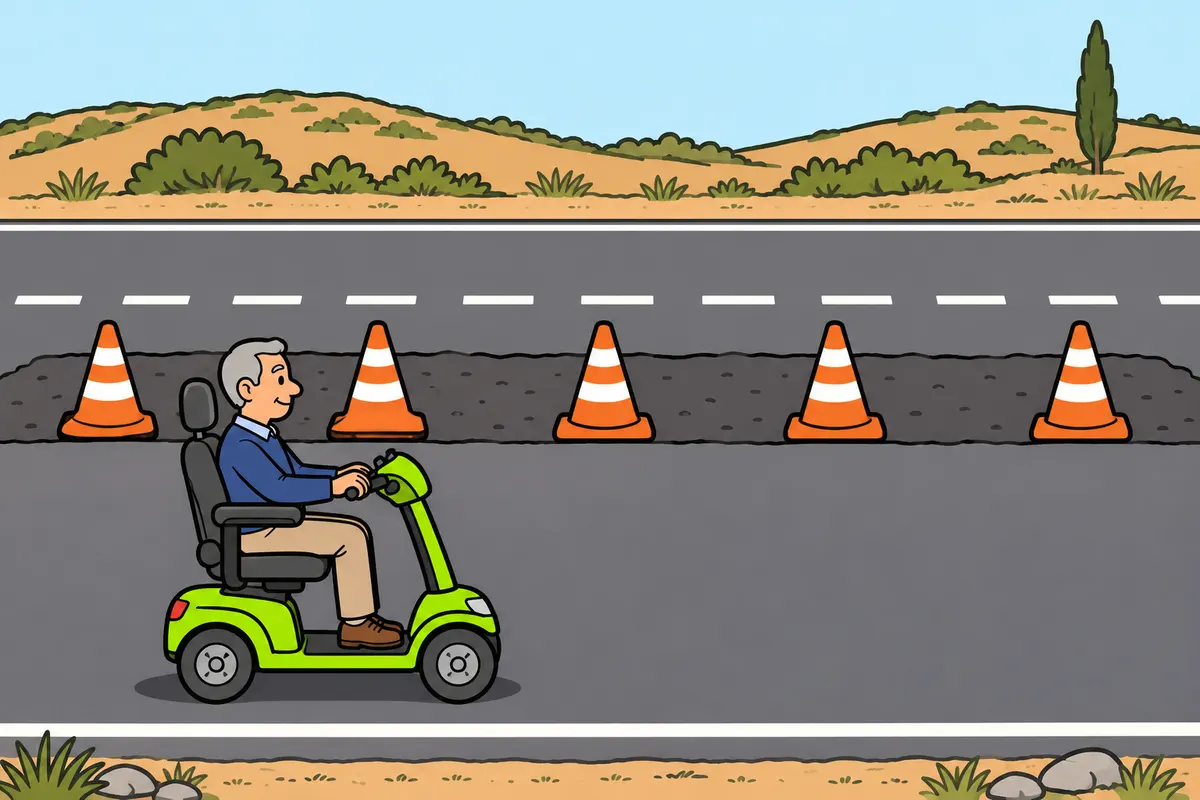
You must respect closures and follow the devices guiding your route.
| Device | What you must do |
|---|---|
| Steady red closure light | Do not pass: the road is completely closed. |
| Steady or flashing yellow route lights | Do not cross the line joining them. |
| Illuminated road studs used for delineation | You may cross only green ones. |
| Guidance devices | Recognise edges, bends, obstacles and separated traffic streams. |
Remember
- Do not cross barriers placed across the road.
- Do not cross the line joining cones or temporary edge markers.
- Follow temporary direction panels without entering the closed space.
- Use road reflectors to recognise the route.
- A windsock shows wind direction and strength.
- Distinguish safety barriers from barriers closing the road.
Exam trap: Wrong: pass between cones because your LCM fits. Right: you cannot cross the line joining them.
Read the full explanation
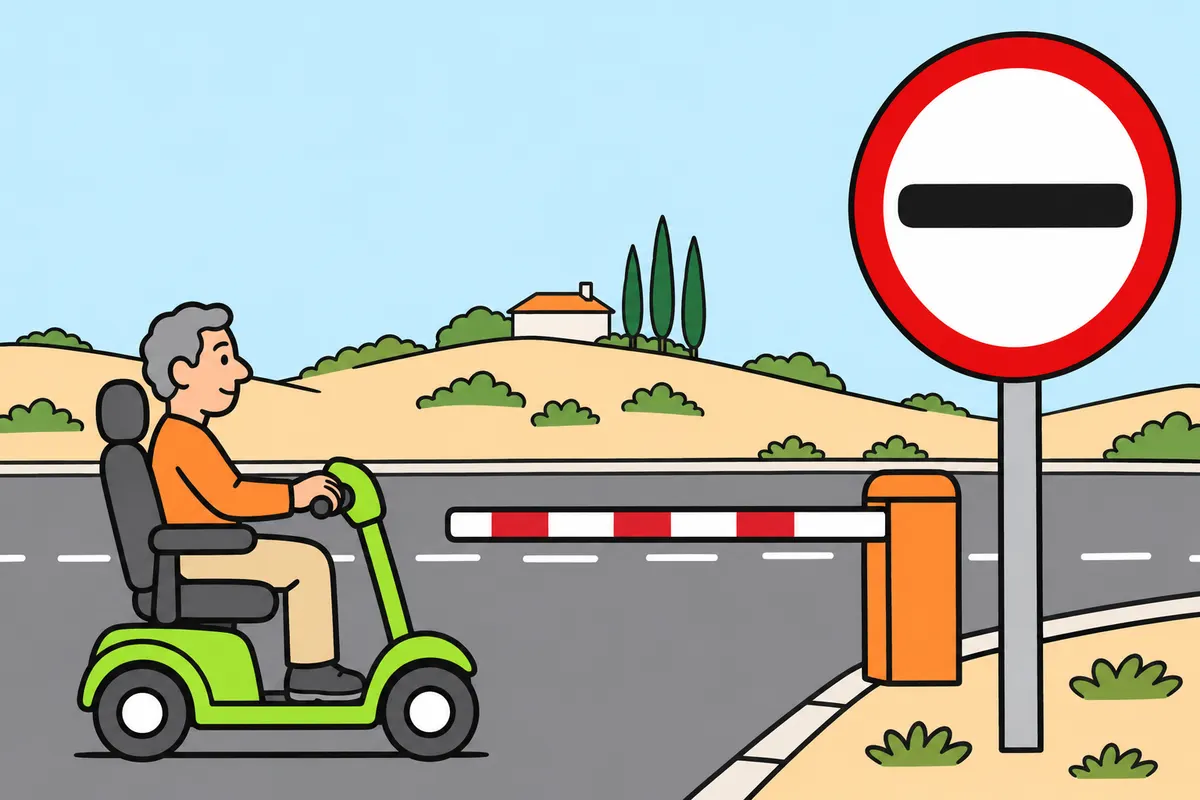
- A closure device prohibits you from entering the part of the road it marks off. You must not cross a movable barrier while it is positioned across the carriageway. A temporary direction panel prohibits passage through the closed area and also indicates the direction you must follow. [RGC, art. 142 and Annex I.3](https://www.boe.es/buscar/act.php?id=BOE-A-2003-23514#A3)
- Cones and temporary edge markers prohibit you from crossing the real or imaginary line joining them. [RGC, art. 142 and Annex I.3](https://www.boe.es/buscar/act.php?id=BOE-A-2003-23514#A3)
- A steady red delineation light indicates that the carriageway is completely closed to traffic. Steady or flashing yellow delineation lights prohibit you from crossing the imaginary line joining them. Their effect is that of devices marking off the road; flashing amber traffic lights are explained in the Red and amber traffic lights section. [RGC, art. 142 and Annex I.3](https://www.boe.es/buscar/act.php?id=BOE-A-2003-23514#A3)
- Guidance devices help you identify edges, bends, obstacles and the separation of traffic streams. Edge marker posts indicate the edges, permanent chevron boards guide you around bends, and a traffic separation bollard marks the point where two traffic streams separate. [RGC, art. 142 and Annex I.3](https://www.boe.es/buscar/act.php?id=BOE-A-2003-23514#A3)
- Retroreflective road studs fixed to the road surface help you follow the road layout, especially at night. Where illuminated road studs are used as delineation signals, you may cross only green ones: you must distinguish these illuminated devices from simple reflectors. [RGC, art. 142 and Annex I.3](https://www.boe.es/buscar/act.php?id=BOE-A-2003-23514#A3)
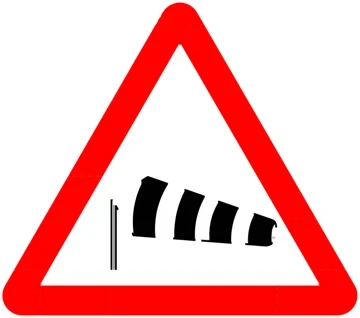
- A windsock supplements the crosswind warning by indicating the presence, direction and strength of the wind. Safety barriers and parapets are restraint systems that reduce the consequences of leaving the road. [RGC, art. 142 and Annex I.3](https://www.boe.es/buscar/act.php?id=BOE-A-2003-23514#A3)
9Red and amber traffic lights
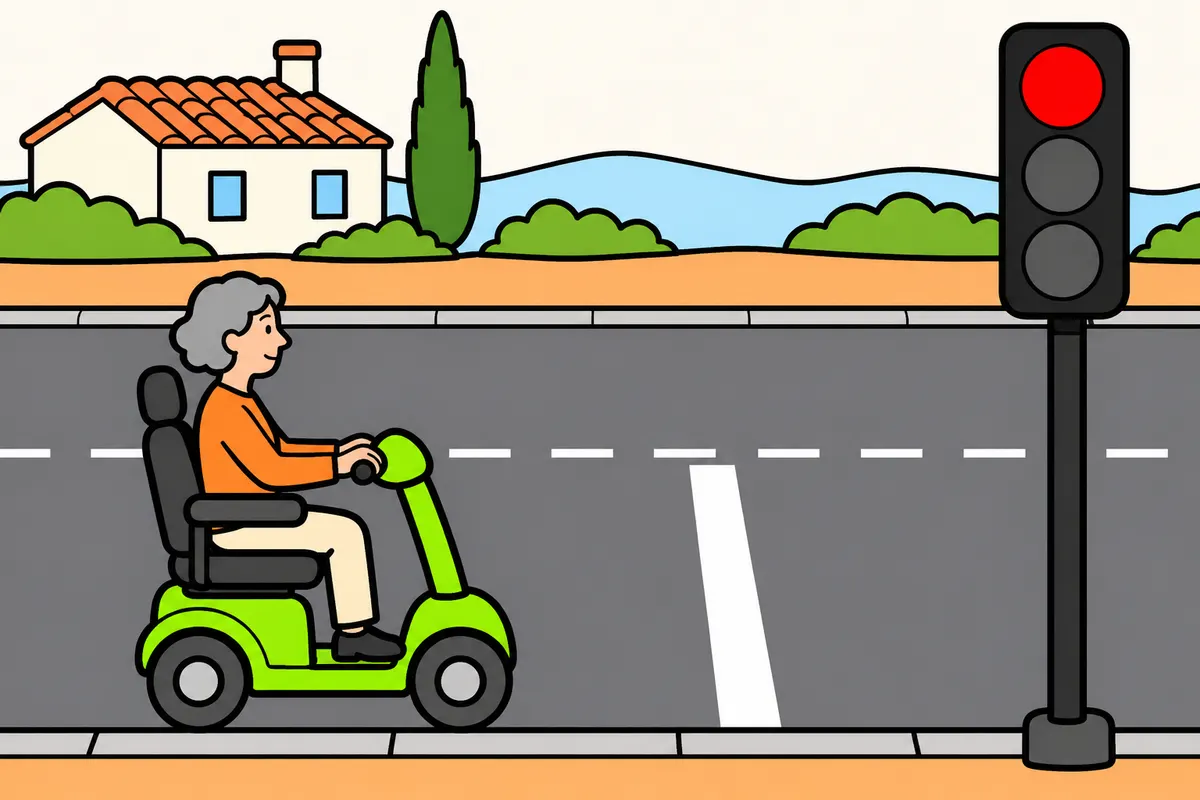
You must stop at red and distinguish steady amber from flashing amber.
| Light | What you must do |
|---|---|
| Steady or flashing red | Do not pass. |
| Steady amber | Stop, unless already too close to stop safely when it comes on. |
| Flashing amber | Take extra care, give way where required and obey instructions to stop. |
Remember
- At red, stop before the nearest stop line before the light.
- Without a line, do not pass the light.
- If the light is within or beyond a junction, stop before entering.
- Do not accelerate to catch amber.
- A black arrow limits the instruction to the movement shown.
Exam trap: Wrong: ignore STOP at flashing amber. Right: you must stop at STOP.
Read the full explanation
- At a steady red light for vehicles, you must stop without crossing the nearest stop line before the traffic light. If there is no line, you must not pass the traffic light. If it is within or beyond a junction, you must stop before entering the junction. [RGC, art. 143 and Annex I.4](https://www.boe.es/buscar/act.php?id=BOE-A-2003-23514#A4)
- A flashing red light, or two red lights flashing alternately, temporarily prohibits you from passing. You may encounter these at level crossings, opening bridges or access points for firefighting vehicles. [RGC, art. 143 and Annex I.4](https://www.boe.es/buscar/act.php?id=BOE-A-2003-23514#A4)
- A steady amber light requires you to stop under the same conditions as a red light. You may continue only if, when it comes on, you are so close that you cannot stop safely enough before the traffic light. [RGC, art. 143 and Annex I.4](https://www.boe.es/buscar/act.php?id=BOE-A-2003-23514#A4)
- A flashing amber light or two amber lights flashing alternately require you to take extra care and, where appropriate, give way. You must also obey signs requiring you to stop: a STOP sign still requires a stop. At crossings with pedestrian traffic lights, as a general rule, flashing amber for vehicles must not coincide with steady green for pedestrians and must be preceded by steady red. [RGC, art. 143 and Annex I.4](https://www.boe.es/buscar/act.php?id=BOE-A-2003-23514#A4)
- A black arrow on a red or amber light retains the meaning of that light and limits it to the movement indicated. If it shows the turn you intend to make, you must apply the corresponding prohibition or stopping requirement to that turn. [RGC, art. 143 and Annex I.4](https://www.boe.es/buscar/act.php?id=BOE-A-2003-23514#A4)
10Green lights, arrows and special traffic lights
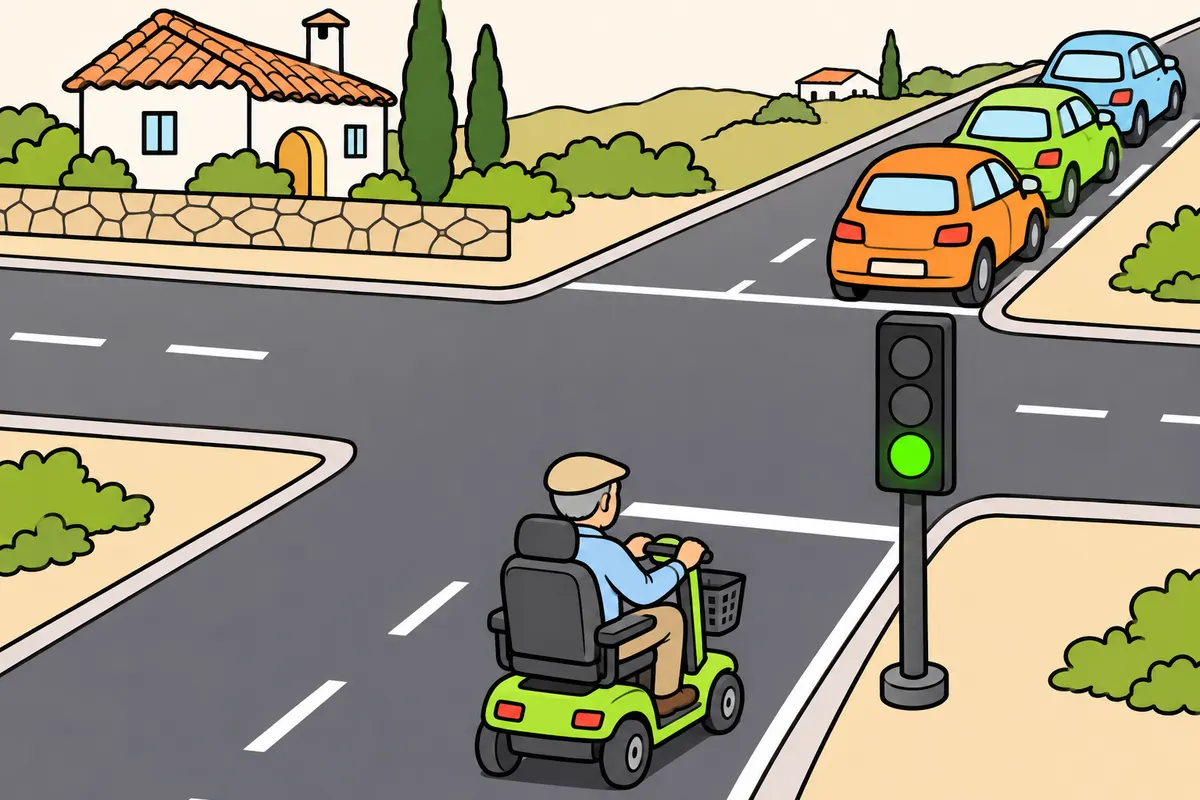
You must distinguish permission to proceed from permission to use a lane.
| Lane-control signal | What you must do |
|---|---|
| Red cross | Do not use the lane; if already there, leave as soon as possible. |
| Diagonal white or yellow arrow | Move safely into the indicated lane: yours is about to close. |
| Downward green arrow | You may use the lane, but obey circular red, STOP and give-way instructions. |
Remember
- At circular green, proceed only if you will not block crossing traffic.
- For a green arrow on black, follow its direction cautiously.
- Give way to vehicles in the lane you join; do not endanger pedestrians.
- Follow that arrow when your lane requires the movement shown.
- Cycle and pedestrian lights do not give your LCM permission to proceed.
- White bars control only the vehicles specifically covered.
Exam trap: Wrong: the downward green arrow cancels STOP. Right: it allows lane use, but STOP, give-way signs or markings and circular red still apply.
Read the full explanation
- A steady circular green light allows you to proceed with priority, but you must not enter if you are likely to come to a stop and block crossing traffic. [RGC, art. 143 and Annex I.4](https://www.boe.es/buscar/act.php?id=BOE-A-2003-23514#A4)
- A green arrow on a circular black background allows you to follow its direction even if an adjacent light is red. You must do so with care, giving way to vehicles in the lane you are joining and without endangering anyone crossing the carriageway. [RGC, art. 143 and Annex I.4](https://www.boe.es/buscar/act.php?id=BOE-A-2003-23514#A4)
- If you are in a lane reserved exclusively for the movement indicated by that green arrow, or in a lane from which that movement must be made even though it is not reserved, you must proceed in the direction indicated. [RGC, art. 143 and Annex I.4](https://www.boe.es/buscar/act.php?id=BOE-A-2003-23514#A4)
- A red cross on a lane control signal prohibits you from using that lane; if you are driving in it, you must leave it as soon as possible. A steady or flashing diagonal white or yellow arrow warns you that the lane is about to close and indicates which lane you must move into safely. [RGC, art. 143 and Annex I.4](https://www.boe.es/buscar/act.php?id=BOE-A-2003-23514#A4)
- A downward green arrow on a lane control signal allows you to use that lane. You must also obey a circular red light and STOP or give way signs or road markings: the catalogue expressly establishes this exception to the general hierarchy. [RGC, art. 143 and Annex I.4](https://www.boe.es/buscar/act.php?id=BOE-A-2003-23514#A4)
- Traffic lights showing a cycle symbol apply exclusively to cycles; pedestrian lights control people on foot. White bars control the vehicles specifically designated: a horizontal bar prohibits you from passing, a vertical bar allows you to continue straight ahead, and a diagonal bar allows the indicated turn. You must not treat these lights as permission for your LCM vehicle merely because they are nearby. [RGC, art. 143 and Annex I.4](https://www.boe.es/buscar/act.php?id=BOE-A-2003-23514#A4)
11Shapes, colours and supplementary plates
You must read each sign's shape, symbol and plates together.
| Sign or plate | Meaning |
|---|---|
| Red-bordered triangle | Warning of danger. |
| Red-bordered circle | Prohibition or restriction. |
| Blue circle | Obligation. |
| S-880 plate | Sign applies to the depicted vehicle type; EXCEPTO means that group is excluded. |
Remember
- Regulatory signs start where they stand, unless a plate gives another starting distance.
- Beside a built-up area's name, they apply throughout unless other signs say otherwise.
- Read plates showing affected users with the main sign.
- Check the conditions before using reserved parking.
- Do not hide signs or reduce their visibility.
Exam trap: Wrong: an LCM licence alone allows reserved parking. Right: check that you meet the parking authorisation conditions.
Read the full explanation
- Triangles with a red border warn of danger, circles with a red border indicate prohibitions or restrictions, and blue circles indicate obligations. Some shapes are distinctive, such as the inverted triangle for give way and the octagon for STOP; the symbol inside specifies the instruction you must follow. [RGC, art. 134 and Annex I.5](https://www.boe.es/buscar/act.php?id=BOE-A-2003-23514#A5)
- Regulatory signs apply from the point across the road where they are placed, unless a supplementary plate indicates a different distance to the start. If they are placed beside the name of a built-up area or directly above or below it, the regulation applies throughout the built-up area, unless different signs apply on particular sections. [RGC, art. 145.3 and 4](https://www.boe.es/buscar/act.php?id=BOE-A-2003-23514#a145)
- The S-880 supplementary plate limits the sign to the type of vehicle shown; with the word EXCEPTO (EXCEPT), it indicates that this type of vehicle is excluded. [RGC, art. 134 and Annex I.5](https://www.boe.es/buscar/act.php?id=BOE-A-2003-23514#A5)
- Supplementary plates may specify times, the road users concerned and exceptions, or indicate the distance to the start of a requirement and the length of the affected section. You must relate each figure to its symbol and units: a distance to a hazard locates its beginning; a section length indicates how far it extends. [RGC, art. 137](https://www.boe.es/buscar/act.php?id=BOE-A-2003-23514#a137)
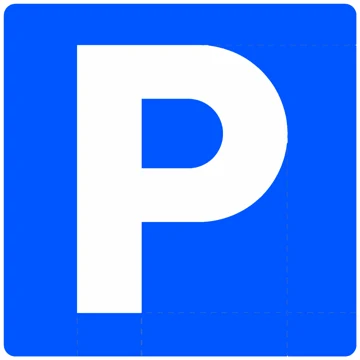
- Spaces reserved for people with reduced mobility may be indicated by the mobility accessibility symbol or by S-17, Parking, incorporating that symbol. To use a reserved space, you must meet its authorisation conditions; the LCM licence and the reservation sign serve different purposes. [RGC, art. 134 and Annex I.5](https://www.boe.es/buscar/act.php?id=BOE-A-2003-23514#A5)
- You must not conceal signs, alter their content or place objects that reduce their visibility or cause confusion. [RGC, art. 140](https://www.boe.es/buscar/act.php?id=BOE-A-2003-23514#a140)
 S-17
12Give way and STOP
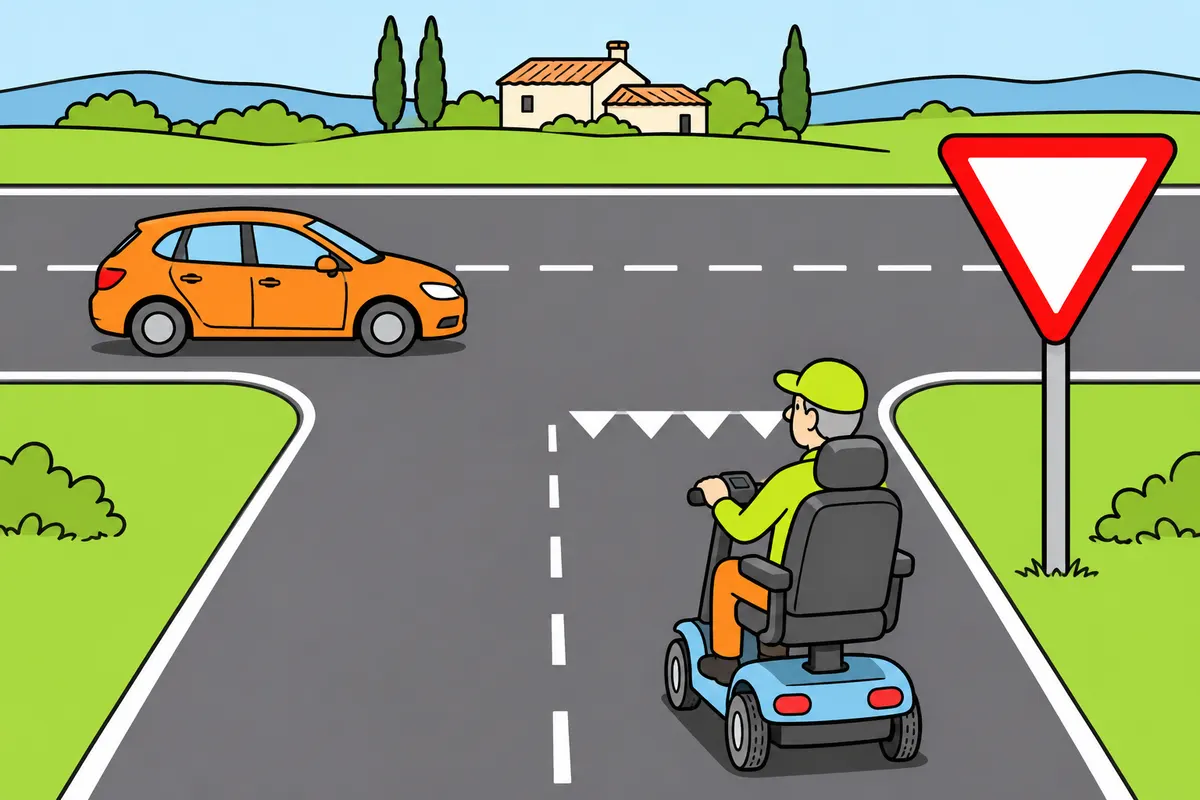
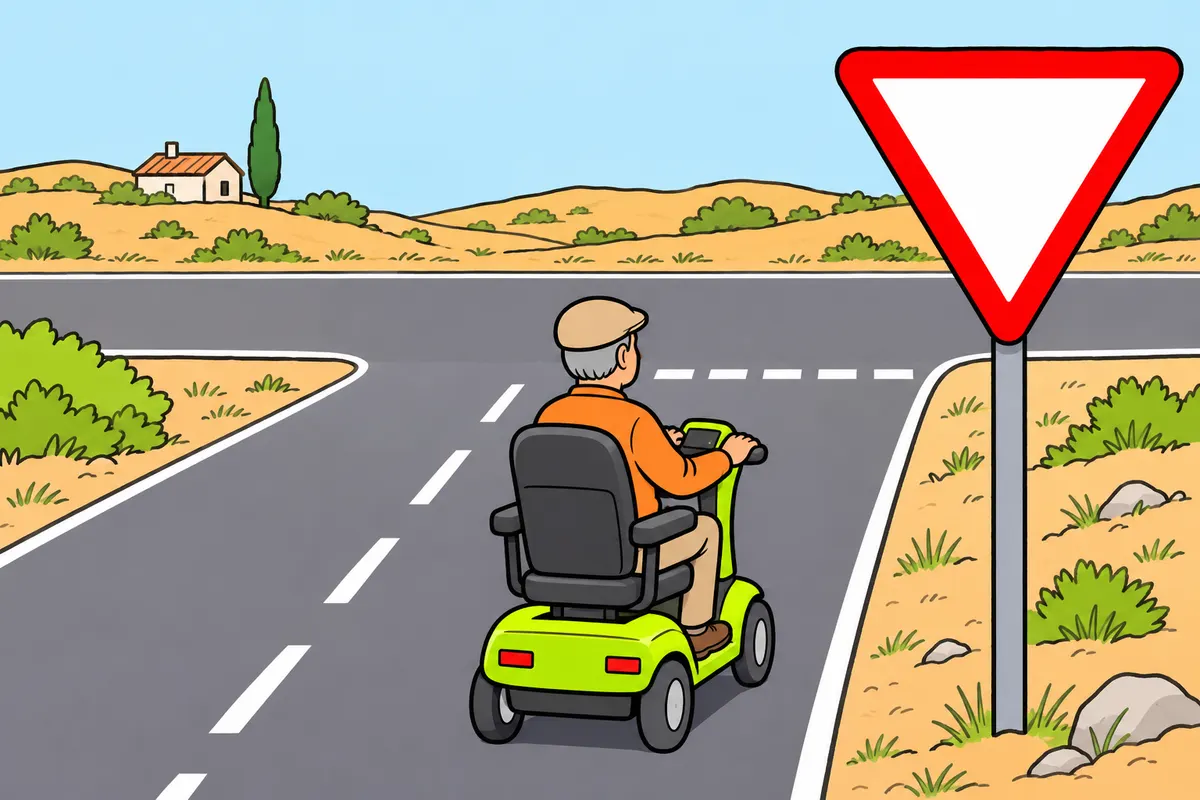
At STOP you must stop completely; at give way, stop only when necessary.
| Sign | What you must do |
|---|---|
| R-1: Give way | Let traffic pass; stop if necessary. |
| R-2: STOP | Always stop completely, then give way. |
Remember
- At STOP, stop before the line; without one, immediately before the junction.
- After stopping, give way.
- If you cannot see enough, stop again where you can see without danger.
- If conflicting instructions of the same type control the same approach, obey STOP.
Exam trap: Wrong: moving very slowly fulfils STOP. Right: you must stop completely.
Read the full explanation
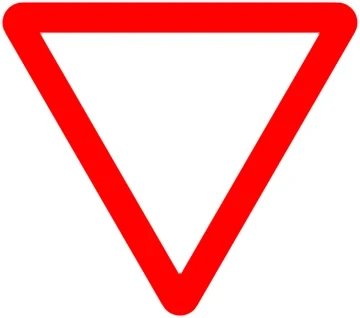
- R-1, Give way, requires you to give way to vehicles travelling on the road you are approaching or in the lane you intend to join. You must stop if necessary to give way, but you do not always have to stop if you can give way without stopping. [RGC, art. 134 and Annex I.5](https://www.boe.es/buscar/act.php?id=BOE-A-2003-23514#A5)
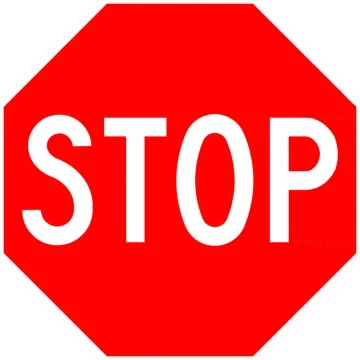
- R-2, Compulsory stop or STOP, requires you to bring your vehicle to a complete stop before the next stop line. If there is no line, you must stop immediately before the junction. You must then give way to vehicles on the road you are approaching. [RGC, art. 134 and Annex I.5](https://www.boe.es/buscar/act.php?id=BOE-A-2003-23514#A5)
- If, exceptionally, you do not have sufficient visibility from the place where you first stop, you must stop again where you can see without endangering anyone. [RGC, art. 134 and Annex I.5](https://www.boe.es/buscar/act.php?id=BOE-A-2003-23514#A5)
- R-1 is an inverted triangle and R-2 is an octagon bearing the word STOP. If these two instructions of the same type conflict on the same approach, you must make the stop required by STOP, which is the more restrictive instruction. [RGC, art. 134 and Annex I.5](https://www.boe.es/buscar/act.php?id=BOE-A-2003-23514#A5)
 R-1
 R-2
13Signed priority and narrow sections
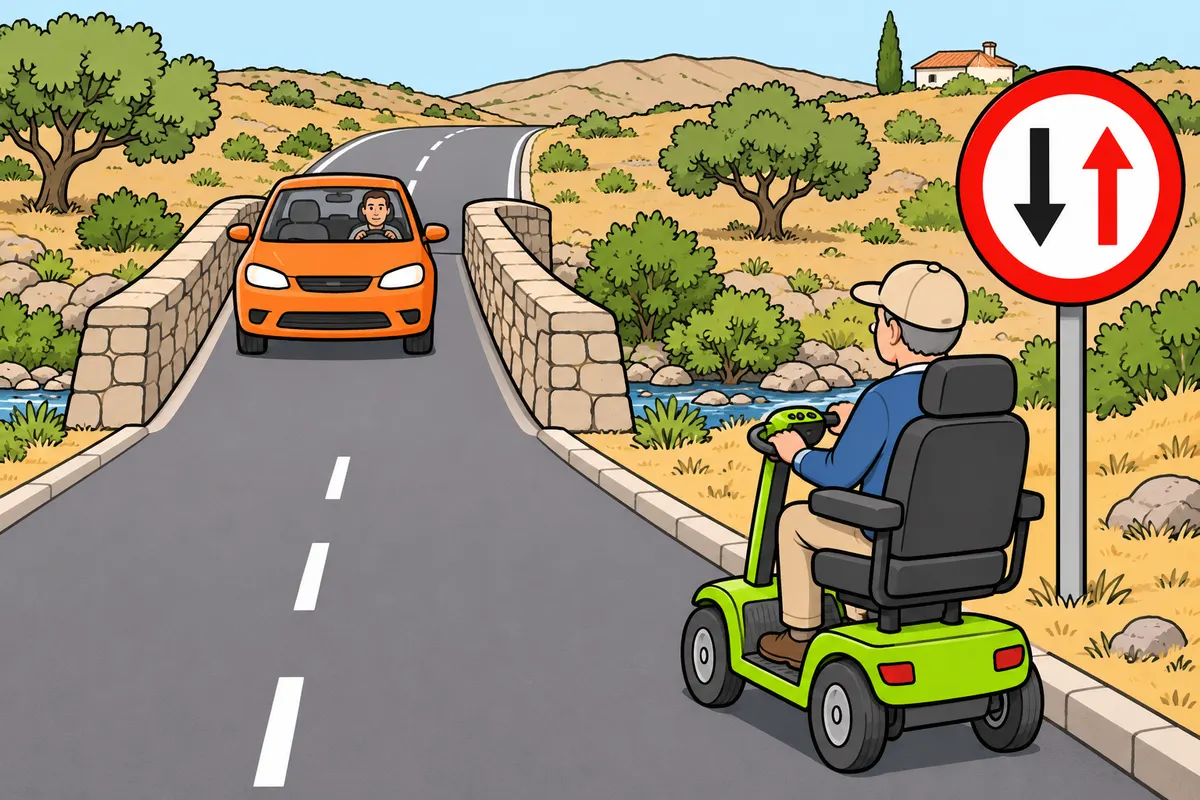
You must check priority and available space before entering a narrow section.
| Sign | Meaning |
|---|---|
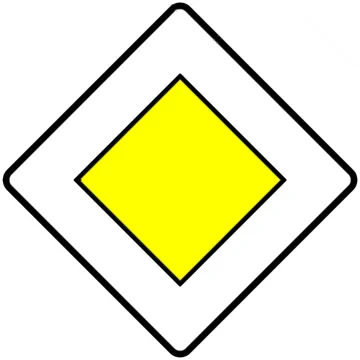
| R-3 | You have priority over traffic from other carriageways at junctions. |
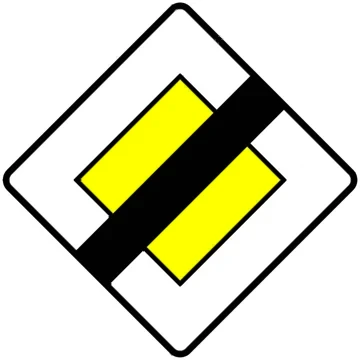
| R-4 | That priority ends. |
| R-5 | Do not enter if you would force oncoming road users to stop. |
| R-6 | You have priority at the next narrow section. |
Remember
- Having priority does not allow you to create danger.
- If another vehicle already occupies the narrow section, check you can pass safely.
- Your small size does not cancel signs.
Exam trap: Wrong: end of priority means STOP. Right: check the controls ahead; this sign alone does not require stopping.
Read the full explanation
- R-3, Priority road, indicates that you have priority at junctions over vehicles on other roads. R-4 marks the end of that priority. You must follow subsequent signs: the end of priority does not in itself mean STOP. [RGC, art. 134 and Annex I.5](https://www.boe.es/buscar/act.php?id=BOE-A-2003-23514#A5)
- R-5, Priority to oncoming traffic, prohibits you from entering the narrow section if you cannot pass through without forcing oncoming road users to stop. You must wait before entering the narrow section; the small size of your vehicle does not override the sign. [RGC, art. 134 and Annex I.5](https://www.boe.es/buscar/act.php?id=BOE-A-2003-23514#A5)
- R-6, Priority over oncoming traffic, indicates that you have priority at the next narrow section. You must check that you can pass through without creating a dangerous situation, especially if a vehicle is already in the section. [RGC, art. 134 and Annex I.5](https://www.boe.es/buscar/act.php?id=BOE-A-2003-23514#A5)
 R-3
 R-4
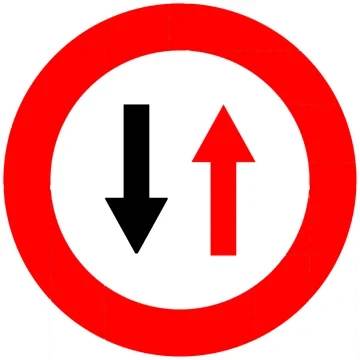 R-5
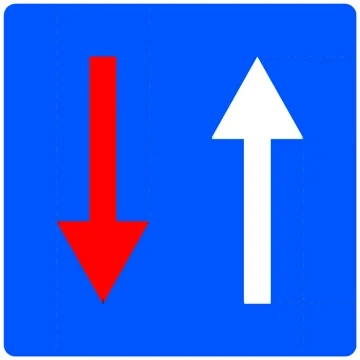 R-6
14Entry prohibitions relevant to LCM
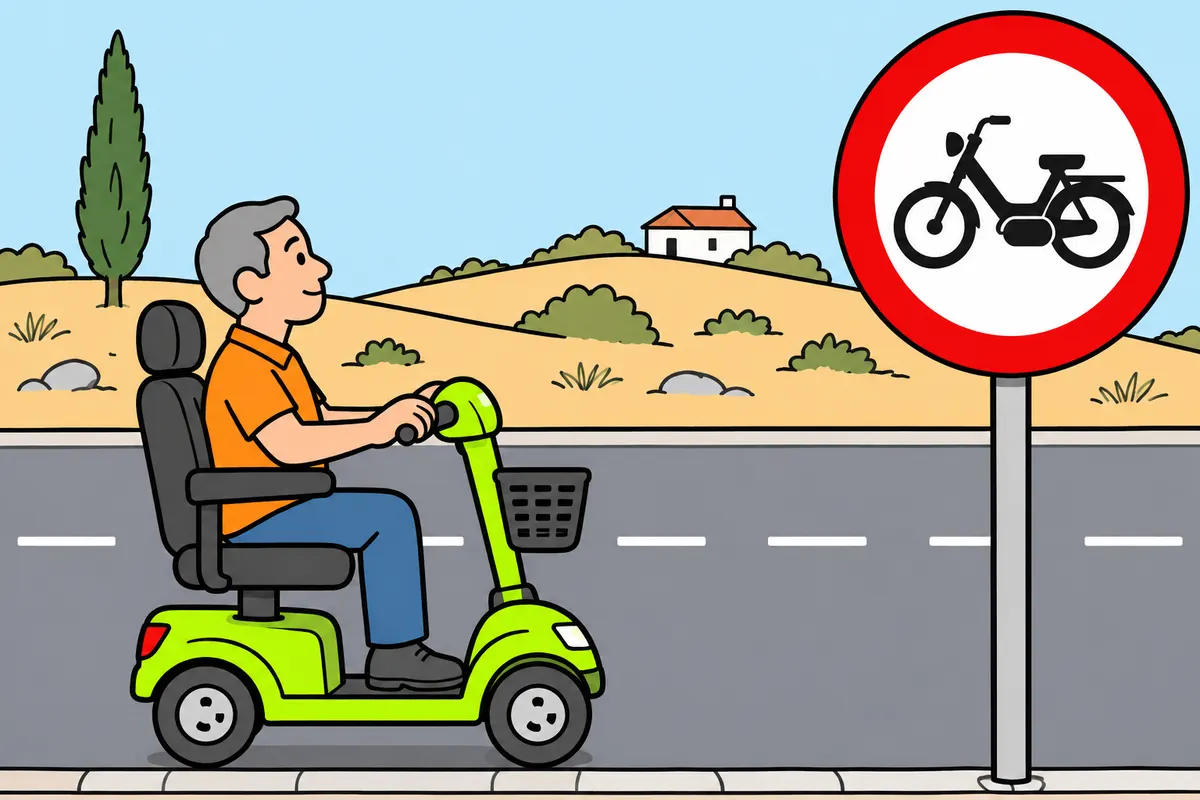
You must identify which entry prohibitions apply to your LCM.
| Entry sign | Effect on your LCM |
|---|---|
| R-100 | Do not travel in either direction. |
| R-101 | Do not enter from this side. |
| R-105 | Do not enter: it includes vehicles for people with reduced mobility. |
| R-102 | Your LCM is outside this legal category; obey other restrictions. |
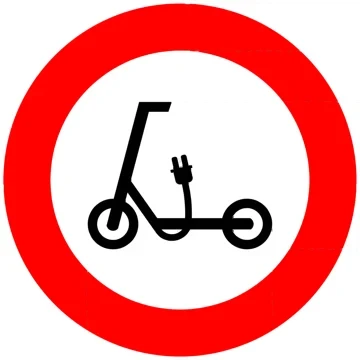
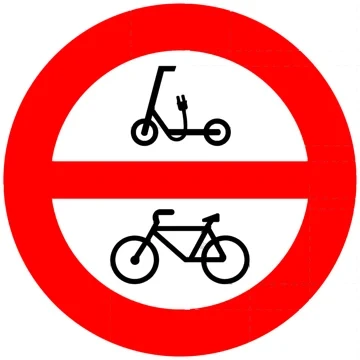
| R-114, R-118 and R-119 | These cover cycles or personal mobility vehicles; your LCM is a different category. |
Remember
- Your LCM is not a personal mobility vehicle.
- Permission for cycles does not automatically allow your LCM.
- At R-120, read the plate's environmental conditions.
- Your licence does not allow entry into every restricted zone.
Exam trap: Wrong: R-105 only bans mopeds. Right: it also bans entry with your LCM.
Read the full explanation
- R-100, No vehicles, prohibits all vehicles from travelling in either direction. R-101, No entry, prohibits entry from the side where it is placed. With R-101, you may encounter vehicles travelling towards you: the prohibition applies to your entry from that end. [RGC, art. 134 and Annex I.5](https://www.boe.es/buscar/act.php?id=BOE-A-2003-23514#A5)
- R-105, No entry for mopeds, expressly includes vehicles for people with reduced mobility. You must obey it in your LCM vehicle even though the pictogram shows a moped. [RGC, art. 134 and Annex I.5](https://www.boe.es/buscar/act.php?id=BOE-A-2003-23514#A5)
- R-102 prohibits entry for motor vehicles, a legal category that excludes vehicles for people with reduced mobility. You can interpret this prohibition according to the regulatory category of your LCM vehicle, while respecting the other access restrictions. [RGV, Annex II](https://www.boe.es/buscar/act.php?id=BOE-A-1999-1826#anii)
- R-114 prohibits entry for cycles and R-118 for personal mobility vehicles; R-119 covers both groups. Your LCM vehicle belongs to a different category. The term personal mobility does not mean reduced mobility, and permission for cycles does not constitute general permission for your vehicle. [RGC, art. 134 and Annex I.5](https://www.boe.es/buscar/act.php?id=BOE-A-2003-23514#A5)
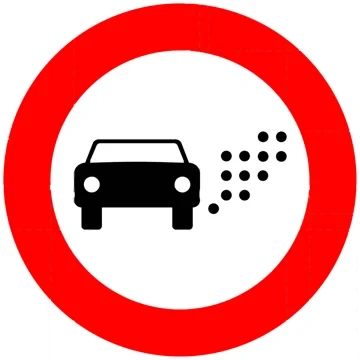
- R-120 regulates access according to the environmental badge or other environmental criteria. You must read the supplementary plate or notice specifying the conditions; the symbol alone does not describe all the exceptions. [RGC, art. 134 and Annex I.5](https://www.boe.es/buscar/act.php?id=BOE-A-2003-23514#A5)
 R-100
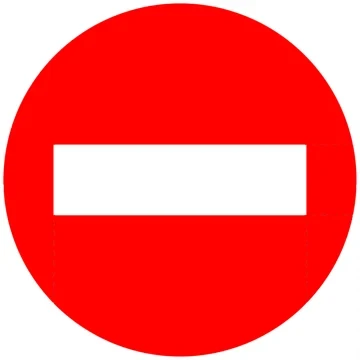 R-101
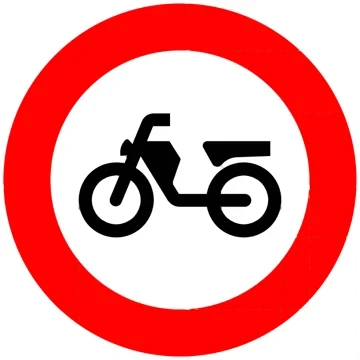 R-105
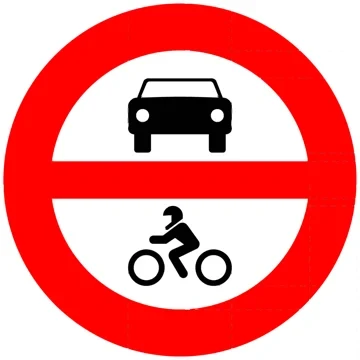 R-102
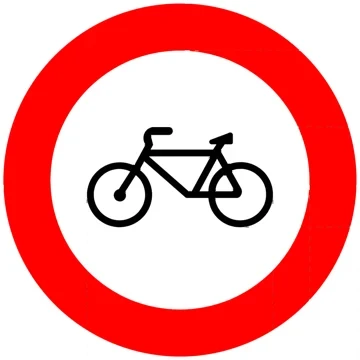 R-114
 R-118
 R-119
 R-120
15Passage and speed restrictions
You must obey passage restrictions and your vehicle's own limits.
| Sign or case | What applies |
|---|---|
| R-301 | Do not exceed the displayed speed or your own limits. |
| R-300 | Keep the displayed gap, with the specified overtaking exceptions. |
| R-411 | Check whether your vehicle can legally use that road or lane. |
| End of R-301 | Another maximum or applicable end sign; with a hazard on the same support, when that hazard ends. |
| R-301 on a road without priority | Ends after you leave the junction with a priority road. |
Remember
- At R-200, stop and meet the condition for passage.
- Check mass, dimensions and load where relevant.
- Do not confuse actual mass with maximum authorised mass.
- You do not have to reach a maximum speed.
- Do not exceed your LCM's limits to meet a minimum speed.
Exam trap: Wrong: exceed your LCM's limit because the sign allows more. Right: your vehicle category's limit still applies.
Read the full explanation
- R-200 prohibits you from passing without stopping for the reason indicated, such as a checkpoint or toll. You must stop and comply with the condition for proceeding. [RGC, art. 134 and Annex I.5](https://www.boe.es/buscar/act.php?id=BOE-A-2003-23514#A5)
- Signs showing mass, axle load, length, width and height restrict access according to the quantity shown. You must include the vehicle and its load where the restriction concerns overall dimensions, and distinguish actual mass from the maximum authorised mass expressly mentioned by another sign. [RGC, art. 134 and Annex I.5](https://www.boe.es/buscar/act.php?id=BOE-A-2003-23514#A5)
- R-301, Maximum speed, prohibits you from exceeding the figure shown in kilometres per hour. You must also observe the limits applicable to your category and the conditions at the location. [RGC, art. 134 and Annex I.5](https://www.boe.es/buscar/act.php?id=BOE-A-2003-23514#A5)
- R-300 requires you to keep a minimum distance from the vehicle ahead, with the distance shown in metres and the specified exceptions for overtaking. [RGC, art. 134 and Annex I.5](https://www.boe.es/buscar/act.php?id=BOE-A-2003-23514#A5)
- A maximum speed is an upper limit, not an obligation to reach it. If you encounter an R-411 minimum speed sign, you must assess whether you can legally use that road or lane with your vehicle; you cannot exceed your vehicle’s limits to try to meet an incompatible minimum speed. [RGC, art. 134 and Annex I.5](https://www.boe.es/buscar/act.php?id=BOE-A-2003-23514#A5)
- R-301 keeps the speed restriction in force until a different maximum speed or an applicable end-of-restriction sign. If it shares a post or panel with a hazard warning sign, the restriction ends when the hazard ends. If it is on a road without priority, it ceases to apply when you leave the junction with a priority road. [RGC, art. 134 and Annex I.5](https://www.boe.es/buscar/act.php?id=BOE-A-2003-23514#A5)
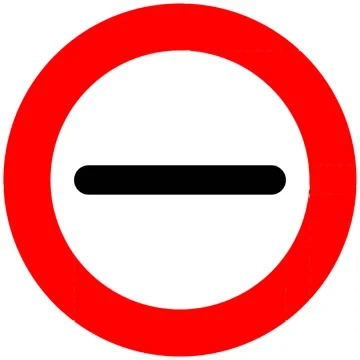 R-200
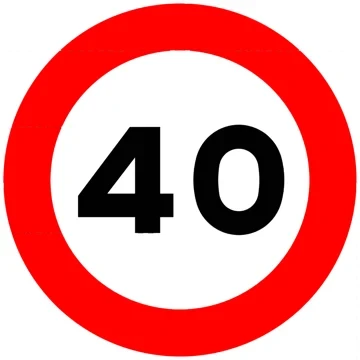 R-301
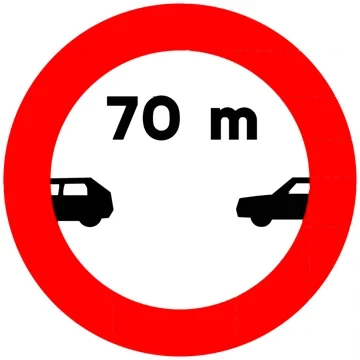 R-300
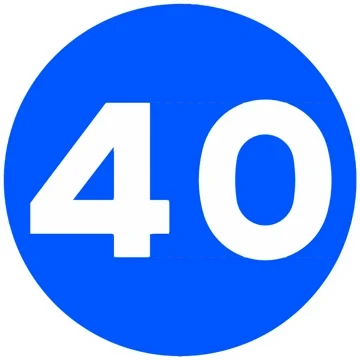 R-411
16Turns, overtaking and audible warnings
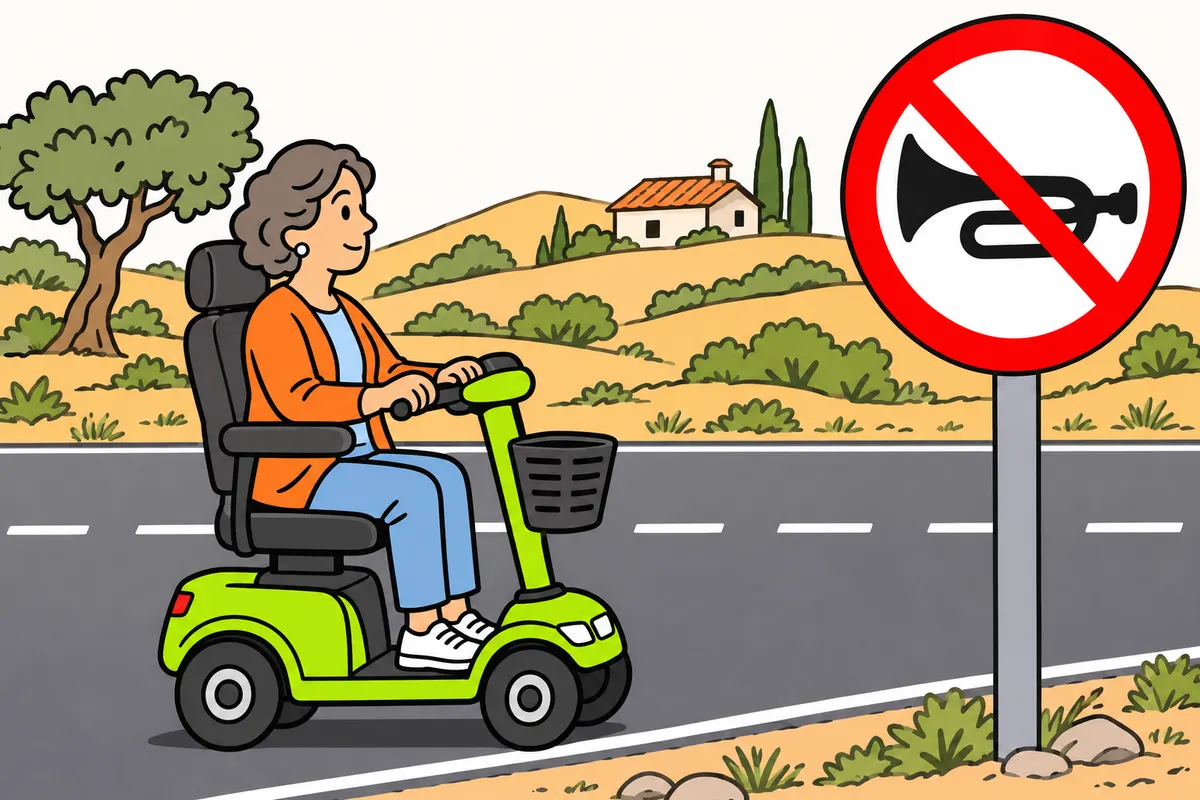
You must distinguish bans on turns, U-turns, overtaking and horn use.
| Sign | What you must do |
|---|---|
| R-302 | Do not turn right. |
| R-303 | Do not turn left or make a U-turn. |
| R-304 | Do not make a U-turn. |
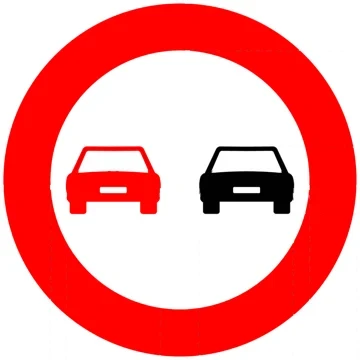
| R-305 | Obey the overtaking prohibition and its legal exceptions. |
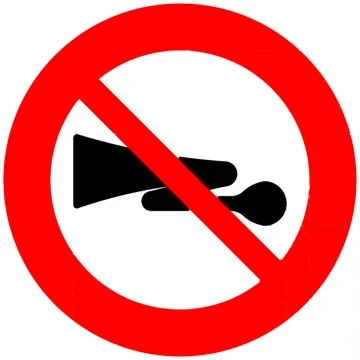
| R-310 | Do not use audible warnings, except to avoid an accident. |
Remember
- Turning onto another street differs from turning back.
- A no-overtaking sign is an instruction.
- Apply its legal exceptions; your small size does not allow every overtake.
- At R-310, use your horn only to avoid an accident.
Exam trap: Wrong: a U-turn ban always bans left turns. Right: R-304 alone does not ban turning left.
Read the full explanation
- R-302 prohibits right turns. R-303 prohibits left turns and U-turns. R-304 prohibits U-turns, but does not in itself prohibit left turns. A turn takes you onto another road; a U-turn makes you travel along the same road in the opposite direction. [RGC, art. 134 and Annex I.5](https://www.boe.es/buscar/act.php?id=BOE-A-2003-23514#A5)
- R-305, No overtaking, contains a prohibition and its regulatory exceptions; it is not merely advice because of poor visibility. You must study its application alongside the overtaking rules in «Manoeuvres with your LCM vehicle», without assuming that your smaller size allows you to pass any vehicle or obstacle. [RGC, art. 134 and Annex I.5](https://www.boe.es/buscar/act.php?id=BOE-A-2003-23514#A5)
- R-310 prohibits audible warnings, except to prevent an accident. You may travel along the section if permitted, but you must not use the horn to greet people, pressure other road users or claim priority you do not have. [RGC, art. 134 and Annex I.5](https://www.boe.es/buscar/act.php?id=BOE-A-2003-23514#A5)
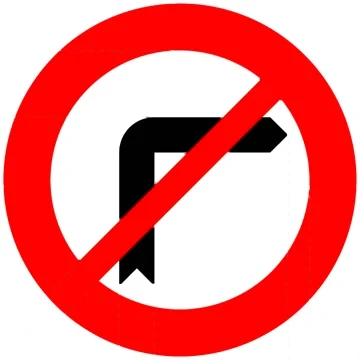 R-302
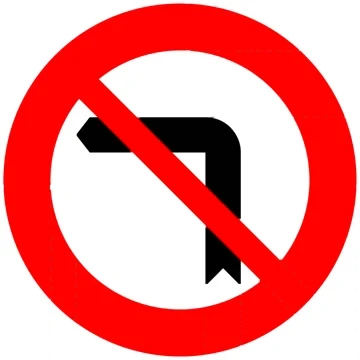 R-303
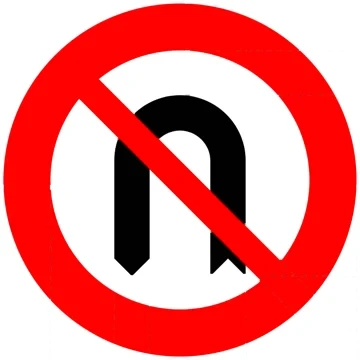 R-304
 R-305
 R-310
17Signed stopping and parking restrictions
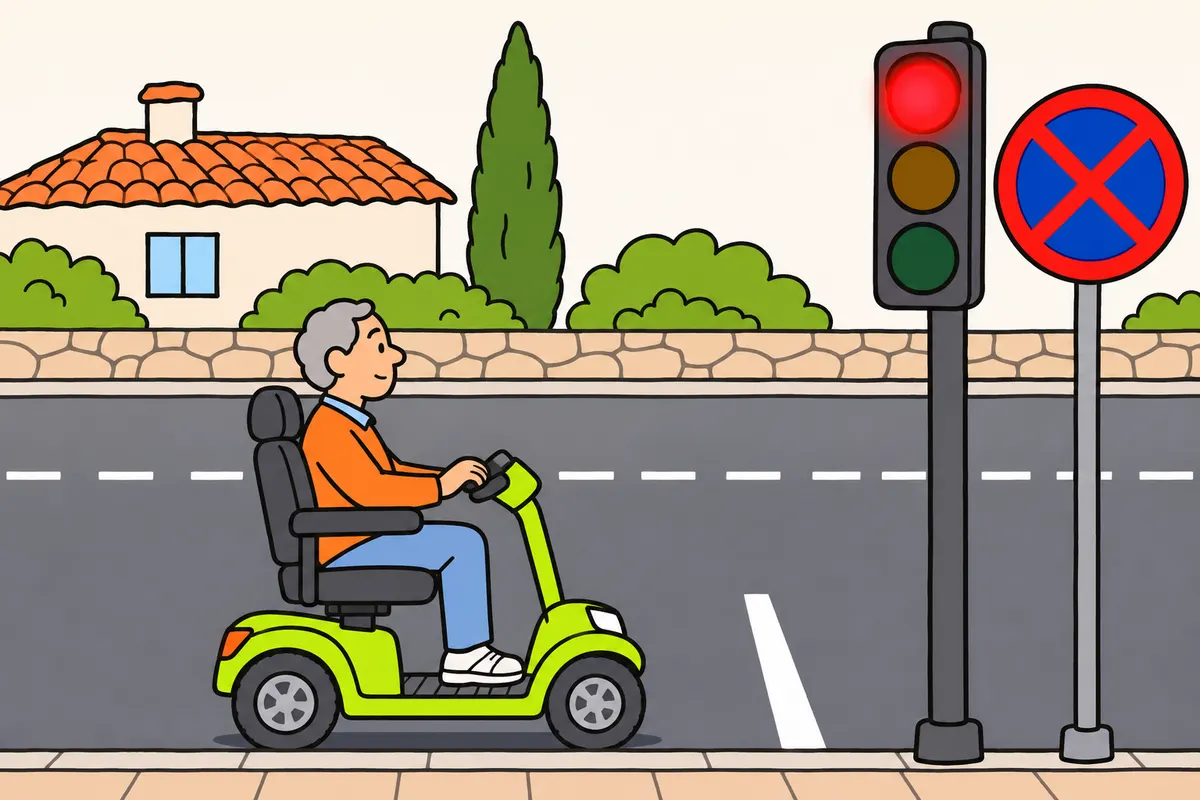
You must read where and when stopping or parking is prohibited.
| Sign | What you must do |
|---|---|
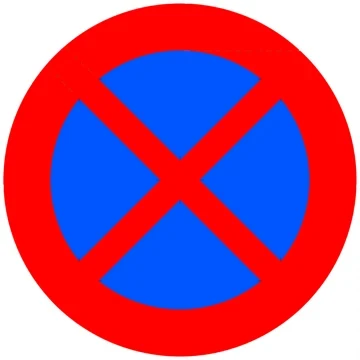
| R-307 | Do not stop or park on the signed side. |
| R-308 | Do not park on the signed side. |
| S-17 | You may park if you meet the displayed conditions. |
Remember
- Check the side, section, times and dates covered by the prohibition.
- Distinguish a voluntary stop from stopping because of traffic.
- Even where stopping is prohibited, you must stop at red.
- Check reservations before using a parking space.
- Check local conditions for painted parking spaces.
Exam trap: Wrong: a parking sign cancels reservations. Right: you must meet the conditions for the permitted users.
Read the full explanation
- R-307 prohibits stopping and parking on the side of the carriageway where it is placed; R-308 prohibits parking. You must distinguish a voluntary brief stop from a stop required by traffic, an officer or traffic lights. [RGC, art. 134 and Annex I.5](https://www.boe.es/buscar/act.php?id=BOE-A-2003-23514#A5)
- You must read the arrows, times, dates and supplementary plates specifying the section and periods covered by the prohibition. How to park and the places where it is prohibited are covered in «Manoeuvres with your LCM vehicle». [RGC, art. 134 and Annex I.5](https://www.boe.es/buscar/act.php?id=BOE-A-2003-23514#A5)
- S-17 indicates an authorised parking area subject to the conditions stated. If it is reserved for particular users or vehicles, you must check that you meet the requirements; a parking P does not override an accessibility symbol or any other reservation accompanying the sign. [RGC, art. 134 and Annex I.5](https://www.boe.es/buscar/act.php?id=BOE-A-2003-23514#A5)
- Parking markings define spaces and may use colours indicating specific regulations. You must check the local signs and conditions on duration, times and proof of entitlement, without assuming that a marked space always allows any vehicle or any length of stay. [RGC, art. 134 and Annex I.5](https://www.boe.es/buscar/act.php?id=BOE-A-2003-23514#A5)
 R-307
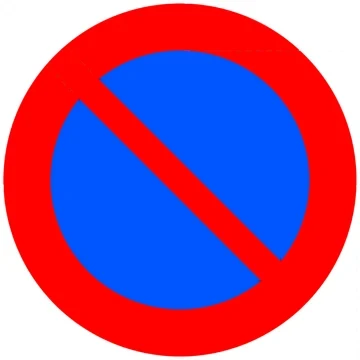 R-308
18Compulsory directions and routes
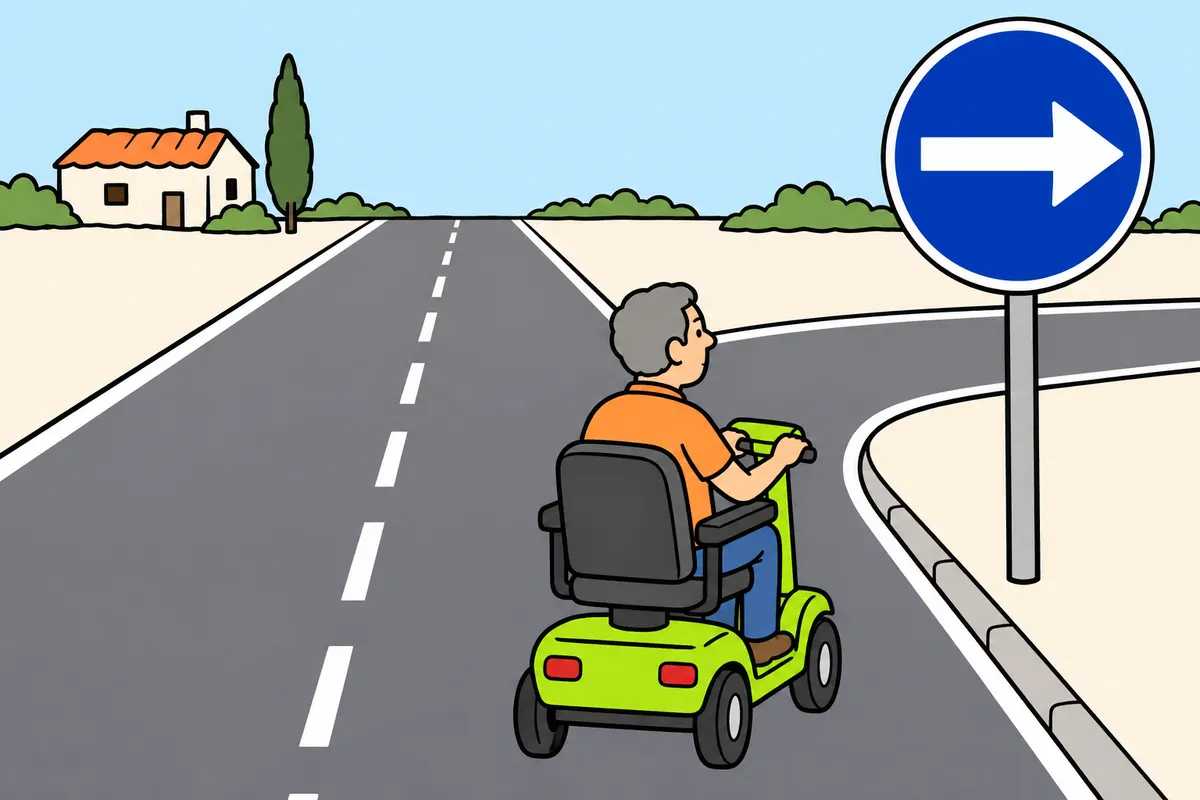
You must follow compulsory directions and respect reserved routes.
| Sign | Users or obligation |
|---|---|
| R-400 | Follow its arrows. |
| R-401 | Pass the obstacle on the indicated side. |
| R-402 | Follow the indicated direction around the roundabout. |
| R-407a and R-407b | Reserved and compulsory for cycles and mopeds respectively. |
| R-410 | Path reserved and compulsory for pedestrians. |
| R-420 and R-421 | Reserved for personal mobility vehicles; the latter also includes cycles. |
| R-408 | Compulsory for animal-drawn vehicles; this sign alone does not make the route exclusive. |
Remember
- Choose a direction shown by the permitted-direction arrows.
- Do not add a U-turn to the options shown.
- A compulsory roundabout direction does not decide entry priority.
- Driving slowly does not make your LCM a cycle or moped.
Exam trap: Wrong: use a reserved route because your vehicle is small. Right: check that your vehicle category is allowed.
Read the full explanation
- The arrows on compulsory direction signs in the R-400 series indicate the direction you must follow. You must check whether the arrow requires you to continue straight ahead or turn: an obligation to turn does not allow you to continue straight ahead even if the street looks clear. [RGC, art. 134 and Annex I.5](https://www.boe.es/buscar/act.php?id=BOE-A-2003-23514#A5)
- Signs in the R-401 series indicate which side you must pass to go around a traffic island or obstacle. R-402 requires you to circulate in the direction shown at a junction. You must distinguish the compulsory direction of travel from signs regulating priority on entry. [RGC, art. 134 and Annex I.5](https://www.boe.es/buscar/act.php?id=BOE-A-2003-23514#A5)
- Permitted direction signs in the R-403 series require you to choose between the directions shown. If you need a different route, you must continue along an authorised route and replan it in a place where this is permitted. [RGC, art. 134 and Annex I.5](https://www.boe.es/buscar/act.php?id=BOE-A-2003-23514#A5)
- R-407a indicates a route reserved for cycles which they must use; R-407b applies to mopeds. The reservation applies to the users addressed by each sign: your LCM vehicle does not become a cycle or moped because it travels at low speed. [RGC, art. 134 and Annex I.5](https://www.boe.es/buscar/act.php?id=BOE-A-2003-23514#A5)
- R-410 indicates a path reserved for pedestrians which they must use. R-420 applies to personal mobility vehicles and R-421 to cycles and personal mobility vehicles. Your LCM vehicle is outside these reserved categories; you must observe the specific conditions governing the location. [RGC, art. 134 and Annex I.5](https://www.boe.es/buscar/act.php?id=BOE-A-2003-23514#A5)
- R-408 requires animal-drawn vehicles to use the indicated route without, in itself, making it exclusive to them; routes reserved for cycles or pedestrians which they must use exclude other users in accordance with their regulations. [RGC, art. 134 and Annex I.5](https://www.boe.es/buscar/act.php?id=BOE-A-2003-23514#A5)
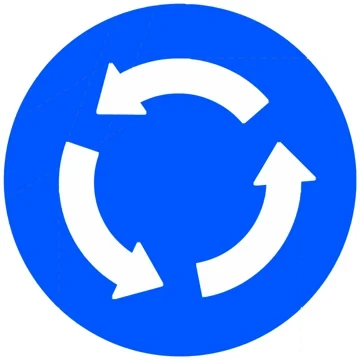 R-402
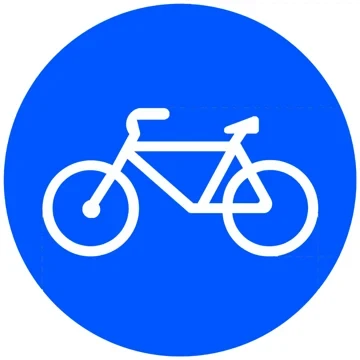 R-407a
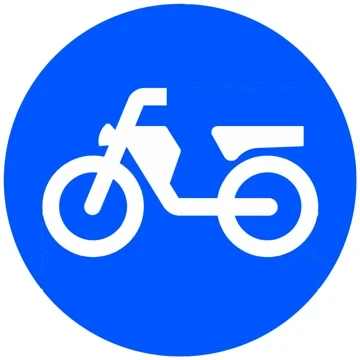 R-407b
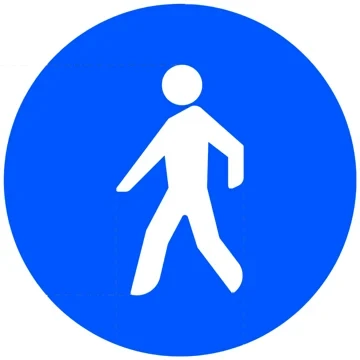 R-410
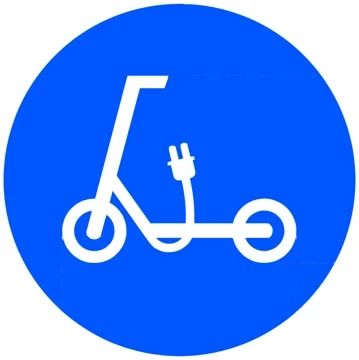 R-420
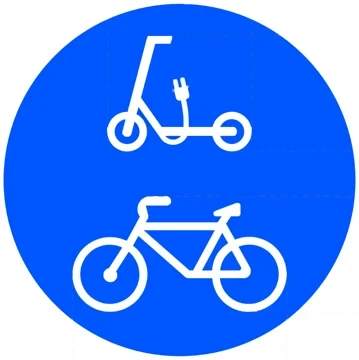 R-421
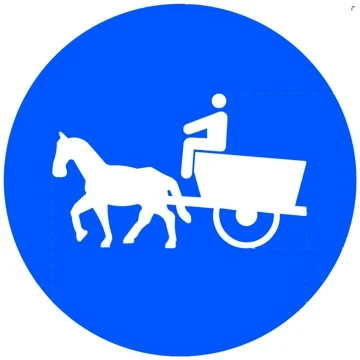 R-408
19Other obligations and where they end
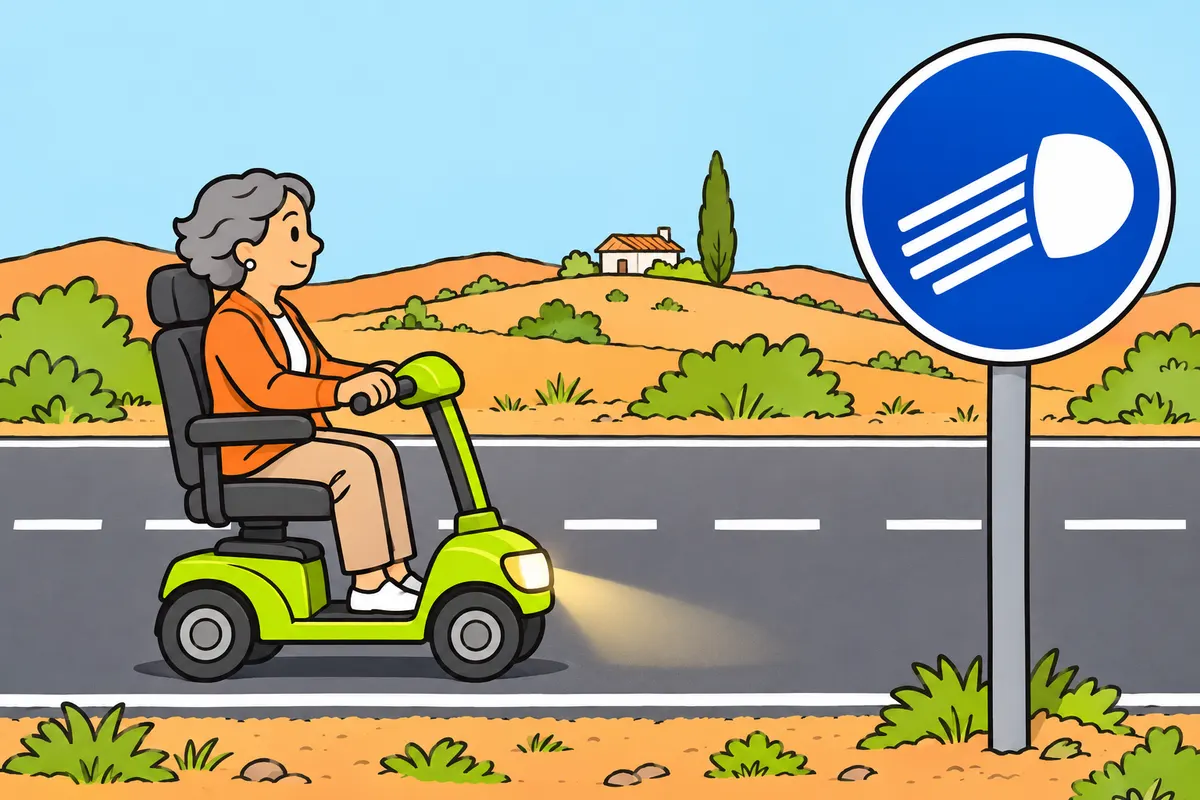
You must know which obligation ends and which rules still apply.
| End sign | What ends |
|---|---|
| R-500 | Specific prohibitions imposed by earlier signs for moving vehicles. |
| R-501 | A speed restriction. |
| R-502 | An overtaking prohibition. |
| R-503 | The overtaking prohibition for lorries. |
| R-504 | The limited parking zone. |
| R-505 | The route reserved for and compulsory for cycles. |
| R-506 | The minimum speed. |
Remember
- At R-413, use at least dipped headlights.
- At R-412, check the required snow chains, other anti-skid equipment or snow tyres.
- Check that the equipment suits your vehicle.
- When a prohibition ends, keep obeying general rules.
Exam trap: Wrong: always switch lights off when the signed obligation ends. Right: keep them on if other regulatory circumstances require them.
Read the full explanation
- R-413 requires you to drive with at least dipped beam headlights on, even in good visibility. Its purpose is to require lighting; the choice of lights for tunnels, darkness or weather conditions is covered in «LCM vehicle lights and signalling». [RGC, art. 134 and Annex I.5](https://www.boe.es/buscar/act.php?id=BOE-A-2003-23514#A5)
- R-412 requires chains or other approved anti-skid devices, or special snow tyres under the conditions specified by the sign. To enter the section, you must have the required equipment compatible with your vehicle; small size is not a general exemption. [RGC, art. 134 and Annex I.5](https://www.boe.es/buscar/act.php?id=BOE-A-2003-23514#A5)
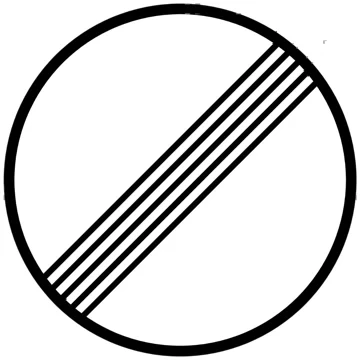
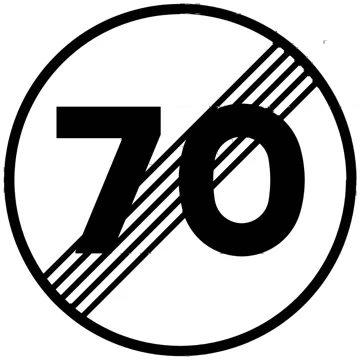
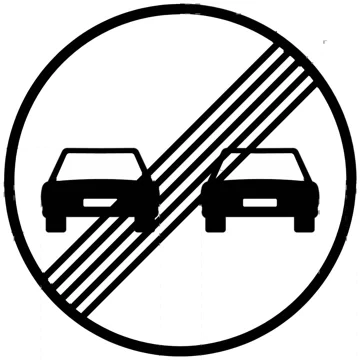
- R-500, End of prohibitions, indicates the end of specific prohibitions imposed by previous signs on moving vehicles. R-501 ends a speed limit and R-502 an overtaking prohibition. Each ends the restriction identified by its symbol; the others remain in force within their scope. [RGC, art. 134 and Annex I.5](https://www.boe.es/buscar/act.php?id=BOE-A-2003-23514#A5)
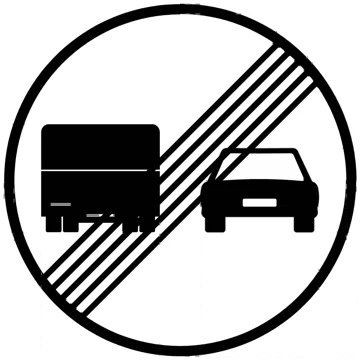
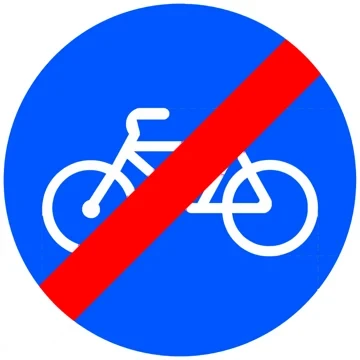
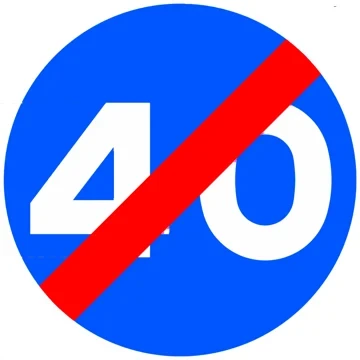
- R-503 ends the prohibition on overtaking by lorries; R-504, the limited parking zone; R-505, the reserved and compulsory route for cycles; and R-506, the minimum speed. [RGC, art. 134 and Annex I.5](https://www.boe.es/buscar/act.php?id=BOE-A-2003-23514#A5)
- The end of a specific prohibition does not remove general rules or restrictions on your vehicle. You must maintain an appropriate speed and use only roads authorised for LCM vehicles; an end sign does not make a motorway a permitted route. [RGC, art. 134 and Annex I.5](https://www.boe.es/buscar/act.php?id=BOE-A-2003-23514#A5)
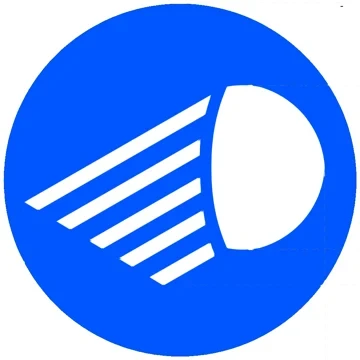 R-413
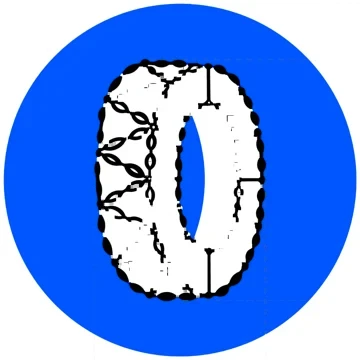 R-412
 R-500
 R-501
 R-502
 R-503
 R-504
 R-505
 R-506
20Hazard warnings on your route
You must prepare for hazards before you reach them.
| Warning signs | What they warn of, respectively |
|---|---|
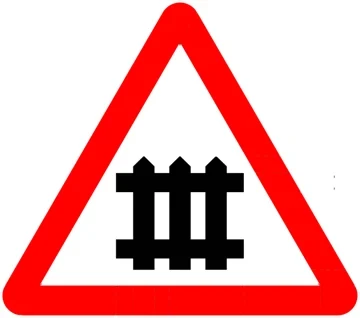
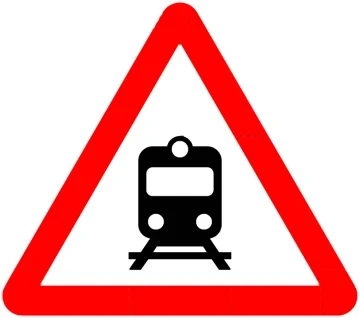
| P-7 and P-8 | Level crossing with barriers; level crossing without barriers. |
| P-20a and P-20b | Pedestrian crossing; section with heavy pedestrian traffic. |
| P-22a and P-22b | Cycle crossing; frequent cycle traffic. |
| P-31 and P-32 | Congestion; obstruction on the carriageway. |
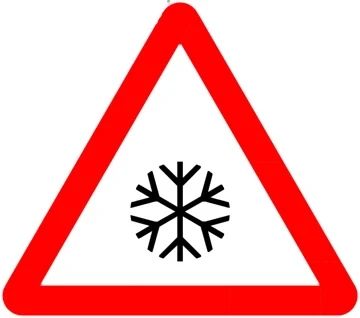
| P-33 and P-34 | Reduced visibility; ice or snow. |
Remember
- Adapt your driving to the hazard shown.
- Check whether the plate gives distance to the hazard or affected section length.
- Do not confuse a bend warning with a compulsory direction.
- Distinguish advance warnings from signs marking the crossing itself.
- A gradient percentage does not give a speed.
Exam trap: Wrong: a warning sign alone sets a numerical speed. Right: adapt your speed to the hazard shown.
Read the full explanation
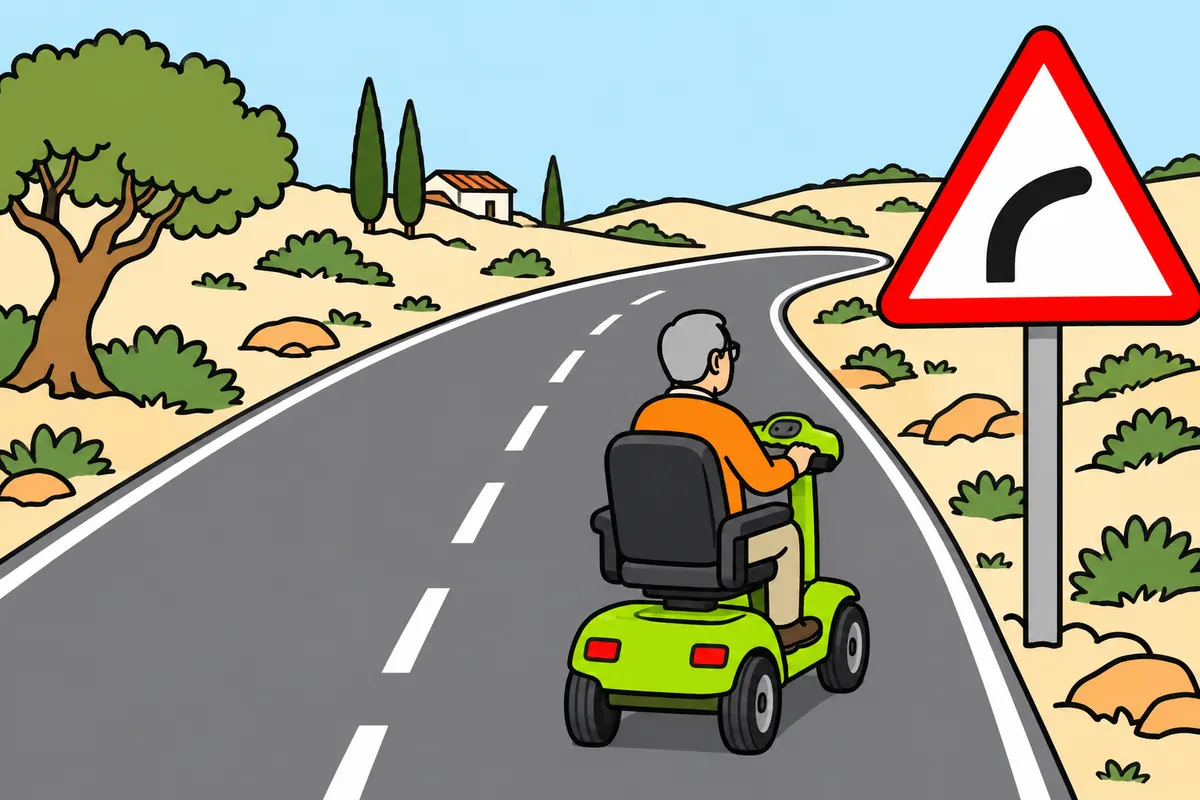
- When you see a hazard warning, you must adapt your driving before reaching the hazard. The warning does not itself set a numerical speed limit. A supplementary plate may indicate the distance to the hazard or its extent; you must read it to know where it begins and how far you must continue taking care. [RGC, art. 134 and Annex I.5](https://www.boe.es/buscar/act.php?id=BOE-A-2003-23514#A5)
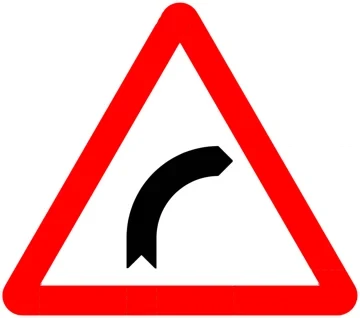
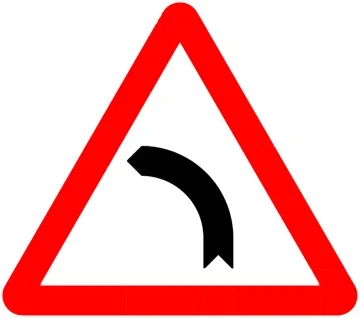
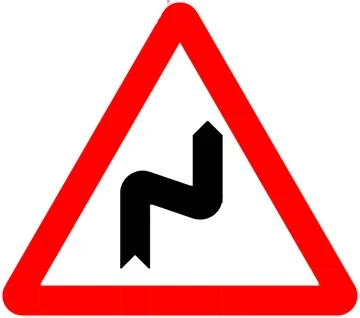
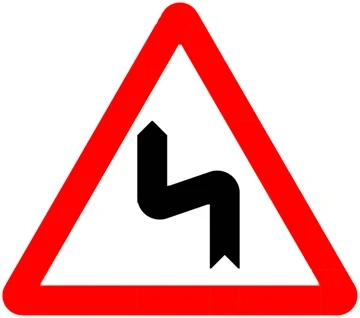
- P-13a and P-13b warn of dangerous bends to the right and left; P-14a and P-14b, successive dangerous bends with the first in the direction shown. You must prepare your approach to the road layout indicated; the symbol describes the bend you encounter. [RGC, art. 134 and Annex I.5](https://www.boe.es/buscar/act.php?id=BOE-A-2003-23514#A5)
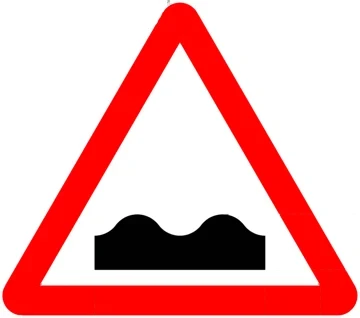
- P-15 warns of an uneven road and P-17 of a narrowing carriageway; P-19 warns of a slippery road surface. You must adapt your approach to retain control and anticipate that the usable space or grip may be less than it appears from a distance. [RGC, art. 134 and Annex I.5](https://www.boe.es/buscar/act.php?id=BOE-A-2003-23514#A5)
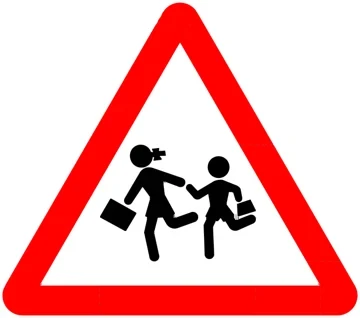
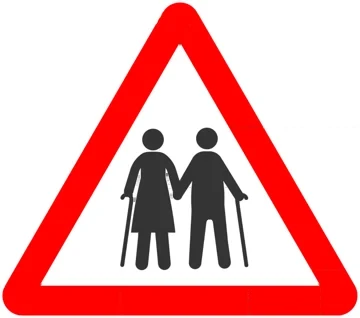
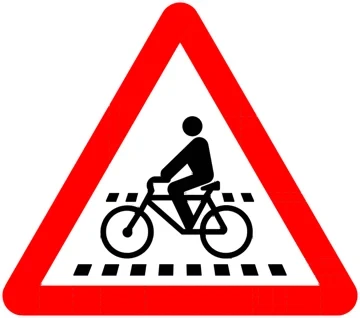
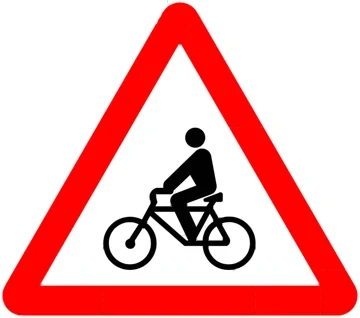
- P-20a warns of pedestrian crossings and P-20b of a section with heavy pedestrian traffic. P-21a warns of children and P-21b of people with mobility or sensory impairments; P-22a warns of cycle crossings and P-22b of frequent cycle traffic. These warnings alert you to the risk in advance; the crossing itself is identified by its specific signs and markings. [RGC, art. 134 and Annex I.5](https://www.boe.es/buscar/act.php?id=BOE-A-2003-23514#A5)
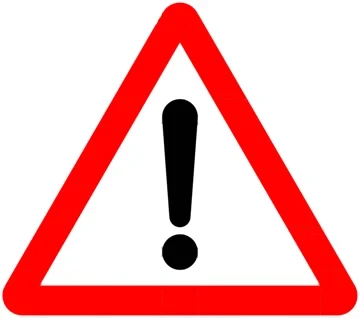
- P-7 warns of a level crossing with barriers and P-8 of one without barriers. P-18 warns of roadworks, P-29 of crosswinds and P-50 of other hazards. You must interpret any supplementary plate specifying the risk and observe the controls at the location indicated. [RGC, art. 134 and Annex I.5](https://www.boe.es/buscar/act.php?id=BOE-A-2003-23514#A5)
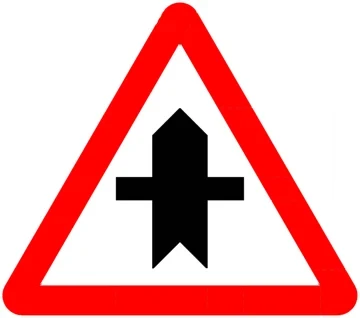
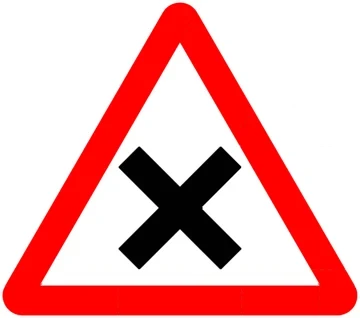
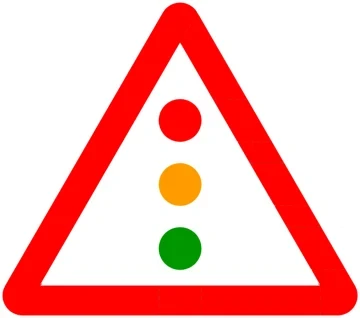
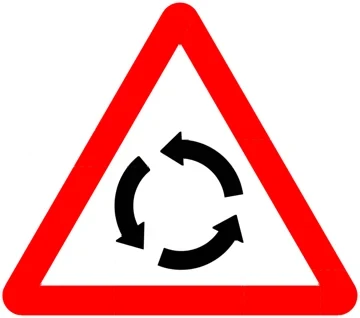
- P-1 warns of a junction where you have priority over side roads; P-2, a junction with priority to the right. P-3 warns of traffic lights and P-4 of a roundabout. When you reach the entrance, you must apply the controls in force there, observing the traffic lights and priority signs you encounter. [RGC, art. 134 and Annex I.5](https://www.boe.es/buscar/act.php?id=BOE-A-2003-23514#A5)
- P-16a and P-16b warn of downhill and uphill gradients: the number gives the gradient as a percentage, not a speed. P-23 and P-24 warn of possible animals; P-25, of two-way traffic. You must prepare your approach according to the specific risk. [RGC, art. 134 and Annex I.5](https://www.boe.es/buscar/act.php?id=BOE-A-2003-23514#A5)
- P-31 warns of congestion; P-32, an obstruction in the carriageway; P-33, reduced visibility; and P-34, ice or snow. You must distinguish between the possibility of a queue, an obstacle and poor visibility or grip: each warning requires you to watch for different risks. [RGC, art. 134 and Annex I.5](https://www.boe.es/buscar/act.php?id=BOE-A-2003-23514#A5)
 P-13a
 P-13b
 P-14a
 P-14b
 P-15
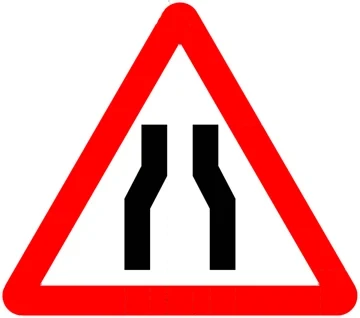 P-17
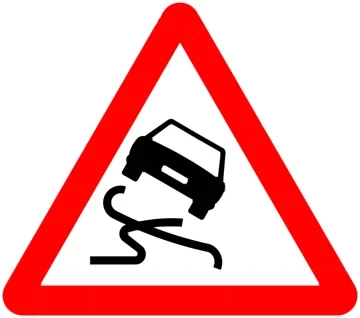 P-19
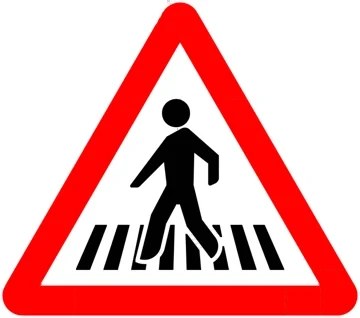 P-20a
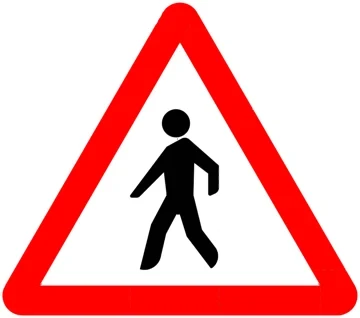 P-20b
 P-21a
 P-21b
 P-22a
 P-22b
 P-7
 P-8
 P-29
 P-50
 P-1
 P-2
 P-3
 P-4
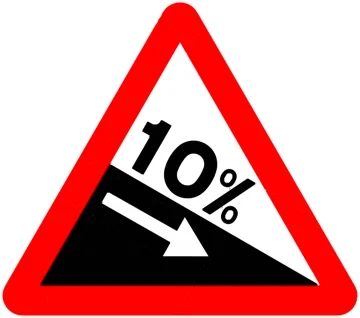 P-16a
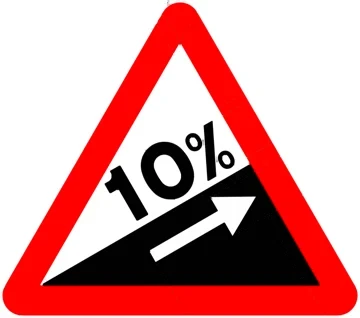 P-16b
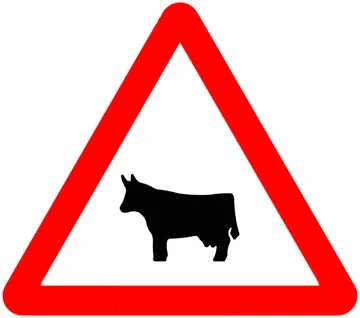 P-23
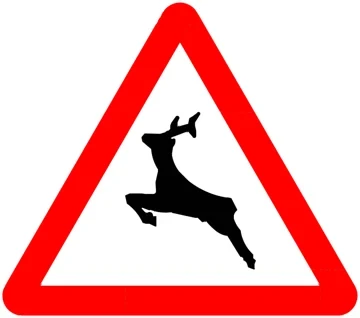 P-24
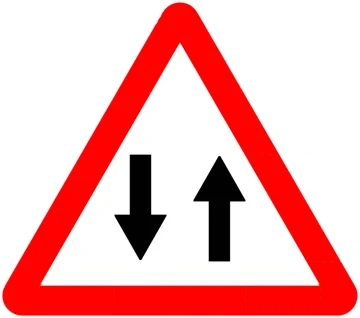 P-25
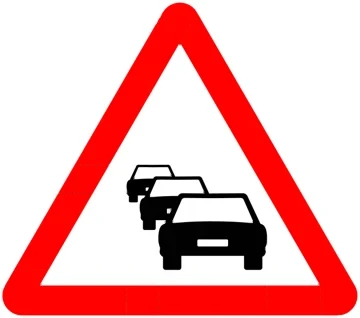 P-31
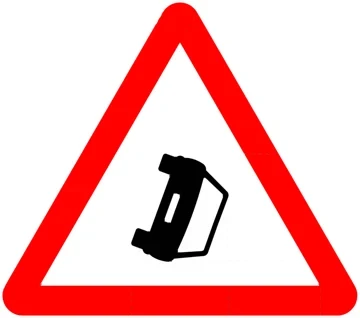 P-32
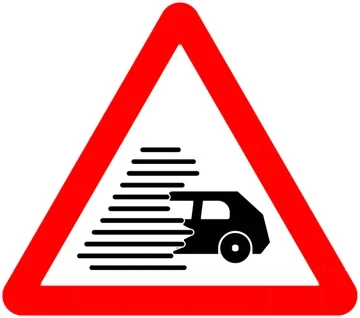 P-33
 P-34
21Information for choosing an authorised road
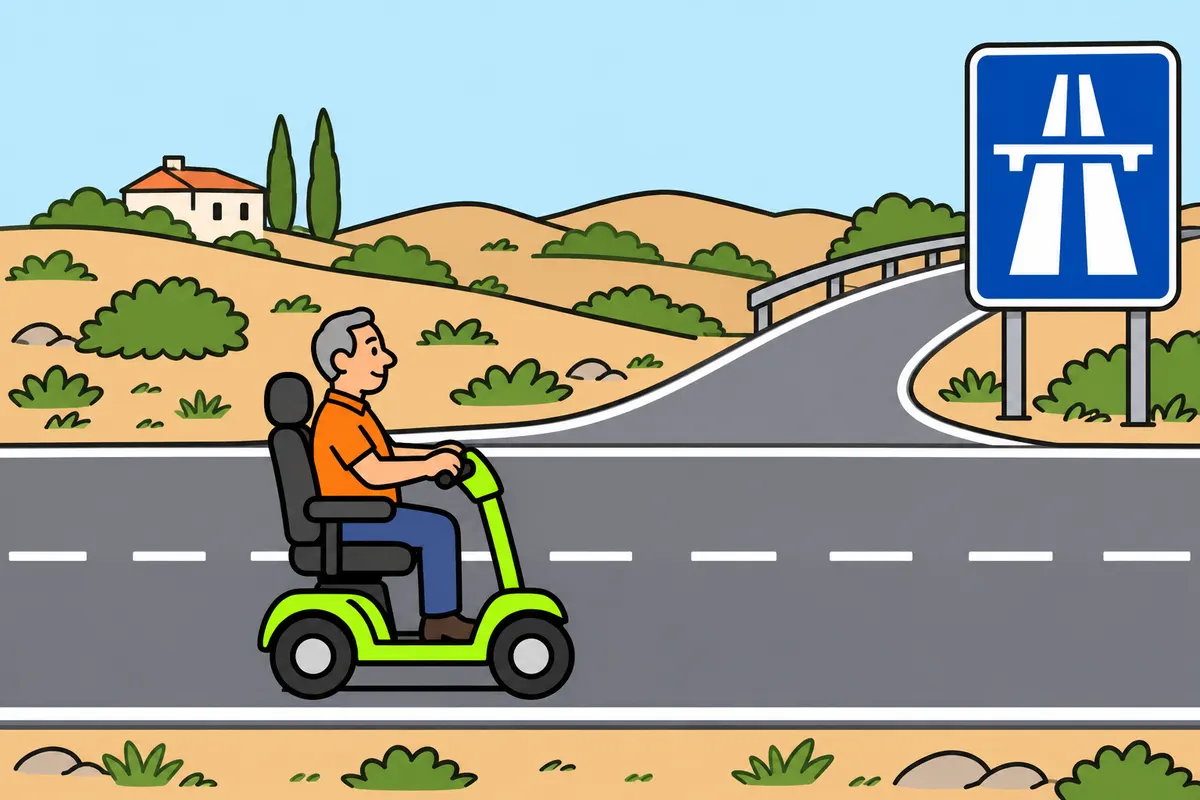
You must choose roads allowed for your LCM, even when signs point towards your destination.
| Road sign | Effect on your LCM |
|---|---|
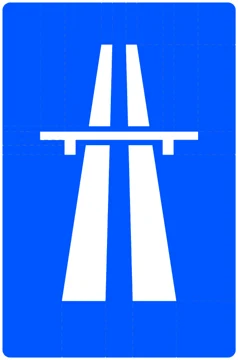
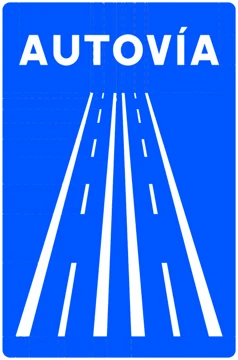
| S-1 and S-1a | Autopista and autovía: you cannot use either. |
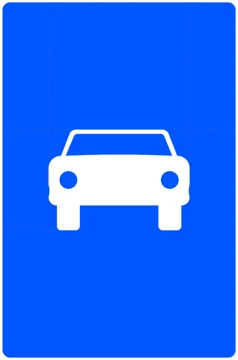
| S-3 | Road reserved for automóviles; your LCM is outside this legal category. |
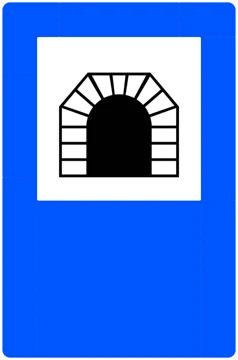
| S-5 and S-6 | Tunnel entrance and end; check other restrictions. |
| S-11 | One-way carriageway; do not enter from the opposite end. |
Remember
- Do not enter autopistas or autovías with your LCM.
- A hard shoulder or short journey does not allow entry.
- In tunnels, obey traffic and lighting rules.
- A no-through road may end with passages your LCM cannot use.
Exam trap: Wrong: enter an autopista because it has a hard shoulder. Right: your LCM is prohibited from using it.
Read the full explanation
- S-1 identifies an autopista (motorway) and S-1a an autovía (dual carriageway motorway). You are prohibited from driving your vehicle for people with reduced mobility on either. [RGC, art. 134 and Annex I.5](https://www.boe.es/buscar/act.php?id=BOE-A-2003-23514#A5)
- S-3 identifies a road reserved for motor vehicles. Under its regulatory classification, your LCM vehicle is not in the automóvil (motor vehicle) category. [RGC, art. 134 and Annex I.5](https://www.boe.es/buscar/act.php?id=BOE-A-2003-23514#A5)
- S-5 indicates a tunnel and S-6 its end. You must associate its entrance with the applicable lighting and driving rules, without interpreting the pictogram as authorisation for every vehicle category. The rules for using tunnels are covered in «Where you must drive» and «LCM vehicle lights and signalling». [RGC, art. 134 and Annex I.5](https://www.boe.es/buscar/act.php?id=BOE-A-2003-23514#A5)
- S-11 indicates a one-way carriageway. Its arrow shows the direction of traffic on the carriageway and allows you to recognise the traffic arrangements when joining it. [RGC, art. 134 and Annex I.5](https://www.boe.es/buscar/act.php?id=BOE-A-2003-23514#A5)
- No-through-road signs indicate that there is no through route for the traffic shown. You must plan your route without assuming that a pedestrian or cycle passage at the end also allows you to leave while driving your LCM vehicle. [RGC, art. 134 and Annex I.5](https://www.boe.es/buscar/act.php?id=BOE-A-2003-23514#A5)
 S-1
 S-1a
 S-3
 S-5
 S-11
22Crossings, services and route guidance
You must use guidance and services while respecting your LCM's restrictions.
| Signs | Meaning |
|---|---|
| S-7 and S-8 | Advisory maximum speed and its end. |
| S-9 and S-10 | Recommended speed range and its end. |
| R-301 | Compulsory maximum speed. |
| R-411 | Compulsory minimum speed. |
Remember
- At pedestrian crossings, obey the controls and give way when required.
- Do not use emergency escape areas to rest or park.
- Check each lane's reservations and limits.
- A service sign does not allow parking without meeting its conditions.
- Plan an authorised route even if another direction leads to your destination.
- Do not confuse a geographical name with entry into a built-up area.
Exam trap: Wrong: exceed your LCM's limit to follow advice. Right: recommendations do not allow you to exceed your limits.
Read the full explanation
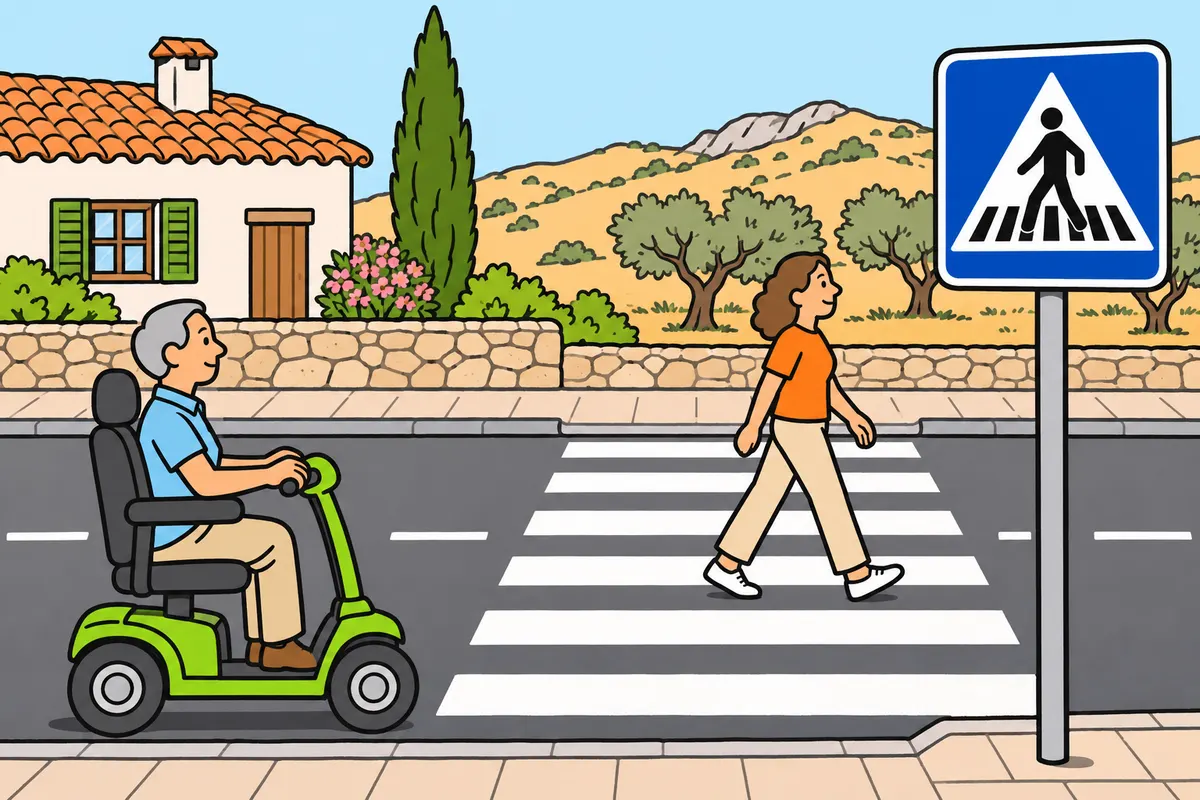
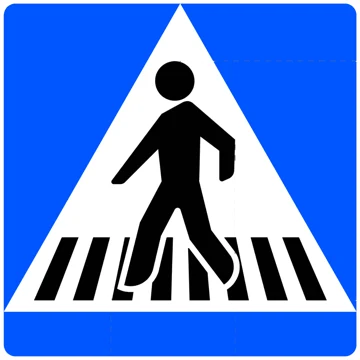
- S-13 marks the location of a pedestrian crossing. Its markings and any control by an officer or traffic lights complete the message; you must give way to pedestrians when required. The absence of traffic lights does not remove priority at a marked crossing. [RGC, art. 134 and Annex I.5](https://www.boe.es/buscar/act.php?id=BOE-A-2003-23514#A5)
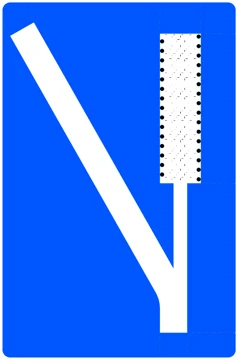
- S-16 indicates an escape lane; the red and white chequered pattern at its entrance helps you recognise it. You must use it only for that purpose and distinguish it from a place to rest, park or stop to check your route. [RGC, art. 134 and Annex I.5](https://www.boe.es/buscar/act.php?id=BOE-A-2003-23514#A5)
- Lane signs show destinations, reserved lanes, changes in the number of lanes and, where displayed, speed limits. You must read the diagram from your lane and check whether you may use it with an LCM vehicle. A straight-ahead arrow does not override a restriction reserving the lane for certain users. [RGC, art. 134 and Annex I.5](https://www.boe.es/buscar/act.php?id=BOE-A-2003-23514#A5)
- Service signs help you locate assistance, fuel, charging or other services shown. To enter, park or use the facility, you must also comply with the signs at its entrance and parking spaces. A charging pictogram does not in itself make the location an available parking space. [RGC, art. 134 and Annex I.5](https://www.boe.es/buscar/act.php?id=BOE-A-2003-23514#A5)
- Advance direction signs give notice of a junction, direction signs guide you towards destinations and confirmation signs remind you of destinations and distances. You must decide in advance on a route authorised for LCM vehicles, without following an arrow towards a motorway simply because it shows your destination. [RGC, art. 134 and Annex I.5](https://www.boe.es/buscar/act.php?id=BOE-A-2003-23514#A5)
- Road identifiers and location signs tell you the road, town or place. The name of a municipal area identifies a territory; the effects of entering a built-up area apply at the sign marking its beginning. [RGC, art. 134 and Annex I.5](https://www.boe.es/buscar/act.php?id=BOE-A-2003-23514#A5)
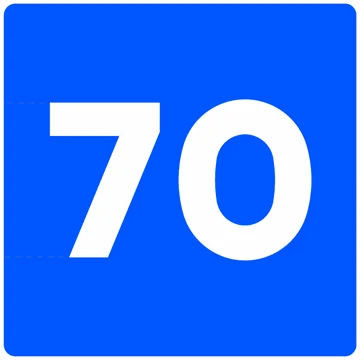
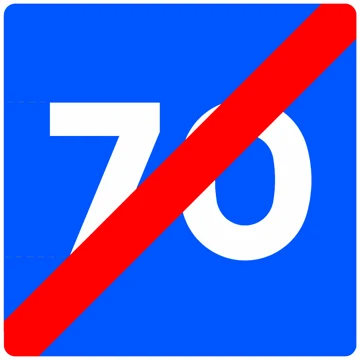
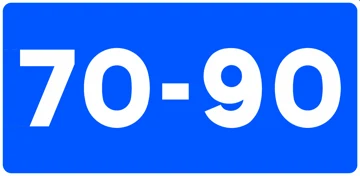
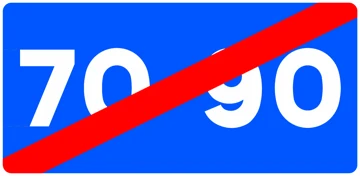
- S-7 indicates a recommended maximum speed and S-8 its end; S-9 recommends a speed range and S-10 ends that recommendation. You may follow these recommendations within the limits applicable to your LCM vehicle; R-301 and R-411 impose the signed maximum and minimum speeds respectively. [RGC, art. 134 and Annex I.5](https://www.boe.es/buscar/act.php?id=BOE-A-2003-23514#A5)
 S-13
 S-16
 S-7
 S-8
 S-9
 S-10
23Urban signs and sharing space with pedestrians
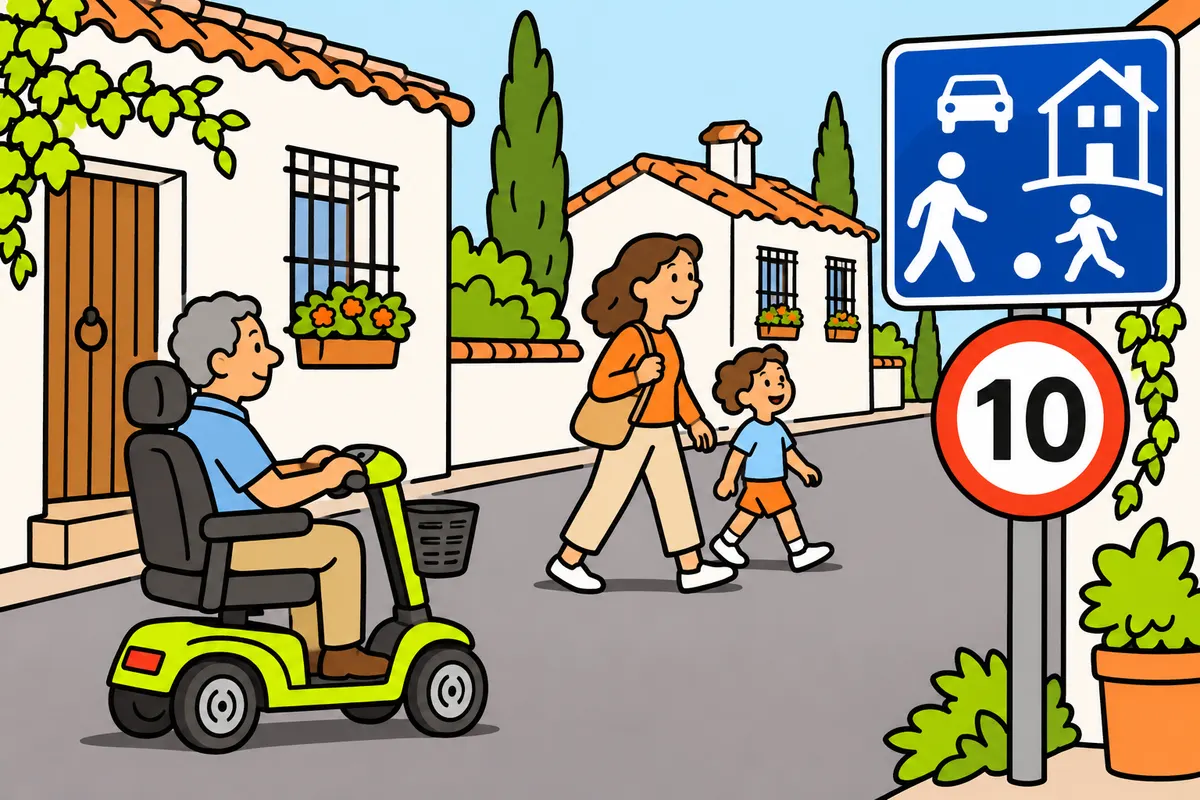
You must slow down and respect pedestrian priority in the indicated areas.
| Area or sign | What you must obey with your LCM |
|---|---|
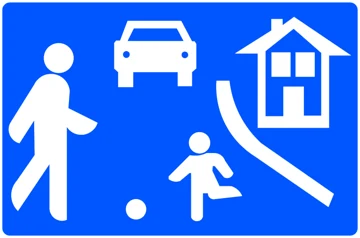
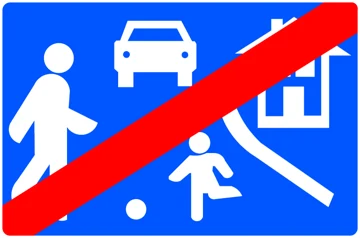
| Living and play area, S-28 | 10 km/h; S-29 marks its end. |
| 30 zone | 30 km/h, or any lower limit applying to your LCM. |
| Carriageway and pavement sharing a level surface | 20 km/h, or any applicable lower limit. |
| Pedestrian zone, S-30a | Do not drive your LCM here; S-31a marks the end of the reservation. |
| Pavements | Do not drive your LCM here. |
Remember
- In living and play areas, give pedestrians priority throughout.
- There, park only in signed places.
- Expect games and cycles both ways, plus permitted VMPs, unless rules say otherwise.
- On shared level surfaces, pedestrians have priority anywhere on the carriageway.
- Obey any lower limit applying to your LCM.
- Read municipal conditions for access and parking.
Exam trap: Wrong: use municipal permissions for cycles or VMPs in pedestrian zones. Right: these exclude your LCM; you must not drive in pedestrian zones.
Read the full explanation
- On a residential street marked with S-28, Stay and play zone, you must drive at no more than 10 km/h and give pedestrians priority throughout the zone. The sign is accompanied by R-301 showing that limit; S-29 indicates its end. [RGC, art. 134 and Annex I.5](https://www.boe.es/buscar/act.php?id=BOE-A-2003-23514#A5)
- In a stay and play zone, you may park only in marked places. Pedestrians may use the whole zone and play games or sports; you must anticipate cycles and, where permitted, VMP (personal mobility vehicles) travelling in both directions, unless otherwise regulated. [RGC, art. 134 and Annex I.5](https://www.boe.es/buscar/act.php?id=BOE-A-2003-23514#A5)
- S-30a, Pedestrian zone, indicates an area reserved for pedestrian use; S-31a, End of pedestrian zone, marks where that reservation ends. These signs define the reserved area you must take into account when choosing your route. [RGC, art. 134 and Annex I.5](https://www.boe.es/buscar/act.php?id=BOE-A-2003-23514#A5)
- You are prohibited from driving your LCM vehicle on pavements and in pedestrian zones. Municipal authorisations allowing cycles and VMP to share other pedestrian zones do not include your vehicle for people with reduced mobility. [RGC, art. 152.1](https://www.boe.es/buscar/act.php?id=BOE-A-2003-23514#a1-5)
- In a 30 km/h zone, you must comply with the signed 30 km/h limit and any lower limit applicable to your LCM vehicle. That number does not give you priority or require you to reach it; your vehicle’s speeds are covered in «Speed and safe following distances». [RGC, arts. 50 and 52](https://www.boe.es/buscar/act.php?id=BOE-A-2003-23514#a50)
- In an area where the carriageway and pavement share a single level surface, pedestrians have priority at every point on the carriageway. You must adapt your progress to people walking, even if there are few signs indicating the street layout. [Traffic Act, Annex I.83](https://www.boe.es/buscar/act.php?id=BOE-A-2015-11722#ani)
- On urban roads where the carriageway and pavement share a single level surface, you must observe the general maximum of 20 km/h and any applicable lower limits. [RGC, art. 50.1.a](https://www.boe.es/buscar/act.php?id=BOE-A-2003-23514#a50)
- Residential priority zones may have municipal restrictions on access, driving and parking. You must read the entrance plates and comply with the conditions shown; your LCM licence does not in itself prove that you have municipal authorisation. [RGC, art. 152.3](https://www.boe.es/buscar/act.php?id=BOE-A-2003-23514#a1-5)
 S-28
 S-29
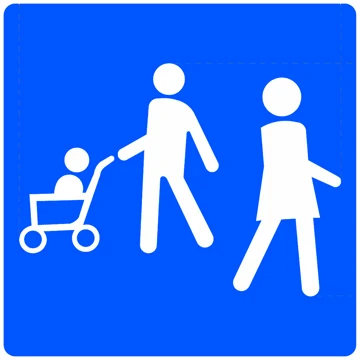 S-30a
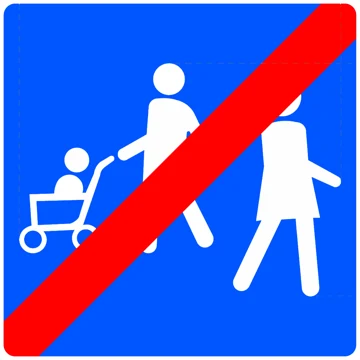 S-31a
24Longitudinal lines and use of the hard shoulder
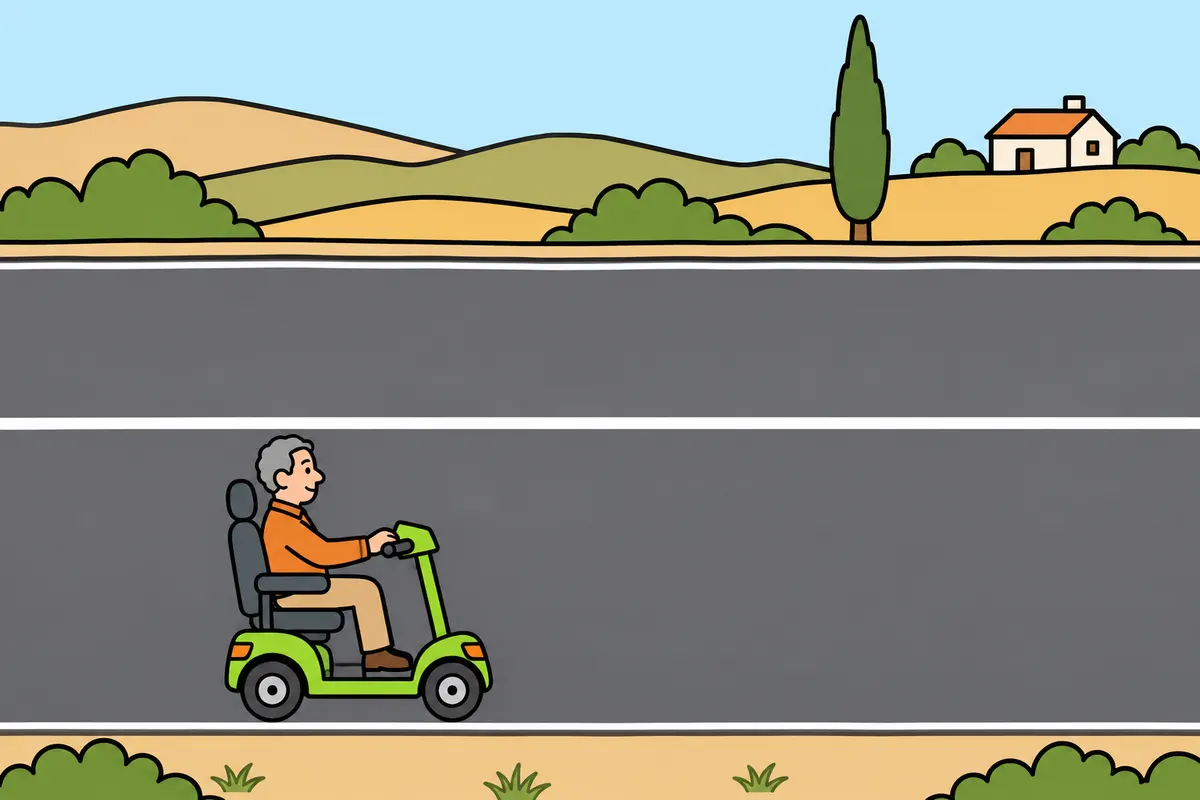
You must distinguish lane lines from lines marking the carriageway edge.
| Marking | What you must do |
|---|---|
| Broken lane line | Cross only for authorised manoeuvres; respect traffic priority in the destination lane. |
| Solid separating line | Do not cross or drive on it, except where regulations allow. |
| Edge line | Follow the hard-shoulder rules applying to your LCM. |
| Hatched area | Do not enter, except within the exception for vehicles required to use the hard shoulder. |
Remember
- Do not cross a solid lane line just because your LCM is narrow.
- With solid and broken lines together, follow the line on your side.
- After overtaking from the broken side, you may cross solid to return.
- This also applies if you abandon that overtaking manoeuvre.
- Check the direction of reversible lanes.
- Do not treat every hatched area as a lane for your LCM.
Exam trap: Wrong: every solid edge line prevents hard-shoulder use. Right: distinguish it from a solid separating line and follow the applicable hard-shoulder rules.
Read the full explanation
- Broken lines M-1.1 to M-1.3 mark lane boundaries and allow you to cross them for authorised manoeuvres. You must not drive along them unless the lane width makes it necessary and it is safe. You must respect the priority of anyone already travelling in the lane you intend to enter. [RGC, art. 134 and Annex I.5](https://www.boe.es/buscar/act.php?id=BOE-A-2003-23514#A5)
- Solid lines M-2.1 to M-2.3 prohibit you from crossing them, driving along them and, if they separate opposing traffic, driving to their left, subject to the regulatory exceptions. Two adjacent solid lines have the same meaning as one. [RGC, art. 134 and Annex I.5](https://www.boe.es/buscar/act.php?id=BOE-A-2003-23514#A5)
- Where a solid line is alongside a broken line, M-3.1 to M-3.3, you must follow the line on your side. If you begin overtaking from the broken-line side, you may cross the solid line to return to your lane after completing or abandoning the manoeuvre. [RGC, art. 134 and Annex I.5](https://www.boe.es/buscar/act.php?id=BOE-A-2003-23514#A5)
- Double broken lines M-1.4 and M-1.5 mark reversible lanes, whose direction you must check using the traffic lights or other controls. M-1.9 and M-1.10 warn of a solid line or a particular hazard; M-1.8 warns of a diverging or merging route. [RGC, art. 134 and Annex I.5](https://www.boe.es/buscar/act.php?id=BOE-A-2003-23514#A5)
- Edge lines M-2.5 to M-2.7 mark the edge of the carriageway and do not have the same effect as a solid line separating lanes. Whether the edge line is solid or broken does not change the regulatory use of the arcén (hard shoulder) applicable to your LCM vehicle; you must study this in «Where you must drive». [RGC, art. 134 and Annex I.5](https://www.boe.es/buscar/act.php?id=BOE-A-2003-23514#A5)
- Hatched markings M-7.1 and M-7.2 indicate an excluded area using diagonal stripes. The general prohibition on entering it includes an exception for vehicles required to use the hard shoulder. You must apply that exception only within its scope, without treating every hatched area as a lane for your vehicle. [RGC, art. 134 and Annex I.5](https://www.boe.es/buscar/act.php?id=BOE-A-2003-23514#A5)
25Stop lines, crossings and painted signs
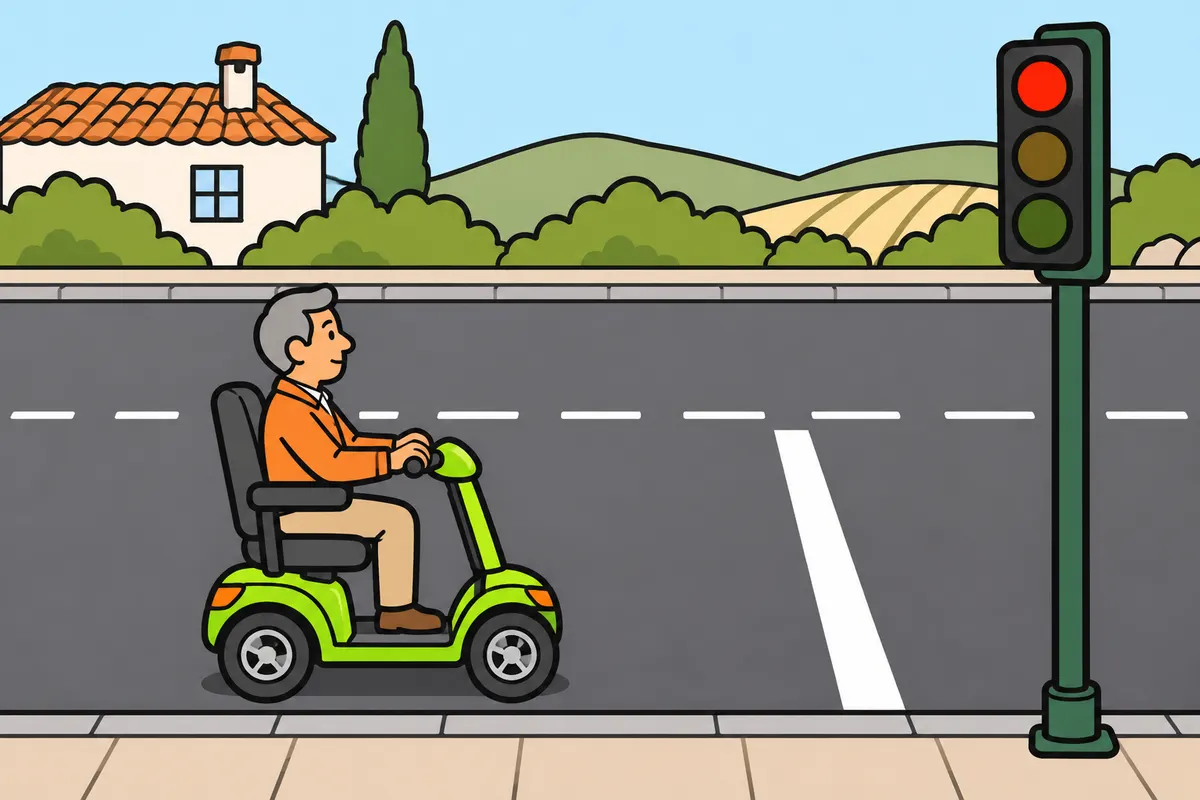
You must distinguish markings showing where to stop from instructions requiring you to stop.
| Marking | What you must recognise |
|---|---|
| Pedestrian crossing | Broad white stripes; observe users and controls. |
| Cycle crossing | Broken transverse lines; give way according to its controls. |
| Pedestrian crossing with traffic lights | May also use broken lines; read the whole arrangement. |
| Painted maximum speed | Obey in the affected lane until another limit or its end. |
Remember
- A solid transverse line shows where to stop when stopping is required.
- A broken transverse line marks the limit for giving way when required.
- At a painted STOP, stop and then give way.
- Signs painted within a marked lane apply to that lane.
- If abnormal conditions reduce visibility, advance only enough to check and give way safely.
Exam trap: Wrong: always stop at a stop line. Right: stop when the applicable signs, signals or rules require it.
Read the full explanation
- The solid transverse line M-4.1 indicates the limit you must not cross when you must stop for a STOP sign, traffic lights, an officer or another prescribed traffic control. The line marks where you must stop as required by the relevant sign or control. [RGC, art. 134 and Annex I.5](https://www.boe.es/buscar/act.php?id=BOE-A-2003-23514#A5)
- The broken transverse line M-4.2 marks the limit you must observe when giving way where required. It does not necessarily mean you must stop every time. You must observe the sign or rule requiring you to give way and do so without forcing others to change their speed or course abruptly. [RGC, art. 134 and Annex I.5](https://www.boe.es/buscar/act.php?id=BOE-A-2003-23514#A5)
- The pedestrian crossing markings M-4.3 and their variants mark out the pedestrian crossing. The wide white stripes run parallel to the centre line of the carriageway and must not alternate with stripes of other colours. You must watch people who are about to use the crossing and observe the controls governing it. [RGC, art. 134 and Annex I.5](https://www.boe.es/buscar/act.php?id=BOE-A-2003-23514#A5)
- M-4.4 marks a cycle crossing with two parallel broken transverse lines. You must let cyclists cross in accordance with the controls governing it. There are also pedestrian crossings controlled by traffic lights and marked out with broken lines: you must interpret all the signs and markings together and must not identify the users solely from two lines. [RGC, art. 134 and Annex I.5](https://www.boe.es/buscar/act.php?id=BOE-A-2003-23514#A5)
- The STOP inscriptions M-6.3 and M-6.4 and the give-way triangle M-6.5 reproduce these obligations on the carriageway, as explained in «Give way and STOP». If they are within a marked lane, their obligation applies to vehicles in that lane; you must associate them with the transverse line marking where you must stop or give way. [RGC, art. 134 and Annex I.5](https://www.boe.es/buscar/act.php?id=BOE-A-2003-23514#A5)
- The markings M-6.6 and M-6.7 indicate a maximum speed in kilometres per hour. You must comply with the figure in the affected lane until signs or markings end the restriction or set another limit. [RGC, art. 134 and Annex I.5](https://www.boe.es/buscar/act.php?id=BOE-A-2003-23514#A5)
- If abnormal circumstances reduce visibility at a broken transverse line, you must move forward only as far as is essential to check the traffic and give way without endangering anyone. [RGC, art. 134 and Annex I.5](https://www.boe.es/buscar/act.php?id=BOE-A-2003-23514#A5)
26Arrows, reserved spaces and coloured markings
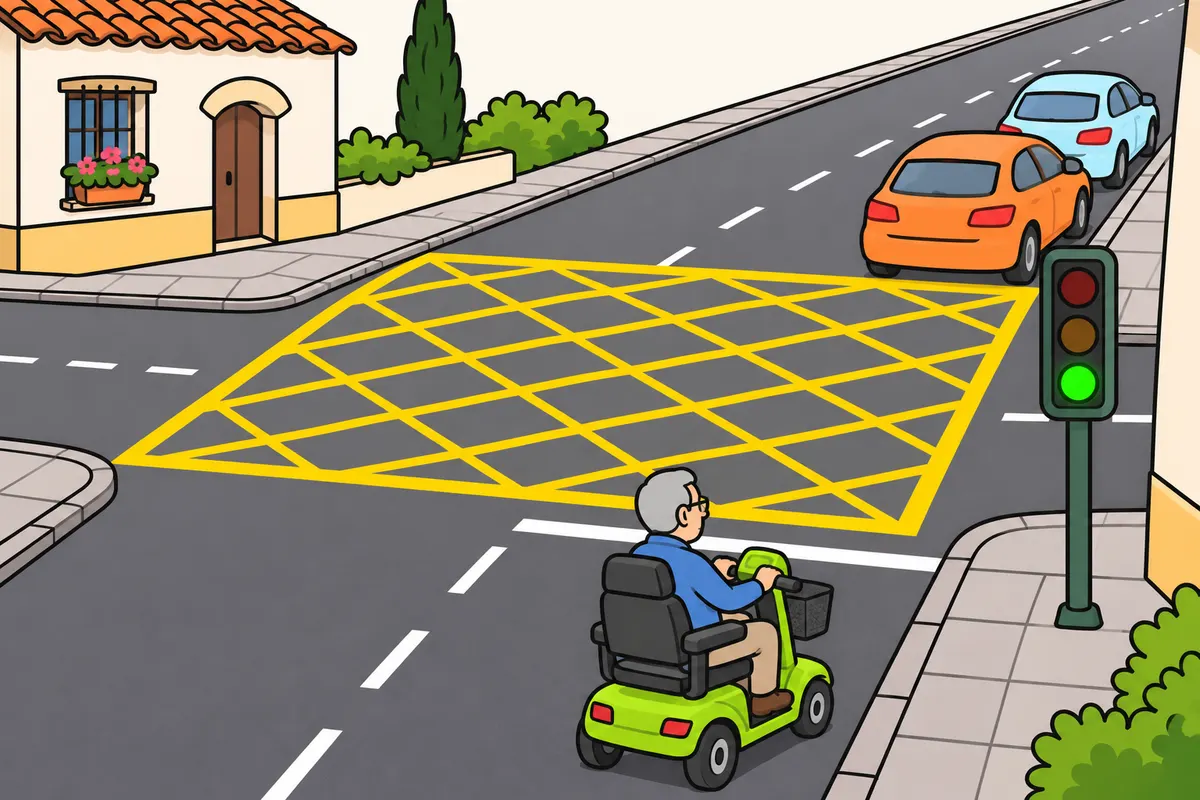
You must read arrows, reservations and colours together with other signs.
| Marking | What you must do |
|---|---|
| Broken yellow line | Do not park; check upright signs for applicable periods. |
| Solid yellow line | Do not stop or park; check upright signs for applicable periods. |
| Yellow zigzag | Do not park: the space is reserved for a special use. |
| White and red chequered marking | Recognise the entrance to an emergency escape bed. |
| Dragon's teeth, broken-pattern edges and warning chequered markings | Slow down and pay greater attention. |
Remember
- Choose movements shown by your lane's arrows.
- If your lane ends, leave while respecting traffic priority in the destination lane.
- When warned of solid lines, abandon overtaking plans or finish safely, promptly.
- Check whether your vehicle category may use a reserved lane.
- At yellow boxes, do not enter if you could block crossing traffic.
- For blue parking spaces, check times, duration and municipal proof of entitlement.
Exam trap: Wrong: broken yellow also prohibits stopping. Right: it prohibits parking; check other applicable rules.
Read the full explanation
- The lane direction arrows M-5.1, M-5.2 and M-5.6 indicate the movements permitted or required from the lane. You must choose one of the directions shown; if they include straight ahead, you may change lanes while continuing in that direction when the longitudinal markings and other conditions allow it. [RGC, art. 134 and Annex I.5](https://www.boe.es/buscar/act.php?id=BOE-A-2003-23514#A5)
- M-5.4 warns you that your lane ends and you must leave it towards the side indicated, respecting the priority of traffic in the lane you are joining. M-5.5 warns you of a solid line ahead that prohibits driving to its left: you must refrain from starting to overtake or complete the manoeuvre safely as soon as possible. [RGC, art. 134 and Annex I.5](https://www.boe.es/buscar/act.php?id=BOE-A-2003-23514#A5)
- The inscriptions BUS, TAXI or others identify reserved use in accordance with all the signs and markings. M-7.6 marks the start of a reserved lane. You must check that your vehicle category is authorised; a lane reserved for bicycles, motorcycles or mopeds does not automatically include every vehicle for people with reduced mobility. [RGC, art. 134 and Annex I.5](https://www.boe.es/buscar/act.php?id=BOE-A-2003-23514#A5)
- The broken yellow line M-7.7 prohibits parking; the solid yellow line M-7.8 prohibits stopping and parking. You must check the upright sign to see whether it limits the prohibition to certain periods. These lines may be on the kerb or alongside it and apply to the side on which they appear. [RGC, art. 134 and Annex I.5](https://www.boe.es/buscar/act.php?id=BOE-A-2003-23514#A5)
- The yellow zigzag M-7.9 prohibits parking in a space reserved for a special use, such as a bus stop or loading and unloading. The yellow box marking M-7.10 reminds you that you must not enter the junction if you could block crossing traffic, even when you have a green light. [RGC, art. 134 and Annex I.5](https://www.boe.es/buscar/act.php?id=BOE-A-2003-23514#A5)
- The red and white chequered marking M-7.11 marks the entrance to an emergency escape bed. The dragon’s teeth M-8.1, zigzag edge lines M-8.2 and chequered marking M-8.3 warn you of situations requiring you to reduce speed and pay greater attention. [RGC, art. 134 and Annex I.5](https://www.boe.es/buscar/act.php?id=BOE-A-2003-23514#A5)
- Blue markings outlining parking spaces indicate special restrictions during certain periods. You must check the hours, permitted duration and municipal system for proving your entitlement to park: blue paint alone does not set a charge or a maximum parking time that is the same in every town. [RGC, art. 134 and Annex I.5](https://www.boe.es/buscar/act.php?id=BOE-A-2003-23514#A5)
Interpreting several signs in one situation
First identify who each instruction applies to, then apply the hierarchy.
- Identify where your vehicle is, which lane you are in and the manoeuvre you want to make.
- Look for officers and temporary traffic controls that affect your route.
- Identify the traffic lights, upright signs and markings that apply to you.
- If instructions conflict, follow the one with higher priority; among signs of the same type, follow the most restrictive.
- Comply with all compatible instructions together and check that you can proceed without blocking the way.
Obeying a STOP sign
Stopping and giving way are two obligations imposed by the same sign.
- Approach ready to bring your LCM vehicle to a complete stop.
- Stop before the line; if there is no line, stop immediately before the junction.
- Check traffic on the road you are approaching.
- If, exceptionally, you do not have sufficient visibility, stop again where you can see without endangering anyone.
- Give way and continue only when you can comply with the sign safely.
Interpreting a green traffic light
Check which type of green light you see before deciding.
- Identify whether it is a circular green light, a direction arrow on a circular background or a downward-pointing lane arrow.
- With a circular green light, you may proceed, complying with compatible restrictions and without blocking the junction.
- With a green direction arrow, follow only the movement it indicates, giving way to traffic in the lane you join and without endangering anyone crossing.
- With a green lane arrow, you may use the lane, but you must obey any applicable circular red light, STOP sign or Give Way sign.
Finished this module?
Mark it as read and you will see your progress on the theory list.