
Theory · AM Licence - Moped · Module 4 of 18
Your fitness to drive
You learn to decide whether you are fit to drive your moped or light quadricycle and to recognise the effects of alcohol, drugs, medication, tiredness and emotions. You distinguish the applicable limits, compulsory tests and prohibited distractions so that you can answer exam questions without confusing safety advice with a legal rule.
1Check your fitness before setting off
Before setting off, check that you can drive with attention and control.
| Source of risk | Example to recognise |
|---|---|
| Your condition | Distraction or tiredness |
| Your vehicle | A damaged tyre |
| The road | Gravel on the road |
Remember
- Check your rest, health, treatments and anything you have consumed.
- You need clear vision, freedom of movement and attention.
- On your moped, you also need to keep your balance.
- A cabin does not make up for impaired driving ability.
Exam trap: Wrong: a short journey lets you drive while unfit. Right: you must keep your driving abilities throughout.
Read the full explanation
- Assess your physical and mental condition before taking the controls. Difficulty concentrating, dizziness or problems with coordination compromise your ability to start, brake and turn safely. On a two-wheeled moped you also depend on balance, even during slow manoeuvres.
- You must maintain control, the necessary vision, freedom of movement and attention at all times. This obligation applies to both mopeds and light quadricycles; a cabin does not compensate for impaired driving ability. [RGC, art. 17.1](https://www.boe.es/buscar/act.php?id=BOE-A-2003-23514#a17). [RGC, art. 18.1](https://www.boe.es/buscar/act.php?id=BOE-A-2003-23514#a18).
- Consider rest, illness, treatment and substance use together. Several factors can act at once: for example, sleeping badly, taking cold and flu medication and setting off feeling worried. Do not judge your fitness solely by whether you have been drinking or whether the journey is short.
- You can distinguish human, vehicle and road factors. Distraction and fatigue relate to the driver; a damaged tyre or gravel on the carriageway are different factors. They can occur together in a collision and make a late or imprecise response particularly dangerous.
2Perceiving, deciding and reacting
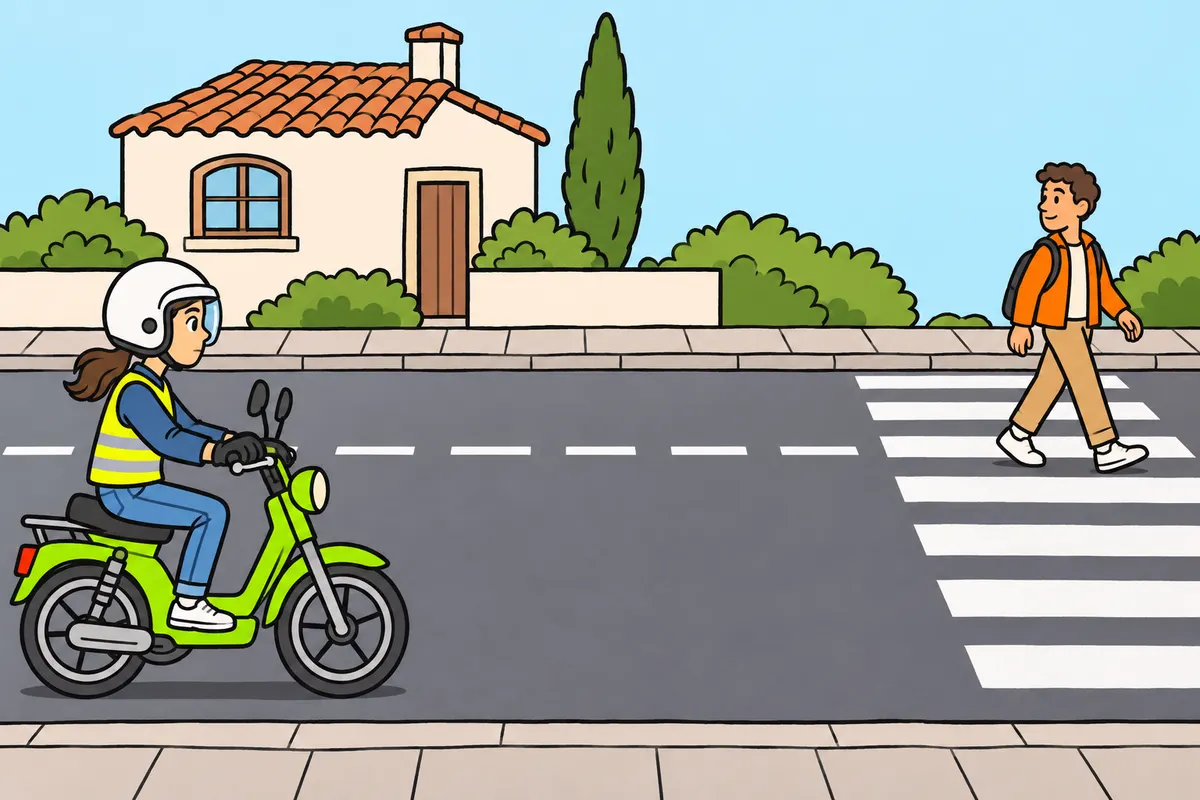
Before braking, you need to notice the danger and begin to respond.
Remember
- Look, understand the danger, decide and act.
- Your vehicle keeps moving during your reaction time.
- You start braking when you apply the brake.
- Alcohol, sleepiness and worry can slow your response.
- Your reaction time is not always the same.
Exam trap: Wrong: reaction time starts when you brake. Right: it happens before you begin to act.
Read the full explanation
- To respond to a hazard, you need to observe, interpret what is happening, choose a response and carry it out. Your sight allows you to recognise signs, pedestrians, obstacles and movements of other vehicles; your hearing provides additional warnings. Seeing a situation does not guarantee that you understand it in time if your attention is elsewhere.
- Your reaction time comes before braking. It is the interval between perceiving a hazard and beginning to act; your vehicle keeps moving during this time. Braking begins when you apply the brake, so reacting late uses up some of the available space before you brake.
- You can take longer to react because of alcohol, drugs, sleepiness, fatigue, certain medicines, illness or intense worry. A heavy meal or excessive heat can also impair you. You do not have a fixed personal reaction time that you can rely on in every condition or circumstance.
- Reaction, braking and stopping distances are covered in “Speed and safe following distances”.
3Alcohol: units and the general limit
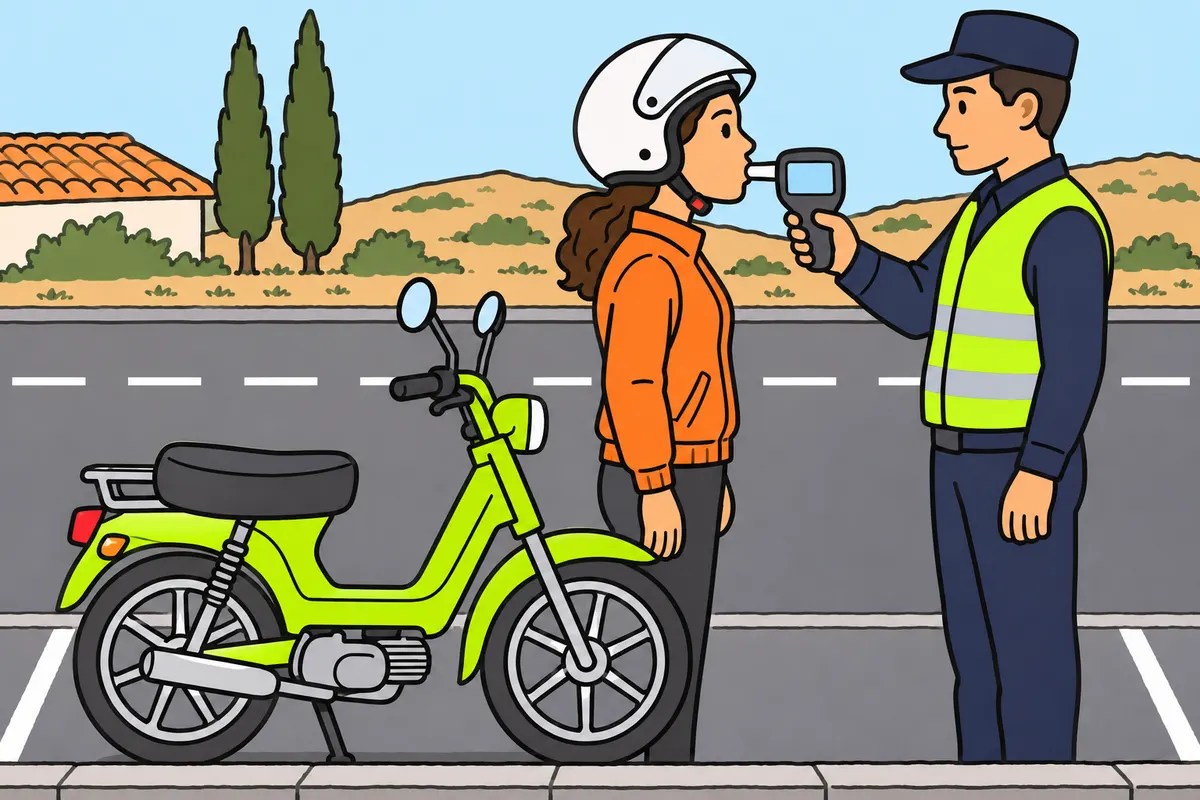
If you are an adult without a lower limit, you must follow the general alcohol limit.
| Measurement: adults without a lower limit | Maximum |
|---|---|
| Blood | 0.5 g/l |
| Breath | 0.25 mg/l |
Remember
- The breathalyser measures alcohol in the air you breathe out.
- The limit also applies to your moped and light quadricycle.
- You can drive worse even below the limit.
- If you will drive, avoiding alcohol is safest.
Exam trap: Wrong: confusing blood and breath measurements. Right: use the correct figure and unit for each measurement.
Read the full explanation
- Blood alcohol concentration is expressed in grams per litre (g/l), and breath alcohol concentration in milligrams per litre (mg/l). A breathalyser analyses the air you breathe out. Do not confuse the units or give only a number without identifying which measurement it refers to.
- If you are an adult and are not subject to a lower limit, you must not exceed 0.5 g/l in blood or 0.25 mg/l in breath. This rule also covers mopeds and light quadricycles; it is not restricted to cars and does not depend on the length of the journey. [RGC, art. 20](https://www.boe.es/buscar/act.php?id=BOE-A-2003-23514#a20).
- These figures are legal limits. Your abilities can be impaired below the limit, and feeling alert does not prove that you retain sufficient coordination and attention. The preventive choice is to avoid alcohol if you intend to drive. [DGT, alcohol consumption](https://www.dgt.es/muevete-con-seguridad/evita-conductas-de-riesgo/consumo-de-alcohol/).
4Drivers under 18 and novice drivers
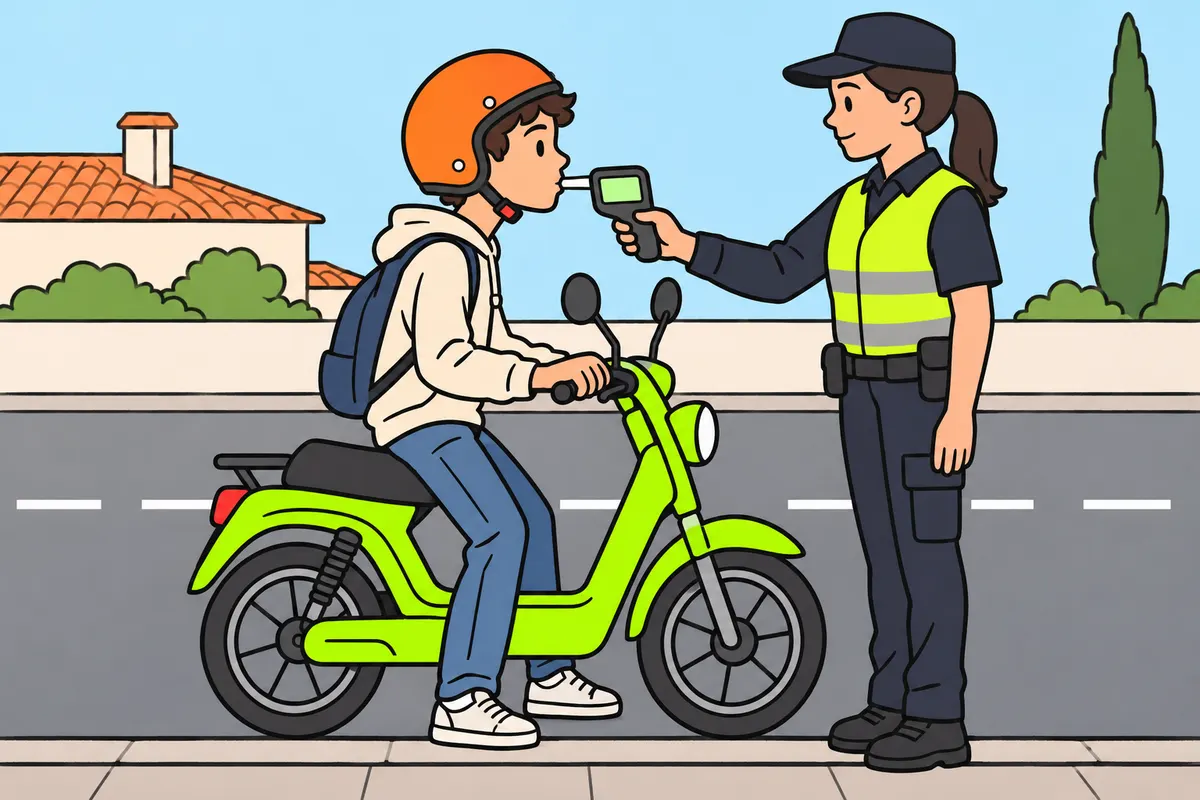
Your alcohol limit depends on your age and how long you have held your entitlement.
| Your situation | Blood maximum | Breath maximum |
|---|---|---|
| Under 18, however long you have held your entitlement | 0.0 g/l | 0.0 mg/l |
| Adult: first two years of relevant driving entitlement | 0.3 g/l | 0.15 mg/l |
| Adult with AM for over two years, except transport subject to lower limits | General limit | General limit |
Remember
- If underage, your alcohol level must be 0.0 when driving any vehicle.
- As an adult novice, your lower limit applies for two years.
- Count from the entitlement that allows you to drive that vehicle.
- Turning adult does not restart that period.
- Time holding a licencia counts only for vehicles that licencia allows you to drive.
- The general limit has exceptions depending on the transport you drive.
Exam trap: Wrong: applying the adult novice limit when underage. Right: if underage, you must keep your alcohol level at zero.
Read the full explanation
- If you are under 18, you must maintain 0.0 g/l in blood and 0.0 mg/l in breath when driving any vehicle. The rule covers you when you drive a moped or light quadricycle with AM, regardless of how long you have held your entitlement. [Ley de Tráfico (Traffic Act), art. 14.1](https://www.boe.es/buscar/act.php?id=BOE-A-2015-11722#a14).
- If you are an adult, you must not exceed 0.3 g/l in blood or 0.15 mg/l in breath during the two years after obtaining the relevant permiso or licencia (types of Spanish driving entitlement). If you have just obtained AM and have no earlier entitlement that counts towards this period, this lower limit applies to you. [RGC, art. 20](https://www.boe.es/buscar/act.php?id=BOE-A-2003-23514#a20).
- Count the time you have held the entitlement that authorises you to drive, without assuming that reaching adulthood automatically starts a new two-year period. If you have held AM for more than two years and are an adult, the general limit applies on your private moped, unless you drive one of the transport categories subject to a lower limit under art. 20 of the RGC. [RGC, art. 20](https://www.boe.es/buscar/act.php?id=BOE-A-2003-23514#a20).
- The time you have held a licencia only counts for vehicles for which that licencia is sufficient. [RGC, art. 20](https://www.boe.es/buscar/act.php?id=BOE-A-2003-23514#a20).
5Lower limits according to transport use
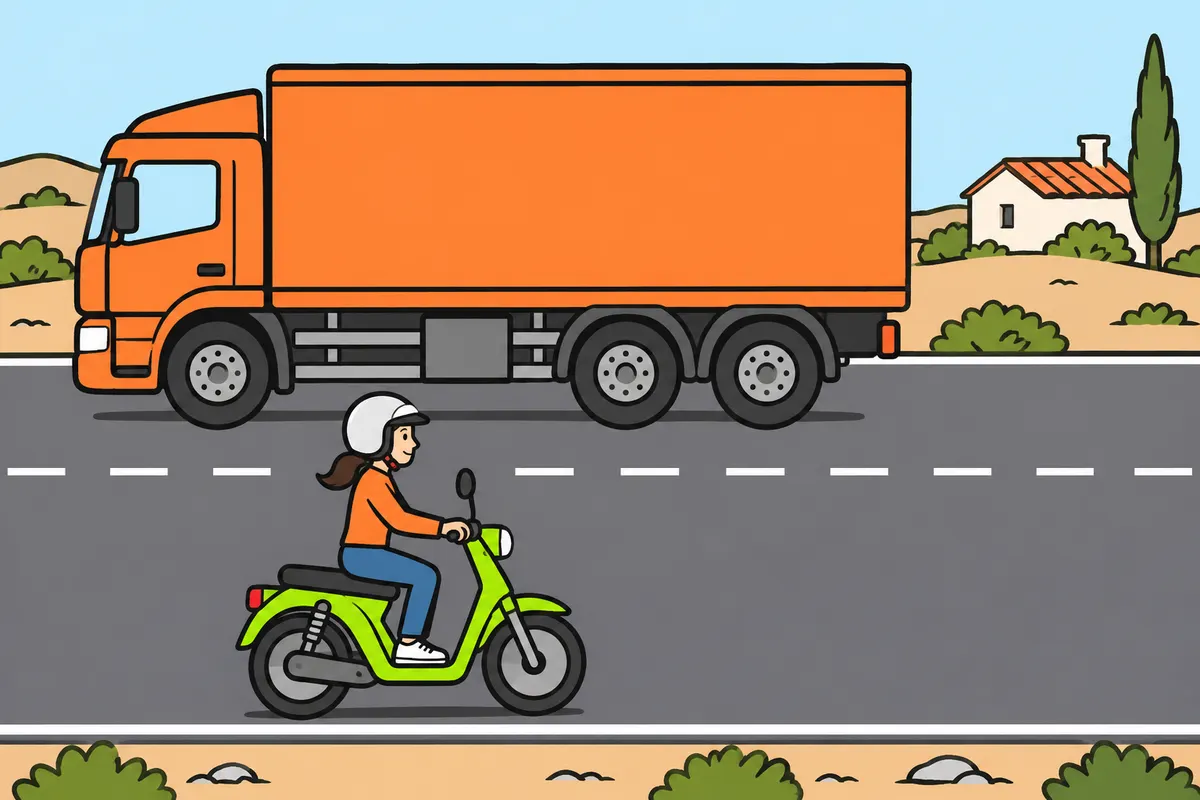
You must follow a lower alcohol limit when driving certain transport vehicles.
| Vehicles subject to this limit | Condition | Blood / breath maximum |
|---|---|---|
| Goods vehicles | Maximum authorised mass above 3,500 kg | 0.3 g/l / 0.15 mg/l |
| Passenger vehicles | More than nine authorised seats | 0.3 g/l / 0.15 mg/l |
| Public service; school transport and transport of children | Because of their use | 0.3 g/l / 0.15 mg/l |
| Dangerous goods; emergency services; special transport | Because of their use | 0.3 g/l / 0.15 mg/l |
Remember
- For goods vehicles, use maximum authorised mass, not the actual load.
- For passenger vehicles, count authorised seats, even when empty.
- Your backpack or passenger does not put your private moped in these categories.
Exam trap: Wrong: you use actual weight or the passengers present. Right: check maximum authorised mass and authorised seats.
Read the full explanation
- The limit is 0.3 g/l in blood or 0.15 mg/l in breath for drivers of goods vehicles with a maximum authorised mass (MMA) of more than 3,500 kg. The reference is the authorised MMA, not the weight of the load carried that day. [RGC, art. 20](https://www.boe.es/buscar/act.php?id=BOE-A-2003-23514#a20).
- You must apply the same lower limit to passenger vehicles with more than nine seats, public service vehicles, school transport and transport of children, dangerous goods vehicles, emergency service vehicles and special transport vehicles. [RGC, art. 20](https://www.boe.es/buscar/act.php?id=BOE-A-2003-23514#a20).
- In a passenger vehicle, you must consider the number of authorised seats, even if some seats are empty. [RGC, art. 20](https://www.boe.es/buscar/act.php?id=BOE-A-2003-23514#a20).
- Carrying a backpack or a passenger does not make your moped a transport vehicle subject to a lower limit.
6How alcohol impairs you
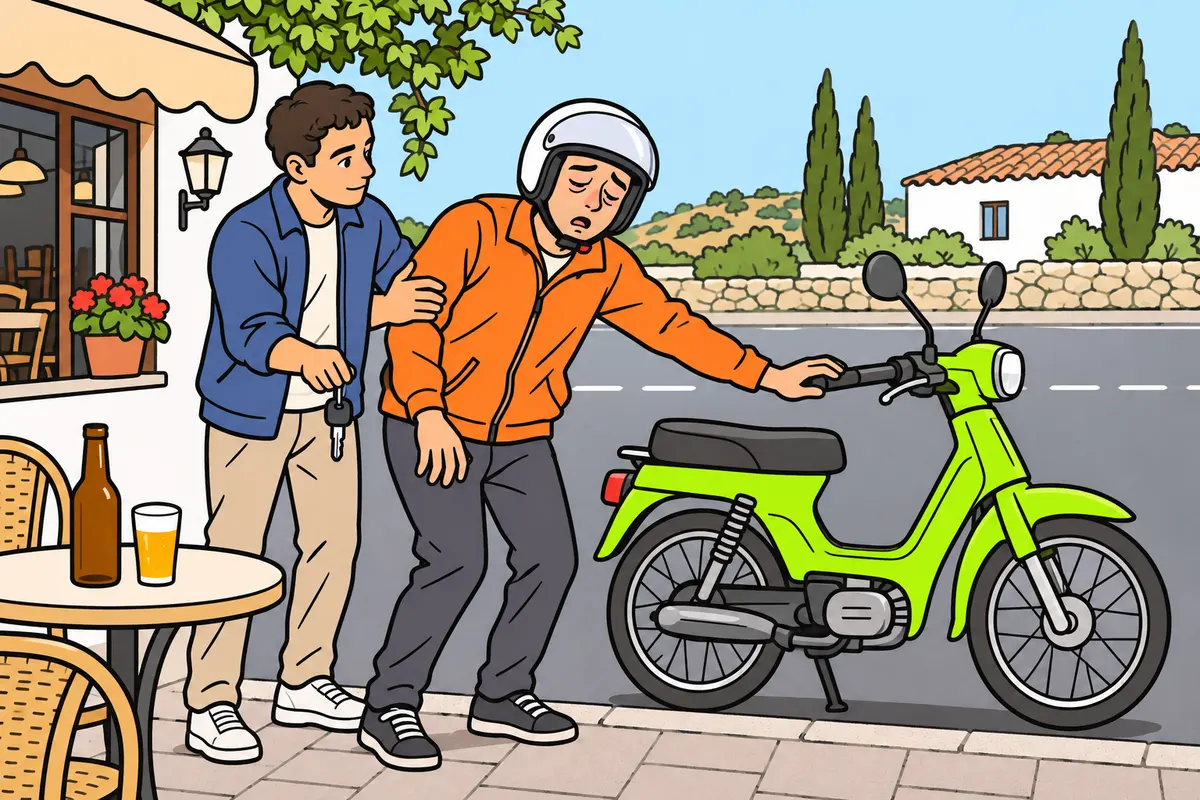
Alcohol can make you feel more capable while you drive worse.
Remember
- You can miss hazards and misjudge distances.
- You can take longer to respond.
- You can see less of what happens at your sides.
- You can lose precision and balance.
- In a light quadricycle, you can also make poor decisions or drift off course.
Exam trap: Wrong: feeling confident proves you drive well. Right: alcohol can harm your judgement.
Read the full explanation
- Alcohol is a central nervous system depressant. Initial euphoria and loss of inhibition can make you feel more capable while your judgement deteriorates. On a moped, accepting an insufficient gap or entering a bend too fast can start with this false confidence.
- With alcohol, you can be less able to detect hazards, misjudge distances and take longer to respond. Your vision and coordination can also deteriorate.
- A narrower field of vision reduces the information you perceive from the sides. You can focus on what is ahead and overlook a pedestrian or vehicle approaching from one side. You still need to look around you even when travelling slowly.
- You can operate the controls less precisely and lose your balance. This combination is particularly important on two wheels, where an abrupt correction or poorly coordinated braking can lead to a fall. In a light quadricycle you can also make errors in your course and decisions. [DGT, effects of alcohol](https://www.dgt.es/muevete-con-seguridad/evita-conductas-de-riesgo/consumo-de-alcohol/).
7What affects your alcohol level
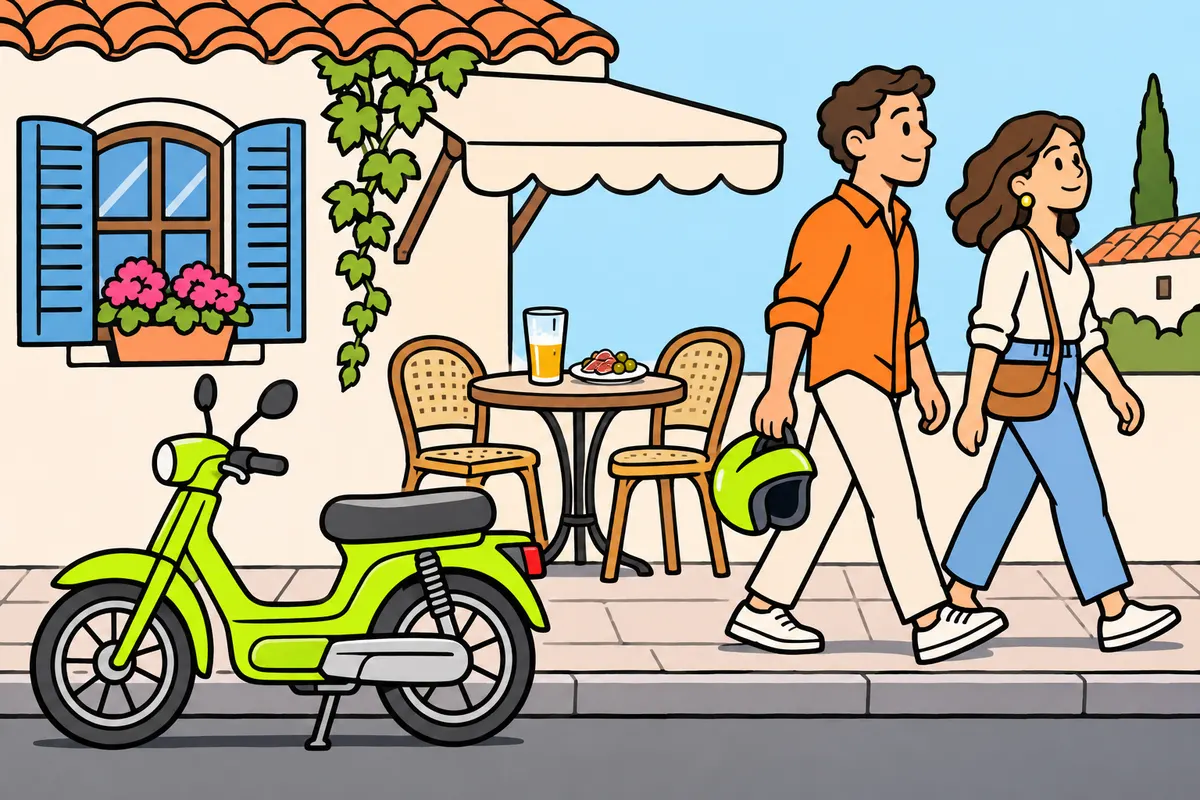
You cannot know your alcohol level by counting drinks or lower it quickly with tricks.
Remember
- Amount, drinking speed, food and your personal characteristics all matter.
- Your body can keep absorbing alcohol after you finish drinking.
- Eating delays absorption but does not remove alcohol.
- Coffee, exercise, showers and water do not remove alcohol quickly.
- Sleeping a few hours does not guarantee you can drive.
- Arrange another safe way home.
Exam trap: Wrong: eating or drinking coffee removes alcohol. Right: these tricks do not guarantee you can drive.
Read the full explanation
- You cannot predict your alcohol level simply by counting glasses. The amount of alcohol, how quickly you drink, the characteristics of the drink, food and personal characteristics all play a part. One serving in a bar can contain a different amount from another with the same name.
- Alcohol can continue to be absorbed after you finish drinking. Eating can delay absorption, but it does not neutralise what you consume.
- You can reach a different concentration from another person after a similar amount: weight and sex are among the factors involved. Age, experience and physical condition also affect the impairment of your abilities. Do not use a friend who appears well as your reference.
- You cannot eliminate alcohol quickly with coffee, exercise, a shower, water or fresh air. Sleeping for a few hours does not guarantee an acceptable level when you wake up either. Arrange a safe alternative for getting home, without calculating a departure time using rules of thumb. [DGT, alcohol levels](https://www.dgt.es/muevete-con-seguridad/evita-conductas-de-riesgo/consumo-de-alcohol/).
8When you must undergo tests
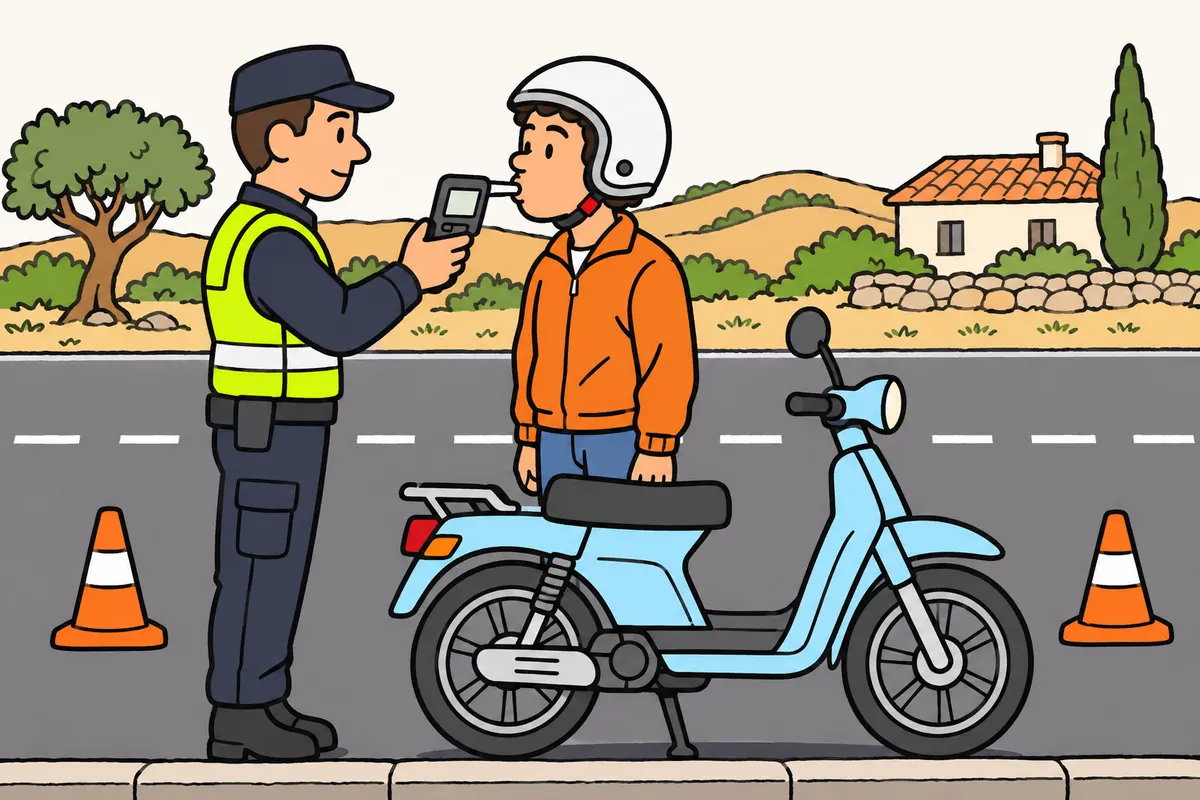
You must take alcohol or drug tests lawfully required by traffic officers.
| Your situation | When you must take tests |
|---|---|
| You are driving | Preventive checkpoint, symptoms, an offence or involvement in an accident |
| You are a pedestrian or another road user | If involved in an accident or you have committed an offence |
Remember
- As a driver, you can face preventive tests without a previous offence.
- Tests can also follow symptoms, an offence or involvement in an accident.
- Tell officers if injury or serious illness prevents the usual test.
- Then follow the required medical procedure.
Exam trap: Wrong: any pedestrian must take tests at a preventive checkpoint. Right: as a pedestrian, you must take them if involved in an accident or you have committed an offence.
Read the full explanation
- You must take alcohol or drug tests lawfully required by traffic enforcement officers. The obligation applies when you drive a moped or light quadricycle, regardless of the distance of the journey and whether you admit to using substances. [Ley de Tráfico (Traffic Act), art. 14.2](https://www.boe.es/buscar/act.php?id=BOE-A-2015-11722#a14).
- As a driver, you can be required to take a test at a preventive checkpoint, because of symptoms consistent with alcohol use, following an offence or because you are involved in an accident. A preventive check does not require you to commit an offence or show symptoms beforehand. [RGC, art. 21](https://www.boe.es/buscar/act.php?id=BOE-A-2003-23514#a21).
- If you are another road user, such as a pedestrian, you must also undergo tests when you are involved in an accident or have committed an offence. Do not extend preventive checks on drivers to any pedestrian without this condition. [Ley de Tráfico (Traffic Act), art. 14.2](https://www.boe.es/buscar/act.php?id=BOE-A-2015-11722#a14).
- If an injury or serious illness prevents the usual test, you must report this and follow the prescribed medical procedure. Being unable to take that test does not exempt you from all checks: medical professionals determine the appropriate tests. [RGC, art. 22.2](https://www.boe.es/buscar/act.php?id=BOE-A-2003-23514#a22).
9Breathalyser, second test and confirmatory testing
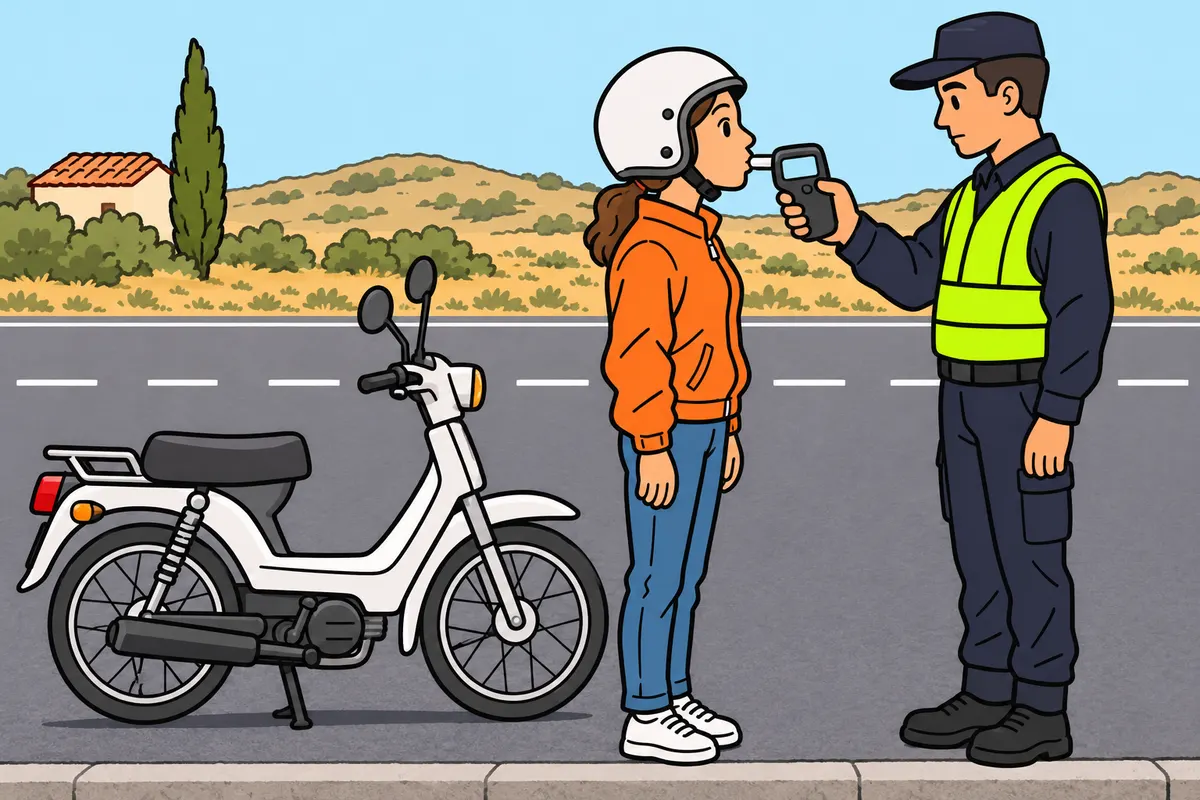
Your second breath test and a confirmatory medical test are different checks.
| Check | What you need to know |
|---|---|
| Second breath test | If above your limit or showing clear signs of impairment |
| Positive confirmatory alcohol test | You pay a deposit beforehand and bear the cost |
| Negative confirmatory alcohol test | You get your deposit back; the authority pays |
Remember
- Follow the officer’s instructions when blowing.
- If you exceed your limit, you must take another breath test.
- You must also repeat it with clear symptoms, even below your limit.
- You can check that at least ten minutes pass between breath tests.
- You can request a confirmatory medical test, preferably using blood.
- Other confirmatory analyses require justified exceptional grounds.
Exam trap: Wrong: the second measurement is already the confirmatory test. Right: you can request a separate medical check.
Read the full explanation
- The usual alcohol measurement uses an approved breathalyser to test your breath. Blowing into a breathalyser does not directly measure a blood sample. Follow the officer’s instructions so that the test can be carried out correctly. [RGC, art. 22](https://www.boe.es/buscar/act.php?id=BOE-A-2003-23514#a22).
- If you exceed the applicable limit or show clear signs of being under the influence even below that limit, you undergo a second breath test. You must be informed, and you can check, personally or through a companion or witness present, that at least ten minutes pass between the two tests. [RGC, art. 23](https://www.boe.es/buscar/act.php?id=BOE-A-2003-23514#a23).
- You can make observations and request a confirmatory medical test. This differs from the second breathalyser measurement and preferably consists of a blood test; other analyses require the legally specified, justified exceptional grounds. [RGC, art. 23](https://www.boe.es/buscar/act.php?id=BOE-A-2003-23514#a23). [Ley de Tráfico (Traffic Act), art. 14.5](https://www.boe.es/buscar/act.php?id=BOE-A-2015-11722#a14).
- An advance deposit is provided for the cost of the confirmatory alcohol test: if it is positive, you must pay; if it is negative, the deposit is returned and the competent authority bears the cost. [RGC, art. 23.4](https://www.boe.es/buscar/act.php?id=BOE-A-2003-23514#a23).
10Refusal, immobilisation and liability
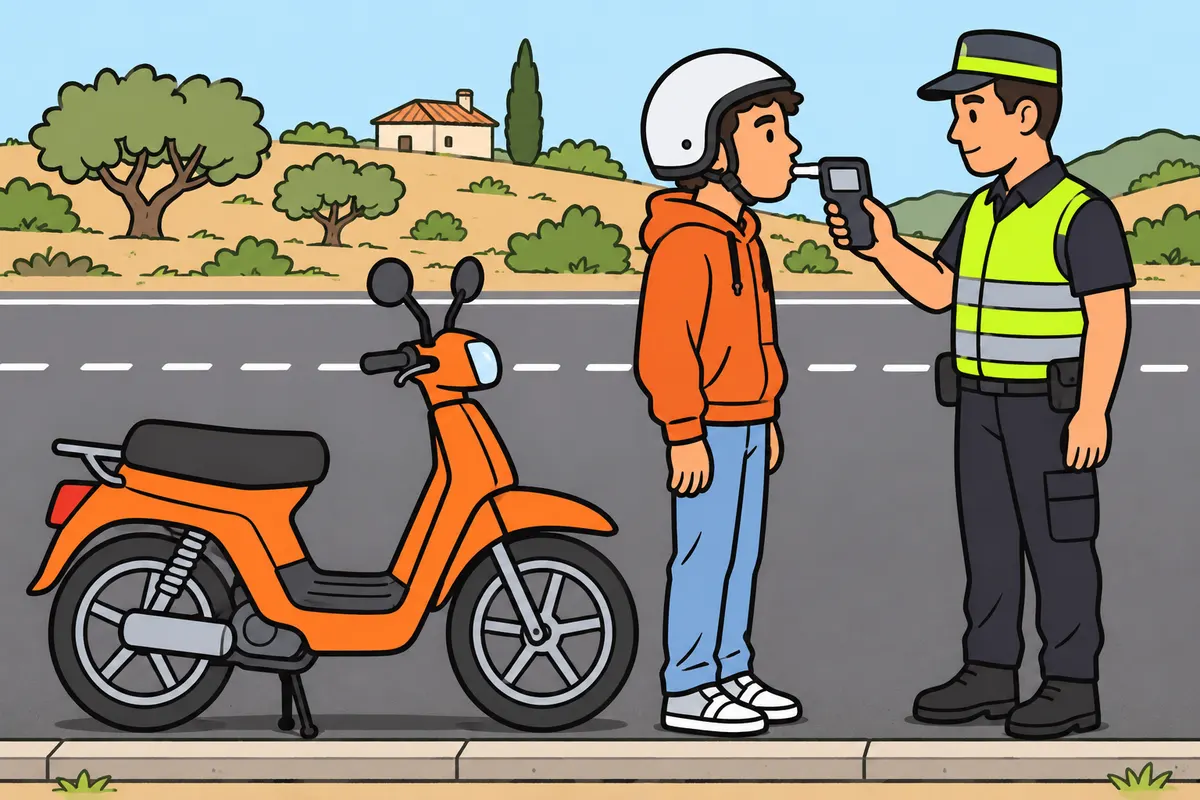
Refusing a lawfully required test can be a criminal offence, even without an accident.
| Case | What you need to know |
|---|---|
| Refusal: adult criminal law | Prison for six months to one year; driving ban over one year, up to four years |
| Alcohol: criminal threshold | Above 0.60 mg/l in breath or 1.2 g/l in blood |
| Under the influence of alcohol or drugs | Can be a crime without exceeding these thresholds |
Remember
- Driving under the influence of alcohol or drugs can be a criminal offence.
- Officers can immobilise your vehicle after a positive test or refusal.
- Someone properly entitled with sufficient safety assurance can take over, unless courts prevent this.
- You cannot continue just because you feel better.
- The causes must end and the relevant check must happen.
- If underage, your parents or guardians also bear responsibility for your fine.
Exam trap: Wrong: below the criminal threshold, you never commit a crime. Right: driving under the influence can also be a crime.
Read the full explanation
- Refusal can be a criminal offence even without an accident. Under adult criminal law, article 383 provides for imprisonment from six months to one year and disqualification from driving for more than one year and up to four years. [Código Penal (Criminal Code), art. 383](https://www.boe.es/buscar/act.php?id=BOE-A-1995-25444#a383).
- You can commit a criminal offence by driving a moped under the influence of alcohol or drugs. In any event, article 379.2 covers levels above 0.60 mg/l in breath or 1.2 g/l in blood. A lower result does not rule out an offence of driving under the influence. [Código Penal (Criminal Code), art. 379.2](https://www.boe.es/buscar/act.php?id=BOE-A-1995-25444#a379).
- Immobilisation prevents you from continuing to drive in unsafe conditions. Officers can immobilise the vehicle following a positive test or refusal; a person with the appropriate driving entitlement who provides sufficient assurance of safety can take over, unless prevented by a court order. Your companion simply offering to do so is not enough. [RGC, art. 25](https://www.boe.es/buscar/act.php?id=BOE-A-2003-23514#a25). [Ley de Tráfico (Traffic Act), art. 104.1.d](https://www.boe.es/buscar/act.php?id=BOE-A-2015-11722#a104).
- You cannot assume immobilisation is lifted because you decide you feel better. The causes must cease and the relevant check must be carried out. A fine, loss of points and criminal liability are separate from this measure; details of your points balance are covered in “The points-based driving licence” module. [RGC, art. 25](https://www.boe.es/buscar/act.php?id=BOE-A-2003-23514#a25).
- If you are under 18, your parents or guardians are jointly and severally liable for the fine (see the “AM licence and documentation” module). [Ley de Tráfico (Traffic Act), art. 82.b](https://www.boe.es/buscar/act.php?id=BOE-A-2015-11722#a82).
11Drugs: prohibition and detection
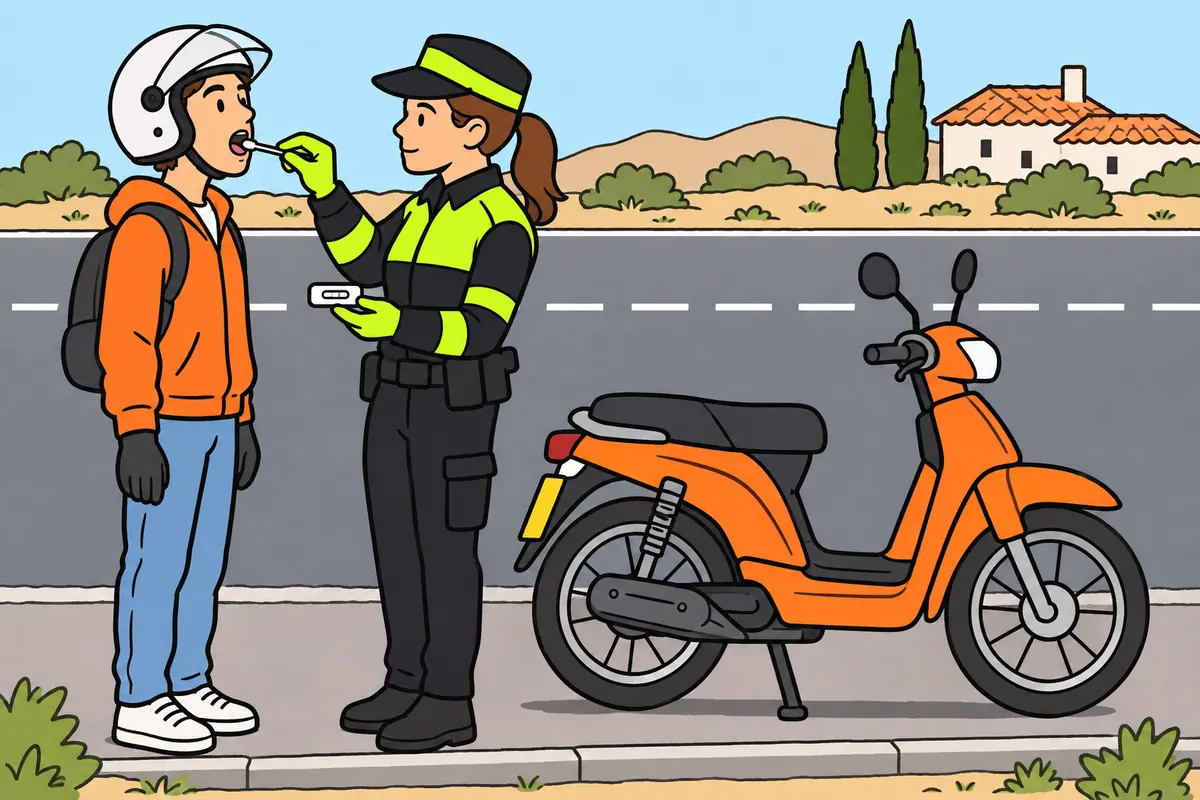
You must not drive with drugs in your system, except under a conditional medical exception.
Remember
- Your prescription must be for treatment.
- You must also be able to drive carefully and without distraction.
- First, you take a saliva test using an approved device.
- Then a sufficient saliva sample is analysed.
- You can request a confirmatory test, preferably using blood.
- Feeling normal does not prove you can drive.
Exam trap: Wrong: a prescription alone lets you drive. Right: you need a prescription, treatment use and the ability to drive carefully without distraction.
Read the full explanation
- You must not drive with drugs present in your system. The therapeutic exception requires a medical prescription, use for treatment and the ability to drive carefully and without distraction. [Ley de Tráfico (Traffic Act), art. 14.1](https://www.boe.es/buscar/act.php?id=BOE-A-2015-11722#a14).
- Drug detection involves a saliva test using an approved device followed by analysis of a sufficient saliva sample. The device provides an initial indication, while the subsequent analysis checks the collected sample. [Ley de Tráfico (Traffic Act), art. 14.3](https://www.boe.es/buscar/act.php?id=BOE-A-2015-11722#a14).
- You can also request a confirmatory test for drugs, preferably a blood test. Where justified reasons prevent the usual test, provision is made for a medical examination or appropriate clinical analyses. Choosing a medical check does not mean you can freely replace the officers’ instructions. [Ley de Tráfico (Traffic Act), art. 14.3 and 5](https://www.boe.es/buscar/act.php?id=BOE-A-2015-11722#a14).
- Feeling normal is not enough to assess the presence of drugs or the impairment they can cause. Their effects and duration vary and can coexist with fatigue or medication. On a moped you need coordination to balance and operate both brakes, abilities you can misjudge while under their influence.
12Effects of different drugs
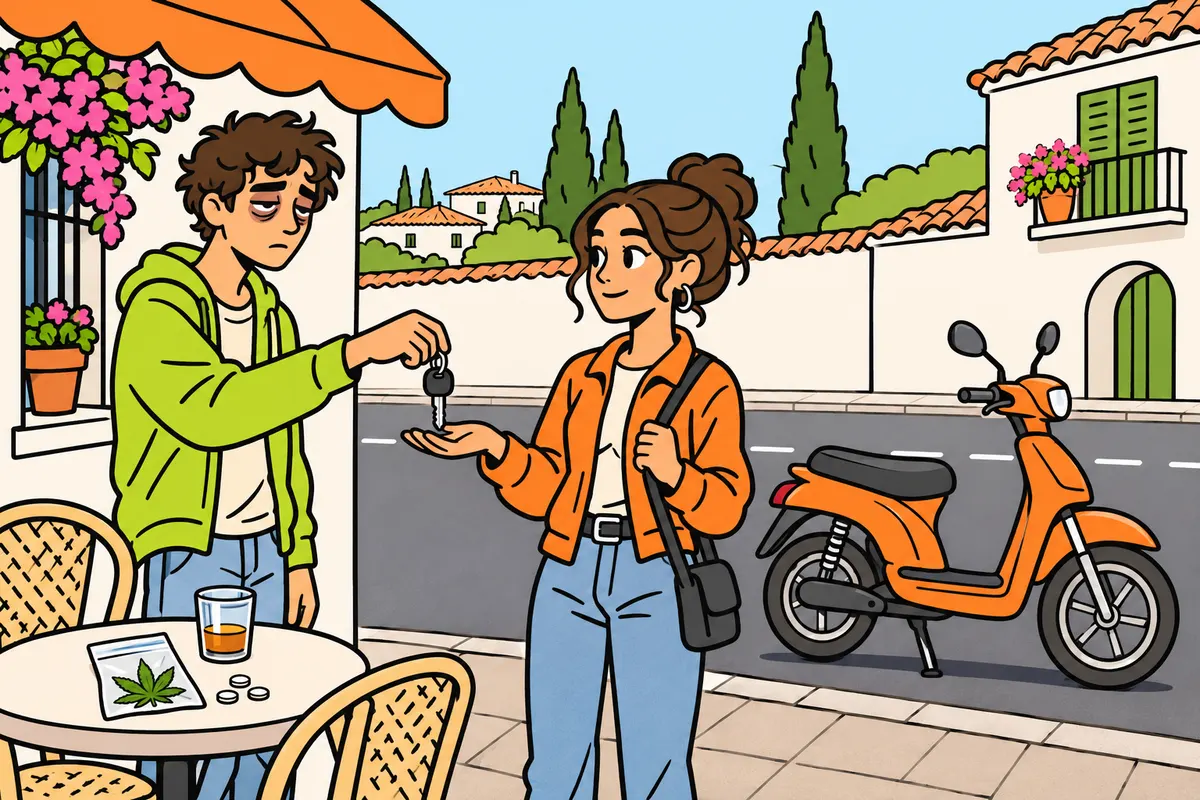
Drugs can affect your attention, perception and decisions.
| Substance | How it can affect you |
|---|---|
| Cannabis | Poorer attention, coordination and judgement of distances |
| Cocaine or amphetamines | False energy and greater willingness to take risks |
| Hallucinogens | You misunderstand your surroundings |
| Heroin and other depressants | You feel sleepy and respond more slowly |
Remember
- With cannabis, you can react more slowly and lose coordination.
- With stimulants, you can feel confident and take more risks.
- When stimulation wears off, sleepiness or fatigue can return suddenly.
- Do not mix drugs with each other or with alcohol.
Exam trap: Wrong: a stimulant cancels out alcohol. Right: mixing substances can increase their dangerous effects.
Read the full explanation
- With cannabis, your perception, attention and coordination can be impaired, and you can react more slowly. Drowsiness or incorrect assessment of distances particularly harms balance and anticipation on two wheels.
- With cocaine or amphetamines, you can feel more energetic and confident and take risks you reject in another condition. Feeling less tired does not mean you have rested. When the stimulation wears off, fatigue or sleepiness can return abruptly.
- With hallucinogenic substances, you can interpret your surroundings very incorrectly. Heroin and other depressants can cause drowsiness and slow your response.
- Mixing drugs with each other or with alcohol increases the risk. Combinations can increase impairment or make your response unpredictable. A stimulant does not neutralise alcohol, and artificially induced confidence does not replace driving ability. [DGT, drugs and medication](https://www.dgt.es/muevete-con-seguridad/evita-conductas-de-riesgo/consumo-de-drogas-y-medicacion/).
13Medicines: check your treatment
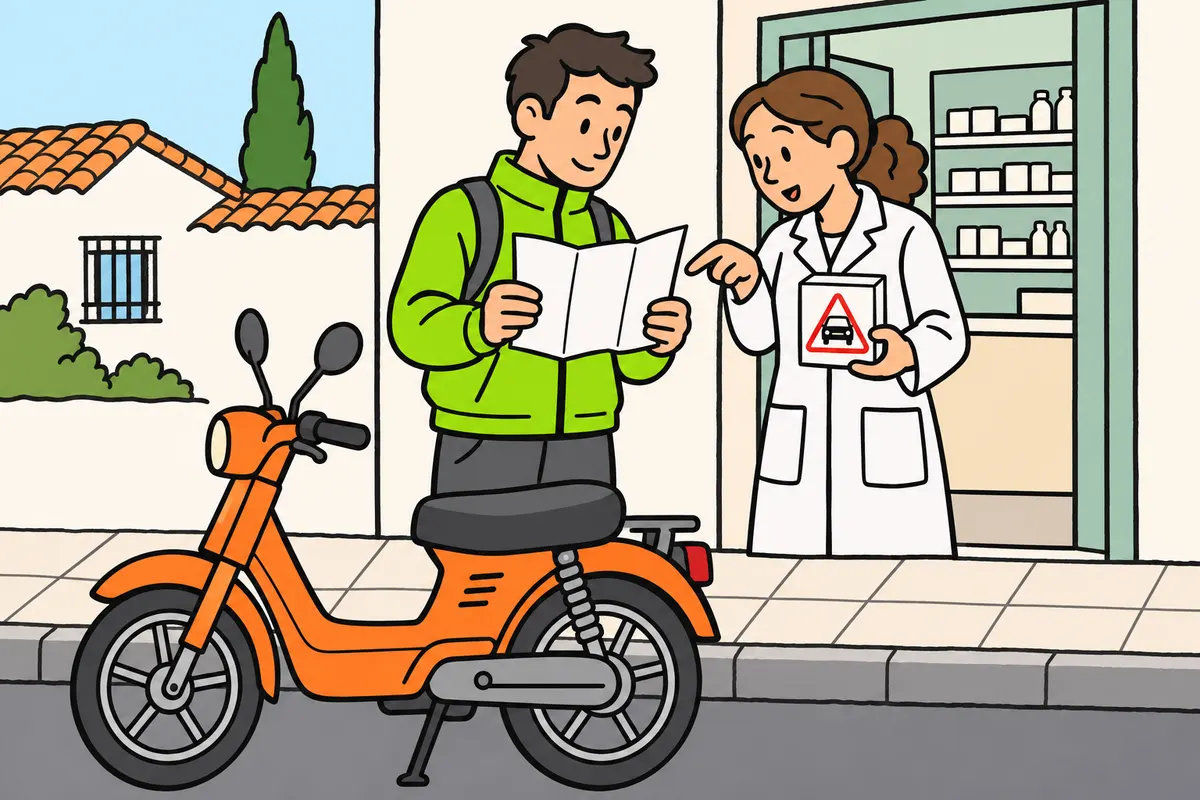
Before driving during treatment, read the leaflet and seek medical advice.
Remember
- Read the leaflet section about driving and using machines.
- Ask your doctor or pharmacist, and explain which vehicle you drive.
- The car inside a red triangle tells you to check the leaflet.
- Take extra care when starting treatment, changing doses or combining products.
- Do not stop or change your treatment yourself.
- Avoid alcohol: it can increase the medicine’s effects.
Exam trap: Wrong: without the pictogram, you can drive safely. Right: always check warnings and how the medicine affects you.
Read the full explanation
- Before driving, you must read the section of the package leaflet on driving and using machines. Ask your doctor or pharmacist whether the treatment can cause sleepiness, dizziness, blurred vision or loss of coordination. Explain that you drive a moped or light quadricycle and when you need to use it.
- The pictogram on the packaging, a car inside a red triangle, tells you to consult the leaflet. It does not by itself impose an automatic ban, nor does the absence of this symbol guarantee that a medicine has no effects relevant to you. [Ministry of Health, medicines and driving](https://www.sanidad.gob.es/ciudadanos/accidentes/accidentesTrafico/docs/Medicamentos_conduccion_PoblacionGeneral_horizontal.pdf).
- Take extra care when starting treatment, changing the dose or combining products. Non-prescription medicines and herbal preparations can also affect you. Do not test whether you tolerate a medicine while driving: first assess its warnings and your response with medical guidance.
- Continue your prescribed treatment and seek advice before changing it to accommodate driving. Ask about an alternative, an adjustment or a period without driving. Avoid alcohol: it can increase sedation and slow your reflexes even if you drink only a little. [DGT, medicine interactions](https://revista.dgt.es/es/salud-vial/2021/0408-Interactuacion-medicamentos.shtml).
14Medicines that require attention
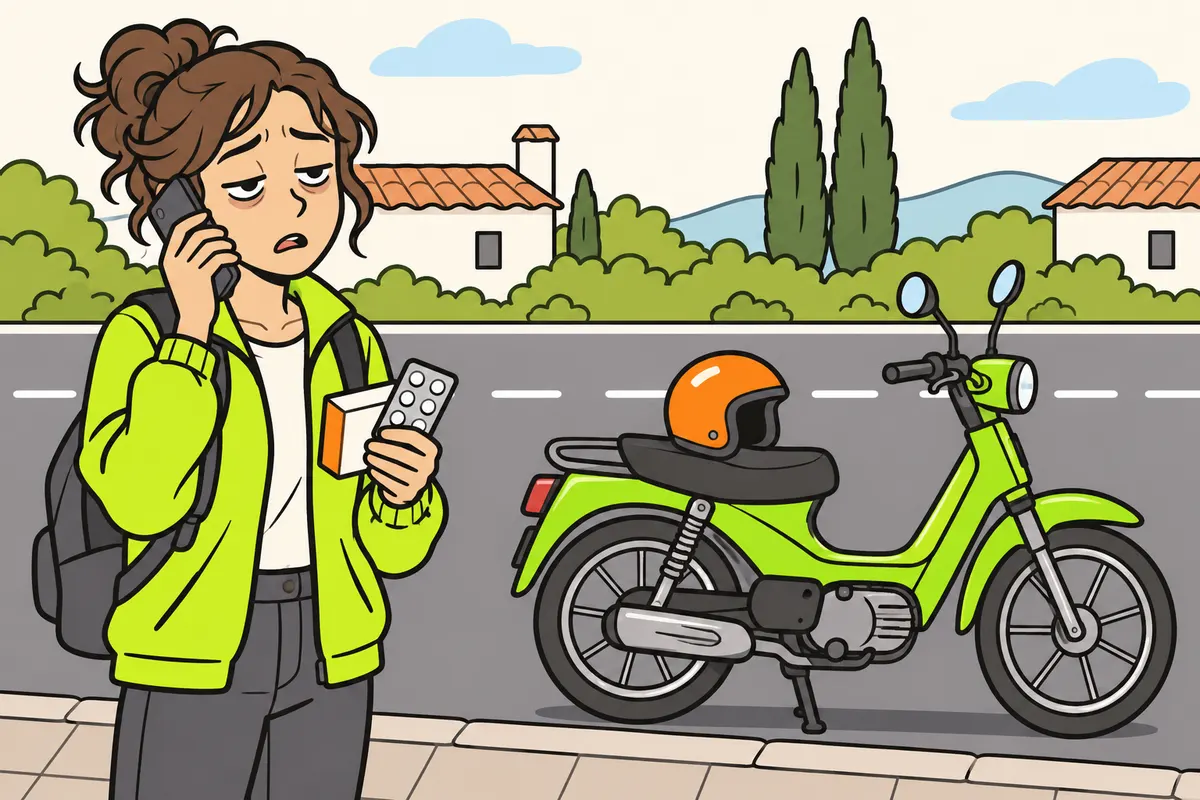
Check how each medicine affects you, even if you have taken it before.
| Medicines | What you should watch for |
|---|---|
| For anxiety, sleep and other mental health treatments | Sleepiness, slow responses, dizziness or confusion |
| For allergies | Sleepiness and slower reactions |
| For pain, coughs, colds or flu | Sleepiness or difficulty concentrating |
Remember
- Allergy treatments can make you sleepy.
- Products for pain, coughs or colds can also affect you.
- Consider both your illness and your treatment.
- If side effects make driving difficult, do not drive and seek professional advice.
Exam trap: Wrong: relieving your cough or pain restores all your driving ability. Right: the medicine can also impair you.
Read the full explanation
- Anti-anxiety medicines, sleeping medicines and other psychiatric medicines can cause slowness, dizziness or confusion. Their effects on attention can make it difficult for you to follow traffic and choose an appropriate response. On a two-wheeled moped, impaired coordination also compromises your use of the controls and your balance.
- Antihistamines used for allergies can cause sleepiness and reduce your ability to react. Even if a product is less sedating, you must check its warnings and how it affects you. Relief from sneezing does not prove that your attention remains intact during treatment.
- Painkillers, certain cough suppressants and cold and flu preparations can also affect concentration or cause drowsiness. You must consider both the symptoms of the illness and the medicine used: eliminating pain or coughing does not always mean that you regain your driving ability.
- Assess treatments for neurological, psychiatric or other conditions individually. Not all medicines or people react in the same way. The correct response to adverse effects is to avoid driving and seek professional advice, rather than increasing the dose, turning to coffee or relying on familiarity. [Ministry of Health, effects of medicines](https://www.sanidad.gob.es/ciudadanos/accidentes/accidentesTrafico/docs/Medicamentos_conduccion_PoblacionGeneral_horizontal.pdf).
15Fatigue: why it occurs
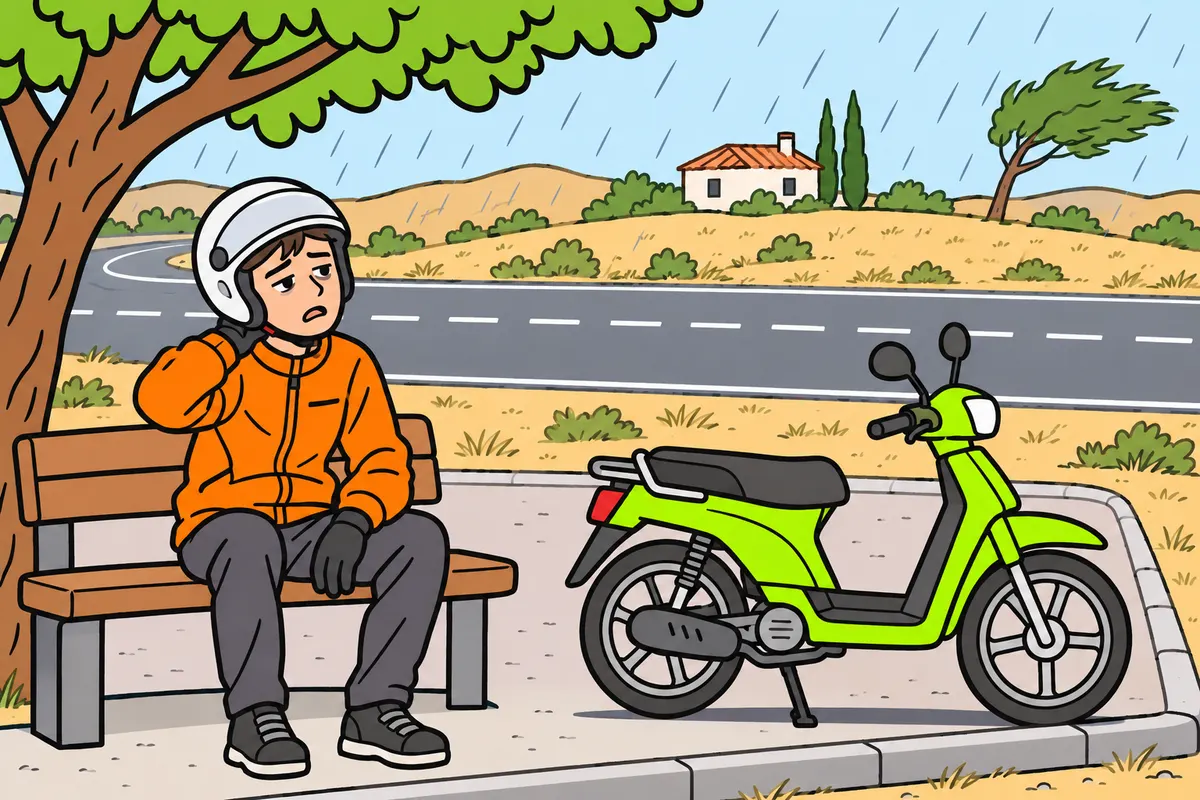
You can start tired or become fatigued through driving effort and journey conditions.
Remember
- Heavy traffic and unfamiliar roads require more effort.
- Rain, wind and poor visibility increase your tiredness.
- Vibrations, noise and poor posture encourage fatigue.
- Cold, heat and poor ventilation can impair you.
- Studying, working or exercising beforehand can increase your tiredness.
- Worries and rushing increase your mental effort.
Exam trap: Wrong: you only get tired on long journeys. Right: journey difficulty and existing tiredness also matter.
Read the full explanation
- You can become physically and mentally fatigued through the effort of observing, deciding and controlling your moped. Heavy traffic, an unfamiliar road, rain, wind or poor visibility increase this effort. After studying, working or intense exercise, you can start your journey with accumulated tiredness.
- Vibrations, noise and an awkward posture encourage muscle fatigue on two wheels. Cold, heat and, in an enclosed quadricycle, poor ventilation can also impair you. With little experience, you can need more effort to coordinate observation and use of the controls.
- The duration and difficulty of your journey affect fatigue. A succession of junctions requires continuous decisions, while a monotonous road can reduce your vigilance. Worries and rushing add a mental workload to the effort of driving. [DGT, fatigue and rest](https://www.dgt.es/muevete-con-seguridad/evita-conductas-de-riesgo/conducir-con-fatiga/).
16Fatigue: warning signs
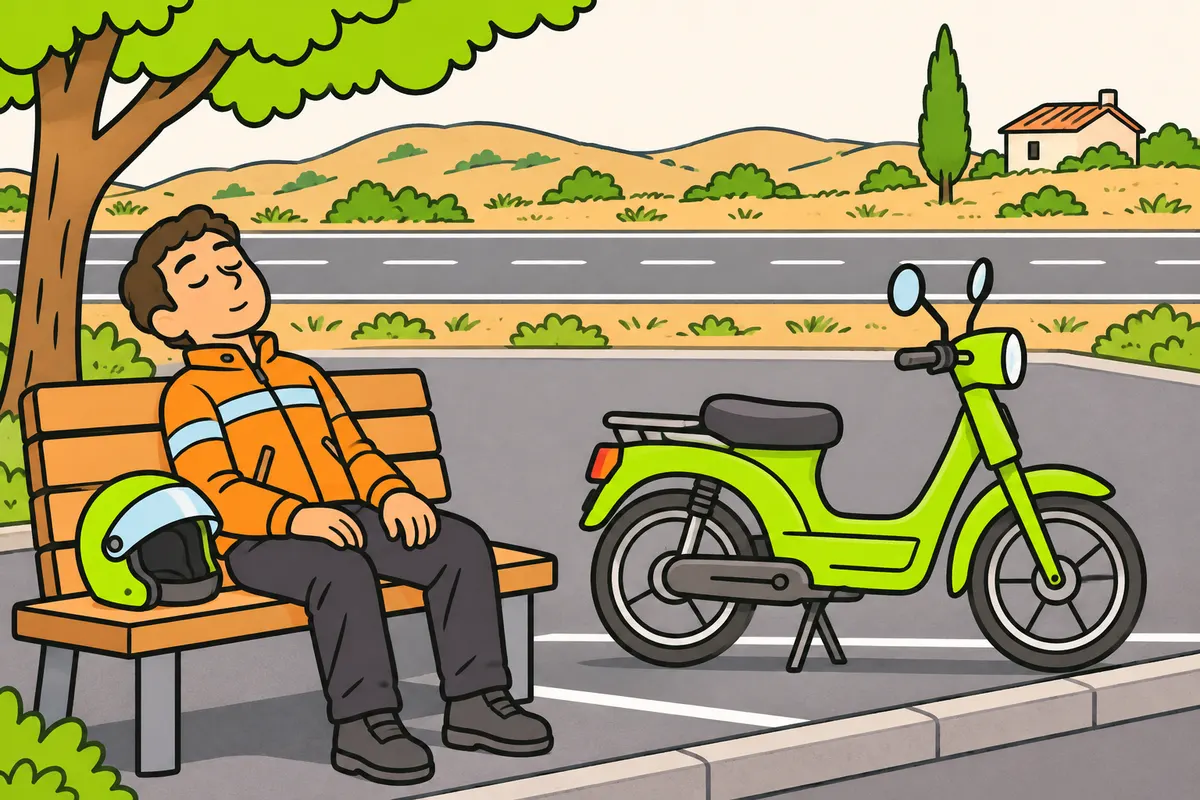
If you notice fatigue, stop making the effort even if you do not feel sleepy.
Remember
- Watch for blurred vision and difficulty focusing.
- You may notice pain, stiffness, cramps or imprecise movements.
- You may struggle to concentrate, decide and remember.
- You may look without remembering what you have just seen.
- Stop making the effort even if you do not yet feel sleepy.
Exam trap: Wrong: without sleepiness, you can keep driving despite fatigue. Right: poor attention and imprecise movements mean you need to stop making the effort.
Read the full explanation
- Fatigue can cause blurred vision, difficulty focusing, pain or stiffness in your neck, back and arms, cramps and slow or imprecise movements. On a moped, you can notice this when keeping your course, turning your head to observe or coordinating the brakes.
- It can also make it harder to concentrate, decide and remember what you have just seen, and cause irritability. You can look in a mirror without retaining the position of an approaching vehicle or recognise a sign late. These lapses in precision and attention indicate that you need to stop making the effort, even if you do not yet feel sleepy. [DGT, signs of fatigue](https://www.dgt.es/comunicacion/noticias/cansancio-estas-son-las-senales-de-alarma).
17Microsleeps: warning signs and immediate action
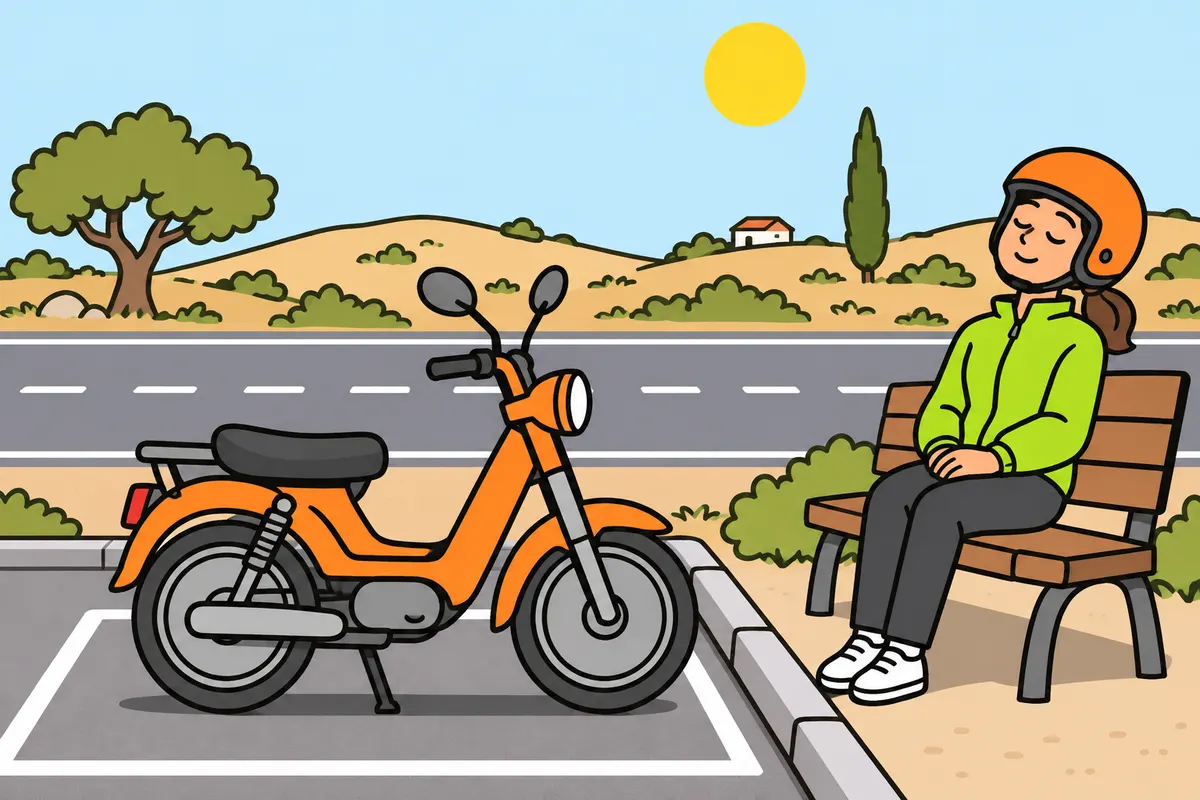
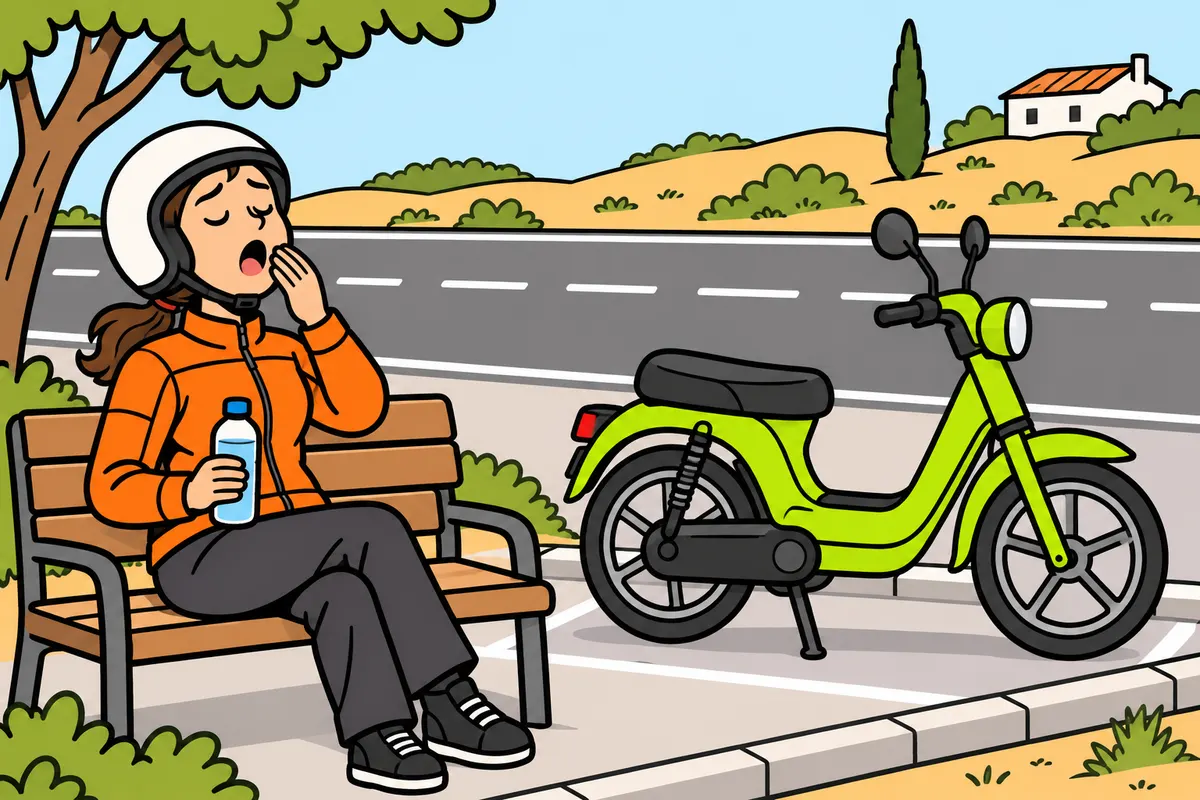
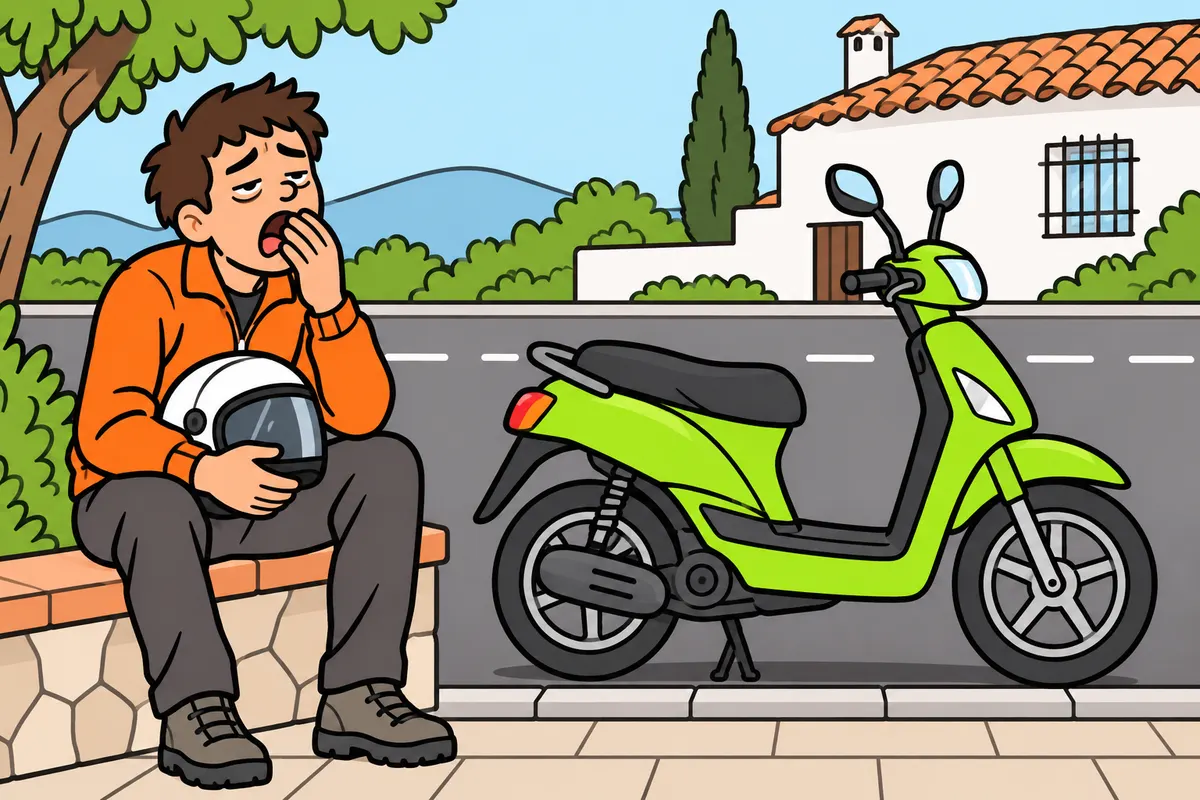
If you feel sleepy, park safely and sleep before continuing.
Remember
- Repeated yawning and heavy eyes are warnings.
- Do not wait for a microsleep before stopping.
- During a microsleep, you stop watching but your vehicle keeps moving.
- Park somewhere permitted and safe, and sleep as much as needed.
- Coffee, energy drinks and fresh air do not replace sleep.
- If you still feel sleepy afterwards, use another form of transport.
Exam trap: Wrong: an energy drink prevents microsleeps. Right: you need sleep to regain your driving ability.
Read the full explanation
- Repeated yawning, frequent blinking, heavy eyes and difficulty keeping your head upright warn you of drowsiness. Lapses in attention can make you miss a sign, drift off course or fail to remember the stretch you have travelled. On two wheels, a deviation can bring you close to a kerb or adjacent traffic.
- A microsleep is a brief episode of sleep that can go unnoticed. During it, you lose vigilance over your surroundings while the vehicle keeps moving. This interval is enough for you to suffer a fall or collision; you must act on the warning signs without waiting to experience one.
- If you become drowsy, you must park somewhere permitted and safe and sleep as much as necessary. Coffee, energy drinks, loud music and fresh air do not replace sleep. Resume only if you have regained your fitness to drive; if drowsiness persists, use another form of transport. [DGT, sleepiness and tiredness](https://www.dgt.es/muevete-con-seguridad/evita-conductas-de-riesgo/Conducir-con-sueno-o-cansancio).
18Plan breaks and meals
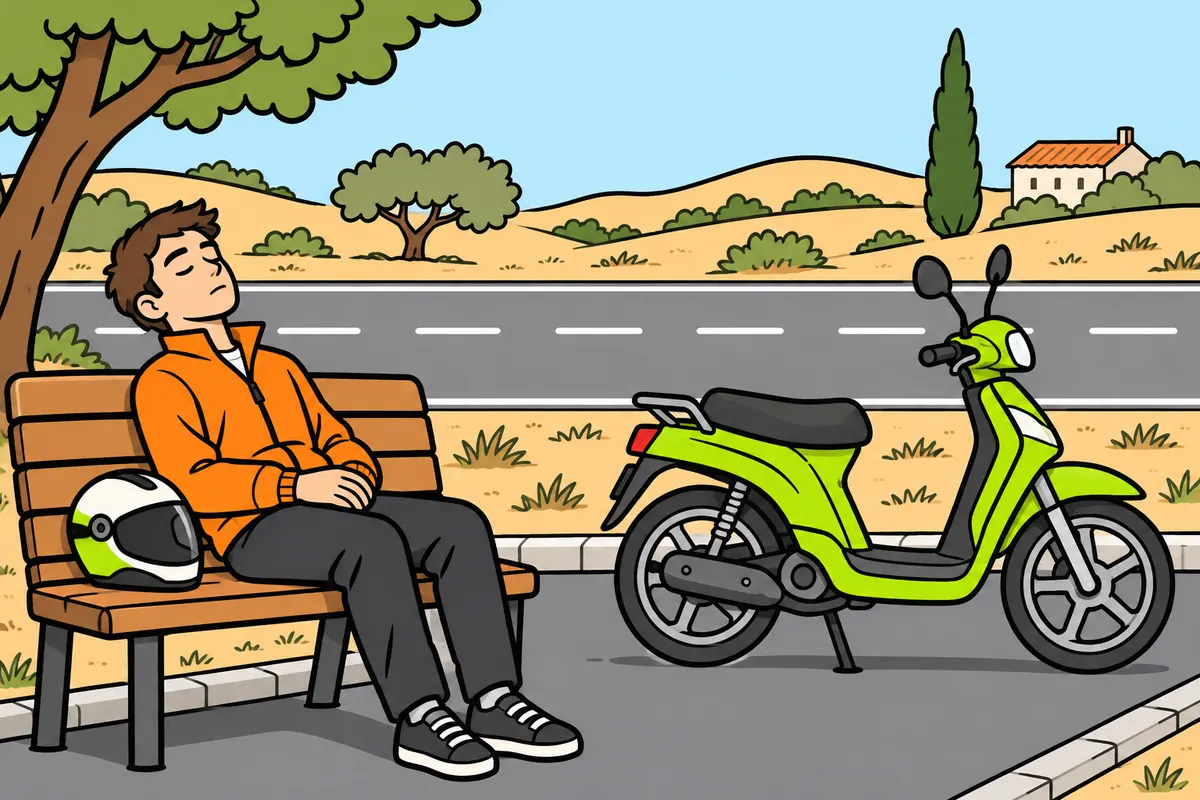
Start rested and plan breaks, food and water for your whole journey.
Remember
- You need enough sleep and good rest.
- Take extra care in the early morning hours and early afternoon.
- Plan safe places to rest on both your outward and return journeys.
- If symptoms appear, bring your planned break forward.
- These recommendations set no legal rest interval for your AM licence.
- Eat moderately and drink water during breaks.
Exam trap: Wrong: any short break restores your fitness. Right: adapt your rest to your effort and how you feel.
Read the full explanation
- Start your journey well rested: too little sleep, poor rest or changes to your schedule encourage drowsiness. Both the quantity and quality of sleep matter; repeated waking can prevent you from recovering. Avoid scheduling journeys at times when you normally sleep. The early hours of the morning and the early afternoon encourage sleepiness because of your biological rhythm. [DGT, sleepiness and tiredness](https://www.dgt.es/muevete-con-seguridad/evita-conductas-de-riesgo/Conducir-con-sueno-o-cansancio).
- Plan breaks in safe places for both the outward and return journeys. Adapt them to the effort of the journey and allow extra time; during breaks you can get off the vehicle, move around and stretch to relieve muscle discomfort. This is preventive advice, with no legal driving and rest interval for your AM licence. Symptoms that appear while driving require you to bring your planned break forward. [DGT, fatigue and rest](https://www.dgt.es/comunicacion/noticias/cansancio-estas-son-las-senales-de-alarma).
- Eat moderately and stay hydrated during breaks: a heavy meal can encourage drowsiness and hunger can distract you. Allow time to eat calmly and drink before continuing. When organising a moped journey, include these needs in your schedule so that your return time does not lead you to cover successive stretches without recovering. [DGT, preventing fatigue](https://www.dgt.es/muevete-con-seguridad/evita-conductas-de-riesgo/conducir-con-fatiga/).
19Drowsiness caused by medicines and illness
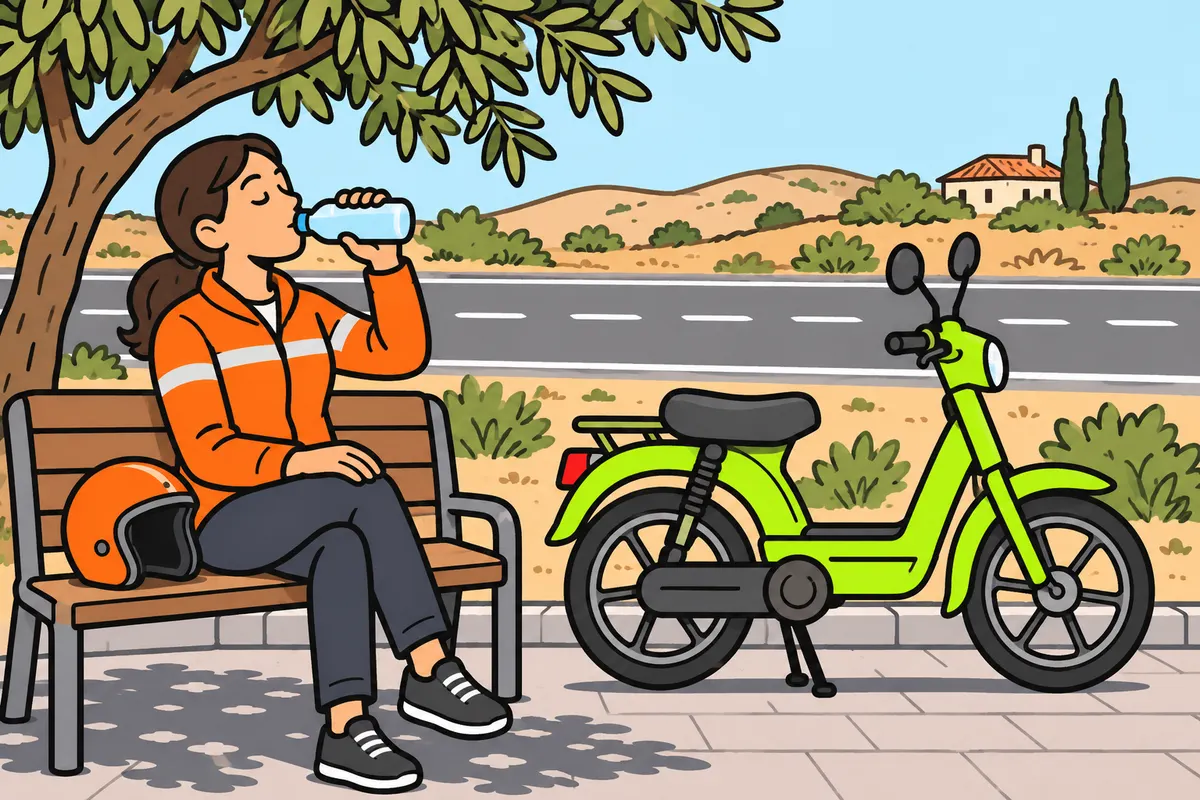
If medicines or illness make you sleepy, seek advice and follow medical instructions.
Remember
- Your illness and treatment can both make you sleepy.
- Explain what you take, when you take it and when you feel sleepy.
- Do not change the time of a dose yourself.
- A sleeping medicine can still affect you when you wake up.
- Seek advice if you often feel sleepy despite resting.
- With sleep apnoea, follow your prescribed treatment and check-ups.
Exam trap: Wrong: sleep apnoea always prevents driving. Right: fitness depends on severity, drowsiness and treatment control; in specified cases, you need a favourable report from a Unidad de Sueño (sleep unit) and a driving entitlement with limited validity.
Read the full explanation
- Drowsiness caused by treatment can add to drowsiness caused by the illness itself. If you become sleepy while taking medication, tell your healthcare professional what you take, at what time and when you notice the effect. This information helps them assess your case; changing the time of a dose on your own initiative does not guarantee that the driving risk disappears. A sleeping medicine taken at night can still make you sleepy when you wake up; allow for this possible residual effect when organising your journeys. [Ministry of Health, medicines and driving](https://www.sanidad.gob.es/ciudadanos/accidentes/accidentesTrafico/docs/Medicamentos_conduccion_PoblacionGeneral_horizontal.pdf).
- If you feel sleepy frequently or without explanation despite resting, seek advice about a possible sleep disorder. Obstructive sleep apnoea can fragment your sleep and cause daytime drowsiness, even if you believe you spend enough hours in bed. A medical assessment must determine the cause; trying hard to stay awake on your moped does not correct a sleep disorder. [DGT, sleep disorders](https://www.dgt.es/muevete-con-seguridad/evita-conductas-de-riesgo/Conducir-con-sueno-o-cansancio).
- Your fitness to drive with sleep apnoea depends on its severity, drowsiness and control through treatment. In the specified cases, a favourable report from a Unidad de Sueño (sleep unit) allows you to obtain or renew your driving entitlement with a limited validity period. Follow the prescribed treatment and check-ups; holding AM does not exempt you from this individual assessment. [RGCond, annex IV, section 7.2](https://www.boe.es/buscar/act.php?id=BOE-A-2009-9481#aniv).
20Distractions: eyes, hands and thoughts
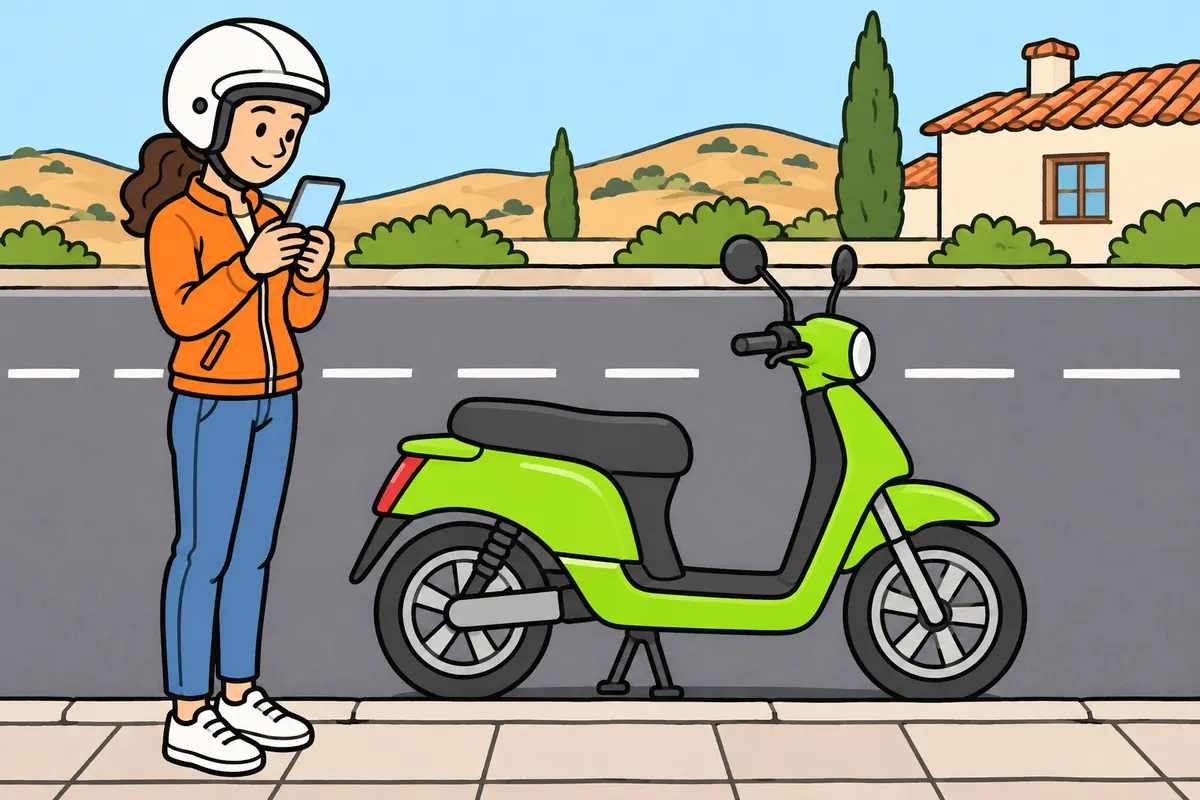
Your eyes, hands or thoughts can distract you from driving.
| How you get distracted | Example |
|---|---|
| You look away | You look at advertising |
| You occupy a hand | You search for an object |
| You occupy your thoughts | You concentrate on a conversation |
Remember
- Prepare objects, your route and settings before setting off.
- Avoid searching for objects, eating, smoking or adjusting equipment while driving.
- Ask your passenger not to interfere.
- Do not pay less attention because you know the road.
- If you need to attend to something else, find somewhere safe to park.
Exam trap: Wrong: keeping your hands on the controls guarantees attention. Right: a worry can also distract you.
Read the full explanation
- You can become distracted by looking away, occupying one hand or concentrating on something unrelated to traffic. Reading a notification combines several of these. Even with both hands on the controls, you can stop paying attention if you are absorbed in a conversation or worry.
- Avoid searching for objects, adjusting equipment, eating or handling a cigarette while driving. Smoking involves actions such as finding a lighter, lighting up or putting a cigarette out, which divert attention. On a moped, taking one hand off the controls makes responding to the unexpected harder.
- Advertising, an accident, the scenery or people on the pavement can also distract you. A familiar road and light traffic can encourage you to lower your vigilance. You do not need to look away from the road for long to miss an important change ahead.
- Organise objects, your route and settings before setting off and ask your passenger not to interfere. If you need to attend to something you cannot deal with without distraction, find somewhere to park. The obligation to maintain attention and freedom of movement applies throughout your drive. [RGC, art. 18.1](https://www.boe.es/buscar/act.php?id=BOE-A-2003-23514#a18).
21Phones and earphones
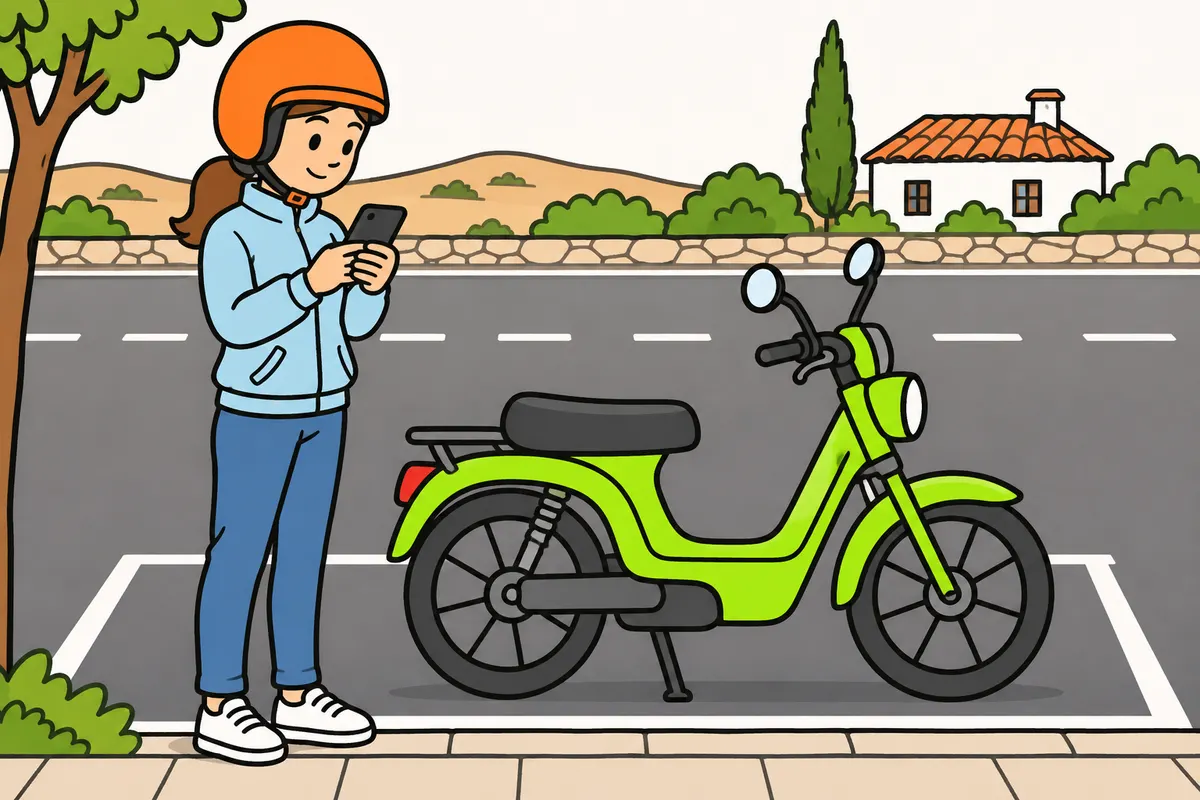
To use your phone by hand, you must park somewhere permitted and safe.
| System and vehicles covered | Conditions for use |
|---|---|
| Hands-free while driving | Without using your hands, headphones, earphones or similar devices |
| Helmet-integrated device: motorcycles and mopeds | Wireless, certified or approved; only intercommunication or navigation, without affecting driving safety |
Remember
- Do not use your phone by hand at traffic lights or in congestion.
- You cannot use any type of earphone, even a single one.
- Do not put your phone between your helmet and head.
- Hands-free use requires no hands, headphones or earphones.
- Even a permitted system can distract you.
- End the conversation if driving needs your full attention.
Exam trap: Wrong: any earphone counts as a permitted helmet device. Right: on motorcycles and mopeds, it must be wireless, certified or approved, integrated into your helmet, used only for intercommunication or navigation, and must not affect driving safety.
Read the full explanation
- You must not use a mobile phone or other communication systems while driving, except for the hands-free and helmet-integrated device exceptions explained below. The prohibition also applies at low speed and while stopped at traffic lights or in congestion. To use it manually, you must park somewhere permitted and safe. [Ley de Tráfico (Traffic Act), art. 13.3](https://www.boe.es/buscar/act.php?id=BOE-A-2015-11722#a13). [RGC, art. 18.2, second paragraph](https://www.boe.es/buscar/act.php?id=BOE-A-2003-23514#a18).
- The prohibition covers any type of earphones, including using just one. [RGC, art. 18.2](https://www.boe.es/buscar/act.php?id=BOE-A-2003-23514#a18). You must not wedge your mobile phone between your helmet and your head either: this conduct is expressly listed in the annex of offences involving loss of points. [Ley de Tráfico (Traffic Act), annex II, ordinal 20](https://www.boe.es/buscar/act.php?id=BOE-A-2015-11722#anii).
- You can communicate using a hands-free system without using your hands, headphones, earphones or similar devices. On motorcycles and mopeds, you can also use certified or approved wireless devices integrated into the helmet, exclusively for intercommunication or navigation and provided they do not affect driving safety. [RGC, art. 18.2](https://www.boe.es/buscar/act.php?id=BOE-A-2003-23514#a18).
- A conversation can distract you mentally even with a permitted system. If traffic demands your full attention, end the communication; a legal device does not guarantee a safe situation.
22Navigation and screens
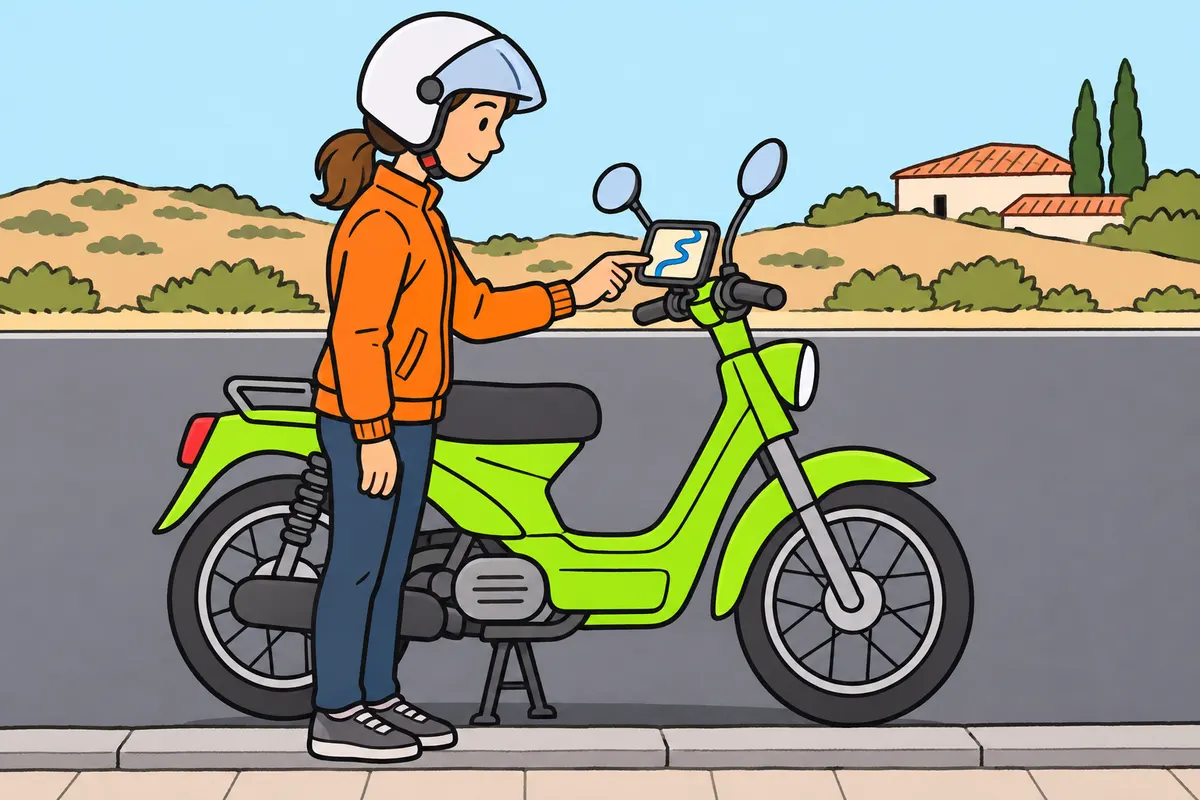
Set up navigation before setting off and always obey signs.
| Screen | What you must do |
|---|---|
| GPS navigation | You can check directions while maintaining attention; do not operate it while driving |
| Videos or internet content | Do not use these screens while your vehicle is moving |
Remember
- Place your navigation device where it does not block vision or vehicle control.
- Do not enter destinations or operate navigation while driving.
- To change your route manually, park safely.
- Do not follow directions that contradict signs or lead onto prohibited roads.
- If you make a mistake, continue legally and let navigation recalculate.
Exam trap: Wrong: a mount lets you operate navigation while moving. Right: you must park safely before operating it.
Read the full explanation
- Set your destination, route and volume before starting. Place the navigation device in a suitable mount that does not hinder vision or control. On a moped, the mount must allow you to check an instruction without adopting an awkward posture or losing sight of your surroundings.
- You must not enter a destination manually or operate the navigation device while driving. If you need to change the route, you must park safely and make adjustments before continuing. [Ley de Tráfico (Traffic Act), art. 13.3](https://www.boe.es/buscar/act.php?id=BOE-A-2015-11722#a13).
- Screens for watching videos or internet content differ from navigation aids. The RGC considers the use of these screens while the vehicle is moving incompatible with attention and provides an exception for GPS, subject to the other driving obligations. [RGC, art. 18.1](https://www.boe.es/buscar/act.php?id=BOE-A-2003-23514#a18).
- You must not follow a navigation instruction that directs you onto a road prohibited for your vehicle or contradicts an applicable sign. If you make a mistake, continue legally and let the system recalculate. Rushing to correct a route does not justify looking away or an improvised manoeuvre.
23Illness, vision and age
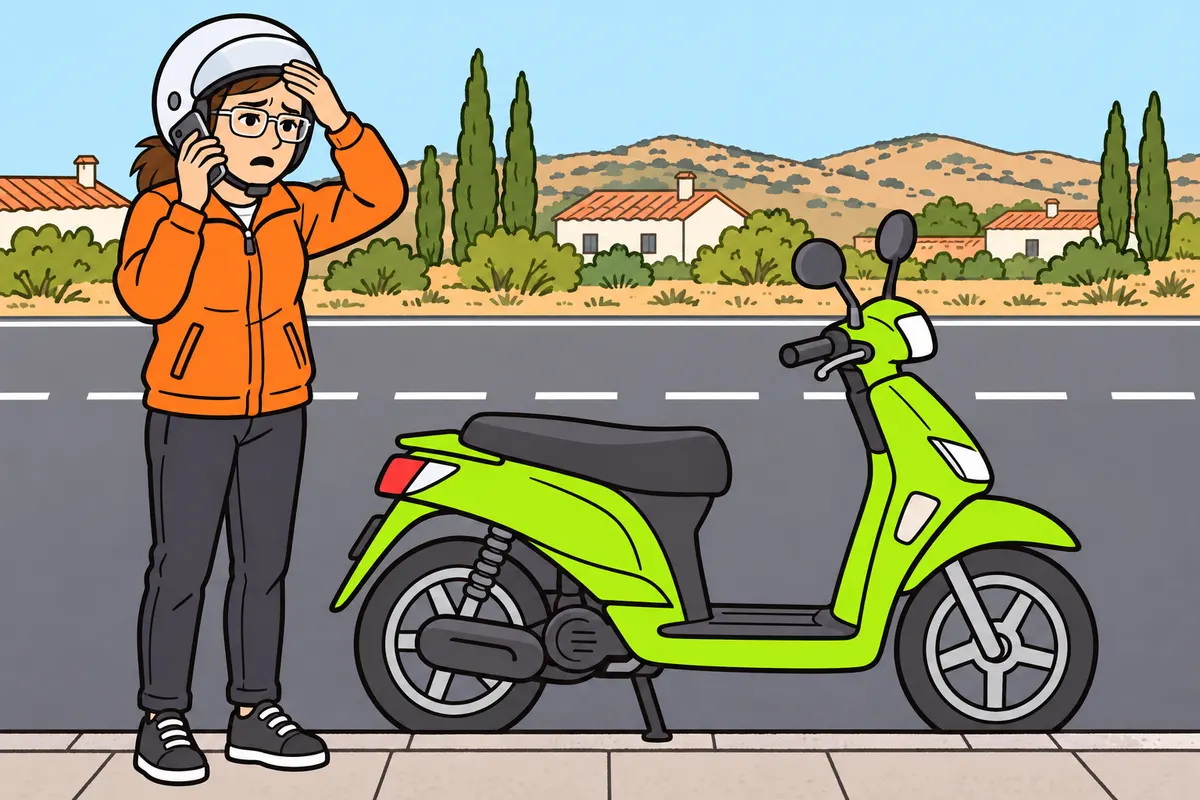
Assess your health and actual abilities before driving, whatever your age.
| Your situation | What you should consider |
|---|---|
| Little experience | You may anticipate hazards less well and overestimate your skill |
| You are getting older | Your vision, hearing and response can change |
Remember
- Ask how your illness and treatment affect driving.
- If you have a long-term illness, know what to do during an episode.
- If dizzy, weak or having vision problems, stop driving and seek help.
- Follow requirements for glasses, adaptations and restrictions.
- Experience does not remove the effects of illness, substances or tiredness.
Exam trap: Wrong: any illness stops you driving forever. Right: you need an individual assessment and must follow the stated conditions.
Read the full explanation
- If you have an illness, you must know its symptoms and ask how they affect driving. A cold, fever, pain or allergy can reduce attention and cause fatigue; sneezing and watery eyes also hinder observation. Do not assess only whether you can start and stay on the vehicle.
- If you have a chronic illness, you must know the treatment and what to do during an episode. Diabetes, epilepsy, cardiovascular and neurological disorders require individual assessment. If you experience dizziness, weakness, visual disturbances or symptoms of losing consciousness, stop driving and seek appropriate assistance. [DGT, illness and driving](https://revista.dgt.es/es/salud-vial/2022/0629-Salud-Vial-enfermedades-afectan-conduccion.shtml).
- You must meet the fitness requirements and applicable restrictions. An illness does not always mean a permanent ban: treatments, adaptations or restrictions compatible with driving can exist. If you need prescribed vision correction or an adaptation, you must comply with it; physical and mental fitness assessment is regulated in annex IV. [RGCond, annex IV](https://www.boe.es/buscar/act.php?id=BOE-A-2009-9481#aniv).
- Assess your actual abilities at any age. If you are young, you can lack experience in anticipating hazards and overestimate your skill; ageing can bring changes in vision, hearing or response. Experience helps you anticipate, but does not neutralise illness, substances or tiredness.
24Emotions, stress and peer pressure
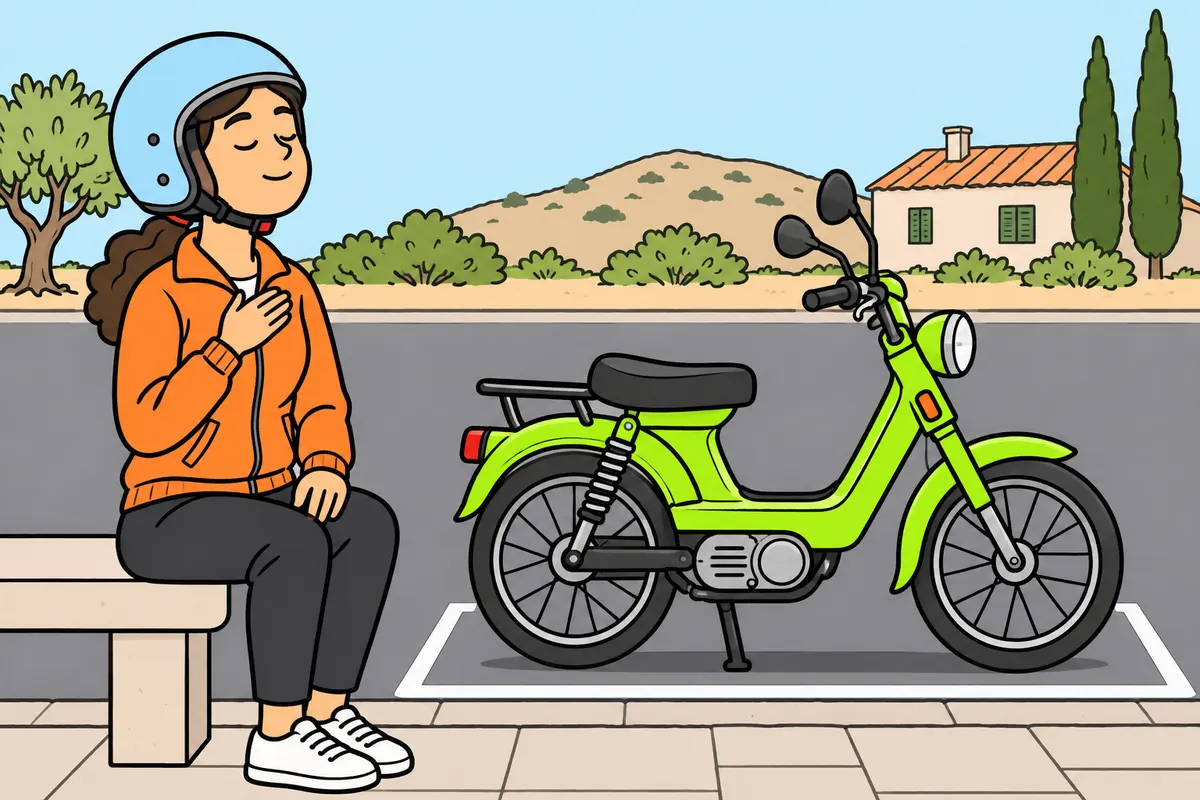
If emotions stop you paying attention to traffic, delay setting off or park.
Remember
- An argument, sadness or euphoria can occupy your attention.
- Allow enough time so you do not rush.
- Do not answer provocation by accelerating or making sudden movements.
- If you have an emotional disorder, seek help and follow treatment.
- Refuse to race or follow someone taking risks.
- Agree on another way home if your driving abilities are impaired.
Exam trap: Wrong: your group can decide whether you are ready. Right: do not give in to pressure to drive with impaired abilities.
Read the full explanation
- An argument, intense sadness, worry or euphoria can occupy your attention. You can look ahead while continuing to think about a problem without processing the traffic. If your condition prevents you from concentrating, postpone departure or park until you can pay proper attention to driving.
- Under intense stress, you can feel impatient, act impulsively, accept more risk or tire sooner. Rushing to arrive and conflicts with other road users can worsen the problem. Allow extra time and avoid responding to provocation with acceleration or abrupt manoeuvres.
- If you have depression or another emotional disorder, you must seek help and follow the prescribed treatment. You can experience difficulty concentrating, indecision, fatigue or drowsiness, as well as medication effects. Your fitness to drive depends on your specific situation and professional assessment, without automatic generalisations. [DGT, health and driving](https://revista.dgt.es/es/salud-vial/2026/0407-Dia-mundial-salud-2026-conductores.shtml).
- Decide for yourself whether you are fit to drive. Refuse to race, follow someone taking risks or accept a person who has used substances taking charge of the vehicle. Before setting off, agree on an alternative way home if your abilities are impaired.
Decide whether you can start your journey
Check your condition before taking the controls.
- Assess sleepiness, tiredness, illness, medication, substances and emotions.
- Check treatment warnings and seek advice if you have doubts.
- If your abilities are impaired, postpone the journey or use an alternative.
- Prepare your phone and navigation before setting off and plan breaks.
Respond to an alcohol test
Distinguish the usual test, the second measurement and the confirmatory medical test.
- Stop as directed by the officers and cooperate with the breath measurement.
- If a second test is required, you can check that at least ten minutes pass after the first.
- Make any relevant observations and request a confirmatory test if you wish to exercise that right.
- The confirmatory test is preferably a blood test; you must pay for it if it is positive.
- If the vehicle is immobilised, follow instructions and do not resume driving on your own initiative.
Stop driving because of sleepiness
The first symptoms already require action.
- Recognise yawning, heavy eyes, lapses in attention or deviations from your course.
- Find somewhere permitted and safe to park.
- Rest and sleep as much as necessary; do not replace sleep with stimulants.
- Check your condition and continue only if you have regained your ability; if symptoms persist, change your plan.
Finished this module?
Mark it as read and you will see your progress on the theory list.