
Theory · AM Licence - Moped · Module 3 of 18
The points-based driving licence
You learn how your points balance works with an AM licence, which offences reduce it and how you can restore or increase it up to 15. You distinguish between deductions, courses and waiting periods before you can drive again after your licence becomes invalid, paying particular attention to figures that can be confused in the exam.
1A personal balance for AM too
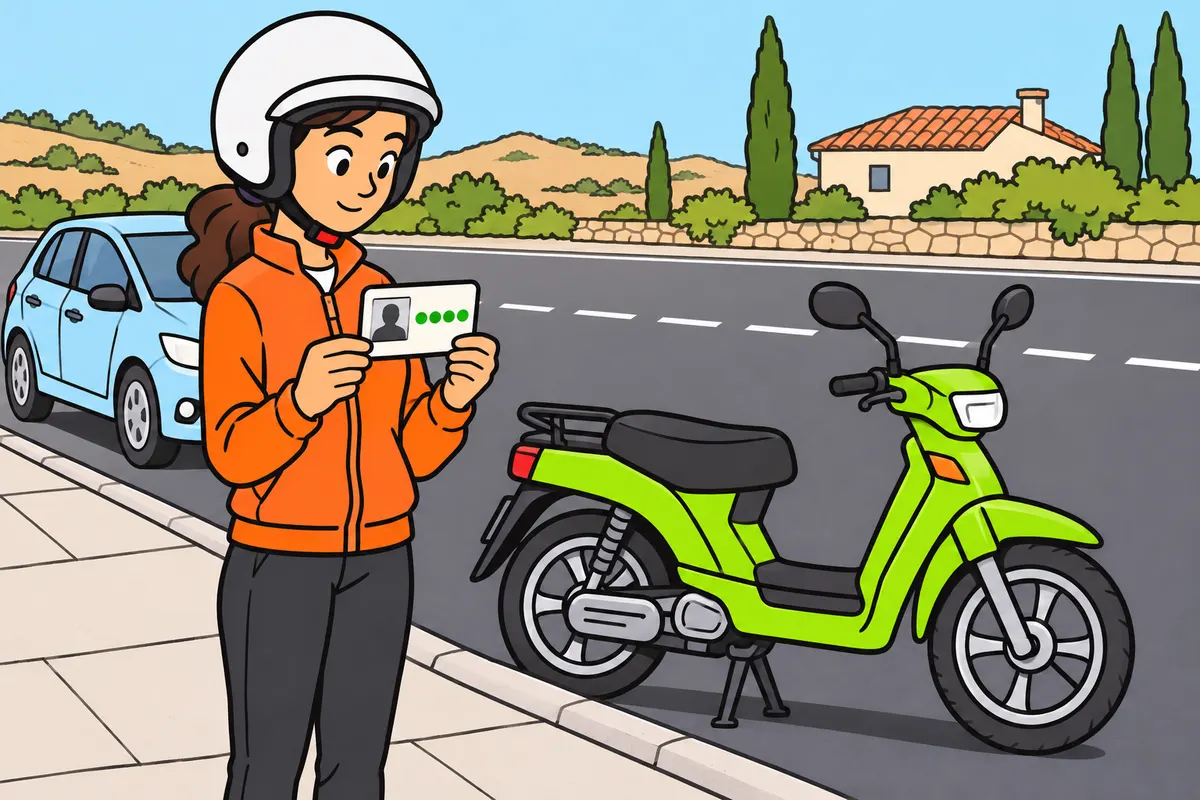
You share one points balance across all your driving licences.
| When you commit an offence | Can you lose points? |
|---|---|
| You drive a vehicle requiring a licence | Yes, if the offence carries points deductions |
| You walk or ride a bicycle | No, simply holding AM does not cost points |
Remember
- Your AM licence is covered by the points system.
- Getting another licence does not erase your points losses.
- You lose points only when driving vehicles requiring a permit or licence.
Exam trap: Wrong: AM has separate points. Right: you share one balance across all your licences.
Read the full explanation
- When you ride a moped, you are covered by the points-based driving licence system. [LTSV, art. 71](https://www.boe.es/buscar/act.php?id=BOE-A-2015-11722#a71).
- You have one points balance for all your driving entitlements. If you hold AM and obtain another category, you do not receive a separate allocation for each vehicle; losses and recoveries affect all your licences, whatever their category. [LTSV, art. 63.3](https://www.boe.es/buscar/act.php?id=BOE-A-2015-11722#a63).
- Points are deducted only for offences committed while driving a vehicle that requires a driving permit or licence. An offence as a pedestrian or while riding a bicycle does not deduct points from AM simply because you hold that licence. [LTSV, art. 65.3](https://www.boe.es/buscar/act.php?id=BOE-A-2015-11722#a65).
2Initial balance: 8 or 12 points
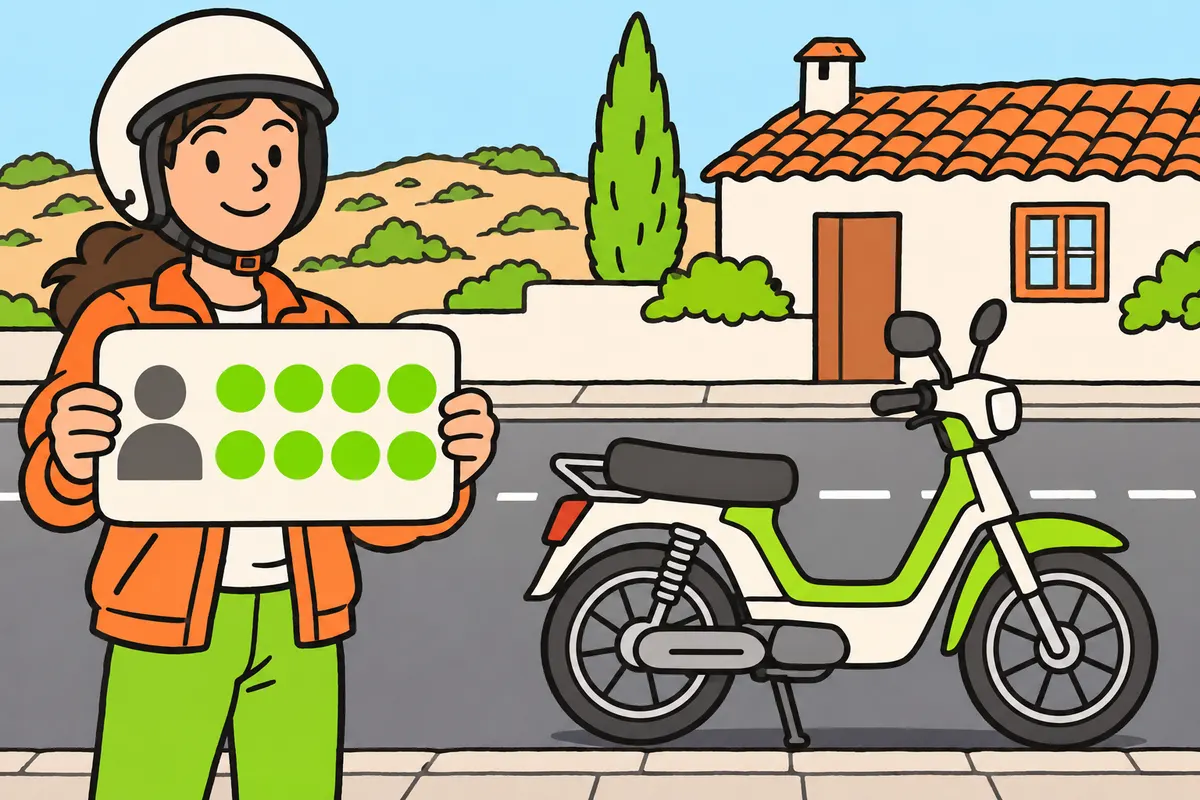
If AM is your first licence, you start with fewer points.
| Your case | Starting balance |
|---|---|
| First AM licence | 8 points |
| General allocation, outside the exceptions | 12 points |
| Licence recovered after losing all points | 8 points |
Remember
- If AM is your first licence, you start with 8 points.
- The exception includes licences held for exactly 3 years, unless another licence qualifies.
- After losing all your points, you start again with 8.
Exam trap: Wrong: you always start with 12 points. Right: your first AM licence starts with 8.
Read the full explanation
- If AM is your first licence, you start with 8 points. The general allocation is 12, but you must apply the legal exception to permits or licences held for no more than 3 years, unless you already hold another licence of that standing. [LTSV, art. 63.1 and 2](https://www.boe.es/buscar/act.php?id=BOE-A-2015-11722#a63).
- The wording “no more than three years” includes exactly three years and determines the initial allocation. [LTSV, art. 63.2](https://www.boe.es/buscar/act.php?id=BOE-A-2015-11722#a63).
- You also receive 8 points when you obtain your licence again after losing all your points. In this case, the allocation of 8 reflects your previous total loss, even if you have extensive driving experience. [LTSV, art. 63.2.b](https://www.boe.es/buscar/act.php?id=BOE-A-2015-11722#a63).
3From 8 to 12 and up to 15
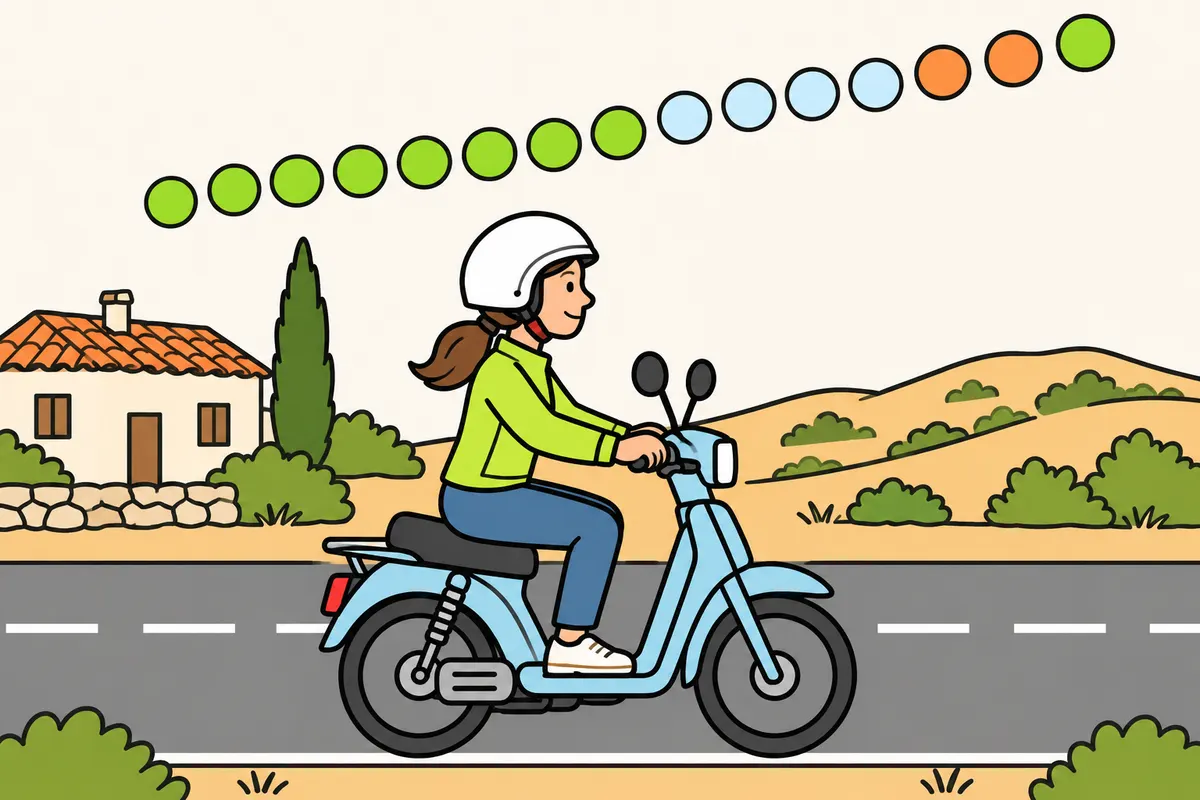
You can increase your points by meeting the waiting periods and conditions.
| Increase | Waiting period and conditions |
|---|---|
| From 8 to 12 | Two years without final penalties carrying points deductions |
| Bonus of 2: up to 14 | First three years: keep all points without final penalties for offences |
| Bonus of 1: up to 15 | Next three years under the same conditions |
Remember
- From 8, reach 12 after two years without final penalties carrying points deductions.
- This also applies when you restart with 8 after recovering your licence.
- For bonuses, keep all your points without final penalties for offences.
- You can reach 14 and then 15.
- You cannot exceed 15 points, even through courses.
Exam trap: Wrong: reaching 12 from 8 takes three years. Right: two years without final penalties carrying points deductions.
Read the full explanation
- You move from the initial 8 points to 12 after two years without penalties that are final in administrative proceedings for offences carrying a loss of points. The same two-year rule applies if you start with 8 after recovering your licence. [LTSV, art. 65.2](https://www.boe.es/buscar/act.php?id=BOE-A-2015-11722#a65).
- If you retain all your points without penalties for offences that are final in administrative proceedings, you can receive a bonus of 2 points over the first three years and another 1 over the next three. You can thus reach 14 and then 15 points. [LTSV, art. 63.4](https://www.boe.es/buscar/act.php?id=BOE-A-2015-11722#a63).
- You can accumulate a maximum of 15 points. This ceiling also applies when you gain points through safe and efficient driving courses: if you have 14, the bonus can only raise your balance to 15. [LTSV, art. 63.4 and 5](https://www.boe.es/buscar/act.php?id=BOE-A-2015-11722#a63).
4When points are deducted

You lose points when a final penalty carrying a deduction enters the register.
Remember
- A serious fine does not always cost you points.
- The penalty must be final in the administrative process.
- Points are deducted when the offence enters the register.
- The decision states your points deduction and how to check your balance.
- No deduction is allowed after one year without registration following the final penalty.
Exam trap: Wrong: every fine costs you points. Right: only certain offences, with a final penalty and registration.
Read the full explanation
- You lose points only for the offences in Annex II and speeding offences carrying deductions in Annex IV; a fine being classified as serious or very serious does not in itself mean a points deduction. [LTSV, art. 64.1](https://www.boe.es/buscar/act.php?id=BOE-A-2015-11722#a64).
- A deduction requires a penalty that is final in administrative proceedings. Points are deducted automatically when the penalised offence is entered in the Registro de Conductores e Infractores (Register of Drivers and Offenders). [LTSV, art. 64.5](https://www.boe.es/buscar/act.php?id=BOE-A-2015-11722#a64).
- The penalty decision must expressly state how many points are deducted and how you can check your balance. [LTSV, art. 64.2](https://www.boe.es/buscar/act.php?id=BOE-A-2015-11722#a64).
- If a year passes after the penalty becomes final without the offence being entered in the register, points cannot be deducted. This time limit governs the entry and deduction relating to the final penalty. [LTSV, art. 64.5](https://www.boe.es/buscar/act.php?id=BOE-A-2015-11722#a64).
5Maximum per offence and per day
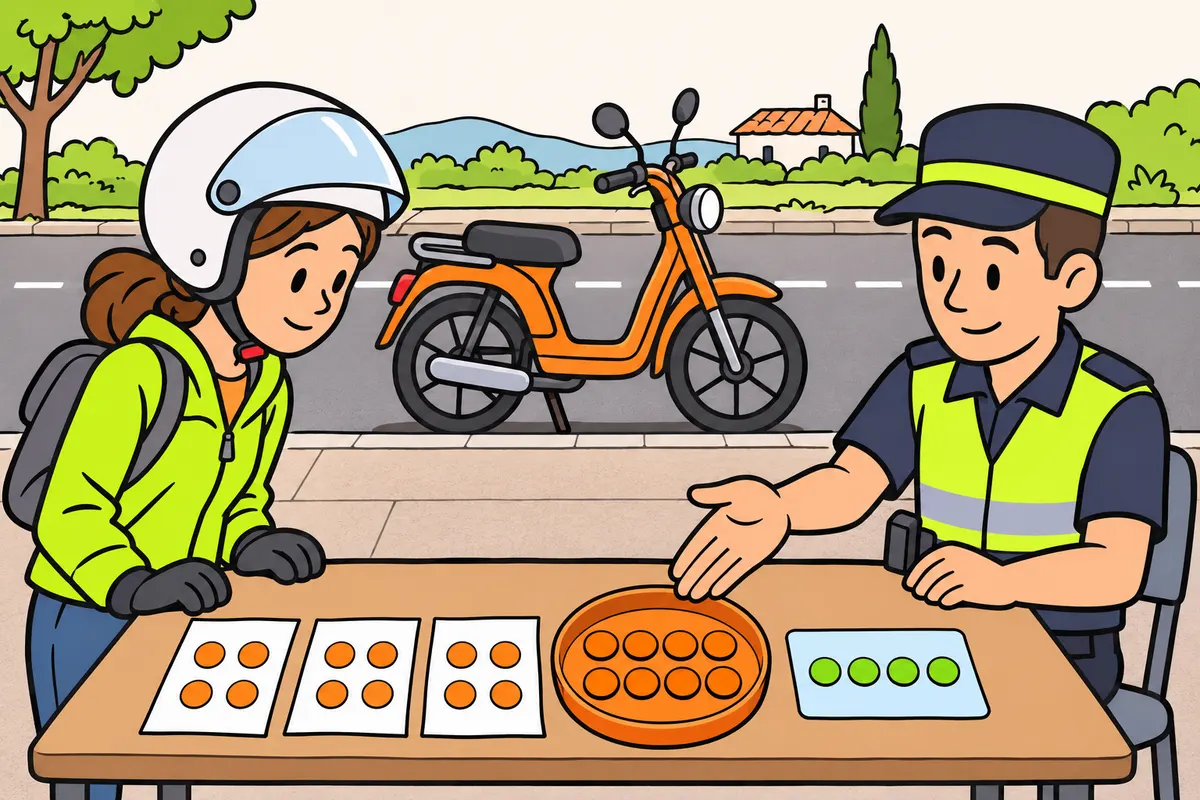
You can exceed the daily points limit if you commit certain exceptional offences.
| Case | Daily deduction |
|---|---|
| General rule | Up to 8 points |
| Legal exceptions for very serious offences | All corresponding points, even above 8 |
Remember
- For one offence, you can lose up to 6 points.
- Normally, you cannot lose more than 8 points per day.
- Certain very serious offences allow deductions above this limit.
- These exceptions can cost you all your points.
Exam trap: Wrong: you can never lose over 8 points daily. Right: legal exceptions allow all corresponding points to be deducted.
Read the full explanation
- The largest deduction for a single offence in Annexes II and IV is 6 points. [LTSV, Annexes II and IV](https://www.boe.es/buscar/act.php?id=BOE-A-2015-11722#anii).
- As a general rule, you cannot lose more than 8 points through accumulated offences in one day. For example, three 4-point offences covered by this rule do not automatically result in a deduction of 12 on that day. [LTSV, art. 64.4](https://www.boe.es/buscar/act.php?id=BOE-A-2015-11722#a64).
- There are exceptions to the daily limit: the very serious offences in article 77.a), c), d), e), f), g), h) and i). These include very serious speeding offences, alcohol or drugs, refusal to undergo tests, reckless driving, driving against the permitted direction, unauthorised races, jammers and certain cases of exceeding driving times or reducing rest periods. [LTSV, arts. 64.4 and 77](https://www.boe.es/buscar/act.php?id=BOE-A-2015-11722#a64).
- If one of these exceptions applies, all the corresponding points are deducted and you can exhaust your balance. [LTSV, art. 64.4](https://www.boe.es/buscar/act.php?id=BOE-A-2015-11722#a64).
6Three points: U-turns and speed detectors
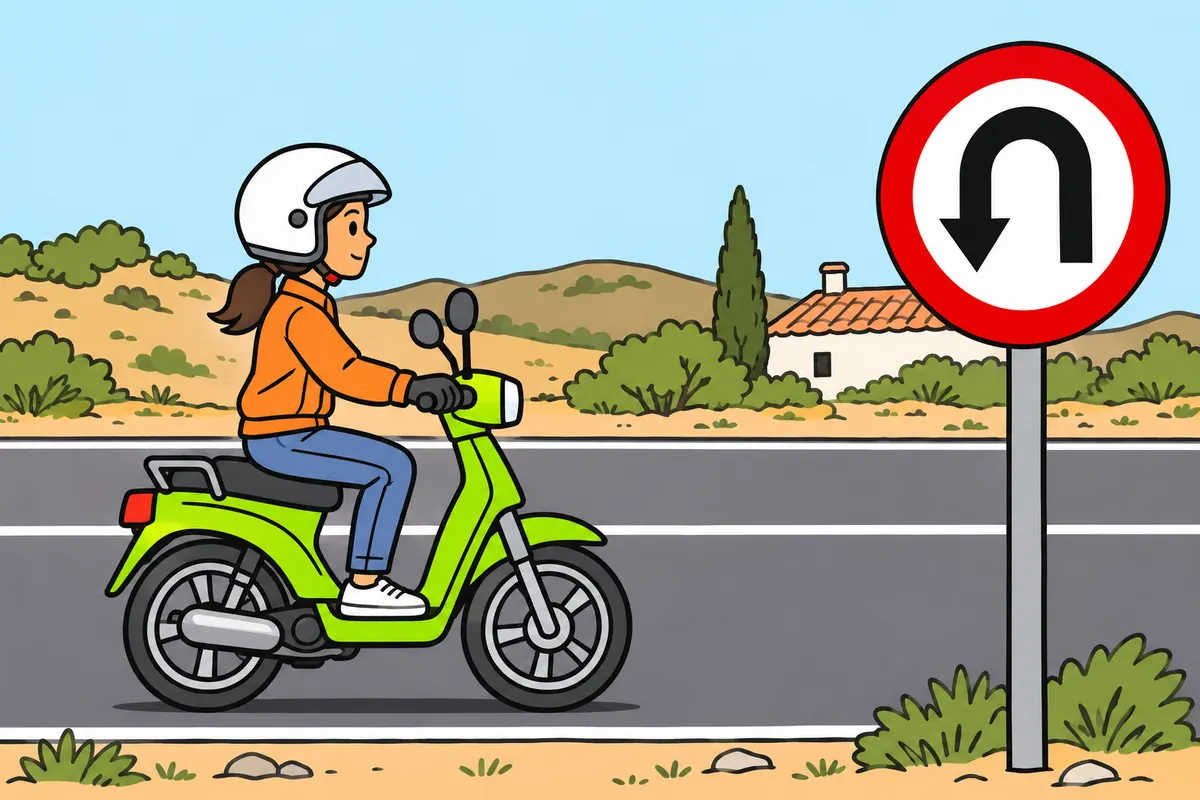
You lose points for illegal U-turns or driving with a radar detector.
| Device you carry | Rule |
|---|---|
| Radar detector | Driving with it costs you 3 points |
| Location warning device | Excluded from the detector ban |
Remember
- A U-turn reverses your direction of travel.
- An illegal U-turn costs you 3 points.
- Driving with a radar detector in your vehicle costs you 3 points.
- Carrying the detector is enough; it need not detect anything.
- Location warning devices are excluded from the detector ban.
- This does not allow you to operate navigation devices manually while driving.
Exam trap: Wrong: detectors and location warning devices are the same. Right: driving with a detector costs points; simple location warnings are excluded.
Read the full explanation
- You lose 3 points for making a U-turn in breach of the applicable rules. This manoeuvre reverses your direction of travel; its conditions are explained in the “Moped manoeuvres” module. [LTSV, Annex II.19](https://www.boe.es/buscar/act.php?id=BOE-A-2015-11722#anii).
- Driving a vehicle carrying mechanisms that detect radar or speed meters costs you 3 points. This applies to carrying the detector in the vehicle; its presence establishes the offence, without requiring any actual detection. [LTSV, Annex II.21](https://www.boe.es/buscar/act.php?id=BOE-A-2015-11722#anii).
- Warning devices that inform you of the location of monitoring systems are excluded from the prohibition in article 13.6. This exclusion does not allow you to operate a navigation device manually while driving, which carries its own deduction. [LTSV, art. 13.6 and Annex II](https://www.boe.es/buscar/act.php?id=BOE-A-2015-11722#a13).
7Three or six points for distractions
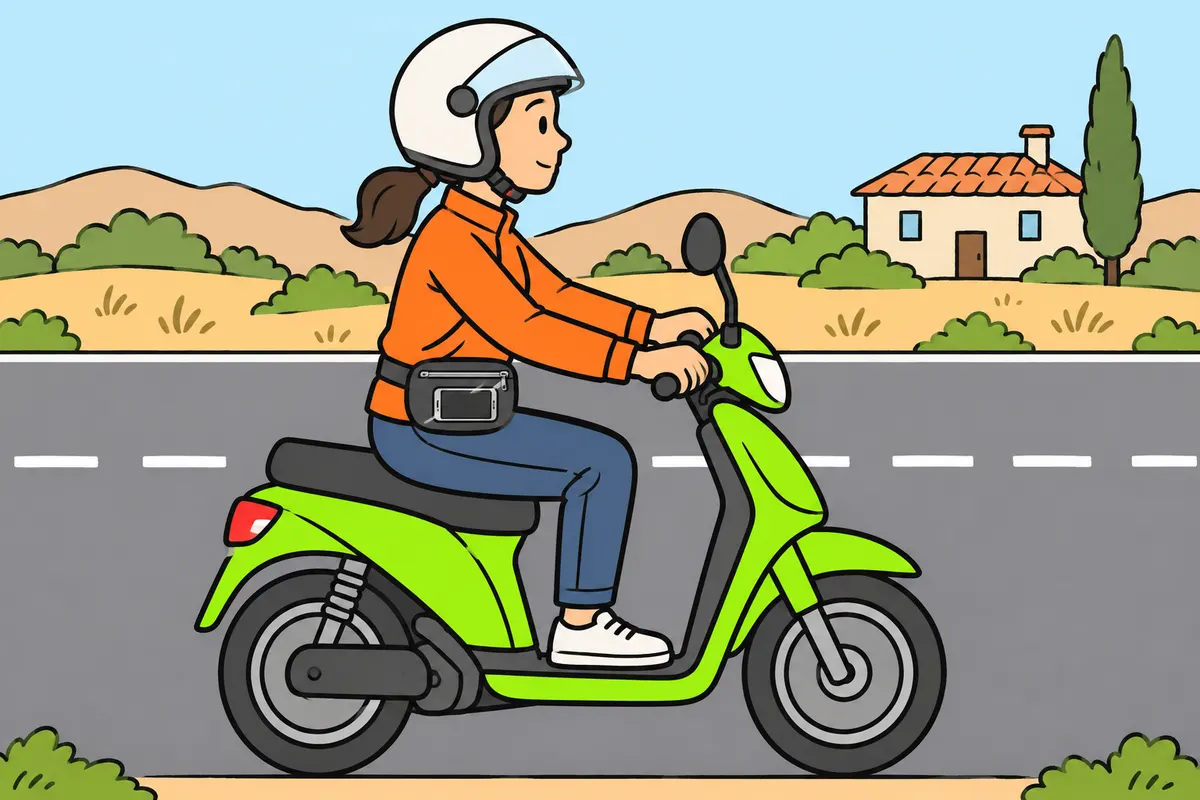
Using a phone held in your hand while driving costs you more points.
| While you drive | Points you lose |
|---|---|
| Using a phone held in your hand | 6 |
| Manually using navigation or other communication systems | 3 |
| Using a phone in other penalised circumstances | 3 |
| Keeping a phone between your helmet and head | 3 |
| Using connected headphones or devices that reduce your attention | 3 |
Remember
- Using a phone held in your hand costs you 6 points while driving.
- Manually using navigation devices while driving costs you 3 points.
- Keeping a phone between your helmet and head costs you 3 points.
- Using headphones connected to sound equipment while driving costs you 3 points.
- Do not confuse headphones with your safety helmet.
Exam trap: Wrong: using a handheld phone costs 3 points. Right: using it while driving costs 6.
Read the full explanation
- Using a mobile phone while holding it in your hand as you drive costs you 6 points, including when you ride your moped. [LTSV, Annex II.8](https://www.boe.es/buscar/act.php?id=BOE-A-2015-11722#anii).
- Manually using navigation devices or other communication equipment or systems, as well as using a mobile phone in circumstances other than the handheld use specified in item 8, falls within the 3-point group. [LTSV, Annex II.20](https://www.boe.es/buscar/act.php?id=BOE-A-2015-11722#anii).
- Keeping a phone wedged between your helmet and your head while driving also costs you 3 points. [LTSV, Annex II.20](https://www.boe.es/buscar/act.php?id=BOE-A-2015-11722#anii).
- Driving while using headphones or earphones connected to sound receivers or players, or other devices that reduce your continuous attention, costs you 3 points. Audio headphones are different from a moped safety helmet: these are separate concepts. [LTSV, Annex II.20](https://www.boe.es/buscar/act.php?id=BOE-A-2015-11722#anii).
8Four points: priority and traffic officers
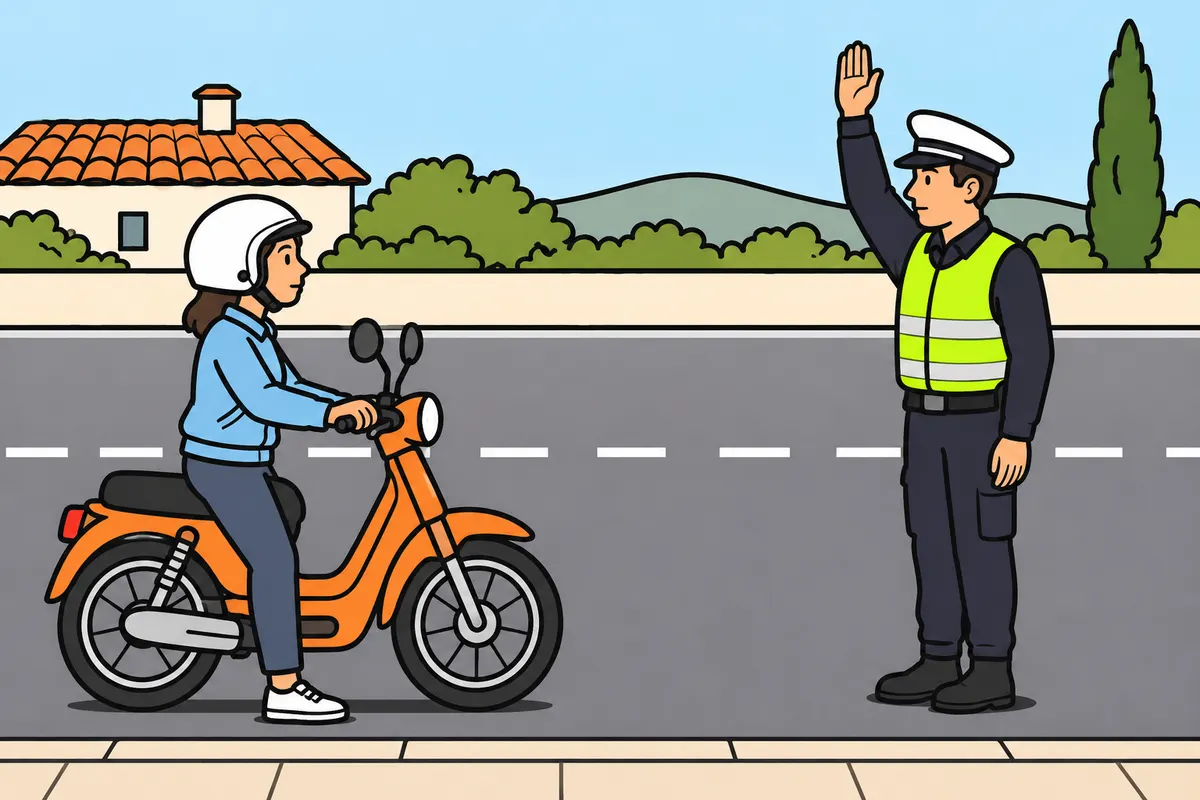
You lose points for breaking priority rules, required stops or traffic officers’ orders.
| Signal you encounter | What you must do |
|---|---|
| R-2: stop | Stop |
| Red traffic light | Stop |
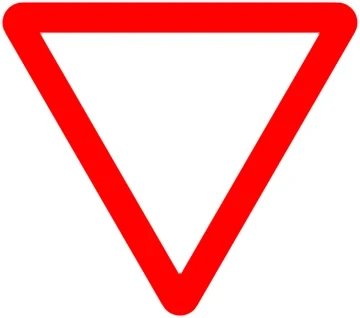
| R-1: give way | Stop if necessary to give way |
Remember
- Respect priority for drivers and pedestrians.
- Stop at an R-2 stop sign or a red traffic light.
- At an R-1 give way sign, stop if necessary to give way.
- Failing to stop when necessary to give way costs you 4 points.
- Obey traffic officers even without a roadside sign giving the same order.
Exam trap: Wrong: only other vehicles’ priority counts. Right: breaking pedestrian priority rules also costs you 4 points.
Read the full explanation
- Failing to comply with right-of-way rules costs you 4 points. The deduction can apply to violating another driver's or a pedestrian's priority: the points schedule also protects pedestrian priority. [LTSV, Annex II.10](https://www.boe.es/buscar/act.php?id=BOE-A-2015-11722#anii).
- Failing to stop at an R-2 (stop) sign or a red traffic light costs you 4 points. At an R-1 (give way) sign, you must stop when necessary to give way correctly; failing to stop at a give way sign when stopping is necessary to give way also falls under that 4-point item. [LTSV, Annex II.10](https://www.boe.es/buscar/act.php?id=BOE-A-2015-11722#anii). [RGC, art. 56](https://www.boe.es/buscar/act.php?id=BOE-A-2003-23514#a56).
- Failing to obey signals or orders from the authority responsible for traffic or its officers costs you 4 points. Disobedience can consist of failing to follow a direct order without a roadside sign giving the same instruction. [LTSV, Annex II.13](https://www.boe.es/buscar/act.php?id=BOE-A-2015-11722#anii).
 R-2
 R-1
9Four points: following distance and overtaking
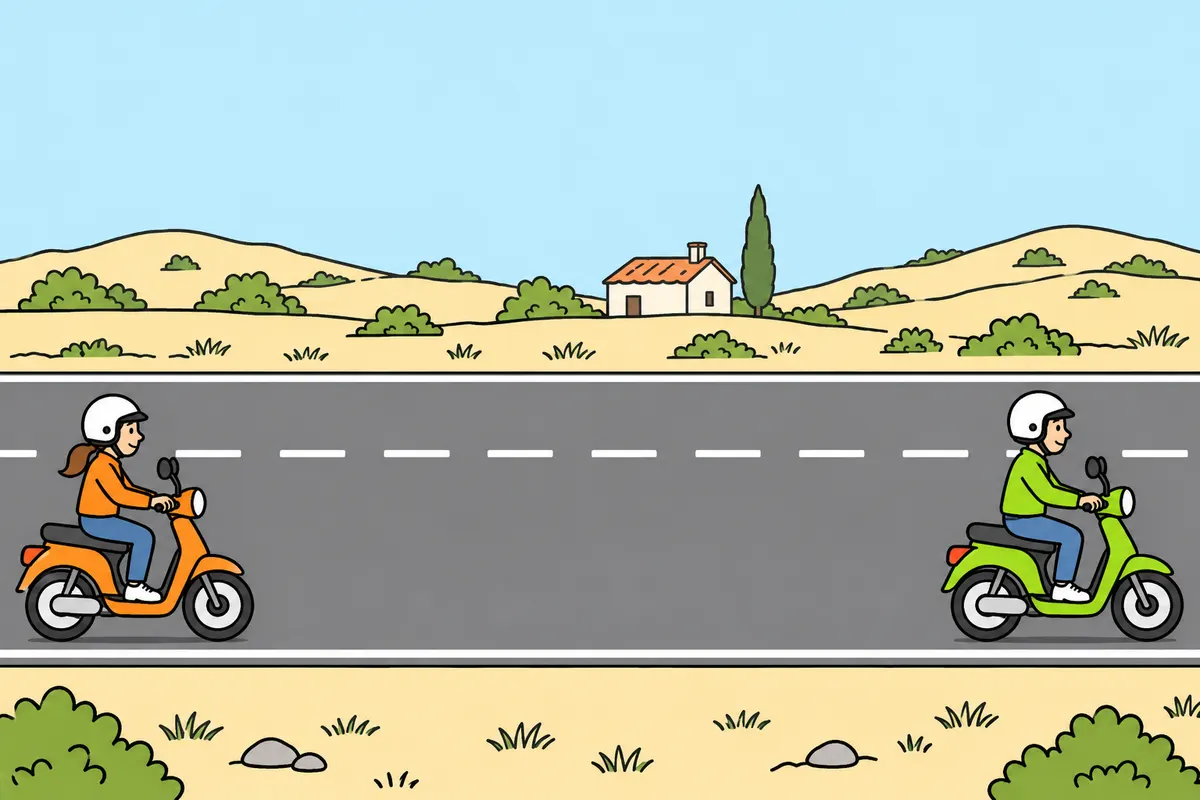
Keep a safe distance and overtake correctly to avoid losing points.
Remember
- Keep a safe distance even when following another moped.
- Endangering oncoming road users while overtaking costs you 4 points.
- Obstructing oncoming road users while overtaking also costs you 4 points.
- Overtaking with reduced visibility also costs you 4 points.
Exam trap: Wrong: you can ignore following distance between mopeds. Right: you must keep a safe gap.
Read the full explanation
- Failing to keep a safe distance from the vehicle ahead costs you 4 points. You can also commit this offence while following another moped; riding together does not remove your duty to keep the necessary distance. [LTSV, Annex II.14](https://www.boe.es/buscar/act.php?id=BOE-A-2015-11722#anii).
- Breaching overtaking rules by endangering or obstructing oncoming road users costs you 4 points. [LTSV, Annex II.11](https://www.boe.es/buscar/act.php?id=BOE-A-2015-11722#anii).
- Overtaking in places or circumstances with reduced visibility costs you 4 points. [LTSV, Annex II.11](https://www.boe.es/buscar/act.php?id=BOE-A-2015-11722#anii).
10Four points: helmets and driving entitlement
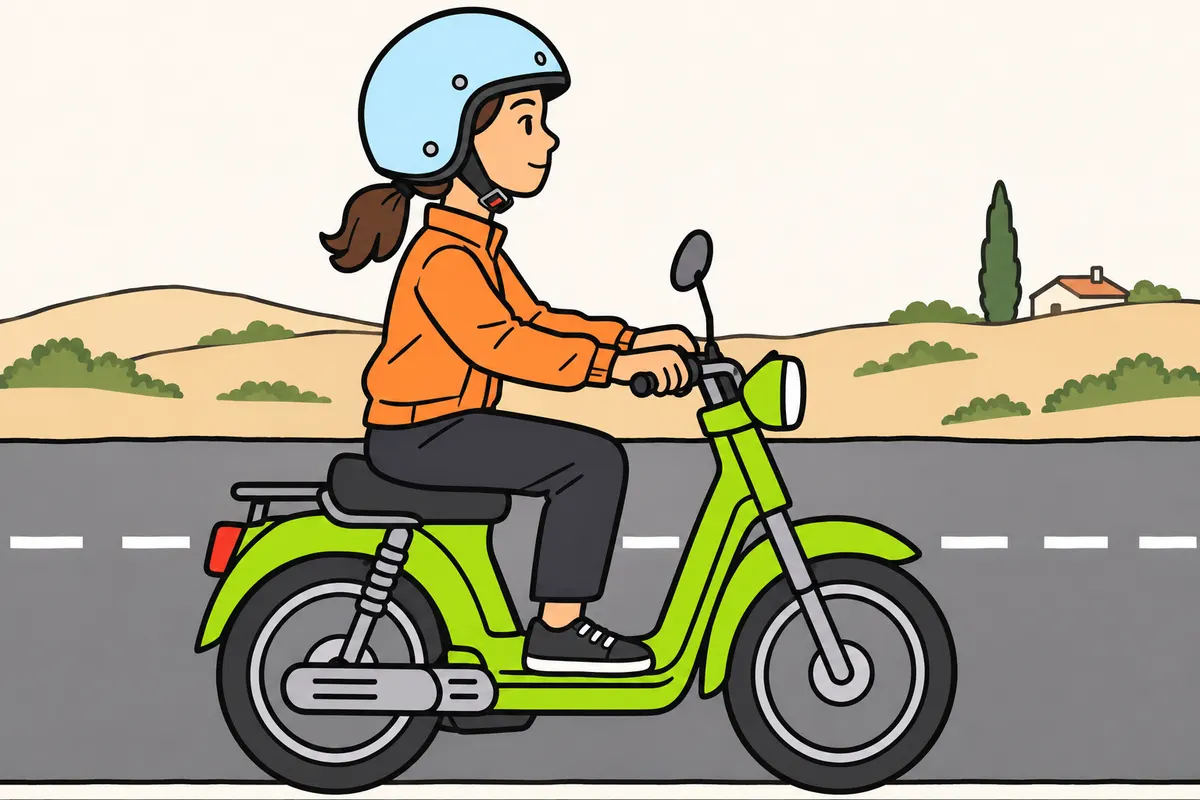
Misusing a compulsory helmet or driving without the right authorisation costs you points.
| Compulsory helmet on your moped | Motorcycles: interurban gloves; closed footwear on every road |
|---|---|
| Incorrect use: you lose 4 points | Missing gloves or footwear covering your foot: fine without points loss |
Remember
- Wear your compulsory helmet correctly and fasten it.
- AM does not let you drive a car requiring another licence.
- Driving with suspended authorisation costs you 4 points.
- You also lose 4 points for driving when using that vehicle is prohibited.
Exam trap: Wrong: missing gloves on interurban roads on your motorcycle costs 4 points. Right: under DGT guidance, you receive a fine without losing points.
Read the full explanation
- Failing to use a compulsory safety helmet, or using it incorrectly, costs you 4 points. How to wear and fasten it is explained in the “Protective equipment for moped riders” module. [LTSV, Annex II.15](https://www.boe.es/buscar/act.php?id=BOE-A-2015-11722#anii).
- Failing to wear gloves on an interurban road or closed footwear is punishable by a fine without a loss of points ([DGT, Instruction SANC 2026/25](https://www.dgt.es/export/sites/web-DGT/.galleries/downloads/muevete-con-seguridad/normas-de-trafico/S-sanciones/2026/Instruccion-SANC-2026_25_sobre-utilizacion-de-calzado-cerrado-y-guantes.pdf)); the 4 points in item 15 apply to helmets, seat belts and child restraint systems. [LTSV, Annex II.15](https://www.boe.es/buscar/act.php?id=BOE-A-2015-11722#anii).
- Driving a vehicle that your licence does not entitle you to drive costs you 4 points. If you hold only AM and drive a car requiring another category, having a moped entitlement does not authorise you to drive that vehicle. [LTSV, Annex II.16](https://www.boe.es/buscar/act.php?id=BOE-A-2015-11722#anii).
- Driving while your administrative authorisation is suspended or use of the vehicle is prohibited costs you 4 points. [LTSV, Annex II.17](https://www.boe.es/buscar/act.php?id=BOE-A-2015-11722#anii).
11Alcohol: four-point and six-point bands
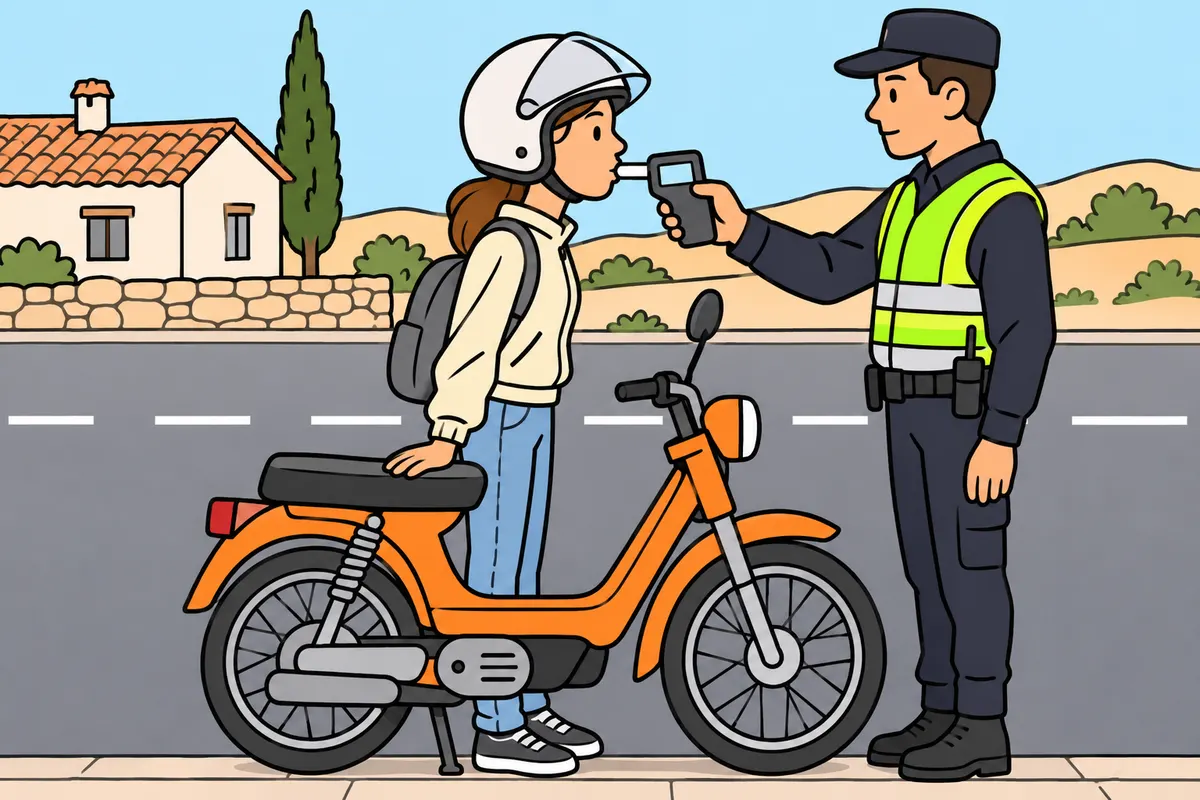
Your alcohol reading and driver group determine how many points you lose.
| Drivers: breath alcohol schedule | You lose 4 points | You lose 6 points |
|---|---|---|
| General | Above 0.25 up to and including 0.50 mg/l | Above 0.50 mg/l |
| Professional drivers or licence held for less than two years | Above 0.15 up to and including 0.30 mg/l | Above 0.30 mg/l |
Remember
- Check your group before choosing the band.
- These readings measure alcohol in exhaled air.
- Exactly 0.50 mg/l costs you 4 points under the general schedule.
- Exactly 0.30 mg/l costs you 4 points under the special schedule.
Exam trap: Wrong: exactly 0.50 mg/l costs 6 points under the general schedule. Right: it costs 4; you must exceed that reading to lose 6.
Read the full explanation
- Under the general breath alcohol points schedule, exceeding 0.25 mg/l without exceeding 0.50 mg/l means losing 4 points. Exceeding 0.50 mg/l means 6; therefore, exactly 0.50 falls in the 4-point band, not the 6-point band. [LTSV, Annex II.1](https://www.boe.es/buscar/act.php?id=BOE-A-2015-11722#anii).
- For professional drivers and holders of licences issued less than two years ago, the schedule specifies 4 points for more than 0.15 and up to 0.30 mg/l, and 6 for exceeding 0.30 mg/l. Exactly 0.30 falls in the 4-point band. [LTSV, Annex II.1](https://www.boe.es/buscar/act.php?id=BOE-A-2015-11722#anii).
- The deduction bands are expressed in milligrams per litre of exhaled air. Driving limits, units and the effects of alcohol are covered in the “Your fitness to drive” module. [LTSV, Annex II.1](https://www.boe.es/buscar/act.php?id=BOE-A-2015-11722#anii).
12Drivers under 18, drugs and refusal to undergo tests
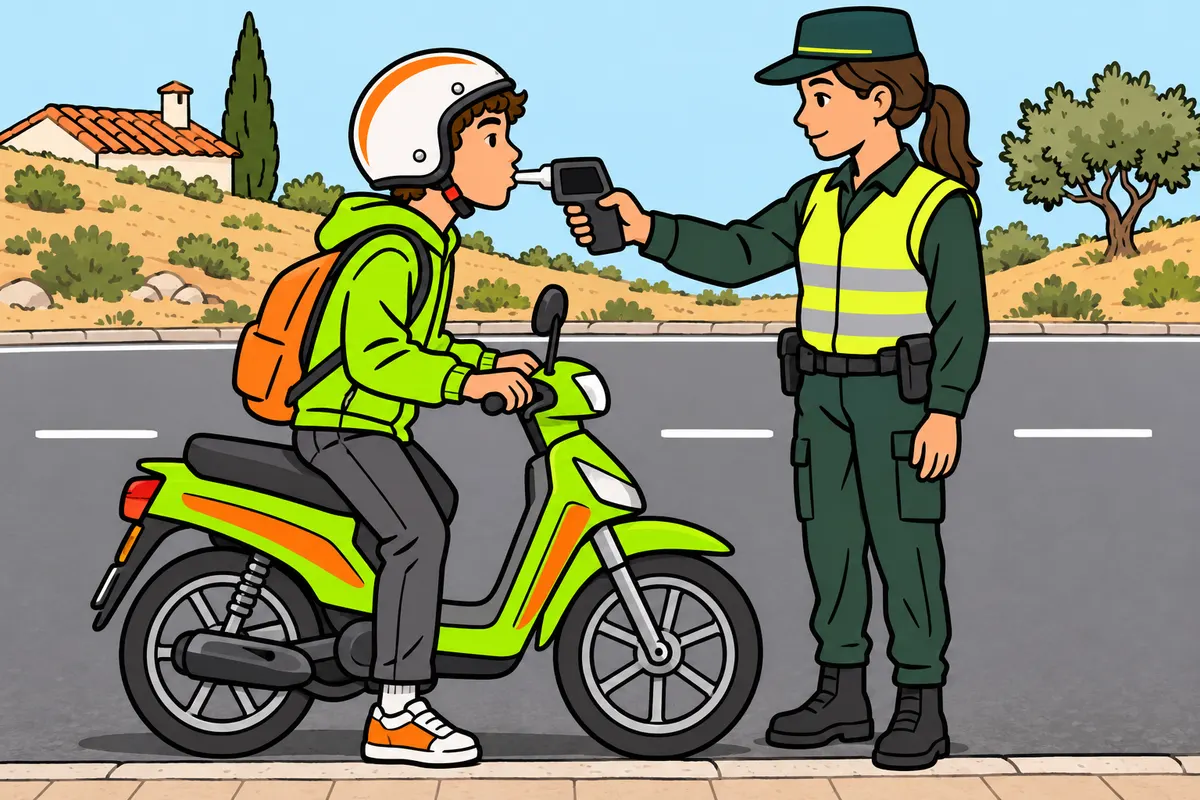
Drugs and refusing compulsory tests can cost you points.
Remember
- If you are under 18, your reading and licence experience determine alcohol points deductions.
- Being under 18 does not give you a separate points schedule.
- Driving with drugs in your system costs 6 points, except under the legal exception.
- The exception requires prescribed treatment and fitness to drive with diligence, care and attention.
- Refusing compulsory alcohol or drug tests costs you 6 points.
- Refusal is penalised by itself, regardless of any test result.
Exam trap: Wrong: the points bands allow you to drink if you are under 18. Right: they are not permitted alcohol levels for drivers under 18.
Read the full explanation
- If you are under 18, the alcohol deduction is calculated using the bands in Annex II according to the reading and how long you have held your licence. There is no separate points schedule for drivers under 18; the specific prohibition for drivers under 18 is explained in the “Your fitness to drive” module. [LTSV, art. 14.1 and Annex II](https://www.boe.es/buscar/act.php?id=BOE-A-2015-11722#a14).
- Driving with drugs present in your system costs you 6 points. The legal exception for substances prescribed for therapeutic purposes requires you to be fit to drive with diligence, care and attention; it is explained in the “Your fitness to drive” module. [LTSV, art. 14 and Annex II](https://www.boe.es/buscar/act.php?id=BOE-A-2015-11722#a14).
- Failing to fulfil your duty to undergo alcohol or drug tests costs you 6 points under the administrative points schedule. Refusal is an offence independent of the test results. [LTSV, Annex II.3](https://www.boe.es/buscar/act.php?id=BOE-A-2015-11722#anii).
13Six points: danger and monitoring
Very dangerous actions cost you points even when you ride a moped.
Remember
- Reckless driving or driving against the permitted direction costs you 6 points.
- Taking part in unauthorised races or competitions also costs you 6 points.
- Driving with a jammer installed costs 6 points, even without actual interference.
- Do not throw objects that could cause fires or accidents on or near roads.
- A fire or accident need not happen for you to lose points.
- When overtaking cyclists, do not endanger or obstruct them.
Exam trap: Wrong: overtaking a cyclist without at least 1.5 metres costs 4 points. Right: it costs 6, including on your moped.
Read the full explanation
- Driving recklessly, travelling against the permitted direction or taking part in unauthorised races or competitions costs you 6 points, including when you ride a moped. [LTSV, Annex II.4](https://www.boe.es/buscar/act.php?id=BOE-A-2015-11722#anii).
- Driving a vehicle with radar jammers or mechanisms intended to interfere with monitoring systems installed costs you 6 points. The schedule refers to the mechanism being installed: the scenario does not need to describe a specific result of interference. [LTSV, Annex II.5](https://www.boe.es/buscar/act.php?id=BOE-A-2015-11722#anii).
- Throwing objects onto the road or nearby that could cause fires or accidents costs you 6 points. The offence penalises the danger posed by the object, without requiring a fire or accident actually to occur. [LTSV, Annex II.9](https://www.boe.es/buscar/act.php?id=BOE-A-2015-11722#anii).
- Overtaking cyclists in a way that endangers or obstructs them, or without leaving at least 1.5 metres, costs you 6 points. You can commit this offence when overtaking on your moped; the deduction is not limited to car drivers. [LTSV, Annex II.12](https://www.boe.es/buscar/act.php?id=BOE-A-2015-11722#anii).
14Speed: how to read the schedule
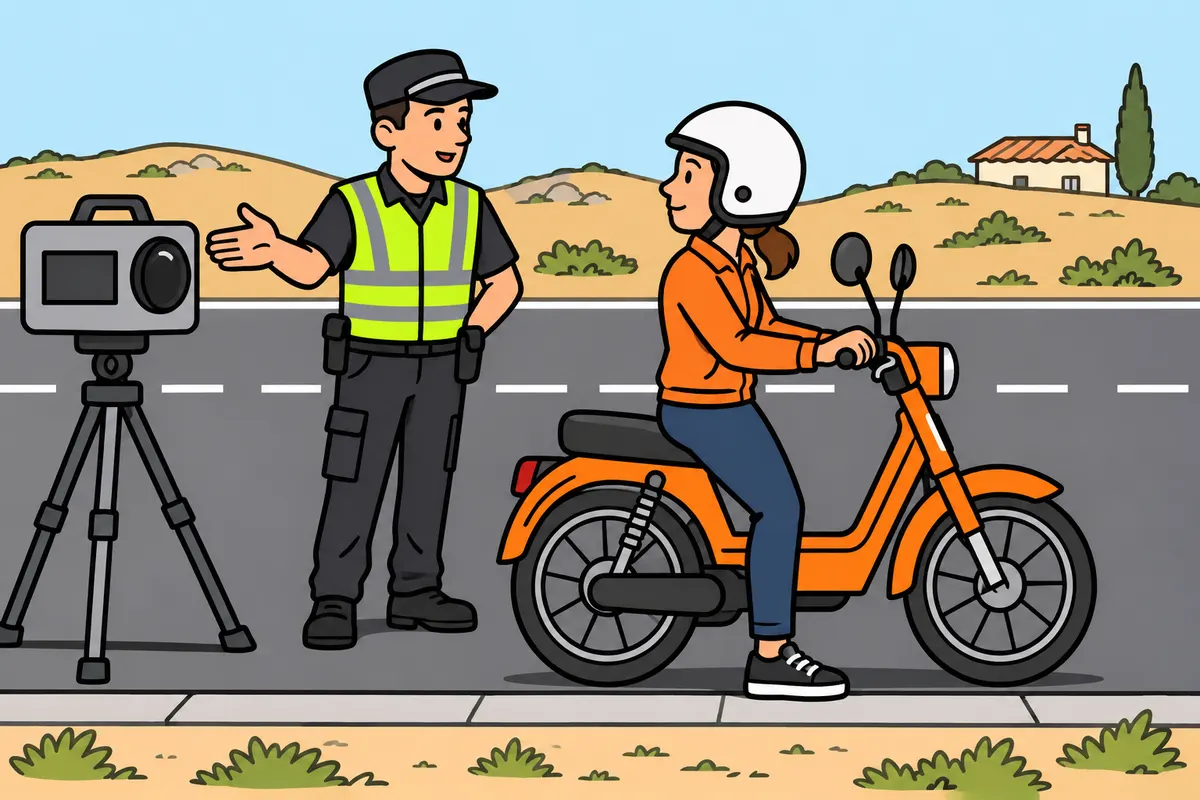
To find your speeding deduction, check the limit and the speed being penalised.
| Result | Speed with 20 km/h limit | Speed with 30 km/h limit | Speed with 40 km/h limit |
|---|---|---|---|
| No points lost | 21 to 40 km/h | 31 to 50 km/h | 41 to 60 km/h |
| 2 points | 41 to 50 km/h | 51 to 60 km/h | 61 to 70 km/h |
| 4 points | 51 to 60 km/h | 61 to 70 km/h | 71 to 80 km/h |
| 6 points | 61 to 70 km/h | 71 to 80 km/h | 81 to 90 km/h |
| 6 points; very serious | From 71 km/h | From 81 km/h | From 91 km/h |
Remember
- You can receive a fine without losing points.
- Find the column for the applicable limit.
- Then find the speed being penalised.
- Very serious bands also cost you 6 points.
- The table shows penalties; it does not allow you to ride at these speeds.
Exam trap: Wrong: speeds in the table are allowed for your moped. Right: the table shows penalties.
Read the full explanation
- For speeding, you can receive a fine without points or lose 2, 4 or 6 points. The column for the applicable limit and the row for the penalised speed determine the deduction. [LTSV, Annex IV](https://www.boe.es/buscar/act.php?id=BOE-A-2015-11722#aniv).
- On a road with a 20 km/h limit, the bands are: 21 to 40, no points; 41 to 50, 2; 51 to 60, 4; 61 to 70, 6; and from 71, 6 points with a very serious classification. [LTSV, Annex IV](https://www.boe.es/buscar/act.php?id=BOE-A-2015-11722#aniv).
- With a 30 km/h limit, there is no deduction from 31 to 50; from 51 to 60 you lose 2 points; from 61 to 70, 4; from 71 to 80, 6; and from 81, 6 with a very serious classification. [LTSV, Annex IV](https://www.boe.es/buscar/act.php?id=BOE-A-2015-11722#aniv).
- With a 40 km/h limit, there are no points from 41 to 60; from 61 to 70 you lose 2; from 71 to 80, 4; from 81 to 90, 6; and from 91, 6 with a very serious classification. These figures describe penalties, not authorised speeds for your moped. [LTSV, Annex IV](https://www.boe.es/buscar/act.php?id=BOE-A-2015-11722#aniv).
15Speed: fines and examples
Your points deduction and fine change when you cross into another speed band.
| Penalised speed with 50 km/h limit | Points you lose | Fine | Very serious offence |
|---|---|---|---|
| 51 to 70 km/h | No points lost | 100 euros | No |
| 71 to 80 km/h | 2 | 300 euros | No |
| 81 to 90 km/h | 4 | 400 euros | No |
| 91 to 100 km/h | 6 | 500 euros | No |
| From 101 km/h | 6 | 600 euros | Yes |
Remember
- With limit 30, at 50 km/h you get a fine without losing points.
- With that limit, at 51 km/h you lose 2 points.
- The last bands deduct 6 points but carry different fines.
- This table does not authorise your moped to reach these speeds.
- It does not allow you onto every road either.
Exam trap: Wrong: with limit 30, driving at 50 or 51 km/h carries the same penalty. Right: the fine changes; at 51 you lose 2 points.
Read the full explanation
- With a 50 km/h limit, the table specifies 51 to 70 without points, 71 to 80 with 2, 81 to 90 with 4, 91 to 100 with 6, and from 101 with 6 and a very serious classification. [LTSV, Annex IV](https://www.boe.es/buscar/act.php?id=BOE-A-2015-11722#aniv).
- The five rows of the table carry fines of 100, 300, 400, 500 and 600 euros respectively. The last two both deduct 6 points, but differ in amount and classification. [LTSV, Annex IV](https://www.boe.es/buscar/act.php?id=BOE-A-2015-11722#aniv).
- If the applicable limit is 30 and the penalised speed is 50 km/h, the table specifies 100 euros and no points. If it is 51, it specifies 300 euros and 2 points: a difference of one kilometre per hour changes the penalty band. [LTSV, Annex IV](https://www.boe.es/buscar/act.php?id=BOE-A-2015-11722#aniv).
- The table contains other columns for higher limits. The limits affecting AM are covered in the “Speed and safe following distances” module; the columns in the schedule describe penalties and do not authorise your moped to reach those speeds or use any road. [LTSV, Annex IV](https://www.boe.es/buscar/act.php?id=BOE-A-2015-11722#aniv).
16Restoring 12 points without a course
You can restore points by waiting if you keep some points and meet the conditions.
Remember
- You must still have points to use this recovery route.
- Wait two years without administratively final penalties carrying points deductions.
- A fine without points does not itself prevent this recovery.
- You regain 12 points, even if you previously had more.
Exam trap: Wrong: you automatically regain your whole previous balance. Right: this route restores 12 points if you still have points.
Read the full explanation
- If you lose some of your points and retain a positive balance, your balance returns to 12 after two years without penalties that are final in administrative proceedings for offences carrying a loss of points. The statutory period refers to that type of penalty. [LTSV, art. 65.1](https://www.boe.es/buscar/act.php?id=BOE-A-2015-11722#a65).
- A fine without a points deduction does not in itself prevent this two-year recovery. [LTSV, art. 65.1](https://www.boe.es/buscar/act.php?id=BOE-A-2015-11722#a65).
- Recovery through this mechanism takes you to 12 points even if your balance before the loss was higher. The conditions for receiving bonuses are explained in “From 8 to 12 and up to 15”. [LTSV, arts. 63 and 65](https://www.boe.es/buscar/act.php?id=BOE-A-2015-11722#a65).
17Partial points recovery course
A partial recovery course restores some points if you still have a positive balance.
| Case | Rule |
|---|---|
| Regulated partial course | Up to 4 points; at least 10 hours |
| Legal ceiling | Up to 6 points; at most 15 hours |
| General frequency | Once every two years |
| If you are a professional driver | Once a year |
Remember
- You must complete the course successfully.
- You cannot recover more points than lost or exceed your initial balance.
- Training includes 7 common hours and 3 specific hours.
- Count the interval from successful course completion.
- Distinguish the regulated course from the legal ceiling.
Exam trap: Wrong: the course always restores 4 points. Right: up to 4, without exceeding points lost or your initial balance.
Read the full explanation
- If you retain points, you can recover up to 4 by successfully completing a partial points recovery course, without exceeding the points lost or your initial balance. For example, with an initial balance of 8 and a current balance of 6, you can recover 2. [Orden INT/914/2024 (Order), art. 3](https://www.boe.es/buscar/act.php?id=BOE-A-2024-17780#a3). [DGT, partial recovery](https://www.dgt.es/nuestros-servicios/permisos-de-conducir/tus-puntos-y-tus-permisos/recupera-tus-puntos/).
- The course lasts at least 10 hours: 7 of common content and 3 of individualised specific training. The latter focuses on your shortcomings and offending profile. [Orden INT/914/2024, art. 4](https://www.boe.es/buscar/act.php?id=BOE-A-2024-17780#a4).
- You can take it once every two years; if you are a professional driver, once a year. The interval is counted from the date you successfully complete the course. [Orden INT/914/2024, art. 4](https://www.boe.es/buscar/act.php?id=BOE-A-2024-17780#a4).
- The Ley de Tráfico (Traffic Act) sets a ceiling of up to 6 points and a maximum duration of 15 hours for this route; Orden INT/914/2024 specifies up to 4 and a minimum of 10 hours for the regulated course. The statutory ceiling and the recovery available through the regulated course are different figures. [LTSV, art. 65.4](https://www.boe.es/buscar/act.php?id=BOE-A-2015-11722#a65). [Orden INT/914/2024, art. 4](https://www.boe.es/buscar/act.php?id=BOE-A-2024-17780#a4).
18Attendance and content of the partial recovery course
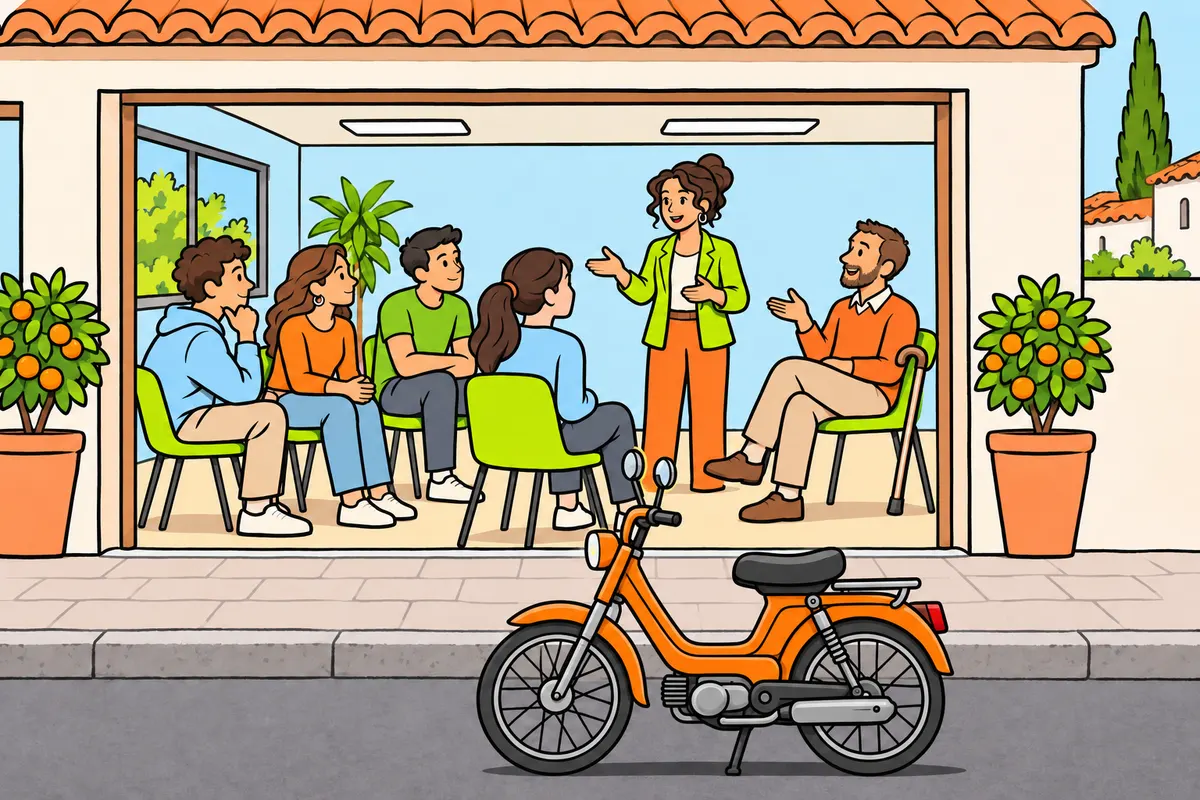
To recover points through the partial course, you must attend and complete it successfully.
Remember
- You must attend the whole course.
- You can take the specific part remotely with identity and activity checks.
- You work on road safety and changing attitudes.
- You learn with input from a psychologist-trainer and a road crash victim.
- For partial recovery, successfully completing the required training is enough.
- You do not need the knowledge test required after total points loss.
Exam trap: Wrong: partial recovery requires the total-loss exam. Right: you must successfully complete the partial recovery course.
Read the full explanation
- You must attend the entire course. The specific part can be delivered through distance learning or a virtual classroom with the prescribed checks on identity, connections and activity. [Orden INT/914/2024, art. 8](https://www.boe.es/buscar/act.php?id=BOE-A-2024-17780#a8).
- In the common part, you work on road safety and changing attitudes, with input from a psychologist-trainer and a road crash victim. The training aims to correct behaviour that creates risks on the road. [Orden INT/914/2024, art. 4](https://www.boe.es/buscar/act.php?id=BOE-A-2024-17780#a4).
- For partial recovery, successfully completing the prescribed training is sufficient; this route does not require the licence recovery knowledge test. [Orden INT/914/2024, art. 3](https://www.boe.es/buscar/act.php?id=BOE-A-2024-17780#a3).
19Total loss and declaration that your licence is no longer valid
Invalidity after total points loss stops you using any of your driving licences.
Remember
- The traffic authority starts the procedure after confirming total points loss.
- The notice lists the final penalties and their points.
- You can submit objections within the time allowed.
- When your licence is declared invalid, you must hand it in.
- Keeping the card does not let you drive.
- Paying fines or renewing the document does not restore your driving entitlement.
Exam trap: Wrong: you can use another licence category after total-loss invalidity is declared. Right: the decision affects all your driving licences.
Read the full explanation
- When it is established that you have exhausted all your points, Tráfico (the traffic authority) starts the procedure to declare your licence invalid. The notice lists the final penalties and the points for each, and gives you a maximum of 10 days to submit representations. [RGCond, art. 37](https://www.boe.es/buscar/act.php?id=BOE-A-2009-9481#a37).
- When your licence is declared invalid, you must surrender it; if you do not, officers are ordered to confiscate it. Keeping the card does not preserve your authorisation. [RGCond, art. 37](https://www.boe.es/buscar/act.php?id=BOE-A-2009-9481#a37).
- To recover your authorisation after total loss, you must obtain it again through the procedure in article 71. Paying fines and routinely renewing the document are separate procedures from this recovery. [LTSV, art. 71](https://www.boe.es/buscar/act.php?id=BOE-A-2015-11722#a71).
20Waiting periods of six or twelve months
Your wait starts when you receive notice that your licence has been declared invalid.
| Case: wait from notification | General driver | Professional driver |
|---|---|---|
| Initial loss | 6 months | 3 months |
| Another invalidity decision within three years of obtaining your new licence | 12 months | 6 months |
Remember
- Count from notification that your licence has been declared invalid.
- Another invalidity decision within three years of your new licence increases the wait.
- You need professional driver status; a work journey alone is not enough.
- You can take the course during the wait.
- Before the test, successfully complete the course and finish the whole waiting period.
Exam trap: Wrong: you count the wait from the offence. Right: it starts when the invalidity decision is notified to you.
Read the full explanation
- As a general rule, you must wait 6 months from notification of the decision declaring your licence invalid before you can obtain it again. [LTSV, art. 71.1](https://www.boe.es/buscar/act.php?id=BOE-A-2015-11722#a71).
- If, within three years of obtaining the new authorisation, another decision declares it invalid because you exhaust your balance, the period becomes 12 months from the new notification. [LTSV, art. 71.1](https://www.boe.es/buscar/act.php?id=BOE-A-2015-11722#a71).
- For professional drivers, the corresponding periods are 3 and 6 months. These reductions require professional driver status; a work-related journey does not in itself establish that status. [LTSV, art. 71.1](https://www.boe.es/buscar/act.php?id=BOE-A-2015-11722#a71).
- You can take the recovery course during the waiting period. To take the test, you must complete that period and successfully complete the course. [DGT, licence recovery](https://www.dgt.es/nuestros-servicios/permisos-de-conducir/tus-puntos-y-tus-permisos/recupera-tus-puntos/).
21Course and exam to recover AM
To recover AM after total points loss, you must pass a course and test.
Remember
- You must complete the course successfully.
- Then you must pass the relevant knowledge test.
- You recover the same licence category and original entitlement date.
Exam trap: Wrong: taking the course is enough to recover AM. Right: successfully complete it and pass the knowledge test.
Read the full explanation
- The licence recovery course lasts at least 20 hours, divided into 16 of common content and 4 of specific content. You must complete it successfully. [Orden INT/914/2024, art. 5](https://www.boe.es/buscar/act.php?id=BOE-A-2024-17780#a5).
- The statutory maximum duration of this course is 30 hours. The 20 hours are the minimum for the course regulated by the order. [LTSV, art. 71.3](https://www.boe.es/buscar/act.php?id=BOE-A-2015-11722#a71).
- After successfully completing the course, you must pass the relevant knowledge test. You recover a licence of the same category and with the same original entitlement date; this does not give you a higher category or erase your previous administrative driving history. [RGCond, art. 38](https://www.boe.es/buscar/act.php?id=BOE-A-2009-9481#a38).
22Test attempts and deadline for passing
You have a deadline to pass and need extra training if you fail.
Remember
- You must pass within two years of successfully completing the course.
- This deadline does not remove the wait before you can take the test.
- After failing, complete the training session before each new attempt.
- You can take that session online with connections and activity recorded.
- After three failed attempts, you need another full course and must pass the test.
Exam trap: Wrong: you can repeat the test without further training. Right: after failing, complete a 4-hour session before each new attempt.
Read the full explanation
- You must pass the test within two years of successfully completing the course. This deadline does not replace the six- or twelve-month waiting period: one limits the validity of the training and the other determines when you can take the exam after losing your licence. [Orden INT/914/2024, art. 10](https://www.boe.es/buscar/act.php?id=BOE-A-2024-17780#a1-2).
- You have three attempts to pass the test: the first and up to two further opportunities. If you fail, before each new attempt you must complete a 4-hour training session on the relevant subjects. [RGCond, art. 51.4](https://www.boe.es/buscar/act.php?id=BOE-A-2009-9481#a51).
- If you use all three attempts without passing, you must take a new recovery course and pass the test to obtain your authorisation. [RGCond, art. 51.4](https://www.boe.es/buscar/act.php?id=BOE-A-2009-9481#a51).
- The four-hour session can be taken online with the required logging of connections and activity. [Orden INT/914/2024, art. 10](https://www.boe.es/buscar/act.php?id=BOE-A-2024-17780#a1-2).
23Safe driving: bonus applicable to AM
A valid safe driving course can increase your balance if you still have points.
| Safe driving course | Rule for AM vehicles |
|---|---|
| Urban course for mopeds | This is the course for you |
| Conventional-road course | AM vehicles are excluded |
Remember
- You need a current licence covering the vehicle used and a positive points balance.
- You must attend and complete the course successfully.
- The bonus cannot take you above your maximum points balance.
- With AM, choose the urban course for mopeds.
- Urban and road courses of the same type do not give separate bonuses.
- You still need a current licence and positive balance when you complete the course.
Exam trap: Wrong: AM lets you earn a bonus through a conventional-road course. Right: AM vehicles are excluded; choose the urban course.
Read the full explanation
- You can gain 2 points through a safe and efficient driving course that meets the requirements, without exceeding the maximum points balance. This route rewards preventive training. [LTSV, art. 63.5](https://www.boe.es/buscar/act.php?id=BOE-A-2015-11722#a63).
- With AM, the urban course for mopeds applies to you; vehicles authorised by AM are excluded from courses on conventional roads. [Orden INT/209/2025, arts. 4 and 5](https://www.boe.es/buscar/act.php?id=BOE-A-2025-4407#a4).
- You must hold a valid, current licence authorising you to drive the category used and retain a positive points balance. You must also meet the requirements when you successfully complete the course for your balance to be updated. [Orden INT/209/2025, art. 5](https://www.boe.es/buscar/act.php?id=BOE-A-2025-4407#a5).
- The maximum frequency for receiving a bonus is one course of each type every two years. The types are cars and motorcycles/mopeds: urban and road courses belong to the same type and do not generate two separate bonuses within that interval. [LTSV, art. 63.5](https://www.boe.es/buscar/act.php?id=BOE-A-2015-11722#a63).
- The course lasts at least 6 hours of in-person tuition: 1 hour and 45 minutes of theory and 4 hours and 15 minutes of practice. To receive the bonus, you must attend and complete it successfully. [Orden INT/209/2025, arts. 5 and 7](https://www.boe.es/buscar/act.php?id=BOE-A-2025-4407#a7).
24Court-imposed driving bans and driving with an invalid licence
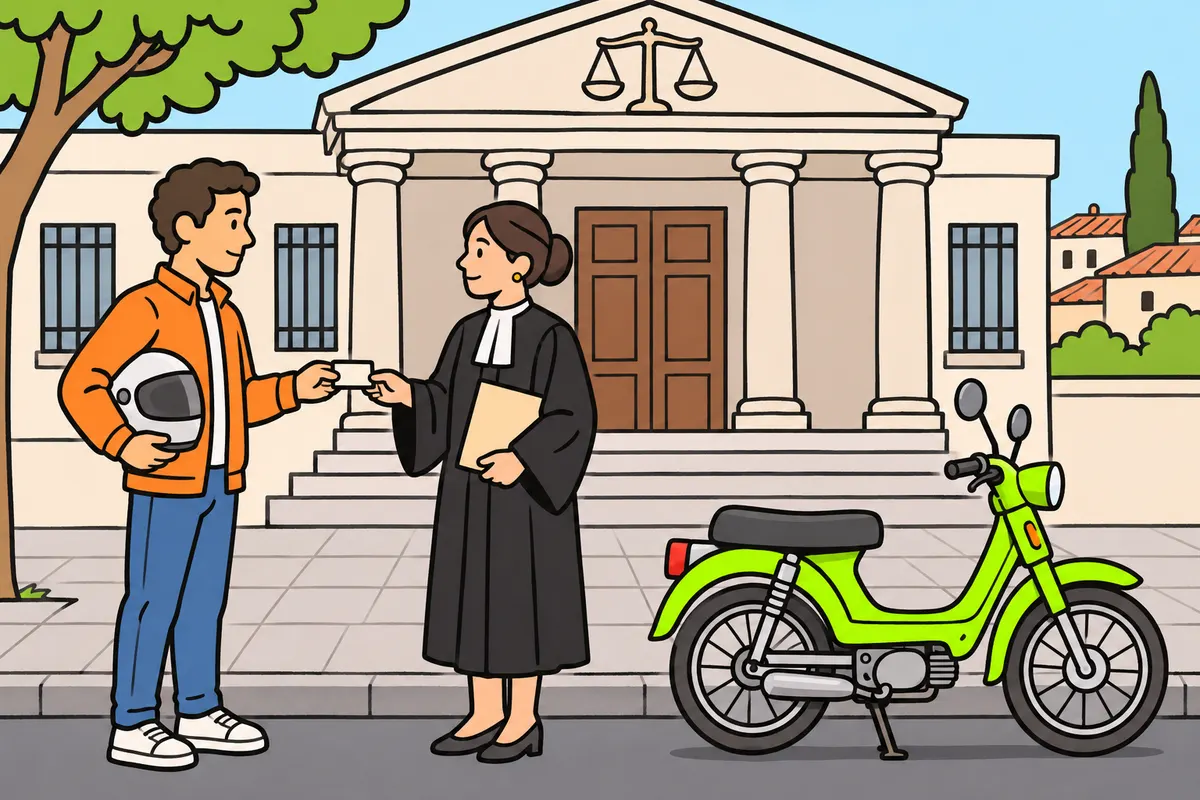
The length of your court-imposed driving ban determines how you can drive again.
| Length of your court-imposed driving ban | After serving your sentence |
|---|---|
| More than two years | Course and test; same category and original entitlement date; new licence with 8 points |
| Two years or less | Successfully completed course; no recovery knowledge test |
Remember
- You must serve your sentence before driving again.
- Bans exceeding two years make your licence invalid; you need a course and test.
- For two years or less, prove successful course completion.
- Driving after points-loss invalidity can be criminal if criminal-law conditions are met.
- This can also apply after court bans or if you never obtained a licence.
Exam trap: Wrong: exactly two years requires the recovery test. Right: after serving that sentence, prove successful course completion; that test is not required.
Read the full explanation
- If a final judgment bans you from driving for more than two years, your licence becomes invalid and, once you serve the sentence, you must follow the course and test procedure to obtain a licence of the same category and original entitlement date. The new licence has 8 points. [LTSV, art. 73.1](https://www.boe.es/buscar/act.php?id=BOE-A-2015-11722#a73).
- If the sentence is two years or less, to drive again you must serve it and prove that you have successfully completed the driving licence recovery course. This is the course in article 3.b of the order, with the minimum duration stated in “Course and exam to recover AM”. In this case, the recovery knowledge test is not required. Exactly two years is included. [LTSV, art. 73.2](https://www.boe.es/buscar/act.php?id=BOE-A-2015-11722#a73). [Orden INT/914/2024, arts. 3.b and 5](https://www.boe.es/buscar/act.php?id=BOE-A-2024-17780#a3).
- If you ride a moped after your licence becomes invalid through total points loss, you may commit the offence in article 384 when the required criminal-law conditions are met. Liability depends on the circumstances of the case. [Código Penal (Criminal Code), art. 384](https://www.boe.es/buscar/act.php?id=BOE-A-1995-25444#a384).
- Article 384 also covers driving after a court-imposed deprivation of your licence or without ever having obtained a driving permit or licence, provided the criminal-law conditions for the offence are met. [Código Penal (Criminal Code), art. 384](https://www.boe.es/buscar/act.php?id=BOE-A-1995-25444#a384).
Recovering points while retaining a positive balance
Choose the route that fits your situation and check its requirements.
- Check your balance and the penalties that cause the deductions.
- Consider restoring 12 points after two years under the conditions in article 65.
- If you choose partial recovery, check the interval between courses and select an authorised centre.
- Successfully complete the course of at least 10 hours: you recover up to 4 points, without exceeding the points lost.
- Check that your balance is updated and maintain driving habits that avoid further deductions.
Driving again after exhausting your points
Total loss requires you to recover your authorisation.
- Deal with the proceedings and notification that your licence is invalid; surrender your licence and stop driving.
- Count the 6-month period from notification, or 12 months if the statutory repeat-loss condition applies; professional drivers have periods of 3 or 6.
- Take and successfully complete the recovery course of at least 20 hours, which you can do during the waiting period.
- Once the waiting period ends, submit the required documentation and pass the test within two years of the course.
- If you fail, complete the 4-hour session before the next attempt; after using all three attempts, you must repeat the full course.
- Obtain your authorisation again: your allocated balance is 8 points.
Calculating a points deduction
Identify the act before calculating your balance.
- Check that the act takes place while driving a vehicle that requires a driving permit or licence.
- Identify the offence in Annex II or the band in Annex IV for speeding.
- For alcohol, distinguish the reading, its units and how long you have held your licence; if you are under 18, also remember the prohibition on any positive reading.
- If you commit several offences in one day, apply the general limit of 8 and check its exceptions.
- Link the final penalty and its entry in the register to the actual deduction.
Finished this module?
Mark it as read and you will see your progress on the theory list.