
Theory · AM Licence - Moped · Module 11 of 18
Moped manoeuvres
You learn to join traffic, move sideways, overtake, turn and bring your moped or light quadricycle to a standstill safely, using the correct signals. You master the road positions, prohibitions, exceptions and figures you need to distinguish in the AM exam, especially the rules specific to two-wheeled mopeds.
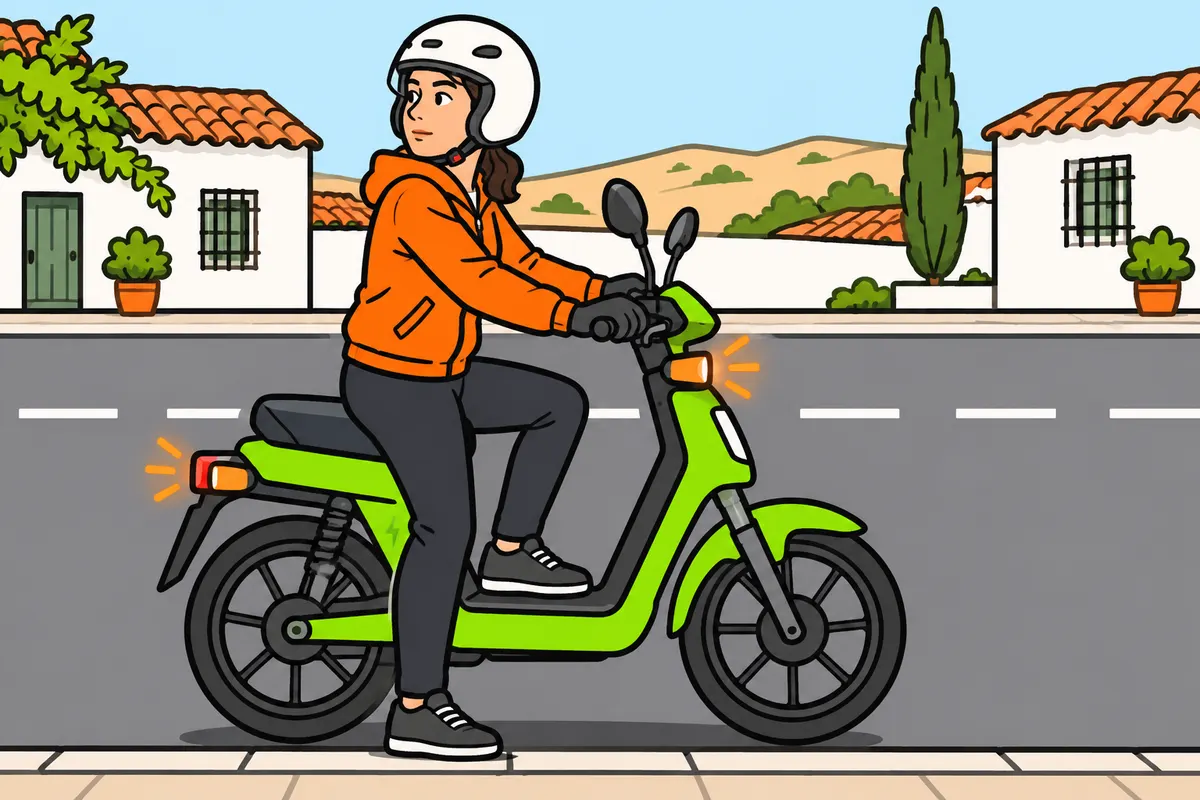
1Check, signal and manoeuvre
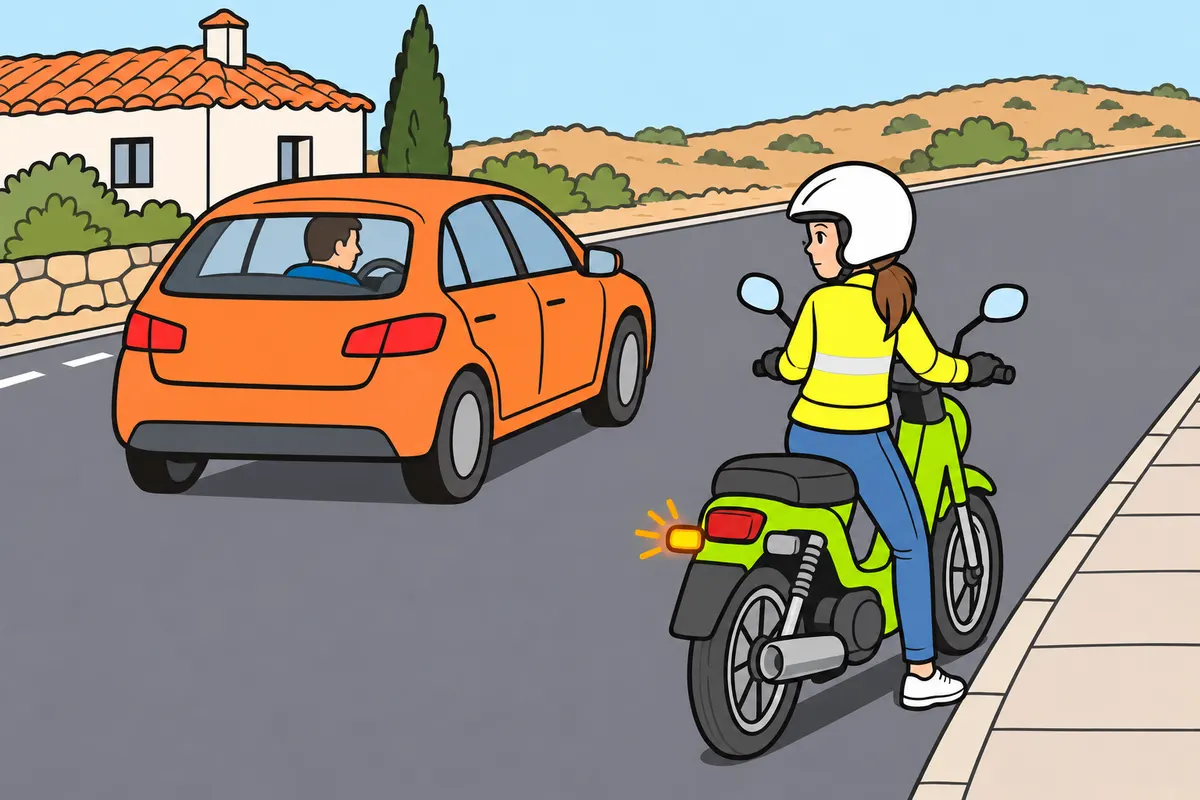
Before manoeuvring, look, signal and check that you can move safely.
Remember
- Look ahead, behind and to the sides.
- Use your mirrors and look directly when needed.
- Check that the manoeuvre is allowed.
- Signal before moving.
- Wait if you would force someone to brake or change course.
- Signal sideways movements, even without changing lanes.
Exam trap: Wrong: signalling gives you priority. Right: wait until you can manoeuvre safely.
Read the full explanation
- Before changing your position on the road, apply this sequence: mirror, signal, manoeuvre. First check that the movement is permitted and safe; then signal it and, finally, carry it out. [RGC (Reglamento General de Circulación — General Traffic Regulations), art. 108](https://www.boe.es/buscar/act.php?id=BOE-A-2003-23514#a108).
- Look ahead, behind and to the sides, combining your mirrors with direct observation as necessary. A vehicle may be outside your mirror's field of view. Keep control of your moped and continue checking during the manoeuvre, because the available space may change after your first check. [RGC, art. 74](https://www.boe.es/buscar/act.php?id=BOE-A-2003-23514#a74).
- Signalling shows your intention but does not give you priority; the specific duties to give way when joining traffic and changing lanes are explained in the relevant sections of this module. [RGC, art. 108](https://www.boe.es/buscar/act.php?id=BOE-A-2003-23514#a108)
- Following a bend along your course does not in itself constitute a sideways movement. If you move appreciably to one side, you must signal that movement even if you do not move fully into another lane. A correction to maintain your course is not the same as signalling a turn. [RGC, art. 109](https://www.boe.es/buscar/act.php?id=BOE-A-2003-23514#a109).
2Indicators and arm signals
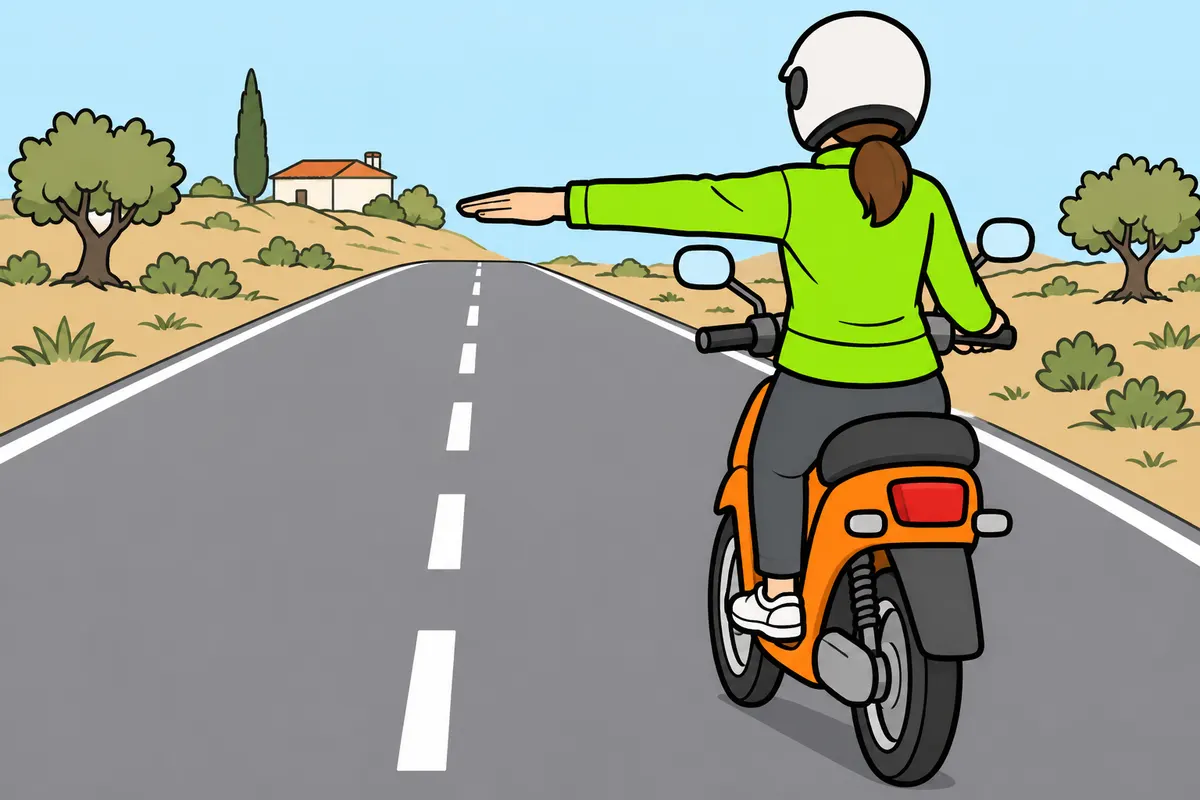
Use your lights to signal movements, or your arm if these are unavailable.
| Your intention | Arm signal |
|---|---|
| Move towards your signalling arm | Arm horizontal, palm down |
| Move towards the opposite side | Arm bent upwards, hand extended |
| Slow down considerably or stop | Move your arm up and down with short, quick movements |
| Reverse, without a reversing light | Arm horizontal, palm facing backwards |
Remember
- Signal early; switch off your indicator once you have taken your new course.
- A visible arm signal following the rules overrides conflicting lights.
- Use your brake lights repeatedly whenever possible before slowing considerably.
- Warn before slowing considerably, even when traffic forces you to slow.
- When stopping or parking, also indicate the side if you have indicators.
Exam trap: Wrong: your left arm bent upwards means left. Right: it signals right.
Read the full explanation
- Normally use your vehicle's lights to signal and, if these are unavailable, use your arm. Your arm signal must comply with the regulations and be visible to others; when it meets these conditions, it takes precedence over a conflicting light signal. [RGC, art. 108](https://www.boe.es/buscar/act.php?id=BOE-A-2003-23514#a108).
- To move towards the side of the arm you use, extend it horizontally with your palm facing down. To move towards the opposite side, bend it upwards with your hand extended. For example, your left arm held horizontally means left, and your left arm bent upwards means right. [RGC, art. 109](https://www.boe.es/buscar/act.php?id=BOE-A-2003-23514#a109).
- Give sufficient advance warning. Your indicator signals the side towards which you intend to move, and you must switch it off as soon as you have adopted your new course. If you overtake and continue straight along the lane you use, do not keep your left indicator on merely because you continue passing vehicles. [RGC, art. 109](https://www.boe.es/buscar/act.php?id=BOE-A-2003-23514#a109).
- To warn that you intend to stop or slow down considerably, use your brake lights repeatedly whenever possible. For an arm signal, move your arm alternately up and down with short, quick movements. You must also give this warning when traffic forces you to slow down. [RGC, art. 109](https://www.boe.es/buscar/act.php?id=BOE-A-2003-23514#a109).
- Signal reversing with your reversing light, if your vehicle has one; otherwise, hold your arm horizontally with your palm facing backwards. To stop or park, also use the indicator on the side where you intend to stop if your vehicle has one. [RGC, art. 109](https://www.boe.es/buscar/act.php?id=BOE-A-2003-23514#a109).
3Horn and headlight flashes
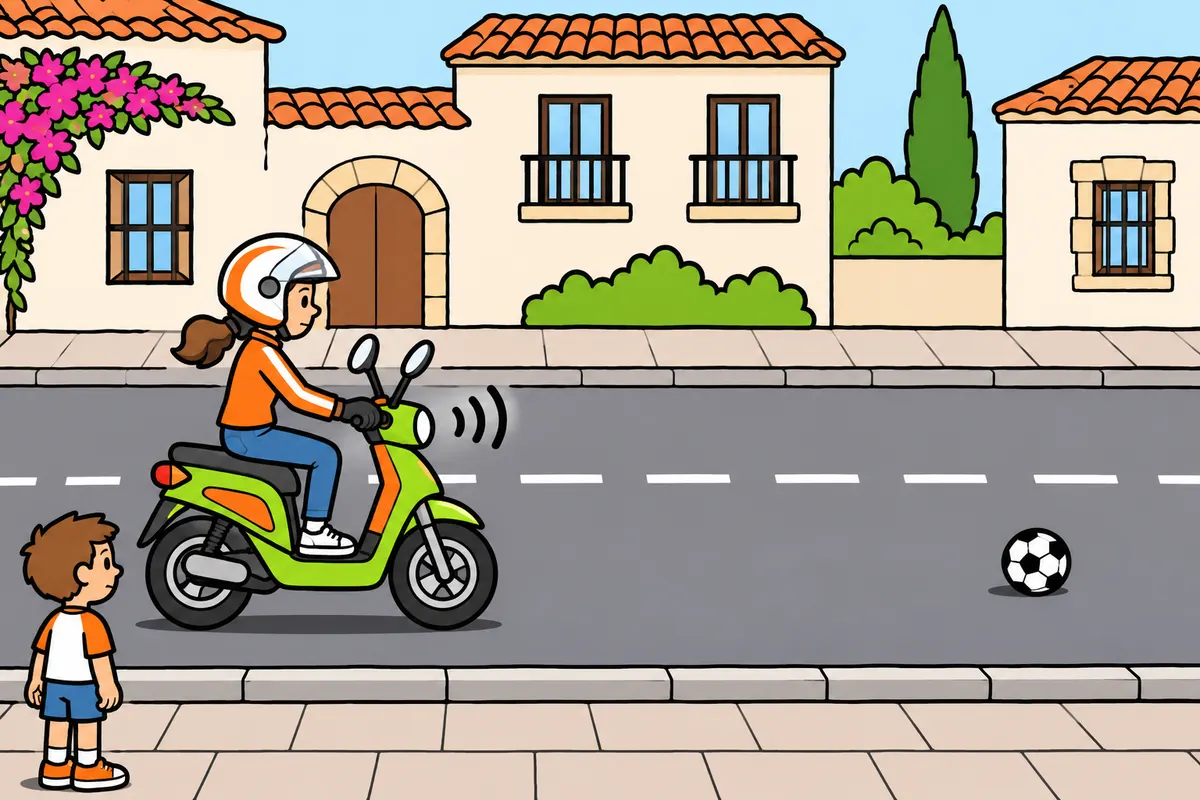
Use your horn and headlight flashes only for permitted warnings.
| Warning | In built-up areas | Outside built-up areas |
|---|---|---|
| Horn to prevent an accident | Allowed | Allowed |
| Horn to announce overtaking | Not allowed | Allowed |
Remember
- You may sound your horn to prevent an accident, including in built-up areas.
- Do not use it to greet, complain or demand passage.
- Keep headlight flashes brief and avoid dazzling others, including in built-up areas.
- Headlight flashes do not give you priority.
Exam trap: Wrong: sound your horn to announce overtaking in built-up areas. Right: this horn warning is allowed only outside built-up areas.
Read the full explanation
- You may use your horn to prevent a possible accident, including in built-up areas. Its sound must not be shrill, and using it without reason or excessively is prohibited. Greeting a friend, protesting about a delay or demanding to be let through are not permitted reasons. [RGC, art. 110](https://www.boe.es/buscar/act.php?id=BOE-A-2003-23514#a110).
- Outside built-up areas, you may use an audible warning to tell another driver that you intend to overtake. Your warning does not oblige the other driver to move aside dangerously and does not replace your checks. [RGC, art. 110](https://www.boe.es/buscar/act.php?id=BOE-A-2003-23514#a110).
- You may give brief light warnings using dipped beam, main beam or both alternately, including in built-up areas, for the warning purposes permitted by the regulations. Avoid dazzling others. [RGC, art. 109](https://www.boe.es/buscar/act.php?id=BOE-A-2003-23514#a109).
4Joining traffic from a stop or an access road
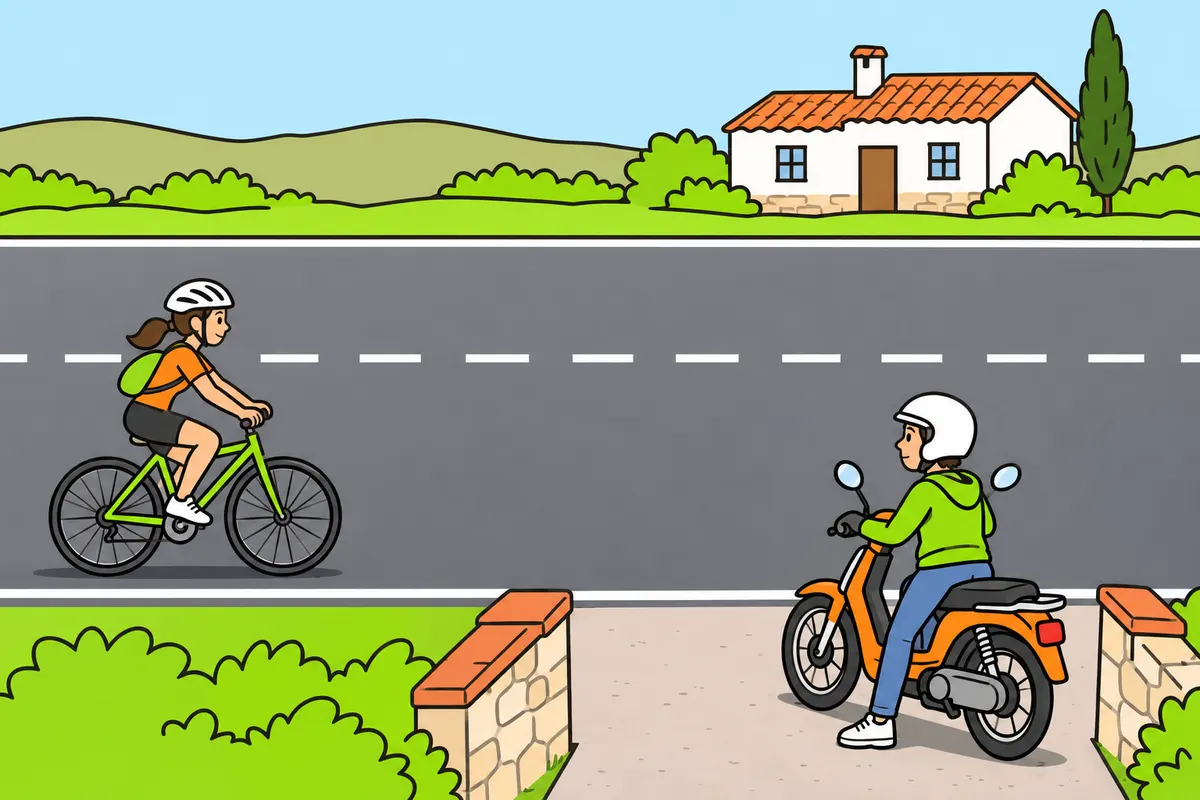
When joining traffic, signal and give way to those already on the road.
| Situation | What you must signal |
|---|---|
| Leaving a parking space or access road | Signal that you are joining traffic. |
| Moving off after a traffic light without changing course | You need not signal a sideways movement you are not making. |
Remember
- Check other vehicles’ positions, directions and speeds.
- Signal when joining, even if you come out straight.
- Wait for a gap that lets you join safely.
- From a private road, give way in both directions, including to bicycles.
- From that road, move slowly enough to stop immediately.
- Ask for guidance when needed to see safely; you remain responsible.
Exam trap: Wrong: pull out ahead of a bicycle because you have an engine. Right: when joining traffic, give way to bicycles too.
Read the full explanation
- When you leave a parking space, an adjoining property, a service area or an access road to join traffic, you must look and give way to vehicles already on the road, taking account of their position, course and speed; priority when joining traffic is related to the other cases of giving way in “Right of way”. [RGC, art. 72](https://www.boe.es/buscar/act.php?id=BOE-A-2003-23514#a72)
- Give a light signal to announce that you intend to join traffic, even if your exit follows a straight line. Keep control of your moped while waiting for a sufficient gap to enter safely. Moving off after a traffic light while maintaining your course is a different situation from leaving a parking space to join traffic. [RGC, art. 72](https://www.boe.es/buscar/act.php?id=BOE-A-2003-23514#a72)
- If you emerge from an exclusively private road onto a road open to public use, move at a speed that allows you to stop immediately and give way to vehicles travelling in both directions. Include bicycles in your checks: their smaller size may mean you notice them later than a car. [RGC, art. 72](https://www.boe.es/buscar/act.php?id=BOE-A-2003-23514#a72)
- When necessary to check that joining traffic is safe, you must use another person's guidance. From a doorway or between parked vehicles, this help lets you check hidden traffic; you remain responsible for the manoeuvre and must keep the ability to stop your moped. [RGC, art. 72](https://www.boe.es/buscar/act.php?id=BOE-A-2003-23514#a72)
5Entry lanes and helping others join
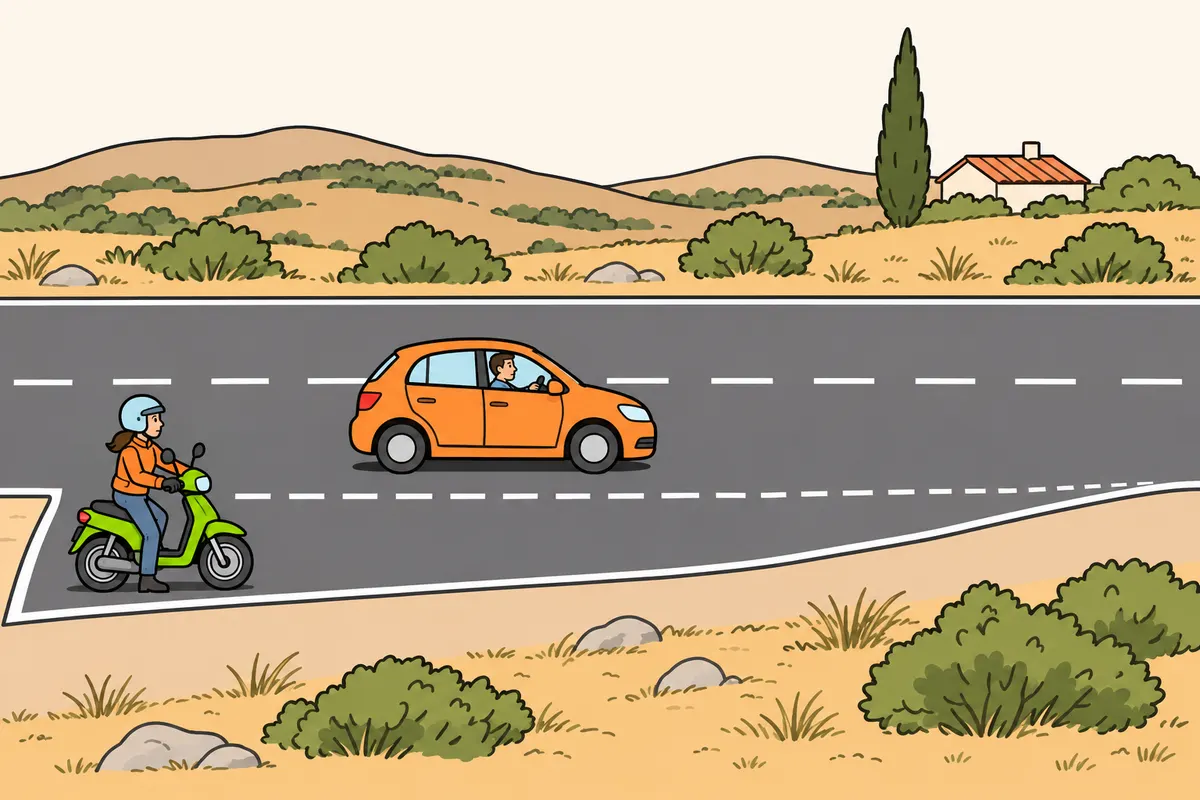
Check entry from the lane’s beginning and help others join when possible.
| Your situation | Your duty |
|---|---|
| You are joining the road | Give way. |
| You are already on the road | Help others join where possible. |
| Bus leaving a marked stop in a built-up area | Move aside if possible or slow down; stop if necessary. |
Remember
- Use an acceleration lane only on roads your vehicle may use.
- Check whether you can join from the start of the entry lane.
- If you must stop to give way, stop at the lane’s beginning.
- Leave room to accelerate afterwards without exceeding your limits.
- Help others join when it is safe and legal.
- In built-up areas, help buses leave marked stops.
Exam trap: Wrong: the bus can pull out without precautions. Right: its driver must signal and take precautions; you must help it leave.
Read the full explanation
- If a road accessible to AM vehicles has an acceleration lane, check from its beginning whether you can join traffic and stop there if you need to give way. Then increase your speed to reach the end of the lane at a speed appropriate to the traffic, within the limits applicable to your vehicle. [RGC, art. 72](https://www.boe.es/buscar/act.php?id=BOE-A-2003-23514#a72)
- When you are already travelling on the road, you must help others join as far as possible, adjusting your speed or moving sideways if safe and legal; this cooperation goes alongside the joining driver’s duty to give way, explained in “Right of way”. [RGC, art. 73](https://www.boe.es/buscar/act.php?id=BOE-A-2003-23514#a73)
- In built-up areas, you must help public passenger transport pull away from a marked stop: move aside if possible or slow down, stopping if necessary. Its driver must signal with the indicators and take the necessary precautions to avoid risks when moving off. [RGC, art. 73](https://www.boe.es/buscar/act.php?id=BOE-A-2003-23514#a73)
6Changing lanes and preparing to leave a road
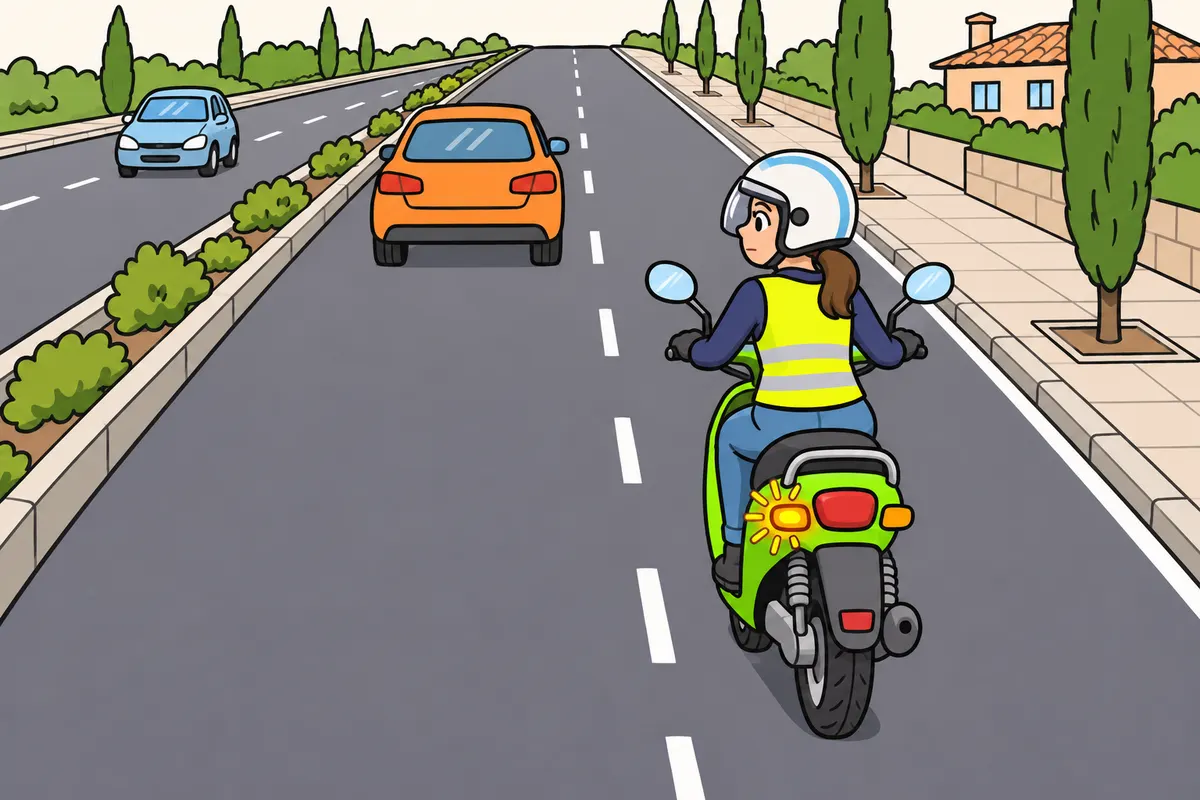
Give way when changing lanes and prepare for your exit early.
| Road marking | What you must do |
|---|---|
| Broken line | Cross only when your manoeuvre is legal and safe. |
| Solid line alongside a broken line | Follow the line on your side. |
| Return arrows | Do not start an overtake you cannot complete correctly. |
Remember
- Check each lane change and signal before moving.
- Give way to vehicles behind or alongside in your intended lane.
- Move towards your exit lane early.
- Enter the deceleration lane as soon as possible, if provided.
- Obey road lines and arrows.
- If you miss your exit, continue along a permitted route.
Exam trap: Wrong: you can never cross a solid line to return. Right: where it separates opposing directions, you may return after completing or abandoning an overtake started legally from the broken-line side.
Read the full explanation
- You must respect the priority of a vehicle travelling in the lane you want to enter, whether it approaches from behind or travels alongside you. Check the whole space, signal and move over progressively. Your moped's narrow width does not allow you to enter a gap that creates danger. [RGC, art. 74](https://www.boe.es/buscar/act.php?id=BOE-A-2003-23514#a74).
- Each lane change requires you to check that you can make it. If you need to cross several lanes, do not cross them all at once while ignoring those occupying the intermediate lanes. [RGC, art. 109](https://www.boe.es/buscar/act.php?id=BOE-A-2003-23514#a109).
- To leave a road, move into the lane nearest the exit sufficiently early and enter the deceleration lane as soon as possible, if there is one. This rule also applies on roads accessible to AM vehicles; it does not mean you may use autopistas (motorways) or autovías (dual carriageway motorways). [RGC, art. 77](https://www.boe.es/buscar/act.php?id=BOE-A-2003-23514#a77).
- Respect solid lines, lane-selection arrows and compulsory directions. You may cross a broken line only if the manoeuvre is also legal and safe. If you miss your exit and cannot change position correctly, continue until you can take a permitted route. [RGC, Annex I; RD 465/2025](https://www.boe.es/buscar/doc.php?id=BOE-A-2025-12199).
- Where a solid line runs alongside a broken line, follow the line on your side. If they separate opposing directions and you legally start overtaking from the broken-line side, you may cross the solid line to return after completing or abandoning the overtake. Return arrows warn that a solid line is approaching: do not start an overtake that you cannot complete correctly. [RGC, Annex I; RD 465/2025](https://www.boe.es/buscar/doc.php?id=BOE-A-2025-12199).
7Choosing which side to overtake on
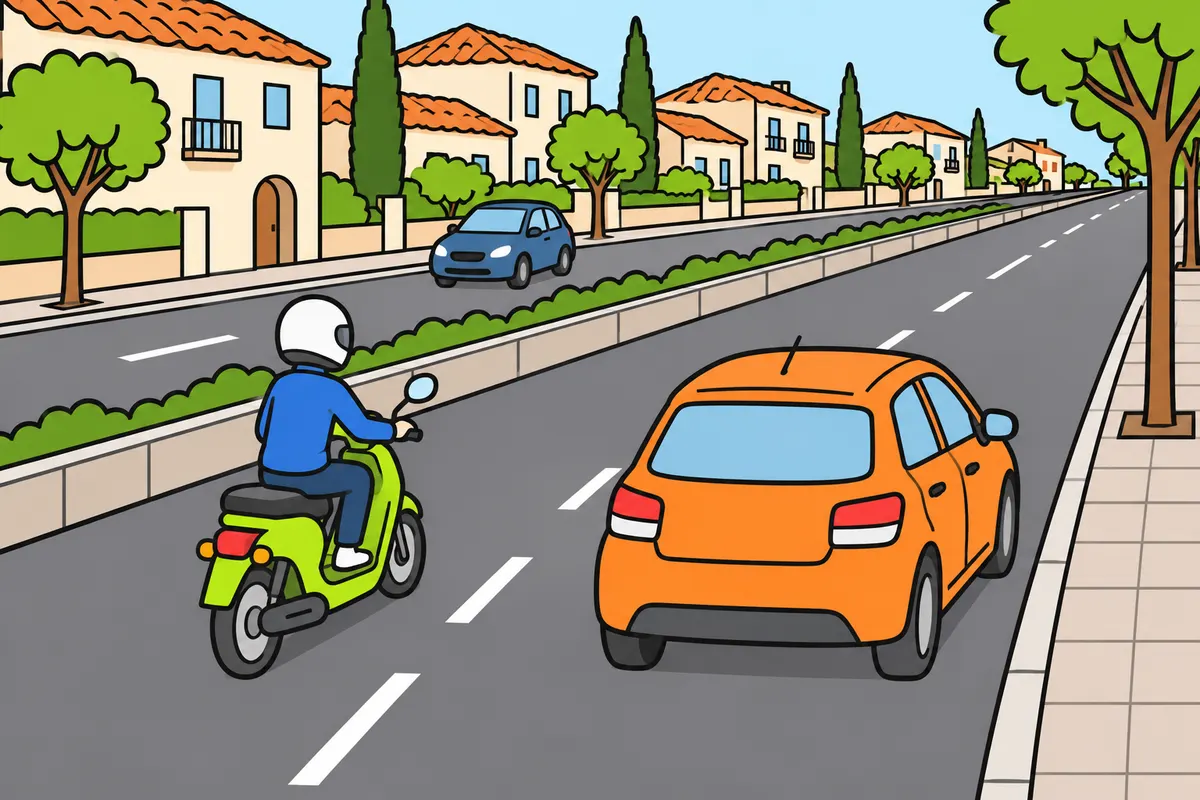
Overtake on the left unless a permitted exception requires or allows the right.
| Situation | Side or rule |
|---|---|
| General rule | Overtake on the left. |
| Vehicle clearly signals a left turn or stop on the left | You must pass on the right with enough space and the utmost care. |
| Tram in the centre of a two-way road | You must pass on the right with enough space and the utmost care. |
| Built-up area with several marked lanes in your direction | You may overtake on the right safely. |
| Normal lane compared with acceleration, deceleration or exclusive-use lane | Unequal progress does not count as overtaking. |
Remember
- Do not use the hard shoulder as a clear route for overtaking.
- To overtake on the right, you need enough space and the utmost care.
- In full-width queues, moving faster than another queue does not count as overtaking.
- In this congestion, do not change lanes to overtake.
- Change only to prepare for a turn, exit or particular direction.
Exam trap: Wrong: several lanes allow overtaking on the right outside built-up areas. Right: this exception requires a built-up area, marked lanes in your direction and safety.
Read the full explanation
- As a general rule, you must overtake on the left. Riding a moped does not allow you to choose whichever side has more space or turn the arcén (hard shoulder) into a clear route for passing others. Always check the exceptions and your road-positioning duties. [RGC, art. 82](https://www.boe.es/buscar/act.php?id=BOE-A-2003-23514#a82).
- With sufficient space and the utmost care, you must overtake on the right when the vehicle ahead clearly signals that it intends to turn or stop on the left. This also applies to trams travelling along the centre of a two-way road. An uncertain intention is not enough. [RGC, art. 82](https://www.boe.es/buscar/act.php?id=BOE-A-2003-23514#a82).
- In built-up areas, you may overtake on the right when the carriageway has at least two lanes in your direction marked by longitudinal road markings and you can do so safely. All these conditions are required; having two lanes outside a built-up area does not allow you to apply this urban exception. [RGC, art. 82](https://www.boe.es/buscar/act.php?id=BOE-A-2003-23514#a82).
- In congestion where the full width is occupied and the vehicles ahead dictate your speed, one queue moving faster than another is not considered overtaking. In this situation, you cannot change lanes to overtake; you may change only to prepare for a turn, an exit or a particular direction. [RGC, art. 83](https://www.boe.es/buscar/act.php?id=BOE-A-2003-23514#a83).
- Unequal progress between normal lanes and acceleration, deceleration or exclusive-use lanes is also not considered overtaking. This distinction does not authorise you to enter a lane reserved for other users with an AM vehicle or travel between queues in a space you are not authorised to use. [RGC, art. 83](https://www.boe.es/buscar/act.php?id=BOE-A-2003-23514#a83).
8Preparing the complete overtake
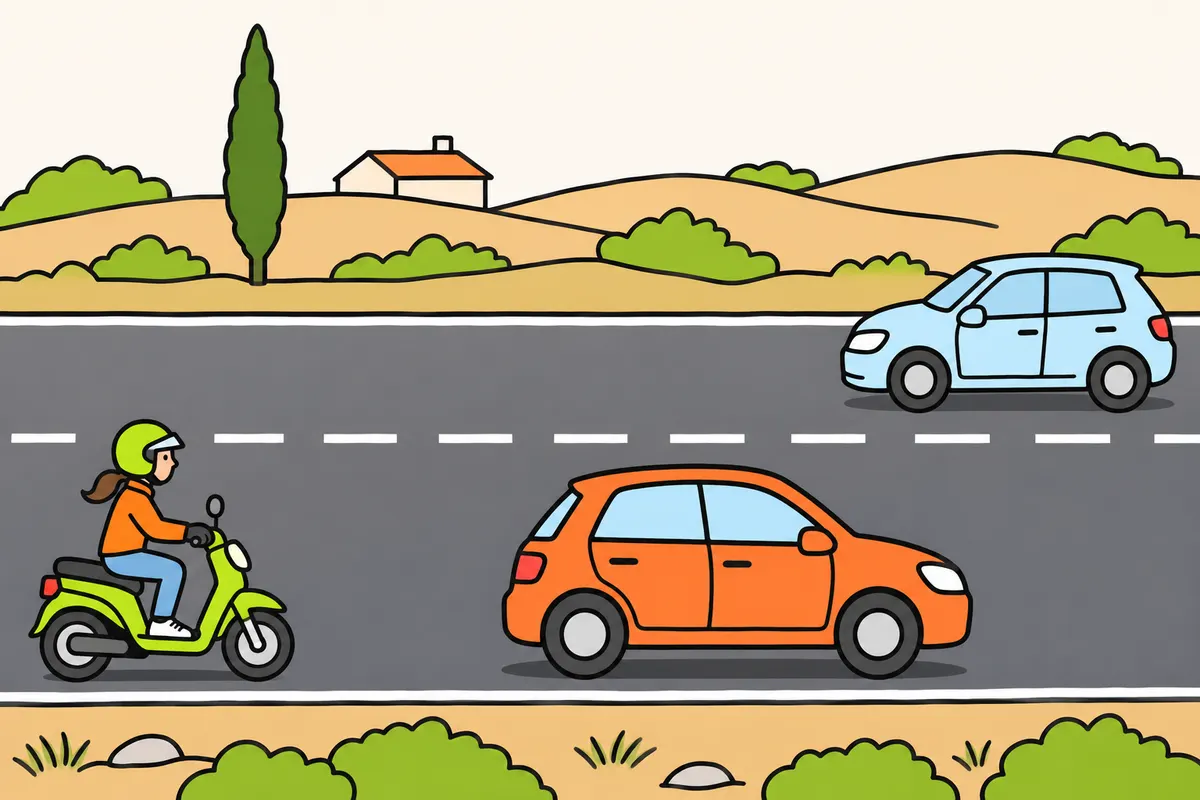
Before overtaking, check that you can complete the manoeuvre and return safely.
Remember
- Check space and visibility for the whole manoeuvre.
- Assess your speed, the vehicle ahead’s speed and oncoming traffic’s speed.
- Respect the vehicle ahead if it signals movement towards the same side.
- Check that nobody behind has started overtaking you.
- Leave room to return, even if you must abandon the overtake.
- Do not pass an overtaking vehicle if you need the opposing lane.
Exam trap: Wrong: pull out because the vehicle ahead has been signalling for some time. Right: wait a reasonable time; then give a permitted warning and overtake only legally and safely.
Read the full explanation
- Before pulling out, check that you have enough space and visibility to complete the manoeuvre and return. Assess your speed, the speed of the vehicle ahead and that of oncoming traffic. [RGC, art. 84](https://www.boe.es/buscar/act.php?id=BOE-A-2003-23514#a84).
- Check that the vehicle ahead has not signalled an intention to move towards the same side. If it has, you must respect its priority. If a reasonable time passes without it acting, you may overtake when legal and safe, first warning its driver with a permitted audible or light signal. [RGC, art. 84](https://www.boe.es/buscar/act.php?id=BOE-A-2003-23514#a84).
- Also check that no driver following you in your lane has started overtaking you. Also leave enough space to return to your position on completing or abandoning the manoeuvre. [RGC, art. 84](https://www.boe.es/buscar/act.php?id=BOE-A-2003-23514#a84).
- Do not overtake several vehicles unless you are certain you can return to the right without inconveniencing or endangering those you overtake when oncoming traffic appears. Do not overtake a vehicle that is itself overtaking if you need to enter the opposing traffic lane to do so. [RGC, art. 84](https://www.boe.es/buscar/act.php?id=BOE-A-2003-23514#a84).
9Carrying out, completing or abandoning an overtake
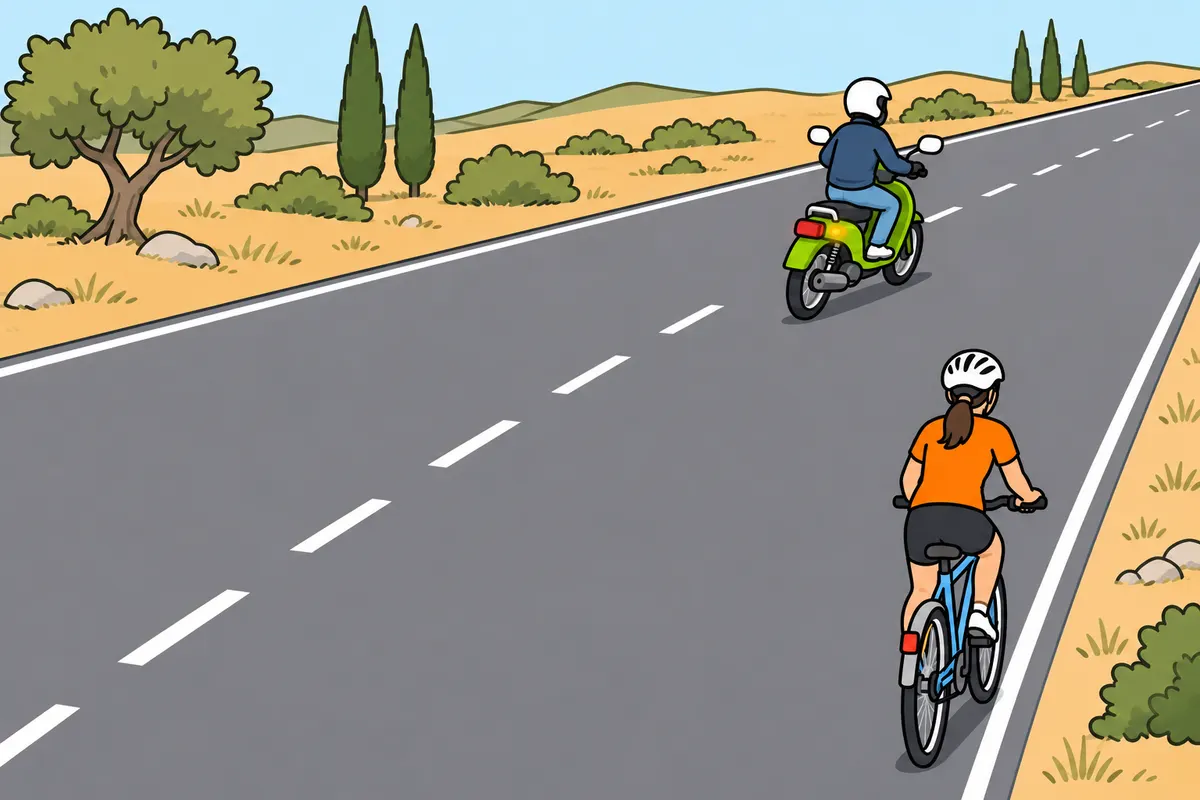
Overtake within your speed limit and return without cutting across anyone’s path.
Remember
- On a moped or light quadricycle, also respect any lower limit.
- Overtake at a clearly higher speed than the other vehicle.
- If finishing becomes dangerous, slow down quickly.
- Signal and return safely to your lane.
- After passing, return gradually without cutting across anyone’s path.
- Continue overtaking only without unduly hindering traffic behind and obeying your road-positioning rules.
Exam trap: Wrong: exceed your speed limit to finish sooner. Right: you must respect it when overtaking too.
Read the full explanation
- You must overtake at a noticeably higher speed than the vehicle you pass, respecting the maximum applicable to your AM vehicle. Assess the difference in speed before pulling out: the smaller it is, the longer you need alongside the other vehicle. You study the limits for each road in “Speed and safe following distances”. [RGC, art. 85](https://www.boe.es/buscar/act.php?id=BOE-A-2003-23514#a85)
- If circumstances make it difficult to finish safely, slow down quickly, signal your return and return safely to your lane. Your decision to abandon the manoeuvre must leave a margin to return behind the vehicle you intended to overtake, also taking account of those travelling behind you. [RGC, art. 85](https://www.boe.es/buscar/act.php?id=BOE-A-2003-23514#a85)
- Once past the vehicle, return to your lane as soon as possible and gradually, signalling and without forcing anyone to change course or speed. Before moving in front, leave enough space so that your return does not cut across the other vehicle’s path. [RGC, art. 85](https://www.boe.es/buscar/act.php?id=BOE-A-2003-23514#a85)
- On a carriageway with several lanes in your direction, you may remain in the lane you use to overtake another vehicle if you do not unduly inconvenience faster traffic approaching from behind. This possibility does not remove the rules on using the hard shoulder or the lanes applicable to your AM vehicle. [RGC, art. 83](https://www.boe.es/buscar/act.php?id=BOE-A-2003-23514#a83).
10Clearances and protecting vulnerable road users
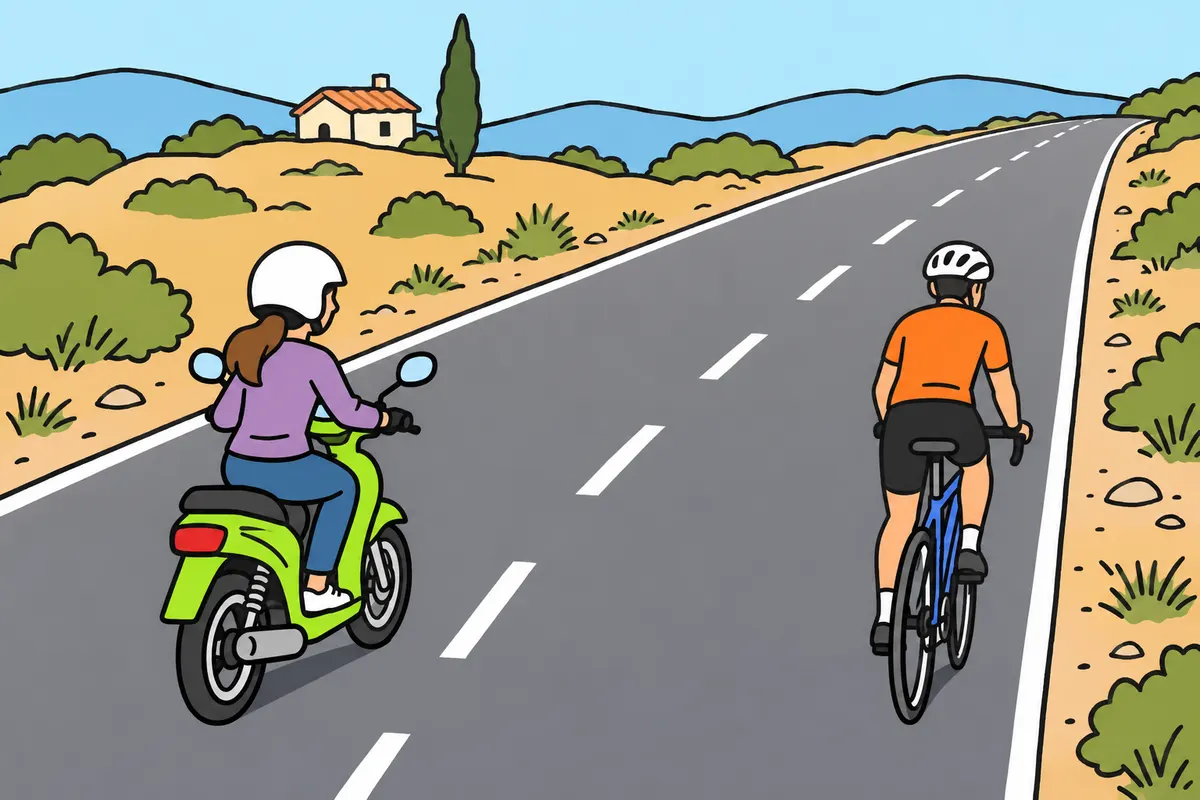
When overtaking vulnerable users, leave space and obey the speed and lane rules.
| Your AM vehicle and situation | Minimum lateral clearance |
|---|---|
| Any AM vehicle overtaking the vulnerable users listed | Leave at least 1.5 m. |
| Two-wheeled moped overtaking any vehicle outside built-up areas | Leave at least 1.50 m from its most protruding parts. |
| Light quadricycle overtaking other vehicles | Do not automatically apply the two-wheeled moped rule. |
Remember
- Protect cyclists, mopeds, pedestrians, animals, animal-drawn vehicles and personal mobility vehicles.
- When passing them, enter part or all of the adjacent or opposing lane.
- With several lanes in each direction, change lanes completely.
- Outside built-up areas, slow according to the road limit before and throughout these overtakes.
- Also respect your vehicle’s limit and any lower limit.
- Treat cycling groups as a whole; do not assume gaps between riders are safe.
Exam trap: Wrong: subtract 20 km/h from your previous speed. Right: outside built-up areas, before and throughout overtaking these users, travel at least 20 km/h below the road limit, respecting any lower applicable limits.
Read the full explanation
- When overtaking cyclists, mopeds, pedestrians, animals, animal-drawn vehicles or personal mobility vehicles, you must leave at least 1.5 metres and occupy part or all of the adjacent or opposing lane. If there is more than one lane in each direction, you must change lanes completely. Plan this lane occupation when preparing the manoeuvre. [RGC, art. 85.4](https://www.boe.es/buscar/act.php?id=BOE-A-2003-23514#a85)
- Outside built-up areas, before starting these overtakes and throughout them, you must travel at least 20 km/h below the road's speed limit, while also respecting your AM vehicle's specific maximum and any lower limit. You must reach the required speed before starting to pass the vulnerable road user. [RGC, art. 85.4](https://www.boe.es/buscar/act.php?id=BOE-A-2003-23514#a85)
- To calculate the applicable speed, compare the road’s limit with your vehicle’s limit and the reduction required for this manoeuvre; you study calculation examples in “Speed and safe following distances”, in the section “Slowing down when overtaking and passing”. [RGC, art. 85.4](https://www.boe.es/buscar/act.php?id=BOE-A-2003-23514#a85)
- On a two-wheeled moped, when overtaking any other vehicle outside built-up areas, you must leave at least 1.50 metres from its most protruding parts. This rule also applies when you overtake a vehicle outside the list of vulnerable road users. You do not extend this two-wheeler condition to a light quadricycle by analogy. [RGC, art. 85](https://www.boe.es/buscar/act.php?id=BOE-A-2003-23514#a85).
- You cannot overtake in a way that endangers or obstructs oncoming road users, even if they are on the hard shoulder. If a group of cyclists acts as a single moving unit, you must plan the manoeuvre for the whole group without assuming there is a safe gap between its members. [RGC, art. 85](https://www.boe.es/buscar/act.php?id=BOE-A-2003-23514#a85).
11Hard shoulder, single file and limits on riding alongside
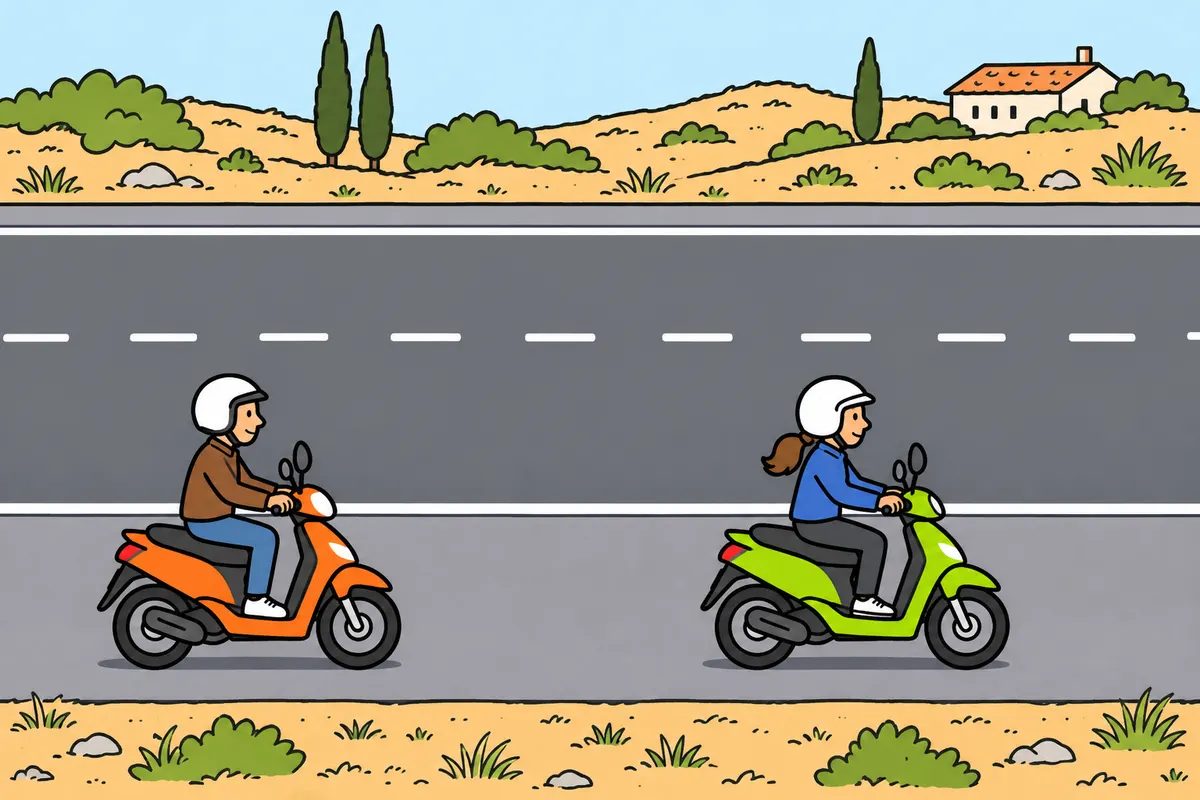
Do not ride alongside another moped, and obey both limits when overtaking.
| Who is overtaking | Limits for the overtakes covered here |
|---|---|
| You on a moped | Obey both 15 seconds and 200 metres. |
| A bicycle | Exempt from these limits. |
Remember
- Use the right-hand hard shoulder when required, if passable and wide enough.
- Otherwise, occupy only the essential part of the carriageway.
- Do not ride alongside another moped, even on a wide hard shoulder.
- For the overtakes covered here, obey both limits on travelling alongside.
- Do not start if you know you cannot meet both limits.
Exam trap: Wrong: overtaking a bicycle exempts you from these limits. Right: the exception covers the bicycle doing the overtaking, not your moped.
Read the full explanation
- When you are required to use the right-hand hard shoulder, you must use it if it is passable and wide enough; otherwise, occupy only the essential part of the carriageway. When manoeuvring, you must still respect signs, visibility and priority. Studying overtaking does not remove your normal road-positioning duty. [RGC, art. 36](https://www.boe.es/buscar/act.php?id=BOE-A-2003-23514#a36).
- You cannot continue riding alongside another moped, even if the hard shoulder is wide or empty or you are both travelling slowly. You must distinguish riding side by side from a genuine overtake. The exceptions allowing bicycles to ride two abreast do not authorise you to do the same on mopeds. [RGC, art. 36](https://www.boe.es/buscar/act.php?id=BOE-A-2003-23514#a36).
- In an overtake subject to article 36.5, vehicles may not travel alongside each other for more than 15 seconds or over more than 200 metres. You must comply with both limits and all other conditions: covering only 100 metres does not allow you to remain alongside for 20 seconds. [RGC, art. 36](https://www.boe.es/buscar/act.php?id=BOE-A-2003-23514#a36).
- The exception to these limits applies to bicycles that overtake, not to your moped when you overtake a bicycle. You also cannot start the manoeuvre if you know you cannot complete it within the required limits. A tractor's size or slow speed does not excuse you from checking them. [RGC, art. 36](https://www.boe.es/buscar/act.php?id=BOE-A-2003-23514#a36).
12Places where you must not overtake
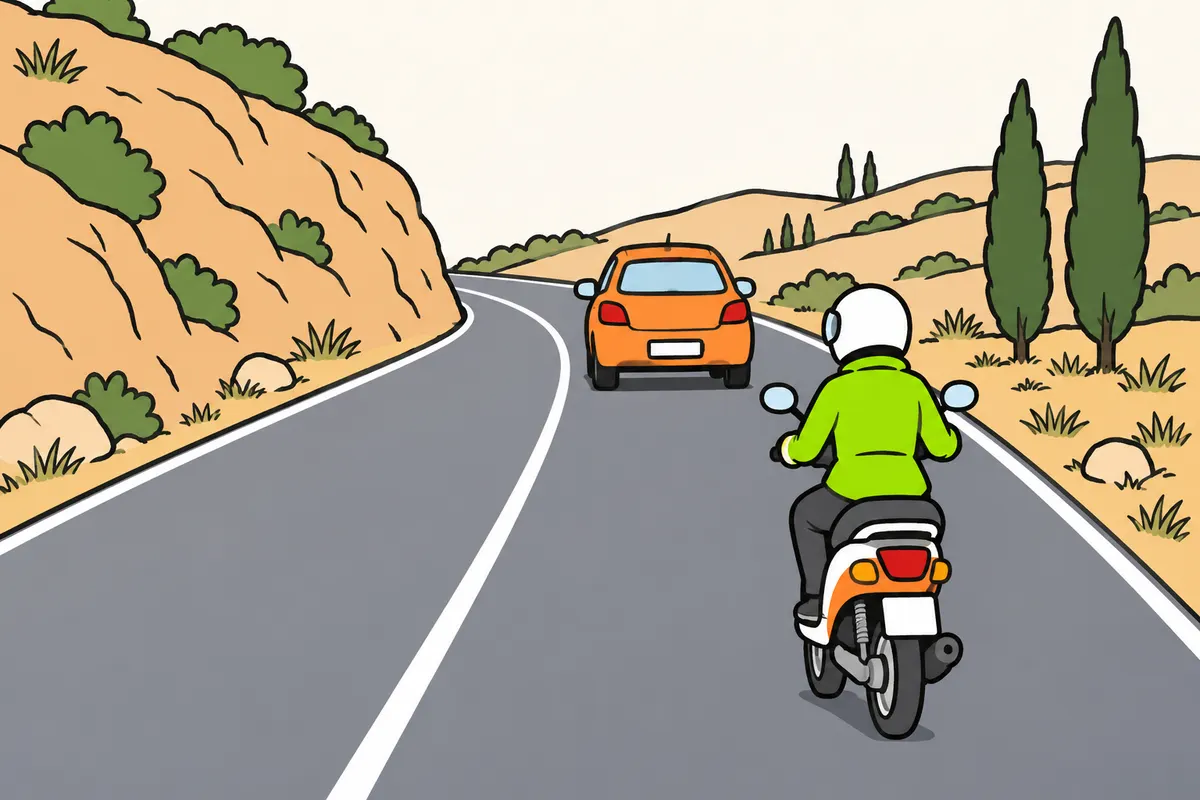
Do not overtake where visibility is poor or an applicable rule prohibits it.
| Place or sign | Prohibition and conditions |
|---|---|
| Bends or crests with poor visibility | Do not overtake unless directions are clearly separated and you avoid opposing traffic space. |
| Marked pedestrian crossings, cycle crossings and level crossings | Do not overtake there or nearby. |
| Junctions and nearby areas | Exceptions: roundabouts, compulsory passing on the right, expressly signed priority, or passing two-wheeled vehicles; other prohibitions and safety rules still apply. |
| Tunnel, underpass or stretch signed as a tunnel | Do not overtake with only one lane in your direction. |
| Two-way tunnel or underpass | You need several lanes in your direction and must avoid the opposing direction. |
| R-305 | Do not overtake motor vehicles by entering the opposing traffic area. |
Remember
- You need enough visibility to complete or abandon the overtake safely.
- Passing slowly gives no automatic exception at pedestrian crossings, cycle crossings or level crossings.
- Respect roads your moped cannot enter.
- Check exceptions while still obeying other prohibitions and safety rules.
Exam trap: Wrong: overtake at a pedestrian crossing because the other vehicle has two wheels. Right: that junction exception does not permit this overtake.
Read the full explanation
- Do not overtake on bends or crests with restricted visibility or anywhere you cannot see far enough ahead to complete or abandon the manoeuvre safely. The exception requires clearly separated directions of travel and no entry into the opposing direction. Fog, heavy rain or a vehicle blocking your view may prevent overtaking. [RGC, art. 87](https://www.boe.es/buscar/act.php?id=BOE-A-2003-23514#a87).
- Overtaking is prohibited at marked pedestrian crossings, intersections with cycle routes and level crossings, and near them. You must not assume that passing slowly or overtaking a two-wheeled vehicle authorises the manoeuvre in these places. [RGC, art. 87](https://www.boe.es/buscar/act.php?id=BOE-A-2003-23514#a87).
- Overtaking is prohibited at and near junctions, except in the cases provided for by the regulations: roundabouts, overtaking that must be carried out on the right, a road with expressly signed priority at the junction, or overtaking two-wheeled vehicles. You must also meet the safety conditions and comply with all other applicable prohibitions. [RGC, art. 87](https://www.boe.es/buscar/act.php?id=BOE-A-2003-23514#a87).
- In tunnels, underpasses and stretches covered by a tunnel sign, you cannot overtake if you have only one lane in your direction. In two-way tunnels and underpasses, you may overtake only if there is more than one lane in your direction and without entering the opposing direction. You must respect the other restrictions and the prohibitions on access for mopeds. [RGC, art. 87](https://www.boe.es/buscar/act.php?id=BOE-A-2003-23514#a87); [RGC, art. 95.6](https://www.boe.es/buscar/act.php?id=BOE-A-2003-23514#a95).
- Sign R-305 prohibits overtaking motor vehicles when the manoeuvre involves entering the opposing traffic area, in addition to the general prohibitions. It applies until the end-of-overtaking-prohibition sign or the end-of-prohibitions sign. Do not infer blanket permission to overtake motorcycles. [RGC, Annex I; RD 465/2025](https://www.boe.es/buscar/doc.php?id=BOE-A-2025-12199).
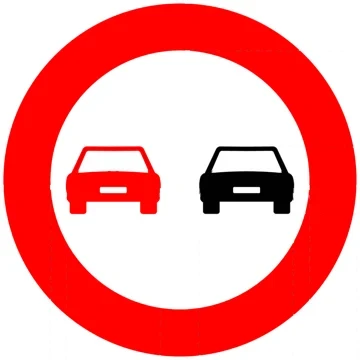 R-305
13Passing stationary vehicles and obstructions
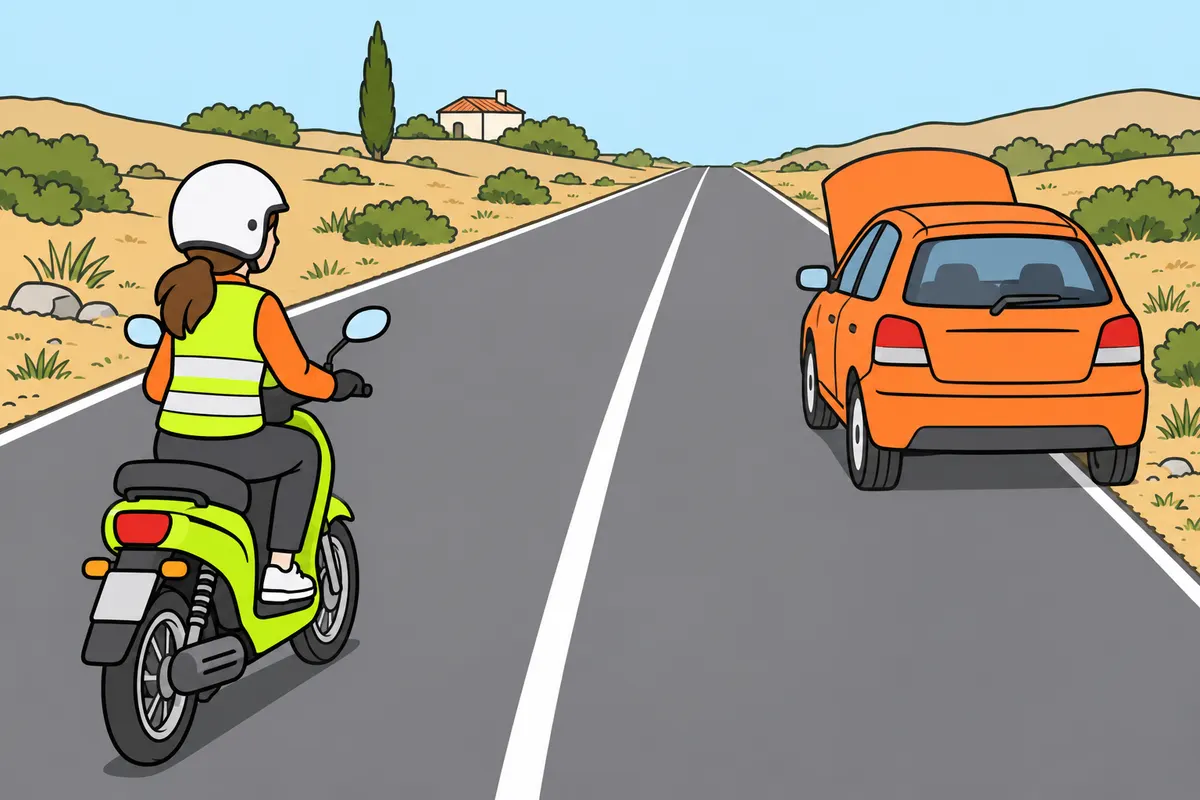
You may pass certain stationary vehicles and obstructions after checking that it is safe.
| Situation | Conditions for passing |
|---|---|
| Stationary vehicle occupying your lane because of breakdown, accident, emergency or assistance | Leave at least 1.5 m and travel at least 20 km/h below the road limit. |
| Stationary vehicle occupying your lane for road maintenance or traffic management | Apply the same clearance and speed reduction. |
| Queue or traffic light | The stationary-vehicle exception does not apply. |
| Cycles, mopeds, personal mobility vehicles, pedestrians, animals or animal-drawn vehicles | You may overtake on a prohibited stretch if speed, visibility and safety allow. |
| Special agricultural vehicles and their combinations | The same exception requires a safe overtake. |
Remember
- You may pass a stationary vehicle occupying your lane, even where overtaking is banned.
- First check that entering the opposing direction creates no danger.
- This exception does not cover vehicles stopped because of traffic.
- For the specified stationary vehicles, obey clearance and speed rules; otherwise wait.
- Also respect your AM vehicle’s maximum speed.
- Check safety before passing an obstruction, even where overtaking is allowed.
Exam trap: Wrong: pass a queue in the opposing lane as if it were an obstacle. Right: this exception does not cover vehicles stopped because of traffic.
Read the full explanation
- If a stationary vehicle occupies all or part of your lane, you may pass it even on a stretch where overtaking is prohibited and by entering the opposing direction, after checking that there is no danger. The exception does not apply when it is stopped because of traffic conditions, such as a queue or traffic light. [RGC, art. 88](https://www.boe.es/buscar/act.php?id=BOE-A-2003-23514#a88).
- If a vehicle is stationary because of a breakdown, accident, emergency or assistance service, maintenance of road facilities or infrastructure, or traffic regulation, control or management, and occupies all or part of your lane, you must leave at least 1.5 metres of lateral clearance when passing it, enter the opposing direction if necessary and travel at least 20 km/h below the road's speed limit. Also respect your AM vehicle's maximum and wait if you cannot pass safely. [RGC, art. 88.1](https://www.boe.es/buscar/act.php?id=BOE-A-2003-23514#a88).
- Subject to the safety conditions in article 88, you may also overtake cycles, mopeds, VMP (personal mobility vehicles), pedestrians, animals, animal-drawn vehicles and special agricultural vehicles and their combinations on a stretch where overtaking is prohibited, when their speed allows you to do so safely. This exception does not allow you to act without visibility or endanger them. [RGC, art. 88](https://www.boe.es/buscar/act.php?id=BOE-A-2003-23514#a88).
- You may pass an obstruction that forces you to enter the space for opposing traffic if you check that there is no danger. You must also take this precaution where normal overtaking is permitted. Do not confuse an exception for passing an obstruction with freedom to cross the centre line for convenience. [RGC, art. 89](https://www.boe.es/buscar/act.php?id=BOE-A-2003-23514#a89).
14When another vehicle overtakes you
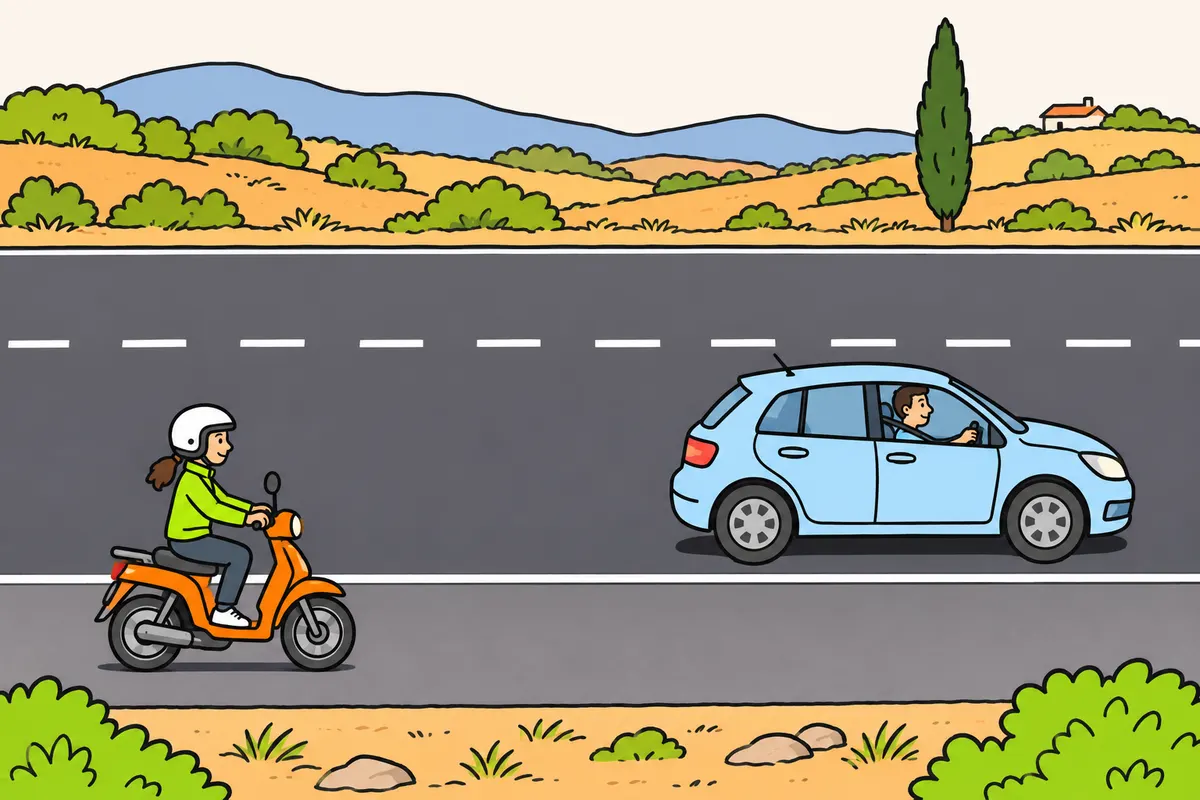
When someone overtakes you, help them pass and do not speed up.
| Situation when your moped is overtaken | How you must help |
|---|---|
| Danger appears and the other driver continues overtaking | Slow down to help them finish safely |
| They clearly abandon overtaking and brake to return behind you | Help them return; do not slow down if doing so endangers traffic |
| You cannot keep fully right, but they can pass safely | Signal it: extend your arm horizontally and move it repeatedly from back to front, with the back of your hand facing rearwards. If an arm signal is inadvisable, use your right indicator |
Remember
- Keep a predictable course and do not speed up.
- Keep near the right edge, following your moped’s road-positioning rules.
- Do not move into danger to let someone pass.
- If you signal left and they pass on your right, keep your position.
- If passing you is difficult and dangerous, slow down or use a usable shoulder.
- If you cannot keep fully right, indicate when others can safely overtake you.
Exam trap: Wrong: always brake if danger appears. Right: if the other driver clearly abandons overtaking and brakes to return behind you, avoid slowing down when that would endanger traffic.
Read the full explanation
- You must help others overtake and keep close to the right-hand edge as required by the regulations, maintaining the road position appropriate to your moped. Do not increase your speed or make movements that hinder the overtake. Keep a predictable course without forcing yourself into a dangerous place. [RGC, art. 86](https://www.boe.es/buscar/act.php?id=BOE-A-2003-23514#a86).
- If you have signalled a left turn or a stop on the left and the other vehicle must pass on your right, maintain the appropriate position on the left without interfering with oncoming traffic. Do not automatically move right without considering which side the overtake is taking place on. [RGC, art. 86](https://www.boe.es/buscar/act.php?id=BOE-A-2003-23514#a86).
- If danger arises after the overtake starts, you must slow down to help it finish safely. If the overtaking driver clearly abandons the manoeuvre and brakes to return behind you, and your slowing down would endanger traffic, do not slow down in that way; help them return to the lane. [RGC, art. 86](https://www.boe.es/buscar/act.php?id=BOE-A-2003-23514#a86).
- Article 86.3 covers vehicles required to respect a specific speed limit, a case you apply to your moped because of its 45 km/h maximum under article 48: if oncoming traffic, the width, profile or condition of the carriageway prevents others from overtaking you easily and safely, you must slow down or move onto the hard shoulder as soon as possible, if it is usable, to let those behind pass. [RGC, art. 86.3](https://www.boe.es/buscar/act.php?id=BOE-A-2003-23514#a86) [RGC, art. 48](https://www.boe.es/buscar/act.php?id=BOE-A-2003-23514#a48)
- If you cannot keep fully to the right-hand edge of the carriageway but others can overtake you safely, you must indicate this to the approaching driver: extend your arm horizontally and move it several times from back to front, with the back of your hand facing backwards. If you do not consider an arm signal advisable, use your right indicator. This signal applies to the vehicles covered by article 86.3 when being overtaken. [RGC, art. 86.1](https://www.boe.es/buscar/act.php?id=BOE-A-2003-23514#a86).
15Turning right or left
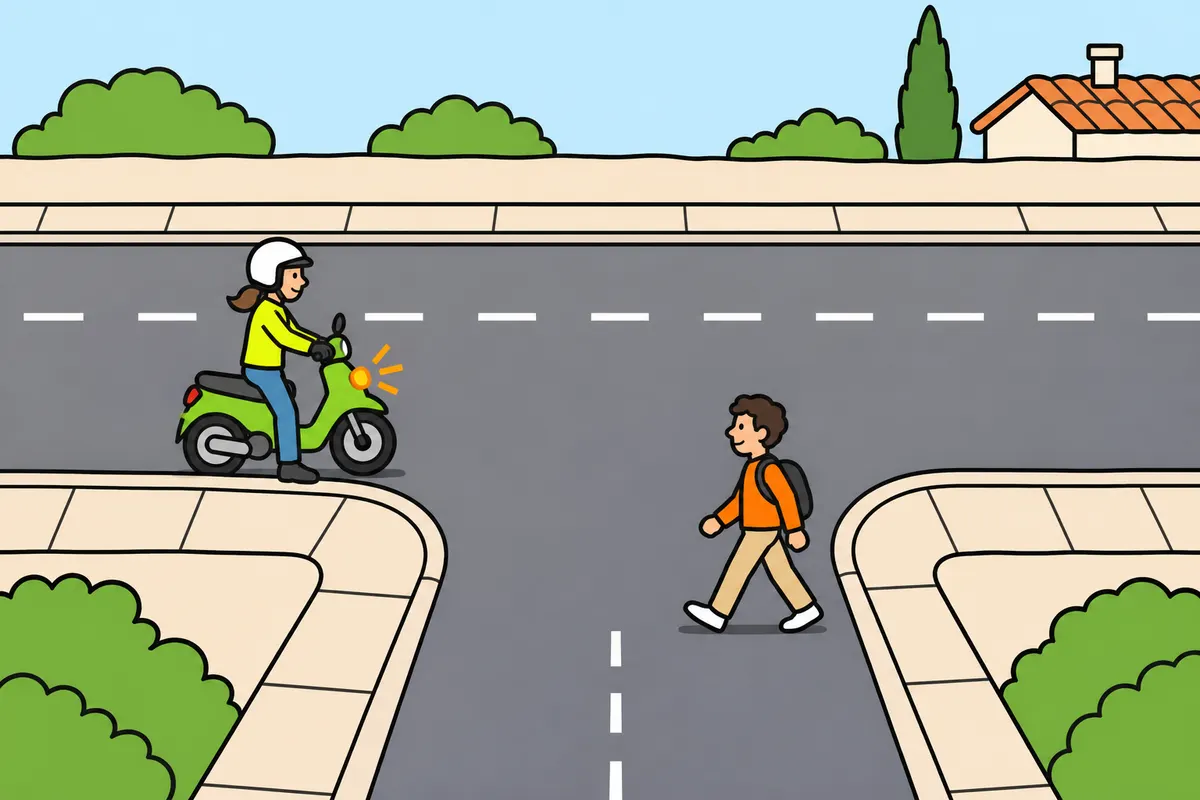
To turn, signal, position yourself early and give way to people crossing.
| Turn, unless specific rules apply | General position |
|---|---|
| Right | Close to the right edge |
| Left on a one-way road | Close to the left edge |
| Left on a two-way road | Close to the centre line or division, without entering opposing traffic |
| Left on a two-way road with three lanes separated by broken lines | Centre lane |
Remember
- Check approaching road users’ distances and speeds.
- Do not turn unless you can do so safely.
- Obey signs and any special positioning required by the road.
- When turning left, normally keep the junction’s centre on your left.
- Give way to pedestrians crossing the road you enter, even without a crossing.
- Also respect cyclists’ legal priority.
Exam trap: Wrong: your indicator makes pedestrians wait for your turn. Right: give way to pedestrians crossing the road you enter, even without a marked crossing.
Read the full explanation
- Changing direction means turning to take another road, another carriageway of the same road or to leave it. You must signal in advance and check that the distance and speed of approaching road users allow you to do so safely. If it is unsafe, you must not turn. [RGC, art. 74](https://www.boe.es/buscar/act.php?id=BOE-A-2003-23514#a74).
- To turn right, position yourself as close as possible to the right-hand edge in advance, unless the road layout or signs specify otherwise. Do not swing out to the left unnecessarily or cut across from an inner lane in front of someone travelling on your right. [RGC, art. 75](https://www.boe.es/buscar/act.php?id=BOE-A-2003-23514#a75).
- To turn left on a one-way carriageway, move close to the left-hand edge. On a two-way carriageway, the general rule is to move close to the division between directions or the centre line without entering the opposing direction. On a two-way carriageway with three lanes separated by broken lines, position yourself in the centre lane. [RGC, art. 75](https://www.boe.es/buscar/act.php?id=BOE-A-2003-23514#a75).
- When turning left, keep the centre of the junction on your left, unless the layout or signs require you to keep it on your right. You must position yourself sufficiently early and turn using as little space and time as possible, without compromising safety. [RGC, art. 75](https://www.boe.es/buscar/act.php?id=BOE-A-2003-23514#a75).
- When turning into another road, you must give way to pedestrians crossing it even if there is no marked crossing, and respect cyclists’ priority in the cases laid down by law. Check their paths before completing your turn; you study the full cases of pedestrian and cyclist priority in “Right of way”. [Ley de Tráfico (Traffic Act), art. 25](https://www.boe.es/buscar/act.php?id=BOE-A-2015-11722#a25)
16Turning a two-wheeled moped outside built-up areas
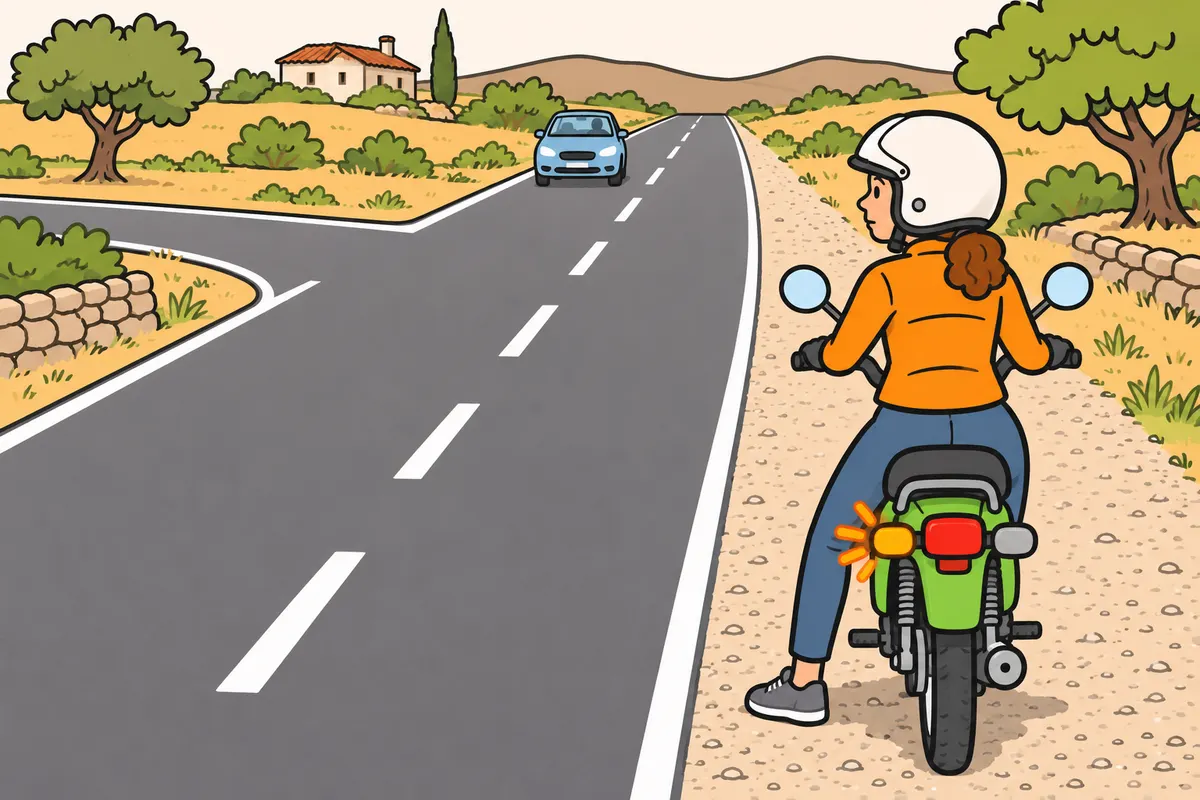
Outside built-up areas, turn left from the right when your two-wheeled moped’s rule applies.
| Vehicle, place or sign | What you must do |
|---|---|
| Two-wheeled moped outside built-up areas, without a provided left-turn lane | Start from the right, off the carriageway if possible. |
| Two-wheeled moped outside built-up areas, with a provided left-turn lane | Follow that lane and its indications. |
| R-303 | Do not turn left or make a U-turn. |
| R-304 | Do not make a U-turn; this sign alone does not prohibit turning left. |
Remember
- On a two-wheeled moped, check for a lane provided for turning left.
- Without that lane, position yourself on the right, off the carriageway if possible.
- From there, check both directions, signal and wait until you can cross safely.
- Do not turn if visibility is poor.
- If a turning lane exists, follow its layout and signs.
- Do not automatically apply this rule to quadricycles or urban junctions.
Exam trap: Wrong: with any AM vehicle, turn left from the right. Right: this rule outside built-up areas applies to two-wheeled mopeds without a specially provided turning lane.
Read the full explanation
- On interurban roads, if you ride a two-wheeled moped and there is no specially provided lane for turning left, you must position yourself on the right, off the carriageway whenever possible, and start your turn from there. [RGC, art. 76](https://www.boe.es/buscar/act.php?id=BOE-A-2003-23514#a76).
- From this position, you must check both directions, signal the manoeuvre and wait until you can cross safely. Positioning yourself on the right does not give you priority to cross immediately. If you do not have enough visibility to turn left, you must not do so. [RGC, arts. 74 and 76](https://www.boe.es/buscar/act.php?id=BOE-A-2003-23514#a76).
- If a lane is provided for this turn, you must follow its layout and indications. Do not automatically apply the procedure of starting from the right at every urban junction. The interurban exception applies to cycles and two-wheeled mopeds, not light quadricycles. [RGC, art. 76](https://www.boe.es/buscar/act.php?id=BOE-A-2003-23514#a76).
- Lane-selection arrows and compulsory directions limit the movements you may make. R-303 prohibits turning left and making a U-turn; R-304 prohibits U-turns but does not in itself prohibit a left turn. [RGC, Annex I; RD 465/2025](https://www.boe.es/buscar/doc.php?id=BOE-A-2025-12199).
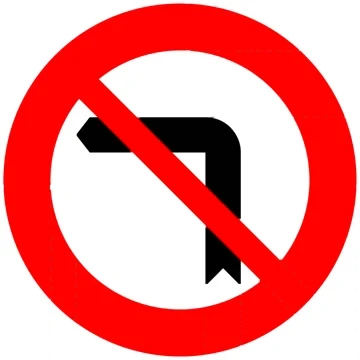 R-303
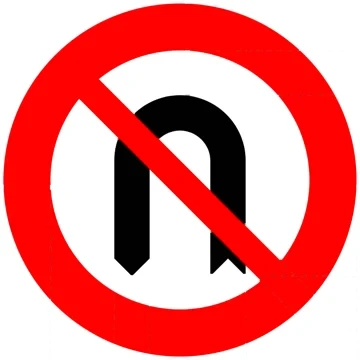 R-304
17Making a U-turn
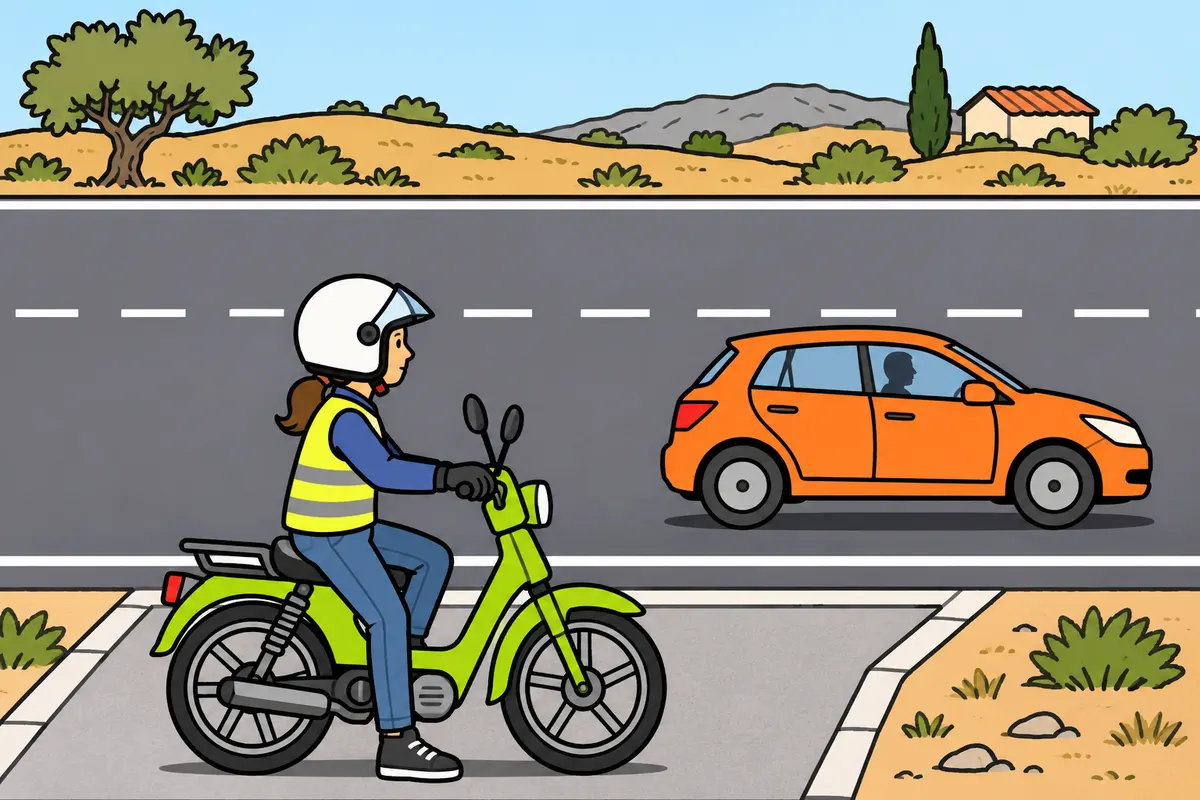
Make a U-turn only where you can avoid danger and obstruction to others.
Remember
- Choose a suitable place and signal early.
- Block the road for as little time as possible.
- If waiting blocks others, pull off to the right if possible and wait there.
- Do not make U-turns at level crossings, in tunnels or in underpasses.
- Avoid stretches signed as tunnels; do not turn unless you can check safety.
- Do not cross a solid line or travel against the permitted direction.
Exam trap: Wrong: make a U-turn where overtaking is banned. Right: you need express authorisation for U-turns there, and must still obey safety rules and other prohibitions.
Read the full explanation
- Making a U-turn means reversing your direction to continue along the same road in the opposite direction. You must choose a suitable place, signal in advance and check that you do not endanger or obstruct other road users. If you cannot do so, wait or find another permitted route. [RGC, art. 78](https://www.boe.es/buscar/act.php?id=BOE-A-2003-23514#a78).
- You must block the road for as little time as possible. If waiting on the carriageway prevents vehicles behind from continuing, you must pull off to the right if possible and wait there until you can carry out the manoeuvre. [RGC, art. 78](https://www.boe.es/buscar/act.php?id=BOE-A-2003-23514#a78).
- Do not make a U-turn at level crossings, in tunnels, underpasses or stretches covered by a tunnel sign. It is also prohibited where you cannot check that safety conditions are met and, generally, where overtaking is prohibited, unless U-turns are expressly authorised. [RGC, art. 79](https://www.boe.es/buscar/act.php?id=BOE-A-2003-23514#a79).
- You cannot reverse direction to travel against the permitted traffic flow or cross a solid line separating opposing directions. A sign indicating a route provided for making a U-turn requires you to follow that route; it does not in itself authorise a direct turn across the carriageway. [RGC, Annex I; RD 465/2025](https://www.boe.es/buscar/doc.php?id=BOE-A-2025-12199).
18When you may reverse
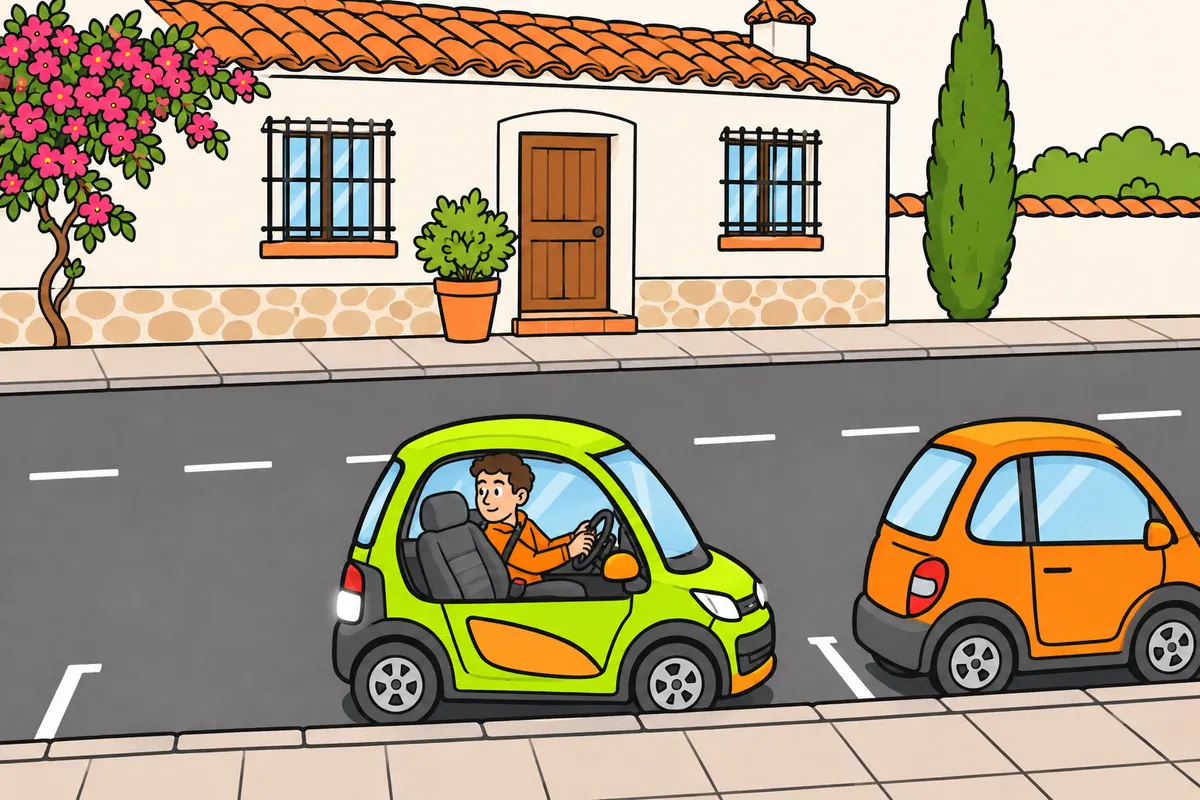
Reverse only in permitted cases and travel the shortest distance necessary.
| Situation | Reversing rule |
|---|---|
| You cannot move forwards, turn or make a U-turn | Only the shortest essential distance |
| Necessary part of another manoeuvre | Only the shortest essential distance |
| Reversing as part of stopping, parking or joining traffic | Shortest essential distance; no more than 15 metres; do not enter junctions |
Remember
- Do not reverse to reach a missed exit.
- Do not reverse for convenience when you can legally continue forwards.
- Never reverse on autopistas (motorways) or autovías (dual carriageway motorways).
- The seat-belt exemption when reversing or parking applies to you as the driver.
- Do not automatically apply that exemption to your passenger.
Exam trap: Wrong: the 15-metre limit applies to all reversing. Right: when reversing to stop, park or join traffic, travel only as far as essential, within 15 metres, without entering junctions.
Read the full explanation
- As a general rule, you cannot travel backwards. Reversing is permitted when you cannot move forwards, turn or make a U-turn, and as a necessary part of another manoeuvre. In any of these cases, you must limit yourself to the minimum distance essential; it is not an alternative way of travelling. [RGC, art. 80](https://www.boe.es/buscar/act.php?id=BOE-A-2003-23514#a80).
- If you reverse as part of stopping, parking or joining traffic, you cannot exceed 15 metres or enter a junction. You must meet both conditions. This figure is not a distance you must use up or a universal limit for every exceptional case of reversing. [RGC, art. 80](https://www.boe.es/buscar/act.php?id=BOE-A-2003-23514#a80).
- Do not reverse to return to a missed exit or travel along a street for convenience when you can legally continue forwards. Reversing is prohibited on autopistas and autovías; mopeds also have no normal access to these roads. For AM, the usual vehicle with a mechanical reverse gear is a light quadricycle. [RGC, art. 80](https://www.boe.es/buscar/act.php?id=BOE-A-2003-23514#a80).
- When driving a vehicle subject to seat-belt requirements, the exemption when reversing or parking applies to you as the driver. It does not automatically exempt your passenger or apply to any subsequent slow driving. Distinguish this specific exception from your vehicle's other protection requirements. [RGC, art. 119](https://www.boe.es/buscar/act.php?id=BOE-A-2003-23514#a119).
19Reversing safely
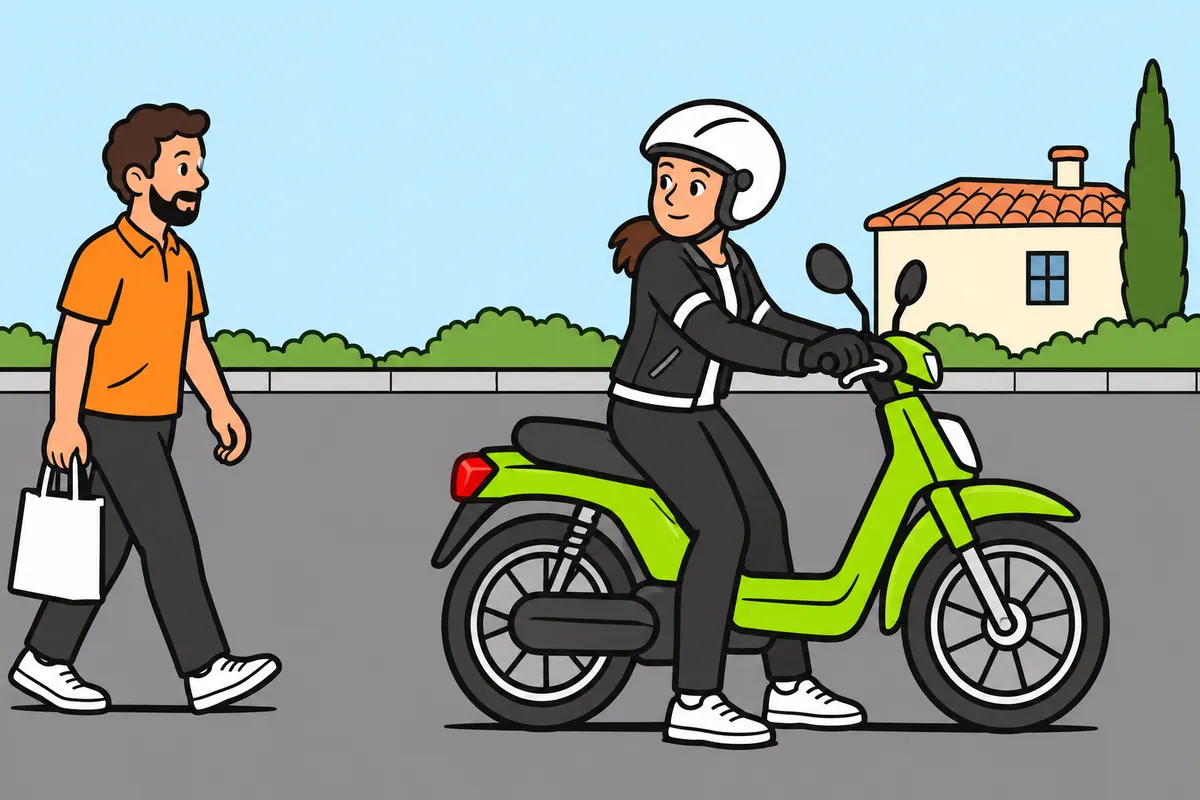
Before reversing, check the space and stop as soon as danger appears.
Remember
- Check that you have enough visibility, space and time.
- Get out or ask for guidance if necessary.
- Signal and reverse slowly, with great care.
- Your signal does not give you priority.
- Stop promptly for warnings or nearby people, animals or vehicles.
- Abandon the manoeuvre if necessary.
Exam trap: Wrong: continue because someone earlier said the space was clear. Right: keep checking and stop whenever safety requires.
Read the full explanation
- Before reversing, check that you have the necessary visibility, space and time, even getting out or asking another person for help if necessary. You must check your actual surroundings: knowing the parking area does not guarantee that a child, animal or vehicle has not appeared behind you. [RGC, art. 81](https://www.boe.es/buscar/act.php?id=BOE-A-2003-23514#a81).
- Signal and reverse slowly, with the utmost care. Your signal warns of your intention but does not give you priority over anyone approaching or crossing the area. [RGC, arts. 81 and 109](https://www.boe.es/buscar/act.php?id=BOE-A-2003-23514#a81).
- You must stop promptly if you receive a warning or notice a nearby vehicle, person or animal, and whenever safety requires it. Abandon the manoeuvre if necessary. [RGC, art. 81](https://www.boe.es/buscar/act.php?id=BOE-A-2003-23514#a81).
20Traffic stops, brief stops and parking
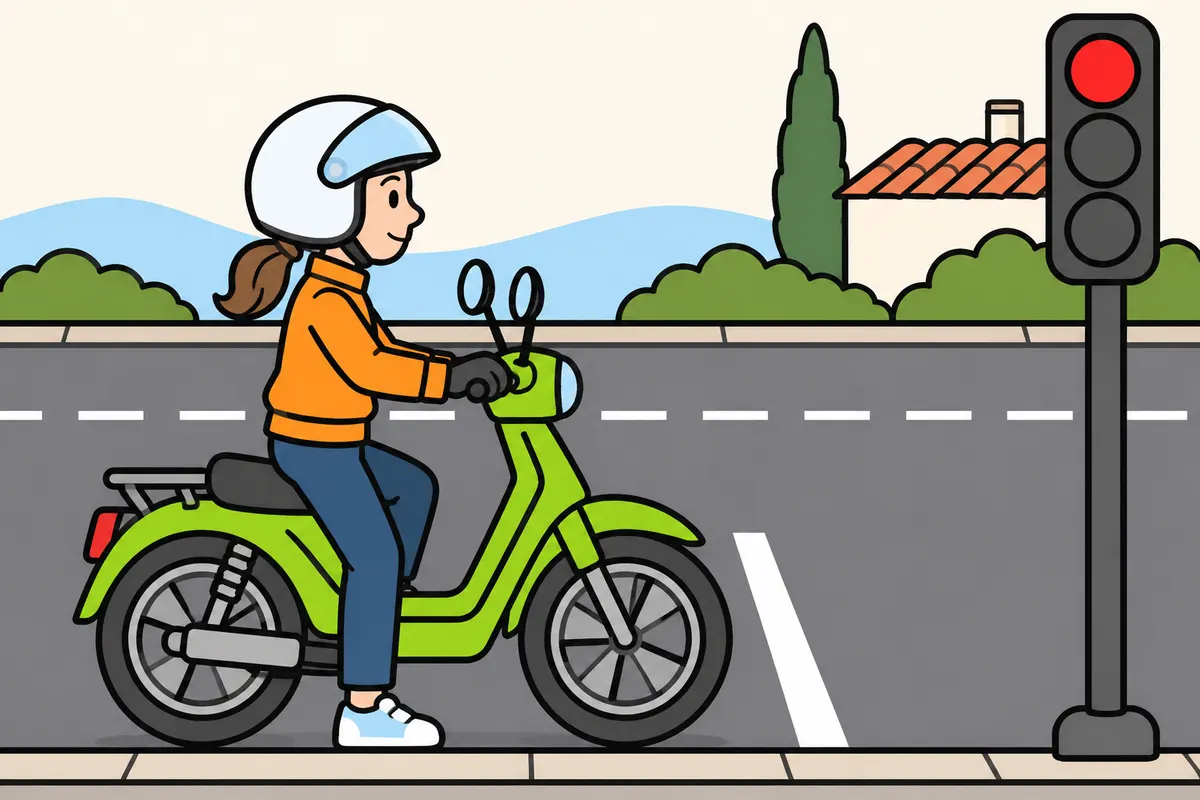
Distinguish traffic stops, brief stops and parking by reason, duration and whether you leave.
| Situation | Type of stop |
|---|---|
| Emergency, traffic or obeying a rule | Traffic or emergency stop, regardless of time |
| Less than two minutes without leaving your vehicle | Brief stop, unless a traffic or emergency stop |
| You leave your vehicle or reach two minutes | Parking, unless a traffic or emergency stop |
Remember
- The reason for stopping matters, as well as the time.
- A running engine and hazard warning lights do not change the type of stop.
- Before slowing considerably, check behind and warn, unless danger is immediate.
- Avoid sudden braking without a reason.
- Do not stop in prohibited places, even briefly.
Exam trap: Wrong: waiting at a traffic light becomes parking if it lasts a long time. Right: it remains a stop required by traffic.
Read the full explanation
- A detención (traffic or emergency stop) is when you are stationary because of an emergency, traffic conditions or compliance with a rule. Waiting at a traffic light, in a queue or for an officer is a traffic stop, even if it lasts more than two minutes. The reason, rather than time alone, determines this category. [Ley de Tráfico (Traffic Act), Annex I, definition 80](https://www.boe.es/buscar/act.php?id=BOE-A-2015-11722#ani).
- A parada (brief stop) is when you remain stationary for less than two minutes without leaving your vehicle. A voluntary stop lasting two minutes or more, or during which you leave your vehicle, is estacionamiento (parking). Keeping your engine running or switching on your hazard warning lights does not change the classification. [Ley de Tráfico (Traffic Act), Annex I, definitions 81 and 82](https://www.boe.es/buscar/act.php?id=BOE-A-2015-11722#ani).
- Before slowing down considerably, check that you do not create a risk for those behind and give a warning, except in imminent danger. Avoid unnecessary harsh braking. In imminent danger, you may need to brake immediately to avoid an accident. [RGC, art. 53](https://www.boe.es/buscar/act.php?id=BOE-A-2003-23514#a53).
- Stopping for less than two minutes does not allow you to occupy a pedestrian crossing, a reserved lane or another prohibited place. You must also not treat a forced stop due to a breakdown as a free choice of parking place: you must make the situation safe and remove the obstruction when possible. [RGC, art. 94](https://www.boe.es/buscar/act.php?id=BOE-A-2003-23514#a94).
21Where and how to position your vehicle
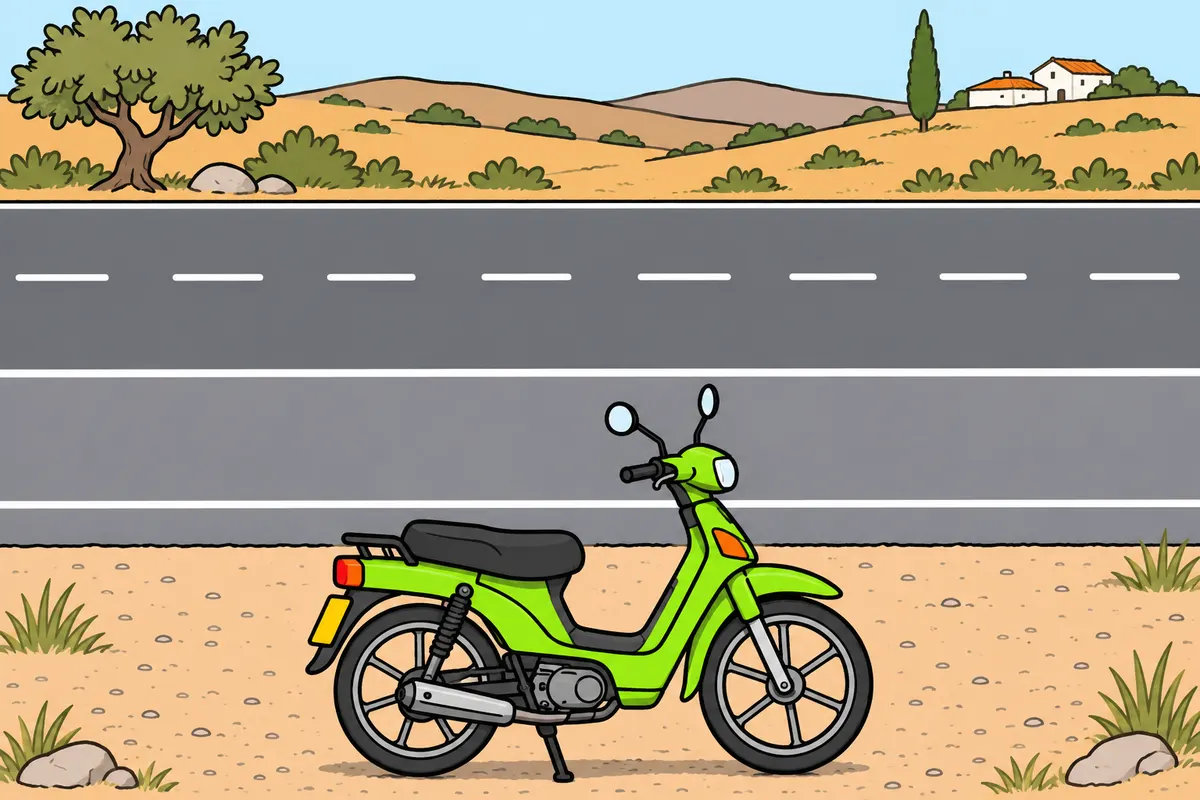
Position your vehicle where permitted and keep routes clear for others.
| Road | Where to stop or park |
|---|---|
| Outside built-up areas | Off the carriageway on the right; keep the usable shoulder clear |
| Two-way urban road | As close as possible to the right edge when using carriageway or shoulder |
| One-way urban road | You may also use the left where permitted |
Remember
- Normally position your vehicle parallel to the road edge.
- Use space well and respect reserved bays.
- As a general rule, do not park on pavements.
- For two-wheeled vehicles, check local rules and do not obstruct pedestrians.
- In time-limited areas, get the required authorisation and obey its time limit.
Exam trap: Wrong: you may park on the left on any one-way road. Right: this option applies to urban roads, where permitted.
Read the full explanation
- On interurban roads, you must stop or park off the carriageway, on its right, leaving the usable part of the hard shoulder clear. This also applies to your moped: normally riding on the hard shoulder does not make it an authorised parking area. If an emergency prevents compliance, you must apply the protective measures. [RGC, art. 90](https://www.boe.es/buscar/act.php?id=BOE-A-2003-23514#a90).
- On urban roads, if you use the carriageway or hard shoulder, position yourself as close as possible to the right-hand edge. On a one-way urban road, you may also do so on the left when permitted. Do not extend this possibility to an interurban road merely because it is one-way. [RGC, art. 90](https://www.boe.es/buscar/act.php?id=BOE-A-2003-23514#a90).
- As a general rule, position your vehicle parallel to the edge of the carriageway, unless its characteristics or other circumstances make another position advisable. Make good use of the remaining space and respect marked bays and reserved spaces. Your AM vehicle's small size does not allow you to leave it across the way, blocking passage. [RGC, art. 92](https://www.boe.es/buscar/act.php?id=BOE-A-2003-23514#a92).
- As a general rule, do not park on pavements, promenades or pedestrian areas, even with only one wheel on them. The law allows municipal regulation of two-wheeled vehicle parking in these areas if pedestrian movement is neither harmed nor obstructed; do not assume permission without checking the applicable rules. [Ley de Tráfico (Traffic Act), art. 40](https://www.boe.es/buscar/act.php?id=BOE-A-2015-11722#a40).
- In time-limited areas, you must have the required ticket or authorisation and respect the maximum time. Check the signs and municipal rules: there is no general exemption for AM vehicles based on engine capacity, size or your age as the driver. [Ley de Tráfico (Traffic Act), art. 40](https://www.boe.es/buscar/act.php?id=BOE-A-2015-11722#a40).
22Places where stopping and parking are prohibited
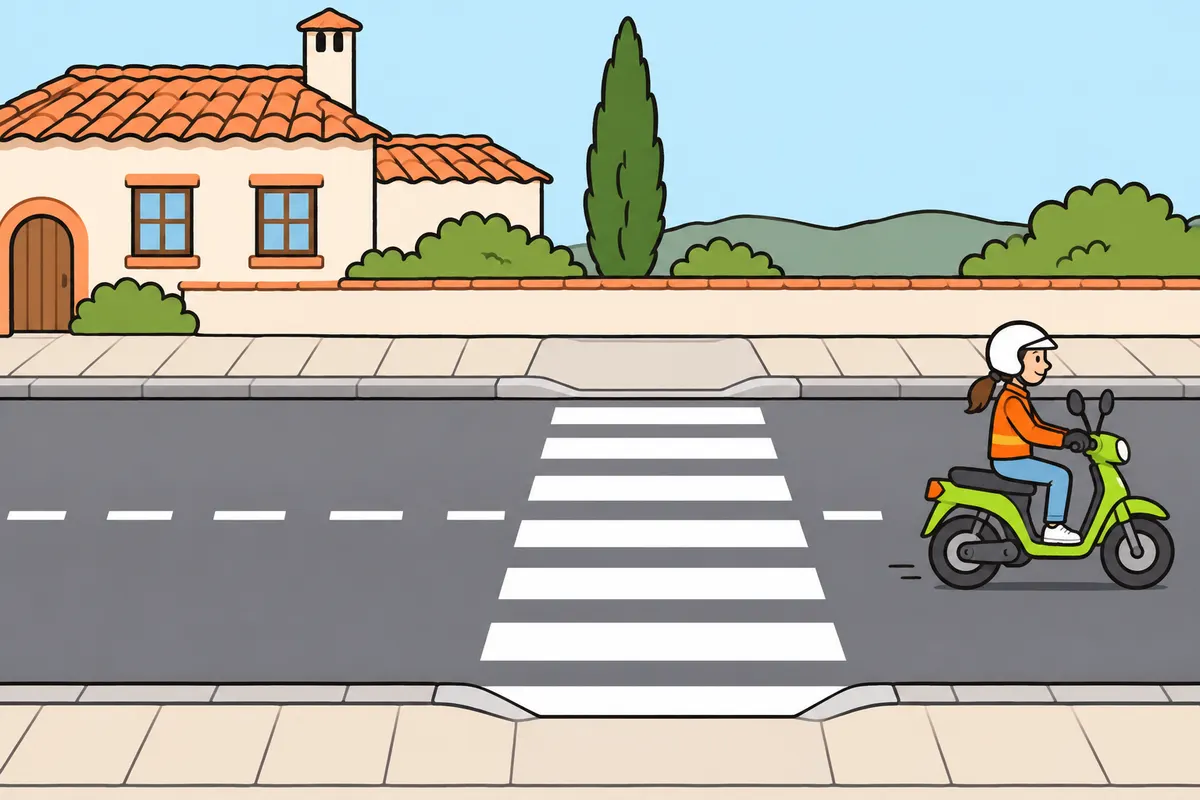
Do not stop where you create danger, hide signs or block passage.
Remember
- Do not stop on or near bends or crests with poor visibility.
- Do not stop in tunnels, underpasses or stretches signed as tunnels.
- Do not stop on pedestrian crossings, cycle crossings or level crossings.
- Do not occupy junctions or their nearby areas.
- Respect reserved lanes and stops; do not obstruct trams.
- Do not hide signs or use areas exclusively reserved for people with disabilities.
Exam trap: Wrong: leaving 3 metres is enough. Right: less than 3 metres to the opposite edge or an uncrossable line seriously obstructs traffic; even with more space, you must not block passage.
Read the full explanation
- Do not stop or park on bends and crests with restricted visibility, near them, in tunnels, underpasses or stretches signed as tunnels. It is also prohibited at level crossings, cycle crossings and pedestrian crossings. The absence of an additional prohibition sign does not remove these rules. [RGC, art. 94](https://www.boe.es/buscar/act.php?id=BOE-A-2003-23514#a94).
- The Ley de Tráfico (Traffic Act) prohibits stopping at and near junctions. The RGC specifies the case where you make it difficult for other vehicles to turn or, on interurban roads, create danger through a lack of visibility. When deciding where to stop, respect the legal prohibition and do not occupy the junction area. [Ley de Tráfico (Traffic Act), art. 40](https://www.boe.es/buscar/act.php?id=BOE-A-2015-11722#a40); [RGC, art. 94](https://www.boe.es/buscar/act.php?id=BOE-A-2003-23514#a94).
- Do not stop in lanes or parts of the road reserved for particular users, exclusive public transport or cycle lanes, or areas exclusively reserved for urban public transport stops. Do not stop on tram rails or so close to them that you obstruct tram traffic. [RGC, art. 94](https://www.boe.es/buscar/act.php?id=BOE-A-2003-23514#a94).
- You cannot stop where you hide signs from those who need to see them or force them to manoeuvre, or in signed areas exclusively reserved for people with disabilities. Avoid any dangerous stop or serious obstruction to pedestrian traffic. [RGC, arts. 91 and 94](https://www.boe.es/buscar/act.php?id=BOE-A-2003-23514#a91).
- Your position is dangerous or seriously obstructive when you leave less than 3 metres between your vehicle and the opposite edge or a longitudinal marking that cannot be crossed; also when you prevent passage even if there is more space. [RGC, art. 91](https://www.boe.es/buscar/act.php?id=BOE-A-2003-23514#a91).
23Parking prohibitions and reserved spaces
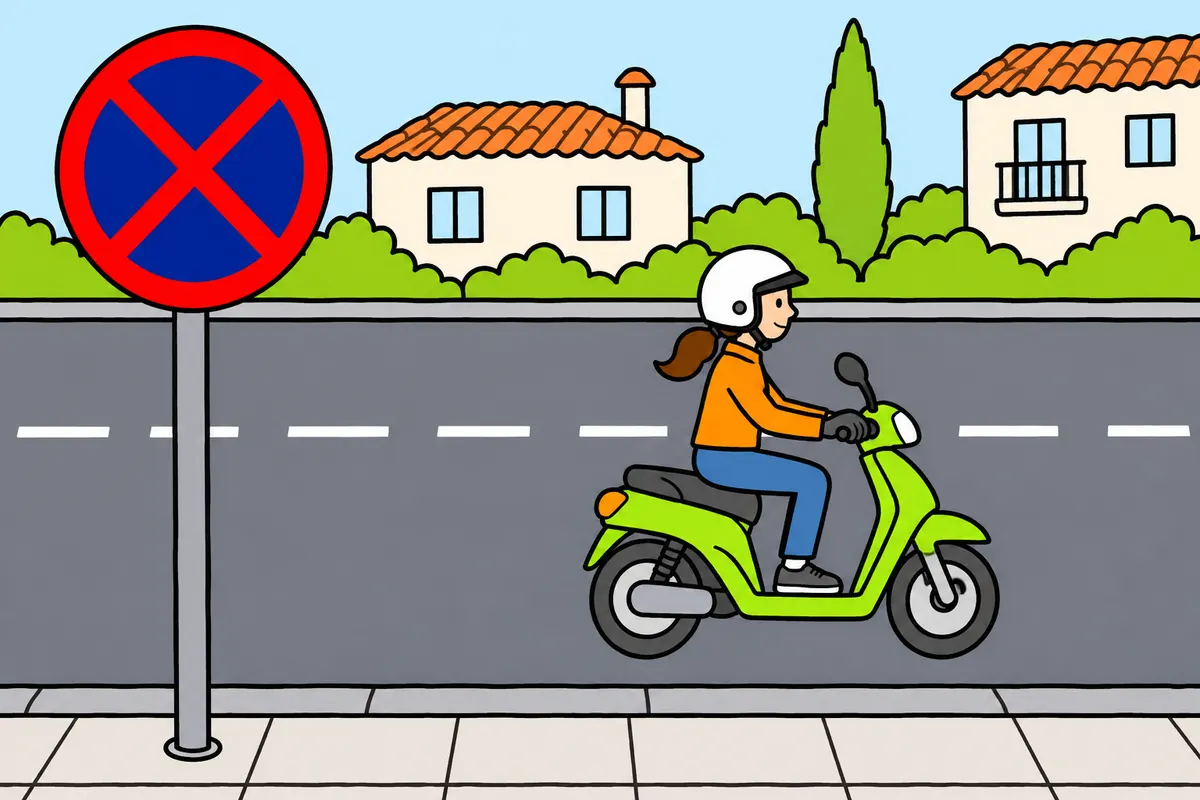
Before parking, check reserved spaces, signs and the times when restrictions apply.
| Sign or marking | What it prohibits |
|---|---|
| R-307: red cross | Stopping and parking. |
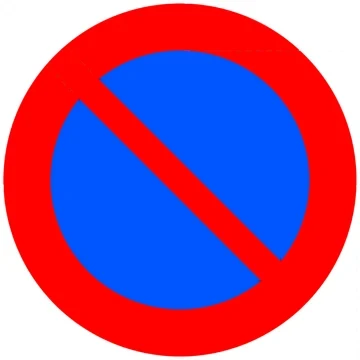
| R-308: red diagonal | Parking; you may stop briefly if you obey other rules. |
| Solid yellow line at edge or kerb | Stopping and parking along its length, during any stated restriction period |
| Broken yellow line | Parking |
| Yellow zigzag | Parking generally; the space has a special reserved use |
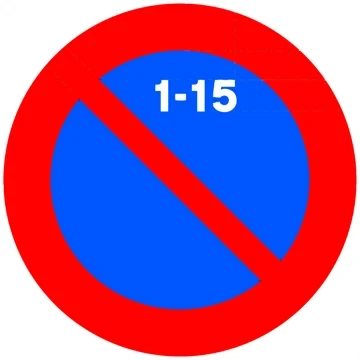
| R-308c, unless otherwise indicated | Parking from 9 o’clock on day 1 to 9 o’clock on day 16. |
Remember
- Do not park where stopping is prohibited.
- Do not double-park or park across correctly signed vehicle access points.
- Respect loading areas during indicated hours and disability bays unless you have authorisation.
- Do not block exits, entrances, turns or dropped-kerb crossings.
- Keep central reservations, dividers, islands and traffic-guiding features clear.
- Read panels and the periods of each restriction.
Exam trap: Wrong: R-308c prohibits parking on odd-numbered days. Right: it prohibits parking during the stated first half-month; other prohibitions still apply outside that period.
Read the full explanation
- Where stopping is prohibited, parking is also prohibited. In addition, do not double-park, park in front of correctly signed vados (vehicle access points), in signed loading and unloading areas during the indicated hours, or in spaces reserved for people with disabilities without authorisation. [RGC, art. 94.2.c, d, f and g](https://www.boe.es/buscar/act.php?id=BOE-A-2003-23514#a94)
- Do not block the exit of another correctly stopped or parked vehicle, normal access for people or animals to a property, an authorised turn or dropped-kerb crossings. Do not leave your AM vehicle on central reservations, dividers, traffic islands or traffic-channelising features. You must keep other people's routes clear. [RGC, art. 91](https://www.boe.es/buscar/act.php?id=BOE-A-2003-23514#a91).
- Sign R-307, with a red cross on a blue background, prohibits stopping and parking. R-308, with a red diagonal line, prohibits parking but allows a brief stop that complies with the other rules. Unless otherwise indicated, they apply on their side from the point level with the sign to the nearest junction in your direction. [RGC, Annex I; RD 465/2025](https://www.boe.es/buscar/doc.php?id=BOE-A-2025-12199).
- A solid yellow line along the edge or kerb prohibits stopping and parking on that side for its entire length, subject to any indicated time restriction where applicable. A broken yellow line prohibits parking. A yellow zigzag reserves the space for a special use and prohibits parking by vehicles in general. [RGC, Annex I; RD 465/2025](https://www.boe.es/buscar/doc.php?id=BOE-A-2025-12199).
- Read the panels and restriction periods. R-308c prohibits parking during the first half of the month: from 9 o'clock on day 1 to 9 o'clock on day 16, unless otherwise indicated. This does not mean odd-numbered days and does not in itself prohibit stopping; other prohibitions still apply outside that period. [RGC, Annex I; RD 465/2025](https://www.boe.es/buscar/doc.php?id=BOE-A-2025-12199).
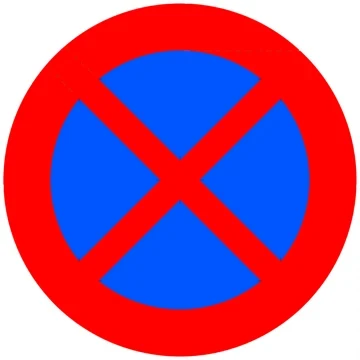 R-307
 R-308
 R-308c
24Securing your AM vehicle when leaving it
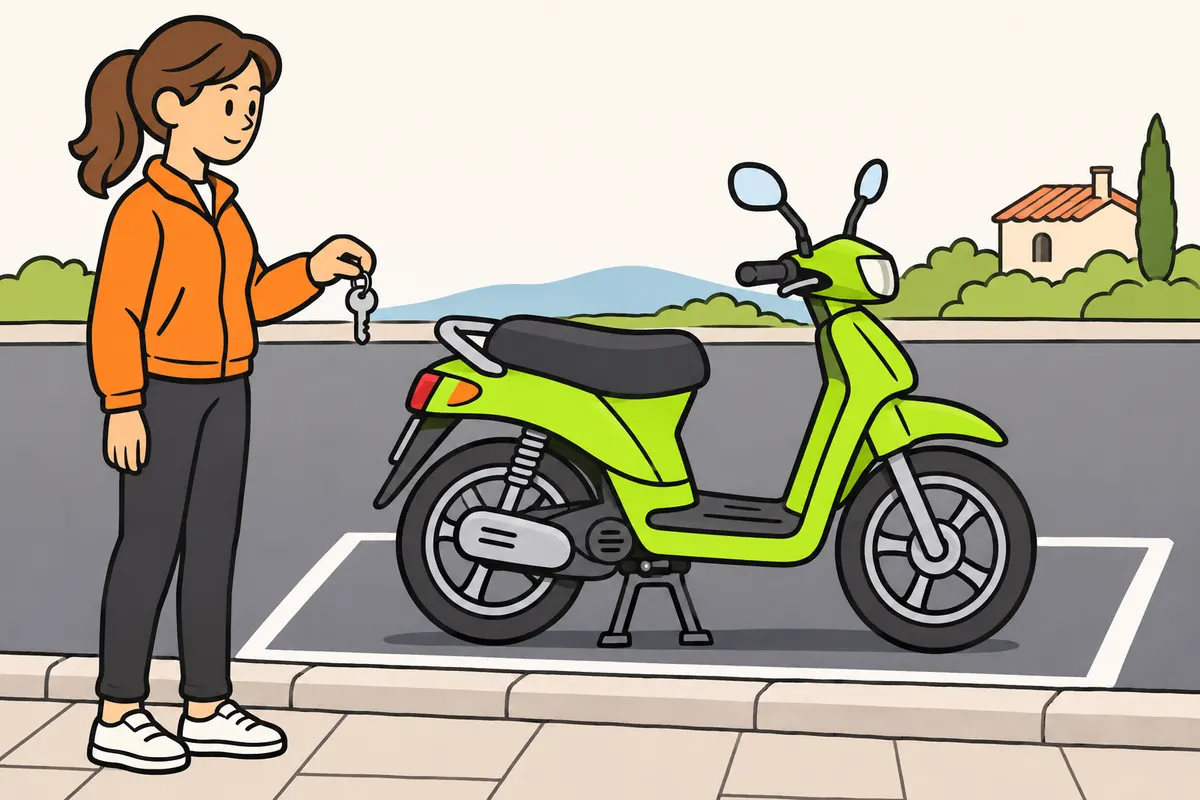
Before leaving your AM vehicle, secure it against movement and danger.
| Vehicle with a gearbox | What to select |
|---|---|
| Uphill slope | First gear |
| Downhill slope | Reverse gear |
| Where a parking position applies | Parking position |
Remember
- On a two-wheeled moped, use the stand correctly on a stable surface.
- When leaving the driving position, switch off the engine and ignition.
- If you move away, prevent unauthorised use.
- Apply the parking brake if fitted and applicable.
- Open doors only when fully stationary and when safe.
- Normally enter and leave on the side nearest the road edge.
Exam trap: Wrong: leave your quadricycle unsecured because the ground looks level. Right: prevent accidental movement and use the parking brake when applicable.
Read the full explanation
- You must prevent your vehicle from moving accidentally or creating a risk when left without a driver. On a two-wheeled moped, use its stand correctly and choose a surface that lets you leave it stable. This applies the duty to position it safely; it does not authorise you to occupy any space. [RGC, art. 91](https://www.boe.es/buscar/act.php?id=BOE-A-2003-23514#a91).
- If you leave the driving position, switch off the engine and ignition and, if you move away, take the necessary precautions to prevent unauthorised use. Apply the parking brake when your vehicle has one and it is applicable. [RGC, art. 92](https://www.boe.es/buscar/act.php?id=BOE-A-2003-23514#a92).
- In a vehicle with a gearbox, leave it in first gear on an uphill slope and reverse on a downhill slope, or in the parking position where applicable. Apply the rule according to your vehicle: do not assume an automatic moped without these positions has controls it does not possess. [RGC, art. 92](https://www.boe.es/buscar/act.php?id=BOE-A-2003-23514#a92).
- In a quadricycle with doors, do not open them or get out until it is completely stationary and you have checked that doing so creates no danger or obstruction, particularly for cyclists. As a general rule, enter and leave on the side nearest the edge of the road. [RGC, art. 114](https://www.boe.es/buscar/act.php?id=BOE-A-2003-23514#a114).
25Forced stops and hazard warnings
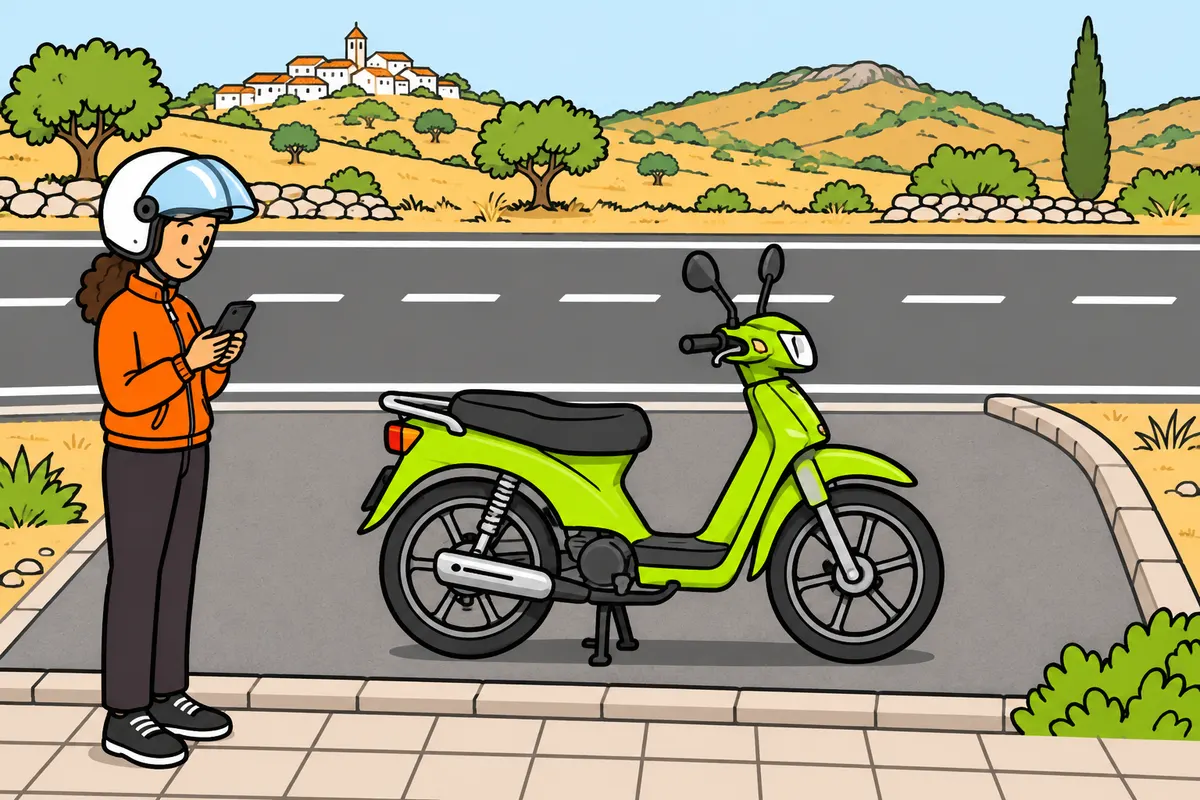
If a breakdown or accident obstructs the road, warn others and clear it promptly.
| Your AM vehicle’s situation | What you must remember |
|---|---|
| Breakdown or accident: your vehicle or load obstructs the road | If you carry a connected, certified V-16, you must use it while clearing the road; triangles do not replace it. |
| Mopeds and light quadricycles | You need not carry V-16 as equipment. |
| Congestion in a tunnel | Switch off your engine, keep position lights on and temporarily use hazards if fitted. |
Remember
- Move your vehicle off the carriageway and position it correctly if possible.
- Use hazard warning lights when required and fitted.
- At night or in poor visibility, keep required lights on when stopped on-road.
- If you cannot continue, find a safe area away from traffic.
- Avoid staying or walking in lanes or on hard shoulders.
- In an enclosed quadricycle, stay belted inside if you cannot get out safely.
Exam trap: Wrong: because your AM vehicle need not carry V-16, you never need to use it. Right: if you carry one and a breakdown or accident leaves your vehicle or load obstructing the road, you must use the connected, certified V-16 while the road is being cleared; triangles do not replace it.
Read the full explanation
- If a breakdown or accident leaves your vehicle or its load obstructing the carriageway, give a warning and take steps to remove it as soon as possible. Move it off the carriageway and position it according to the parking rules if feasible. If you can continue safely, do not occupy the lane unnecessarily. [RGC, art. 130](https://www.boe.es/buscar/act.php?id=BOE-A-2003-23514#a130).
- Use your hazard warning lights if fitted when you need to warn of your vehicle's presence; keep the position lights on in the required circumstances. At night or in reduced visibility, a stop on the carriageway or hard shoulder requires you to keep the applicable lights on. You study the lighting details in the Moped lights and signals module. [RGC, arts. 105, 109 and 130](https://www.boe.es/buscar/act.php?id=BOE-A-2003-23514#a105).
- If you carry a regulatory connected V-16, you must use it to warn that your vehicle is dangerously immobilised while the road is being cleared; the equipment requirements and device specifications are explained in “Moped lights and signals”, in the section “V-16 and breakdown warning signals”. [RGC, art. 130.4](https://www.boe.es/buscar/act.php?id=BOE-A-2003-23514#a130).
- If you cannot move off again, find a safe area outside the road platform and avoid remaining or walking in lanes or on hard shoulders. In a quadricycle with an enclosed cabin, if you cannot get out safely, remain inside with your seat belt fastened. You study what to do at a crash in the Accidents, breakdowns and first aid module. [RGC, art. 130](https://www.boe.es/buscar/act.php?id=BOE-A-2003-23514#a130).
- When stopped by congestion inside a tunnel, switch off your engine, temporarily switch on your hazard warning lights if fitted, and keep your position lights on. Remain in your vehicle and follow the relevant instructions. Do not confuse this situation with a fire or breakdown requiring other measures. [RGC, art. 97](https://www.boe.es/buscar/act.php?id=BOE-A-2003-23514#a97).
26Immobilisation ordered by officers
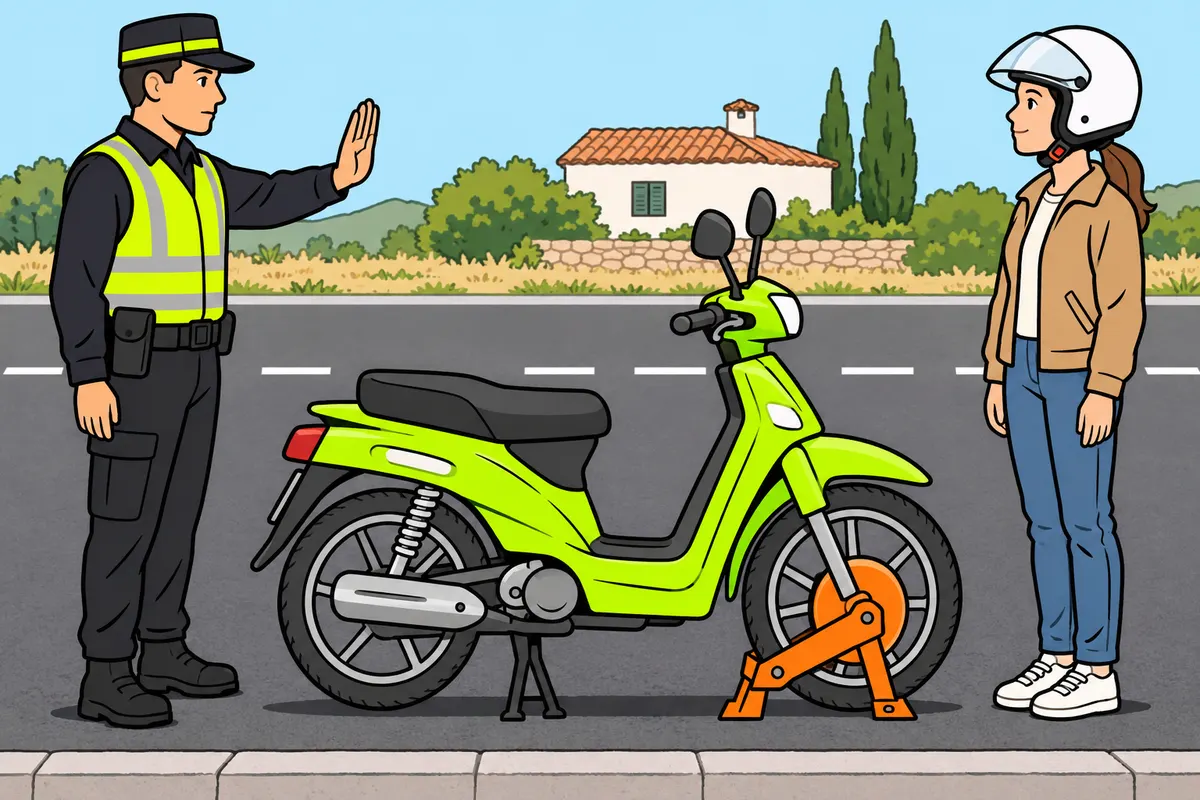
If officers immobilise your AM vehicle, do not continue until the cause is resolved.
| Measure | What happens to your AM vehicle |
|---|---|
| Immobilisation | You cannot continue while the cause remains |
| Removal | Your vehicle is taken to the pound |
| Wheel clamp | Your vehicle cannot move; you must obey the restriction |
Remember
- Serious defects, missing insurance or road-use authorisation can lead to immobilisation.
- A positive result or refusal of required tests can also cause immobilisation.
- Your moped may be immobilised if you or your passenger lacks a required helmet.
- Immobilisation ends when its cause is resolved and required checks are completed.
- For excess emissions or noise, get certification from the designated workshop.
- You must pay immobilisation costs before release; you may appeal afterwards.
Exam trap: Wrong: paying the fine lets you continue without a required helmet. Right: officers may immobilise your moped if you or your passenger lacks one; the cause must end.
Read the full explanation
- Officers may immobilise your AM vehicle in the cases laid down by law, including defects posing a particularly serious risk, lack of compulsory insurance or authorisation to use the road, a positive result or refusal to undergo required tests. This measure prevents you from continuing while its cause persists and differs from removal, which means taking your vehicle to the pound. [Ley de Tráfico (Traffic Act), art. 104](https://www.boe.es/buscar/act.php?id=BOE-A-2015-11722#a104).
- Your moped may be immobilised if you or your passenger do not wear a helmet when required. It may also be immobilised if it exceeds regulation levels of gases, smoke or noise. [Ley de Tráfico (Traffic Act), art. 104](https://www.boe.es/buscar/act.php?id=BOE-A-2015-11722#a104).
- Immobilisation is lifted when its cause ends, subject to the required checks. Officers may specify a suitable location and order you to move there. For emissions or noise, you need certification from the designated workshop confirming that the defect has been corrected. [Ley de Tráfico (Traffic Act), art. 104](https://www.boe.es/buscar/act.php?id=BOE-A-2015-11722#a104).
- Costs fall initially to you as the driver who commits the offence or, failing that, to the usual driver or lessee and then the registered keeper, subject to the legal exceptions for use against their will. You must pay them before the measure is lifted, without prejudice to your right to appeal and recover them from the person responsible. Officers may withhold the permiso de circulación (vehicle registration certificate) until you show proof of payment. [Ley de Tráfico (Traffic Act), art. 104.6](https://www.boe.es/buscar/act.php?id=BOE-A-2015-11722#a104)
- The authority may remove a vehicle that creates danger, seriously disrupts traffic or obstructs other users, in the cases laid down by law. Local ordinances may regulate removal or immobilisation in time-limited areas without a valid ticket or when triple the paid time is exceeded, until the driver is identified. A wheel clamp prevents movement, and you cannot disregard the measure. [Ley de Tráfico (Traffic Act), art. 105.1.g](https://www.boe.es/buscar/act.php?id=BOE-A-2015-11722#a105); [RGC, art. 156 (wording under RD 518/2026)](https://www.boe.es/buscar/act.php?id=BOE-A-2003-23514#a1-9).
Joining traffic safely
Look, signal and give way before entering.
- Check the access, signs and the position, course and speed of traffic.
- Ask for help if you cannot check that the exit is safe.
- Signal in advance and wait without forcing anyone to act.
- In an acceleration lane, check from the beginning and stop there if necessary.
- Join at an appropriate speed within your limits and cancel your signal once you adopt your course.
Overtaking and returning
You must be able to complete or abandon the manoeuvre safely.
- Check the permitted side, visibility, signs, oncoming traffic and space to return.
- Check that the vehicle ahead is not signalling the same movement and that nobody has started overtaking you.
- Calculate clearance, speed and the special limits applicable to your AM vehicle and the road user you overtake.
- Signal and overtake only if you can meet all the conditions.
- If a risk arises, slow down, signal and return safely.
- When you finish, signal your return, leave a margin for the vehicle you pass and move back progressively.
Turning left outside built-up areas
Procedure for your two-wheeled moped when there is no specially provided lane.
- Check that the turn is permitted and that visibility is sufficient.
- Look and signal your movement to the right.
- Position yourself on the right, off the carriageway whenever possible.
- Check both directions again and signal your turn.
- Wait for a safe gap and cross without endangering other road users.
Stopping or parking your AM vehicle
Choose a legal place and leave your vehicle stable.
- Distinguish whether you need a brief stop or parking and check the prohibitions.
- Check behind and signal your slowing down and the relevant sideways movement.
- Position yourself on the permitted side without blocking the carriageway, usable hard shoulder, crossings or accesses.
- If you reverse to complete the manoeuvre, do not exceed 15 metres or enter a junction.
- When leaving the driving position, switch off and secure your vehicle according to its controls and the slope.
- Check traffic before opening a door, getting out or rejoining traffic.
Finished this module?
Mark it as read and you will see your progress on the theory list.