
Theory · AM Licence - Moped · Module 10 of 18
Speed and safe following distances
You learn to apply the speed limits for mopeds and light quadricycles on each type of road, and to slow down when safety requires it. You understand reaction, braking and stopping distances, the separation between vehicles and the special rules for long vehicles and tunnels.
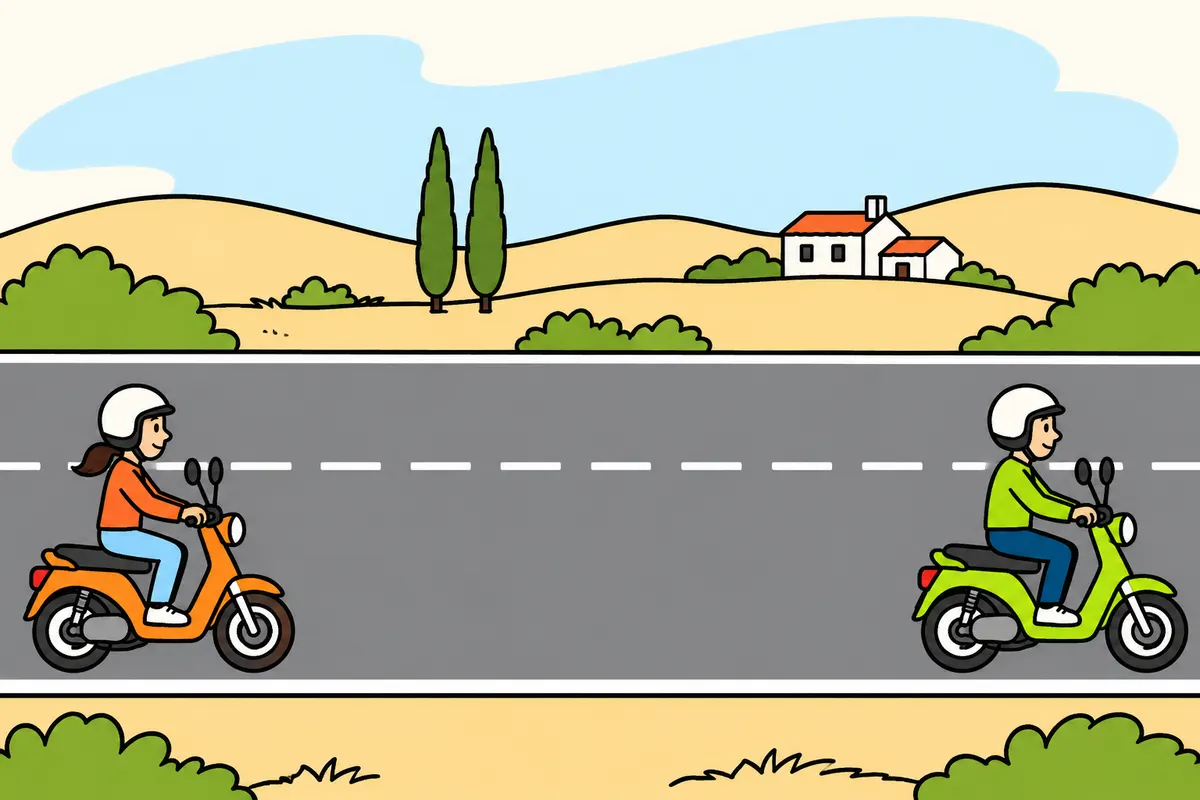
1Legal limits and appropriate speed
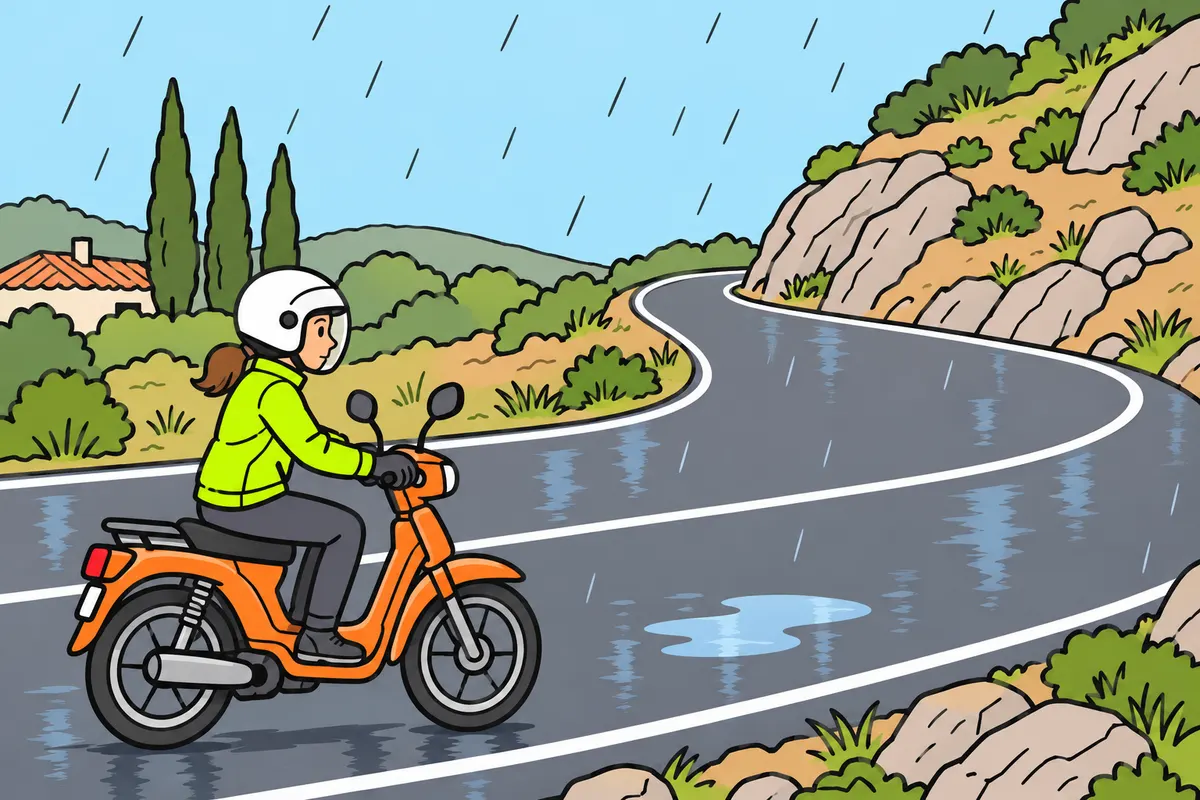
You must obey the limit and choose a safe speed for each situation.
| Speed | What you must remember |
|---|---|
| Maximum | You must not exceed it |
| Minimum | You must not go below it without a valid reason |
| Appropriate | You can travel safely in the actual conditions |
Remember
- You can travel too fast without breaking the speed limit.
- You must be able to stop within the space you can see.
- Slow down before reaching an area you cannot see.
- Consider your condition, traffic, weather, road and vehicle.
- You do not have to reach the maximum speed.
Exam trap: Wrong: staying within the limit always means safety. Right: slow down further when conditions require it.
Read the full explanation
- Maximum, minimum and appropriate speeds serve different purposes. The first two set legal limits; an appropriate speed depends on the specific circumstances. You must respect the limits applicable to your moped and choose a safe speed for that location. [RGC, art. 45](https://www.boe.es/buscar/act.php?id=BOE-A-2003-23514#a45)
- You commit a speeding offence when you exceed the applicable maximum. Your speed can be inappropriate without exceeding that maximum: for example, entering a wet bend at 30 km/h when you cannot control the moped at that speed. [RGC, art. 45](https://www.boe.es/buscar/act.php?id=BOE-A-2003-23514#a45)
- You must be able to stop within the distance you can see and before any obstacles that may appear. If a bend, a large vehicle or fog hides the road ahead, adjust your speed before reaching the hidden area; do not wait until you see an obstacle to start slowing down. [RGC, art. 45](https://www.boe.es/buscar/act.php?id=BOE-A-2003-23514#a45)
- When choosing your speed, you must assess your physical and psychological state, the road, the vehicle, its load, the weather, the surroundings and traffic. You are under no obligation to reach the maximum. [RGC, art. 45](https://www.boe.es/buscar/act.php?id=BOE-A-2003-23514#a45)
245 km/h: roads and maximum design speed
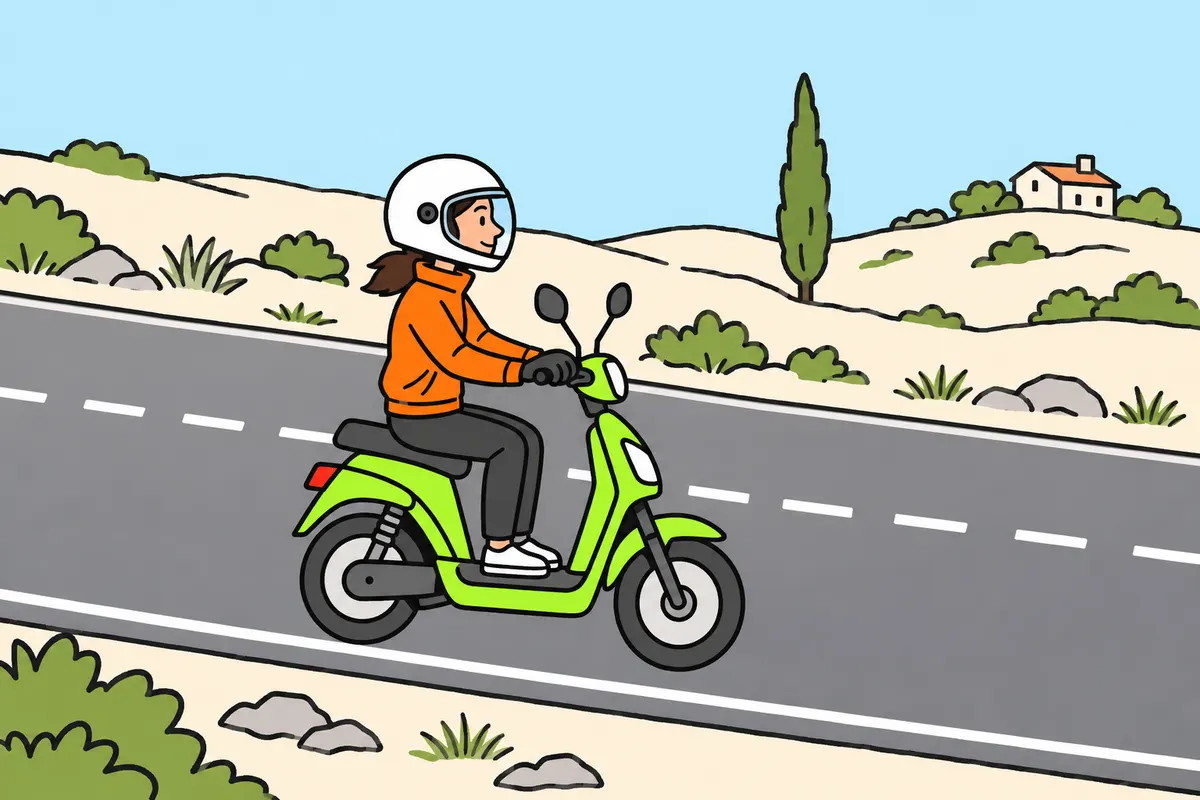
You cannot exceed 45 km/h on your moped or light quadricycle.
| Vehicles outside built-up areas | General maximum |
|---|---|
| Two- or three-wheeled mopeds and light quadricycles | 45 km/h |
| Other three-wheeled vehicles and quadricycles | 70 km/h |
Remember
- On permitted paved roads outside built-up areas, keep within 45 km/h.
- Obey any lower limit.
- Extra lanes or a wide hard shoulder do not raise your maximum.
- You must keep within your maximum downhill too.
- You have no extra speed allowance when overtaking.
- You cannot race on public roads without authorisation and special conditions.
Exam trap: Wrong: your light quadricycle can travel at 70 km/h. Right: keep within 45 km/h and any lower limit.
Read the full explanation
- Outside built-up areas, the general maximum for two- and three-wheeled mopeds and light quadricycles is 45 km/h. On urban roads, article 50 sets the general limits for all vehicles; the 45 km/h for your AM vehicle is its maximum design speed. [RGC, art. 48](https://www.boe.es/buscar/act.php?id=BOE-A-2003-23514#a48) [RGC, art. 50](https://www.boe.es/buscar/act.php?id=BOE-A-2003-23514#a50) [Ley de Tráfico (Traffic Act), annex I.9](https://www.boe.es/buscar/act.php?id=BOE-A-2015-11722#ani)
- On a paved conventional road outside a built-up area, the number of lanes, the width of the arcén (hard shoulder) or physical separation between directions does not increase your moped’s general maximum. You must obey any lower limit applicable to the section. [RGC, art. 48](https://www.boe.es/buscar/act.php?id=BOE-A-2003-23514#a48)
- The exception allowing bicycles to exceed their general maximum on certain sections applies to bicycles. If you ride a moped downhill outside a built-up area, your 45 km/h limit still applies: neither the gradient nor releasing the accelerator authorises you to exceed it. [RGC, art. 48](https://www.boe.es/buscar/act.php?id=BOE-A-2003-23514#a48)
- The 70 km/h maximum for certain three-wheeled vehicles and quadricycles applies to categories other than three-wheeled mopeds and light quadricycles. You must apply the limit for your category: having three or four wheels does not determine the permitted speed on its own. [RGC, art. 48](https://www.boe.es/buscar/act.php?id=BOE-A-2003-23514#a48)
- You must also respect the maximum when overtaking. You must not race others on a public road either; authorised competitions require the conditions and measures set by the competent authority. [RGC, art. 48](https://www.boe.es/buscar/act.php?id=BOE-A-2003-23514#a48) [RGC, art. 55](https://www.boe.es/buscar/act.php?id=BOE-A-2003-23514#a55)
3Tracks and unpaved roads
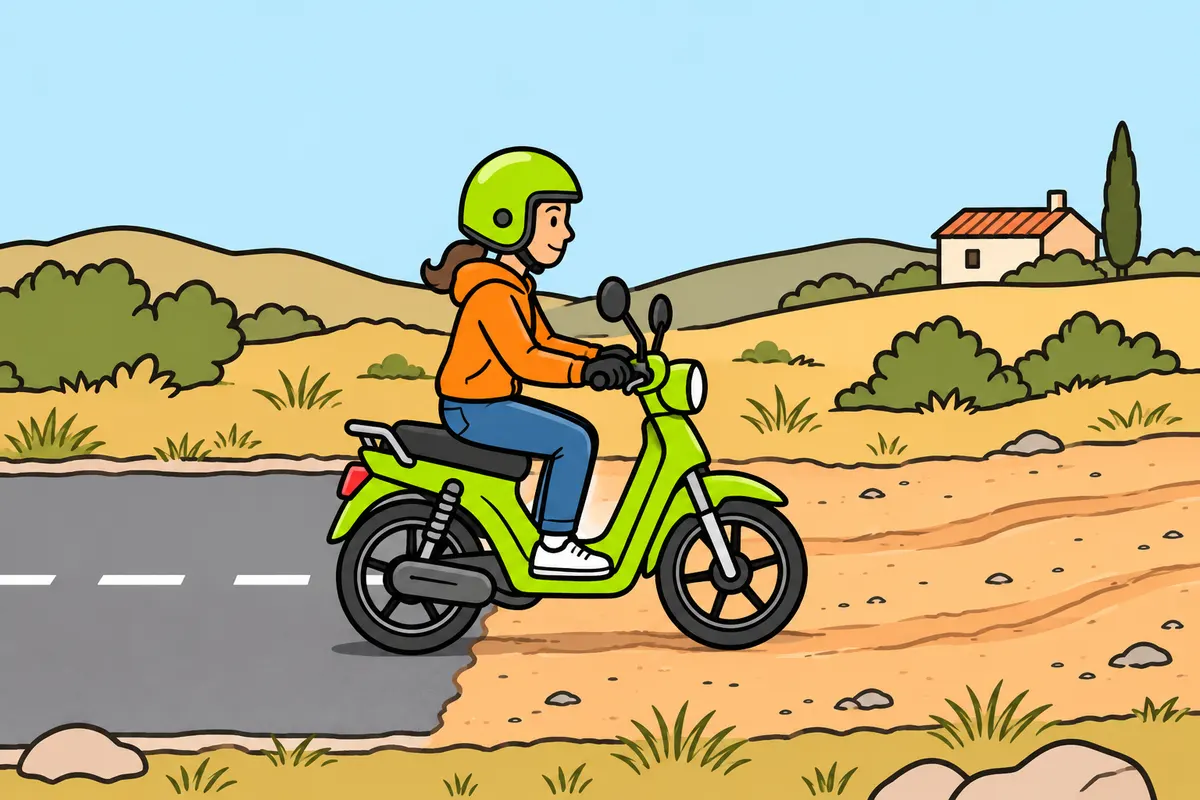
On unpaved roads, you must keep within 30 km/h and any lower limit.
| Road outside built-up areas | Mopeds and light quadricycles: maximum without lower limits |
|---|---|
| Permitted paved conventional road | 45 km/h |
| Unpaved road | 30 km/h |
Remember
- Check the surface, rather than just the road’s name.
- Slow down before entering the unpaved road.
- Slow down further for mud, gravel or poor visibility.
Exam trap: Wrong: every track has the same limit. Right: check whether it is paved and which limits apply.
Read the full explanation
- On an unpaved road, the maximum speed limit is 30 km/h. You must also apply it to your moped or light quadricycle, even though its own maximum is 45 km/h. [RGC, art. 48](https://www.boe.es/buscar/act.php?id=BOE-A-2003-23514#a48)
- On a track, you must consider the surface and the rules for the section to determine your maximum speed. The 30 km/h limit relates to the unpaved surface, rather than the informal name of the road. [RGC, art. 48](https://www.boe.es/buscar/act.php?id=BOE-A-2003-23514#a48)
- The 30 km/h limit is a legal ceiling, rather than a recommendation to maintain that speed on gravel, mud or ruts. You must slow down further when grip, stability or visibility requires it. On two wheels, slowing down early prevents you from reaching a surface that makes braking difficult at excessive speed. [RGC, art. 48](https://www.boe.es/buscar/act.php?id=BOE-A-2003-23514#a48)
- For example, if you leave a paved conventional road with no lower limit and enter a dirt road, your maximum changes from 45 to 30 km/h. You must slow down safely and sufficiently early to obey the limit from the start of the unpaved road. [RGC, art. 48](https://www.boe.es/buscar/act.php?id=BOE-A-2003-23514#a48)
4Streets with a shared level surface
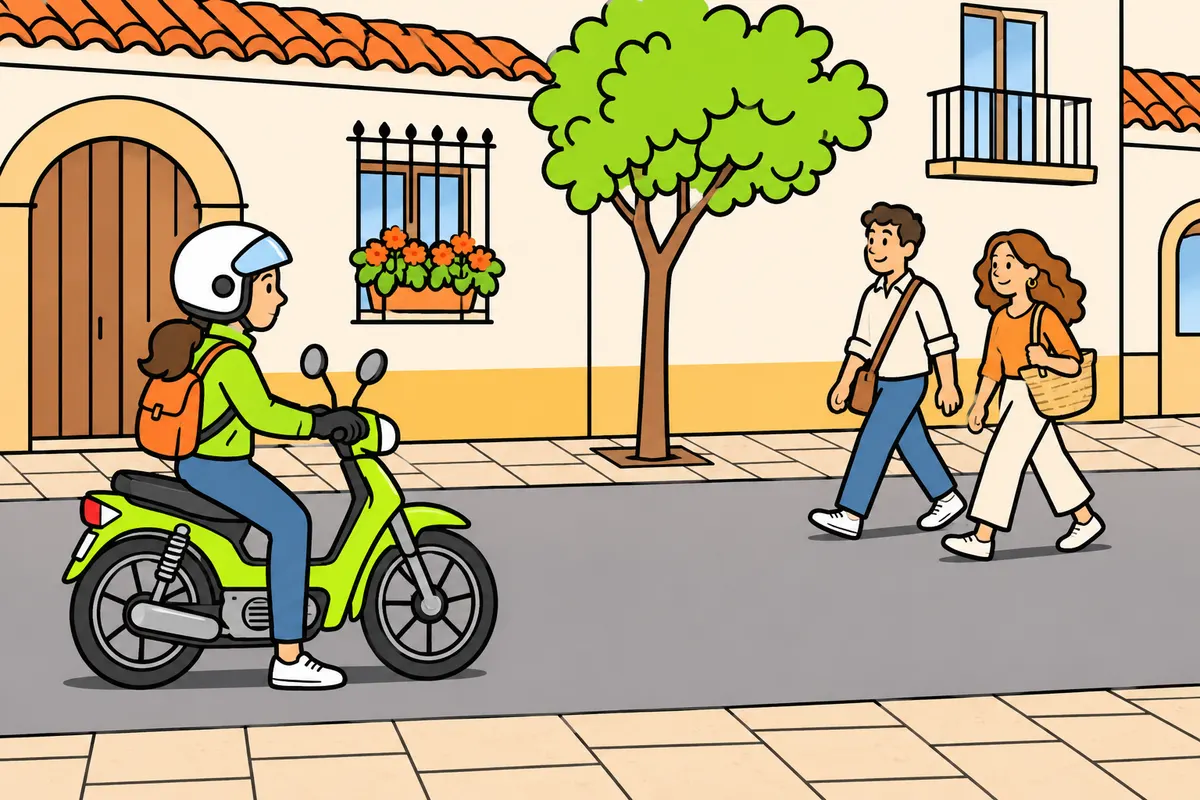
Where the road and pavement share one level surface, your general urban maximum is 20 km/h.
Remember
- Check that the road and pavement share the same level surface.
- A narrow street alone does not mean this limit applies.
- You must obey this limit on mopeds and light quadricycles too.
- If a sign shows 10 km/h, obey that lower limit.
- Slow down further near pedestrians, and stop if necessary.
Exam trap: Wrong: you can maintain 20 km/h with pedestrians at risk. Right: slow down further or stop when necessary.
Read the full explanation
- On urban roads where the carriageway and pavement share a single level surface, the general maximum is 20 km/h. The carriageway and pavement share the same level surface; a narrow street or light traffic alone does not determine this limit. [RGC, art. 50](https://www.boe.es/buscar/act.php?id=BOE-A-2003-23514#a50)
- On a shared level surface, the street’s limit takes precedence over your moped or light quadricycle’s ability to reach a higher speed. [RGC, art. 50](https://www.boe.es/buscar/act.php?id=BOE-A-2003-23514#a50) [Ley de Tráfico (Traffic Act), annex I.9](https://www.boe.es/buscar/act.php?id=BOE-A-2015-11722#ani)
- The municipal authority can lower general urban limits through specific signs. If you encounter a 10 km/h maximum applicable to you on a shared level surface, that is your ceiling. [RGC, art. 50](https://www.boe.es/buscar/act.php?id=BOE-A-2003-23514#a50)
- You must adjust your speed further when pedestrians appear or may enter your path. The 20 km/h maximum does not remove your obligation to stop if necessary. The Pedestrians and vulnerable road users module, in the “Pavements, shared surfaces and sharing space” section, explains the priority rules in these spaces. [RGC, art. 50](https://www.boe.es/buscar/act.php?id=BOE-A-2003-23514#a50)
5One lane in each direction: 30 km/h
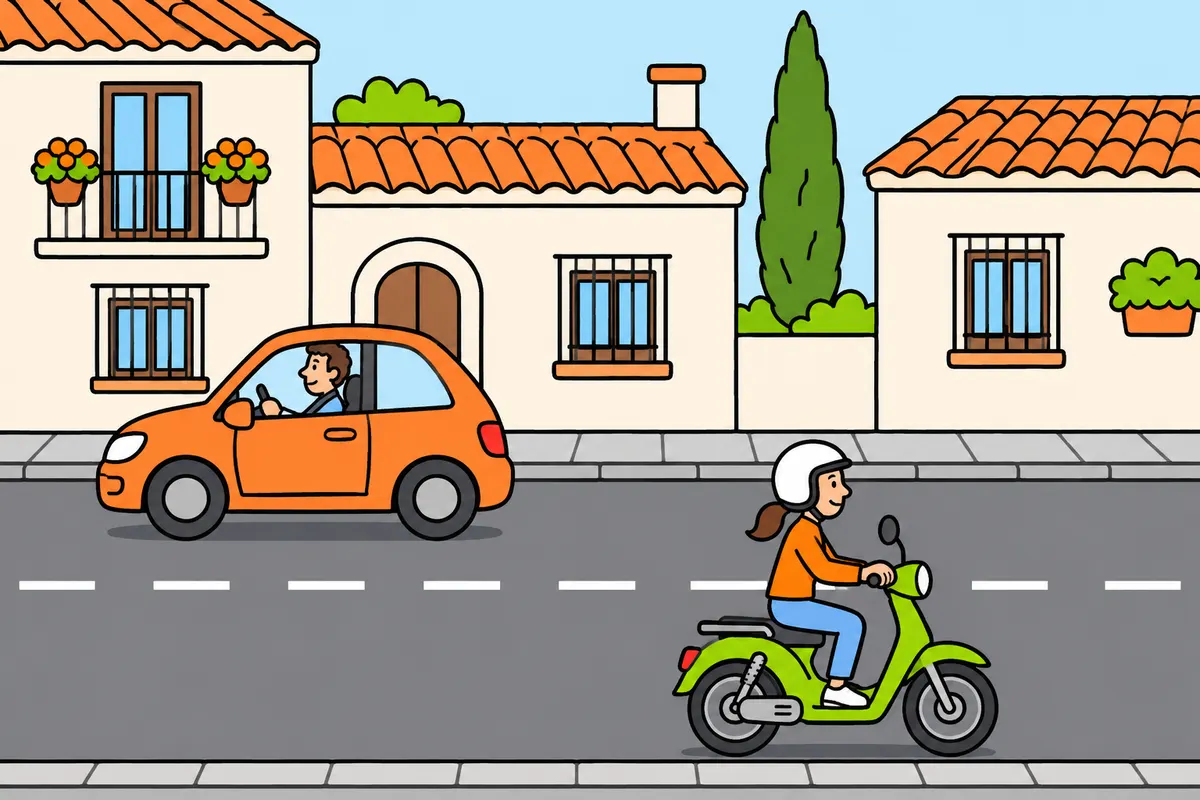
On urban streets with one lane each way, you normally apply 30 km/h.
| Urban street with one lane each way | Maximum for your moped or light quadricycle |
|---|---|
| No specific rule changes the general limit | 30 km/h |
| 40 km/h sign | 40 km/h |
| Limit raised by signs to 50 km/h | 45 km/h |
Remember
- Apply the general limit even without a sign.
- Do not count reserved lanes or lanes only for public transport.
- The council can raise the limit to 50 km/h through specific signs.
- Even then, keep your moped or light quadricycle within 45 km/h.
- If a sign shows 40 km/h, obey 40 km/h.
Exam trap: Wrong: you count a bus-only lane as another ordinary lane. Right: exclude it when counting lanes in each direction.
Read the full explanation
- On an urban road with one lane in each direction, the general maximum is 30 km/h. You must apply it to two- or three-wheeled mopeds and light quadricycles alike. This general limit applies even without a 30 sign. [RGC, art. 50](https://www.boe.es/buscar/act.php?id=BOE-A-2003-23514#a50)
- When counting lanes, exclude those reserved for particular users and those exclusively for public transport. A street with one ordinary lane and one bus-only lane in your direction does not therefore fall under the general rules for two ordinary lanes. [RGC, art. 50](https://www.boe.es/buscar/act.php?id=BOE-A-2003-23514#a50)
- Exceptionally, the municipal authority can raise the limit on an urban road with one lane in each direction to 50 km/h through specific signs. On your moped or light quadricycle, you must respect its maximum design speed of up to 45 km/h and any applicable lower limit. [RGC, art. 50](https://www.boe.es/buscar/act.php?id=BOE-A-2003-23514#a50) [Ley de Tráfico (Traffic Act), annex I.9](https://www.boe.es/buscar/act.php?id=BOE-A-2015-11722#ani)
- If the road with one lane has a signed maximum of 40 km/h, you must obey 40. If no specific regulation changes the general limit, you must apply 30. [RGC, art. 50](https://www.boe.es/buscar/act.php?id=BOE-A-2003-23514#a50)
6Multiple lanes and through roads
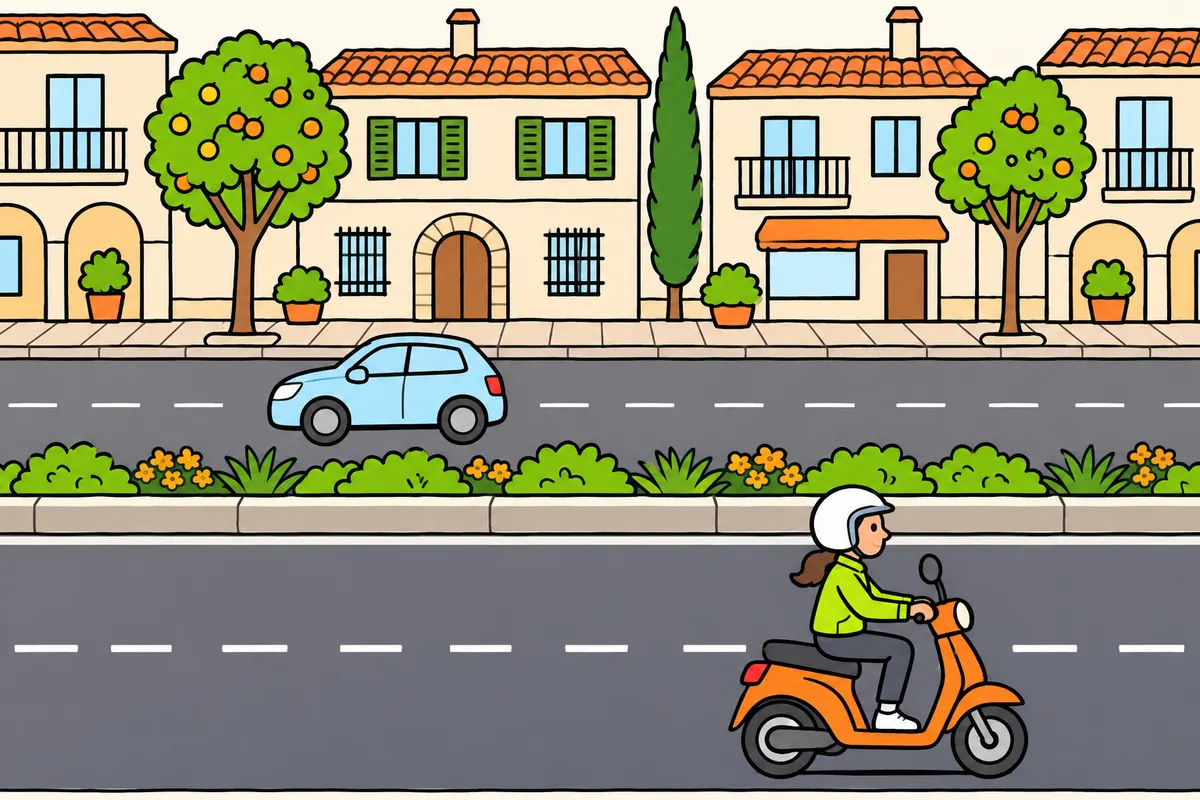
On wide urban roads and through roads, obey your vehicle’s maximum and any lower limits.
| Road | General maximum | Mopeds and light quadricycles: maximum without lower limits |
|---|---|---|
| Urban road with two or more lanes each way | 50 km/h | 45 km/h |
| Through road in a built-up area | 50 km/h | 45 km/h |
Remember
- Count lanes in your direction, without adding lanes going the other way.
- On through roads, one lane each way does not automatically mean 30 km/h.
- If a sign limits you to 30 km/h, obey that maximum.
Exam trap: Wrong: your light quadricycle can reach 50 km/h on a wide urban road. Right: obey 45 km/h and any lower limit.
Read the full explanation
- On urban roads with two or more lanes in each direction, the general maximum is 50 km/h for all vehicles. On your moped or light quadricycle, you must respect its maximum design speed of up to 45 km/h. If 30 or 40 is signed, you must obey that lower figure. [RGC, art. 50](https://www.boe.es/buscar/act.php?id=BOE-A-2003-23514#a50) [Ley de Tráfico (Traffic Act), annex I.9](https://www.boe.es/buscar/act.php?id=BOE-A-2015-11722#ani)
- To apply the urban limit, count the lanes in each direction separately: a street with one lane each way has one lane in each direction. [RGC, art. 50](https://www.boe.es/buscar/act.php?id=BOE-A-2003-23514#a50)
- On a travesía (through road in a built-up area), the general limit is 50 km/h. On your moped or light quadricycle, you must respect its maximum design speed of up to 45 km/h and any lower limit. The specific rule for through roads applies even when they have only one lane in each direction. [RGC, art. 50](https://www.boe.es/buscar/act.php?id=BOE-A-2003-23514#a50) [Ley de Tráfico (Traffic Act), annex I.9](https://www.boe.es/buscar/act.php?id=BOE-A-2015-11722#ani)
- The limit on a through road can be lowered through municipal agreement with the road authority and specific signs. On a through road signed at 30, your maximum is 30. These rules differ from those for an ordinary urban street, even if both have buildings alongside. [RGC, art. 50](https://www.boe.es/buscar/act.php?id=BOE-A-2003-23514#a50)
7Roads you cannot use
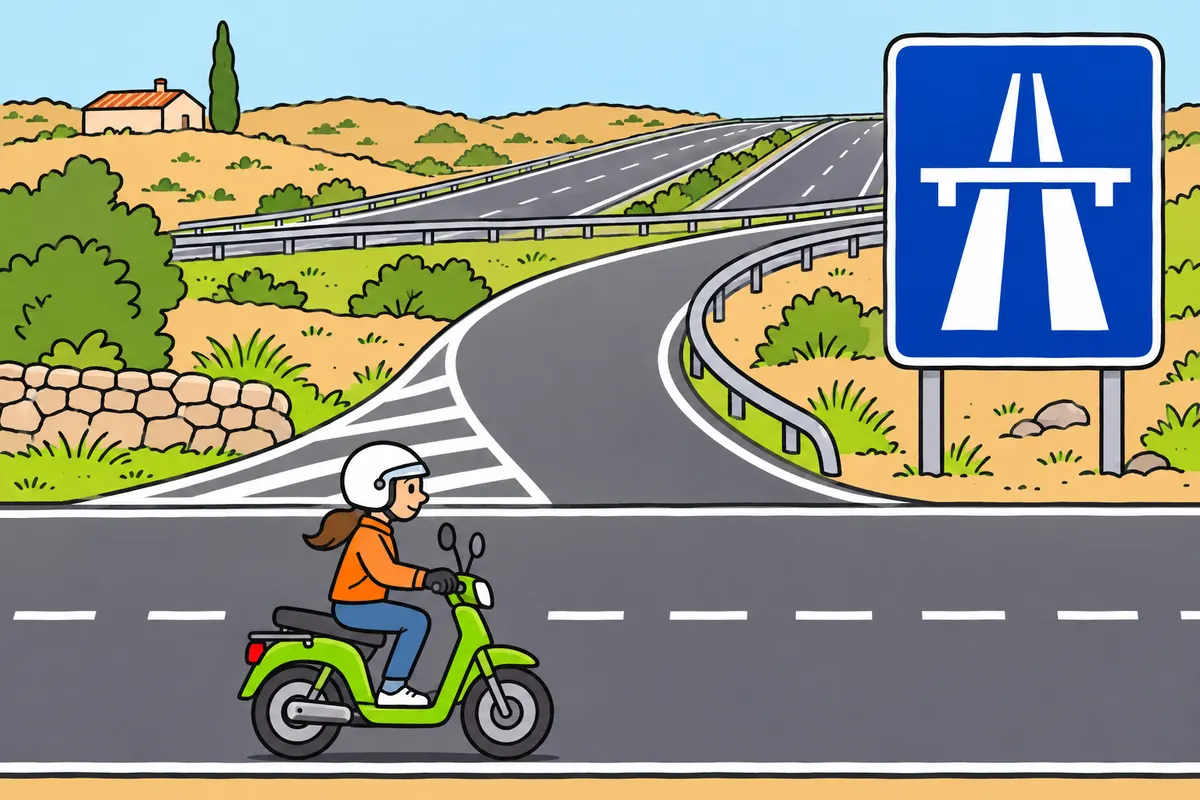
You cannot use autopistas, autovías or roads reserved for automobiles on mopeds or light quadricycles.
Remember
- Do not enter autopistas or autovías, even within built-up areas.
- Going slowly or using the hard shoulder does not allow entry.
- You cannot use the exceptions for bicycles.
- S-3 marks a road reserved for automobiles: you cannot enter.
Exam trap: Wrong: reaching the minimum lets you enter an autovía. Right: entry remains prohibited for your moped or light quadricycle.
Read the full explanation
- You cannot ride your moped on autopistas (motorways) or autovías (dual carriageway motorways). The prohibition also covers light quadricycles included in the moped category. [RGC, art. 38](https://www.boe.es/buscar/act.php?id=BOE-A-2003-23514#a38)
- The access prohibition also covers sections of autopistas and autovías within built-up areas; the general 80 km/h limit on those sections applies to vehicles allowed to use them. [RGC, art. 38](https://www.boe.es/buscar/act.php?id=BOE-A-2003-23514#a38) [RGC, art. 50](https://www.boe.es/buscar/act.php?id=BOE-A-2003-23514#a50)
- The exception allowing certain bicycles onto the hard shoulders of autovías applies to that vehicle category; the Using the road with a moped module, in the “Autopistas and autovías: access prohibited” section, explains its conditions. [RGC, art. 38](https://www.boe.es/buscar/act.php?id=BOE-A-2003-23514#a38)
- You cannot use a road reserved for motor vehicles other than mopeds, identified at its entrance by sign S-3, on your moped or light quadricycle: it is reserved for automóviles, a category that excludes mopeds. The Essential definitions for AM and Using the road with a moped modules explain the definitions of these roads. [Ley de Tráfico (Traffic Act), annex I.9, I.12, I.13 and I.68](https://www.boe.es/buscar/act.php?id=BOE-A-2015-11722#ani) [RGC, annex I, sign S-3](https://www.boe.es/buscar/act.php?id=BOE-A-2003-23514#ani)
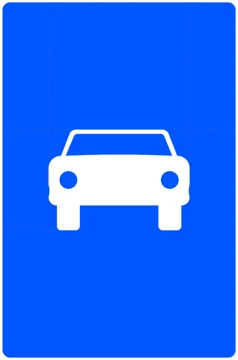 S-3
8Signs and specific limits
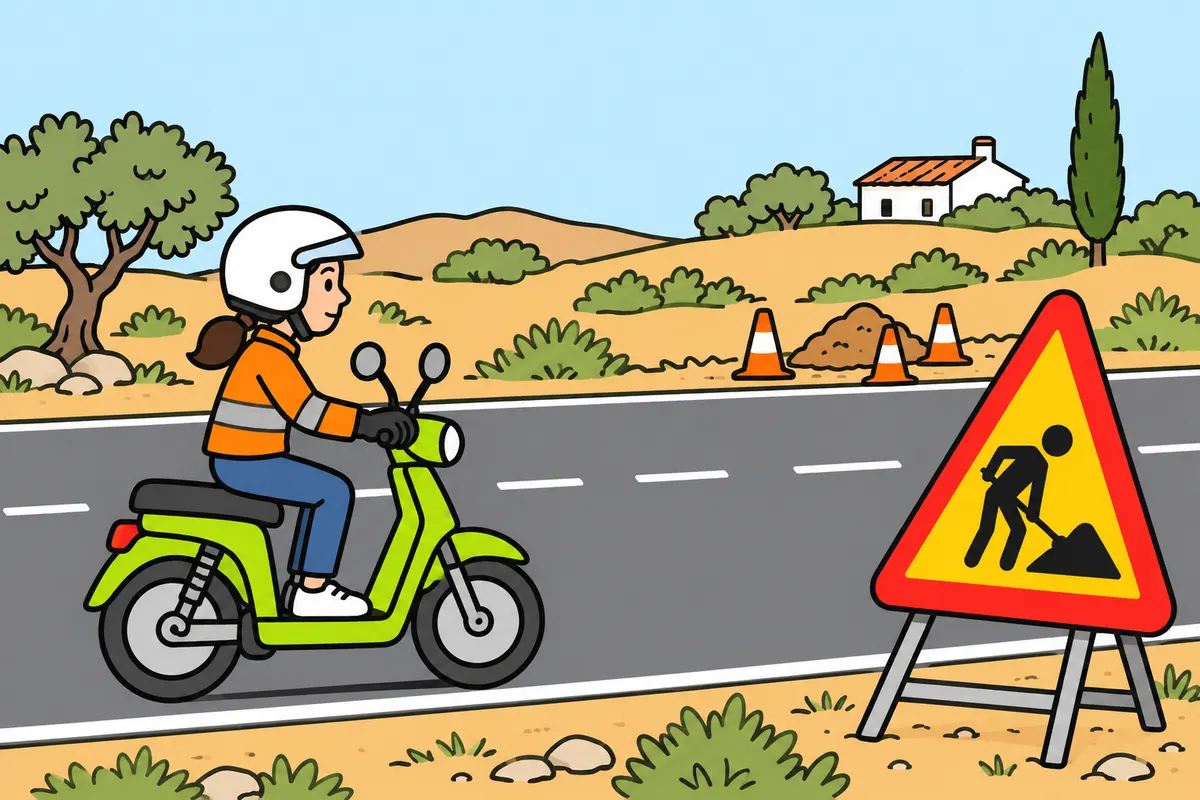
You must obey signs without exceeding your moped’s maximum.
| Sign | What you must do |
|---|---|
| R-301: maximum speed | Do not exceed the figure or your vehicle’s maximum |
| R-411: minimum speed | Keep to the minimum unless safety gives you a valid reason |
| S-7: recommended maximum speed | Treat it as advice; obey your compulsory limits |
Remember
- Obey temporary signs and variable signs too.
- Without specific limits, apply the general limits.
- A sign showing a higher speed does not raise your vehicle’s maximum.
- Do not maintain a minimum when traffic or road conditions make it dangerous.
Exam trap: Wrong: a 60 sign lets your moped reach 60 km/h. Right: you cannot exceed 45 km/h.
Read the full explanation
- You must obey specific limits established by signs and, in their absence, the applicable general limits. Authorities can impose temporary limits through temporary or variable signs. A familiar road may require a different speed because of roadworks or other traffic conditions. [RGC, art. 47](https://www.boe.es/buscar/act.php?id=BOE-A-2003-23514#a47)
- Sign R-301, Maximum speed, sets the indicated ceiling in km/h. If it shows 40, you cannot travel at 45; if it shows 60, you cannot exceed your moped's 45 km/h maximum design speed. You must comply with both the road restriction and your vehicle restriction. [RGC, art. 47](https://www.boe.es/buscar/act.php?id=BOE-A-2003-23514#a47) [RGC, annex I](https://www.boe.es/buscar/act.php?id=BOE-A-2003-23514#ani) [Ley de Tráfico (Traffic Act), annex I.9](https://www.boe.es/buscar/act.php?id=BOE-A-2015-11722#ani)
- Sign R-411, Minimum speed, requires you to observe the indicated minimum, subject to justified safety reasons. Its shape and meaning differ from R-301. You cannot choose a dangerous speed to comply with a minimum when traffic or road conditions prevent you from maintaining it safely. [RGC, art. 47](https://www.boe.es/buscar/act.php?id=BOE-A-2003-23514#a47) [RGC, annex I](https://www.boe.es/buscar/act.php?id=BOE-A-2003-23514#ani)
- Sign S-7, Recommended maximum speed, gives advice, rather than permission to exceed your maximum. If it recommends 70, your moped remains limited to 45. [RGC, art. 47](https://www.boe.es/buscar/act.php?id=BOE-A-2003-23514#a47) [RGC, annex I](https://www.boe.es/buscar/act.php?id=BOE-A-2003-23514#ani) [Ley de Tráfico (Traffic Act), annex I.9](https://www.boe.es/buscar/act.php?id=BOE-A-2015-11722#ani)
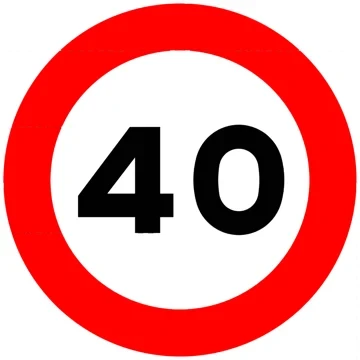 R-301
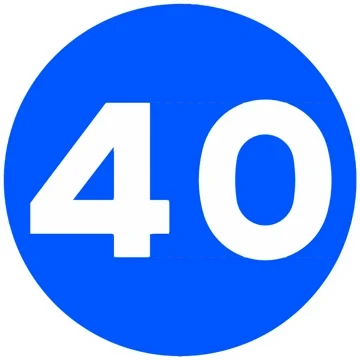 R-411
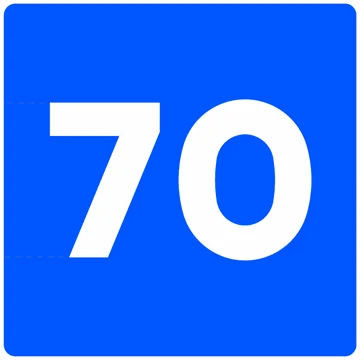 S-7
9Trailers and particular restrictions
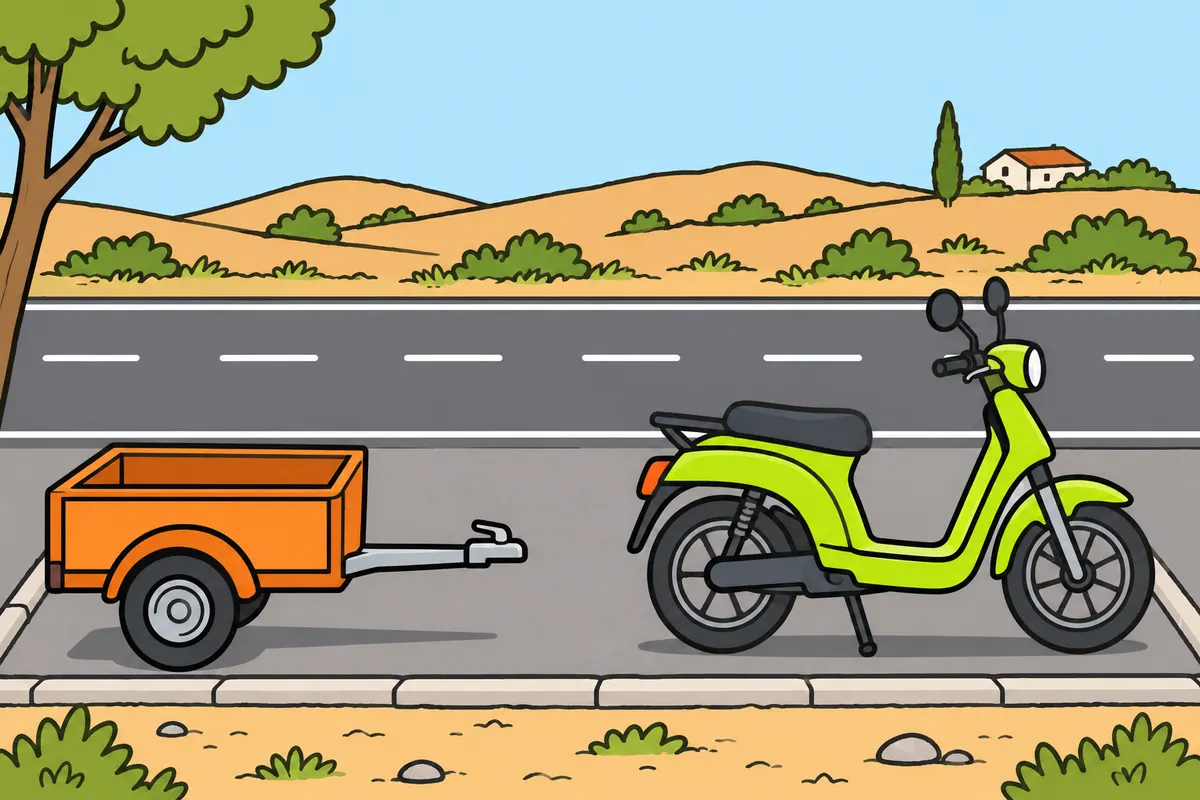
You may tow under RGC conditions and must reduce general speeds outside built-up areas.
| Road | Moped towing a trailer: maximum without lower limits |
|---|---|
| Paved road outside built-up areas | 40.5 km/h |
| Unpaved road | 27 km/h |
Remember
- The RGC allows towing with conditions; the RGV still states a prohibition.
- Check mass, time and occupants in “Passengers and loads on a moped”.
- Obey lower signed limits, and slow down further if necessary.
- Do not round your maximum speed upwards.
- In towns, obey municipal rules; do not automatically apply the reduction.
Exam trap: Wrong: you subtract 10 km/h for towing a trailer. Right: reduce the general speeds outside built-up areas by 10 %.
Read the full explanation
- The RGC, art. 12.3, allows mopeds to tow a trailer or semi-trailer subject to conditions, while the RGV, art. 21.3, retains a prohibition in its text; the Passengers and loads on a moped module explains the mass, time-of-day and occupancy conditions. [RGC, art. 12.3](https://www.boe.es/buscar/act.php?id=BOE-A-2003-23514#a12) [RGV, art. 21.3](https://www.boe.es/buscar/act.php?id=BOE-A-1999-1826#a21)
- You must reduce the general speeds in article 48 by 10 % when towing a trailer. Calculate one tenth of the relevant limit and subtract it to obtain the combination's maximum. This reduction applies alongside any lower specific limit you encounter on the road. [RGC, art. 12.3](https://www.boe.es/buscar/act.php?id=BOE-A-2003-23514#a12)
- On a paved road outside a built-up area, reducing the general maximum of 45 km/h by 10 % gives 40.5 km/h: the reduction is 4.5 km/h. You must obey that result without rounding it upwards. If the section has a lower signed maximum, you must also obey that limit. [RGC, art. 12.3](https://www.boe.es/buscar/act.php?id=BOE-A-2003-23514#a12) [RGC, art. 48](https://www.boe.es/buscar/act.php?id=BOE-A-2003-23514#a48)
- On an unpaved road, reducing the general maximum of 30 km/h by 10 % gives 27 km/h when towing a trailer. You must choose an even lower speed when the surface, load or visibility requires it. The calculated figure is a maximum, rather than a speed you must maintain. [RGC, art. 12.3](https://www.boe.es/buscar/act.php?id=BOE-A-2003-23514#a12) [RGC, art. 48](https://www.boe.es/buscar/act.php?id=BOE-A-2003-23514#a48)
- When towing a trailer in urban traffic, you must comply with the relevant municipal ordinances. Article 12.3's reference to the speeds in article 48 does not automatically reduce every urban limit. [RGC, art. 12.3](https://www.boe.es/buscar/act.php?id=BOE-A-2003-23514#a12)
10Minimum speeds
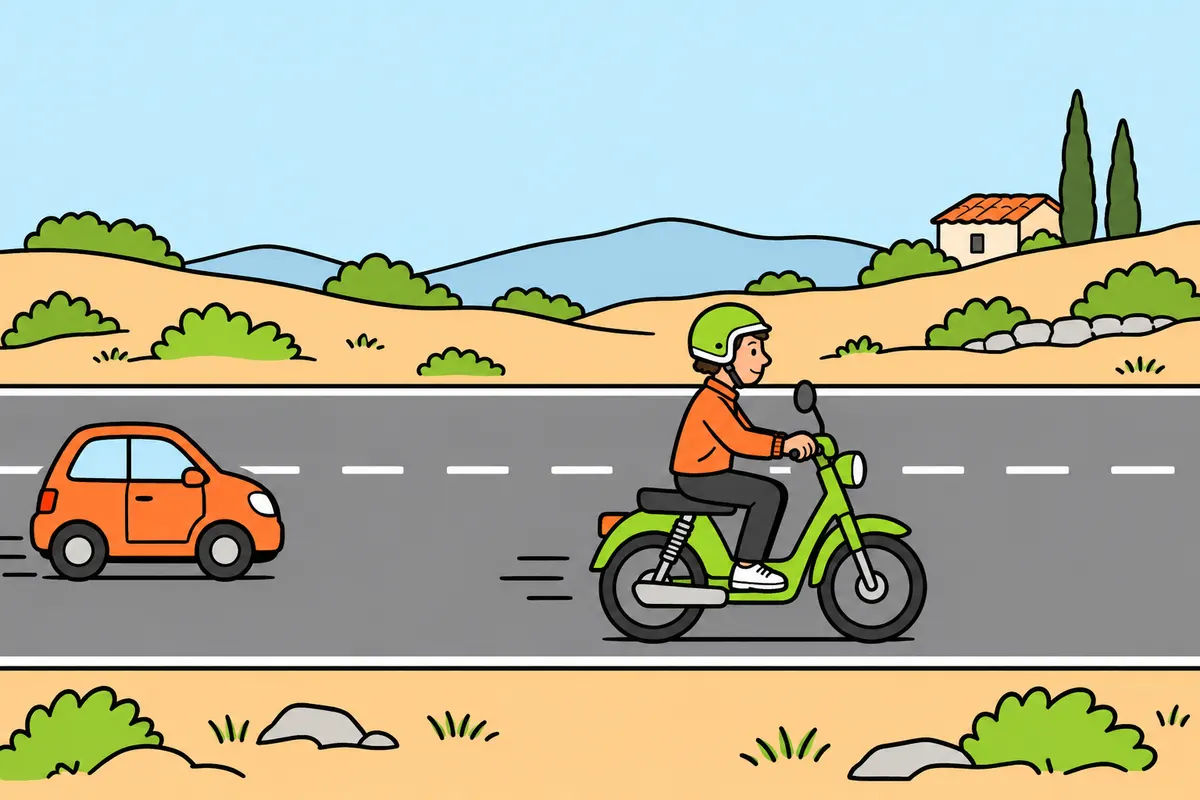
Your minimum is half the general speed for your vehicle category on that road.
Remember
- This rule applies on roads other than autopistas and autovías.
- Find the general speed for your vehicle category and road.
- Do not automatically use a signed maximum to calculate the minimum.
- Do not automatically use your vehicle’s maximum design speed either.
- You must obey this rule even without other vehicles around.
- You cannot enter autopistas or autovías on your moped.
Exam trap: Wrong: the minimum is the same on every road. Right: use half the general speed for your vehicle category on that road, unless you have a valid reason.
Read the full explanation
- Away from autopistas and autovías, you cannot travel without justification at less than half the general speed for your vehicle category on that road. The rule applies even if there are no other vehicles, and aims to prevent abnormally slow progress that obstructs traffic. [RGC, art. 49.1](https://www.boe.es/buscar/act.php?id=BOE-A-2003-23514#a49)
- To identify the basis for the minimum, consider the general speed for the category and road. Maximum design speed describes a characteristic of the moped; a maximum speed sign sets a specific limit. Neither of these references alone replaces the general speed referred to in article 49.1. [RGC, art. 49.1](https://www.boe.es/buscar/act.php?id=BOE-A-2003-23514#a49)
- The general minimum of 60 km/h on autopistas and autovías applies to motor vehicles allowed to use them; the Using the road with a moped module explains the access conditions for your AM vehicle. [RGC, art. 49.1](https://www.boe.es/buscar/act.php?id=BOE-A-2003-23514#a49) [RGC, art. 38](https://www.boe.es/buscar/act.php?id=BOE-A-2003-23514#a38)
11When you can travel below the minimum
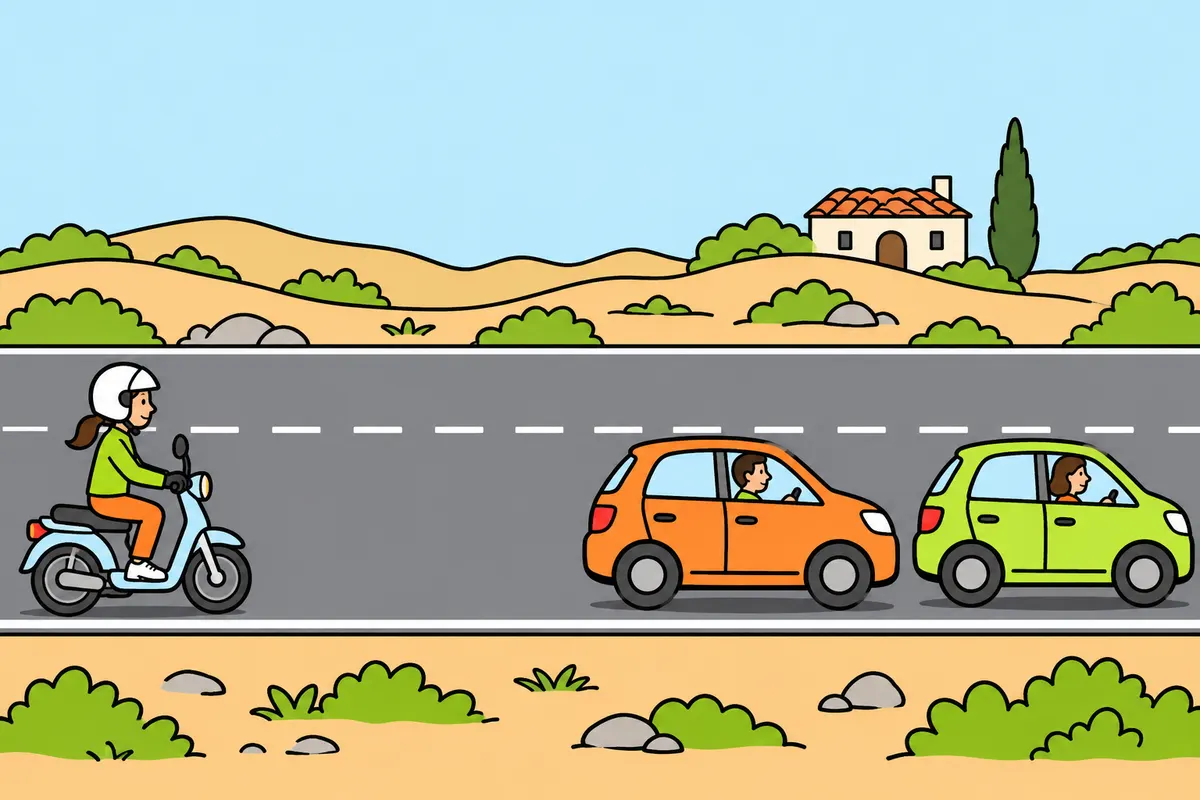
You can travel below the minimum when traffic, road or vehicle conditions require it.
Remember
- You can go more slowly if a higher speed would be dangerous.
- In a queue, adjust your speed and keep your distance.
- You do not have to overtake to reach the minimum.
- Simply preferring to travel very slowly is not enough.
- You cannot automatically claim exceptions for special vehicles or services.
- Below the minimum, with rear-end collision risk, use hazard lights if fitted.
Exam trap: Wrong: you must reach the minimum even on a dangerous surface. Right: go below it when maintaining it would be unsafe.
Read the full explanation
- You can travel below the minimum when traffic, the vehicle or the road prevents you from maintaining a higher speed safely. A queue, a breakdown or a dangerous surface may require it. You must consider the actual cause, without confusing a safety need with a preference for travelling very slowly. [RGC, art. 49](https://www.boe.es/buscar/act.php?id=BOE-A-2003-23514#a49)
- If the vehicle ahead moves slowly in a queue, keep your distance and adjust your speed, even below the general minimum. Safety and the circumstances justify that reduced speed. [RGC, art. 49](https://www.boe.es/buscar/act.php?id=BOE-A-2003-23514#a49)
- The regulations also provide exceptions for special vehicles, abnormal loads and protection or escort services. In ordinary driving, your lower speed must respond to the traffic, road or vehicle circumstances indicated in the previous section. [RGC, art. 49](https://www.boe.es/buscar/act.php?id=BOE-A-2003-23514#a49)
- When you cannot reach the required minimum and there is a risk of a rear-end collision, you must use your indicators as hazard warning lights while travelling, if you have this equipment. This warning serves a different purpose from a speed sign or advance warning of a stationary vehicle. [RGC, art. 49](https://www.boe.es/buscar/act.php?id=BOE-A-2003-23514#a49)
12Pedestrians, cyclists and access points
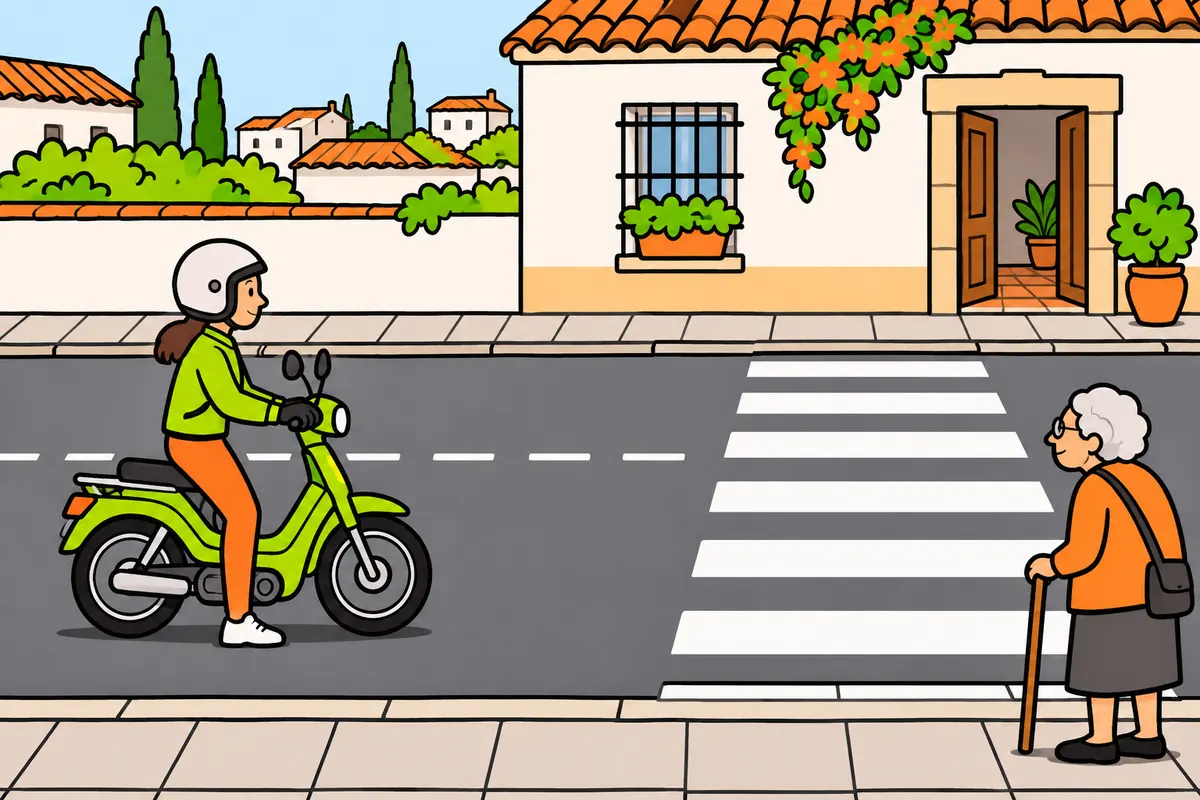
You must slow down where people, cyclists or animals may enter your path.
Remember
- For pedestrians present or expected, slow down and stop if necessary.
- Watch especially for children, older people, blind people and people with reduced mobility.
- Slow near cycles, cycle-road junctions and crossings without traffic lights or an officer.
- Slow near markets, schools and places where you expect children.
- Slow near buildings opening directly onto your part of the road.
- Slow near animals and stopped buses, especially school buses; people may be hidden.
Exam trap: Wrong: sounding your horn is enough near pedestrians. Right: slow down and prepare to stop.
Read the full explanation
- You must slow down and stop if necessary when pedestrians are in your path or can reasonably be expected to enter it. Pay particular attention to children, older people, blind people and people with reduced mobility. [RGC, art. 46](https://www.boe.es/buscar/act.php?id=BOE-A-2003-23514#a46)
- You must slow down when approaching cycles, junctions with and areas near cycle-only roads, and pedestrian crossings without traffic lights or an officer controlling them. You must also do so near markets, schools and places where you can expect children. [RGC, art. 46](https://www.boe.es/buscar/act.php?id=BOE-A-2003-23514#a46)
- Buildings with direct access to the part of the road you use require particular caution with your speed. A door, doorway or access point can conceal people about to emerge. You must keep space and a speed that allows you to respond without relying on a sudden turn of the handlebars. [RGC, art. 46](https://www.boe.es/buscar/act.php?id=BOE-A-2003-23514#a46)
- You must slow down when animals are present or may enter your path, and when approaching a stopped bus, especially a school bus. Watch the hidden areas in front of and behind the bus. [RGC, art. 46](https://www.boe.es/buscar/act.php?id=BOE-A-2003-23514#a46)
13Junctions, narrow sections and stationary vehicles
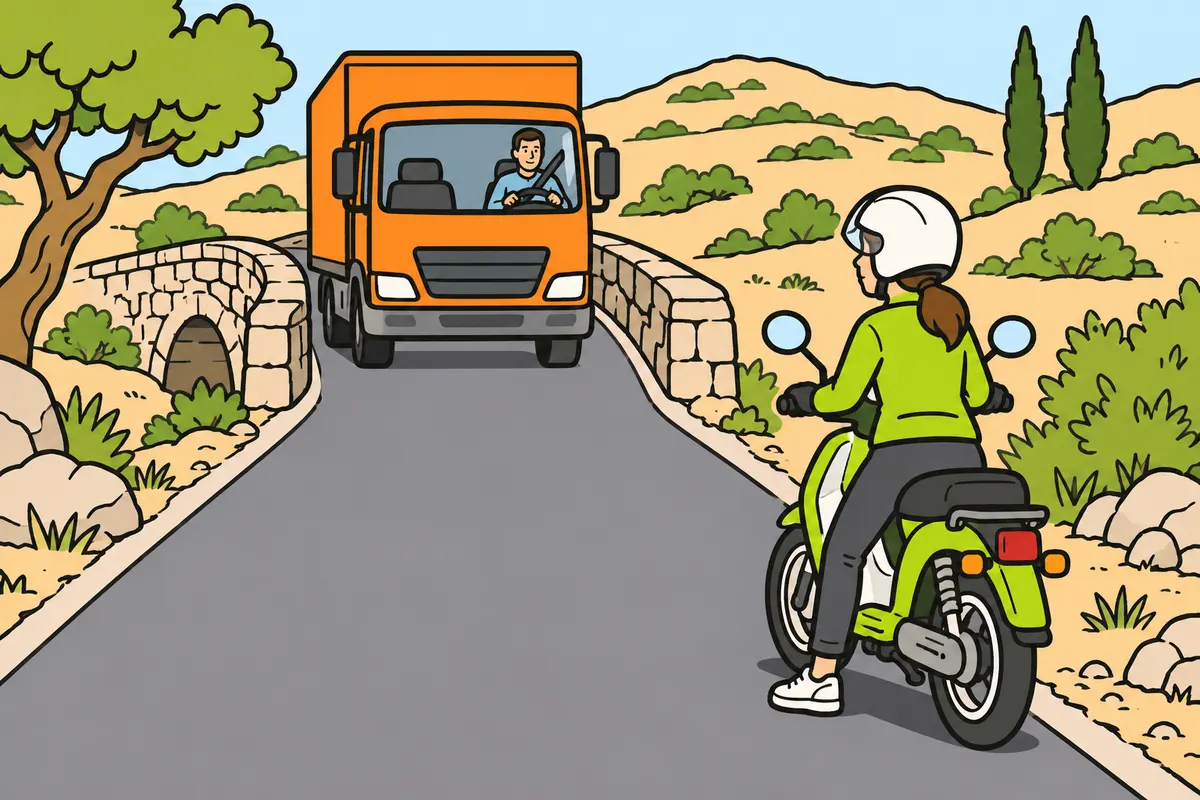
You must slow before junctions and places with little space or poor visibility.
Remember
- Slow before level crossings, roundabouts, junctions without priority and narrow sections.
- With poor visibility, stop if you need to check or give way.
- At properly signed junctions with almost no visibility, the legal ceiling is 50 km/h.
- Keep your moped within 45 km/h; go much slower if necessary.
- Outside built-up areas, slow near stationary vehicles, working breakdown assistance vehicles and cycles.
- If you cannot safely pass an oncoming vehicle, wait or stop.
Exam trap: Wrong: the 50 km/h ceiling lets your moped cross at that speed. Right: obey your vehicle’s maximum and slow further for danger.
Read the full explanation
- You must slow down when approaching level crossings, roundabouts, junctions where you do not have priority, narrow sections and areas of reduced visibility. If you need to stop to check or give way, do so. Your actual speed depends on how much clear space you can see and the danger presented by each approach. [RGC, art. 46](https://www.boe.es/buscar/act.php?id=BOE-A-2003-23514#a46)
- At properly signed junctions where visibility is practically zero, the regulations set a ceiling of 50 km/h. That figure does not authorise you to reach 50 on a moped: your maximum design speed is up to 45 km/h, and you must travel much more slowly if necessary to remain in control of the situation. [RGC, art. 46](https://www.boe.es/buscar/act.php?id=BOE-A-2003-23514#a46) [Ley de Tráfico (Traffic Act), annex I.9](https://www.boe.es/buscar/act.php?id=BOE-A-2015-11722#ani)
- Outside built-up areas, you must slow down when approaching vehicles stationary on the carriageway, breakdown assistance vehicles in service and cycles on the carriageway or hard shoulder. You must anticipate people or obstacles beside them, even if you cannot yet see them. [RGC, art. 46](https://www.boe.es/buscar/act.php?id=BOE-A-2003-23514#a46)
- You must also slow down when you cannot safely pass an oncoming vehicle because of the available space, the weather or the characteristics of the vehicles. On a narrow road with a large vehicle approaching, wait or stop if necessary. [RGC, art. 46](https://www.boe.es/buscar/act.php?id=BOE-A-2003-23514#a46)
14Slowing down when overtaking and passing
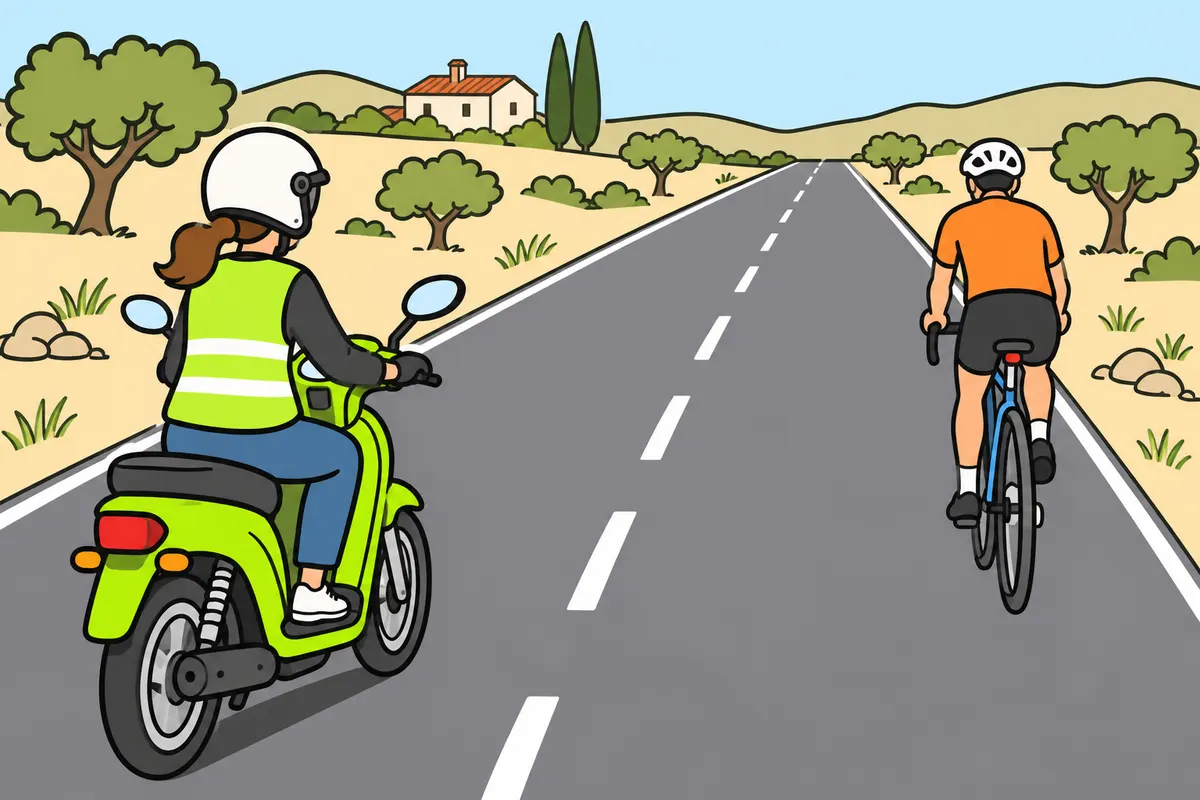
When passing vulnerable users or certain stationary vehicles, you must slow down and leave space.
| Case | When you must reduce speed and leave space |
|---|---|
| You overtake the listed vulnerable road users | Outside built-up areas, before and throughout the manoeuvre |
| You pass vehicles stopped for breakdowns, accidents or the specified services | They occupy all or part of your lane |
Remember
- Outside built-up areas, slow before and throughout overtaking vulnerable road users.
- This includes pedestrians, animals, animal-drawn vehicles, mopeds, personal mobility vehicles and cyclists.
- Travel at least 20 km/h below the road limit; obey your vehicle’s maximum too.
- Check clearance and lane use in “Moped manoeuvres”.
- Passing qualifying stationary vehicles occupying your lane also requires the specified speed reduction.
Exam trap: Wrong: slowing down replaces sideways clearance. Right: also obey the clearance and lane-use rules.
Read the full explanation
- Outside built-up areas, when overtaking pedestrians, animals, animal-drawn vehicles, mopeds, VMP (personal mobility vehicles) or cyclists, you must travel at least 20 km/h below the road's speed limit before starting and throughout the manoeuvre. You must also obey your vehicle's own maximum. [RGC, art. 85](https://www.boe.es/buscar/act.php?id=BOE-A-2003-23514#a85)
- If the section is limited to 50 km/h, that reduction sets a ceiling of 30 km/h for the manoeuvre. If the section has a 90 limit, subtracting 20 gives 70, but your moped remains limited to 45. [RGC, art. 85](https://www.boe.es/buscar/act.php?id=BOE-A-2003-23514#a85)
- You must combine that speed with the clearance and lane use explained in the Moped manoeuvres module, in the “Clearances and protecting vulnerable road users” section. [RGC, art. 85.4](https://www.boe.es/buscar/act.php?id=BOE-A-2003-23514#a85)
- When passing vehicles immobilised by a breakdown or accident, or the services covered by article 88.1, which occupy all or part of your lane, you must travel at least 20 km/h below the road’s speed limit; the Moped manoeuvres module, in the “Passing stationary vehicles and obstructions” section, explains how to carry out the manoeuvre and the clearance required. [RGC, art. 88.1](https://www.boe.es/buscar/act.php?id=BOE-A-2003-23514#a88)
15Bends, slopes and visibility
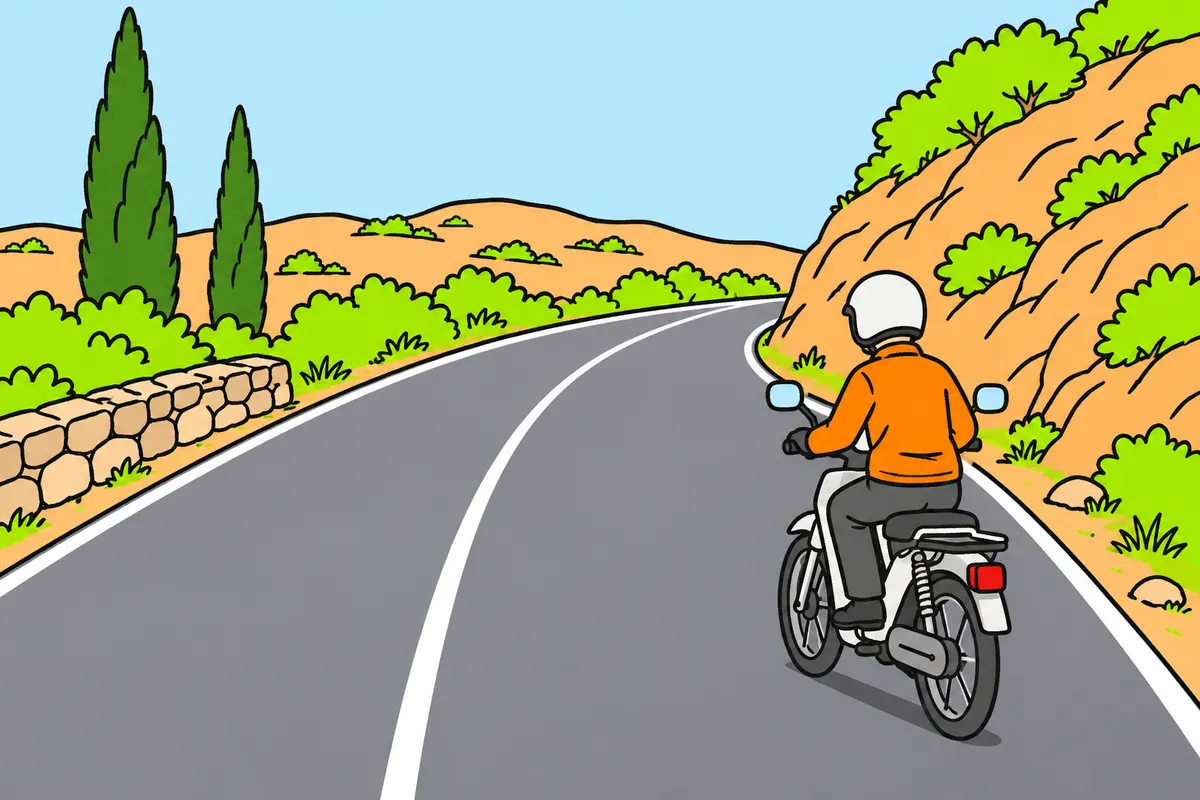
You must adjust your speed to stop within the space you can actually see.
Remember
- Slow before bends when their shape, visibility or grip requires it.
- Control your speed downhill and keep enough braking ability.
- Adjust your speed when carrying a passenger or load.
- At night, allow only for the lit space you can see.
- If a fault forces you to use weaker lights, slow enough to stop.
Exam trap: Wrong: knowing a bend lets you maintain speed without seeing ahead. Right: you must be able to stop within the visible area.
Read the full explanation
- You must slow down before entering a bend when its radius, visibility or grip requires it. You must be able to stop within the visible section without assuming that the hidden section is clear. [RGC, art. 45](https://www.boe.es/buscar/act.php?id=BOE-A-2003-23514#a45)
- On a descent, you must control your speed to avoid exceeding the maximum and retain braking capacity. A passenger or load may alter your moped's response. Adapt your speed to that situation and your vehicle; the Moped riding techniques module covers specific techniques for using brakes and gears. [RGC, art. 45](https://www.boe.es/buscar/act.php?id=BOE-A-2003-23514#a45)
- At night, you must adapt your speed to the distance you can actually see illuminated. Knowing the bend by heart or seeing the lights of the vehicle ahead is not enough. Its presence does not guarantee that you can spot an obstacle in your own path in time. [RGC, art. 45](https://www.boe.es/buscar/act.php?id=BOE-A-2003-23514#a45)
- If a fault that cannot be repaired en route forces you to use less intense lighting, you must slow down until you can stop within the illuminated area. Article 107 of the RGC sets out this specific requirement. [RGC, art. 107](https://www.boe.es/buscar/act.php?id=BOE-A-2003-23514#a107) [RGC, art. 45](https://www.boe.es/buscar/act.php?id=BOE-A-2003-23514#a45)
16Rain, ice and dazzle
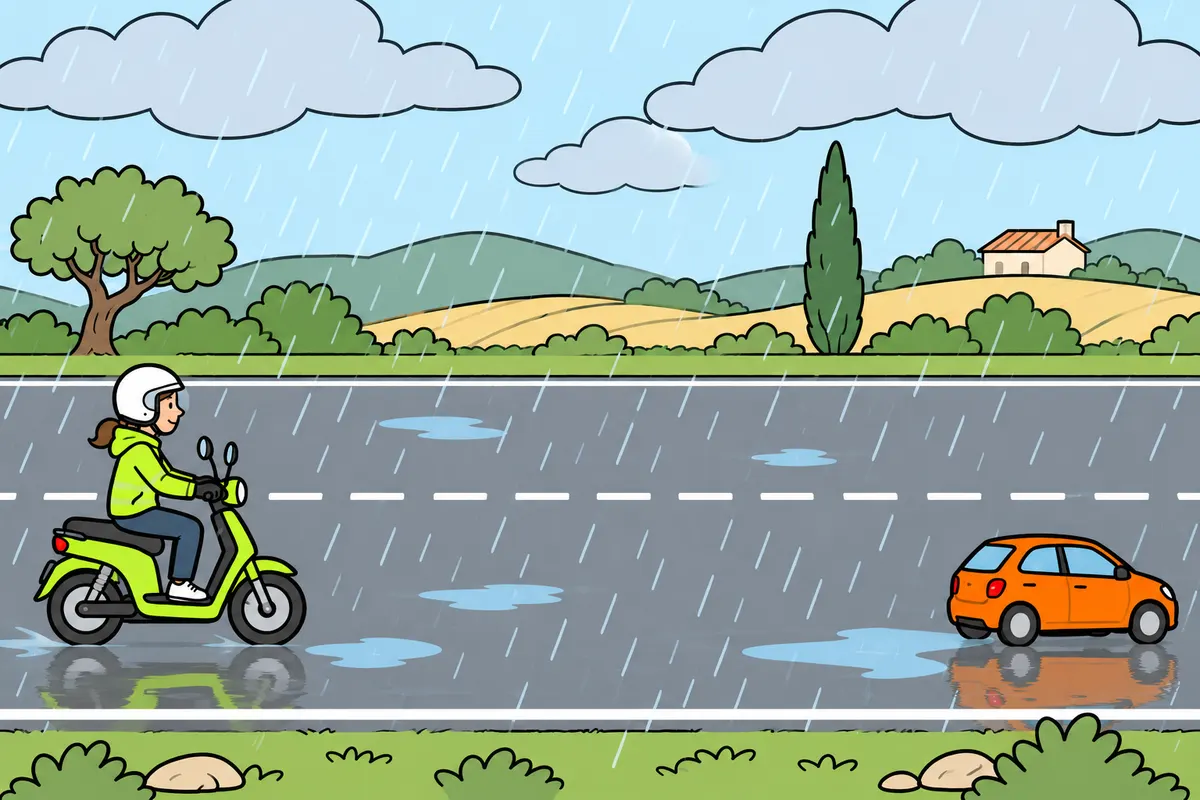
With poor grip or poor visibility, you must slow down and leave more space.
Remember
- Slow before slippery surfaces and avoid sudden movements.
- Slow if you could spray water, gravel or other material onto others.
- Slow in thick fog, heavy rain, snow, dust or smoke.
- Increase your following gap when visibility or grip gets worse.
- There is no fixed increase in braking distance for all wet or icy conditions.
- If dazzled, slow down, stopping if necessary to avoid danger.
Exam trap: Wrong: you accelerate to escape dazzling lights. Right: slow as much as necessary, even to a stop.
Read the full explanation
- You must slow down on slippery surfaces and when you may throw water, gravel or other materials towards others. On a moped, that surface can also make braking and balancing difficult. Slow down before the section and avoid unnecessary sudden movements. [RGC, art. 46](https://www.boe.es/buscar/act.php?id=BOE-A-2003-23514#a46)
- In dense fog, heavy rain, snow or clouds of dust or smoke, you must reduce your speed. Visibility may decrease while grip also worsens. You must increase the space ahead and adjust your speed to what you can see, without relying solely on your lights. [RGC, art. 46](https://www.boe.es/buscar/act.php?id=BOE-A-2003-23514#a46)
- On ice or water, there is no universal multiplier that means every braking distance is exactly twice or ten times as long. The distance depends on grip and other conditions. With less grip, you must allow more space and reduce your speed to maintain control. [RGC, art. 46](https://www.boe.es/buscar/act.php?id=BOE-A-2003-23514#a46)
- If you are dazzled, slow down as much as necessary, even to a stop, to avoid danger. This helps you avoid hitting vehicles or pedestrians travelling in your direction. [RGC, art. 102](https://www.boe.es/buscar/act.php?id=BOE-A-2003-23514#a102) [RGC, art. 46](https://www.boe.es/buscar/act.php?id=BOE-A-2003-23514#a46)
17Slowing down without causing a rear-end collision
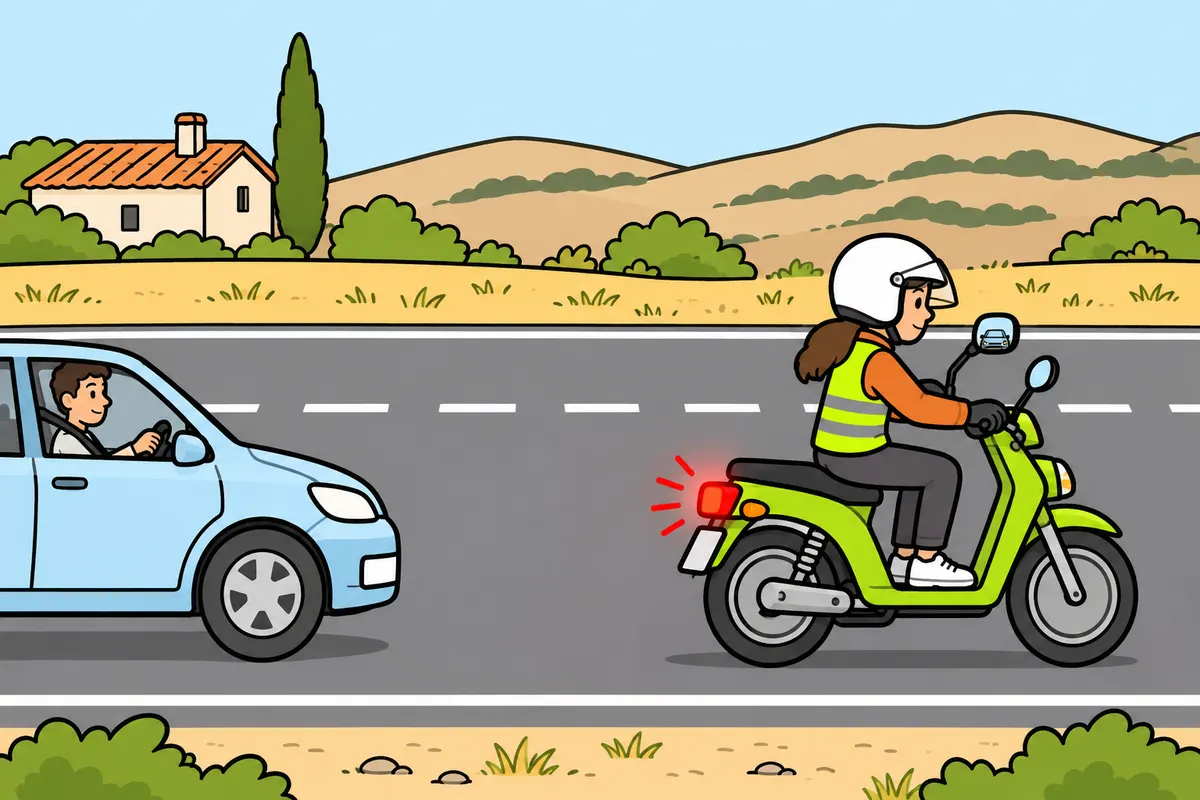
Before braking heavily, you must check behind and warn others, unless danger is immediate.
Remember
- Unless danger is immediate, check behind, warn early and avoid dangerous sudden braking.
- Whenever possible, warn by repeatedly using your brake lights.
- You can also warn with short, quick arm movements up and down.
- Do not lose control of your moped while giving an arm signal.
- For immediate danger, brake without delaying to give a warning.
- If followed too closely, gently increase your forward gap when safe.
Exam trap: Wrong: a turn indicator alone warns of heavy braking. Right: use the appropriate braking warning.
Read the full explanation
- Except in imminent danger, before reducing speed considerably you must check that you can do so safely, warn in advance and avoid a sudden reduction that creates a collision risk for those following you. Looking behind and anticipating allows you to spread the reduction more safely. [RGC, art. 53](https://www.boe.es/buscar/act.php?id=BOE-A-2003-23514#a53)
- Whenever possible, you must warn of your intention to stop or brake heavily by repeatedly using your brake lights or making short, quick up-and-down movements with your arm. This also applies if traffic forces you to slow down. [RGC, art. 109](https://www.boe.es/buscar/act.php?id=BOE-A-2003-23514#a109) [RGC, art. 53](https://www.boe.es/buscar/act.php?id=BOE-A-2003-23514#a53)
- A turn indicator alone does not communicate heavy braking: it signals a lateral movement. You must use the warning appropriate to your intended action. Do not compromise control of a two-wheeled moped by trying to signal with your arm when you need to operate the brakes. [RGC, art. 53](https://www.boe.es/buscar/act.php?id=BOE-A-2003-23514#a53)
- In imminent danger, you must brake as necessary without delaying to complete a warning. The exception does not allow you to brake suddenly to punish someone following closely. If someone follows you too closely, gently increase the space ahead when you can do so safely, so that you need fewer sudden reductions in speed. [RGC, art. 53](https://www.boe.es/buscar/act.php?id=BOE-A-2003-23514#a53)
18Reaction time and reaction distance
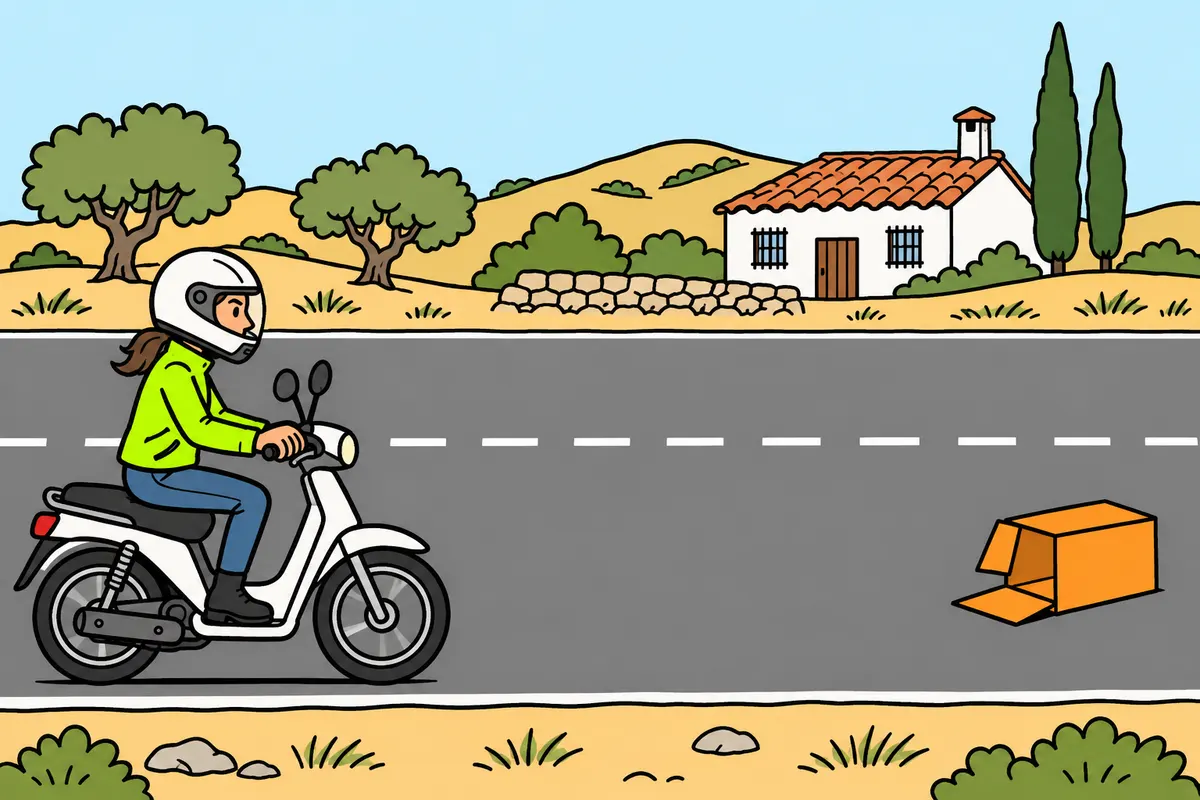
You keep travelling between noticing danger and starting to brake.
| Term | What you must distinguish |
|---|---|
| Reaction time | Time between noticing danger and responding |
| Reaction distance | Distance you travel during that time |
Remember
- You cannot react instantly: leave space before you need to brake.
- Alcohol, drugs, sleepiness, tiredness and distractions can delay your response.
- Road surface and tyres mainly affect grip and braking.
- With unchanged reaction time, doubling speed doubles your reaction distance.
Exam trap: Wrong: noticing danger means you are already braking. Right: you still travel while reacting.
Read the full explanation
- Reaction time and reaction distance are different quantities. Time is the interval between perceiving a hazard and responding; distance is how far the vehicle travels during that interval. When braking, this interval ends when you start to apply the brake. [DGT, reaction time and distance](https://sede.dgt.gob.es/export/sites/dgt/.galleries/permisos-de-conducir/certificacion-aptitud-profesores-formacion-vial/2026/MANUAL-II-Cuestiones-de-Seguridad-Vial.pdf)
- During your reaction, the moped continues moving even though you have recognised the danger. You must therefore leave space before you need to brake. Looking carefully and anticipating help you detect hazards earlier, but do not make your reaction instantaneous or eliminate the distance travelled. [DGT, reaction time and distance](https://sede.dgt.gob.es/export/sites/dgt/.galleries/permisos-de-conducir/certificacion-aptitud-profesores-formacion-vial/2026/MANUAL-II-Cuestiones-de-Seguridad-Vial.pdf)
- Alcohol, drugs, sleepiness, fatigue and distractions can delay your response. Road surface and tyre condition mainly affect braking and grip, without themselves reducing your reaction time. [DGT, reaction time and distance](https://sede.dgt.gob.es/export/sites/dgt/.galleries/permisos-de-conducir/certificacion-aptitud-profesores-formacion-vial/2026/MANUAL-II-Cuestiones-de-Seguridad-Vial.pdf)
- For the same reaction time, the distance travelled before braking increases proportionally with speed. This relationship allows you to compare two situations while keeping your response time constant. [DGT, reaction time and distance](https://sede.dgt.gob.es/export/sites/dgt/.galleries/permisos-de-conducir/certificacion-aptitud-profesores-formacion-vial/2026/MANUAL-II-Cuestiones-de-Seguridad-Vial.pdf)
19Calculating the distance travelled during reaction
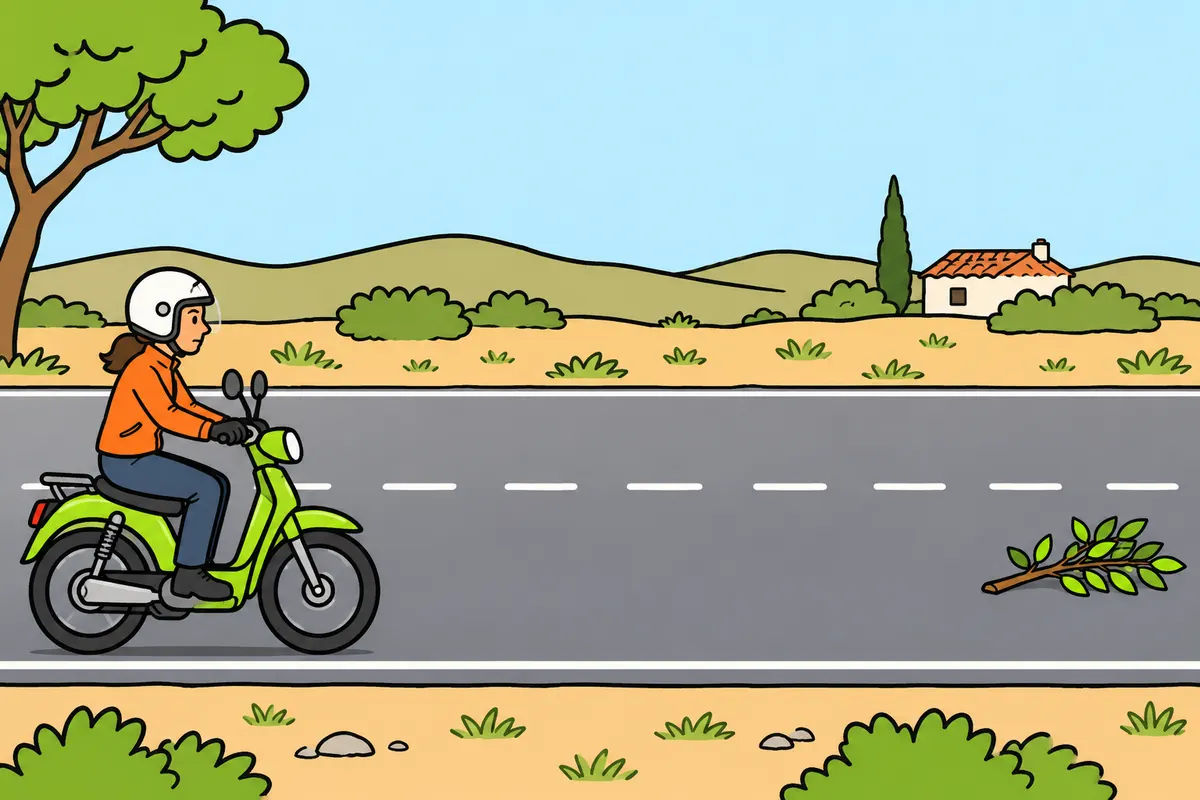
To calculate your travel before braking, you need your speed and reaction time.
| Your speed | Assumed reaction time | Distance before braking |
|---|---|---|
| 45 km/h | One second | 12.5 m |
| 30 km/h | One second | Approximately 8.3 m |
| 20 km/h | One second | Approximately 5.6 m |
| 45 km/h | Two seconds | 25 m |
Remember
- Divide speed in km/h by 3.6, then multiply by your reaction time in seconds.
- These calculations are examples; they do not guarantee your actual reaction time.
- You must still add the distance needed to brake afterwards.
- Even at low speed, you need space before you act.
Exam trap: Wrong: these distances cover your complete stop. Right: they cover only your travel while reacting.
Read the full explanation
- You can calculate reaction distance by converting speed to metres per second and multiplying by time: distance = (km/h ÷ 3.6) × seconds. This is a physical calculation to understand the distance travelled, rather than a safe following distance imposed by the regulations. [DGT, relationship between speed and reaction distance](https://revista.dgt.es/es/educacion-formacion/conducir-mejor/2013/distancia-seguridad.shtml)
- At 45 km/h, you travel 12.5 metres per second. If an exercise assumes a one-second reaction time, you travel 12.5 metres before braking; at 30 km/h, you travel approximately 8.3 metres in that second. These figures express a calculation assumption and do not guarantee your actual response.
- At 20 km/h, with the same one-second assumption, you travel approximately 5.6 metres before acting. Even a low urban speed requires space.
- If reaction time increases from one to two seconds while maintaining 45 km/h, the distance before braking increases from 12.5 to 25 metres. The distance before braking depends on both your speed and the time you take to respond. The calculation does not include the distance needed to stop after applying the brakes.
20Braking distance
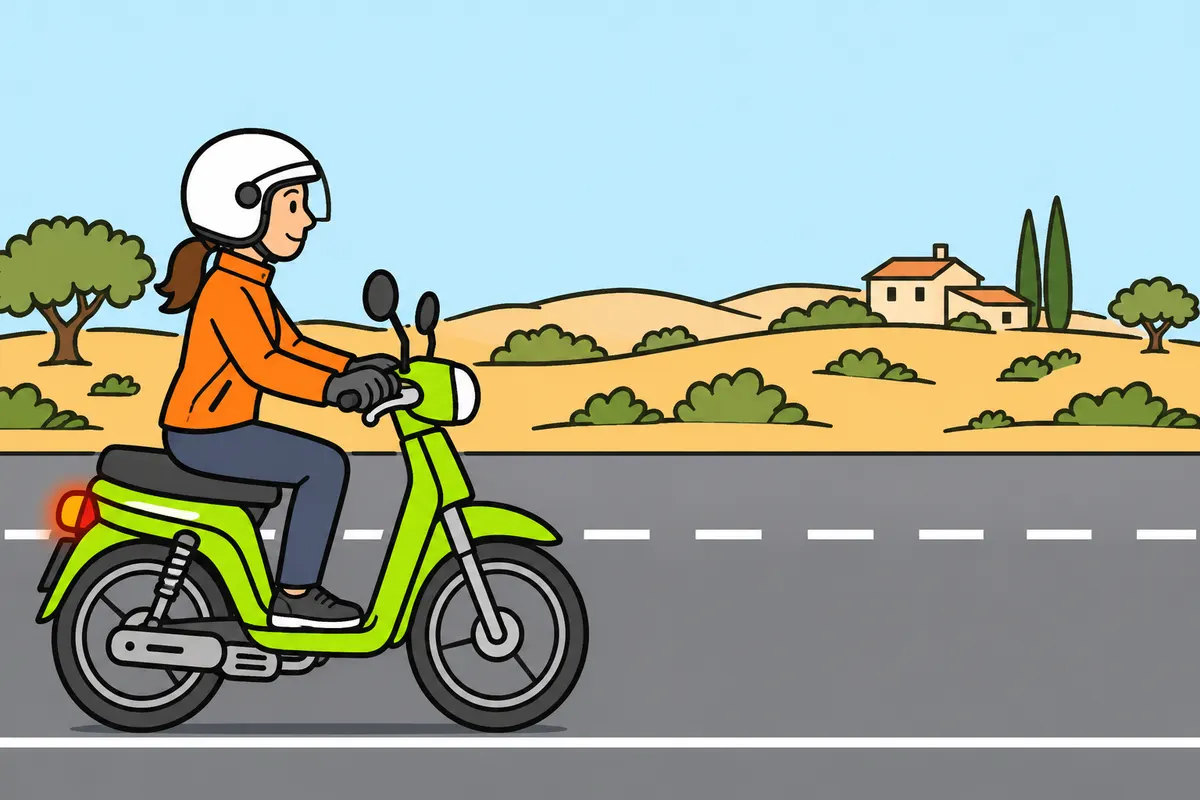
You still travel after applying the brakes, until your vehicle stops.
Remember
- Do not confuse braking distance with the distance you travel while reacting.
- Consider speed, grip, tyres, brakes, suspension, load and road conditions.
- With comparable conditions and unchanged deceleration, doubling speed makes braking distance four times longer.
- This relationship does not give you an exact distance for every situation.
- Even with systems preventing wheel locking, you still need grip and space.
Exam trap: Wrong: a small moped stops instantly. Right: you need space after applying the brakes.
Read the full explanation
- Braking distance is the distance you travel from applying the brakes until the vehicle stops. You must distinguish it from reaction distance, during which you have not yet started that action. Braking does not stop your moped instantly, even if it is light and travelling within the legal maximum. [DGT, Road Safety Questions Manual, braking distance](https://sede.dgt.gob.es/export/sites/dgt/.galleries/permisos-de-conducir/certificacion-aptitud-profesores-formacion-vial/2026/MANUAL-II-Cuestiones-de-Seguridad-Vial.pdf)
- You must take account of speed, grip, the condition of tyres, brakes and suspension, the load and road conditions. Worn shock absorbers can impair contact with the ground and braking response. [DGT, Road Safety Questions Manual, braking distance](https://sede.dgt.gob.es/export/sites/dgt/.galleries/permisos-de-conducir/certificacion-aptitud-profesores-formacion-vial/2026/MANUAL-II-Cuestiones-de-Seguridad-Vial.pdf)
- In a braking model with comparable conditions and the same deceleration, distance increases with the square of speed: doubling speed multiplies braking distance by four. You must interpret this relationship as a physical explanation, without turning it into an exact table for every surface, rider or moped. [DGT, Road Safety Questions Manual, braking distance](https://sede.dgt.gob.es/export/sites/dgt/.galleries/permisos-de-conducir/certificacion-aptitud-profesores-formacion-vial/2026/MANUAL-II-Cuestiones-de-Seguridad-Vial.pdf)
- If your brakes have assistance or a system that prevents wheel locking, you still need grip and space. Maintaining your vehicle and choosing a sensible speed are complementary measures. [DGT, Road Safety Questions Manual, braking distance](https://sede.dgt.gob.es/export/sites/dgt/.galleries/permisos-de-conducir/certificacion-aptitud-profesores-formacion-vial/2026/MANUAL-II-Cuestiones-de-Seguridad-Vial.pdf)
21Stopping distance or technical stop
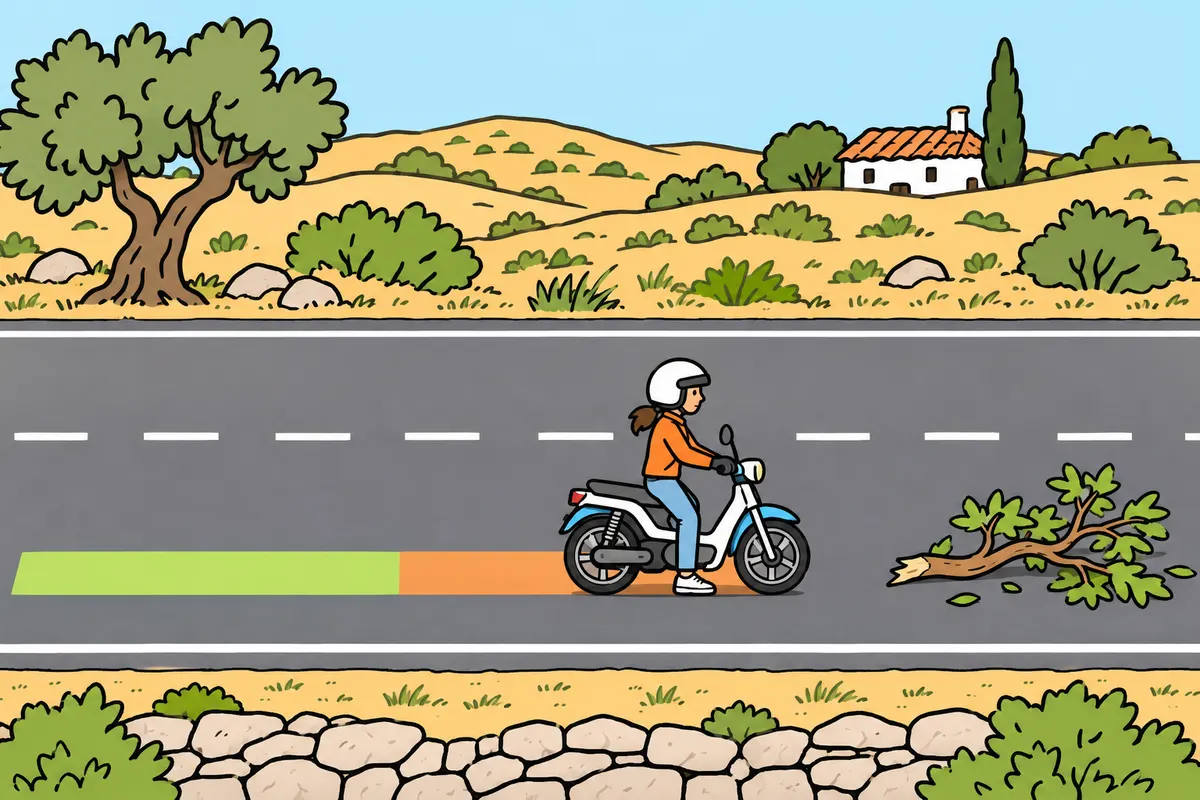
To find your stopping distance, you must add reaction distance and braking distance.
Remember
- Count from noticing danger until you stop completely.
- Here, technical stop means stopping distance, rather than choosing to stop by the roadside.
- With 12.5 m reacting and 10 m braking, you need 22.5 m to stop.
- This example uses assumed figures; it does not fit every moped.
- You must complete the whole stop within the space you can see.
Exam trap: Wrong: doubling speed always doubles your whole stopping distance. Right: reaction and braking distances grow differently; add both distances.
Read the full explanation
- Stopping distance is the sum of reaction distance and braking distance. It starts when you perceive the hazard and ends when you come to a complete stop. In this context, the expression technical stop also means this distance; the voluntary manoeuvre of stopping at the edge of the road has a different meaning. [DGT, Speed and braking risk](https://revista.dgt.es/es/reportajes/2020/09SEPTIEMBRE/0922-Excesos-velocidad-distancia-detencion-y-mantenimiento.shtml)
- In a hypothetical exercise, if you travel 12.5 metres during reaction and 10 during braking, your stopping distance is 22.5 metres. The 10 metres are an assumed figure in the exercise, rather than a performance figure for every moped travelling at 45 km/h. [DGT, Speed and braking risk](https://revista.dgt.es/es/reportajes/2020/09SEPTIEMBRE/0922-Excesos-velocidad-distancia-detencion-y-mantenimiento.shtml)
- Increasing speed lengthens both the distance before braking and the distance during braking. To calculate stopping distance, you must add both components using their respective relationships and the specific conditions of the exercise. [DGT, Speed and braking risk](https://revista.dgt.es/es/reportajes/2020/09SEPTIEMBRE/0922-Excesos-velocidad-distancia-detencion-y-mantenimiento.shtml)
- To stop within your field of vision, you must have space for the complete stopping distance, rather than just braking distance. If the clear distance you can see is less than you need between perception and stopping, you must slow down. A quick reaction cannot compensate for every excess of speed or lack of grip. [DGT, Speed and braking risk](https://revista.dgt.es/es/reportajes/2020/09SEPTIEMBRE/0922-Excesos-velocidad-distancia-detencion-y-mantenimiento.shtml)
22Safe following distance
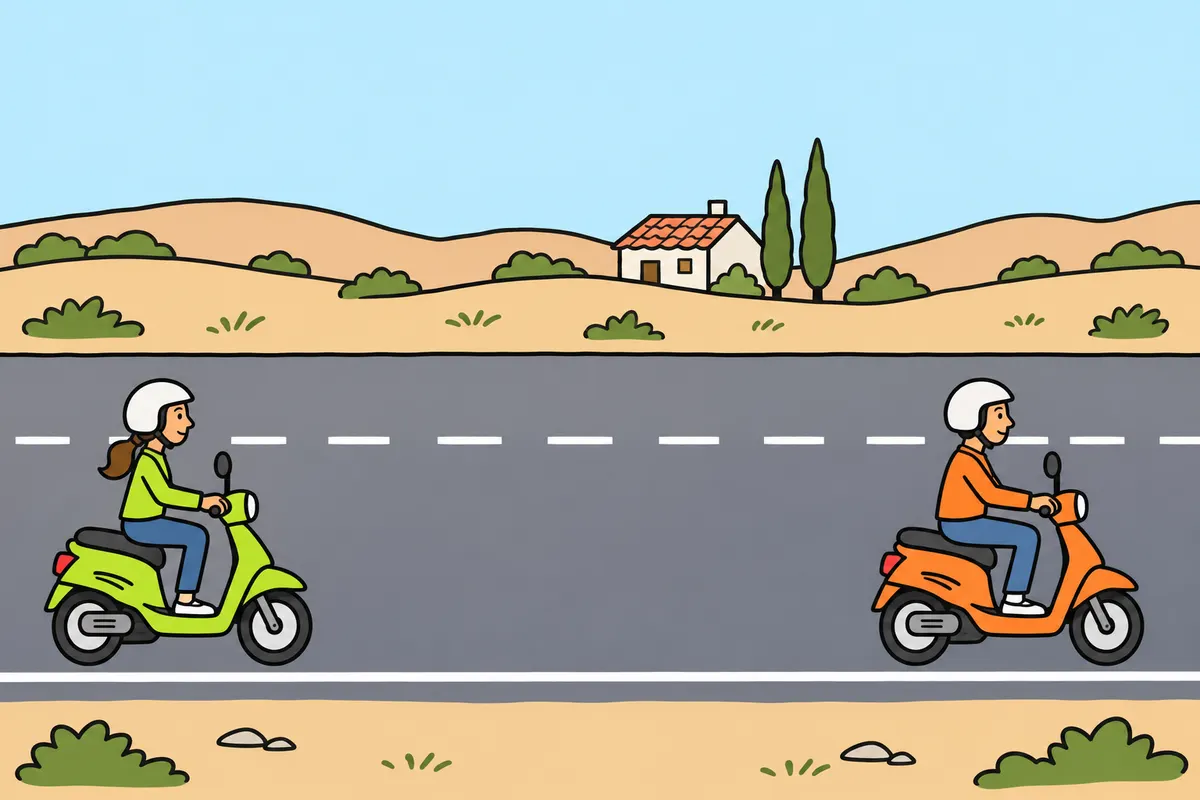
You must leave enough space to stop safely if the vehicle ahead brakes suddenly.
Remember
- Adjust your gap to your speed, grip and braking ability.
- There is no single general distance that always works.
- Increase your gap for rain, poor visibility, loads or weaker braking.
- You must keep your distance when riding with other mopeds too.
- If someone enters your safety gap, restore it gradually without creating danger.
Exam trap: Wrong: you can use the exception for bicycles riding in groups on your moped. Right: you must keep your safe following distance.
Read the full explanation
- When following another vehicle, you must leave enough clear space to stop without hitting it if it brakes suddenly. You must adjust this gap to your speed, grip and braking capacity. [RGC, art. 54](https://www.boe.es/buscar/act.php?id=BOE-A-2003-23514#a54)
- There is no single general distance in metres sufficient for every moped on every road. You must increase the gap in rain, on slippery surfaces, in poor visibility, with a load or with poorer braking response. The legal maximum of 45 km/h does not make a small gap safe. [RGC, art. 54](https://www.boe.es/buscar/act.php?id=BOE-A-2003-23514#a54)
- You must also keep your distance when following another moped or travelling in a group. The exception for bicycles travelling in a group does not extend to mopeds or motorcycles. Travelling together or knowing the intentions of the rider ahead does not remove the risk of a rear-end collision. [RGC, art. 54](https://www.boe.es/buscar/act.php?id=BOE-A-2003-23514#a54)
- If another vehicle moves into your safety gap, you must restore it progressively without creating danger. Leaving space ahead allows you to respond more smoothly when traffic slows down. [RGC, art. 54](https://www.boe.es/buscar/act.php?id=BOE-A-2003-23514#a54)
23Measuring the time gap and interpreting distance signs
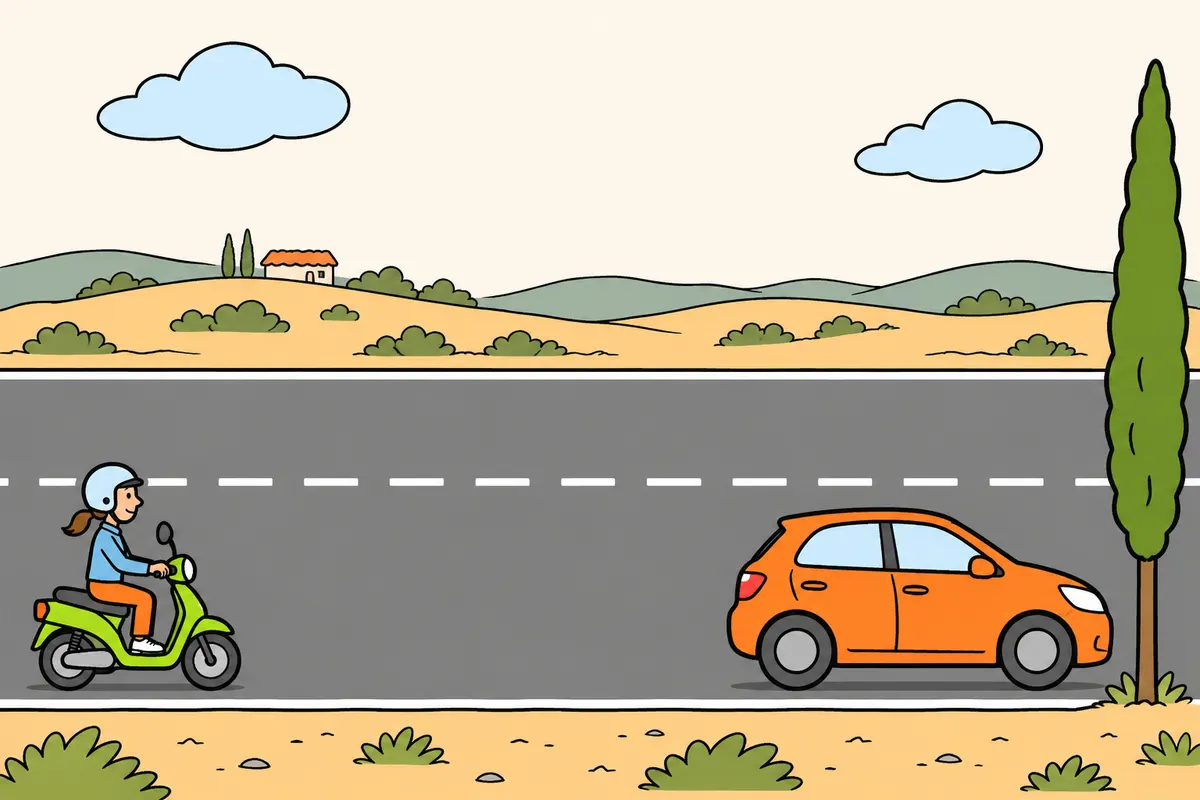
You can check your gap using time, but must always leave enough space to stop safely.
| Gap | Why you must leave it |
|---|---|
| Following gap | You need space to react and brake behind another vehicle |
| Sideways gap | You must avoid passing too close when meeting or overtaking |
Remember
- When the vehicle ahead passes a fixed point, count until you reach it.
- In favourable conditions, you can use at least two seconds as a practical guide.
- This is no guarantee or universal legal minimum.
- Increase the gap when necessary and obey special rules.
- R-300 requires at least the displayed distance, except when you are going to overtake.
- If you need more space than the sign shows, leave it.
Exam trap: Wrong: two seconds is always enough. Right: increase your gap when safety requires it and obey special rules.
Read the full explanation
- As a practical guide in favourable conditions, you can check for a gap of at least two seconds: when the vehicle ahead passes a fixed point, count until you reach that point. If you arrive too soon, progressively increase the gap. Do not take your eyes off the road to carry out the check. [DGT, two-second guide](https://revista.dgt.es/es/educacion-formacion/conducir-mejor/2013/distancia-seguridad.shtml)
- The two-second guide is a practical aid for favourable conditions. You must increase it when safety requires and apply any special following distances, such as those for tunnels; it also does not allow you to reduce a signed minimum distance. [RGC, art. 54](https://www.boe.es/buscar/act.php?id=BOE-A-2003-23514#a54)
- Sign R-300, Minimum following distance, prohibits following the vehicle ahead without leaving at least the indicated distance in metres, except when you are going to overtake. If it shows 70 metres, you must keep at least 70; you do not have to remain exactly that far away if you need more space. [RGC, annex I, catalogue of signs](https://www.boe.es/buscar/act.php?id=BOE-A-2003-23514#ani)
- Longitudinal and lateral clearances serve different purposes. Longitudinal clearance gives you space to react and brake behind another vehicle; lateral clearance prevents you from passing too close when meeting or overtaking. Meeting one requirement does not replace the other or authorise an unsafe manoeuvre. [RGC, art. 54](https://www.boe.es/buscar/act.php?id=BOE-A-2003-23514#a54)
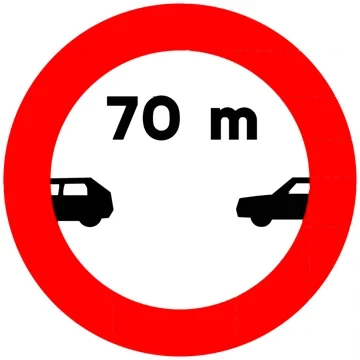 R-300
24Leaving space for overtaking
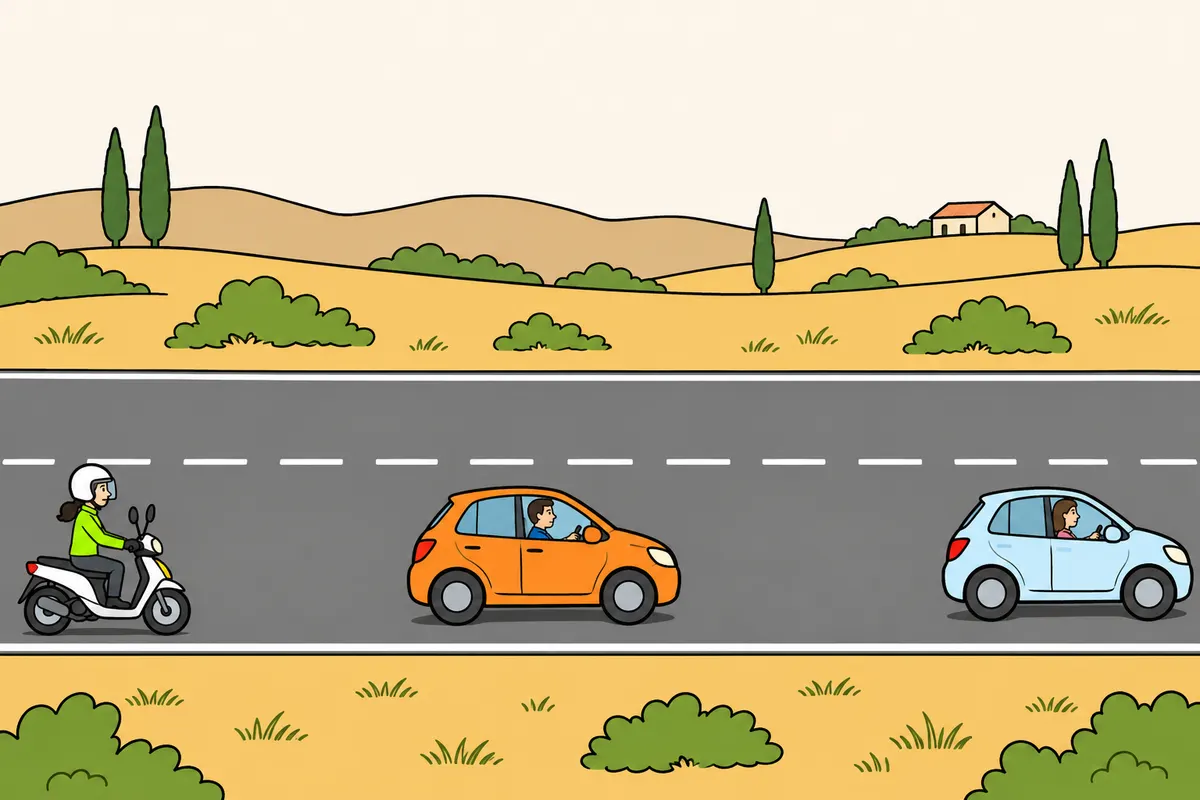
When following without signalling overtaking, you must leave space for others to overtake, unless exceptions apply.
| Situation | Space you must leave |
|---|---|
| You follow without signalling overtaking, and no exception applies | Safe braking gap plus extra space for others to overtake |
| Built-up area, overtaking prohibited, multiple lanes your way, or congestion preventing overtaking | Safe braking gap |
Remember
- Leave space so someone overtaking you can pull back in safely.
- This extra space is unnecessary in built-up areas or where overtaking is prohibited.
- It is also unnecessary with multiple lanes your way, or congestion preventing overtaking.
- These exceptions do not remove your safe braking gap.
- Even when signalling to overtake, keep enough space to brake.
- If you cannot overtake within your limits and other conditions, wait at a distance.
Exam trap: Wrong: you can follow closely where overtaking is prohibited. Right: you must still keep your safe following distance.
Read the full explanation
- In addition to the gap needed to avoid a rear-end collision, when you follow another vehicle without signalling an intention to overtake, you must leave space for someone behind to overtake you safely. You must avoid forming such a close queue that another vehicle cannot complete its manoeuvre and pull back in safely. [RGC, art. 54](https://www.boe.es/buscar/act.php?id=BOE-A-2003-23514#a54)
- This additional obligation to facilitate overtaking has exceptions: it is not required in built-up areas, where overtaking is prohibited, where there is more than one lane in your direction, or where traffic is so congested that overtaking is impossible. [RGC, art. 54](https://www.boe.es/buscar/act.php?id=BOE-A-2003-23514#a54)
- The exceptions apply exclusively to the additional space for overtaking. The safe following distance in the previous section also applies on streets, in queues and on sections where overtaking is prohibited. [RGC, art. 54](https://www.boe.es/buscar/act.php?id=BOE-A-2003-23514#a54)
- Before signalling an intention to overtake, assess whether you can complete the manoeuvre within your moped’s maximum and the other conditions. The Moped manoeuvres module, in the “Preparing the complete overtake” section, explains preparation and execution. [RGC, art. 54](https://www.boe.es/buscar/act.php?id=BOE-A-2003-23514#a54)
25The 50-metre rule
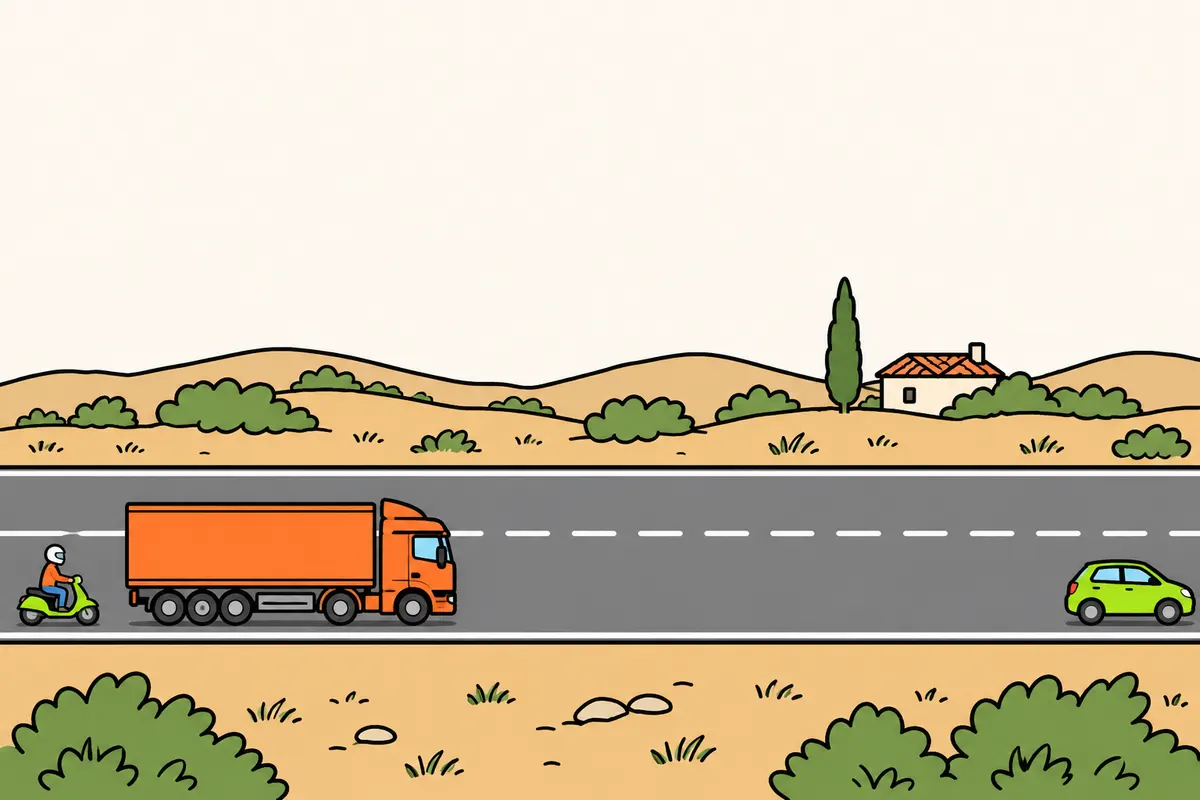
The special gap depends on your own vehicle’s characteristics, rather than the vehicle ahead.
| Vehicle you drive | Gap to help others overtake, unless exceptions apply |
|---|---|
| Maximum authorised mass above 3,500 kg or total length above 10 m | At least 50 m |
| Ordinary moped or light quadricycle | You do not automatically need this 50 m gap |
Remember
- Exceeding either the mass threshold or total length threshold is enough.
- Maximum authorised mass is not your vehicle’s actual weight that day.
- Include the whole combination when measuring length with a trailer.
- Exactly 3,500 kg or 10 m does not exceed the relevant threshold.
- Exceptions: built-up areas, overtaking prohibited, multiple lanes your way, or congestion preventing overtaking.
- Always keep enough space to brake without hitting the vehicle ahead.
Exam trap: Wrong: your moped must leave 50 m because you follow a lorry. Right: this rule depends on the vehicle keeping the gap.
Read the full explanation
- Vehicles with an MMA (maximum authorised mass) above 3,500 kg and vehicles or combinations with a total length of more than 10 metres must leave at least 50 metres to facilitate overtaking. Exceeding either threshold is enough for this rule to apply. [RGC, art. 54](https://www.boe.es/buscar/act.php?id=BOE-A-2003-23514#a54)
- Exactly 3,500 kg does not mean above 3,500, and exactly 10 metres does not mean more than 10. The reference mass is the MMA, rather than what the loaded vehicle weighs that day. Length means the total length of the vehicle or combination. [RGC, art. 54](https://www.boe.es/buscar/act.php?id=BOE-A-2003-23514#a54)
- An ordinary moped or light quadricycle is not subject to this 50-metre requirement simply because you are outside a built-up area or following a lorry. The rule relates to the characteristics of the vehicle required to leave the space; you maintain the general gap you need to stop. [RGC, art. 54](https://www.boe.es/buscar/act.php?id=BOE-A-2003-23514#a54)
- The exceptions explained in “Leaving space for overtaking” also apply to this 50-metre gap because it serves the same purpose. Their application depends on the characteristics of the vehicle leaving the gap and the road and traffic circumstances. [RGC, art. 54](https://www.boe.es/buscar/act.php?id=BOE-A-2003-23514#a54)
26Distances in tunnels and underpasses
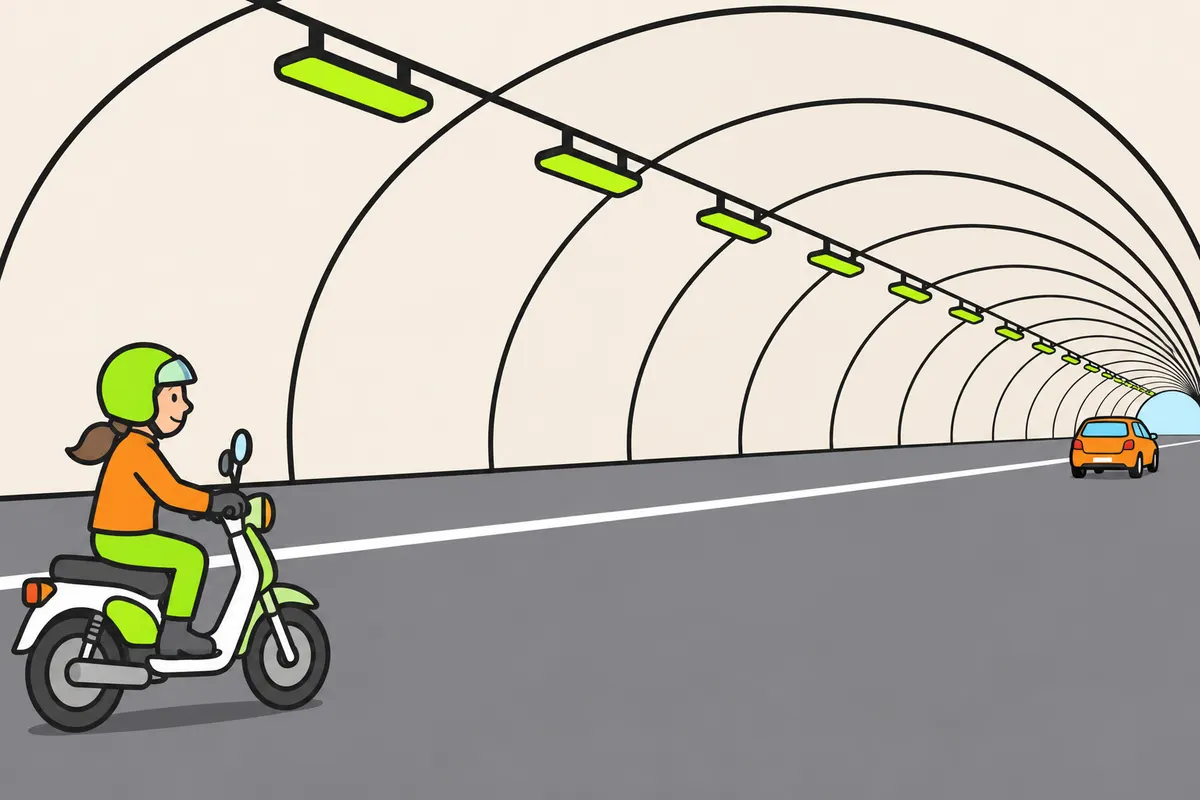
In permitted tunnels and underpasses, you must keep a special gap when not intending to overtake.
| Vehicle you drive, without intending to overtake | Minimum distance | Alternative minimum time gap |
|---|---|---|
| Moped, light quadricycle or vehicle with maximum authorised mass no higher than 3,500 kg | 100 m | Four seconds |
| Vehicle with maximum authorised mass above 3,500 kg | 150 m | Six seconds |
Remember
- Apply this rule where you can travel, when you do not intend to overtake.
- Use distance or time: you do not have to add both.
- Increase your gap if conditions require it.
- Check overtaking prohibitions and conditions in “Moped manoeuvres”.
Exam trap: Wrong: you must leave both 100 m and four seconds. Right: these are alternatives when you do not intend to overtake in a permitted tunnel or underpass; increase the gap if necessary.
Read the full explanation
- In a tunnel or underpass that you are allowed to use, when you do not intend to overtake, you must keep at least 100 metres or a minimum gap of four seconds behind the vehicle ahead. You must also apply this rule on a moped or light quadricycle: it is not exclusive to passenger cars. [RGC, art. 95](https://www.boe.es/buscar/act.php?id=BOE-A-2003-23514#a95)
- The rule gives a distance or a time reference; it does not require you to add 100 metres and four seconds. To check the time gap, use a fixed point as a reference and allow at least four seconds to pass. You must increase the gap if circumstances require more space. [RGC, art. 95](https://www.boe.es/buscar/act.php?id=BOE-A-2003-23514#a95)
- For vehicles with an MMA above 3,500 kg, the references are at least 150 metres or six seconds. This rule depends on the MMA of the vehicle keeping the gap, even if the vehicle ahead belongs to another category. [RGC, art. 95](https://www.boe.es/buscar/act.php?id=BOE-A-2003-23514#a95)
- The Moped manoeuvres module, in the “Places where you must not overtake” section, explains the prohibitions and conditions for overtaking in tunnels. [RGC, art. 95.6](https://www.boe.es/buscar/act.php?id=BOE-A-2003-23514#a95) [RGC, art. 87.1.d](https://www.boe.es/buscar/act.php?id=BOE-A-2003-23514#a87)
27Speed and queues in tunnels
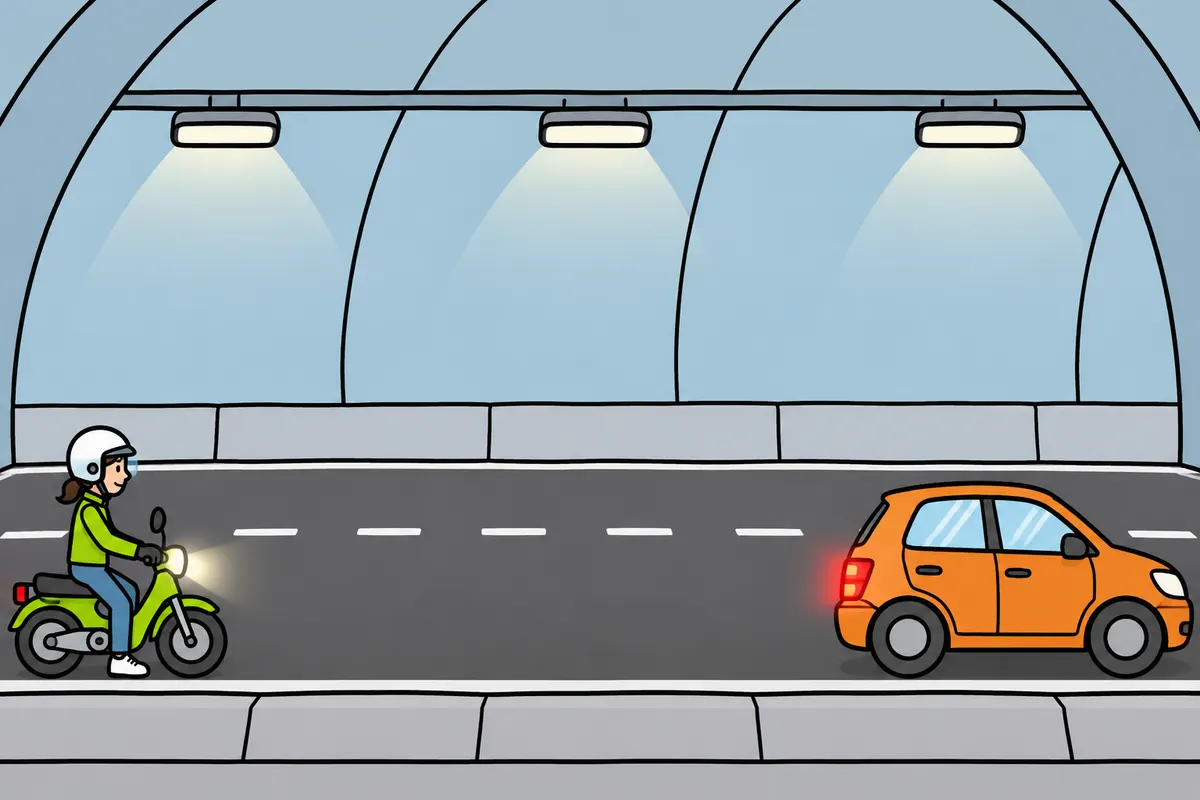
In tunnels, adjust your speed and leave as much space as possible when stopped.
Remember
- Obey the tunnel’s signs, traffic lights, message signs and instructions.
- Obey your maximum and adjust speed to what you can see.
- Use the required lights by day too, even in a lit tunnel.
- If a queue stops you, stop as far as possible from the vehicle ahead.
- Check the measures for tunnel queues in “Moped manoeuvres”.
Exam trap: Wrong: when a tunnel queue stops you, you must close the gap. Right: stop as far as possible from the vehicle ahead.
Read the full explanation
- You must obey the tunnel's signs, traffic lights, variable message signs and instructions, and adapt your speed to visibility. There is no single additional maximum for all tunnels: you combine the section's rules, your vehicle's maximum and the actual traffic conditions. [RGC, art. 95](https://www.boe.es/buscar/act.php?id=BOE-A-2003-23514#a95)
- You must use the appropriate lights when travelling through tunnels and underpasses, including during the day. Artificial lighting does not allow you to travel without them. You must adjust your speed to the range of your lights so you can stop before an obstacle or queue; the Moped lights and signals module explains the use of each light. [RGC, art. 98](https://www.boe.es/buscar/act.php?id=BOE-A-2003-23514#a98) [RGC, art. 95](https://www.boe.es/buscar/act.php?id=BOE-A-2003-23514#a95)
- If traffic forces you to remain stationary inside, you must stop as far as possible from the vehicle ahead. The stopping rule does not set a different general distance in metres to replace that requirement. [RGC, art. 97](https://www.boe.es/buscar/act.php?id=BOE-A-2003-23514#a97) [RGC, art. 95](https://www.boe.es/buscar/act.php?id=BOE-A-2003-23514#a95)
- You must follow the measures for remaining in your vehicle and giving warnings when queuing in a tunnel explained in the Moped manoeuvres module, in the “Forced stops and hazard warnings” section. [RGC, art. 97.3](https://www.boe.es/buscar/act.php?id=BOE-A-2003-23514#a97)
Choosing your moped speed
Check access, limits and conditions before choosing your speed.
- Identify the AM vehicle and check that it is allowed on the road.
- Determine the road maximum: paved road, unpaved road, street or through road.
- Combine the signs and road limit with your vehicle’s maximum design speed of up to 45 km/h and any applicable particular restrictions.
- Assess visibility, grip, traffic, load and your ability to respond.
- Slow down until you can stop within the visible distance and maintain the necessary gap.
Checking your following distance
Use a time reference while keeping your attention on traffic.
- Choose a visible fixed point that the vehicle ahead is going to pass.
- Start counting when that vehicle passes the point.
- Check how long you take to reach it; two seconds is only a practical guide in favourable conditions.
- In a tunnel or underpass, if you do not intend to overtake, apply at least 100 metres or four seconds.
- Increase the gap progressively when circumstances require more space.
Preparing to slow down considerably
Anticipate and warn to reduce the risk of a rear-end collision.
- Identify the reason for slowing down early and retain control of the vehicle.
- Check behind without neglecting your path ahead.
- Whenever possible, warn of the reduction using the prescribed signals.
- Slow down progressively unless imminent danger requires a different response.
- Keep space ahead and adjust your speed, stopping if necessary.
Finished this module?
Mark it as read and you will see your progress on the theory list.