
Theory · LVA Licence - Agricultural Vehicle · Module 14 of 16
Driving the agricultural vehicle safely
You learn to prepare the tractor and its combination, assess your fitness and anticipate the risks of overturning, entrapment and rear-end collisions. You practise measures for stability, visibility and sharing the road with other users; alcohol limits, manoeuvres and speed limits are covered in their specific modules.
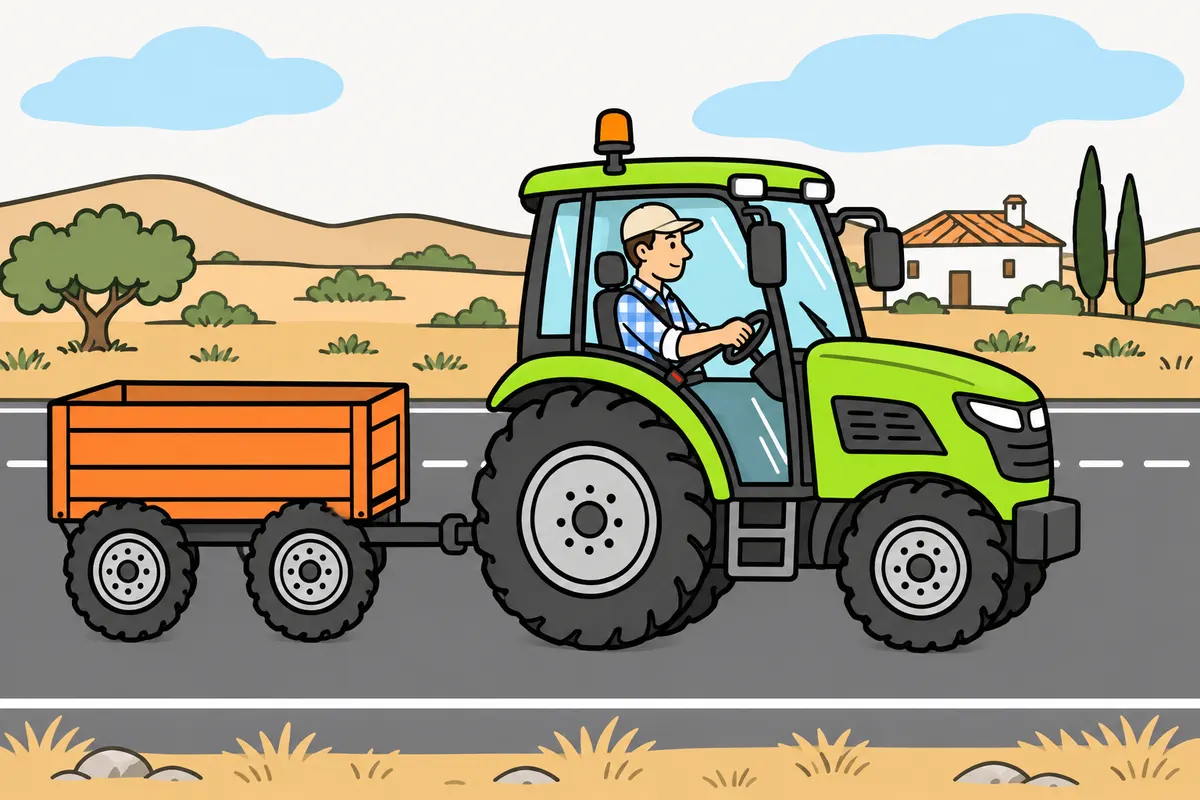
1Safety starts before you start the engine
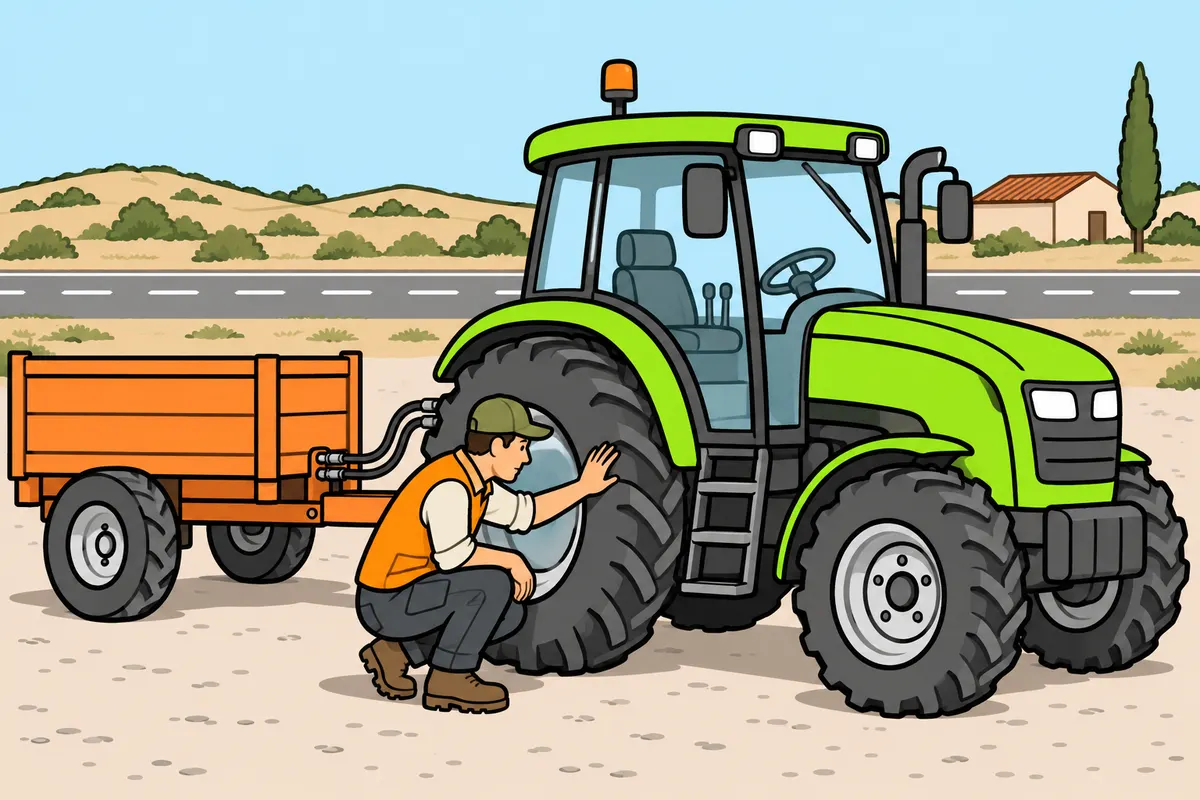
Check the tractor and plan a suitable route before setting off.
Remember
- Check brakes, steering, tyres, lights and signals.
- Check the trailer and its connections.
- Check the tyres as the manual says.
- Fix any defect that affects control before driving.
- Choose a route with enough space and visibility for the whole combination.
- Stop safely if a fault affects control.
Exam trap: Wrong: Having enough fuel is enough to set off. Right: Check the safety features too.
Read the full explanation
- Before starting your journey, you must check that you can control the vehicle and observe the road. Plan your departure taking account of your condition, the characteristics of the tractor, the implements, the trailer and the expected conditions; holding a driving entitlement does not replace these safety requirements. [RGC, arts. 17 and 18](https://www.boe.es/buscar/act.php?id=BOE-A-2003-23514#a17)
- Before setting off, check that the tractor and trailer can brake, steer and be seen; include their connections in your checks. Technical checks of brakes, steering, wheels and lights are covered in «Agricultural mechanics and maintenance». [DGT, agricultural vehicle](https://www.dgt.es/muevete-con-seguridad/viaja-seguro/tractor)
- If you detect a defect that compromises your control of the vehicle, you must resolve it before driving. Checks help you discover problems, but do not guarantee that breakdowns never occur during the journey: you need to keep monitoring how the vehicle operates and retain the ability to stop safely. [RGC, arts. 17 and 45](https://www.boe.es/buscar/act.php?id=BOE-A-2003-23514#a17)
- Plan a route that you can complete with the combination's actual dimensions and condition. If an entrance, a narrow section or a bend does not offer enough space and visibility, you must plan another permitted solution; knowing the route does not remove your obligation to adapt your driving. [RGC, arts. 13 and 45](https://www.boe.es/buscar/act.php?id=BOE-A-2003-23514#a13)
- Tyre pressure and condition affect the grip and stability of the loaded tractor. Follow the manufacturer's instructions for the intended use; checking procedures are explained in «Agricultural mechanics and maintenance». [DGT, agricultural tyres](https://www.dgt.es/muevete-con-seguridad/viaja-seguro/tractor)
- While driving, an important warning, an unusual noise or an abnormal vibration requires you to assess whether it compromises control; if it does, stop in a safe place. Interpreting warning lights and dealing with breakdowns are covered in «Agricultural mechanics and maintenance». [RGC, art. 17](https://www.boe.es/buscar/act.php?id=BOE-A-2003-23514#a17)
2Driving position and unobstructed controls
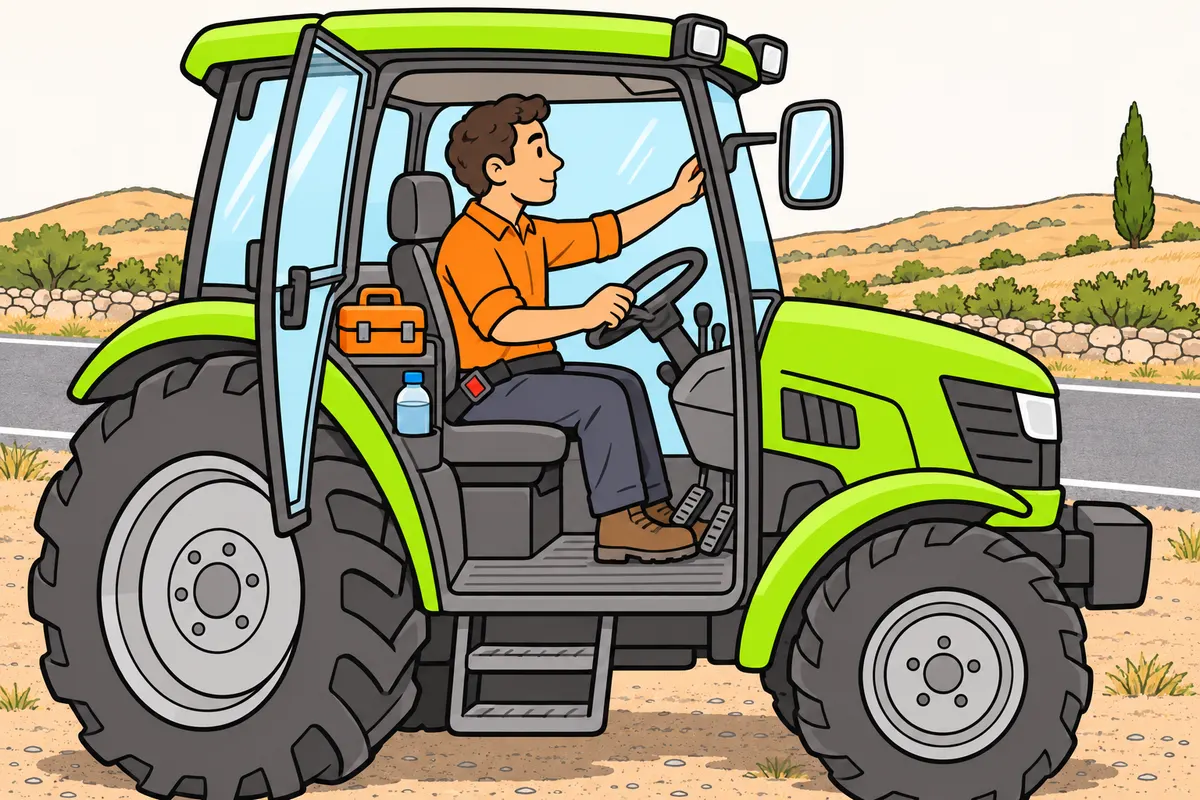
Adjust your seat and keep the controls and view clear.
Remember
- Adjust your seat and mirrors before setting off.
- Store objects where they cannot block the pedals.
- Learn the controls before entering traffic.
- Do not let passengers restrict your movements or view.
Exam trap: Wrong: Light objects cannot get in your way. Right: They can move and block the controls.
Read the full explanation
- Adjust the seat and mirrors before setting off so that you can operate the controls while maintaining a suitable posture. You must maintain freedom of movement, a clear field of vision and constant attention; sitting high up does not mean you can dispense with observing the sides and the area behind you. [RGC, art. 18](https://www.boe.es/buscar/act.php?id=BOE-A-2003-23514#a18)
- Place tools, bottles and other objects in the cab in stable locations where they do not interfere with the pedals or other controls. You must also not carry objects or animals in a way that obstructs your control of the tractor; being lightweight does not remove the danger if they move. [RGC, art. 18.1](https://www.boe.es/buscar/act.php?id=BOE-A-2003-23514#a18)
- Before joining traffic, locate the controls you need to drive that particular tractor: their layout varies between models. As practical preparation, familiarise yourself with them while the vehicle is stationary; checks from the driving position are covered in «Agricultural mechanics and maintenance». [RGC, arts. 17 and 18](https://www.boe.es/buscar/act.php?id=BOE-A-2003-23514#a17)
- Your passengers must maintain a posture that leaves your movements and vision unobstructed throughout the journey. Authorised seats and equipment are covered in «The agricultural vehicle and its equipment». [RGC, art. 18.1](https://www.boe.es/buscar/act.php?id=BOE-A-2003-23514#a18)
3Check the combination and its stability
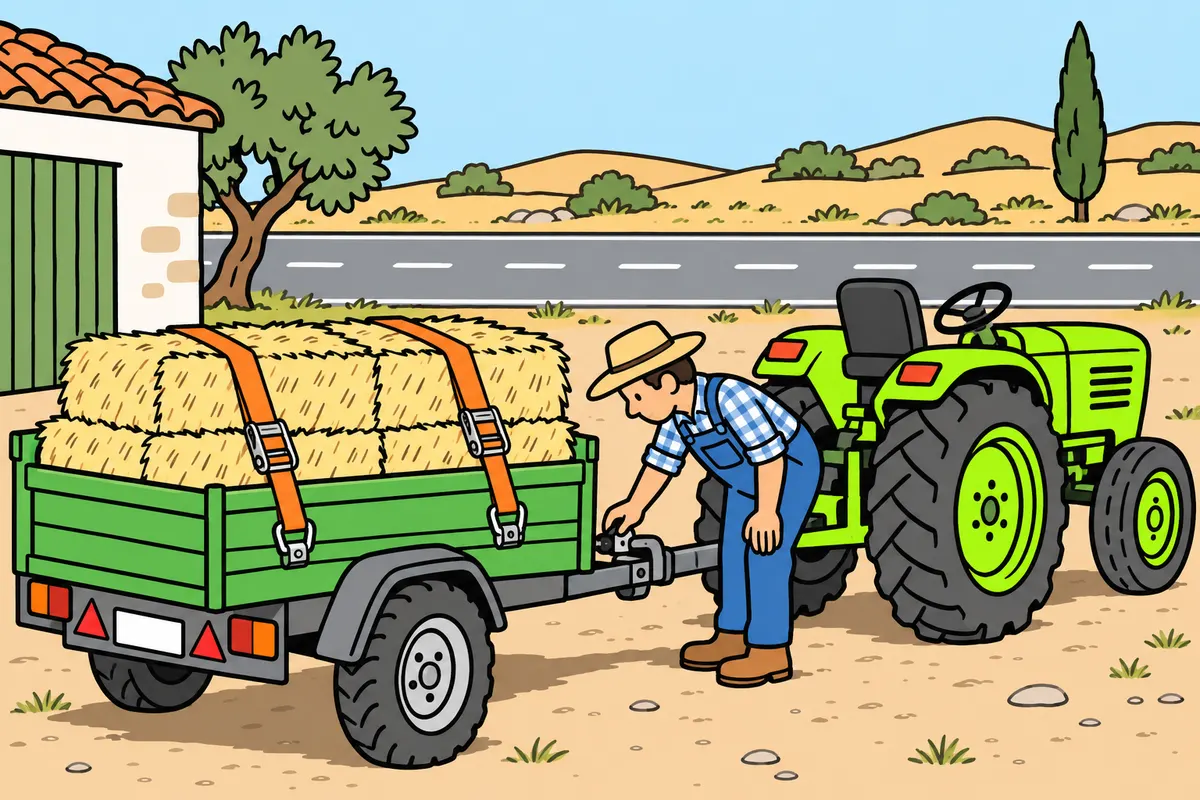
Prepare the load, implements and trailer for safe travel.
Remember
- Check that implements are secured and the trailer is coupled.
- Position the load without affecting stability.
- Secure it when needed to prevent it falling, dragging or moving dangerously.
- Move any implement that blocks the view you need before setting off.
- Do not cover lights, signals, plates, required markings or hand signals.
Exam trap: Wrong: Spreading the weight evenly is enough. Right: Secure the load when needed.
Read the full explanation
- Before driving, check the trailer coupling and prepare the implements for transport according to the manufacturer's instructions. Check that the equipment is set up for the journey you intend to make; coupling and equipment compatibility are covered in «The agricultural vehicle and its equipment». [RGC, art. 14](https://www.boe.es/buscar/act.php?id=BOE-A-2003-23514#a14)
- You must position the load and its accessories and, where necessary, secure them so that they do not fall, drag or move dangerously. You must also prevent them from compromising stability; apparently distributing the weight well does not replace the securing measures needed for the material you carry. [RGC, art. 14.1](https://www.boe.es/buscar/act.php?id=BOE-A-2003-23514#a14)
- The combination's configuration must allow you to observe the road: before setting off, adjust any implement that obstructs the field of vision you need. From the cab, assess the width hidden by the equipment and the information you need as you approach other road users. [RGC, art. 18.1](https://www.boe.es/buscar/act.php?id=BOE-A-2003-23514#a18)
- You must not let the load obscure the lights, light signals, plates, compulsory markings or your hand signals. Check the combination from outside: a light may work electrically yet be useless to others if material or equipment you carry conceals it. [RGC, art. 14.1.d](https://www.boe.es/buscar/act.php?id=BOE-A-2003-23514#a14)
4Physical and mental fitness throughout the journey
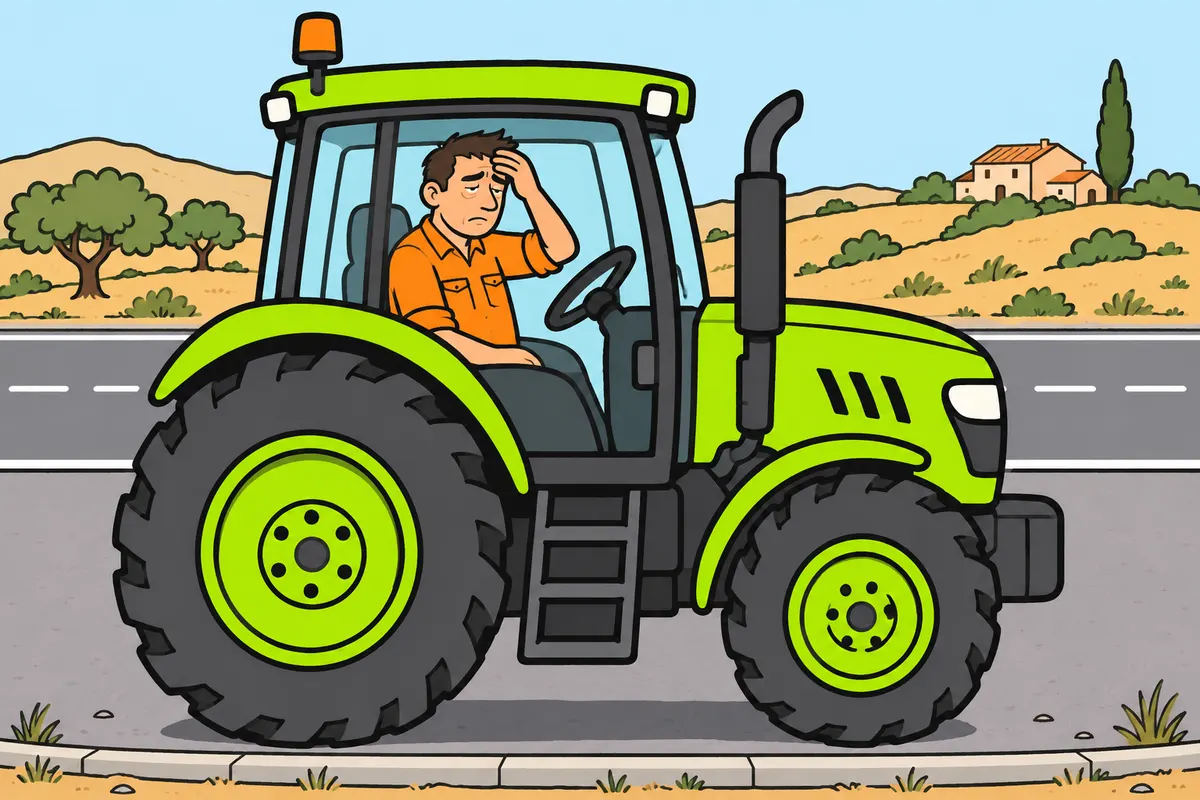
Drive only if you can control the tractor throughout the journey.
Remember
- Assess your condition even on short journeys.
- Do not set off if dizziness or disturbed vision prevents control.
- If this happens during the journey, stop safely.
- Do not let haste or anger distract you.
- Follow the restrictions on your entitlement.
- Ask a healthcare professional if illness or treatment raises doubts.
Exam trap: Wrong: A valid licence guarantees you can drive safely. Right: Assess how you feel each day.
Read the full explanation
- You must be fit to control the tractor throughout the drive, including when you return from work and only have a short stretch of road left. Your obligation does not depend on the distance or how busy the traffic is: a lapse in attention may coincide with a pedestrian, a turn or unexpected braking. [RGC, art. 17](https://www.boe.es/buscar/act.php?id=BOE-A-2003-23514#a17)
- If you feel dizzy, experience changes in your vision or have difficulties that prevent you from controlling the tractor, you must not set off; if these arise during the journey, stop safely. [RGC, art. 17](https://www.boe.es/buscar/act.php?id=BOE-A-2003-23514#a17)
- You must also assess worries, anger or haste when they interfere with your attention. Do not turn the journey into a race to make up working time: maintain a speed that allows you to observe, decide and stop for any obstacles that may arise. [RGC, arts. 18 and 45](https://www.boe.es/buscar/act.php?id=BOE-A-2003-23514#a18)
- You must comply with the conditions and restrictions of your driving entitlement and continue to meet the required fitness standards. If an illness or its treatment raises doubts about your ability, consult a healthcare professional; holding a valid licence does not remove your obligation to assess how you feel that day. [RGCond, art. 12.6](https://www.boe.es/buscar/act.php?id=BOE-A-2009-9481#a12)
5Fatigue after agricultural work
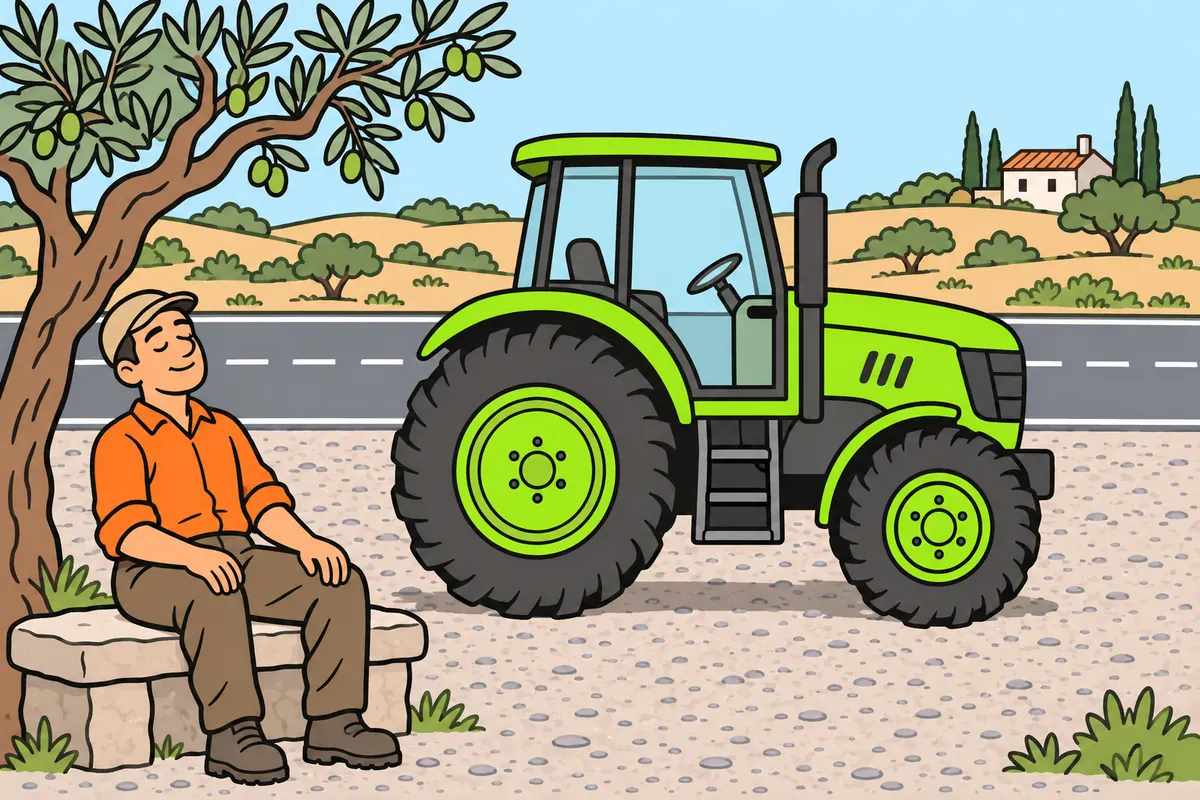
Rest before driving if agricultural work has left you tired.
Remember
- If work has left you fatigued, rest before driving the tractor.
- Set aside time to recover after hard work.
- Do not finish exhausted and drive straight away.
- See “Driver condition and fitness” for fatigue signs.
Exam trap: Wrong: Knowing the route lets you drive tired. Right: If agricultural work leaves you fatigued, rest before driving.
Read the full explanation
- If you return from agricultural work feeling fatigued, rest before driving the tractor; the causes, warning signs and planning your rest are covered in «Driver condition and fitness». [RGC, art. 17.1](https://www.boe.es/buscar/act.php?id=BOE-A-2003-23514#a17)
- To prepare for the return journey, allow time to recover after tasks that require sustained effort. Organise your day so that moving the tractor does not depend on finishing exhausted and immediately setting out on the road; you must retain the ability to operate the controls when you finish work too. [RGC, art. 17.1](https://www.boe.es/buscar/act.php?id=BOE-A-2003-23514#a17)
6Drowsiness: stop before you lose alertness
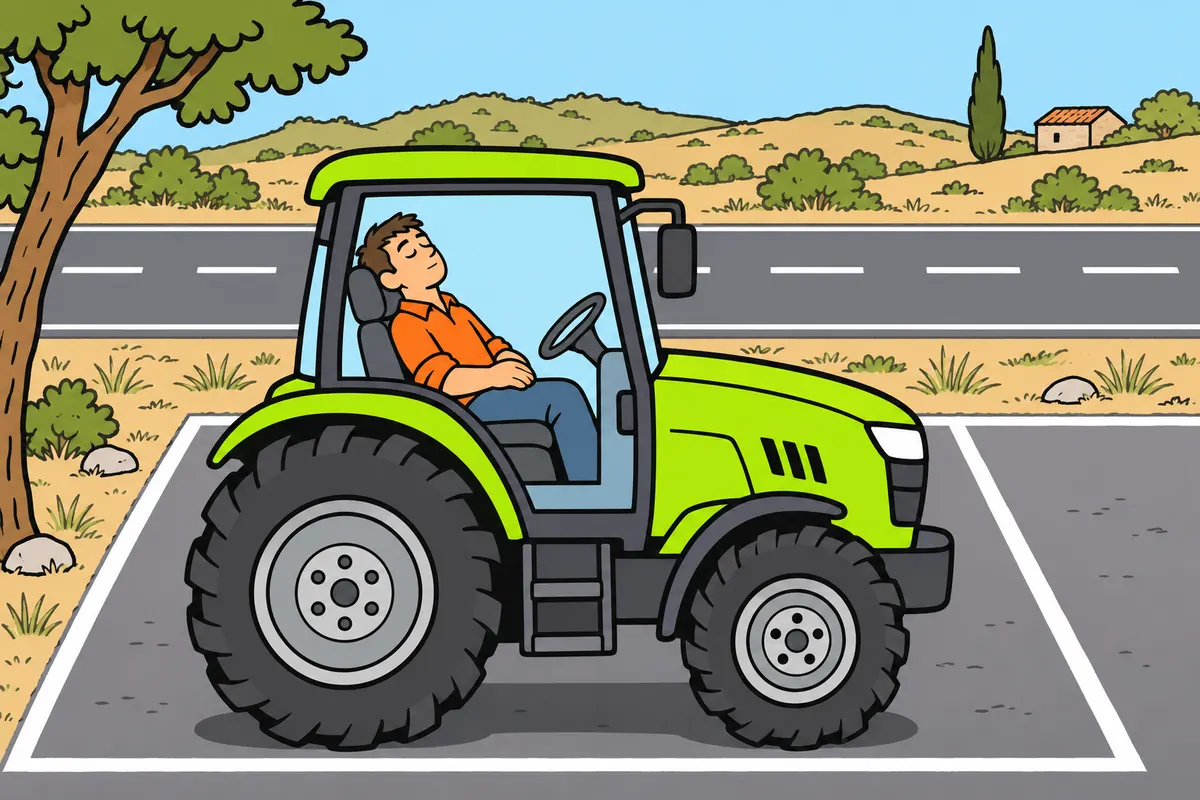
If you become sleepy while driving the tractor, stop somewhere safe.
Remember
- If you become sleepy, stop somewhere safe.
- If you lose alertness, prepare to stop while you can still watch traffic.
- Choose a safe place for the whole combination, including the trailer.
- See “Driver condition and fitness” for ways to regain alertness.
Exam trap: Wrong: You can keep driving the tractor when sleepy. Right: If you become sleepy, stop somewhere safe.
Read the full explanation
- If you become drowsy while driving the tractor, stop in a safe place; measures to restore alertness are explained in «Driver condition and fitness». [RGC, art. 17.1](https://www.boe.es/buscar/act.php?id=BOE-A-2003-23514#a17)
- On a monotonous night-time journey between fields, pay particular attention to whether you stop consciously following the route. If you cannot stay alert, prepare to stop while you can still observe traffic and choose where to pull the whole combination, including the trailer, out of the way without creating another hazard. [RGC, arts. 18.1 and 45](https://www.boe.es/buscar/act.php?id=BOE-A-2003-23514#a18)
7Alcohol: identify your applicable limit
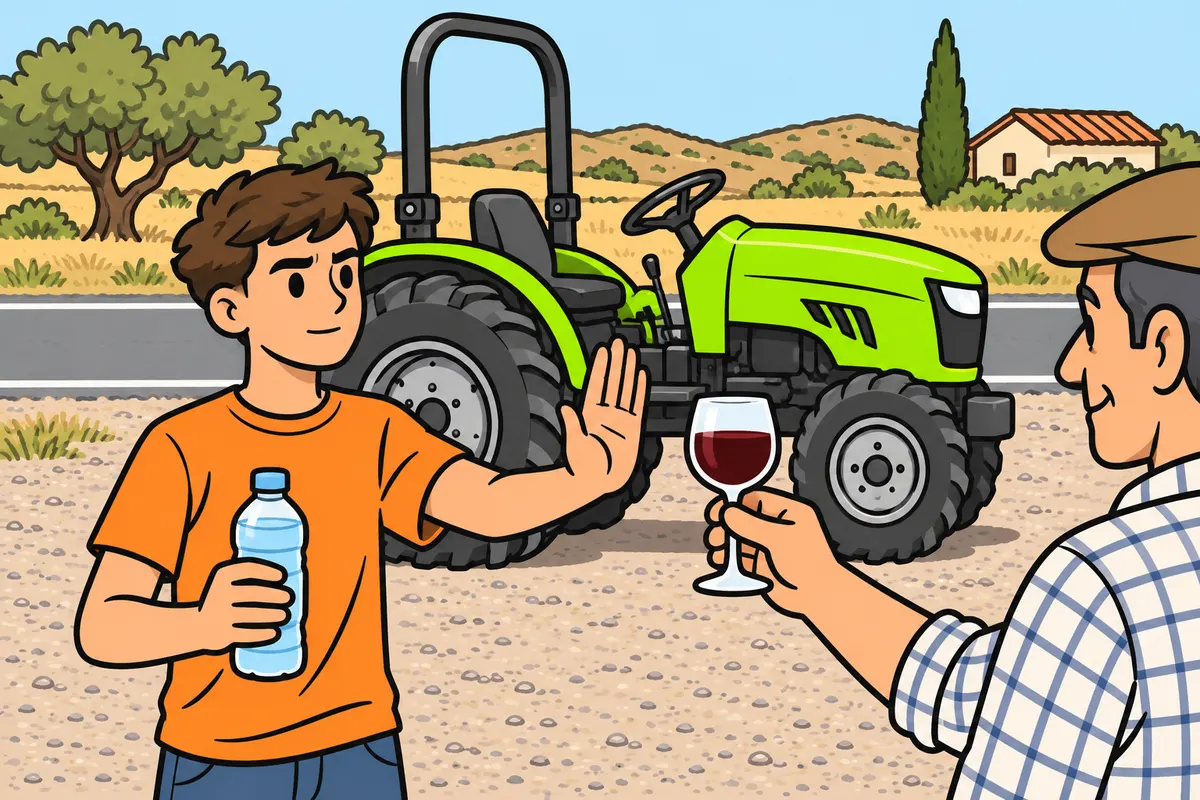
Apply the alcohol limit that matches your age and entitlement.
Remember
- Before planning your return after a meal, check which limit applies to you.
- Consider your age and entitlement conditions.
- If you are under age, your permitted level is zero in blood and breath.
- A family tractor or a companion does not change this.
- See “Driver condition and fitness” for limits and checks.
Exam trap: Wrong: If you are under age, you can drink when accompanied. Right: Your limit is zero in blood and breath, even in the family tractor.
Read the full explanation
- Before planning your return journey after a meal at the farm, apply the alcohol limit that applies to you as the tractor driver, taking account of your age and the conditions of your driving entitlement; limits and checks are covered in «Driver condition and fitness». [Traffic Act, art. 14.1](https://www.boe.es/buscar/act.php?id=BOE-A-2015-11722#a14)
- If you drive the tractor while under age, your permitted alcohol level is zero in both blood and breath. Plan the meal and return journey with this personal condition in mind: the prohibition still applies if the tractor belongs to the family farm or you drive with someone accompanying you. [Traffic Act, art. 14.1](https://www.boe.es/buscar/act.php?id=BOE-A-2015-11722#a14)
8Drugs and driving the tractor
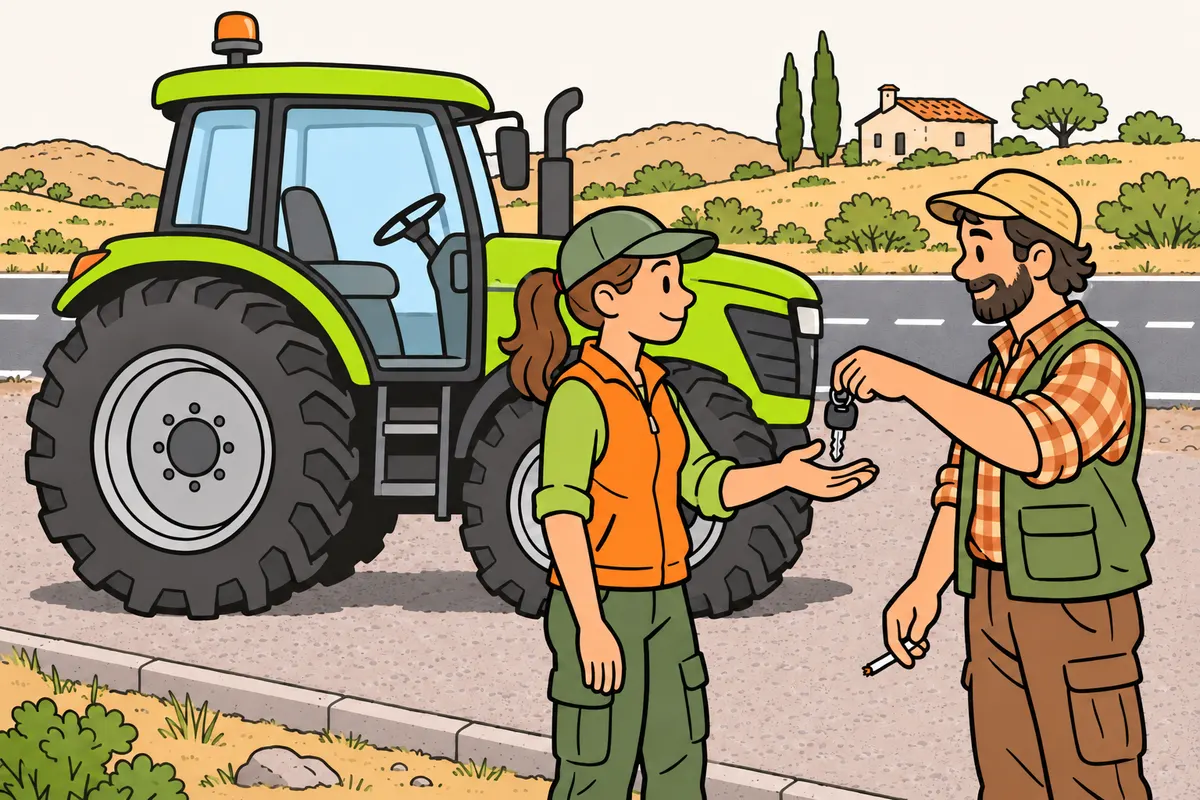
The ban on driving with drugs present also applies between farms.
Remember
- The drugs ban applies between farms, even on short journeys or quiet roads.
- A prescribed therapeutic substance is exempt only if you can drive safely.
- You must drive carefully, cautiously and without distraction.
- Plan who will move the tractor if you cannot drive.
- See “Driver condition and fitness” for the exception.
Exam trap: Wrong: A prescription alone lets you drive with drugs present. Right: It must be therapeutic, and you must drive carefully, cautiously and without distraction.
Read the full explanation
- If you take a substance prescribed by a doctor for therapeutic purposes, the exemption from the prohibition on driving with drugs in your system requires you to be fit to drive the tractor with care, caution and without distraction. The scope of this exception is covered in «Driver condition and fitness». [Traffic Act, art. 14.1](https://www.boe.es/buscar/act.php?id=BOE-A-2015-11722#a14)
- When planning journeys between farms, the prohibition on driving with drugs in your system applies even if the road journey is short or there is little traffic. As a preventive measure, arrange who drives the tractor when you cannot drive it yourself; finishing an outstanding task does not justify risking loss of control of a machine fitted with implements. [Traffic Act, art. 14.1](https://www.boe.es/buscar/act.php?id=BOE-A-2015-11722#a14)
9Medicines and fitness to drive
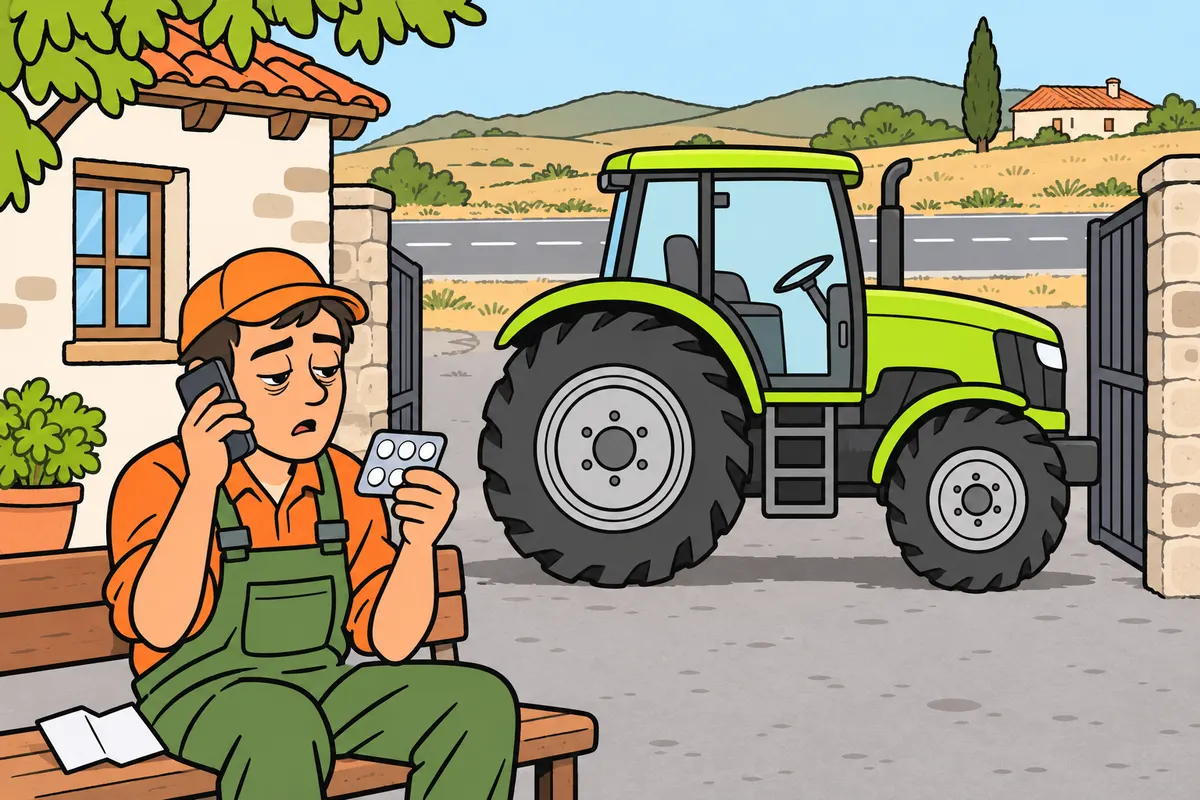
Ask a healthcare professional whether your treatment is compatible with driving.
Remember
- Ask whether your treatment is compatible before driving the tractor.
- Tell the professional what tractor you use and what driving requires.
- Explain when you plan to drive.
- Follow the prescription and seek advice if tasks become difficult.
- See “Driver condition and fitness” for the leaflet and precautions.
- That module also explains the medicine’s warning symbol.
Exam trap: Wrong: You can plan the journey without considering your treatment. Right: Ask a healthcare professional if it is compatible with driving.
Read the full explanation
- When planning a tractor journey while undergoing treatment, discuss with your healthcare professional whether the treatment is compatible with driving; the patient information leaflet, pictogram and precautions are explained in «Driver condition and fitness». [RGCond, art. 12.6](https://www.boe.es/buscar/act.php?id=BOE-A-2009-9481#a12)
- Explain to your healthcare professional which tractor you drive and what tasks the journey involves: coordinating the pedals, checking the mirrors and judging the space needed by the equipment. As practical preparation, take your planned driving times into account when asking about treatment precautions; follow the prescribed instructions and seek guidance if they make these tasks difficult. [RGCond, art. 12.6](https://www.boe.es/buscar/act.php?id=BOE-A-2009-9481#a12)
10Continuous attention and observation
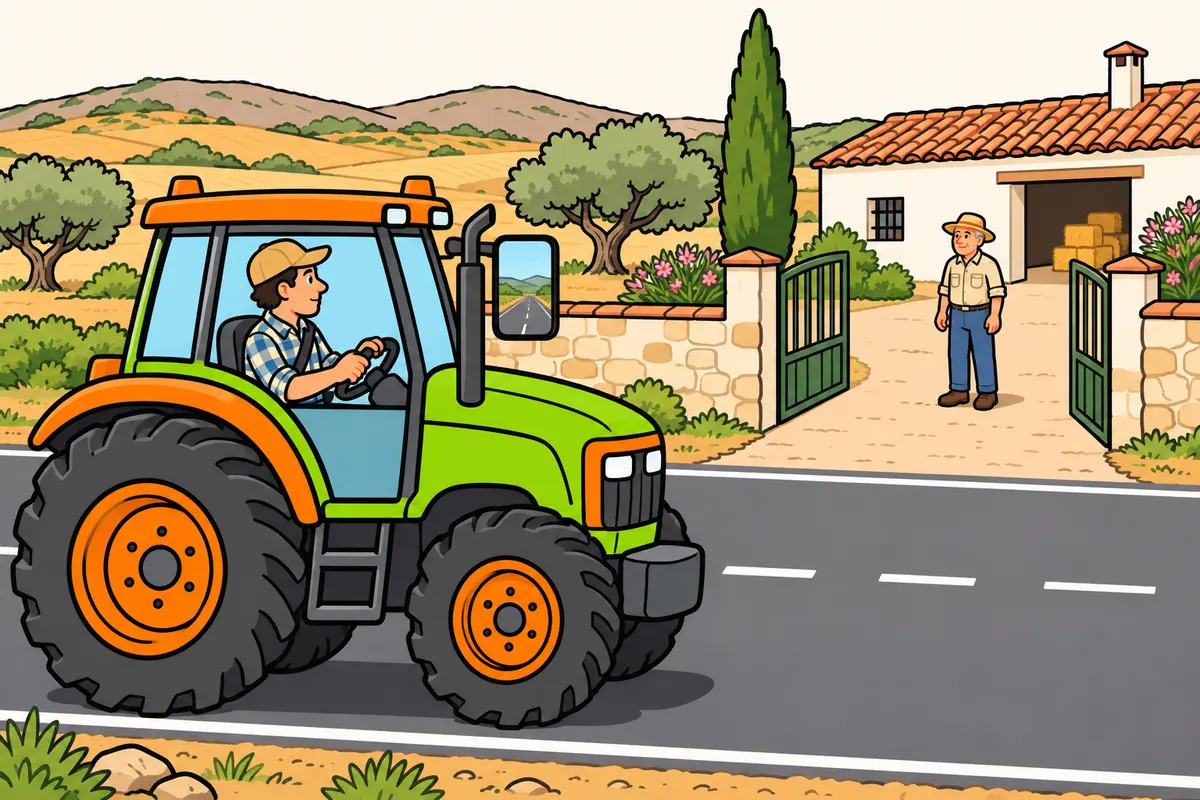
Keep watching the road and check again before acting.
Remember
- Watch the road, its entrances and edges, and use your mirrors.
- Stay alert even on familiar routes.
- Do not neglect driving to find documents or adjust screens.
- Check again before moving into an access.
Exam trap: Wrong: An access you saw clear will stay clear. Right: Check again before entering.
Read the full explanation
- You must observe the road, its access points and edges, as well as use your mirrors. Constant attention helps you detect approaching vehicles, pedestrians or changes in the road surface in good time; looking only ahead can leave you without information you need before braking, turning or moving sideways. [RGC, arts. 17 and 18](https://www.boe.es/buscar/act.php?id=BOE-A-2003-23514#a18)
- You must remain alert on familiar routes. The fact that nobody usually emerges from a farm does not prove that its access is clear today; adjust your speed to what you can check at that moment, especially near buildings with direct road access, tracks, narrow sections and areas with restricted visibility. [RGC, arts. 45 and 46](https://www.boe.es/buscar/act.php?id=BOE-A-2003-23514#a46)
- Before looking for documents, adjusting a screen or attending to anything that requires you to take your eyes off the road and your hands off the controls, you must work out how to do so without neglecting your driving. Permission to use certain devices does not remove your duty to remain attentive, maintain freedom of movement and stay in control of the vehicle's controls. [RGC, art. 18](https://www.boe.es/buscar/act.php?id=BOE-A-2003-23514#a18)
- Anticipation requires you to keep checking your surroundings after deciding what to do. If you see that an access point is clear, reassess the situation before moving into it: another road user may approach while you prepare the manoeuvre, and your combination may need considerable time to complete the movement. [RGC, arts. 17 and 72](https://www.boe.es/buscar/act.php?id=BOE-A-2003-23514#a72)
11Phone, headphones and screens
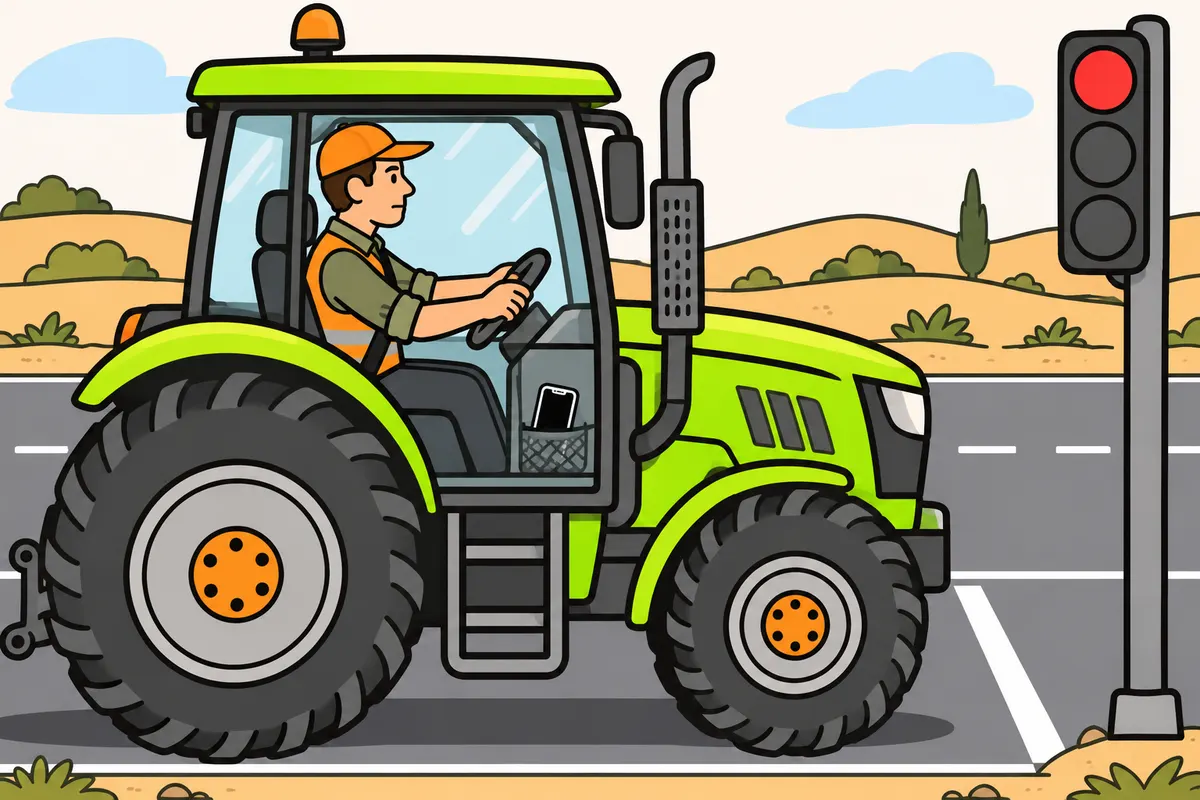
Park in a permitted place before handling your phone for work instructions.
Remember
- Set up the satnav and farm screens while the tractor is parked.
- Park somewhere permitted before handling your phone.
- Do not use screens in a way that stops you following traffic.
- Legal exceptions do not allow you to neglect the road.
- See “Driver condition and fitness” for device bans.
Exam trap: Wrong: Work instructions let you handle your phone while driving. Right: Park in a permitted place first.
Read the full explanation
- If you receive work instructions on your mobile phone during the journey, find a place where parking is permitted before handling it; prohibitions concerning mobile phones, headphones and other communication systems are covered in «Driver condition and fitness». [Traffic Act, art. 13.3](https://www.boe.es/buscar/act.php?id=BOE-A-2015-11722#a13)
- Set up your navigation system and agricultural displays while the tractor is parked. During the journey, you are prohibited from using monitors in ways that are incompatible with constant attention; a screen intended for farm work may require reading or adjustments that prevent you from keeping track of traffic. Legal exceptions do not allow you to neglect the road. [RGC, art. 18.1](https://www.boe.es/buscar/act.php?id=BOE-A-2003-23514#a18)
12Legal speed and safe speed
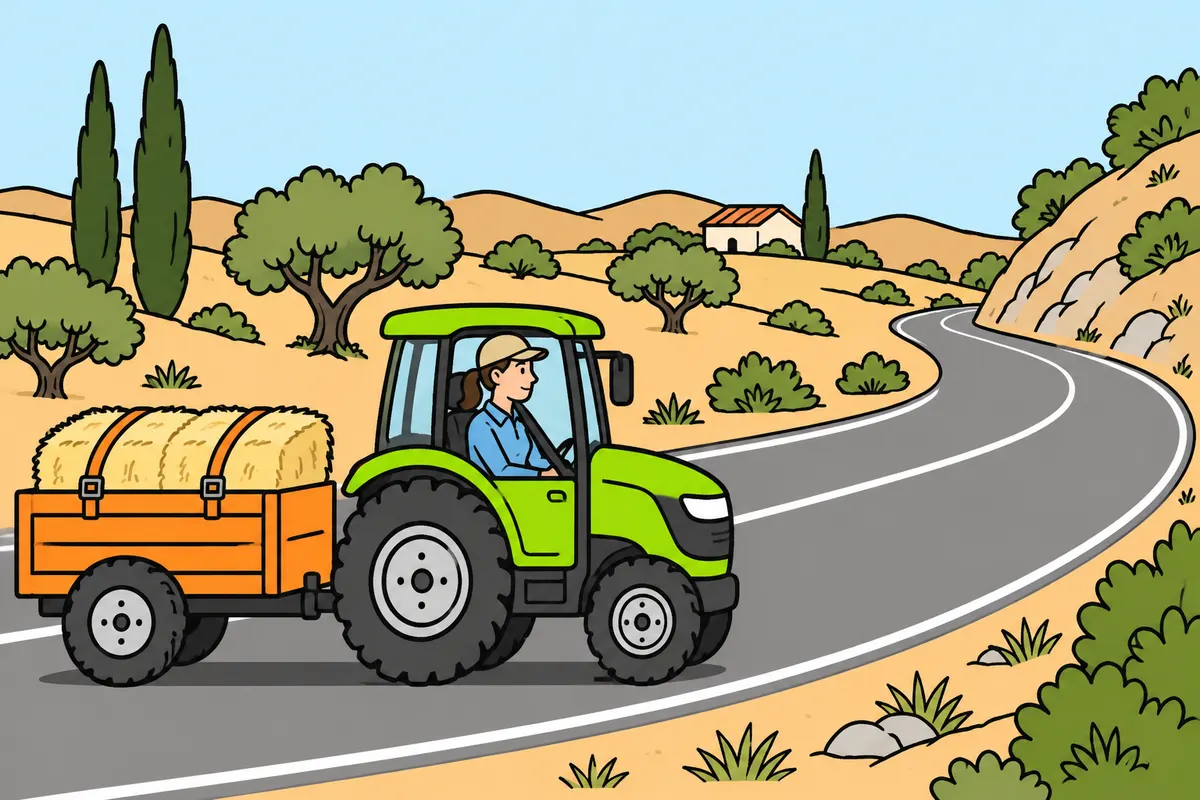
Reassess your speed when you change an implement or add a trailer.
| Tractor configuration | What to consider |
|---|---|
| Tractor alone | Its speed may be too high with extra equipment. |
| With another implement or trailer | Reassess your speed, even on the same stretch. |
Remember
- Reassess your speed when you change an implement or add a trailer.
- The same road may need a different speed with different equipment.
- See “Speed and distances for agricultural vehicles” for limits.
- Choose a speed that lets you stop the whole combination within clear, visible space.
- The signed maximum does not guarantee you can deal with a hidden obstacle.
Exam trap: Wrong: You can always keep the same speed when adding a trailer. Right: Reassess the speed of the whole combination.
Read the full explanation
- When you change an implement or add a trailer, reassess the combination's speed: a speed suitable for the tractor on its own may be excessive with a different configuration, even on the same stretch of road; maximum speeds and adapting to conditions are covered in «Speed and distances for agricultural vehicles». [RGC, art. 45](https://www.boe.es/buscar/act.php?id=BOE-A-2003-23514#a45)
- At an access point where the way out further ahead is hidden, choose a speed that allows you to stop the combination within the space you can see is clear. If the implement restricts your view of the edge, adjust your speed to the information available: the posted speed limit does not guarantee that you have enough space to deal with an obstacle beyond the bend. [RGC, art. 45](https://www.boe.es/buscar/act.php?id=BOE-A-2003-23514#a45)
13Reaction, braking and stopping
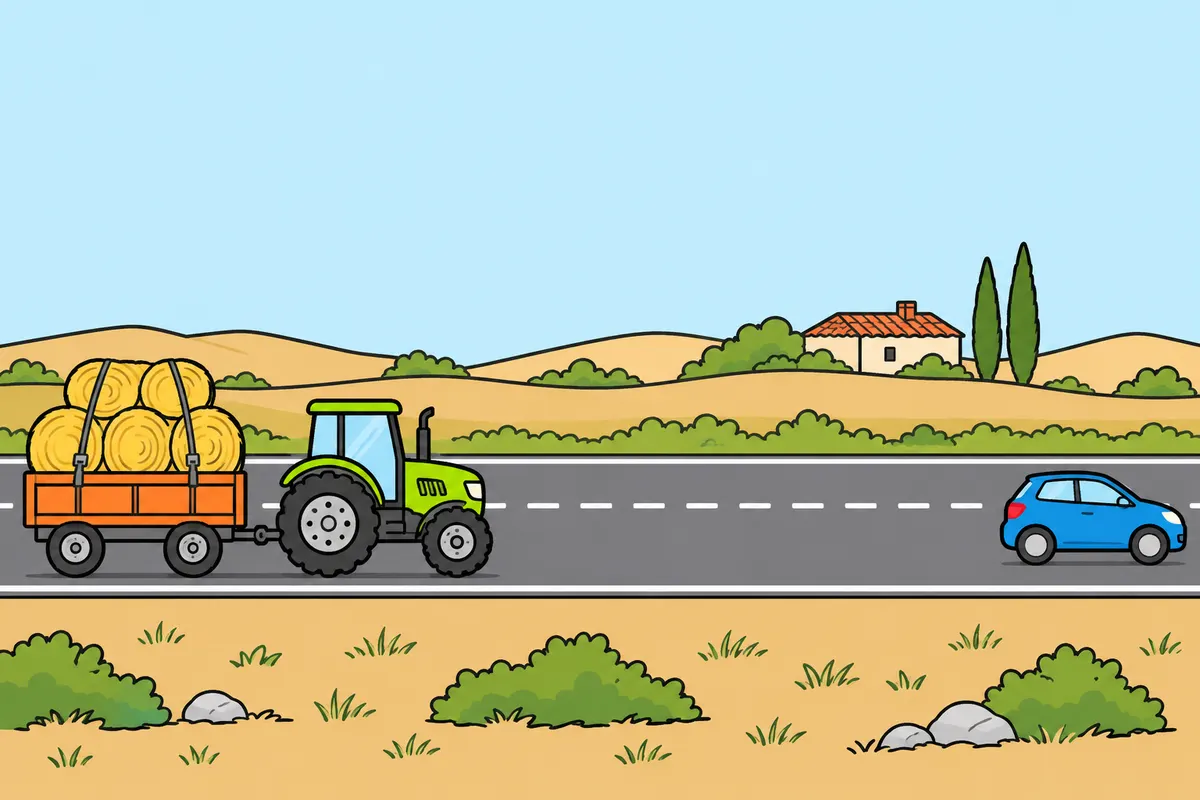
With a loaded trailer, prepare to slow down early when approaching a stationary queue.
Remember
- With a loaded trailer, prepare to slow down early near a stationary queue.
- Consider tyre grip and the braking response of the whole combination.
- You travel while reacting, then need space to brake.
- Leave room for the trailer to respond.
- See “Speed and distances for agricultural vehicles” for stopping distance.
Exam trap: Wrong: Your usual margin is enough with a load. Right: Approaching a stationary queue with a loaded trailer, prepare to slow down according to grip and the combination’s brakes.
Read the full explanation
- When you approach a stationary queue with a loaded trailer, prepare to slow down in good time and assess the available grip and how the combination’s brakes respond; the components of stopping distance are explained in «Speed and distances for agricultural vehicles». [RGC, art. 54.1](https://www.boe.es/buscar/act.php?id=BOE-A-2003-23514#a54)
- From the moment you notice the queue stopping until you apply the brake, your tractor continues to move. You then need space to brake: allow a margin for both phases and for the trailer’s actual response. A quick reaction does not eliminate the distance you travel afterwards or allow you to get so close that you depend on perfect braking. [RGC, art. 54.1](https://www.boe.es/buscar/act.php?id=BOE-A-2003-23514#a54)
14Following distance and queues
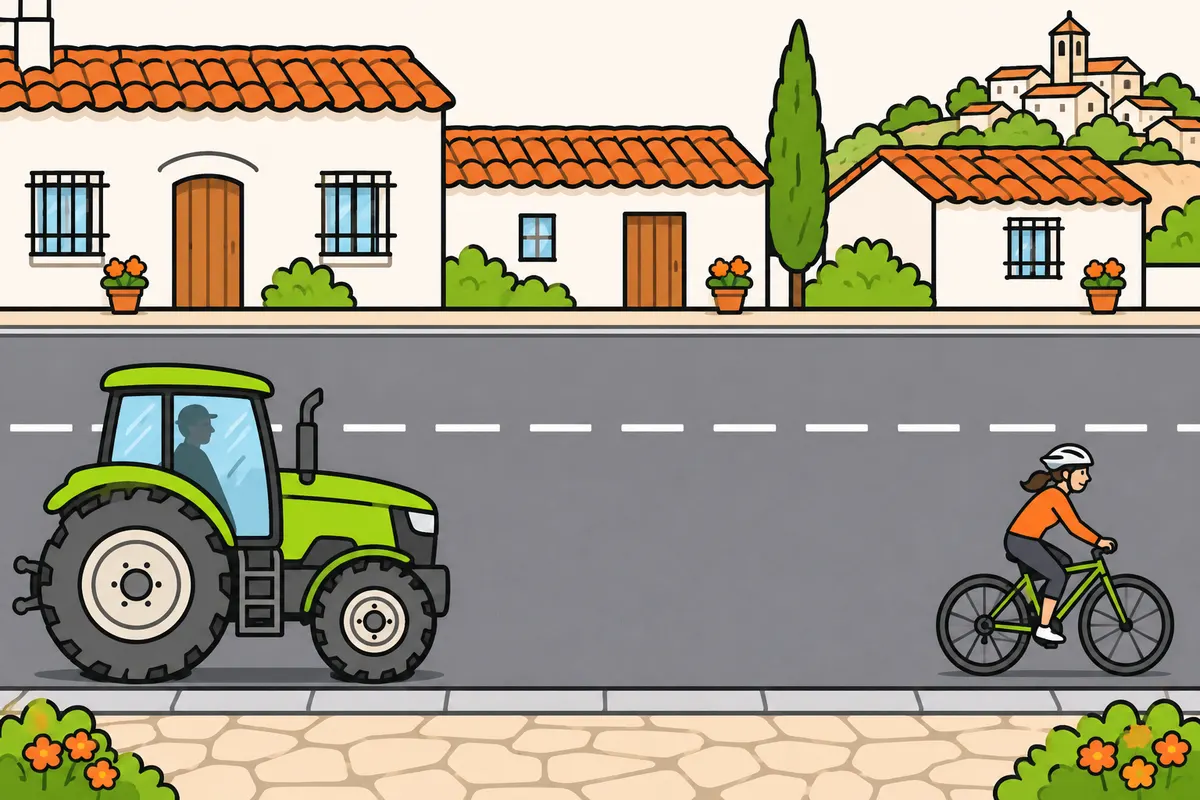
On urban roads, leave enough space behind a cyclist sharing your lane.
Remember
- Driving your tractor behind a cyclist in your urban lane, leave room.
- Leave at least 5 m in that case.
- Leave more if you need extra room to stop safely.
- In queues, leave room to brake even if the vehicle ahead brakes suddenly.
- Allow for the weight and behaviour of your trailer.
Exam trap: Wrong: 5 m is always enough. Right: It is the minimum behind a cyclist in your urban lane.
Read the full explanation
- If you drive your tractor behind a cyclist in the same lane in an urban area, stay at least 5 m behind and increase this distance if you need more space to stop without hitting them. [RGC, arts. 153.4 and 54.1](https://www.boe.es/buscar/act.php?id=BOE-A-2003-23514#a1-6)
- In a queue, keep enough space to brake even if the vehicle ahead brakes suddenly. Consider the weight and behaviour of your trailer when choosing this gap; the space you need must suit the combination you are driving at the time, rather than the one you used on a previous journey without a load. [RGC, art. 54.1](https://www.boe.es/buscar/act.php?id=BOE-A-2003-23514#a54)
15Side clearance and vulnerable road users
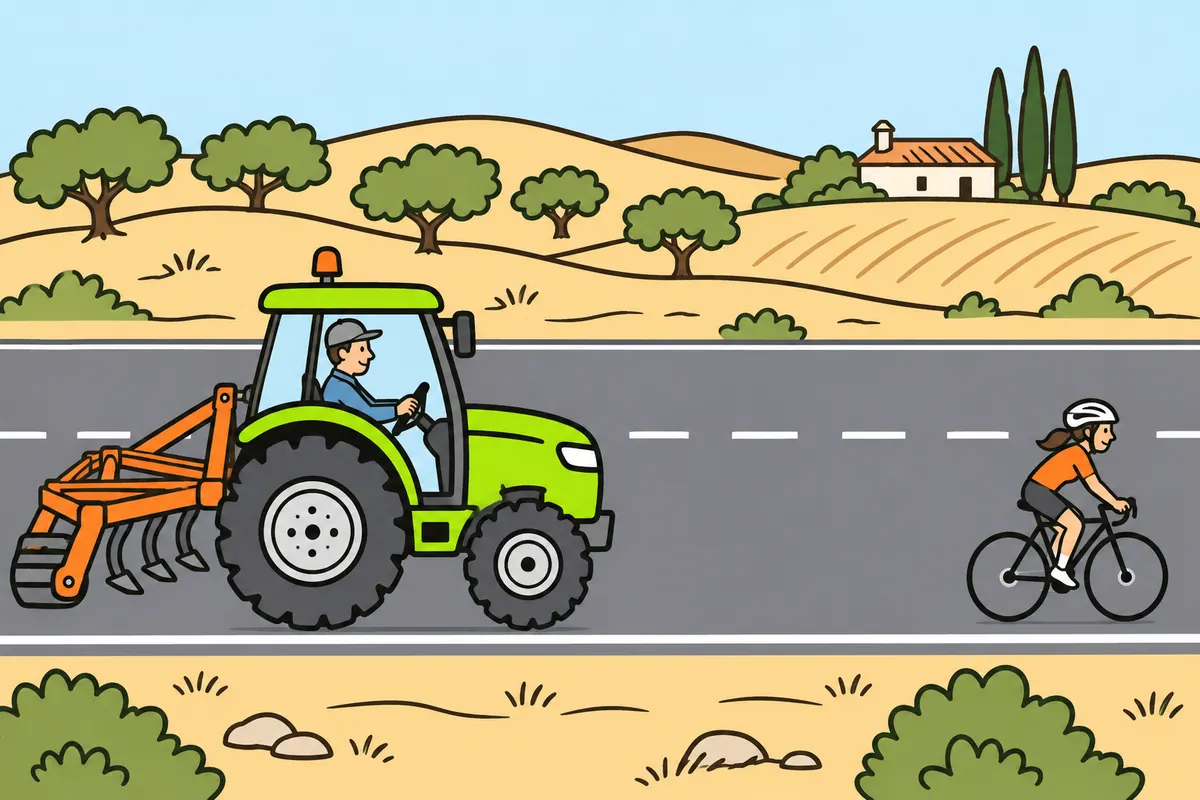
Measure clearance from the nearest outer edge of your equipment.
Remember
- Measure space from the nearest part of the implement or trailer.
- The gap beside the cab may hide a rear projection.
- Slow down near workers, animals and people near the road edge.
- Stop if needed to avoid danger.
- See “Manoeuvres with agricultural vehicles” for overtaking conditions.
- With wide implements, slow down before drawing level with people or animals.
Exam trap: Wrong: The cab’s width is all that matters. Right: Consider the implements and trailer too.
Read the full explanation
- When you pass close to people, measure the clearance from the edge of the implement or trailer nearest to them: the visible gap beside the cab may conceal a projection at the rear; the required clearances and conditions for overtaking are explained in «Manoeuvres with agricultural vehicles». [RGC, arts. 17 and 46](https://www.boe.es/buscar/act.php?id=BOE-A-2003-23514#a46)
- Near workers on foot, animals or people approaching the edge of the road, slow down and stop if necessary to avoid danger. With a wide implement, anticipate the need to slow down before you draw level with them: your side clearance and ability to stop must allow for an unexpected movement into your path. [RGC, art. 46.1.a and b](https://www.boe.es/buscar/act.php?id=BOE-A-2003-23514#a46)
16Bends, descents and smooth control
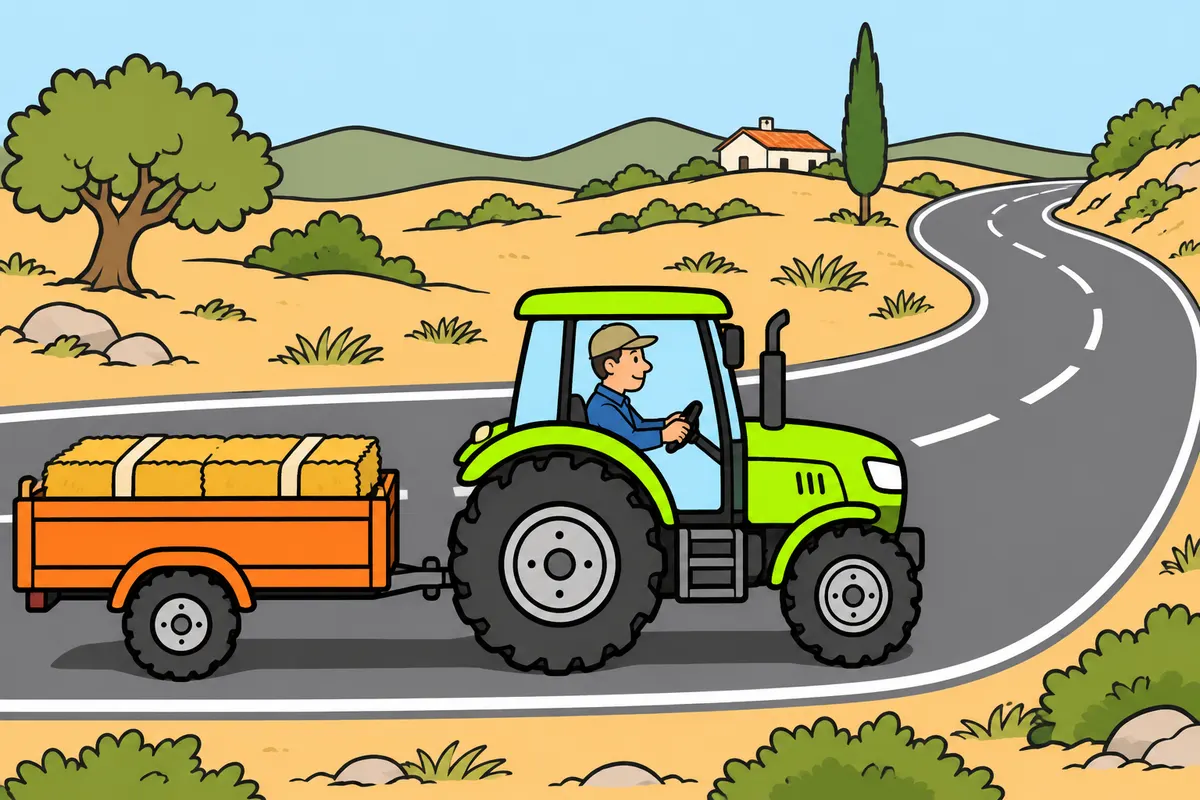
Slow down before bends and stay in control on descents.
Remember
- Before bends, adapt speed to the surface, visibility and load.
- Allow space for the path of your trailer and implements.
- On descents, choose a gear that lets the engine help hold you back.
- Use your brake when needed, without overloading it.
- Do not go downhill in neutral.
- Use smooth movements, but brake when danger requires it.
Exam trap: Wrong: The signed maximum guarantees you can take the bend at that speed. Right: Slow down according to conditions.
Read the full explanation
- Before a bend, you must adapt your speed to the road layout, visibility, surface and load. Leave a margin to keep your tractor on course and allow for the different paths your trailer and implements may follow, especially when the edge of the road is close. [RGC, arts. 17 and 45](https://www.boe.es/buscar/act.php?id=BOE-A-2003-23514#a45)
- You must operate the steering, accelerator and brakes in a way that maintains the combination’s stability. Smooth driving helps you avoid unnecessary changes of course or load movement; it does not mean driving inattentively or failing to act decisively when you need to avoid an immediate danger. [RGC, arts. 14, 17 and 53](https://www.boe.es/buscar/act.php?id=BOE-A-2003-23514#a53)
- As driving advice, on a descent choose a suitable gear so that the engine helps restrain the tractor, and use the service brake when you need it, avoiding overloading it. Keep a gear engaged from the start and take account of the push from the trailer and load. [DGT, efficient driving](https://www.dgt.es/muevete-con-seguridad/conviertete-en-un-buen-conductor/consejos-generales/conduccion-eficiente/)
- On a tight bend or an uneven surface, you must slow down further if stability requires it. There is no minimum speed that forces you to enter too fast, nor does a maximum speed sign guarantee that your tractor can take that bend at the indicated speed. [RGC, arts. 45 and 49.2](https://www.boe.es/buscar/act.php?id=BOE-A-2003-23514#a49)
- When danger is imminent, you must act to avoid it. Economical driving is subordinate to safety: saving fuel does not justify delaying necessary braking or switching off the lights required during the journey. [RGC, arts. 3 and 53](https://www.boe.es/buscar/act.php?id=BOE-A-2003-23514#a53)
17Preventing tractor overturns
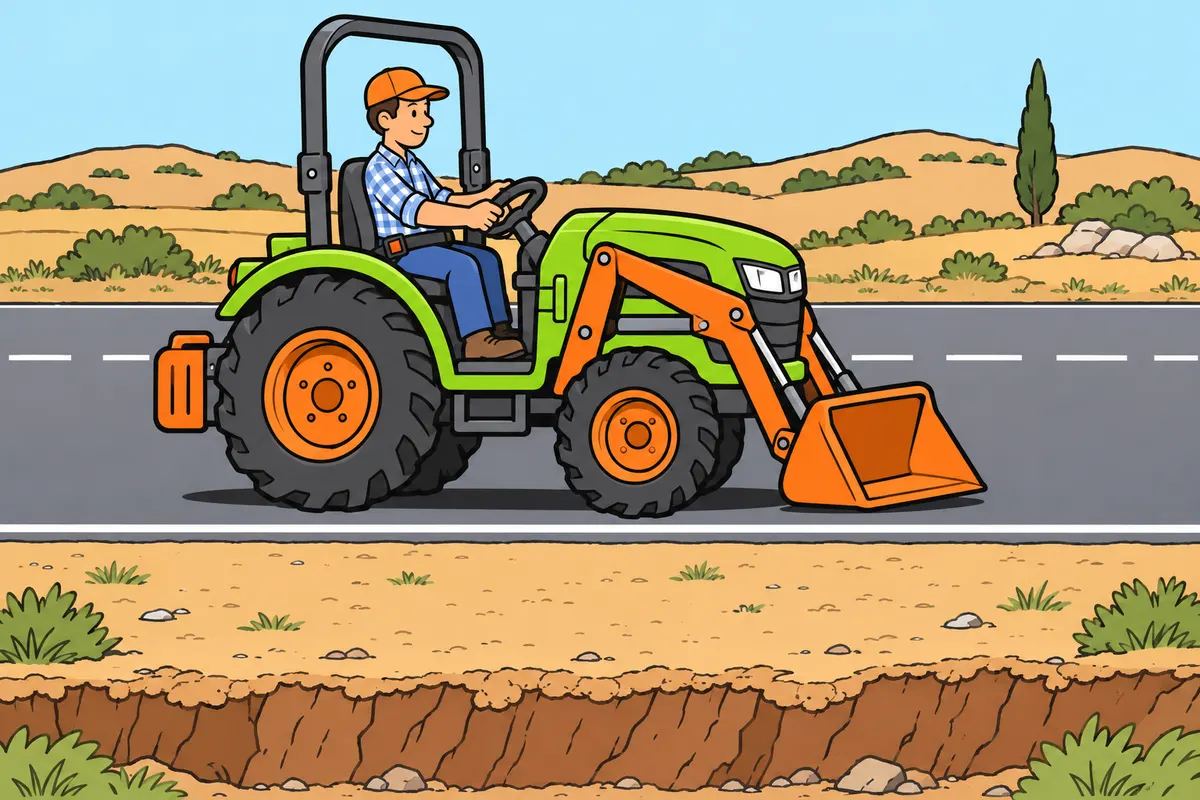
Keep the tractor stable and stay within its protected space if it overturns.
| Tractor equipment or case | What to remember |
|---|---|
| Raised rear implement | Use suitable ballast and counterweights as the manual says. |
| Front loader | Use the recommended counterweight and carry the load low. |
| Rollover protection | Check the approved structure required for the group and date. |
| Extra-light group 0, up to 400 kg | Exempt from an approved structure for registration. |
| No approved structure; 40 years or more since first ROMA registration | Deregistration is barred for change of owner, temporary deregistration or change of activity. Only a change of owner through inheritance is excepted. |
| Used agricultural tractor from another EU Member State | It cannot be registered in ROMA without approved rollover protection. |
Remember
- Leave space beside ditches; slow down for potholes and avoid sharp turns.
- Avoid crossing slopes if this affects stability.
- On a slope, keep side equipment uphill and low.
- Check the approved rollover protection required for the tractor’s group and date.
- Fasten the fitted, approved seat belt unless legally exempt.
- With rollover protection, stay belted, hold the wheel and never jump during an overturn.
Exam trap: Wrong: Any cab proves rollover protection. Right: You need the relevant approval.
Read the full explanation
- To help prevent overturning, leave a margin beside trenches and roadside ditches, where the edges may give way; slow down for potholes and avoid sudden turns. [INSST, NTP 1087](https://www.insst.es/documentacion/colecciones-tecnicas/ntp-notas-tecnicas-de-prevencion/31-serie-ntp-numeros-1066-a-1101-ano-2016/ntp-1087-tractor-agricola-prevencion-del-riesgo-de-vuelco-2017)
- As a preventive measure, on a hillside avoid travelling across the slope in ways that compromise stability. If you have side-mounted equipment, keep it on the uphill side and keep it low. [INSST, NTP 1087](https://www.insst.es/documentacion/colecciones-tecnicas/ntp-notas-tecnicas-de-prevencion/31-serie-ntp-numeros-1066-a-1101-ano-2016/ntp-1087-tractor-agricola-prevencion-del-riesgo-de-vuelco-2017)
- Your tractor must have an approved rollover protection frame or cab according to its group and date; a cab without ROPS (rollover protective structure) approval does not demonstrate that it provides this protection. [RD 448/2020, art. 7.1](https://www.boe.es/buscar/act.php?id=BOE-A-2020-4666#a7)
- Group 0 ultra-light tractors with a mass of 400 kg or less are exempt from the requirement for an approved structure for registration. Consult Annex I for the classification and dates that determine the equipment required for each tractor. [RD 448/2020, Annex I](https://www.boe.es/buscar/act.php?id=BOE-A-2020-4666#ai)
- If your tractor was first registered in the ROMA (Registro Oficial de Maquinaria Agrícola, the official register of agricultural machinery) 40 years or more ago and has no approved structure, you cannot have it deregistered for a change of ownership, temporary deregistration or a change of activity; a change of ownership through inheritance is exempt. [RD 448/2020, art. 7.2](https://www.boe.es/buscar/act.php?id=BOE-A-2020-4666#a7)
- You cannot register a used agricultural tractor from another EU Member State in the ROMA without an approved protective structure. [RD 448/2020, art. 7.3](https://www.boe.es/buscar/act.php?id=BOE-A-2020-4666#a7)
- A raised rear implement moves the centre of gravity upwards and backwards. The NTP recommends that you use ballast and counterweights suitable for the equipment, in accordance with the manual. [INSST, NTP 1087](https://www.insst.es/documentacion/colecciones-tecnicas/ntp-notas-tecnicas-de-prevencion/31-serie-ntp-numeros-1066-a-1101-ano-2016/ntp-1087-tractor-agricola-prevencion-del-riesgo-de-vuelco-2017)
- As a preventive measure, with a front loader use the recommended counterweight and carry the load close to the ground: raising the bucket reduces stability. [INSST, NTP 1087](https://www.insst.es/documentacion/colecciones-tecnicas/ntp-notas-tecnicas-de-prevencion/31-serie-ntp-numeros-1066-a-1101-ano-2016/ntp-1087-tractor-agricola-prevencion-del-riesgo-de-vuelco-2017)
- You must fasten the approved seat belt fitted to your tractor, unless a legal exemption applies; it keeps you within the space protected by the structure. [RGC, art. 117.1](https://www.boe.es/buscar/act.php?id=BOE-A-2003-23514#a117)
- As a preventive response, if your tractor overturns with a protective structure fitted, stay restrained by your seat belt, hold on to the steering wheel and do not jump out; wait within the protected space until the tractor stops moving. [MAPA, protective structures](https://www.mapa.gob.es/dam/mapa/contenido/agricultura/temas/medios-de-produccion/maquinaria-agricola/estudios-y-publicaciones/estructuras_proteccion.pdf)
18Rain and loss of grip
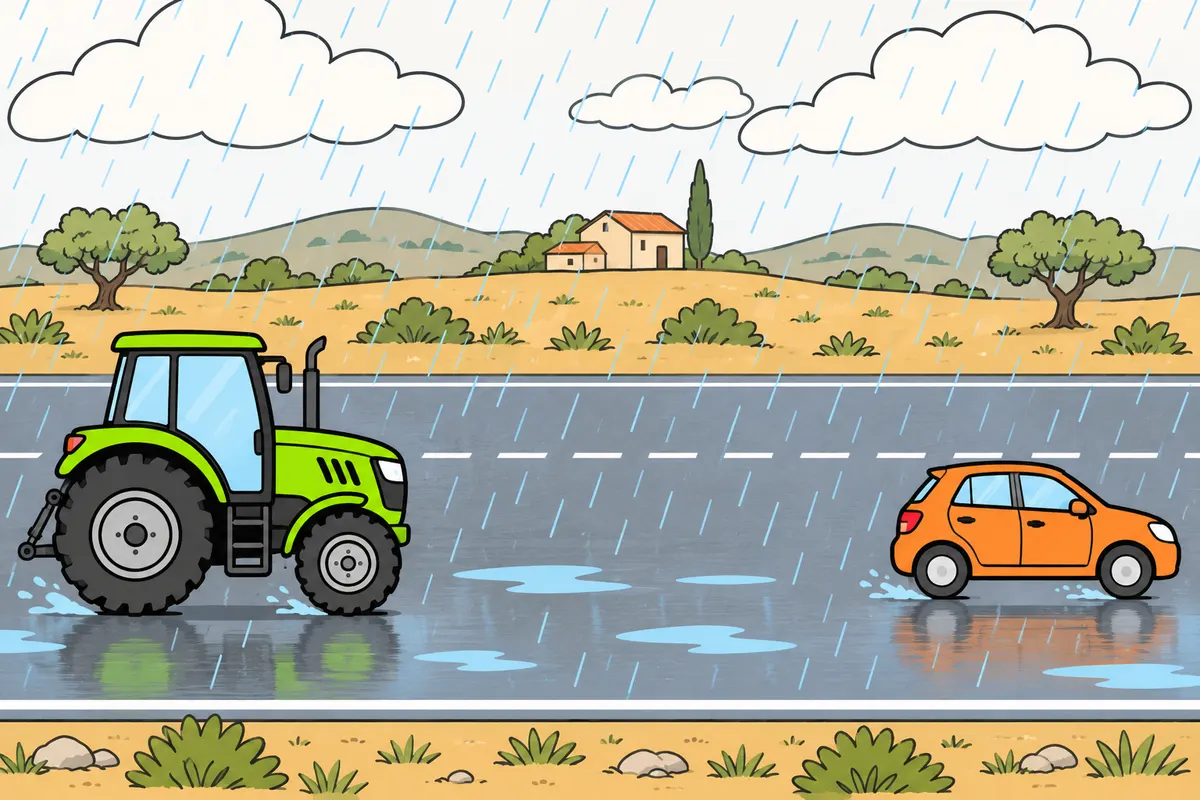
In rain, slow down and increase your following distance.
Remember
- Take extra care from the first drops.
- Water can reduce both your view and grip.
- Do not follow the vehicle ahead closely to use its lights.
- If you slide on water, hold the steering and ease off the accelerator gently.
- Avoid harsh braking and sharp turns while grip returns.
Exam trap: Wrong: The tractor’s weight guarantees grip on water. Right: Slow down and avoid sudden actions.
Read the full explanation
- In rain, you must reduce your speed and increase your following distance. A wet surface may offer less grip and require more braking distance; avoid maintaining your usual speed simply because you know the road or because your tractor has large tyres. You must adapt to the actual conditions. [RGC, arts. 45, 46.1.g and 54](https://www.boe.es/buscar/act.php?id=BOE-A-2003-23514#a46)
- The DGT recommends that you take extra care from the first drops of rain: water mixed with dust and grease can form a very slippery surface. Anticipate the need to slow down before bends and places where you see standing water. [DGT, driving on wet roads](https://revista.dgt.es/es/educacion-formacion/conducir-mejor/2013/lluvia-invierno.shtml)
- You must consider that water can affect both visibility and grip at the same time. If you cannot see clearly or cannot stop within the distance you can see, you need to slow down further; following the vehicle ahead closely to use its lights as a guide increases the risk of hitting it from behind. [RGC, arts. 45 and 54](https://www.boe.es/buscar/act.php?id=BOE-A-2003-23514#a45)
- As safety advice, avoid sudden actions when you encounter standing water. If you start sliding on a film of water, hold the steering wheel firmly, ease off the accelerator gently and avoid harsh braking or sudden turns while you regain grip; the tractor’s weight alone does not guarantee that the tyres stay in contact with the road surface. [DGT, driving on wet roads](https://revista.dgt.es/es/educacion-formacion/conducir-mejor/2013/lluvia-invierno.shtml)
19Mud, gravel and uneven surfaces
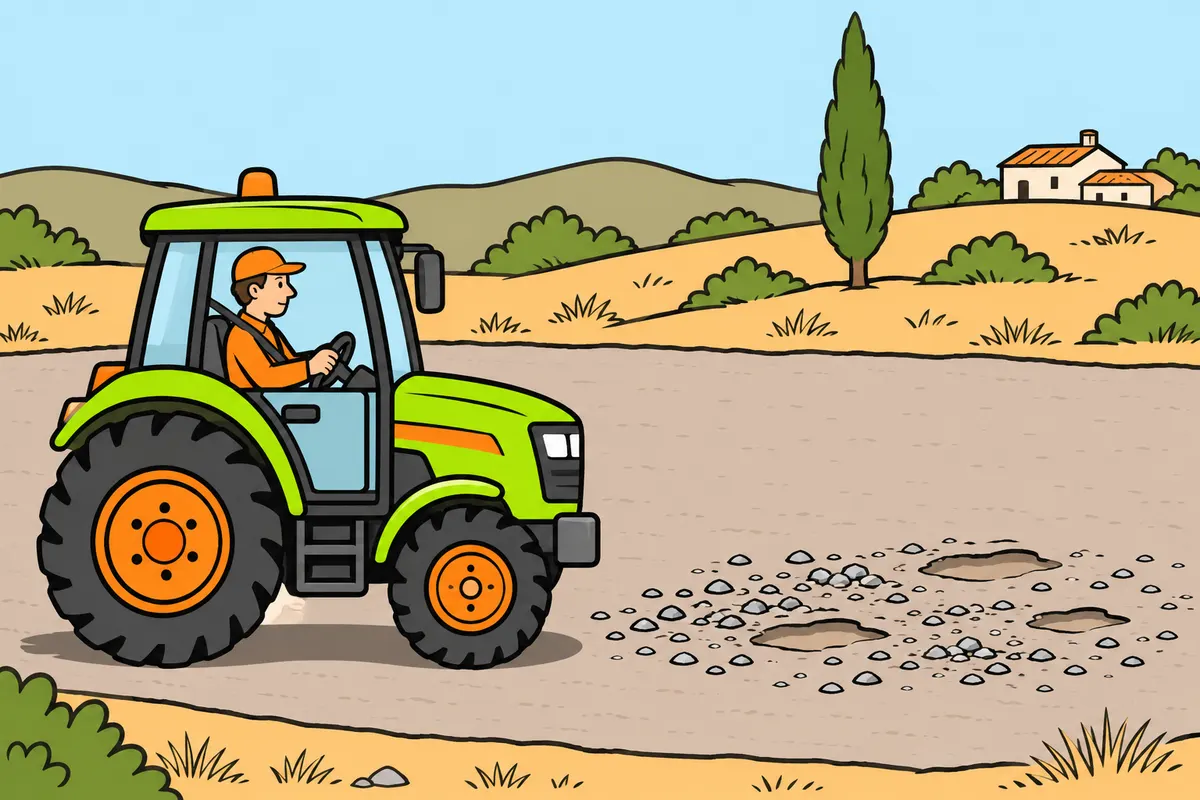
Slow down on mud or gravel and avoid leaving hazards on the road.
Remember
- Slow down on dry, loose material too.
- Avoid leaving mud or debris when leaving your property.
- If you cause danger, remove it promptly and warn others meanwhile.
- Do not create another risk while doing this.
- Before avoiding a pothole, look and wait if you cannot pass safely.
- On unpaved roads, obey lower limits and slow further if needed.
Exam trap: Wrong: Every track is safe at 30 km/h. Right: Obey lower limits and adapt speed to conditions.
Read the full explanation
- You must slow down if there is mud, gravel or other material that may make control difficult or be thrown towards other road users. The risk is not limited to rain: a dry surface with loose material also requires you to adjust your driving and maintain side clearance. [RGC, art. 46.1.g](https://www.boe.es/buscar/act.php?id=BOE-A-2003-23514#a46)
- When leaving a property, you must avoid depositing mud or debris on the road. You must not leave materials that make traffic unsafe; if you cause an obstruction or hazard, you must remove it as soon as possible and, in the meantime, warn others effectively, without creating another risk while doing so. [RGC, arts. 4 and 5](https://www.boe.es/buscar/act.php?id=BOE-A-2003-23514#a4)
- If a pothole or a narrow section forces you to change course, you must first check for anyone who may be affected. Keep control and wait if you cannot pass safely, taking into account both the width of the tractor and that of any equipment projecting from its sides. [RGC, arts. 17 and 46](https://www.boe.es/buscar/act.php?id=BOE-A-2003-23514#a17)
- On unpaved roads, the maximum speed is 30 km/h, subject to any lower limits that apply to the vehicle or road section. You must drive even more slowly if the terrain, grip or visibility requires it; this figure does not mean that every track is suitable for that speed. [RGC, arts. 45 and 48.1.f](https://www.boe.es/buscar/act.php?id=BOE-A-2003-23514#a48)
20Fog, dust and smoke
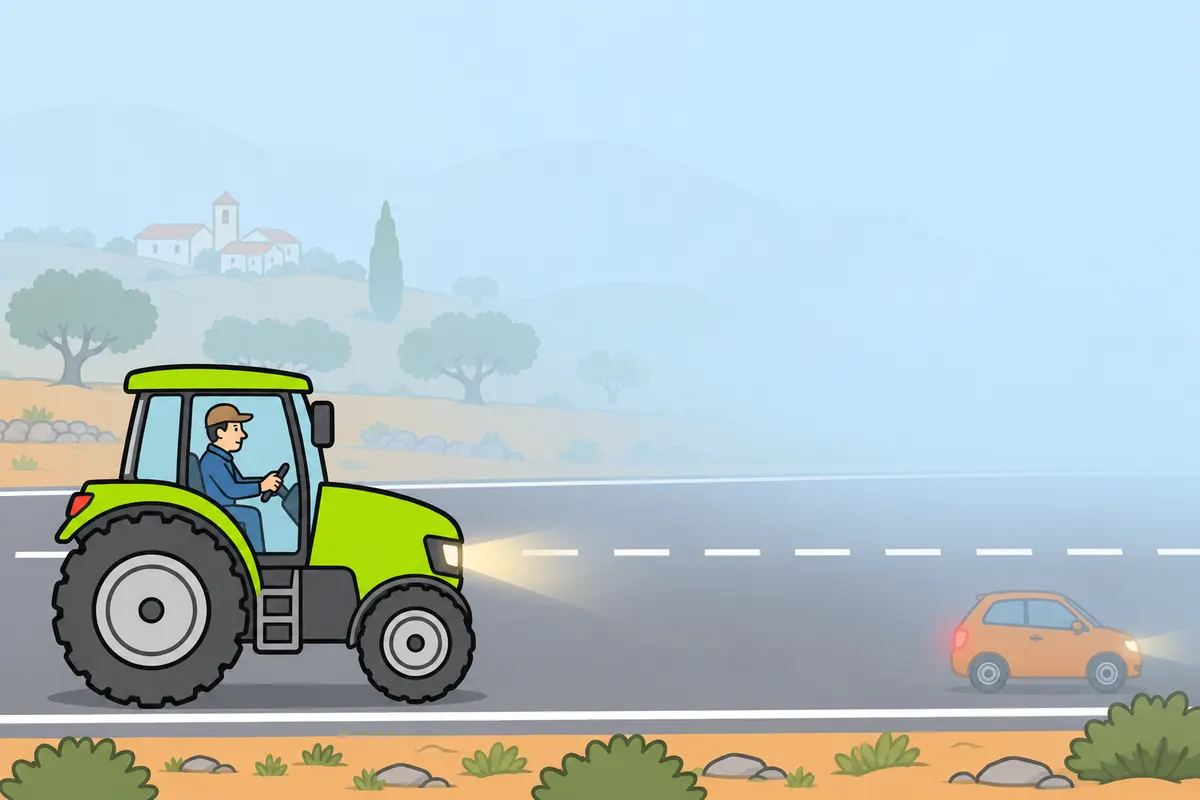
If fog, dust or smoke reduces your view, slow down and use the necessary lights.
Remember
- Increase the gap behind the vehicle ahead.
- Do not move closer to keep seeing its lights.
- Use lights if visibility is greatly reduced, even by day.
- If you cannot continue safely, wait away from traffic.
Exam trap: Wrong: The tractor’s size is enough to make you visible. Right: Use the necessary lights when visibility is reduced.
Read the full explanation
- In dense fog, heavy rain, snowfall or clouds of dust or smoke, you must slow down and stop if circumstances require it. Judge what you can actually see, rather than the width you remember the track having; a hidden obstacle may be much closer than you expect. [RGC, arts. 45 and 46.1.k](https://www.boe.es/buscar/act.php?id=BOE-A-2003-23514#a46)
- You must increase the gap to the vehicle ahead and avoid moving closer just to keep it in sight. The gap must allow you to stop without running into it, even if its lights disappear into a cloud; use reference points to maintain your own course and do not blindly follow its movements. [RGC, arts. 45 and 54](https://www.boe.es/buscar/act.php?id=BOE-A-2003-23514#a54)
- You must use your lights when environmental or weather conditions significantly reduce visibility, including during the day. Dust raised by agricultural work and smoke may require this just as fog does: you must not wait until nightfall or assume that the tractor's colour or size is enough. [RGC, art. 106.1](https://www.boe.es/buscar/act.php?id=BOE-A-2003-23514#a106)
- If fog or smoke prevents you from continuing safely, find a suitable place away from traffic to wait until conditions improve. You must prepare to stop carefully; do not turn an unplanned stop on the carriageway into an obstacle that is difficult to see. [DGT, adverse weather](https://www.dgt.es/conoce-el-estado-del-trafico/recomendaciones-de-trafico)
21Snow, ice, wind and heat
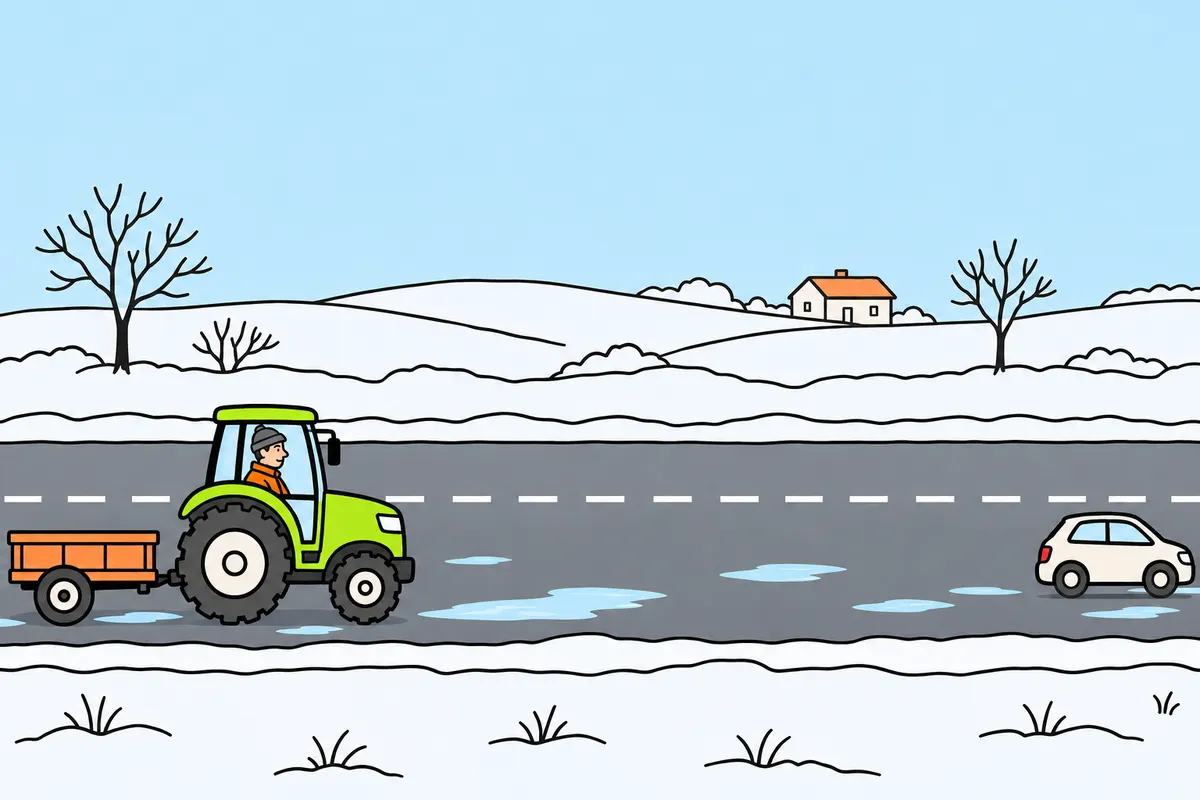
Adapt your driving to ice, wind and how you feel in hot weather.
| Condition | What you must do |
|---|---|
| Snow or ice | Slow down greatly, leave more space and use controls smoothly. |
| Wind | Slow down if gusts make keeping your path difficult. |
| Heat | Monitor your condition and stop safely if needed. |
Remember
- In snow or ice, slow down a lot and increase the gap.
- In wind, consider the stability of the tractor, trailer and load.
- Expect wind changes when leaving sheltered areas.
- Hold the steering firmly and correct smoothly.
- In hot weather, monitor your attention and physical condition.
- If you need rest or fresh air, find a safe place.
Exam trap: Wrong: Speeding up helps you handle gusts. Right: Slow down if they make it hard to keep your path.
Read the full explanation
- In snow or ice, you must reduce your speed considerably, increase your following distance and use the controls smoothly. Do not assume that the tractor's ability to work on soil guarantees grip on an icy road; you must adapt your speed to the actual surface and your actual ability to stop the combination. [RGC, arts. 45, 46 and 54](https://www.boe.es/buscar/act.php?id=BOE-A-2003-23514#a45)
- In windy conditions, you must assess the stability of the tractor and trailer, especially if the load has a large side surface area. Slow down if gusts make it difficult to maintain your course; do not accelerate to get through the exposed area sooner or make abrupt corrections that may compromise control of the combination. [RGC, arts. 17 and 45](https://www.boe.es/buscar/act.php?id=BOE-A-2003-23514#a45)
- The DGT recommends that you anticipate changes in the wind when leaving a sheltered area or passing large vehicles. Hold the steering wheel firmly and make corrections smoothly, leaving enough space between you and other road users; a gust may also alter the course of a nearby cyclist. [DGT, wind](https://www.dgt.es/muevete-con-seguridad/conviertete-en-un-buen-conductor/conduccion-invernal/circular-con-viento/)
- In hot weather, you must monitor how you feel and maintain conditions that allow you to stay alert. If you need to rest, ventilate the cab or deal with discomfort that prevents you from driving, find a safe place; good visibility outside does not compensate for a loss of attention or physical ability inside the cab. [RGC, arts. 17, 18 and 45](https://www.boe.es/buscar/act.php?id=BOE-A-2003-23514#a18)
22Windows, mirrors and blind spots
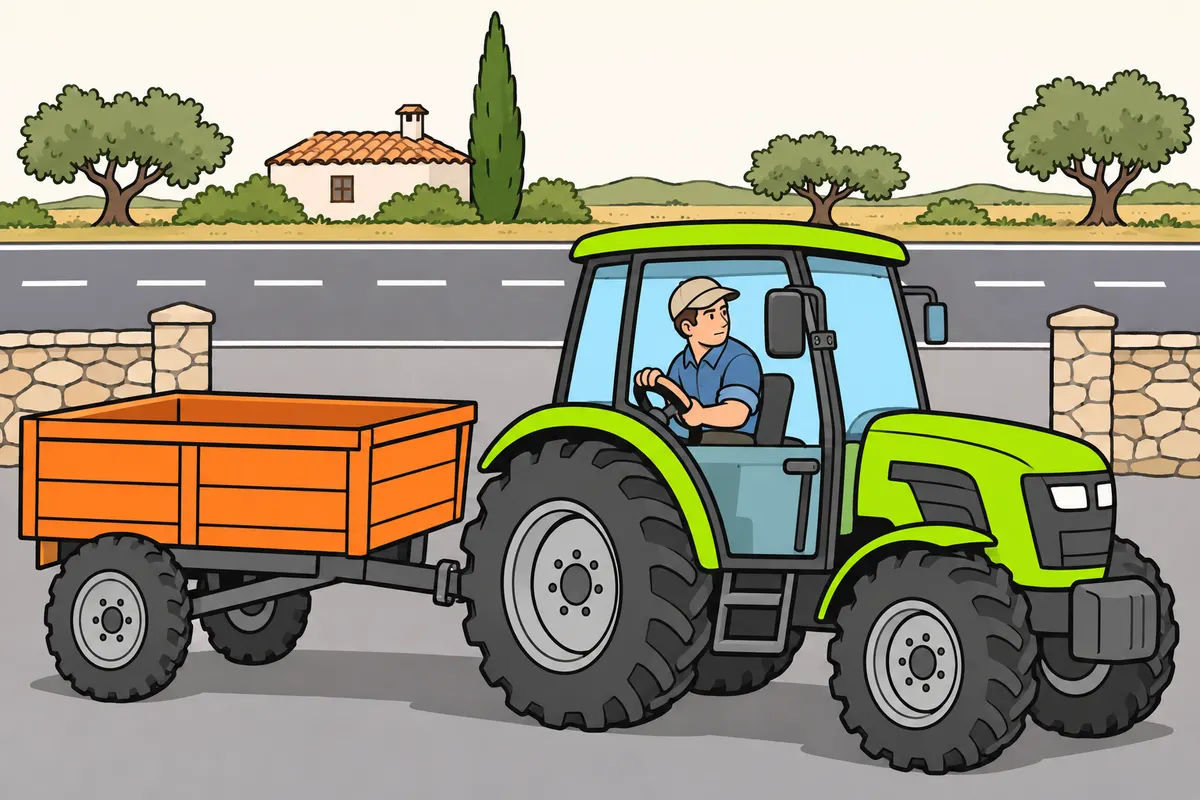
Clean your windows and check areas your mirrors do not show.
Remember
- Clear mud, dust and mist that make it hard to see.
- Adjust and use the mirrors.
- Check areas hidden by the cab, trailer and implements before moving.
- Before turning, look and signal in good time.
- Ask for help checking before joining from a property, if needed.
Exam trap: Wrong: Adjusted mirrors remove every hidden area. Right: Check those areas too.
Read the full explanation
- You must keep the vehicle's glazing in a condition that gives you a clear view of the road. Clean off mud, dust and dirt that obstruct your view, and clear condensation before it restricts your field of vision; clearing only a small area to look through does not give you the view you need for driving. [RGC, arts. 18 and 19](https://www.boe.es/buscar/act.php?id=BOE-A-2003-23514#a19)
- Adjust your mirrors so that you can see traffic behind and alongside you. Adjusting them does not eliminate all blind spots: before moving the tractor, also check the areas hidden by the cab, trailer or implements, especially if people are near the equipment. [RGC, arts. 18 and 72](https://www.boe.es/buscar/act.php?id=BOE-A-2003-23514#a18)
- Before turning, you must check your surroundings and signal the manoeuvre sufficiently in advance. Check that you can carry it out safely and assess the distance and speed of anyone approaching, as well as the area the combination will occupy. [RGC, art. 74](https://www.boe.es/buscar/act.php?id=BOE-A-2003-23514#a74)
- If you are leaving a property and cannot check for yourself that it is safe to join the road, you must get another person to help when necessary. This help serves that specific check; it does not remove your duty to maintain the required field of vision while driving. [RGC, arts. 18 and 72.1](https://www.boe.es/buscar/act.php?id=BOE-A-2003-23514#a72)
23Seeing at night and avoiding dazzle
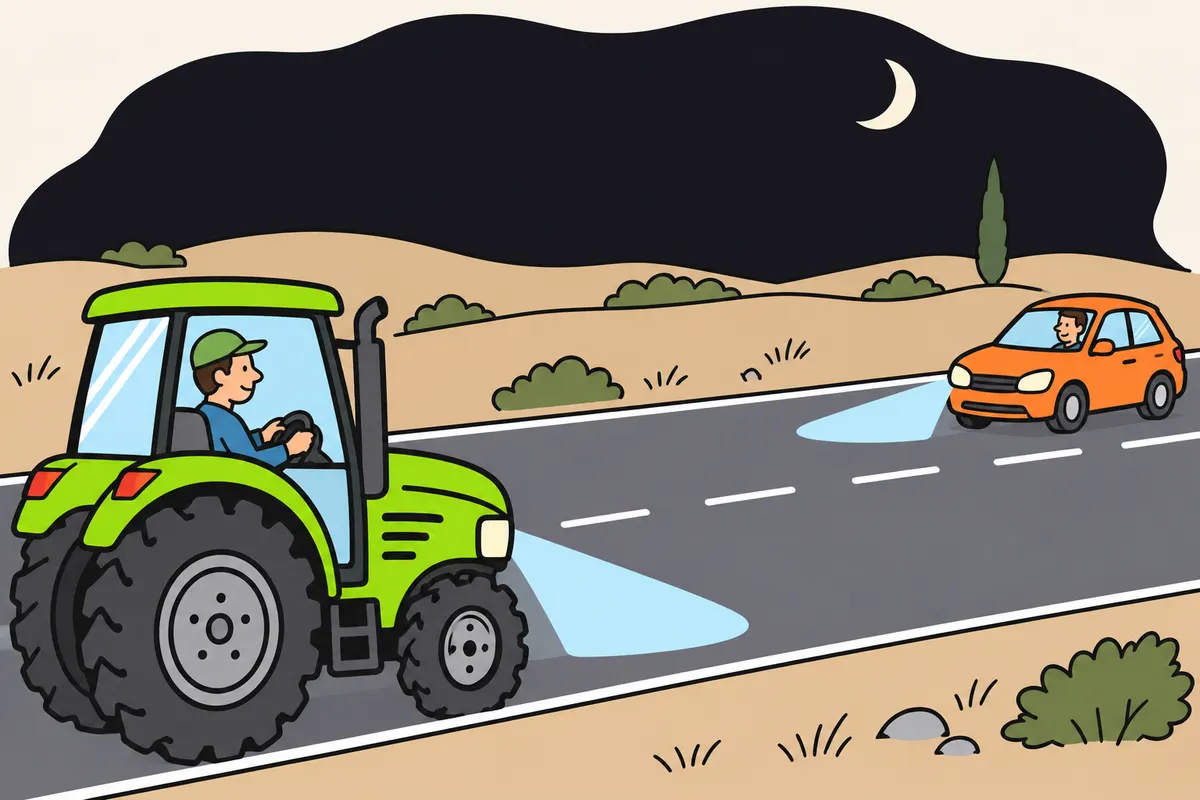
At night or when dazzled, adapt your speed to the clear space you can see.
Remember
- At night, drive according to the clear distance you can see.
- Allow for the space the trailer and implements need.
- If dazzled, slow down as much as needed, even to a stop.
- In low sun, use the visor without blocking the view you need.
Exam trap: Wrong: A sun visor is enough in low sun. Right: Slow down if you cannot see your surroundings clearly.
Read the full explanation
- At night, you must adapt your speed to the distance you can see to be clear. On a tractor, an implement may hide part of the road edge and the trailer may follow a different path on bends; allow for the space needed by the combination when assessing an obstacle and leave room to stop. [RGC, arts. 45 and 102](https://www.boe.es/buscar/act.php?id=BOE-A-2003-23514#a45)
- If you are dazzled, you must reduce your speed as much as necessary, even stopping, to avoid running into vehicles or pedestrians travelling in your direction; the use of dipped beam and main beam and the prevention of dazzle are covered in «Agricultural lighting and signalling». [RGC, art. 102](https://www.boe.es/buscar/act.php?id=BOE-A-2003-23514#a102)
- When the sun is low, you must protect your vision without blocking the field of view you need for driving, and slow down if you cannot clearly make out your surroundings. Use the sun visor correctly; no form of sun protection replaces your duty to be able to stop within the distance you can see to be clear. [RGC, arts. 18, 19 and 45](https://www.boe.es/buscar/act.php?id=BOE-A-2003-23514#a45)
24Making the agricultural vehicle visible
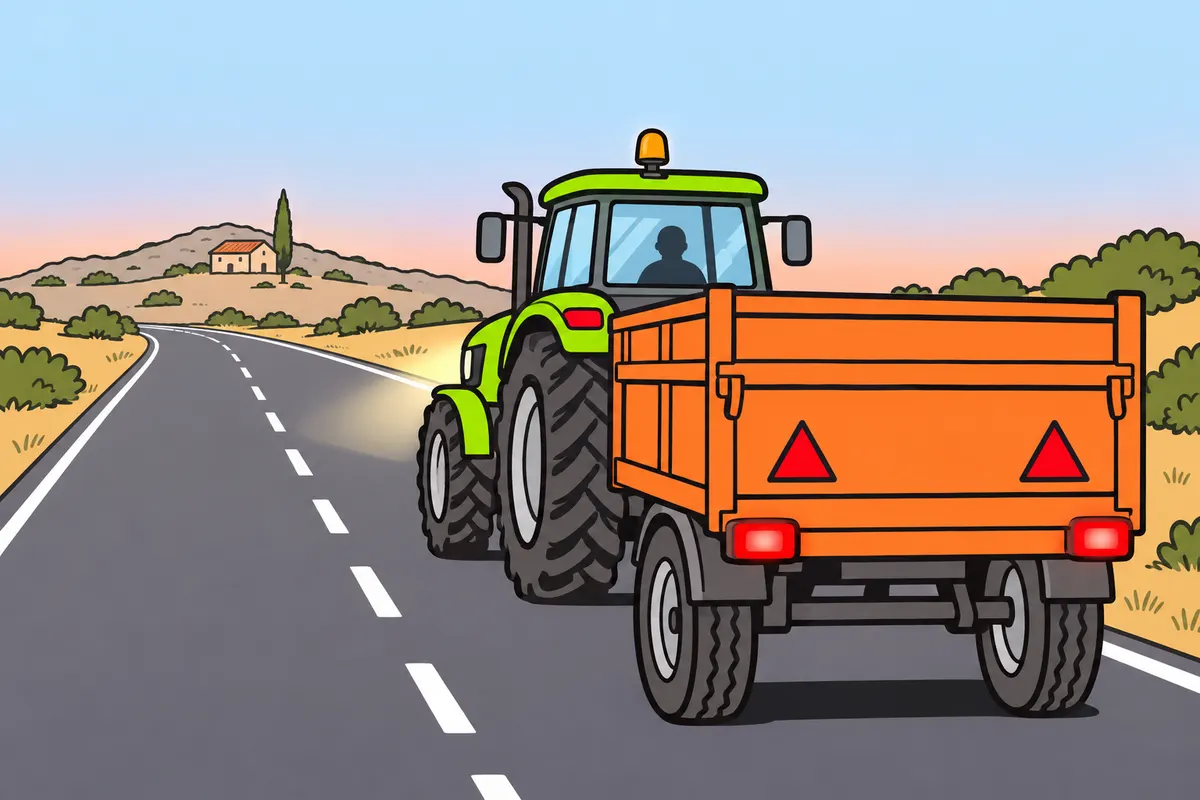
Make your whole combination visible so others can see you in time.
Remember
- At dusk, use the required lights.
- Keep lights and reflectors clean and visible.
- Check the back of the trailer too.
Exam trap: Wrong: The tractor’s size is enough to make you visible. Right: Keep the required lights visible.
Read the full explanation
- At dusk, you must use the required lights and keep lights and reflectors clean and visible, including at the rear of the trailer. Your slow-moving combination needs to be seen in good time to prevent rear-end collisions. [DGT, night driving](https://www.dgt.es/comunicacion/noticias/consejos-para-conducir-de-noche/)
- Consult «Agricultural lighting and signalling» and «The agricultural vehicle and its equipment» for the lighting and V-2 equipment requirements and how to use them.
25Leaving the property without creating danger
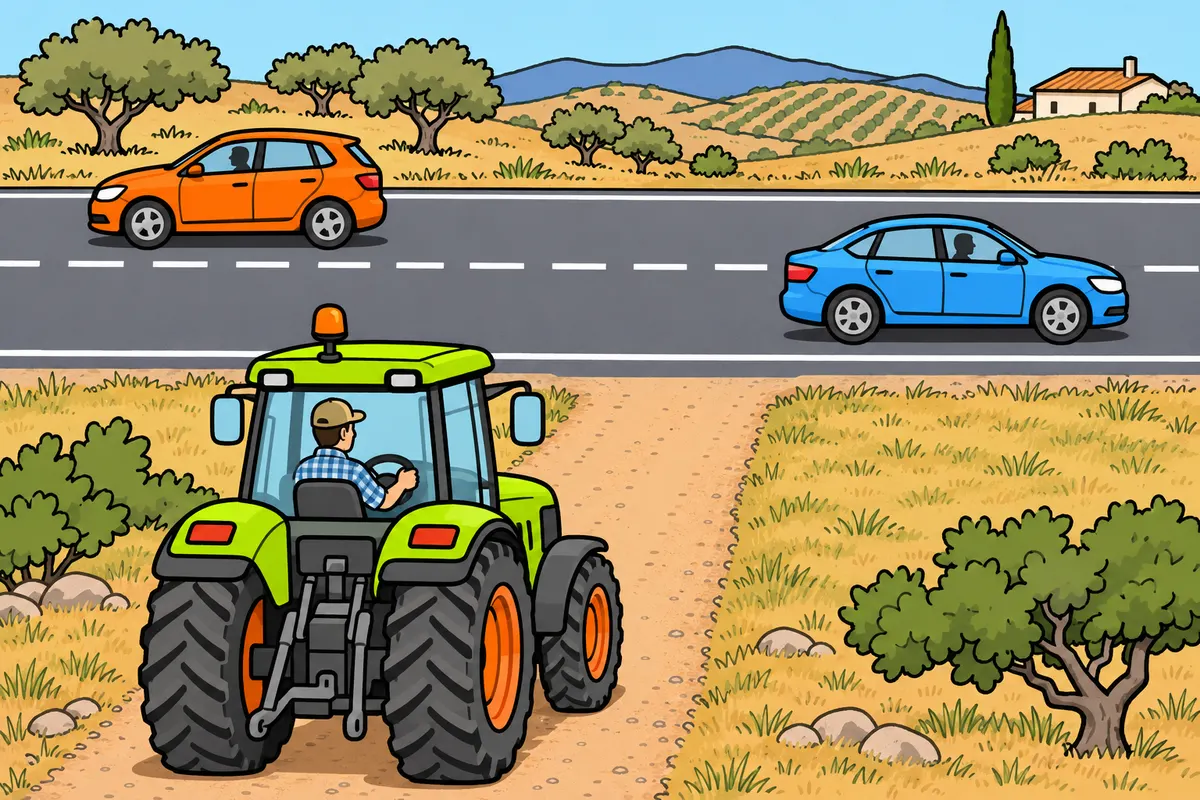
Leave your property only when you can join safely and give way.
Remember
- Check the position, path and speed of approaching vehicles.
- Choose a gap large enough for the whole combination and signal.
- When leaving a track used only privately, give way to traffic from both directions.
- At that exit, travel slowly enough to stop at once.
- Wait and ask for help observing when needed.
- Plan the return so you can find the entrance and signal at dusk.
Exam trap: Wrong: Signalling gives you priority when leaving. Right: Give way and wait for a safe gap.
Read the full explanation
- Before joining the road, you must check the position, path and speed of vehicles already travelling on it. Your tractor may need time to take its place in traffic and reach a steady speed; you must choose a sufficient gap, give way and signal the manoeuvre using the compulsory signals. [RGC, art. 72.1 and 3](https://www.boe.es/buscar/act.php?id=BOE-A-2003-23514#a72)
- When you leave an exclusively private track to join a public road, you must travel at a speed that allows you to stop immediately and give way to vehicles from both directions. Your indicator shows your intention, but does not give you priority when joining or oblige others to brake to let you in. [RGC, art. 72.2](https://www.boe.es/buscar/act.php?id=BOE-A-2003-23514#a72)
- Before joining, assess visibility and the space needed for the whole combination to pass. If you cannot complete the manoeuvre safely, wait and ask for help with observation when necessary. [RGC, art. 72](https://www.boe.es/buscar/act.php?id=BOE-A-2003-23514#a72)
- When choosing when to leave, also consider your return: an entrance you can see clearly in daylight may be difficult to locate at dusk. Plan your arrival with enough time to identify the access and signal the manoeuvre without rushed decisions that compromise control. [RGC, arts. 17 and 45](https://www.boe.es/buscar/act.php?id=BOE-A-2003-23514#a45)
26Protecting the power take-off and driveline during road travel
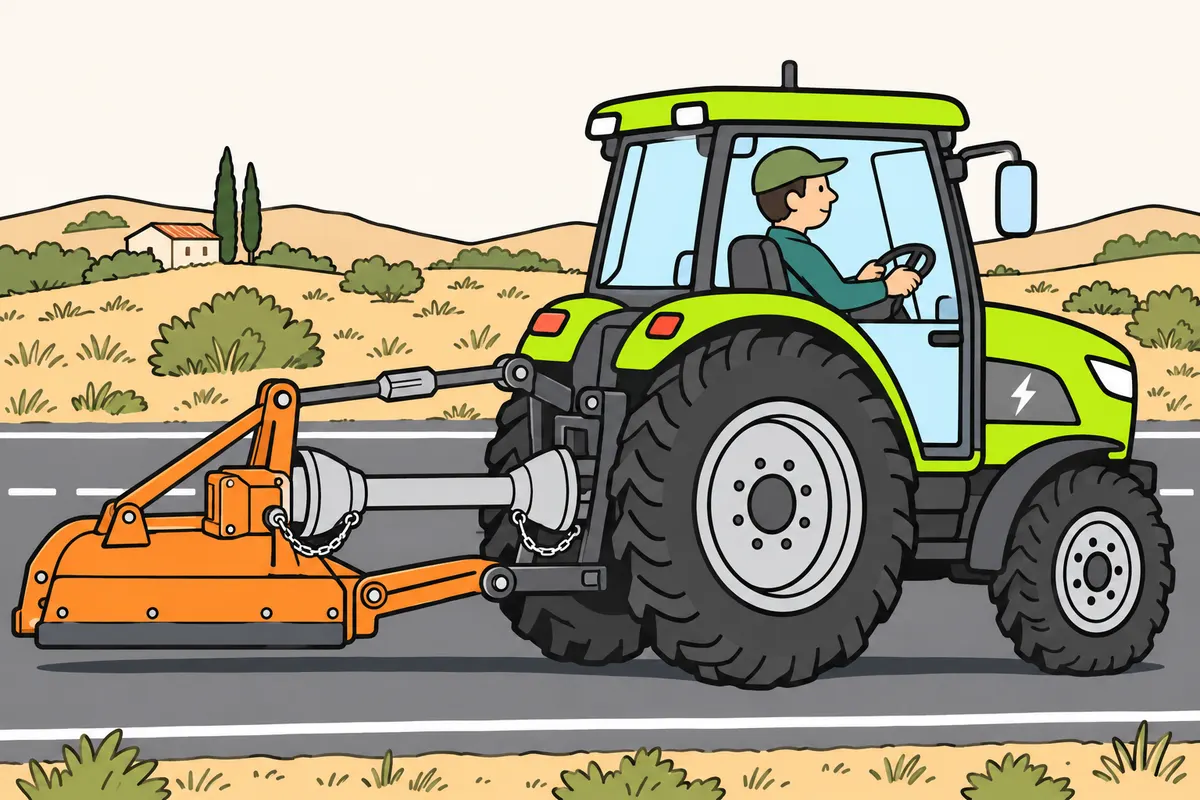
Protect the driveline and disconnect it before approaching to adjust it.
Remember
- For road travel, put the implement in its transport position as the manual says.
- Keep the power take-off disengaged if you do not need it.
- Keep power take-off, driveline and joint guards in good condition.
- Before adjusting or coupling: disengage power take-off, stop the engine and remove the key.
- Do not approach the rotating shaft or step on its guard.
- Secure the driveline so dragging does not damage it.
Exam trap: Wrong: You can adjust the driveline with the engine running. Right: Disengage the power take-off, stop the engine and remove the key.
Read the full explanation
- For road travel, place the implement in its transport position and keep any power take-off you do not need to use disengaged, following the manual. Keep the guards for the power take-off, universal-joint shaft and its joints fitted and in good condition. [ISSGA, tractor accident prevention](https://libraria.xunta.gal/sites/default/files/downloads/publicacion/atende_tractor_castellano_web.pdf) [RD 1215/1997, Annex II, 1.3](https://www.boe.es/buscar/act.php?id=BOE-A-1997-17824#anii)
- INVASSAT recommends that you disengage the power take-off, stop the engine and remove the key before adjusting or connecting the driveline. Do not approach the moving shaft or use its guard as a step. [INVASSAT, tractor use](https://invassat.gva.es/documents/161660384/371887245/FL01-240102%2BUso%2Bdel%2Btractor%2B-%2Blas%2Btres%2Bprincipales%2Bcausas%2Bde%2Baccidente%2Bmortal.pdf/a714df0b-3c13-124e-bcf0-7e1e6fba400f?t=1726128181467)
- If you use the tractor as work equipment, dangerous moving parts must have guards or devices that prevent access to them. Secure the driveline to prevent damage from dragging. [RD 1215/1997, Annex I, 1.8 and 2.1.c](https://www.boe.es/buscar/act.php?id=BOE-A-1997-17824#ani)
27Level crossings with slow combinations
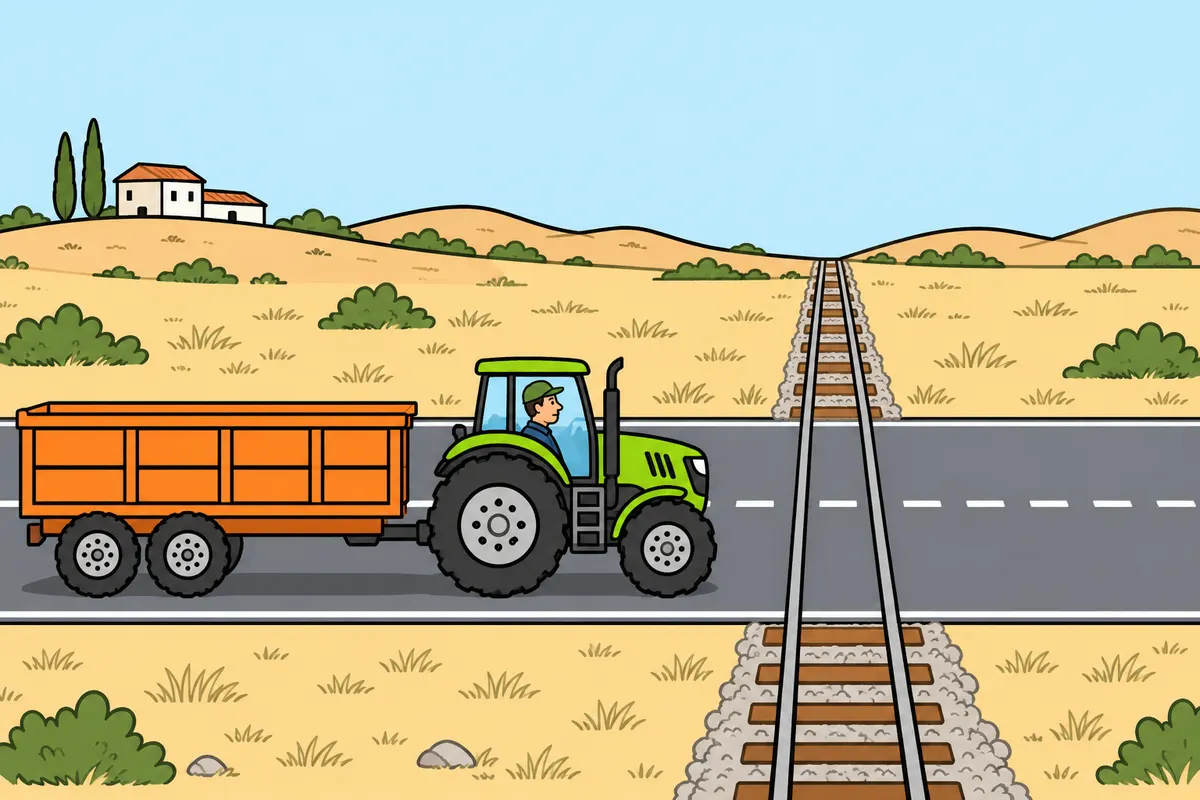
Enter a level crossing only if your whole combination can get across.
Remember
- Consider your combination’s length and slow speed.
- Check the clear space on the other side.
- Cross without delay or risk of stopping on the tracks.
Exam trap: Wrong: It is enough for the cab to get across. Right: Make sure the trailer can get across too.
Read the full explanation
- Before entering, make sure the whole combination can leave the crossing: assess its length, slow speed and the clear space on the other side. You must cross without delay and without the risk of becoming immobilised on the railway track. [RGC, art. 95.3](https://www.boe.es/buscar/act.php?id=BOE-A-2003-23514#a95)
- See the level crossing signs and rules in «Priority of passage».
28Accident factors and cooperation
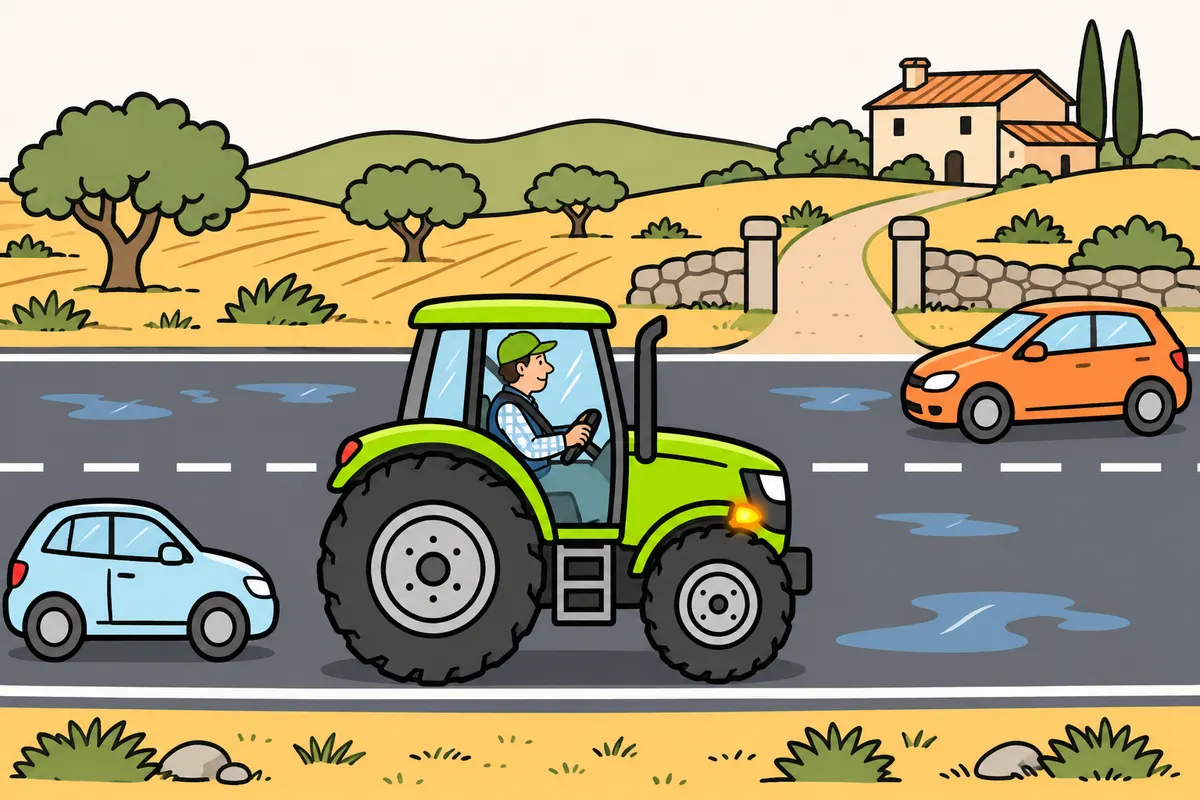
Assess all risks and cooperate without surprising other road users.
Remember
- Consider your condition, vehicle and road together.
- Do not look for a single cause of accidents.
- Signal your movements and expect others to make mistakes.
- Wait if you cannot act safely.
Exam trap: Wrong: Another driver’s haste justifies a dangerous manoeuvre. Right: Wait if you cannot act safely.
Read the full explanation
- The DGT recommends assessing your condition, the vehicle and the road together: tiredness, defective brakes and a slippery road surface can combine to increase the risks on a single trip. Distraction, alcohol and inappropriate speed are among the most frequent contributing factors; avoid looking for a single cause. [DGT, risk behaviours](https://seguridadvial2030.dgt.es/export/sites/sv2030/.galleries/descargas/ESV-2030-Cuadernillo-2_Tolerancia-cero-con-comportamientos-de-riesgo.pdf)
- You must drive without unduly obstructing others or causing danger, damage or unnecessary inconvenience. To cooperate with others, signal your movements and anticipate their mistakes; another driver’s impatience does not justify a dangerous manoeuvre with the tractor. [RGC, art. 2](https://www.boe.es/buscar/act.php?id=BOE-A-2003-23514#a2)
29Anticipating other vehicles and road users
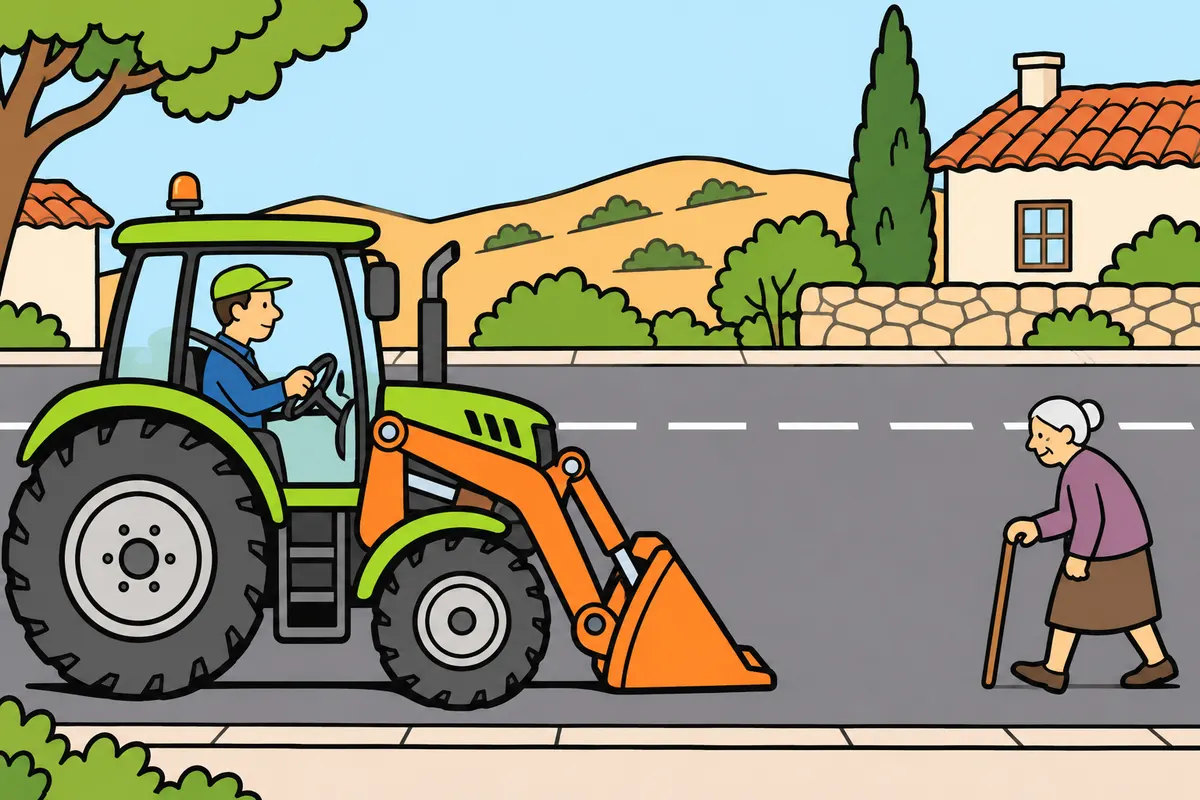
Allow for other people’s reactions and avoid areas where they cannot see you.
Remember
- Take extra care near children, older people, blind people and people with disabilities.
- Leave room for an unexpected reaction.
- Avoid staying where drivers of large vehicles cannot see you.
Exam trap: Wrong: If you can see the other driver, they can see you. Right: Avoid their blind spots.
Read the full explanation
- When approaching children, older people, blind people or people with disabilities or mobility difficulties, you must take the necessary precautions for their safety. They may need more time or may not notice your presence; allow room for an unexpected reaction. [Traffic Act, art. 13.1](https://www.boe.es/buscar/act.php?id=BOE-A-2015-11722#a13)
- Consider the limited visibility of large vehicles you encounter and avoid remaining in their blind spots. Their driver may not know you are alongside; leave enough room to react if they start to move sideways or turn, even if you can see them from the cab. [RGC, art. 18](https://www.boe.es/buscar/act.php?id=BOE-A-2003-23514#a18)
30Protecting occupants in authorised seats
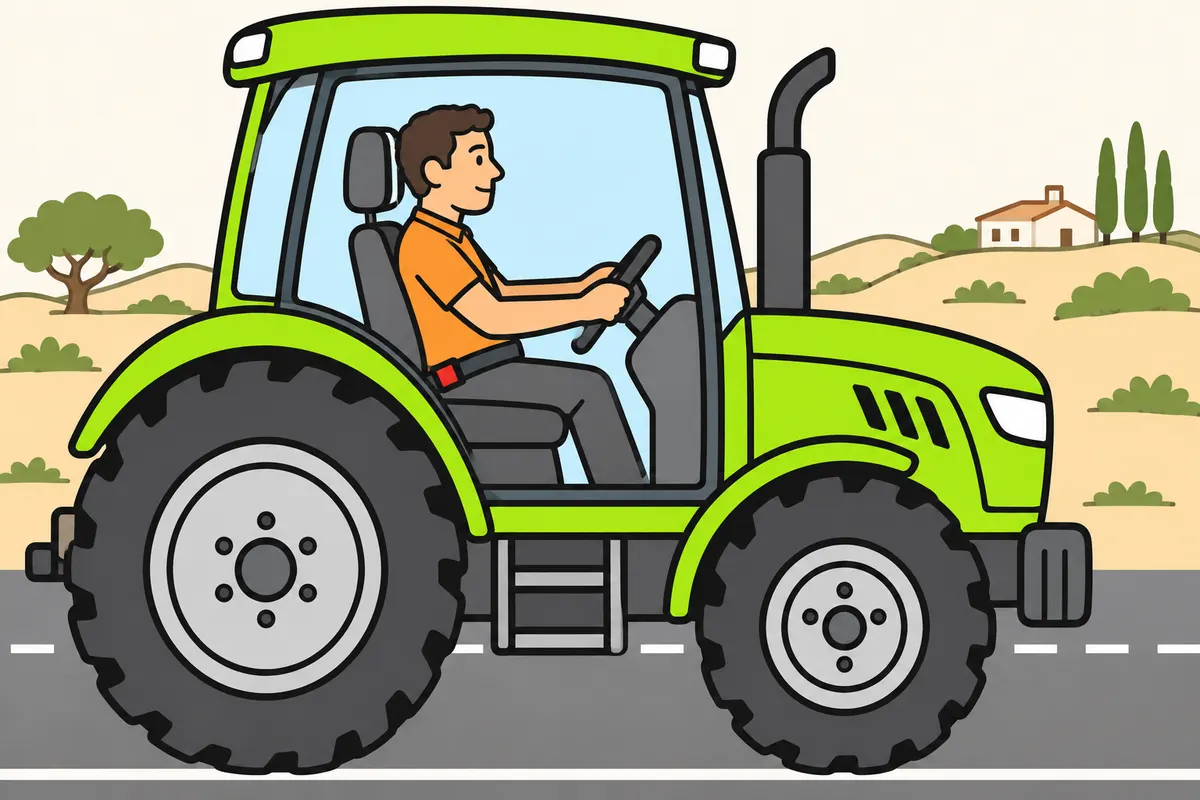
Use authorised seats and protect each occupant with the right restraint.
| Vehicles with up to nine seats: children up to 135 cm | Where to use the child restraint |
|---|---|
| General rule | In the rear. |
| No rear seats | They may sit in front. |
| Rear seats occupied by other children up to 135 cm | They may sit in front. |
| Not all child restraints fit in the rear | They may sit in front. |
Remember
- If fitted, adjust the head restraint to the occupant as the manual says.
- Use only authorised seats and restraints that fit the seat.
- Up to nine seats: children 135 cm tall or less need a restraint.
- It must be approved and suit their size and weight.
- Carry them in the rear, except in the listed cases.
- If they face backwards in front, switch off the front airbag.
Exam trap: Wrong: Any child with a restraint may sit in front. Right: In vehicles with up to nine seats, children up to 135 cm sit in the rear, except in the listed cases.
Read the full explanation
- If a seat in the agricultural vehicle has a head restraint, adjust it to suit the occupant according to the manual: it limits head movement and reduces neck injuries in a collision. [DGT, head restraints](https://www.dgt.es/muevete-con-seguridad/viaja-seguro/en-coche/)
- If you carry a child who is 135 cm tall or shorter in a vehicle with up to nine seats, you must use an approved child restraint system suitable for their height and weight. You must seat them in the rear; you may seat them in the front using that system if there are no rear seats, the rear seats are occupied by other children of that height, or not all the restraint systems fit in the rear. If you seat them rear-facing in the front, deactivate the front airbag. [RGC, art. 117](https://www.boe.es/buscar/act.php?id=BOE-A-2003-23514#a117)
- Use only authorised seats and restraint systems compatible with the seat; see the conditions for carrying people in «The agricultural vehicle and its equipment».
31Noise, emissions and environmental access
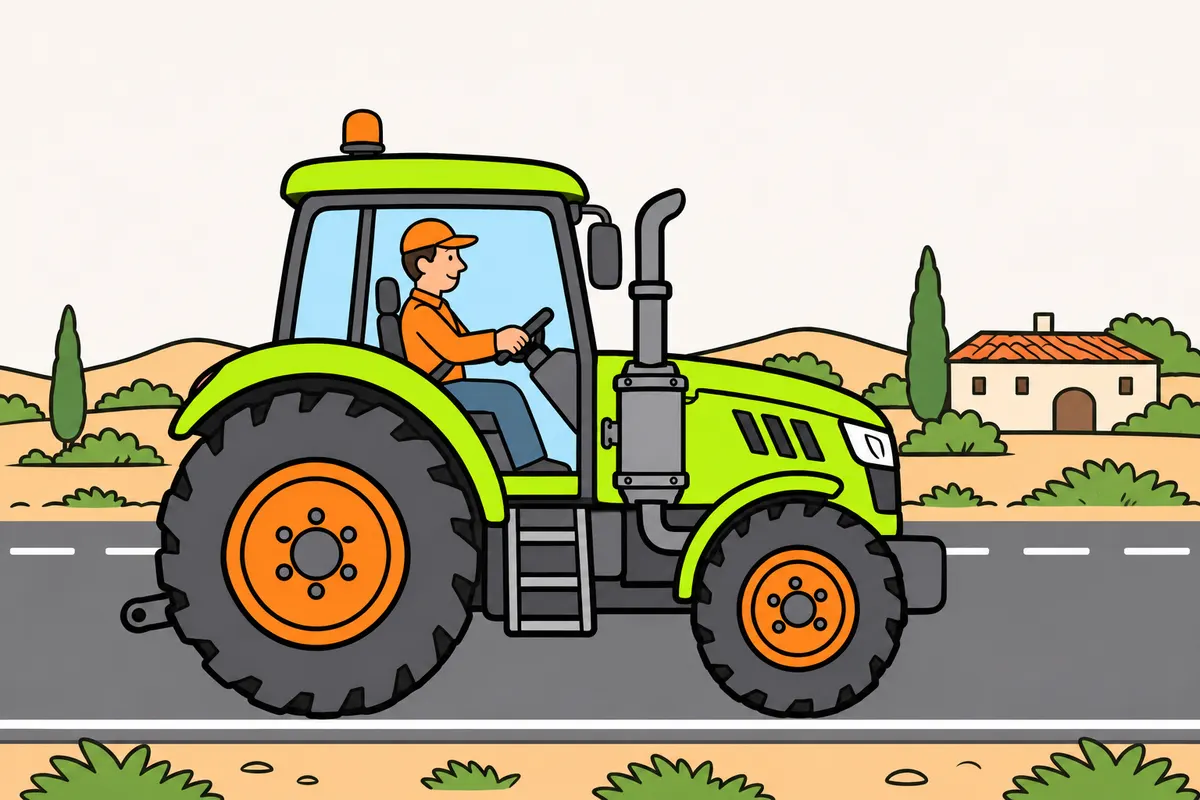
Keep your tractor within environmental limits and check local restrictions.
Remember
- Do not drive with gas, smoke or noise emissions above legal limits.
- Do not drive with an unsilenced exhaust.
- Maintain your exhaust and engine according to the manufacturer.
- Check restrictions before entering low-emission or residential-priority zones.
- Anticipate stops and avoid unnecessary acceleration.
- Keep a suitable gear to control your combination.
Exam trap: Wrong: Agricultural vehicles can ignore environmental restrictions. Right: Check local restrictions and authorisations.
Read the full explanation
- You must not drive with gas emissions, smoke or noise above the regulatory limits, or with an unsilenced exhaust. Maintain the exhaust and engine in accordance with the manufacturer’s instructions. [RGC, art. 7](https://www.boe.es/buscar/act.php?id=BOE-A-2003-23514#a7)
- Before entering a low-emission zone or residential priority zone with your tractor, check the local restrictions and authorisations: the competent authority may partially or completely restrict access and traffic on environmental grounds. [RGC, art. 157](https://www.boe.es/buscar/act.php?id=BOE-A-2003-23514#a1-10)
- As a fuel-saving tip, anticipate stops and avoid unnecessary acceleration to reduce fuel consumption; keep to a gear suited to the engine’s workload and to maintaining control of the combination. [DGT, efficient driving](https://www.dgt.es/muevete-con-seguridad/conviertete-en-un-buen-conductor/consejos-generales/conduccion-eficiente/)
Prepare to set off safely
Check yourself, the vehicle and your surroundings before joining traffic.
- Assess your rest, attention, alcohol consumption and possible effects of medicines; if you are not fit to drive, do not drive.
- Check the brakes, steering, tyres, mirrors, lights and signalling equipment in accordance with the manual.
- Check couplings, implements, the load and trailer connections; correct any defect that compromises safety.
- Adjust your driving position, keep the controls unobstructed and use the fitted seat belt as required by the regulations.
- Check your surroundings and the access point, signal and give way; join traffic only when you have enough space and time.
Respond to fatigue or drowsiness
Act while you can still make decisions and stop safely.
- Recognise when you struggle to stay attentive or start to feel sleepy; do not speed up to arrive sooner.
- Find a safe place where you are allowed to stop and prepare to slow down while observing the traffic.
- Stop and rest; if you feel sleepy, sleep.
- Resume only when you are fit to drive safely again; if the problem persists, rest longer or find another way to travel.
Adapt to rain or reduced visibility
Adjust your speed, following distance and visibility together.
- Assess how far ahead you can see a clear road and how grip has changed.
- Slow down in good time and increase the gap to the vehicle ahead.
- Use appropriate lighting and keep windows and mirrors clear; check the conditions for using each light in «Agricultural lighting and signalling».
- Avoid sudden manoeuvres and do not move close to other vehicles to use their lights as a guide.
- If you cannot continue safely, find a suitable place away from traffic to wait.
Check what you know
Real questions from the bank on this topic. Pick an answer to see the explanation.
Finished this module?
Mark it as read and you will see your progress on the theory list.