
Theory · LVA Licence - Agricultural Vehicle · Module 13 of 16
Driver condition and fitness
You learn to recognise when you can drive an agricultural vehicle safely and to apply alcohol limits, testing requirements and restrictions on drugs and devices. You distinguish legal obligations from preventive measures concerning medicines, illness, fatigue, sleepiness, distractions and emotions to answer LVA exam questions.
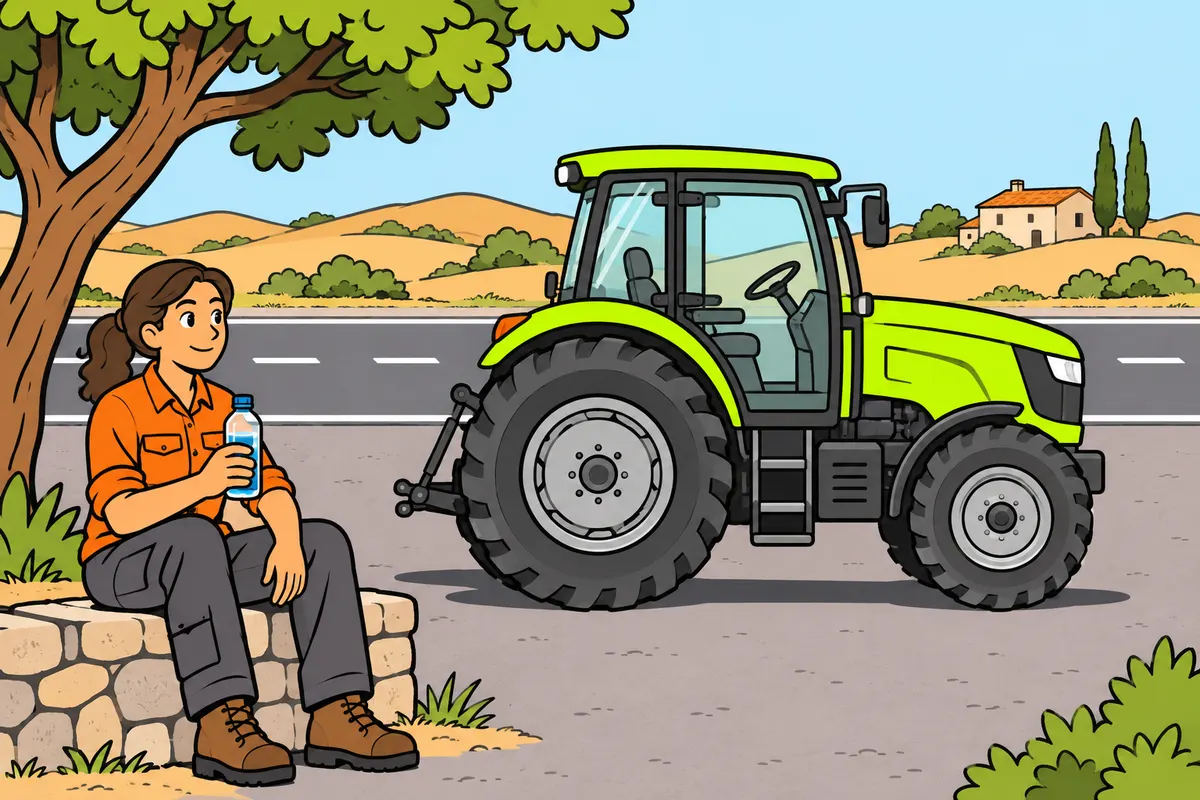
1Fitness and reaction time
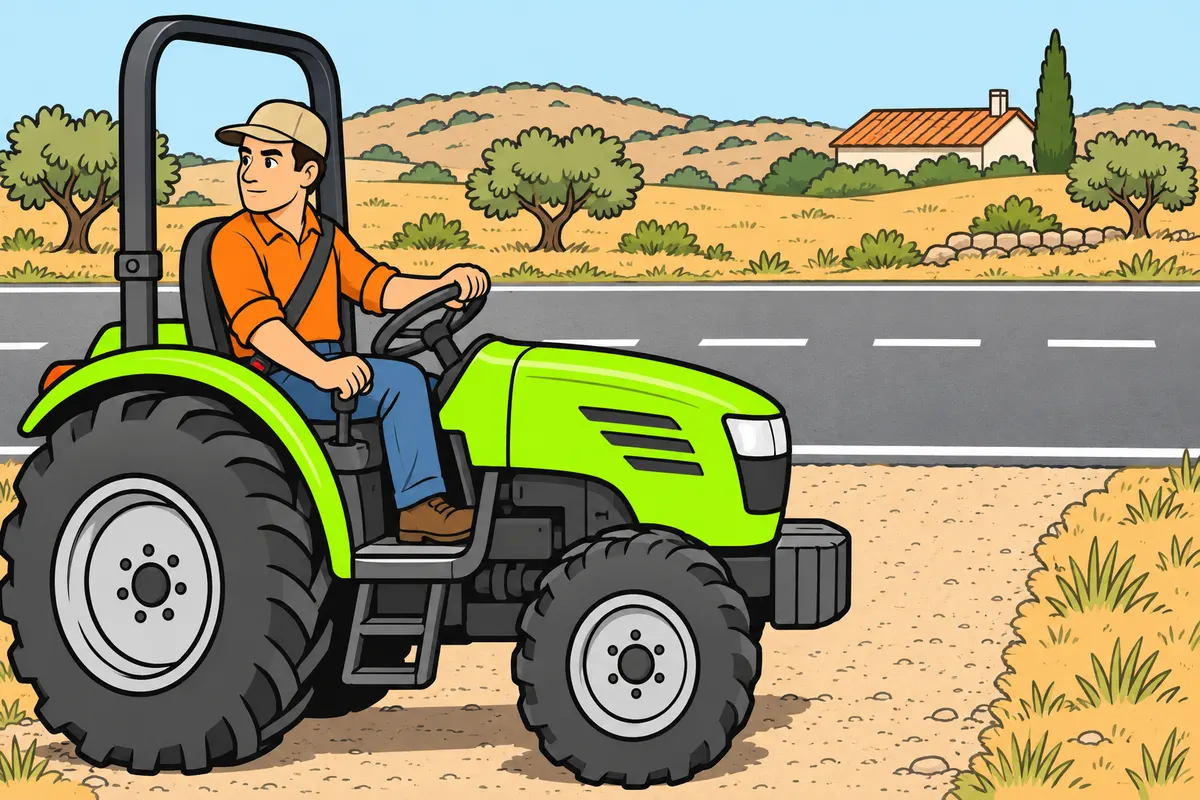
Before driving, check that you can control the tractor and react safely.
Remember
- Check your physical and mental condition before leaving the farm.
- Look ahead, to both sides and behind.
- Tiredness, alcohol and distractions slow your reactions.
- Your training and experience help, but do not guarantee safe driving.
Exam trap: Wrong: experience lets you drive in any condition. Right: check your abilities before each journey.
Read the full explanation
- To drive, you must be fit to control the tractor. Assess your physical and psychological condition before leaving the farm. [RGC, art. 17.1](https://www.boe.es/buscar/act.php?id=BOE-A-2003-23514#a17).
- Your eyesight allows you to recognise signs, distances and the movements of other road users. Look ahead, to both sides and behind; alcohol, drugs, tiredness and excessive speed can impair your perception. [DGT, driver condition, topic 3](https://sede.dgt.gob.es/export/sites/dgt/.galleries/permisos-de-conducir/autoescuelas/TeoricaAbreviada_LecturaFacil_2023-12_Interactivo.pdf).
- You can take longer to react because of fatigue, drowsiness, advanced age, sight or hearing difficulties, illness, medicines, alcohol, drugs, heavy meals, excessive heat, strong emotions or lack of attention. Take these factors into account when preparing to join traffic with the tractor. Distances are covered in «Speed and distances for agricultural vehicles». [DGT, driver condition, topic 3](https://sede.dgt.gob.es/export/sites/dgt/.galleries/permisos-de-conducir/autoescuelas/TeoricaAbreviada_LecturaFacil_2023-12_Interactivo.pdf).
- Your training and experience help you observe, make decisions and coordinate movements; the length of time you have held your licence does not in itself guarantee safe driving. [DGT, driver condition, topic 3](https://sede.dgt.gob.es/export/sites/dgt/.galleries/permisos-de-conducir/autoescuelas/TeoricaAbreviada_LecturaFacil_2023-12_Interactivo.pdf).
2Which alcohol limit applies to you
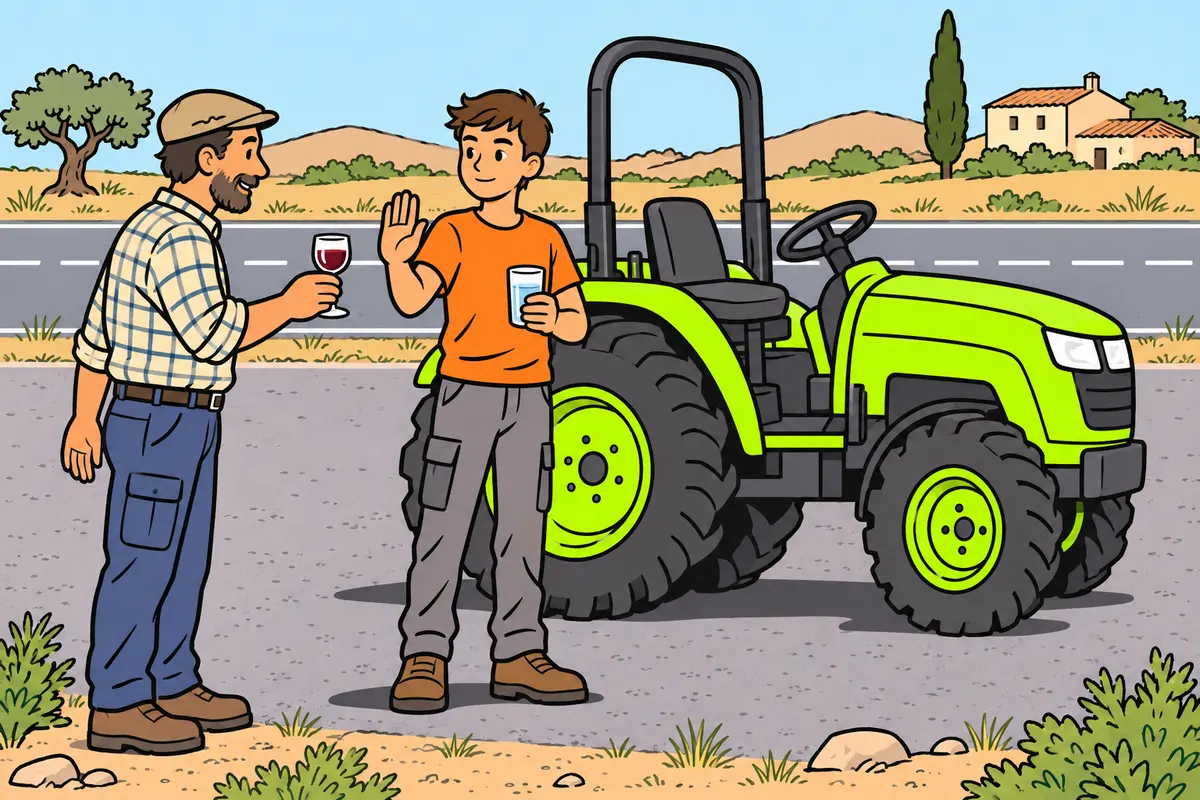
Your alcohol limit depends on your age, licence experience and the transport you carry out.
| Your case | Blood limit | Breath limit |
|---|---|---|
| Under 18 | 0.0 g/l | 0.0 mg/l |
| Adult: general rule | 0.5 g/l | 0.25 mg/l |
| Adult: first two years | 0.3 g/l | 0.15 mg/l |
| Adult: goods transport above 3,500 kg MMA | 0.3 g/l | 0.15 mg/l |
| Adult: passenger transport with more than nine seats or public-service passenger transport | 0.3 g/l | 0.15 mg/l |
| Adult: school transport and transport of minors | 0.3 g/l | 0.15 mg/l |
| Adult: dangerous goods, emergency services or special transport | 0.3 g/l | 0.15 mg/l |
Remember
- If you are under 18, your limit is zero in any vehicle.
- If you are an adult, reduced limits apply during your first two years.
- Your licence experience counts only for vehicles that licence allows you to drive.
- Check the vehicle's use, maximum authorised mass and authorised seats.
- Driving a tractor does not automatically mean you are carrying out special transport.
- Choose not to drink: staying within the maximum does not guarantee safety.
Exam trap: Wrong: every tractor has a reduced alcohol limit. Right: check your age, licence experience and vehicle use; a special agricultural vehicle does not mean special transport.
Read the full explanation
- Alcohol levels are expressed in grams per litre of blood (g/l) or milligrams per litre of exhaled breath (mg/l). Identify the type of sample before comparing the result with your applicable limit. [RGC, art. 20](https://www.boe.es/buscar/act.php?id=BOE-A-2003-23514#a20).
- If you are under 18, your limit is 0.0 g/l in blood and 0.0 mg/l in exhaled breath, whatever vehicle you drive. Therefore, if you drive with an LVA licence at 16 or 17, you cannot apply the non-zero limit allowed for an adult novice driver. [LTSV, art. 14.1](https://www.boe.es/buscar/act.php?id=BOE-A-2015-11722#a14).
- If you are an adult driver subject to the general rule, your maximum levels are 0.5 g/l in blood and 0.25 mg/l in exhaled breath. During the two years after you obtain the driving permit or licence that entitles you to drive, the maximum levels are 0.3 g/l and 0.15 mg/l; if you are under 18, the zero limit takes precedence. The time you have held a licence only counts when you drive vehicles for which that licence is sufficient. [RGC, art. 20](https://www.boe.es/buscar/act.php?id=BOE-A-2003-23514#a20).
- The lower limit of 0.3 g/l or 0.15 mg/l also applies when you drive vehicles intended for goods transport with an MMA (maximum authorised mass) above 3,500 kg; passenger transport with more than nine seats or public service passenger transport; school transport and transport of minors; dangerous goods transport; emergency services; and special transport operations. You must consider the intended use and the MMA or authorised number of seats, rather than substituting the actual load or number of occupants at the time. [RGC, art. 20](https://www.boe.es/buscar/act.php?id=BOE-A-2003-23514#a20).
- In a question about a tractor, do not infer that the lower limit applies solely because it is classified as a special agricultural vehicle: special vehicle and special transport are not equivalent terms. Check your age, how long you have held your licence and whether the situation falls within any of the uses listed in article 20; driving professionally is also not enough on its own to answer the question. [RGC, art. 20](https://www.boe.es/buscar/act.php?id=BOE-A-2003-23514#a20).
- Even if you do not exceed an administrative alcohol limit, your abilities can be impaired. To prevent risk, choose not to drink if you are going to drive; being below the maximum does not guarantee safety or rule out a criminal offence of driving under the influence. Your experience with the tractor and a short journey between fields do not counteract alcohol. [Código Penal (Criminal Code), art. 379.2](https://www.boe.es/buscar/act.php?id=BOE-A-1995-25444#a379).
3Alcohol: absorption and false remedies
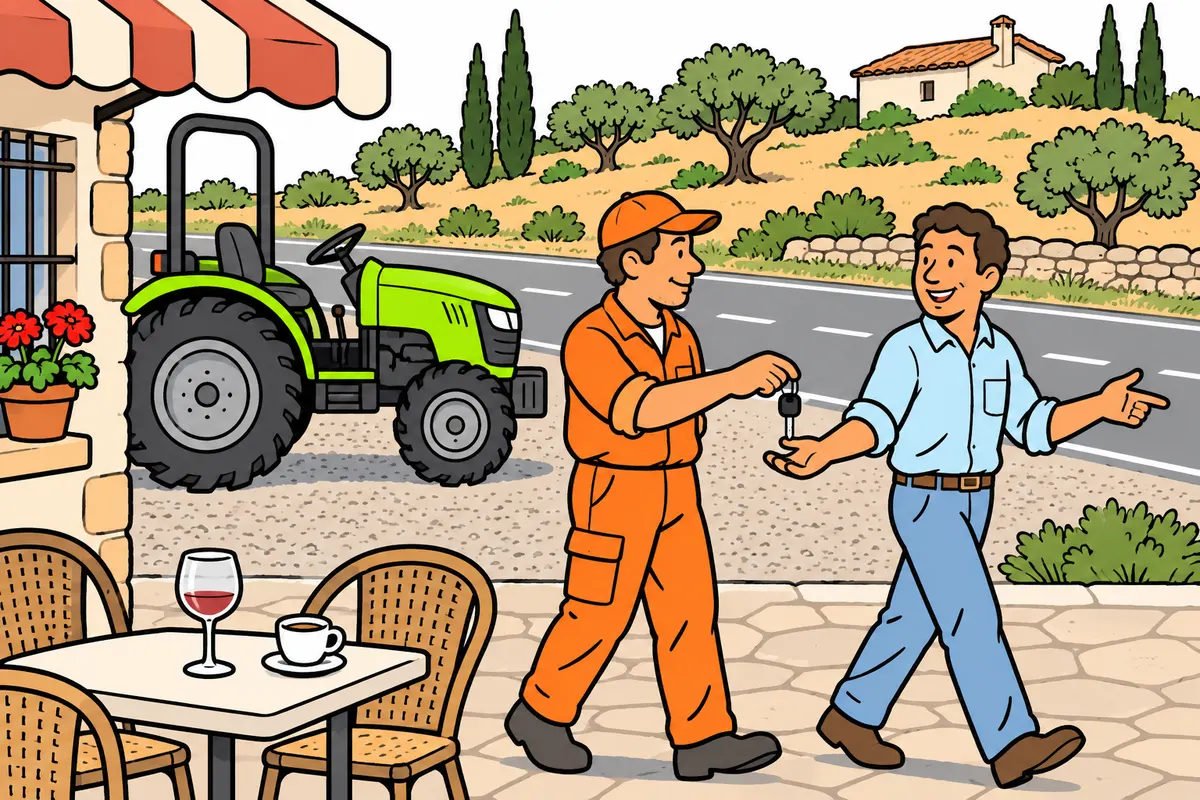
You cannot remove alcohol with tricks or work out a safe amount by comparing yourself.
Remember
- Your alcohol level depends on your body and how you drink.
- Eating can delay absorption, but does not stop you absorbing the alcohol.
- Coffee, showers and exercise do not lower your blood alcohol level.
- Your alcohol level can keep rising after you finish drinking.
- Sleeping for a while does not guarantee that you can drive.
- If you have been drinking, arrange your return without driving.
Exam trap: Wrong: eating removes alcohol from your blood. Right: it does not; you need time.
Read the full explanation
- The same amount of alcohol can produce different levels depending on your weight, sex, how much and how quickly you drink, the type of drink, food and the time elapsed. In general, if you are slim or female, you reach higher levels for the same consumption. You cannot calculate a safe amount by comparing yourself with a colleague. [DGT, alcohol consumption](https://www.dgt.es/muevete-con-seguridad/evita-conductas-de-riesgo/consumo-de-alcohol/).
- Spirits, such as gin or whisky, and drinks mixed with fizzy drinks can promote faster absorption. Eating can delay absorption, but the alcohol still passes into your blood. [DGT, alcohol consumption](https://www.dgt.es/muevete-con-seguridad/evita-conductas-de-riesgo/consumo-de-alcohol/).
- You do not reduce your blood alcohol level with coffee, tea, chewing gum, sweets, oil, egg white, water, tobacco, exercise, showers, mouth sprays or cocaine. Eating does not remove the alcohol already in your blood either. [DGT, alcohol consumption](https://www.dgt.es/muevete-con-seguridad/evita-conductas-de-riesgo/consumo-de-alcohol/).
- Your alcohol level can continue to rise after you finish drinking, and eliminating alcohol takes time. Sleeping for a while, feeling alert or calculating the hours with an app does not guarantee that you can drive. Arrange to return without driving if you have been drinking. [DGT, alcohol consumption](https://www.dgt.es/muevete-con-seguridad/evita-conductas-de-riesgo/consumo-de-alcohol/).
4Alcohol: perception and behaviour
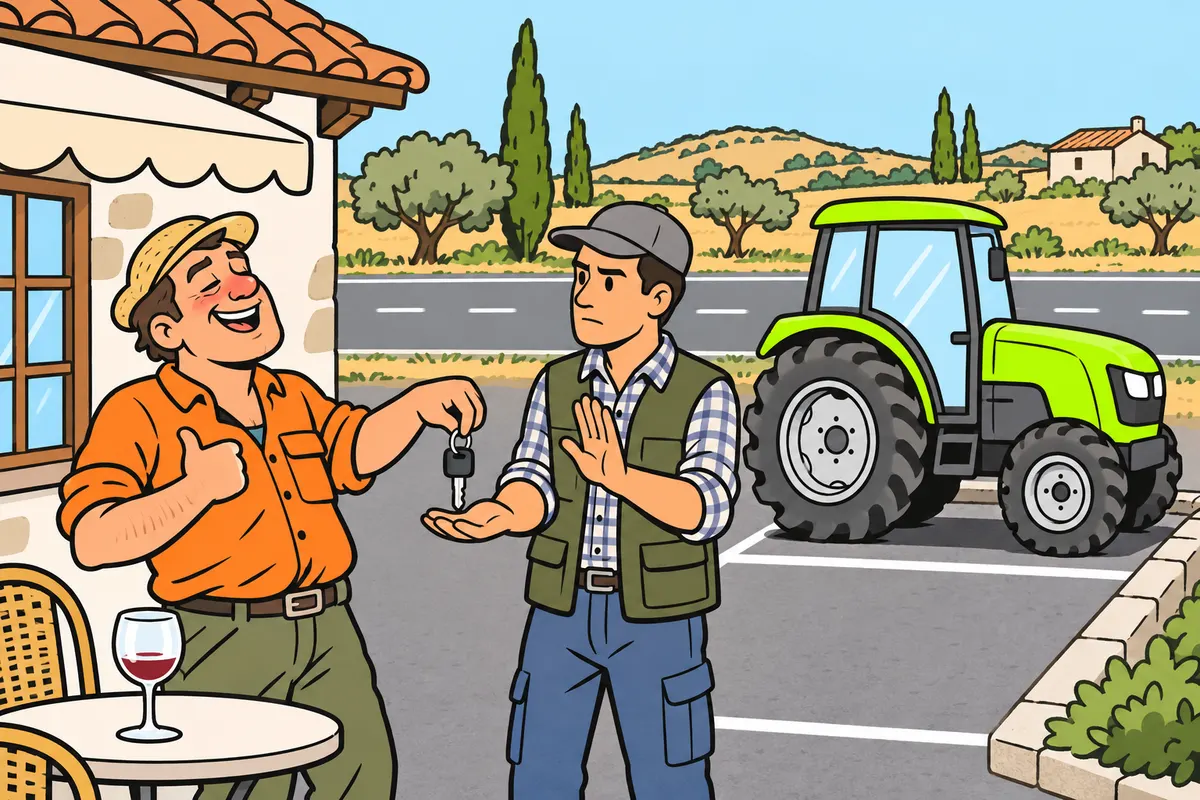
Alcohol worsens your vision and decisions, even when you feel confident.
Remember
- You can misjudge distances and find signs harder to see.
- You can lose side vision and be dazzled more easily.
- You find it harder to coordinate movements and respond to danger.
- You may take risks you would avoid without alcohol.
- You are especially vulnerable if you have little experience.
Exam trap: Wrong: feeling well proves you can drive. Right: alcohol can mislead you about your abilities.
Read the full explanation
- Alcohol can give you a false sense of confidence, make you more aggressive and lead you to take more risks or commit offences. [DGT, alcohol consumption](https://www.dgt.es/muevete-con-seguridad/evita-conductas-de-riesgo/consumo-de-alcohol/).
- You can find it harder to see signs, misjudge distances, lose peripheral vision and be dazzled more easily. [DGT, alcohol consumption](https://www.dgt.es/muevete-con-seguridad/evita-conductas-de-riesgo/consumo-de-alcohol/).
- Alcohol makes it harder for you to coordinate movements, make decisions and carry out an appropriate response to danger. [DGT, alcohol consumption](https://www.dgt.es/muevete-con-seguridad/evita-conductas-de-riesgo/consumo-de-alcohol/).
- If you have little experience, you are especially vulnerable because many driving tasks are not yet automatic for you. After drinking, you can also misjudge your own abilities: feeling well does not prove that you are fit to drive. [DGT, alcohol consumption](https://www.dgt.es/muevete-con-seguridad/evita-conductas-de-riesgo/consumo-de-alcohol/).
5When you must take alcohol and drug tests
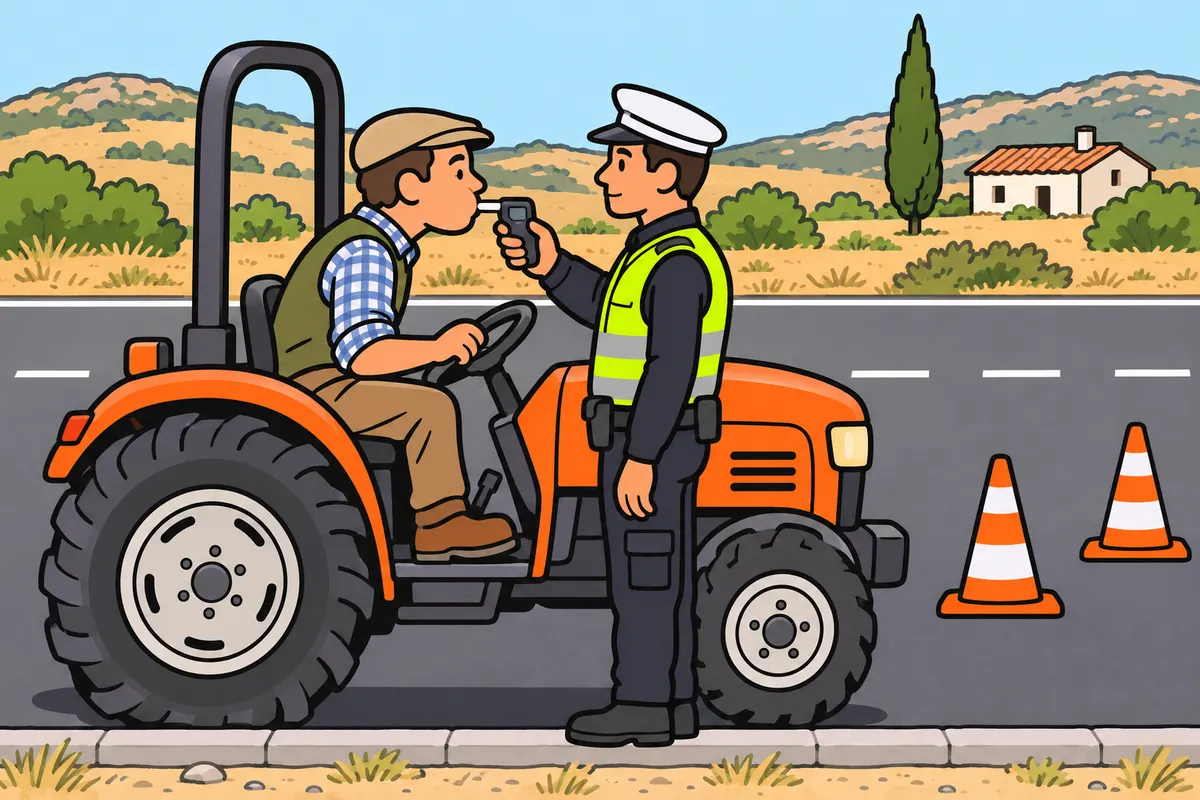
You must take alcohol and drug tests when traffic officers legally require you to.
| Road user | When you must take tests |
|---|---|
| Driver | When traffic officers legally require you to |
| Other road users | If you are involved in an accident or have committed an offence |
Remember
- You can face a preventive check without having committed an offence.
- You can also be tested because of symptoms or a reported offence.
- You can be tested if involved in an accident as someone potentially responsible.
- Explain if serious illness or injury prevents you giving a breath sample.
- Healthcare staff decide which tests are suitable in that case.
Exam trap: Wrong: you are only tested after committing an offence. Right: preventive checks also exist.
Read the full explanation
- You must take the alcohol and drug tests lawfully required by officers responsible for traffic enforcement. [LTSV, art. 14.2](https://www.boe.es/buscar/act.php?id=BOE-A-2015-11722#a14).
- You can be required to take an alcohol test if you are directly involved in an accident as someone who may be responsible, show symptoms, have been reported for an offence or are required to do so at a preventive checkpoint. A preventive check does not require you to have previously committed an offence or been involved in an accident. [RGC, art. 21](https://www.boe.es/buscar/act.php?id=BOE-A-2003-23514#a21).
- If you are another type of road user, you must also take the tests when you are involved in a road accident or have committed an offence. [LTSV, art. 14.2](https://www.boe.es/buscar/act.php?id=BOE-A-2015-11722#a14).
- You normally take an alcohol test by providing a sample of exhaled breath using an approved device. If an injury or serious illness prevents you from taking the test, explain this: healthcare staff decide which tests are appropriate. [RGC, art. 22](https://www.boe.es/buscar/act.php?id=BOE-A-2003-23514#a22).
6Second breath test and medical verification
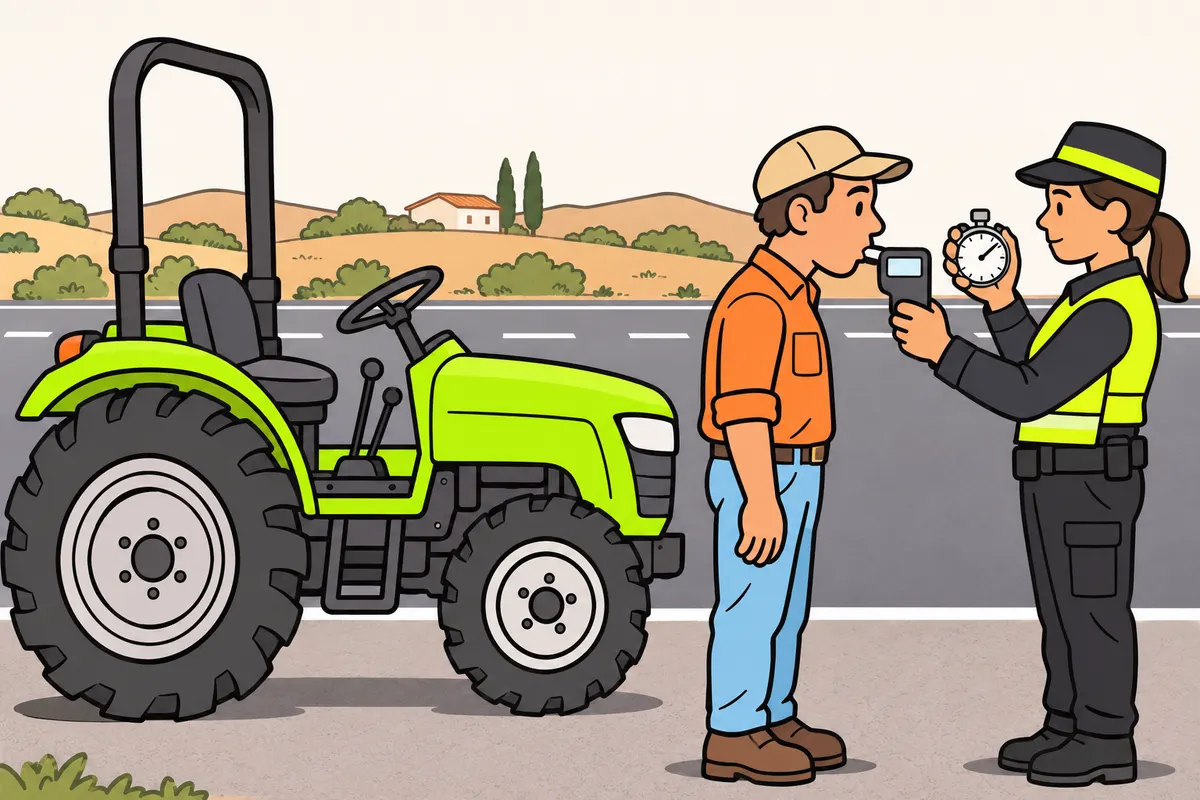
The second breath test and the medical verification test are different tests.
| Test | What you must remember |
|---|---|
| Second breath test | At least 10 minutes after the first |
| Medical confirmatory test | You can request it; preferably blood, unless justified exceptions apply |
Remember
- You have another test if you exceed your applicable limit.
- Also if you show clear signs of alcohol influence, even below your limit.
- You can check the gap between tests and make observations for the record.
- You can request medical confirmation, preferably blood, unless justified exceptions apply.
- If the confirmatory test is positive, you pay its cost.
Exam trap: Wrong: the second breath measurement is medical confirmation. Right: they are different tests.
Read the full explanation
- If you exceed the applicable limit or show clear symptoms of being under the influence of alcohol even without reaching that limit, you take a second breath test after being informed. You must not confuse this second measurement with the medical test you can request to verify the result. [RGC, art. 23.1](https://www.boe.es/buscar/act.php?id=BOE-A-2003-23514#a23).
- You must have an interval of at least 10 minutes between the two breath tests. You have the right to check this interval yourself or through companions or witnesses present, and to make observations or representations that are recorded. [RGC, art. 23.2 and 3](https://www.boe.es/buscar/act.php?id=BOE-A-2003-23514#a23).
- You can request a verification test, preferably a blood test, except where justified exceptional circumstances prevent this. If the result is positive, you pay the cost. [LTSV, art. 14.5](https://www.boe.es/buscar/act.php?id=BOE-A-2015-11722#a14).
7Refusal, immobilisation and criminal offences
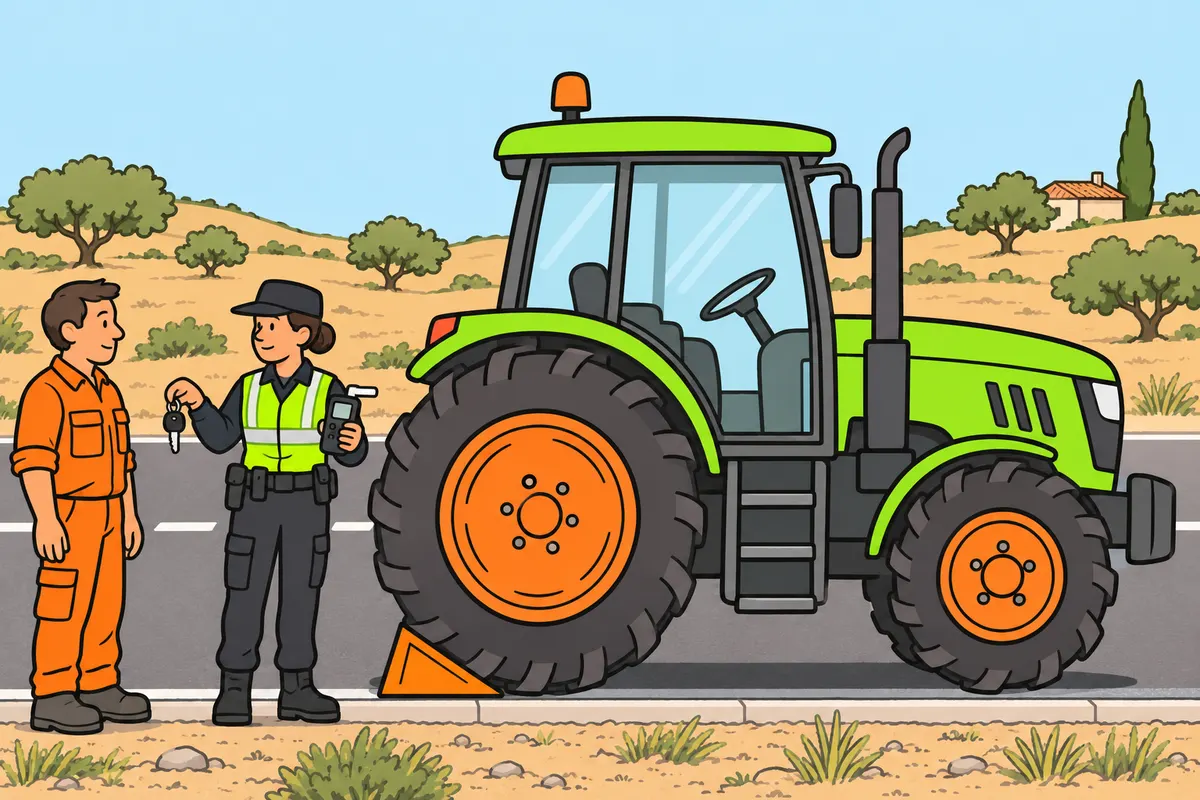
Refusing a test can lead to immobilisation and criminal liability.
| Case involving a motor vehicle or moped | Consequence to distinguish |
|---|---|
| Positive result or refusal | Officers can immobilise your vehicle |
| Driving under the influence | Can be a criminal offence without an accident |
| Above 0.60 mg/l breath or 1.2 g/l blood | A criminal offence in all cases |
| Driving offence | Prison: three to six months; fine: six to twelve months or community service: thirty-one to ninety days; driving ban: over one year up to four years |
| Refusing a legally required test | Prison: six months to one year; driving ban: over one year up to four years |
Remember
- Officers can immobilise your tractor after a positive result or refusal.
- For alcohol, a licensed, fit replacement can take over unless a court prevents it.
- That person must give the officers sufficient assurance.
- A replacement does not remove your responsibility.
- Motor vehicle or moped driving under the influence can be a crime without accident.
- Criminal thresholds do not replace your administrative maximum limits.
Exam trap: Wrong: only levels above the criminal thresholds can be a crime. Right: driving a motor vehicle or moped under the influence can also be a crime.
Read the full explanation
- Refusing legally required tests does not spare you the consequences of a check. Officers can immobilise your tractor if you test positive or refuse a test. Immobilisation prevents you from continuing your journey and is separate from a penalty or any criminal liability. [LTSV, art. 104](https://www.boe.es/buscar/act.php?id=BOE-A-2015-11722#a104).
- In alcohol checks, unless a court prevents it, another person with the appropriate driving entitlement can take over if they provide sufficient assurance to the officers. They must be authorised to drive that vehicle and be fit to drive: being another worker on the farm is not enough. Having someone take over does not remove your responsibility for what has happened. [RGC, art. 25](https://www.boe.es/buscar/act.php?id=BOE-A-2003-23514#a25).
- If you drive a motor vehicle or moped under the influence of alcohol or drugs, you may commit a criminal offence even without an accident. You also commit a criminal offence in all cases if your alcohol level exceeds 0.60 mg/l in breath or 1.2 g/l in blood; these criminal thresholds do not replace the administrative limits. [Código Penal (Criminal Code), art. 379.2](https://www.boe.es/buscar/act.php?id=BOE-A-1995-25444#a379).
- Under article 379 of the Código Penal, you face three to six months in prison, a fine covering six to twelve months or thirty-one to ninety days of community service and, in addition, disqualification from driving for more than one year and up to four years. For refusal under article 383, you face six months to one year in prison and disqualification from driving for more than one year and up to four years. [Código Penal, art. 379](https://www.boe.es/buscar/act.php?id=BOE-A-1995-25444#a379) and [art. 383](https://www.boe.es/buscar/act.php?id=BOE-A-1995-25444#a383).
8Drugs: presence in your body and prescribed treatment
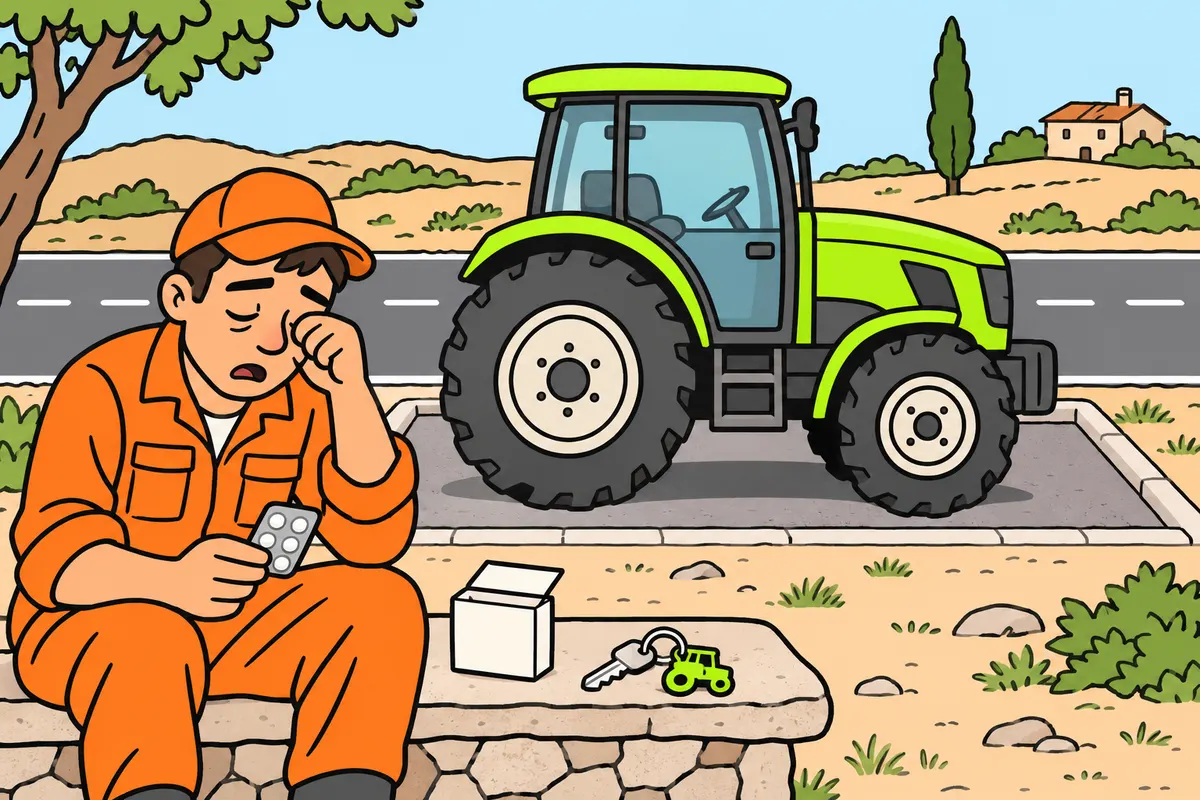
You cannot drive with drugs present, except prescribed treatment that leaves you fit to drive.
Remember
- The exception requires a medical prescription and use for treatment.
- You must also remain able to drive carefully and attentively.
- A prescription does not let you drive when sleepy or confused.
- You must take legally required drug tests.
- Testing uses saliva, then a sample is analysed.
- If you have taken recreational drugs, plan not to drive.
Exam trap: Wrong: a prescription always lets you drive. Right: use must be for treatment, and you must remain fit to drive carefully and attentively.
Read the full explanation
- You must not drive any vehicle with drugs present in your body. The exception requires you to use them under a medical prescription for therapeutic purposes and remain fit to drive with care and attention. A prescription does not authorise you to drive the tractor if the medicine makes you sedated or confused. [LTSV, art. 14.1](https://www.boe.es/buscar/act.php?id=BOE-A-2015-11722#a14).
- You are tested for drugs using an approved saliva-testing device, followed by analysis of a sufficient saliva sample. You can request the confirmatory test provided for by law; do not confuse saliva analysis with measuring alcohol in exhaled breath. Your obligation to undergo checks also applies to these tests. [LTSV, art. 14.2, 3 and 5](https://www.boe.es/buscar/act.php?id=BOE-A-2015-11722#a14).
- There is no permitted amount of recreational drugs for driving that you need to learn, equivalent to the alcohol limits at which an adult driver tests positive. Feeling used to taking drugs, having slept or noticing no symptoms does not guarantee that the substance is absent or that you are fit to drive. Plan not to drive if you have taken drugs. [LTSV, art. 14.1](https://www.boe.es/buscar/act.php?id=BOE-A-2015-11722#a14).
9How drugs affect your tractor driving
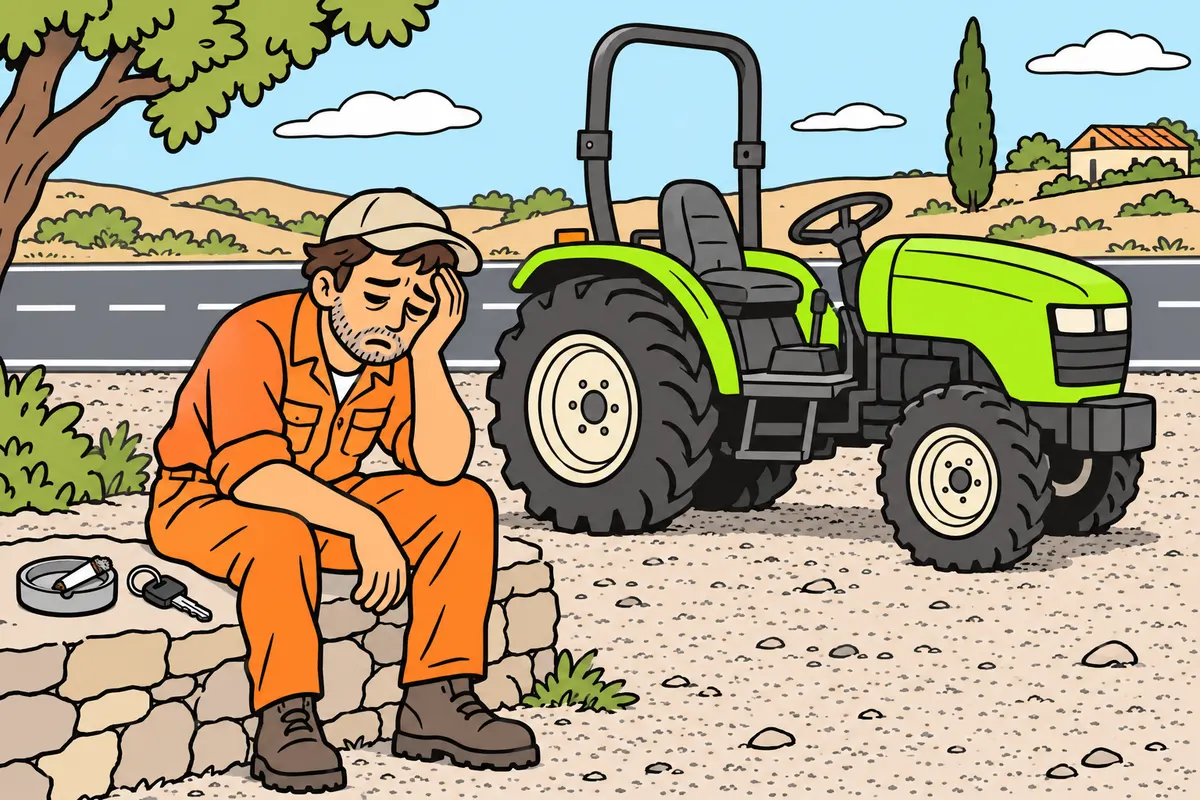
Drugs affect your perception, attention and behaviour when driving the tractor.
| Drug | How it can affect you |
|---|---|
| Cannabis | You can lose concentration and feel sleepy |
| Cocaine | You can act impulsively and underestimate dangers |
| Ecstasy | You can have hallucinations, blurred vision and fatigue afterwards |
| LSD | You can have hallucinations, anxiety or panic |
| Amphetamines | You can feel overconfident and fail to notice tiredness |
Remember
- Mixing alcohol and drugs can increase their harmful effects.
- Mixtures can cause unpredictable reactions.
- Stimulants can hide your fatigue and sleepiness.
- After amphetamines, you can suddenly feel tired and fall asleep.
Exam trap: Wrong: a stimulant removes your fatigue. Right: it can hide fatigue, and you may fall asleep afterwards.
Read the full explanation
- With cannabis, you may perceive colours and distances differently, lose concentration and feel sleepy. [DGT, drugs and medicines](https://www.dgt.es/export/sites/web-DGT/.galleries/downloads/conoce_la_dgt/que-hacemos/educacion-vial/adultos/no-formal/drogas.pdf).
- With cocaine, you may act impulsively or aggressively, lose concentration and underestimate dangers. [DGT, drugs and medicines](https://www.dgt.es/export/sites/web-DGT/.galleries/downloads/conoce_la_dgt/que-hacemos/educacion-vial/adultos/no-formal/drogas.pdf).
- With ecstasy, you may experience hallucinations, excessive sensitivity to light, blurred vision or anxiety and, as its effects wear off, low mood and fatigue. With LSD, you may experience hallucinations, aggression, anxiety or panic. [DGT, drugs and medicines](https://www.dgt.es/export/sites/web-DGT/.galleries/downloads/conoce_la_dgt/que-hacemos/educacion-vial/adultos/no-formal/drogas.pdf).
- Amphetamines are stimulants: they can make you impatient, impulsive and overconfident, and mask fatigue and drowsiness. When their effects wear off, you may suddenly feel exhausted and fall asleep involuntarily. [DGT, drugs and medicines](https://www.dgt.es/export/sites/web-DGT/.galleries/downloads/conoce_la_dgt/que-hacemos/educacion-vial/adultos/no-formal/drogas.pdf).
- If you mix alcohol and other drugs, you may intensify their harmful effects and experience unpredictable reactions. [DGT, drugs and medicines](https://www.dgt.es/export/sites/web-DGT/.galleries/downloads/conoce_la_dgt/que-hacemos/educacion-vial/adultos/no-formal/drogas.pdf).
10Illness and individual fitness to drive
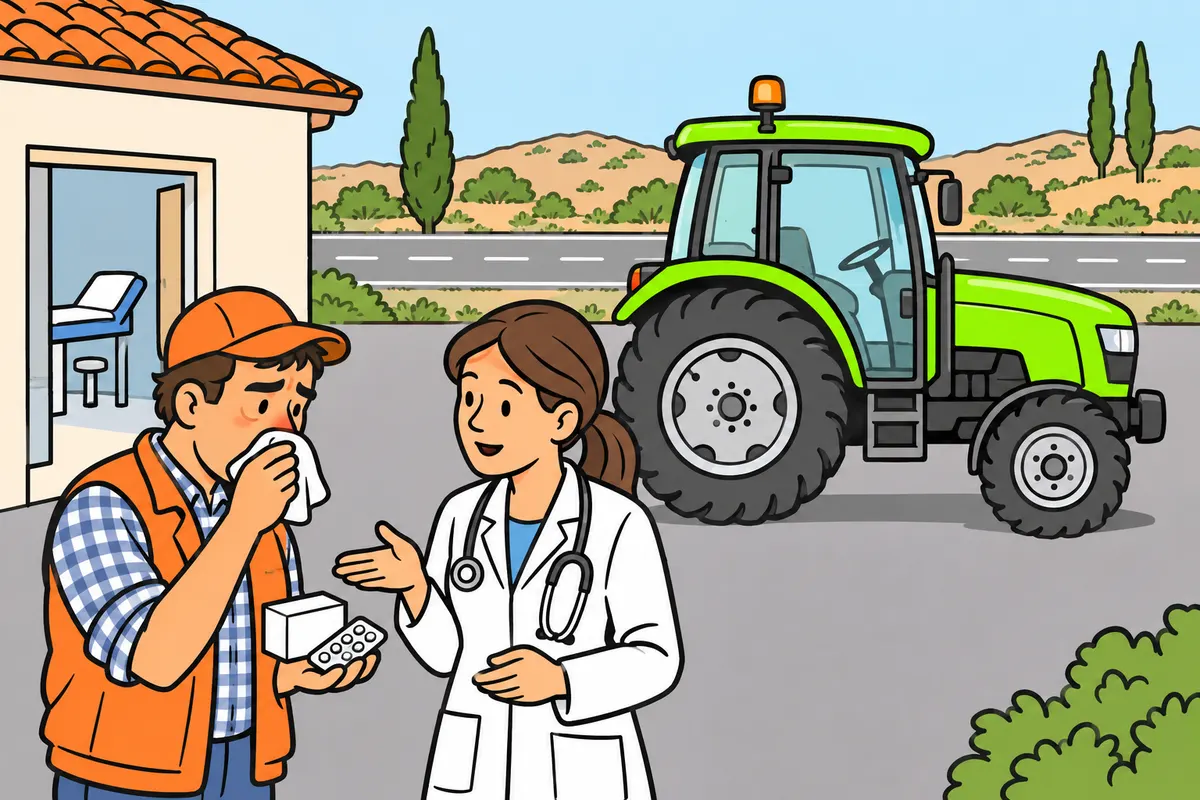
If you are ill, ask how your illness and treatment affect driving.
Remember
- Avoid driving when you feel unwell.
- Know your illness's symptoms and what to do during an acute episode.
- Do not change or stop your medication without medical advice.
- A cold and cold medicines can make you sleepy.
- Follow the restrictions that apply to your circumstances.
Exam trap: Wrong: a diagnosis alone decides whether you can drive. Right: you need an individual assessment.
Read the full explanation
- Some illnesses and medicines reduce your abilities. If you are ill or undergoing treatment, consult your doctor about driving. You can also visit a Centro de Reconocimiento de Conductores (driver medical assessment centre) to have your fitness to drive assessed. [DGT, driver condition, topic 3](https://sede.dgt.gob.es/export/sites/dgt/.galleries/permisos-de-conducir/autoescuelas/TeoricaAbreviada_LecturaFacil_2023-12_Interactivo.pdf).
- If you have a chronic illness, make sure you know its symptoms, the effects of your treatment and what to do during an acute episode. Avoid driving when you feel unwell, and do not change or stop taking your medicine without medical advice. [DGT, driver condition, topic 3](https://sede.dgt.gob.es/export/sites/dgt/.galleries/permisos-de-conducir/autoescuelas/TeoricaAbreviada_LecturaFacil_2023-12_Interactivo.pdf).
- A cold can cause you fatigue, drowsiness or poor concentration; some medicines used to relieve it also make you sleepy. [DGT, driver condition, topic 3](https://sede.dgt.gob.es/export/sites/dgt/.galleries/permisos-de-conducir/autoescuelas/TeoricaAbreviada_LecturaFacil_2023-12_Interactivo.pdf).
- You must meet the physical and mental fitness requirements and comply with any restrictions applicable to your circumstances. A diagnosis alone does not determine whether everyone with that condition can or cannot drive: what matters is the assessment required under the Reglamento General de Conductores (General Driver Regulations). You study medical assessment and renewal procedures in «Driver and agricultural vehicle documentation». [RGCond, art. 7 and Annex IV](https://www.boe.es/buscar/act.php?id=BOE-A-2009-9481).
11Age, vision and experience
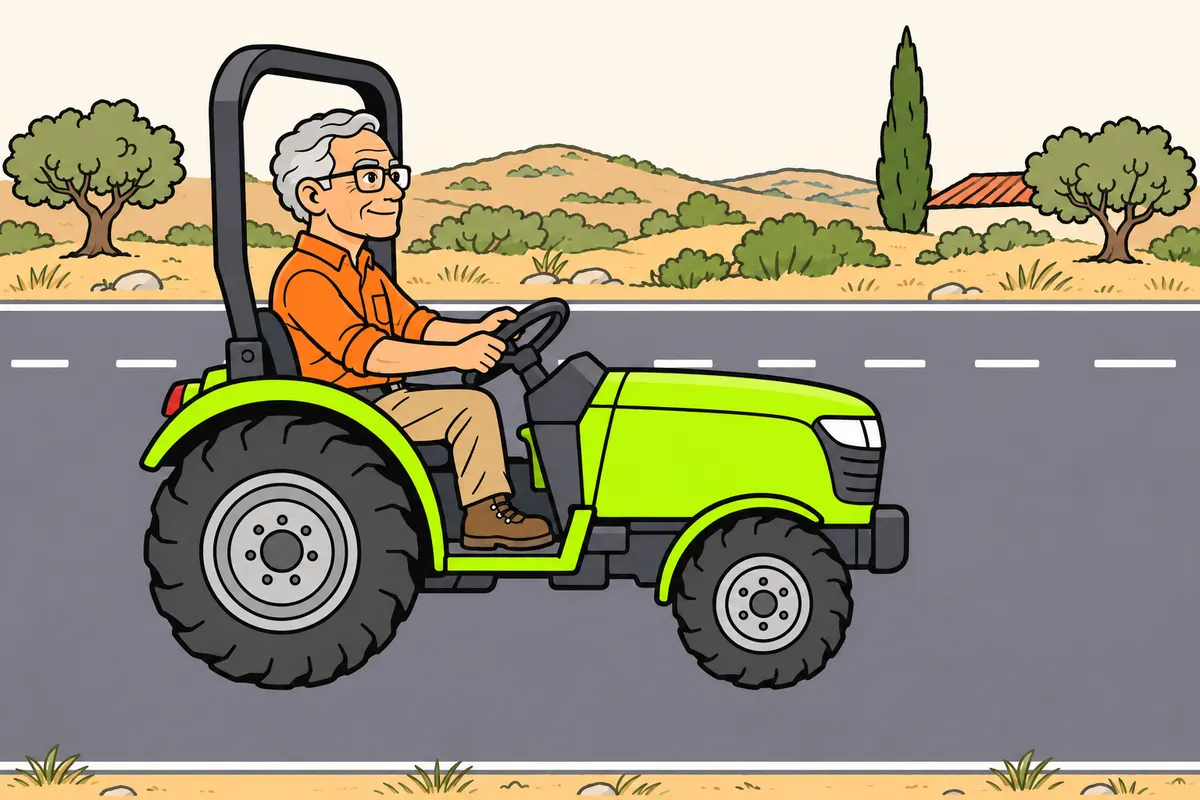
Your experience and age do not replace the fitness you need to drive.
| Your situation | What you must remember |
|---|---|
| You have little experience | You need attention for tasks you cannot yet do automatically |
| You are getting older | Your senses or movement may change; assess your actual abilities |
Remember
- If you have just obtained your licence, concentrate on unfamiliar tasks.
- Do not take risks because of pressure from colleagues.
- Seek advice if you notice changes in vision, hearing or movement.
- You must remain fit and keep a valid driving authorisation.
- Use the glasses or contact lenses your licence requires.
Exam trap: Wrong: there is a general maximum driving age. Right: you must retain the required fitness and a valid driving authorisation.
Read the full explanation
- If you are young and have just obtained your LVA, you need to concentrate on tasks that are not yet automatic for you. Practising with a tractor on a farm does not replace learning to observe and make decisions among other road users on a public road. Do not let confidence in handling the tractor lead you to take risks or give in to pressure from colleagues. [DGT, driver condition, topic 3](https://sede.dgt.gob.es/export/sites/dgt/.galleries/permisos-de-conducir/autoescuelas/TeoricaAbreviada_LecturaFacil_2023-12_Interactivo.pdf).
- As you age, you may find it harder to see at night, recover your vision after being dazzled, hear warnings, turn your neck or divide your attention. You must assess your actual abilities and seek advice about any changes you notice; everyone ages differently. Experience does not automatically compensate for a sensory or mobility limitation. [DGT, driver condition, topic 3](https://sede.dgt.gob.es/export/sites/dgt/.galleries/permisos-de-conducir/autoescuelas/TeoricaAbreviada_LecturaFacil_2023-12_Interactivo.pdf).
- There is no general maximum age for continuing to drive: you must retain the required fitness and valid driving entitlement. Comply with the conditions on your licence, such as prescribed vision correction, and do not assume that passing a medical assessment allows you to drive if you subsequently feel ill or drowsy. [DGT, older drivers](https://www.dgt.es/nuestros-servicios/permisos-de-conducir/permiso-de-conducir-para-mayores-de-65-anos/index.html). [RGCond, art. 3](https://www.boe.es/buscar/act.php?id=BOE-A-2009-9481#a3).
12Allergies and observing the road
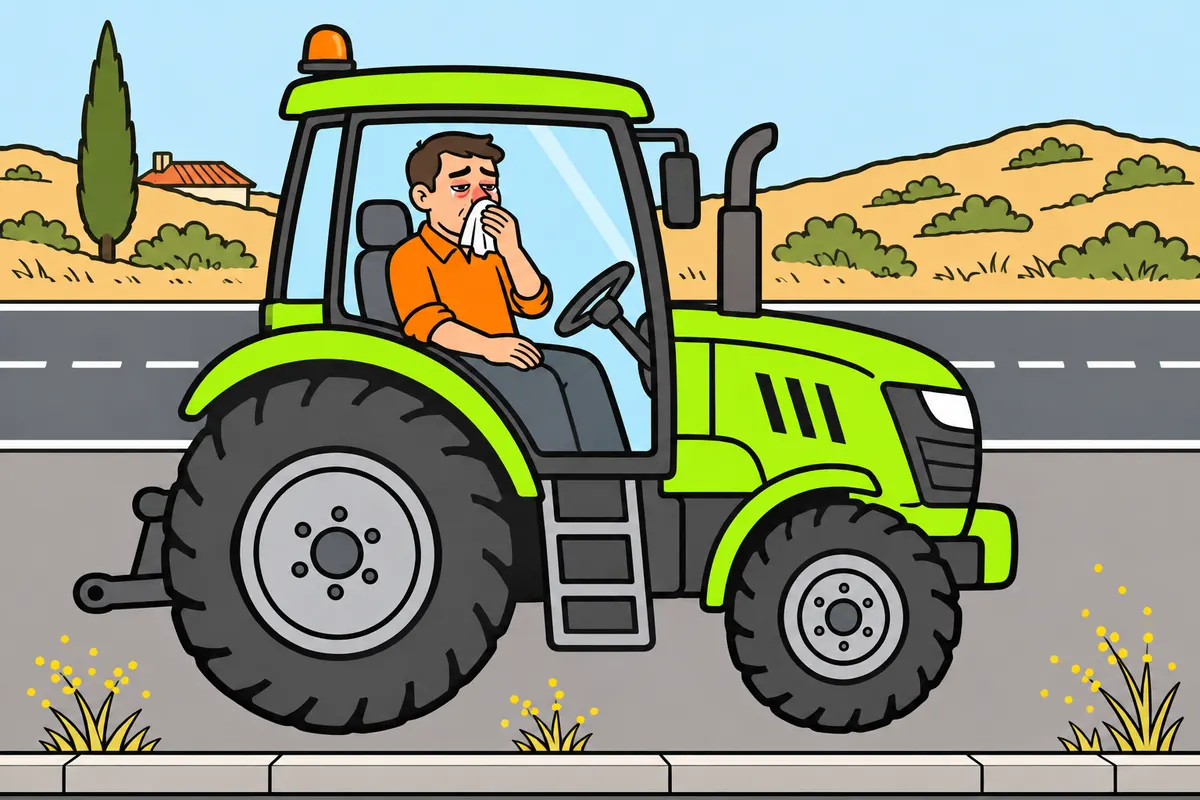
Allergies can make it harder for you to see and pay attention.
Remember
- Sneezing and watering eyes can make it harder to watch the road.
- Reduce your exposure to dust and pollen.
- Keep the inside of your tractor clean.
- If you cannot watch the road continuously, stop somewhere safe.
- Wait until you are fit to drive again.
Exam trap: Wrong: you can continue even when symptoms prevent you watching the road. Right: stop safely until you are fit again.
Read the full explanation
- If you have a respiratory allergy, repeated sneezing, itchy eyes, watery eyes and a runny nose can impair your attention and vision. In the tractor, reduce your exposure to dust and pollen and keep the cab clean. If your symptoms prevent you from observing continuously, stop in a safe place until you are fit to continue. [DGT, driver condition, topic 3](https://sede.dgt.gob.es/export/sites/dgt/.galleries/permisos-de-conducir/autoescuelas/TeoricaAbreviada_LecturaFacil_2023-12_Interactivo.pdf).
13Medicines and the driving pictogram
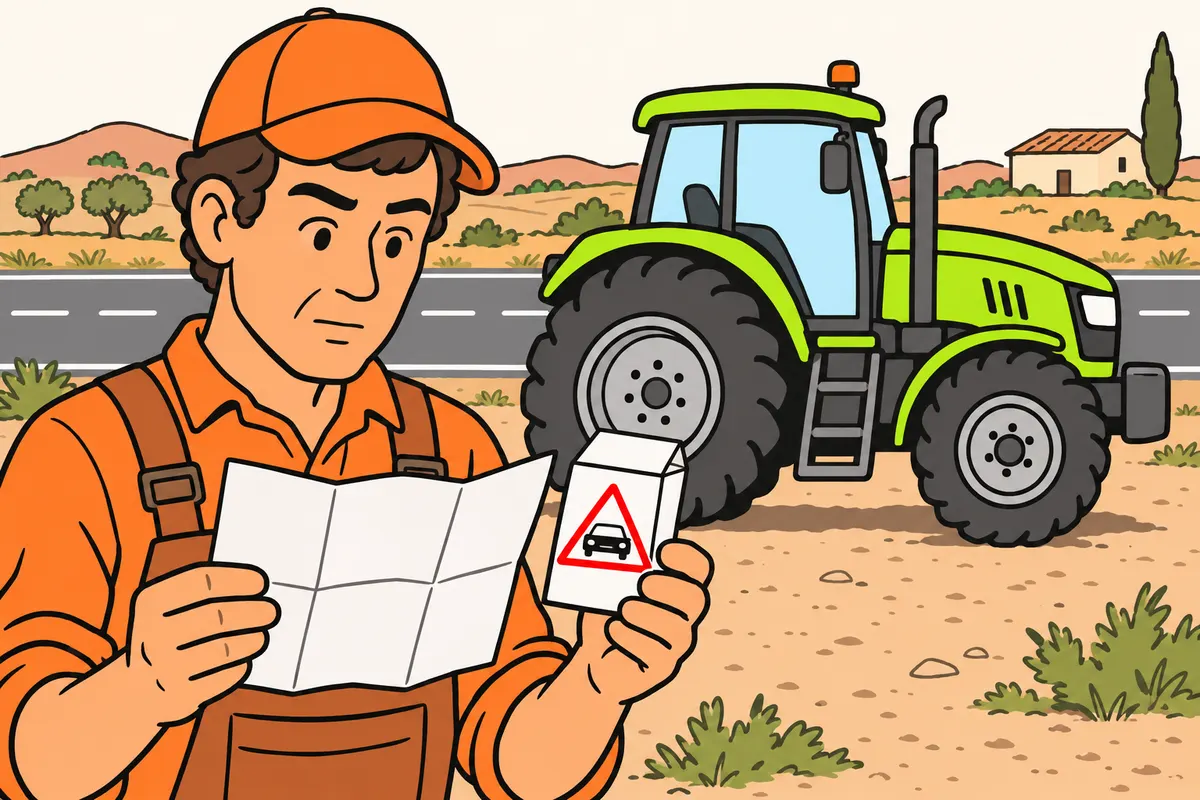
Read the medicine warnings and ask if the medicine can affect your driving.
Remember
- The pictogram tells you to read the warnings in the patient leaflet.
- The car pictogram also applies when you drive a tractor.
- Ask your doctor or pharmacist if you are unsure.
- Non-prescription medicines and herbal products can also affect you.
- Mixing medicines with alcohol can increase sleepiness and slow your reflexes.
- Do not stop treatment or change your dose on your own.
Exam trap: Wrong: a natural product is always safe for driving. Right: it can also affect your ability to drive.
Read the full explanation
- Before driving while undergoing treatment, you must read the driving warnings in the patient information leaflet and consult your doctor or pharmacist if you have any doubts. [DGT, driver condition, topic 3](https://sede.dgt.gob.es/export/sites/dgt/.galleries/permisos-de-conducir/autoescuelas/TeoricaAbreviada_LecturaFacil_2023-12_Interactivo.pdf).
- If you mix alcohol with certain medicines, you can intensify effects such as drowsiness, sedation and slower reflexes. [DGT, driver condition, topic 3](https://sede.dgt.gob.es/export/sites/dgt/.galleries/permisos-de-conducir/autoescuelas/TeoricaAbreviada_LecturaFacil_2023-12_Interactivo.pdf).
- You may react differently from another person to the same medicine: your age, health, physical condition, consumption habits, fatigue, fasting, dose, length of treatment and combinations with other substances all have an influence. [DGT, driver condition, topic 3](https://sede.dgt.gob.es/export/sites/dgt/.galleries/permisos-de-conducir/autoescuelas/TeoricaAbreviada_LecturaFacil_2023-12_Interactivo.pdf).
- You can also be affected by non-prescription medicines and herbal preparations. A product being natural does not guarantee that it is compatible with driving. [DGT, driver condition, topic 3](https://sede.dgt.gob.es/export/sites/dgt/.galleries/permisos-de-conducir/autoescuelas/TeoricaAbreviada_LecturaFacil_2023-12_Interactivo.pdf).
- The pictogram shows a vehicle inside a red triangle and directs you to the warnings in the patient information leaflet. You must read them even if the packaging shows a car: the precautions also matter when you operate an agricultural tractor. Consult your doctor or pharmacist and do not stop treatment or change doses on your own so that you can drive. [AEMPS, medicines and driving](https://www.aemps.gob.es/ciudadania/medicamentos-y-conduccion/).
14Treatments requiring caution
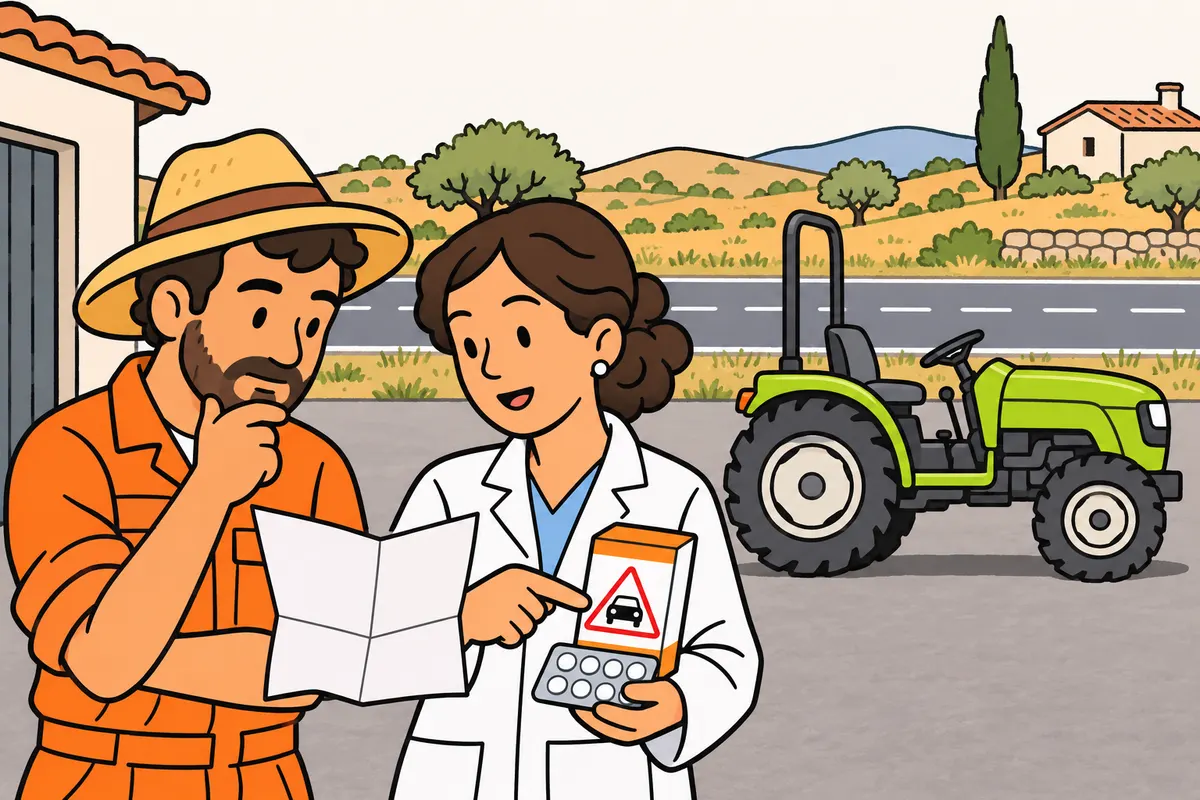
Check how your particular treatment affects you before driving.
| Treatment | Possible effect |
|---|---|
| Some painkillers | Sleepiness, vertigo or poor concentration |
| Some cough suppressants | Changes to mood or reflexes |
| Antihistamines | Sleepiness and slower reflexes |
| Psychotropic medicines | Dizziness, confusion or blurred vision |
| Anti-anxiety medicines | Sleepiness |
| Sleeping medicines | Effects may last into the next day |
Remember
- Effects can vary between medicines.
- Check the warnings and discuss your response with a professional.
- Some treatments can make you sleepy or slow your reflexes.
Exam trap: Wrong: all medicines in a group affect you in the same way. Right: check the particular product and your response.
Read the full explanation
- Some painkillers can cause drowsiness, vertigo or poor concentration; some cough suppressants can affect your mood and reflexes. Check the warnings for the specific product. [DGT, drugs and medicines](https://www.dgt.es/export/sites/web-DGT/.galleries/downloads/conoce_la_dgt/que-hacemos/educacion-vial/adultos/no-formal/drogas.pdf).
- Antihistamines used to treat allergies can cause drowsiness and slow your reflexes; their effects vary depending on the medicine. [DGT, drugs and medicines](https://www.dgt.es/export/sites/web-DGT/.galleries/downloads/conoce_la_dgt/que-hacemos/educacion-vial/adultos/no-formal/drogas.pdf).
- Psychotropic medicines can cause drowsiness, dizziness, blurred vision or confusion. Anti-anxiety medicines can make you sleepy, and sleeping medicines can continue to affect you the next day. Assess your response to treatment with your healthcare professional. [DGT, drugs and medicines](https://www.dgt.es/export/sites/web-DGT/.galleries/downloads/conoce_la_dgt/que-hacemos/educacion-vial/adultos/no-formal/drogas.pdf).
15Fatigue: causes in agricultural work
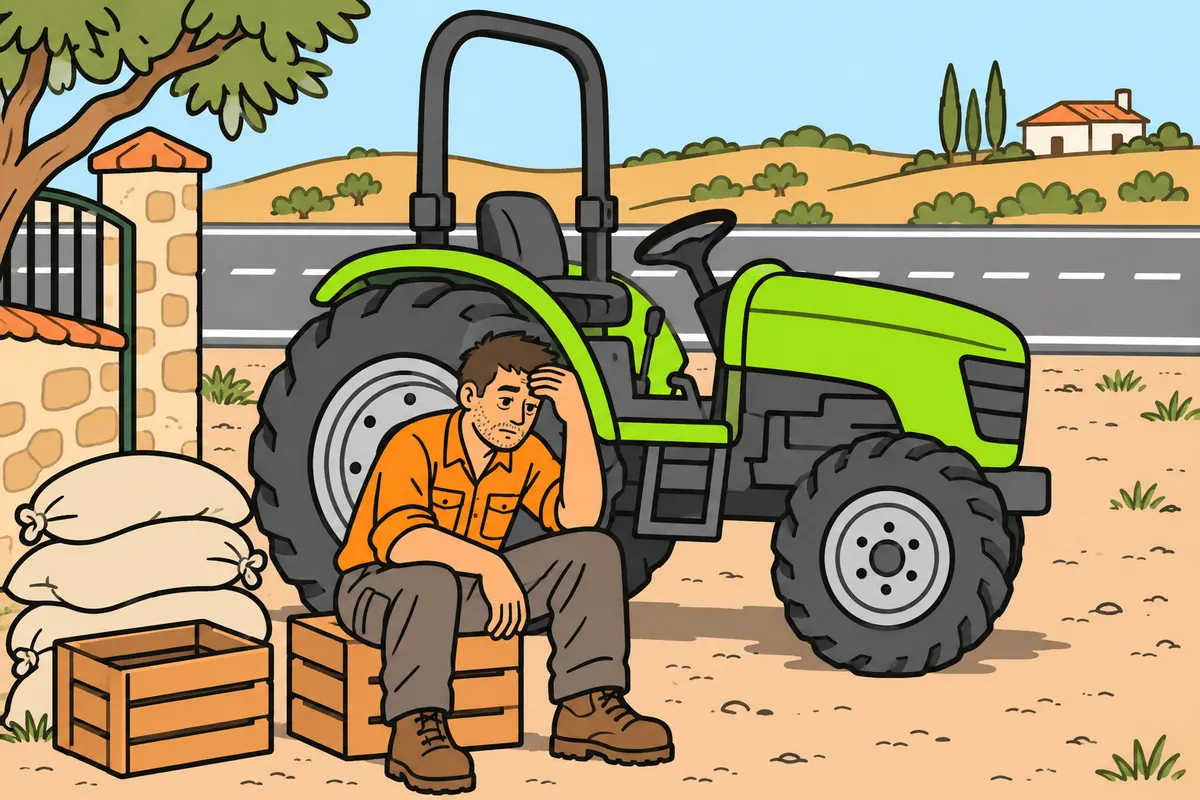
Farm work can leave you tired before you drive on the road.
| Fatigue type | Possible cause |
|---|---|
| Physical | Bodily effort |
| Mental | Sustained attention |
Remember
- Count the effort of your whole working day.
- Long days and too few breaks can make you tired.
- Noise, vibration and carrying materials can tire you.
- Rest more often when the route needs more attention.
Exam trap: Wrong: a short journey prevents fatigue. Right: earlier work can leave you tired before you set off.
Read the full explanation
- You can experience physical fatigue from bodily exertion or mental fatigue from sustained attention. Heavy traffic, a damaged road surface, an unfamiliar road and adverse weather increase the effort of driving. [DGT, driver condition, topic 3](https://sede.dgt.gob.es/export/sites/dgt/.galleries/permisos-de-conducir/autoescuelas/TeoricaAbreviada_LecturaFacil_2023-12_Interactivo.pdf).
- Long working days, insufficient breaks, poor posture, stress, illness and lack of familiarity with the activity make you more prone to fatigue. Plan more frequent breaks when the route requires greater attention. [DGT, driver condition, topic 3](https://sede.dgt.gob.es/export/sites/dgt/.galleries/permisos-de-conducir/autoescuelas/TeoricaAbreviada_LecturaFacil_2023-12_Interactivo.pdf).
- Take account of the effort of the whole agricultural working day: loading materials, monitoring implements and enduring noise or vibration can leave you tired before you reach the road, even if the journey is short. [DGT, warning signs of fatigue](https://www.dgt.es/comunicacion/noticias/cansancio-estas-son-las-senales-de-alarma).
16Fatigue: warning signs
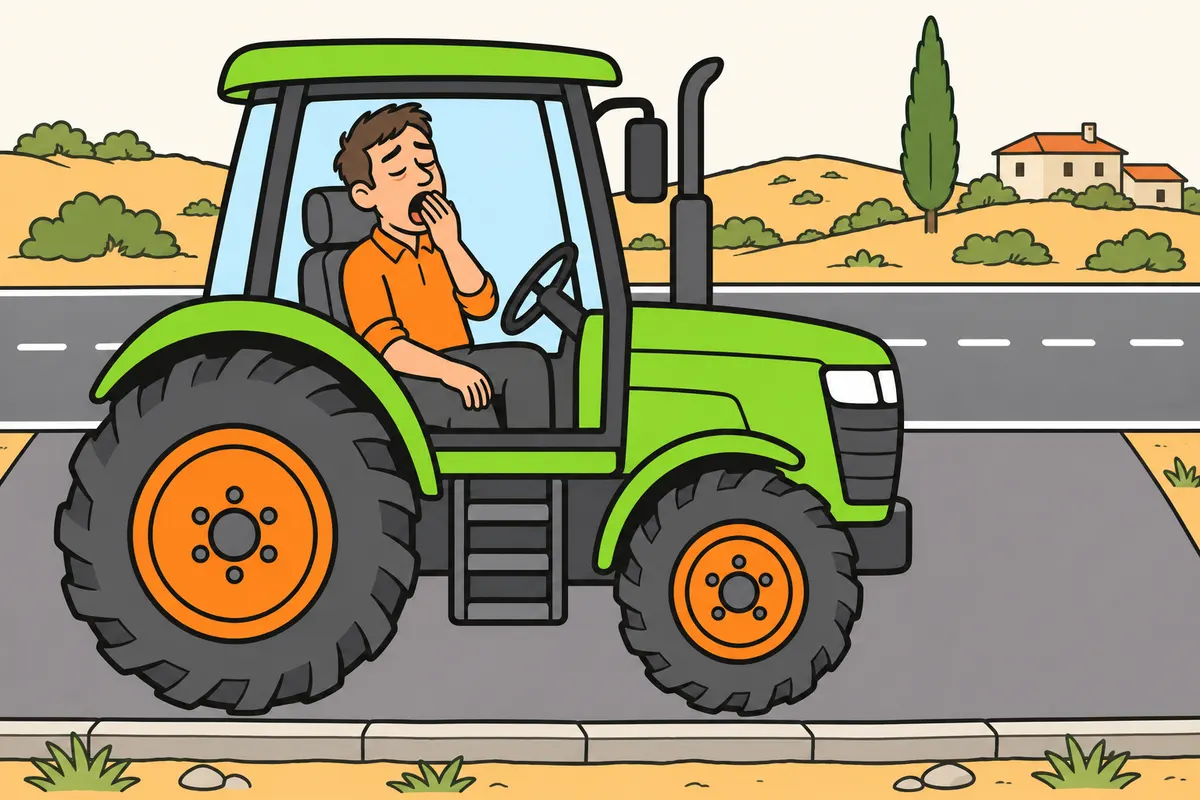
Stop safely when you notice signs of fatigue.
Remember
- Watch for yawning and heavy eyes.
- Blurred vision and poor concentration also warn you.
- You may have slow movements, irritability or back pain.
- Find a permitted, safe place to stop the tractor.
- Do not wait until you have every symptom.
Exam trap: Wrong: you must have every symptom before stopping. Right: stop driving when you notice signs of fatigue.
Read the full explanation
- You may experience fatigue as loss of concentration, heavy eyes, blurred vision, yawning, slow or imprecise movements, irritability, constant changes of posture, a reduced field of vision, difficulty hearing or making decisions, numb arms, pressure in your head, nervousness, cramps or stiffness and pain in the back of your neck and your back. These signs indicate that your ability to operate the tractor is reduced, even if they do not all occur together. [DGT, warning signs of fatigue](https://www.dgt.es/comunicacion/noticias/cansancio-estas-son-las-senales-de-alarma).
17Sleepiness: when it occurs
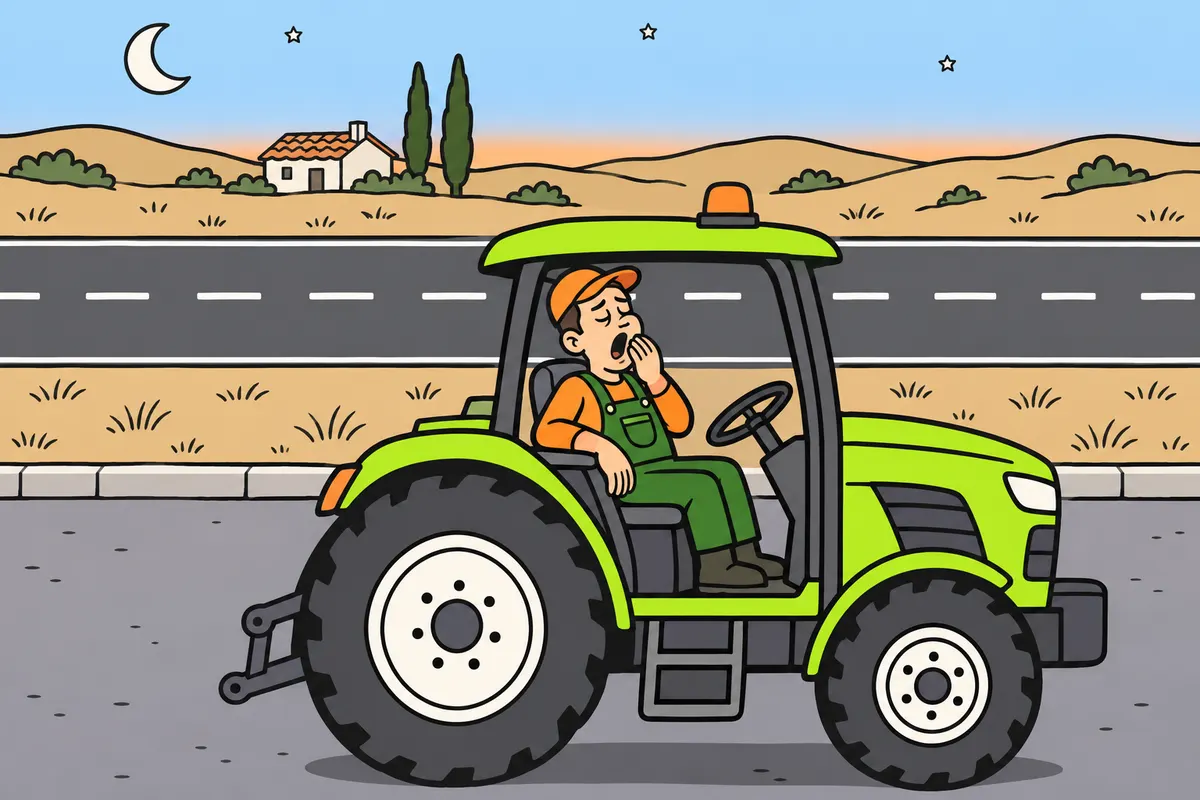
Poor sleep can make you sleepy, even after many hours in bed.
Remember
- Both the amount and quality of sleep matter.
- A change in routine can make you sleepy.
- Monotony and light traffic can make you drowsy.
- Alcohol and some medicines can also make you sleepy.
- You may feel sleepier in the early morning or early afternoon.
Exam trap: Wrong: you only feel sleepy after eating. Right: you can feel sleepy in the afternoon even if you have not eaten.
Read the full explanation
- You may feel drowsy because you sleep too little, rest poorly or change your schedule. Both the quantity and quality of your sleep matter. [DGT, sleepiness and fatigue](https://www.dgt.es/muevete-con-seguridad/evita-conductas-de-riesgo/Conducir-con-sueno-o-cansancio).
- Monotony, roads with little traffic, alcohol, certain medicines and sleep disorders can make you more prone to drowsiness. You are more likely to feel sleepy in the early hours of the morning and the early afternoon, even if you have not eaten. [DGT, sleepiness and fatigue](https://www.dgt.es/muevete-con-seguridad/evita-conductas-de-riesgo/Conducir-con-sueno-o-cansancio).
18Drowsiness and microsleeps
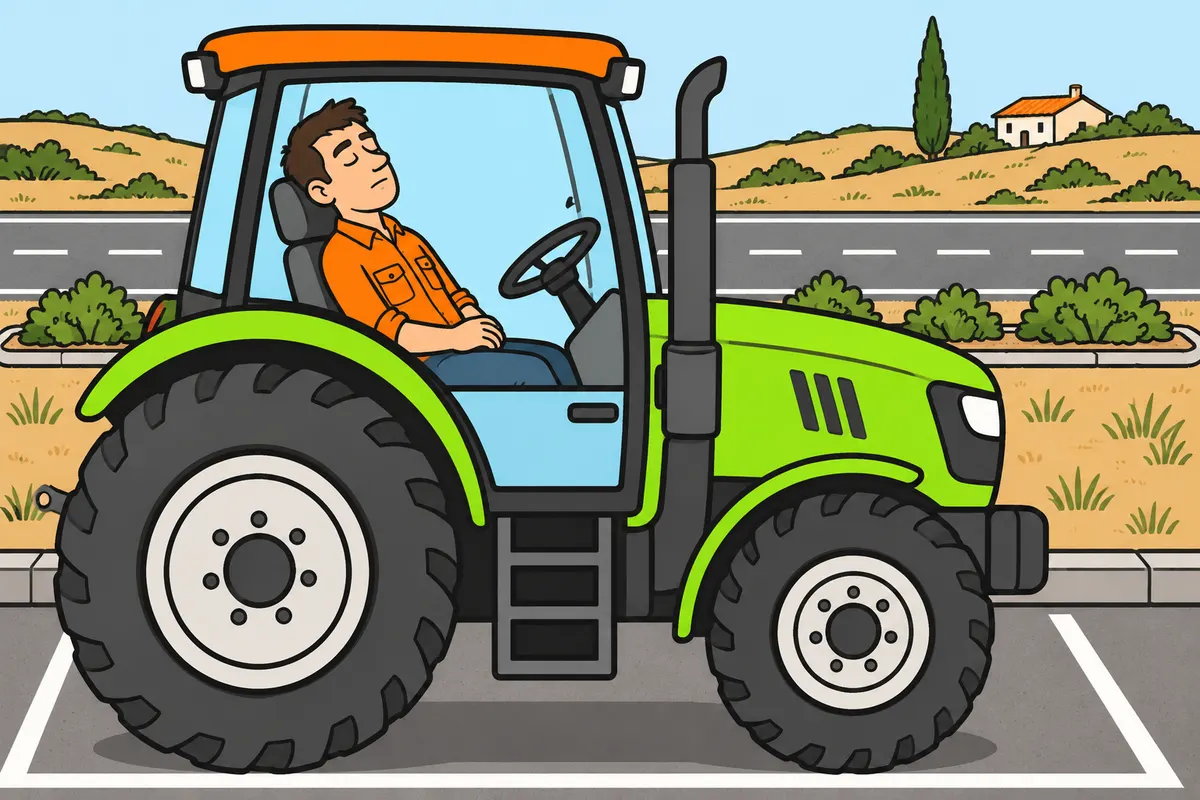
If you feel sleepy, stop somewhere safe and sleep.
Remember
- If you struggle to keep your eyes open, find a safe place to stop.
- Not remembering the road you travelled is a warning sign.
- Drifting out of lane or missing signs also warns you.
- A microsleep is involuntary sleep lasting a few seconds.
- You may not notice it and can lose control of the tractor.
- Stop before you have a microsleep.
Exam trap: Wrong: you always notice a microsleep. Right: you may fall asleep for seconds without realising.
Read the full explanation
- You may experience drowsiness as difficulty keeping your head upright or your eyes open, nonsensical thoughts, gaps in your memory of the stretch you have driven, signs you overlook, drifting out of your lane or getting too close to the vehicle ahead. These lapses in alertness compromise your driving. [DGT, sleepiness and fatigue](https://www.dgt.es/muevete-con-seguridad/evita-conductas-de-riesgo/Conducir-con-sueno-o-cansancio).
- A microsleep is an involuntary episode of sleep lasting a few seconds. When drowsy, you may carry out manoeuvres less precisely or mix them up and, during a microsleep, lose control of the tractor. You may be unaware that you have fallen asleep. [DGT, sleepiness and fatigue](https://www.dgt.es/muevete-con-seguridad/evita-conductas-de-riesgo/Conducir-con-sueno-o-cansancio).
19Rest and journey preparation
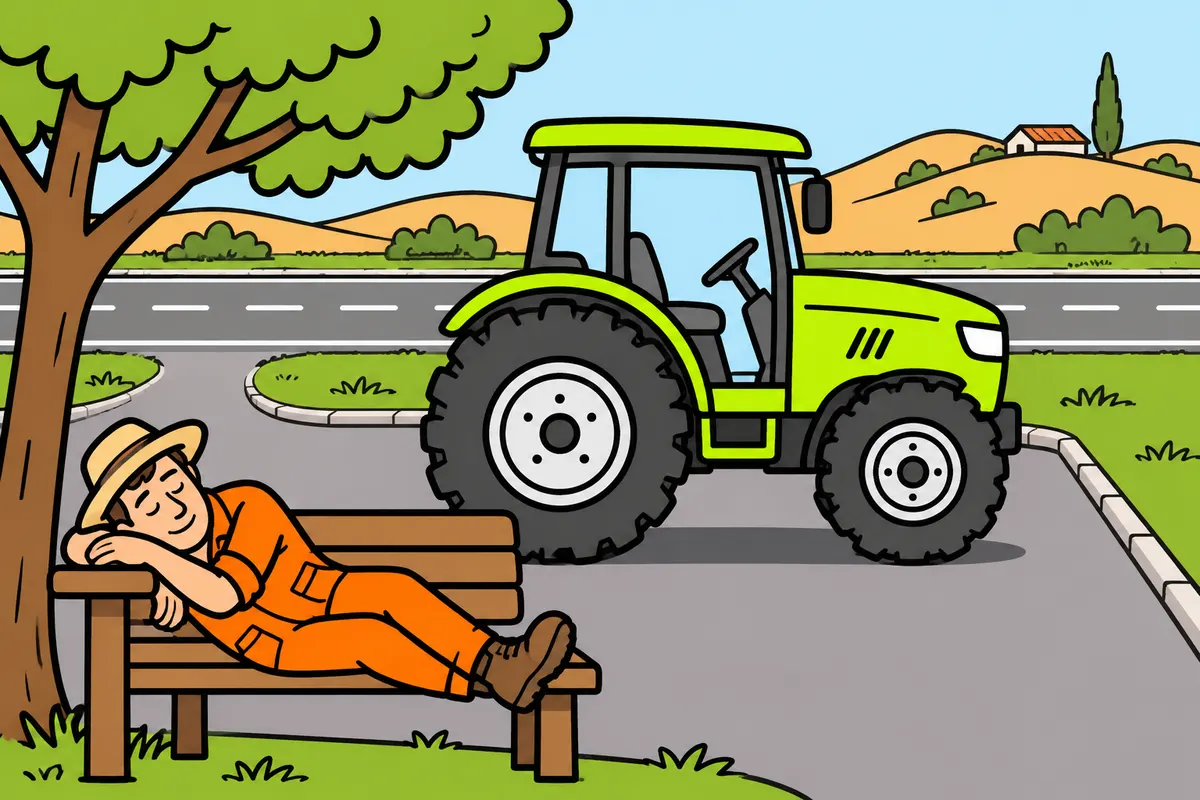
Rest when tired and sleep when drowsy before you continue.
| What you feel | What to do |
|---|---|
| Fatigue | Stop and rest |
| Sleepiness | Stop and sleep |
Remember
- Stop in a permitted, safe place.
- Do not wait for a suggested interval if symptoms begin.
- These suggested breaks are not a tachograph duty here.
- Continue only when you are fit again.
- A window, coffee or loud music cannot replace sleep.
- Include your earlier farm work when planning.
Exam trap: Wrong: taking a break guarantees you can continue. Right: continue only when you are fit again.
Read the full explanation
- If you feel fatigued, find a safe place where stopping is permitted and stop to rest. If you feel sleepy, you need to sleep; shortening the journey by speeding up or waiting until you finish work increases the danger. Resume driving only when you have recovered the fitness you need, not simply because a certain amount of time has passed. [DGT, warning signs of fatigue](https://www.dgt.es/comunicacion/noticias/cansancio-estas-son-las-senales-de-alarma).
- As preventive guidance for long journeys, the DGT recommends stopping every two hours or every 200 kilometres and taking breaks of around 20 or 30 minutes. In a tractor, the time spent and work already done are especially important: do not wait until you cover that distance or complete that interval if symptoms appear. These guidelines do not constitute a mandatory tachograph regime here. [DGT, warning signs of fatigue](https://www.dgt.es/comunicacion/noticias/cansancio-estas-son-las-senales-de-alarma).
- Opening the window, turning up the music or drinking coffee is no substitute for sleep. A passenger or an electronic warning does not guarantee that you can continue either. Seek medical advice if you experience frequent or unexplained drowsiness. [DGT, sleepiness and fatigue](https://www.dgt.es/muevete-con-seguridad/evita-conductas-de-riesgo/Conducir-con-sueno-o-cansancio).
- Plan your journey taking into account the agricultural work you have already done. Ventilate the cab, adopt a comfortable posture, stay hydrated and avoid heavy meals; these measures complement rest. [DGT, driver condition, topic 3](https://sede.dgt.gob.es/export/sites/dgt/.galleries/permisos-de-conducir/autoescuelas/TeoricaAbreviada_LecturaFacil_2023-12_Interactivo.pdf).
20Distractions inside and outside the vehicle
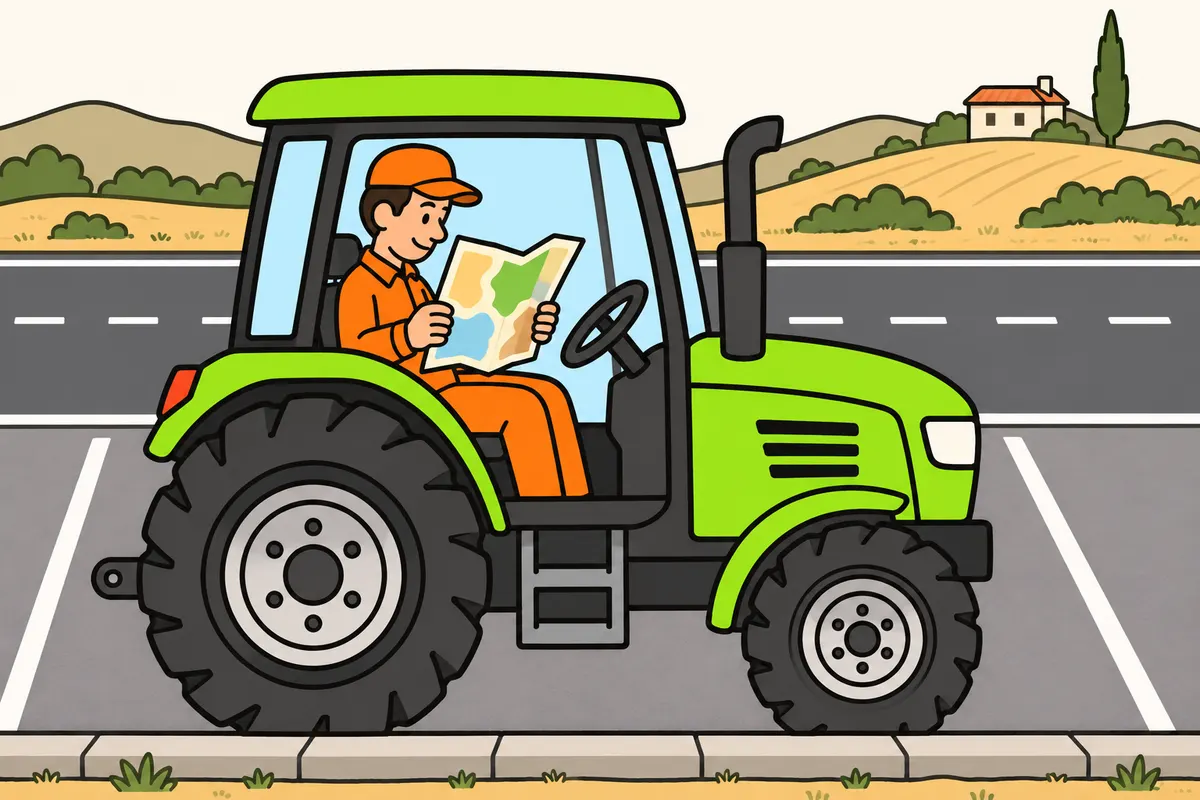
Keep your eyes, hands and thoughts on driving.
Remember
- Looking for things, eating or checking a map can distract you.
- Watching an implement for too long takes your attention from traffic.
- Wait until you are safely parked to do these tasks.
- Ask companions to stop if they distract you.
- Keep freedom of movement, a clear view and constant attention.
Exam trap: Wrong: you are distracted only when you look away. Right: your hands or thoughts can also leave driving.
Read the full explanation
- You become distracted when you take your eyes, hands or thoughts away from driving. Your ability to process information is limited: both monotony and too many stimuli can make it harder to pay attention. [DGT, distractions](https://www.dgt.es/muevete-con-seguridad/evita-conductas-de-riesgo/distracciones-al-conducir/index.html).
- Poorly visible signs, complex traffic, darkness and dazzle from other tractors can make it harder for you to pay proper attention to your surroundings. [DGT, driver condition, topic 3](https://sede.dgt.gob.es/export/sites/dgt/.galleries/permisos-de-conducir/autoescuelas/TeoricaAbreviada_LecturaFacil_2023-12_Interactivo.pdf).
- Looking for a dropped object, lighting a cigarette, consulting a map, eating, drinking or trying to catch an insect can take your attention away from traffic. On the road, you also become distracted if you look at the implement for too long or attend to farm workers. Put this off until you have parked safely. [DGT, distractions](https://www.dgt.es/muevete-con-seguridad/evita-conductas-de-riesgo/distracciones-al-conducir/index.html).
- If your passengers interfere with your driving, ask them to stop. You must maintain freedom of movement, a clear view and constant attention. [RGC, art. 18.1](https://www.boe.es/buscar/act.php?id=BOE-A-2003-23514#a18).
21Mobile phones, earphones and hands-free systems
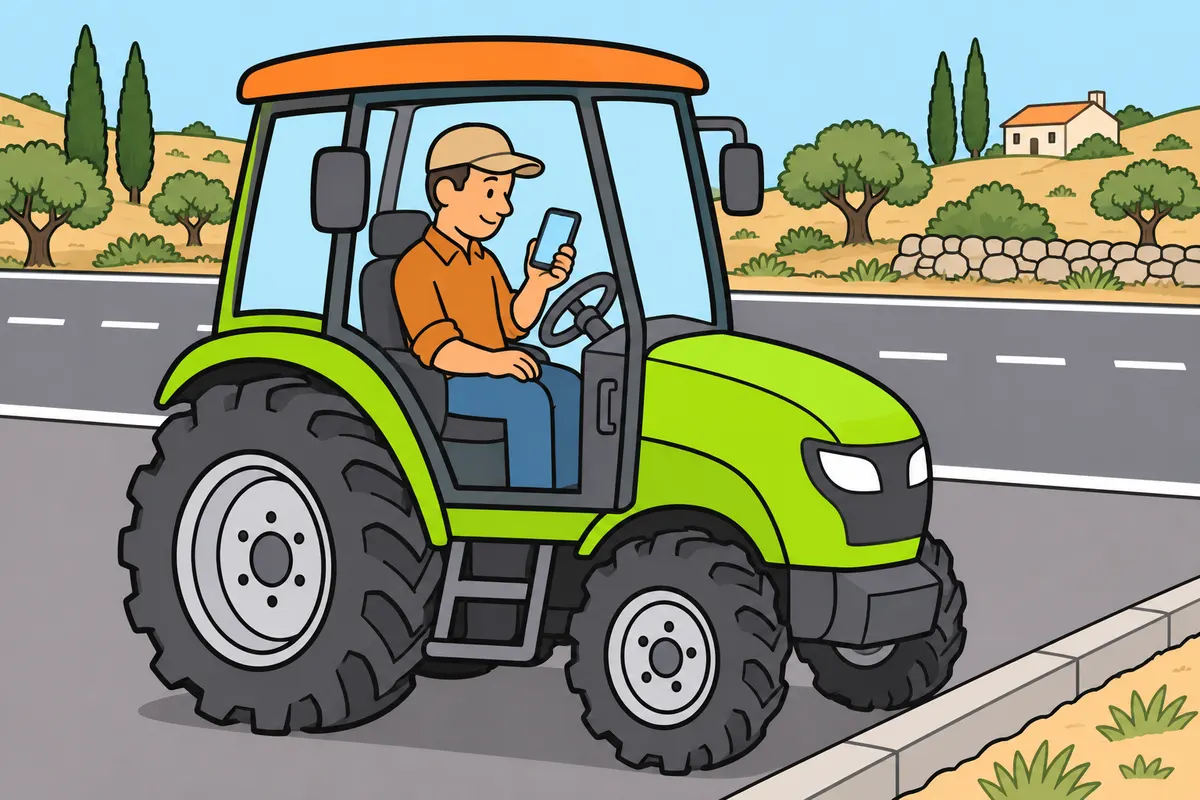
Do not handle your phone or wear earphones while driving the tractor.
| Use while driving a tractor | Rule |
|---|---|
| Handheld phone | You must not use it |
| Connected earphones | You must not use either one |
| Communication without hands or earphones | Keep the required attention |
Remember
- Park somewhere permitted and safe before handling your phone.
- You are still driving at a red light or in a queue.
- A phone holder does not let you type or handle the phone.
- You cannot wear even one connected earphone in a tractor.
- Hands-free calls can still distract you.
- Delay conversations that take up your attention.
Exam trap: Wrong: the helmet intercom exception allows earphones in a tractor. Right: it applies to motorcycles and mopeds with certified or approved wireless devices built into their helmets for intercom or navigation.
Read the full explanation
- You must not use your mobile phone by hand while driving the tractor, including to read messages, photograph a plot of land or answer a work call. The prohibition applies even if you are driving slowly, it is daylight or you use it for only a few seconds. Do not use a red light or a traffic queue as an opportunity either: you are still engaged in driving. [LTSV, art. 13.3](https://www.boe.es/buscar/act.php?id=BOE-A-2015-11722#a13).
- You may communicate without using your hands and without headphones or earphones, provided you always maintain the required attention. Having your phone in a holder does not authorise you to type or operate it. To use it by hand, you must first park in a safe place where parking is permitted. [RGC, art. 18.2](https://www.boe.es/buscar/act.php?id=BOE-A-2003-23514#a18).
- You must not drive the tractor wearing earphones connected to audio or communication equipment, even if you wear only one. The exception for certified or approved wireless devices integrated into motorcycle and moped helmets for intercommunication or navigation does not apply to the tractor. [RGC, art. 18.2](https://www.boe.es/buscar/act.php?id=BOE-A-2003-23514#a18).
- A hands-free system can distract you mentally. Postpone absorbing conversations and configure alerts before setting off. [DGT, distractions](https://www.dgt.es/muevete-con-seguridad/evita-conductas-de-riesgo/distracciones-al-conducir/index.html).
22Navigation devices and work screens
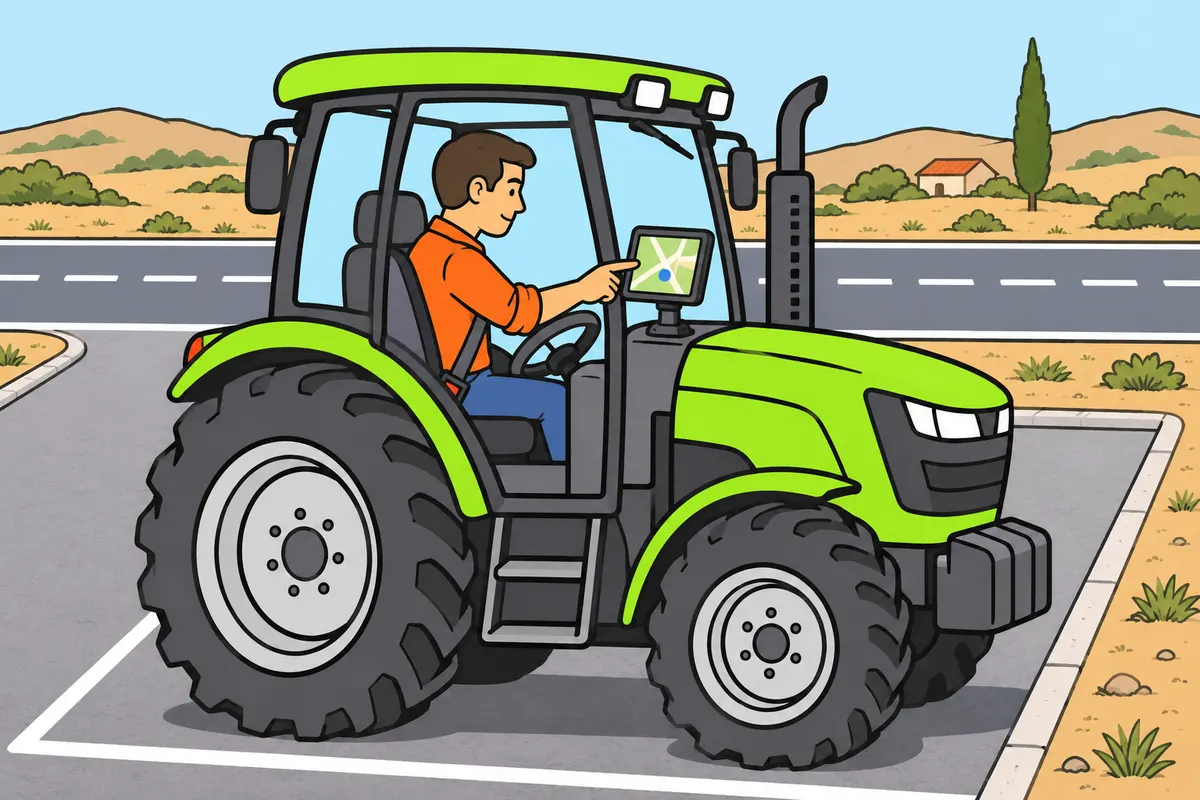
Prepare your navigation device before setting off and always keep your attention on the road.
| Device | Rule |
|---|---|
| Radar jammer | You must not install or carry it |
| Radar or speed camera detector | You must not carry it |
| Device or app warning of check locations | Excluded from that ban; do not neglect driving |
Remember
- Secure your GPS without blocking your view.
- Park somewhere permitted and safe before operating your navigation device by hand.
- Follow signs even when the GPS says something else.
- If the route does not suit your tractor, find a permitted alternative.
- Do not programme farm tasks while driving on the road.
- Use it only without hands or earphones, while keeping your attention on driving.
Exam trap: Wrong: you may carry a detector if you do not use it. Right: you must not carry detectors; warning devices are excluded from that ban.
Read the full explanation
- Your GPS guides you and can recalculate the route if you make a mistake. Avoid rushing to correct it; prepare the route before setting off and secure the device where it does not obstruct your view. [DGT, driver condition, topic 3](https://sede.dgt.gob.es/export/sites/dgt/.galleries/permisos-de-conducir/autoescuelas/TeoricaAbreviada_LecturaFacil_2023-12_Interactivo.pdf).
- Your navigation device is covered by the prohibition on using devices while driving, unless you communicate without using your hands or wearing headphones, earphones or similar devices. The GPS exception to the rule on screens does not allow you to operate it by hand: to enter a destination manually, park in a safe place where parking is permitted. [LTSV, art. 13.3](https://www.boe.es/buscar/act.php?id=BOE-A-2015-11722#a13) and [RGC, art. 18.1](https://www.boe.es/buscar/act.php?id=BOE-A-2003-23514#a18).
- Navigation instructions do not replace traffic rules and signs: if the proposed route is unsuitable for your tractor, find a permitted alternative. [DGT, distractions](https://www.dgt.es/muevete-con-seguridad/evita-conductas-de-riesgo/distracciones-al-conducir/index.html).
- You must not use video or internet screens that are incompatible with paying attention while moving. The exceptions for cameras showing pedestrians boarding or alighting and for reversing manoeuvres do not cover every agricultural work screen. Do not programme guidance for an agricultural task while driving on the road. [RGC, art. 18.1](https://www.boe.es/buscar/act.php?id=BOE-A-2003-23514#a18).
- You must not install or carry jammers, or carry radar or speed detector devices. Warning devices and applications that tell you the locations of speed checks are excluded from this prohibition; you must use them without neglecting your driving. [RGC, art. 18.3](https://www.boe.es/buscar/act.php?id=BOE-A-2003-23514#a18).
23Emotions, stress and self-control
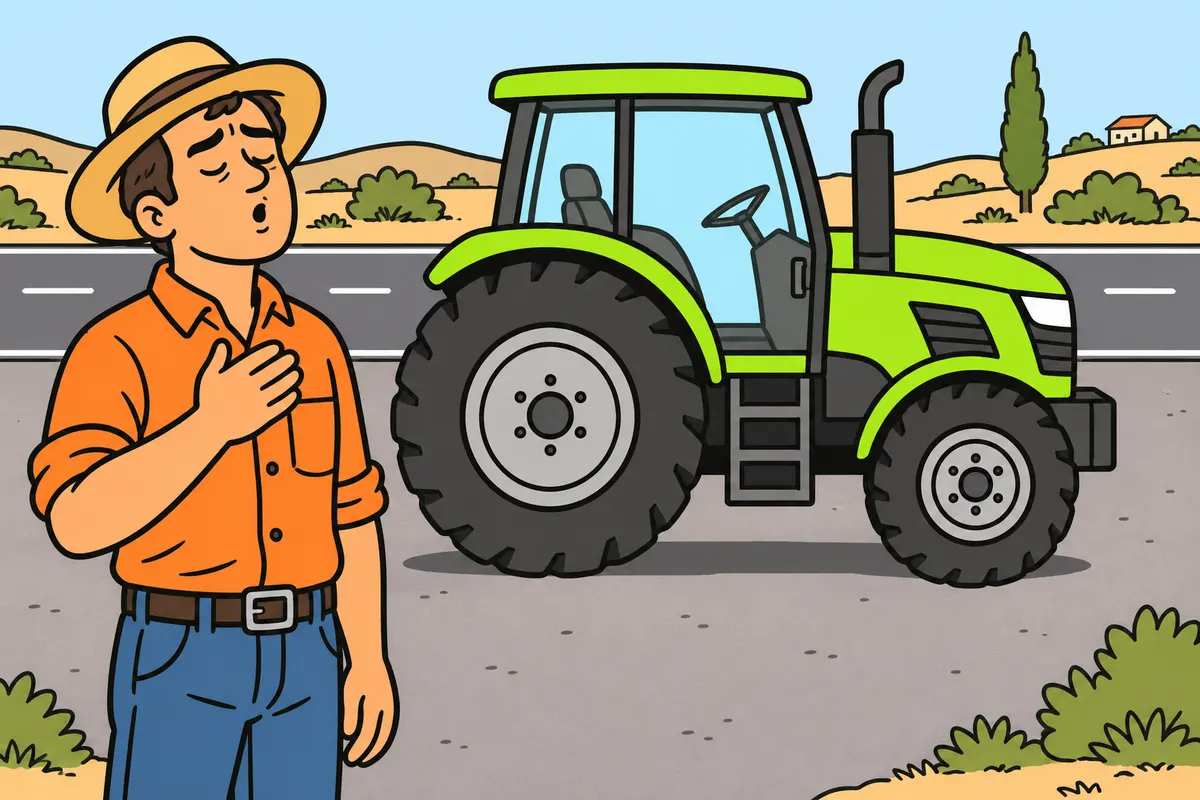
Check your emotions and regain your calm before driving.
Remember
- Strong happiness can also reduce your concentration.
- If you cannot pay attention, delay the journey or find another option.
- Rushing to finish work does not justify taking risks.
- Ask to end a conversation if it upsets you.
- Stop somewhere permitted and safe when needed.
- Ask a health professional about depression symptoms and treatment.
Exam trap: Wrong: depression always means permanent inability to drive. Right: your fitness needs an individual assessment.
Read the full explanation
- An argument, sad news, anxiety or intense happiness can occupy your thoughts and reduce your concentration. You must assess how you feel before starting, even if you are using your usual tractor and route. If you cannot pay enough attention, postpone the journey or find an alternative. [DGT, driver condition, topic 3](https://sede.dgt.gob.es/export/sites/dgt/.galleries/permisos-de-conducir/autoescuelas/TeoricaAbreviada_LecturaFacil_2023-12_Interactivo.pdf).
- Stress can encourage impatience, hostility, impulsiveness and hasty decisions. Pressure to finish a task or avoid delaying those behind you does not justify taking risks. Avoid reacting angrily to a horn or an overtaking manoeuvre: stay in control and focus on the traffic situation. [DGT, driver condition, topic 3](https://sede.dgt.gob.es/export/sites/dgt/.galleries/permisos-de-conducir/autoescuelas/TeoricaAbreviada_LecturaFacil_2023-12_Interactivo.pdf).
- If a conversation upsets you, ask for it to end and stop in a safe place where stopping is permitted when necessary. Regain your composure before continuing; do not try to resolve an argument while operating the tractor. Your passengers must avoid interfering and you must maintain constant attention. [RGC, art. 18.1](https://www.boe.es/buscar/act.php?id=BOE-A-2003-23514#a18).
- Depression can cause you to feel insecure or indecisive, and can cause fatigue, drowsiness and difficulty concentrating. Consult your healthcare professional about your symptoms and treatment, especially if your condition worsens. You are assessed individually; the diagnosis alone does not mean you are permanently unfit to drive. [DGT, driver condition, topic 3](https://sede.dgt.gob.es/export/sites/dgt/.galleries/permisos-de-conducir/autoescuelas/TeoricaAbreviada_LecturaFacil_2023-12_Interactivo.pdf).
Decide whether you can drive
Assess your condition before leaving the farm.
- Check how well rested you are, any symptoms of illness, your mood and the effects of medicines.
- If you have consumed alcohol or drugs, arrange an alternative and do not rely on how you feel or on calculations.
- Set up your route, phone and devices with the vehicle parked.
- If you cannot maintain control and attention, postpone the journey.
Take action if you feel fatigued or sleepy
Stop driving before you lose your ability to respond.
- Recognise yawning, blurred vision, clumsiness, irritability or lapses in attention.
- Find a safe place where you are allowed to stop the vehicle combination.
- Apply the measures in “Rest and journey preparation” if you feel tired or drowsy.
- Resume only when you have recovered your faculties; seek medical advice if drowsiness recurs.
Undergo an alcohol or drug test
Distinguish the standard test, the second measurement and medical verification.
- Comply with the officer’s request and take the required test.
- For alcohol, if a second breath measurement is required, check that at least 10 minutes elapse.
- Make any comments you consider appropriate and request medical verification if you wish.
- Comply with any immobilisation order and instructions concerning a possible replacement driver with the required entitlement.
Finished this module?
Mark it as read and you will see your progress on the theory list.