
Theory · D Licence - Bus · Module 3 of 18
Driving times and rest periods
You learn to calculate how long you can drive and when you must interrupt your journey or rest while driving a bus. You distinguish the general rules from passenger-transport exemptions and flexibilities, and work through examples involving working days, driver changes and compensation.
1Check whether your service falls within scope
Check which rules apply before calculating your times.
| Your journey outside the stated European area | AETR application by bus registration |
|---|---|
| Bus registered in the EU or an AETR contracting State | Apply the AETR to the whole journey |
| Bus registered in a third country outside the AETR | Apply the AETR to the part through the EU and contracting States |
Remember
- Check the exclusions for your service.
- Count empty journeys that belong to an operation within scope.
- Follow all limits at the same time.
- Check which agreement applies when travelling outside the European area.
- Do not automatically apply new European rules to the AETR.
Exam trap: Wrong: you can continue because weekly hours remain. Right: you must also follow break and rest rules.
Read the full explanation
- You must apply the rules on driving, breaks and rest to passenger transport in vehicles built or permanently adapted to carry more than nine people, including the driver, and intended for that purpose. [Regulation 561/2006, arts. 2, 3 and 4](https://www.boe.es/buscar/doc.php?id=DOUE-L-2006-80632).
- You must also count empty journeys by the bus that form part of a service within scope, such as taking the coach from the depot to pick up the group. [Regulation 561/2006, arts. 2, 3 and 4](https://www.boe.es/buscar/doc.php?id=DOUE-L-2006-80632).
- Regulation 561/2006 applies to transport within the European Union and between the EU, Switzerland and the European Economic Area, whatever the vehicle's registration plate. If your international journey partly takes place outside that area, the AETR applies to the whole journey when the bus is registered in the EU or in an AETR contracting state; if it is registered in a third state that is not a contracting state, the AETR applies to the part in the EU and contracting states. [Regulation 561/2006, art. 2.2 and 2.3](https://www.boe.es/buscar/doc.php?id=DOUE-L-2006-80632).
- The AETR shares the basic driving, break and rest limits in Regulation 561/2006, but you must apply its own provisions: amendments introduced by Regulations 2020/1054 and 2024/1258 do not automatically become part of the agreement. [AETR, arts. 6, 7, 8 and 9](https://www.boe.es/buscar/doc.php?id=BOE-A-2022-9631).
2Regular services of up to 50 kilometres
Your regular service is excluded if its route does not exceed 50 km.
| Your passenger service | Distance exclusion |
|---|---|
| Regular route up to 50 km | Yes, including exactly 50 km |
| Regular route of 51 km | No |
| Occasional (discrecional) excursion of 40 km | No |
Remember
- Check the whole route of your service.
- Do not add repeated trips together when checking this exclusion.
- If you mix excluded and covered services, record excluded driving as other work.
- If you only operate this excluded service, these rules do not require a tachograph.
Exam trap: Wrong: your short excursion is excluded. Right: this exclusion requires a regular service of up to 50 km.
Read the full explanation
- If you operate a regular passenger service with a route of no more than 50 km, that service is excluded from Regulation 561/2006. The limit includes exactly 50 km: a regular service covering 40 km may qualify for the exclusion, while one covering 51 km cannot qualify on this basis. [Regulation 561/2006, art. 3.a and art. 6.5](https://www.boe.es/buscar/doc.php?id=DOUE-L-2006-80632). If you operate only this excluded service, the obligation to install and use a tachograph under Regulation 165/2014 does not apply to you. [Regulation 165/2014, art. 3.1](https://www.boe.es/buscar/doc.php?id=DOUE-L-2014-80362).
- You must consider the route of the service, not just the section you drive or the kilometres you cover over your whole working day. Repeating a 40 km regular service several times does not turn its route into one of more than 50 km for the purposes of this exclusion. [Regulation 561/2006, art. 3.a and art. 6.5](https://www.boe.es/buscar/doc.php?id=DOUE-L-2006-80632).
- The exclusion may apply to a short regular interurban service; an occasional excursion of 40 km remains within scope despite its short distance. [Regulation 561/2006, art. 3.a and art. 6.5](https://www.boe.es/buscar/doc.php?id=DOUE-L-2006-80632).
- If you combine excluded commercial driving with services within scope, you must record the excluded driving as other work under the applicable activity-recording rules. [Regulation 561/2006, art. 3.a and art. 6.5](https://www.boe.es/buscar/doc.php?id=DOUE-L-2006-80632).
3Working time for mobile workers
Add driving and other tasks when checking your working time.
| Your activity | How you count it |
|---|---|
| Driving, cleaning or helping passengers | Actual work |
| Being available without working | Availability time; neither a break nor rest |
Remember
- As an employee, follow your collective agreement too.
- With agreed irregular working hours, calculate the average over four months.
- The national sectoral agreement can extend this to six months for legal reasons.
- Do not work more than six hours without a break.
- Count work for other employers too.
- Your total daily work cannot exceed twelve hours, including overtime.
Exam trap: Wrong: following driving limits is enough. Right: add other tasks and follow working-time limits too.
Read the full explanation
- If you drive as an employee, you must also comply with working-time rules and the applicable collective agreement, including on services excluded from Regulation 561/2006. For interurban transport, Article 11 refers to its limits on daily and weekly driving and daily and weekly rest. [RD 1561/1995, arts. 10 and 11](https://www.boe.es/buscar/act.php?id=BOE-A-1995-21346).
- Your total working day must not exceed 12 hours, including overtime; this rule applies to road transport by virtue of the reference in Article 10.1. [RD 1561/1995, arts. 8.2 and 10.1](https://www.boe.es/buscar/act.php?id=BOE-A-1995-21346#a8). If an agreed irregular working-time schedule applies, your actual working time must not exceed an average of 48 hours a week over four months or 60 hours in any one week. The national sectoral collective agreement may extend the averaging period to six months for objective, technical or organisational reasons; these limits are subject to ordinary working hours and required rest periods. [RD 1561/1995, art. 10 bis.1](https://www.boe.es/buscar/act.php?id=BOE-A-1995-21346#a10bis).
- You must add together driving and other actual work, such as looking after passengers or cleaning the coach, including work you do for other employers. [RD 1561/1995, arts. 8 and 10 bis.3](https://www.boe.es/buscar/act.php?id=BOE-A-1995-21346).
- You must not work for more than six consecutive hours without a break. If you work between six and nine hours, you must take a break of at least 30 minutes; if you work for more than nine hours, at least 45 minutes. You may split the break into periods of at least 15 minutes, subject to the legal exception for regular services of up to 50 km. [RD 1561/1995, art. 10 bis.4](https://www.boe.es/buscar/act.php?id=BOE-A-1995-21346#a10bis).
- If you do night work without having the legal status of a night worker, you must not work for more than 10 hours in each 24-hour period. Night workers are also subject to their specific rules; 10 hours of driving is not the same as 10 hours of work if you do other tasks. [RD 1561/1995, art. 10 bis.2, incorporated by RD 902/2007, sole art.2](https://www.boe.es/buscar/doc.php?id=BOE-A-2007-13823).
- You must count periods of availability separately: you are available without driving or doing other work, and the interval is neither a break nor rest. The general limit is an average of 20 hours a week over a month; the national sectoral collective agreement may extend the reference period to two months for the reasons allowed by law and set specific calculation criteria in the cases provided for. [RD 1561/1995, arts. 8.3 and 10.4 and 10.5](https://www.boe.es/buscar/act.php?id=BOE-A-1995-21346).
- In urban transport, your working day may start or end at the workplace or at a stop on the service. [RD 1561/1995, art. 12, as amended by RD 902/2007, sole art.4](https://www.boe.es/buscar/doc.php?id=BOE-A-2007-13823).
4Example: coach driving and working time
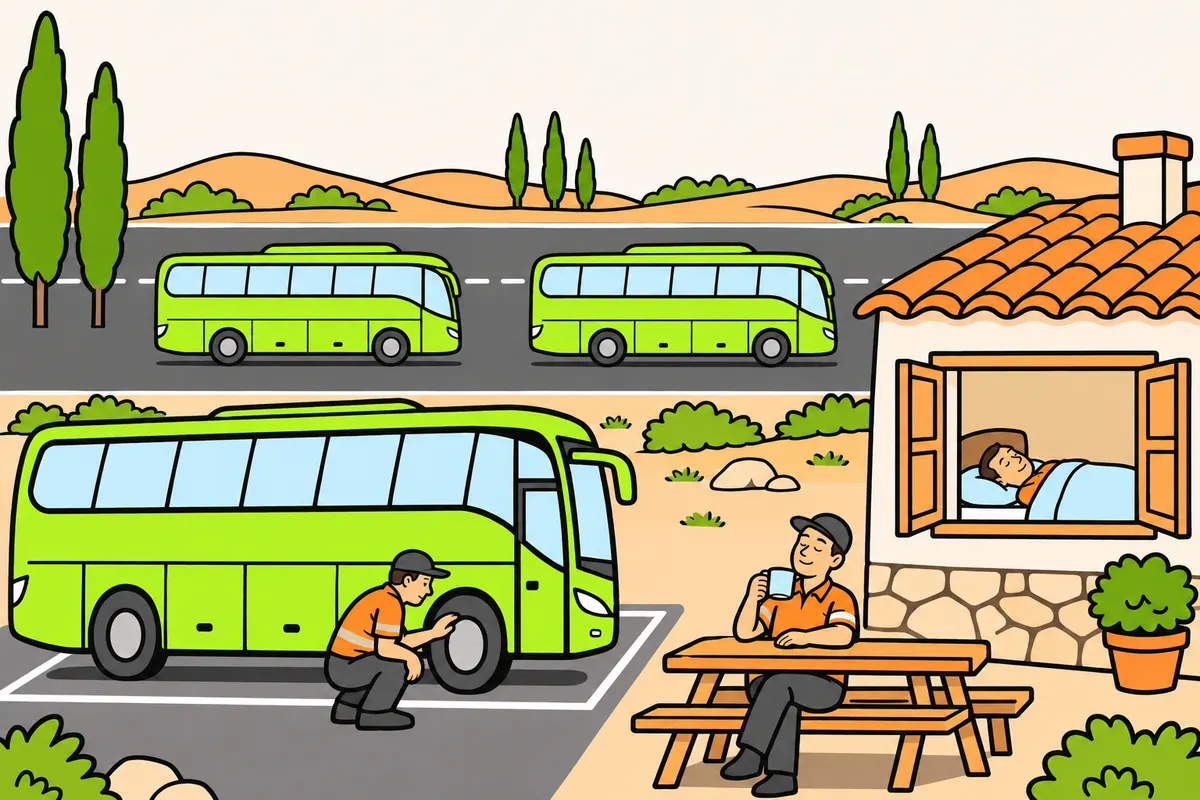
In this example, you work more hours than you drive.
| Your activity in this example | Time |
|---|---|
| You prepare the coach | 06:00 to 07:00 |
| You drive | 07:00 to 11:30 |
| You take a break without duties | 11:30 to 12:15 |
| You drive | 12:15 to 16:45 |
| You rest for eleven hours | 16:45 to 03:45 |
Remember
- Count preparing the coach as work.
- Do no tasks during your break.
- Repeating 50-hour working weeks exceeds the stated working-time average.
- Check driving, work and rest separately.
- Your ten working hours stay within the daily maximum of twelve hours.
Exam trap: Wrong: your working hours equal your driving hours. Right: you must add preparation time.
Read the full explanation
- If your rest ends at 06:00, you can prepare the coach from 06:00 to 07:00, drive until 11:30, take a break free from work duties until 12:15 and drive until 16:45. You accumulate nine hours of driving, 10 hours of work and a 45-minute break; no period of work exceeds six hours, and the 10 hours of work are within the daily maximum of 12 hours, including overtime. [RD 1561/1995, arts. 8.2 and 10.1](https://www.boe.es/buscar/act.php?id=BOE-A-1995-21346#a8). If you then begin 11 hours of rest, you complete it at 03:45, within the 24-hour period. [Regulation 561/2006, arts. 6, 7 and 8](https://www.boe.es/buscar/doc.php?id=DOUE-L-2006-80632); [RD 1561/1995, art. 10 bis.4, incorporated by RD 902/2007](https://www.boe.es/buscar/doc.php?id=BOE-A-2007-13823).
- If you repeat this schedule for five days, you accumulate 45 hours of driving and 50 hours of actual work. You must comply both with the 90-hour driving limit for each pair of weeks and with the average working-time limit of 48 hours over four months: repeating 50-hour working weeks throughout that period exceeds the average, even though each week is below 60 hours. [Regulation 561/2006, art. 6](https://www.boe.es/buscar/doc.php?id=DOUE-L-2006-80632); [RD 1561/1995, art. 10 bis.1, incorporated by RD 902/2007](https://www.boe.es/buscar/doc.php?id=BOE-A-2007-13823).
5What counts as driving and other work
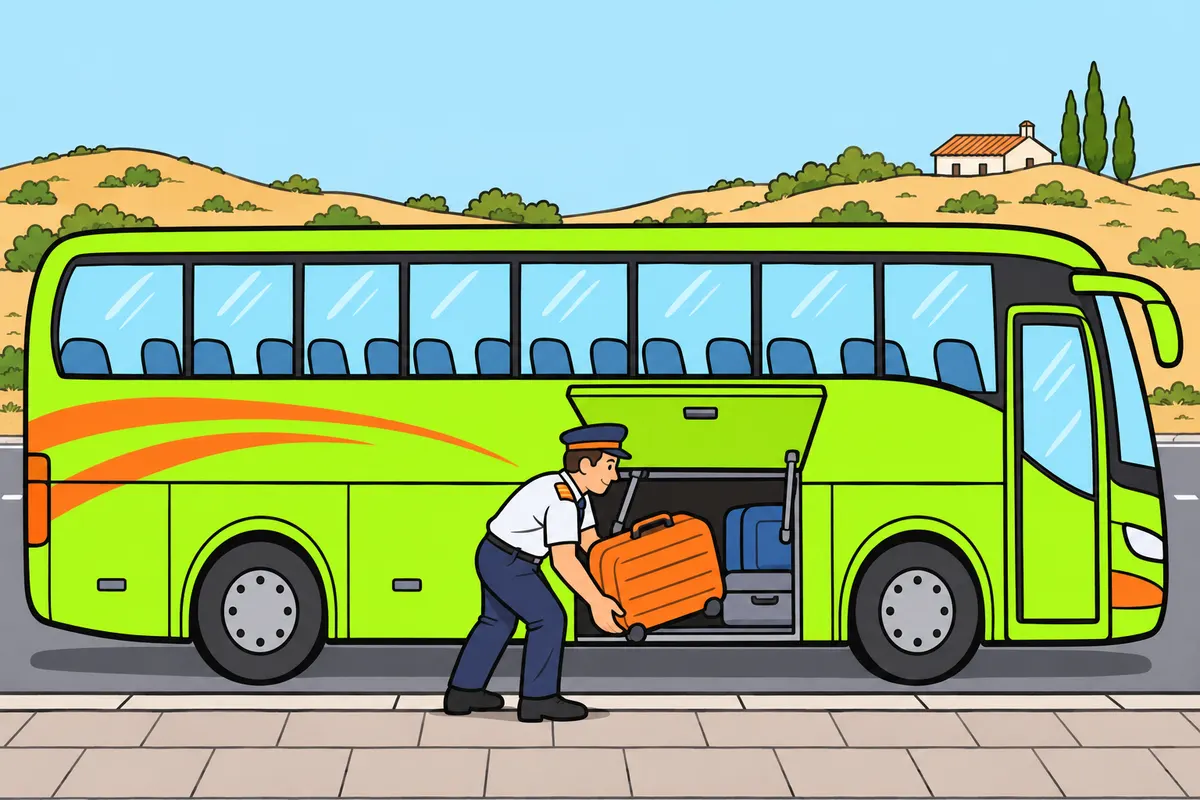
Your times stay with you when you change vehicle, employer or country.
| Your activity | How you count it |
|---|---|
| You drive | Driving |
| You clean or handle luggage | Other work; not a break |
Remember
- Add all your driving, including driving in other countries.
- Count daily driving between rests, rather than between midnights.
- Record cleaning and handling luggage as work.
- Count work for another employer too.
Exam trap: Wrong: changing buses clears your hours. Right: your recorded times still count.
Read the full explanation
- You must add together recorded driving even if you change coach or employer during the service: the limits apply to your personal activity. [Regulation 561/2006, arts. 4 and 6](https://www.boe.es/buscar/doc.php?id=DOUE-L-2006-80632).
- Your daily driving is the total accumulated between the end of one daily rest and the start of the next, or between a daily rest and a weekly rest. It is not necessarily the driving between two midnights: a night service may belong to the same daily period even if it crosses midnight. [Regulation 561/2006, arts. 4 and 6](https://www.boe.es/buscar/doc.php?id=DOUE-L-2006-80632).
- Helping with luggage, cleaning the coach or doing work-related tasks during a stop is not time devoted exclusively to recovery. Work for another employer, even outside transport, is also relevant when you record your activity. [Regulation 561/2006, arts. 4 and 6](https://www.boe.es/buscar/doc.php?id=DOUE-L-2006-80632).
- You must include all relevant driving in your daily and weekly totals, including driving in third countries. [Regulation 561/2006, arts. 4 and 6](https://www.boe.es/buscar/doc.php?id=DOUE-L-2006-80632).
6Break, rest and week are different concepts
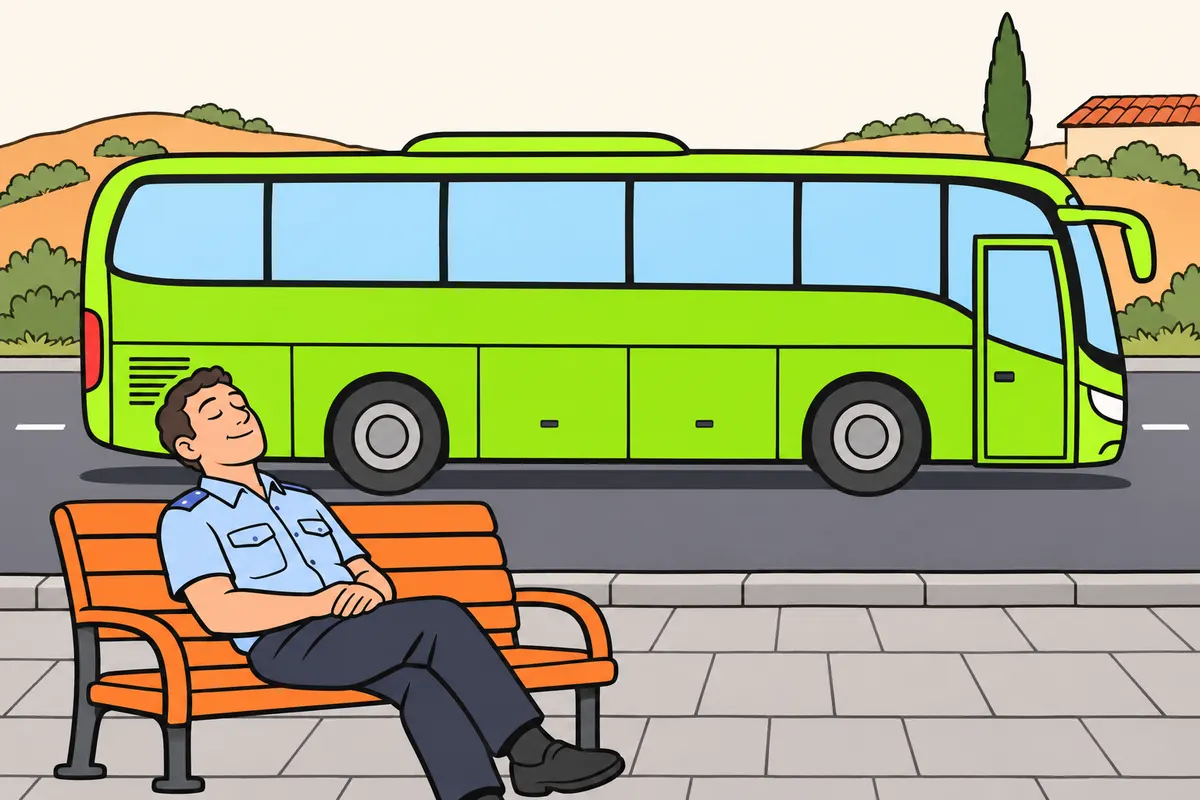
Distinguish your breaks, your rests and the week used to calculate limits.
| Concept | What you check |
|---|---|
| Break | You spend the time only recovering |
| Rest | You are free to use your time |
| Week | Monday to Sunday |
Remember
- During a break, do not drive or do other work.
- During rest, you must be free to use your time.
- Count the week from Monday to Sunday.
- Count the weekly rest deadline from the end of your previous weekly rest.
Exam trap: Wrong: your week starts when your trip begins. Right: it starts on Monday at 00:00.
Read the full explanation
- During a break, you devote the time exclusively to resting, without driving or doing other work. A stop by the coach counts as a break if it meets these conditions and the duration required by the applicable rules. [Regulation 561/2006, art. 4](https://www.boe.es/buscar/doc.php?id=DOUE-L-2006-80632).
- During a rest period, you can use your time freely and without interruption, subject to the exceptions expressly provided for. Looking after the group during its visit counts as work. [Regulation 561/2006, art. 4](https://www.boe.es/buscar/doc.php?id=DOUE-L-2006-80632).
- The regulatory week starts on Monday at 00:00 and ends on Sunday at 24:00. [Regulation 561/2006, art. 4](https://www.boe.es/buscar/doc.php?id=DOUE-L-2006-80632).
- Rolling periods start when a rest period ends: to work out when your next weekly rest is due, you count from the end of the previous one, even if it ends halfway through the week. [Regulation 561/2006, art. 4](https://www.boe.es/buscar/doc.php?id=DOUE-L-2006-80632).
7Daily driving: nine hours and two extensions
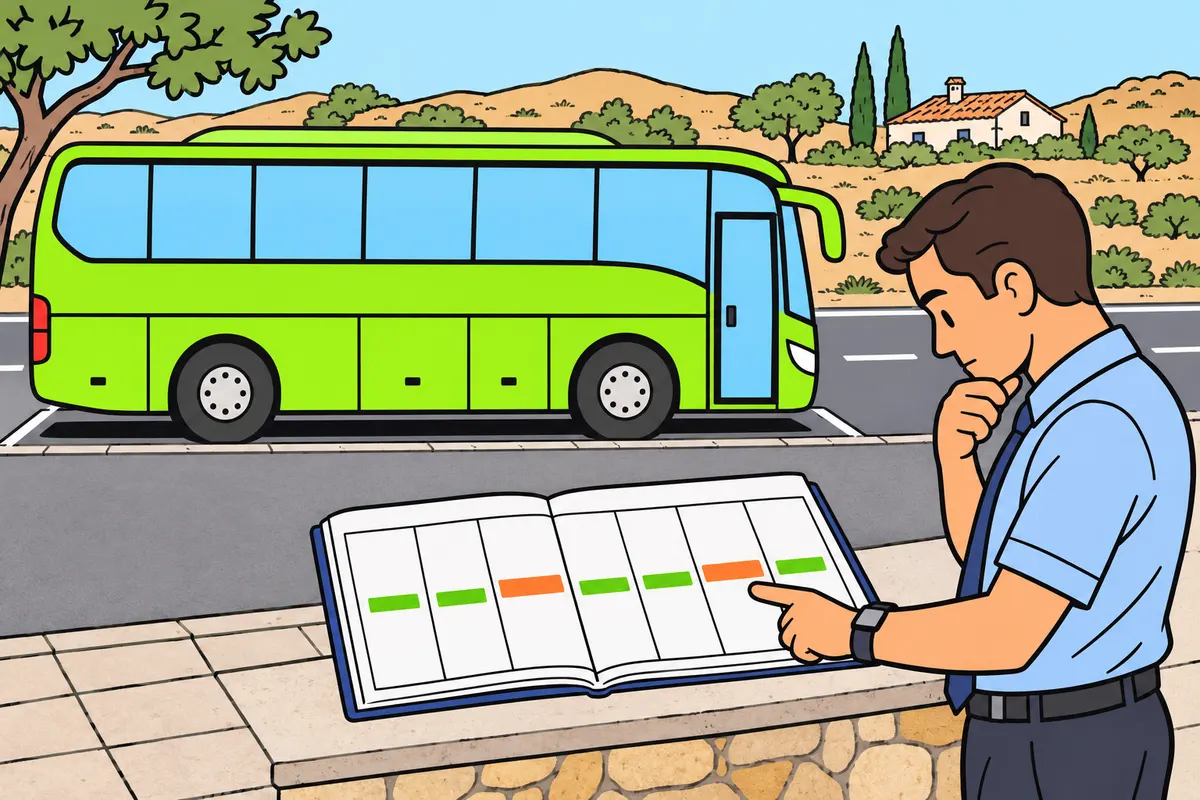
You can drive nine hours daily, extending to ten only twice a week.
| Your daily driving | How you count it |
|---|---|
| Up to nine hours | General limit |
| Over nine, up to ten hours | You use a weekly extension |
Remember
- Count an extension whenever you exceed nine hours.
- Do not treat extensions as spare hours to spread across days.
- You must also keep within the weekly maximum.
- Follow your break and rest rules too.
Exam trap: Wrong: nine and a half hours uses no extension. Right: you have already exceeded nine hours.
Read the full explanation
- As a general rule, you may drive for a maximum of nine hours a day. You may extend this to a maximum of ten hours no more than twice a week. [Regulation 561/2006, art. 6.1](https://www.boe.es/buscar/doc.php?id=DOUE-L-2006-80632).
- A working day with nine and a half hours of driving uses one of those two allowances, even if you do not reach ten hours. [Regulation 561/2006, art. 6.1](https://www.boe.es/buscar/doc.php?id=DOUE-L-2006-80632).
- If you complete three working days of nine hours and two of ten hours, you accumulate 47 hours of driving. [Regulation 561/2006, art. 6.1](https://www.boe.es/buscar/doc.php?id=DOUE-L-2006-80632).
8Weekly driving and two consecutive weeks
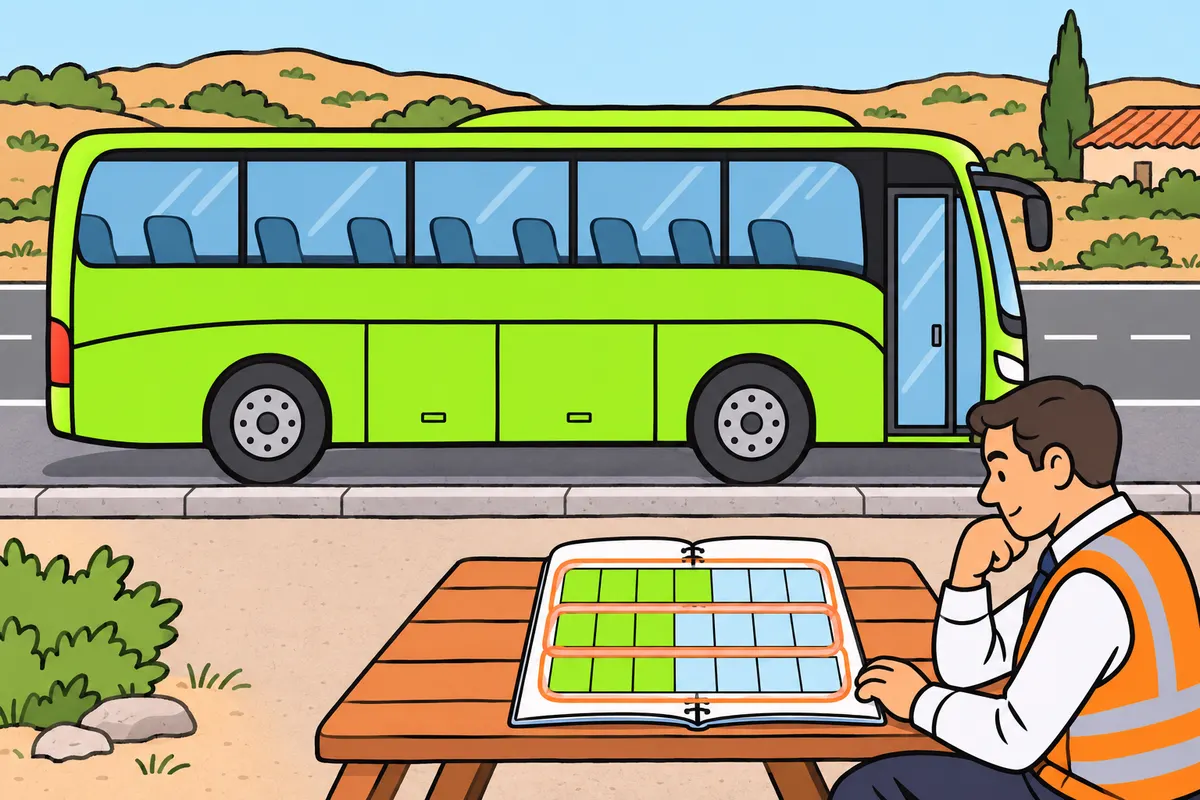
Follow the weekly maximum and the limit for every pair of consecutive weeks.
| You drive this week | Next maximum under these limits |
|---|---|
| 56 h | 34 h |
| 50 h | 40 h |
| 32 h | 56 h |
Remember
- Check every pair of adjacent weeks.
- After driving 56 hours, you have at most 34 for the next week.
- Also check daily limits, working time and rest.
Exam trap: Wrong: after 32 hours, you can drive 58 next week. Right: the weekly maximum remains 56.
Read the full explanation
- You must not exceed 56 hours of driving in one week. [Regulation 561/2006, arts. 6.2 and 6.3](https://www.boe.es/buscar/doc.php?id=DOUE-L-2006-80632).
- You must not exceed 90 hours of driving in two consecutive weeks. The limit applies to every pair of consecutive weeks, including overlapping pairs. [Regulation 561/2006, arts. 6.2 and 6.3](https://www.boe.es/buscar/doc.php?id=DOUE-L-2006-80632).
- If you drive for 56 hours one week, you have a maximum of 34 hours left for the next: 90 − 56 = 34. If you accumulate 50 hours, the maximum for the following week under this restriction is 40. [Regulation 561/2006, arts. 6.2 and 6.3](https://www.boe.es/buscar/doc.php?id=DOUE-L-2006-80632).
- If you have driven for 32 hours, 90 − 32 gives 58, but the following week has its own maximum of 56. Therefore, the theoretical allowance for the following week is the lower of 56 and the result of subtracting the previous hours from 90; in this example, the two weeks would total 88 hours. [Regulation 561/2006, arts. 6.2 and 6.3](https://www.boe.es/buscar/doc.php?id=DOUE-L-2006-80632).
- If you drive for 40 hours in the first week and 50 in the second, you may drive for a maximum of 40 in the third week because of the second-and-third-week pair. [Regulation 561/2006, arts. 6.2 and 6.3](https://www.boe.es/buscar/doc.php?id=DOUE-L-2006-80632).
9A 45-minute break after four and a half hours
After four and a half driving hours, take a break or start valid rest.
Remember
- Add driving time even when you do other tasks between driving periods.
- You can start a valid rest directly.
- A break does not clear your daily or weekly driving hours.
Exam trap: Wrong: handling luggage resets your driving time. Right: driving keeps adding up until a valid break or rest.
Read the full explanation
- After accumulating four and a half hours of driving, you must take an uninterrupted break of at least 45 minutes, unless you begin a rest period. The limit applies to accumulated driving since a valid break or a rest period, not only to time spent driving without stopping the bus. [Regulation 561/2006, art. 7](https://www.boe.es/buscar/doc.php?id=DOUE-L-2006-80632).
- If you drive for two hours, work with the luggage for a while and drive for another two and a half hours, you have reached four and a half hours of driving. The work in between does not reset the counter or replace the 45-minute recovery break. [Regulation 561/2006, art. 7](https://www.boe.es/buscar/doc.php?id=DOUE-L-2006-80632).
- A valid break lets you begin another driving period, but it does not remove the daily or weekly hours you have accumulated. After four and a half hours, a 45-minute break and another four and a half hours, you have driven for nine hours that day. [Regulation 561/2006, art. 7](https://www.boe.es/buscar/doc.php?id=DOUE-L-2006-80632).
10General split-break rule: first 15, then 30
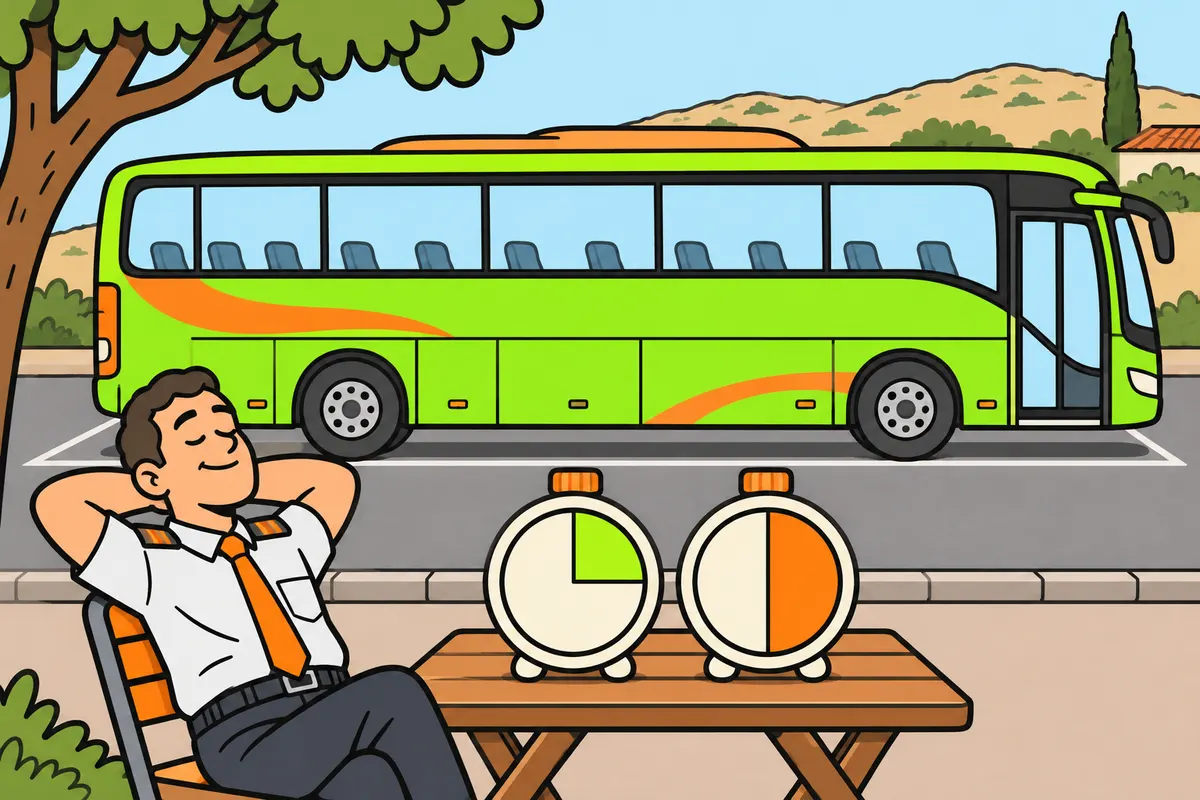
Under general rules, split your break into at least 15 minutes, then 30.
| Your breaks under general rules | Result |
|---|---|
| 15 + 30 min | Valid if you respect the driving limit |
| 30 + 15 min | Do not complete the required break |
Remember
- Follow this order under the general rules.
- Do not exceed four and a half driving hours before completing both breaks.
- The first break alone does not restart your driving period.
Exam trap: Wrong: you take 30 then 15 under general rules. Right: the second break must last at least 30 minutes.
Read the full explanation
- You may replace the 45-minute break with a first break of at least 15 minutes and a second break of at least 30 minutes, in that order. You must schedule them so that you do not exceed four and a half hours of driving before completing a valid split break. [Regulation 561/2006, art. 7](https://www.boe.es/buscar/doc.php?id=DOUE-L-2006-80632).
- One valid example is to drive for two hours, take a 15-minute break, drive for two and a half hours and take a 30-minute break. You complete the split break at the end of the second part. [Regulation 561/2006, art. 7](https://www.boe.es/buscar/doc.php?id=DOUE-L-2006-80632).
- Under the general rules, two breaks of 30 and 15 minutes, in that order, do not complete the regulatory split break. If the first break lasts 30 minutes, it may count as the first part because it exceeds 15 minutes, but the second must last at least 30 minutes. [Regulation 561/2006, art. 7](https://www.boe.es/buscar/doc.php?id=DOUE-L-2006-80632).
11Flexible breaks for occasional services
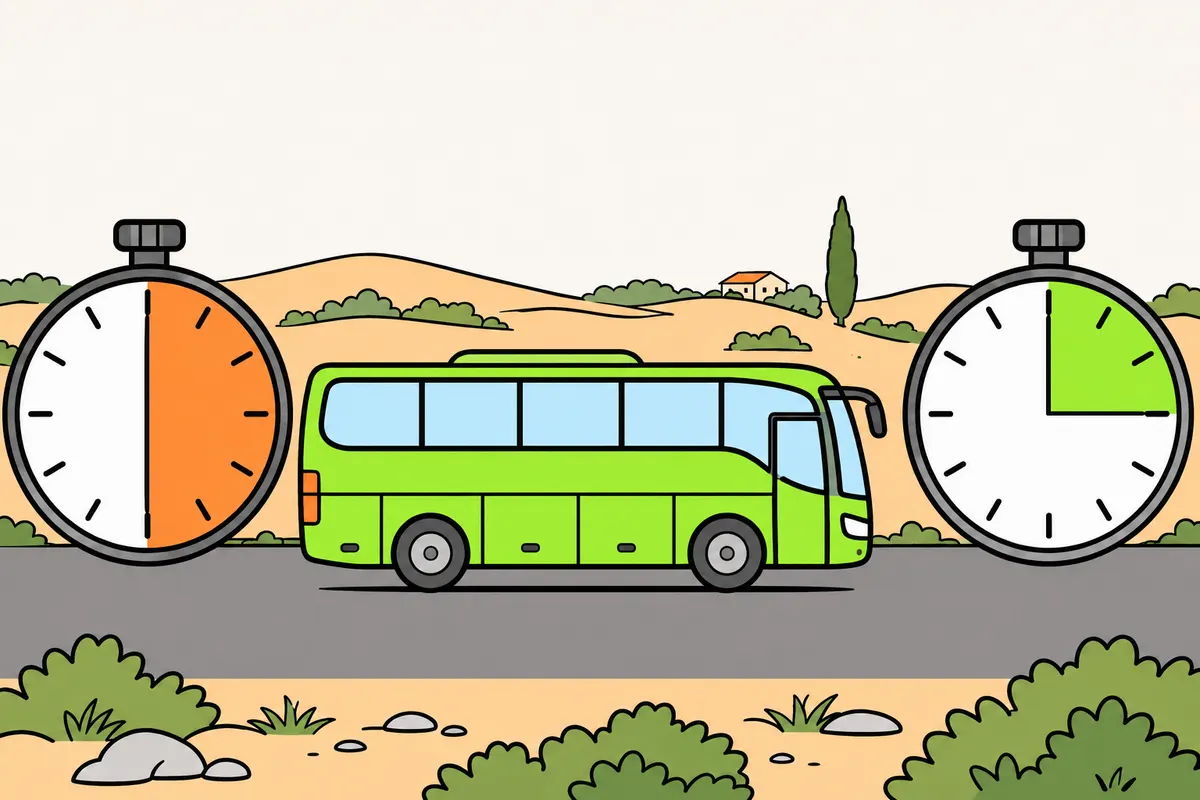
On occasional services, you can split your break differently while keeping the minimum times.
| Your breaks on occasional services | Result |
|---|---|
| 30 + 15 min | Valid with the service conditions |
| 20 + 25 min | Valid with the service conditions |
| 15 + 15 min | Too short |
Remember
- Split your break into two parts of at least 15 minutes each.
- Take at least 30 minutes in total.
- You can use this on domestic and international occasional services.
- Check your service type and justify using this option.
Exam trap: Wrong: you take only 15 + 15 on an occasional service. Right: you need at least 45 minutes altogether.
Read the full explanation
- If you provide an occasional passenger service, you may also divide the compulsory break into two parts of at least 15 minutes each, provided that they total at least 45 minutes. [Regulation 561/2006, art. 7, as amended by 2024/1258](https://www.boe.es/buscar/doc.php?id=DOUE-L-2024-80636).
- Under this option, you may take breaks of 30 + 15, 20 + 25 or 25 + 20 minutes; 15 + 15 adds up to only 30 minutes. [Regulation 561/2006, art. 7, as amended by 2024/1258](https://www.boe.es/buscar/doc.php?id=DOUE-L-2024-80636).
- You may use this split-break rule for both national and international occasional services. [Regulation 561/2006, arts. 4.n bis and 7, third paragraph, as amended by 2024/1258](https://www.boe.es/buscar/doc.php?id=DOUE-L-2024-80636).
12Regular and reduced daily rest
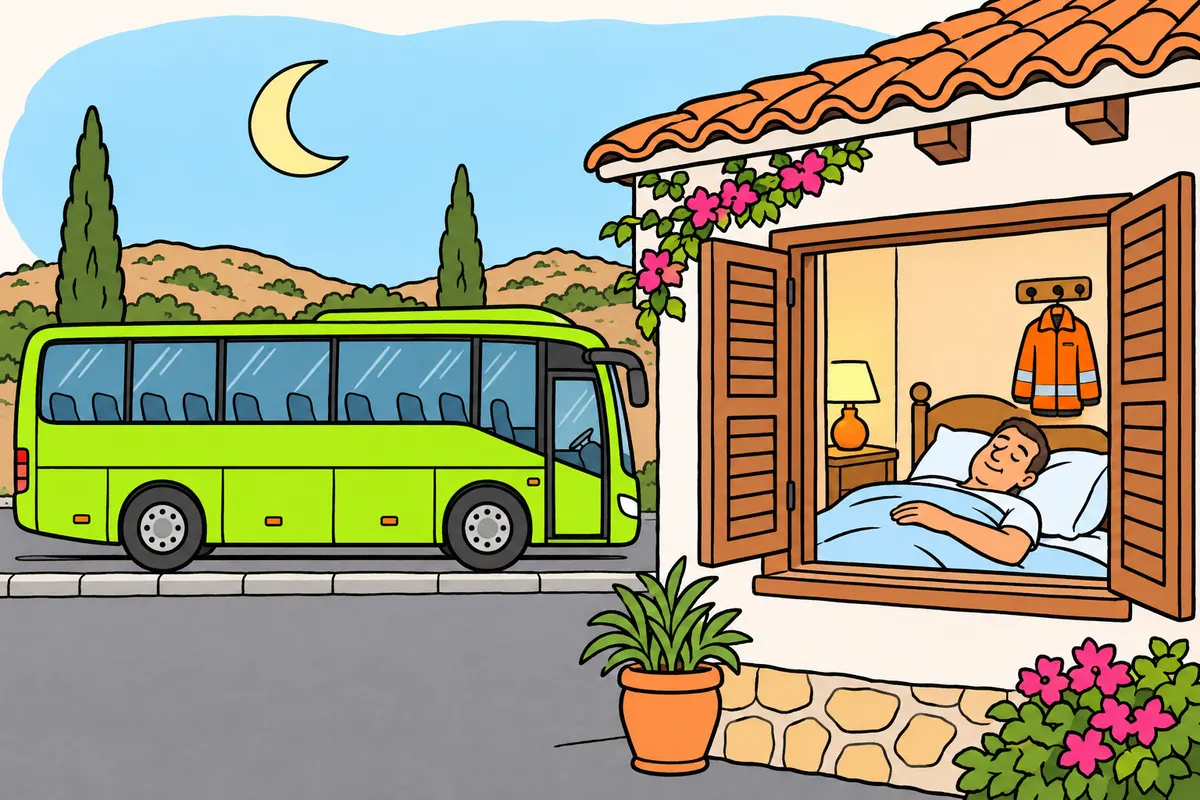
Distinguish regular and reduced daily rest, counting reductions between weekly rests.
| Your daily rest | Minimum duration |
|---|---|
| Regular, continuous | eleven hours |
| Regular, split | three hours, then nine |
| Reduced | nine hours, but less than eleven |
Remember
- For split rest, take three hours first, then nine.
- Reduced rest lasts less than eleven hours.
- Count reductions between weekly rests, even when the calendar week changes.
- You do not need to make up daily rest reductions.
- Extending driving does not automatically allow you to reduce rest.
Exam trap: Wrong: you count three plus nine as reduced rest. Right: it is regular rest totalling twelve hours.
Read the full explanation
- Your regular daily rest taken in one period must last at least 11 uninterrupted hours. [Regulation 561/2006, arts. 4.g and 8](https://www.boe.es/buscar/doc.php?id=DOUE-L-2006-80632).
- You may split your regular daily rest into two periods: first at least three uninterrupted hours, then at least nine hours, in that order. The minimum total for split rest is 12 hours. [Regulation 561/2006, arts. 4.g and 8](https://www.boe.es/buscar/doc.php?id=DOUE-L-2006-80632).
- You may take reduced daily rest of at least nine hours and less than 11 hours. A continuous period of ten hours also counts as reduced rest. [Regulation 561/2006, arts. 4.g and 8.4](https://www.boe.es/buscar/doc.php?id=DOUE-L-2006-80632).
- You may take a maximum of three reduced daily rest periods between two weekly rest periods, even if that interval includes a Sunday. [Regulation 561/2006, arts. 4.g and 8.4](https://www.boe.es/buscar/doc.php?id=DOUE-L-2006-80632).
- The legal reduction of daily rest does not require compensation time. [Regulation 561/2006, art. 8.4](https://www.boe.es/buscar/doc.php?id=DOUE-L-2006-80632).
- The extension of daily driving and the reduction of rest have separate conditions: using one does not authorise you to use the other. [Regulation 561/2006, arts. 4.g and 8.4](https://www.boe.es/buscar/doc.php?id=DOUE-L-2006-80632).
13Complete rest within its deadline

You must finish daily rest within its deadline, rather than just start it.
| If your rest ends at 06:00 | You must start your next rest by |
|---|---|
| Eleven-hour continuous regular rest | 19:00 |
| Permitted nine-hour reduced rest | 21:00 |
Remember
- Count from the end of your previous daily or weekly rest.
- Allow time for the full minimum rest within the deadline.
- The time between rests includes breaks and other work.
- Do not confuse this with permitted driving time.
Exam trap: Wrong: you start daily rest when 24 hours end. Right: you must complete it within that time.
Read the full explanation
- As a general rule, you must complete a new daily rest within the 24 hours following the end of your previous daily or weekly rest. [Regulation 561/2006, art. 8.2, 8.3 and 8.5](https://www.boe.es/buscar/doc.php?id=DOUE-L-2006-80632).
- If you finish a rest at 06:00 and need eleven hours of uninterrupted regular daily rest, you must start it by 19:00 at the latest to complete it by 06:00 the next day. This thirteen-hour interval includes driving, breaks and other work; it does not mean that you are allowed to drive for thirteen hours. [Regulation 561/2006, art. 8.2, 8.3 and 8.5](https://www.boe.es/buscar/doc.php?id=DOUE-L-2006-80632).
- If you can take a reduced rest of nine hours, in the same example you must start it by 21:00 at the latest to complete it by 06:00 the next day. [Regulation 561/2006, art. 8.2, 8.3 and 8.5](https://www.boe.es/buscar/doc.php?id=DOUE-L-2006-80632).
- You can extend a daily rest so that it becomes a regular or reduced weekly rest. By doing so, you meet both the deadline for completing daily rest and the deadline for starting weekly rest, as well as its duration requirements. [Regulation 561/2006, art. 8.2, 8.3 and 8.5](https://www.boe.es/buscar/doc.php?id=DOUE-L-2006-80632).
14Daily rest within 25 hours on occasional services

On certain long occasional services, you can complete daily rest within 25 hours.
| Your single occasional service | Uses of the 25-hour deadline |
|---|---|
| At least six consecutive 24-hour periods | Once, with all conditions met |
| At least eight consecutive 24-hour periods | Twice, with all conditions met |
Remember
- You must be operating a single occasional service.
- Protect road safety and working conditions.
- Keep the required rest duration and working-time limits.
- This exception alone does not postpone weekly rest.
Exam trap: Wrong: you drive seven and a half hours and use this exception. Right: you must not exceed seven hours.
Read the full explanation
- On a single occasional passenger service lasting at least six consecutive 24-hour periods, you can use the option once to take daily rest within 25 hours of the end of your previous daily or weekly rest. You must maintain road safety and good working conditions. [Regulation 561/2006, art. 8.2 bis, as amended by 2024/1258](https://www.boe.es/buscar/doc.php?id=DOUE-L-2024-80636).
- You can use this option only if your total accumulated driving that day does not exceed seven hours. [Regulation 561/2006, art. 8.2 bis, as amended by 2024/1258](https://www.boe.es/buscar/doc.php?id=DOUE-L-2024-80636).
- If the single occasional service lasts at least eight consecutive 24-hour periods, you can use the exception twice, subject to the same conditions. [Regulation 561/2006, art. 8.2 bis, as amended by 2024/1258](https://www.boe.es/buscar/doc.php?id=DOUE-L-2024-80636).
- You must still take the applicable rest duration. The 25-hour window also does not allow you to exceed maximum working time or, by itself, postpone the mandatory start of weekly rest. [Regulation 561/2006, art. 8.2 bis, as amended by 2024/1258](https://www.boe.es/buscar/doc.php?id=DOUE-L-2024-80636).
15Weekly rest: 45 hours and reduction to 24

Start weekly rest on time and distinguish regular rest from reduced rest.
| Your weekly rest | Duration |
|---|---|
| Regular | At least 45 h |
| Reduced | At least 24 h, but less than 45 h |
Remember
- Count the deadline from the end of your previous weekly rest.
- Over two consecutive weeks, take two regular rests or one regular and one reduced.
- Reduced rest requires you to meet the legal conditions.
- If your rest crosses two weeks, count it towards only one.
Exam trap: Wrong: a long rest corrects a late start. Right: you must also meet the deadline for starting.
Read the full explanation
- Your regular weekly rest lasts at least 45 hours. Reduced weekly rest lasts less than 45 hours and, subject to the legal conditions, at least 24 consecutive hours; 36 hours is reduced rest, not an alternative duration for regular rest. [Regulation 561/2006, arts. 4.h and 8](https://www.boe.es/buscar/doc.php?id=DOUE-L-2006-80632).
- Under the general passenger transport rules, over two consecutive weeks you must take at least two regular weekly rests, or one regular and one reduced weekly rest. [Regulation 561/2006, arts. 4.h and 8](https://www.boe.es/buscar/doc.php?id=DOUE-L-2006-80632).
- You must start weekly rest before six consecutive 24-hour periods have elapsed since the end of your previous weekly rest. [Regulation 561/2006, arts. 4.h and 8](https://www.boe.es/buscar/doc.php?id=DOUE-L-2006-80632).
- If your previous weekly rest ends at 06:00 on Monday, you must start the next one no later than Sunday at 06:00. [Regulation 561/2006, art. 8.6, as amended by 2020/1054](https://www.boe.es/buscar/doc.php?id=DOUE-L-2020-81223).
- If a weekly rest spans two weeks, you can count it towards one of them, but not both. [Regulation 561/2006, arts. 4.h and 8](https://www.boe.es/buscar/doc.php?id=DOUE-L-2006-80632).
16Compensation for reduced weekly rest
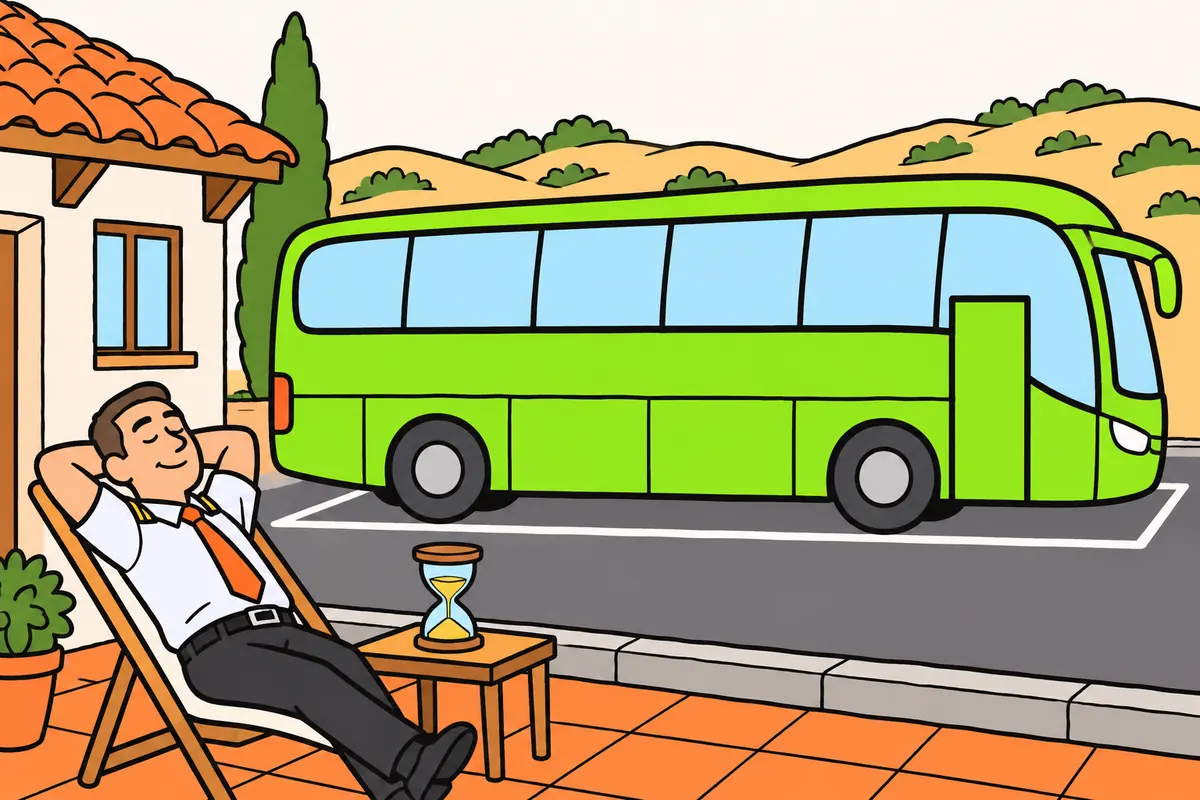
Make up the hours removed from weekly rest in one continuous block.
| Your reduced weekly rest | Extra rest you must add |
|---|---|
| 24 h | 21 h |
| 36 h | nine hours |
Remember
- Subtract your reduced rest from 45 hours.
- Make up the reduction before the third following week ends.
- Attach all compensation to another rest of at least nine hours.
- Do not apply the international goods transport exception to your coach.
Exam trap: Wrong: you split 21 hours owed across several rests. Right: you must make up that time in one block.
Read the full explanation
- You must compensate for reduced weekly rest with an equivalent period taken all at once before the end of the third week following the week in which you reduced your rest. To calculate the amount owed, subtract the duration of the reduced rest you actually took from 45 hours. [Regulation 561/2006, art. 8.6 ter, as amended by 2020/1054](https://www.boe.es/buscar/doc.php?id=DOUE-L-2020-81223).
- If you take 24 hours of weekly rest, you must make up 21 hours; if you take 36 hours, you must make up nine. [Regulation 561/2006, art. 8.6 ter, as amended by 2020/1054](https://www.boe.es/buscar/doc.php?id=DOUE-L-2020-81223).
- A reduction taken in week 1 must be made up before the end of week 4: the following weeks are weeks 2, 3 and 4. [Regulation 561/2006, art. 8.6 ter, as amended by 2020/1054](https://www.boe.es/buscar/doc.php?id=DOUE-L-2020-81223).
- For your coach, the general sequence of weekly rests applies, or a passenger transport or national exception whose conditions are all met; the option of taking two consecutive reduced rests applies only to international freight transport. [Regulation 561/2006, art. 8.6, as amended by 2020/1054](https://www.boe.es/buscar/doc.php?id=DOUE-L-2020-81223).
- You must attach weekly rest compensation to another rest period of at least nine hours. [Regulation 561/2006, art. 8.7](https://www.boe.es/buscar/doc.php?id=DOUE-L-2006-80632).
- If you owe 21 hours and attach them to a regular weekly rest of 45 hours, you need a 66-hour block. [Regulation 561/2006, art. 8.7](https://www.boe.es/buscar/doc.php?id=DOUE-L-2006-80632).
- You can attach those 21 hours to a nine-hour rest to form a 30-hour block, provided you meet your other obligations. [Regulation 561/2006, art. 8.7](https://www.boe.es/buscar/doc.php?id=DOUE-L-2006-80632).
17Multi-manning and breaks between driving stints
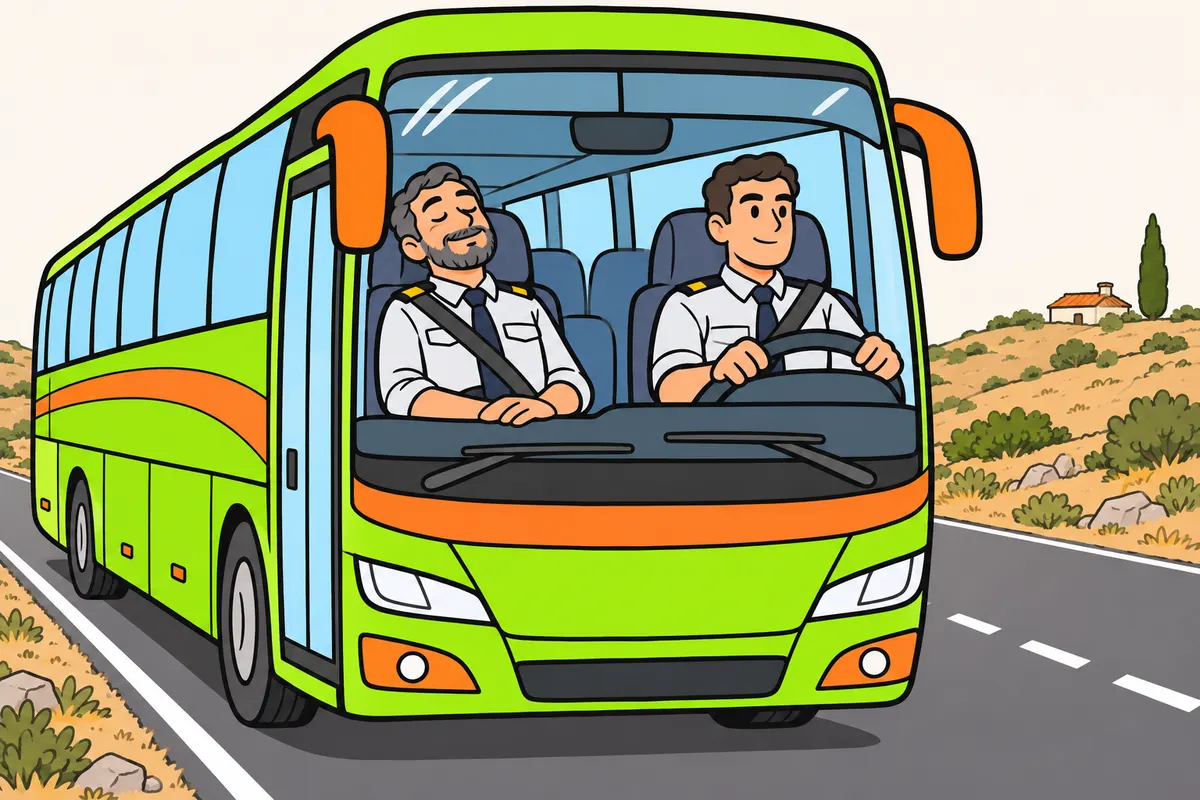
When sharing driving, keep your personal limits and take moving breaks only without duties.
| Your situation when sharing driving | What you can count |
|---|---|
| Your colleague drives; you have no duties | A 45-minute break |
| You help your colleague or attend to passengers | Not a valid break |
Remember
- At least two drivers must take part in driving.
- Your colleague can be absent during the first hour, but must be present afterwards.
- Complete your daily rest within the deadline.
- Keep your own driving totals.
Exam trap: Wrong: you count all time between driving stints as daily rest. Right: a moving break without duties is not daily rest.
Read the full explanation
- Multi-manning applies when there are at least two drivers in the vehicle who take turns driving between the relevant rest periods. The other driver's presence is optional during the first hour, but mandatory for the rest of the multi-manning period. [Regulation 561/2006, arts. 4.o and 8.5](https://www.boe.es/buscar/doc.php?id=DOUE-L-2006-80632).
- Under this arrangement, you must complete a new daily rest of at least nine hours within the 30 hours following the end of your previous daily or weekly rest. [Regulation 561/2006, arts. 4.o and 8.5](https://www.boe.es/buscar/doc.php?id=DOUE-L-2006-80632).
- If you finish your rest at 06:00 on Monday, the window ends at 12:00 on Tuesday. To complete nine hours of rest within that window, you must start it by 03:00 on Tuesday at the latest. [Regulation 561/2006, arts. 4.o and 8.5](https://www.boe.es/buscar/doc.php?id=DOUE-L-2006-80632).
- When organising driver changes, each driver keeps their own accumulated totals: if you have reached your daily limit, your colleague can continue if they still have driving time available, provided they meet their break and rest requirements. [Regulation 561/2006, arts. 4.o and 8.5](https://www.boe.es/buscar/doc.php?id=DOUE-L-2006-80632).
- If you are part of a multi-manning crew, you can take a 45-minute break in the vehicle while the other driver is driving, provided you do not assist them. [Regulation 561/2006, art. 7, as amended by 2020/1054](https://www.boe.es/buscar/doc.php?id=DOUE-L-2020-81223).
- If you spend part of the driving stint actively guiding your colleague or attending to the group, that interval counts as other work. A break while the vehicle is moving requires a period free of those tasks. [Regulation 561/2006, art. 7, as amended by 2020/1054](https://www.boe.es/buscar/doc.php?id=DOUE-L-2020-81223).
- Availability while the vehicle is moving is counted separately from daily rest. [Regulation 561/2006, art. 7, as amended by 2020/1054](https://www.boe.es/buscar/doc.php?id=DOUE-L-2020-81223).
18Accommodation and returning to rest
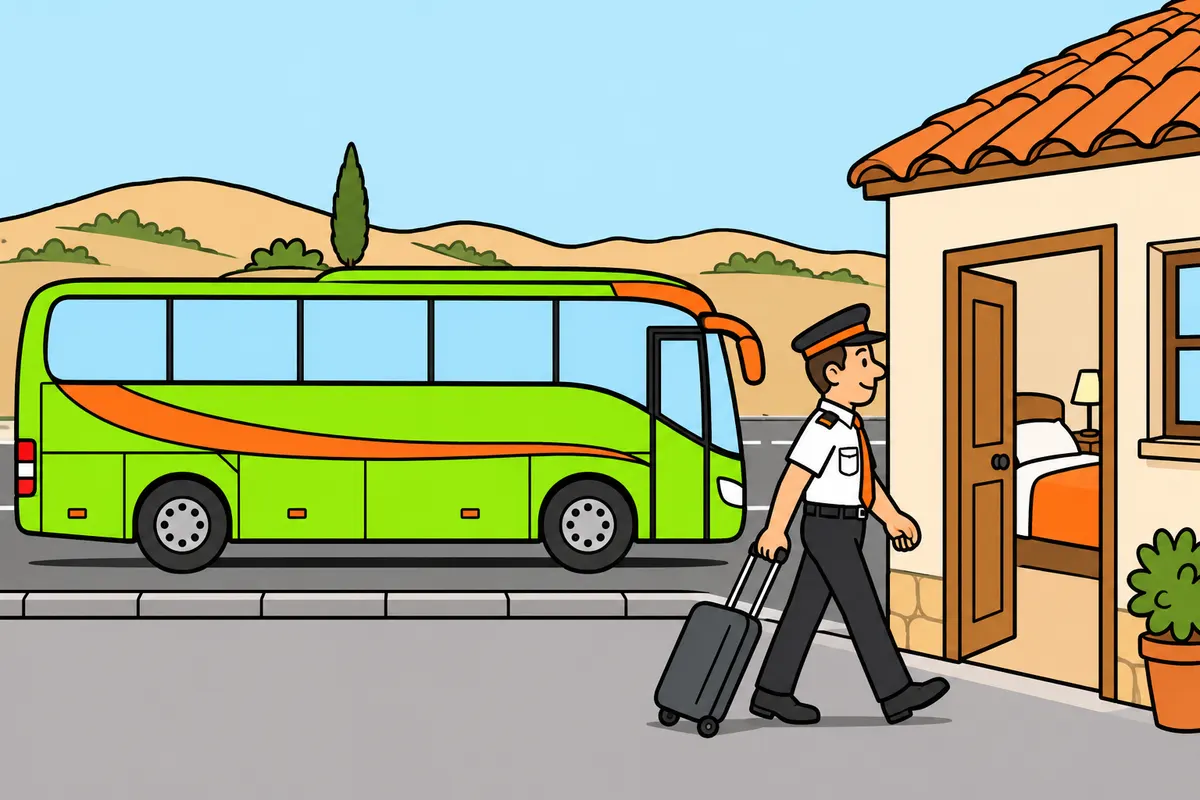
Choose a permitted resting place and check that your employer arranges your return.
| Your rest | Can you take it in the coach? |
|---|---|
| Daily or reduced weekly | Yes, away from base, by choice, stationary, with suitable sleeping facilities |
| Regular weekly | No |
| Weekly rest exceeding 45 h with compensation | No |
Remember
- To rest inside, keep the coach stationary with suitable sleeping facilities for each driver.
- Away from base, you may choose this for daily and reduced weekly rests.
- Outside accommodation must have suitable sleeping and toilet facilities.
- Your employer pays for that accommodation.
- Your employer must arrange your return home or to your usual base.
- This return allows regular weekly rest or weekly rest exceeding 45 hours with compensation.
Exam trap: Wrong: you take regular weekly rest in a coach seat. Right: you must use suitable accommodation outside.
Read the full explanation
- If you choose to rest in the vehicle away from the operating centre, for daily and reduced weekly rests you must have suitable rest facilities for each driver and keep the vehicle parked. [DGT, Manual III, topic 9, section 4.2.2](https://sede-org.dgt.gob.es/export/sites/dgt/.galleries/permisos-de-conducir/certificacion-aptitud-profesores-formacion-vial/2025/Manual-III-RVP-2025.pdf).
- You cannot take regular weekly rest in the coach. You also cannot take in it a weekly rest of more than 45 hours that includes compensation for previous reductions in weekly rest; you must have suitable accommodation with adequate sleeping and sanitary facilities. [Regulation 561/2006, art. 8.8, as amended by 2020/1054](https://www.boe.es/buscar/doc.php?id=DOUE-L-2020-81223).
- Your employer pays the cost of that accommodation away from the vehicle. [Regulation 561/2006, art. 8.8, as amended by 2020/1054](https://www.boe.es/buscar/doc.php?id=DOUE-L-2020-81223).
- The company must organise work so that, in each period of four consecutive weeks, you can return either to the operating centre where you are normally based and start your weekly rest, in the country where the company is established, or to your home. This is so you can take at least one regular weekly rest or one lasting more than 45 hours that includes compensation. [Regulation 561/2006, art. 8.8 bis, as amended by 2020/1054](https://www.boe.es/buscar/doc.php?id=DOUE-L-2020-81223).
- The company must document how it meets this requirement and keep the records available for inspection. [Regulation 561/2006, art. 8.8 bis, as amended by 2020/1054](https://www.boe.es/buscar/doc.php?id=DOUE-L-2020-81223).
19Postponing weekly rest on occasional services: twelve 24-hour periods

You can postpone weekly rest on a single occasional service if you meet every condition.
| Your single occasional service | Conditions for postponement |
|---|---|
| Domestic or international | Previous regular weekly rest and required digital recording equipment |
| You drive between 22:00 and 06:00 | Multiple drivers or a break after three driving hours |
| Calculating the postponement | Count from the end of your previous regular weekly rest, even if your trip starts later |
Remember
- Start after regular weekly rest and use the required digital recording equipment.
- Keep your driving limits, breaks and daily rests.
- Afterwards, take two regular weekly rests or one regular and one reduced.
- The reduced rest must last at least 24 hours and needs compensation.
- Compensate continuously before the third week following the week of the exception ends.
- At night, use multiple drivers or reduce driving periods between breaks to three hours.
Exam trap: Wrong: postponement lets you exceed 90 driving hours over two weeks. Right: that maximum still applies.
Read the full explanation
- If you carry out a single occasional passenger service, you may postpone weekly rest for up to twelve consecutive 24-hour periods after a previous regular weekly rest, subject to the conditions in Article 8(6a). This option covers national and international services. [Regulation 561/2006, Article 8(6a), as amended by 2024/1258](https://www.boe.es/buscar/doc.php?id=DOUE-L-2024-80636).
- The twelve-period time limit is counted from the end of the previous regular weekly rest, even if the tourist itinerary starts later. [Regulation 561/2006, Article 8(6a), as amended by 2024/1258](https://www.boe.es/buscar/doc.php?id=DOUE-L-2024-80636).
- During the postponement, you continue to observe the daily, weekly and fortnightly driving limits, as well as the applicable breaks and daily rest periods. [Regulation 561/2006, Article 8(6a), as amended by 2024/1258](https://www.boe.es/buscar/doc.php?id=DOUE-L-2024-80636).
- After using the exemption, you must take two regular weekly rest periods, or one regular and one reduced rest period of at least 24 hours. [Regulation 561/2006, Article 8(6a)(b), as amended by 2024/1258](https://www.boe.es/buscar/doc.php?id=DOUE-L-2024-80636).
- If you choose the combination of regular and reduced rest, you must compensate for the reduction with an equivalent uninterrupted rest period before the end of the third week following the week of the exemption period. For example, 45 plus 24 makes 69 hours for the two rest periods, and the reduction in the second period generates a further 21 hours of compensation. [Regulation 561/2006, Article 8(6a)(b), as amended by 2024/1258](https://www.boe.es/buscar/doc.php?id=DOUE-L-2024-80636).
- The vehicle must be equipped with the digital recording equipment required by the specific condition. [Regulation 561/2006, Article 8(6a)(c), as amended by 2024/1258](https://www.boe.es/buscar/doc.php?id=DOUE-L-2024-80636).
- If you drive between 22:00 and 06:00 during the exemption, the vehicle must have several drivers, or you must reduce to three hours the driving period that triggers the break under Article 7. [Regulation 561/2006, Article 8(6a)(d), as amended by 2024/1258](https://www.boe.es/buscar/doc.php?id=DOUE-L-2024-80636).
20Justify passenger transport flexibilities
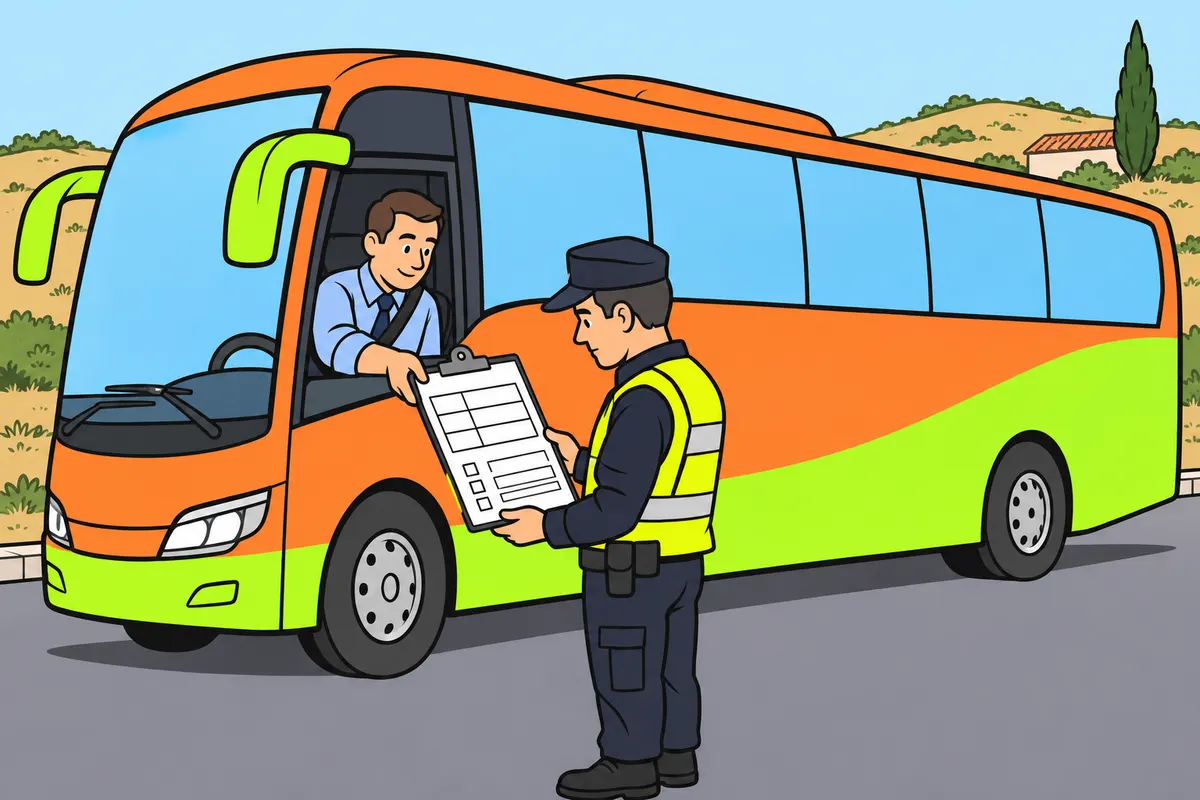
Justify each flexible option with the required documents and meet its conditions.
| Your vehicle | Copies of previous journey forms |
|---|---|
| Without a tachograph recording service type as required | You must carry the required copies |
| With a tachograph recording service type as required | The exception to carrying copies applies |
Remember
- Carry a completed journey form (hoja de ruta) while this document is required.
- Your employer must give you the form before departure.
- For domestic services, mark that use on the international form.
- Previous copies can be on paper or electronic.
Exam trap: Wrong: carrying a form allows any flexible option. Right: you must also meet its conditions.
Read the full explanation
- During a check, you must be able to justify using the flexible breaks for occasional services, daily rest within 25 hours and the postponement of weekly rest. Article 16 provides for the journey form as supporting evidence until its digital version is available. [Regulation 561/2006, Article 16(4), as amended by 2024/1258](https://www.boe.es/buscar/doc.php?id=DOUE-L-2024-80636).
- Under this regime, you must carry a completed journey form containing the required information, which your company must provide before the trip. For national services, you may use the form intended for international services, stating that it is being used for a national service. [Regulation 561/2006, Article 16(4), as amended by 2024/1258](https://www.boe.es/buscar/doc.php?id=DOUE-L-2024-80636).
- You must also carry paper or electronic copies of the journey forms for the previous 56 days, unless the vehicle has a tachograph that can record the type of service as provided for in Article 16(5). [Regulation 561/2006, Articles 16(4) and 16(5), as amended by 2024/1258](https://www.boe.es/buscar/doc.php?id=DOUE-L-2024-80636).
- The journey form proves that you are using the flexibilities; completion of the form and general document procedures are covered in “Bus and passenger transport documentation”. [Regulation 561/2006, Articles 16(4) and 16(5), as amended by 2024/1258](https://www.boe.es/buscar/doc.php?id=DOUE-L-2024-80636).
21Ferries, trains and travel to the coach
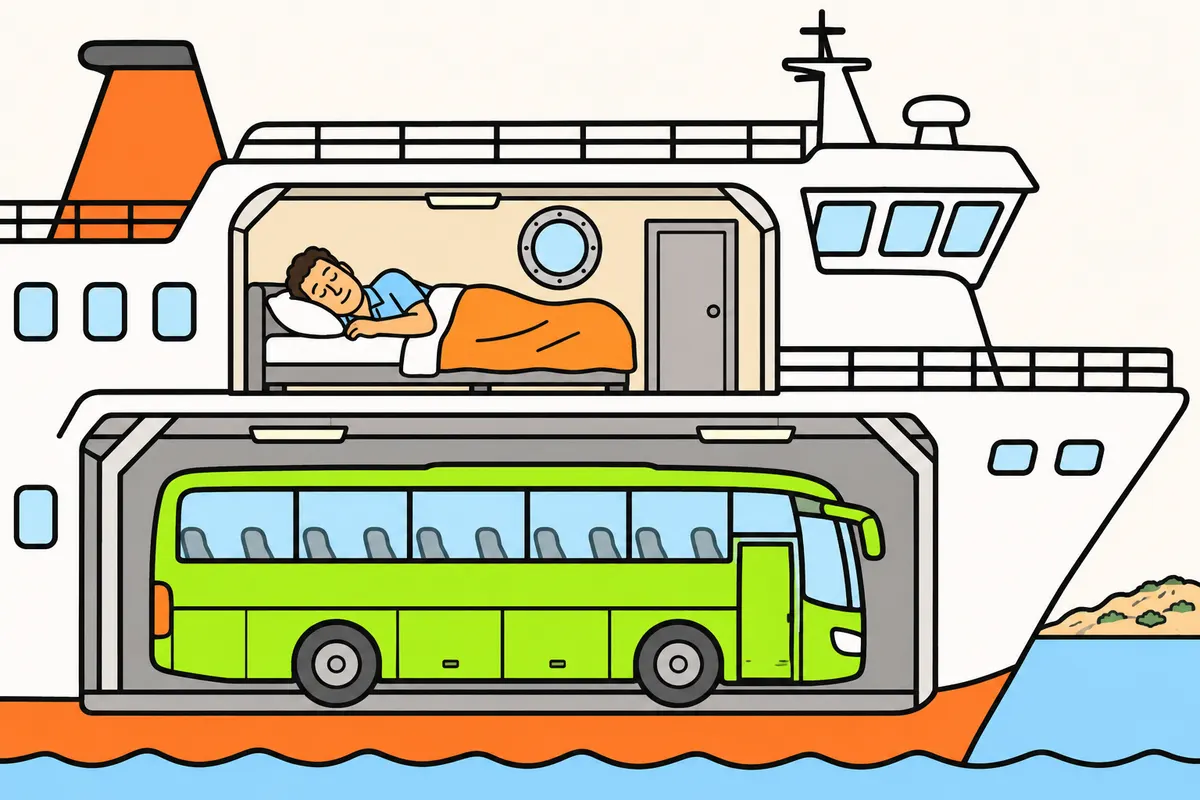
On ferries or trains, you can interrupt only certain rests under specific conditions.
| Your rest while accompanying the coach | Required sleeping facilities |
|---|---|
| Regular daily or reduced weekly | Sleeper cabin, bunk or couchette available |
| Regular weekly | Sleeper cabin and scheduled journey of at least eight hours |
| Reduced daily | You cannot use these interruptions |
Remember
- When accompanying your coach, check the rest type and available sleeping facilities.
- Keep the full actual rest duration and meet its deadline.
- Do not apply these interruptions to reduced daily rest.
- Do not automatically count travel to a coach away from your base as rest.
- Driving to collect it away from both home and base counts as other work.
- Check the ferry or train travel exception with a sleeper cabin, bunk or couchette.
Exam trap: Wrong: each interruption can last one hour. Right: both together must not exceed one hour.
Read the full explanation
- If you accompany the coach being carried by ferry or train, you may interrupt regular daily rest or reduced weekly rest no more than twice for other activities, which must not exceed one hour in total. During that rest, you must have a sleeping cabin, bed or bunk available to you. [Regulation 561/2006, Article 9(1), as amended by 2020/1054](https://www.boe.es/buscar/doc.php?id=DOUE-L-2020-81223).
- You may use these interruptions, for example, to board and leave the ferry or train, but you must preserve the required effective rest duration. If you take eleven hours of effective rest and have two interruptions of 20 minutes each, the total period is eleven hours and 40 minutes, and you must check that it fits within the relevant time window. [Regulation 561/2006, Article 9(1), as amended by 2020/1054](https://www.boe.es/buscar/doc.php?id=DOUE-L-2020-81223).
- To apply the exemption to regular weekly rest, the planned ferry or train journey must last at least eight hours and you must have access to a sleeping cabin. [Regulation 561/2006, Article 9(1), as amended by 2020/1054](https://www.boe.es/buscar/doc.php?id=DOUE-L-2020-81223).
- Reduced daily rest is not covered by this permission to interrupt rest. [Regulation 561/2006, Article 9(1), as amended by 2020/1054](https://www.boe.es/buscar/doc.php?id=DOUE-L-2020-81223).
- Time spent travelling to a place where you must take charge of a vehicle within scope, or returning from that place, does not count as rest or a break if the vehicle is not at your home or at the operations centre where you are normally based. [Regulation 561/2006, Article 9(2), as amended by 2020/1054](https://www.boe.es/buscar/doc.php?id=DOUE-L-2020-81223).
- There is an exemption for travel by ferry or train if you have a sleeping cabin, bed or bunk available. [Regulation 561/2006, Article 9(2), as amended by 2020/1054](https://www.boe.es/buscar/doc.php?id=DOUE-L-2020-81223).
- When travelling to relieve a colleague, you record the activity that applies under these rules; the specific entries on the equipment are covered in “The bus tachograph”. [Regulation 561/2006, Article 9(2), as amended by 2020/1054](https://www.boe.es/buscar/doc.php?id=DOUE-L-2020-81223).
- If you drive a vehicle outside scope to collect the coach that is within scope, or to return from it, and the coach is not at your home or your usual operations centre, you must count that journey as other work. [Regulation 561/2006, Article 9(3)](https://www.boe.es/buscar/doc.php?id=DOUE-L-2006-80632).
22Spanish exceptions that can affect buses
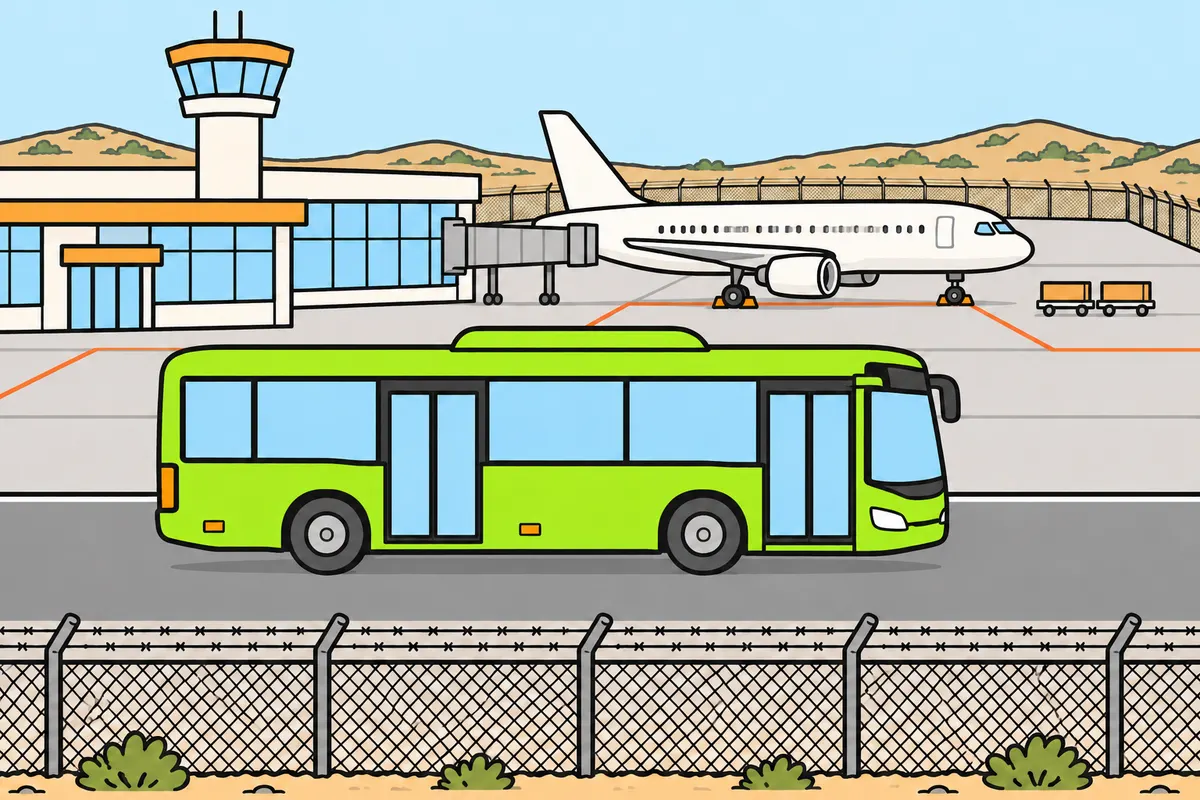
Check every condition before using a Spanish exception to these rules.
| Your transport operation | Condition for the Spanish exception |
|---|---|
| Official or training transport | Must meet its legal definition and vehicle requirements |
| Within an enclosed site | Entire service inside; activity other than carriage by road |
| Within Ceuta or Melilla | Transport entirely within that territory |
| On an island up to 250 km² | No mainland bridge, ford or tunnel open to motor vehicles |
Remember
- A particular owner does not automatically make a bus exempt.
- Do not confuse approved training with a commercial service.
- A shuttle leaving an enclosed site is not automatically exempt.
- Link empty journeys to the exempt transport operation.
Exam trap: Wrong: driving empty always makes you exempt. Right: the journey must necessarily precede or follow the exempt transport.
Read the full explanation
- In Spain, Royal Decree 640/2007 specifies the transport operations exempt from driving and rest time rules and from the installation and use of a tachograph, subject to the conditions it sets out. [Royal Decree 640/2007, Articles 1 and 2](https://www.boe.es/buscar/act.php?id=BOE-A-2007-10557).
- These include legally defined official transport and transport carried out in driving instruction, licence acquisition or CAP courses using specially equipped vehicles. [Royal Decree 640/2007, Articles 1 and 2](https://www.boe.es/buscar/act.php?id=BOE-A-2007-10557).
- They also include transport by vehicles used exclusively for services carried out entirely within enclosed premises for activities other than road transport, such as ports, airports and railway stations. A shuttle that goes onto a public road does not automatically meet the condition of providing its entire service within enclosed premises. [Royal Decree 640/2007, Articles 1 and 2](https://www.boe.es/buscar/act.php?id=BOE-A-2007-10557).
- The territorial exemption covers transport carried out entirely in Ceuta and Melilla, or on islands with an area of no more than 250 km² that are not connected to mainland Spain by a bridge, ford or tunnel open to motor vehicles. The special rules in Royal Decree 1082/2014 have their own scope, described in the following section. [Royal Decree 640/2007, Article 2(o)](https://www.boe.es/buscar/act.php?id=BOE-A-2007-10557).
- The exemptions in Article 2 also apply to empty journeys that necessarily take place before or after the exempt transport operation. [Royal Decree 640/2007, Articles 1 and 2](https://www.boe.es/buscar/act.php?id=BOE-A-2007-10557).
23Special rules for islands of more than 250 km² and up to 2,300 km²
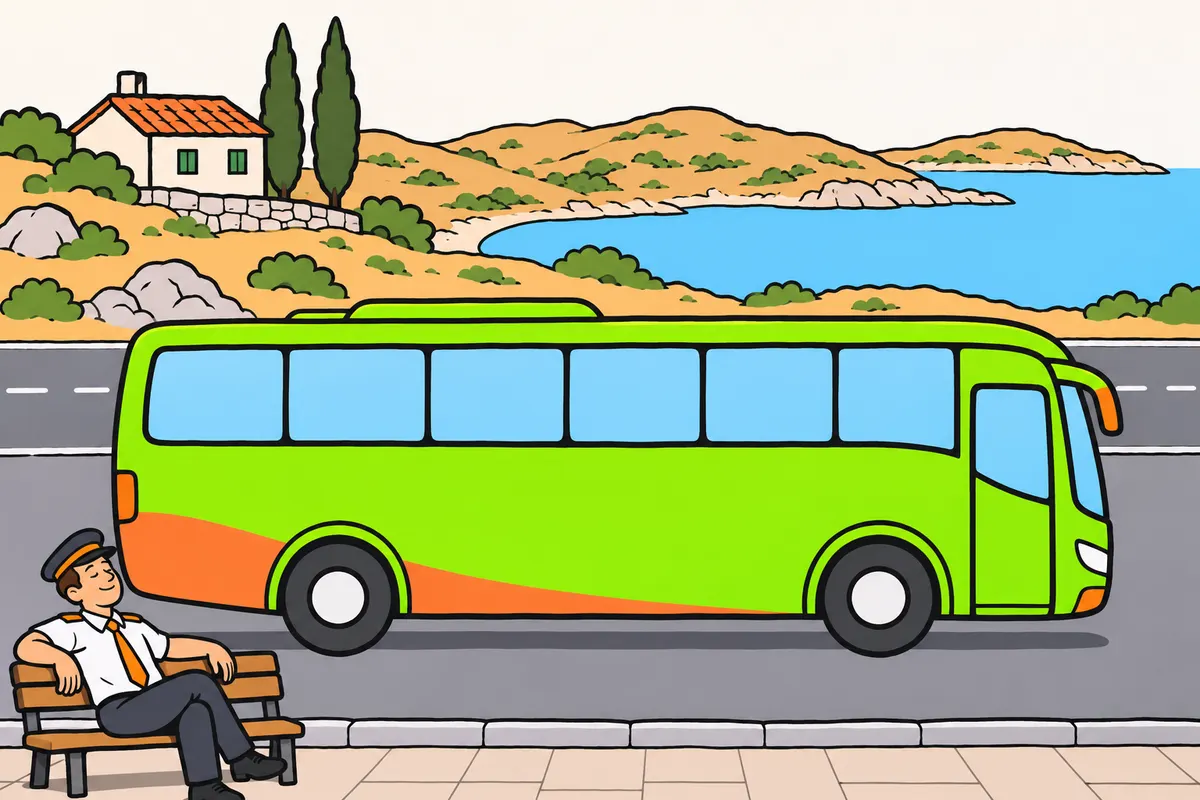
Use the special island rules only when your whole transport operation stays on qualifying islands.
| Your daily rest on these islands | Permitted split |
|---|---|
| Regular | Two or three parts: at least eleven hours altogether |
| Reduced | Two parts: at least nine hours, but less than eleven |
| Both types | One block of at least eight hours; none shorter than one hour |
| Regular daily rest on inter-island crossings up to four hours | No bed or bunk needed; exclude time aboard from the eight-hour block |
Remember
- Do not apply these rules to mainland tours.
- You can take reduced weekly rests during three weeks following a regular-rest week.
- Make up each reduction before the fourth following week ends.
- Here, you need not attach compensation to another rest.
- Split the required break into two or three parts: at least 15 minutes each.
- For inter-island crossings up to four hours, check the exception for rest aboard.
Exam trap: Wrong: you include an island of exactly 250 km². Right: these special rules require more than 250 and no more than 2,300 km².
Read the full explanation
- For transport carried out exclusively on islands with an area of more than 250 km² and no more than 2,300 km², you may apply the Spanish special rules in Royal Decree 1082/2014. [Royal Decree 1082/2014, Articles 1 and 2](https://www.boe.es/buscar/act.php?id=BOE-A-2015-246).
- You may split regular daily rest into two or three periods, one of which must be at least eight uninterrupted hours and none of which may be shorter than one hour, giving a total of at least eleven hours. Reduced daily rest, from nine hours to less than eleven hours, may be split into two periods, one of eight uninterrupted hours and neither shorter than one hour. [Royal Decree 1082/2014, Articles 1 and 2](https://www.boe.es/buscar/act.php?id=BOE-A-2015-246).
- You may take reduced weekly rest during the three consecutive weeks following a week in which you took regular weekly rest. You must take the compensation before the end of the fourth week following the week in which the reduction occurred, and it does not have to be attached to another rest period. [Royal Decree 1082/2014, Articles 1 and 2](https://www.boe.es/buscar/act.php?id=BOE-A-2015-246).
- You may replace the continuous 45-minute break with two or three breaks of at least 15 minutes each, taken during the driving period or immediately after it. [Royal Decree 1082/2014, Article 2(c)](https://www.boe.es/buscar/act.php?id=BOE-A-2015-246#a2).
- On inter-island journeys with a sea crossing of no more than four hours, you may take regular daily rest without access to a bed or bunk. Time aboard the ferry must be outside the block of eight uninterrupted hours of daily rest. [Royal Decree 1082/2014, Article 2(d)](https://www.boe.es/buscar/act.php?id=BOE-A-2015-246#a2).
24Emergencies and reaching a safe stopping place
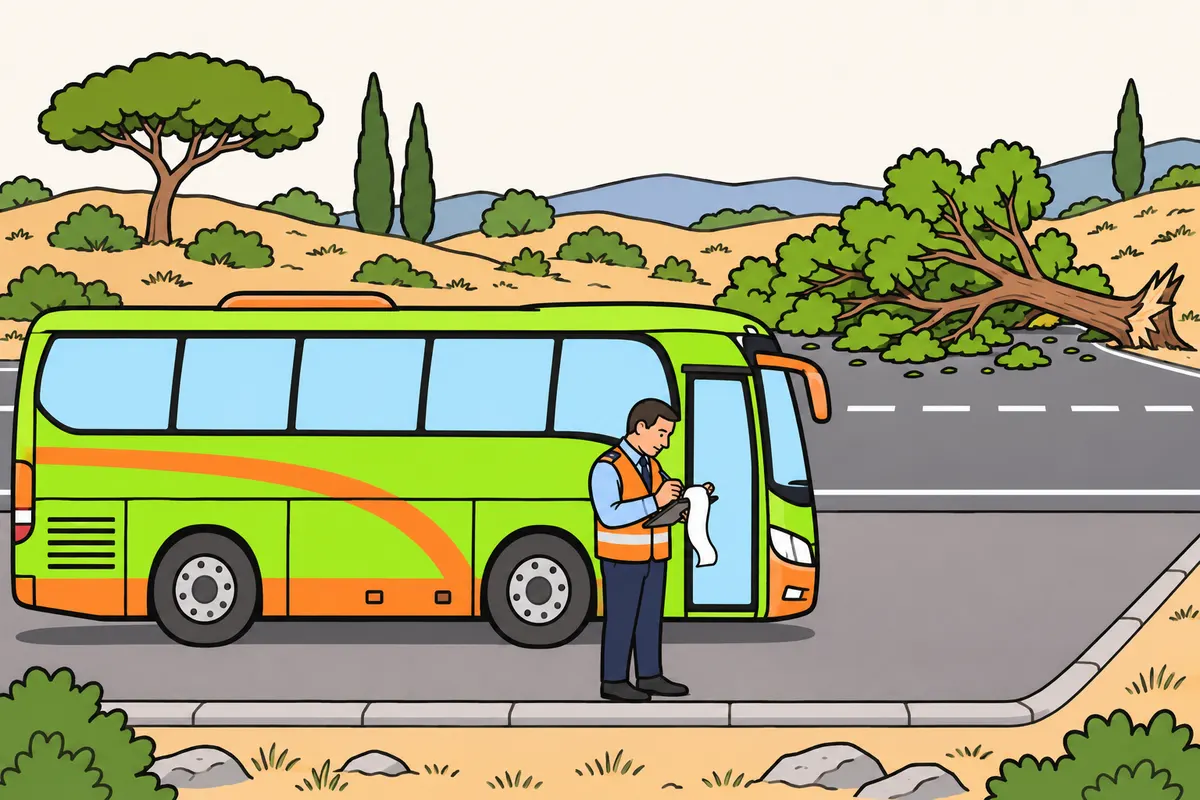
Depart from the rules only for real reasons and within the legal conditions.
Remember
- Do not confuse commercial urgency with emergency or rescue transport.
- To reach a suitable stopping place, depart only as necessary for safety.
- Do not put road safety at risk.
- Manually record your reason by arrival at the suitable stopping place.
- Check the territory, dates and operations covered by any authorised temporary exception.
Exam trap: Wrong: being late for the hotel justifies breaking the rules. Right: commercial urgency is not enough.
Read the full explanation
- Emergency or rescue transport and road tests for technical development, repair or maintenance purposes are exempt, under the terms of Article 3. The commercial urgency of reaching a hotel or keeping a booking is not one of these exemptions. [Regulation 561/2006, Articles 3, 12 and 14](https://www.boe.es/buscar/doc.php?id=DOUE-L-2006-80632).
- To reach a suitable stopping place, you may depart from Articles 6 to 9 only to the extent necessary to ensure the safety of people, the vehicle or its load, without compromising road safety. [Regulation 561/2006, Articles 3, 12 and 14](https://www.boe.es/buscar/doc.php?id=DOUE-L-2006-80632).
- You must manually record the reason for this exception on the record sheet, tachograph printout or duty record, no later than your arrival at the suitable stopping place. [Regulation 561/2006, Articles 3, 12 and 14](https://www.boe.es/buscar/doc.php?id=DOUE-L-2006-80632).
- Temporary exemptions under Article 14 require a decision by the competent authority specifying the operations affected, the territory, the dates and the rules exempted. [Regulation 561/2006, Articles 3, 12 and 14](https://www.boe.es/buscar/doc.php?id=DOUE-L-2006-80632).
25Exceptional extension to reach weekly rest

Extend driving to reach weekly rest only exceptionally and under the required conditions.
| Your exceptional daily and weekly driving extension | Required rest and break |
|---|---|
| Up to one hour | To reach weekly rest |
| Up to two hours | To reach regular weekly rest; uninterrupted 30-minute break immediately before extra driving |
Remember
- You must be heading to your home or your employer’s operating centre.
- Use this only exceptionally, without putting road safety at risk.
- Manually record your reason by arrival at your destination or suitable stopping place.
- Compensate before the third following week ends, continuously and attached to another rest.
- Keep the 90-hour two-week limit and the deadline for starting weekly rest.
- The special break does not replace a 45-minute break already due.
Exam trap: Wrong: you plan these hours as a routine allowance. Right: you need exceptional circumstances and must meet every condition.
Read the full explanation
- In exceptional circumstances, and without compromising road safety, you may exceed the daily and weekly driving limits by up to one hour to reach your employer’s operating centre or your residence and take a weekly rest period. [Regulation 561/2006, art. 12, as amended by 2020/1054](https://www.boe.es/buscar/doc.php?id=DOUE-L-2020-81223).
- You may exceed those limits by up to two hours to reach the same places and take a regular weekly rest period, provided that you take an uninterrupted 30-minute break immediately before the additional driving. [Regulation 561/2006, art. 12, as amended by 2020/1054](https://www.boe.es/buscar/doc.php?id=DOUE-L-2020-81223).
- You must record the reason manually no later than when you reach your destination or a suitable stopping place. You must compensate for any extension with an equivalent rest period, taken in one go and attached to another rest period, before the end of the third week following the week in question. [Regulation 561/2006, art. 12, as amended by 2020/1054](https://www.boe.es/buscar/doc.php?id=DOUE-L-2020-81223).
- This option does not exempt you from the maximum of 90 hours in two consecutive weeks or allow you to postpone the start of weekly rest beyond six 24-hour periods. In addition, the special 30-minute break does not by itself remove an existing requirement to take a 45-minute break. [Regulation 561/2006, art. 12, as amended by 2020/1054](https://www.boe.es/buscar/doc.php?id=DOUE-L-2020-81223).
26Organising services and monitoring times
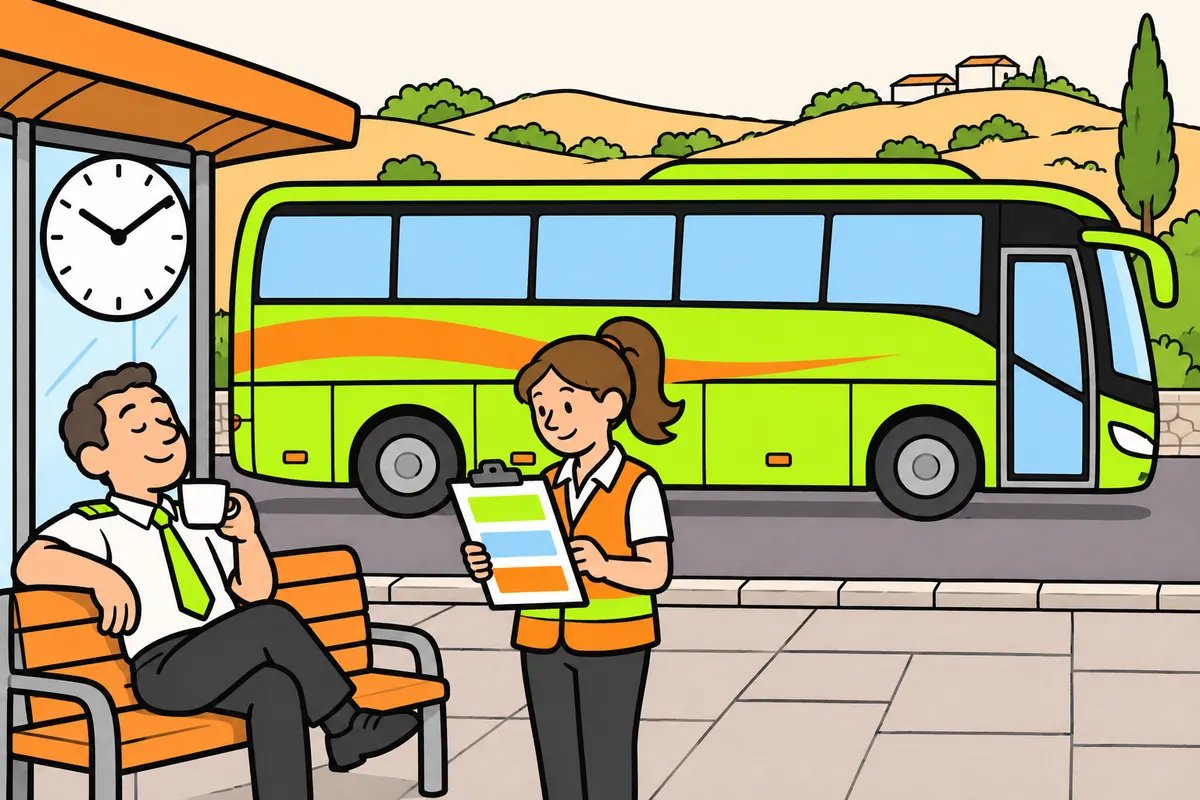
Plan and follow your times even when a customer asks you to continue.
| Your breach | Possible action by officers |
|---|---|
| You exceed prescribed driving time by more than 50 % | They can immobilise your bus unless another driver replaces you |
| You reduce prescribed rest by more than 50 % | They can immobilise your bus unless another driver replaces you |
Remember
- Require a work plan that lets you follow your time limits.
- Count tasks before and after the journey too.
- Your tachograph records activity but does not allow you to exceed limits.
- Smaller breaches are also forbidden.
Exam trap: Wrong: only exceeding 50 % breaks the rules. Right: smaller excesses are also forbidden.
Read the full explanation
- The company must organise work so that you can comply with the limits, give you appropriate instructions and carry out regular checks. [Regulation 561/2006, art. 10](https://www.boe.es/buscar/doc.php?id=DOUE-L-2006-80632).
- Tour operators and other parties that set contractual schedules must ensure that those schedules comply with the regulation. [Regulation 561/2006, art. 10](https://www.boe.es/buscar/doc.php?id=DOUE-L-2006-80632).
- The tachograph records activity and allows compliance with the time limits to be checked. Cards, manual entries, faults and downloads are covered in “The bus tachograph”. [Regulation 561/2006, art. 10](https://www.boe.es/buscar/doc.php?id=DOUE-L-2006-80632).
- Officers may immobilise the bus because of driving-time excesses or rest reductions of more than 50%, unless another driver replaces you; the procedure is covered in “Bus and passenger transport documentation”. [Traffic Act, art. 104.1.f](https://www.boe.es/buscar/act.php?id=BOE-A-2015-11722).
27Driving and rest offences: fines and points
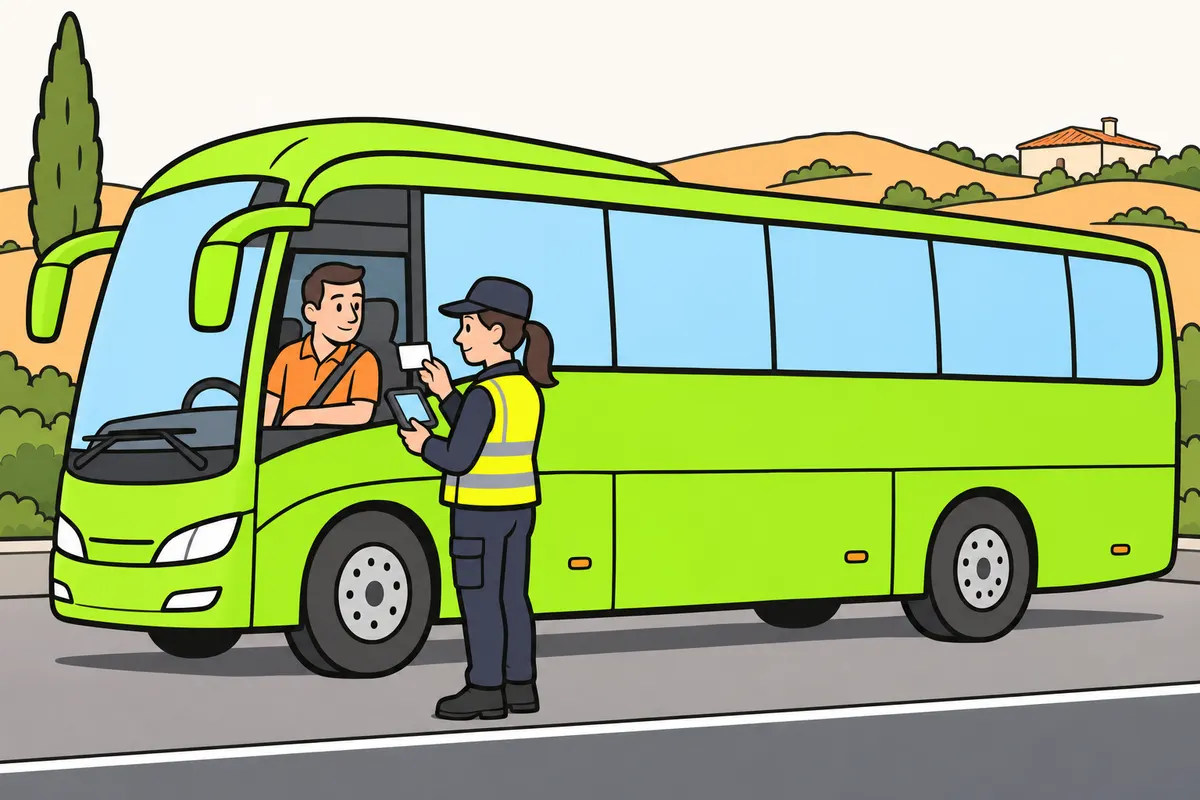
Distinguish transport fines from penalty points by checking each offence and its threshold.
| Your breach | Consequence under the relevant law |
|---|---|
| Daily driving excess of 50 % or more | Transport law: very serious offence; 4,001 to 6,000 euros |
| Daily rest of less than four and a half hours | Transport law: very serious offence; 4,001 to 6,000 euros |
| Weekly or two-week driving excess of 25 % or more | Transport law: very serious offence; 4,001 to 6,000 euros |
| Daily driving excess of more than two hours, except the 50 % case | Transport law: very serious offence; 1,001 to 2,000 euros |
| You drive for more than six hours without the statutory breaks | Transport law: very serious offence; 1,001 to 2,000 euros |
| You reduce regular daily rest by more than two and a half hours | Transport law: 1,001 to 2,000 euros, except rest below four and a half hours |
| You reduce reduced or split daily rest by more than two hours, including multi-manning | Transport law: 1,001 to 2,000 euros, except rest below four and a half hours |
| You reduce regular weekly rest by more than nine hours or reduced weekly rest by more than four | Transport law: very serious offence; 1,001 to 2,000 euros |
| You exceed prescribed driving times or reduce prescribed rest times by more than 50 % | Traffic Act: very serious offence; you lose six points |
Remember
- Calculate daily excess against the maximum that applies to you.
- Check your weekly and two-week totals too.
- Do not confuse a transport fine with losing penalty points.
- Exactly 50 % daily excess does not cost points for this specific reason.
- Follow the rules on weekly rest locations and arrangements for your return.
Exam trap: Wrong: exactly 50 % daily driving excess costs you six points. Right: the transport fine applies; losing points requires more than 50 %.
Read the full explanation
- Exceeding the maximum daily driving time by 50% or more, or taking a daily rest period of less than four and a half hours, constitutes a very serious transport offence. The prescribed fine is 4,001 to 6,000 euros. [LOTT, arts. 140.37.1 and 143.1.i](https://www.boe.es/buscar/act.php?id=BOE-A-1987-17803#a140).
- Exceeding the maximum weekly or two-weekly driving time by 25% or more also constitutes a very serious offence and is punishable by a fine of 4,001 to 6,000 euros. [LOTT, arts. 140.37.2 and 143.1.i](https://www.boe.es/buscar/act.php?id=BOE-A-1987-17803#a143).
- The very serious cases in sections 140.37.3 to 140.37.9 carry a prescribed fine of 1,001 to 2,000 euros. They include exceeding the maximum daily driving time by more than two hours, except in the 50% case, and driving for more than six hours without observing the required breaks. [LOTT, arts. 140.37.3 and 140.37.4 and 143.1.g](https://www.boe.es/buscar/act.php?id=BOE-A-1987-17803#a143).
- The same fine band applies to reducing regular daily rest by more than two and a half hours, or reduced or split daily rest by more than two hours, including in multi-manning, except where the rest period is less than four and a half hours. It also applies to reducing regular weekly rest by more than nine hours or reduced weekly rest by more than four hours. [LOTT, arts. 140.37.5 and 140.37.6 and 143.1.g](https://www.boe.es/buscar/act.php?id=BOE-A-1987-17803#a140).
- Sections 140.37.7 to 140.37.9 cover breaches concerning where weekly rest is taken and the company’s organisation of your return: the applicable fine band is 1,001 to 2,000 euros. [LOTT, arts. 140.37.7 to 140.37.9 and 143.1.g](https://www.boe.es/buscar/act.php?id=BOE-A-1987-17803#a143).
- The Traffic Act classifies as very serious an excess of more than 50% in driving times, or a reduction of more than 50% in rest times established by land transport legislation. This conduct results in the loss of six points. [Traffic Act, art. 77.i and Annex II.6](https://www.boe.es/buscar/act.php?id=BOE-A-2015-11722).
- Under the LOTT, the threshold for a daily excess is “50% or more”; the six-point threshold requires “more than 50%”. An exact daily excess of 50% falls within the first case but below the points threshold for this specific reason. [LOTT, art. 140.37.1](https://www.boe.es/buscar/act.php?id=BOE-A-1987-17803#a140); [Traffic Act, Annex II.6](https://www.boe.es/buscar/act.php?id=BOE-A-2015-11722).
Check a working day before setting off
Apply the limits together to the coach service.
- Identify whether the service is in scope, exempt or subject to a special rule.
- Classify driving, other work, availability, breaks and rest periods.
- Check the driving accumulated since the last valid break: a maximum of four and a half hours under the general rules.
- Add up daily driving: nine hours, or up to ten hours on two occasions per week.
- Check the totals from Monday to Sunday and for each pair of weeks: 56 and 90 hours.
- Add driving and all other effective working time, check work breaks and night work, and calculate availability separately.
- Schedule daily rest within 24 hours, or within the applicable special time window.
- Schedule the next weekly rest and any outstanding compensation before accepting the timetable.
Calculate the allowance for the following week
Work through the examples for 56, 50 and 32 hours.
- Record the driving time for the previous week.
- Subtract that amount from 90: you get 34, 40 or 58 respectively.
- Compare each result with 56 and take the lower figure: 34, 40 or 56.
- Check that the daily allocation, breaks, rest periods and working time allow this theoretical maximum.
Calculate and schedule weekly-rest compensation
Example of reducing weekly rest to 24 hours under the general rules.
- Subtract 24 from 45: you must compensate for 21 hours.
- Identify the week in which the reduction occurs and the end of the third following week.
- Schedule the 21 hours in one uninterrupted period, joined to another rest period of at least nine hours.
- If you join them to a regular weekly rest, schedule 45 + 21 = 66 continuous hours.
- Check that the sequence of weekly rest periods and the accommodation also meet their requirements.
Work out a ten-hour driving day
An ordinary driving example with one daily extension available.
- Drive for four and a half hours and take a valid 45-minute break.
- Drive for another four and a half hours: you have accumulated nine hours of driving that day.
- If you may extend your driving and continue, take another valid 45-minute break before the next stint.
- Drive for one additional hour: ten hours of driving in total and one and a half hours of breaks.
- Check your other duties and complete daily rest within the required time window.
Check what you know
Real questions from the bank on this topic. Pick an answer to see the explanation.
Finished this module?
Mark it as read and you will see your progress on the theory list.