
D Licence - Bus
Theory
18 theory modules for the exam, about 11 hours of reading, in the order we recommend.
0 of 18 modules read
Start with module 1: Driving licences and types of passenger transport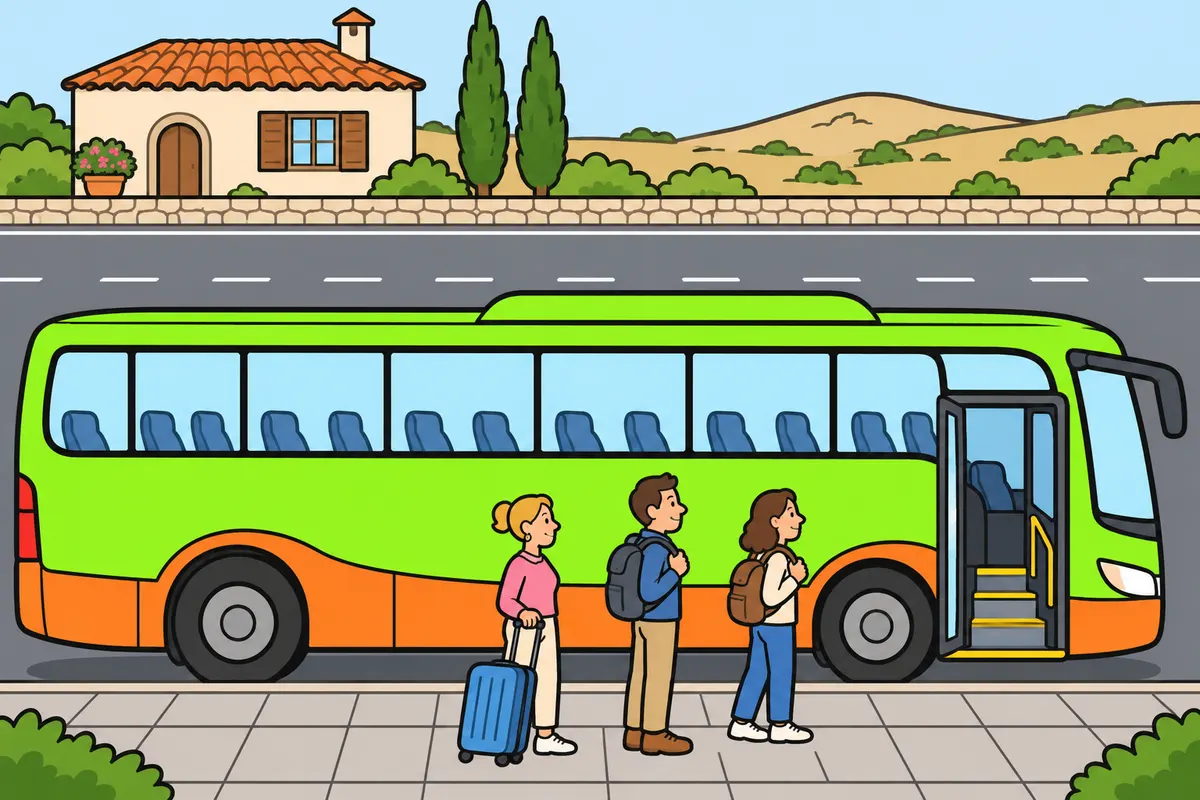 Module 1Driving licences and types of passenger transportLearn to choose between D1, D and their trailer categories, and match each minimum age to the CAP (professional driver qualification) route and its restrictions. You will also learn the requirements, tests, medical fitness rules and licence renewal, and distinguish regular, occasional, on-demand, school and special services.38 min · RecommendedRead
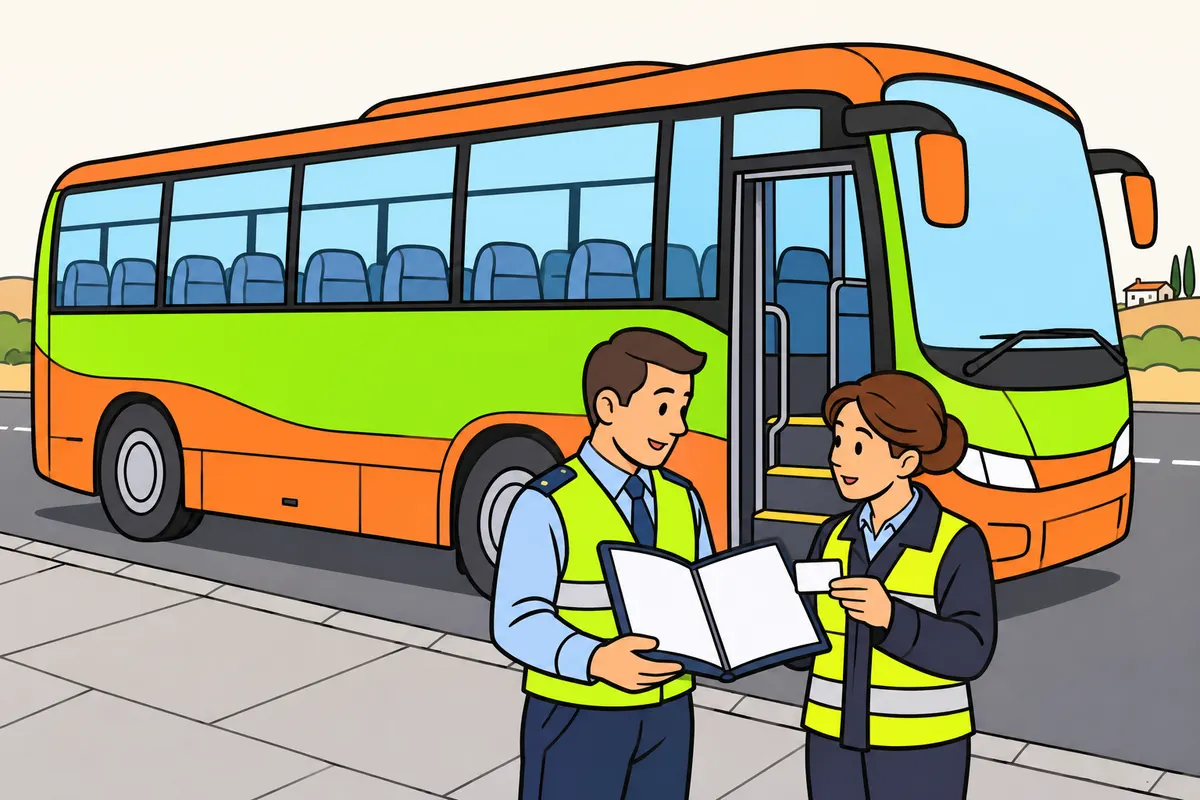 Module 2Bus and passenger transport documentationYou learn to check the documentation for the driver, bus, company and each passenger service, including the ITV (vehicle roadworthiness test), insurance and records you must produce. You distinguish the qualifications and documents required, inspections and immobilisation.32 minRead
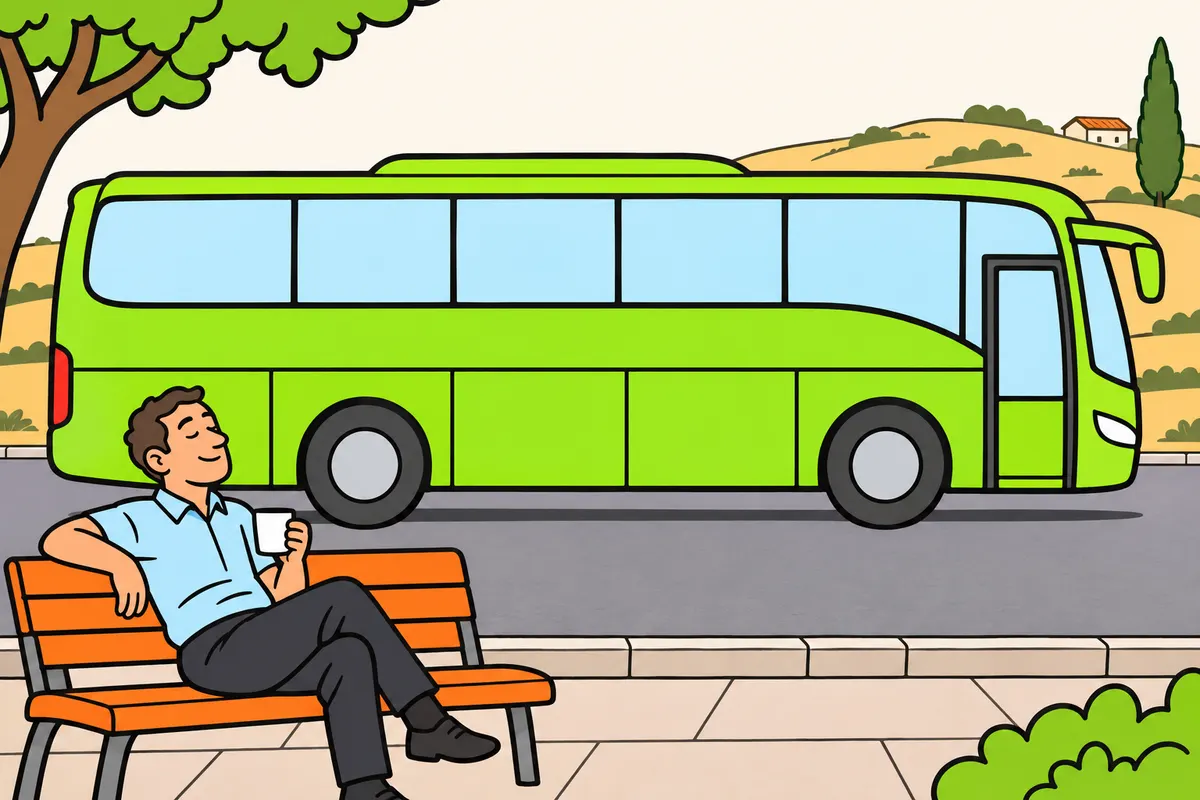 Module 3Driving times and rest periodsYou learn to calculate how long you can drive and when you must interrupt your journey or rest while driving a bus. You distinguish the general rules from passenger-transport exemptions and flexibilities, and work through examples involving working days, driver changes and compensation.40 minRead
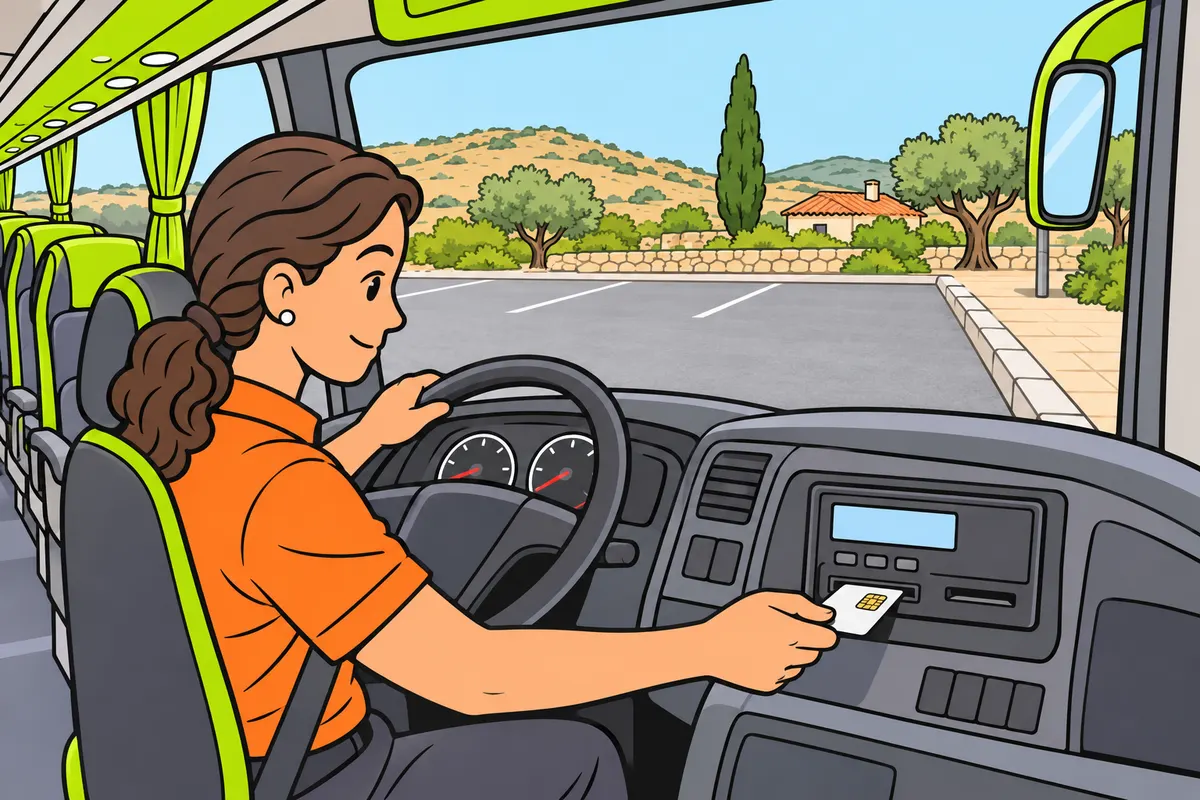 Module 4The bus tachographYou learn to use the bus’s analogue, digital or smart tachograph to record your activity using the appropriate recording medium and card. This module explains manual entries, border crossings, printouts, checks and downloads, as well as exemptions, lost or faulty cards, equipment faults and offences and their consequences.32 minRead
 Module 5The driver’s conditionYou learn to assess whether you are fit to drive a bus and recognise the effects of alcohol, drugs, medicines, fatigue and distractions. You distinguish between the legal limits and tests, the consequences of refusal and the decisions that protect passengers.35 minRead
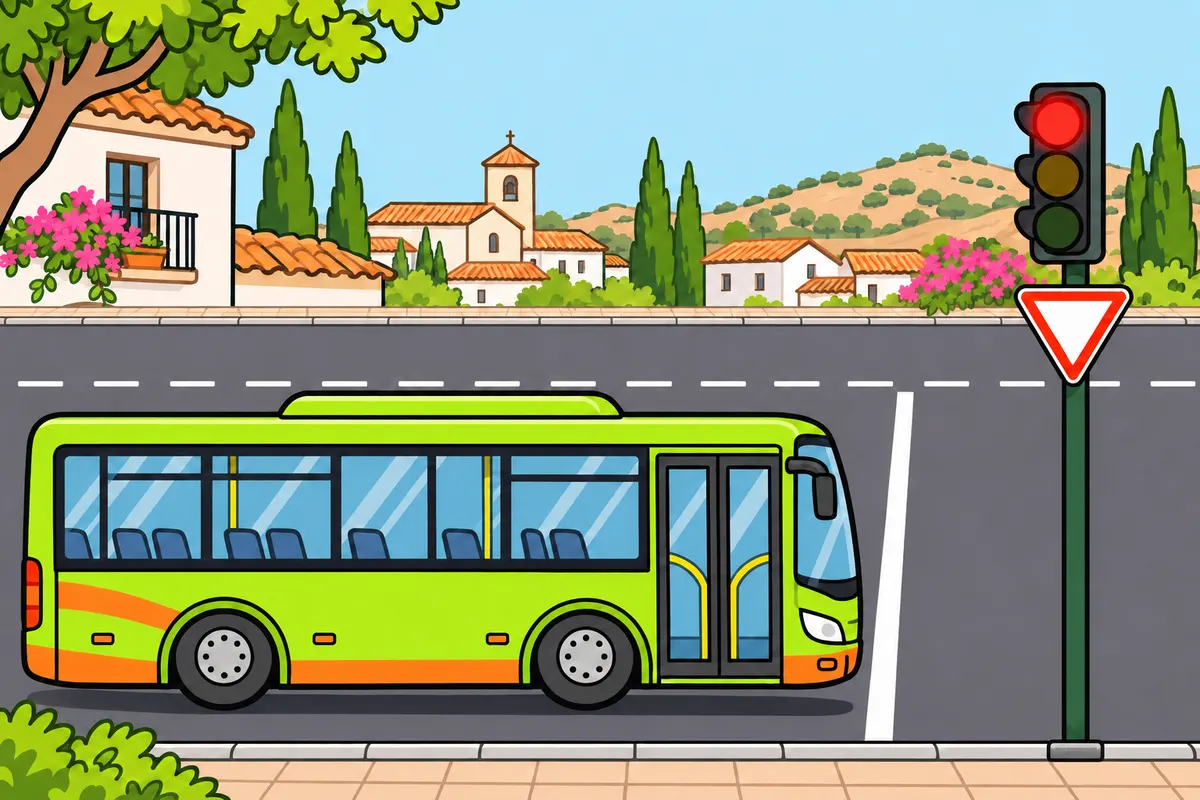 Module 6Signs and priorities for busesYou learn to interpret the hierarchy of signs, traffic officers’ instructions, traffic lights and road markings. You recognise white bars, reserved lanes and access restrictions that affect your bus, and how they differ from signs for lorries.50 minRead
 Module 7Bus speed and following distancesLearn to choose your bus speed according to the road, service, passengers and traffic conditions. Distinguish reaction, braking and stopping, and apply the general following distances, the 50-metre rule and tunnel minimums without confusing their exceptions.40 minRead
 Module 8Manoeuvres with the busLearn how to join traffic, change lanes, overtake and turn in a bus while respecting priority and allowing enough space. Distinguish between different types of immobilisation and apply the rules for reversing, stopping and parking.45 minRead
 Module 9Bus lighting and signsYou learn to choose the bus lighting according to the road, visibility and situation, and to recognise the lights and markings required by its size or service. You master the differences between fitting and using equipment, and how to prevent dazzling.34 minRead
 Module 10Bus dimensions and massesYou learn the limits on bus dimensions, total mass and axle load distribution, the conditions for towing trailers and the use of the speed limiter. You can interpret route restrictions and the rules on projecting loads and special transport.32 minRead
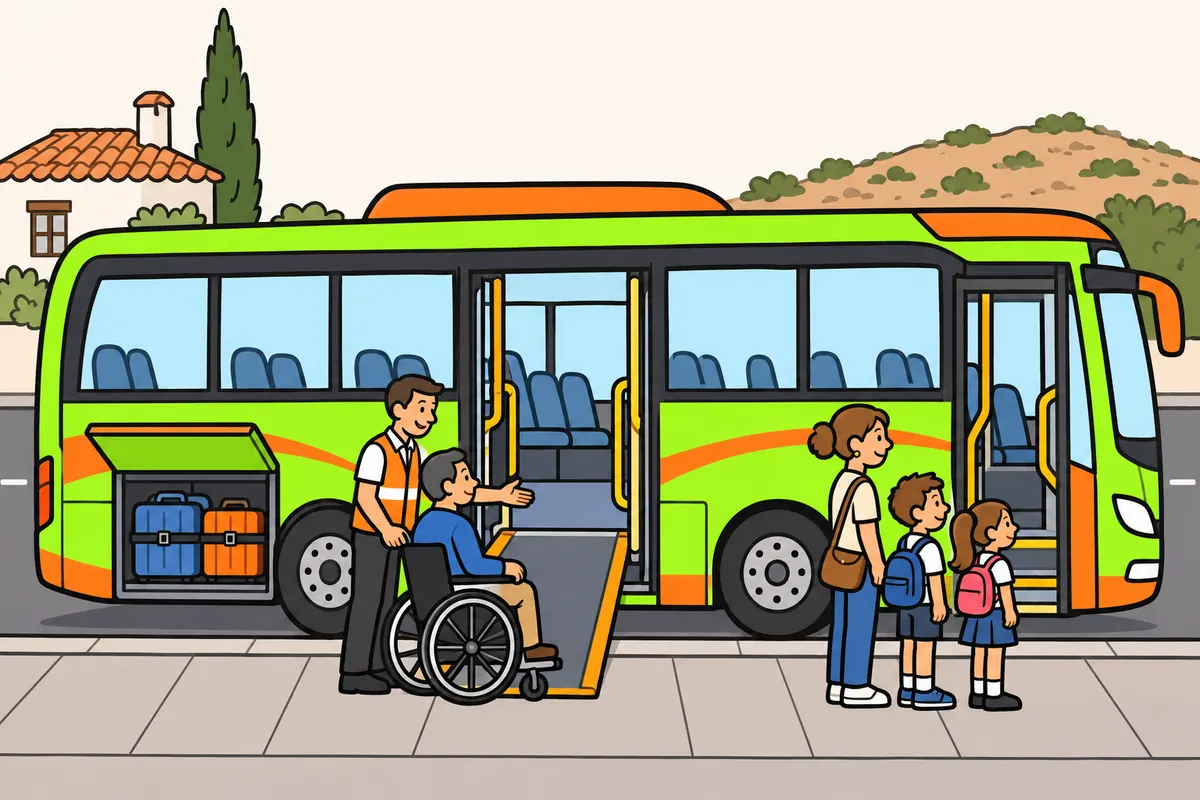 Module 11Passenger transport and minorsYou learn to organise passenger boarding, alighting and the distribution of passengers and luggage, and to distinguish restraint requirements and who is responsible. You learn the rules for school transport, the escort and the V-10 sign, together with accessible assistance for people with reduced mobility.40 minRead
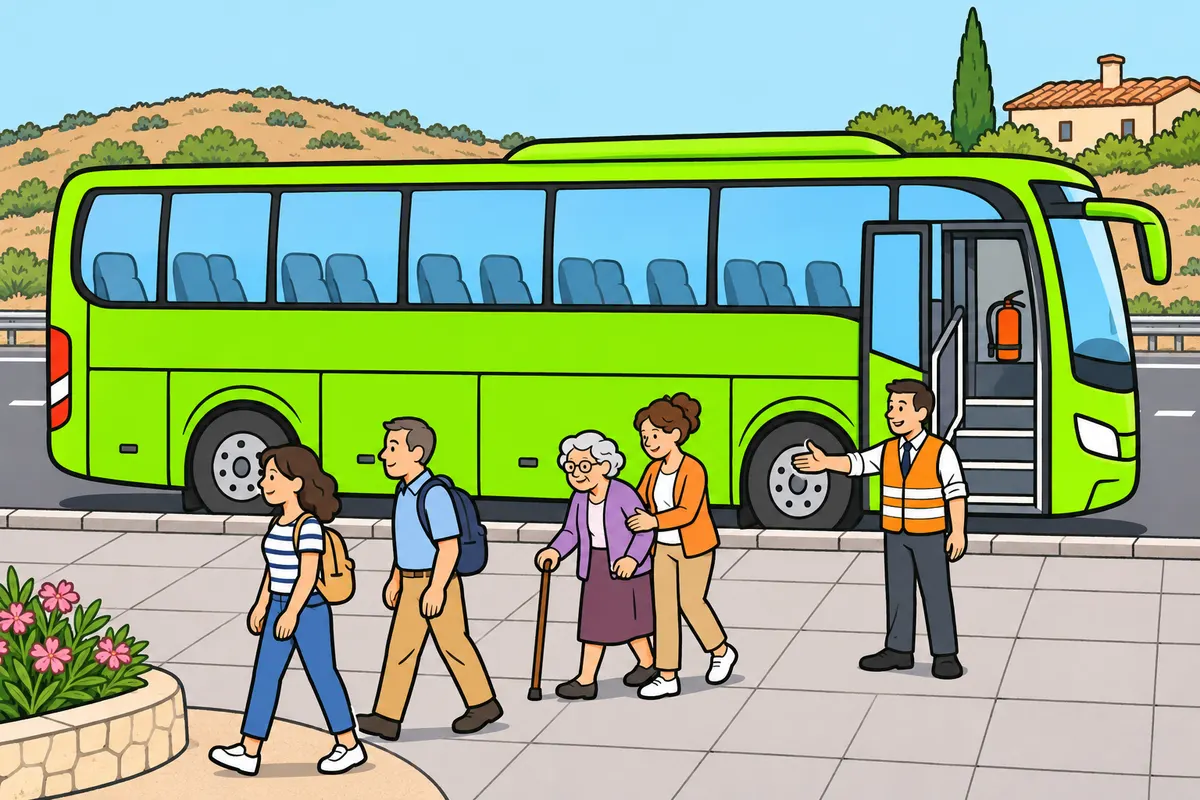 Module 12Passenger safety and emergenciesYou learn to prepare the safety equipment on your bus, inform passengers and direct an evacuation. You know how to decide what to do about seat belts, fires, breakdowns and tunnels, distinguishing when you must evacuate passengers and when you must keep them protected inside.30 minRead
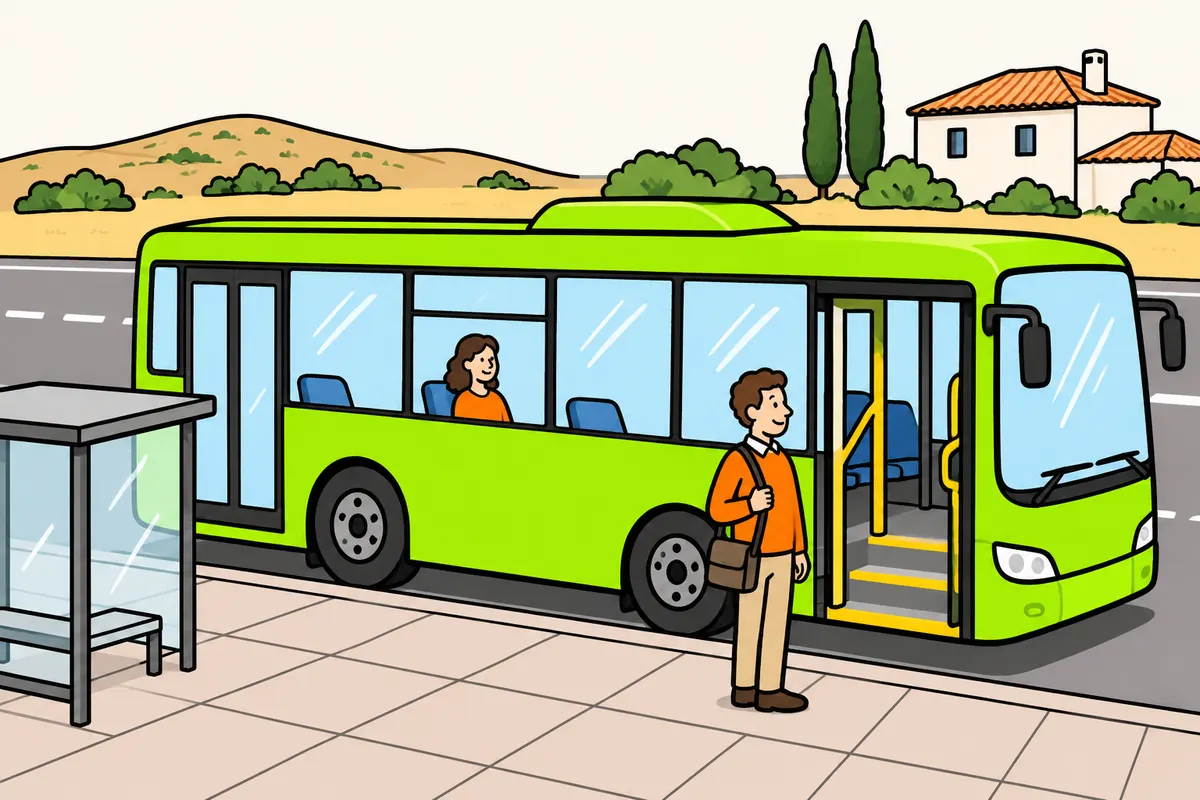 Module 13Safe bus drivingYou learn to drive a bus smoothly, approach stops and control the doors, blind spots and swept space. You examine how the bodywork limits your view and that of other road users, and how to use the mirrors. You practise decisions that protect standing and seated passengers when turning, reversing, descending, in crosswinds and in adverse conditions.40 minRead
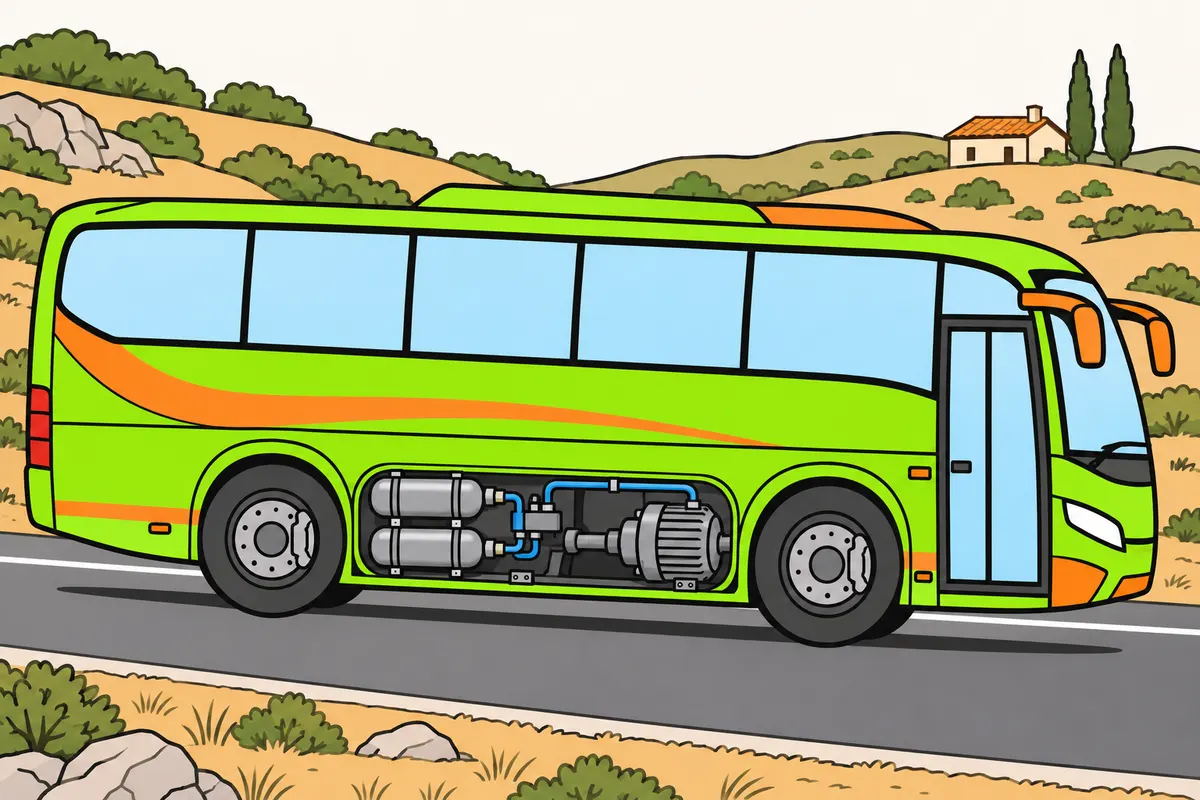 Module 14Bus brakes and retardersYou will learn about the functions of the brakes, the path of compressed air and the bus warning systems. You will learn about ABS, EBS, retarders and how they work with the accelerator, as well as what to do in the event of faults, long descents or reduced braking effectiveness. You will also study braking on a light trailer permitted with a D licence.35 minRead
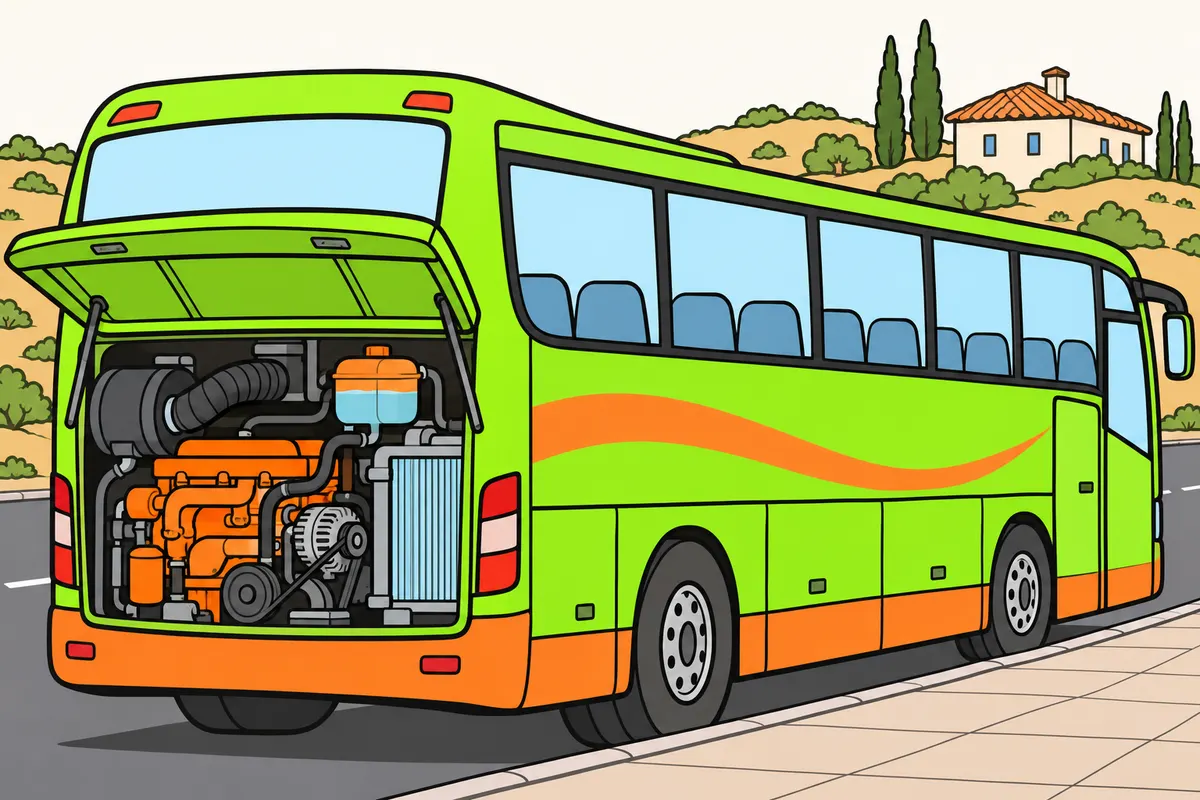 Module 15Bus mechanicsYou learn about the bus's diesel engine, fuel supply, lubrication, cooling, starting system and electrical system, as well as its transmission, suspension, steering, and tyre construction and markings. Checks are covered in «Bus maintenance and checks» and braking in «Bus brakes and retarders».28 minRead
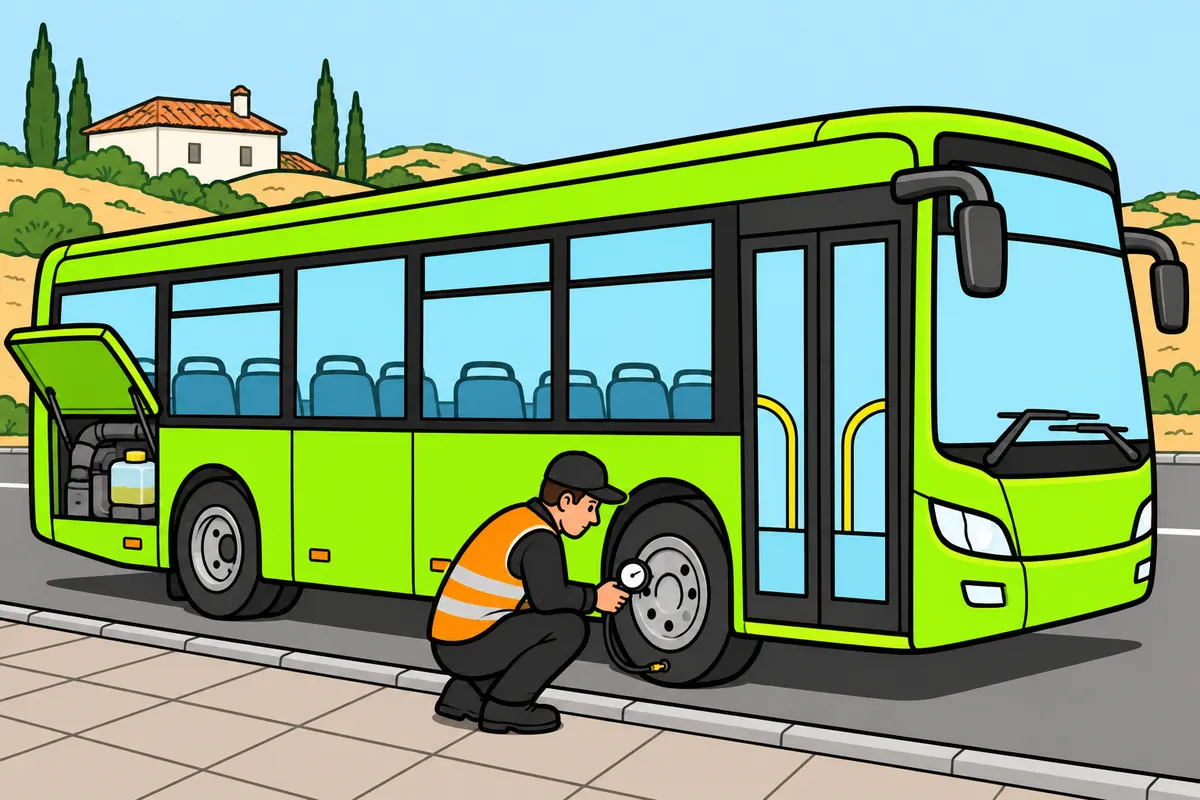 Module 16Bus maintenance and checksYou learn to check the bus before service, identify defects in tyres, fluids, visibility and brakes, and decide when you must immobilise it. You distinguish technical checks from ITV (vehicle roadworthiness test) requirements and learn to interpret pressure readings, warnings and faults without applying car rules to a bus.37 minRead
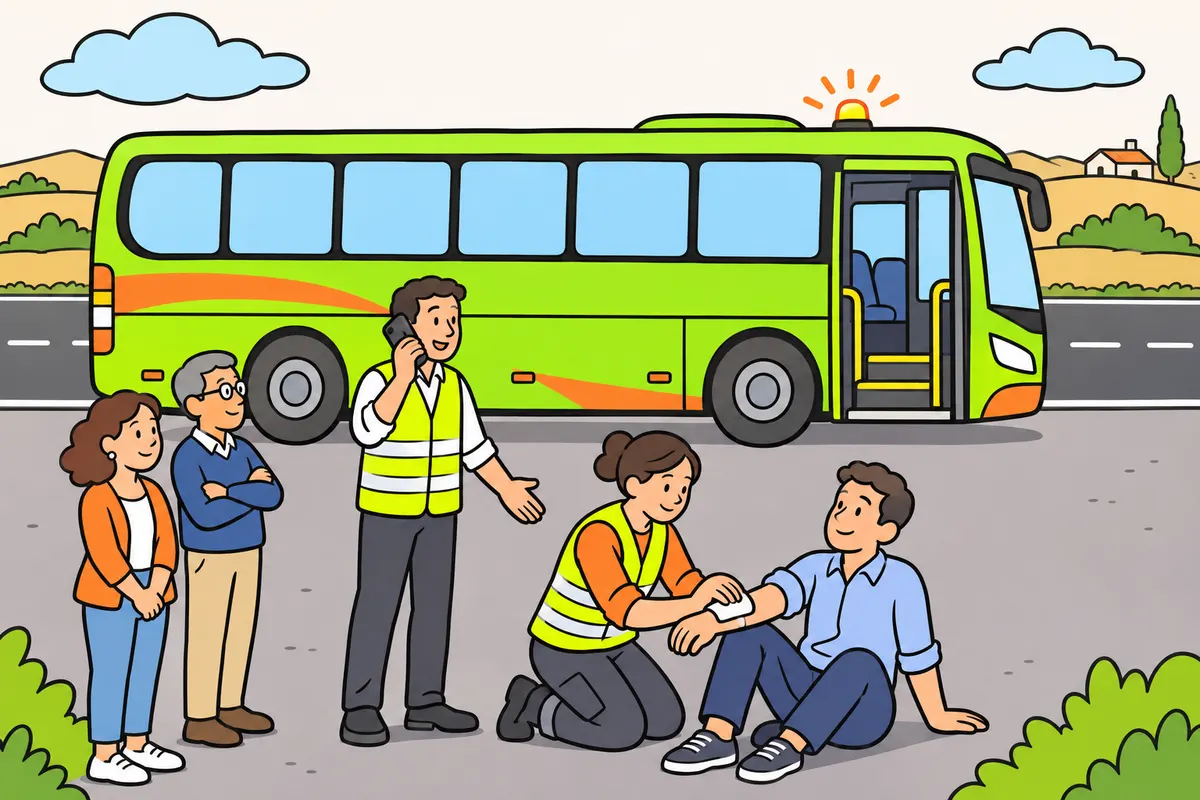 Module 17Accidents and assistanceYou learn to secure the scene of a bus accident or breakdown, call 112 and provide help without making injuries worse. You master PAS, the connected V-16 beacon and the differences between a vehicle immobilised on the road, a tunnel emergency and a traffic queue, together with the duties to assist and identify yourself.32 minRead
 Module 18Preventive and efficient bus drivingYou learn to observe, anticipate risks and maintain space so that you can drive a bus safely, smoothly and with lower fuel consumption. You relate gears, engine speed, tyres, load and aerodynamics to efficiency, and distinguish environmental labels from the conditions for entering low-emission zones (ZBE).35 minRead