
C+E Licence - Articulated Truck
Theory
13 theory modules for the exam, about 7 hours of reading, in the order we recommend.
0 of 13 modules read
Start with module 1: C+E licence: requirements, tests and validity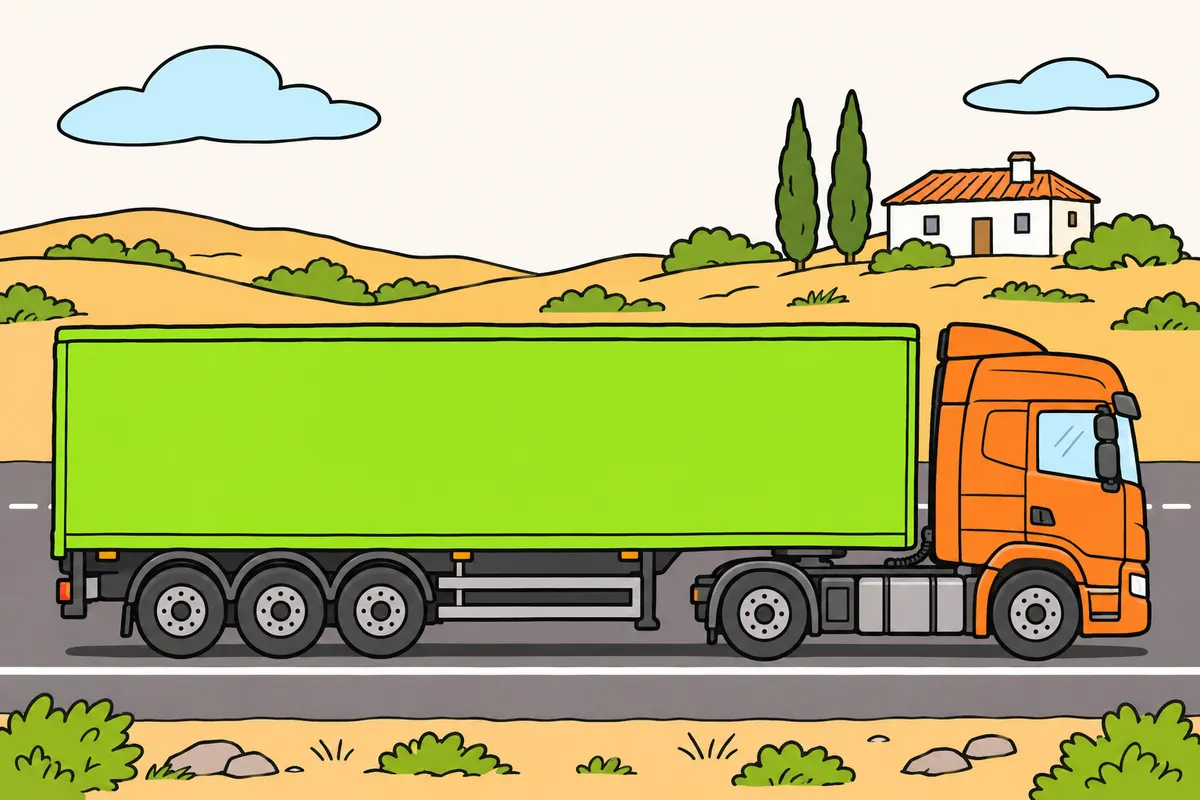 Module 1C+E licence: requirements, tests and validityYou learn which combinations you can drive with C+E, when the base licence is sufficient and how to distinguish it from C1+E, B+E and B with code 96. You master the age requirements, tests, deadlines and renewal rules to answer exam questions without confusing your driving entitlement with the vehicle's limits. You also learn about CAP (Certificate of Professional Competence) and the driver factors that affect the safety of a heavy vehicle combination.30 min · RecommendedRead
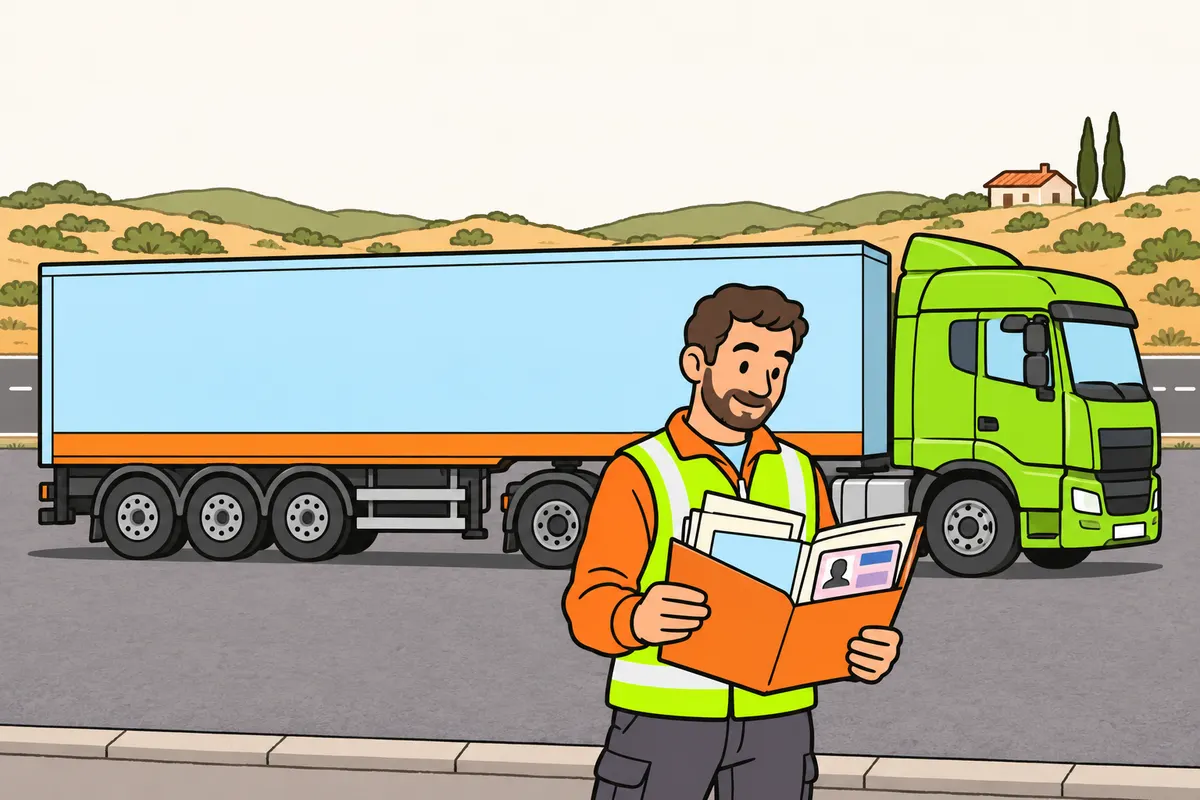 Module 2Driver and vehicle combination documentationYou learn to check your C+E licence and the documents, insurance and ITV (vehicle roadworthiness test) for each vehicle in the combination. You distinguish between age requirements, validity periods and administrative deadlines to answer exam questions and avoid driving without a valid entitlement or inspection.35 minRead
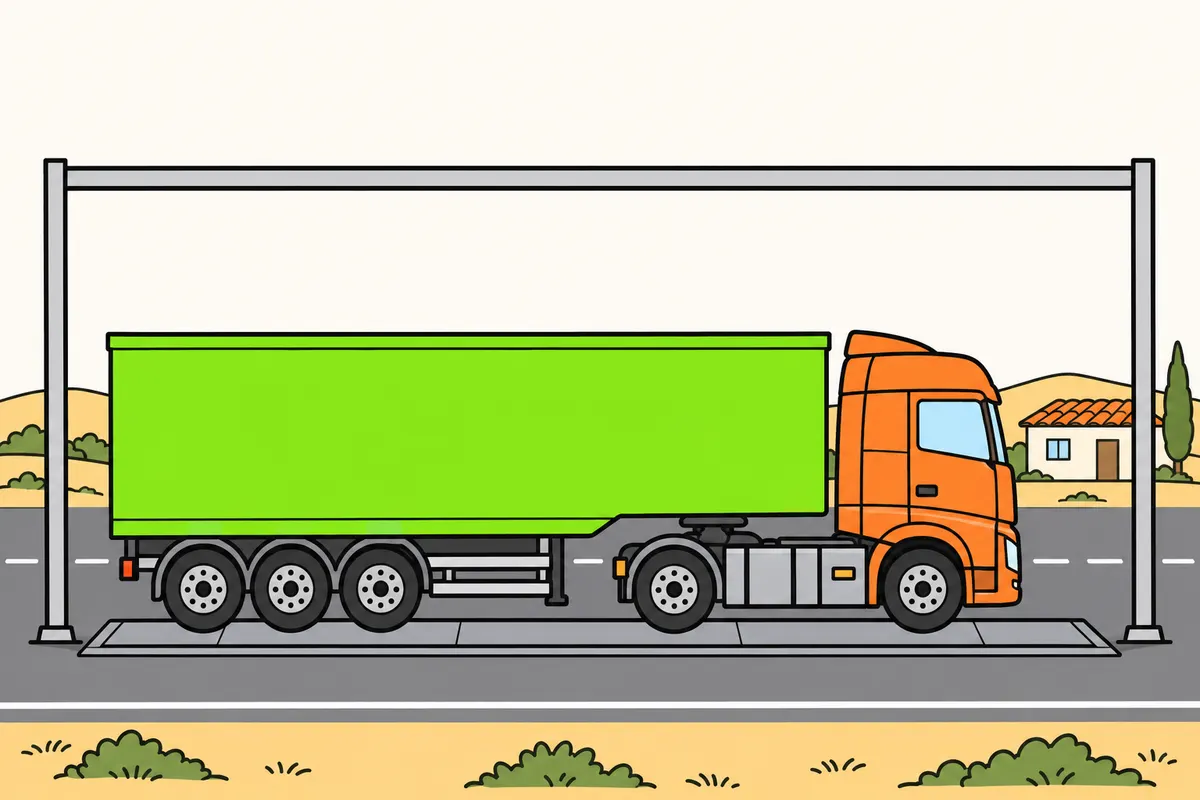 Module 3Maximum dimensions and massesYou learn to determine the permitted masses and dimensions of your articulated vehicle or road train and check the limits for each axle and the road. You can answer questions on configurations, projections, exceptions and special transport without confusing actual mass with authorised mass.40 minRead
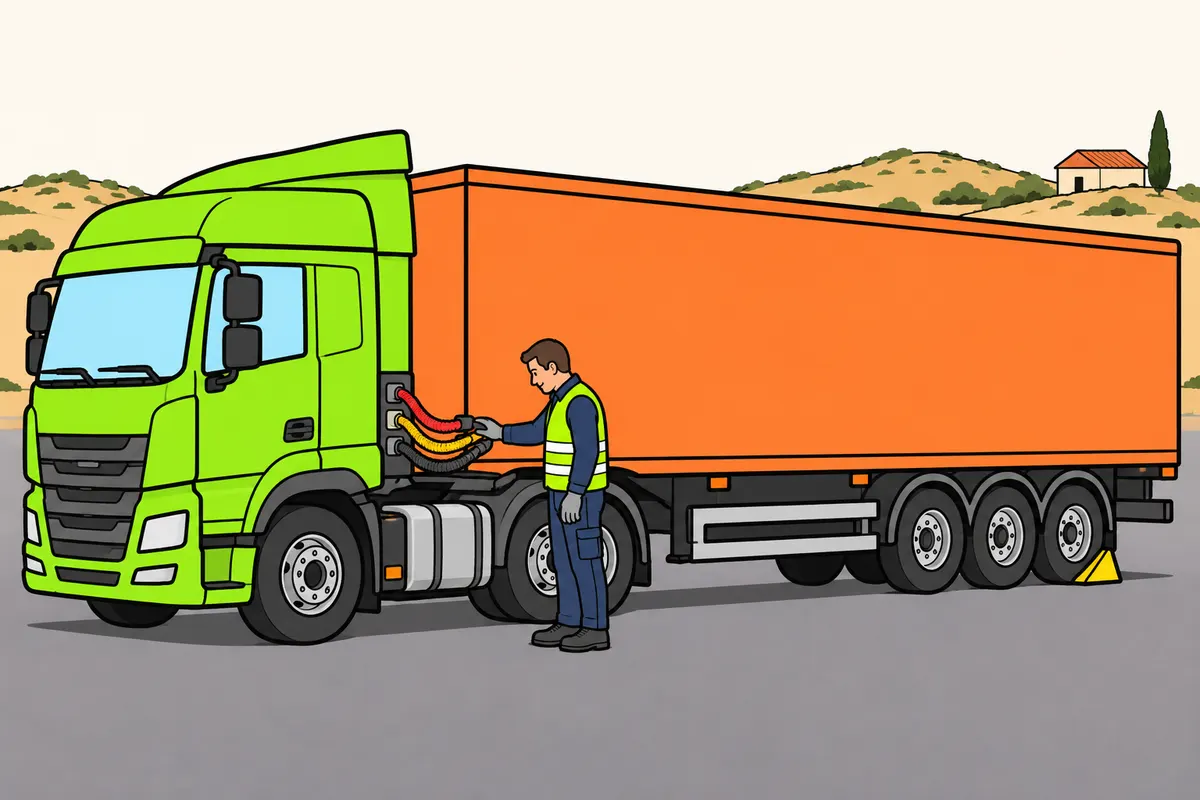 Module 4Safe coupling and uncouplingYou learn to couple and uncouple your lorry and its trailer or semi-trailer while keeping both vehicles immobilised, the coupling locked and the connections secured. You master the order for handling supports, safety locks and final checks so that you can recognise in the exam which actions prevent accidental separation or unexpected movement.27 minRead
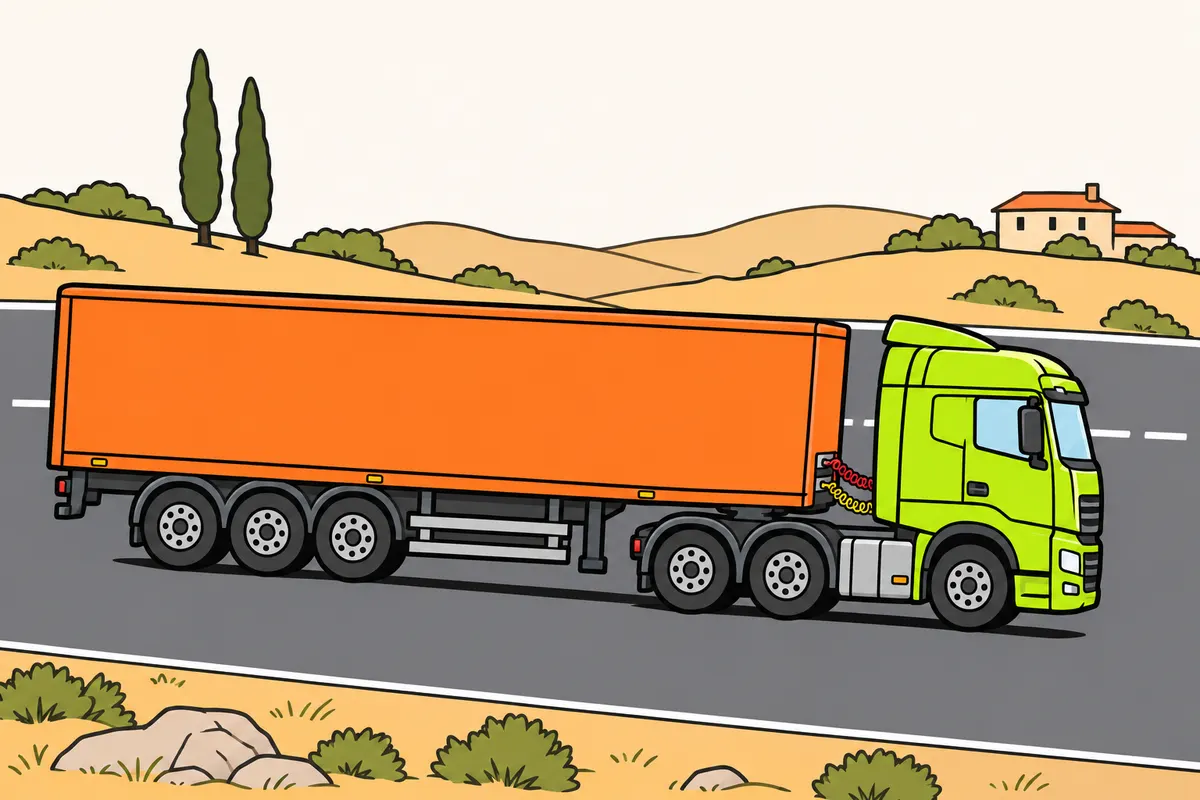 Module 5Trailer and vehicle combination brakingYou learn to distinguish trailer braking systems, their limits and the functions of air connections and safety devices. You understand how combination braking relates to ABS, jackknifing and long descents, so you can answer the specific C+E questions without confusing one function with another.30 minRead
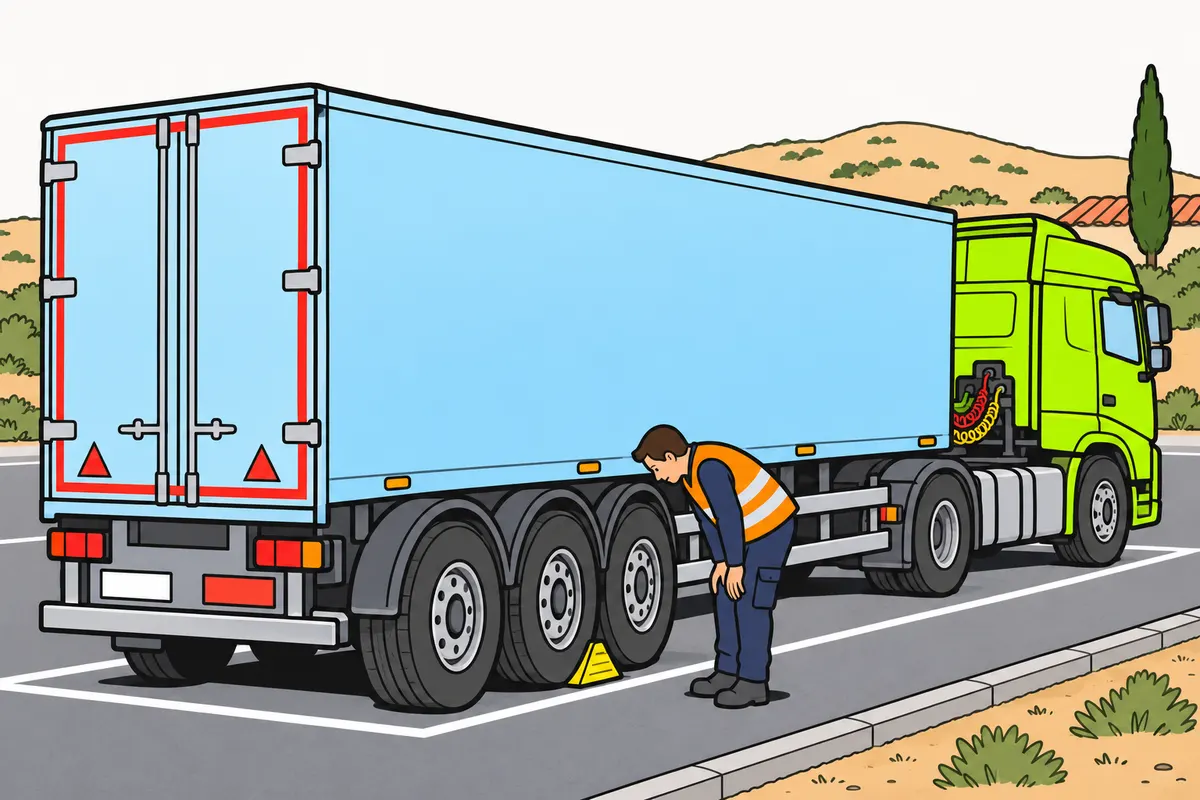 Module 6Safety devices for the vehicle combinationYou learn to recognise and check the devices that keep your C+E combination safe and visible, from the secondary coupling to its lights, number plates, mirrors and protective devices. You master the thresholds and emergency equipment covered in the exam, including wheel chocks, a connected V-16 beacon, a high-visibility vest and fire extinguishers.32 minRead
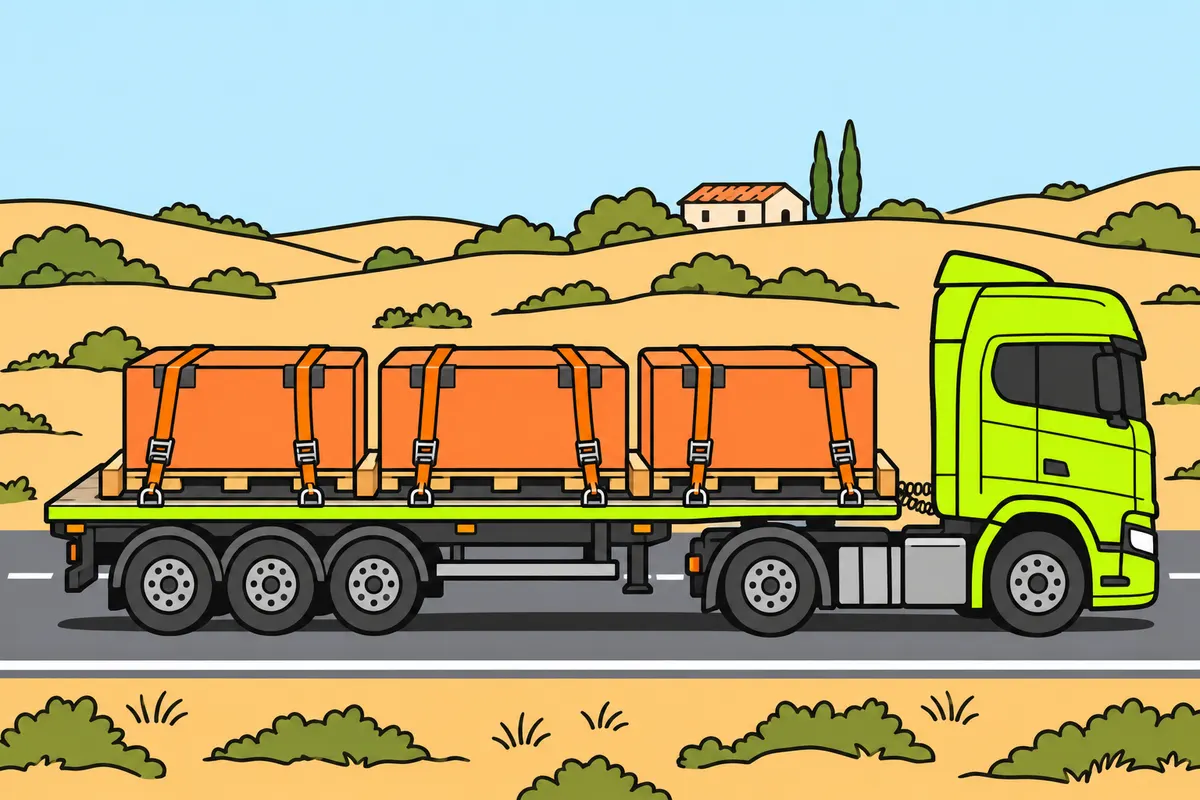 Module 7Safe, well-distributed loadsYou learn to distribute and secure the goods on your combination, control the risks of liquids, suspended loads and live animals, and prepare loading and unloading without compromising stability or dirtying the road.35 minRead
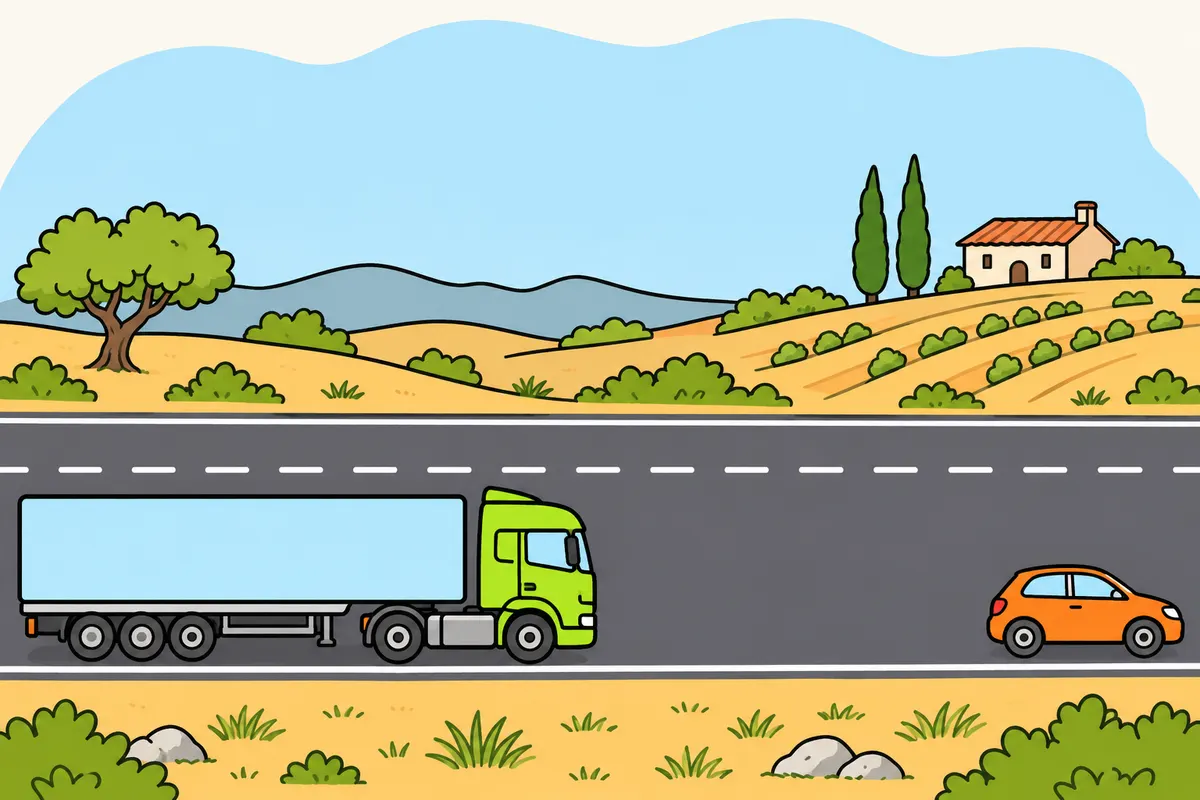 Module 8Speed and distances for vehicle combinationsYou learn to choose a legal and appropriate speed for your combination on each road and calculate the space you need to stop. You apply safe following distances, the five-metre gap behind cyclists in urban areas, the 50-metre gap to facilitate overtaking and the specific separation distances in tunnels.40 minRead
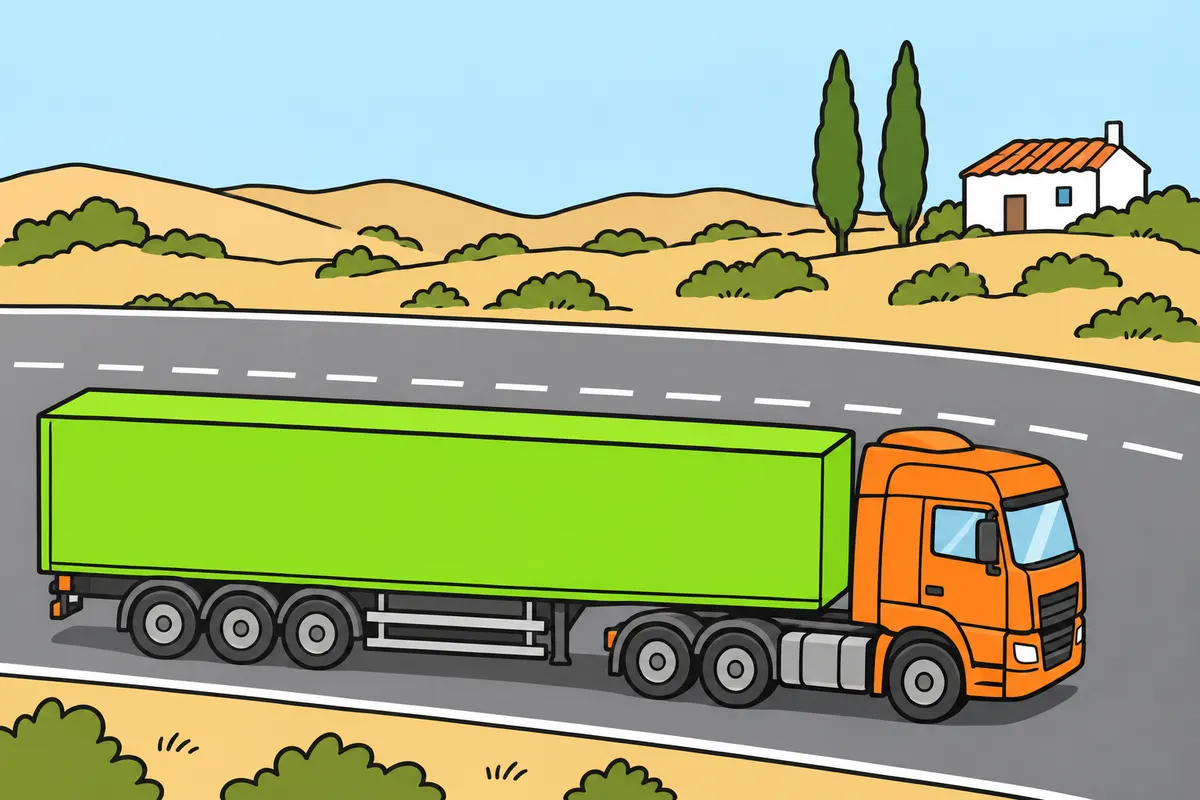 Module 9Manoeuvres with goods vehicle combinationsYou learn to join traffic, change lanes, overtake, turn and reverse while complying with the rules applicable to your C+E combination. You distinguish between compulsory stops, brief stops and parking, and know how to signal and secure the vehicle, paying particular attention to the figures and exceptions that may appear in the exam.35 minRead
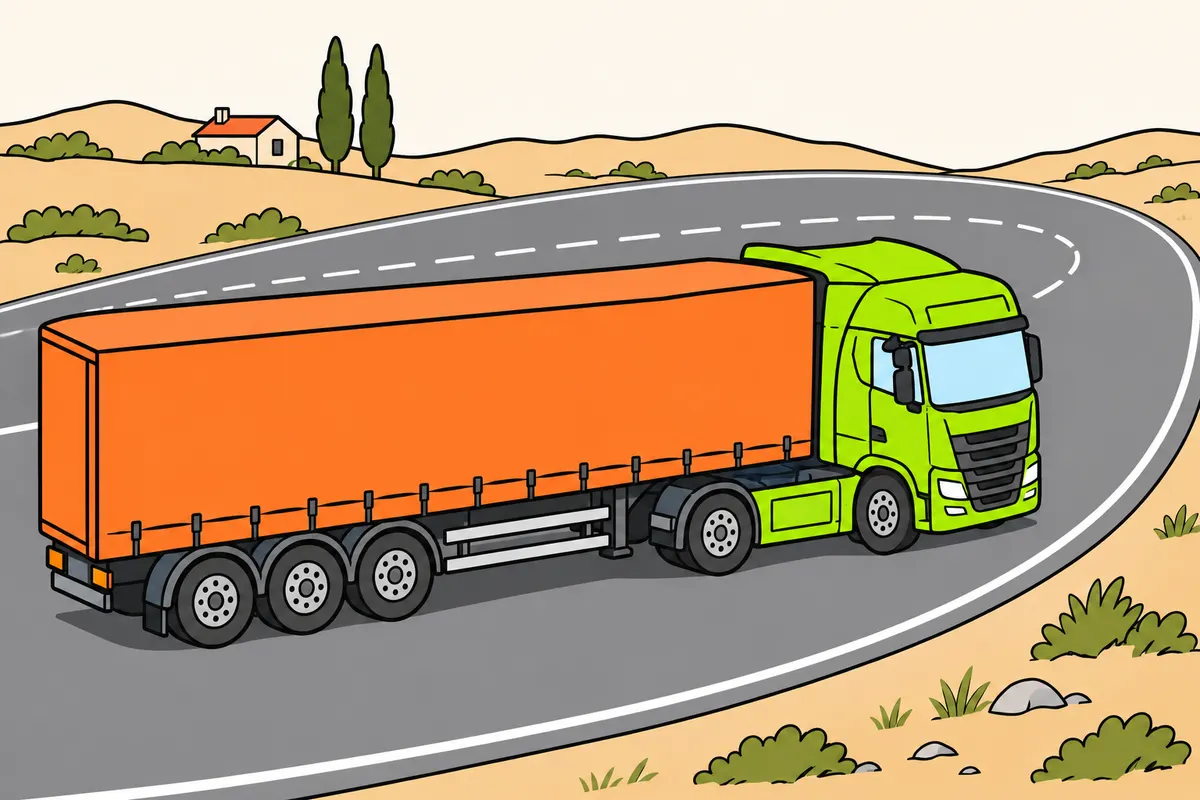 Module 10Driving techniques for heavy vehicle combinationsYou learn to control the stability and full swept path of a heavy vehicle combination: wind, snaking, jackknifing, cutting in and outward swing. You prepare for turns, reversing and approaches to loading bays, also considering how your vehicle affects other road users’ visibility and safety.24 minRead
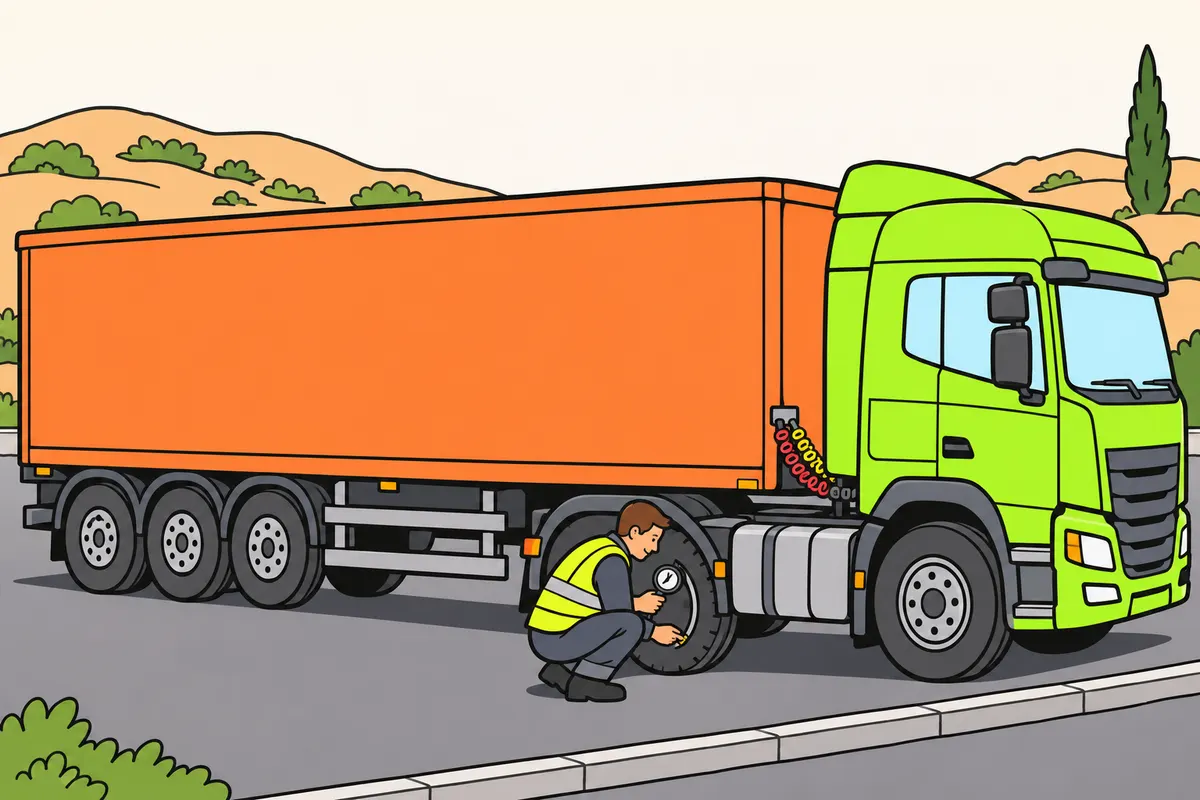 Module 11Maintenance and inspection of the vehicle combinationYou learn to inspect the towing and towed vehicles, identify defects in tyres, brakes, connections and visibility equipment, and decide when you must immobilise the combination. You distinguish maintenance checks from ITV (vehicle roadworthiness test) obligations and answer questions about breakdowns without applying passenger-car rules to a lorry.35 minRead
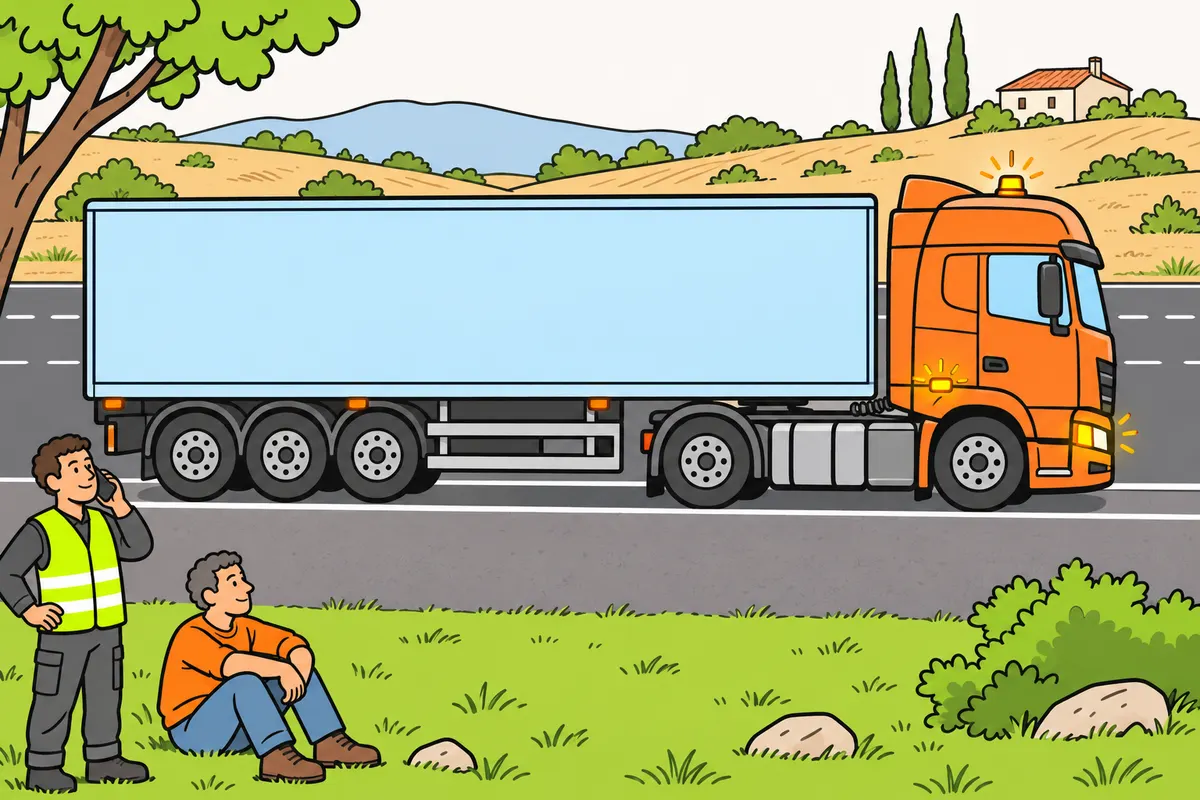 Module 12Responding to accidents and breakdownsYou learn to protect an immobilised heavy vehicle combination, signal it with the connected V-16 beacon, call 112 and provide first aid without worsening injuries. You answer questions about evacuation, fires and tunnels, and distinguish your duties to assist, remain at the scene and identify yourself.35 minRead
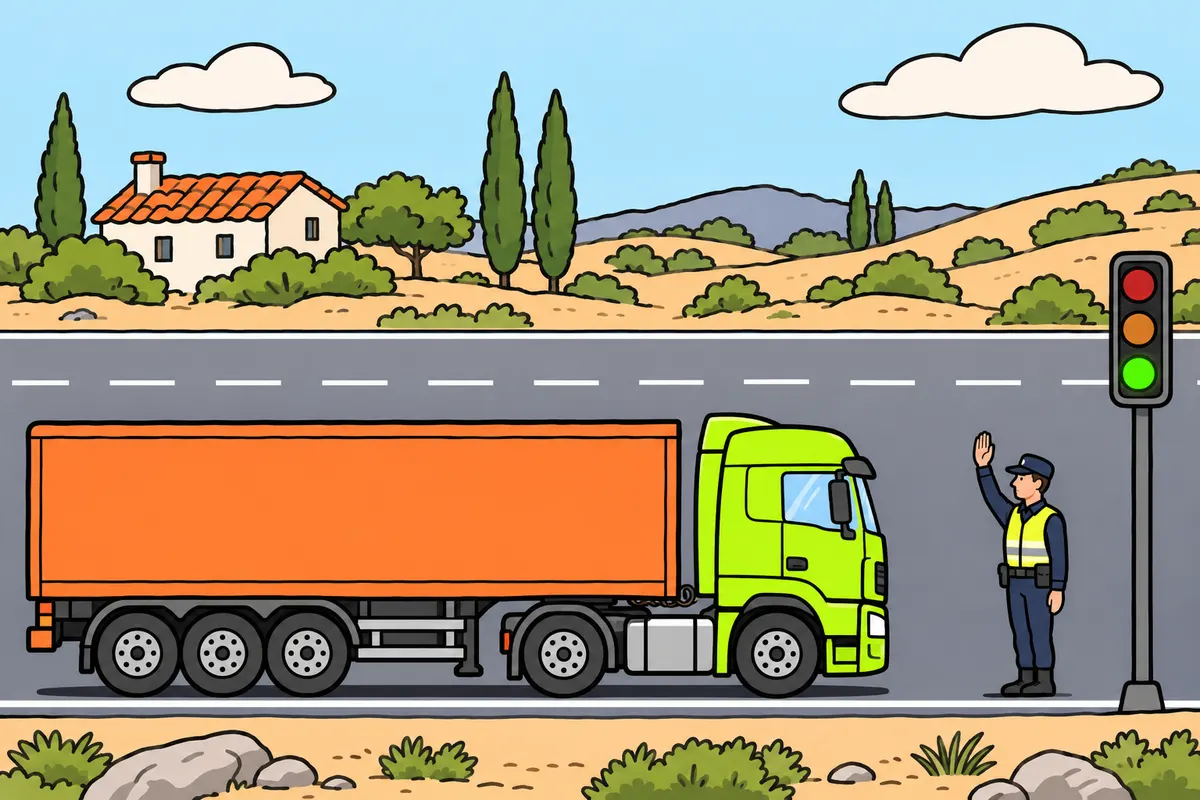 Module 13Road signs and their priorityYou learn how to apply the hierarchy of signs and signals and interpret instructions from officers, roadworks signs, traffic lights, upright signs and road markings. You apply the official catalogue to your C+E combination, distinguishing restrictions based on trailers, mass, dimensions and routes that determine the answers to many exam questions.40 minRead