
A2 Licence - Motorcycle
Theory
18 theory modules for the exam, about 9 hours of reading, in the order we recommend.
0 of 18 modules read
Start with module 1: Essential definitions for riding a motorcycle Module 1Essential definitions for riding a motorcycleYou identify road components and types, vehicle categories and the limits that distinguish motorcycles covered by A2. You understand masses and people’s roles, and distinguish between stopping due to traffic or an emergency, voluntary stopping, parking, junctions and overtaking to answer exam scenarios.30 min · RecommendedRead
 Module 2Motorcycle licences and documentationYou learn which motorcycles you can ride with A1, A2, A and the national entitlement provided by B, and which tests and deadlines you must meet to obtain and renew your licence. You can check the documentation, ITV (vehicle roadworthiness test), insurance and basic protective equipment duties without confusing A2 limits with the requirements for the test motorcycle.28 minRead
 Module 3The driving licence points systemYou learn how many points you have with A2, how your balance increases and which offences reduce it. You distinguish the recovery routes, courses and waiting periods for obtaining your licence again if it loses its validity, and answer questions about points deductions without confusing them with fines.27 minRead
 Module 4Your fitness to ride safelyYou learn to recognise when alcohol, drugs, medicines, tiredness or emotions prevent you from riding safely. You master the limits and tests, the rules on phones and intercoms, and the decisions that protect your attention, balance and coordination on an A2 motorcycle.35 minRead
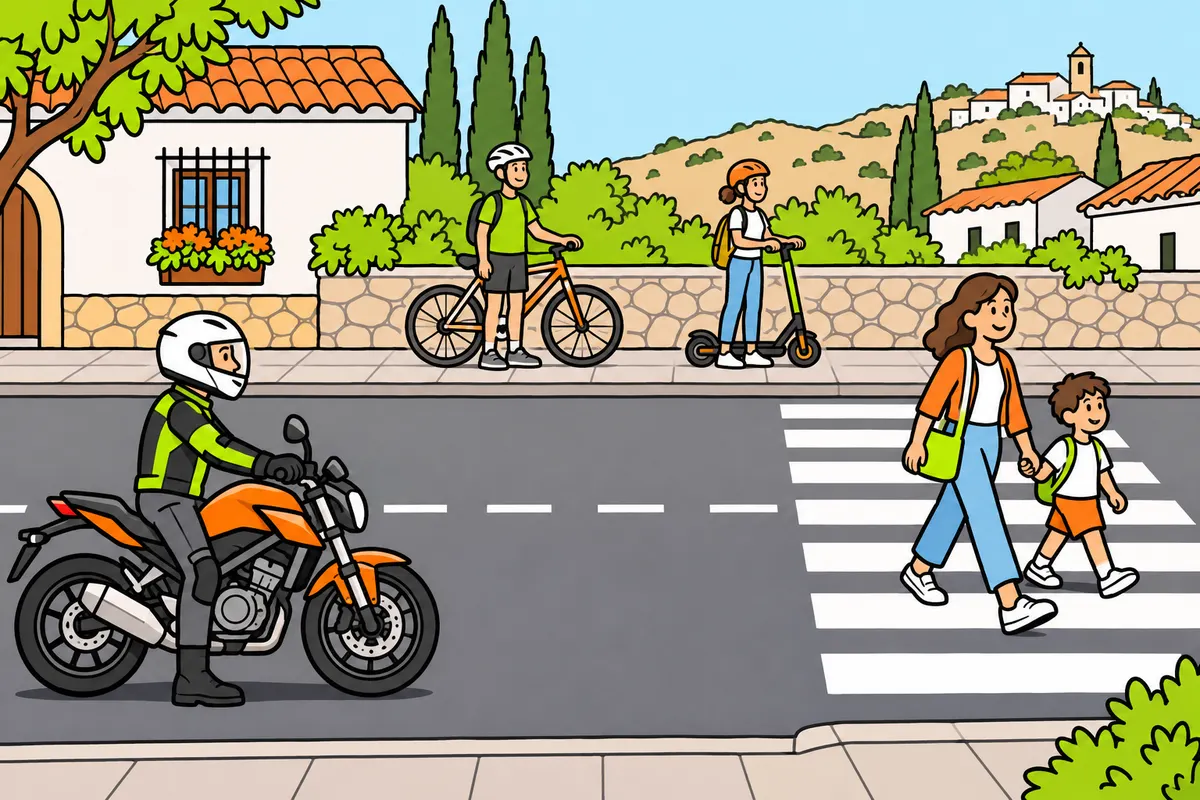 Module 5Pedestrians and vulnerable road usersYou learn to protect pedestrians, cyclists, VMP (personal mobility vehicle) users and horse riders when riding your motorcycle, and to recognise the rules they must follow. You practise priority situations, distances and precautions that help you identify the correct answers in the A2 exam.30 minRead
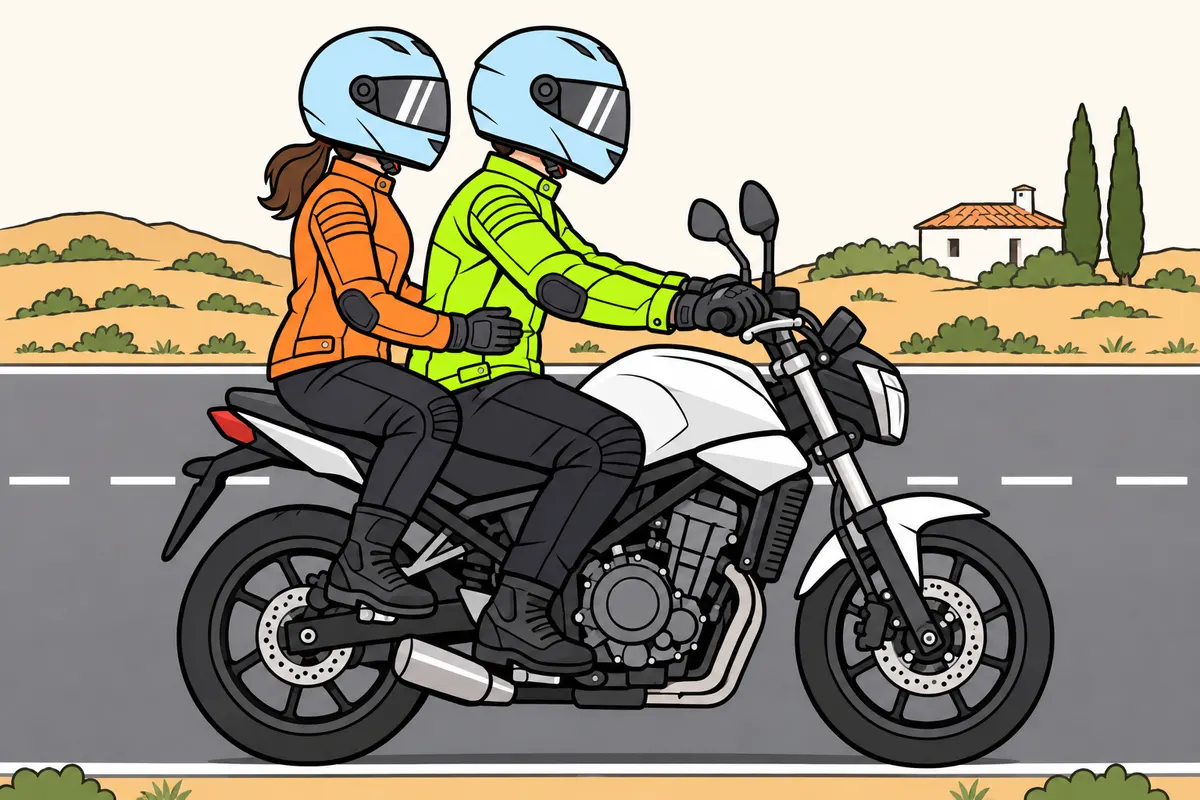 Module 6Motorcycle protective equipmentYou learn to distinguish compulsory equipment from recommended protection and to choose, adjust and care for your motorcycle helmet and clothing. You can answer A2 questions on gloves, footwear, visibility, airbags and passenger equipment, distinguishing ordinary road use from practical tests. This includes seat belts, head restraints and child restraint systems from the common theory syllabus, explaining how their application differs for motorcycles.30 minRead
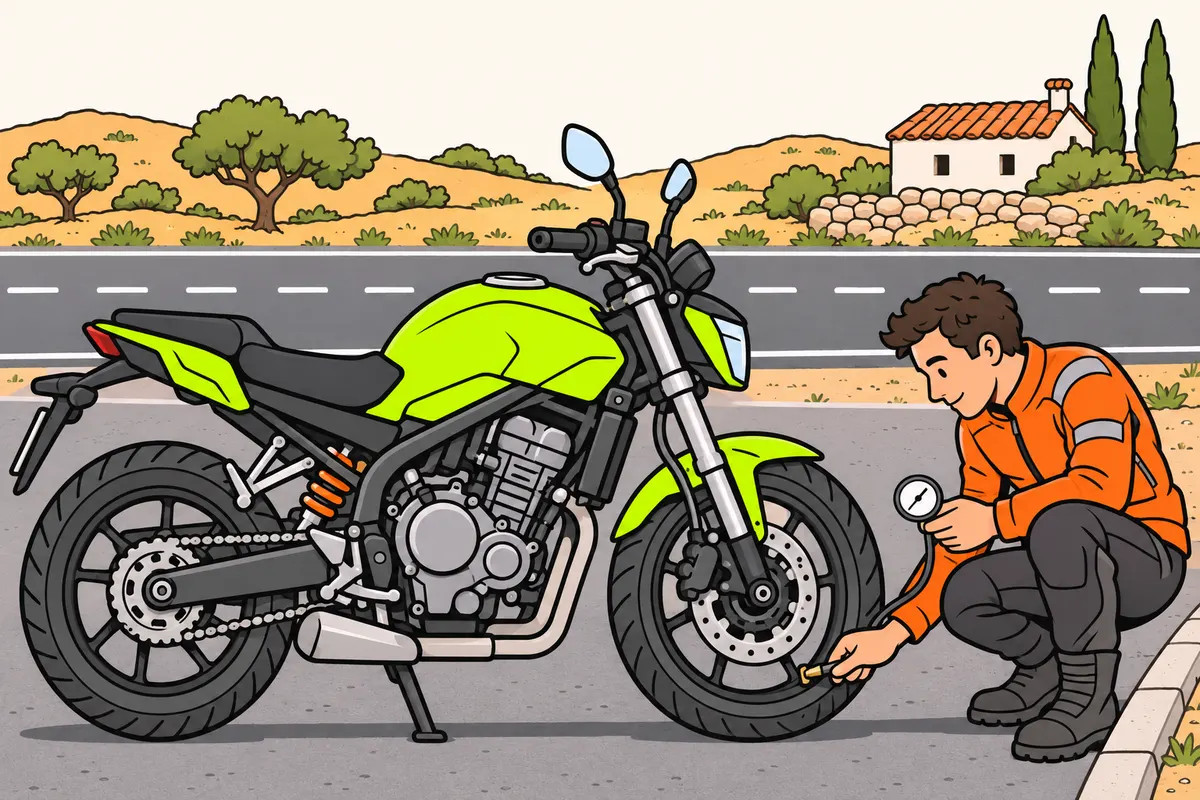 Module 7Motorcycle mechanics and maintenanceYou learn to recognise your motorcycle’s systems, check their condition and detect faults before riding. You distinguish technical requirements from the manufacturer’s recommendations and answer exam questions on tyres, brakes, the engine and transmission.40 minRead
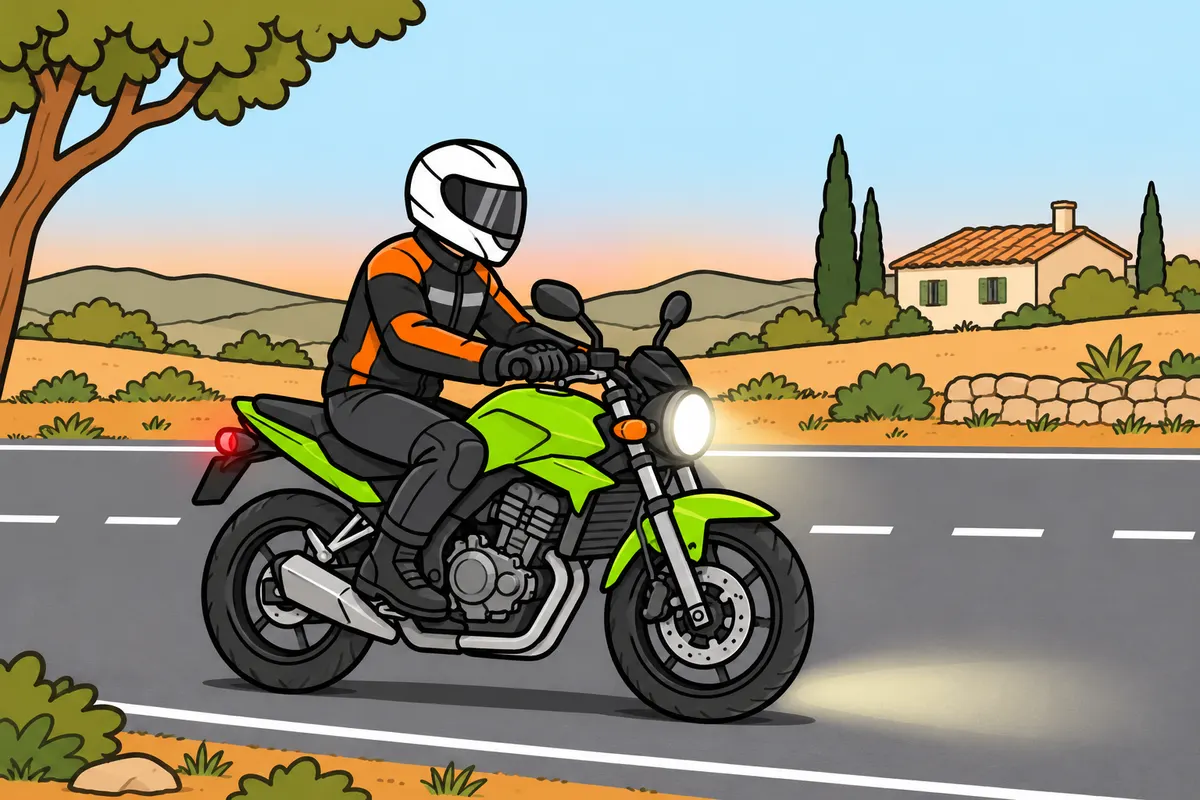 Module 8Motorcycle lights and signalsYou learn to choose your motorcycle lights during the day, at night, in tunnels and in poor visibility without dazzling others. You distinguish compulsory and optional lights, manoeuvre and emergency signals, and the plates you need to recognise to answer A2 exam questions.32 minRead
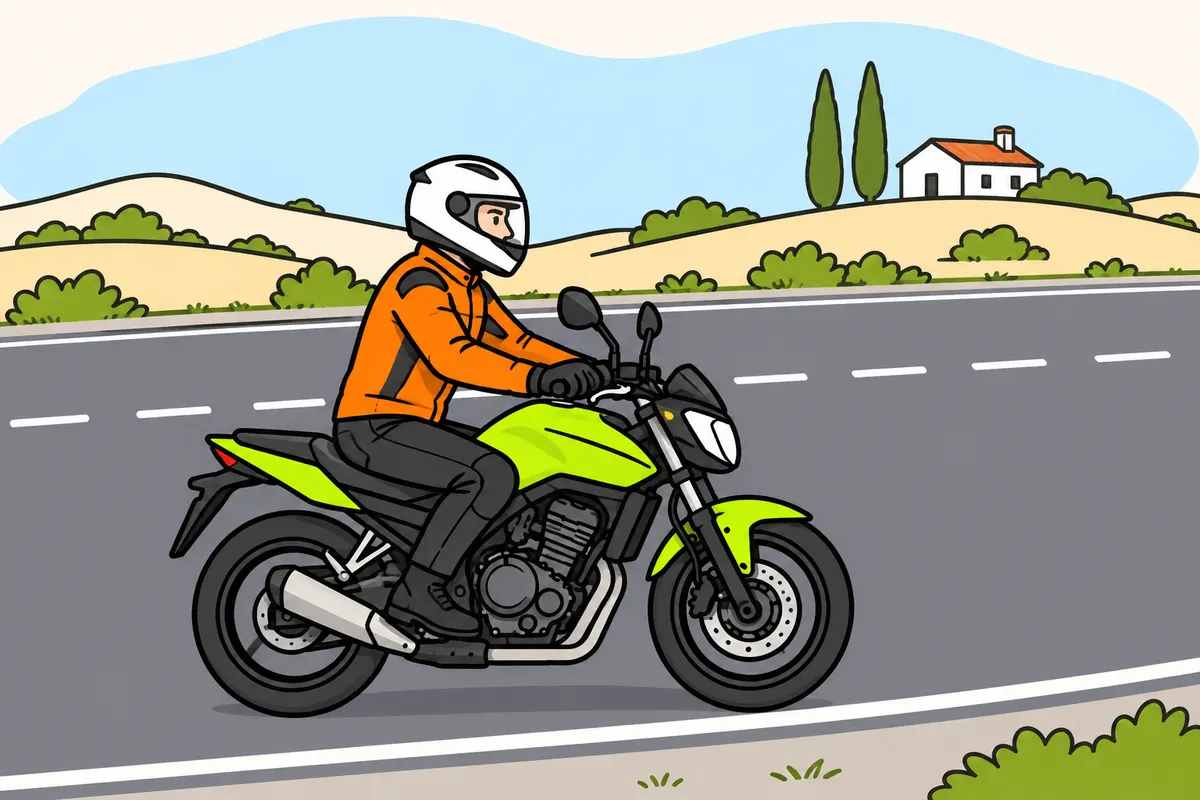 Module 9Using the road on your motorcycleYou choose the correct carriageway and lane for your motorcycle, recognise reserved lanes and distinguish when you must or may use the arcén (hard shoulder). You answer questions about traffic directions, special lanes, road markings and tunnels by considering the conditions and exceptions that often determine the exam answer.30 minRead
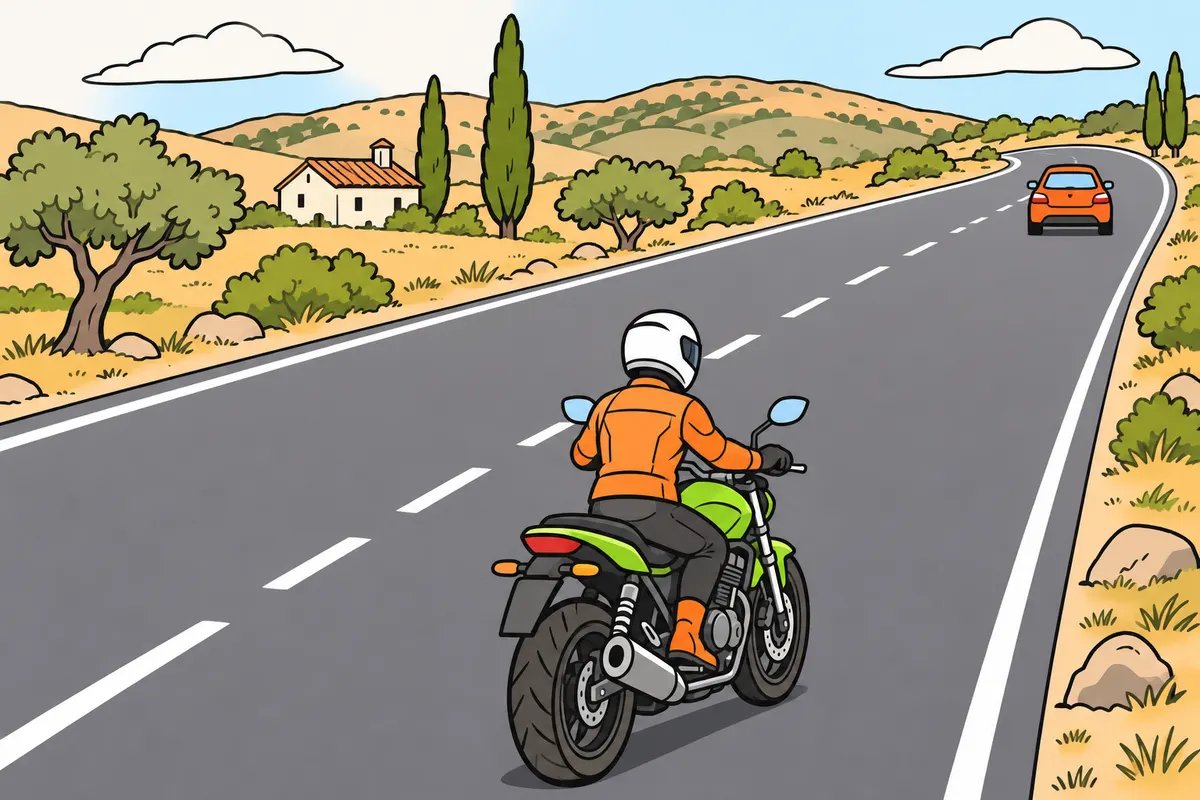 Module 10Speed and distances on a motorcycleYou learn to identify the speed limits for your motorcycle on each road and to slow down when circumstances require it. You distinguish reaction, braking and stopping distances, and know what gap to maintain to avoid rear-end collisions, allow overtaking and ride through tunnels. These distinctions are crucial for answering A2 exam questions and keeping a safety margin for unexpected events.32 minRead
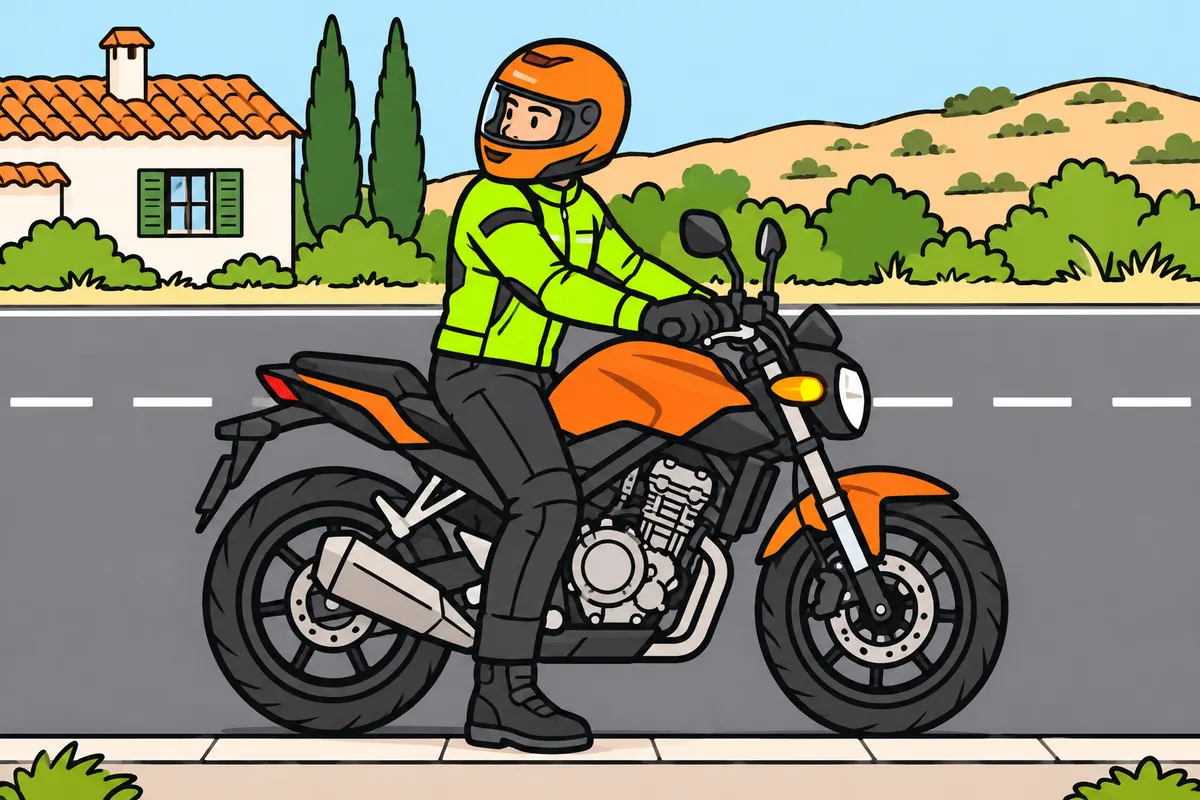 Module 11Motorcycle manoeuvresYou learn to join traffic, change lanes, overtake and turn on your motorcycle, observing, signalling and respecting other road users’ space. You distinguish where each manoeuvre is permitted or prohibited, the conditions for stopping and parking, and the immobilisation rules covered in the exam.40 minRead
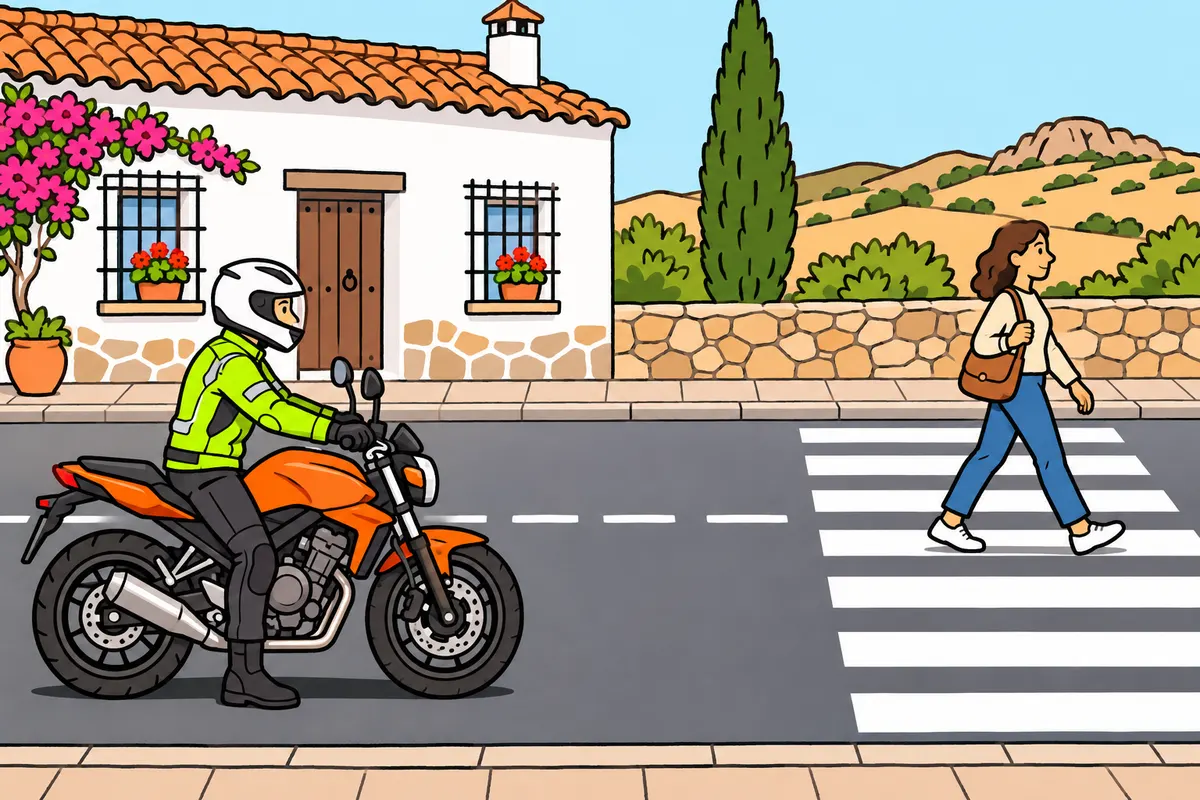 Module 12Priority of passageYou learn how to decide who goes first at junctions, roundabouts, narrow sections, gradients and railway crossings, applying the relevant traffic controls first. You learn when you must give way on your motorcycle to pedestrians, cyclists and emergency vehicles, and recognise the exceptions that often determine the exam answer.30 minRead
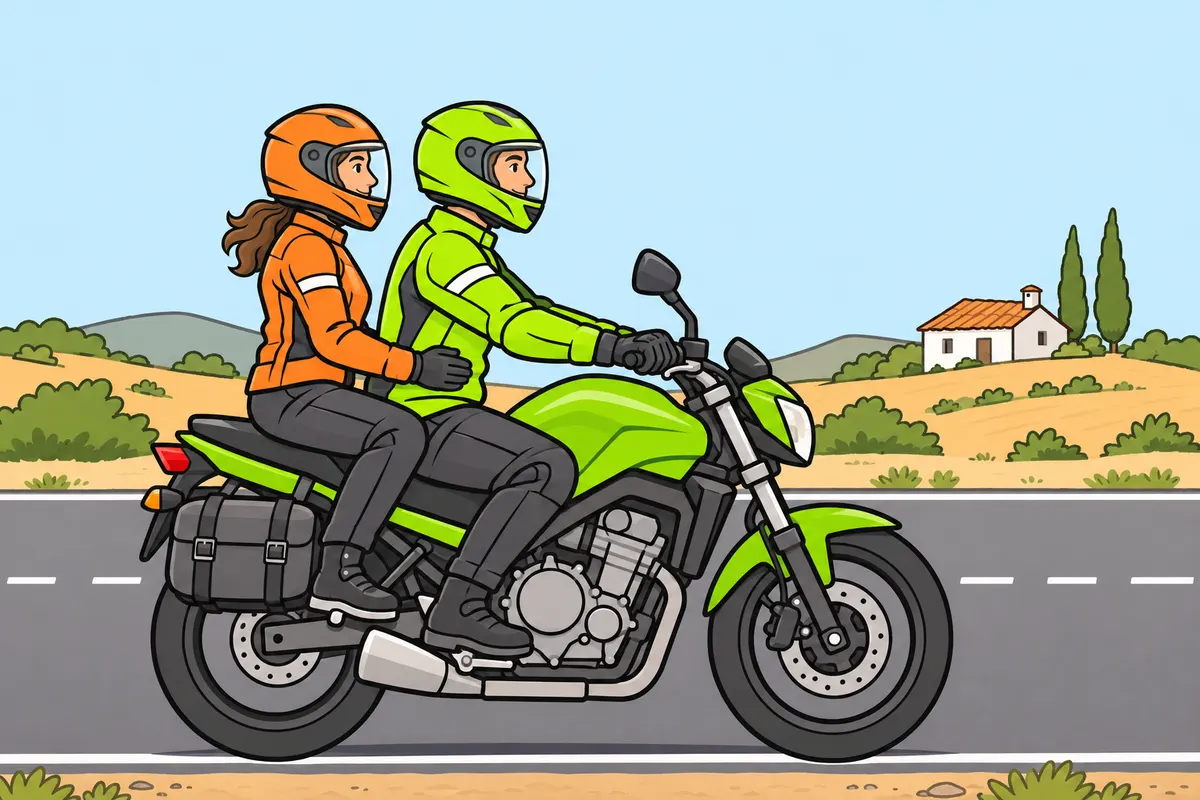 Module 13Passengers and loads on motorcyclesYou learn who can accompany you and where they must sit, how to position and secure luggage, and which mass and load projection limits you must observe. You study load marking and the conditions for towing a trailer with your motorcycle.15 minRead
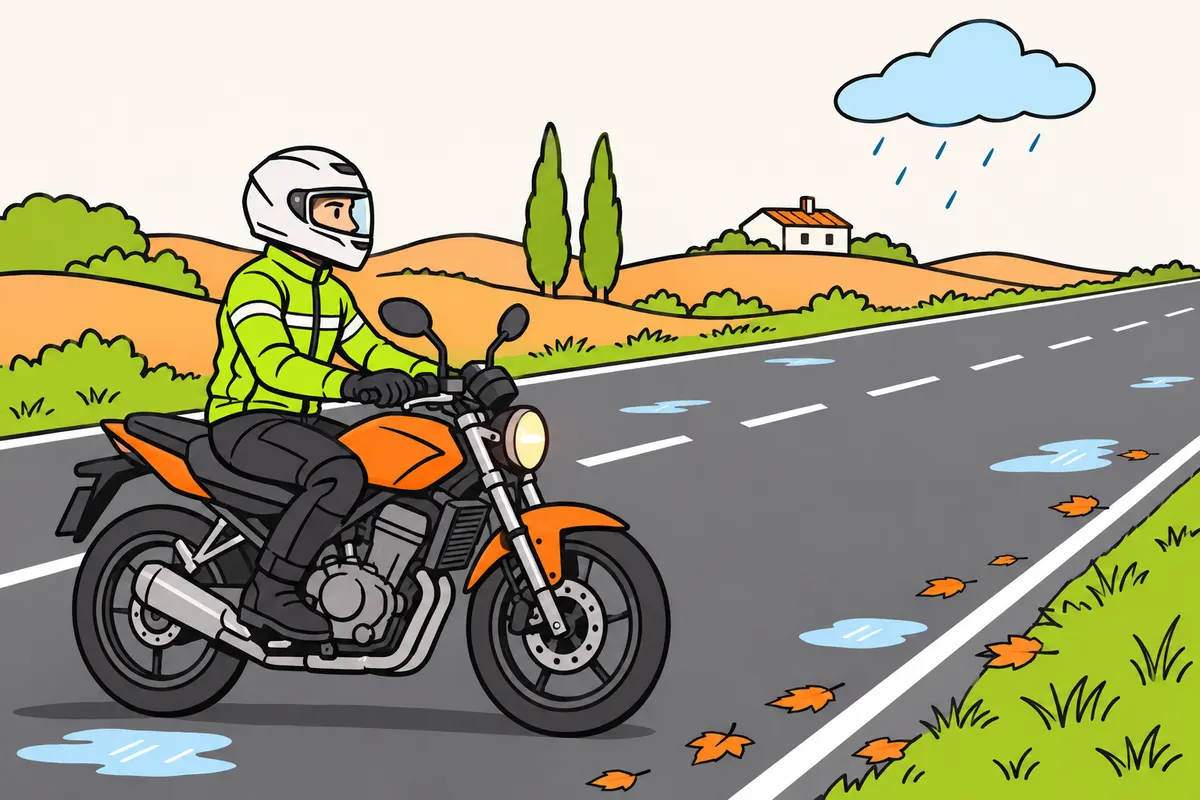 Module 14Motorcycle risks and preventionYou learn to recognise risks involving visibility, grip, weather, speed, group riding and fatigue, and to reduce them on your motorcycle. You can answer exam questions that require you to distinguish a legal obligation from a recommendation and choose the answer that preserves control, space and time to react.24 minRead
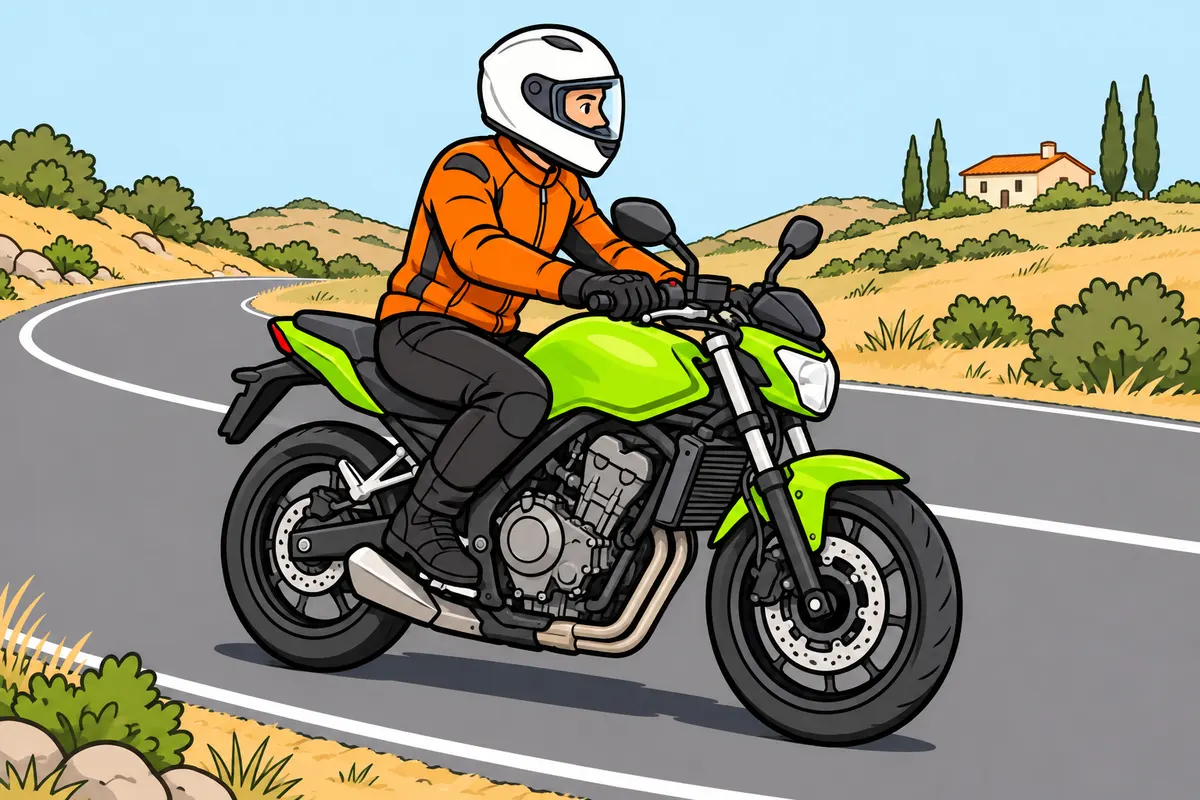 Module 15Motorcycle riding techniquesYou learn to coordinate your posture, where you look and your use of the controls to balance, brake and negotiate bends safely. You practise the reasoning required in the A2 exam on overtaking, carrying a passenger, riding in a group, and closed-course and on-road manoeuvres.38 minRead
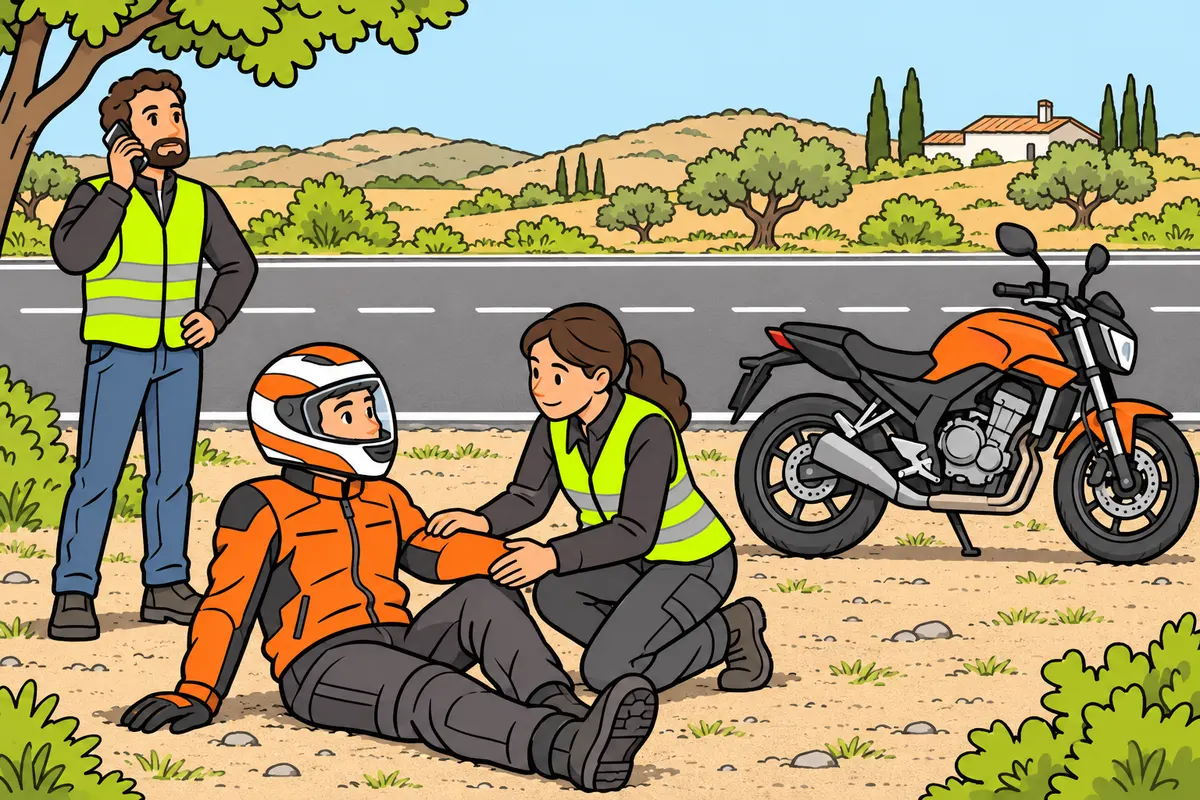 Module 16Accidents, breakdowns and assistanceYou learn to protect an immobilised motorcycle, alert 112 and help casualties without worsening their injuries. You master the duties to assist and identify yourself, and the motorcycle-specific rules on reflective vests, V-16 beacons and helmets that are essential for answering exam questions.24 minRead
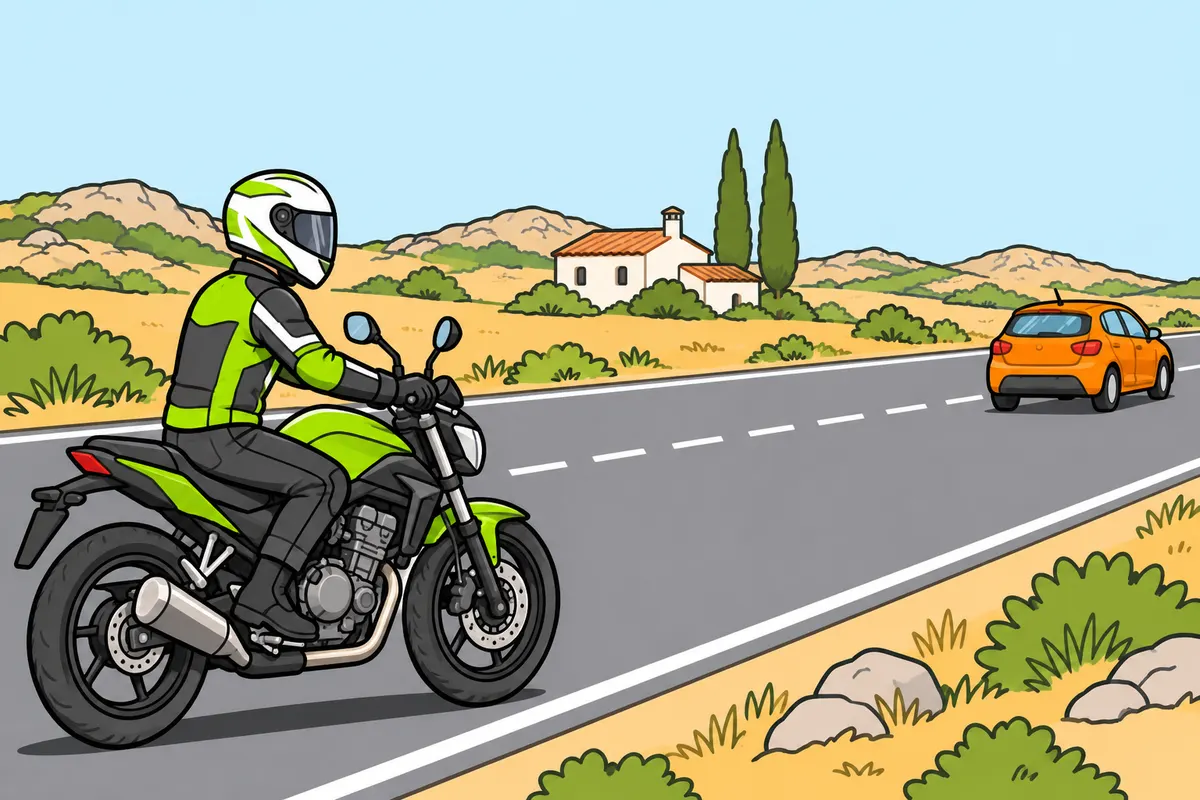 Module 17Preventive and efficient motorcycle ridingYou learn to observe, anticipate and preserve space to respond to unexpected situations on your motorcycle. You learn to reduce fuel consumption and noise through smooth riding, choose the right gear and tyre pressure, and interpret environmental badges and ZBE (low-emission zone) restrictions. For the exam, you distinguish legal obligations from efficiency advice and avoid applying criteria for cars to motorcycles.24 minRead
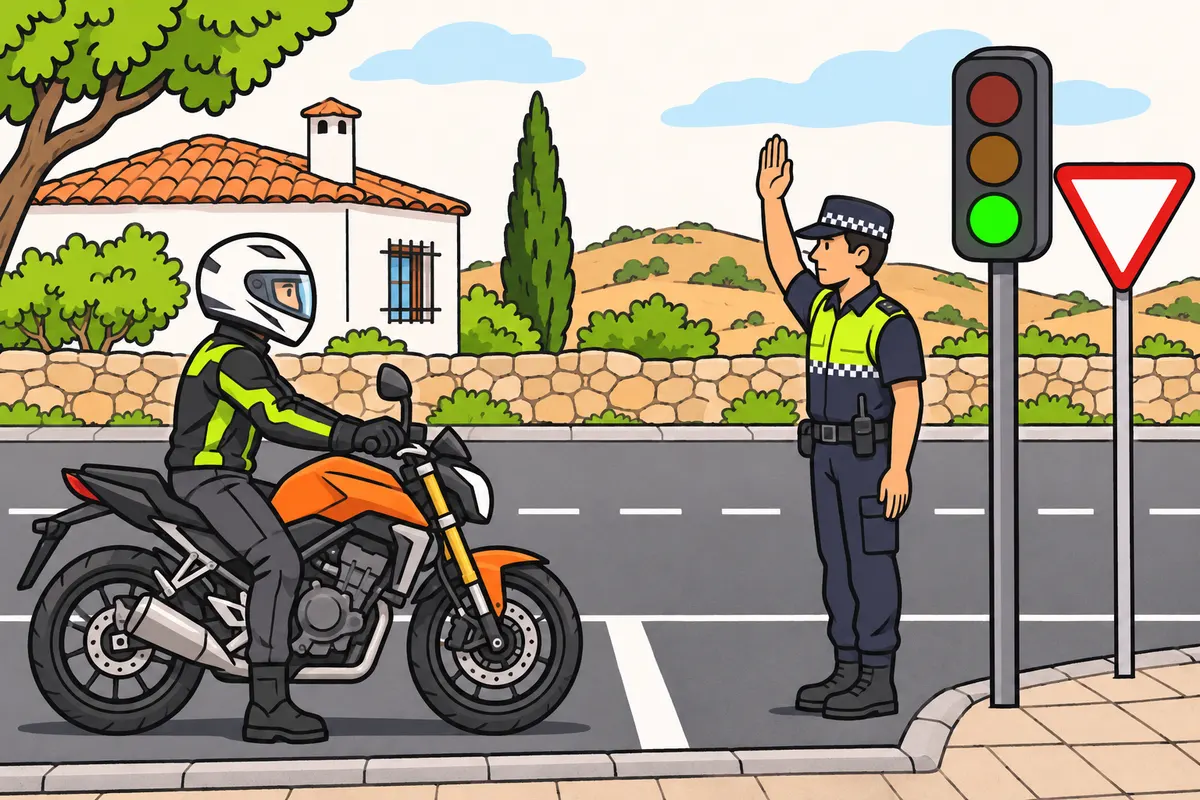 Module 18Signs and their order of priorityYou learn to interpret officers’ instructions, temporary signs, traffic lights, upright signs and road markings you encounter when riding your motorcycle. You resolve possible conflicts between them and recognise the codes and motorcycle exceptions that cause the most confusion in the exam.30 minRead