
Theory · LCM Licence - Reduced Mobility Vehicle · Module 3 of 15
Driver and vehicle documentation
You learn how to check your LCM licence, its restrictions and its renewal, and how to distinguish the documents relating to your vehicle. You learn how to answer questions about ITV (vehicle roadworthiness test), insurance, changes of details and duplicate documents without automatically applying the rules for a passenger car to a vehicle for people with reduced mobility.
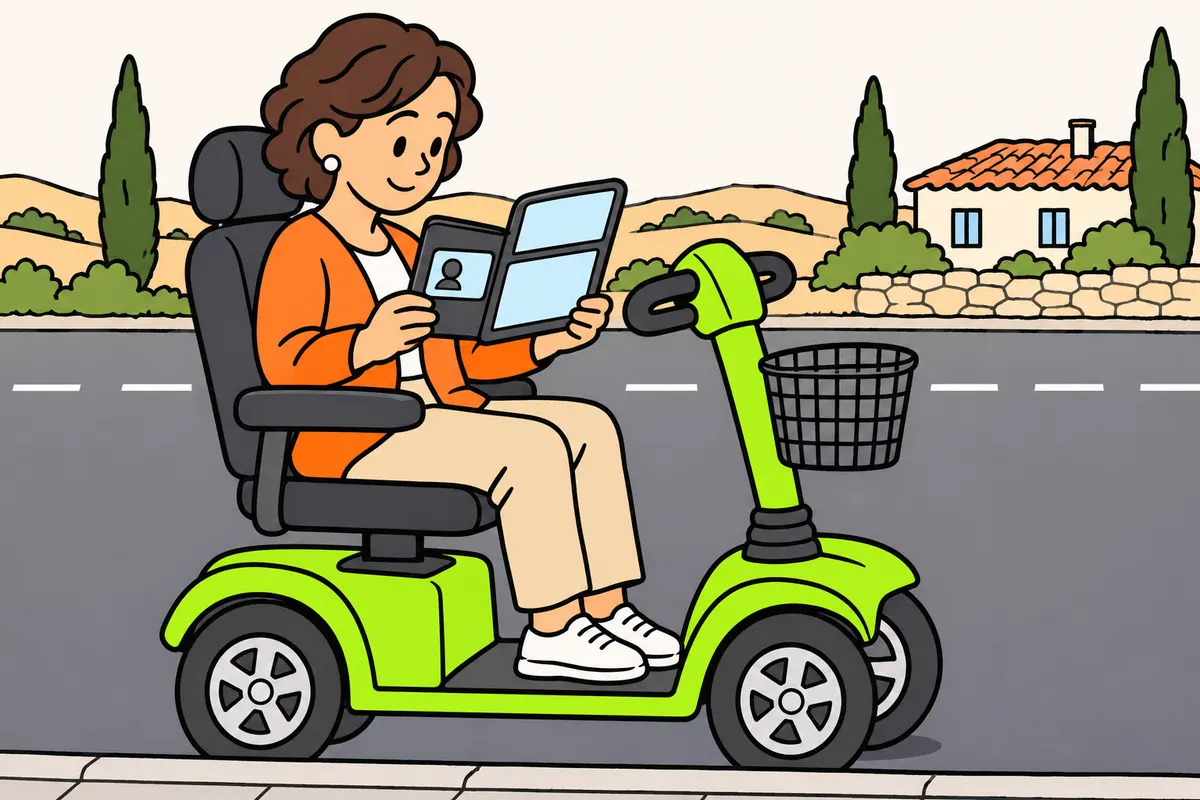
1Each document proves something different
Your licence and vehicle documents prove different things.
| Document | What it proves |
|---|---|
| Your LCM licence | What you can drive and under which conditions |
| Registration document | Vehicle authorisation |
| ITV card or certificate of characteristics | Authorised vehicle features |
Remember
- Check your licence and vehicle documents separately.
- Your licence says what you can drive and under which conditions.
- Check the authorised vehicle features in its technical documents.
- Having insurance does not mean you must carry paper proof.
Exam trap: Wrong: owning a vehicle lets you drive it. Right: you need the correct licence.
Read the full explanation
- Your personal driving entitlement and the vehicle's authorisation serve different purposes. Your LCM licence proves what you can drive and under what conditions; the registration document relates to the specific vehicle. Owning it does not prove that you have the necessary licence, and holding the licence does not prove that the vehicle's documents are in order. [RGCond, art. 6](https://www.boe.es/buscar/act.php?id=BOE-A-2009-9481#a6) [RGV, art. 26](https://www.boe.es/buscar/act.php?id=BOE-A-1999-1826#a26).
- Technical documentation has its own purpose: the tarjeta ITV (vehicle roadworthiness test card) or the certificate of characteristics applicable to the vehicle describes its authorised configuration. Inspection information allows you to check whether its inspections are up to date. You must not confuse the licence's issue date with the expiry date of a vehicle inspection. [RGV, art. 26](https://www.boe.es/buscar/act.php?id=BOE-A-1999-1826#a26).
- Having insurance cover, being legally required to take it out and carrying paper proof are different matters. The obligation to present registration and technical documents to officers does not make every piece of paperwork relating to the vehicle compulsory to carry. [RGV, art. 26](https://www.boe.es/buscar/act.php?id=BOE-A-1999-1826#a26) [LRCSCVM, arts. 1 bis and 2](https://www.boe.es/buscar/act.php?id=BOE-A-2004-18911).
2The LCM licence and its issuing authority
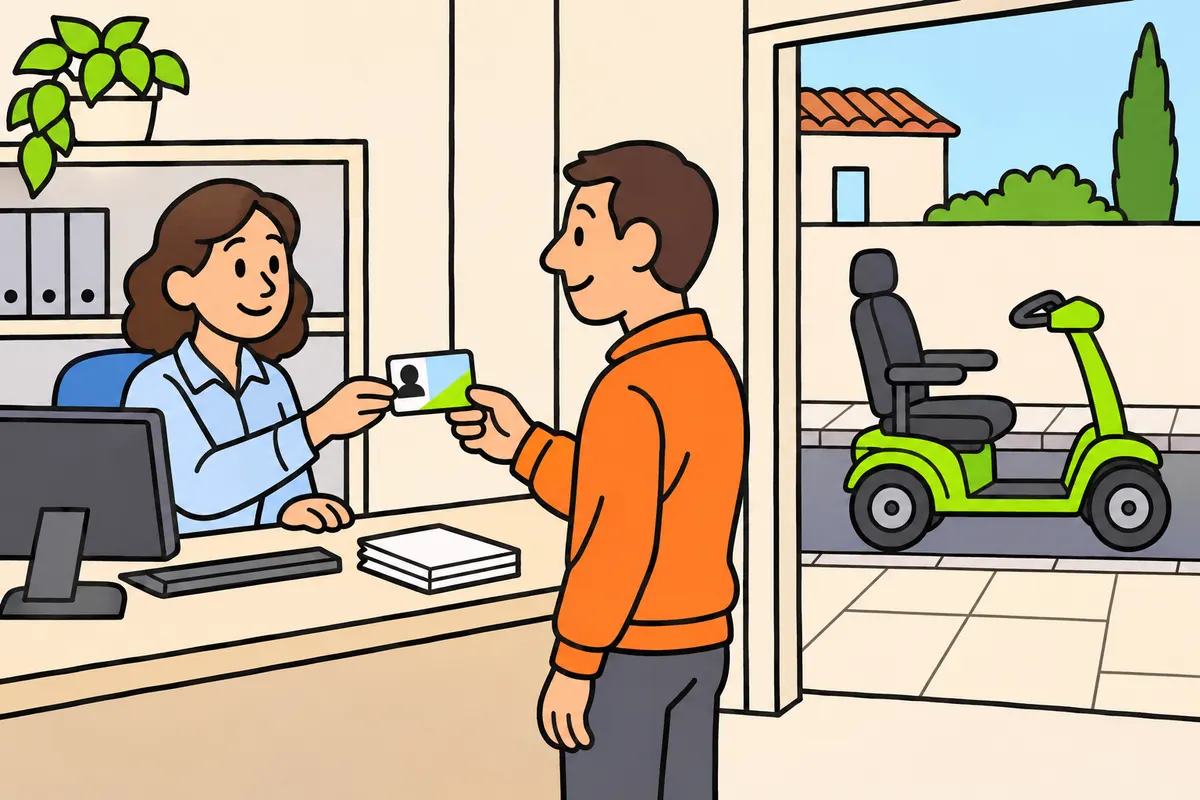
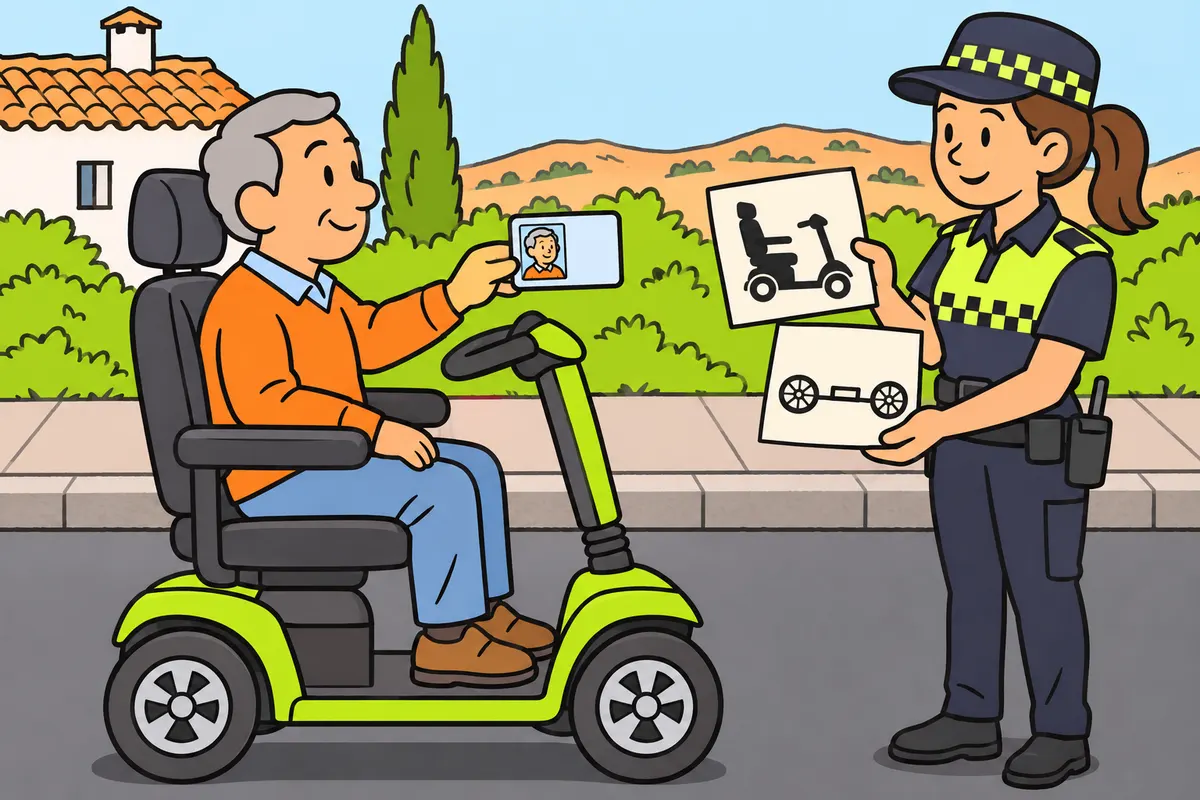
Tráfico issues your LCM licence for vehicles for people with reduced mobility.
Remember
- Get your licence before driving and meet its conditions.
- Your driving school prepares you but does not grant your licence.
- The medical centre checks your fitness to drive.
- If you receive temporary authorisation, check its validity, vehicles and conditions.
Exam trap: Wrong: any application receipt lets you drive. Right: you need your licence or valid temporary authorisation.
Read the full explanation
- Your LCM is a driving licence for vehicles for people with reduced mobility. It is issued by the Jefaturas Provinciales de Tráfico (provincial traffic offices), which form part of the DGT. The driving school prepares you and the medical centre assesses your fitness, but neither grants you the administrative authorisation itself. [RGCond, arts. 1 and 2](https://www.boe.es/buscar/act.php?id=BOE-A-2009-9481).
- You must obtain the licence and meet its conditions before driving on roads subject to traffic regulations. Submitting an application, paying a fee or taking lessons does not mean that you are authorised. A favourable medical report proves fitness, but does not replace the licence issued by Tráfico (the traffic authority). [RGCond, arts. 1 and 2](https://www.boe.es/buscar/act.php?id=BOE-A-2009-9481).
- Where applicable, you can use a temporary authorisation that provisionally replaces the licence. You must check which vehicle it authorises you to drive, its validity and its conditions. You must not assume that any application receipt has this effect: replacement requires a valid administrative authorisation, rather than simply proof that you have started a procedure. [RGCond, arts. 1 and 2](https://www.boe.es/buscar/act.php?id=BOE-A-2009-9481).
3Age and scope of your entitlement
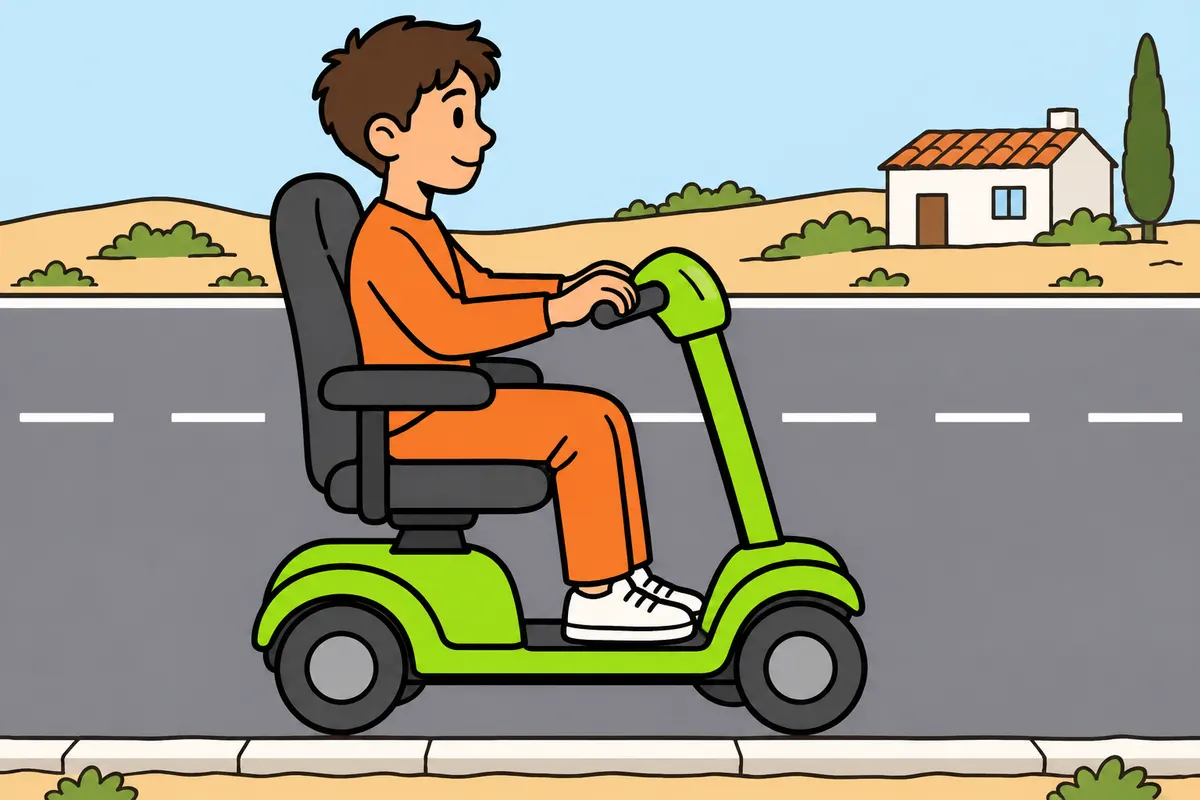
You can get an LCM at 14, but passenger restrictions apply.
| Your licence | What to remember |
|---|---|
| LCM | Vehicles for people with reduced mobility |
| Valid A1 or B | No extra LCM needed; follow your personal conditions |
Remember
- Before you turn 16, you cannot carry passengers with an LCM.
- From 16, respect the authorised seats and conditions.
- With a valid A1 or B, you need no additional LCM.
- If you obtain A1 or B, your LCM stops being valid.
- Your LCM does not cover a car just because its controls are adapted.
Exam trap: Wrong: turning 16 always lets you carry passengers. Right: you need authorised seating and conditions.
Read the full explanation
- You can obtain the LCM licence from the age of 14. Until you turn 16, this licence does not authorise you to carry passengers. The ban on carrying passengers also applies on short journeys and even if the vehicle has an authorised passenger seat. [RGCond, art. 6](https://www.boe.es/buscar/act.php?id=BOE-A-2009-9481#a6).
- Once you turn 16, you must still comply with the vehicle's authorised seating capacity and conditions. Your age does not create an additional seat or change the technical documentation. If your vehicle is authorised for only one person, you cannot interpret your birthday as permission to add a passenger. [RGCond, art. 6](https://www.boe.es/buscar/act.php?id=BOE-A-2009-9481#a6) [RGV, Annex XIII](https://www.boe.es/buscar/act.php?id=BOE-A-1999-1826).
- If you hold a valid A1 or B driving licence, you do not need to obtain an additional LCM licence to drive these vehicles. If you hold an LCM licence and obtain A1 or B, your LCM licence ceases to be valid. You must drive under the corresponding driving licence and comply with the personal conditions that apply to you. [RGCond, art. 6](https://www.boe.es/buscar/act.php?id=BOE-A-2009-9481#a6).
- The LCM licence does not give you general authorisation to drive passenger cars, lorries, agricultural vehicles or any moped. You must check the vehicle's actual category. A passenger car with controls adapted to your disability does not become the specific type of vehicle you can drive with this licence. [RGCond, art. 6](https://www.boe.es/buscar/act.php?id=BOE-A-2009-9481#a6) [RGV, Annex II](https://www.boe.es/buscar/act.php?id=BOE-A-1999-1826).
4Identify the vehicle from its documents
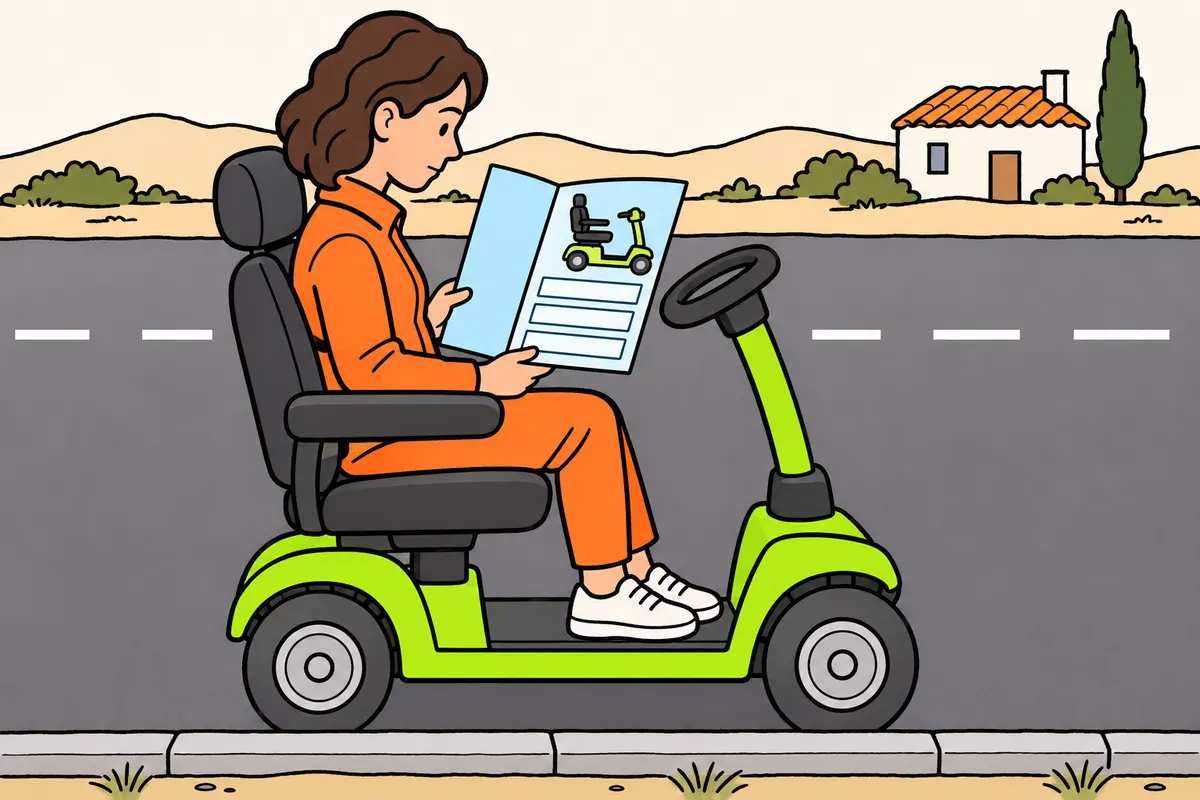
Check the documents: your vehicle must be purpose-built for people with reduced mobility.
| Vehicle | How to identify it |
|---|---|
| Purpose-built mobility vehicle | Built especially for that use |
| Adapted car | A car with adaptations added |
Remember
- Check its category and features in the technical documents.
- Do not rely only on its appearance or trade name.
- Adapting a car does not make it this specific vehicle type.
- Technical equivalence to mopeds does not give you an AM licence.
Exam trap: Wrong: you apply every rule for any moped. Right: the stated equivalence concerns technical features.
Read the full explanation
- A vehicle for people with reduced mobility is specially built for that use, has an unladen mass no greater than 350 kg and, by design, cannot exceed 45 km/h on level ground. These criteria help you identify its documentation here; you can find further technical details in «Your vehicle: characteristics and maintenance». [RGV, Annex II](https://www.boe.es/buscar/act.php?id=BOE-A-1999-1826).
- The definition requires a purpose-built vehicle; a car fitted with adaptations retains its own category. You must not identify it by its chair-like appearance or a commercial name either: check its classification and characteristics in the technical documentation. [RGV, Annex II](https://www.boe.es/buscar/act.php?id=BOE-A-1999-1826).
- For its other technical characteristics, the Reglamento General de Vehículos (General Vehicle Regulations) treats it as equivalent to a three-wheeled moped. This equivalence helps you interpret its technical requirements; it does not turn your LCM licence into an AM driving licence or allow you to apply all the rules for any moped without checking. [RGV, Annex II](https://www.boe.es/buscar/act.php?id=BOE-A-1999-1826).
5Details you must read on your licence
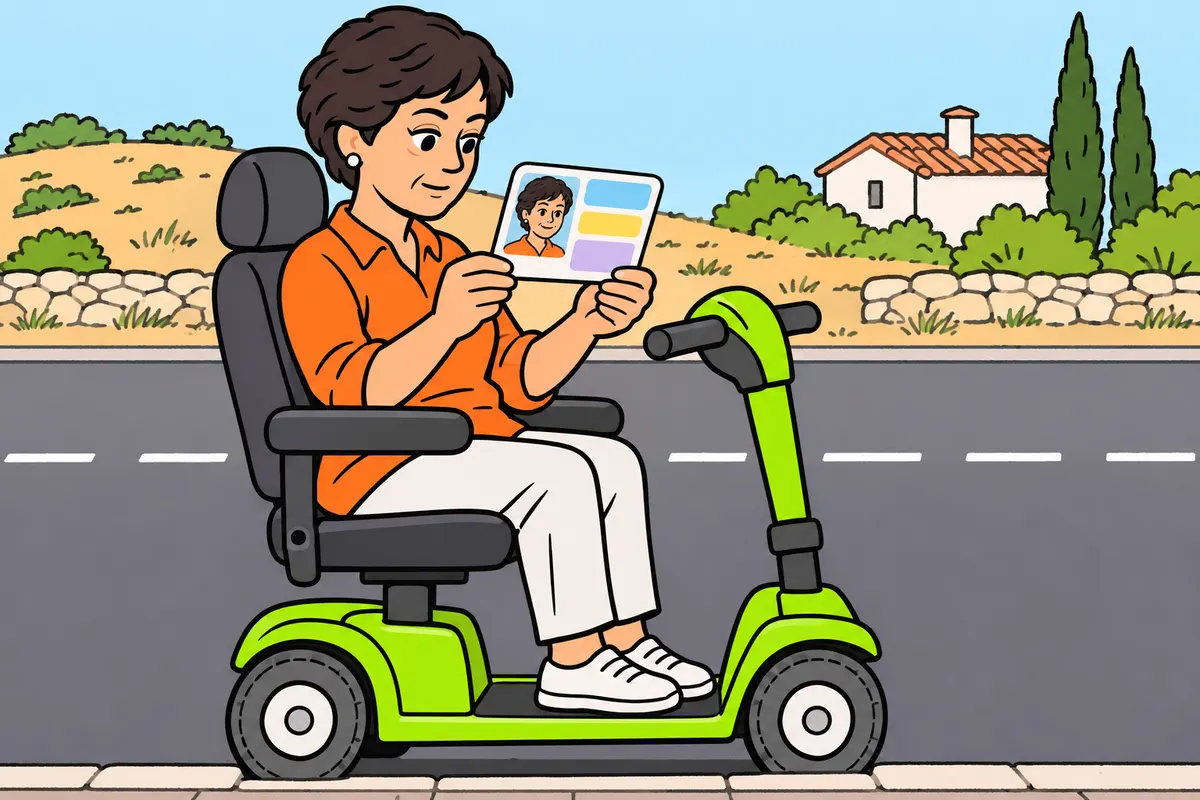
Check your details, dates and licence conditions.
| Licence date | What it tells you |
|---|---|
| Issue | When it was issued |
| Expiry | When its validity ends |
Remember
- Check your identity and licence category.
- Find the issue date and expiry date.
- Read your adaptations and restrictions before driving.
- Follow your personal, vehicle and driving restrictions.
Exam trap: Wrong: restrictions are recommendations. Right: you must follow them even if you feel capable.
Read the full explanation
- You must check that the licence matches your identity and shows the correct category. The prescribed format includes your photograph, identification details, first name and surnames, date and place of birth and licence category. Someone else's licence does not entitle you to drive, even if you both drive the same vehicle. [RGCond, art. 9 and Annex II](https://www.boe.es/buscar/act.php?id=BOE-A-2009-9481).
- You must locate the issue date and the expiry date of its administrative validity. The first shows when the document was issued; the second allows you to check whether it is valid. To decide whether you can drive, you must also take account of any restrictions affecting your entitlement. [RGCond, art. 9 and Annex II](https://www.boe.es/buscar/act.php?id=BOE-A-2009-9481).
- You must read the additional entries, adaptations, restrictions and any other limitations relating to you, the vehicle or its use on the road. They form part of the conditions under which you can drive. [RGCond, art. 9 and Annex II](https://www.boe.es/buscar/act.php?id=BOE-A-2009-9481).
6Standard validity: ten or five years
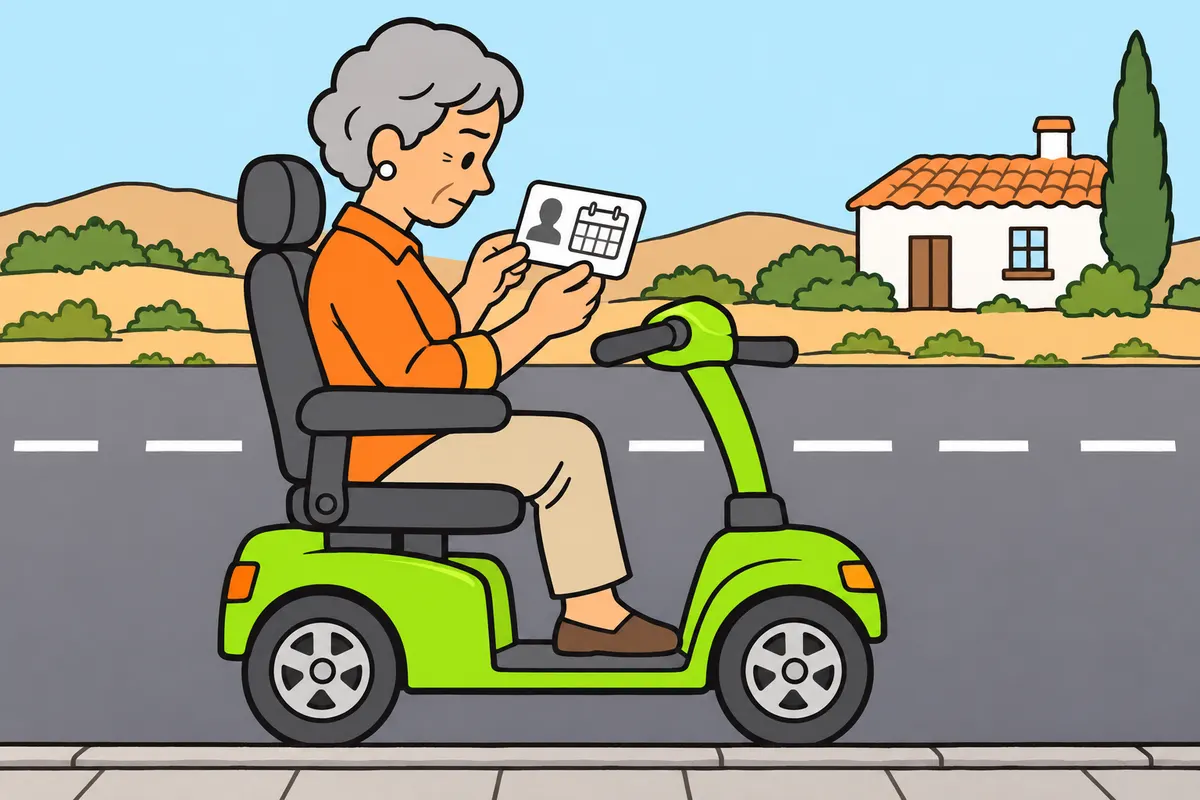
Your LCM normally lasts ten or five years; check its actual expiry date.
| Your age | Standard LCM validity |
|---|---|
| Under 65 | 10 years |
| From 65 | 5 years |
Remember
- Always check your licence expiry date.
- Your health may mean a shorter validity period.
- Do not drive with an expired licence, even while waiting for an appointment.
- Keep meeting the conditions needed to drive.
- Do not drive if suspension or loss of validity prevents it.
Exam trap: Wrong: you can drive for a few days after expiry. Right: there is no grace period.
Read the full explanation
- Your LCM licence has a standard validity of 10 years while you are under 65 and 5 years from that age. This schedule applies to driving licences. [RGCond, art. 12](https://www.boe.es/buscar/act.php?id=BOE-A-2009-9481#a12).
- You must always check your document's specific expiry date. Your validity period can be reduced if an illness or impairment may worsen, even though it allows you to drive at present. The general period of 10 or 5 years does not allow you to extend a licence with an earlier expiry date yourself. [RGCond, art. 12](https://www.boe.es/buscar/act.php?id=BOE-A-2009-9481#a12).
- You must continue to meet the conditions required to obtain the licence throughout its validity. An unexpired printed date is not enough if a suspension, driving ban or loss of validity prevents you from using it. The points system is covered in «The LCM licence points system». [RGCond, art. 12](https://www.boe.es/buscar/act.php?id=BOE-A-2009-9481#a12).
- An expired licence does not authorise you to drive. Being able to apply for renewal after expiry is different from being allowed to drive during that interval. [RGCond, art. 12](https://www.boe.es/buscar/act.php?id=BOE-A-2009-9481#a12).
7When to renew
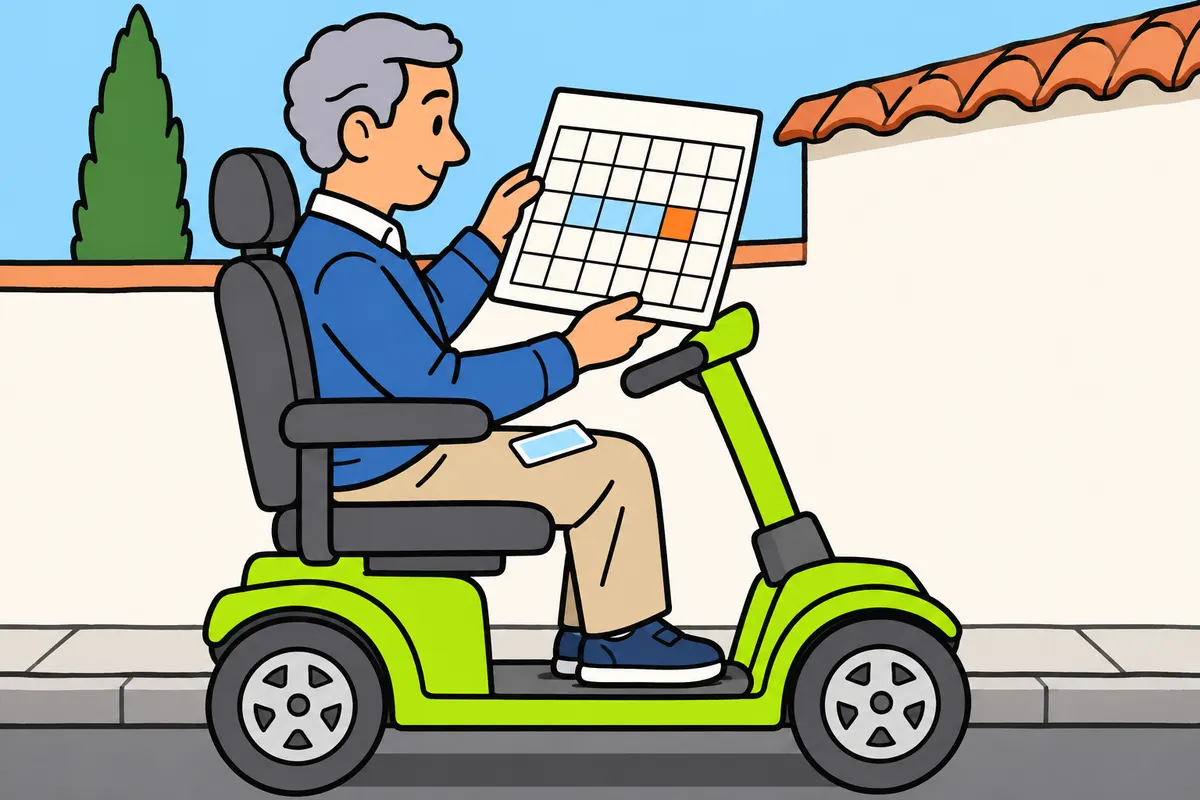
You can renew before expiry without losing your remaining days of validity.
| Your situation | What to apply for |
|---|---|
| Expiry | Renewal |
| Loss of a valid document | Duplicate |
| Loss of validity for another reason | The appropriate procedure |
Remember
- You can apply from 3 months before expiry.
- Within that period, your new validity starts from the previous expiry date.
- You can renew an expired licence, but cannot drive with it.
- Check the conditions of your provisional authorisation.
Exam trap: Wrong: expiry through time means retaking tests. Right: renew by proving fitness and meeting the requirements.
Read the full explanation
- You can apply for an ordinary renewal from 3 months before expiry. If you apply within this period, the new validity period runs from the previous expiry date. Applying early in this way allows you to arrange the assessment without losing any remaining days of validity. [RGCond, art. 13.1](https://www.boe.es/buscar/act.php?id=BOE-A-2009-9481).
- You can also apply to renew an expired licence. Expiry through the passage of time does not in itself require you to retake the tests for obtaining it. You must prove that you retain the required physical and psychological fitness and meet the application requirements before driving again. [RGCond, art. 13.3](https://www.boe.es/buscar/act.php?id=BOE-A-2009-9481).
- The procedure depends on the reason: you renew when the licence expires; you request a duplicate if you lose a valid document; loss of validity for another reason requires the appropriate procedure. A duplicate retains the administrative status of the authorisation it reproduces. [RGCond, arts. 11, 12 and 13](https://www.boe.es/buscar/act.php?id=BOE-A-2009-9481).
- As an organisational recommendation, note the expiry date and prepare your application and assessment in advance. Keep any provisional authorisation issued to you and check its conditions. Do not assume that confirmation of a medical appointment or an application has the same effect as that authorisation. [RGCond, art. 13.2](https://www.boe.es/buscar/act.php?id=BOE-A-2009-9481).
8Medical and psychological fitness assessment
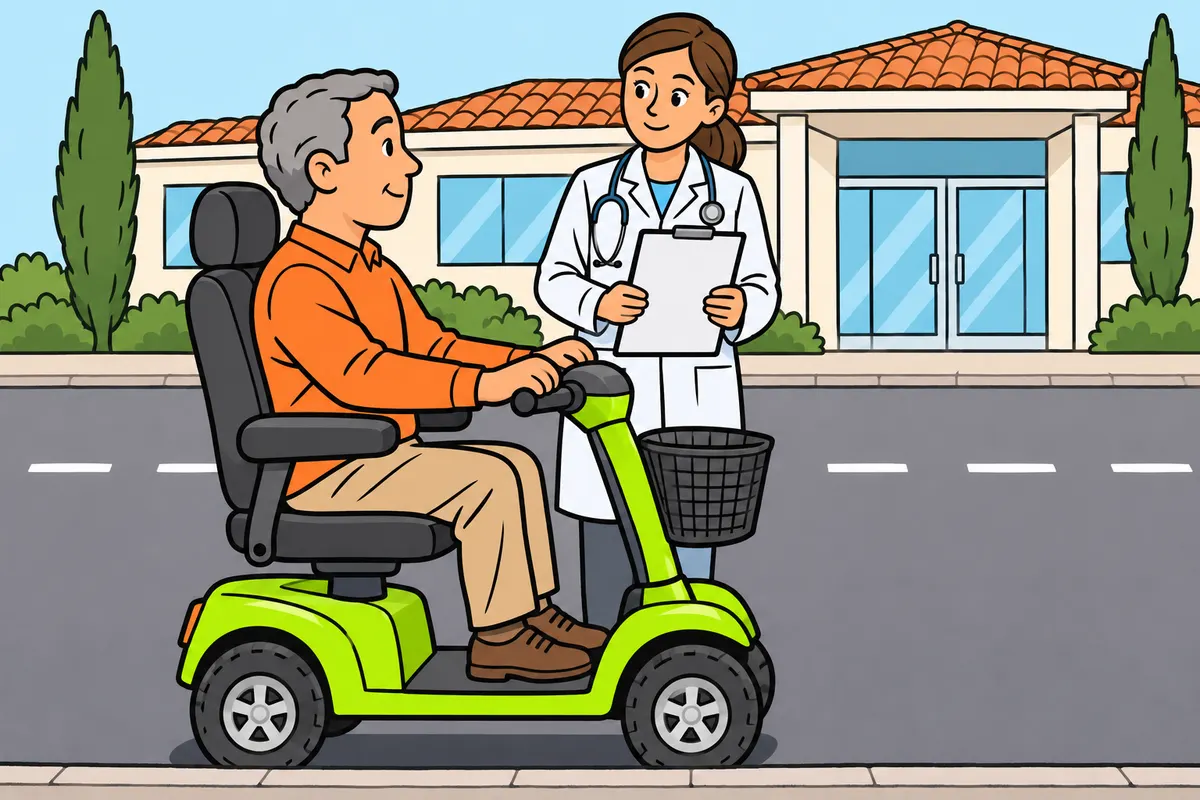
You need a specific fitness assessment to obtain or renew your LCM.
| Check | What it assesses |
|---|---|
| Driver assessment | Your fitness to drive |
| ITV | The vehicle’s technical condition |
Remember
- Use an authorised driver medical assessment centre.
- Do not replace its report with a disability certificate.
- You may need aids, adaptations or restrictions to drive.
- Disability does not automatically prevent you from obtaining authorisation.
Exam trap: Wrong: passing ITV replaces your medical assessment. Right: you must meet each requirement separately.
Read the full explanation
- You must undergo the necessary assessment both to obtain the LCM licence and to renew it. The physical and psychological fitness report must come from an authorised Centro de Reconocimiento de Conductores (driver assessment centre). A disability certificate or an ordinary medical consultation does not automatically replace this specific driving fitness report. [RGCond, art. 44 and Annex IV](https://www.boe.es/buscar/act.php?id=BOE-A-2009-9481).
- For the fitness requirements in Annex IV, these licences belong to group 1. You must apply the criteria and any conditions specified for that group, without applying those for group 2 simply because you drive every day or use a vehicle with special controls. [RGCond, art. 45.1.a and Annex IV](https://www.boe.es/buscar/act.php?id=BOE-A-2009-9481).
- You must cooperate with the assessment of your abilities and the aids you need to drive. The result may require corrective aids, adaptations or restrictions, or prevent the licence from being granted if you do not meet the required fitness standards. Having a disability does not automatically mean that you cannot obtain an authorisation subject to conditions. [RGCond, art. 46 and Annex IV](https://www.boe.es/buscar/act.php?id=BOE-A-2009-9481).
- The assessment concerns your ability to drive, rather than the mechanical condition of the vehicle. You must distinguish the driver assessment centre’s report from the ITV (vehicle roadworthiness test) report: passing one does not compensate for a result in the other that prevents you from driving or using the vehicle on the road. [RGCond, art. 44](https://www.boe.es/buscar/act.php?id=BOE-A-2009-9481).
9Special licences and adaptations
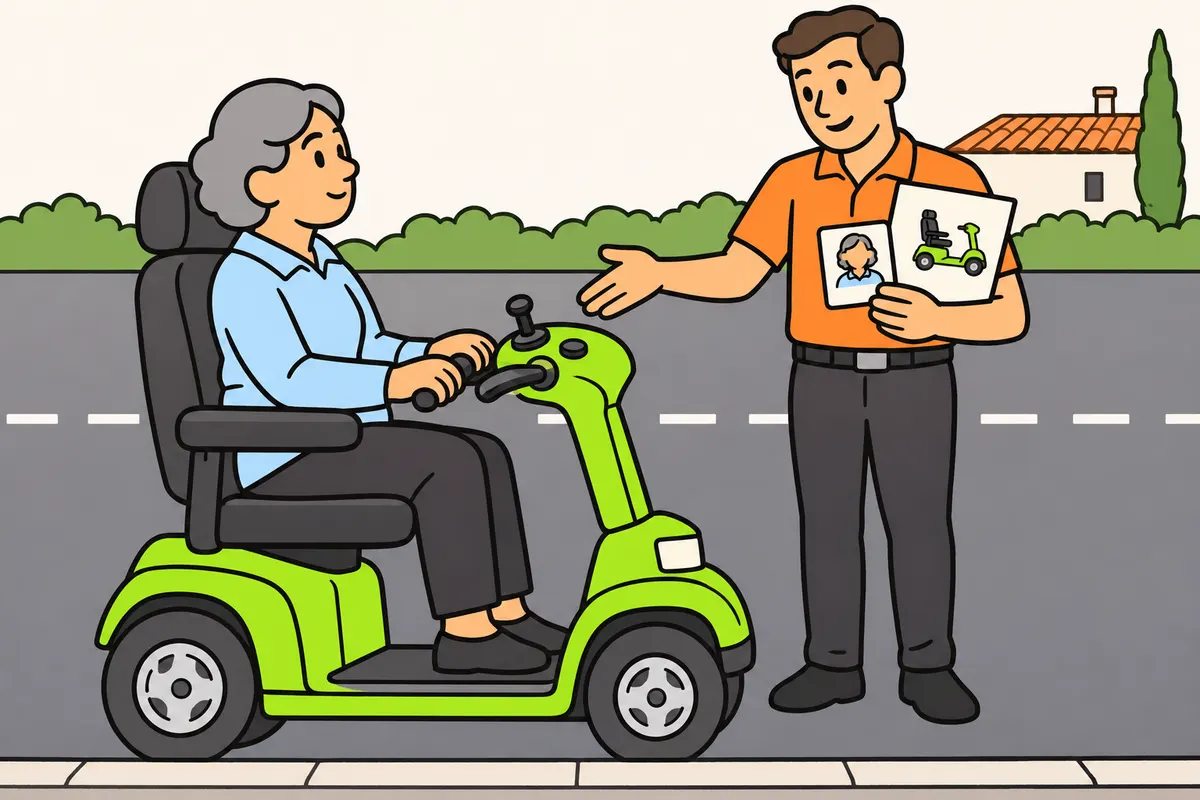
Follow the adaptations and restrictions required by your authorisation.
| Check | What to verify |
|---|---|
| Your personal authorisation | Conditions for you to drive |
| Vehicle technical documents | Technical approval of adaptations |
Remember
- You can obtain a special licence if you meet fitness requirements under its conditions.
- Use prescribed glasses or hearing aids, even with a standard licence.
- If your abilities change, request assessment and arrange the necessary conditions.
- Check your licence allows the adaptations and your vehicle has technical approval.
Exam trap: Wrong: compulsory glasses make your licence special. Right: that correction alone does not determine this.
Read the full explanation
- You can obtain a special licence when you meet the fitness requirements for driving with the applicable adaptations or restrictive conditions. You must comply with the personal, vehicle and road-use conditions imposed in your case. The authorisation permits driving compatible with those conditions, rather than with any control configuration. [RGCond, arts. 7, 12 and 46](https://www.boe.es/buscar/act.php?id=BOE-A-2009-9481).
- Visual or hearing correction is treated specifically: the requirement to use corrective lenses or hearing aids to meet the minimum fitness standard does not in itself make the licence a special licence. Even if you hold an ordinary licence, you must use any corrective aid specified as compulsory. [RGCond, arts. 7, 12 and 46](https://www.boe.es/buscar/act.php?id=BOE-A-2009-9481).
- If your abilities change and you need different controls or aids, you must have your situation assessed and arrange the applicable conditions. Having time remaining before expiry does not allow you to ignore the obligation to continue meeting the requirements. You cannot choose a different adaptation simply because you find it comfortable. [RGCond, arts. 7, 12 and 46](https://www.boe.es/buscar/act.php?id=BOE-A-2009-9481).
- You must check two aspects of the documentation for an adaptation: that your personal authorisation allows you to drive under those conditions and that the vehicle has technical approval for them. A medical prescription does not replace approval of a vehicle modification, and a recorded modification does not remove your personal restrictions. [RGCond, arts. 7, 12 and 46](https://www.boe.es/buscar/act.php?id=BOE-A-2009-9481).
10Restriction codes
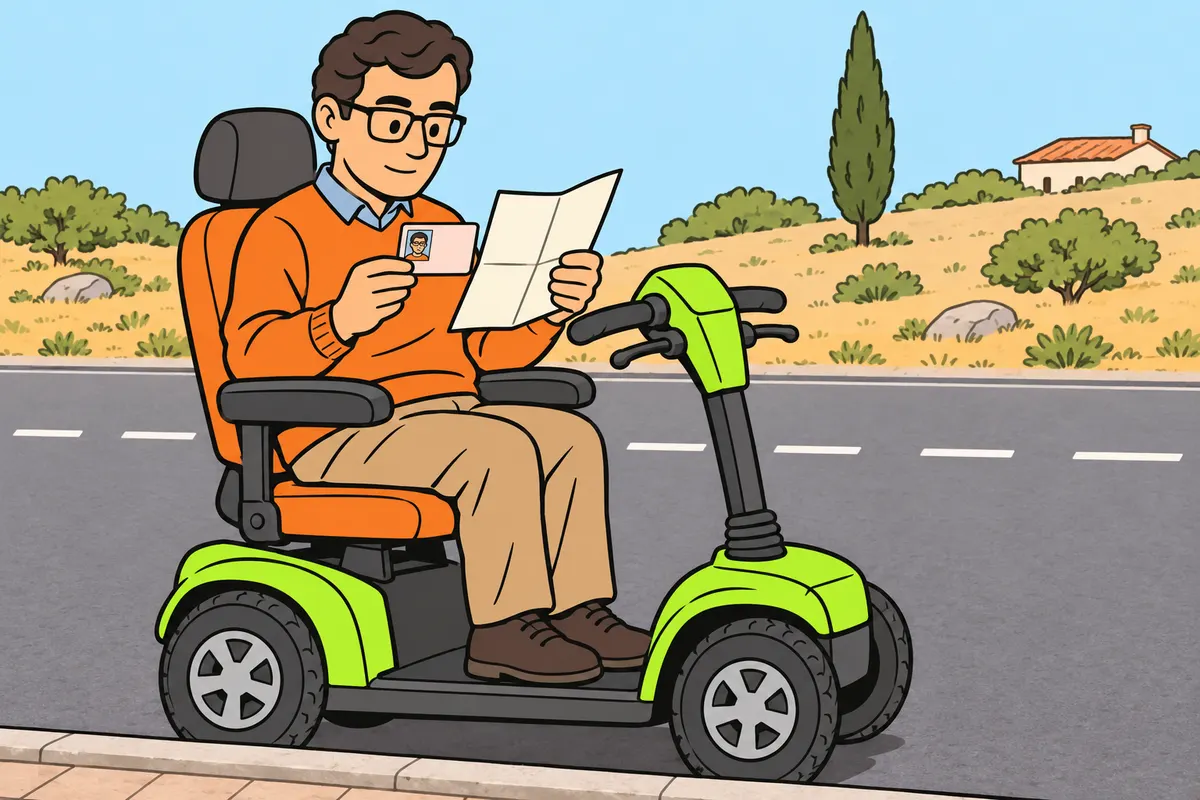
Read your complete licence codes and follow their conditions.
| Code | Condition |
|---|---|
| 01 | Vision correction and protection |
| 01.01 | Glasses |
| 01.02 | Contact lenses |
| 01.06 | Glasses or contact lenses |
| 20.06 | Hand-operated brake |
| 25.04 | Hand-operated accelerator |
| 200 | Carry Tráfico conditions document |
Remember
- Read subcodes too: they can change the condition you must follow.
- Use the adapted controls prescribed for you.
- With code 200, carry the conditions document issued by Tráfico.
- If you do not understand a code, ask Tráfico before driving.
Exam trap: Wrong: all eyesight codes mean the same thing. Right: follow your complete code.
Read the full explanation
- You must interpret the full codes, including their subcodes, when they appear on your authorisation. In the regulatory system, 01 refers to vision correction and protection; 01.01 means glasses, 01.02 contact lenses and 01.06 glasses or contact lenses. [RGCond, Annex I.B](https://www.boe.es/buscar/act.php?id=BOE-A-2009-9481#ani).
- You may encounter codes relating to adapted controls. For example, 20.06 means a hand-operated brake and 25.04 a hand-operated accelerator. You must use the configuration prescribed in your case; recognising a code does not authorise you to swap freely between control systems. [RGCond, Annex I.B](https://www.boe.es/buscar/act.php?id=BOE-A-2009-9481#ani).
- If national code 200 appears, you must carry the document issued by the Jefatura Provincial de Tráfico (provincial traffic office) setting out the conditions for using the vehicle. You must read the annex together with the licence: your verbal explanation of how you usually drive does not replace that information. [RGCond, Annex I.B](https://www.boe.es/buscar/act.php?id=BOE-A-2009-9481#ani).
- You must not confuse a restriction code with a driving licence category, a registration number or a traffic sign. Its purpose is to specify the conditions of your entitlement to drive. If you do not understand an entry, you must clarify it with Tráfico (the traffic authority) before driving under conditions that may conflict with it. [RGCond, Annex I.B](https://www.boe.es/buscar/act.php?id=BOE-A-2009-9481#ani).
11What you must carry when driving
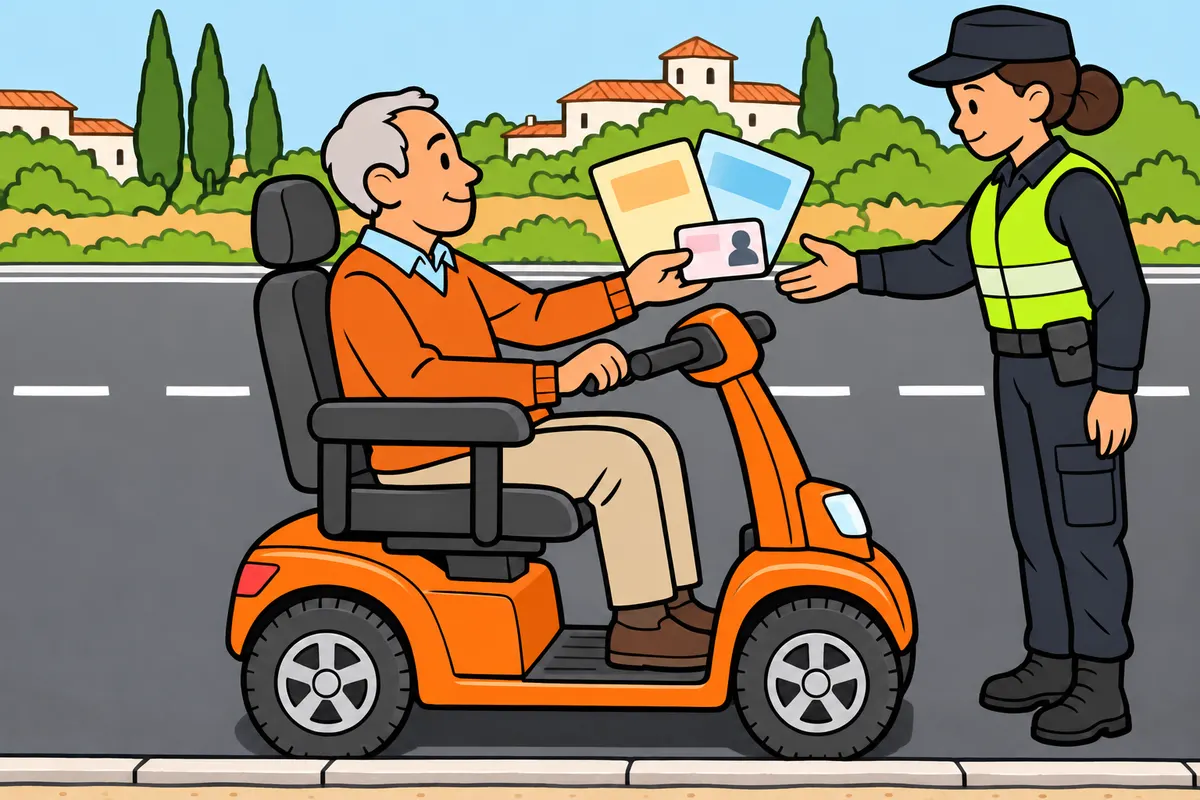
Carry your valid licence and the documents required for your vehicle and circumstances.
| Vehicle documents | What you can present |
|---|---|
| Originals | Documents for the vehicle |
| Certified photocopies | Copies checked against the original |
| Ordinary photos or photocopies | Not equivalent to certified copies |
Remember
- Show your documents when officers ask for them.
- Carry the conditions annex if required.
- Check the papers match the vehicle you drive.
- Carry them on short journeys and in borrowed vehicles too.
Exam trap: Wrong: short journeys need no documents. Right: you must be able to present them then too.
Read the full explanation
- You must carry your valid, current licence and show it when officers ask you to do so. This obligation also covers any other document or authorisation you need to drive in your circumstances, such as the conditions annex where this is required. Leaving your licence at home does not count as presenting it. [RGCond, art. 3](https://www.boe.es/buscar/act.php?id=BOE-A-2009-9481).
- You must carry the registration and technical documentation applicable to the vehicle. The RGV provides for a permiso de circulación (vehicle registration certificate) or licencia de circulación (vehicle circulation licence), and a tarjeta ITV (ITV technical inspection card) or certificado de características (certificate of characteristics), in the cases it regulates. The designation on your vehicle’s papers determines which document you must present. [RGCond, art. 3; RGV, art. 26](https://www.boe.es/buscar/act.php?id=BOE-A-1999-1826#a26).
- You must be able to present these documents on short journeys too, and when the vehicle is borrowed. The obligation applies because you drive, regardless of ownership or journey length. As a preliminary check, make sure the available papers correspond to the vehicle you actually intend to use. [RGCond, art. 3; RGV, art. 26](https://www.boe.es/buscar/act.php?id=BOE-A-1999-1826#a26).
- For the vehicle documents, you can use originals or duly certified photocopies. Certification confirms that the copy matches the original. An ordinary photocopy or a photograph you save yourself on your phone does not thereby become a certified document. [RGCond, art. 3; RGV, art. 26](https://www.boe.es/buscar/act.php?id=BOE-A-1999-1826#a26).
12Digital documentation and proof of insurance
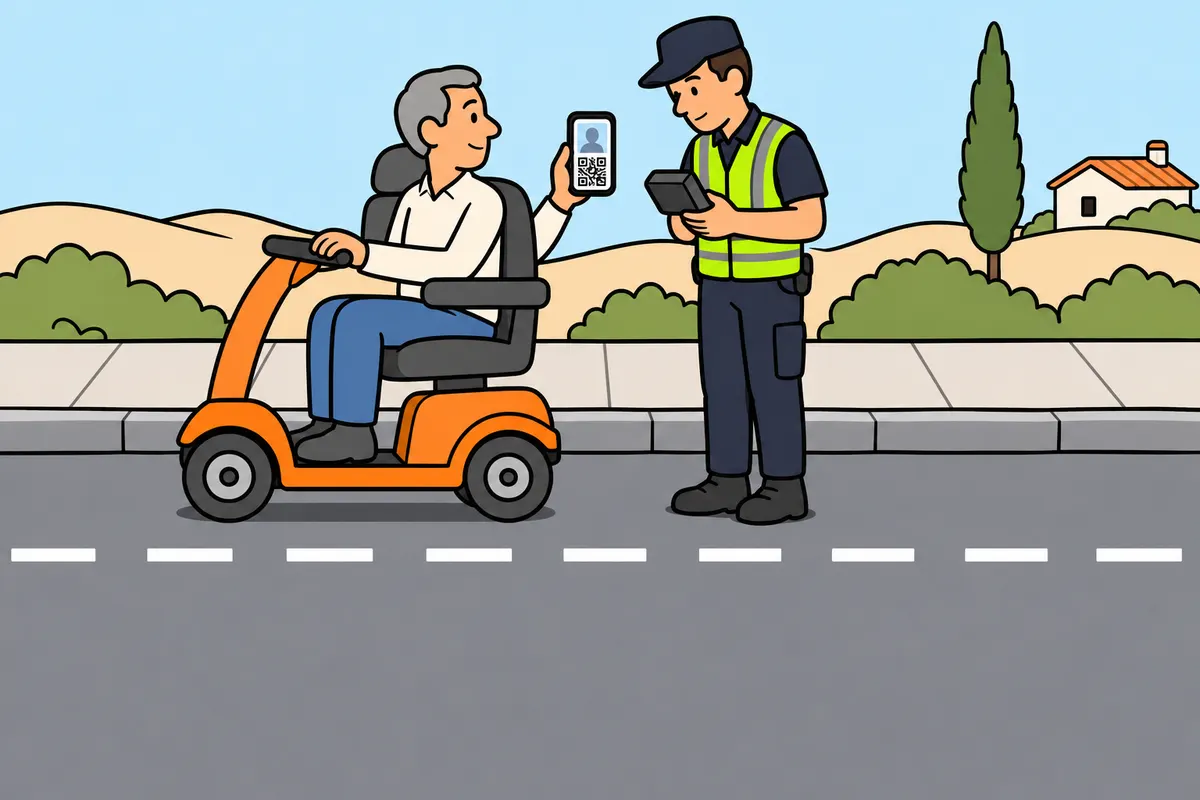
In Spain, you can show your official miDGT licence; a photograph does not replace it.
| What you show | What you need to know |
|---|---|
| Driving permit or licence and vehicle registration certificate officially available in miDGT | You can present them in Spain with their recognised validity |
| Photograph of the papers | Not equivalent to the verifiable official document |
Remember
- Use verifiable documents officially available in miDGT, not saved photographs.
- Check which documents you can actually show.
- Carry physical documents in case you cannot access digital ones.
- You need not carry the insurance policy or latest payment receipt.
- Maintain compulsory cover when your vehicle must have it.
Exam trap: Wrong: having no receipt means having no insurance. Right: carrying it is unnecessary, but required cover must remain valid.
Read the full explanation
- In Spain, you can present your driving authorisation (permit or licence) and permiso de circulación officially available in miDGT, with the validity that the DGT recognises for the digital format. You must use the verifiable document in the app; you must not treat any photograph or file of the papers as equivalent. [DGT, documentation you must carry](https://www.dgt.es/nuestros-servicios/tu-vehiculo/documentacion-de-un-vehiculo/que-documentacion-debes-llevar-en-tu-vehiculo).
- You must check which documents you actually have available and can display. Viewing a technical detail or an ITV date on a screen does not mean that any image of that screen replaces all the required documentation. Carrying the physical documents helps you avoid problems if you cannot access the digital ones. [DGT, documentation you must carry](https://www.dgt.es/nuestros-servicios/tu-vehiculo/documentacion-de-un-vehiculo/que-documentacion-debes-llevar-en-tu-vehiculo).
- You are not required to carry the insurance policy or the receipt for the latest payment as documents for road use. You must distinguish this exemption from the obligation to maintain cover when the vehicle is subject to compulsory insurance. If you have a policy, keeping its details is a useful recommendation to help identify the insurer. [DGT, documentation you must carry](https://www.dgt.es/nuestros-servicios/tu-vehiculo/documentacion-de-un-vehiculo/que-documentacion-debes-llevar-en-tu-vehiculo).
13The vehicle’s registration document
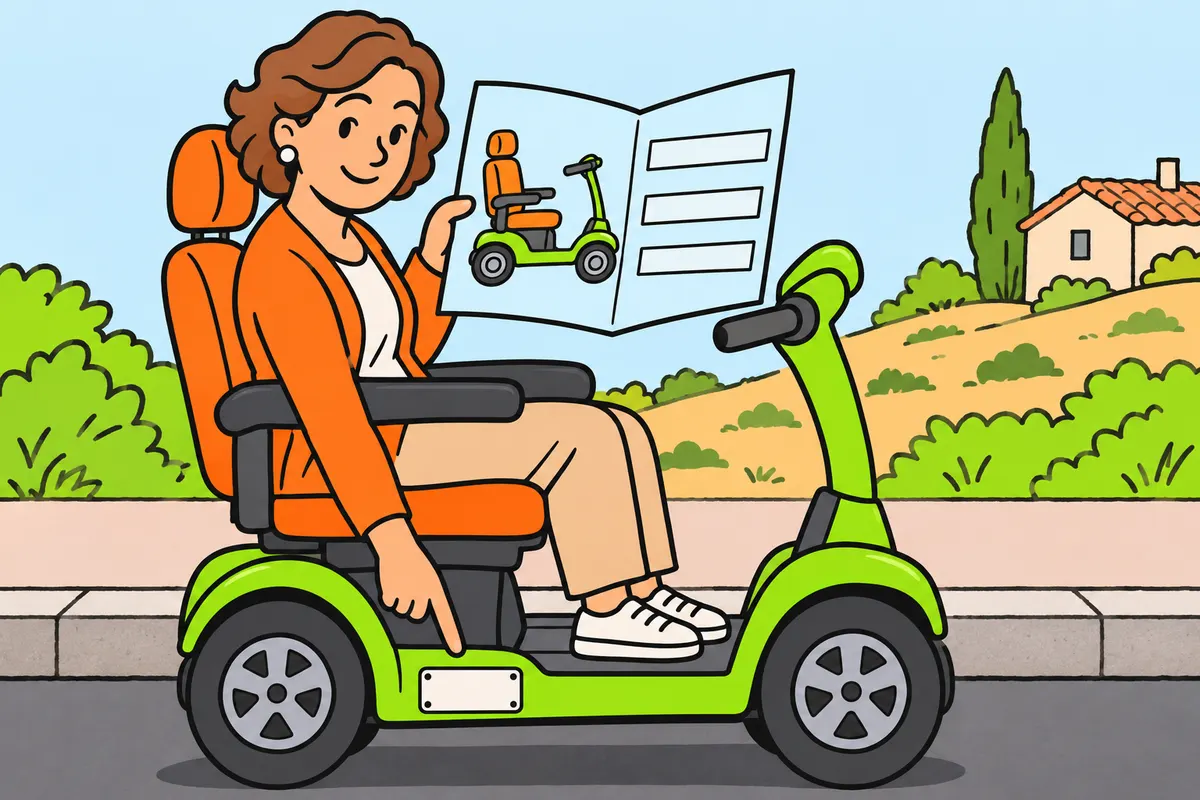
The registration document authorises your vehicle and must match it.
| Document | Who or what it relates to |
|---|---|
| Your LCM licence | You as the driver |
| Vehicle registration certificate or circulation licence | The identified vehicle |
Remember
- Check the registration number and chassis number.
- Do not rely only on the make or colour.
- Read the authorised seats and details for that vehicle.
- If you need a temporary replacement, use authorisation issued by Tráfico.
Exam trap: Wrong: a purchase invoice alone allows road use. Right: you need the registration document or valid provisional authorisation.
Read the full explanation
- You must associate the permiso de circulación (vehicle registration certificate) or licencia de circulación (vehicle registration licence) with the vehicle it identifies. It proves that the vehicle has administrative authorisation to be used on the road, not your personal fitness to drive. You must not confuse it with your LCM licence, even though both documents use the word licence: one relates to the vehicle and the other to the driver. [RGV, art. 26 and Annex XIII](https://www.boe.es/buscar/act.php?id=BOE-A-1999-1826).
- You must check that the vehicle's identification matches its documents. The registration number and vehicle identification or chassis number help you avoid confusing similar vehicles. A document showing the same make or colour does not, on its own, prove that it belongs to that vehicle. [RGV, art. 26 and Annex XIII](https://www.boe.es/buscar/act.php?id=BOE-A-1999-1826).
- Depending on the document format, you may find the registered keeper's details, administrative dates and identifying or technical characteristics. You must read the information for your own vehicle, especially the authorised number of seats, without using a passenger car's documentation as a universal template for every vehicle for people with reduced mobility. [RGV, art. 26 and Annex XIII](https://www.boe.es/buscar/act.php?id=BOE-A-1999-1826).
- If you need a temporary replacement for the permiso de circulación, you must use a provisional authorisation issued by Tráfico (the traffic authority). The regulations recognise this replacement and its corresponding legal effects. A purchase invoice, a pending application or a workshop receipt does not, on its own, constitute provisional authorisation to use the vehicle on the road. [RGV, art. 26 and Annex XIII](https://www.boe.es/buscar/act.php?id=BOE-A-1999-1826).
14The tarjeta ITV and authorised characteristics
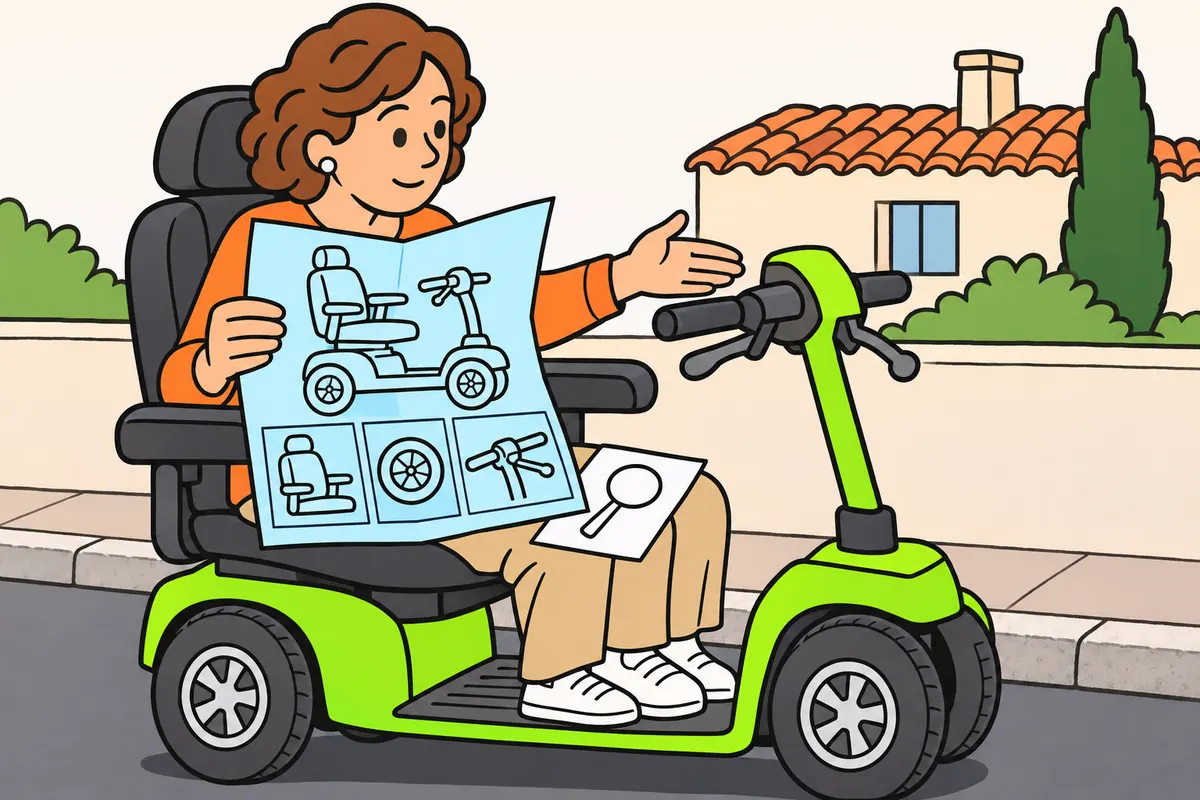
Use your vehicle’s technical documents to check its authorised features.
| Document | What to check |
|---|---|
| ITV card or technical documents | Authorised features |
| Inspection report | Checks and result of that inspection |
Remember
- Check seats, masses, notes and recorded modifications.
- Do not assume a visible adaptation is recorded.
- Maintain your vehicle even after passing ITV.
- Keep technical documents even when periodic ITV is not yet required.
Exam trap: Wrong: keeping the card proves your ITV is current. Right: also check the required inspection.
Read the full explanation
- The tarjeta ITV (ITV technical inspection card) and the inspection report have complementary functions. ITV (vehicle roadworthiness test) documentation identifies the vehicle's authorised characteristics through the card or technical documents; the report describes the checks and the result of a particular inspection. You must read both together where applicable, without assuming that an inspection is still valid simply because you retain a card. [RGV, art. 26](https://www.boe.es/buscar/act.php?id=BOE-A-1999-1826#a26) [RD 920/2017, art. 10](https://www.boe.es/buscar/act.php?id=BOE-A-2017-12841).
- You must check your vehicle's number of seats, masses and other technical details, as well as the recorded observations and modifications. A visible adaptation to the controls is not enough to prove that it is documented. The technical information is your reference for checking that you use the vehicle in its authorised configuration. [RGV, art. 26 and Annex XIII](https://www.boe.es/buscar/act.php?id=BOE-A-1999-1826).
- The ITV checks that your vehicle meets the applicable safety and environmental protection requirements. You must not treat it as a guarantee that no faults develop throughout the period that follows. You must maintain your vehicle properly even if its latest result is favourable. [RD 920/2017, art. 2.e](https://www.boe.es/buscar/act.php?id=BOE-A-2017-12841).
- You must retain the technical documentation even while your vehicle is within a period of exemption from periodic ITV inspections. An age-based exemption concerns presenting the vehicle for periodic inspection; it does not, in itself, remove the documents identifying its characteristics or the need to comply with them. [RGV, art. 26](https://www.boe.es/buscar/act.php?id=BOE-A-1999-1826#a26) [RD 920/2017, art. 6](https://www.boe.es/buscar/act.php?id=BOE-A-2017-12841#a6).
15ITV inspection frequency for your vehicle
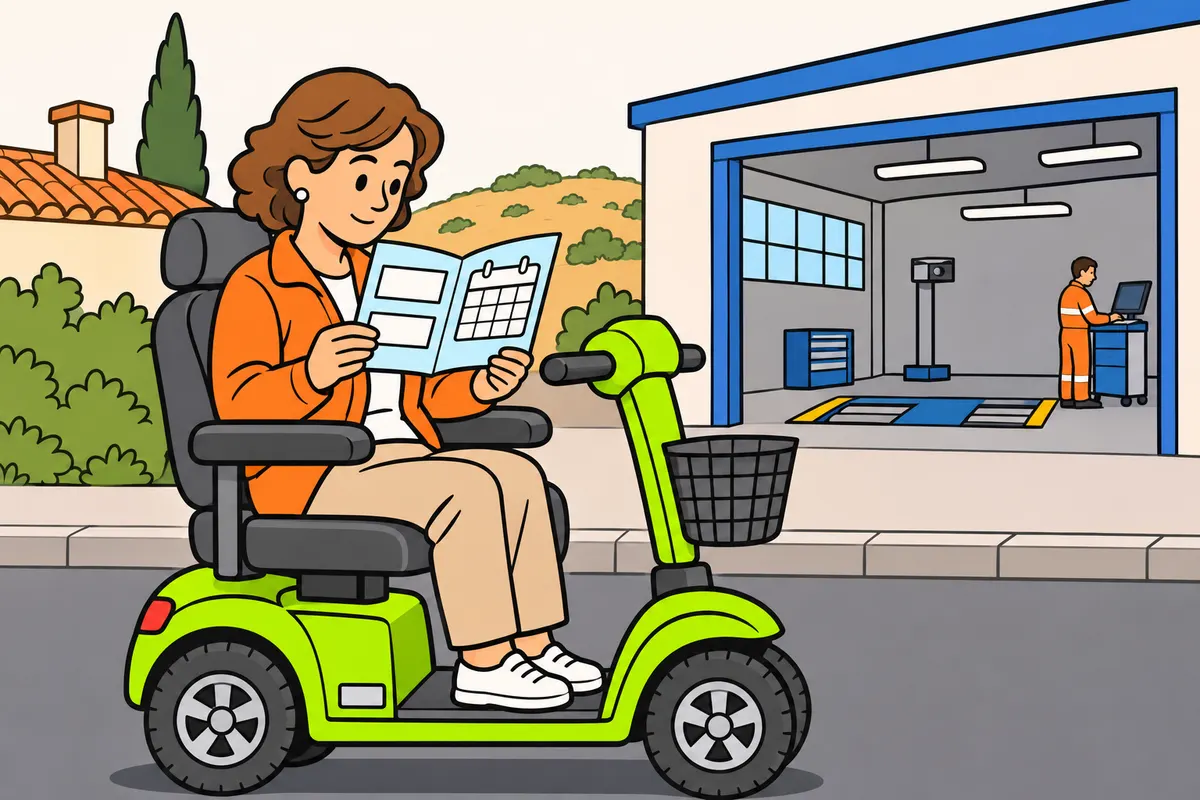
Follow the category and next expiry date shown on your ITV card.
Remember
- The usual L-category timetable starts at 4 years, then repeats every two years.
- Check your category and expiry date before applying that timetable.
- If these are unclear, ask the ITV station.
- Count age from the recorded first registration or entry into service.
- Modifications, damage or an authority’s requirement may mean an earlier inspection.
Exam trap: Wrong: every vehicle you can drive with LCM has the same timetable. Right: check your ITV card’s category and expiry date.
Read the full explanation
- You must have your vehicle's ITV inspection according to the category and next inspection date shown on its tarjeta ITV (normally the schedule for category L vehicles: 4 years, then every two years). Article 6 does not contain a specific row for vehicles for people with reduced mobility; the usual reference comes from their technical equivalence to three-wheeled mopeds. [RGV, Annex II](https://www.boe.es/buscar/act.php?id=BOE-A-1999-1826) [RD 920/2017, art. 6](https://www.boe.es/buscar/act.php?id=BOE-A-2017-12841#a6).
- If the category or expiry date is unclear on your tarjeta ITV, consult the ITV station before setting the inspection date. Technical equivalence to a three-wheeled moped does not, on its own, establish a universal schedule for all vehicles you can drive with an LCM licence. [RGV, Annex II](https://www.boe.es/buscar/act.php?id=BOE-A-1999-1826) [RD 920/2017, art. 6](https://www.boe.es/buscar/act.php?id=BOE-A-2017-12841#a6).
- To calculate your vehicle's age, you must count from the first registration or entry into service recorded in the Registro de Vehículos (Vehicle Register). Buying it second-hand, obtaining a duplicate card or changing the registered keeper does not make the vehicle new or reset its age for ITV purposes. [RD 920/2017, art. 6; RGV, Annex II](https://www.boe.es/buscar/act.php?id=BOE-A-2017-12841#a6).
- In addition to periodic inspections, you may need an inspection for a specific reason. A modification, certain accident damage or a requirement imposed by the authority may require an inspection before the next periodic inspection is due. In that case, simply saying that your routine inspection is not due yet is not enough. [RD 920/2017, art. 6; RGV, Annex II](https://www.boe.es/buscar/act.php?id=BOE-A-2017-12841#a6).
16How you calculate the next expiry date
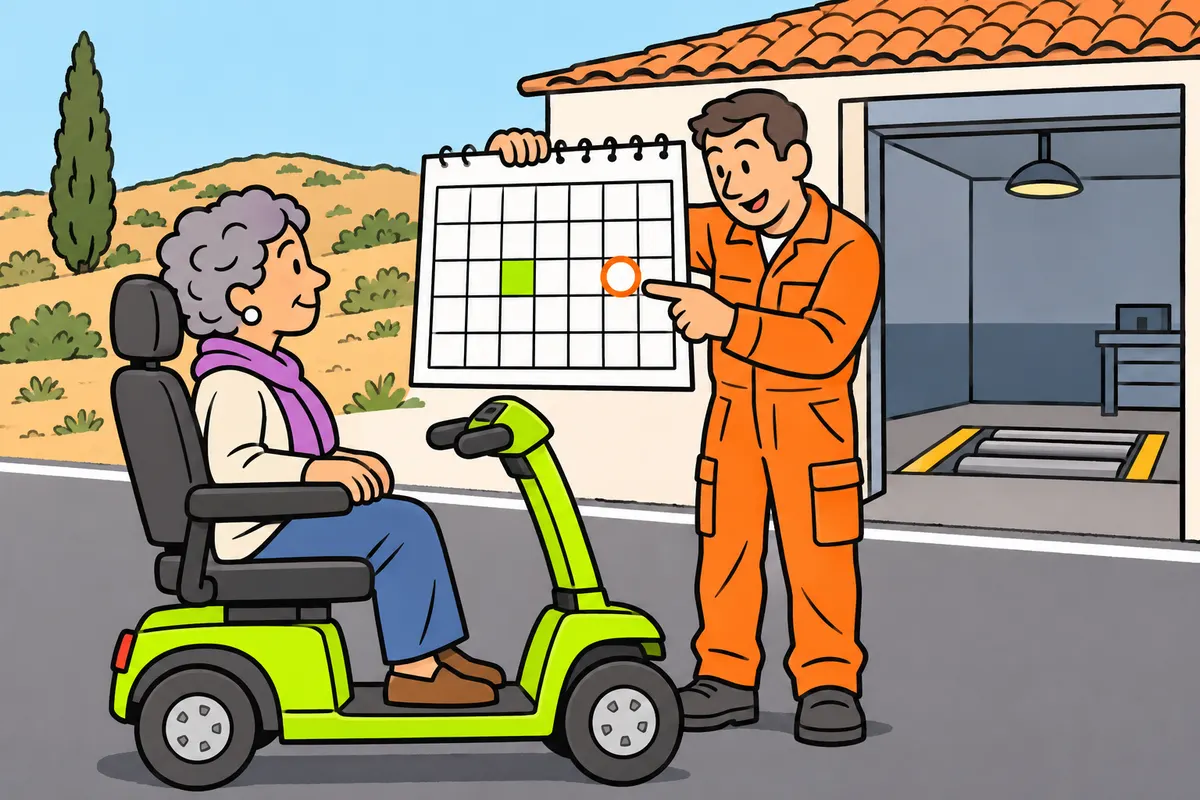
Your next expiry depends on the inspection interval and when you pass ITV.
| When you pass ITV | Date to which you add the inspection interval |
|---|---|
| Within 30 calendar days before expiry | Previous expiry date |
| Outside that case, as a general rule | Date of favourable inspection |
Remember
- An appointment does not extend ITV validity.
- An unfavourable result does not start normal validity.
- If officers find non-compliance, they report it and set a vehicle presentation deadline.
- Without proof of presentation, Tráfico starts the procedure to deregister your vehicle.
Exam trap: Wrong: a presentation requirement lets you drive with expired ITV. Right: it gives no general permission to drive.
Read the full explanation
- As a general rule, you must add the applicable inspection interval to the date of the favourable inspection to calculate its validity. If you obtain a favourable result within the 30 calendar days before the previous inspection expires, you add the interval to that previous expiry date. [RD 920/2017, art. 6](https://www.boe.es/buscar/act.php?id=BOE-A-2017-12841#a6).
- For example, if your expiry date is 20 November and you pass the inspection on 5 November, you are within the preceding 30 calendar days. If a two-year interval applies, your reference date is 20 November two years later, provided no circumstance changes that interval. [RD 920/2017, art. 6](https://www.boe.es/buscar/act.php?id=BOE-A-2017-12841#a6).
- You must not treat an appointment booking as an extension of your ITV validity. You must keep the required inspection valid and arrange to have it carried out within the deadline. An unfavourable result does not start a normal period of validity as though you have passed the inspection. [RD 920/2017, art. 6](https://www.boe.es/buscar/act.php?id=BOE-A-2017-12841#a6).
- If you fail to meet your inspection obligations and officers detect this, the regulations provide for an offence report and a period of 10 days to present your vehicle for inspection. If you do not provide proof that you have presented it, Tráfico initiates the procedure to deregister it on its own initiative. You must not interpret this requirement as general authorisation to drive with an expired ITV. [RD 920/2017, art. 6](https://www.boe.es/buscar/act.php?id=BOE-A-2017-12841#a6).
17Favourable result and proof of inspection
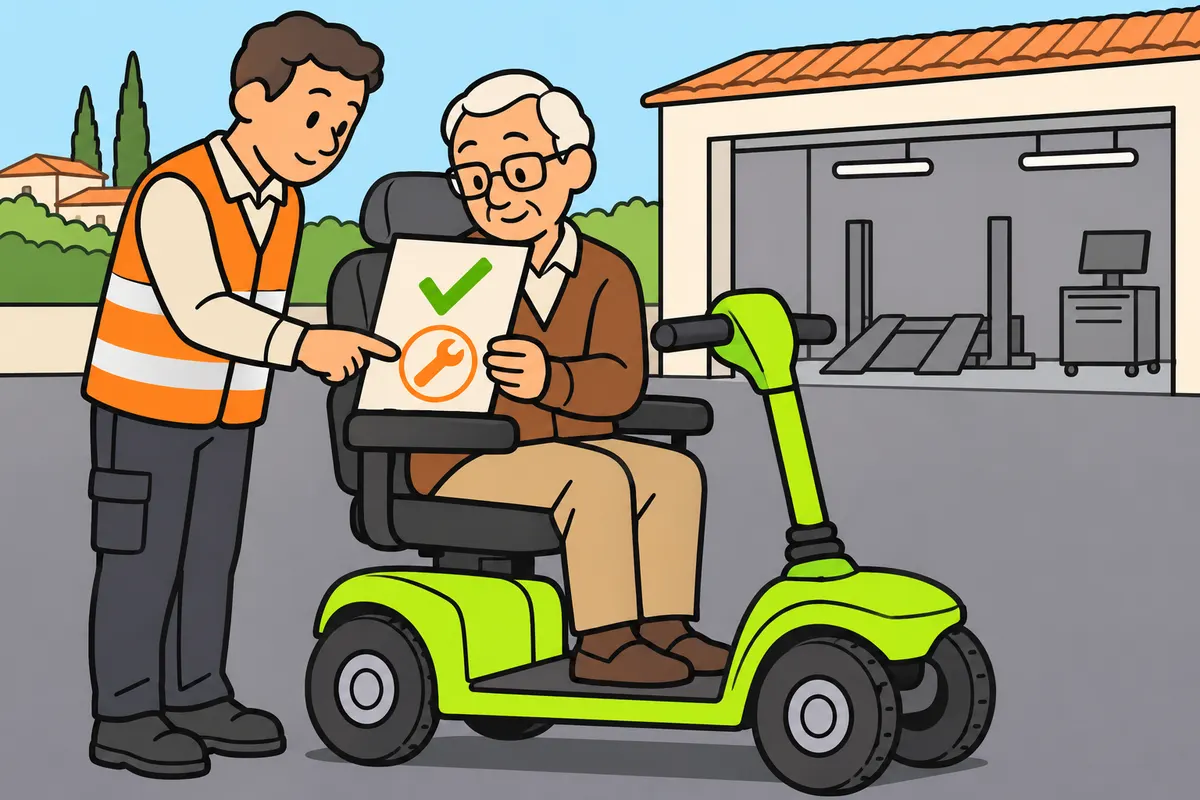
A favourable ITV can include minor defects you must repair.
Remember
- Read the defects in the report and the next inspection date.
- Repair minor defects within the time allowed.
- Keep the latest inspection report: officers may ask to see it.
- Officers also check validity in the Vehicle Register.
Exam trap: Wrong: minor defect repairs always require another inspection. Right: not by themselves; return if the overall result is unfavourable or negative.
Read the full explanation
- You must read the result and the defects listed in the report, as well as the next inspection date. A favourable ITV result may include minor defects that you must repair. A favourable result does not mean you can ignore the observations or subsequently alter the vehicle's authorised characteristics. [RD 920/2017, arts. 10, 11 and 12](https://www.boe.es/buscar/act.php?id=BOE-A-2017-12841).
- You must repair minor defects within a maximum of 2 months. These alone do not require a further inspection to check the repairs, unless you have to return because the overall result is unfavourable or negative. The individual classifications of all the defects together determine the final inspection result. [RD 920/2017, art. 11.1](https://www.boe.es/buscar/act.php?id=BOE-A-2017-12841).
- Officers check your ITV validity in the Registro de Vehículos or, alternatively, using the report, tarjeta ITV or certificado de características (certificate of vehicle characteristics), and may require you to produce the latest inspection report. [RD 920/2017, art. 10.3](https://www.boe.es/buscar/act.php?id=BOE-A-2017-12841#a10) [RD 920/2017, art. 12.2](https://www.boe.es/buscar/act.php?id=BOE-A-2017-12841#a12).
18Unfavourable and negative results: different consequences
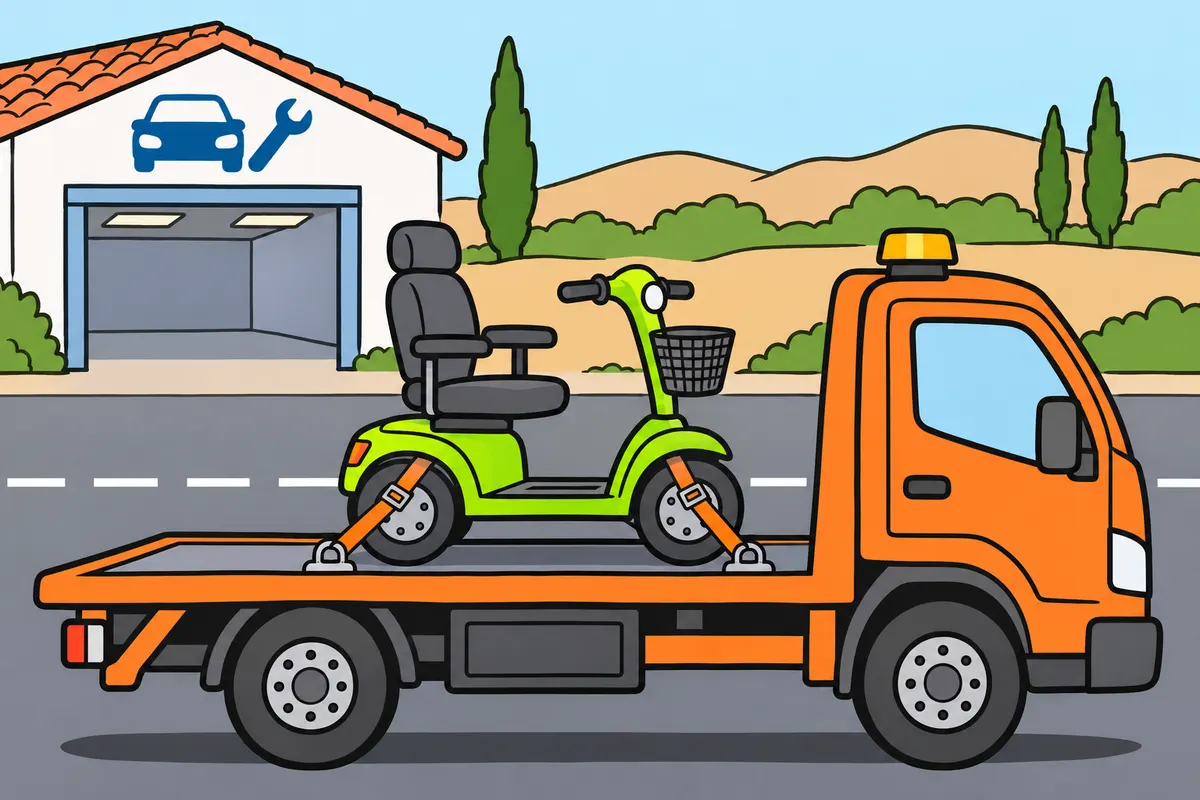
Unfavourable ITV limits your journeys; negative ITV means you cannot drive the vehicle.
| ITV result | How you can move the vehicle |
|---|---|
| Unfavourable: serious defects | Only to a workshop or, where applicable, to regularise its status, and back to ITV |
| Negative: very serious defects | Transport it by other means; do not drive it |
Remember
- Respect your deadline from the first unfavourable or negative inspection.
- You can choose the station for inspection and repair checks.
- Changing stations does not extend your deadline or remove defects.
- After your deadline, you need a full inspection and may face penalties.
Exam trap: Wrong: the repair period allows normal driving. Right: movement restrictions apply immediately after the result.
Read the full explanation
- If your ITV result is desfavorable (unfavourable) because of serious defects, you cannot use the vehicle for ordinary road travel. You can only use the exception allowing you to take it to a workshop or, where applicable, to bring its status into compliance, and return to an ITV station. [RD 920/2017, art. 11](https://www.boe.es/buscar/act.php?id=BOE-A-2017-12841).
- You must remedy the defects and present your vehicle for another inspection within the period granted, which cannot exceed 2 months from the first unfavourable result. [RD 920/2017, art. 11](https://www.boe.es/buscar/act.php?id=BOE-A-2017-12841).
- If your result is negativo (negative) because of very serious defects, you must transport the vehicle by means other than the vehicle itself. Once it is repaired, you must present it for inspection within a period not exceeding 2 months from the first negative result. [RD 920/2017, art. 11](https://www.boe.es/buscar/act.php?id=BOE-A-2017-12841).
- You can choose the ITV station for the inspection and for subsequent checks on repairs. If you present your vehicle after the period granted, it must undergo a full inspection, and you may also face penalties. Changing stations does not remove the defects or extend the repair deadline. [RD 920/2017, art. 11](https://www.boe.es/buscar/act.php?id=BOE-A-2017-12841).
19ITV sticker and modifications
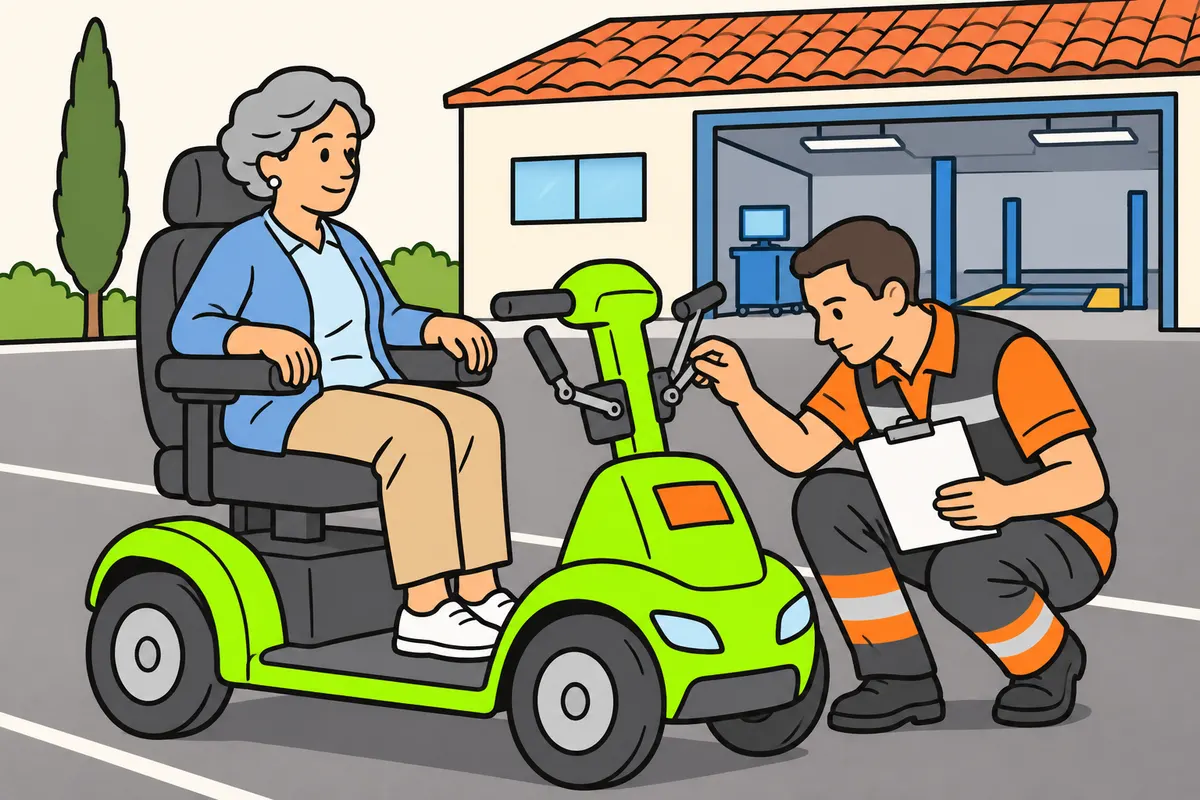
Place your ITV sticker correctly and arrange approval for vehicle modifications.
| Your vehicle | Where to place V-19 |
|---|---|
| With a windscreen | Inside, in the top right-hand corner |
| Without a windscreen | Somewhere clearly visible |
Remember
- V-19 proves a favourable periodic ITV result and shows the next expiry.
- Do not confuse the sticker with the card or report.
- For a regulated modification, present the vehicle for inspection with required documents.
- Keep following your personal adaptations and restrictions.
Exam trap: Wrong: wait until periodic ITV to document a regulated modification. Right: present it for inspection within 15 days.
Read the full explanation
- The V-19 sticker proves that your vehicle has passed its periodic ITV (vehicle roadworthiness test) and shows when the next inspection is due. If your vehicle has a windscreen, you must place it on the inside in the top right-hand corner; if it has no windscreen, you must place it somewhere clearly visible. [RGV, Annex XI, V-19](https://www.boe.es/buscar/act.php?id=BOE-A-1999-1826) [RD 920/2017, art. 12](https://www.boe.es/buscar/act.php?id=BOE-A-2017-12841).
- You must not confuse the sticker with the technical card or the inspection report. Each document serves a different purpose. The sticker does not authorise a configuration that has not been legally approved: you must maintain the characteristics and conditions under which your vehicle is authorised for road use. [RGV, Annex XI, V-19](https://www.boe.es/buscar/act.php?id=BOE-A-1999-1826) [RD 920/2017, arts. 10 and 12](https://www.boe.es/buscar/act.php?id=BOE-A-2017-12841).
- If you make a modification that constitutes a vehicle modification requiring approval, you must complete the procedure under the vehicle modification regulations. You must present your vehicle for a technical inspection within a maximum of 15 days, providing the required documents. [RD 866/2010, art. 8](https://www.boe.es/buscar/act.php?id=BOE-A-2010-11154).
- You must distinguish technical approval of the modification from your fitness to use it. A favourable inspection of adapted controls confirms their technical status, but you must continue to use the adaptations and comply with the restrictions that apply to your personal driving entitlement. [RD 866/2010, art. 8](https://www.boe.es/buscar/act.php?id=BOE-A-2010-11154) [RGCond, arts. 3 and 46](https://www.boe.es/buscar/act.php?id=BOE-A-2009-9481).
20Insurance: distinguish purpose-built vehicles from adapted vehicles
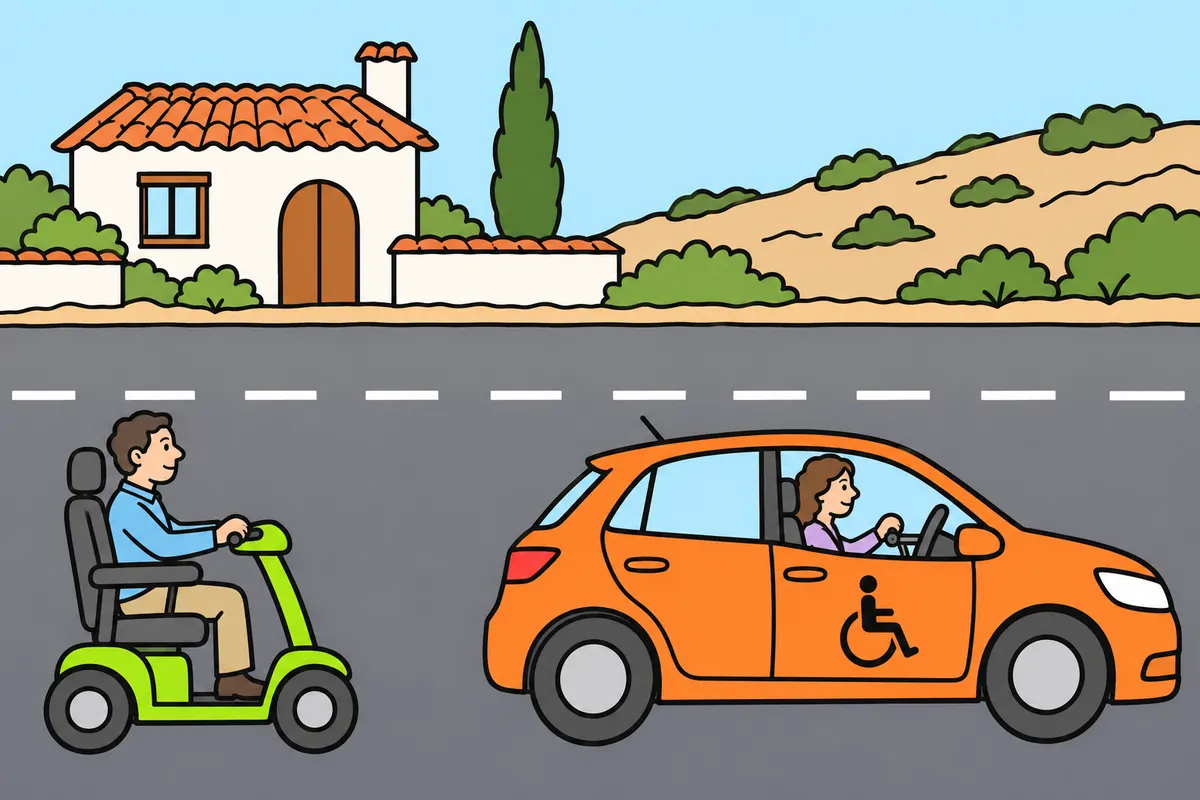
Check your vehicle’s type and intended use to find whether insurance is compulsory.
| Vehicle under insurance law | Insurance obligation to check |
|---|---|
| Wheelchair or purpose-built motorised support vehicle exclusively for people with reduced mobility | Excluded from the motor vehicle definition: this law does not require that insurance |
| Adapted motor vehicle, including an adapted car | Keeps its applicable insurance obligation |
Remember
- Do not decide the insurance duty just because you hold an LCM.
- Check its features and whether it is exclusively for people with reduced mobility.
- You can buy third-party liability cover even if your vehicle is legally excluded.
- Read your policy: cover does not pay for every loss automatically.
Exam trap: Wrong: every vehicle driven by someone with a disability is exempt. Right: an adapted car keeps its applicable insurance obligation.
Read the full explanation
- You must apply the definition in the insurance law itself. The LRCSCVM excludes wheelchairs and other purpose-built motorised mobility support vehicles intended exclusively for people with reduced mobility from its definition of a motor vehicle. For these excluded vehicles, that law does not impose the insurance obligation under article 2. [LRCSCVM, arts. 1 bis and 2](https://www.boe.es/buscar/act.php?id=BOE-A-2004-18911).
- You must not treat this exclusion as an exemption for any vehicle driven by a person with a disability. The law expressly includes vehicles that meet its definition of a motor vehicle and have been adapted for people with reduced mobility. An adapted passenger car therefore remains subject to the insurance obligation that applies to it. [LRCSCVM, arts. 1 bis and 2](https://www.boe.es/buscar/act.php?id=BOE-A-2004-18911).
- You must check the characteristics and exclusive intended use of your vehicle, rather than infer its insurance requirements solely from the fact that you hold an LCM licence. A licence describes your personal driving entitlement; it does not in itself certify that your vehicle is excluded from the insurance law. You must not decide this solely on the basis of the RGV definition of a motor vehicle either. [LRCSCVM, arts. 1 bis and 2](https://www.boe.es/buscar/act.php?id=BOE-A-2004-18911).
- As a recommendation, you can take out third-party liability cover for your purpose-built vehicle even if it falls within the legal exclusion. You must read the terms and the risks covered. The fact that a type of insurance is not compulsory does not mean that an insurer automatically pays for any damage caused when you use the vehicle on the road. [LRCSCVM, arts. 1 bis and 2](https://www.boe.es/buscar/act.php?id=BOE-A-2004-18911).
21Insurance obligation and scope where applicable
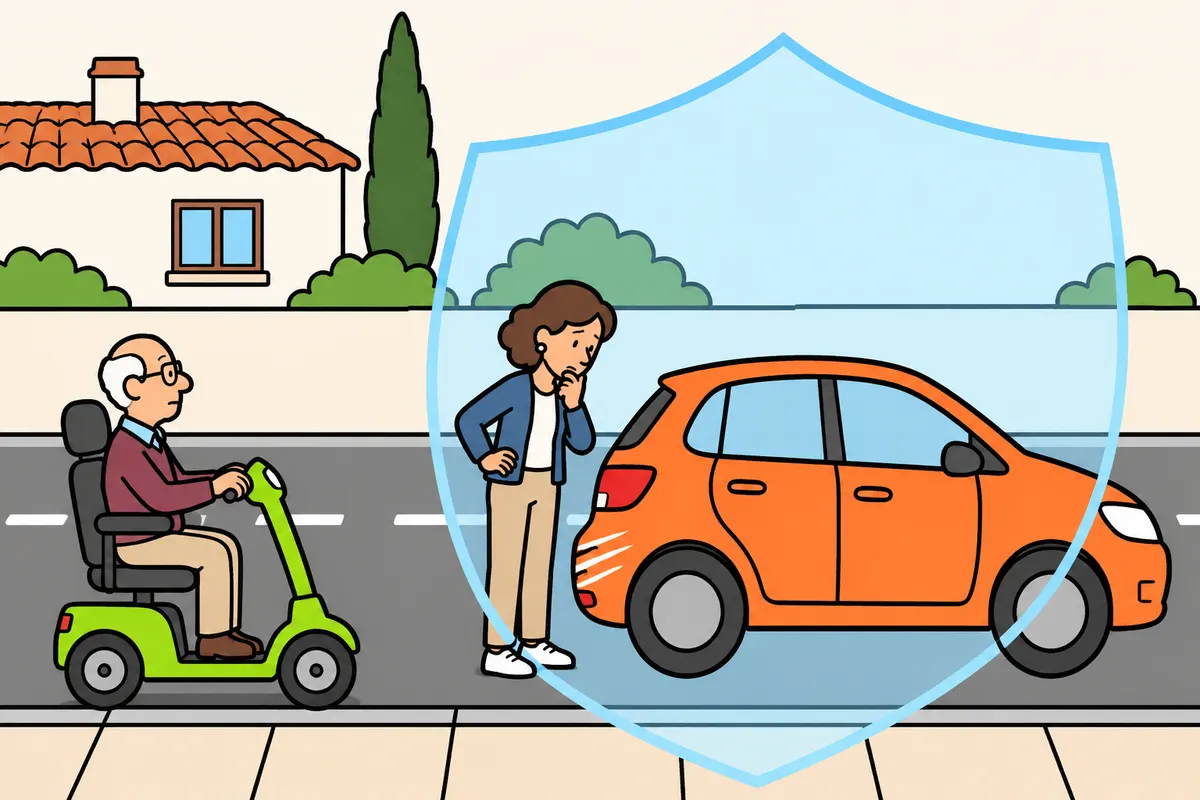
If compulsory insurance applies to your vehicle, maintain the required cover.
| Compulsory insurance of the vehicle responsible | Protection to distinguish |
|---|---|
| Harm to third parties | Third-party liability within the law’s scope |
| Injury to or death of its own driver | Not covered |
| Damage to the insured vehicle and items carried | Not covered |
| Property of people and relatives within the legal exclusion | Not covered |
Remember
- As owner, insure each vehicle normally based in Spain when insurance is required.
- Another person with an interest can insure it, stating that capacity.
- Distinguish the owner, policyholder, insured person and driver.
- Without required insurance, you risk a road-use ban, impounding or sealing, and penalties.
Exam trap: Wrong: compulsory insurance covers your injuries in the vehicle responsible. Right: it does not; check additional cover.
Read the full explanation
- If you own a vehicle that is subject to compulsory insurance and normally based in Spain, you must take out and maintain an insurance contract for each vehicle. Another person with an interest in insuring it can take out the policy, stating that capacity. The owner, policyholder, insured person and driver can be different people: owning the vehicle, taking out the policy and driving are distinct roles. [LRCSCVM, arts. 2, 3 and 5](https://www.boe.es/buscar/act.php?id=BOE-A-2004-18911).
- You must understand third-party liability as protection against harm to third parties within the scope of the law. For a vehicle subject to insurance, injury to another person or damage to third-party property is distinct from your own injury or damage. [LRCSCVM, arts. 2, 3 and 5](https://www.boe.es/buscar/act.php?id=BOE-A-2004-18911).
- The compulsory insurance of the vehicle responsible does not cover injury to or the death of its own driver. Nor does it cover damage to the insured vehicle, items carried in it or property belonging to the people and family members covered by the legal exclusion. You must check the additional cover if you want protection against these risks. [LRCSCVM, arts. 2, 3 and 5](https://www.boe.es/buscar/act.php?id=BOE-A-2004-18911).
- If insurance is compulsory and you fail to meet that obligation, the law provides for a ban on road use and impounding or sealing of the vehicle at your expense as the owner, as well as the corresponding penalty. You must not apply these consequences merely because a paper insurance receipt is missing, or to a vehicle that is actually excluded from that obligation. [LRCSCVM, arts. 2, 3 and 5](https://www.boe.es/buscar/act.php?id=BOE-A-2004-18911).
22Changes of address and details
Notify Tráfico of changes to your details and vehicle details within the deadline.
| What changes | What to do within 15 days |
|---|---|
| Your licence details or address | Notify the Provincial Traffic Office |
| Recorded vehicle details, if you are the keeper | Report them; a new registration document is issued if affected |
Remember
- Notify Tráfico of changes to your licence details or address.
- As registered keeper, also report changes to recorded vehicle details.
- If you are driver and keeper, check both registers.
- Changing the municipal register or insurance policy does not update Tráfico.
Exam trap: Wrong: an address change has the sale deadline. Right: notify an address change within 15 days.
Read the full explanation
- If the details on your licence or your address change, you must notify the Jefatura Provincial de Tráfico (Provincial Traffic Office) within 15 days of the change. This notification updates the Registro de Conductores (Driver Register); other residence procedures have their own purposes and recipients. [RGCond, art. 10](https://www.boe.es/buscar/act.php?id=BOE-A-2009-9481).
- If you are the registered keeper of the vehicle and any details recorded in the Registro de Vehículos (Vehicle Register) change, you must report the change within 15 days. If the change affects a detail that must appear on the vehicle registration document, a new document is issued. Not every update requires the same change to the document itself. [RGCond, art. 10; RGV, art. 30](https://www.boe.es/buscar/act.php?id=BOE-A-1999-1826#a30).
- If you are both the driver and the registered keeper, you must check that the relevant details are updated in both registers. You must not assume that changing the address on an insurance policy, in the padrón (municipal population register) or on a bill automatically updates all administrative records relating to driving. [RGCond, art. 10](https://www.boe.es/buscar/act.php?id=BOE-A-2009-9481) [RGV, art. 30](https://www.boe.es/buscar/act.php?id=BOE-A-1999-1826#a30).
- You must distinguish this 15-day period from the deadlines for buying and selling a vehicle. Changing your address does not transfer the vehicle, and notifying a sale does not renew your personal driving licence. To answer a question, first identify which detail changes, who must report it and which document is affected. [RGCond, art. 10](https://www.boe.es/buscar/act.php?id=BOE-A-2009-9481) [RGV, arts. 30 and 32](https://www.boe.es/buscar/act.php?id=BOE-A-1999-1826).
23Sale and change of registered keeper
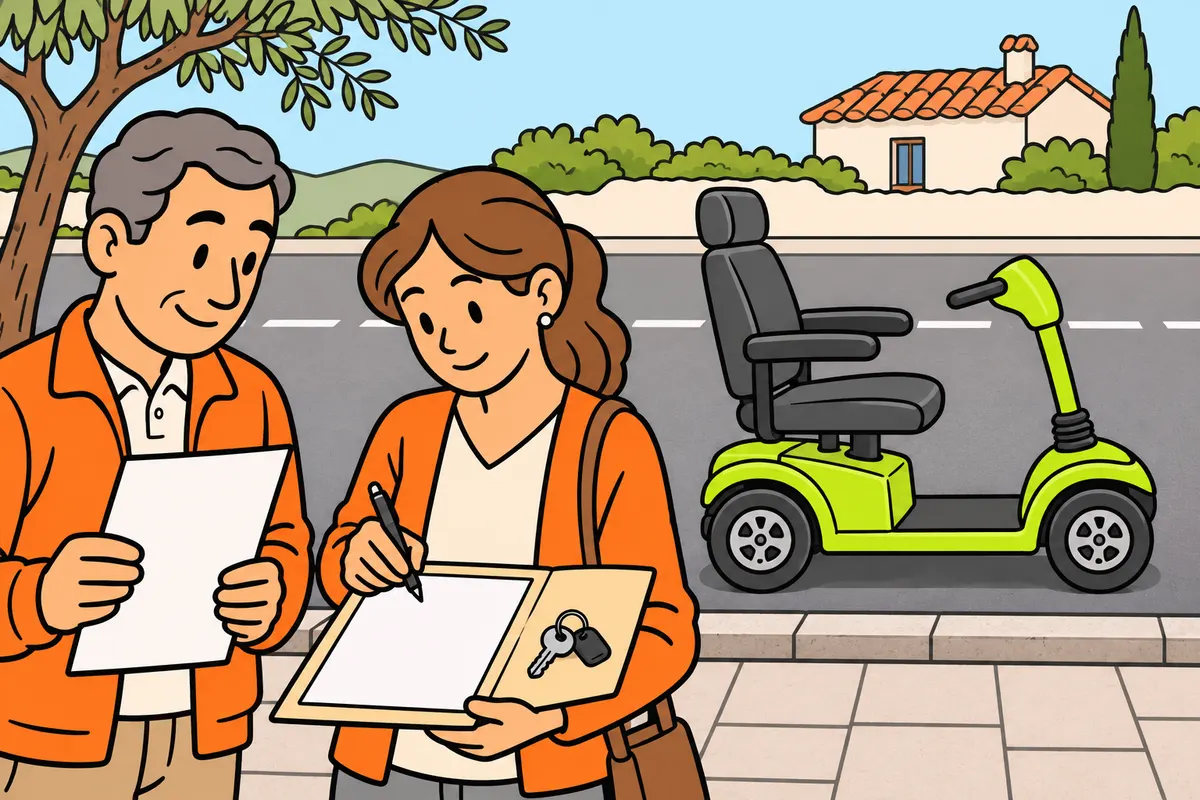
When you sell or receive a vehicle, your role determines your procedure and deadline.
| Your role in a private transfer | What to do | Deadline |
|---|---|---|
| Seller | Notify Tráfico of transfer | 10 days |
| Buyer or recipient | Apply for registration in your name | 30 days from acquisition |
Remember
- In a private transfer, notify the sale even after handing over the keys.
- If you buy or receive the vehicle, request registration in your name.
- Provide required documents and meet applicable tax duties.
- Keep proof of the transaction and procedures.
Exam trap: Wrong: the 30-day deadline allows driving with any paper. Right: you need the new registration document or valid provisional authorisation.
Read the full explanation
- If you transfer your vehicle to another person in a private transaction, you must notify Tráfico (the traffic authority) of the transfer within 10 days. The notification must include the identity and address of both the transferor and the acquirer, as well as the date and legal basis of the transfer, with the required documents. Handing over the keys does not replace this notification. [RGV, arts. 31 and 32](https://www.boe.es/buscar/act.php?id=BOE-A-1999-1826#a32).
- If you buy or receive the vehicle, you must apply to renew the permiso de circulación (vehicle registration certificate) or licencia de circulación (vehicle registration licence) in your name within 30 days of acquiring it. You must provide the documents and evidence that you have met the applicable tax obligations. The seller’s procedure does not replace your duty to apply for the document in your name. [RGV, arts. 31 and 32](https://www.boe.es/buscar/act.php?id=BOE-A-1999-1826#a32).
- You must have the registration document that authorises road use of the vehicle in that situation. The 30-day period for applying for the change does not authorise you to drive with just any paperwork. The regulations require the new certificate or licence, without prejudice to a valid temporary authorisation where applicable. [RGV, arts. 31 and 32](https://www.boe.es/buscar/act.php?id=BOE-A-1999-1826#a32).
- If you sell your vehicle and do not notify the transfer, you can continue to be considered its registered keeper for traffic purposes until someone else is registered. If you buy the vehicle and let the deadline pass without applying for renewal, the regulations provide for immobilisation and penalty proceedings. You must keep documentary proof of the transaction and the procedures completed. [RGV, arts. 31 and 32](https://www.boe.es/buscar/act.php?id=BOE-A-1999-1826#a32).
24Lost, stolen or damaged documents
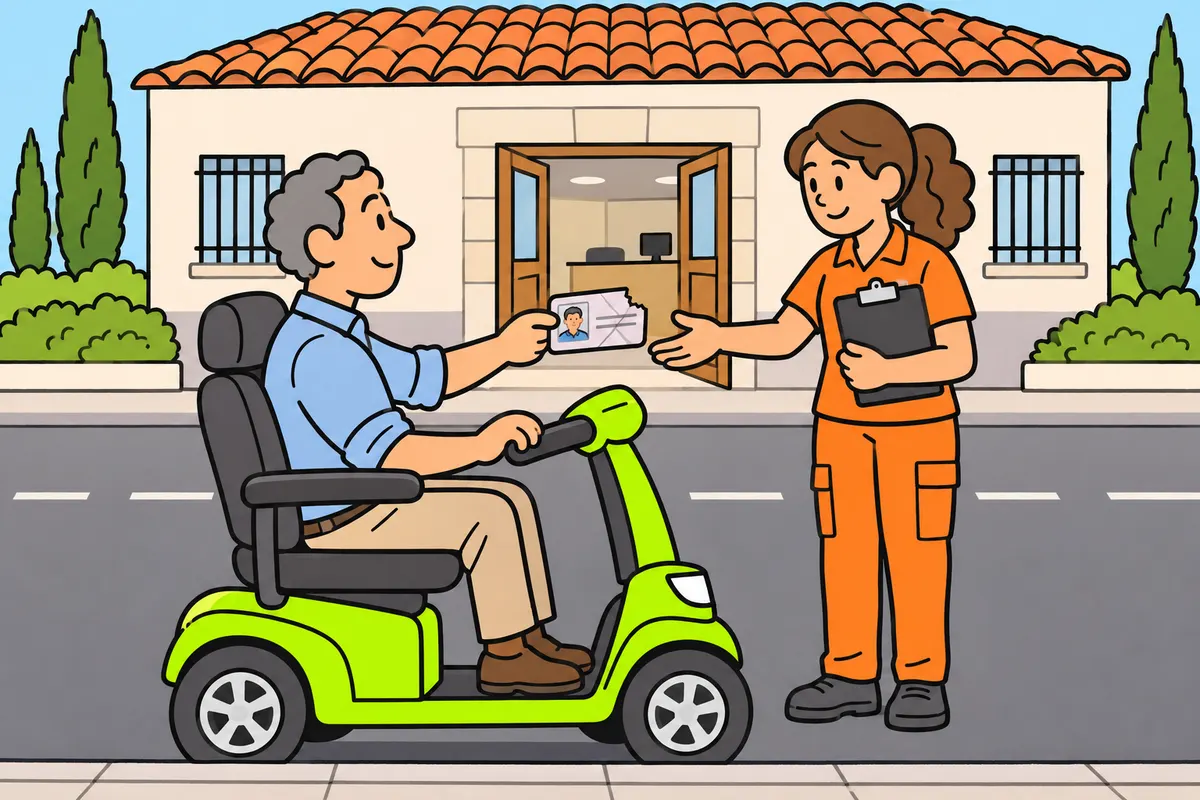
Request duplicate lost documents; a duplicate does not replace renewal.
| Document and situation | What to do |
|---|---|
| Personal licence recovered after a loss or theft duplicate was issued | Return the original to the issuing Traffic Office |
| Registration document recovered after a loss or theft duplicate was issued | Destroy the original: it was cancelled |
| Lost electronic technical card | Request a duplicate from the DGT |
| Lost conventional technical card | Request a duplicate at an ITV station |
Remember
- If your LCM is lost, stolen or damaged, request a duplicate from Tráfico.
- A duplicate keeps the same expiry date.
- To drive during processing, you need valid authorisation you can present.
Exam trap: Wrong: use your recovered original licence and duplicate interchangeably. Right: return the original to Tráfico.
Read the full explanation
- If you lose your LCM licence, it is stolen or it is damaged, you must apply to Tráfico for a duplicate. The duplicate reproduces the details of your driving entitlement and retains its expiry date. If you need to drive while it is being processed, you must have a valid authorisation that you can present. [RGCond, arts. 1 and 11 to 13](https://www.boe.es/buscar/act.php?id=BOE-A-2009-9481).
- If you recover your original licence after a duplicate has been issued because of loss or theft, you must return it to the Jefatura (Traffic Office) that issued it. [RGCond, art. 11](https://www.boe.es/buscar/act.php?id=BOE-A-2009-9481).
- If your permiso de circulación or licencia de circulación is lost or stolen, you can request a duplicate as the registered keeper. Its issue invalidates the original; if the original turns up later, you must destroy it. You must note the difference from the procedure for a recovered original personal driving licence, which you must return to Tráfico. [RGV, art. 30](https://www.boe.es/buscar/act.php?id=BOE-A-1999-1826#a30).
- If your ficha técnica (vehicle technical card) is missing, you must request a duplicate through the channel appropriate to its format. The DGT processes duplicates of electronic cards; for a conventional card, you must go to an ITV inspection centre. You must check the type of card, without assuming that every vehicle you can drive with an LCM licence has eITV. [RGCond, art. 11; RGV, art. 30; DGT, duplicate vehicle technical card](https://sede.dgt.gob.es/es/vehiculos/duplicado-y-renovacion-de-documentacion/duplicado-de-la-ficha-tecnica/).
25Vehicle theft
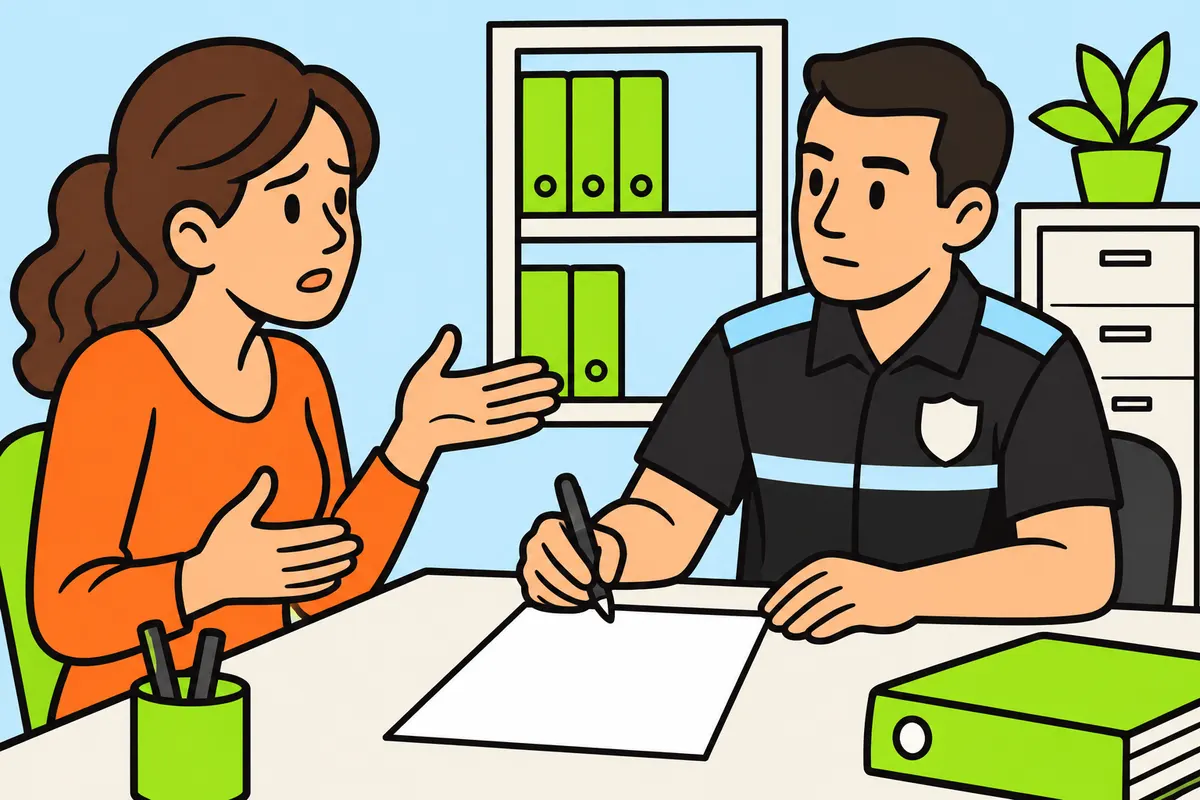
Report vehicle theft and check its status when you recover it.
| What was stolen | What to do |
|---|---|
| The vehicle | Report it; temporary deregistration due to theft is communicated |
| Only the documents | Report it and request the relevant duplicates |
Remember
- Keep the report and procedure documents.
- After a formal report, temporary deregistration is communicated to the DGT automatically.
- If you recover the vehicle, notify the authorities.
- Before using it, check its status, documents and inspections.
Exam trap: Wrong: recovering your vehicle is enough to drive again. Right: notify recovery and check its status, documents and inspections.
Read the full explanation
- If your vehicle is stolen, you must report it to the police. The DGT states that, once you formally report the theft, the temporary deregistration due to theft is automatically recorded in its databases. You must keep the documents relating to your report and the procedure as proof of the situation. [DGT, vehicle theft](https://www.dgt.es/nuestros-servicios/tu-vehiculo/te-han-robado-tu-vehiculo/).
- If only your documents are stolen, you must report the theft and request the relevant duplicates. You must not confuse this case with the disappearance of the vehicle: replacing the documents and recording a vehicle's deregistration due to theft are different procedures for different circumstances. [DGT, vehicle theft](https://www.dgt.es/nuestros-servicios/tu-vehiculo/te-han-robado-tu-vehiculo/).
- If you recover your vehicle, you must notify the authorities and check its administrative status before using it again. You must also check that it has the required documents and the relevant inspections. Recovering the vehicle itself does not prove that it is ready to be driven on the road. [DGT, vehicle theft](https://www.dgt.es/nuestros-servicios/tu-vehiculo/te-han-robado-tu-vehiculo/).
26Immobilisation, removal and impounding by officers
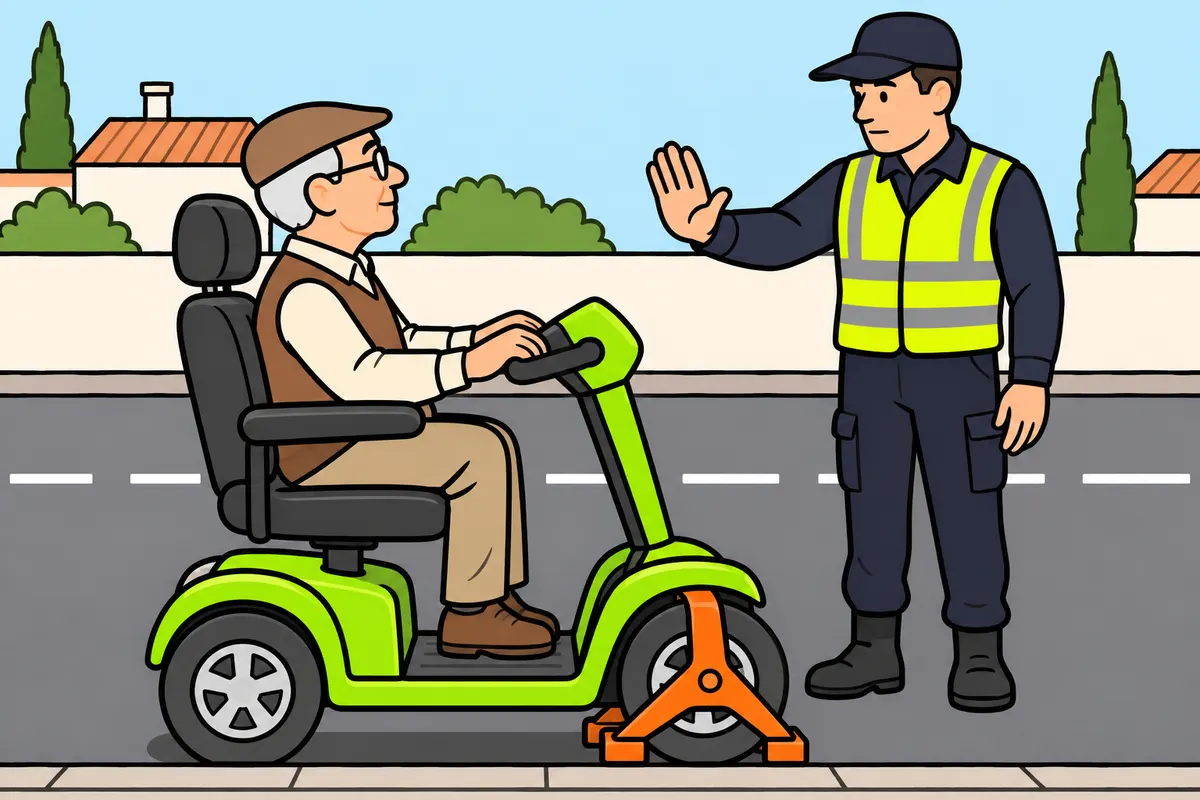
Officers can immobilise or remove your vehicle for reasons set by law.
| Measure and case | What you must know |
|---|---|
| Immobilisation: road-use authorisation missing, cancelled, invalid or its conditions breached | Officers can stop vehicle use |
| Serious safety defect | Officers can stop vehicle use |
| Immobilisation: you or your passenger lack a compulsory helmet or child restraint | Officers can stop vehicle use |
| Alcohol or drug test refusal or positive result | Officers can immobilise |
| No compulsory insurance | Only if your vehicle must be insured |
| Authorised seats exceeded by 50 % | Do not count the driver |
| Immobilisation: excess emissions, suspected monitoring tampering or systems to evade surveillance | The officer’s designated workshop must also certify repairs before release |
| End of immobilisation | Cause must end and due costs must be paid |
| Hired vehicle | If you are the offender, immobilisation becomes a ban on your use |
| Immobilisation costs | Offending driver pays; failing that, usual driver or renter, then owner |
| Removal if responsible person does not act | Danger, obstruction, serious disruption or public damage |
| Removal after accident or immobilisation | Vehicle cannot continue, no suitable place, or cause continues |
| Removal for parking | Disabled space without badge, loading or reserved areas |
| Municipal timed parking removal | No required ticket or permit, or over three times paid time, under local rules |
| Removal costs | Keeper, renter or usual driver pays as applicable; justified theft/use against keeper’s wishes is exempt |
| Notice and impounding | Authority tells keeper within 24 hours; uses Electronic Road Address if available |
Remember
- Put the vehicle where officers direct you.
- If you are the offending driver, pay immobilisation costs before it is lifted.
- Properly justified theft or use against the keeper’s wishes is exempt.
- If you owe removal costs, pay before collecting the vehicle; you can appeal.
- Officers may keep the registration document until you prove payment.
- An LCM does not replace the badge for a disabled parking space.
Exam trap: Wrong: you can end immobilisation without paying once its cause ends. Right: if you owe the costs, pay first; you can appeal and claim them from the responsible person.
Read the full explanation
- Officers may immobilise your vehicle if it has no valid administrative authorisation for road use because it is unissued, cancelled or subject to a declaration of loss of validity, or if the vehicle does not meet the conditions of that authorisation. They may also do so if it has defects that pose a particularly serious risk to road safety. [Traffic Act, art. 104.1.a and b](https://www.boe.es/buscar/act.php?id=BOE-A-2015-11722#a104).
- Officers may also order immobilisation if you or your passenger lack a helmet or child restraint system when these are compulsory; if you refuse alcohol or drug tests or test positive; or if the vehicle lacks compulsory insurance when it is subject to that requirement. To determine whether your particular vehicle is exempt from insurance, apply the explanation in «Insurance: distinguish purpose-built vehicles from adapted vehicles». [Traffic Act, art. 104.1.c, d and e](https://www.boe.es/buscar/act.php?id=BOE-A-2015-11722#a104).
- Other grounds include exceeding the authorised number of occupant places by 50 %, excluding the driver's place; exceeding the permitted levels of gases, smoke or noise; reasonable indications that monitoring instruments have been tampered with; or carrying systems intended to evade officers' surveillance and camera checks. [Traffic Act, art. 104.1.g, h, i and j](https://www.boe.es/buscar/act.php?id=BOE-A-2015-11722#a104).
- You must place your vehicle where officers direct you; they may order you to continue to the designated place. Remedying the cause allows the immobilisation to be lifted; in cases involving emissions, tampering or systems for evading checks, certification from a workshop designated by the officer is also required. If the vehicle is rented, immobilisation is replaced by a ban on its use by the offender. [Traffic Act, art. 104.2, 3, 5 and 7](https://www.boe.es/buscar/act.php?id=BOE-A-2015-11722#a104).
- If you are the offending driver, you must pay the costs of immobilisation; failing that, the usual driver or renter must pay, then the owner if neither is available. Exceptions apply in duly substantiated cases of theft or other use against the owner's wishes. The costs must be paid before the immobilisation is lifted, without prejudice to your right to appeal and to recover the costs from the person responsible; officers may withhold the permiso de circulación (vehicle registration certificate) until proof of payment is provided. [Traffic Act, art. 104.6](https://www.boe.es/buscar/act.php?id=BOE-A-2015-11722#a104).
- The authority may remove and impound your vehicle if the person required to do so does not: when it creates danger, obstructs or hinders traffic, seriously disrupts vehicles or pedestrians, or damages public services or property; after an accident that prevents you from continuing; if there is no suitable place to immobilise it without causing an obstruction; or if the cause of immobilisation persists. [Traffic Act, art. 105.1.a, b, c, d and h](https://www.boe.es/buscar/act.php?id=BOE-A-2015-11722#a105).
- The authority may also remove your vehicle if you park in a space reserved for people with disabilities without the required permit, in lanes or parts of the road reserved for certain users, or in loading and unloading areas. In municipal time-limited parking areas, removal applies if you lack the required ticket or permit, or exceed three times the paid parking time under the municipal by-law. Driving an LCM vehicle does not replace the required parking permit. [Traffic Act, art. 105.1.e, f and g](https://www.boe.es/buscar/act.php?id=BOE-A-2015-11722#a105).
- Removal costs are payable by the registered keeper, renter or usual driver, as applicable, except in duly substantiated cases of theft or other use against the registered keeper's wishes. If you are responsible for paying them, you must do so before recovering the vehicle, without losing your right to appeal or recover the costs from the person responsible; the officer may withhold the permiso de circulación until proof of payment is provided. The administration must notify the registered keeper of the removal and impounding within 24 hours, through the Dirección Electrónica Vial (electronic traffic notification service) if the registered keeper has one. [Traffic Act, art. 105.2 and 3](https://www.boe.es/buscar/act.php?id=BOE-A-2015-11722#a105).
Renew your LCM licence before it expires
Distinguish medical fitness, the application and authorisation to drive.
- Check the expiry date and restrictions on your licence.
- Arrange renewal within the 3 months before expiry.
- Undergo the medical assessment at an authorised centre and submit your application with the required documents.
- Check the provisional authorisation you receive and comply with its conditions.
- Check the validity and restrictions of the final document.
Check your documents before setting off
Check the driver, the vehicle and its administrative status.
- Check that your LCM licence or another qualifying driving licence is valid and that you can comply with its restrictions.
- Check the registration and technical documents for the particular vehicle.
- Check the ITV date and result and keep the report from the latest inspection.
- Determine whether the vehicle is subject to compulsory insurance or falls within the specific legal exclusion; check the applicable cover.
- Make sure you can show the required documents to officers.
Act according to the ITV result
The result determines the repairs and how the vehicle may be moved.
- Read the full result and the list of defects in the report.
- With minor defects, carry out repairs within a maximum of 2 months; minor defects alone do not require reinspection.
- With an unfavourable result, restrict use to the journeys legally permitted and carry out repairs.
- With a negative result, use means other than the vehicle itself to move it.
- With an unfavourable or negative result, return for inspection within the period granted, at most 2 months from the first corresponding result.
Replace the missing document
First identify whether it relates to the driver or the vehicle.
- Determine which document is lost, stolen or damaged and report any theft to the police.
- For your LCM licence or registration document, request a duplicate from Tráfico (the traffic authority); for the technical card, use the channel appropriate to its format.
- Check whether your authorisation is valid: a duplicate does not renew an expired licence.
- When driving, use only documents or authorisations with recognised validity.
- If you recover the original, return your personal licence to Tráfico or destroy the cancelled registration document, as appropriate.
Finished this module?
Mark it as read and you will see your progress on the theory list.