
Theory · LCM Licence - Reduced Mobility Vehicle · Module 4 of 15
The LCM licence points system
You learn how many points you start with, how you can reach 15 and which offences reduce your balance when you drive with an LCM licence. You learn to distinguish partial points recovery from loss of licence validity, choose the right course and remember the waiting periods and test you need to drive again.
1The LCM licence also has points
Your points belong to you and cover all your driving authorisations.
Remember
- Your LCM licence also has points.
- You lose your points even when driving someone else’s vehicle.
- You share one balance across all your permits and licences.
- If you lose every point, you must regain your authorisation.
Exam trap: Wrong: each vehicle has its own points. Right: points belong to your driving record.
Read the full explanation
- Your LCM licence is included in the points system. Even when you drive a vehicle intended for people with reduced mobility, the offences specified by law can reduce your points balance and, if you lose all your points, cause your driving entitlement to lose its validity. [LTSV, art. 63](https://www.boe.es/buscar/act.php?id=BOE-A-2015-11722#a63). [LTSV, art. 64.1](https://www.boe.es/buscar/act.php?id=BOE-A-2015-11722#a64). [LTSV, art. 71](https://www.boe.es/buscar/act.php?id=BOE-A-2015-11722#a71).
- Your points belong to your driving record, not to the vehicle. If you commit an offence that carries a points deduction while driving someone else’s vehicle, your own balance is affected: being the owner and being the driver responsible are different situations.
- The system combines responsibility and recovery. Keeping your points balance allows you to continue driving and qualify for the bonuses provided for; losing some points requires you to correct your behaviour, while losing all of them requires you to follow a procedure to regain your driving entitlement. [LTSV, art. 63.4](https://www.boe.es/buscar/act.php?id=BOE-A-2015-11722#a63). [LTSV, art. 65](https://www.boe.es/buscar/act.php?id=BOE-A-2015-11722#a65).
- You have a single points balance for all your driving entitlements. Obtaining another licence category does not create a separate account that you can freely use to offset points lost from your licence; the consequences for your points affect all your categories. [LTSV, art. 63.3](https://www.boe.es/buscar/act.php?id=BOE-A-2015-11722#a63).
2Initial allocation: 8 or 12 points
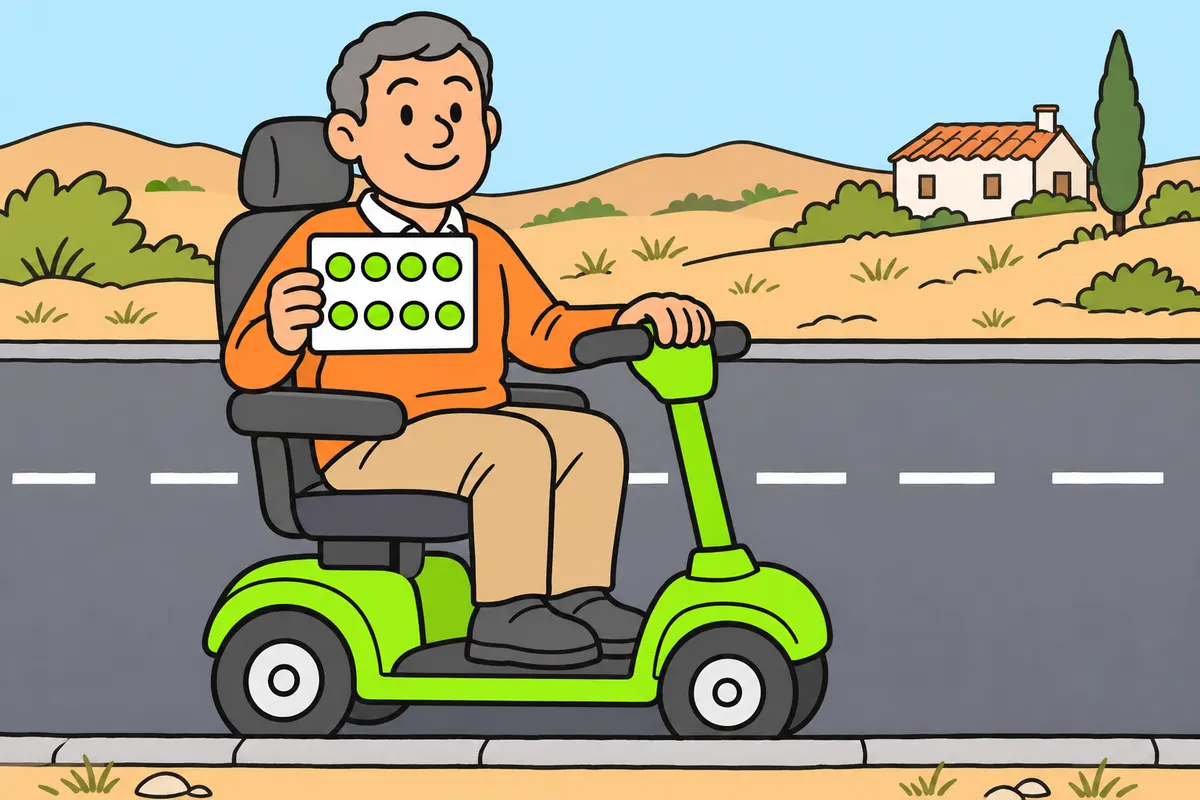
You normally start with 12 points, but some cases give you 8.
| Your case when obtaining authorisation | Starting points |
|---|---|
| General rule | 12 |
| Authorisation held no more than 3 years; no other permit held long enough | 8 |
| New authorisation after losing all points | 8 |
Remember
- If your first authorisation is LCM, you start with 8 points.
- With up to 3 years’ seniority (3 included), you receive 8 points.
- This does not apply if you already hold another permit with that seniority.
- After losing all your points, you receive 8 when you regain your authorisation.
Exam trap: Wrong: keeping your original licence date gives you 12 after losing everything. Right: you restart with 8.
Read the full explanation
- The general rule is an initial allocation of 12 points. The law provides for exceptions with 8 points, so you must check whether you are a new driver or are obtaining your driving entitlement again after losing all your points. [LTSV, art. 63.1](https://www.boe.es/buscar/act.php?id=BOE-A-2015-11722#a63). [LTSV, art. 63.2](https://www.boe.es/buscar/act.php?id=BOE-A-2015-11722#a63).
- You are allocated 8 points if you have held your driving permit or licence for no more than 3 years, unless you already hold another driving permit with that length of service. If you obtain your first LCM licence and have no other driving entitlement held for the required period, you start with 8. [LTSV, art. 63.2.a](https://www.boe.es/buscar/act.php?id=BOE-A-2015-11722#a63).
- The legal expression “no more than 3 years” includes exactly 3 years. [LTSV, art. 63.2.a](https://www.boe.es/buscar/act.php?id=BOE-A-2015-11722#a63). You must read it together with the rule on moving up to 12 after 2 years without penalties that deduct points: the two provisions regulate different matters and apply together. [LTSV, art. 65.2](https://www.boe.es/buscar/act.php?id=BOE-A-2015-11722#a65).
- You also receive 8 points when you obtain a driving permit or licence again after losing all your points. The length of time you have held your entitlement is preserved, but this does not give you an initial balance of 12 in this situation. [LTSV, art. 63.2.b](https://www.boe.es/buscar/act.php?id=BOE-A-2015-11722#a63). [LTSV, art. 64.6](https://www.boe.es/buscar/act.php?id=BOE-A-2015-11722#a64).
3From 8 to 12 without offences
You reach 12 from 8 after 2 years without final penalties that deduct points.
Remember
- This applies when you start as a new driver.
- It also applies after regaining authorisation following the loss of all your points.
- A final penalty that deducts points changes how you count the period.
Exam trap: Wrong: you always wait 3 years. Right: you reach 12 from 8 after 2 years without final penalties that deduct points.
Read the full explanation
- If you start with 8 points as a new driver, you move up to 12 after 2 years without receiving a penalty that is final at the administrative stage for an offence that entails a loss of points. You must associate this increase with the absence of such penalties as well as the passage of time. [LTSV, art. 65.2](https://www.boe.es/buscar/act.php?id=BOE-A-2015-11722#a65).
- The same 2-year rule applies when you start with 8 after regaining your driving entitlement following the loss of all your points. You do not have to repeat the process of obtaining your licence for the first time to reach 12: you must complete the statutory period without the penalties specified.
- The 3 years relate to the initial allocation criterion in article 63; the specific period for moving from 8 to 12 is set at 2 years by article 65. [LTSV, art. 63.2.a](https://www.boe.es/buscar/act.php?id=BOE-A-2015-11722#a63).
- If you receive a final penalty carrying a points deduction during that period, you cannot simply add two years to the date you pass your LCM test. You must check your penalties and driving record to determine the recovery period that actually applies.
4Bonuses up to the maximum of 15
You can reach 15 points by keeping your balance and meeting the bonus conditions.
| Your situation | Result |
|---|---|
| Keep all 12 points with no penalties for 3 years | 14 points |
| Keep meeting those conditions for another 3 years | 15 points |
Remember
- Keep all your 12 points and meet the conditions on penalties.
- After 3 years like this, you reach 14.
- After another 3 years under those conditions, you reach 15.
- Starting with 8, you first need 2 years without penalties that deduct points.
Exam trap: Wrong: recovering 12 automatically restores 15. Right: you must then meet the bonus conditions.
Read the full explanation
- If you keep all 12 points and meet the conditions on the absence of penalties required for the bonus, you receive 2 additional points after 3 years and reach 14. If you maintain that situation for another 3 years, you receive 1 point and reach 15. [LTSV, art. 63.4](https://www.boe.es/buscar/act.php?id=BOE-A-2015-11722#a63).
- Your maximum balance is 15 points, including bonuses for periods without penalties. Points you receive for good conduct form part of the same account as your initial LCM allocation. [LTSV, art. 63.4](https://www.boe.es/buscar/act.php?id=BOE-A-2015-11722#a63).
- If you start with 8 and complete the whole progression without any incidents, you can arrange the sequence as follows: 2 years to reach 12, another 3 to reach 14 and another 3 to reach 15. The complete progression totals 8 years. [LTSV, art. 65.2](https://www.boe.es/buscar/act.php?id=BOE-A-2015-11722#a65).
- The number of years you have held your licence does not by itself guarantee the maximum. If you lose points, you must distinguish between recovering a balance of 12 and the subsequent bonus; recovering 12 does not mean automatically recovering the 14 or 15 you may previously have had. [LTSV, art. 65.1](https://www.boe.es/buscar/act.php?id=BOE-A-2015-11722#a65).
5Which penalties deduct points
You lose points for specified offences while driving vehicles requiring a permit or licence.
| Your situation | Points deduction |
|---|---|
| You drive an LCM vehicle | Yes, for specified offences with a recorded final penalty |
| You walk or cycle | No points deducted for those offences |
Remember
- Not every fine takes points away.
- Your LCM vehicle requires a licence and is included.
- The penalty must be final in the administrative process.
- Points come off when the final offence is recorded.
- No points come off if it remains unrecorded 1 year after becoming final.
Exam trap: Wrong: an offence as a pedestrian takes points away. Right: deductions require driving a vehicle needing a permit or licence.
Read the full explanation
- Points deductions apply to serious or very serious offences listed in the tables in annexes II and IV when the penalty is final at the administrative stage; a financial fine and a points deduction are consequences that you must identify separately in the decision. [LTSV, art. 64.1](https://www.boe.es/buscar/act.php?id=BOE-A-2015-11722#a64).
- You only lose points when the offence occurs while you are driving a vehicle that requires a driving permit or licence. Your LCM vehicle meets that condition; you must not automatically assume that a points deduction applies to an offence you commit as a pedestrian or while riding a bicycle. [LTSV, art. 65.3](https://www.boe.es/buscar/act.php?id=BOE-A-2015-11722#a65).
- The penalty decision must state how many points are deducted and how you can check your balance. The deduction takes place when the offence for which the penalty is final is entered in the Registro de Conductores e Infractores (Register of Drivers and Offenders), so you must distinguish between the offence report, the penalty becoming final and the entry in the register. [LTSV, arts. 64.2 and 64.5](https://www.boe.es/buscar/act.php?id=BOE-A-2015-11722#a64).
- If 1 year passes after the penalty becomes final without the offence giving rise to the deduction being entered in the register, the points must not be deducted. This time limit concerns the recording of points: do not confuse it with the 2 years for recovering your balance. [LTSV, art. 64.5](https://www.boe.es/buscar/act.php?id=BOE-A-2015-11722#a64).
6The limit of 8 points in one day
You normally lose at most 8 points daily, but specified offences can exceed this limit.
| Your case | Daily deduction |
|---|---|
| No legal exception | Up to 8 points |
| A legal exception applies | All points due |
Remember
- The limit covers all your offences that day together.
- Certain very serious offences are legal exceptions.
- These can include alcohol, drugs, reckless driving or very serious speeding.
- If a legal exception applies, you lose all the points due.
Exam trap: Wrong: you can never lose more than 8 points daily. Right: a legal exception allows a higher deduction.
Read the full explanation
- As a general rule, you cannot lose more than 8 points through accumulated offences in a single day. This is an overall daily limit, not the deduction assigned to each offence or permission to commit several offences while paying for only one of them. [LTSV, art. 64.4](https://www.boe.es/buscar/act.php?id=BOE-A-2015-11722#a64).
- There are exceptions to the daily limit: if any very serious offence under points a), c), d), e), f), g), h) or i) of article 77 is involved, all the corresponding points are deducted. In these circumstances, you can lose your entire balance in one day. [LTSV, art. 64.4](https://www.boe.es/buscar/act.php?id=BOE-A-2015-11722#a64).
- These exceptions include speeding in the very serious band, alcohol or drugs, refusing tests, reckless driving, driving against the direction of traffic, unauthorised races, jamming devices and certain breaches of driving and rest time rules. You must consider the specific legal case, not just the general label.
- For example, accumulating two ordinary offences carrying 4 points each brings you to the general limit of 8. If one of the statutory exceptions is also involved, you must apply all the corresponding deductions; you cannot assume that you still have points left because you start with 12 or 15.
73-point offences
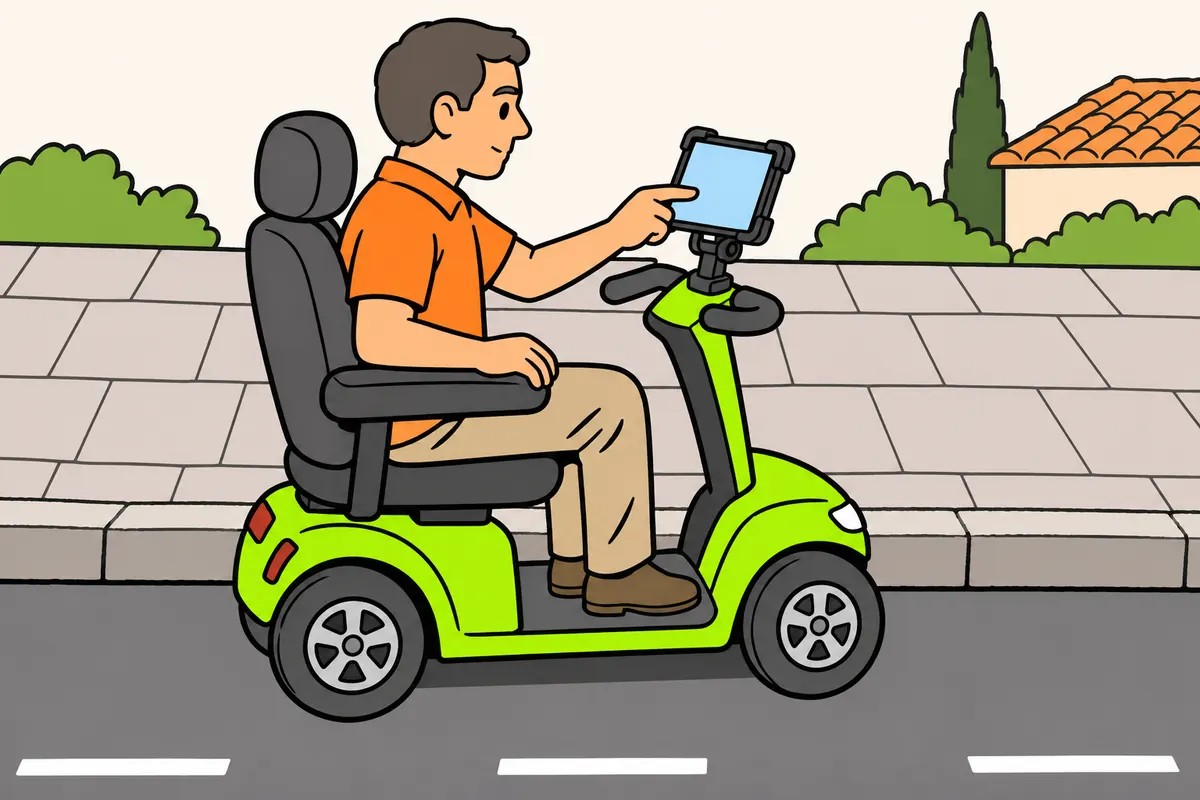
Unlawful U-turns and using certain devices while driving cost you 3 points.
| Your conduct while driving | Points you lose |
|---|---|
| You make an unlawful U-turn | 3 |
| You use earphones connected to a sound device | 3 |
| You manually use a sat nav | 3 |
| You drive a vehicle fitted with radar detectors | 3 |
Remember
- Using earphones connected to a sound device while driving costs you 3 points.
- Manually using a sat nav while driving costs you 3 points.
- Distinguish headphones for sound from a protective helmet.
Exam trap: Wrong: detectors and jammers work the same way. Right: detectors locate enforcement devices; jammers interfere with them.
Read the full explanation
- You lose 3 points for making a U-turn in breach of legal and regulatory provisions. This offence penalises the manoeuvre of reversing your direction of travel. [LTSV, Annex II](https://www.boe.es/buscar/act.php?id=BOE-A-2015-11722#anii).
- You lose 3 points for driving while using headphones or earphones connected to sound receivers or players. Here, ‘headphones’ means a device for listening to sound, rather than the protective helmet required for your vehicle.
- You also lose 3 points for manually operating sat navs or other communication devices or systems, and for using a mobile phone in ways other than holding it in your hand. How you use the device determines which entry in the points penalty schedule applies.
- You lose 3 points for driving a vehicle fitted with devices that detect radar or speed meters. A detector locates enforcement devices; a jammer interferes with their operation.
8Mobile phones: distinguishing 3 from 6 points
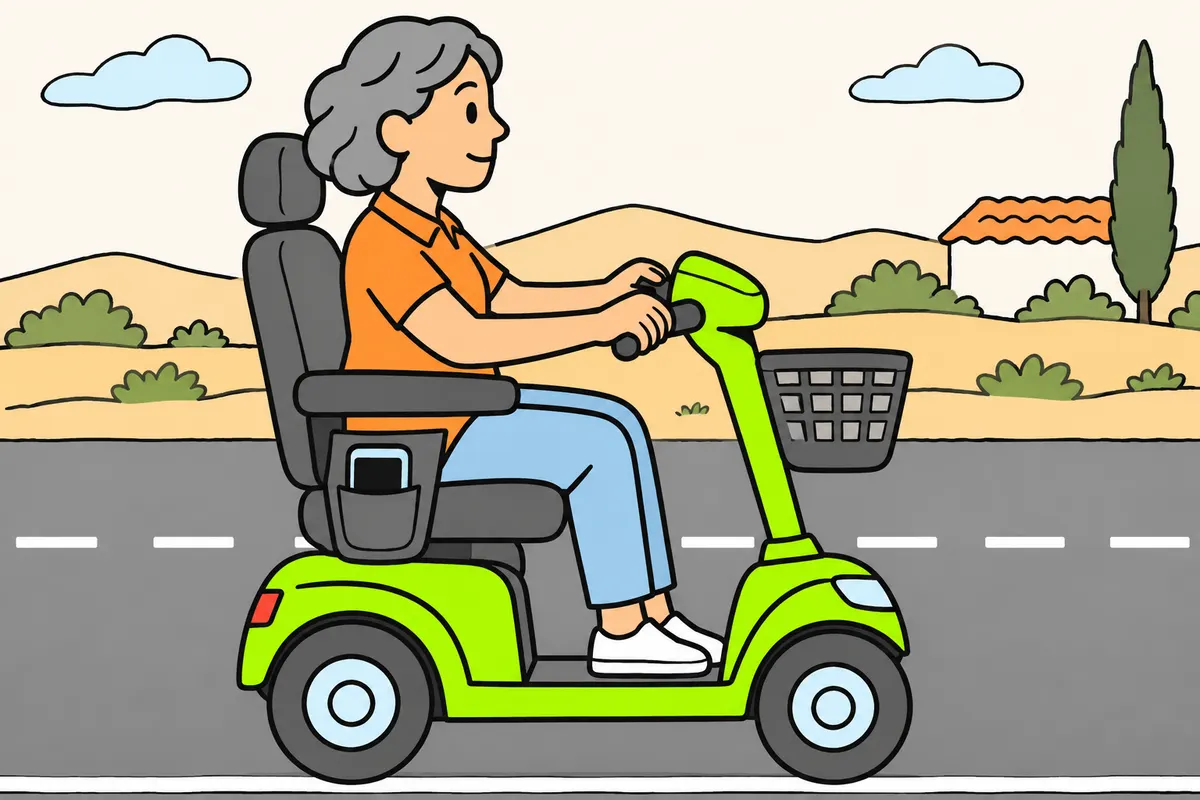
Using a mobile phone held in your hand while driving costs you 6 points.
| Your conduct while driving | Points you lose |
|---|---|
| You use a mobile phone held in your hand | 6 |
| You manually use a sat nav | 3 |
| You keep a phone wedged between helmet and head | 3 |
Remember
- This also applies when you drive your LCM vehicle slowly.
- Check which device you use and how you use it.
- You can lose points even without causing an accident.
Exam trap: Wrong: every screen costs you 6 points. Right: distinguish using a handheld phone from manually using a sat nav.
Read the full explanation
- If you use a mobile phone while driving and hold it in your hand, you lose 6 points. This rule also applies to you in an LCM vehicle: driving slowly or making a familiar journey does not change the number of points for this offence. [LTSV, Annex II](https://www.boe.es/buscar/act.php?id=BOE-A-2015-11722#anii).
- If you manually operate a sat nav while driving, the points penalty schedule specifies 3 points. Do not apply the 6-point penalty for holding a mobile phone to every screen; first identify the device and the behaviour described in the question.
- Annex II also assigns 3 points to keeping a phone wedged between your helmet and your head while driving. You must recognise this offence in the general points penalty schedule without assuming that all LCM models have identical protective equipment.
- To answer a question, separate three facts: whether you are driving, which device you are using and whether you are holding the mobile phone in your hand. The points deduction does not depend on how long the distraction lasts or on whether an accident actually occurs.
9Priority and orders: 4 points
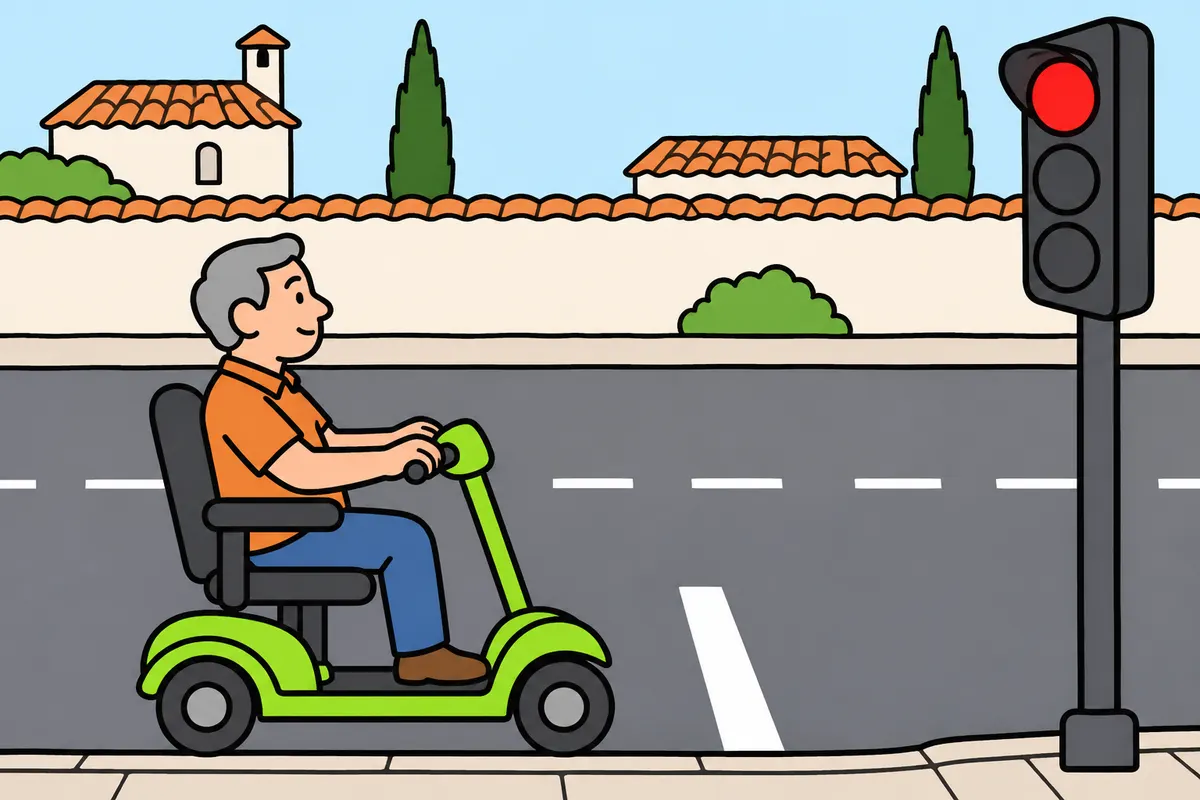
Breaking priority rules or disobeying traffic officers costs you 4 points.
Remember
- You must respect priority even when driving an LCM vehicle.
- You must stop at a stop sign.
- You must stop at a give-way sign when necessary.
- You must stop at a red traffic light.
- Obey traffic officers’ signals and instructions.
Exam trap: Wrong: moving slowly counts as stopping. Right: you must stop when stopping is required.
Read the full explanation
- You lose 4 points for breaching priority rules. In your LCM vehicle, your own reduced mobility does not give you an exemption allowing you to take priority away from other road users; the deduction applies to breaching the rules governing priority. [LTSV, Annex II](https://www.boe.es/buscar/act.php?id=BOE-A-2015-11722#anii).
- The same group includes failing to stop at a stop sign, a give way sign when it requires you to stop, or a red traffic light. To comply with a requirement to stop, you must bring your vehicle to a complete standstill.
- You lose 4 points for failing to obey signals or orders from the traffic authority or its officers. This entry penalises disobedience to the authority or its officers directing traffic.
- In a question about a pedestrian crossing, junction or traffic light, look for the specific priority or stopping offence. Identify the penalised behaviour described in the question to apply the corresponding entry in the points penalty schedule.
10Overtaking and following distance
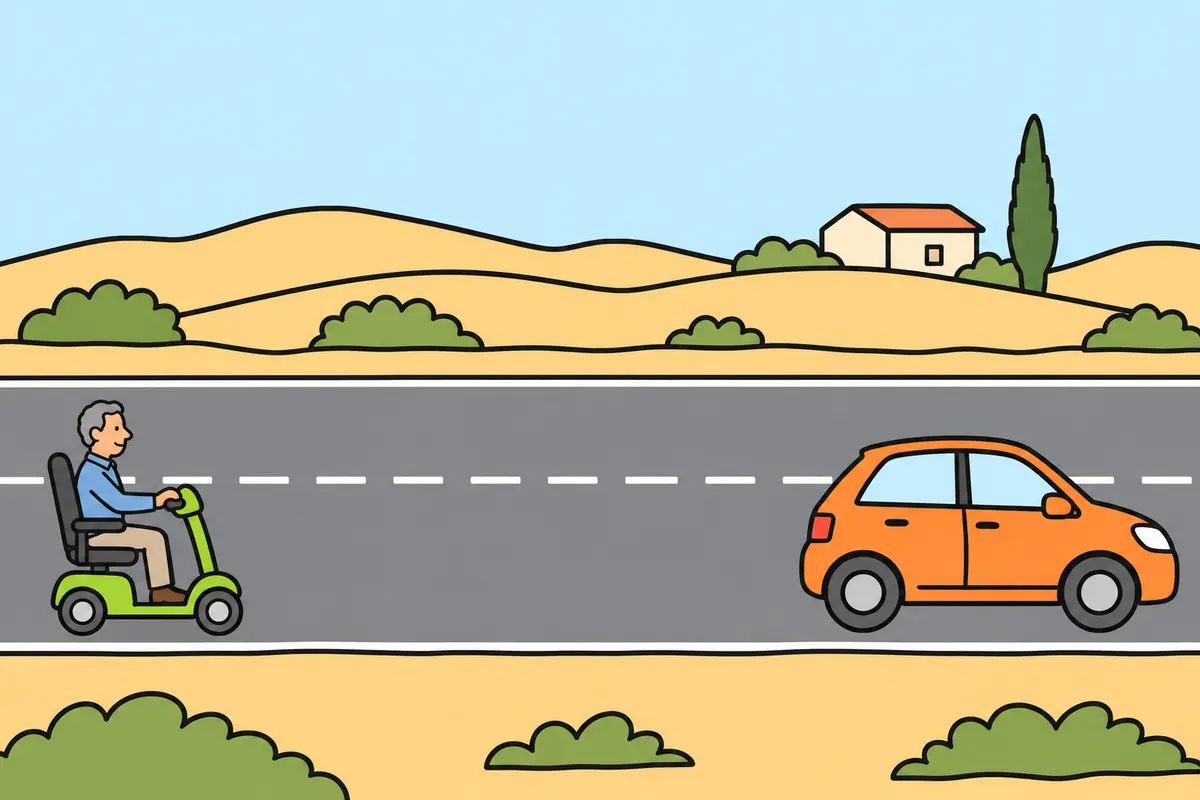
Distinguish dangerous overtaking, overtaking cyclists and keeping a safe following distance.
| Your offence | Points you lose |
|---|---|
| You overtake unlawfully and endanger or obstruct oncoming road users | 4 |
| You overtake where visibility is reduced | 4 |
| You overtake and endanger or obstruct cyclists | 6 |
| You overtake cyclists without leaving 1.5 m | 6 |
| You fail to keep a safe distance from the vehicle ahead | 4 |
Remember
- When overtaking cyclists, leave at least 1.5 metres.
- Even with that gap, you must avoid endangering or obstructing them.
- Keep a safe distance from the vehicle ahead.
Exam trap: Wrong: dangerously overtaking cyclists costs 4 points. Right: you lose 6, even if you leave the minimum gap.
Read the full explanation
- You lose 4 points for overtaking in breach of the rules and endangering or obstructing oncoming road users, and for overtaking in places or circumstances with reduced visibility. The deduction requires at least one of the circumstances described in this entry to apply. [LTSV, Annex II](https://www.boe.es/buscar/act.php?id=BOE-A-2015-11722#anii).
- If you overtake in a way that endangers or obstructs cyclists, you lose 6 points. You also lose 6 points if you fail to leave the minimum clearance of 1.5 metres from them; meeting this figure does not remove your duty to avoid endangering or obstructing them.
- You lose 4 points for failing to maintain a safe following distance from the vehicle ahead. Driving a small vehicle for people with reduced mobility does not change the number of points or allow you to drive close behind the vehicle ahead.
- You must distinguish three ideas in the exam: overtaking that endangers oncoming traffic, 4; overtaking that endangers cyclists or leaves insufficient clearance from them, 6; insufficient distance from the vehicle ahead, 4. Vehicles being close together may feature in all three questions, but the behaviour differs.
11Protection and driving entitlement: 4 points
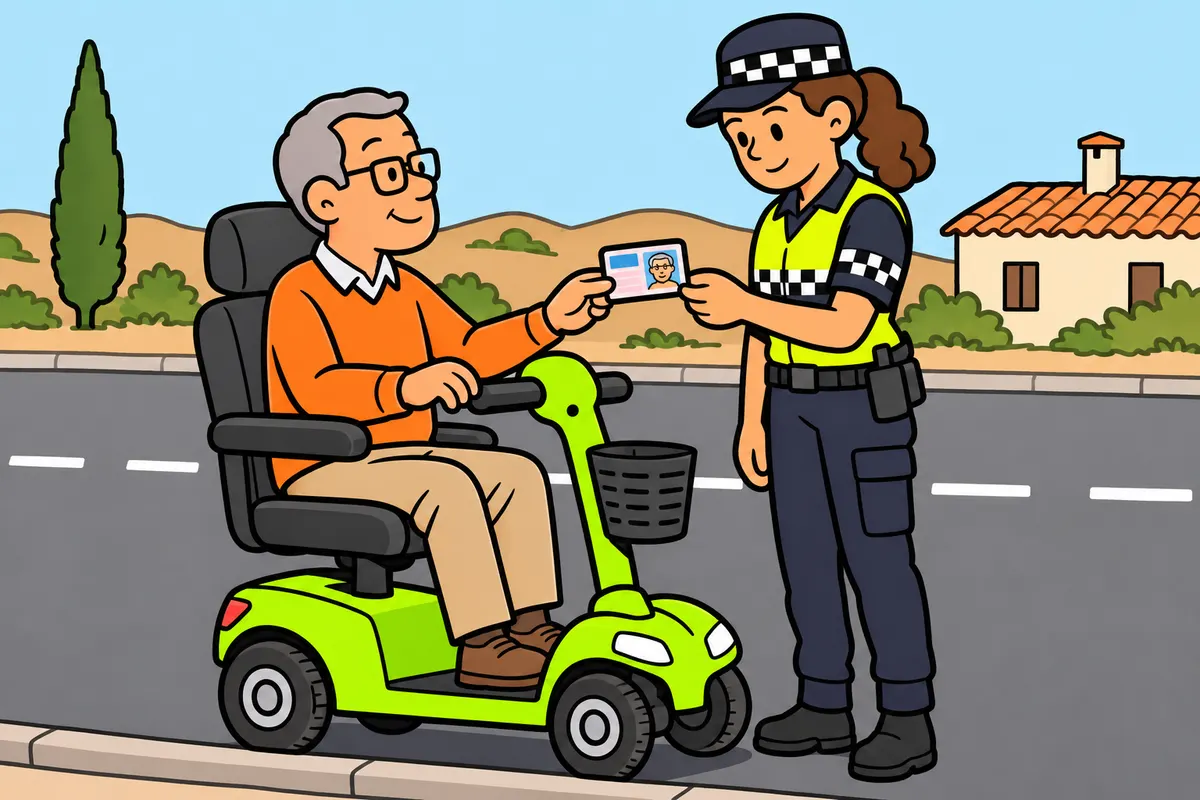
Use the required protection and hold an authorisation valid for the vehicle you drive.
| Your offence (protection depends on vehicle and situation) | Points you lose |
|---|---|
| You fail to use compulsory protection correctly | 4 |
| Your permit or licence does not cover the vehicle you drive | 4 |
| You drive with suspended authorisation or a ban on using that vehicle | 4 |
| You do not wear a helmet when compulsory | 4 |
| You do not wear gloves or closed footwear | No points lost |
Remember
- Use the protective equipment required for your vehicle and situation correctly.
- Your LCM licence does not cover every adapted vehicle.
- Reversing on autopistas or autovías costs 4 points under the general scale.
- That penalty does not authorise your LCM vehicle to use those roads.
- Gloves and closed footwear are not compulsory in your LCM vehicle.
Exam trap: Wrong: every LCM vehicle requires identical protection. Right: use the protection required for your vehicle and situation.
Read the full explanation
- You lose 4 points for failing to use, or incorrectly using, the seat belt, child restraint systems, helmet and other compulsory protective equipment. You must apply the rule to the protection required in your vehicle and in your specific circumstances, without inventing a uniform requirement for all LCM vehicles. When comparing helmets, gloves and closed footwear, only the helmet involves a loss of points: you lose no points for not wearing gloves or closed footwear, according to the DGT instruction; those glove and footwear requirements do not apply to LCM vehicles. [LTSV, Annex II](https://www.boe.es/buscar/act.php?id=BOE-A-2015-11722#anii). [DGT, Instruction SANC 2026/25](https://www.dgt.es/export/sites/web-DGT/.galleries/downloads/muevete-con-seguridad/normas-de-trafico/S-sanciones/2026/Instruccion-SANC-2026_25_sobre-utilizacion-de-calzado-cerrado-y-guantes.pdf).
- You lose 4 points for driving with a driving licence or permit that does not entitle you to drive the vehicle you are using. If you only hold an LCM licence, you cannot assume that it entitles you to drive any adapted vehicle; the adaptation and the category of entitlement are separate matters.
- Driving while your administrative authorisation is suspended or while you are prohibited from using the vehicle you are driving also carries 4 points. Suspension and prohibition of use are the situations described in this entry in the points penalty schedule.
- You lose 4 points under the general points penalty schedule for reversing on autopistas (motorways) or autovías (dual carriageway motorways). Recognising this figure does not mean that an LCM licence authorises you to use those roads; the roads you may use with your vehicle are covered in ‘Where you must drive’.
12Alcohol: points penalty bands
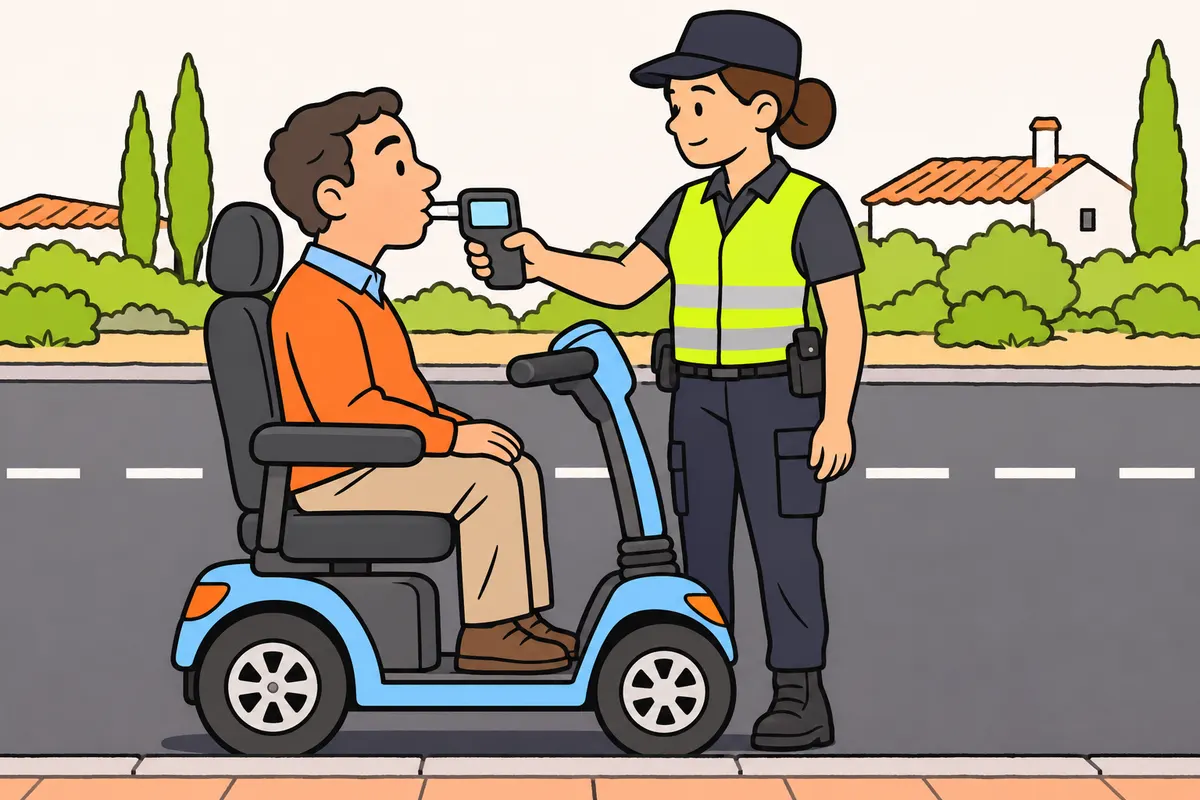
Check your driver group and the alcohol band boundaries to find your points deduction.
| Driver group in points scale | Breath alcohol level | Points you lose |
|---|---|---|
| General | Above 0.25 up to 0.50 mg/l inclusive | 4 |
| General | Above 0.50 mg/l | 6 |
| Professionals; driving permits held less than 2 years | Above 0.15 up to 0.30 mg/l inclusive | 4 |
| Professionals; driving permits held less than 2 years | Above 0.30 mg/l | 6 |
Remember
- These figures measure alcohol in your breath.
- The reduced group covers professionals and driving permits held less than 2 years.
- The reduced points scale specifically refers to driving permits.
- Distinguish points deductions from your legal alcohol limit.
Exam trap: Wrong: 0.50 mg/l in the general group costs 6 points. Right: it costs 4; you must exceed it to lose 6.
Read the full explanation
- Under the general breath alcohol points penalty schedule, you lose 4 points for a reading above 0.25 and up to and including 0.50 mg/l. If you exceed 0.50 mg/l, you lose 6 points; pay attention to the fact that the lower boundary must be exceeded and the upper boundary is included. [LTSV, Annex II](https://www.boe.es/buscar/act.php?id=BOE-A-2015-11722#anii). [LTSV, art. 14](https://www.boe.es/buscar/act.php?id=BOE-A-2015-11722#a14).
- For professional drivers and holders of driving licences issued less than 2 years ago, Annex II specifies a deduction of 4 points for a reading above 0.15 and up to and including 0.30 mg/l, and 6 if you exceed 0.30 mg/l. Its wording refers specifically to permisos de conducción (driving licences).
- As an example of how to read the boundaries, 0.30 mg/l in the novice driver group falls within the 4-point band, while a higher reading falls within the 6-point band. If you belong to the general driver group, 0.50 mg/l falls within the 4-point band, rather than the 6-point band.
- The points penalty schedule determines how many points you lose for the offence. Your applicable limit determines whether you may drive with that reading: these are two separate checks when answering the question, especially when it states your age or how long you have held your entitlement.
13LCM, licence experience and zero alcohol
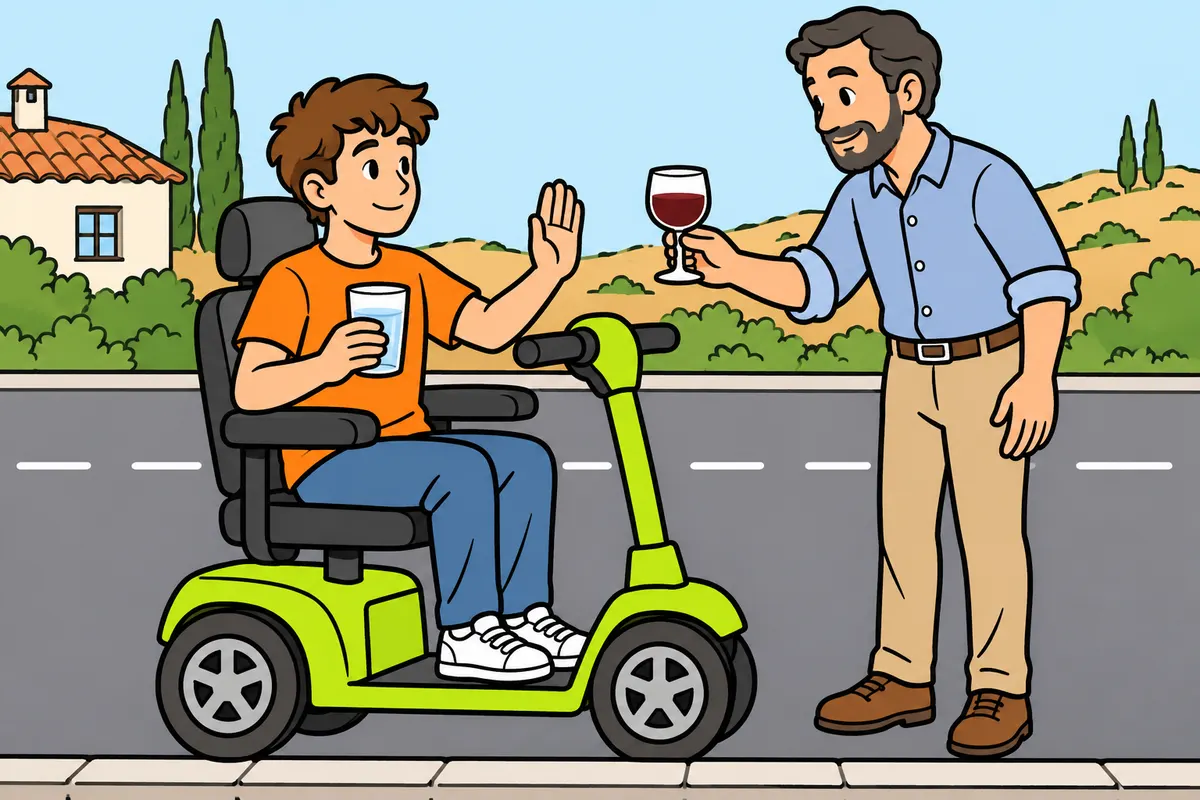
If you are underage, you must drive without alcohol, regardless of your LCM experience.
| Your situation | Maximum alcohol level |
|---|---|
| You are under age | 0 g/l blood and 0 mg/l breath |
| You are an adult within 2 years of obtaining authorisation | 0.3 g/l blood or 0.15 mg/l breath |
Remember
- If you are an adult, your reduced limit applies for 2 years after licensing.
- If you are underage, the zero limit takes priority.
- Up to 3 years of licence history determines your starting points.
- After 2 years without final penalties deducting points, you move from 8 to 12.
- Distinguish your age, your licence history and your penalty record.
Exam trap: Wrong: your licence history lets you drink while underage. Right: if you are underage, you must always keep a zero level.
Read the full explanation
- If you are under age, you must maintain an alcohol level of 0 g/l in your blood and 0 mg/l in your breath; for the 2 years after you obtain your licence, the limit for you if you are an adult is 0.3 g/l or 0.15 mg/l: the limits and how licence experience is calculated are explained in «Driver fitness». [RGC, art. 20](https://www.boe.es/buscar/act.php?id=BOE-A-2003-23514#a20). [LTSV, art. 14.1](https://www.boe.es/buscar/act.php?id=BOE-A-2015-11722#a14).
- Questions about your driving history contain three time periods with different purposes: up to 3 years of licence experience for the initial points allocation, 2 years without final penalties involving points deductions to reach 12, and 2 years with a reduced alcohol limit after you obtain your driving entitlement. The first determines your points balance; the second increases it if you receive no penalties carrying points; the third governs your fitness to drive. Your age and your penalty history are separate details in the exam question. [LTSV, art. 63.2.a](https://www.boe.es/buscar/act.php?id=BOE-A-2015-11722#a63). [LTSV, art. 65.2](https://www.boe.es/buscar/act.php?id=BOE-A-2015-11722#a65).
14Drugs and refusing tests
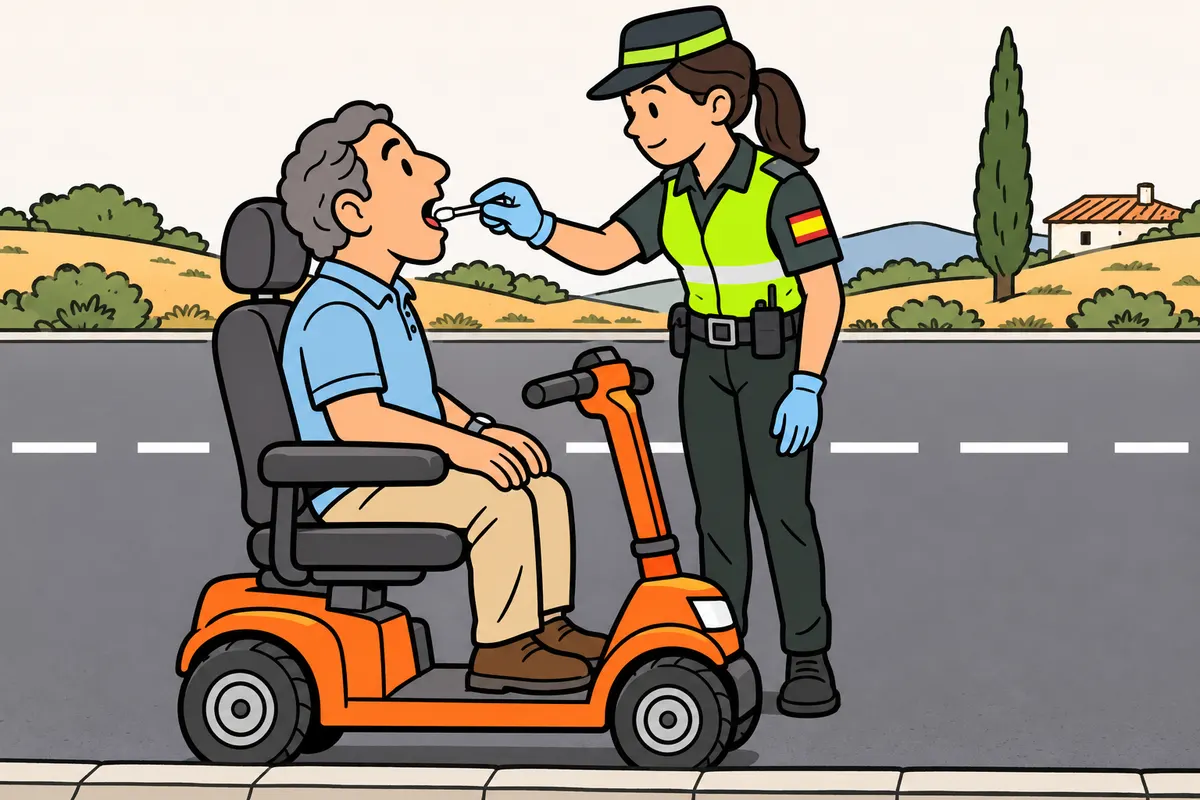
Driving with drugs outside the medical exception, or refusing required tests, costs you 6 points.
| Your conduct | Points you lose |
|---|---|
| You drive with drugs present, outside the medical treatment exception | 6 |
| You fail to take legally required alcohol or drug tests | 6 |
Remember
- Drugs being present is enough; you need not cause an accident.
- The exception requires prescribed treatment and fitness to drive with care, caution and attention.
- A prescription does not remove effects that prevent you driving safely.
- You must take legally required tests when driving an LCM vehicle too.
Exam trap: Wrong: a prescription always allows you to drive. Right: the exception requires prescribed medical treatment and fitness to drive with care, caution and attention.
Read the full explanation
- You lose 6 points if you drive with drugs present in your system. Their presence is enough for this administrative offence, even if you do not perform reckless manoeuvres or cause an accident. [LTSV, Annex II](https://www.boe.es/buscar/act.php?id=BOE-A-2015-11722#anii). [LTSV, art. 14](https://www.boe.es/buscar/act.php?id=BOE-A-2015-11722#a14).
- The law excludes substances you use on medical prescription for therapeutic purposes when you are fit to drive with diligence, caution and attention. You must assess how the treatment affects your fitness to drive.
- You lose 6 points if you fail to comply with your obligation to undergo alcohol or drug tests. Refusing is a separate offence from driving with a positive result: you cannot evade the points system by refusing a test.
- As an LCM driver, you must undergo the tests required by law. For the exam, distinguish between your obligation to undergo them, the result and the corresponding points deduction; do not apply the 4-point alcohol bands to refusal.
15Other offences that cost you 6 points
Reckless driving and other specified dangerous actions cost you 6 points.
| Your conduct | Points you lose |
|---|---|
| You make an unlawful U-turn | 3 |
| You drive against the permitted direction | 6 |
Remember
- Reckless driving or driving against the permitted direction costs you 6 points.
- Taking part in unauthorised races costs you 6 points.
- Driving a vehicle fitted with radar jammers costs you 6 points.
- Throwing objects onto or near roads that could cause fires or accidents costs 6.
- The object need not actually cause a fire or accident.
Exam trap: Wrong: a dangerous object only costs points if it causes damage. Right: its ability to cause fires or accidents is enough.
Read the full explanation
- You lose 6 points for reckless driving, driving against the prescribed direction of traffic, or taking part in unauthorised races or competitions. Your LCM vehicle is not exempt from these offences because of its purpose or performance. [LTSV, Annex II](https://www.boe.es/buscar/act.php?id=BOE-A-2015-11722#anii).
- You lose 6 points if you drive a vehicle fitted with radar or speed-meter jammers, or other devices intended to interfere with monitoring systems. This offence covers having devices installed that interfere with traffic monitoring.
- You lose 6 points if you throw objects capable of causing fires or accidents onto the road or its immediate surroundings. The offence is defined by their potential to create that danger; a fire or accident does not actually have to occur.
- To remember this group, link each points figure to the conduct: reckless driving, driving against the traffic, racing, jammers and dangerous objects, 6. Do not treat an incorrect U-turn and driving against the traffic as equivalent: their points deductions differ.
16Professional transport offences
Excess driving, insufficient rest or tampering with monitoring equipment in professional transport costs you 6 points.
| Your conduct in professional transport | Points you lose |
|---|---|
| You exceed the set driving time by more than 50 % | 6 |
| You reduce the set rest time by more than 50 % | 6 |
| You participate or provide essential assistance in installing or activating tachograph or limiter tampering devices | 6 |
Remember
- Exceeding the set driving time by more than 50 % costs 6 points.
- Reducing the set rest time by more than 50 % costs 6 points.
- Essential involvement in tampering with a tachograph or speed limiter costs 6 points.
Exam trap: Wrong: exactly 50 % meets this threshold. Right: this provision requires more than 50 %.
Read the full explanation
- Under the general penalty scale, you lose 6 points if you exceed the driving times laid down in land transport legislation by more than 50 % or reduce the prescribed rest periods by more than 50 %. These times apply to transport activities covered by that legislation. [LTSV, Annex II](https://www.boe.es/buscar/act.php?id=BOE-A-2015-11722#anii).
- The expression «more than 50 %» means you must exceed that percentage. If you exceed the permitted time by exactly 50 %, this alone does not meet the threshold in this provision, although you may face other consequences under transport regulations.
- You also lose 6 points if you take part in, or provide essential assistance with, installing or activating devices that alter the normal operation of the tachograph or speed limiter. This provision penalises your essential involvement in tampering with this monitoring equipment.
17Speeding: from 0 to 6 points
Match the applicable speed limit with your speed to find the points you lose.
| Points and fine | With 20 km/h limit | With 30 km/h limit | With 40 km/h limit |
|---|---|---|---|
| 0 points; 100 euros | 21 to 40 km/h | 31 to 50 km/h | 41 to 60 km/h |
| 2 points; 300 euros | 41 to 50 km/h | 51 to 60 km/h | 61 to 70 km/h |
| 4 points; 400 euros | 51 to 60 km/h | 61 to 70 km/h | 71 to 80 km/h |
| 6 points; 500 euros | 61 to 70 km/h | 71 to 80 km/h | 81 to 90 km/h |
| 6 points; 600 euros | From 71 km/h | From 81 km/h | From 91 km/h |
Remember
- First choose the column for the applicable limit.
- Each speed range includes both ends.
- You can receive a speeding fine without losing points.
- The table does not allow your LCM vehicle to reach those speeds.
Exam trap: Wrong: driving at 40 km/h with a 20 limit costs points. Right: it costs no points; at 41 km/h you lose 2.
Read the full explanation
- You must use the table in Annex IV for speeding detected by a speed meter. The deduction bands are 0, 2, 4 or 6 points: a speeding fine does not necessarily mean you lose points, and this table has no 3-point band. [LTSV, Annex IV](https://www.boe.es/buscar/act.php?id=BOE-A-2015-11722#aniv).
- In the column for a 20 km/h limit, if you drive at 21 to 40, you receive a fine of 100 euros with no points deduction; at 41 to 50, 300 euros and 2 points; at 51 to 60, 400 euros and 4; at 61 to 70, 500 euros and 6; from 71 upwards, 600 euros and 6 points.
- In the column for a 30 km/h limit, at 31 to 50 you receive a fine of 100 euros with no points deduction; at 51 to 60, 300 euros and 2 points; at 61 to 70, 400 euros and 4; at 71 to 80, 500 euros and 6; from 81 upwards, 600 euros and 6 points.
- In the column for a 40 km/h limit, at 41 to 60 you receive a fine of 100 euros with no points deduction; at 61 to 70, 300 euros and 2 points; at 71 to 80, 400 euros and 4; at 81 to 90, 500 euros and 6; from 91 upwards, 600 euros and 6 points.
- The ranges include their endpoints: in a column for a limit of 20, 40 km/h falls within the band with no points deduction and 41 within the 2-point band. You must first read the applicable limit and then the speed in the question; simply calculating how many kilometres per hour you exceed the limit by, without checking the column, is not enough.
- These figures describe the consequences under the penalty scale, not the performance or permitted speeds of your LCM vehicle. The columns for higher speeds do not authorise you to reach those speeds; you study the limits specific to your vehicle and the road in «Speed and safe following distances».
18Recovering 12 points through good conduct
With points remaining, you recover 12 after 2 years without final penalties that deduct points.
Remember
- You must still have some points left.
- A very serious offence does not make this waiting period longer.
- You do not recover a fixed number of points each year.
- If you previously had 15, this route does not directly restore that balance.
Exam trap: Wrong: after losing all points, you can recover them by waiting. Right: this recovery requires you to have points remaining.
Read the full explanation
- If you lose some of your points and still have points remaining, you regain a balance of 12 after 2 years without penalties that are final in administrative proceedings for offences carrying points. You must check that you have lost only some of your points; losing them all involves a different procedure. [LTSV, art. 65](https://www.boe.es/buscar/act.php?id=BOE-A-2015-11722#a65).
- This period is 2 years for the recovery provided for in article 65.1. You also qualify for recovery when your partial loss of points results from a very serious offence.
- If you have 15 points and lose some, this route allows you to recover 12, without necessarily returning directly to 15. Bonus points and the balance restored through recovery serve different purposes within the system.
- For example, if your balance drops to 5 and you complete the statutory period without these penalties, your balance is restored to 12. You regain the points when you complete the required period, without partial annual restorations.
19Partial points recovery course
With points remaining, successfully completing the partial course can restore up to 4 points.
| Your case | Maximum recovery |
|---|---|
| Starting balance 12; current balance 10 | 2 points |
| Starting balance 8; current balance 5 | 3 points |
Remember
- You must successfully complete the course.
- You cannot exceed your starting balance or recover more points than you lost.
- Count the period from the end of your successfully completed course.
- If you lost all your points, you need the licence recovery procedure.
Exam trap: Wrong: the regulated partial course restores 6 points. Right: it restores up to 4, without exceeding your starting balance or the points lost.
Read the full explanation
- If you still have points but have lost part of your initial allocation, you can take a road safety awareness and re-education course to recover up to 4. You must complete it successfully, and you cannot use it as a substitute for the licence recovery procedure when you have no points left. [Order INT/914/2024, art. 3.a](https://www.boe.es/buscar/act.php?id=BOE-A-2024-17780#a3).
- The course allows you to recover points up to your initial balance, without restoring more points than you have lost. If your initial allocation is 12 and you have 10, you recover a maximum of 2; if your initial allocation is 8 and you have 5, you recover a maximum of 3.
- You can generally take the course once every 2 years; if you are a professional driver, you can take it once a year. The period is counted from the completion date of the course you successfully complete, so you must not count from when you decide to enrol or when you receive the offence notice. [Order INT/914/2024, art. 4](https://www.boe.es/buscar/act.php?id=BOE-A-2024-17780#a4).
- The law sets a ceiling of up to 6 points and a maximum duration of 15 hours for partial points recovery, whereas the course regulated by Order INT/914/2024 restores up to 4 and lasts at least 10 hours. When answering how many points you recover by taking this course, you must choose 4. [LTSV, art. 65.4](https://www.boe.es/buscar/act.php?id=BOE-A-2015-11722#a65).
20What you learn on the partial recovery course
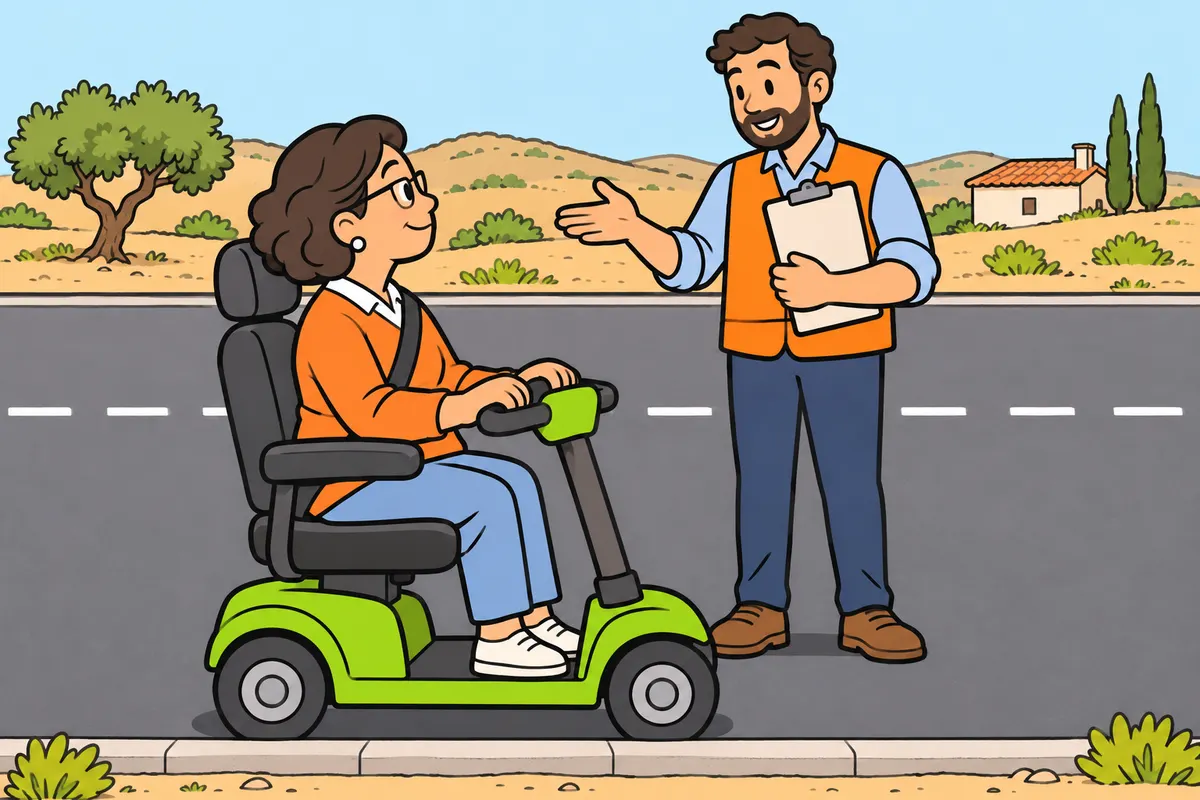
The partial course helps you review your risks and learn to drive more safely.
Remember
- The common part includes general training and shared activities.
- You spend 1 hour in group activities and 1 hour hearing from a victim.
- You spend another hour on variable content.
- The specific part addresses your needs based on your driving offences.
- You must successfully complete the course.
- You do not need the later test used for recovering your authorisation.
Exam trap: Wrong: the partial course requires the licence recovery exam. Right: partial recovery requires successful completion of the course.
Read the full explanation
- The partial recovery course lasts at least 10 hours, with 7 hours of common content and 3 of tailored content. You must distinguish these hours from those of the licence recovery course and those of the additional training required if you fail the recovery test. [Order INT/914/2024, art. 4](https://www.boe.es/buscar/act.php?id=BOE-A-2024-17780#a4).
- The common part combines 4 hours of general training, 1 of group activities, 1 of a contribution from a road crash victim and 1 of variable content. It aims to help you review the consequences of your decisions and adopt safe behaviour, as well as develop your knowledge.
- The tailored part addresses the areas you need to improve and your offending profile supplied by the DGT. Depending on your needs, you may work on speed, alcohol and other drugs, reckless behaviour or distractions; the content goes beyond repeating the questions for obtaining an LCM licence.
- This partial recovery depends on successfully completing the course; you do not need to take the subsequent test required to recover a driving entitlement that has lost its validity. You must choose the procedure according to your points balance and administrative status, not just the duration that suits you best. [Order INT/914/2024, art. 3.a](https://www.boe.es/buscar/act.php?id=BOE-A-2024-17780#a3).
21Loss of validity when you lose all your points
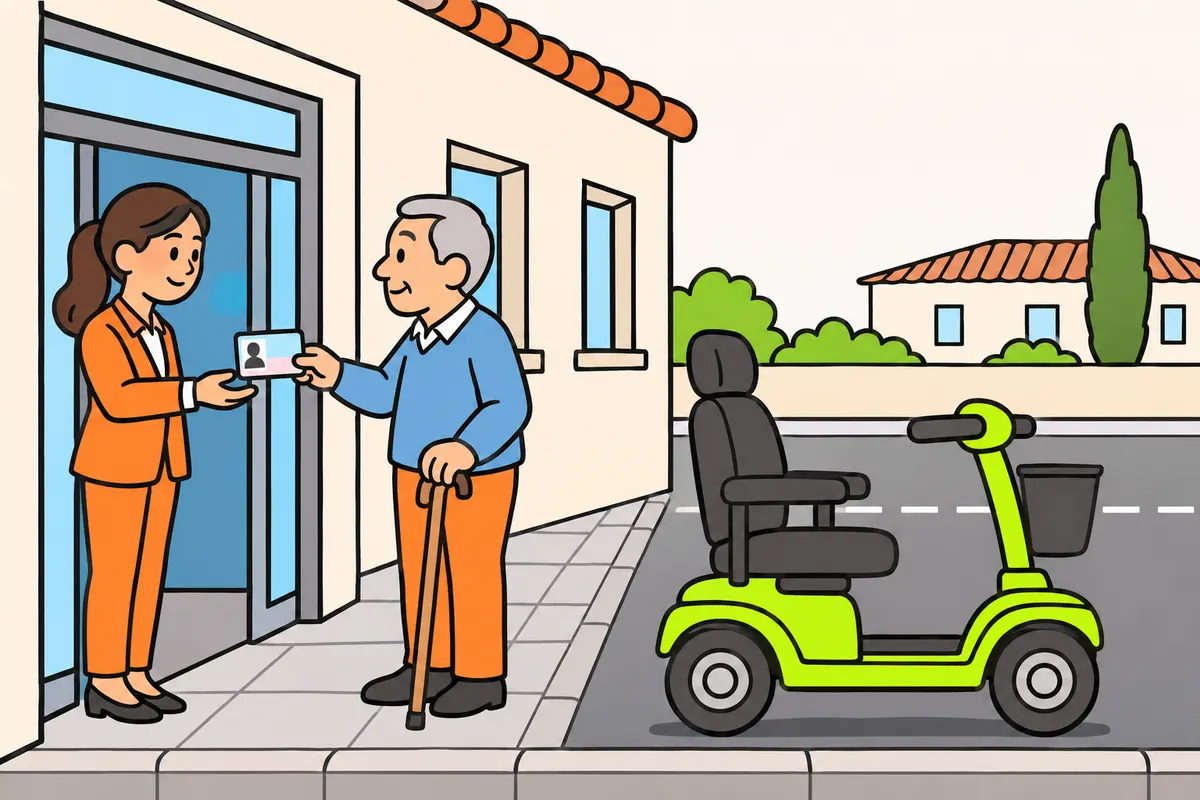
When your loss of validity is declared and notified, stop driving and hand in your authorisation.
Remember
- If you lose all your points, the traffic authority starts a procedure.
- You can check the penalties and submit objections.
- Submitting objections does not restore points.
- After loss of validity is declared and notified, hand in your authorisation.
- Hand it in at the traffic office.
- The loss affects all your permit and licence categories.
Exam trap: Wrong: keeping the card lets you drive. Right: once loss of validity is declared and notified, you must stop driving.
Read the full explanation
- When you lose all your points, Tráfico (the traffic authority) starts the procedure to declare your driving licence invalid. The notice initiating the procedure lists the final penalties that exhaust your balance and their points deductions, so you can examine the case file and submit representations. [RGCond, art. 37.1](https://www.boe.es/buscar/act.php?id=BOE-A-2009-9481#a37).
- Under the Reglamento General de Conductores (General Driver Regulations), you have a maximum of 10 days to submit representations in this procedure. You can use your representations to challenge the details or penalties on which the case is based.
- Once you receive notification of the declaration that your licence is invalid, you must not drive and you must surrender your licence at the Jefatura de Tráfico (traffic office). Your entitlement to drive depends on your licence being valid, even if you still physically hold the card and have a vehicle available. [RGCond, art. 37.2](https://www.boe.es/buscar/act.php?id=BOE-A-2009-9481#a37).
- Losing all your points affects all your driving entitlements, whatever their category. You cannot continue driving another vehicle that requires a driving licence on the grounds that you lost your last points while driving the vehicle for people with reduced mobility. [LTSV, art. 64.3](https://www.boe.es/buscar/act.php?id=BOE-A-2015-11722#a64).
22Waiting periods for obtaining your LCM licence again
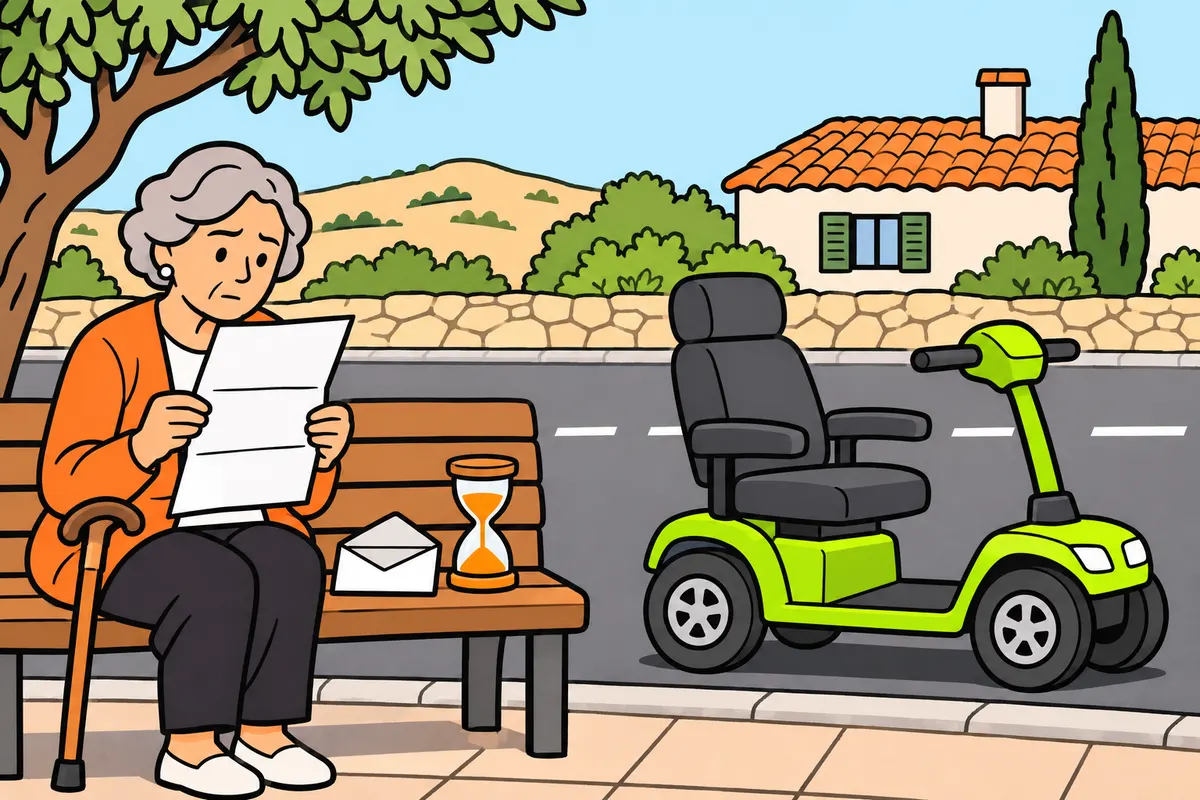
Your wait for new authorisation starts when you receive notice of its loss of validity.
| Your status | First total points loss | Another total-points loss declared within 3 years after new authorisation |
|---|---|---|
| General driver | 6 months | 12 months |
| Professional driver | 3 months | 6 months |
Remember
- The repeat period starts when you obtain your new authorisation.
- Another total-points loss must be declared within the following 3 years.
- Driving your LCM vehicle to work alone does not make you a professional driver.
- You can take the course during the wait.
- You also need to pass the test and obtain your new authorisation.
Exam trap: Wrong: count the wait from the offence. Right: count from notification of the decision declaring loss of validity.
Read the full explanation
- The standard waiting period for obtaining a new driving entitlement after losing all your points is 6 months from notification of the decision declaring your licence invalid. You must note this starting point: you do not count from the date of the offence or the last fine. [LTSV, art. 71.1](https://www.boe.es/buscar/act.php?id=BOE-A-2015-11722#a71).
- If, within the 3 years after you obtain the new driving entitlement, another decision declares it invalid because you lose all your points again, your waiting period increases to 12 months from the new notification. You must count those 3 years from obtaining the new entitlement, not your first LCM licence.
- If you are a professional driver, these periods are reduced to 3 months in the first case and 6 in the repeat case described. Regularly driving your LCM vehicle to work does not, by itself, give you the legal status of a professional driver.
- You can use the period when you are not driving to take the recovery course. Completing the waiting period is a requirement alongside the course and the test; waiting the required number of months does not, by itself, reactivate your licence or automatically restore your points. [RGCond, art. 38.1 and 38.3](https://www.boe.es/buscar/act.php?id=BOE-A-2009-9481#a38).
23Course to recover your licence
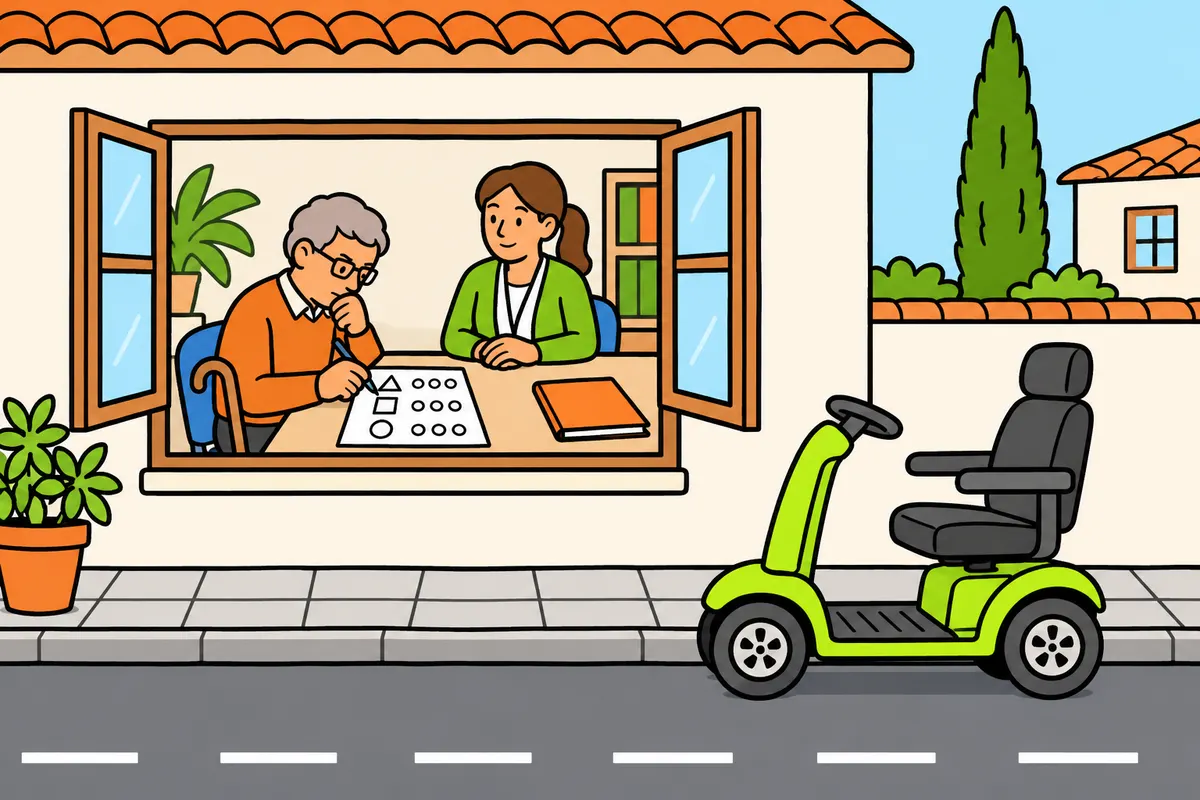
To recover your licence, complete the course, pass the test and finish the waiting period.
Remember
- You must successfully complete the course.
- Then you must pass the knowledge test.
- The specific part addresses needs linked to your driving offences.
- You recover the same authorisation category and keep its original date.
- You can only drive again after obtaining your new authorisation.
Exam trap: Wrong: the course certificate already lets you drive. Right: finish the wait, pass the test and obtain your new authorisation.
Read the full explanation
- To obtain your LCM licence again after losing all your points, you must successfully complete the driving licence recovery course and then pass the required knowledge test. You recover an entitlement of the same category and retain its original acquisition date. [RGCond, art. 38.1](https://www.boe.es/buscar/act.php?id=BOE-A-2009-9481#a38).
- This course lasts at least 20 hours. The law allows a maximum duration of 30 hours for this purpose, so you must distinguish the minimum set by the order from the ceiling set by the law. [LTSV, art. 71.3](https://www.boe.es/buscar/act.php?id=BOE-A-2015-11722#a71).
- The minimum structure comprises 16 hours of common content and 4 of tailored content. In the common part, you receive general training, take part in group activities, hear from a road crash victim and cover variable content; in the tailored part, you address needs related to your offending profile. [Order INT/914/2024, art. 5](https://www.boe.es/buscar/act.php?id=BOE-A-2024-17780#a5).
- Successfully completing the course does not allow you to drive immediately. You must complete the waiting period, pass the test and obtain the new driving entitlement; simply carrying your attendance certificate or the invalid licence card is not enough. [LTSV, art. 71.2](https://www.boe.es/buscar/act.php?id=BOE-A-2015-11722#a71).
24Recovery test and failed attempts
Pass the recovery test within the deadline and complete extra training after failed attempts.
| Your situation | What you must do |
|---|---|
| You fail and have attempts remaining | Complete 4 hours of training before each further attempt |
| You use all 3 attempts without passing | Take a new course and pass the exam |
Remember
- The exam covers the recovery course subjects.
- After failing, complete training before each further available attempt.
- If you use all 3 attempts, you must take a new course.
Exam trap: Wrong: extra training gives you unlimited attempts. Right: after 3 failed attempts, take a new course and pass the test.
Read the full explanation
- You must pass the knowledge test on the subjects covered in the road safety awareness and re-education course. You are tested on the recovery training you successfully complete. [RGCond, art. 51.4](https://www.boe.es/buscar/act.php?id=BOE-A-2009-9481#a51).
- You must pass the test within a maximum of 2 years of successfully completing the course. You must also take this deadline into account when planning your waiting period and test date; completing the course does not give you a certificate you can use indefinitely for this test. [Order INT/914/2024, art. 10](https://www.boe.es/buscar/act.php?id=BOE-A-2024-17780#a1-2).
- You have 3 attempts to pass the test associated with the course. If you fail the first, you can take it on 2 further occasions, but before each new attempt you must complete 4 hours of additional training.
- If you use all 3 attempts without passing the test, you must take a new course and pass the corresponding test. With the new course, you start a new test procedure with its corresponding attempts.
25Your points balance after regaining your licence
You restart with 8 points when you regain your licence after losing all your points.
Remember
- You keep your original licence date, but do not automatically recover your previous balance.
- First complete the wait and successfully complete the course.
- Then pass the test and obtain your new authorisation.
- You reach 12 after 2 years without final penalties that deduct points.
- For later bonuses, you must meet their conditions.
Exam trap: Wrong: enrolling on the course gives you 8 points. Right: you receive them when you obtain your authorisation again.
Read the full explanation
- When you obtain your licence again after losing all your points, you receive 8. You do not automatically regain the balance you had before the offences, even if you previously reached the maximum of 15. [LTSV, art. 63.2.b](https://www.boe.es/buscar/act.php?id=BOE-A-2015-11722#a63).
- You retain the original seniority date of the licence you regain, but the starting points balance follows a separate rule. You must distinguish between retaining that date and receiving a particular allocation of points: retaining the date does not give you 12 points. [LTSV, art. 64.6](https://www.boe.es/buscar/act.php?id=BOE-A-2015-11722#a64).
- If you complete 2 years without any final penalties for offences that carry a points deduction, your balance rises to 12. You can then qualify for the relevant bonuses by meeting their conditions, as you must on any route towards the maximum. [LTSV, art. 65.2](https://www.boe.es/buscar/act.php?id=BOE-A-2015-11722#a65).
- To review the full procedure, remember four requirements in sequence: complete the waiting period, pass the course, pass the test and obtain the new licence. You receive the initial allocation of 8 points when you obtain that new licence, not simply when you enrol on the course. [LTSV, art. 71.2](https://www.boe.es/buscar/act.php?id=BOE-A-2015-11722#a71).
26Court driving bans and points bonus courses
Distinguish court driving bans from courses that can add bonus points.
| Your final court driving ban | Requirements after completing your sentence |
|---|---|
| More than 2 years | Course and test; new authorisation of the same category and original date, with 8 points |
| Up to 2 years inclusive | Provide proof of successful course completion |
Remember
- Complete your sentence before driving again.
- A ban exceeding 2 years means loss of validity; you need course and test.
- For bans up to 2 years, provide proof you successfully completed the course.
- Bonus courses require points remaining and valid authorisation for the vehicle used.
- They cover cars, motorcycles and mopeds.
- Your LCM licence alone does not allow you to drive those categories.
Exam trap: Wrong: exactly 2 years requires the procedure for longer bans. Right: it belongs to the up-to-2-years case; complete your sentence and prove successful course completion.
Read the full explanation
- If a final court judgment bans you from driving for more than 2 years, your licence ceases to be valid. After serving the sentence, you must follow the course and test procedure to obtain a licence of the same category and with the same seniority, with 8 points. [LTSV, art. 73.1](https://www.boe.es/buscar/act.php?id=BOE-A-2015-11722#a73).
- If your court driving ban lasts 2 years or less, you must provide proof that you have successfully completed the course and have served the sentence before you drive again. A ban of exactly 2 years falls into this case; do not include it in the case for longer bans. [LTSV, art. 73.2](https://www.boe.es/buscar/act.php?id=BOE-A-2015-11722#a73).
- Safe and efficient driving courses can give you a bonus of 2 points, up to a maximum of 15. You can receive this bonus at most once every 2 years for each type of course. To take these courses, you must have a positive points balance and a valid licence for vehicles in the category used on the course. [LTSV, art. 63.5](https://www.boe.es/buscar/act.php?id=BOE-A-2015-11722#a63). [Order INT/209/2025, art. 5](https://www.boe.es/buscar/act.php?id=BOE-A-2025-4407#a5).
- The regulated points bonus courses are for passenger cars, motorcycles and mopeds; your LCM licence alone does not entitle you to take part driving vehicles in those categories. To take part, you must hold the appropriate driving licence for the vehicle used on the course. [Order INT/209/2025, art. 4](https://www.boe.es/buscar/act.php?id=BOE-A-2025-4407#a4).
Going from 8 to 15 points
Progress without penalties that prevent recovery or bonuses; articles 63 and 65 of the LTSV (Traffic Act).
- You start with 8 points if you obtain your first LCM licence as a novice driver.
- You complete 2 years without final penalties for offences that deduct points and move up to 12.
- You keep your full points balance and meet the bonus conditions for another 3 years to reach 14.
- You maintain this situation for another 3 years and reach the maximum of 15.
Recovering points while you still have some left
Distinguish recovery through the passage of time from the partial recovery course: article 65 LTSV and articles 3 and 4 of Orden INT/914/2024 (Order INT/914/2024).
- You check your balance and confirm that you have not lost all your points.
- You can recover a balance of 12 after 2 years without final penalties that involve losing points.
- If you choose the partial recovery course, you check how many of your initial points you have lost and how often you are allowed to take it.
- You successfully complete the course of at least 10 hours and recover up to 4 points, without exceeding your initial balance.
Recovering your licence after it loses validity
Apply the requirements of articles 71 LTSV and 38 RGCond (General Driver Regulations) and Orden INT/914/2024.
- You receive the declaration that your licence has lost validity and stop driving.
- You count the waiting period from notification: generally 6 months, or 12 if it happens again within the 3 years after you obtain your licence again; for professional drivers, 3 or 6 months.
- You pass the recovery course of at least 20 hours, which you can take during the waiting period.
- Once the waiting period ends, you pass the knowledge test within the 2 years after passing the course.
- If you fail, you complete a 4-hour session before each of the 2 additional attempts; if you use up all 3 attempts, you need another course.
- You obtain a new licence of the same category, retaining your original licence seniority, with 8 points.
Finished this module?
Mark it as read and you will see your progress on the theory list.