
Theory · LVA Licence - Agricultural Vehicle · Module 7 of 16
Signs and their hierarchy
You learn to interpret officers' signals, temporary signs, traffic lights, upright signs and road markings, and resolve conflicts between them. You recognise the most important prohibitions and restrictions for your tractor, its implements and its trailer, avoiding confusion between categories, masses and priorities in the LVA test.
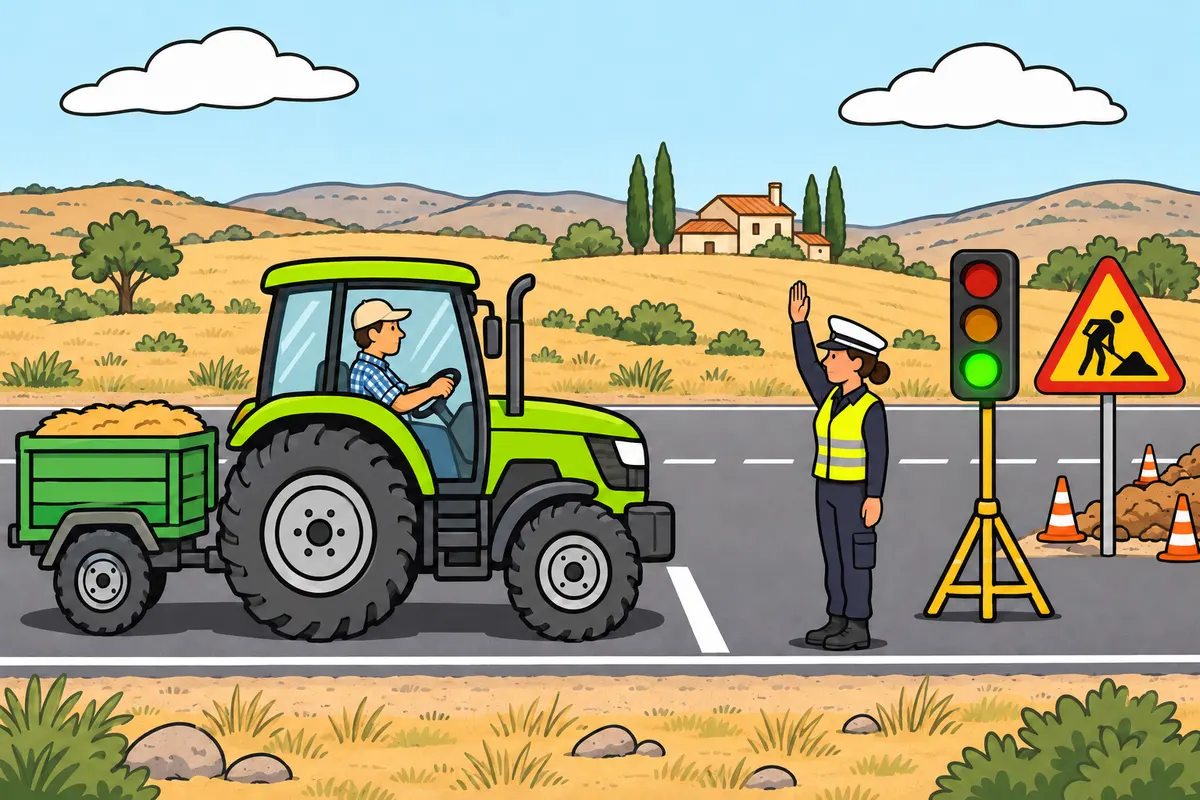
Sign library
All 620 signals of the official catalogue in force (Royal Decree 465/2025), each with its drawing and description, and a test to practise them.
1Which signal you must obey
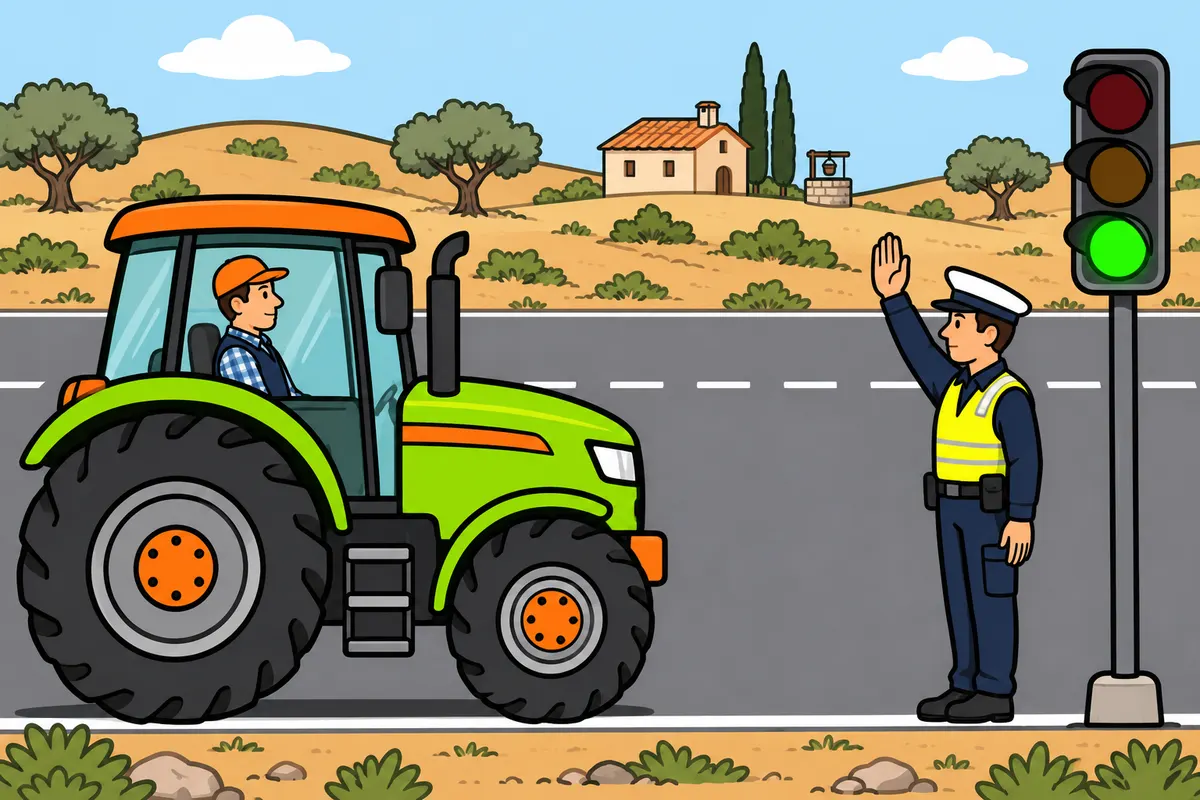
You must follow the higher-ranking signal when instructions conflict.
| Order of priority | How you apply it |
|---|---|
| Officers | Their orders come first |
| Temporary signs, closure devices and delineation signs | Come before traffic lights |
| Traffic lights | Come before upright signs |
| Upright signs | Come before road markings |
| Road markings | Come last |
Remember
- Obey the requirements and prohibitions shown by signs and signals.
- A triangular bend warning belongs to the upright signs category.
- Among signs of the same type, follow the more restrictive one.
- Follow compatible instructions together.
Exam trap: Wrong: always choose the most restrictive sign. Right: for different ranks, follow the hierarchy first.
Read the full explanation
- You must obey the requirements and prohibitions shown by signs and signals and adapt your behaviour to the message of the others; the general duty to obey them is covered in «LVA licence, tests and obeying signs». [RGC, art. 132](https://www.boe.es/buscar/act.php?id=BOE-A-2003-23514#a132)
- You must memorise this hierarchy: officers' orders and signals; temporary signs and delineation that modify normal traffic arrangements, closure devices and delineator signs; traffic lights; upright signs; road markings. A triangular bend warning sign belongs to the upright signs category, even though it warns of a hazard. [RGC, art. 133](https://www.boe.es/buscar/act.php?id=BOE-A-2003-23514#a133)
- When instructions conflict, the one in the higher category takes precedence and, among signs or signals of the same type, the most restrictive applies; how this applies at junctions is covered in «Priority of passage». [RGC, art. 133](https://www.boe.es/buscar/act.php?id=BOE-A-2003-23514#a133)
- You comply with two compatible messages at the same time: with a circular green light and a no-left-turn sign, you may continue in a permitted direction while obeying the turning prohibition. [RGC, art. 133](https://www.boe.es/buscar/act.php?id=BOE-A-2003-23514#a133)
2Position, scope and supplementary plates
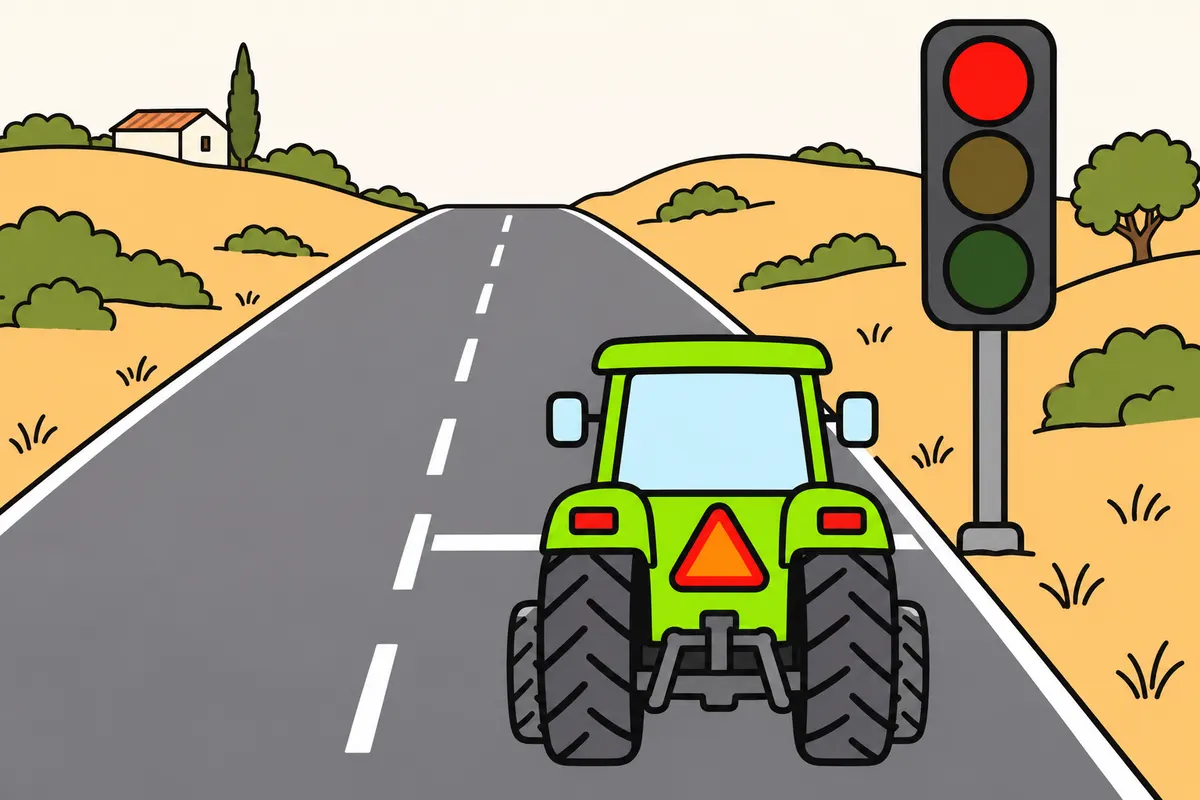
You must choose the applicable sign for your movement and read its plates.
| Sign or situation | What you must do |
|---|---|
| Different instructions on each side: going straight ahead or left | Follow those on the left |
| Different instructions on each side: turning right | Follow those on the right |
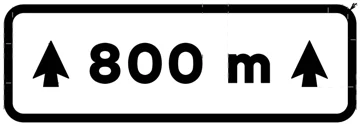
| S-800 | Distance to the start |
| S-810 | Length of the affected section |
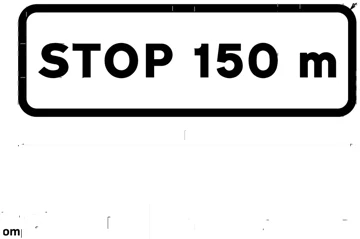
| S-840 below give way | Distance to a STOP |
Remember
- Follow signs on your right, above the carriageway or above your lane.
- Without these, look left when going straight ahead or turning left.
- Read the sign and its plate together.
- Check users, times and where the sign applies.
Exam trap: Wrong: S-800 shows the section length. Right: it shows the distance to its start.
Read the full explanation
- You must follow the traffic lights and upright signs immediately to your right, above the carriageway or above your lane. If there are none in these positions and you are going straight ahead or turning left, you follow those immediately to your left. [RGC, art. 132](https://www.boe.es/buscar/act.php?id=BOE-A-2003-23514#a132)
- If the signs or traffic lights on either side show different instructions, you must follow those on the left to continue straight ahead or turn left. To turn right, you follow those on the right. First identify your intended movement; a sign's proximity is not enough to determine which one to follow. [RGC, art. 132](https://www.boe.es/buscar/act.php?id=BOE-A-2003-23514#a132)
- As a rule, a sign applies across the full width of the carriageway that the road users it addresses are authorised to use; markings may limit its scope to particular lanes. Regulatory restrictions apply from the sign's location unless a supplementary plate indicates a different starting point. When displayed alongside the name of a built-up area, they may apply throughout that area, with exceptions indicated by signs within it. [RGC, art. 135](https://www.boe.es/buscar/act.php?id=BOE-A-2003-23514#a135) [RGC, art. 145](https://www.boe.es/buscar/act.php?id=BOE-A-2003-23514#a145)
- You must read the sign and supplementary plate together: they may specify distances, length, times, categories or circumstances. S-800 indicates the distance to the starting point; S-810 indicates the length of the affected stretch. Below a road-narrows sign, the distance plate may show the available width: interpret the sign and plate together, including their units. [RGC, annex I; RD 465/2025 catalogue](https://www.boe.es/buscar/act.php?id=BOE-A-2003-23514#ani)
- Below a give-way sign, S-840 indicates the distance to an upcoming STOP sign. Plates with arrows showing the extent of a restriction indicate the direction and distance over which the prohibition applies. A plate depicting the route of the priority road requires you to follow that route on the diagram to identify the priority road, even where it turns. [RGC, annex I; RD 465/2025 catalogue](https://www.boe.es/buscar/act.php?id=BOE-A-2003-23514#ani)
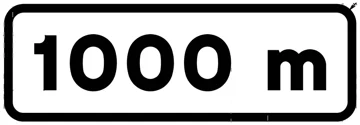 S-800
 S-810
 S-840
3Orders from officers on foot
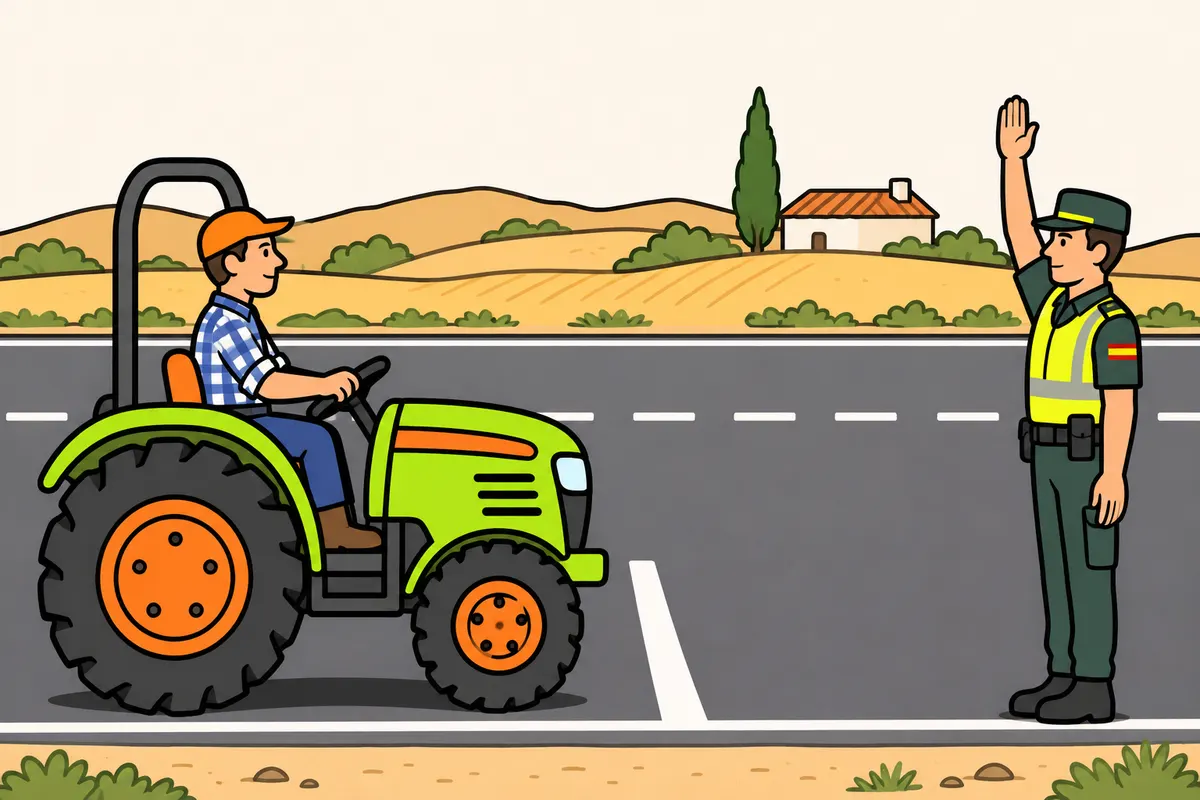
You must keep the officer in view and follow the order directed at you.
Remember
- Follow the order directed at your approach.
- Keep the officer in view from the tractor cab.
- You must see the officer’s instructions by day and night.
Exam trap: Wrong: follow any order without checking who it is for. Right: follow the order directed at your approach.
Read the full explanation
- Arm positions, a red or yellow light waved to and fro, and whistle signals are explained in «LVA licence, tests and obeying signs»; you must follow the order directed at traffic approaching from your direction. [RGC, annex I, section 1.1](https://www.boe.es/buscar/act.php?id=BOE-A-2003-23514#A1)
- Officers controlling traffic must be recognisable both by day and by night and give visible signals. From the tractor cab, keep the area where they are working in view so that you can see the instructions they direct at you. [RGC, art. 141.1](https://www.boe.es/buscar/act.php?id=BOE-A-2003-23514#a141)
4Orders from police vehicles
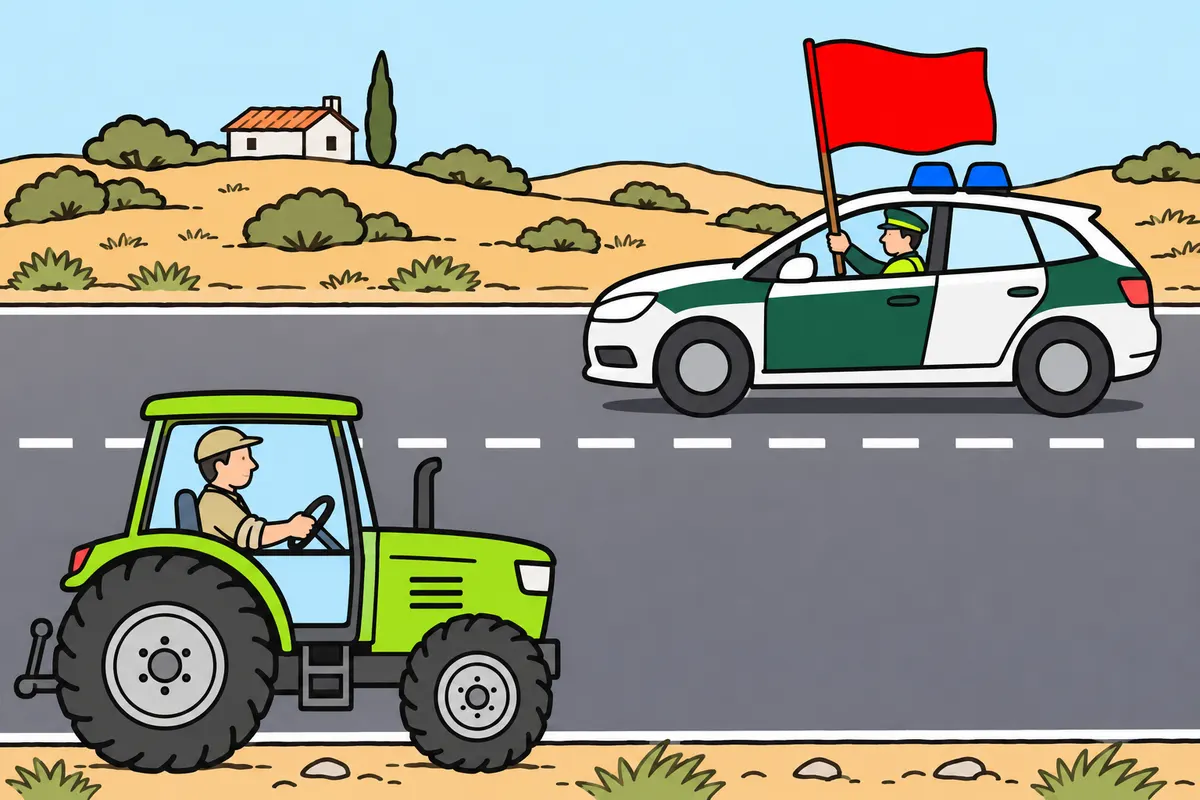
You must obey orders given from police vehicles.
Remember
- Obey orders through a loudspeaker or other means you can clearly perceive.
- If police announce their presence behind you, watch their lights.
- With a forward-facing flashing or strobing red light, you must stop.
- Pull over carefully to the right and stop ahead of the police vehicle.
- Choose somewhere your agricultural vehicle combination causes no extra risks or inconvenience.
- Stay inside and follow the officer’s instructions.
Exam trap: Wrong: get out to speak to the officer. Right: stay inside the vehicle.
Read the full explanation
- Officers in police vehicles using the V-1 signal may communicate orders to you by clearly perceptible means. The meaning of flags and an outstretched arm is explained in «LVA licence, tests and obeying signs». [RGC, art. 141.3 and annex I, section 1.2](https://www.boe.es/buscar/act.php?id=BOE-A-2003-23514#a141)
- If a police vehicle showing its presence pulls up behind your tractor and switches on a flashing or strobing red light facing forward, stop carefully on the right, in front of the police vehicle. Choose a place where your agricultural vehicle combination creates no further risk or inconvenience, and stay inside the vehicle. Follow the officer's instructions at all times, given over the loudspeaker or by any other clearly perceptible means. [RGC, art. 69, second paragraph](https://www.boe.es/buscar/act.php?id=BOE-A-2003-23514#a69)
5Temporary signs and roadworks
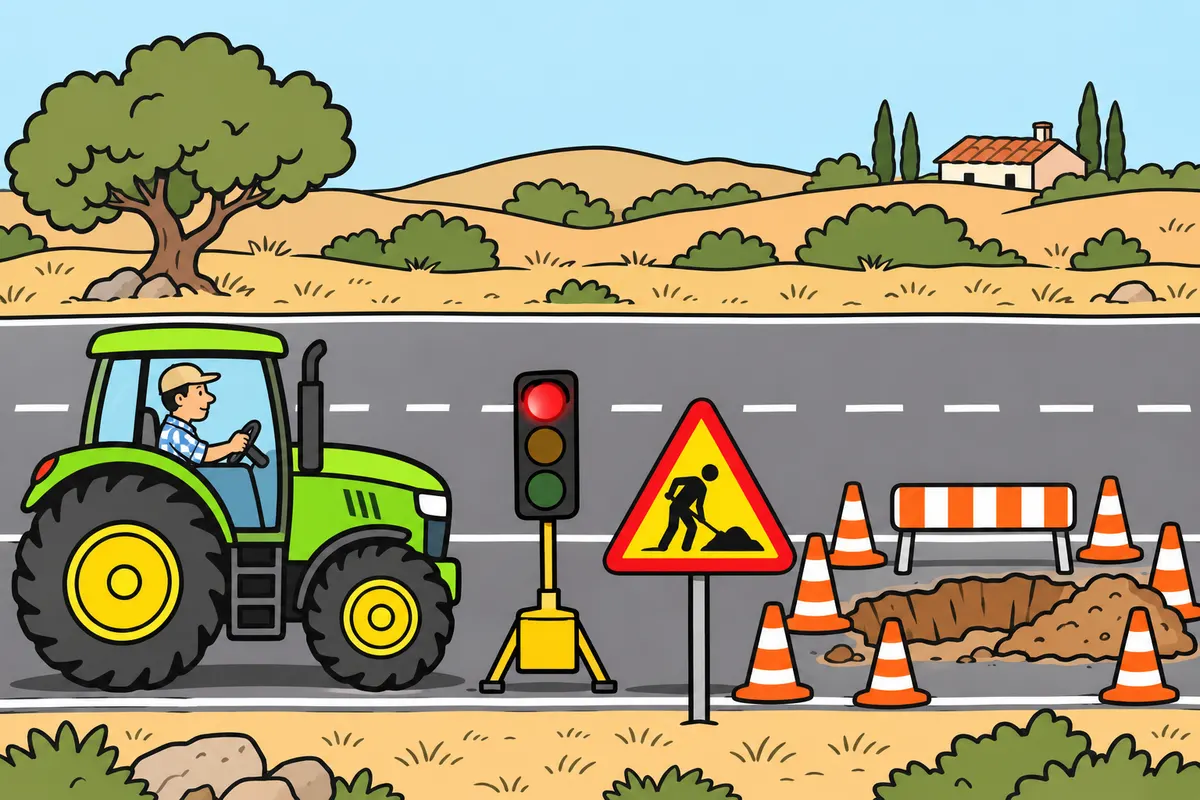
You must follow temporary traffic arrangements while they remain in force.
| Sign or situation | What you must do |
|---|---|
| Temporary advice | Treat it as advice |
| Temporary prohibition | You must obey it |
| New yellow markings | Follow the roadworks arrangements |
| Existing white markings | Follow them only if they still apply |
Remember
- Follow the diversion through and look for the end of restrictions.
- At roadworks, a yellow background keeps the sign’s meaning.
- New roadworks markings are yellow.
- Existing white markings may remain if they still apply.
- Obey controls where traffic takes turns to pass.
Exam trap: Wrong: a limit ends after the first roadworks machine. Right: wait for its signposted end or for its causes to end.
Read the full explanation
- You must follow temporary signs and signals that adapt traffic arrangements to accidents, roadworks, weather or other incidents. They may inform, warn, advise or impose instructions: an advisory message does not have the same meaning as a prohibition. Resolve any conflict according to the hierarchy. [RGC, art. 142](https://www.boe.es/buscar/act.php?id=BOE-A-2003-23514#a142)
- Changes to the usual signs and signals remain in force until the signs and signals themselves indicate otherwise or the circumstances causing the changes end. You must look for the continuation of the diversion and the point where normal arrangements resume; do not assume a limit ends just because you have passed the first roadworks machine. [RGC, art. 142](https://www.boe.es/buscar/act.php?id=BOE-A-2003-23514#a142)
- At roadworks, the warning and regulatory signs specified in the catalogue have a yellow background instead of white. The P-18 Roadworks sign has a yellow background. You must retain the meaning of the symbol and number: the temporary colour does not turn a requirement into a recommendation. [RGC, annex I; RD 465/2025 catalogue](https://www.boe.es/buscar/act.php?id=BOE-A-2003-23514#ani)
- New markings controlling a stretch of roadworks are yellow; existing markings that still apply may remain white. You must follow the temporary traffic arrangements and closure devices, without choosing a path marked in white that conflicts with a lane closure. [RGC, annex I, section 5](https://www.boe.es/buscar/act.php?id=BOE-A-2003-23514#A5)
- You may encounter traffic allowed through alternately in each direction, controlled by traffic lights or by authorised roadworks or escort personnel using sign paddles. You must obey the signal shown to you and wait for the corresponding permission to proceed. The width of your tractor or the need to access a farm does not allow you to go around the control through a closed area. [RGC, art. 141](https://www.boe.es/buscar/act.php?id=BOE-A-2003-23514#a141)
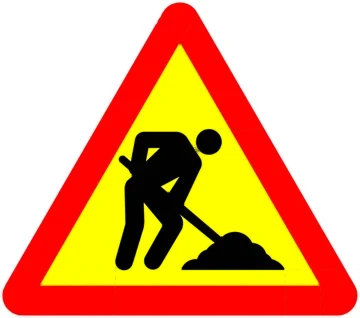 P-18
6Delineators, barriers and guides
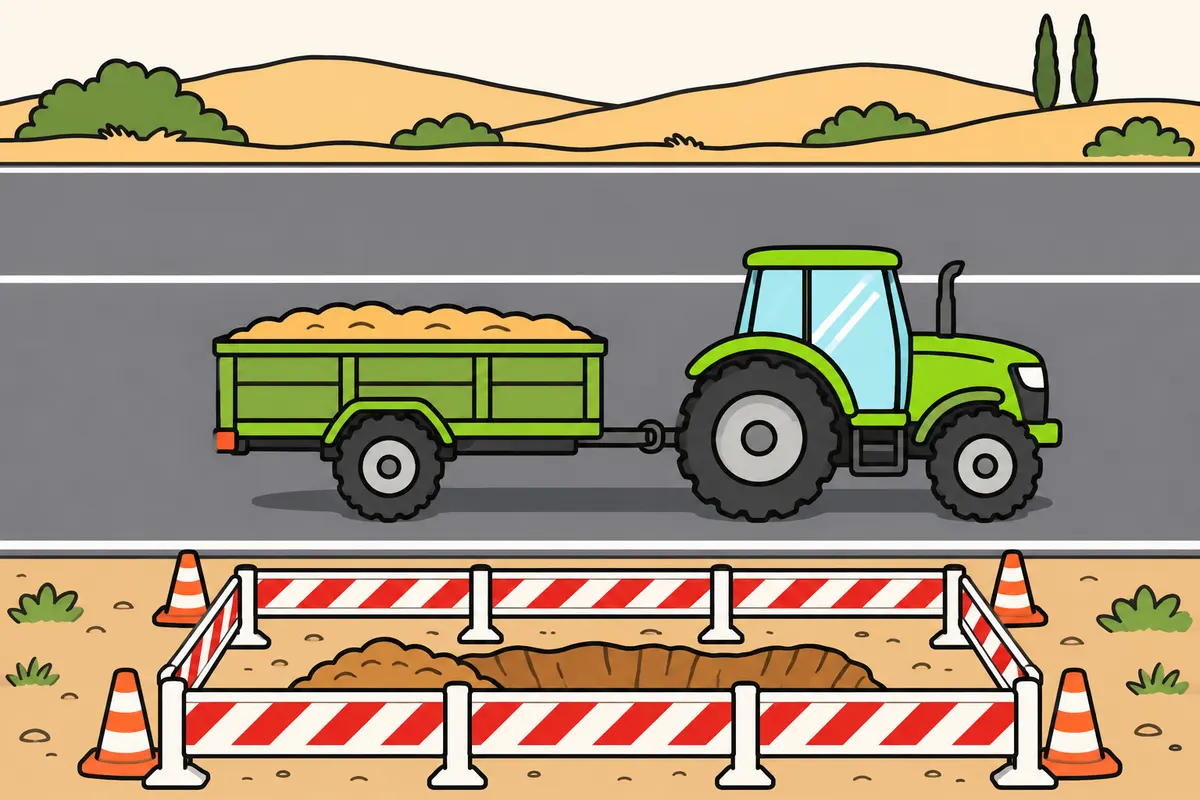
You must distinguish devices that guide you from devices that close an area.
| Sign or situation | What you must do |
|---|---|
| Closure device | Do not enter the closed area |
| Guidance device | Identify edges, bends, obstacles and your route |
Remember
- Do not enter areas closed by barriers, cones or other devices.
- Allow space for your trailer and implements too.
- You may cross only green horizontal illuminated delineators.
- A windsock shows wind direction and strength.
- At a height gauge, check your cab, exhaust, load and implements.
Exam trap: Wrong: cross orange delineators as at flashing yellow. Right: you may cross only green ones.
Read the full explanation
- Closure devices prohibit entry into the area they close off: barriers, cones and other closure equipment are not merely reference points for positioning your wheels nearby. You must also allow for the space needed by the trailer and implements, without entering the closed area even if the cab can pass outside it. [RGC, art. 142](https://www.boe.es/buscar/act.php?id=BOE-A-2003-23514#a142)
- Guidance devices indicate edges, bends, obstacles and routes. A chevron board on a bend guides your path and helps you anticipate the trailer's path without abrupt corrections. [RGC, art. 142](https://www.boe.es/buscar/act.php?id=BOE-A-2003-23514#a142)
- Horizontal illuminated delineators may mark lane boundaries, guide diversions and restrict lane changes. They may show green, orange or red: you may cross only the green ones. [RGC, annex I, section 3](https://www.boe.es/buscar/act.php?id=BOE-A-2003-23514#A3)
- A windsock indicates wind direction and strength and supplements the wind warning. A height-restriction gantry warns you or prevents you from passing if you exceed the clearance of the next structure. You must take account of the cab, exhaust, load and raised implements when assessing whether you can pass. [RGC, annex I, section 3](https://www.boe.es/buscar/act.php?id=BOE-A-2003-23514#A3)
7Circular traffic lights: red and amber
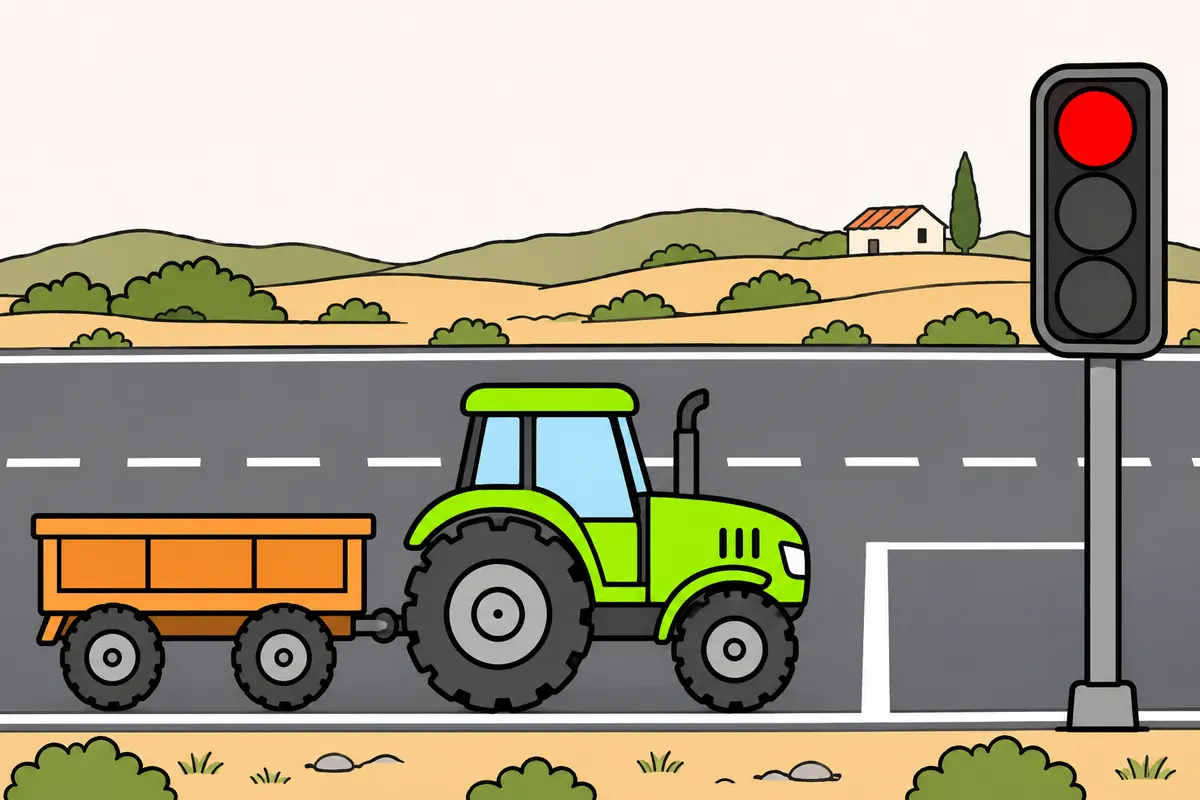
You must stop at red and steady amber, except when stopping at amber is unsafe.
| Sign or situation | What you must do |
|---|---|
| Steady red | Stop |
| Flashing red | Do not pass |
| Steady amber | Stop, unless you cannot brake safely enough when it comes on |
| Flashing amber | Take extra care and give way when required |
Remember
- Do not let your vehicle or load pass the applicable stop line.
- With red inside or beyond the junction, do not enter the junction.
- If the traffic light is off, follow the other signs and rules.
Exam trap: Wrong: flashing amber lets you ignore STOP. Right: you must obey STOP too.
Read the full explanation
- At a steady red light, you must stop without passing the traffic light or the nearest stop line before it. If the light is within or on the far side of a junction, you must not enter the junction or cross the line before it. This requirement also applies to any projecting load. [RGC, Annex I, section 4](https://www.boe.es/buscar/act.php?id=BOE-A-2003-23514#A4)
- A flashing red light or two red lights flashing alternately temporarily prohibit passage. You may encounter them at railways, movable bridges, fire station exits or in other situations covered by the catalogue. [RGC, Annex I, section 4](https://www.boe.es/buscar/act.php?id=BOE-A-2003-23514#A4)
- At a steady amber light, you must stop as you do at red, unless you are so close when it comes on that you cannot brake safely enough. You must plan your approach with your agricultural vehicle and its trailer. Anticipate braking according to the load and the combination’s stopping capability. [RGC, Annex I, section 4](https://www.boe.es/buscar/act.php?id=BOE-A-2003-23514#A4)
- At a flashing amber light, you must take extra care and give way where required. You must also obey signs that require you to stop, including a STOP sign. If the traffic lights are off, you must use the remaining signs and the applicable rules to determine when you may proceed. [RGC, Annex I, section 4](https://www.boe.es/buscar/act.php?id=BOE-A-2003-23514#A4) [RGC, art. 133](https://www.boe.es/buscar/act.php?id=BOE-A-2003-23514#a133)
8Green lights, arrows and special signals
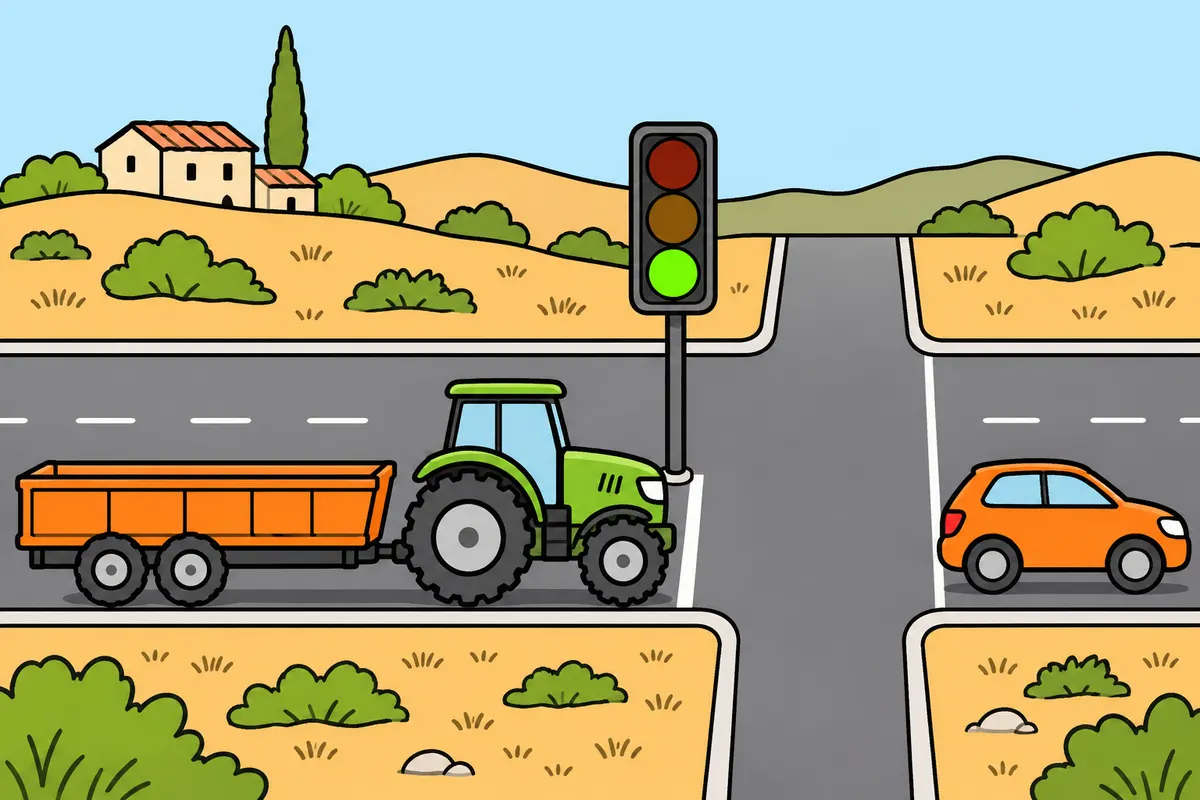
You must interpret each light for the movement or lane it controls.
| Sign or situation | What you must do |
|---|---|
| Red cross | Do not use the lane; leave it as soon as possible if already there |
| Downward green arrow | You may use the lane, but obey other signs |
| Diagonal white or amber arrow | Merge safely in its direction: the lane will close |
Remember
- At green, do not enter if you would block the junction or crossing.
- Allow space for your whole tractor and trailer.
- A black arrow applies the light’s colour to the indicated movement only.
- With green on black, give way when joining and protect people crossing.
- Follow that arrow if your lane requires you to make that movement.
- Lights for cycles or specific vehicles do not automatically control your tractor.
Exam trap: Wrong: a green lane arrow removes STOP. Right: it allows lane use, but you must still give way and stop when required.
Read the full explanation
- A steady circular green light allows you to proceed with priority, but you must not enter a junction or crossing if you are likely to stop and obstruct crossing traffic. You must allow enough space for the whole tractor and trailer; getting the cab to the other side does not mean you have cleared the junction. [RGC, Annex I, section 4](https://www.boe.es/buscar/act.php?id=BOE-A-2003-23514#A4) [RGC, art. 59](https://www.boe.es/buscar/act.php?id=BOE-A-2003-23514#a59)
- A black arrow on a steady red or amber light retains the meaning of the colour and limits it to the movement shown; when preparing to turn with your tractor, you follow the light controlling that direction. [RGC, Annex I, section 4](https://www.boe.es/buscar/act.php?id=BOE-A-2003-23514#A4)
- A green arrow on a black background allows you to proceed in its direction even if an adjacent light is red. You must do so cautiously, giving way to traffic in the lane you are joining and without endangering anyone crossing. If you are in a lane required to make that movement, you must proceed in the direction shown. [RGC, Annex I, section 4](https://www.boe.es/buscar/act.php?id=BOE-A-2003-23514#A4)
- A red cross above a lane prohibits you from using it, and you must leave it as soon as possible if you are driving in it. A downward green arrow allows you to use the lane, but you must also obey STOP signs, give way signs, stop lines and general priority rules: this arrow does not give you priority at junctions. [RGC, Annex I, section 4](https://www.boe.es/buscar/act.php?id=BOE-A-2003-23514#A4)
- A steady or flashing diagonal white or amber lane arrow warns you that the lane is about to close and requires you to move safely in the direction it points. A cycle symbol applies to cycles, and white bars apply to the vehicles specifically designated; these dedicated signals each apply to their own intended users. [RGC, Annex I, section 4](https://www.boe.es/buscar/act.php?id=BOE-A-2003-23514#A4)
9Recognising upright sign categories
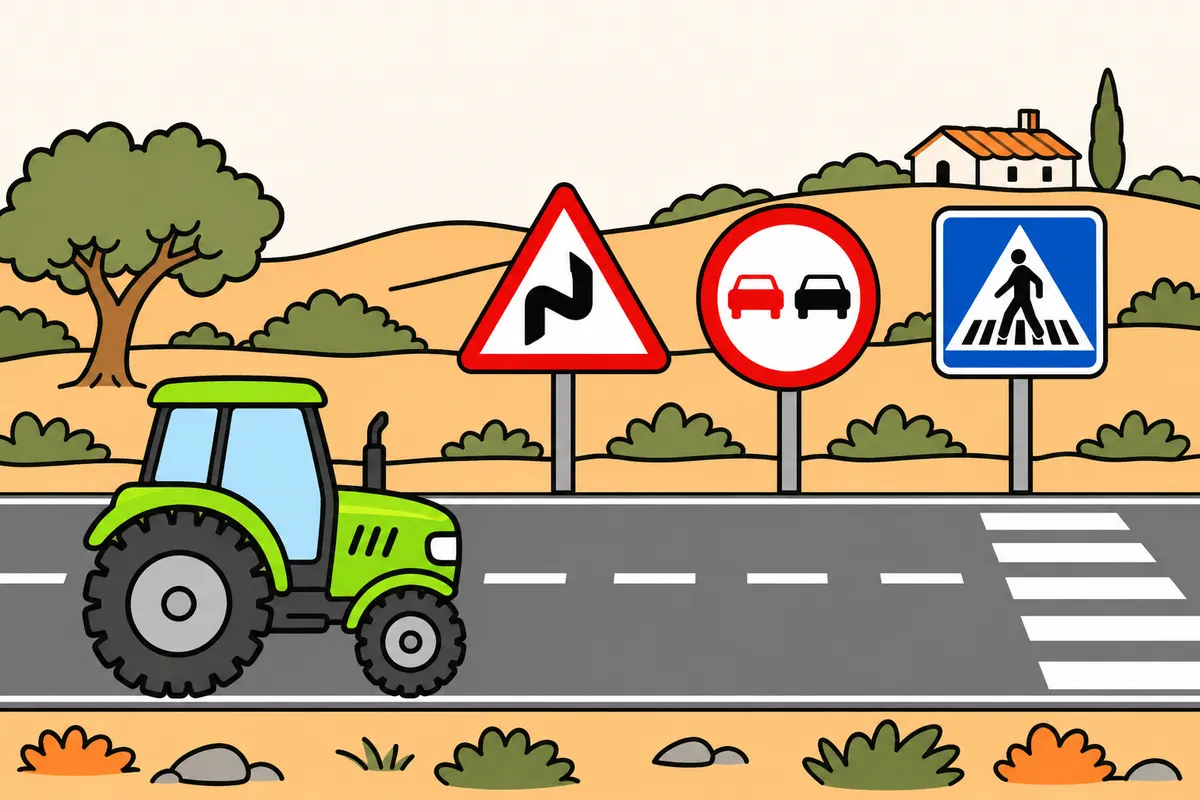
You must recognise what each category of upright signs does.
| Sign or situation | What you must do |
|---|---|
| Warning | Anticipate danger; the sign alone sets no speed limit |
| Regulatory | Obey priorities, prohibitions, restrictions and obligations |
| Information | Identify roads, destinations, services and conditions; obey their rules |
Remember
- Read the symbol and plates as well as the shape.
- Do not hide, change or tamper with signs to make access easier.
Exam trap: Wrong: every rectangular sign is advice. Right: it can identify a reserved area or a restricted road.
Read the full explanation
- Warning signs are usually triangular, with a red border and a white background, with variants for roadworks. They warn you of the nature and proximity of a hazard; you must adapt your driving before reaching it. A bend warning sign does not, by itself, set a numerical speed limit. [RGC, art. 144](https://www.boe.es/buscar/act.php?id=BOE-A-2003-23514#a144)
- Regulatory signs establish priorities, entry prohibitions, restrictions, obligations and the end of restrictions or obligations. You must read the symbol, not just the shape: STOP signs are octagonal and give way signs are inverted triangles; prohibitory signs are usually circular with a red border, and mandatory signs are blue circles. [RGC, art. 145](https://www.boe.es/buscar/act.php?id=BOE-A-2003-23514#a145) [RGC, Annex I; catalogue under RD 465/2025](https://www.boe.es/buscar/act.php?id=BOE-A-2003-23514#ani)
- Information signs tell you about roads, lanes, destinations, services or special conditions. You must follow the associated rules: a rectangular sign may identify a reserved area or the start of a road with restrictions. You cannot treat every information sign as optional advice. [RGC, art. 146](https://www.boe.es/buscar/act.php?id=BOE-A-2003-23514#a146)
- You must not tamper with, conceal or alter signs on your own initiative to make it easier to access a plot of land or pass through with an implement. [RGC, art. 140](https://www.boe.es/buscar/act.php?id=BOE-A-2003-23514#a140)
10Give way, STOP and priority roads
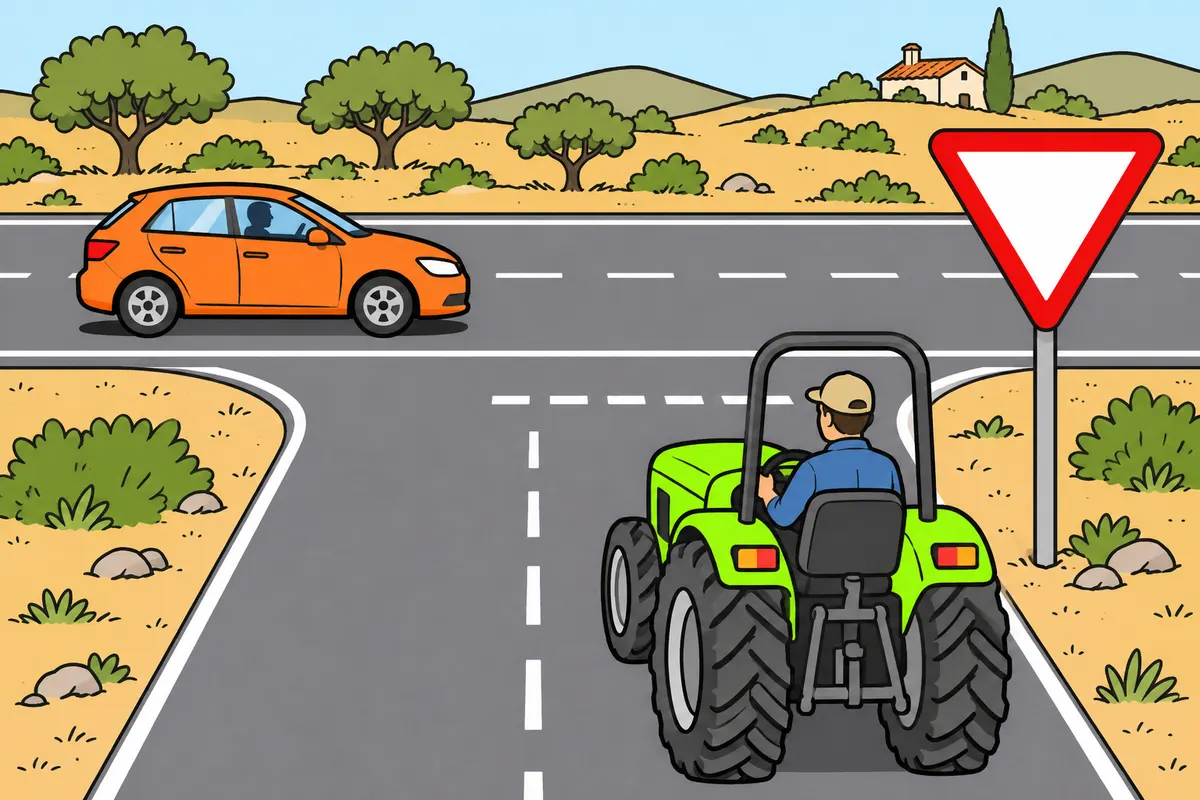
You must distinguish giving way from a compulsory stop.
| Sign or situation | What you must do |
|---|---|
| R-1: give way | Give way; stop if necessary |
| R-2: STOP | Always stop, then give way |
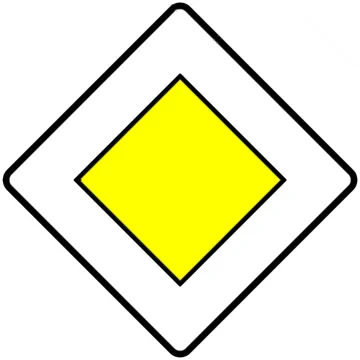
| R-3: priority road | You have priority over traffic from other carriageways at junctions |
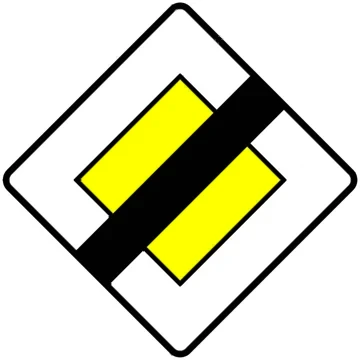
| R-4: priority ending soon | Check the next controls; this sign alone does not require stopping |
Remember
- Recognise give way and STOP as priority signs.
- At R-3, you have priority over traffic from other carriageways at junctions.
- At R-4, check the next junction’s controls and higher-ranking signs or signals.
Exam trap: Wrong: pass STOP slowly because nobody is coming. Right: you must stop completely, then give way.
Read the full explanation
- R-1, Give way, requires you to let vehicles on the priority road pass, whichever side they approach from, and to stop if necessary. R-2, Compulsory stop or STOP, requires you always to stop and then give way. The shapes and names are also explained in «LVA licence, tests and obeying signs», in the section «Giving way and stopping at R-1 and R-2»; how to carry out the manoeuvre is covered in «Priority of passage». [RGC, art. 56.5](https://www.boe.es/buscar/act.php?id=BOE-A-2003-23514#a56) [RGC, Annex I](https://www.boe.es/buscar/act.php?id=BOE-A-2003-23514#ani)
- R-3, Priority road, tells you that you have priority at junctions over traffic approaching from other carriageways. R-4 warns you that this priority is about to end; it does not, by itself, require you always to stop. You must follow the controls at the next junction and any higher-ranking sign or signal. [RGC, Annex I; catalogue under RD 465/2025](https://www.boe.es/buscar/act.php?id=BOE-A-2003-23514#ani)
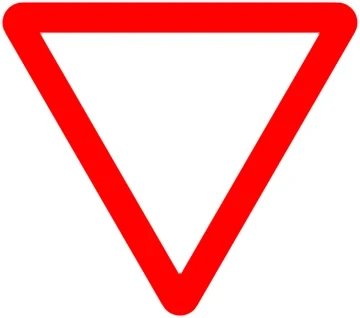 R-1
 R-2
 R-3
 R-4
11Priority at narrow sections
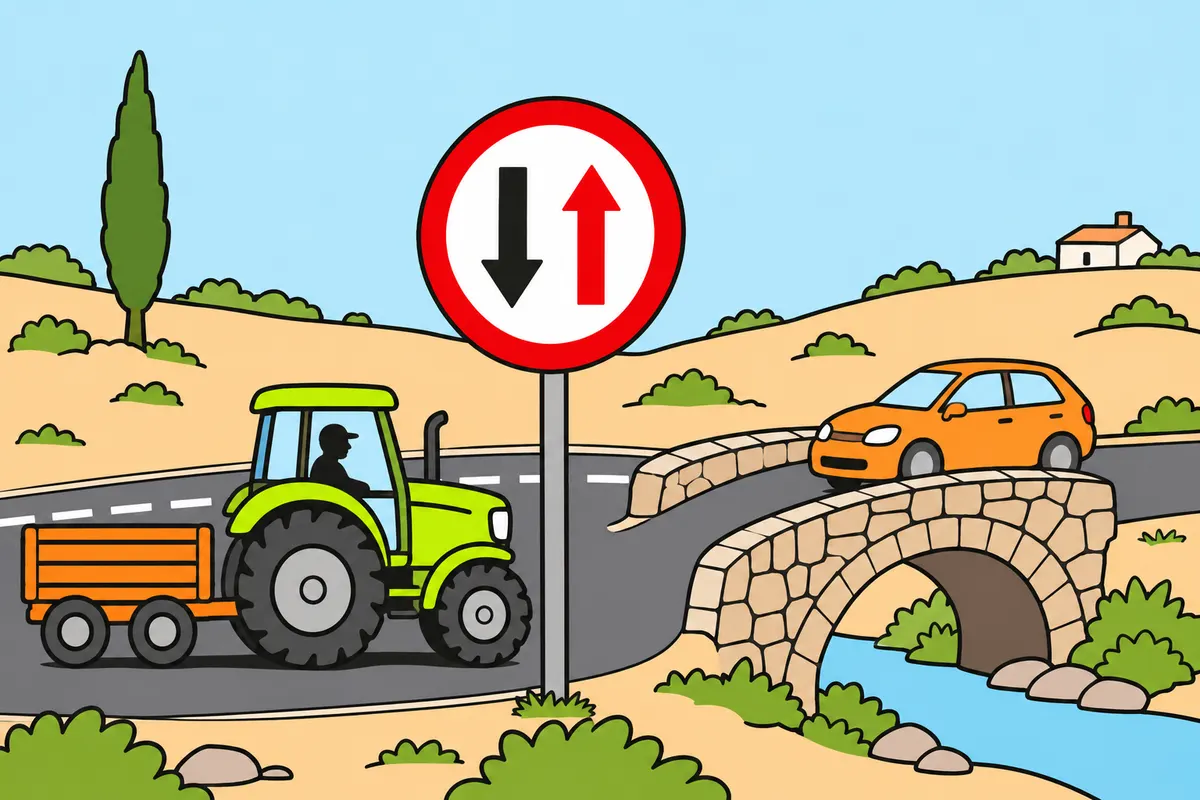
You must check who has priority before entering a narrow section.
| Sign or situation | What you must do |
|---|---|
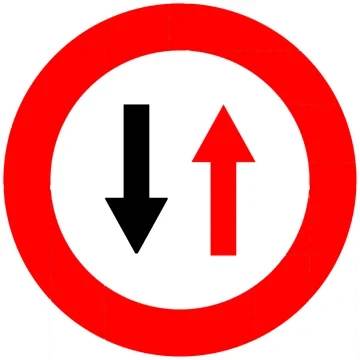
| R-5: red-bordered disc | Oncoming traffic has priority |
| R-6: blue panel | Your direction has priority |
Remember
- At R-5, do not enter if oncoming users would have to stop.
- At R-6, check you can pass through safely.
- A road narrows warning alone does not decide who goes first.
Exam trap: Wrong: R-6 means one-way traffic. Right: you have priority over oncoming traffic at the next narrow section.
Read the full explanation
- R-5, Give priority to oncoming traffic, is a circular sign with a red border and opposing arrows: you must wait until you can pass through the narrow section without forcing oncoming traffic to stop. [RGC, Annex I; catalogue under RD 465/2025](https://www.boe.es/buscar/act.php?id=BOE-A-2003-23514#ani)
- R-6, Priority over oncoming traffic, is a blue panel with opposing arrows that gives you priority at the next narrow section; before committing your tractor and trailer, make sure you can get through safely. [RGC, Annex I; catalogue under RD 465/2025](https://www.boe.es/buscar/act.php?id=BOE-A-2003-23514#ani)
- A triangular road narrows sign warns you of a reduction in width, but does not, by itself, determine who goes first. You must look for R-5, R-6, officers, traffic lights or other applicable controls. The rules for meeting oncoming traffic where there are no signs are covered in «Priority of passage». [RGC, Annex I; catalogue under RD 465/2025](https://www.boe.es/buscar/act.php?id=BOE-A-2003-23514#ani)
 R-5
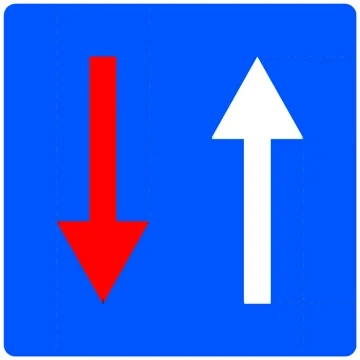 R-6
12Entry prohibitions for your tractor
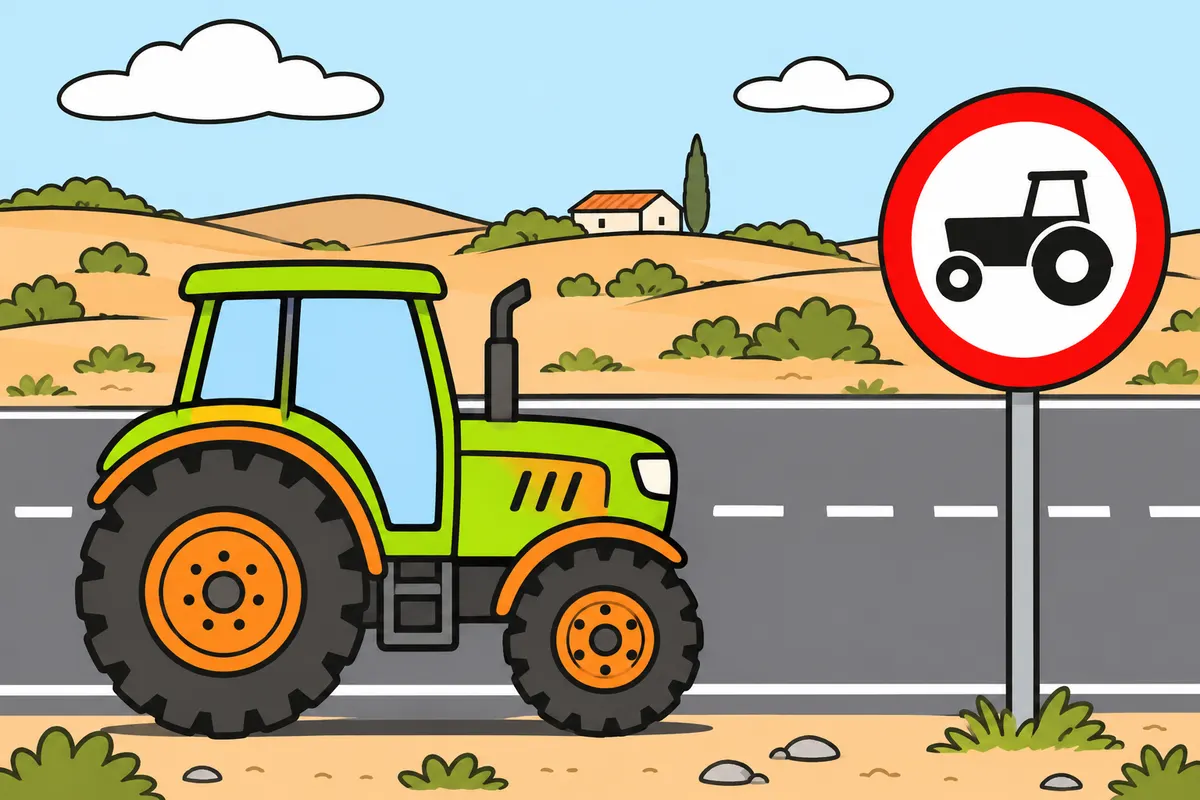
You must check whether an entry prohibition covers your tractor or trailer.
| Sign or situation | What you must do |
|---|---|
| R-100 | Do not drive here: all vehicles prohibited in both directions |
| R-101 | Do not enter through this access |
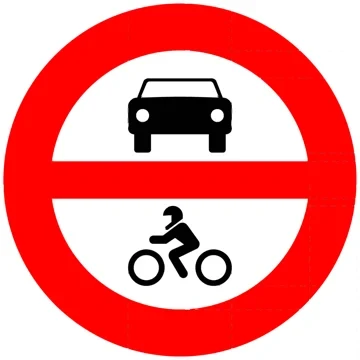
| R-102 | Do not enter with a motor vehicle |
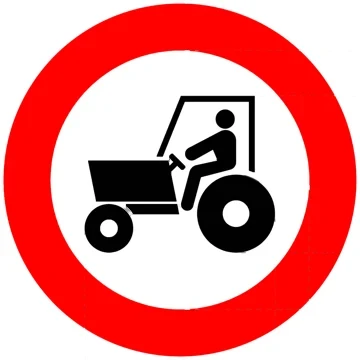
| R-111 | Do not enter with a tractor or self-propelled agricultural machine |
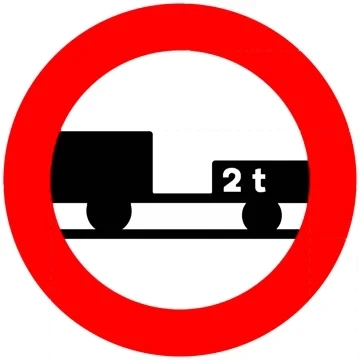
| R-112 | No entry towing a trailer, except single-axle trailers; with tonnage, if its MMA exceeds it |
Remember
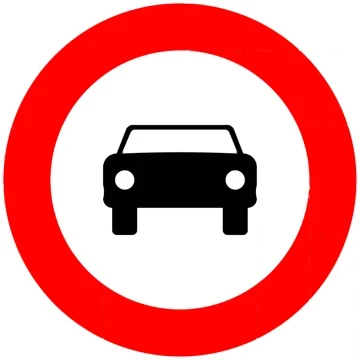
- R-103 does not exempt your tractor.
- Read the plate’s exceptions and conditions too.
Exam trap: Wrong: at R-112 with tonnage, check today’s load. Right: compare the trailer’s MMA; single-axle trailers are exempt.
Read the full explanation
- R-100, No vehicles, prohibits all vehicles from travelling in either direction. R-101, No entry, prohibits entry at the signed access point: as you approach it, you may encounter vehicles coming out towards you. [RGC, Annex I; catalogue under RD 465/2025](https://www.boe.es/buscar/act.php?id=BOE-A-2003-23514#ani)
- R-102 prohibits entry to motor vehicles. R-103 imposes that prohibition with an exception for two-wheeled motorcycles and three-wheeled vehicles treated as such. Your agricultural tractor is a motor vehicle and does not qualify for that exception because it has a special number plate or because you are driving to a farm. [RGC, Annex I; catalogue under RD 465/2025](https://www.boe.es/buscar/act.php?id=BOE-A-2003-23514#ani)
- R-111, No entry to agricultural motor vehicles, prohibits entry to tractors and other self-propelled agricultural machines. You must obey it even if you have no trailer, carry a light load or only intend to travel a short distance. It applies specifically to your agricultural vehicle category. [RGC, Annex I; catalogue under RD 465/2025](https://www.boe.es/buscar/act.php?id=BOE-A-2003-23514#ani)
- At R-112, you must check your trailer: the sign prohibits entry to motor vehicles towing trailers, except single-axle trailers. If it shows a tonnage, the prohibition applies when the trailer’s MMA (maximum authorised mass) exceeds that figure. You must check its maximum authorised mass, not its actual load that day. [RGC, Annex I; catalogue under RD 465/2025](https://www.boe.es/buscar/act.php?id=BOE-A-2003-23514#ani)
- A prohibition by category applies to the vehicles depicted; supplementary plates may specify environmental conditions, exceptions and the users concerned. When planning access to a farm, you must interpret these conditions together with the sign’s symbol. [RGC, Annex I; catalogue under RD 465/2025](https://www.boe.es/buscar/act.php?id=BOE-A-2003-23514#ani)
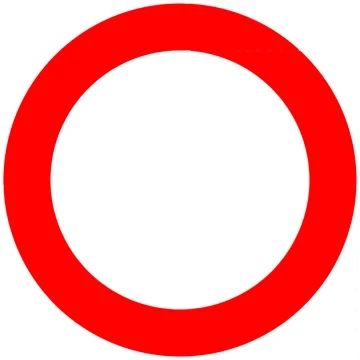 R-100
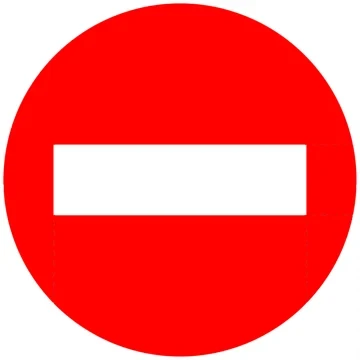 R-101
 R-102
 R-103
 R-111
 R-112
13Mass and dimension restrictions
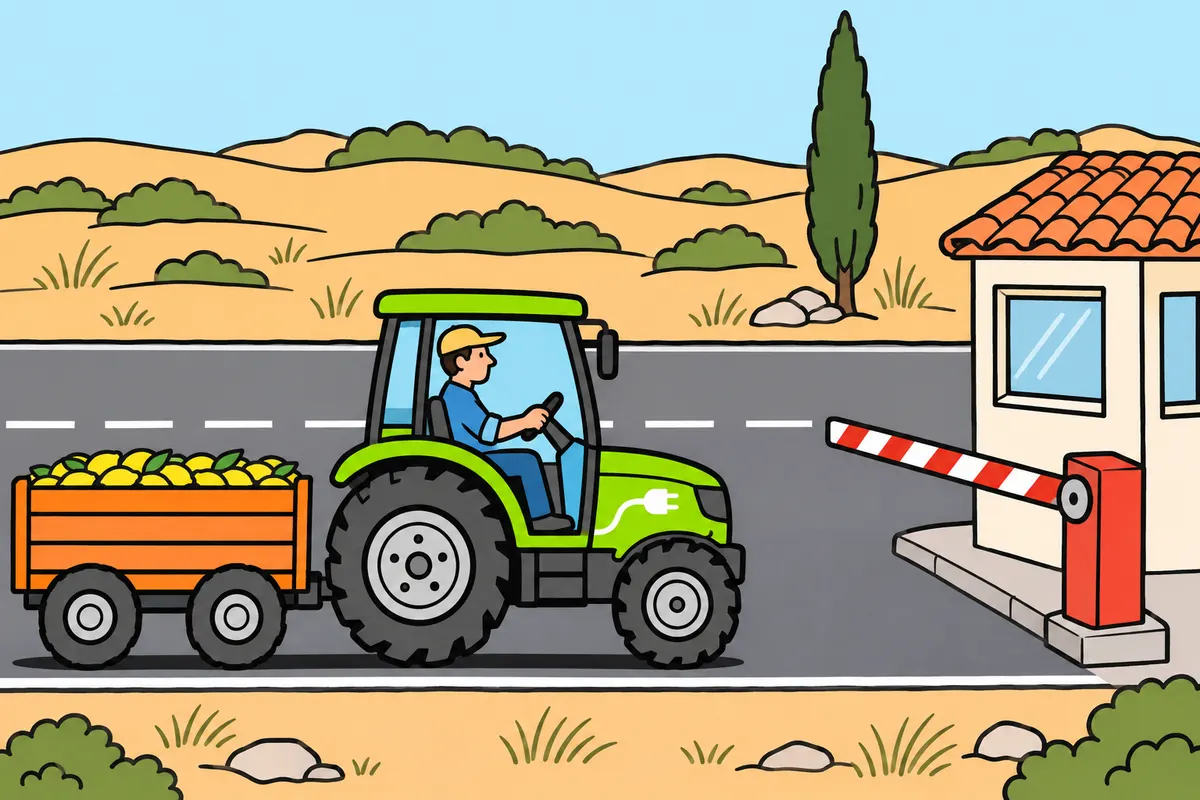
You must compare each restriction with the mass or dimension it actually limits.
| Sign or situation | What you must do |
|---|---|
| R-201 | Compare the limit with laden mass |
| R-202 | Check mass through the wheels of each axle |
| R-203 | Vehicle or combination length, including load |
| R-204 | Width, including load |
| R-205 | Height, including load |
Remember
- Include the load when measuring length, width and height.
- Check implements in their transport position.
- At R-200, stop and complete the required check before continuing.
Exam trap: Wrong: always use MMA. Right: R-201 uses laden mass; R-202 uses mass through each axle.
Read the full explanation
- R-200, No passing without stopping, requires you to stop for the indicated check, such as a police checkpoint or customs post. You must wait until you have complied with its requirement; a token stop followed by immediately driving on is not enough. You may encounter mechanical barriers beyond the post. [RGC, Annex I; catalogue of RD 465/2025](https://www.boe.es/buscar/act.php?id=BOE-A-2003-23514#ani)
- R-201, Mass limit, compares the tonnes shown with the laden mass of your vehicle. You must count the vehicle and everything it carries, not just the goods or automatically the MMA (maximum authorised mass). If the figure is 5.5 t, you cannot pass if your laden mass exceeds 5.5 t. [RGC, Annex I; catalogue of RD 465/2025](https://www.boe.es/buscar/act.php?id=BOE-A-2003-23514#ani)
- R-202, Axle mass limit, requires you to check the mass transmitted to the ground by all the wheels on each axle. You must comply even if the total mass appears acceptable. With an implement or trailer, do not assume that distributing the load by eye guarantees compliance with each limit. [RGC, Annex I; catalogue of RD 465/2025](https://www.boe.es/buscar/act.php?id=BOE-A-2003-23514#ani)
- R-203 limits the length of your vehicle or combination; R-204, its width; R-205, its height. You must include the load in the dimensions and consider the transport configuration of implements. If you exceed the figure, you cannot pass: a warning that the road narrows is not equivalent to this prohibition with a specified limit. [RGC, Annex I; catalogue of RD 465/2025](https://www.boe.es/buscar/act.php?id=BOE-A-2003-23514#ani)
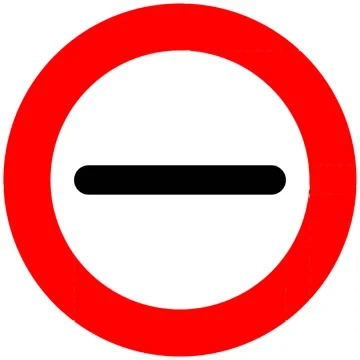 R-200
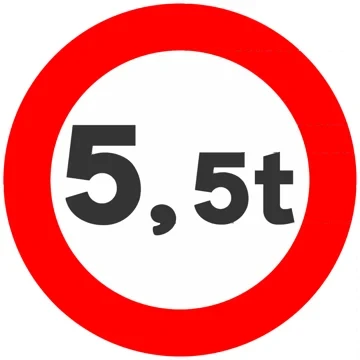 R-201
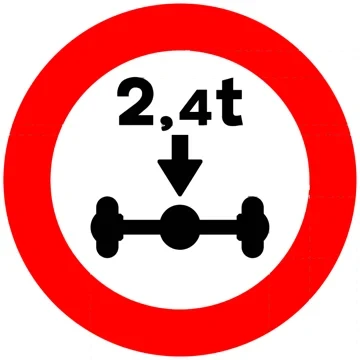 R-202
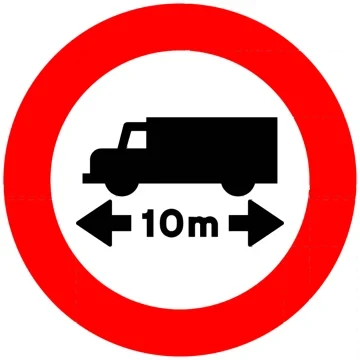 R-203
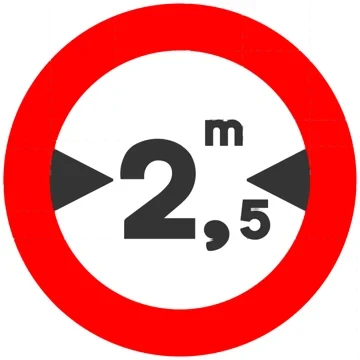 R-204
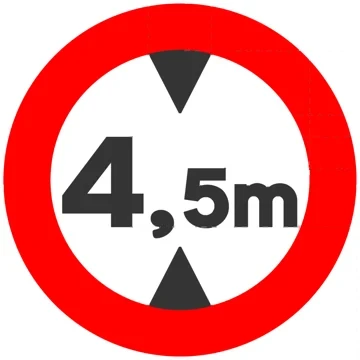 R-205
14Speed, separation and the end of limits
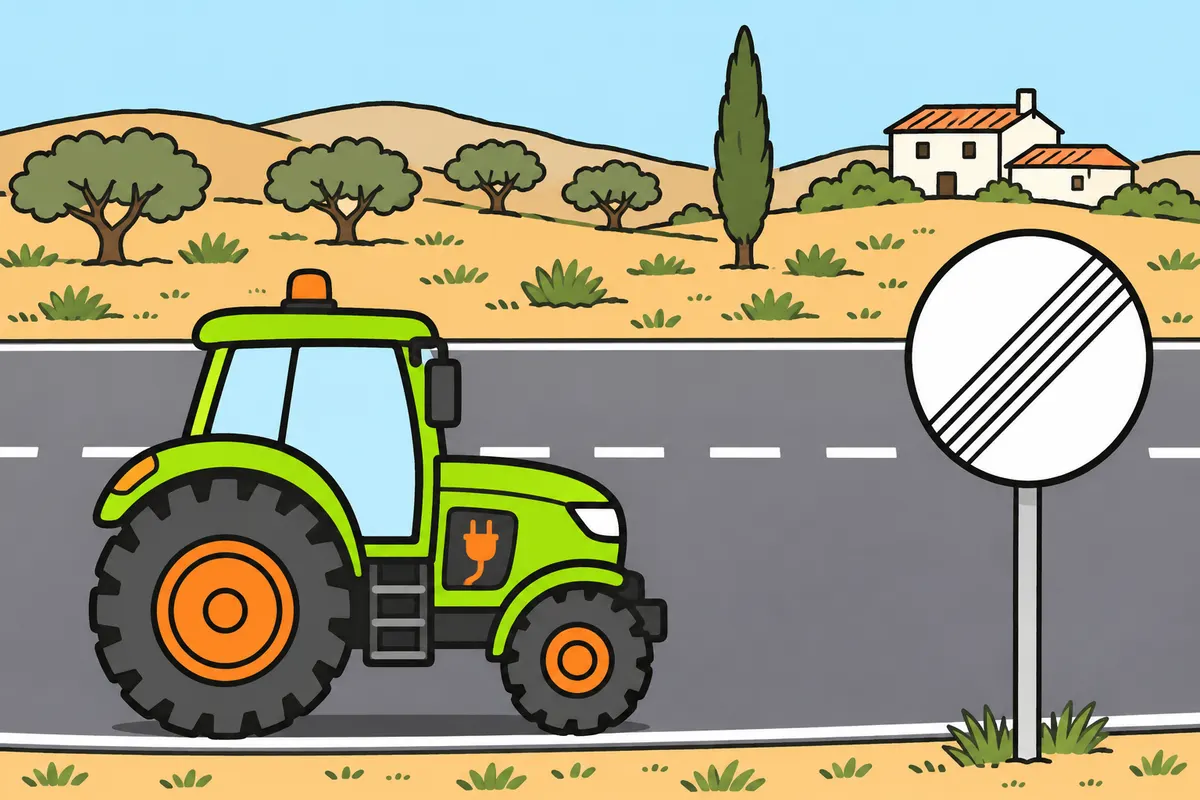
You must obey signposted limits and your vehicle’s own limits.
| Sign or situation | What you must do |
|---|---|
| R-301 | Obey the maximum and any lower applicable limit |
| R-300 | Keep the indicated distance, except when overtaking |
| R-411 | Signposted minimum: your special agricultural vehicle may travel below it. Obey access restrictions |
| R-506 | The signposted minimum ends |
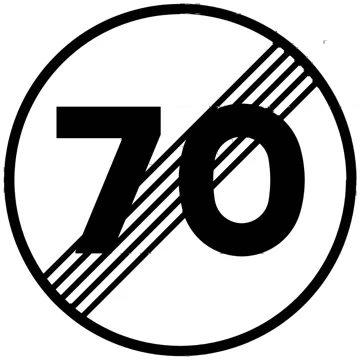
| R-501 | The signposted maximum ends |
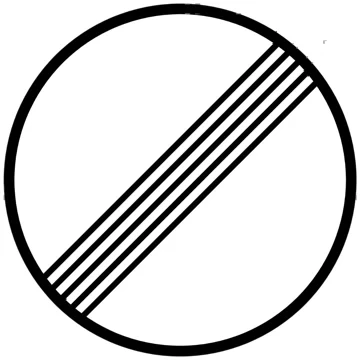
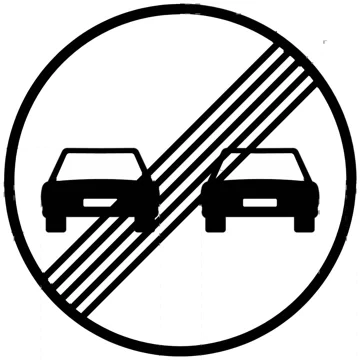
| R-502 | The overtaking prohibition ends |
| R-500 | Specific moving-vehicle prohibitions end |
Remember
- A higher signposted maximum does not raise your tractor’s permitted limit.
- Not every junction ends a signposted maximum.
- Maximum and warning share a post or panel: the limit ends with the danger.
- Without priority, the limit ends after you leave a junction with a priority road.
- With your special agricultural vehicle, you may drive below a signposted minimum.
- An end of prohibitions does not remove general rules.
Exam trap: Wrong: the agricultural exception removes access restrictions. Right: you may drive below the minimum, but must obey restrictions set by the authority.
Read the full explanation
- R-301 sets a compulsory maximum speed in km/h. You must also comply with the limit for your vehicle and any lower limit that applies: a sign showing a higher figure does not allow you to accelerate a tractor beyond its authorised maximum. The specific agricultural limits are covered in “Speed and distances for agricultural vehicles”. [RGC, Annex I; catalogue of RD 465/2025](https://www.boe.es/buscar/act.php?id=BOE-A-2003-23514#ani)
- The signed maximum speed applies until another maximum speed sign or an applicable end-of-limit or end-of-prohibitions sign. If it shares a post or panel with a hazard warning, it ends when that hazard ends. On a road without priority, it ceases to apply when you leave a junction with a priority road; not every junction ends every limit. [RGC, Annex I; catalogue of RD 465/2025](https://www.boe.es/buscar/act.php?id=BOE-A-2003-23514#ani)
- R-300 requires you to keep at least the indicated distance from the vehicle ahead, except when overtaking. Without a figure, it reminds you of the statutory safe following distance. The figure represents metres of separation: you must maintain this space even when driving your tractor slowly. [RGC, Annex I; catalogue of RD 465/2025](https://www.boe.es/buscar/act.php?id=BOE-A-2003-23514#ani)
- R-411, Minimum speed, requires you to drive at least at the indicated speed in km/h until a different minimum speed sign, R-506 or a maximum speed sign showing an equal or lower value. As the driver of a special agricultural vehicle, you may drive below minimum speeds under article 49.2, which does not restrict this exception to general minimum speeds. The authorities may impose restrictions on vehicles that do not or cannot reach a minimum speed; you must comply with these access restrictions. The specific conditions for S-50 lanes are explained in “Information for choosing a route” in this module. [RGC, Annex I; catalogue of RD 465/2025](https://www.boe.es/buscar/act.php?id=BOE-A-2003-23514#ani) [RGC, art. 49.2](https://www.boe.es/buscar/act.php?id=BOE-A-2003-23514#a49) [RGC, art. 39.2](https://www.boe.es/buscar/act.php?id=BOE-A-2003-23514#a39)
- R-500 ends specific signed prohibitions for moving vehicles; R-501 ends the signed maximum speed and R-502 the overtaking prohibition. You must continue to comply with general rules and other restrictions: an end-of-prohibitions sign does not authorise parking where it is prohibited or guarantee safe overtaking. [RGC, Annex I; catalogue of RD 465/2025](https://www.boe.es/buscar/act.php?id=BOE-A-2003-23514#ani)
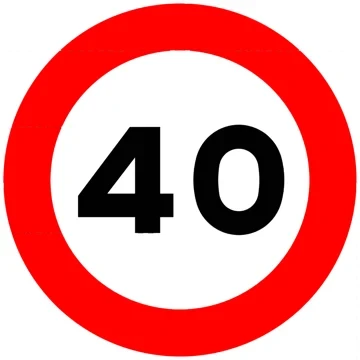 R-301
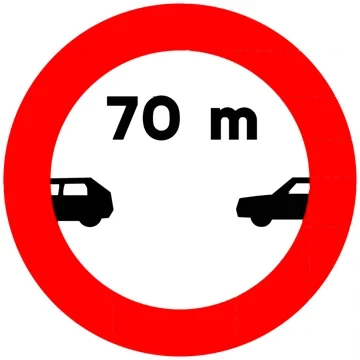 R-300
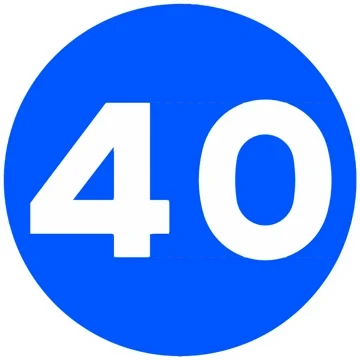 R-411
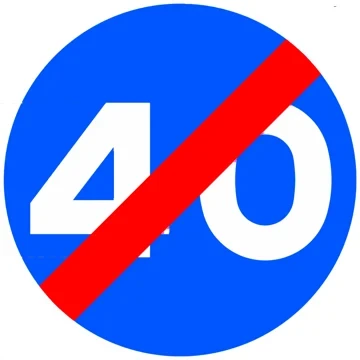 R-506
 R-500
 R-501
 R-502
15Prohibited turns and overtaking
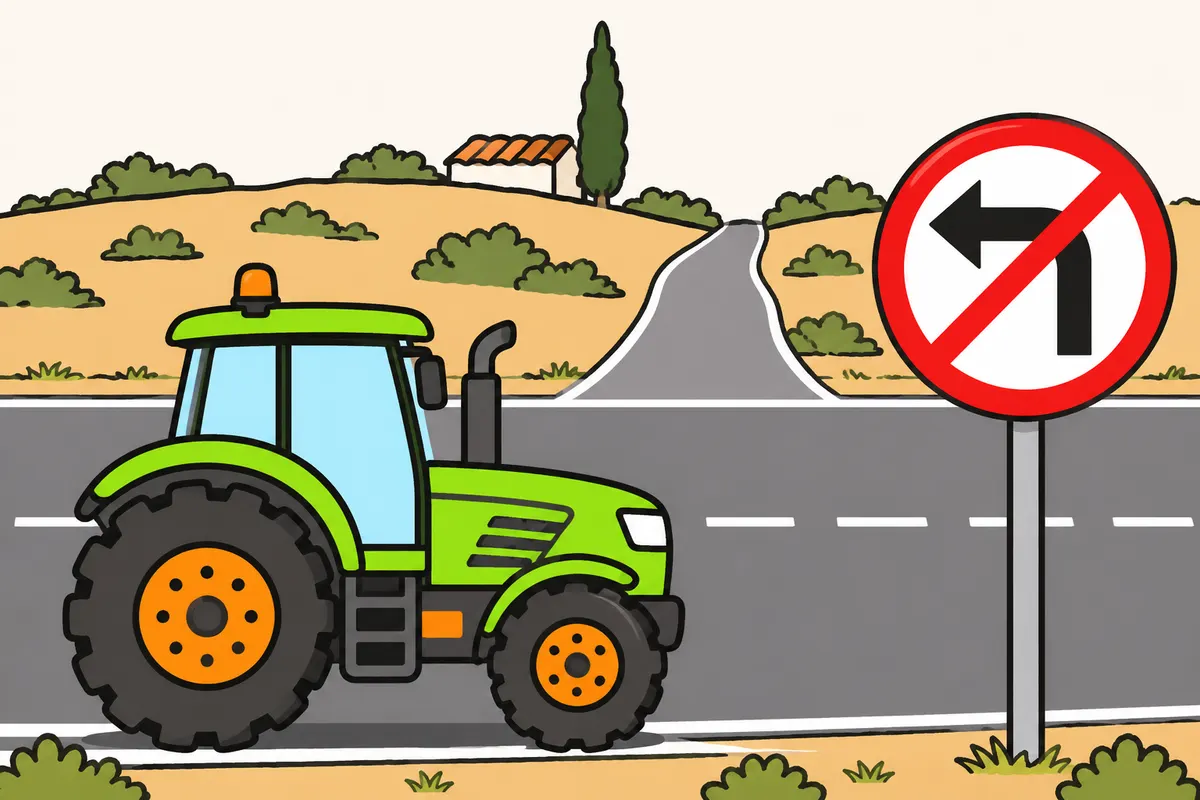
You must distinguish prohibited turns and overtaking rules.
| Sign | Rule; R-306 applies only to lorries over 3,500 kg maximum authorised mass |
|---|---|
| R-302 | No right turn |
| R-303 | No left turn or U-turn |
| R-304 | No U-turn |
| R-306 | No overtaking motor vehicles, even without entering the oncoming traffic area |
Remember
- R-305 prohibits overtaking motor vehicles if you must enter the oncoming traffic area.
- Also obey markings, visibility requirements and other overtaking rules.
- Others may overtake where prohibited if your speed makes this safe for everyone.
- They may enter the oncoming traffic area only after checking the manoeuvre is safe.
- When overtaken, keep close to the right and do not speed up.
- Your tractor’s mass does not make it a lorry.
Exam trap: Wrong: R-304 prohibits every left turn. Right: it prohibits U-turns; you may turn left if otherwise permitted.
Read the full explanation
- R-302 prohibits turning right. R-303 prohibits turning left and making a U-turn. R-304 prohibits U-turns, without itself prohibiting an otherwise permitted left turn. You must distinguish between turning back and entering a side street or property. [RGC, Annex I; catalogue of RD 465/2025](https://www.boe.es/buscar/act.php?id=BOE-A-2003-23514#ani)
- R-305 prohibits overtaking motor vehicles when the manoeuvre requires you to enter the area reserved for oncoming traffic. If it is placed where a rule prohibits overtaking, it reminds you of that prohibition. You must also consider road markings, visibility and the other rules; do not assume that having space allows any overtaking manoeuvre. [RGC, Annex I; catalogue of RD 465/2025](https://www.boe.es/buscar/act.php?id=BOE-A-2003-23514#ani)
- On a stretch where overtaking is prohibited, other drivers may overtake your special agricultural vehicle or combination if its speed allows them to do so without risk to you or traffic in general. They may use the part reserved for oncoming traffic after checking that the manoeuvre is safe. When you are being overtaken, you must keep close to the right and not increase your speed. The full rules are covered in “Manoeuvres with agricultural vehicles”. [RGC, art. 88.2](https://www.boe.es/buscar/act.php?id=BOE-A-2003-23514#a88) [RGC, art. 86](https://www.boe.es/buscar/act.php?id=BOE-A-2003-23514#a86)
- R-306 applies to lorries with an MMA above 3,500 kg and prohibits them from overtaking motor vehicles even without entering the area for oncoming traffic. You must not place a tractor in this category simply because it exceeds that mass. R-503 specifically ends the prohibition for lorries. [RGC, Annex I; catalogue of RD 465/2025](https://www.boe.es/buscar/act.php?id=BOE-A-2003-23514#ani)
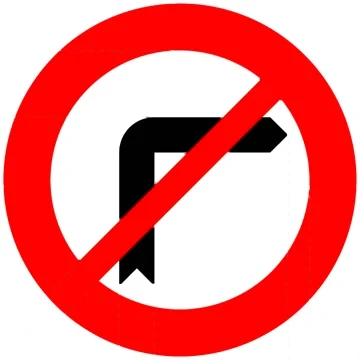 R-302
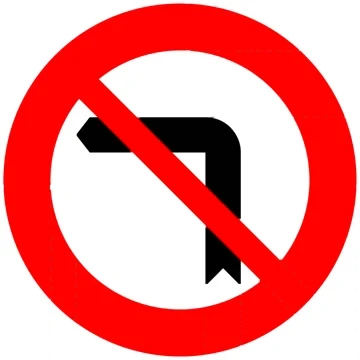 R-303
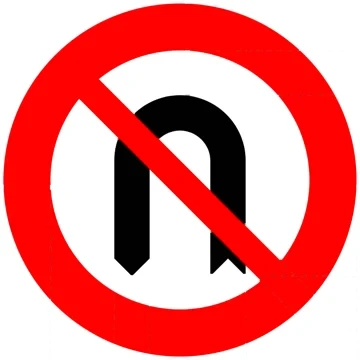 R-304
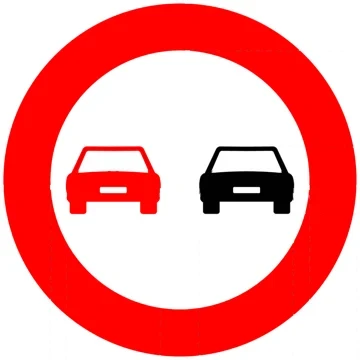 R-305
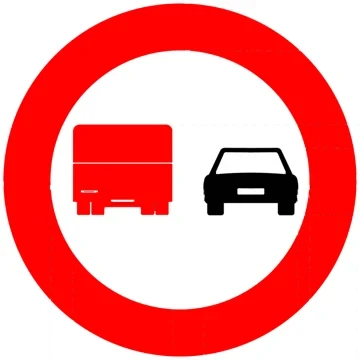 R-306
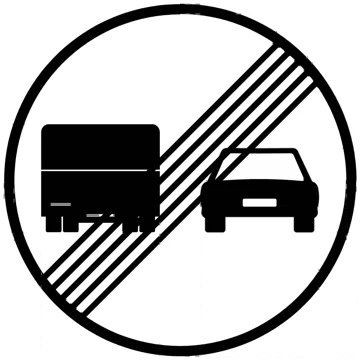 R-503
16Stopping, parking and the horn
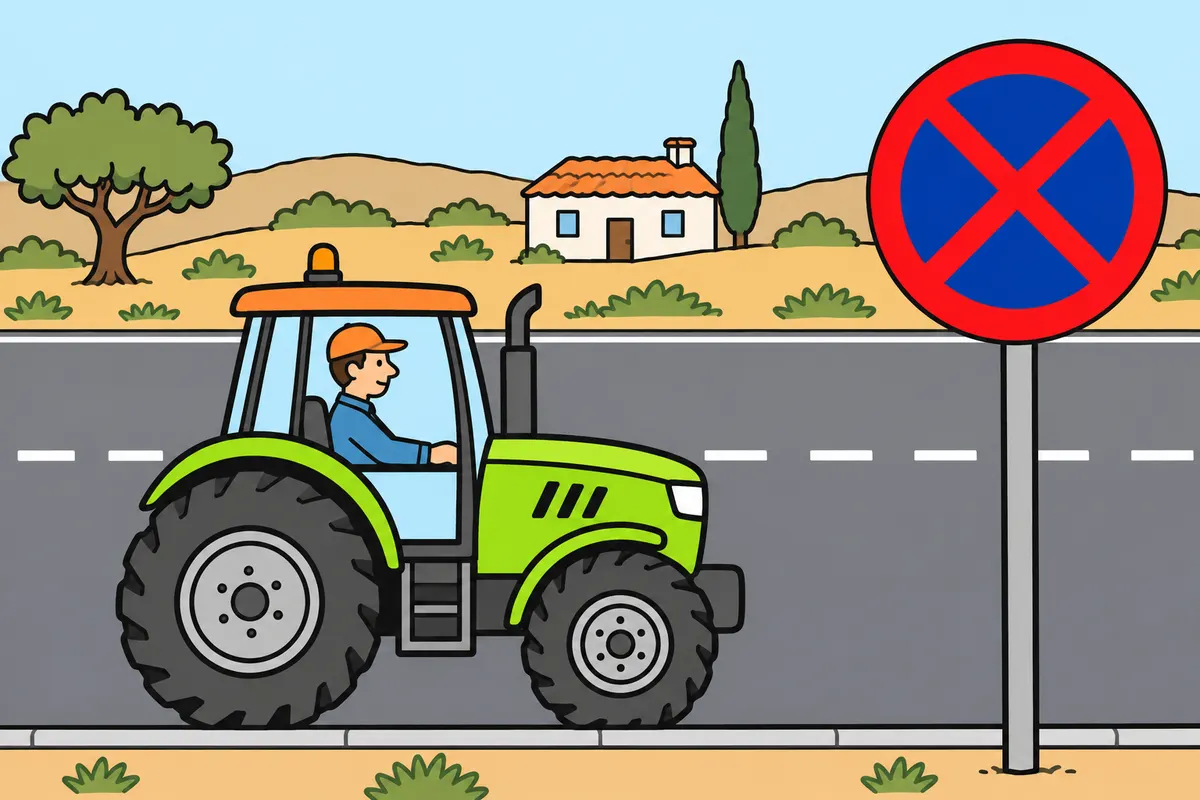
You must distinguish prohibitions on stopping, parking and using your horn.
| Sign or situation | What you must do |
|---|---|
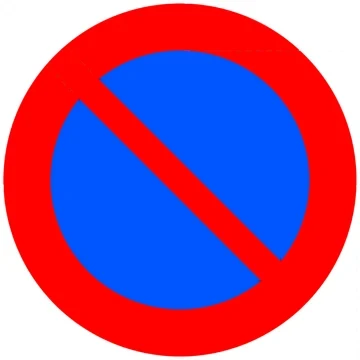
| R-307 | Do not stop or park |
| R-308 | Do not park |
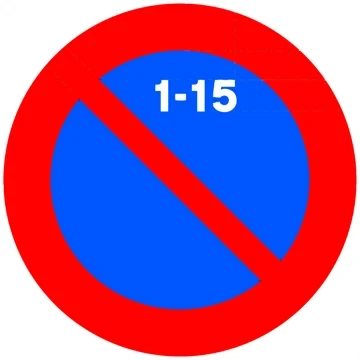
| R-308c | No parking from 9 on day 1 until 9 on day 16 |
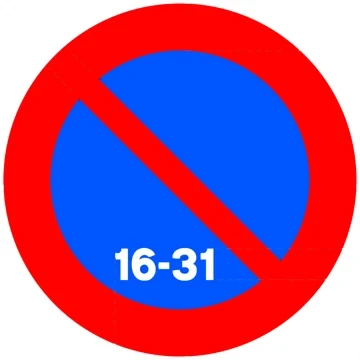
| R-308d | No parking from 9 on day 16 until 9 on day 1 next month |
Remember
- The prohibition applies on the side where the sign stands.
- Unless indicated otherwise, it extends to the next junction in your direction.
- Read times, arrows, exceptions and conditions for permission.
- A sign allowing stopping does not remove other prohibitions.
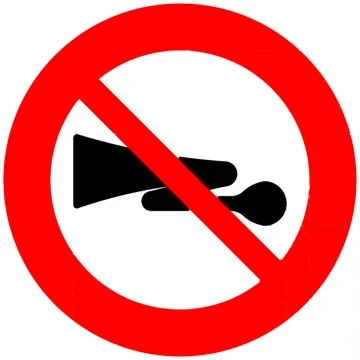
- At R-310, use your horn only to prevent an accident.
Exam trap: Wrong: half-month parking restrictions change at midnight. Right: R-308c and R-308d change at 9 o’clock.
Read the full explanation
- R-307 prohibits stopping and parking on the side where it is placed. R-308 prohibits parking, but does not in itself prohibit stopping. You must check the other prohibitions: a sign that does not prohibit stopping does not mean that any stop beside it is legal or safe. [RGC, Annex I; catalogue of RD 465/2025](https://www.boe.es/buscar/act.php?id=BOE-A-2003-23514#ani)
- Unless otherwise indicated, these prohibitions start at the point level with the sign and extend to the nearest junction in your direction of travel. You must read the arrows showing their extent, supplementary plates and variants indicating a different stretch, as well as any times or exceptions. [RGC, Annex I; catalogue of RD 465/2025](https://www.boe.es/buscar/act.php?id=BOE-A-2003-23514#ani)
- R-308c prohibits parking from 9 am on day 1 until 9 am on day 16. R-308d prohibits it from 9 am on day 16 until 9 am on day 1 of the following month; when leaving your tractor, calculate the parking period using that time as the reference. [RGC, Annex I; catalogue of RD 465/2025](https://www.boe.es/buscar/act.php?id=BOE-A-2003-23514#ani)
- Limited-parking restrictions may specify the duration, times, eligible users and how to prove authorisation. A reserved space identifies who may use it; to unload agricultural products, you must use a space where that use is authorised. [RGC, Annex I; catalogue of RD 465/2025](https://www.boe.es/buscar/act.php?id=BOE-A-2003-23514#ani)
- R-310, No audible warnings, reminds you that audible signals are prohibited except to avoid an accident. You must avoid using the horn to claim priority or greet someone; this sign does not prevent a warning needed to avoid a collision. [RGC, Annex I; catalogue of RD 465/2025](https://www.boe.es/buscar/act.php?id=BOE-A-2003-23514#ani)
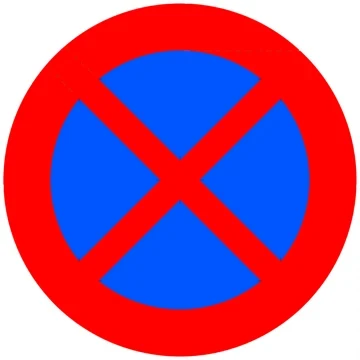 R-307
 R-308
 R-308c
 R-308d
 R-310
17Mandatory directions and equipment
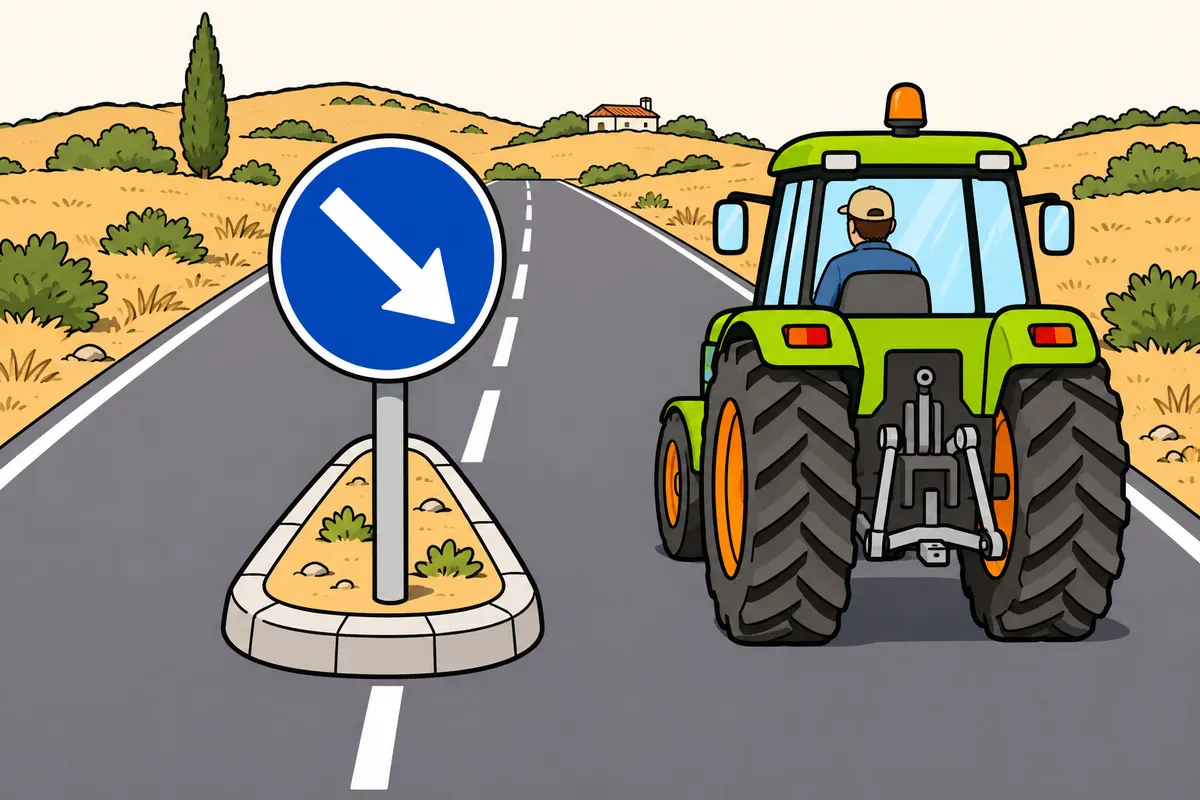
You must follow the direction and equipment requirements shown by each sign.
| Sign or situation | What you must do |
|---|---|
| R-400 | Follow the mandatory direction |
| R-401 | Pass the obstacle on the indicated side |
| R-403 | Choose only from the permitted directions |
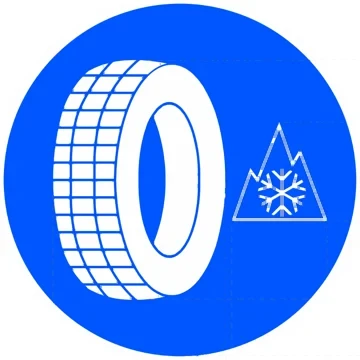
| R-412 | Chains or authorised devices on a wheel on each side of the same driven axle; or special snow tyres |
| R-412b | Use winter tyres |
Remember
- Choose your lane early and allow for your trailer’s path.
- R-402 requires the shown circulating direction; you must still obey give way signs.
- At R-413, use at least dipped beam even in good visibility.
- When that obligation ends, keep lights on if another rule requires them.
Exam trap: Wrong: any agricultural tyre meets R-412b. Right: this sign requires winter tyres.
Read the full explanation
- The arrows on R-400 signs indicate the compulsory direction of travel. R-401 signs show which side of a traffic island, refuge or obstruction you must pass. You must check the position and orientation of the arrow to avoid confusing a compulsory turn with the side on which to pass an obstruction. [RGC, Annex I; catalogue of RD 465/2025](https://www.boe.es/buscar/act.php?id=BOE-A-2003-23514#ani)
- R-402 requires you to circulate around the island in the direction shown by its arrows. R-1 controls giving way at the entrance, and the roundabout warning sign warns you that a roundabout is ahead: each sign retains its function as you approach with your agricultural combination. [RGC, Annex I; catalogue of RD 465/2025](https://www.boe.es/buscar/act.php?id=BOE-A-2003-23514#ani)
- R-403 signs show the only permitted directions of travel. You must choose from their arrows and prepare to use the correct lane in good time, considering the path of your trailer. Two options being shown does not allow an additional manoeuvre, such as a U-turn. [RGC, Annex I; catalogue of RD 465/2025](https://www.boe.es/buscar/act.php?id=BOE-A-2003-23514#ani)
- R-413 requires you to drive with at least dipped beam on, even in good visibility. You must keep it on until the signed obligation ends, and afterwards too if another rule requires it. S-5 announces the tunnel and R-413 makes lighting compulsory. [RGC, Annex I; catalogue of RD 465/2025](https://www.boe.es/buscar/act.php?id=BOE-A-2003-23514#ani)
- R-412 requires chains or other authorised anti-skid devices on at least one wheel on each side of the same driven axle, or special snow tyres. R-412b requires winter tyres. You must comply with the solution required by each sign; the robust appearance of an agricultural tyre is not enough. [RGC, Annex I; catalogue of RD 465/2025](https://www.boe.es/buscar/act.php?id=BOE-A-2003-23514#ani)
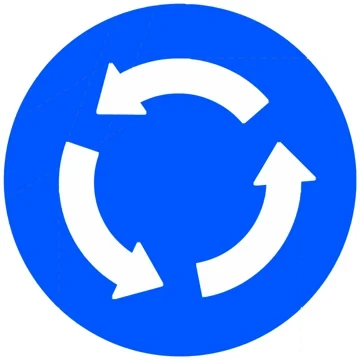 R-402
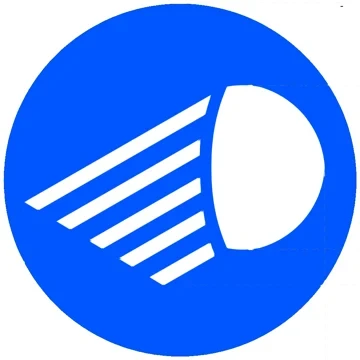 R-413
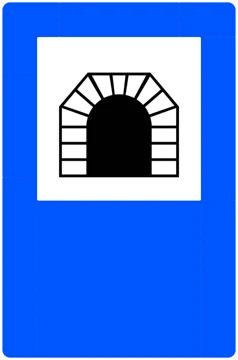 S-5
 R-412
 R-412b
18Reserved roads and eligible users
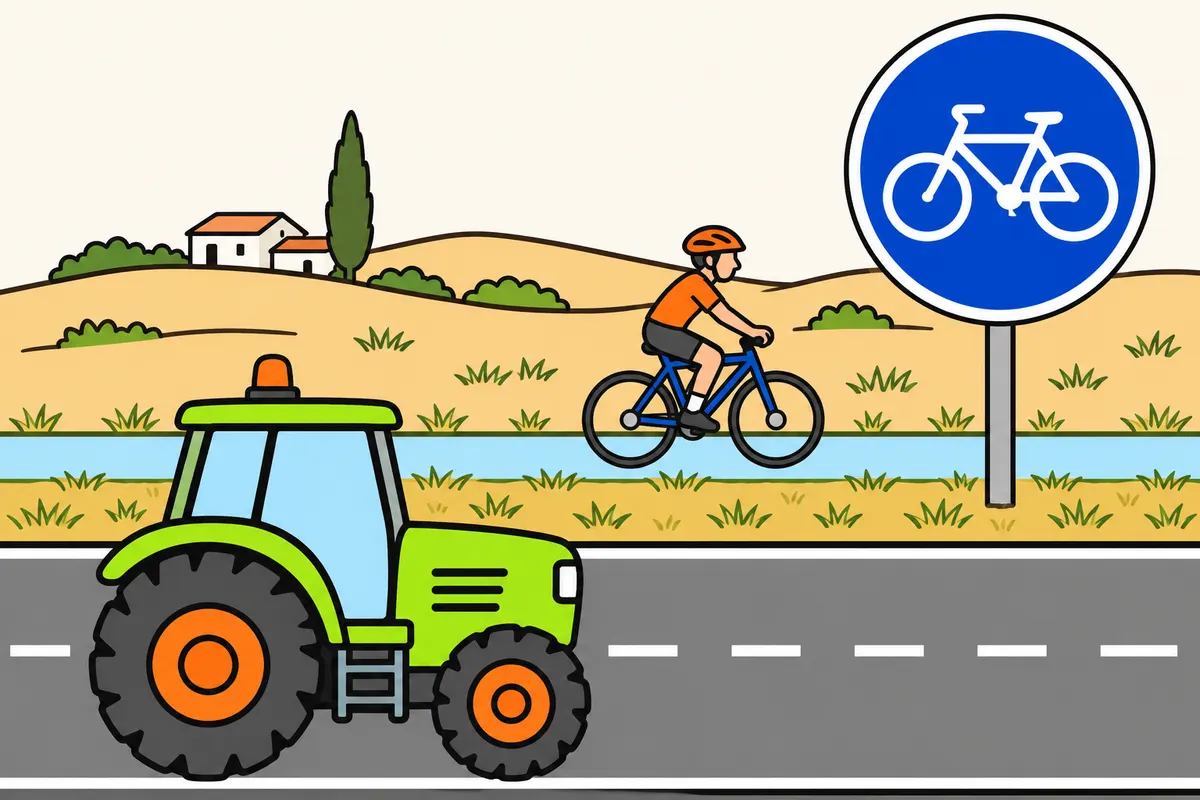
You must keep roads reserved for other users clear.
| Reserved-route sign | Users required to use it; your tractor is excluded |
|---|---|
| R-407a | Cycles |
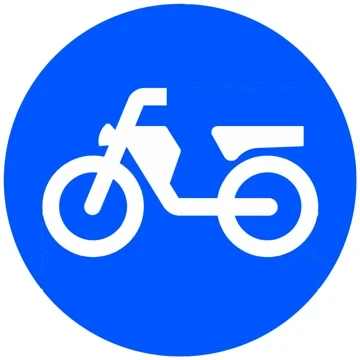
| R-407b | Mopeds |
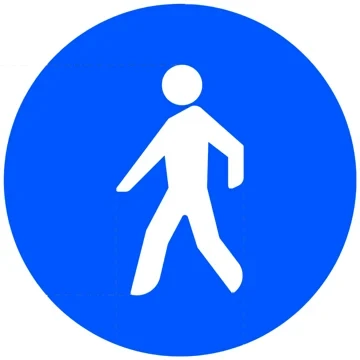
| R-410 | Pedestrians |
Remember
- Your tractor is not an automobile or lorry because it tows a trailer.
- Driving slowly does not allow you onto routes for personal mobility vehicles or cycles.
- The end of a reservation does not remove other prohibitions.
Exam trap: Wrong: use a reserved route because it shortens your trip to the farm. Right: respect which users it is for.
Read the full explanation
- A carriageway that a particular class of vehicle must use and a reserved road have different effects: a reservation excludes users outside the specified group. The symbol and the full meaning determine whether you may use it with your agricultural tractor. [RGC, Annex I; catalogue of RD 465/2025](https://www.boe.es/buscar/act.php?id=BOE-A-2003-23514#ani)
- R-407a reserves its route for cycles and requires them to use it; R-407b does the same for mopeds. R-410 reserves its path for pedestrians and requires them to use it. You must keep your agricultural vehicle off these routes, even if they seem a shorter way to the farm. [RGC, Annex I; catalogue of RD 465/2025](https://www.boe.es/buscar/act.php?id=BOE-A-2003-23514#ani)
- Signs requiring lorries to use a carriageway refer to that category; you must not confuse an agricultural tractor with a tractor unit. You must also read reservations for VMP (personal mobility vehicles) and cycles: your low speed does not make you an authorised user of a route reserved for them. [RGC, Annex I; catalogue of RD 465/2025](https://www.boe.es/buscar/act.php?id=BOE-A-2003-23514#ani)
- End-of-obligation or end-of-reservation signs end the specific sign to which they correspond. You must continue to pay attention to route conditions and restrictions affecting your tractor, trailer and their dimensions. [RGC, Annex I; catalogue of RD 465/2025](https://www.boe.es/buscar/act.php?id=BOE-A-2003-23514#ani)
 R-407a
 R-407b
 R-410
19Road layout and surface hazards
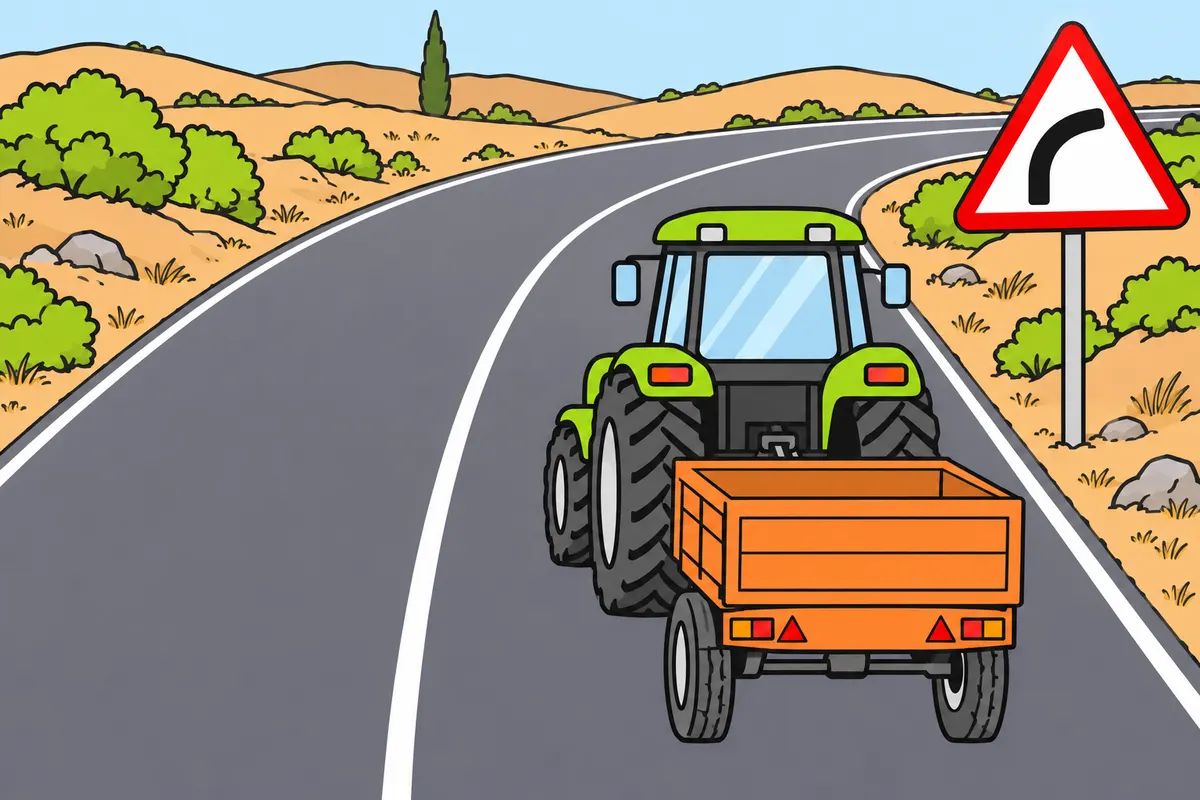
You must anticipate road layout and surface dangers before reaching them.
| Sign or situation | What you must do |
|---|---|
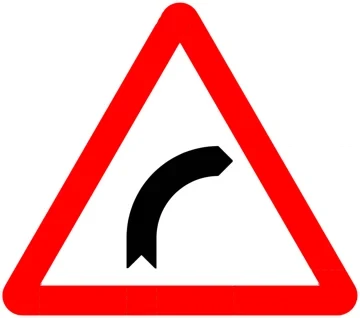
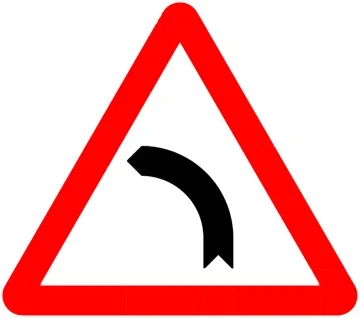
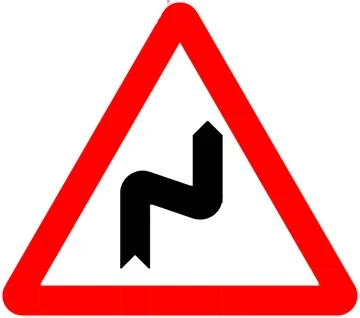
| P-13a / P-13b | Dangerous bend right / left |
| P-14a / P-14b | Series of bends: first right / left |
| P-15 | Uneven road |
| P-16a | Steep descent |
| Slippery road | Risk of losing grip |
| Loose chippings | Risk of flying stones |
| Edge drop | Difference in level at the road edge |
Remember
- Slow down before bends, especially with a trailer or implements.
- On uneven roads, expect your load and vehicle combination to move.
- At narrow sections, check space and who has priority.
- Adapt your driving to wind, ice, snow or poor visibility.
- A fog warning does not automatically prohibit entry.
Exam trap: Wrong: read 10 % as a speed. Right: it shows how steep the slope is.
Read the full explanation
- P-13a warns of a dangerous bend to the right and P-13b to the left. P-14a and P-14b warn of a series of bends with the first to the right and left respectively. You must anticipate the first turn and slow down before entering it, especially with a trailer or implements that increase the space you need. [RGC, Annex I; catalogue of RD 465/2025](https://www.boe.es/buscar/act.php?id=BOE-A-2003-23514#ani)
- P-15 warns of an uneven road; hump or dip warnings specify the type of unevenness. You must anticipate movement of the load and the vehicle combination as you drive over it. The sign does not mean that you can maintain any speed simply because you have large wheels. [RGC, Annex I; catalogue of RD 465/2025](https://www.boe.es/buscar/act.php?id=BOE-A-2003-23514#ani)
- P-16a warns of a steep descent; the corresponding uphill sign indicates an ascent. You must read the figure as a gradient percentage, not a speed or length. An indication of 10 % describes the gradient and does not instruct you to drive at 10 km/h. [RGC, Annex I; catalogue of RD 465/2025](https://www.boe.es/buscar/act.php?id=BOE-A-2003-23514#ani)
- Road narrowing warnings tell you whether the carriageway narrows on both sides or on one particular side. You must allow space for the entire vehicle and look for the priority arrangements. Slippery road, loose chippings and roadside drop warnings indicate different risks involving grip, flying stones or a difference in level. [RGC, Annex I; catalogue of RD 465/2025](https://www.boe.es/buscar/act.php?id=BOE-A-2003-23514#ani)
- Crosswind, ice or snow and reduced visibility warnings require you to adapt your driving to the hazard indicated. You must distinguish between loss of grip and difficulty seeing: they can occur together, but a fog warning sign does not automatically mean that entry is prohibited. [RGC, Annex I; catalogue of RD 465/2025](https://www.boe.es/buscar/act.php?id=BOE-A-2003-23514#ani)
 P-13a
 P-13b
 P-14a
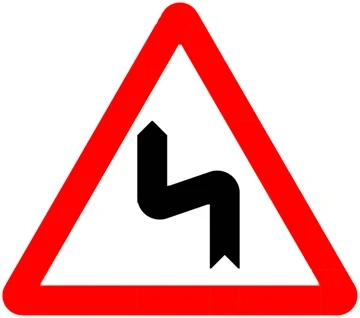 P-14b
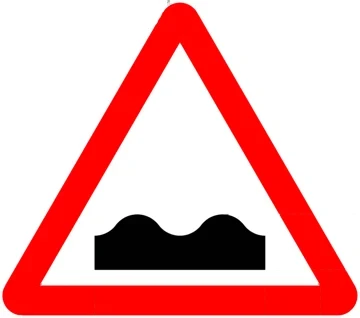 P-15
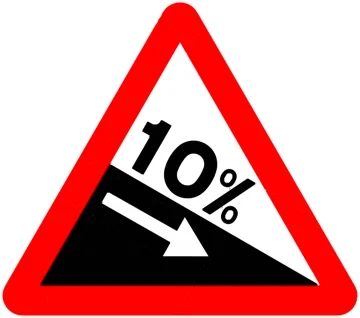 P-16a
20Junctions, railways and vulnerable users
You must anticipate junctions and users you may need to give way to.
| Sign or situation | What you must do |
|---|---|
| P-3 | Traffic lights ahead |
| P-4 | Roundabout ahead |
| P-6 | Tram crossing |
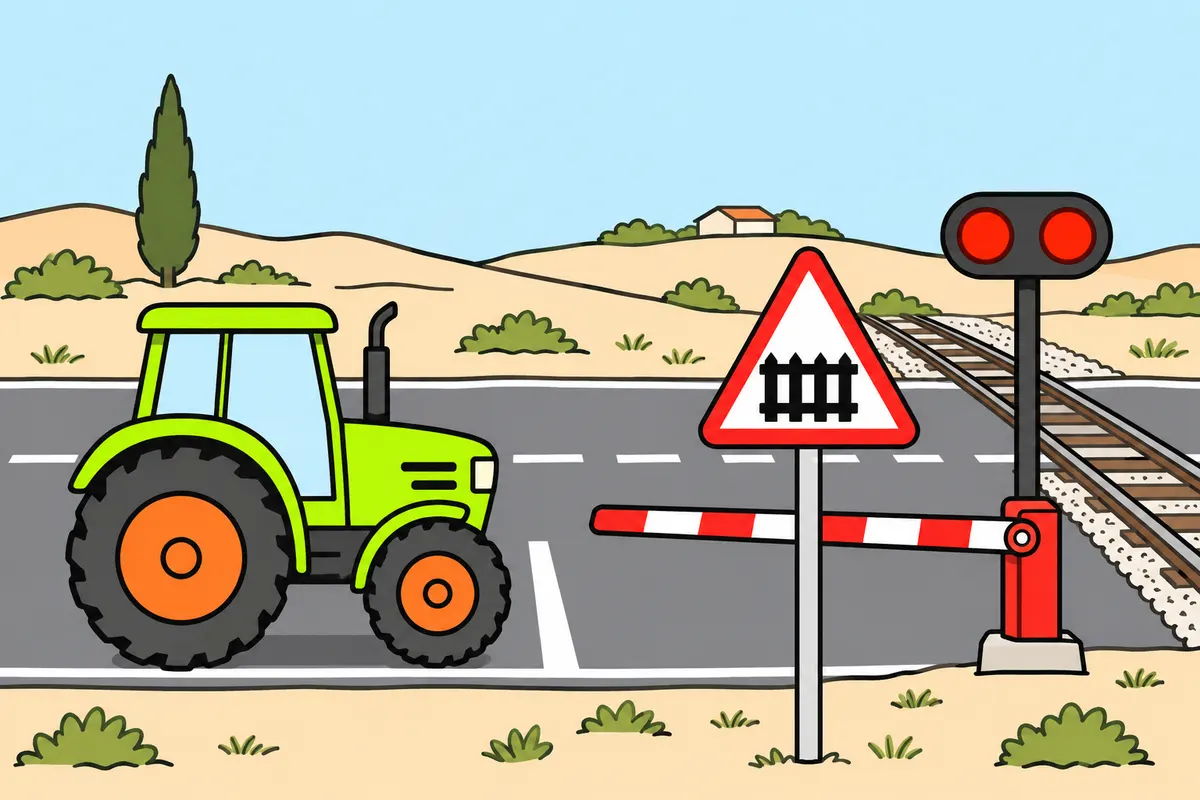
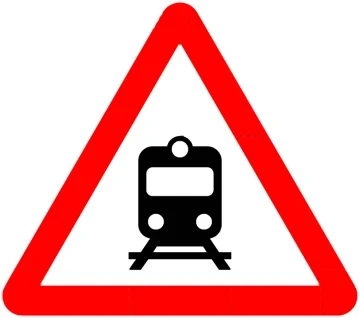
| P-7 | Level crossing with barriers or half-barriers |
| P-8 | Level crossing without barriers |
Remember
- Not all triangular junction warnings show the same priority.
- The tram has priority at its crossing.
- At level crossings, obey lights and barriers too.
- Watch both sides near pedestrian and cycle crossings.
- Expect some people to need more time to cross.
- Animal warnings do not give your tractor priority.
Exam trap: Wrong: a warning of a crossing with barriers lets you enter. Right: check and obey its lights and barriers too.
Read the full explanation
- A priority junction warning indicates that you have priority over traffic from the approaches shown; a junction warning indicating priority from the right announces different priority rules. Side-road signs help you anticipate joining traffic: you must also obey the controls that apply directly to your approach. [RGC, Annex I; catalogue of RD 465/2025](https://www.boe.es/buscar/act.php?id=BOE-A-2003-23514#ani)
- P-3 warns of traffic light control and P-4 of a roundabout. P-6 warns of a tram crossing, where the tram has priority. You must anticipate queues or vehicles on rails without confusing a warning of their proximity with a light or sign that allows you to cross the point where paths meet. [RGC, Annex I; catalogue of RD 465/2025](https://www.boe.es/buscar/act.php?id=BOE-A-2003-23514#ani)
- P-7 warns of a level crossing with barriers or half-barriers; P-8 warns of one without them. Signs at the crossing identify its exact location and whether there is more than one railway track. You must also obey the lights and barriers: a warning of a crossing with barriers does not guarantee that you can enter. [RGC, Annex I; catalogue of RD 465/2025](https://www.boe.es/buscar/act.php?id=BOE-A-2003-23514#ani)
- Pedestrian or cycle crossing warnings indicate that you are approaching a crossing; signs at the crossing identify its location. You must watch both sides of the road and prepare to give way as required by the controls. Warnings of children or people with mobility or sensory impairments require you to anticipate road users who may need more time. [RGC, Annex I; catalogue of RD 465/2025](https://www.boe.es/buscar/act.php?id=BOE-A-2003-23514#ani)
- Warnings of domestic animals or livestock and of wild animals indicate different possible animal crossings. On agricultural journeys, you must pay attention to the road and its verges. A hazard warning does not authorise you to omit signalling when joining the road or give your tractor priority. [RGC, Annex I; catalogue of RD 465/2025](https://www.boe.es/buscar/act.php?id=BOE-A-2003-23514#ani)
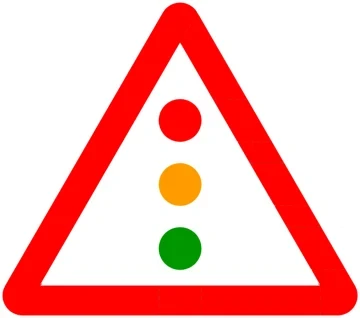 P-3
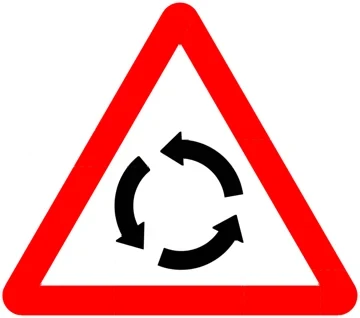 P-4
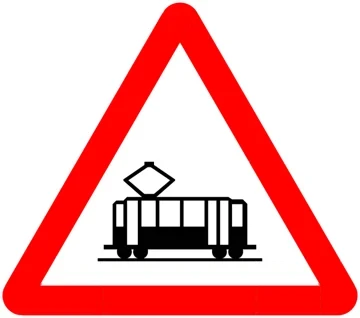 P-6
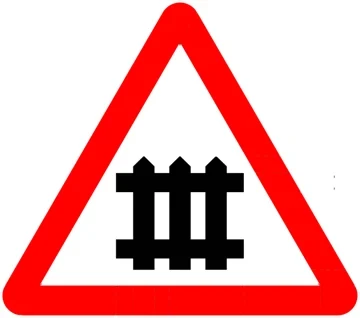 P-7
 P-8
21Information for choosing a route
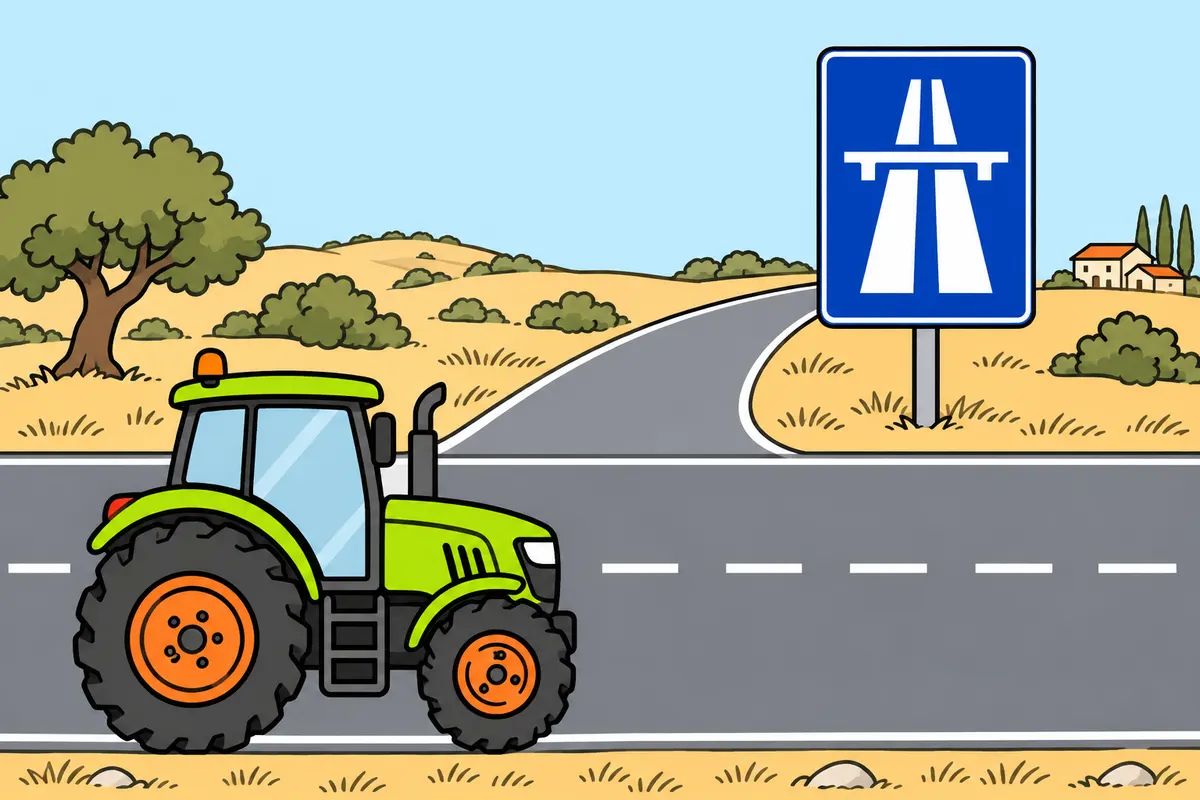
You must choose a route your agricultural vehicle may use.
| Sign or situation | What you must do |
|---|---|
| S-1 | Autopista: do not enter with an agricultural vehicle |
| S-1a | Autovía (expressway: a dual carriageway with motorway-style rules): do not enter with an agricultural vehicle |
| S-3 | Road reserved for automobiles: your tractor is not an automobile |
| S-5 | Tunnel, underpass or equivalent section |
| Recommended speed | Advice that does not replace limits |
| Maximum speed | Compulsory limit |
| S-50a, S-50b, S-50c with a minimum speed | Reserved for vehicles travelling at that speed or faster; below it, use another permitted lane |
| R-506 or the corresponding S-52 | The lane minimum ends |
Remember
- Do not enter either type of motorway with your agricultural vehicle.
- A signposted destination does not permit entry onto a prohibited road.
- Check the permitted users and arrows for each lane.
- For lanes with minimum speeds, use another permitted lane if your tractor travels slower.
- Distinguish emergency exits for people from exits for vehicles.
- Do not confuse an emergency escape lane with a parking area.
Exam trap: Wrong: a recommended speed raises your tractor’s limit. Right: obey your limit and adapt your speed to danger.
Read the full explanation
- Information signs help you identify the road and its conditions. S-1 identifies an autopista (motorway) and S-1a an autovía (motorway), including on a slip road leading to them. You must not enter these roads with your agricultural vehicle; you must choose an authorised route in advance. [RGC, Annex I; catalogue of RD 465/2025](https://www.boe.es/buscar/act.php?id=BOE-A-2003-23514#ani) [RGC, art. 38](https://www.boe.es/buscar/act.php?id=BOE-A-2003-23514#a38)
- S-3 identifies a road reserved for automobiles: you must not confuse a motor vehicle with an automobile when deciding whether your tractor is allowed to enter. S-5 identifies a tunnel, underpass or equivalent section; you must apply the specific rules for the section and obey its entry signs. [RGC, Annex I; catalogue of RD 465/2025](https://www.boe.es/buscar/act.php?id=BOE-A-2003-23514#ani)
- An advisory speed is a recommendation for the section, subject to the speed limits and the safe operation of your tractor. One-way, no-through-road and passing-place signs help you anticipate the route and the space needed for the entire agricultural vehicle combination to leave. [RGC, Annex I; catalogue of RD 465/2025](https://www.boe.es/buscar/act.php?id=BOE-A-2003-23514#ani)
- S-50a, S-50b and S-50c, when they include a minimum speed, reserve the indicated lanes for vehicles travelling at that speed or faster; if your tractor travels more slowly, you must use a lane it is allowed to use. When circumstances permit, you must keep to the right. The minimum speed ends at R-506 or the corresponding S-52 sign. The arrows on the panel show the directions of travel and additional lanes, so you must match each figure to the lane beneath it. [RGC, Annex I; catalogue of RD 465/2025](https://www.boe.es/buscar/act.php?id=BOE-A-2003-23514#ani)
- Direction signs distinguish destinations, directions, roads and route confirmations; location signs identify built-up areas, boundaries or places. You must also read the arrows and distances, without treating a destination as permission to use a road prohibited to your vehicle. [RGC, art. 146](https://www.boe.es/buscar/act.php?id=BOE-A-2003-23514#a146)
- Service and emergency pictograms identify fuel, repairs, assistance, a telephone, a fire extinguisher or evacuation. An emergency exit for people indicates a pedestrian evacuation route; an escape lane is intended for braking emergencies. What to do in a breakdown is covered in «Accidents and breakdowns: protect and assist». [RGC, Annex I; catalogue of RD 465/2025](https://www.boe.es/buscar/act.php?id=BOE-A-2003-23514#ani)
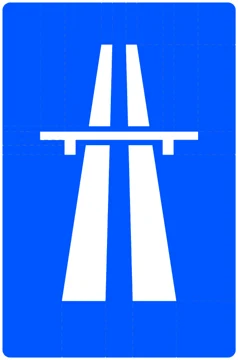 S-1
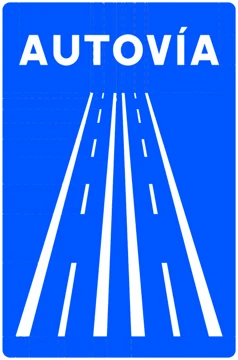 S-1a
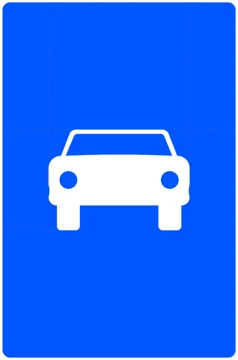 S-3
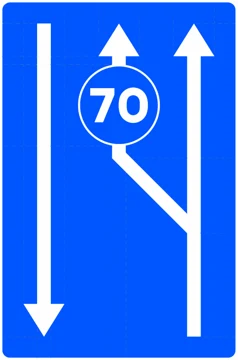 S-50a
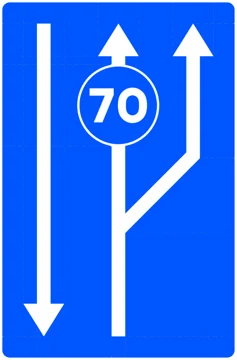 S-50b
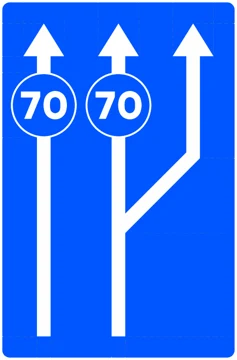 S-50c
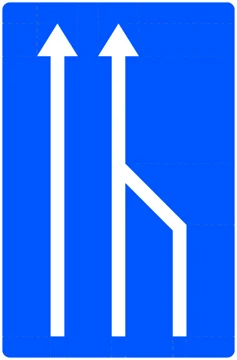 S-52
22Longitudinal lines and the hard shoulder
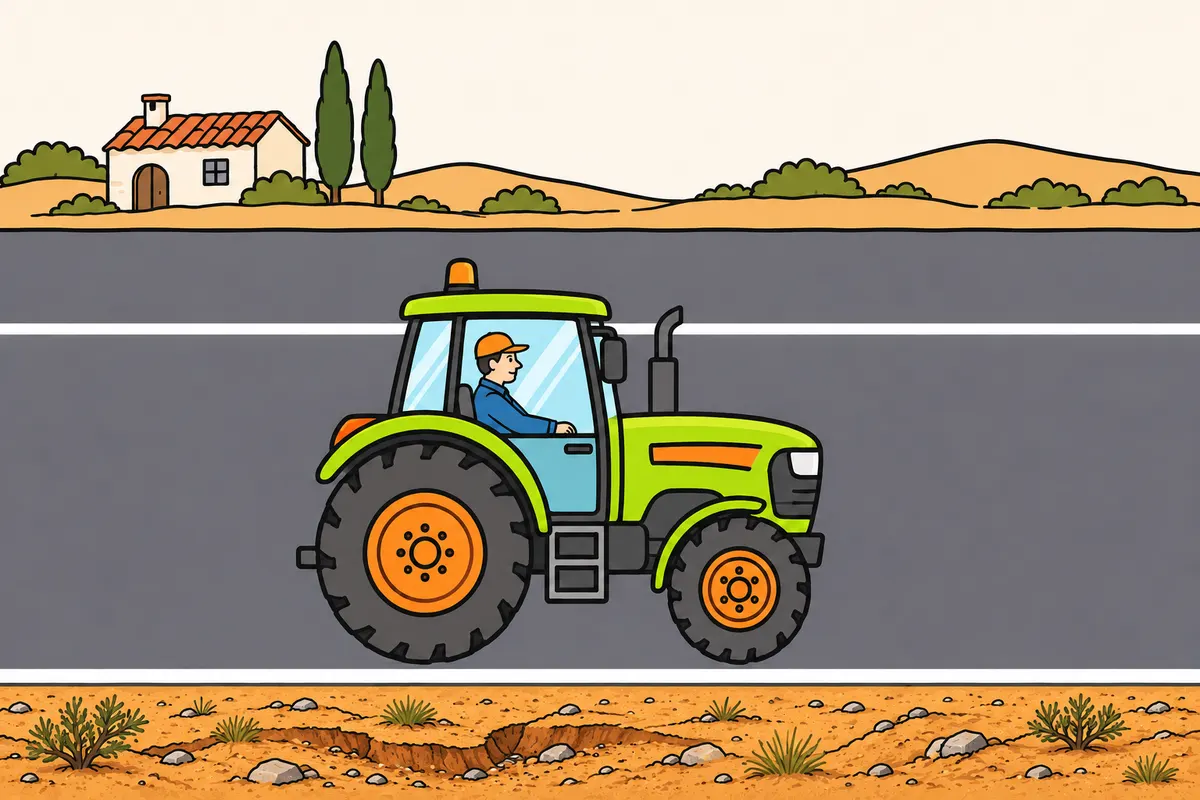
You must interpret lines by their purpose and the side you are driving on.
| Sign or situation | What you must do |
|---|---|
| Broken line between lanes | You may cross for permitted manoeuvres |
| Solid line between lanes or traffic directions | Do not cross or drive on it, except where rules allow |
| Solid line separating traffic directions | Also do not drive to its left, except where rules allow |
| Double solid line | Same meaning as a single solid line |
| Double broken lines | Mark a reversible lane |
| Advance warning broken line | Warns of a solid line or danger ahead |
Remember
- Crossing a broken line gives you no priority when changing lanes.
- Avoid driving along broken lines unless lane width requires it and safety permits.
- With solid and broken lines together, follow the line on your side.
- You may cross the solid line returning from overtaking started on the broken-line side.
- Return when completing or abandoning overtaking; always check safety.
- A solid edge line does not change hard shoulder rules.
Exam trap: Wrong: a solid edge line always prohibits hard shoulder use. Right: apply the rule for your vehicle.
Read the full explanation
- Broken lines M-1.1 to M-1.3 separate lanes and allow you to cross them for authorised manoeuvres. You must not drive along them unless the lane width makes it necessary and safety permits. Crossing a broken line does not give you priority over a vehicle in the lane you want to enter. [RGC, Annex I, section 5](https://www.boe.es/buscar/act.php?id=BOE-A-2003-23514#A5)
- Solid lines M-2.1 to M-2.3 prohibit you from crossing them, driving along them or driving to their left when they separate opposing directions of travel, subject to the exceptions in the regulations. Two parallel solid lines have the same meaning as one. Edge lines are described in the last point of this section. [RGC, Annex I, section 5](https://www.boe.es/buscar/act.php?id=BOE-A-2003-23514#A5)
- Where a solid line runs alongside a broken line, M-3.1 to M-3.3, you must obey the line on your side. If you start overtaking from the broken-line side, you may cross the solid line to return to your lane when you complete or abandon the manoeuvre. The marking does not remove your duty to check that the manoeuvre is safe. [RGC, Annex I, section 5](https://www.boe.es/buscar/act.php?id=BOE-A-2003-23514#A5)
- Double broken lines M-1.4 and M-1.5 mark the boundaries of reversible lanes, whose direction depends on traffic lights or other controls. Warning broken lines indicate a solid line or hazard ahead: you must anticipate the change in traffic arrangements before moving the agricultural vehicle combination. [RGC, Annex I, section 5](https://www.boe.es/buscar/act.php?id=BOE-A-2003-23514#A5)
- Edge lines M-2.5 to M-2.7 mark the boundaries of the carriageway; whether they are solid or broken does not change the rules for using the arcén (hard shoulder). Your vehicle’s use of the hard shoulder is covered in «Road use with agricultural vehicles». Marking M-1.12 may interrupt a solid line to allow turns into accesses or guide paths through junctions. [RGC, Annex I, section 5](https://www.boe.es/buscar/act.php?id=BOE-A-2003-23514#A5)
23Stop lines and marked crossings
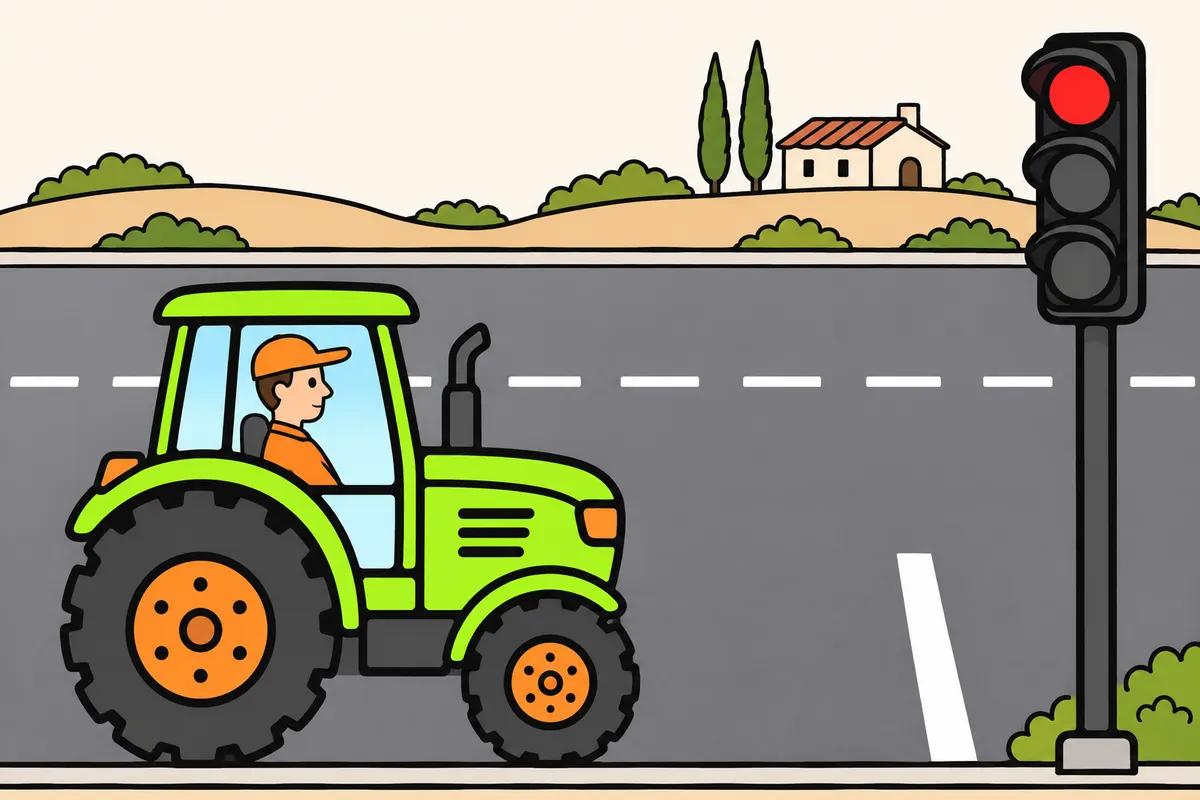
You must recognise where to stop and who uses each marked crossing.
| Sign or situation | What you must do |
|---|---|
| M-4.1 | Stop line: stop before it when required |
| M-4.2 | Give way line: do not proceed when required to yield, except with abnormal visibility |
| M-4.3 | Pedestrian crossing: let people pass as its rules require |
| M-4.4 | Cycle crossing: give way to cyclists using it |
Remember
- Neither your vehicle nor load may pass the line when you must stop.
- A painted STOP requires you to stop, then give way.
- A painted give way requires stopping only if necessary.
- In marked lanes, these markings apply to their own lane.
- At pedestrian crossings with traffic lights, follow the lights too.
Exam trap: Wrong: a stop line always requires stopping. Right: stop when the applicable controls require it.
Read the full explanation
- M-4.1 is the solid transverse stop line: you must stop before it when required by a STOP sign, traffic light, officer or other applicable control. Neither your vehicle nor its load may cross it. A stop line alone does not mean that you must always stop regardless of the light shown. [RGC, Annex I, section 5](https://www.boe.es/buscar/act.php?id=BOE-A-2003-23514#A5)
- M-4.2 is the broken transverse give-way line: it marks the point beyond which you must not proceed when you have to give way, except in abnormal visibility conditions. You must read it together with the give-way sign, traffic light indication or priority rules that require you to give way. [RGC, Annex I, section 5](https://www.boe.es/buscar/act.php?id=BOE-A-2003-23514#A5)
- The STOP inscriptions M-6.3 and M-6.4 and the give-way triangle M-6.5 have the same meaning as their corresponding upright signs, explained in «Give way, STOP and priority roads» in this module. If they are in a marked lane, they apply only to road users travelling in that lane. You must recognise them as road markings when applying the hierarchy. [RGC, Annex I, section 5](https://www.boe.es/buscar/act.php?id=BOE-A-2003-23514#A5)
- M-4.3 identifies a pedestrian crossing with stripes parallel to the centre line of the carriageway, forming a transverse crossing as a whole. You must let pedestrians cross as required by the crossing controls. A different arrangement of lines may be used at crossings controlled by traffic lights; you must also observe the lights that apply to you. [RGC, Annex I, section 5](https://www.boe.es/buscar/act.php?id=BOE-A-2003-23514#A5)
- M-4.4 identifies a cycle crossing with two parallel broken transverse lines; you must let cyclists using it cross. If it is next to a pedestrian crossing, watch both crossings as you approach with your tractor and trailer. [RGC, Annex I, section 5](https://www.boe.es/buscar/act.php?id=BOE-A-2003-23514#A5)
24Arrows, inscriptions and painted areas
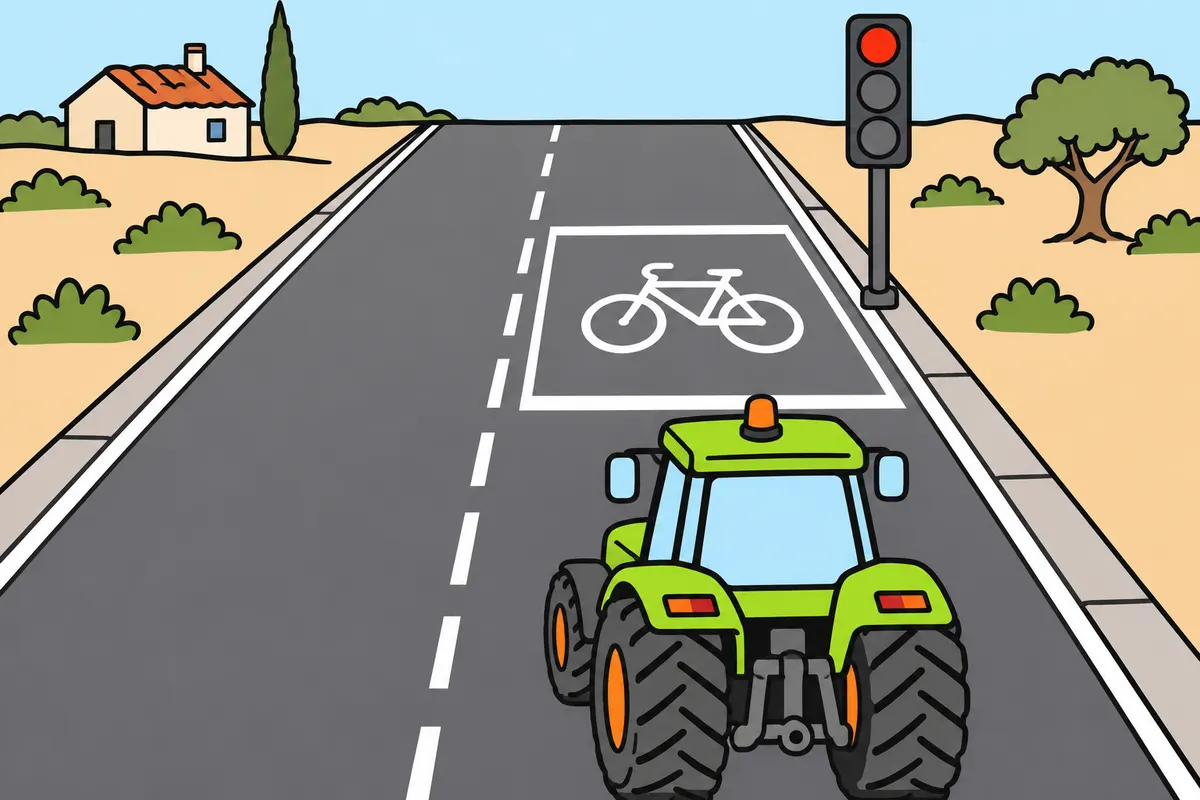
You must follow arrows and respect reserved spaces marked on the road.
| Sign or situation | What you must do |
|---|---|
| Lane selection arrow | Follow the permitted or compulsory movements |
| End-of-lane arrow | Move to the indicated side, respecting traffic already there |
| Return arrow | Do not start overtaking; finish overtaking already started as soon as possible |
| Destination inscription | Guides you |
| Reservation symbol | Check the authorised users |
Remember
- Lane selection arrows do not give you priority.
- A straight-ahead arrow allows lane changes if the lines permit.
- Do not occupy waiting areas for cycles or motorcycles with your tractor.
- Stop at the line for your vehicle.
- Painted speed limits within a marked lane apply to that lane.
Exam trap: Wrong: your tractor may cross any hatched area. Right: if bounded by a solid line, enter only if you are required to use the hard shoulder.
Read the full explanation
- Lane selection arrows M-5.1, M-5.2 and M-5.6 indicate the movements permitted or required from the lane in which they appear. Arrows that include a straight-ahead direction allow you to change lanes while continuing in that direction if the lines permit it. You must position your vehicle in advance without confusing the arrow with priority. [RGC, Annex I, section 5](https://www.boe.es/buscar/act.php?id=BOE-A-2003-23514#A5)
- M-5.4 warns that a lane ends: you must leave it on the side indicated, respecting road users in the lane you enter. M-5.5 is a return arrow: it warns of a solid line ahead that prohibits driving to its left; you must abandon any intention to start overtaking or complete an overtaking manoeuvre already in progress as soon as possible. [RGC, Annex I, section 5](https://www.boe.es/buscar/act.php?id=BOE-A-2003-23514#A5)
- The maximum speed figures M-6.6 and M-6.7 prohibit you from exceeding that speed and, if they are in a marked lane, apply to that lane. Destination inscriptions guide you and pictograms may reserve spaces; the function of each marking depends on its shape and location. [RGC, Annex I, section 5](https://www.boe.es/buscar/act.php?id=BOE-A-2003-23514#A5)
- Hatched areas M-7.1 and M-7.2 bounded by a solid line prohibit entry with a vehicle or animal, except for road users required to use the hard shoulder. You must check whether this applies to your vehicle; the marking is not general permission to cross traffic islands or a parking area. [RGC, Annex I, section 5](https://www.boe.es/buscar/act.php?id=BOE-A-2003-23514#A5)
- Reserved lane markings and waiting areas for cycles or motorcycles are intended for the road users depicted. You must not occupy a reserved advanced waiting area with your tractor while waiting for a green light. You must stop at the line that applies to your vehicle, leaving the reserved space clear. [RGC, Annex I, section 5](https://www.boe.es/buscar/act.php?id=BOE-A-2003-23514#A5)
25Yellow markings and road surface warnings
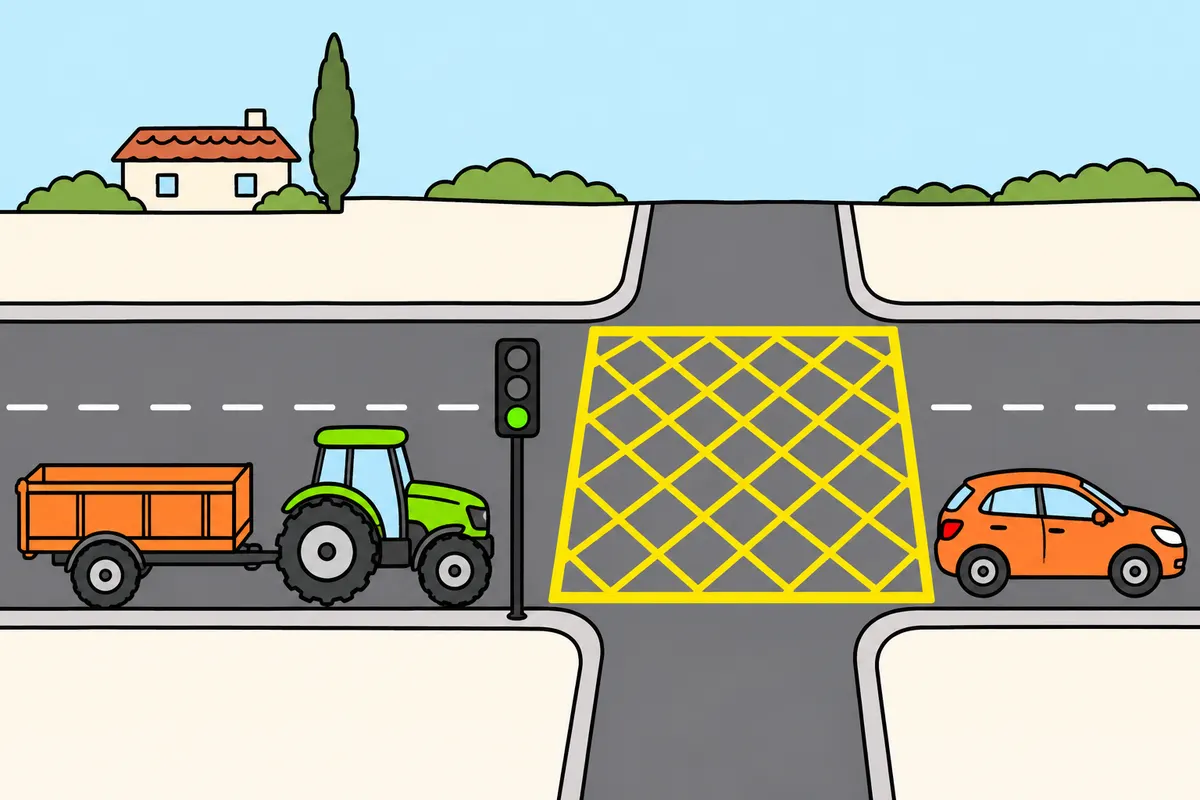
You must distinguish prohibitions, reserved spaces and warnings painted on the road.
| Sign or situation | What you must do |
|---|---|
| Broken yellow line beside the edge | Do not park along its length on that side |
| Solid yellow line beside the edge | Do not stop or park along its length on that side |
| Yellow zigzag | Space reserved for short stays |
| Dragon’s teeth | Reduce speed substantially and take extra care |
| Angular edge lines | Warn of a pedestrian or cycle crossing |
| White and red chequered marking | Entrance to an emergency escape lane |
Remember
- Read upright signs showing when prohibitions apply.
- At yellow boxes, do not enter if you would block traffic, even with green.
- Allow exit space for your whole tractor and trailer.
- In blue parking spaces, check permission, times and duration.
- Do not stop, park or use an emergency escape lane for other purposes.
- Read distance markings with their supplementary sign and keep the required gap.
Exam trap: Wrong: park in a yellow zigzag because you are carrying goods. Right: check its authorised use; it does not allow vehicles to park generally.
Read the full explanation
- M-7.7, a broken yellow line alongside the edge of the road or on the kerb, prohibits parking along its length on that side. M-7.8, a continuous yellow line, prohibits stopping and parking. You must read the upright sign if the prohibition is limited to certain periods. [RGC, Annex I, section 5](https://www.boe.es/buscar/act.php?id=BOE-A-2003-23514#A5)
- M-7.9, a yellow zigzag, prohibits parking by vehicles in general because the area is reserved for short stays, such as a bus stop or loading and unloading. You must check the authorised use; you cannot park the tractor simply because you are carrying goods. [RGC, Annex I, section 5](https://www.boe.es/buscar/act.php?id=BOE-A-2003-23514#A5)
- M-7.10, a yellow box junction marking, makes visible the rule on keeping junctions clear explained in «Green lights, arrows and special signals». You must assess the space available at the exit, taking the trailer and implements into account too: the box marks the area where an obstruction can prevent crossing traffic from moving. [RGC, Annex I, section 5](https://www.boe.es/buscar/act.php?id=BOE-A-2003-23514#A5)
- Markings M-7.3 and M-7.4 define parking spaces and parking positions; they may use colours and pictograms to indicate restrictions. You must read the signs and markings in the area: blue may be associated with time restrictions, but it does not replace the specific conditions governing authorisation, operating hours and duration. [RGC, Annex I, section 5](https://www.boe.es/buscar/act.php?id=BOE-A-2003-23514#A5)
- M-8.1 dragon's teeth markings warn that you are approaching a stretch of road through a town or an urban road where you must reduce your speed considerably and take extra care. M-8.2 zigzag edge lines warn of a pedestrian or cycle crossing. You must distinguish them from a numerical speed limit: these warnings guide you in adapting to the risk. [RGC, Annex I, section 5](https://www.boe.es/buscar/act.php?id=BOE-A-2003-23514#A5)
- The M-7.11 red and white chequerboard marking identifies the entrance to an emergency escape lane: you must not stop, park or use it for any other purpose. M-7.12 separation markings provide a reference for maintaining your distance; you must interpret the supplementary sign and keep the required separation. [RGC, Annex I, section 5](https://www.boe.es/buscar/act.php?id=BOE-A-2003-23514#A5)
Resolve multiple signs and signals in the same place
First identify which ones control your movement.
- Identify your vehicle's position, your lane and your intended direction.
- Read officers' signals, temporary signs and delineation devices before interpreting signs and signals lower in the hierarchy.
- Check the traffic lights, upright signs, markings and supplementary plates that apply.
- If they conflict, follow the one that takes precedence; between those of the same type, follow the most restrictive.
- Comply with compatible instructions at the same time and check that you can proceed without blocking the way.
Relate upright signs to priority markings
Identify each form of sign or signal and apply the hierarchy explained in this module.
- Locate the upright signs, traffic light and markings for your lane.
- Identify R-1 and R-2; see how to apply them in «Priority of passage».
- Recognise the transverse line and road surface inscriptions as explained in «Stop lines and marked crossings».
- Resolve conflicts as explained in «Which signal you must obey».
Check whether you can enter with your agricultural vehicle
Match each restriction to the information it actually requires.
- Identify the prohibited category and any exception or supplementary plate.
- If you see R-111, do not enter with a tractor or self-propelled agricultural machine.
- For R-112, check the axles and, if a tonnage is shown, the trailer's MMA (maximum authorised mass).
- For R-201 and R-202, check the laden mass and mass per axle respectively.
- Compare length, width and height with R-203, R-204 and R-205, including the transport configuration and the load.
- If you do not meet a restriction, choose an authorised route before committing your vehicle to the passage.
Finished this module?
Mark it as read and you will see your progress on the theory list.