Start with a realistic study plan
Most learners struggle before they even begin because they study without structure. If you want to pass on your first try, you need a small and consistent plan instead of long sessions you cannot sustain.
Set aside 20 to 30 minute blocks four or five days a week. In each block combine theory, practice tests, and mistake review. That mix helps you remember the rules and understand how DGT questions are written.
If you have little time, do not try to compensate with huge sessions. Five short, well-reviewed blocks are better than an entire afternoon of tests that you never correct.
Understand the format before measuring your level
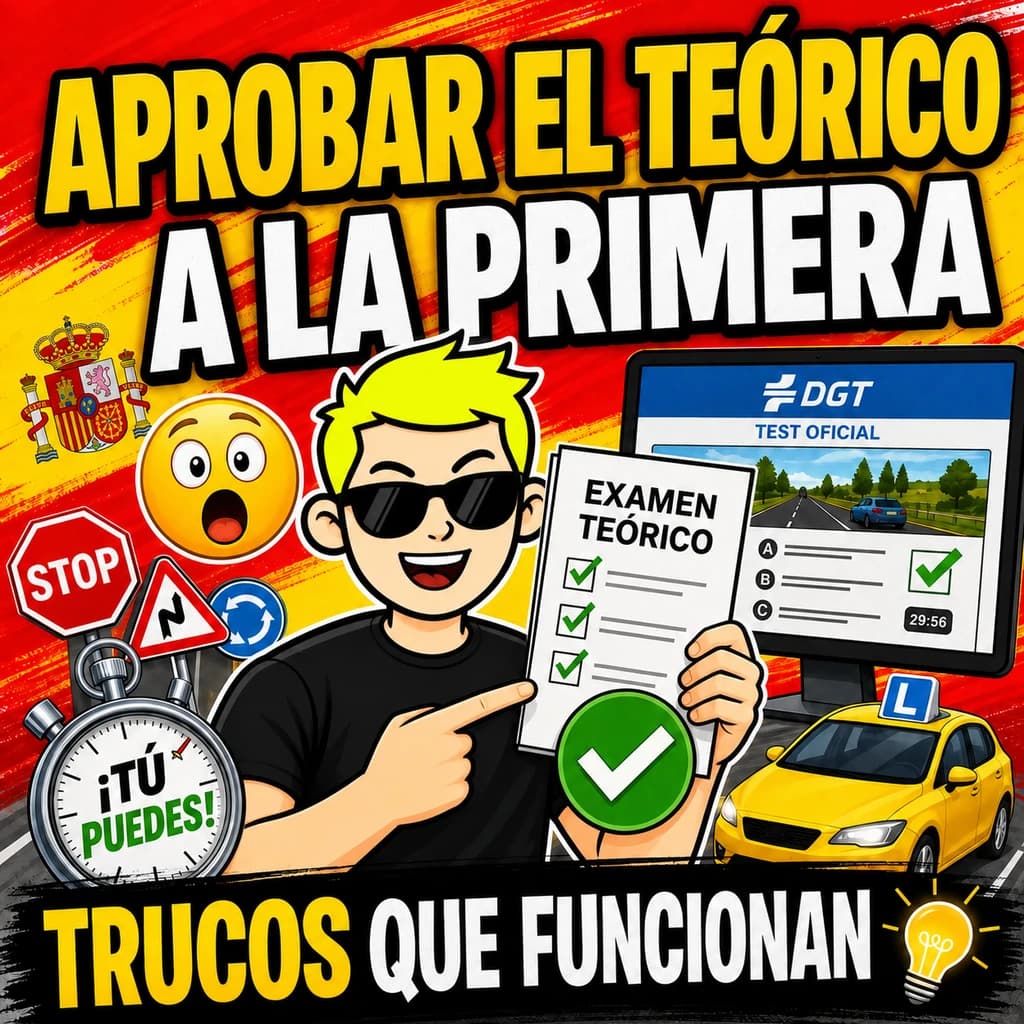
For the B license, the theory exam has 30 multiple-choice questions, 3 answer options, a maximum of 3 mistakes, and 30 minutes. That means you do not need to rush by default, but you do need to read precisely and avoid losing points because one word changes the meaning.
Take your first tests without obsessing over the score. Use them to locate weak blocks: signs, priority, speed, manoeuvres, road safety, alcohol, novice-driver rules, lights, tyres, or first aid. Once you know where you fail, study becomes specific instead of generic.
Remember that the error margin is small: four mistakes already put the exam outside the pass limit. Your goal is not to know the answer “more or less”, but to spot exactly which detail in the question changes the solution.
Do not take random tests
Taking dozens of tests without reviewing why you got answers wrong does not help. Every mistake should point to a specific weak area: right of way, signs, speed limits, manoeuvres, or road safety.
When you finish a test, write down the questions that felt unclear and reread the explanation. If you miss the same concept twice, turn it into a focused review session. That immediate correction cuts repeated mistakes fast.
A useful test ends when you understand your mistakes, not when the final score appears. If you close the screen without reviewing, you lose the part that improves your result most.
Turn mistakes into a review list
Create a short list with three columns: topic, reason for the mistake, and correct rule. You do not need a long summary; just make clear whether you failed because you did not know the rule, read too fast, or confused two similar signs.
Review that list before each new block and remove only the mistakes you no longer repeat. If a topic keeps coming back, do not hide it under more tests: return to the theory, look for examples, and practise questions from the same block until you understand the pattern.
It also helps to save screenshots or references for questions that surprise you. When you see them together, patterns usually appear: exceptions, limits, similar signs, or answers you read too quickly.
Train in exam conditions
The final phase of preparation is not about learning more content. It is about training under the real exam format. Take full mock exams with a timer, no breaks, and the same level of focus you will need on test day.
If you can stay under three mistakes across several mock exams, you are close to the required level. At that point, good sleep and a calm final review matter more than one last marathon session.
Take at least a few mock exams at roughly the same time as your official exam if you can. It is not mandatory, but it helps you see whether you perform better in the morning, after lunch, or later in the day.
Checklist for the final seven days
One week before the exam, alternate a full mock test with mistake review. Two or three days before, reduce volume and review only your weak topics: special signs, priority, speed limits, documentation, safety, and questions you tend to misread.
The day before, do not open new material. Check the appointment, documents, time, location, and route. Sleep enough and avoid late-night study: arriving tired increases careless mistakes, especially in questions with negatives or exceptions.
If the final review creates more doubt than clarity, stop and return to your list of real mistakes. The final goal is to arrive stable, not to open new topics out of fear.
How many tests should I take before booking?
There is no magic number. Instead of counting tests, look for stability: several complete mock exams in a row within the pass margin and with mistakes understood. If you pass narrowly but cannot explain your errors, keep reviewing.
As a practical reference, do not book the appointment only because one test went well. Book when you can repeat the result on different days, with mixed questions and after reviewing your mistakes. That stability shows more preparation than one isolated high score.
What if I keep failing the same topic?
Stop mixing it into general tests for a while. Read the rule, look at examples, and answer questions only from that block until you can explain why one answer is correct and the others are not. Then return to full mock exams.
If the problem is understanding, explain the rule out loud as if you were teaching it to someone else. If you cannot do that, it is not clear yet; return to a simple example and then increase the difficulty with real test questions.
Is it better to study hard on the final day?
No. The final day is for reviewing your own mistakes, confirming documents, and arriving rested. A long last-minute session often creates fatigue and new doubts, exactly when you need calm reading.
If you still feel nervous, simplify the process: read the full question, check every option, and eliminate impossible answers before choosing. Many questions are missed because learners answer too soon, not because they do not know the rule.
After the exam, write down what type of questions felt hardest even if you passed. That habit will help in the practical phase, because the same attention to signs, priority, and anticipation appears again when you drive in real traffic.