Correct answer
45 km/h.
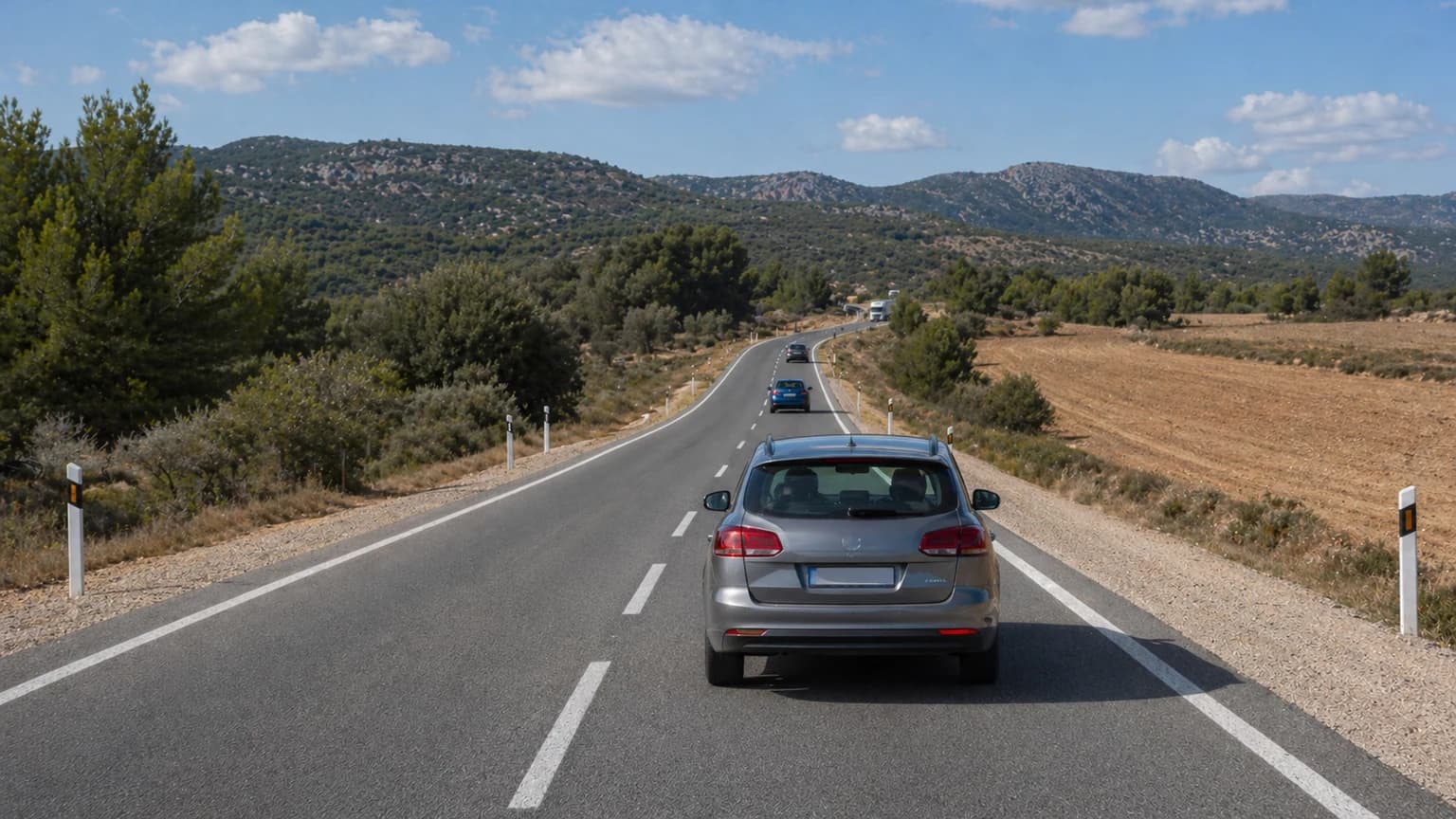
It is 45 km/h, half the general 90 km/h limit. A lower speed is permitted when traffic, vehicle or road conditions prevent maintaining it safely. This differs from the 60 km/h minimum on motorways and dual-carriageway motorways.
Practice more B licence questions
A 3-minute quick test with exam-style questions. Free, no signup.
All options
50 km/h.
60 km/h.
45 km/h.
Editorial status: editorially approved. This status does not certify legal review. Report a correction
Share this question
Keep studying
Glossary terms in this question
Conventional road
Interurban road that is not a motorway, dual carriageway or expressway.
Motorway
Top-grade public road with separated carriageways, no direct property access, restricted to motor vehicles.
Minimum speed
Speed below which you may not drive without obstructing other traffic, except for justified causes.
Related questions
- On a road with loose gravel, which risk increases as tyre-to-road grip decreases?
- In a passenger car with a manual gearbox and mechanical parking brake, the service brakes fail and pumping the pedal does not restore braking. Which action may help reduce speed?
- With no reason justifying a lower speed, what is the minimum speed for a motor vehicle on a motorway or dual-carriageway motorway?
- A car travels on a motorway with a 100 km/h limit, with no justified reason requiring a lower speed. What is the general minimum speed?
- The braking distance of a passenger car or other vehicle covered by a B licence:
- During a very tight low-speed turn on a two-wheel motorcycle, which action should you avoid?