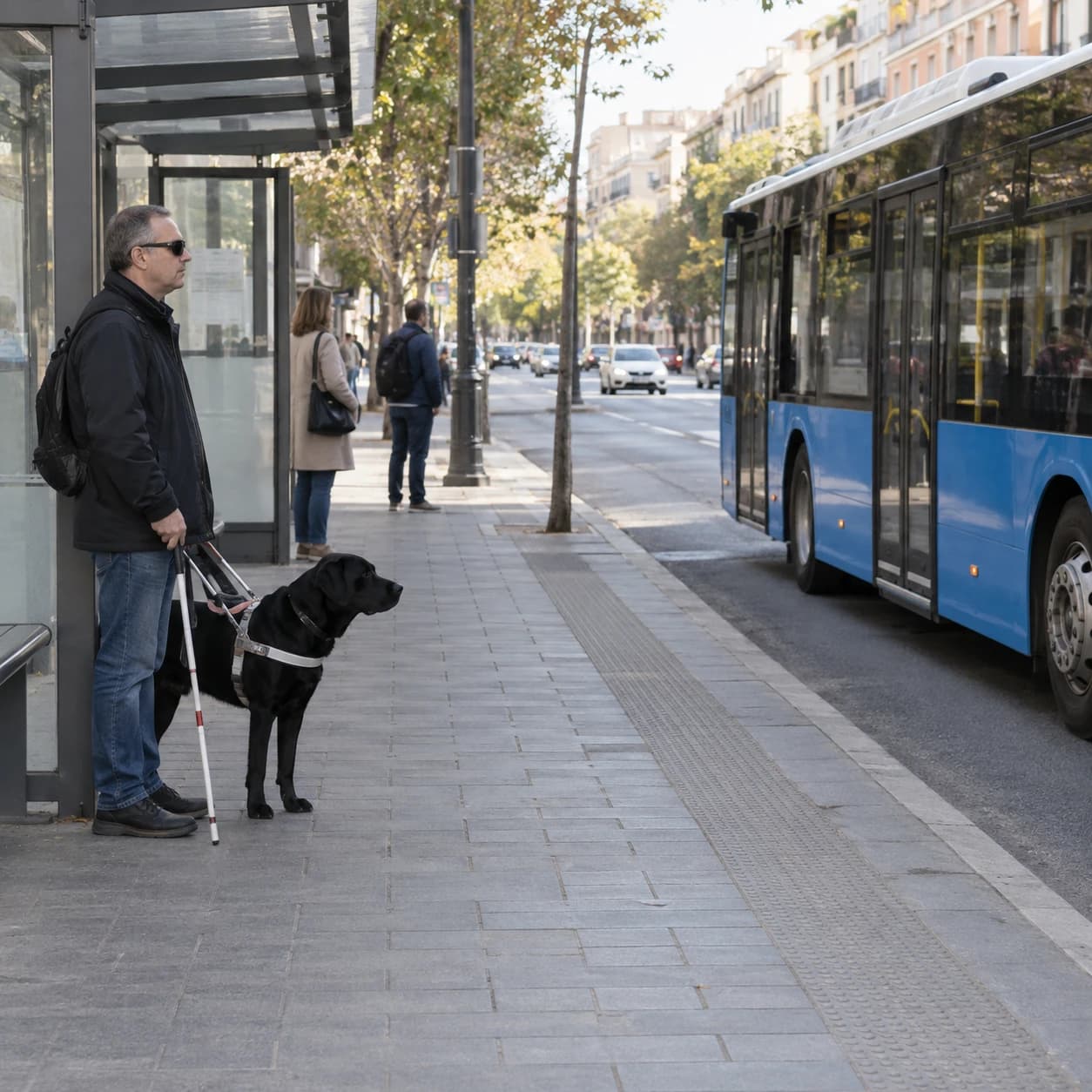
Correct answer
Yes.
Yes. A recognised and identified assistance dog may accompany its user on collective transport without an additional ticket or charge for the dog. It is not treated as an ordinary pet or required to be carried in the user’s arms. Applicable health, accreditation and behaviour conditions remain; access is not entirely unconditional.
Practice more D licence questions
A self-check with exam-style questions on Bus driving techniques. Free, no signup.
All options
Only if the animal can be carried in your arms.
Yes.
No, because it is forbidden to carry animals on public service buses.
Editorial status: editorially approved. This status does not certify legal review. Report a correction
Share this question
Keep studying
Related questions
- In rain, if you are driving a bus, the correct action is to:
- You drive a bus with seated passengers and seat belts, with no school or special transport, on a conventional road signed as a road for motor vehicles, outside a built-up area and with no lower limit. A car maintains 90 km/h. May you pass it by increasing speed above 90 km/h?
- What criterion should guide replacement of a bus’s windscreen wiper blades?
- If the road narrows or obstacles appear while driving a D1 or D bus, the proper action is to:
- You drive a bus equipped with seat belts, with no standing passengers or school transport, on a conventional road outside a built-up area, with no lower specific limit. A car maintains 90 km/h. May you overtake it by exceeding that speed?
- With a D1 or D bus, before a bend the safest action is to: