Correct answer
Yes.
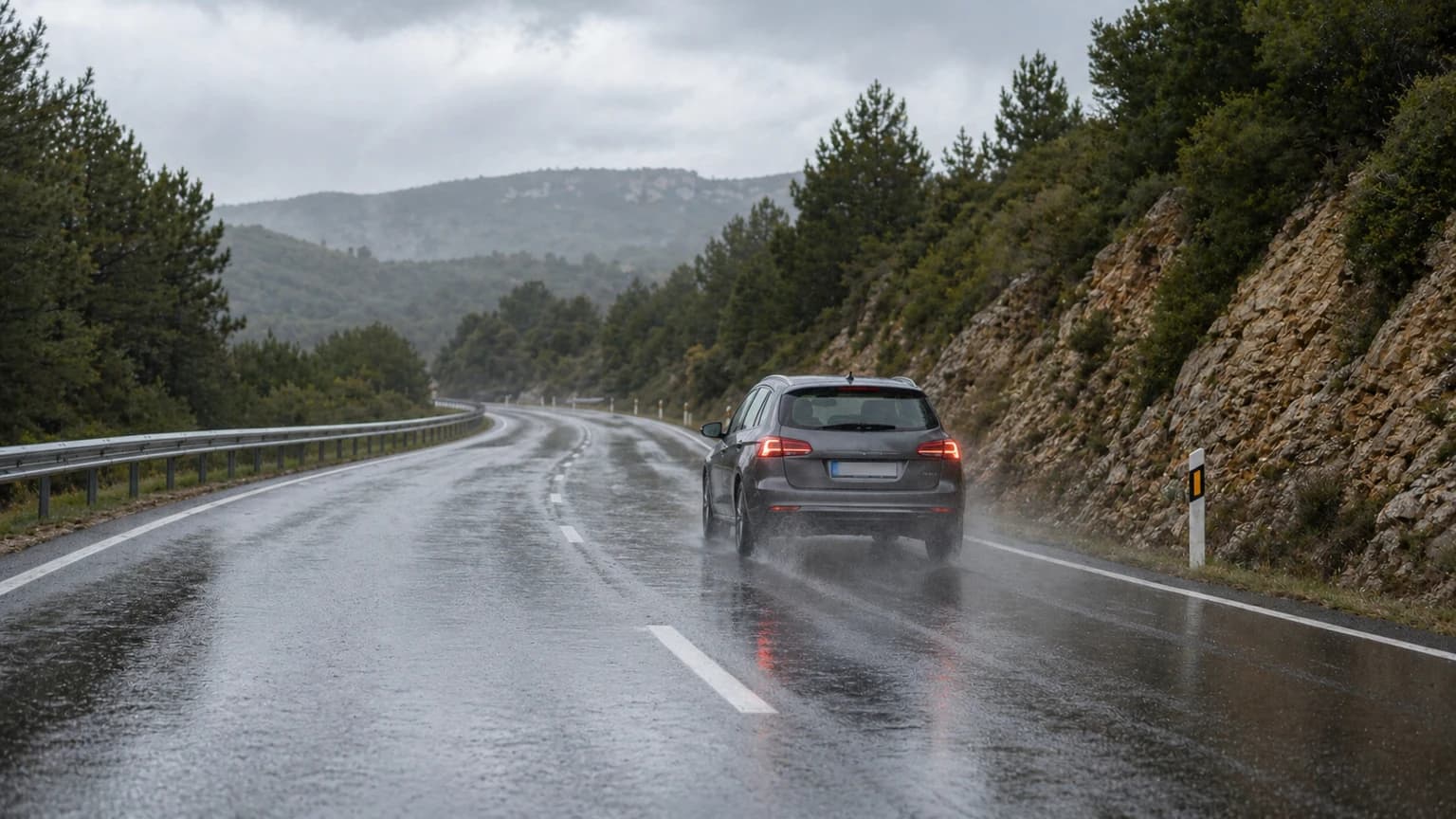
Braking distance is defined as the distance a vehicle will travel from the moment the driver begins to brake until the vehicle comes to a complete stop. This distance will depend on the speed at which we are travelling, the condition of the tyres, and the condition of the carriageway, among other factors. Therefore, if we are travelling at an inappropriate speed for that section of road, and our vehicle and the carriageway are in poor condition, these factors will cause the braking distance to increase.
Practice more B licence questions
A 3-minute quick test with exam-style questions. Free, no signup.
All options
Yes.
No, only the poor condition of the driver has an effect.
No, only the speed at which you are travelling has an effect.
Editorial status: editorially approved. This status does not certify legal review. Report a correction
Keep studying
Glossary terms in this question
Related questions
- Can flu, a cold, allergies or some medicines used to treat them affect driving?
- Under the specific tunnel overtaking prohibition, in which case may you not overtake a vehicle travelling ahead?
- A driver has a chronic illness. What should they do to assess its possible effect on driving?
- Is it important to stay with the victims of an accident?
- If a driver witnesses a road accident, are they obliged to assist the injured?
- What is a manoeuvre in general terms?