Correct answer
Yes, as tyres may lose their grip.
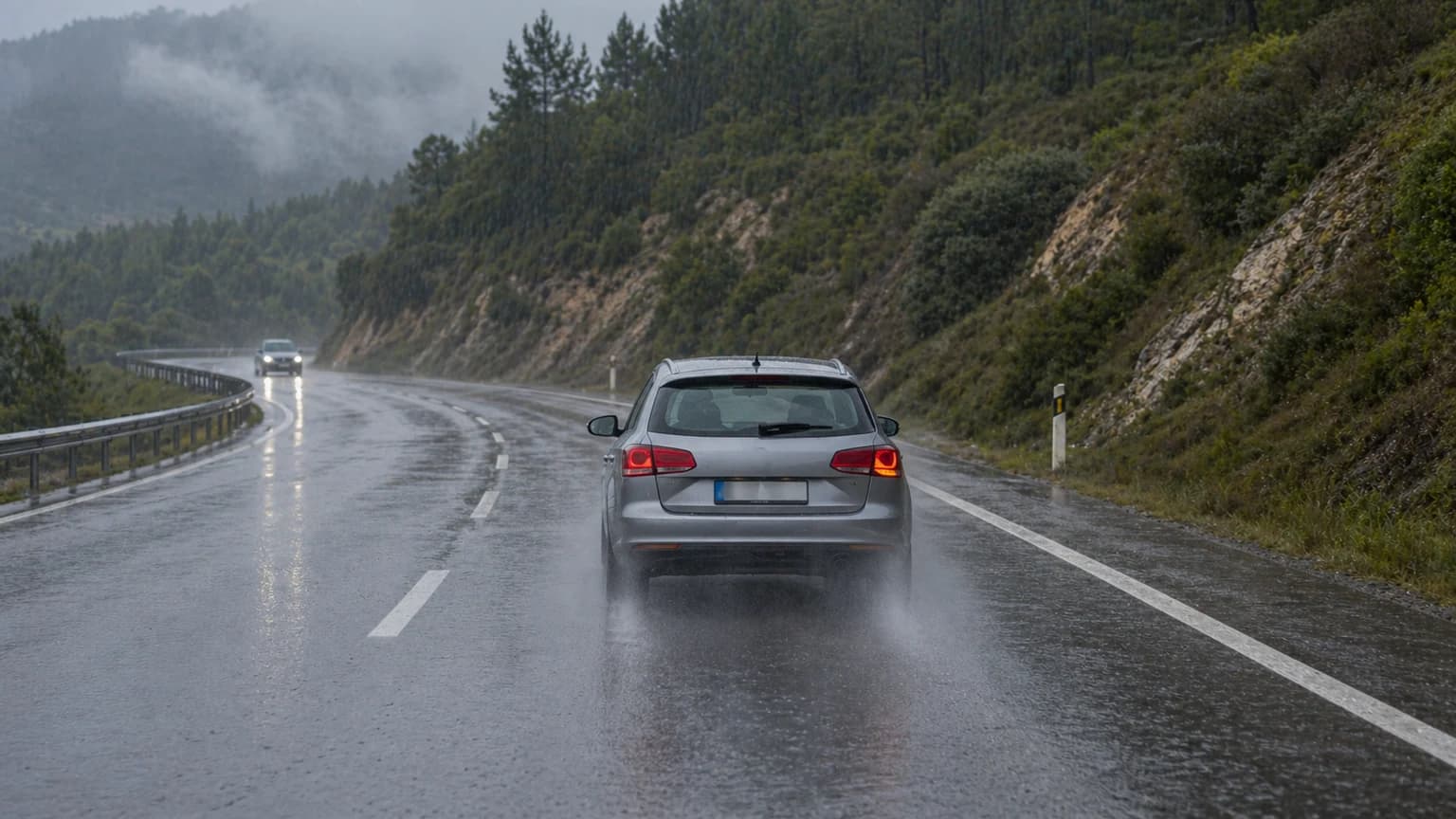
Rain requires the driver to take more precautions than usual, as tyres may lose their grip on wet surfaces. When it rains, the road becomes more slippery due to water and the possible accumulation of dirt, oil, or other residues on the pavement. This can reduce tyre traction and increase braking distance, making it necessary to take additional precautions. Some important precautionary measures include driving at a reduced speed, increasing the safety distance from other vehicles, braking in advance and smoothly, and being aware that braking distance can increase considerably in rainy conditions.
Practice more B licence questions
A 3-minute quick test with exam-style questions. Free, no signup.
All options
No, because it improves visibility by cleaning the windscreen.
Only while the first drops are falling, after which it is not necessary to take precautions.
Yes, as tyres may lose their grip.
Editorial status: editorially approved. This status does not certify legal review. Report a correction
Keep studying
Glossary terms in this question
Related questions
- Outside built-up areas, after completing an overtake, with no traffic or road conditions justifying another lane, when must the driver return to the right lane?
- Of a bicycle, a motorcycle and a passenger car, which is barred by an R-114 sign: a red-bordered circle with a black bicycle symbol?
- When I take medication that affects the nervous system, what should I do before driving?
- On a carriageway, the left lane has been opened in the opposite direction to normal, leaving only the right lane for normal-direction traffic. With no lower restriction, what is the maximum speed for a car in the right lane?
- In a traffic queue, with no emergency or authorised instruction or opening of the shoulder, may a passenger car use the hard shoulder to bypass the queue?
- Must pedestrians walking on the hard shoulder at night be equipped with a luminous or retro-reflective element?