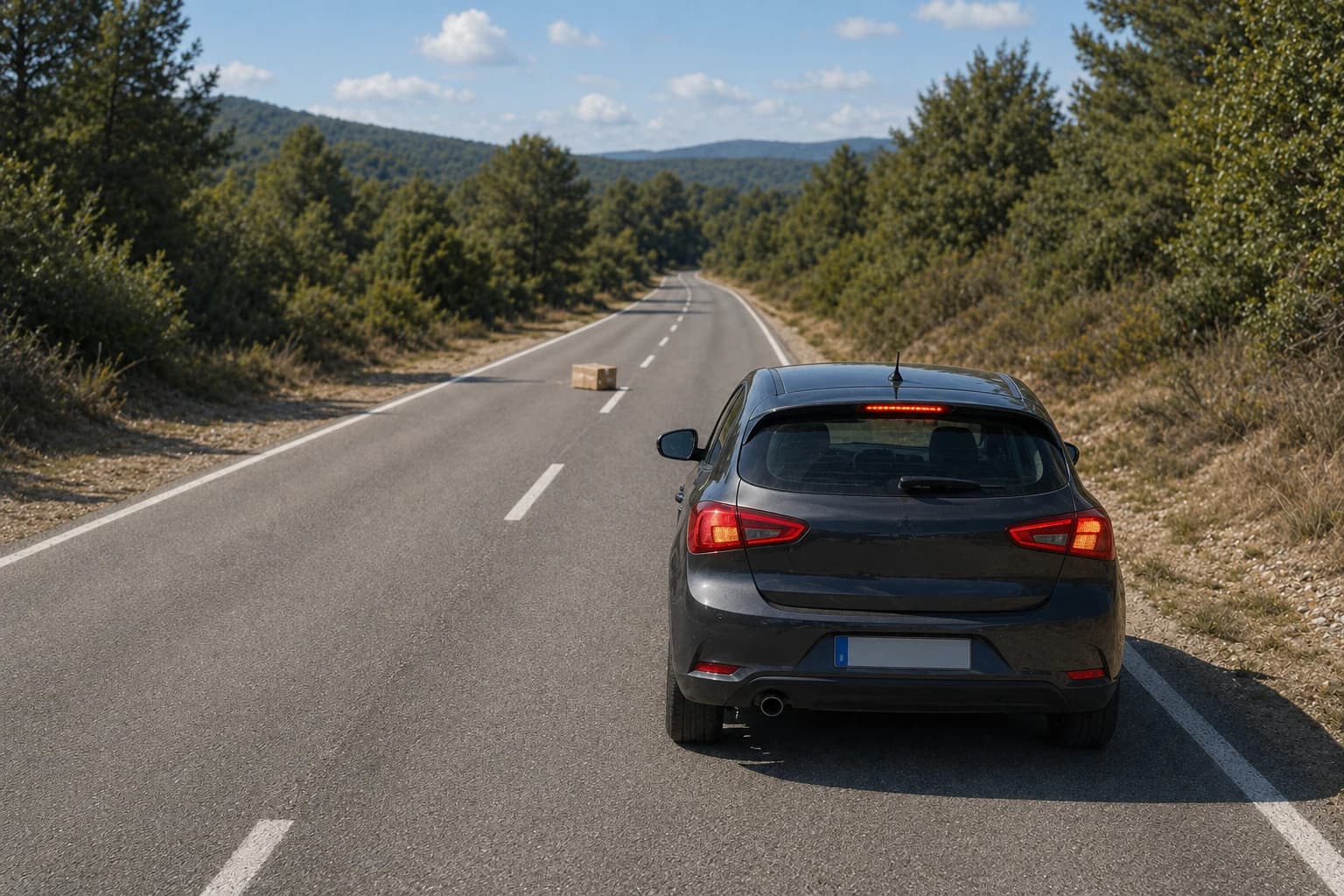
Correct answer
stopping distance.
It is stopping distance: the sum of reaction distance and braking distance. Reaction distance is travelled from perceiving the hazard until applying the brake; braking distance is travelled from applying it until the vehicle stops. The total asked about is not merely one of those phases. Speed, attention and grip and braking conditions affect the distance needed to stop.
Practice more B licence questions
A 3-minute quick test with exam-style questions. Free, no signup.
All options
stopping distance.
braking distance.
reaction distance.
Editorial status: editorially approved. This status does not certify legal review. Report a correction
Share this question
Keep studying
Glossary terms in this question
Related questions
- Which of these parking situations is expressly included among those seriously obstructing traffic in Article 91.2?
- A continuous longitudinal yellow line runs along the kerb, with no sign limiting the prohibition to certain times. May you voluntarily stop or park along that section and side?
- Without imminent danger requiring emergency braking, how should you bring the vehicle to a stop?
- Torrential rain prevents you seeing enough to continue safely. You can carefully reach a lawful, safe place off the carriageway. What should you do?
- Can a car travel in a BUS lane marked with a continuous longitudinal line?
- May you stop in a tunnel?