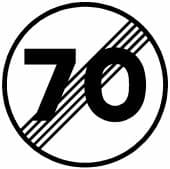
Correct answer
Yes, within the remaining limits and if conditions permit.
Yes, while observing the 90 km/h limit and any other applicable restriction, and adapting speed to conditions. The R-501 shown ends the previous specific 70 km/h restriction; it does not remove general limits or authorise exceeding the maximum to overtake. Travel more slowly whenever conditions require it.
Practice more B licence questions
A 3-minute quick test with exam-style questions. Free, no signup.
All options
Yes, within the remaining limits and if conditions permit.
Only when overtaking, adding 20 km/h to the maximum limit.
No, because the sign keeps the prohibition on exceeding 70 km/h.
Editorial status: editorially approved. This status does not certify legal review. Report a correction
Share this question
Keep studying
Glossary terms in this question
Related questions
- When overtaking a bicycle in a car, what minimum lateral clearance must you maintain?
- A vehicle carrying dangerous goods travels on an urban road with two or more ordinary lanes in each direction and no lower signed limit. What is its maximum speed?
- A car without a trailer travels on a conventional road outside a built-up area with a general 90 km/h limit. With no justified reason to drive more slowly, which speed is below the regulatory minimum?
- When approaching a motorway toll plaza with booths and barriers, what should you do?
- A vehicle has a special testing permit and follows its assigned route on an interurban section with no specific speed-limit sign. What is its maximum permitted increase over the general limit?
- What does this sign indicate?