How driving permits are organized in Spain
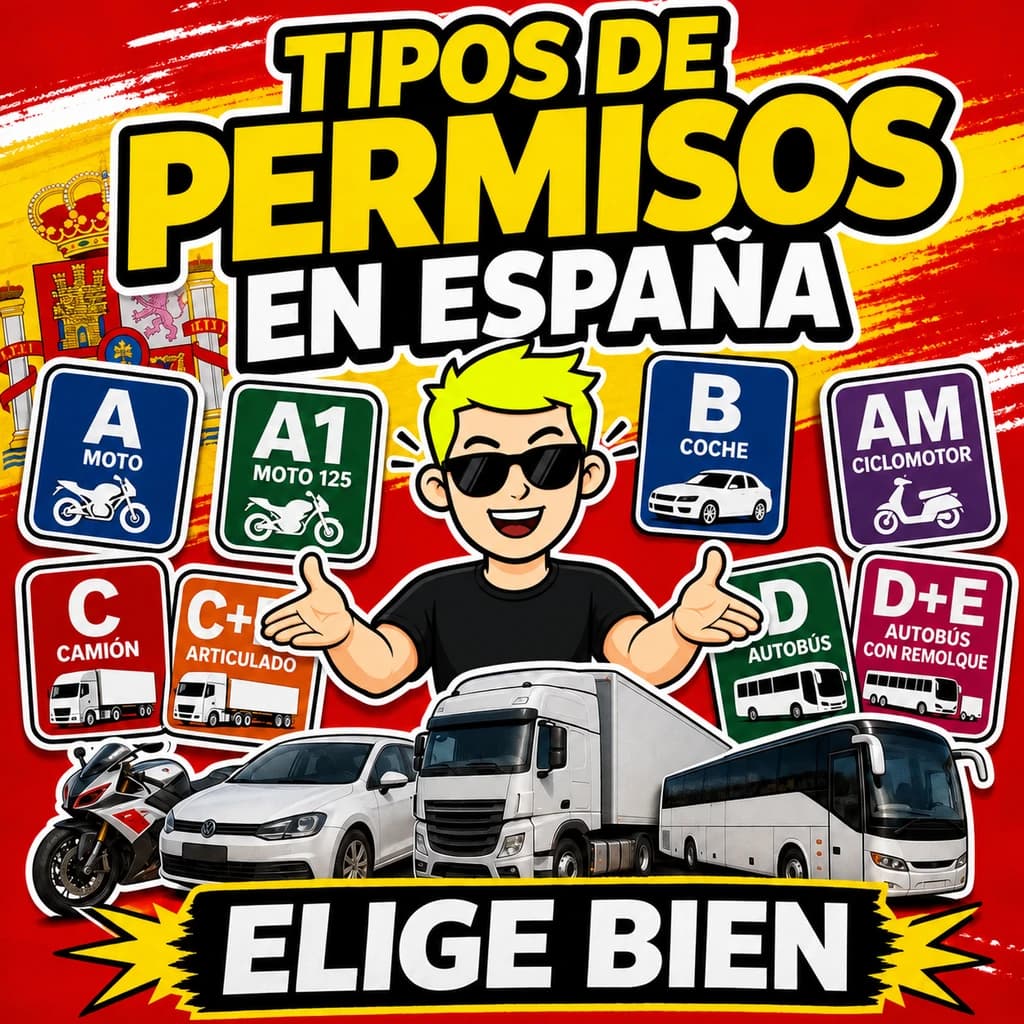
Spain does not have one single license for every vehicle. Each permit authorizes a specific category and may require a minimum age, theory exam, practical test, or specific training. That is why you should choose based on the vehicle you want to drive, not only on the name of the permit.
The most searched permits are usually B for cars, AM for mopeds, A1 and A2 for motorcycles, and C or C1 for goods vehicles. Trailer and passenger-transport permits also exist, but if you are starting from zero, the first step is identifying your main need.
This classification prevents expensive mistakes. Enrolling in a permit that does not match your vehicle may force you to change plans, pay for other training, or wait until you meet the minimum age. Before comparing prices, write down the exact vehicle, its use, and whether you will carry passengers, goods, or a trailer.
If you are between two permits, avoid deciding only by the initial price. A cheaper permit that does not authorize the vehicle you need will cost time and procedures later. The right choice combines age, vehicle, exam, real use, and future flexibility. That order is more reliable than choosing the best-known name.
Permiso B: cars and light vehicles
Permiso B is the most common category. It allows vehicles up to 3,500 kg and up to 8 passengers besides the driver. The minimum age is 18, and the common theory exam has 30 questions, a maximum of 3 errors, and 30 minutes.
B also includes the broadest general topics: signs, priority, speed, road safety, documents, and driver behavior. If your goal is to drive a standard passenger car, this is usually the base permit you need.
B is also a reference because many specific categories rely on common theory or general traffic knowledge. Even if you later want another permit, understanding signs, priority, and road safety helps you move forward. Do not see it only as the “car license,” but as a driving base.
AM, A1, and A2: mopeds and motorcycles
AM allows mopeds up to 50 cc and light quadricycles, with a minimum age of 15. Its specific theory test is modeled with 20 questions, a maximum of 2 errors, and 20 minutes.
A1 allows motorcycles up to 125 cc and 11 kW from age 16. A2 allows motorcycles up to 35 kW from age 18. For A1 and A2, the DGT requires the common test plus the specific test unless a valid common-theory exemption applies.
For motorcycles, the jump between categories is not only about power. Age, test type, and expected practical control change too. If you are unsure between A1 and A2, think about the real motorcycle you will use now, not a distant possibility that may never arrive.
C, C1, and professional goods permits
C1 covers goods vehicles between 3,500 kg and 7,500 kg and has a minimum age of 18. C covers goods vehicles over 3,500 kg and has a minimum age of 21. This is no longer a normal car category; it involves heavier and more specialized vehicles.
For C1 and C, the DGT requires the common test plus the goods-vehicle specific test unless the common theory is already valid. The specific test is modeled with 20 questions, a maximum of 2 errors, and 20 minutes. If the goal is work, there may be additional requirements or training outside the ordinary theory exam.
For goods vehicles, do not choose only by maximum weight. Check whether the permit matches the work vehicle, whether you will need a trailer, and whether additional professional requirements apply. Calling an autoescuela with those details clear usually saves time.
Trailers, buses, and less basic categories
When the vehicle has a heavy trailer or carries passengers, categories such as C+E, D1, or D appear. C+E covers C-category vehicles with a trailer or semi-trailer over 750 kg. D1 is for minibuses up to 16 passengers and 8 meters, and D is for buses for more than 8 passengers besides the driver.
These categories usually require more careful planning because they depend on previous permits, minimum age, and professional use. If you only want to start driving, you do not need them first; if your goal is work, confirm the full path before paying enrollment or course fees.
How to choose the right permit step by step
First define the real vehicle: car, moped, limited motorcycle, more powerful motorcycle, truck, trailer combination, or bus. Second, review minimum age and whether you need a previous permit. Third, check which theory you must prepare: common, specific, or both.
Then compare costs and availability with autoescuelas in your area. For permiso B, use these references: DGT fee of 94.05 EUR, medical check around 35-60 EUR, practical lessons around 30-50 EUR, and a typical total cost of 700-1,500 EUR. For other permits, price varies by province, vehicle, and center.
Which permit do I need for a normal car?
For a passenger car or light vehicle up to 3,500 kg, you normally need permiso B. It is the most common permit and the one that includes general driving preparation. If you will also use a trailer, check the total mass before assuming B is enough.
What is the difference between A1 and A2?
A1 is for motorcycles up to 125 cc and 11 kW from age 16. A2 goes up to motorcycles of 35 kW from age 18. The main difference is the type of motorcycle allowed and the minimum age.
Can I prepare several permits at the same time?
It depends on the case, but it is usually better to set priorities. If a permit requires common and specific theory, use the common part well and then add the specific block. Preparing everything without a clear sequence usually increases mistakes and costs.