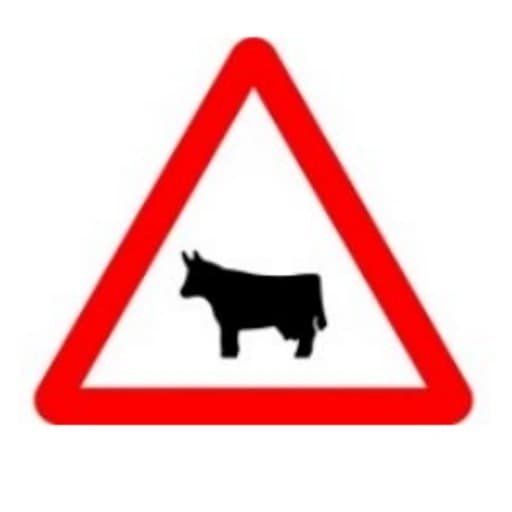
Correct answer
No.
No. P-23 warns that domestic animals or livestock may frequently cross; it does not itself confer priority. Article 66 does give animals priority on properly signed droving routes, when a vehicle turns into another road that animals are crossing, or when it crosses a shoulder used by animals without a droving route. Even with priority, moderate speed and avoid endangering them. Travelling in a group or accompanied does not itself change this sign’s meaning.
Practice more B licence questions
A 3-minute quick test with exam-style questions. Free, no signup.
All options
No.
Yes, when they are in a group.
Yes, when accompanied by a person driving the livestock.
Editorial status: editorially approved. This status does not certify legal review. Report a correction
Keep studying
DGT test in English: free practice
Exam-style questions in English, no signup. You can also sit the official exam in English.
All Spanish traffic signs and their meanings
Full DGT catalogue: warning, regulatory and information signs.
Sign P-23: domestic animals crossing
What this sign means, its category and its shape.
Related questions
- Under the current rules, who regulates the roads and zones where skates and skateboards may circulate and their circulation conditions?
- What precaution should you take when approaching a cyclist to avoid startling them?
- Which of the following types of vehicle are not allowed to travel on dual carriageways?
- What should we do when we come across puddles of water on the road?
- After the widening to three lanes shown by the sign, you travel normally at 60 km/h, with no exceptional reason requiring another speed. Which lane may you use while maintaining that speed?
- What does a yellow zigzag marking generally indicate?