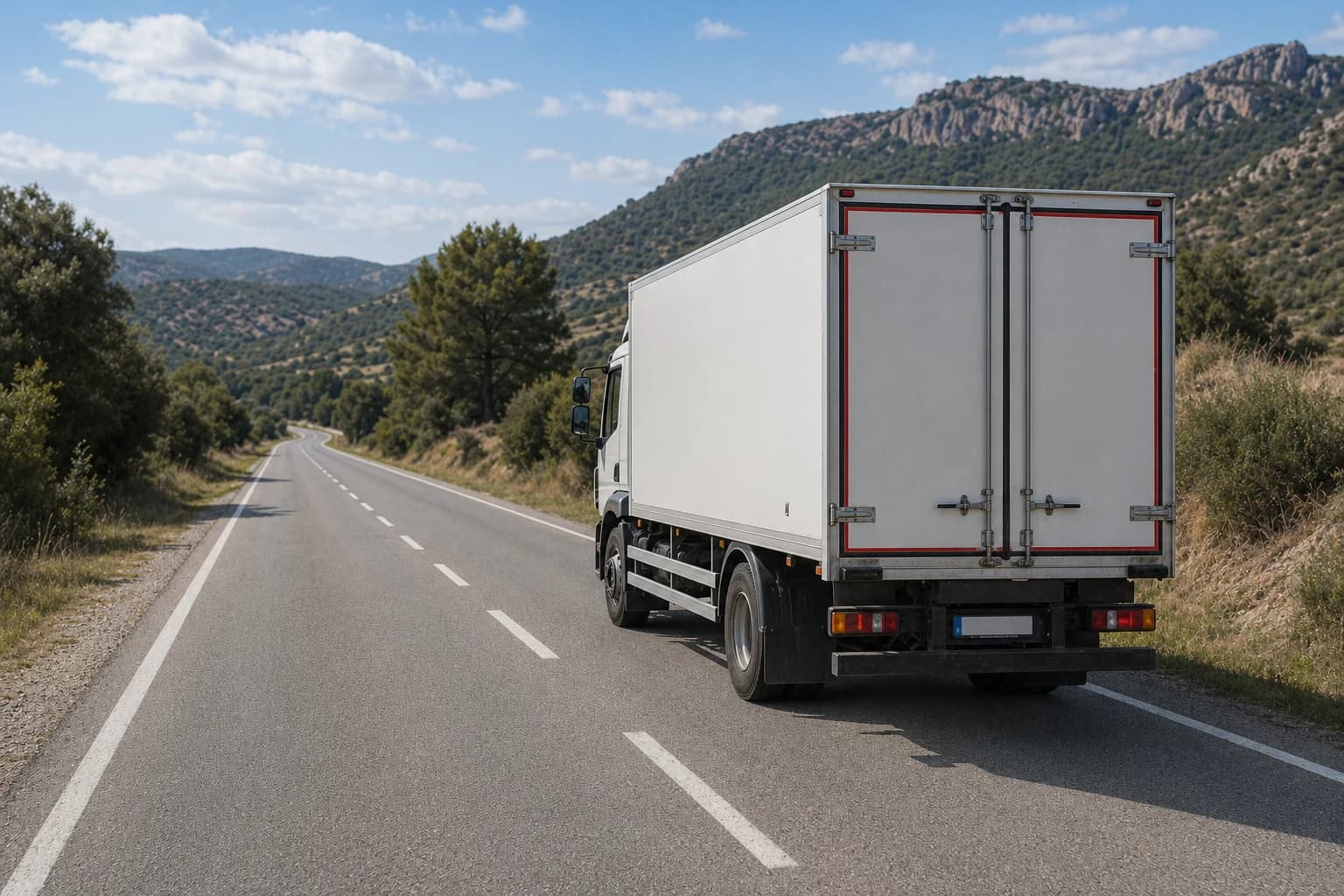
Correct answer
80 km/h.
It is 80 km/h. A lorry’s general motorway and dual-carriageway maximum is 90 km/h. Dangerous-goods transport reduces the applicable limit by 10 km/h; the question excludes that case. Overtaking does not permit a speed increase above the limit. Always observe lower limits and adapt speed to the road, visibility, grip and traffic.
Practice more C licence questions
A self-check with exam-style questions on Truck driving techniques. Free, no signup.
All options
90 km/h if overtaking.
80 km/h.
70 km/h.
Editorial status: editorially approved. This status does not certify legal review. Report a correction
Keep studying
Glossary terms in this question
Conventional road
Interurban road that is not a motorway, dual carriageway or expressway.
Motorway
Top-grade public road with separated carriageways, no direct property access, restricted to motor vehicles.
Overtaking
Manoeuvre of passing another vehicle going the same direction, temporarily using the opposing lane or a free lane.
Related questions
- With a side wind and a C1 or C truck, the prudent action is to:
- On a road without priority signs, a car climbs and a lorry descends a narrow 10% gradient where they cannot pass each other. There are nearby passing places. Who has precedence?
- What happens if you drive your lorry at an inadequate speed?
- Inside a tunnel, what minimum safety interval must you keep from the vehicle in front of your lorry, weighing more than 3,500 kg MAM, which you do not intend to overtake?
- You drive a lorry at night on main beam and realise it may dazzle pedestrians walking on the shoulder. Must you switch to dipped headlights?
- You are driving a heavy vehicle of large dimensions and the width of the carriageway does not allow you to be overtaken easily. Are you obliged to facilitate overtaking?