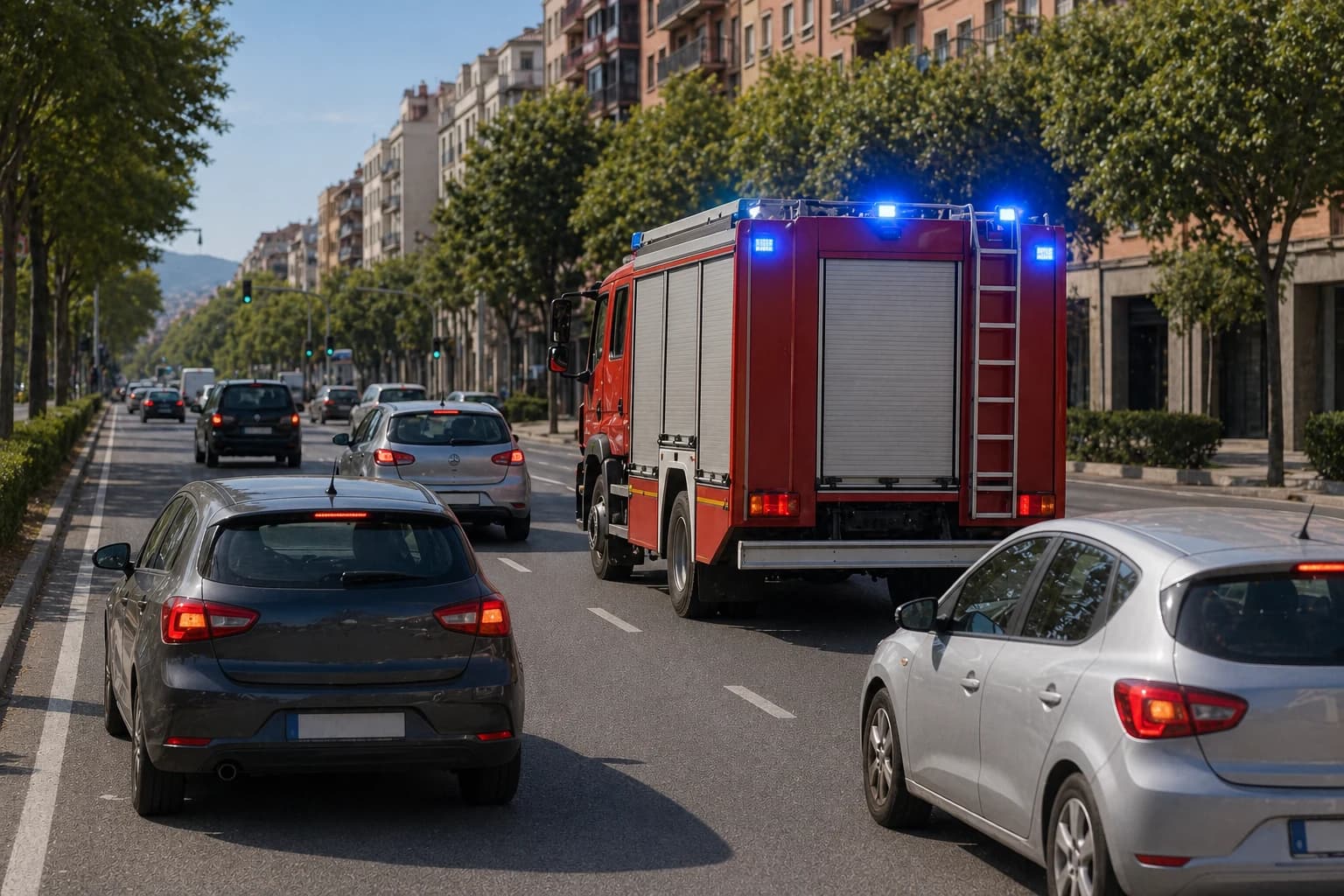
Correct answer
Only when travelling on emergency duty and indicating it correctly.
It has priority while on emergency duty and correctly signalling its presence. Normally it uses special lights and an audible emergency signal together; it must use lights alone when omitting the audible signal creates no danger to others. A fire engine does not have priority on every journey. Other users must facilitate safe passage as circumstances require, normally moving right or stopping if necessary; the emergency corridor rules apply where relevant on congested motorways or dual carriageways.
Practice more B licence questions
A 3-minute quick test with exam-style questions. Free, no signup.
All options
Only when travelling on emergency duty and indicating it correctly.
Only when using the audible and light signals together.
Always, because it is a fire engine.
Editorial status: editorially approved. This status does not certify legal review. Report a correction
Keep studying
Glossary terms in this question
Related questions
- When overtaking a pedestrian, animal, animal-drawn vehicle, moped or cyclist, where does Article 85.4 require minimum lateral clearance of 1.5 metres?
- At a marked pedestrian crossing that is not controlled by an agent or traffic light, pedestrians should only enter the carriageway when...
- At this intersection with “circular traffic” that is not a roundabout, who must you give way to?
- Is it permitted to signal an intention to carry out a manoeuvre with your arm?
- In this situation with a flashing amber traffic light, what must you do?
- When carrying out a stopping manoeuvre, must you signal it in some way?