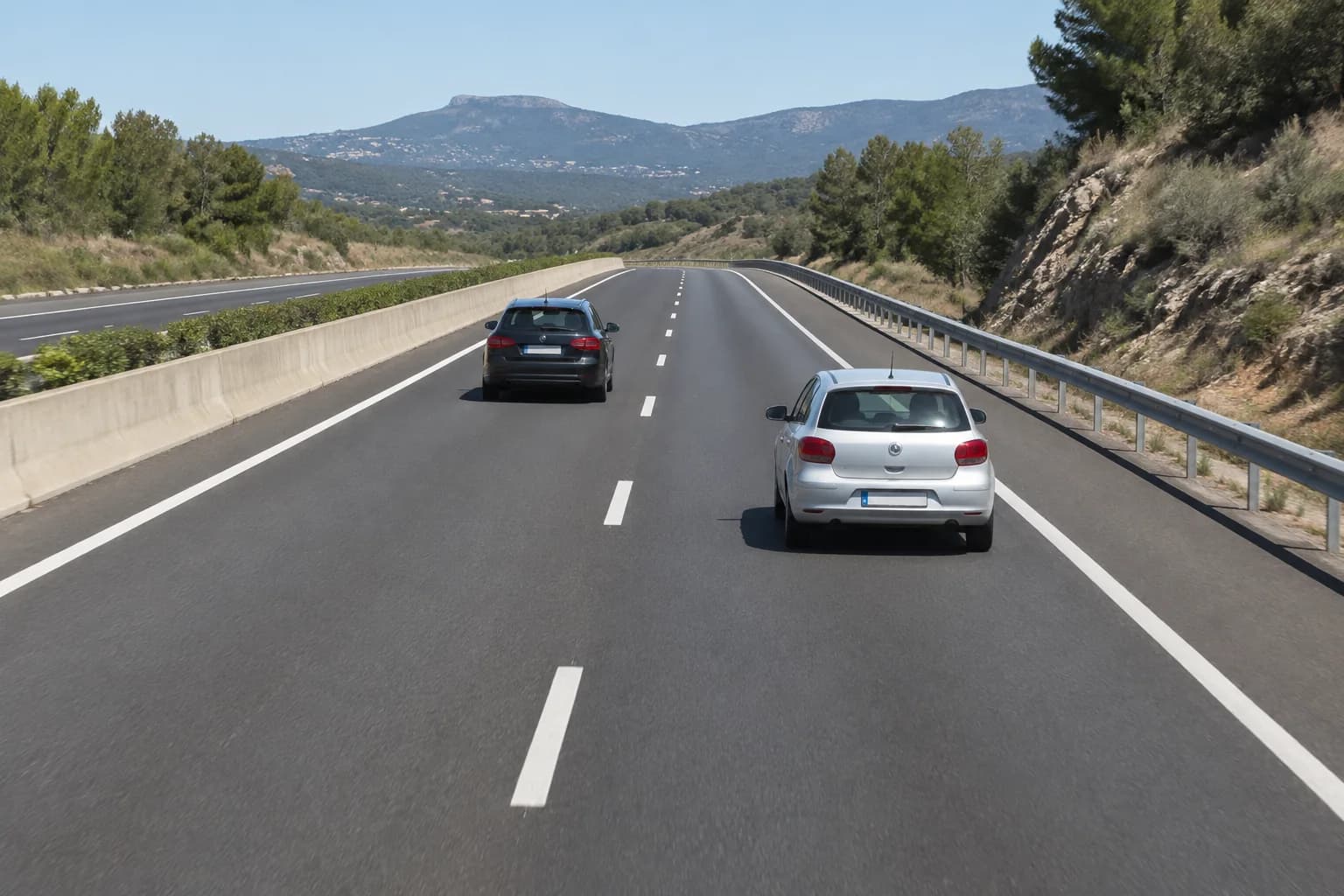
Correct answer
No; it must return to the right lane when safe.
Outside built-up areas, vehicles normally use the rightmost lane. In the stated conditions, the car must return to it when safe. Other lanes may be used when traffic or road conditions justify it, without obstructing a following vehicle; they are not used exclusively for overtaking.
Practice more B licence questions
A 3-minute quick test with exam-style questions. Free, no signup.
All options
No; it must return to the right lane when safe.
Yes; it is enough that no vehicle approaches from behind.
Yes; outside built-up areas it may freely choose either lane.
Editorial status: editorially approved. This status does not certify legal review. Report a correction
Share this question
Keep studying
Glossary terms in this question
Related questions
- There is light fog, but visibility is sufficient to overtake or abandon the manoeuvre safely. All other rules are met and overtaking is not prohibited. Does fog alone prevent overtaking?
- On a section with visibility so restricted that you cannot check whether a U-turn would endanger other road users, may you make it?
- A car without a trailer overtakes another car on a two-way conventional road outside a built-up area, without physical separation or a lower specific limit. What is its general maximum speed during overtaking?
- Which type of trucks does the no-overtaking sign for trucks apply to?
- Strong crosswind blows from the right, and you overtake on the left of a lorry that can shield you from it. What change should you anticipate when drawing alongside?
- On a motorway with three lanes in each direction, which lane should you normally drive in?