Correct answer
The main beam headlights, provided you do not dazzle other road users.
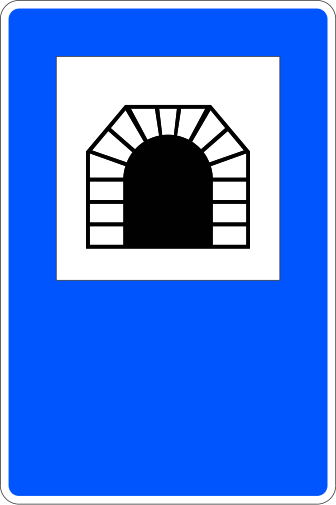
In a tunnel that is not sufficiently lit, it is important to use the appropriate lights to ensure both your own visibility and the safety of other road users. If you are travelling at a speed of 80 km/h, you must use the main beam headlights (also known as full beam). These lights provide more intense and extensive illumination, which is crucial for visibility in low-light conditions, such as in a tunnel. However, it is essential to make sure you do not dazzle other drivers. That's why, if there are other vehicles coming in the opposite direction or ahead of you, you must switch to dipped headlights (low beam) to avoid causing inconvenience or risk through dazzling. This is especially relevant in a tunnel, where the confined space can amplify the dazzling effect caused by main beam headlights.
Practice more B licence questions
A 3-minute quick test with exam-style questions. Free, no signup.
All options
The sidelights and dipped headlights, but never the main beam headlights.
The main beam headlights, provided you do not dazzle other road users.
The sidelights and the main beam headlights, but never the dipped headlights.
Editorial status: editorially approved. This status does not certify legal review. Report a correction
Keep studying
Related questions
- What does the amber light, visible from all directions, fitted on top of the agricultural tractor warn of?
- At night, a car travels on a sufficiently lit Spanish dual carriageway in clear weather with no need for fog lamps. Which lights must it use?
- A car fitted with a rear fog lamp travels through dense smoke or dust severely reducing visibility. Besides the otherwise required lights, which lamp must it switch on?
- At dusk, you park a car on the shoulder of an insufficiently lit through-road in a built-up area. As a general rule, which lights must remain on?
- In the event of heavy rain, is it compulsory to drive with the vehicle's lights on?
- A breakdown without fire immobilises your car inside a tunnel: you cannot leave or reach an emergency area. What should you do?