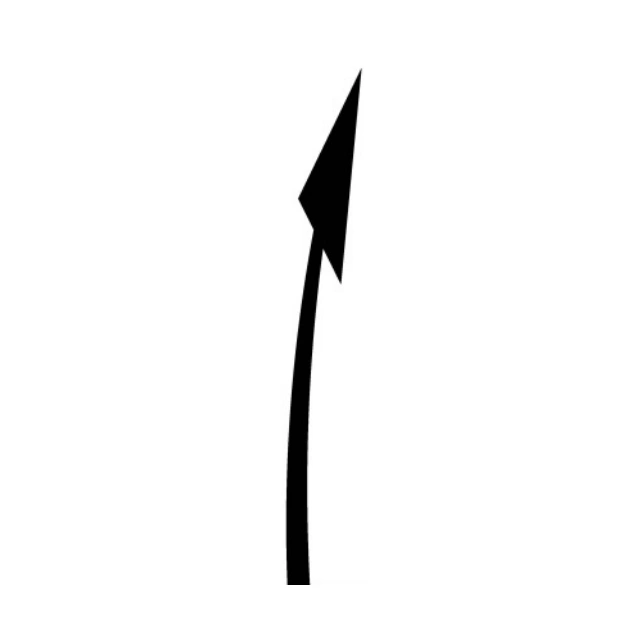
Correct answer
It warns of the proximity of a continuous line which prohibits driving to its left.
It is a return arrow: it warns of an approaching continuous line that prohibits travelling to its left. Do not start an overtake, or finish an already-started overtake as soon as possible, always safely and respecting other vehicles. It differs from a lane-end or exit arrow.
Practice more C licence questions
A self-check with exam-style questions on Traffic signs. Free, no signup.
All options
It warns of the proximity of a continuous line which prohibits driving to its left.
That the lane it is in ends shortly and its indication must be followed.
The point where drivers may begin changing lanes to take an exit, and the direction of that exit.
Editorial status: editorially approved. This status does not certify legal review. Report a correction
Keep studying
Glossary terms in this question
Related questions
- If you are driving a 7,000 kg MAM lorry along a carriageway outside a built-up area, with two-way traffic and three lanes for each direction, delimited by broken longitudinal lines, which of these lanes are you permitted to drive in?
- In a lorry over 3,500 kg MAM on a two-way road, outside an emergency or permitted manoeuvre, which part should you generally use?
- If you are approaching a roundabout or road junction with a garden, monument, fountain, etc. in the centre, which way will you generally travel?
- You are driving a lorry and do not intend to overtake the vehicle ahead. What minimum gap does this sign indicate?
- When applying this R-203, which measurement is compared with the displayed limit?
- At a properly marked pedestrian crossing with no traffic lights, agents or signs modifying its operation, do pedestrians have priority over vehicles?