Correct answer
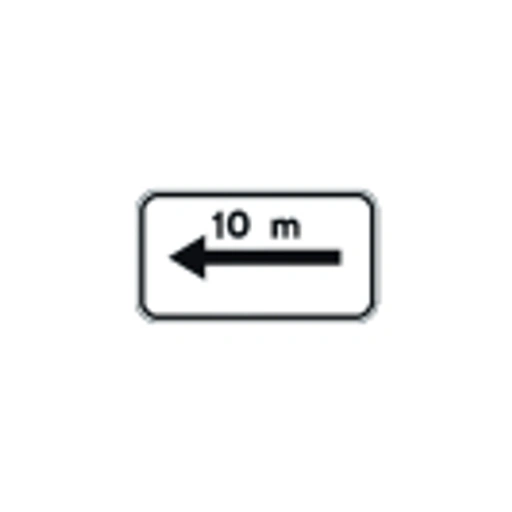
The distance over which the prohibition applies in the direction of the arrow.
The distance over which the prohibition applies in the arrow’s direction: for this S-821, 10 metres to the left. The current catalogue distinguishes the right-pointing S-820 and left-pointing S-821. It does not give the distance to the start of the prohibition or an extent on both sides; the latter is S-830. The sign above the panel determines the particular prohibition.
Full explanation free, no sign-up.
Practice more B licence questions
A 3-minute quick test with exam-style questions. Free, no signup.
All options
The distance over which the prohibition applies in the direction of the arrow.
The distance to the beginning of the prohibition.
The extent over which the prohibition applies on both sides of the carriageway.
The real exam in English is a translation of the Spanish original; compare both here.
Show the Spanish original
Este panel, colocado bajo una señal de prohibición, ¿qué indica?
- La distancia en que se aplica la prohibición en el sentido de la flecha.(Correct answer)
- La extensión en la que se aplica la prohibición a ambos lados de la calzada.
- La distancia al comienzo de la prohibición.
Editorial status: editorially approved. This status does not certify legal review. Report a correction
Keep studying
DGT test in English: free practice
Exam-style questions in English, no signup. You can also sit the official exam in English.
All Spanish traffic signs and their meanings
Full DGT catalogue: warning, regulatory and information signs.
Sign S-821: extension of the prohibition to one side
What this sign means, its category and its shape.
Related questions
- Placed below a danger warning sign other than a road-narrowing sign, this panel indicates...
- The panel shown is placed below a give-way sign. What does it indicate?
- This panel, placed beneath the give way sign, indicates the distance...
- Under article 137.1, where may a rectangular supplementary panel bearing an inscription to help interpret a sign be placed?
- What do circular signs with a blue background and white pictogram generally express, without red prohibition borders or bars?
- Under article 66.2, which warning sign accompanies the panel inscribed “cañada” to mark a general livestock route or crossing?