Which permits connect to which career paths
Searches such as jobs with a C license or jobs with a D license usually point to two families of work: goods transport and passenger transport. In goods transport, the most visible permits are C, C+E and, in some cases, C1. In passenger transport, the key categories are D and D1.
Choosing the right permit from the start saves time and money. If your target is articulated trucks, thinking about a generic truck is not enough; if your target is buses, minibus and coach work should not be treated as the same training path.
The strongest way to approach these searches is to start with the type of vehicle you want to drive and, from there, identify the base permit and the additional requirements. That order turns a fuzzy idea into a concrete plan.
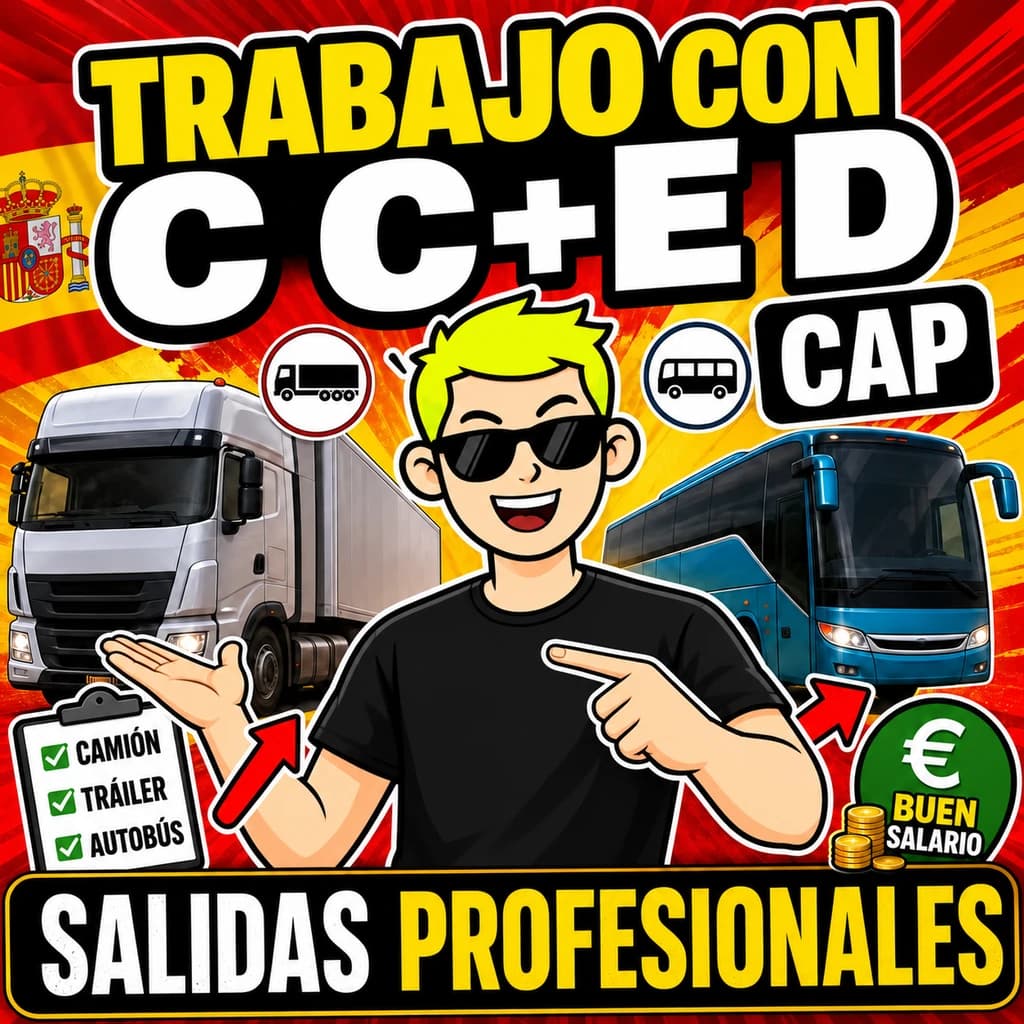
Goods: C, C1 and C+E permits
The C permit qualifies you to drive goods vehicles over 3,500 kg and requires a minimum age of 21, or 18 with CAP. It allows towing a trailer up to 750 kg, enough for many delivery and transport jobs.
The C1 permit is the intermediate step: it covers trucks between 3,500 and 7,500 kg and can be obtained from age 18. It is a good entry route if you want to start earlier with somewhat lighter vehicles before moving up to the full C permit.
To tow trailers over 750 kg, including articulated trucks and road trains, you need the C+E permit, with a minimum age of 21. It is the complete permit for heavy goods transport and the one that opens the most doors in the articulated-truck sector.
Passengers: D and D1 permits
The D permit is the reference for driving buses and coaches with more than 8 passengers besides the driver. The minimum age is 24, or 21 with the accelerated CAP, and it is the professional reference permit for passenger transport.
The D1 permit covers minibuses with up to 16 passengers besides the driver and a maximum length of 8 meters, with a minimum age of 21. It is the entry door to passenger transport and a common option for smaller services.
Distinguishing between D and D1 is key so you do not invest in a permit that does not match the job you want. School transport, minibus and coach work do not always require exactly the same category, so it is worth being specific before you train.
Why CAP is usually part of the plan
In professional road transport, the permit usually sits alongside CAP. The CAP legal framework covers the C and D categories and requires initial qualification or ongoing training unless a specific exemption applies to your case.
That is why many job offers mention not just the license, but license plus CAP. In practical terms, passing the driving exam is not enough to work: CAP is what certifies your professional qualification.
You have to look at the full package: the permit, the CAP, the valid card where applicable, and the real time it takes to reach the job. That combined view avoids surprises when job hunting and gives you a realistic idea of when you will be able to work.
How to build a realistic route into employment
Start with the type of vehicle and not with the job promise. First decide whether you want goods or passengers; then identify the base permit, confirm whether you need CAP and estimate the timelines for training, exams and renewals.
That order turns a very broad search, such as jobs with a C license, into an actionable plan with clear steps. It also improves how you compare academies and CAP centers, because you already know exactly which piece you need.
Having a clear itinerary also helps you calculate the total budget. The permit and the CAP are separate costs, and planning them together stops a forgotten step from delaying your entry into the job market.
Common mistakes when looking for driving jobs
The most common mistake is looking only at the job offer and buying training that does not fit your route. Planning permit and CAP together avoids spending on courses that do not bring you closer to the job you want.
Another mistake is confusing similar categories. Thinking about a generic truck without deciding between C, C1 or C+E, or about a bus without distinguishing D from D1, can lead you to get a permit that does not qualify you for the work you want.
The third mistake is forgetting CAP until the end. Since the permit alone is not enough for professional transport, leaving CAP for later can delay your actual start at the job by weeks. Choosing the wrong category can mean paying again for the permit that actually matches the job.
What license do I need to be a truck driver?
For trucks over 3,500 kg you need the C permit. To tow trailers over 750 kg, including articulated trucks, you need the C+E.
If you prefer to start with lighter vehicles, the C1 covers trucks between 3,500 and 7,500 kg and can be obtained from age 18. Defining your goal before paying for any course is what prevents spending on training you will not use.
Do I need CAP to work as a driver?
Yes. In professional road transport with C or D permits, CAP is mandatory unless a specific exemption applies.
CAP requires an initial qualification and periodic ongoing training, so it is worth planning it alongside the permit from the start to avoid delaying your entry into employment. Many offers rule out applicants who hold the permit but not the CAP, so it is worth keeping in mind from the start.
What is the minimum age for these permits?
The C1 can be obtained from age 18; the C from 21, or from 18 with CAP; and the C+E from 21.
For passengers, the D1 requires age 21 and the D requires 24, reduced to 21 with the accelerated CAP. Confirming the minimum age for your category helps you plan when you can actually start working.