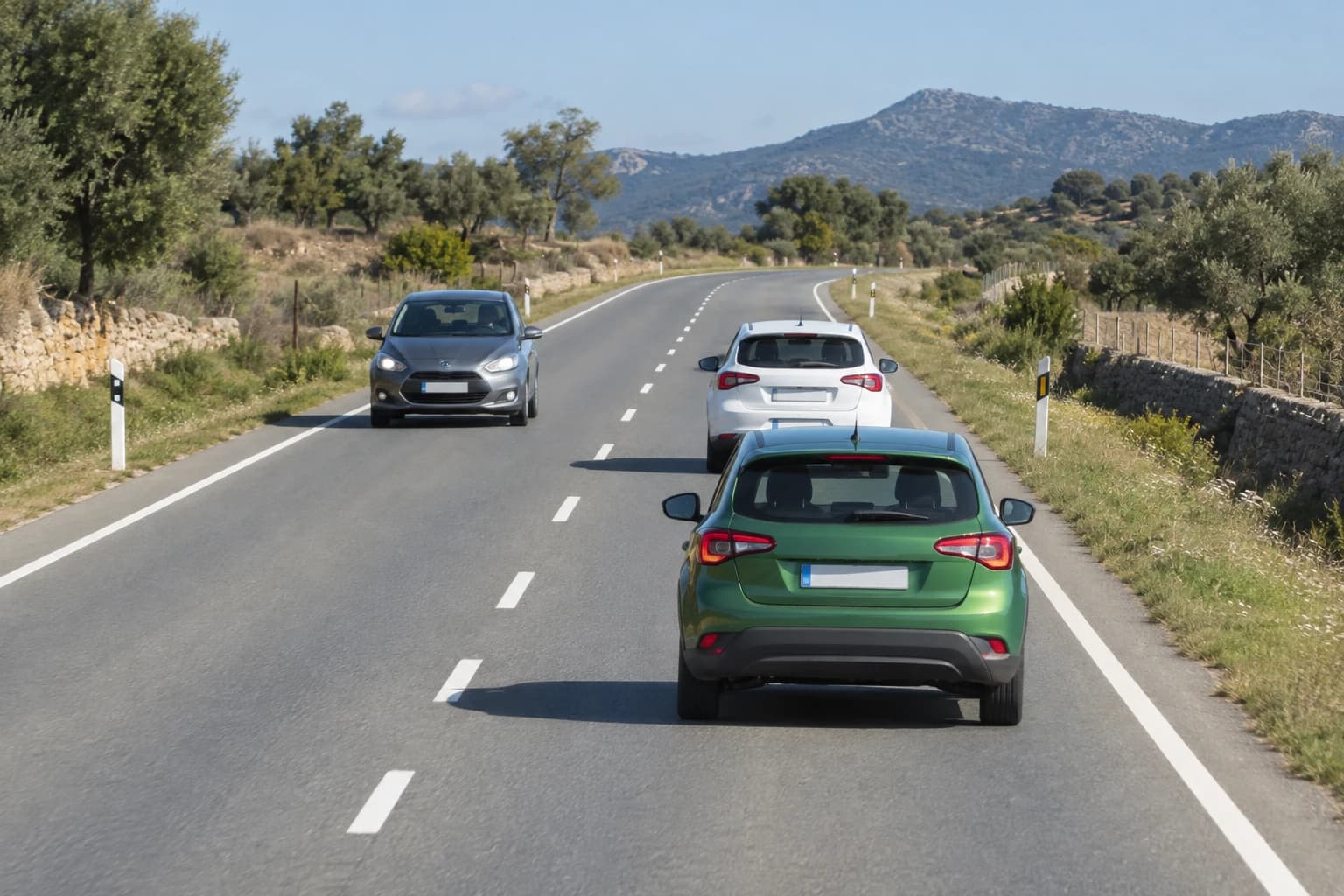
Correct answer
No, it would endanger the approaching vehicle.
No. There must be enough space and time to complete the manoeuvre safely without forcing others to change course or speed. The reason is the stated danger, not a rule that any oncoming vehicle, however distant, always prohibits overtaking. A broken line does not guarantee safety.
Practice more B licence questions
A 3-minute quick test with exam-style questions. Free, no signup.
All options
Yes, because a broken line permits overtaking without checking traffic.
No, it would endanger the approaching vehicle.
Yes, if it sounds the horn, even if the other vehicle must brake.
Editorial status: editorially approved. This status does not certify legal review. Report a correction
Share this question
Keep studying
Glossary terms in this question
Related questions
- A tram travels along the centre of a two-way road. There is sufficient space on its right and overtaking is legal and safe. On which side must you overtake it?
- Before starting to overtake, the driver is required to check that...
- On a section where a continuous line prohibits entering the opposing direction, a broken-down car partly blocks your lane. It is not stopped by traffic conditions. May you pass it using the opposing direction if regulatory conditions are met and it can be done safely?
- Which circumstance during overtaking introduces the risk of meeting opposing traffic head-on?
- A non-priority vehicle travels in a built-up area. With no accident risk or other regulatory exception, may it use the horn solely to announce intended overtaking?
- While following another vehicle before overtaking, may you reduce the gap below what is needed to stop without collision if the vehicle ahead brakes sharply?