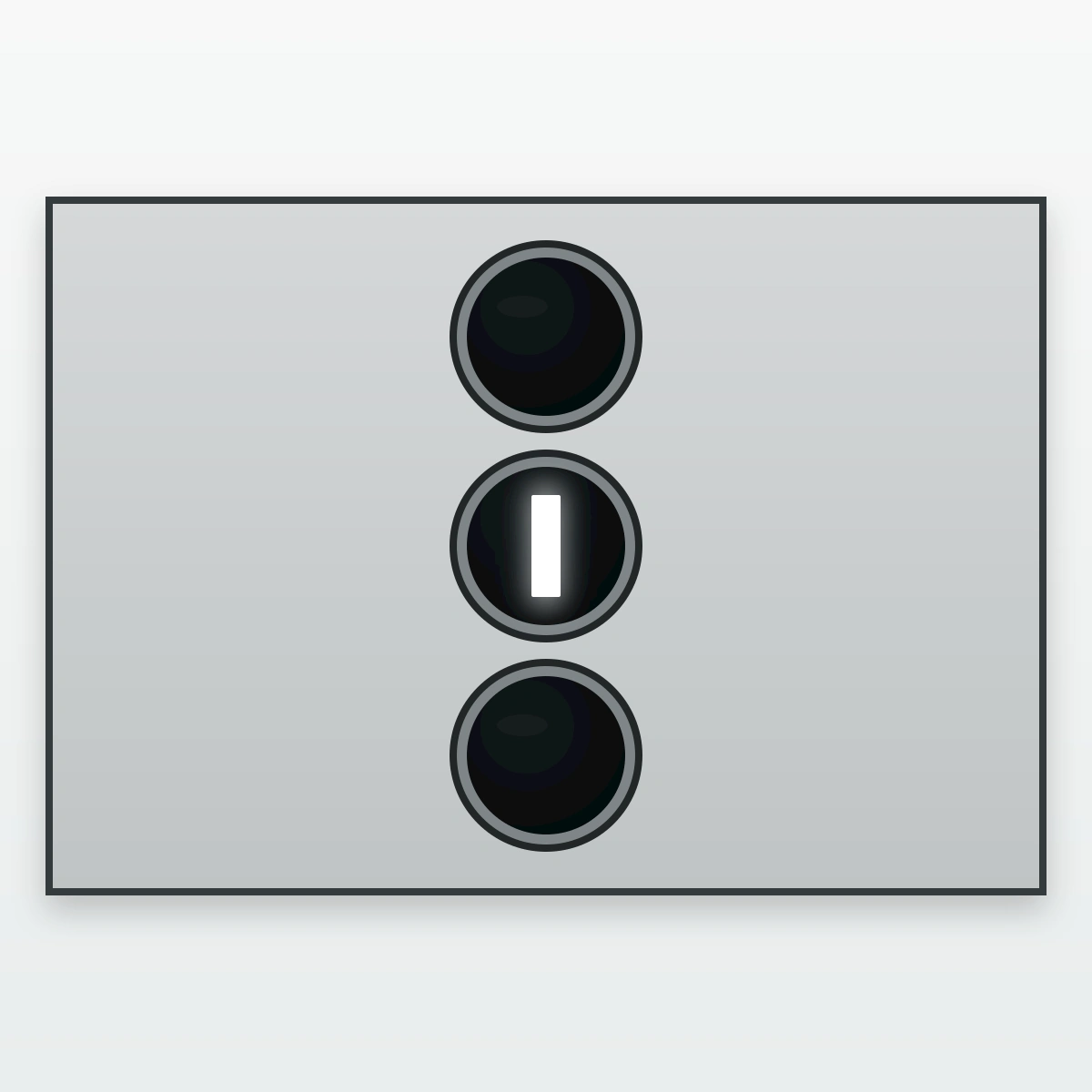
Correct answer
Buses travelling in the reserved lane it controls.
Buses using the reserved lane it controls must obey it. Merely being a bus does not make it apply to buses travelling in ordinary lanes on that road. A vertical white bar permits proceeding straight; a horizontal bar prohibits passage and oblique bars permit the indicated direction. Without a reserved lane, these signals apply to trams and regular-service buses.
Practice more D licence questions
A self-check with exam-style questions on Traffic signs. Free, no signup.
All options
Only discretionary-service buses travelling in ordinary lanes.
All buses on the road, including those in ordinary lanes.
Buses travelling in the reserved lane it controls.
Editorial status: editorially approved. This status does not certify legal review. Report a correction
Keep studying
Glossary terms in this question
Related questions
- In school and minors' transport, when their presence is compulsory, what must the accompanying adult know?
- A bus meets a lorry travelling in the opposite direction on a bridge that does not allow simultaneous passage. If the bus driver saw this sign at the entrance, who must reverse?
- In a stay-and-play zone indicated by S-28, what is the maximum speed for a motor vehicle, with no other lower restriction?
- When must buses dedicated to school transport display the sign indicating the transport they are carrying out?
- Roadworks require a lane to be opened in the opposite direction to normal on a road where a bus is permitted to travel. With no express prohibition for that bus, may it generally use the lane?
- An identified driver personally disobeys a traffic sign while driving. With no special liability provision applying, who is responsible for that infringement?