Correct answer
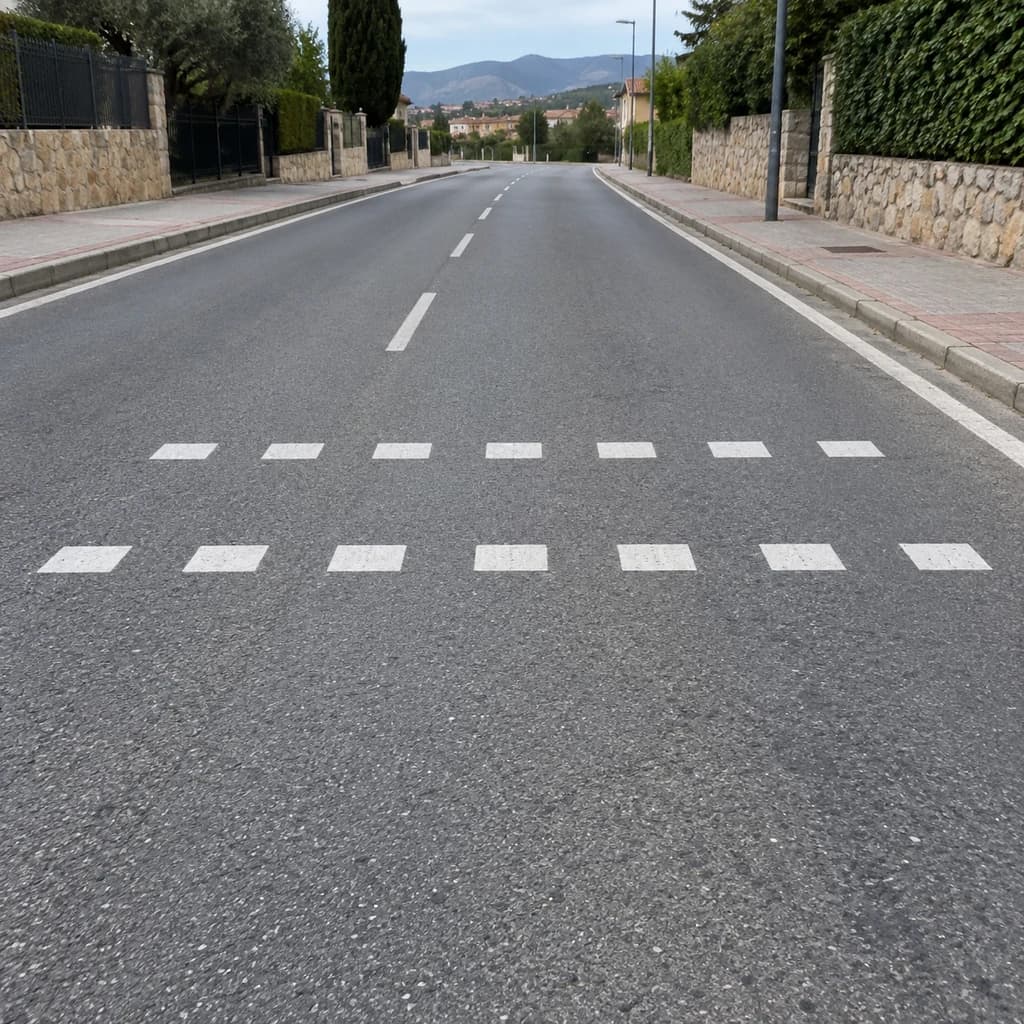
A cyclist crossing.
A road marking like the one shown, made up of two parallel broken lines running across the carriageway, indicates a cyclist crossing. These markings are intended to signal a specific point on the road where cyclists are expected to cross. Drivers must be especially alert when approaching these road markings, as they are required to give way to cyclists who are using, or about to use, this crossing. This give-way rule is important for ensuring the safety of cyclists, a group of road users more vulnerable than those in motor vehicles. These cyclist crossings are designed to enable the safe coexistence of cyclists and motor vehicles, and to promote cycling as a sustainable and healthy means of transport.
Practice more B licence questions
A 3-minute quick test with exam-style questions. Free, no signup.
All options
A pedestrian and cyclist crossing.
A mandatory crossing for two-wheeled vehicles.
A cyclist crossing.
Editorial status: editorially approved. This status does not certify legal review. Report a correction
Keep studying
Glossary terms in this question
Related questions
- A privately used two-wheel motorcycle, neither a driving-school vehicle nor classified as historic, is five years old from first registration. What is its ordinary periodic ITV frequency?
- Which is an example of distraction related to the driver’s internal state or behaviour?
- A vehicle is about to turn into another road that pedestrians are crossing, with no traffic light or officer controlling passage. In which situation must it give way even without a marked pedestrian crossing?
- The images captured by the vehicle's 360º system to simulate a bird's-eye view of it come from:
- At a junction with no officer, traffic light or temporary sign indicating otherwise, does a STOP road marking impose the same stop-and-give-way requirement as a vertical STOP sign?
- For a voluntary stop or parking on a motorway, which of these places is normally designated for it?