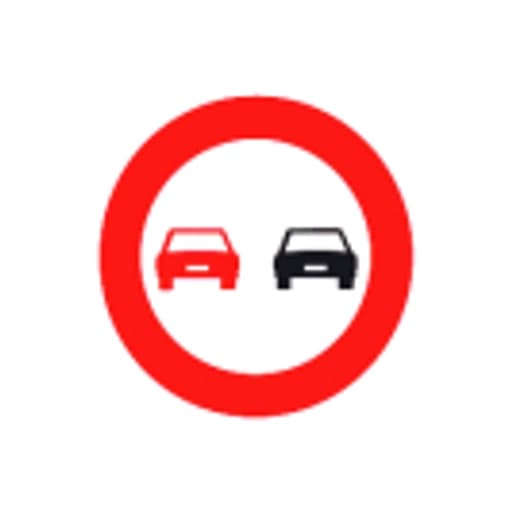
Correct answer
Yes, complying with other rules and without entering opposing traffic.
Yes. The current R-305 definition prohibits overtaking motor vehicles when the manoeuvre involves entering the area reserved for opposing traffic. This case does not enter it. All other overtaking rules still apply; do not confuse it with R-306 for lorries over 3,500 kg, which includes manoeuvres without entering opposing traffic.
Practice more D licence questions
A self-check with exam-style questions on Traffic signs. Free, no signup.
All options
Yes, complying with other rules and without entering opposing traffic.
No, this sign prohibits every overtake between lanes in the same direction.
Yes, but only by entering opposing traffic.
Editorial status: editorially approved. This status does not certify legal review. Report a correction
Keep studying
DGT test in English: free practice
Exam-style questions in English, no signup. You can also sit the official exam in English.
All Spanish traffic signs and their meanings
Full DGT catalogue: warning, regulatory and information signs.
Sign R-305: no overtaking
What this sign means, its category and its shape.
Glossary terms in this question
Related questions
- Can the V-10 sign be used without the lower rectangle containing the 'school transport' legend?
- If you drive a charter bus, when must you obey traffic lights that have an illuminated band on a black circular background?
- In vehicles dedicated to passenger transport that are required to carry a complaints book, is it necessary to display a sign inside the bus indicating this?
- To overtake a motorcycle with your bus, you need to move the bus laterally, without entering the adjacent lane. Must you signal that movement?
- An adult driver, identified as the offender, drives a company vehicle through a red traffic light. Who is responsible for that traffic offence?
- Outside a built-up area, a bus needs to cross a continuous line to overtake a two-wheeled moped. Visibility is sufficient and all safety, clearance and speed conditions can be met. Do the rules permit this manoeuvre?